Tag: pizza

  • California Pizza Kitchen expanding in Hong Kong

    California Pizza Kitchen expanding in Hong Kong

    California Pizza Kitchen (CPK) – creator of California-style pizza – today announced the grand opening of its new restaurant in Hong Kong in partnership with Chun Fat Enterprise Limited. With over 27 years of serving guests in the Hong Kong market, the new restaurant, located within the Tuen Mun Town Plaza, the largest mall in Hong Kong’s Northwest New Territories, allows CPK to bring its diverse and innovative California-style menu to new diners within the popular mall location.

    The Tuen Mun Town Plaza location captures CPK’s warm California brand-style throughout the space with sunny tones, wood decor accents, and large windows that pour in plenty of natural light. CPK’s signature hearth pizza oven and open kitchen layout give a welcoming feeling and invites guests to sit, enjoy and watch their meals being prepped for a more engaging dining experience.

    “We are thrilled to expand our CPK Hong Kong presence with CS Lee and the Chun Fat team,” said Giorgio Minardi, Executive Vice President of Global Development & Franchise Operations at CPK. “We have strong momentum in our business and Hong Kong is a critical priority for our long term growth plans. We look forward to bringing ‘California Creativity’ and our diverse menu to local guests in this beautiful new restaurant in the Tuen Mun Town Plaza.”

    CPK continues to aggressively expand its presence in Asia with a focus on Hong Kong, South Korea, Singapore, Japan, and Malaysia. Through its partnership with Chun Fat Enterprise Limited, CPK projects to have four locations in the Hong Kong market by the end of 2022.

    “We’re excited to expand our relationship with CPK to bring its creative California-inspired cuisine to the local community,” said CS Lee, Managing Director of Chun Fat Enterprise Limited. “The new Tuen Mun Town Plaza location is the ideal place to bring CPK’s food and beverage innovations and globally inspired ingredients to the thousands of hungry guests that visit the mall every day.”

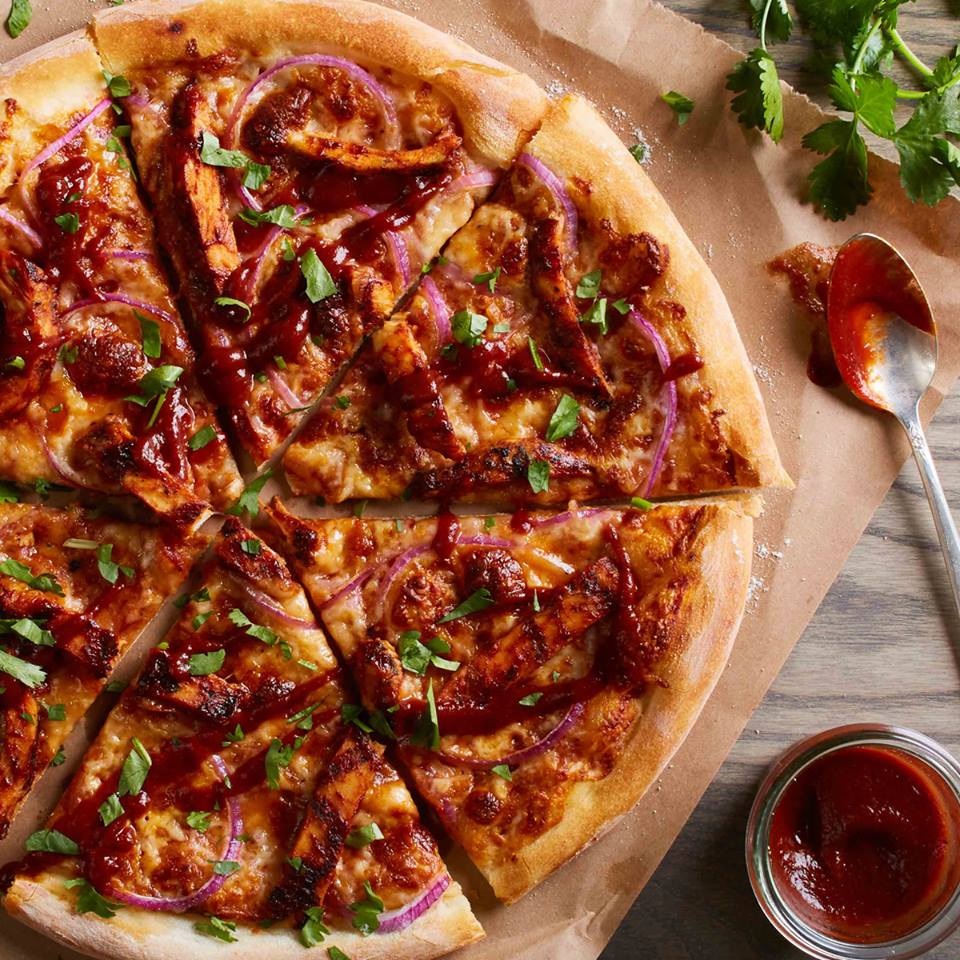
    The new location will feature several of the brand’s classic American menu offerings including the iconic BBQ Chicken Pizza, Cali Club Pizza, BBQ Chicken Salad, and Cedar Plank Salmon, among others.

    CPK’s global presence includes more than 200 locations in 8 countries and U.S. territories, which includes 40 international franchise locations in addition to 16 domestic franchise locations in airports, casinos and stadiums across the United States. While Hong Kong is no longer under COVID-19 lockdown restrictions, all CPK locations remain committed to providing a safe and secure dining experience with rigorous cleaning and safety protocols.
  • Domino’s buys up Taiwan operations

    Domino’s buys up Taiwan operations

    Fast food company Domino’s Pizza Enterprises is to acquire Domino’s Taiwan as part of its global expansion plan.

    The company has entered a binding agreement with Formosa International Hotels under which Domino’s will buy the Taiwan operation for $79 million on a cash and debt-free basis.

    “This is a market with tremendous opportunities for our business and this acquisition provides similar opportunities for the local team,” said Don Meij, CEO and MD at Domino’s Pizza.

    “Our expansion focus has been on identifying opportunities with large total addressable markets and a stable economy.”

    The deal is expected to close in the first half of FY2022.

    Domino’s is Taiwan’s second-largest pizza chain with 157 corporate and franchised stores across the territory. As part of the acquisition, Domino’s Pizza aims to increase the store network to more than 400 stores.

    The company also plans to expand the brand’s footprint in Asia from 1500 stores to 1900 stores by 2032.

    “We intend to expand the store footprint through opening more corporate stores, introducing new, internal, franchisees to the network, helping existing franchises profitably expand their businesses, and investing in the network and our people to drive long-term growth,” Meij added.

  • Domino’s And Nuro To Start Robot Pizza Delivery In Houston, Texas

    Domino’s And Nuro To Start Robot Pizza Delivery In Houston, Texas

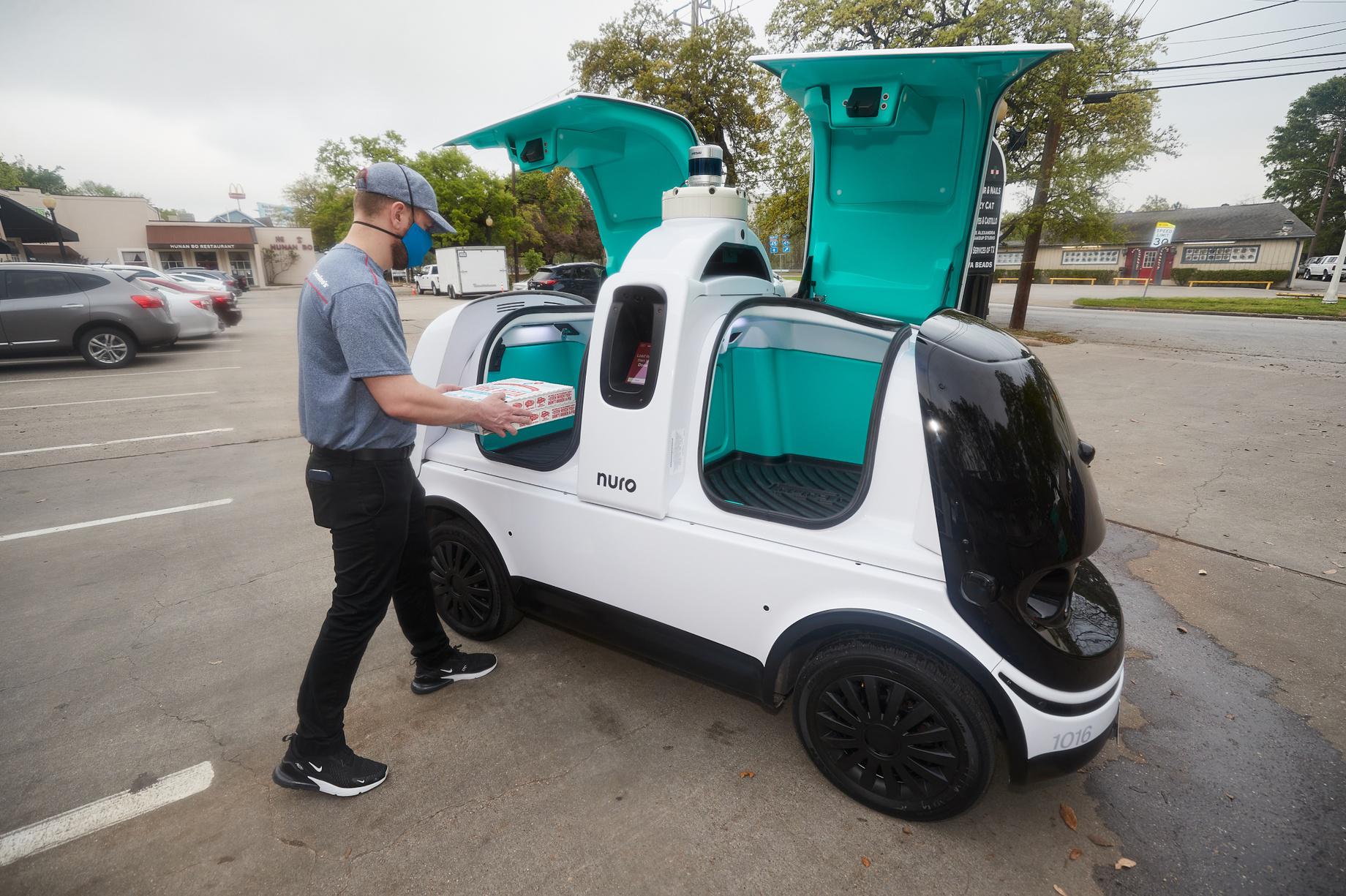
    Domino’s Pizza Inc and Nuro Inc, a Silicon Valley startup, said on Monday they will launch a robotic pizza delivery service in Houston this week as they seek to satisfy increasing online orders during the pandemic. With small, low-speed vehicles to carry packages instead of people, Nuro has been pulling ahead of other autonomous vehicle startups in gaining regulatory approvals. It won U.S. clearance last year to start unmanned delivery services. Nuro recently secured a $500 million including an equity investment from Woven Capital, the mobility investment arm of a Toyota Motor Corp subsidiary, which made its total valuation more than $5 billion, a person familiar with the matter said.

    The delivery service will begin at a Domino’s outlet in Houston before expanding to serve customers in many other locations as part of a long-term partnership, said Cosimo Leipold, Nuro’s head of partner relations. “It’s generally difficult for large companies to hire enough drivers to fill their delivery demand,” Leipold said in an emailed statement to Reuters. Leipold said Nuro, which has already partnered with retailers Kroger Co, Walmart Inc and CVS Health Corp to deliver groceries and prescriptions, said its weekly deliveries had nearly tripled in the first three months of the pandemic. Houston, the fourth-largest U.S. city, has one of the country’s highest road fatality rates. “Houston’s roadways create challenging scenarios for our technology to work with,” Leipold added.

    Nuro and Domino’s had said in 2019 they expected to launch robot pizza delivery late that year. “Nuro and Domino’s have taken a measured approach to prioritize a smooth and safe deployment,” Leipold said. Nuro, founded by two former Google engineers in 2016, previously raised $940 million from the SoftBank Vision Fund.

  • Papa John’s launches in Cambodia

    Papa John’s launches in Cambodia

    US pizza chain Papa John’s is launching in Cambodia with 15 restaurants scheduled to open during the next three years. The company opened its flagship store in Phnom Penh last month.

    “Papa John’s Cambodia team is truly passionate about pizza,” said Peter Xu, Papa John’s Cambodia franchisee.

    “With our ‘Better ingredients – Better pizza’ promise, we look forward to providing local pizza lovers with quality products and outstanding services.”

    Xu also owns a Papa John’s franchise in New York and other business ventures in Cambodia.

    Jack Swaysland, Papa John’s COO, international, said that following a record year of sales and growth, Papa John’s is well-positioned to accelerate international development, a key pillar for the brand’s long-term growth.

    Papa John’s has restaurants in 48 countries, with the latest new openings in France, Spain, Tunisia, Iraq, the Netherlands, Morocco, Kazakhstan, Kyrgyzstan, Poland, the Bahamas, Pakistan, and Portugal. The company is eyeing expansion in Brazil, Japan, and Southeast Asia.

  • California Pizza Kitchen opens new outlets in Manila and Daegu

    California Pizza Kitchen opens new outlets in Manila and Daegu

    The openings in Salt Lake City, Manila, and Daegu, South Korea, mark the beginning of CPK’s emergence from Chapter 11 bankruptcy. Los Angeles-based California Pizza Kitchen (CPK) has opened new franchise locations in Salt Lake City as well as Manila, Philippines, and Daegu, South Korea, as it begins to emerge from its Chapter 11 restructuring process, the company announced.

    CPK is planning three additional new international locations that are already under construction.

    CPK announced in July that it had filed for Chapter 11 protection and had entered into a restructuring support agreement with lenders to equitize most of its long-term debt.

    The new stores are located at the Salt Lake City Airport; the Evia Mall in Manila; and the Daegu Mall in Daegu. The Manila restaurant will be CPK’s fifth location in the Philippines, while the Daegu store is the seventh in South Korea. According to a CPK press release, the openings offer “evidence of the company’s strategic expansion in growing markets and its business and financial health.”

    “This has been truly an unprecedented year due to COVID-19 headwinds, but these openings and future construction highlight the confidence we and our partners have in the strength of the brand and its restructuring plan,” said Giorgio Minardi, CPK’s executive vice president of global development and franchise operations.

    The new Philippines location opened at the Evia Mall after government officials eased COVID-19 lockdown restrictions. All new restaurants will implement rigorous cleaning and safety measures, the press release said.

    “We’re very proud to partner with Pie Co., Seoulland, and HMSHost and expand our franchise relationships in these three CPK markets,” Minardi said. “It takes a lot of trust, passion, and strength during these times to make such an investment, and these openings are a clear indication of that commitment.”

  • Pizza chains post double-digit growth

    Pizza chains post double-digit growth

    With over 180 outlets, three popular pizza chains in Vietnam posted double-digit growth last year with combined revenues of over $83 million.

    American chain Pizza Hut was the revenue leader with VND749 billion ($32.2 million), up 22 percent year-on-year; followed by Thailand-headquartered The Pizza Company, which passed the VND600 billion revenue mark last year, up 24 percent; and Vietnam’s Pizza 4Ps with VND568 billion, up 38 percent.

    As one of the earliest pizza chains established in Vietnam, Pizza Hut has had the advantage of being a market pioneer and has now operated for 14 years with over 90 outlets nationwide.

    But as new players entered the market, its growth fell to below 20 percent annually in the 2015-2018 period; even down to 6 percent in 2017-2018.

    Second-placed The Pizza Company has been rapidly expanding in Vietnam since 2013, its number of stores second only to Pizza Hut at over 70 nationwide. It also took the company just six years to pass the VND600 billion revenue mark, while it took Pizza Hut 12 years to record the same figure.

    While it is in third place with just 20 stores, Pizza 4Ps’s revenue last year was only 8 percent behind that of The Pizza Company.

    It was also the only of the three that posted profits of over VND50 billion in the last two years. Pizza Hut has reported losses in three of the last four years while The Pizza Company has done so for three years in a row.

    Euromonitor International, a London-based strategic market analyst, estimated the value of Vietnam’s pizza market at $120 million in 2017.

  • Yum China eyes US$2 billion HK stock listing

    Yum China eyes US$2 billion HK stock listing

    Yum China – the operator of KFC, Pizza Hut, Taco Bell, and local restaurant chains – is reportedly preparing to list on the Hong Kong stock exchange as early as next month.

    The IPO, should it proceed, is likely to raise as much as US$2 billion, according to Bloomberg, which cited inside sources who asked not to be identified

    Approval for the listing will be sought from the territory’s stock exchange as early as this month.

    Yum China, controlled by its US namesake Yum! Brands, has been working with Goldman Sachs, China International Capital, Citigroup, UBS and CMB International to prepare for the listing.

    Last month, Yum China marked its 10,000-store milestone, opening a KFC in Bo’ao, Hainan province, and CEO Joey Wat said then that the Covid-19 pandemic will not impact this year’s store rollout plan.

    “With our innovation capabilities, strong digital strategy, and resilient business model, I believe we will emerge from this pandemic stronger than ever, and ready to capture the exciting long-term market opportunity in China,” she said.

    Yum China’s total sales fell 11 percent year on year to US$1.9 billion in the first quarter of this year, while net income fell 26 percent to $132 million.

    Michael Pearson, head of corporate equities at Oak Stone Limited, said the specifics of the deal such as timing and size have not yet been finalized and are likely to change in the coming weeks.

    “New York-listed Yum China is another company who join the growing wave of US-listed Chinese firms seeking a trading foothold in Hong Kong due to the deteriorating relations between the US and China,” added James Burnley, head of wealth management at Oak Stone.

    “Regulators in the US are threatening to restrict the access of Chinese companies to the American capital markets if they refuse to let authorities review their audits,” he said.

  • PizzaExpress in takeover talks

    PizzaExpress in takeover talks

    A group of senior bondholders to PizzaExpress is in talks to potentially provide new funding in a deal that could see them take over much of the company from owners Hony Capital.

    Creditors including Cyrus Capital Partners, HIG Capital and Bain Capital Credit have proposed injecting cash into the casual-dining chain in exchange for taking control of its core UK and Irish business, according to people familiar with the matter.

    As part of the deal, Hony Capital may keep the Chinese arm, the people said, asking not to be identified because they’re not authorized to speak publicly. The terms of the proposal aren’t set and could change, they said.

    External spokespeople for PizzaExpress and Bain declined to comment. Representatives for Cyrus Capital and HIG didn’t return calls and emails from Bloomberg seeking comment. Officials at Hony didn’t respond to a request for comment outside business hours.

    After buying the company in 2014, Hony expanded its branch network into China at a time when Britain’s retail sector was starting to struggle amid changing consumer habits. PizzaExpress profits came under pressure and last year the company hired advisers to prepare for talks with creditors over its debt, which stands at around US$1.38 billion.

    Hony bought back some of PizzaExpress’ riskier bonds last year in an attempt to fend off a potential creditor takeover and keep control of the business. Since then, however, the Covid-19 crisis has disrupted its efforts to implement a financial overhaul.

    Early in May, PizzaExpress said it partly used credit lines provided by investment fund HPS to repay a revolving-credit facility and a super-senior loan from Hony Capital, and asked for bondholders’ consent to push back publication of its accounts.

    The possibility of creditors taking control of PizzaExpress was first reported by Britain’s Times newspaper.

  • Ikea and Pizza Hut design table based on pizza box widget

    Ikea and Pizza Hut design table based on pizza box widget

    Swedish furniture chain Ikea and Pizza Hut Hong Kong have teamed up to create a full-sized pizza table shaped exactly like the tiny plastic table (the “sava”) included in pizza boxes.

    The product is part of a collaboration that has also resulted in a new pizza recipe using Ikea’s meatballs – and comes packed in a genuine pizza box for good measure.

    The collaboration has been advertised throughout Hong Kong in a campaign designed by Ogilvy.

    “We’ve been absolutely thrilled to see the launch of the new Ikea and Pizza Hut pizza with a fun, cheeky campaign that has proven to be quite popular with the fans already on the first day,” said Ogilvy Hong Kong executive creative director John Koay. “This is a great pizza, and this campaign really shows how collaborations can really benefit the fans – not just the brands.”

    “This campaign shows the playful side of Pizza Hut,” said Pizza Hut Hong Kong marketing director Wendy Leung, “and that our credentials can move beyond the kitchen into new and interesting collaborations with other brands.”

    The Ikea and Pizza Hut collaboration has already proven popular with 67 percent of units already sold.

  • Minor International’s food division turns a corner while hotels deliver huge profit boost

    Minor International’s food division turns a corner while hotels deliver huge profit boost

    Minor International has boosted its full-year profit by 137 percent, largely due to the consolidation of its recent acquisition, the NH Hotel Group.

    Fourth-quarter profit of US$119.3 million, represented a 569-per-cent increase year on year, but this included a gain on sale of three hotels in the Maldives. Excluding non-recurring items, profit grew 23 percent for the full year and 53 percent for the fourth quarter.

    Minor’s food division, which operates more than 2300 outlets in 26 countries trading under banners including The Pizza Company, The Coffee Club, Thai Express, Bonchon, Swensen’s, Sizzler, Dairy Queen and Burger King, recorded a mild reduction in profit for the quarter, from $8.6 million to $8.2 million.

    “Minor Food continued to invest in its digital capabilities to increase competitiveness and to address the soft market going forward,” the company said in a results release. “Thailand hub’s increased engagement with third-party aggregators (as a complement to its own delivery platform), coupled with continuous new product launches, resulted in much-improved same-store-sales.”

    In Australia, new product launches, a digital loyalty program and a partnership with Uber Eats saw same-store sales turn into positive growth.

    “Improving operations during the quarter, together with the consolidation of Bonchon since mid-November, helped offset softer performance in other parts of the operations. As a result, Minor Food’s performance is showing signs of recovery with a lower decline in its net profit in the fourth quarter compared to other quarters in the year,” the company said.

    After the close of the quarter, Minor International announced a plan to privatize Singapore-based BreadTalk Group, which would see it take a 25.1 percent stake in partnership with founder George Quek and his associates.

  • Hong Kong food-delivery sales down

    Hong Kong food-delivery sales down

    Food-delivery sales in Hong Kong soared 20 percent over Lunar New Year week as consumers chose to stay indoors, sheltering from the coronavirus.

    A spokesperson for Deliveroo told Inside Retail Asia that the Chinese New Year holiday period is usually a busy period for the company, the market leader in food-delivery in the territory.

    “We saw an increase of more than 20 percent in order volume as compared to the week before, potentially indicating that people were choosing to stay home and order in during the Chinese New Year holiday following traditional visits to relatives over the weekend.”

    The company witnessed a 6-per-cent drop in Chinese food orders and a 6-per-cent increase in American food orders when compared with the week before. Taiwanese cuisine also experienced an order growth of around 3 percent over the festive period.

    The spokesperson said Deliveroo had been in touch with all of its 4000 self-employed riders in Hong Kong to share official guidance with regards to the coronavirus, including safety practices.

    “Health and safety is our top priority. We have a customer service team ready to answer any questions customers may have.”

    Asked if the company was scheduling extra drivers to cope with an increase in demand as consumers ordered in rather than venturing out to public spaces, the spokesperson said the company is prepared year-round unexpectedly busy order times.

    A rider-supply planning team which is responsible for the operational performance of the delivery network uses data analytics to match supply and demand, “ensuring the company has the right number of riders on the road, in the right place and at the right time”.

    In Mainland China, Alibaba-owned delivery service Ele.me has been delivering meals for more than 100 restaurant partners to the frontline medical staff at hospitals and treatment centers.

  • Yum China prepares to list in Hong Kong

    Yum China prepares to list in Hong Kong

    Pizza Hut and KFC restaurant operator Yum China is preparing for a second listing in Hong Kong.

    The US-listed firm is currently working on proceedings with China International Capital and Goldman Sachs to establish a footing closer to its base territory. The listing could take place as early as this year.

    Bloomberg revealed that the Hong Kong Stock Exchange is seeing a spike in inquiries about second listings from Chinese companies since Alibaba’s US$13 billion share sale two months ago.

    Yum China operates more than 8900 restaurants across the Chinese market and recently agreed to purchase a majority shareholding in simmer pot restaurant operator Huang Ji Huang.

    Meanwhile, shares in Chinese restaurant chain Jiumaojiu International soared by than 40 per cent when they debuted on the Hong Kong Stock Exchange yesterday. Jiumaojiu has 328 outlets trading under five brands in Mainland China, where it plans to focus its business for now, before expanding into Hong Kong, other Asian markets and North America in the longer term.

  • Hong Kong’s Pirata Group to open new concept The Pizza Project

    Hong Kong’s Pirata Group to open new concept The Pizza Project

    Pirata Group has launched a new concept in Central, called The Pizza Project.

    Located on Peel Street, The Pizza Project will mirror the simple one-page menu format of its popular Pici chain, but with a focus on only pizzas. The Pizza Project will be helmed by chefs Andrea Viglione and Davide Borin and Pici operations manager Nacho Lopez.

    “We believe in engaging and connecting with people in meaningful ways to enrich experiences and make them available to everyone,” says Pici team. “We envision bringing excellent pizza at a fair price, so that everyone can enjoy pizza the same way we did back home,”

  • Malaysian KFC, Pizza Hut operator QSR Brands revives IPO plan

    Malaysian KFC, Pizza Hut operator QSR Brands revives IPO plan

    Southeast Asian KFC and Pizza Hut operator QSR Brands is seeking to reboot its IPO in the fourth financial quarter this year.

    The firm was previously in talks to sell its Malaysia shares, but has since backtracked on the plan and returned to its initial IPO agenda, with its financial performance over the next two quarters crucial to the timing. The firm potentially stands to raise US$600 million in listing.

    QSR Brand’s MD Mohamed Azahari Kamil told Bloomberg the firm will make the necessary announcement at the appropriate time without further comment.

    The company has been assessing investor demand since March.

  • Pizza Express faces tough debt decision

    Pizza Express faces tough debt decision

    Global Italian restaurant chain Pizza Express may be broken up as its Chinese parent Hony Capital resists attempts to negotiate the restructuring of more than £1.1 billion debt.

    According to Bloomberg, citing sources who asked not to be identified, investors who own 70 percent of the most senior-ranked bonds in Pizza Express have pledged to provide new funds to prop up the troubled chain. However, Hony, which paid £900 million for the company five years ago has yet to respond.

    Saro Bos, an analyst at Imperial Capital, described Pizza Express’ capital structure as “unsustainable” in a research note to clients. “We expect the company will eventually have to restructure.”

    Independent analyst Everest Research, has suggested a “sensible way” to restructure Pizza Express would be for the secured bondholders to take over the UK operations with Hony taking over the Chinese business – essentially a split in the operations.

    According to Bloomberg, the bondholders see value in the business, particularly in the UK, where it started, which is achieving 18 percent more sales per store than those elsewhere in the world. Hony bought the business with a vision to expand into Greater China, but this has reportedly failed to deliver the level of returns expected.

    The company recently closed its high-profile Hong Kong International Airport store but opened another in the Jewel Changi development in Singapore.

    “Creditors are concerned that the expansion is draining cash from the business,” reported Bloomberg, citing a report by Imperial Capital.

    Pizza Express’ debt begins to fall due in August next year.