Tag: Property

  • Tanjong Pagar Centre: New tallest building in Singapore after 20 years

    Tanjong Pagar Centre: New tallest building in Singapore after 20 years

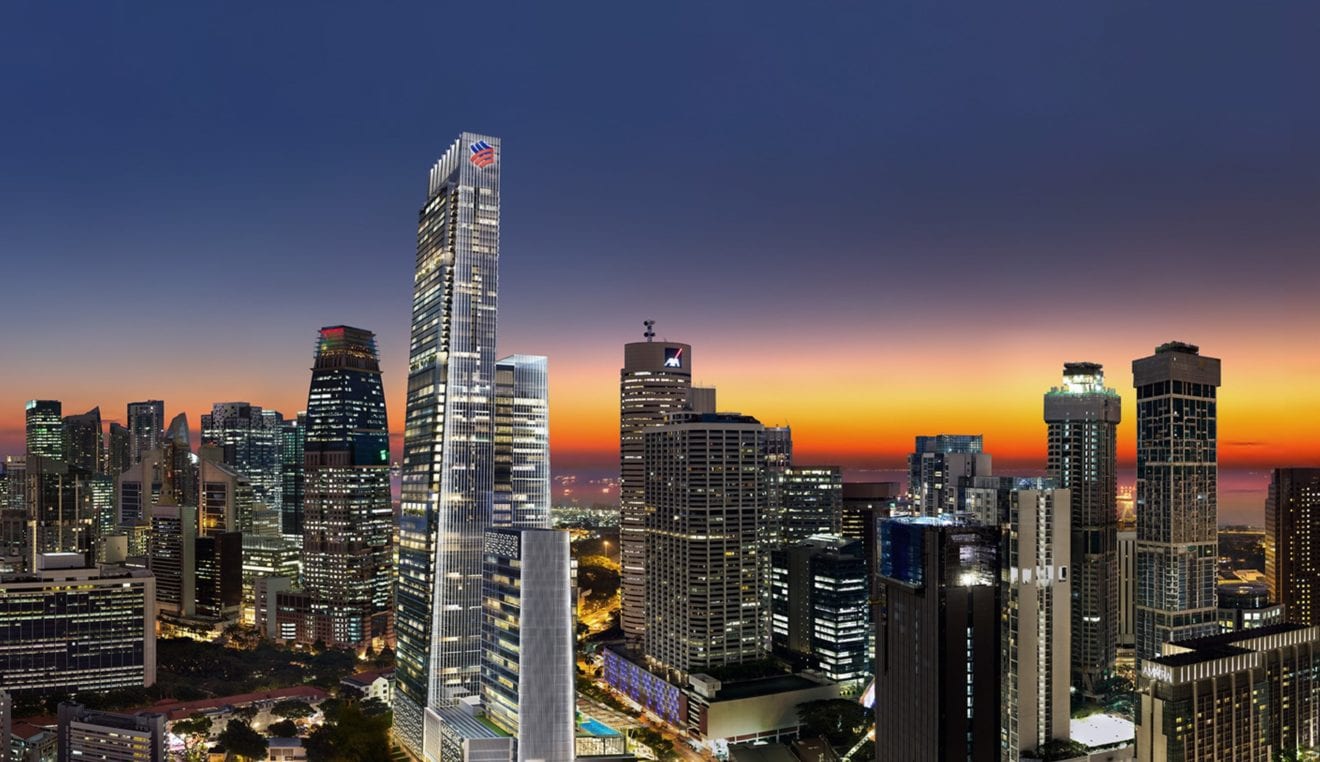
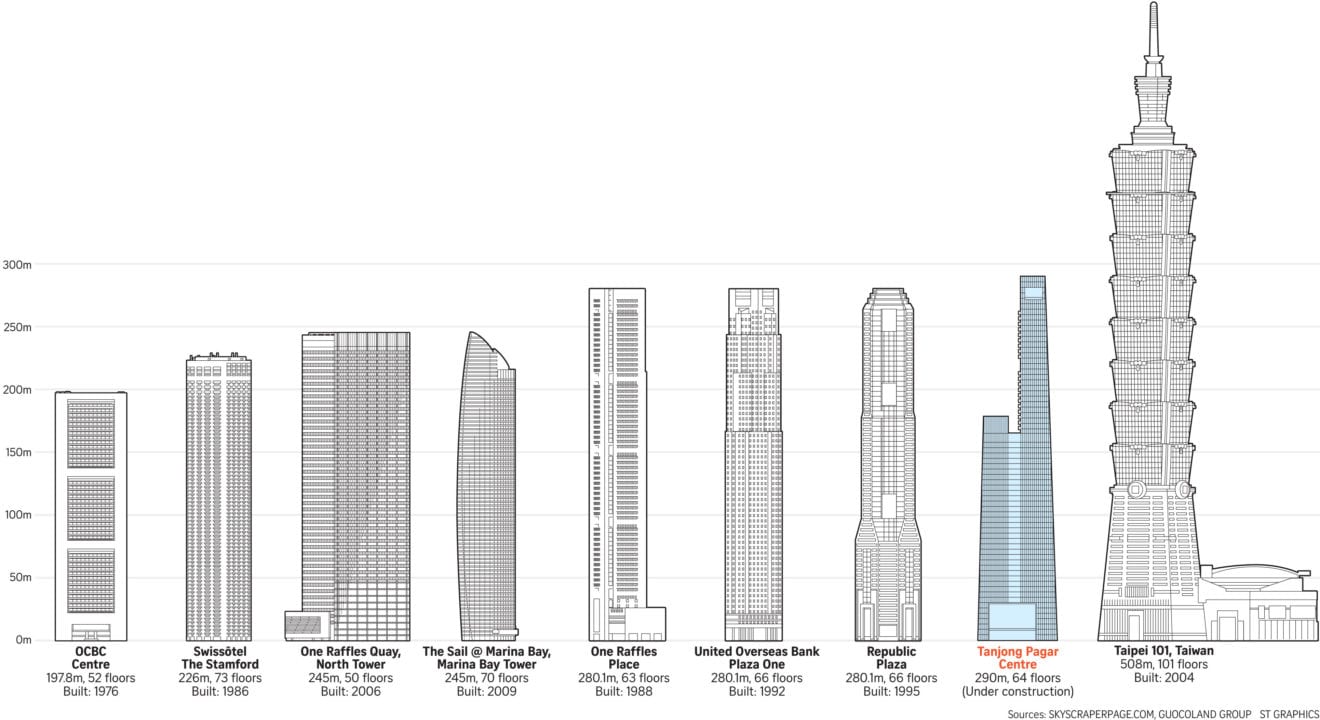
    It’s a record that has held for more than 20 years but by the middle of the year, Tanjong Pagar Centre will claim the title of the tallest building in Singapore – even if it is by just 10m.

    At 290m, Tanjong Pagar Centre will tower over the central business district, displacing UOB Plaza One, One Raffles Place and Republic Plaza, which had jointly held the title.

    The three buildings are about 280m tall – One Raffles Place was completed in 1988, UOB Plaza One in 1992 and Republic Plaza in 1995.

    But the buildings here pale in comparison to some of their overseas counterparts. The tallest building in the world is the 829.8m Burj Khalifa in Dubai; nearer home in Taiwan, Taipei 101 reaches 508m, almost double the height of Tanjong Pagar Centre.

    Last week, Tanjong Pagar Centre’s developer GuocoLand held a topping out ceremony, with National Development Minister Lawrence Wong as guest of honour.

    Sources: SKYSCRAPERPAGE.COM, GUOCOLAND GROUP ST GRAPHICS

    The 64-storey development, which cost $3.2 billion, comprises Guoco Tower, or 890,000 sq ft of Grade A office space; 100,000 sq ft of retail and food and beverage space; a 100,000 sq ft urban park; a 181-unit luxury residential component Wallich Residence; and the 222-room Sofitel Singapore City Centre hotel.

    The take-up rate at Guoco Tower is about 10 per cent. Tenants who have signed on include DNB Asia, Hong Leong Bank, Open Link and Regus. The company is in advanced discussions with tenants who could potentially form another 40 per cent of demand.

    While the office leasing market is not as exuberant as several years ago, there is still activity – from companies looking to upgrade, contract or expand, GuocoLand Singapore managing director Cheng Hsing Yao told reporters yesterday.

    Many interested parties are looking for half a floor, or a floor or two, and they tend to sign on closer to when the building is completed and they can see the product, he said.

    The retail component is 60 per cent committed, with gym operator Virgin Active as the anchor tenant.

    As for Wallich Residence – which was recently renamed from Clermont Residence, to honour its street address – 16 units have been sold since its soft launch at an average price of about $3,200 per sq ft.

    But while the building is the tallest in Singapore, Mr Cheng said it was not given a lofty name because GuocoLand wanted the building to reflect its surroundings.

    “It goes back to why we were interested in this piece of land… It is geographically in the heart of the district, which has offices, residences and hotels, and heritage shophouses… The name will grow and we are confident that we will create a transformation in Tanjong Pagar,” he said.

    And now that the building is close to completion, Mr Cheng said he had seen the view from the top and “it was really amazing”.
  • Hang Lung’s Chan Says Hong Kong Property Market Healthy

    Hang Lung’s Chan Says Hong Kong Property Market Healthy

    Hang Lung Group Ltd.’s Chairman Ronnie Chan said Hong Kong’s property market, which began a correction last quarter, is the “healthiest” he’s seen in 25 years.

    Speaking in an interview Monday with Bloomberg Television, Chan said a price decline of 10 percent to 20 percent in Hong Kong’s housing market is “no big deal.” Chan also said the residential property market in mainland China is getting “healthier and healthier,” after data showed that home-price gains are spreading to more Chinese cities, especially smaller ones.

    Chan’s optimism on the Hong Kong market comes against a backdrop of slumping prices in the city. Secondary residential prices in Hong Kong dropped 6.9 percent in the fourth quarter of 2015, the biggest quarterly slump in seven years, according to data from Centaline Property Agency Ltd. Home sales in December fell 32 percent to HK$29.8 billion ($3.8 billion) from a year earlier, the Hong Kong Land Registry said Jan. 5.

    Hang Lung, which is listed on the Hong Kong Stock Exchange, invests in property in Hong Kong and mainland China through its subsidiary.

    Chan’s outlook for the China retail market was less bullish. He said a combination of falling rents, a weakening domestic economy and the slowdown in retail sales, especially for high-end luxury, created a “triple whammy” for Hang Lung’s shopping malls in the mainland.

    He said that retail outlets in Shanghai and Beijing will weather the storm better than in second and third-tier cities, which “are being hit pretty hard.” One of those cities is Dalian, where Hang Lung just opened a new 2.4 million square foot shopping center.

    Still, Chan said the longer-term prospects for China retail are good.

    “If anything in the economic world is sure, it’s going to be consumerism in China,” he said. “In the long run we are okay, it’s just in the short run it is very very difficult.”

  • Understanding CapitaLand Limited From An Investor’s Perspective

    Understanding CapitaLand Limited From An Investor’s Perspective

    CapitaLand Limited (SGX: C31) is one of Asia’s largest real estate companies with a presence in Singapore, China, Indonesia, Malaysia and Vietnam. It is listed on the Singapore Exchange with a market capitalization of over S$13 billion.

    The company has a diversified suite of real estate businesses. This includes the development of residential and commercial properties, as well as the ownership and management of retail malls, offices, and hospitality properties. In addition, CapitaLand has a number of Singapore-listed trusts under its umbrella and these include:

    • CapitaLand Mall Trust (SGX: C38U), a real estate investment trust (REIT) that owns and manages mainly retail malls in Singapore.
    • CapitaLand Commercial Trust (SGX: C61U), a REIT with a portfolio of predominantly Singapore commercial/retail buildings.
    • Ascott Residence Trust (SGX: A68U), a REIT that holds hospitality-related properties (such as serviced residences) in the U.S., Europe, Asia, and Australia.
    • CapitaLand Retail China Trust (SGX: AU8U), a China-focused REIT that owns a portfolio of retail malls in the country.

    2015 was a year in which the Singapore stock market, as represented by the Straits Times Index (SGX: ^STI), fell by 14%. CapitaLand, however, bucked the trend with a gain, albeit a meagre one of just 1.4%.

    Let’s analyze the company’s financials to understand if it may be a potential investing opportunity now. For this we will be using four metrics, namely the price to earnings (P/E) ratio, price to book (P/B) ratio, net debt to equity ratio, and dividend yield.

    CapitaLand has a trailing 12 months (TTM) earnings per share of S$0.288, according to S&P Capital IQ. With the company’s current share price of S$3.14, this implies a P/E ratio of 11. This is on par with the P/E ratio of the SPDR STI ETF (SGX: ES3) – an exchange-traded fund tracking the Straits Times Index – which stands at 11.

    As at the end of the third-quarter of 2015, CapitaLand has a net asset value per share of S$4.14. This would mean that the company has a P/B ratio of 0.76 at its current share price. What this means is that investors are able to buy the company’s assets, net of all liabilities, at a discount at the moment. Investors might thus be able to get a margin of safety with CapitaLand.

    Moving on, CapitaLand had net debt (total borrowings minus cash) of S$12.5 billion and equity of S$24.5 billion as of 30 September 2015. This would imply a net debt to equity ratio of 51%, which is on the high side, in my opinion.

    Lastly, the company has a dividend yield of 2.9% based on its 2014 annual dividend of S$0.09 per share. It’s worth noting that CapitaLand’s ordinary dividend has been growing over the past few years, rising in 1 cent per share increments in each year from S$0.06 per share in 2011 to S$0.09 in 2014.

    In looking at the four metrics, the negatives appear to outweigh the positives. While CapitaLand’s low P/B ratio may give investors some margin of safety, its high net debt to equity ratio could add some risk. Moreover, CapitaLand’s P/E ratio and dividend yield are not very attractive.

    To sum it up, the four metrics seem to suggest that CapitaLand may not be a potential investing opportunity for investors currently. That being said, a deeper look will still be required before any firm investing conclusion can be reached – the four metrics only represent a useful starting point for further research.


  • SM Malls proves disaster resiliency makes business sense

    SM Malls proves disaster resiliency makes business sense

    SM Malls shopping centres – now a 56-strong network across the Philippines – have evolved into sustainable structures that are proving to be valuable investments in the event of the frequent natural disasters which strike the nation.

    In the last few years, SM malls have consciously integrated disaster risk reduction into design and operations in the midst of worsening effects of climate change.

    Speaking before the annual meeting of the United Nations International Strategy for Disaster Risk Reduction (UNISDR) in London, recently, SM Prime president Hans T Sy shared that the company has taken major steps to ensure the longevity of its developments and safeguard its host communities given this context.

    SM’s malls, with a total gross area of over 7 million sqm, have an average daily foot traffic of over 4 million people and some 15,000 tenants.

    “My experience has proven that investing in resilience of our company’s assets makes good business sense. Depending on the location and assessment of the project, around 10 per cent of capital expenditure is allocated to Disaster Resiliency,” said Sy who is the only Filipino to be part of the UNISDR’s Private Sector Advisory Group.

    “We see the entirety of our malls as a city in itself, with locators, employees, customers and the communities we serve,” he added.

    One of the latest SM malls to open, SM City Cabanatuan in Nueva Ecija, is a good example of how SM Prime has adapted to climate change by making its infrastructure more disaster resilient.

    Cabanatuan was affected by Super Typhoon Lando (International name: Koppu) which caused massive flooding, mudslides and power outages that affected 9 million people in the northern region. The mall’s design allowed the free flow of creek floodwater during extreme flooding while the lower ground structure served as a flood catchment, thereby reducing the risk of flooding and ensuring the safety of the surrounding communities. The mall likewise served as a refuge for over 400 customers and families in the area at the height of the typhoon.

    Over the past several decades, SM Prime has made significant inroads in incorporating disaster resiliency in its centres. The best example is SM City Marikina which opened in 2008 and was built on concrete stilts to allow flood water from the nearby Marikina River to flow freely. When Typhoon Ondoy (International name: Ketsana) flooded most of Marikina City, the mall stood high above flood waters and all its tenants were undamaged and safe.

    The roads surrounding the Marikina mall are at ground level. Anticipating floods during heavy rains at that level, SM Prime constructed the first two levels of SM Marikina as parking areas without wall enclosures. The upper parking level was constructed at an elevation of 20.5 meters. During extreme floods, the parking floors are vacated and the supportive stilts allow for the free flow of water through the lower levels, while the business units continue to operate safely as was seen at the onset of Typhoon Ondoy (Ketsana) when a huge part of Marikina was flooded. The mall became a refuge for stranded people and food seekers. It also became a re-packing center for relief goods.

    SM City Masinag in Antipolo, SM BF Paranaque, SM Angono and SM San Mateo both in Rizal province were provided with catch basins underneath the mall to hold water during flooding.

    SM Muntinlupa in Alabang, was also designed to ensure the safety of the customers even if it was found to be located on a “discontinued major fault line”. Its design features a slab system that minimises the effects of earthquakes.

    The Mall of Asia Complex in Pasay City, one of SM Prime’s biggest investments located on 60 hectares of reclaimed property, has also been been designed for resiliency. He said that the main feature of the complex is that all structures were constructed at a height of 4.5 meters above the National Building Code requirements.

    “SM Prime places crucial importance on disaster resilience, not as an additional cost, but as part of our core business strategy. It allows us to serve our communities better, to be competitive, to increase our value and bottomline. But most of all, disaster resilience ensures the safety of our customers and the communities where we operate,” Sy said.

    Aside from introducing sustainable features in its malls, SM Prime also educates and updates its partners and stakeholders on disaster risk reduction (DRR) through internal procedures and various forums, such as the Green Retail Agenda, Business Case for Disaster Resilience, Top Leaders Forum and others. It also values and supports the government’s programs and initiatives in their information and educational campaigns such as the first Metro Manila Shake Drill for Earthquake Preparedness.

    SM Prime also supports DRR projects such as the Weather Philippines Foundation’s Automated Weather Station (AWS) which specialises in local weather forecasting.  All SM malls have also installed the AWS device which provides online five-day local weather forecasts as a form of public service in support of the government’s weather forecasting.

    SM has also donated 1000 units of disaster resilient houses to victims of Typhoon Haiyan, the strongest storm to make landfall in the southern part of the Philippines.

    SM Prime set up its efforts to lead Philippine businesses and communities disaster-resilient through the Private Sector Alliance for Disaster Resilient Societies (Arise), a worldwide initiative spearheaded by the UNISDR to create more resilient societies.

    Arise was introduced for the first time in Southeast Asia during the 2015 Top Leaders Forum at the SMX Mall of Asia in Pasay City.

    Arise, which was launched in London last September, was created in order to implement the Sendai Framework for Disaster Risk Reduction, a 15-year global roadmap adopted in March 2015 which aims to curb disaster mortality and economic losses substantially.

  • Qianhai Chow Tai Fook mall opens in Shenzhen

    Qianhai Chow Tai Fook mall opens in Shenzhen

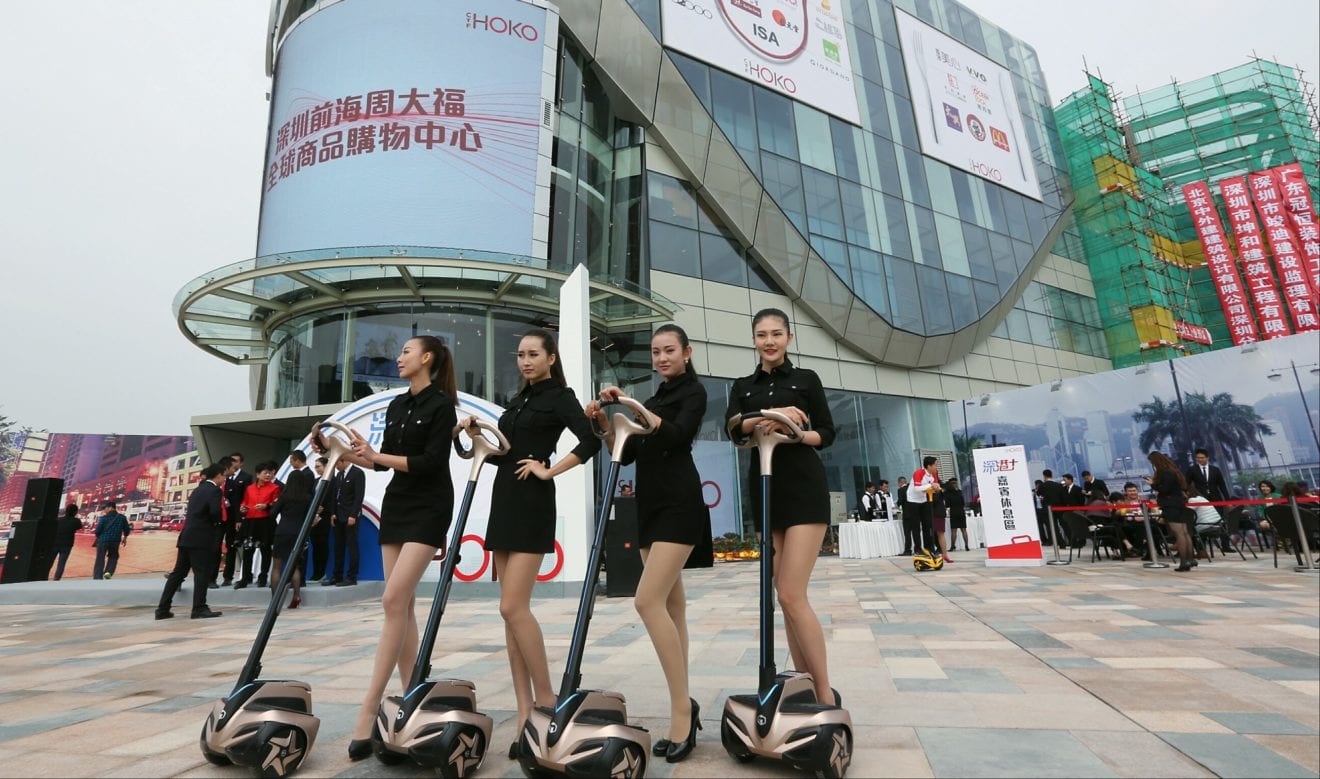
    The new Qianhai Chow Tai Fook mall opened its doors in Shenzhen on Monday – selling Hong Kong sourced goods to mainlanders at prices said to be cheaper than in Hong Kong.

    Officially named the Qianhai Chow Tai Fook Global Goods Shopping Center, the 19,000 sqm mall is a joint venture between jeweller Chow Tai Fook and two investment partners.

    A total of 21 retail brands opened stores in the first phase of the development opened yesterday, including beauty products chain Sa Sa, fast fashion brand Giordano and CRCare. They are joined by a range of food and infant formula retailers.

    More stores will join the development when stage two opens next summer.

    The HK$423 million shopping centre has been built inside the Shenzhen special economic zone, taking advantage of tax concessions and allowing mainlanders to buy Hong Kong sourced goods without crossing the border.

    Shenzhen has a population of 20 million creating a huge potential catchment for the development.

    Adrian Cheng Chi-kong, executive director of the Qianhai Chow Tai Fook mall, said it will not be competing with the border shopping mall planned for the Hong Kong side of the border, explaining the two properties will cater for different clienteles.

  • Bangkok retail rents hold firm despite competition

    Bangkok retail rents hold firm despite competition

    Bangkok’s retail market is now “the most competitive it has ever been” – yet there is another 1.1 million sqm of retail space under construction.

    When complete, by the end of 2017, that will bring the total completed supply of mall space in the Thai capital to nearly 8 million sqm – all in a market currently characterised by weak consumer sentiment and slow retail sales growth.

    But despite the intense competition, a leading property expert says Bangkok retail rents – in malls, anyway – are holding firm.

    In a column (which you can read in full here) written for the Bangkok Post Spectrum magazine CBRE Thailand MD Aliwassa Pathnadabutr, says the proliferation of new brands setting up shop in Bangkok, and the expansion of existing branded chains is fuelling unprecedented competition in the city.

    “In the upcoming festive season, we expect to see major retail developers competing with heavy promotions and retail events in a bid draw consumers and capture their holiday spending,” Pathnadabutr asserted.

    “The expansion by retail developers in the CBD and suburban areas, entry of new local and international retailers, combined with a challenging economic outlook and weak consumer sentiment is all adding up to the mix.”

    Pathnadabutr says the recent openings of EmQuartier and Central Embassy have intensified competition for existing CBD malls like the high-end Gaysorn, and the giant CentralWorld and Paragon centres.

    “As the major retail centres are chasing after the same group of consumers, retail events and promotions have become ubiquitous leading to a cut-throat competition and heightened promotion campaigns, particularly gearing up to the festive season where consumer spending typically peaks.”

    Expansion and development of suburban centres – like the Future Park Rangsit expansion which marked its soft opening in the last fortnight – may draw customers away from the CBD malls, although Pathnadabutr expects their impact to be limited and growing tourist base will keep the numbers up in the larger centres.

    Despite the competition, retail rents have held their own in Bangkok, according to Pathnadabutr.

    “It is often difficult to measure retail rents as there is a big range even within a single development. Prime retail rents in Grade-A downtown shopping centres range from THB1800 to 4500 (US$50 – $125) per sqm per month for ground floor spaces and THB1200 to 2380 (US$33 – $66) per sqm per month for suburban malls.

    “This level has been maintained throughout 2015 despite the growing competition.”

  • Food will dominate Damansara City Mall

    Food will dominate Damansara City Mall

    A new shopping centre under construction in Malaysia’s capital city, Kuala Lumpur, plans to set itself apart from rival destinations with a dominating food offer.

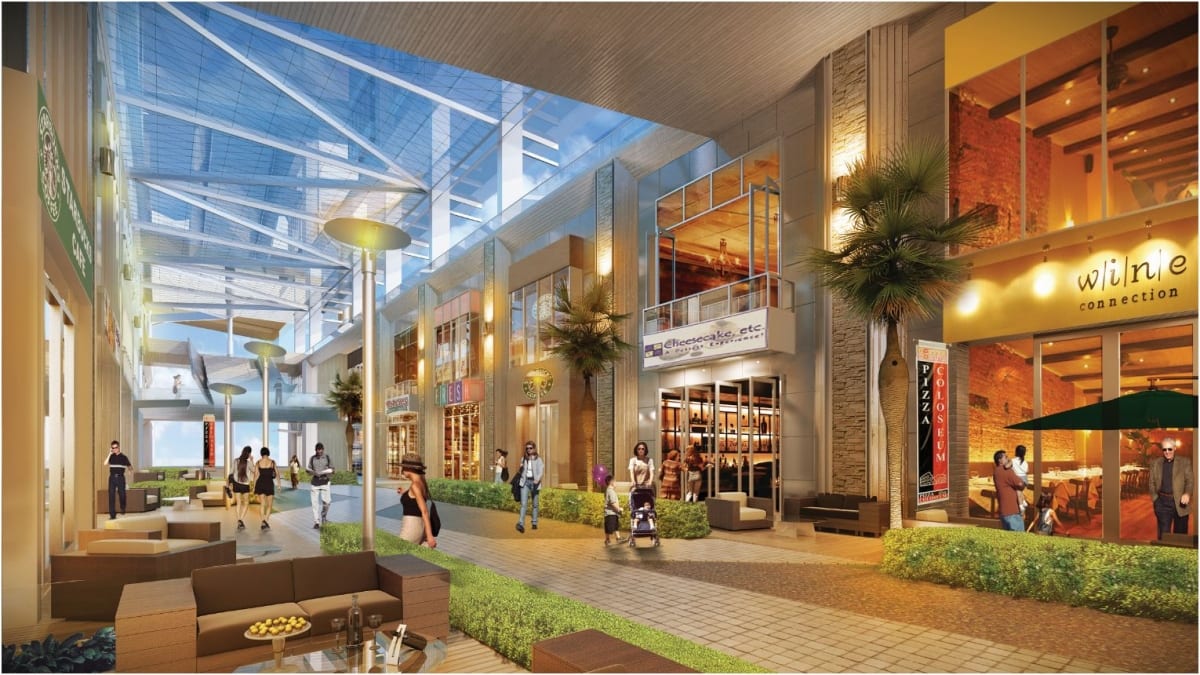
    The four story Damansara City Mall, scheduled to open in April 2016, has a net lettable area of 17,652 sqm. And a full 75 per cent of that space will be dedicated to food and beverage tenancies. The balance of the space will be for retail and services.

    Damansara City Mall senior manager Christine Yeap told a recent media briefing the mall is being pitched at the 12,000 working population nearby, along with neighbouring communities of Menara Milenium, Damansara Heights and Bangsar – a combined catchment of around 100,000.

    “The location of the mall is a step ahead of other malls with easy accessibility from nearby areas.

    “We have quick-serve food outlets on the lower ground level for the busy, working crowd as well as a range of new restaurants in the market.

    “Coupled with a mix of tenants as well as interesting architecture and interior, the mall creates a comfortable and safe environment for visitors,” she said.

    The new mall is located at Jalan Johar in Damansara Heights, and the developer is Guocoland (M) Bhd, the property arm of Hong Leong Group. It is designed by Blu Water Studios.

  • SM Seaside City opens in Cebu

    SM Seaside City opens in Cebu

    The newly opened SM Seaside City Cebu is SM’s third largest mall in the country measuring 430,000 sqm in gross floor area.

    And the property developer SM Prime describes the mall as one of the Philippines’ most picturesque, showcasing not just architectural excellence but also resilience in design.

    Due to its proximity to the Mactan Channel, the mall draws marine inspiration from the “nautilus”. The sea creature’s unique shape and logarithmic pattern guided the building’s architectural shape and design. The nautilus, a spiral shell with pale, pearly chambers, is

    one of the finest examples of natural beauty and elegance.

    Arquitectonica’s Peter Brannan, MD for Asia says translating this design into mall features meant not only providing the usual retail, service and transport facilities.

    “It also has to act as the social hub, much like the marketplaces or town squares in the old, traditional communities,” Brannan said.

    This prompted Arquitectonica to propose “community” features such as a landscaped roof deck that can act like a “Central Park” called the Sky Park.

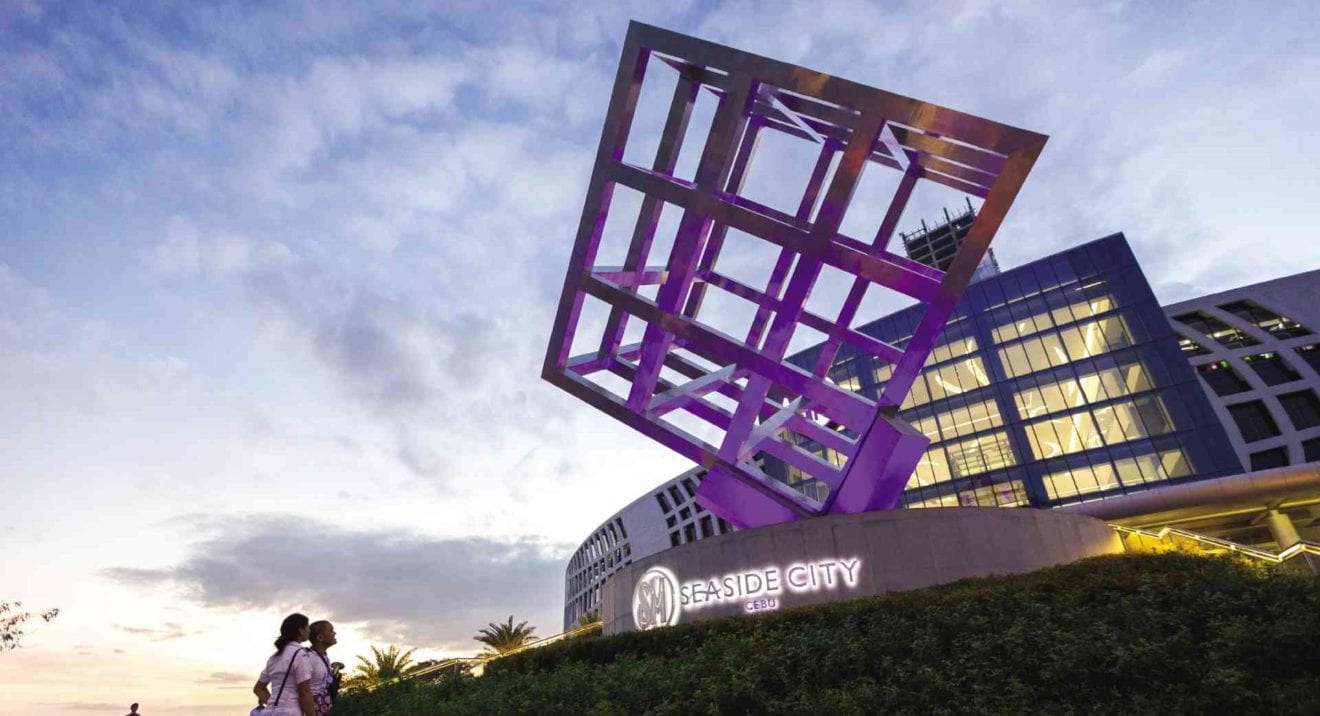
    The design also includes a central courtyard with a 150 meter modern bell tower which can be the centerpiece of community events like fiestas or New Year Event countdowns. Add to this the “Cube” sculpture at the facade of the mall which is an anagram for “Cebu”, serving

    currently as one of the more popular “selfie” spots for shoppers and tourists. Nearby at the complex is the Chapel of San Pedro Calungsod with a hundred walls, which has emerged as one of the City’s favorite wedding destinations.

    Now in operation, the mall makes this communal spirit much more apparent.

    “We understand that Cebuanos have a very strong sense of community, so we wanted to make sure we gave them a venue in which they could celebrate this communal spirit,” Brannan said.

    The Sy family envisioned the 30 -hectare SM Seaside City complex as a regional destination, bringing together local and foreign tourists from all walks of life mainly from the Visayas and Mindanao regions.

    Beyond beauty is sustainability

    Beyond the mall’s aesthetics, SM believes that investing in sustainability safeguards the welfare of the customers, the tenants, and the mall’s host communities.

    SM Prime Holdings president Hans T Sy said during his speech at the UNISDR General Meeting in London in November that depending on the location and assessment of SM’s projects, around 10 per cent of capital expenditure is allocated to disaster resilience which requires making the mall structure resistant to risk from potential disasters.

    “My experience has proven that investing in resilience of our company’s assets makes good business sense,” Sy said.

    For its seaside mall, Architect Fides Hsu, VP of SM Engineering, Design and Development Corp, said SM Prime hired design experts who gave extra attention to the challenges of weather, especially typhoon and flooding given its location by the sea. SM Prime backfilled soil onto the reclaimed property specifically on the roads so that the whole complex where the mall sits is elevated by approximately 4.5 meters from the city roads. Due to its elevation, a lower carpark level was created to accommodate 1700 vehicles.

    Furthermore, all necessary electrical and mechanical equipment are located on the roof deck.

    In terms of seismic design or provisions for earthquakes, the building structure of SM Seaside was designed in compliance with Philippine building regulations such as the 2010 National Structural Code of the Philippines (NSCP), the Uniform Building Code (UBC 97), and the International Building Code (IBC 2010).

    The mall also uses water treatment facilities that recycle used water by 90 per cent and re-use this for the cooling tower, toilet flushing and irrigation.

    To reduce energy consumption, the mall’s air conditioning uses a Building Management System (BMS) and high efficiency chillers. In addition, all storefront windows and skylights of the mall use double glazed low e-glass which prevent heat from penetrating by as much as 78 per cent. Furthermore, the whole mall is equipped with LED lights, while mall escalators have an “auto start and stop” feature that is activated when in use or otherwise. Elevators are inverter type systems that save power of up to 30 per cent.

    “Even way back in the mid 80s when SM started building its malls, Hans T Sy has been responding to issues of sustainability and disaster risk resilience. The older malls of SM, for example, have long been using the BMS and variable frequency drives for air conditioning that control mechanical motors to maximise usage of power,” Hsu said.

  • Bangkok retail market to increase more than 1 million sq.m.

    Bangkok retail market to increase more than 1 million sq.m.

    The entry of new local and international retailers, combined with a challenging economic outlook and weak consumer sentiment is all adding up to the mix.
    Despite a slowdown in retail sales, there is currently 1.1 million sq.m. of retail space under construction in Bangkok, which will bring the total completed supply in 2017 close to 8 million sq.m.
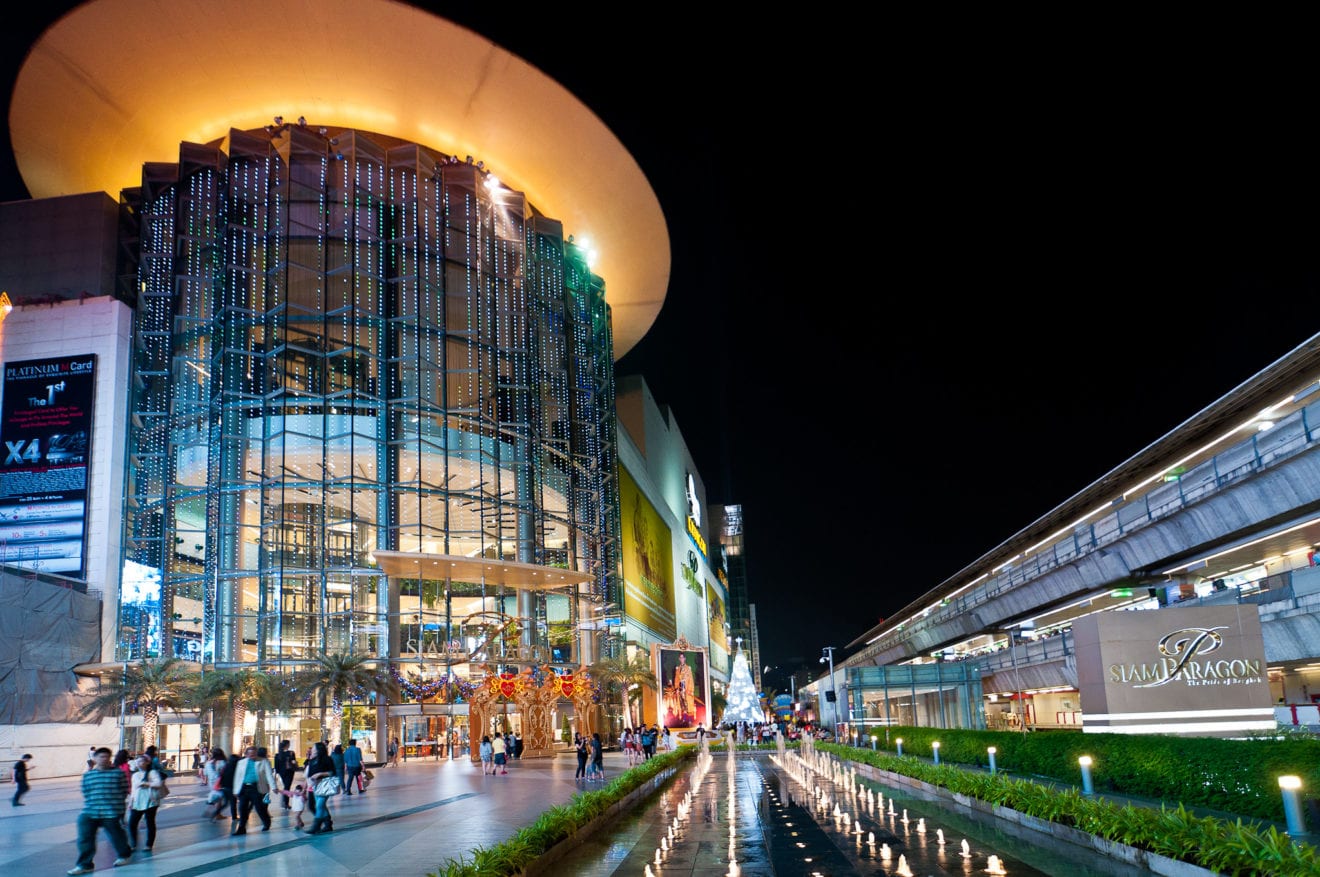
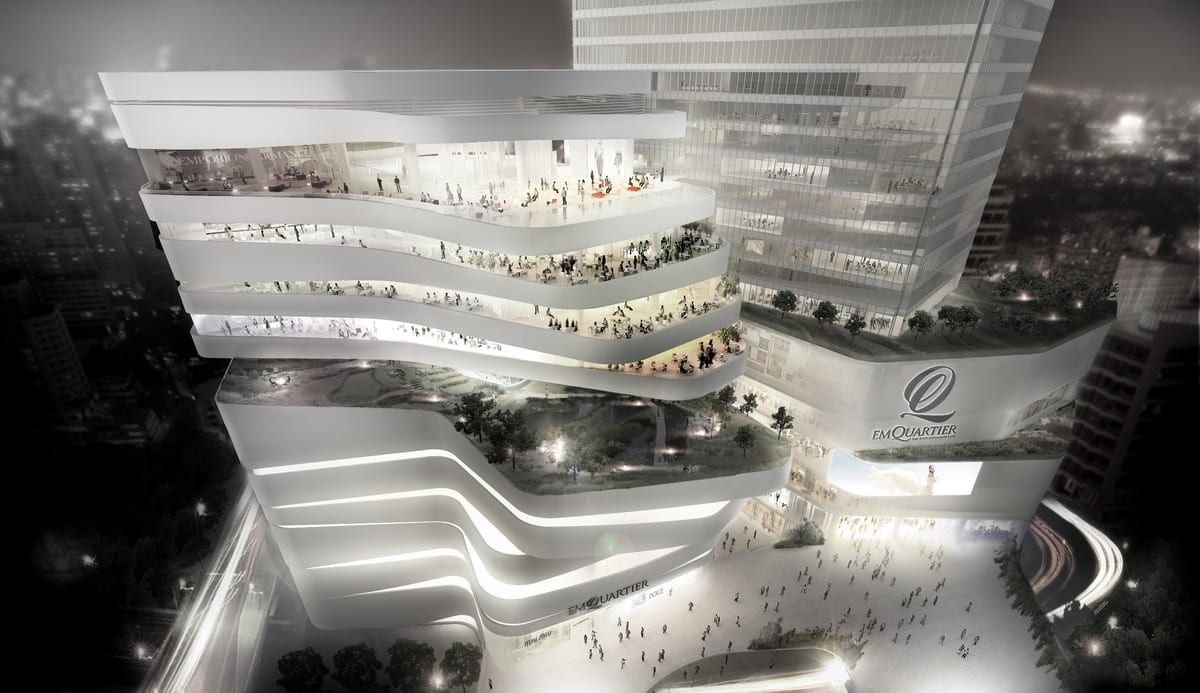
    Within the CBD, the latest major retail developments to open are EmQuartier and Central Embassy, intensifying competition for existing malls such as Siam Paragon, Gaysorn and CentralWorld.

    In addition, big developers continue to renovate their downtown retail centres such as Siam Discovery and MBK.

    Bangkok retail market, EmQuatier
    As the major retail centres are chasing after the same group of consumers, retail events and promotions have become ubiquitous

    As the major retail centres are chasing after the same group of consumers, retail events and promotions have  become ubiquitous leading to a cut-throat competition and heighted promotion campaigns, particularly gearing up to the festive season where consumer spending typically peaks.

    The expansion by major retail developers to suburban areas may also in part draw consumers away from CBD malls, although the impact may be limited.

    Bangkok’s suburban areas today are well served by quality retail centres, reducing the need for consumers to travel into the CBD.

    To the North, Zpell@Future Park has just opened on 27th November. Opened on the same day in Eastern Bangkok on Ekamai-Ram Intra is Central EastVille, adding competition to existing malls in the area such as Crystal Park and Crystal Design Centre.

    The Mall Group is also currently planning The Bangkok Mall on Bangna-Trad which is expected to be completed in 2017. To the West, CentralPlaza WestGate recently opened in August in the Bang Yai area, adding a major retail centre to an area where there have been limited retail developments.

    The Riverside will also get its own luxury shopping complex in 2017 with the opening of IconSiam which will comprise a 500,000 sq.m. retail and entertainment complex, part of which includes a 36,000 sq.m. 7-floor Takashimaya department store from Japan which will be Thailand’s first.Amidst this competition, the segment that will find most challenging is community malls.

    Community malls will be forced to adjust their strategies and have clear unique selling points and propositions to draw in consumers; otherwise they are likely to be overshadowed by major retail developments that have a bigger events and promotions budget.

    It is essential for community mall developers to understand their target consumers’ needs and retain anchor tenants in order to compete in the long-term.

    The plus side of the retail expansion is that it will create room for both domestic and international retailers to expand to suburban areas.

    International fashion brands such as H&M, Uniqlo, Aldo and Charles & Keith have already expanded to CentralPlaza WestGate.

  • Retail landlords headed for another horrible year in 2016, says CBRE

    Retail landlords headed for another horrible year in 2016, says CBRE

    Retailing landlords will likely continue to feel the pinch in coming times, as the ongoing slump in tourism is poised to weigh negatively on capital values in prime shopping districts, thumping prices a further 20 per cent next year, on top of an expected 20 per cent drop this year, according to CBRE.

    But CBRE predicts the office market will be a bright spot next year as the potential launch of Shenzhen-Hong Kong Stock Connect will drive up demand from mainland firms.

    “Retail rents will continue to trend down as leases expire, but given a lower base of comparison, the pace of decline is expected to decelerate,” according to CBRE’s Hong Kong Commercial Real Estate Review & 2016 Preview.

    It predicts that rents will track the decline in capital values, tumbling as much as 35 per cent this and next.

    “Sales momentum of upmarket goods will remain slow but mass market sales should continue to have more resistance,” CBRE said.

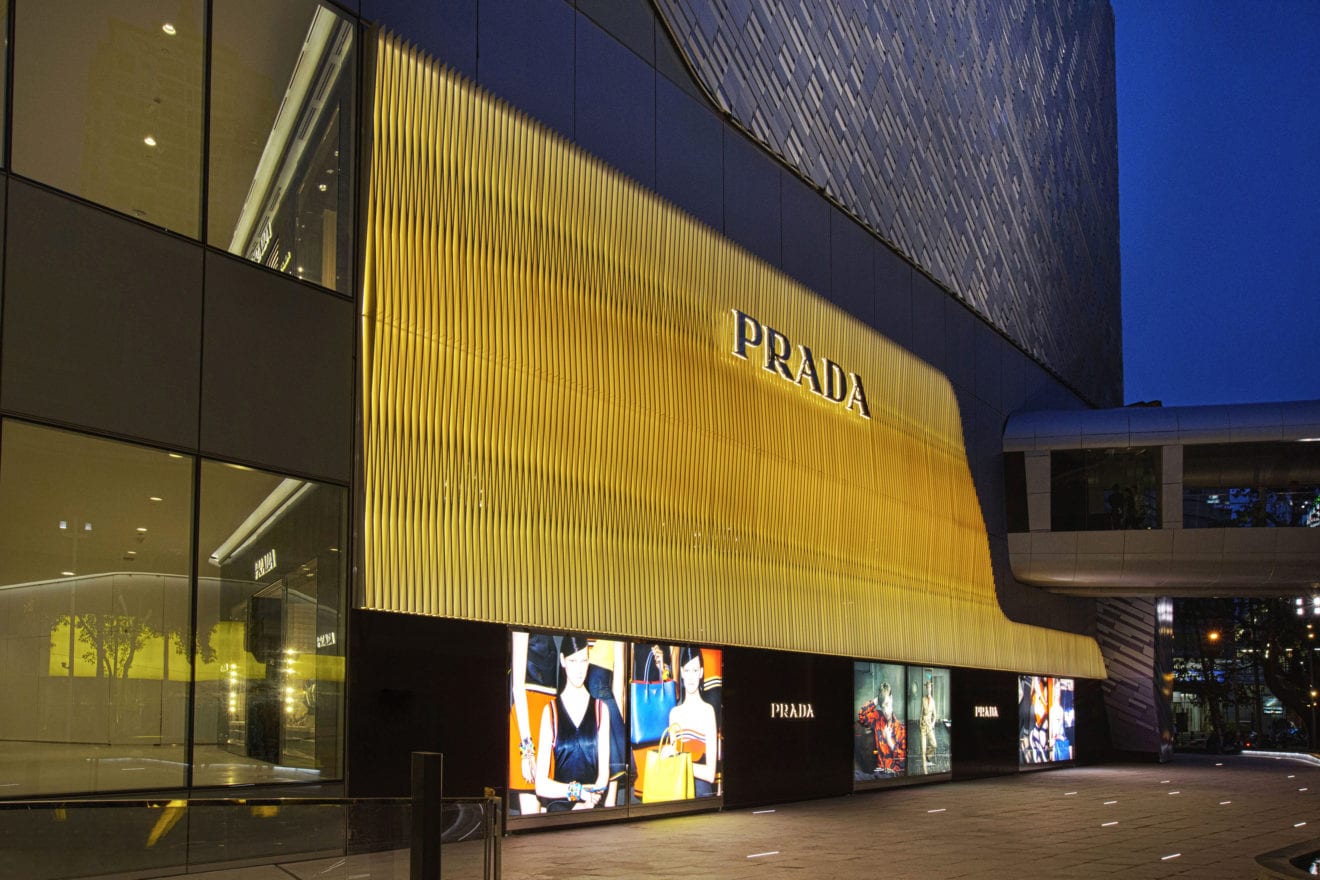
    Symptomatic of the woes facing the luxury retail sector, on Friday high-end brands Prada, Miu Miu and Gucci unexpectedly offered up to 50 per cent discounts as a way to drum up sales and attract long queues of shoppers, including those from the mainland.

    In a stark contrast to the depressed retail market, CBRE expects overall office rents to increase 10 per cent for 2015, and a further 10 per cent next year.

    “Next year will be another year of landlords’ market but the rental cycle is approaching the peak,” CBRE said.

    In 2016 office rents in Central would register the largest year on year growth, climbing 10 per cent, after rising an estimated 15 per cent this year.

    The sector would also benefit from the limited supply with just 1.4 million square feet due for completion next year, it said.

    CBRE also expects the capital value of office real estate could rise as much as 10 per cent next year, after 5 per cent growth this year.

    Two noticeable office transactions in November offered an indication of the upwards momentum in the sector. Mainland developer Evergrande Real Estate agreed to buy the 26-storey Mass Mutual Tower in Wan Chai from Chinese Estates Holdings for a record-breaking HK$12.5 billion.

    On the same day, China Life, the mainland’s largest insurer, announced the purchase of an entire office tower with a two-storey retail block at One HarbourGate in Hung Hom for HK$5.85 billion from Wheelock & Co.

  • Restaurant operators regain a presence in Hong Kong

    Restaurant operators regain a presence in Hong Kong

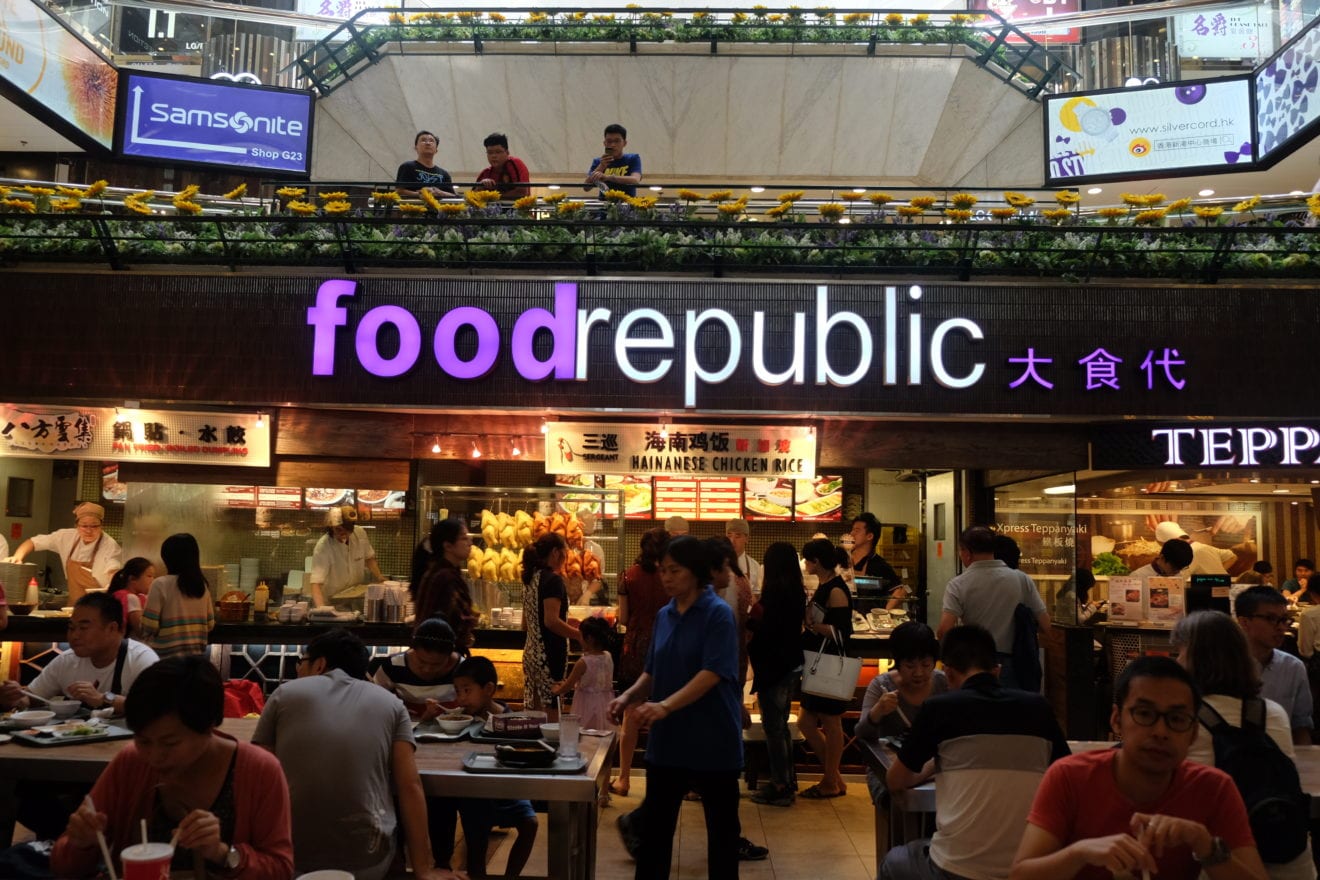
    Restaurant operators have regained their presence in Hong Kong’s retail market where an increasing number of top-end retailers have surrendered their spaces in the wake of weakening spending on luxury items and a decline in tourist arrivals.

    JLL said that in 2013 food and beverage operators accounted for only 29 per cent of the leasing deals it handled. This year, that figure has increased to more than 50 per cent.

    “There are in discussions with a number of overseas restaurants to open their first outlets in Hong Kong as part of their their Asian expansion plans,” said Michelle Chiu, an associate director at JLL’s retail department. “They come from the United States, Europe and Southeast Asia.”

    A new trend of incorporating food and beverage elements into their retail businesses has been seen among luxury fashion brands, including Franck Muller and Vivienne Westwood. And then, there is the lifestyle concept, such as the collaboration between Mercedes-Benz and Maximal Concepts, which has led to the creation of Mercedes Me.

    At more than 4,000 square feet, Mercedes Me has taken the space formerly occupied by Porsche Design and Geox on the ground floor of Entertainment Building in Central at an estimated monthly rental of HK$4 million. Meanwhile, Vivienne Westwood opened its first cafe in Tsim Sha Tsui and Swiss luxury watch maker Frank Muller has launched a fine-dining restaurant in Causeway Bay.

    To capture growing leasing demand among restaurants, JLL has formed a seasoned food and beverage team to cater for the industry.

    Terence Chan, head of retail at JLL, said the team will offer specialist services to local operators, international restaurant groups and new-to-market entrepreneurs alike.

    “Apart from the traditional F&B agency services including site introduction, lease negotiation, location analysis, tenant representation and market entry strategy and analysis, we also provide project coordination services. We will assist the clients in liaising with the interior designers, licensing consultants, contractors and maintenance vendors for set-up of their restaurants,” Chan said.

    Helen Mak, the retail services group head at Colliers International, believes the softening retail leasing market will provide more opportunities for the return of restaurants given the high rents the international brands could afford to pay just a few years ago.

    “With a restaurant inside the shop, it will also help to retain customers inside longer as well as serving as a venue for promotional events,” Mak said.

    She said shopping centres intend to allocate more space for restaurants in view of the difficult retail market.

    But the rapid expansion of restaurants could increase direct competition as most shopping centres plan to devote more space for food and beverage operators.

  • BHG REIT IPO to raise $120 million

    BHG REIT IPO to raise $120 million

    Chinese retail player Beijing Hualian Group is planning to list its BHG REIT in Singapore this year.

    If it proceeds, it will mark just the first IPO on the Singapore SGX Mainboard in 2015.

    The BHG Retail REIT wants to issue 150.1 million shares at $0.80 per unit which gives the listing a value of $120 million.

    BHG REIT’s initial portfolio will comprise a 60 per cent interest in Beijing Wanliu Mall in Beijing; Hefei Mengchenglu Mall in Hefei’s North First Ring retail hub; Chengdu Konggang Mall, in an emerging residential area in Chengdu; Dalian Jinsanjiao Property, leased to a hypermarket; and Xining Huayuan Mall in Xining’s Ximen-Dashizi retail hub. These properties have a combined gross floor area of about 263,688 sqm.

    Under its plan, BHG’s existing Singapore-incorporated units Beijing Hualian Group (Singapore) International Trading and Beijing Hualian Mall (Singapore) Commercial Management, will subscribe for 148.31 million and 24.636 million shares, respectively.

    And it has four cornerstone investors already on board who would subscribe for a total of 169.651 million units. These investors are China Hi-Tech Holding Company, China Life Insurance Company, China Merchants Bank Asset Management and Dr Chanchai Ruayrungruang.

    With all these investments rolled together, the gross proceeds of the IPO would come to $394.2 million and give the REIT a market capitalisation of about $597.2 million post float.

    The listing is sponsored by Beijing Hualian Department Store Company, part of the BHG Group, with more than 20 years in retailing. The company manages retail properties, operates supermarkets and hypermarkets and retail distributorships as well as a luxury department store in Beijing.

    “As part of the BHG Group, BHG Retail REIT will benefit in terms of acquisition growth in China where the sponsor has an active real estate presence,” the group says in its prospectus.

  • Future Park Rangsit Mall openened extension

    Future Park Rangsit Mall openened extension

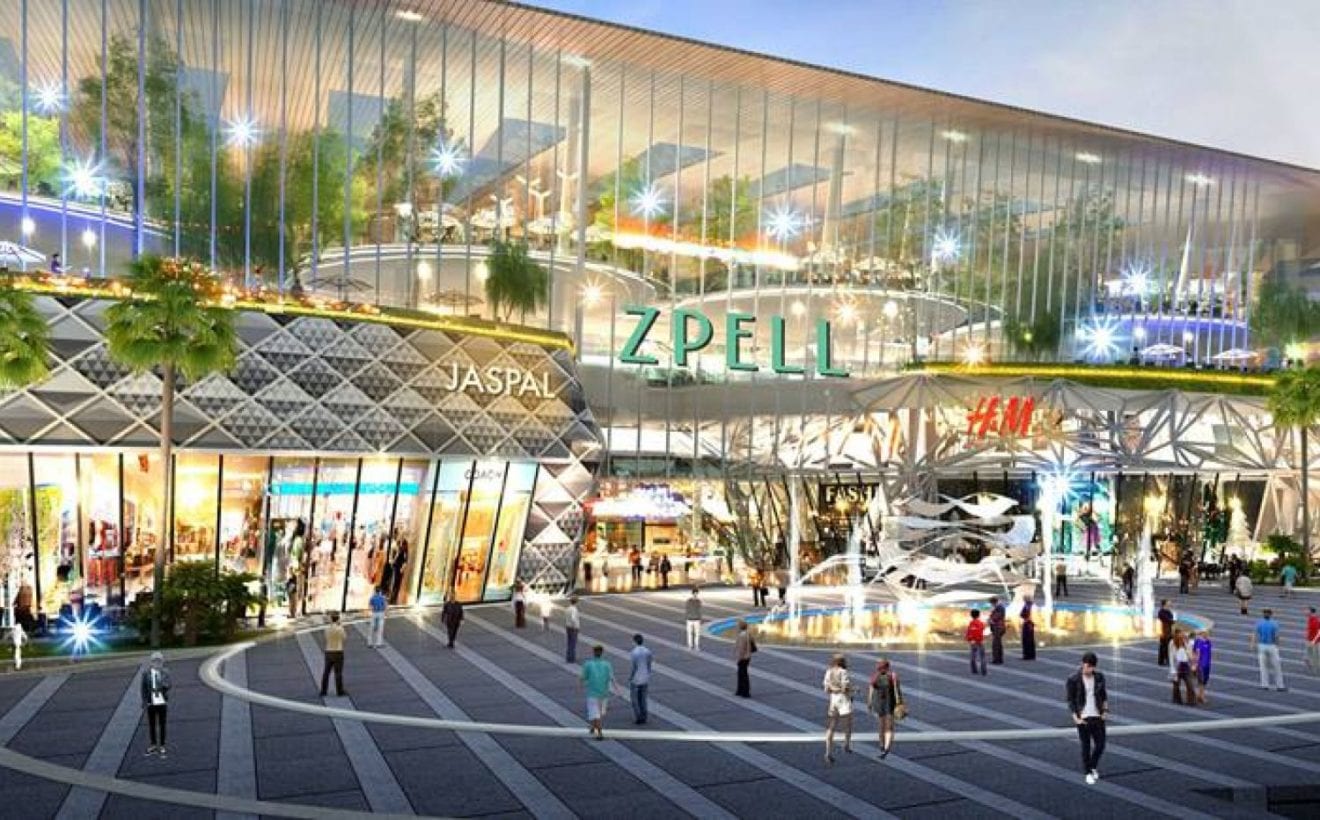
    Future Park Rangsit Mall opens its much-anticipated extension this Friday (November 27) making it Bangkok’s largest shopping destination.

    At 600,000 sqm it is a full 20 per cent larger than the Siam Paragon in downtown Bangkok, which checks in at 500,000 sqm, and 50,000 sqm larger than CentralWorld.

    The expanded Future Park Rangsit mall is expected to host 200,000 shoppers daily – almost entirely locals as Rangsit is a long way from any area of Bangkok frequented by tourists and has only a limited number of expatriates in its catchment area. It currently attracts about 157,000 a day.

    Future Park Rangsit Mall was built 20 years ago. Besides offering shopping, eating and entertaining, the expanded destination will now feature futsal courts, an ice-skating rink, indoor ski park and art installations.

    The new wing is branded Zpell and was constructed in front of the original building. Its addition is expected to bring the owners a 35 per cent increase in annual revenue.

    Some 150 million THB (US$4.2 million) will be spent promoting the expanded destination.

    Future Park CEO Pimpaka Wanglee told Thai language media she expects the complex will have a broader market appeal from Friday.

    Future Park CEO Pimpaka Wanglee

    “We hope to draw ‘A’ customers who have a monthly household income of 85,000 baht,” she said late last year. In its old guise, the mall targeted B and C groups.

    Expanding the mall was in large part a defensive strategy in the wake of plans by Swedish furniture giant Ikea to open a new site in the neighbourhood and another mall slated for construction by market leader Central Group.

    The new building will feature 200 tenants including lifestyle fashion brands such as Cath Kidston, H&M, MNG and Top Shop along with food offers from Coffee Bean by Dao, Akiyoshi, After you and Muteki By Mugendai.

    Zpell-Future-park-01

  • New mall boosts SM retail portfolio

    New mall boosts SM retail portfolio

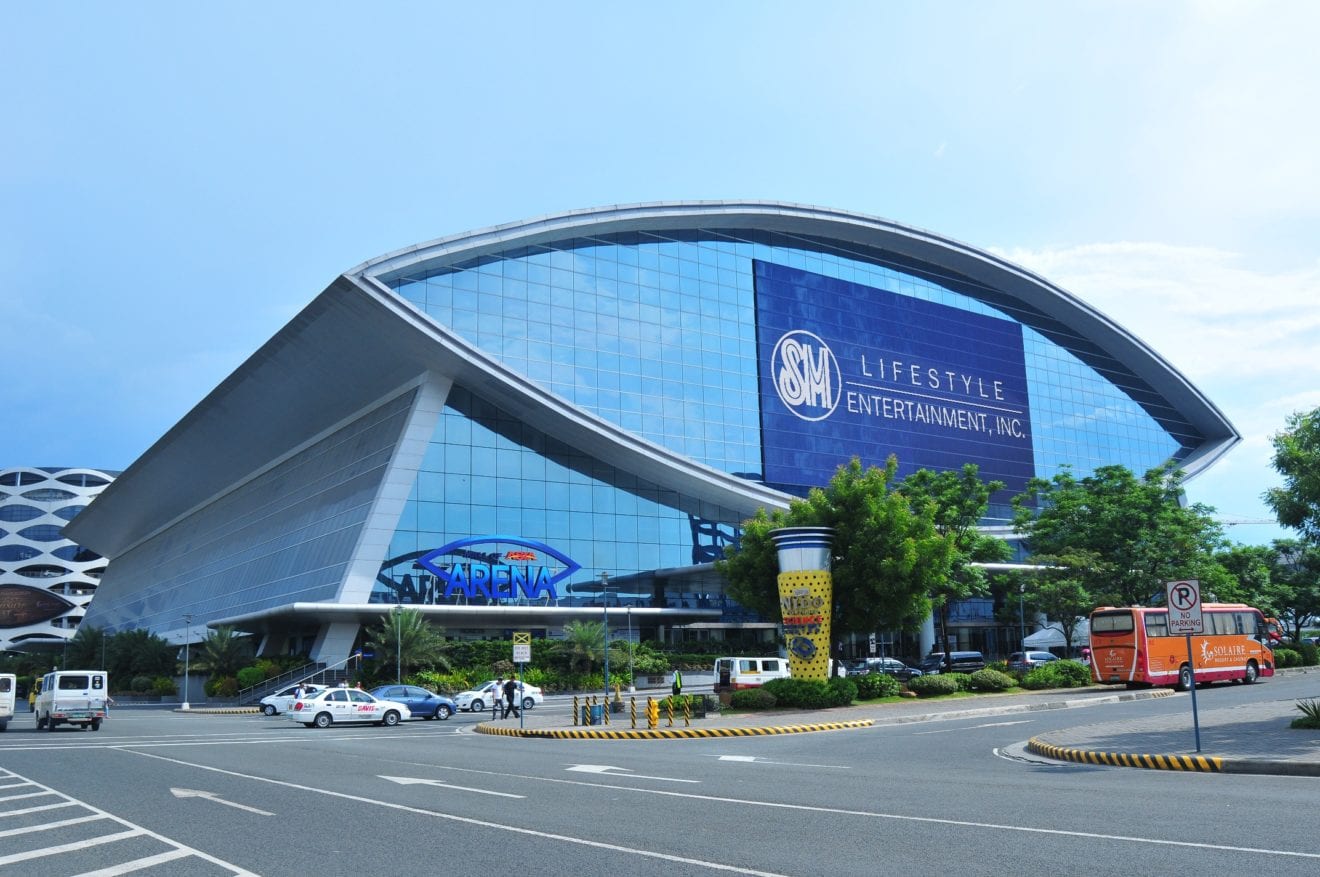
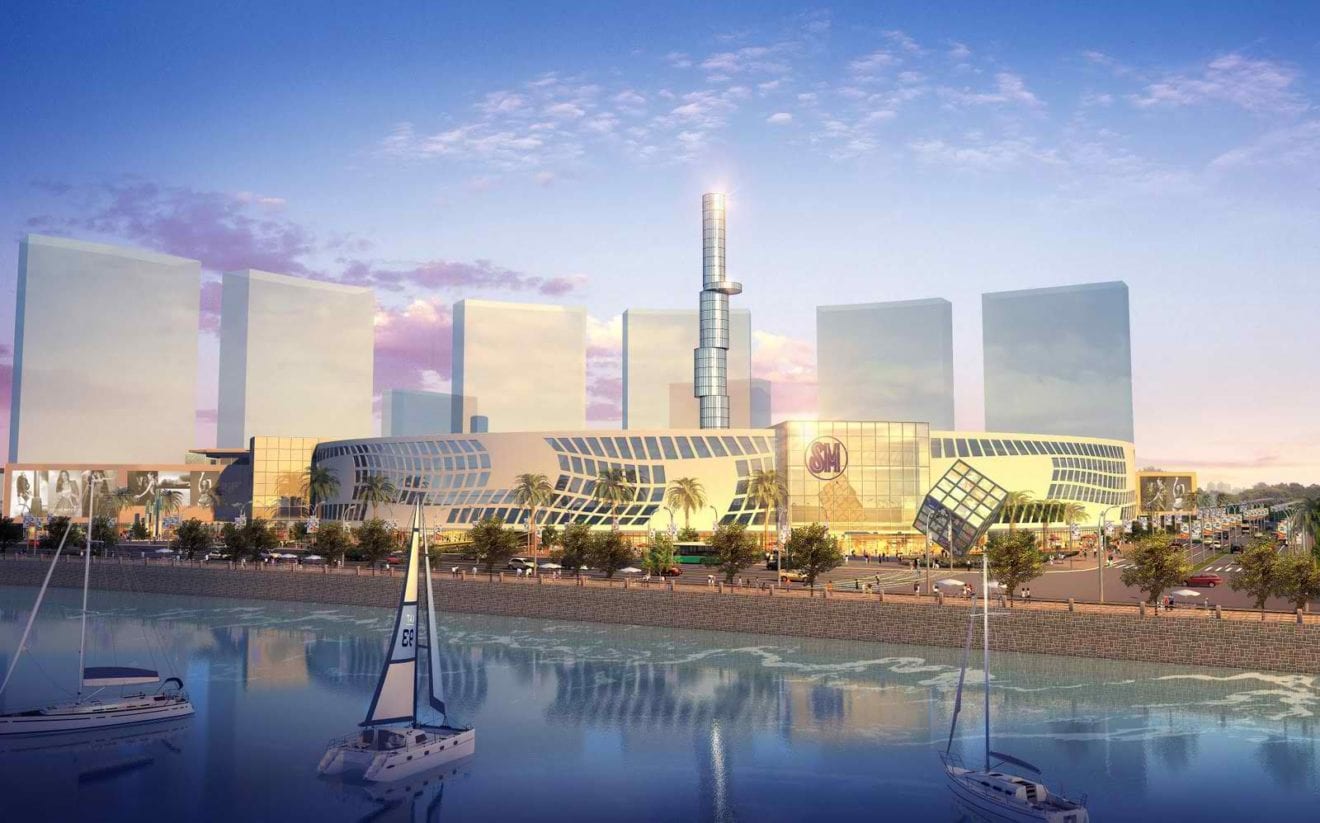
    SM Prime Holdings Inc, the Philippines’ largest mall operator and one of Southeast Asia’s biggest integrated property developers, announced on Thursday another milestone—growth to 7.3 million square meters in local retail space portfolio—as it unveils its 56th mall in the country.

    In a disclosure to the stock exchange, the publicly listed firm of Philippines’ richest tycoon Henry Sy said it is opening today, November 27, “a new regional landmark,” the SM Seaside City Cebu. The new mall is SM’s third mall in Cebu, and adds 430,000 square meters of gross floor area (GFA) to its retail portfolio.

    The new destination mall is the first of many developments in the 30-hectare SM Seaside Complex, which would take about five years to fully develop, said SM Prime President Hans T. Sy. According to SM Prime, the new mall “is the first of its kind in urban development” within the South Road Properties in Cebu City. “As the anchor development, the mall is slated to transform the city’s landscape, as SM Prime builds residences, offices, an arena, a five-star hotel, and convention centers,” the company said.

    The complex, it added, features a steel sculpture named “The Cube,” which symbolizes strength and stability of Cebuanos, as well as “SM’s continued commitment to excellence.” The younger Sy said the new mall promises to revolutionize the malling experience not only in Cebu, but also in the entire Southern portion of the Philippines.

    He said the company was inspired by the success of its Mall of Asia Complex in Pasay City, a mixed-use development that offers retail, residences, offices, hotels and convention centers. “We are replicating this concept of ‘lifestyle cities’ in Cebu, as we open the SM Seaside City mall. We see Metro Cebu as one of our important growth corridors in Visayas and Mindanao, following our growth track in Metro Manila,” said Sy.

    The new mall will feature a 147-meter “Seaside Tower,” that offers a “sensational panoramic view” of the entire city, and a “Sky Park” that provides diverse dining outlets. Other features of the mall include a skating rink, eight cinema houses, and 5,000 parking slots.

    “SM Seaside City Cebu is slated to transform the city’s landscape,” the company said. SM Seaside City Cebu is the sixth SM Supermall to be opened this year, after SM Center Sangandaan, Cherry SM Shaw, and SM City Cabanatuan, among others.

    To date, SM Prime has 56 malls in the Philippines and six in China, with an estimated combined GFA of 8.3 million square meters.

  • Causeway Bay retail rents remain expensive

    Causeway Bay retail rents remain expensive

    New York’s Upper Fifth Avenue is the most expensive retail street in the world with rents rising to US$3500/sqft. in 2015.

    That’s nearly 50 per cent expensive than Causeway Bay in Hong Kong, which has held its second place on Cushman & Wakefield’s latest global rankings, despite the decline this calendar year of 14 per cent.

    Cushman & Wakefield’s Main Streets Across the World report tracks over 500 of the top retail streets around the globe, ranking them by their prime rental value using Cushman & Wakefield’s proprietary data. The 27th edition of the report shows that rents have risen in 35 per cent of streets around the world – despite the increased global uncertainty experienced over the past 12 months. The report also includes a ranking of the 65 most expensive streets – the top one per country.

    New York’s Fifth Avenue retained its position as the most expensive global retail location with rents up an average 3.6 per cent year on year and 46 per cent above the second-placed Causeway Bay in Hong Kong ($2399/sqft).

    The top 10 Global high street retail destinations by rent (in US$/sqft/year):

    1 Fifth Avenue (New York) – $3500.

    2 Causeway Bay (Hong Kong) – $2399.

    3 Avenue des Champs Élysées (Paris) – $1372.

    4 New Bond Street (London) – $1321.

    5 Via Montenapoleone (Milan) – $1035.

    6 Bahnhofstrasse (Zurich) – $895.

    7 The Ginza (Tokyo) – $882.

    8 Myeongdong (Seoul) – $882

    9 Kohlmarket (Vienna) – $478.

    10 Kaufinger / Neuhauser (Munich) – $459.

    In Asia Pacific, there has been a downward pressure on rents on the back of weaker retail sales and slowing tourism in China, particularly. This has resulted in lower rents, which is creating incentives for more international luxury brands and high street retailers to move in. However, interest rate hikes by the Chinese government could impact consumer spending power. Elsewhere, high-profile international retailers are targeting both Australia and New Zealand and Metro Manila.

    Theodore Knipfing, head of retail, Asia Pacific at Cushman & Wakefield, said the outlook for Asia’s overall retail market is largely positive, with retail sales growth averaging 8.5 per cent over the next five years (in US dollar terms).

    “Rising tourist numbers are spurring robust and sustained retailer demand – albeit firmly focused on prime, well-located space. Although the growth of eCommerce is notable across the region, physical stores will remain important, although landlords will need to focus on improving the shopping environment and customer experience in order to compete for retailer demand.”

    Europe

    Avenue Champs Élysées in Paris retained its crown as the most expensive retail location in EMEA, followed closely by London’s New Bond Street. Strongest rental growth this year was recorded in Dublin’s Grafton Street and Covent Garden in London, as well as in top high streets in Milan and Rome. However, high streets in Russia and Ukraine experienced sharp declines linked to the conflict between the two countries that yielded slowdowns in economic growth and retail sales.

    Justin Taylor, head of EMEA retail at Cushman & Wakefield, said: “Improving employment prospects, rising real wages and healthier consumer confidence in advanced economies are set to offer more positive momentum for the retail sector. From an EMEA perspective, despite any economic and political uncertainties in certain countries, the retail market is expected to see further improvements. Indeed, a strong retail sales growth forecast, robust occupier demand and a lack of supply in many locations mean rents will keep rising in the most popular high streets.

    “Indeed, tight availability is shaping the retail landscape, pushing the geographic boundaries of well-established high street markets outwards,” Taylor concluded.

    The Americas

    The US represents seven of the Top 10 most expensive cities in the Americas, with Toronto, Rio de Janeiro and Vancouver at sixth, seventh and eighth, respectively. Seattle posted the highest rent growth in the US, up 27.3 per cent to $70 per sqft, while Los Angeles’ Rodeo Drive corridor posted the highest retail rents outside New York at $800 per sqft, a 23 per cent increase. Strong tourism and a vibrant local economy make San Francisco’s Union Square a market to watch with its 1.1 per cent vacancy, $650 per sqft rents and 13 per cent rent growth, which follows 21 per cent rent growth for the same period through mid-2014. Similarly, Chicago’s Michigan Avenue posted 8.2 per cent rent growth with average retail rents of $525 per sqft.

    At $320 per sq. ft., Toronto’s Bloor Street retail corridor was the most expensive high street in Canada, while Edmonton’s Whyte Avenue was the most affordable in the Americas at $45 per sq. ft.

    Gene Spiegelman, vice chairman, head of retail services, North America at Cushman & Wakefield, said: “The Americas region is expected to sustain a positive trajectory going forward into 2016, bolstered by a steady consumer sector benefiting from a material reduction in energy costs and stable employment expectations, especially in the US.

    “Retailers will continue to add physical stores to support their expansion plans while at the same time optimising their footprint to respond to the ongoing evolution of ‘clicks and bricks.’

    “International luxury brands will continue to dominate the high street, providing a boost to the key destination cities with high exposure from tourism and strong foot traffic.”