Tag: retail news

  • South Korean duty-free retailers closing downtown stores

    South Korean duty-free retailers closing downtown stores

    South Korean duty-free retailers are temporarily shuttering metropolitan stores in response to a significant decline in tourist numbers caused by the coronavirus epidemic.

    Numerous outlets at prime tourist destination Jeju Island will be closed this month. A Lotte Duty-Free store that has already been operating under reduced hours since February will close pending the resolution of the crisis. Hotel Shilla’s store, which has suspended trading on weekends and holidays throughout the outbreak, will cease trading for a fixed one-month period.

    Jeju Island tourism has faltered significantly in recent months under heavily-reduced international flights, with a 99.2 percent drop in foreign tourist numbers year-on-year during April.

    The South Korean duty-free retailers shuttering stores also include Shinsegae Duty-Free’s locations in Gangnam and Busan will close on Sundays and Mondays from this month on, while airport duty-free stores under all local operators are largely closed for business at this time.

  • Shoe retailer Clarks to cull management ranks worldwide

    Shoe retailer Clarks to cull management ranks worldwide

    Clarks, the UK-based shoe retailer, will cull the ranks of its corporate staff by a net 700 people worldwide, including in Asia during the next 18 months.

    In all, 900 jobs will be lost, the first 160 of which were announced in the UK this week. However by the end of the restructuring process, about 200 new roles will have been created.

    Stung by falling sales even before the Covid-19 crisis, Clarks last month announced an unspecified number of store closures in the UK in a move to right-size the business for a post-pandemic era.

    The job cuts and store closures are all part of a turnaround strategy dubbed Made to Last, unveiled at the end of last year and intended to reposition the 195-year-old company to trade into its third century of trading.

    CEO Giorgio Presca described some of the decisions as “difficult” but said the opportunities they would open up are exciting.

    “We thank all affected staff for their contribution to our business and they leave their roles with our heartfelt respect and support.”

    Most Clarks stores globally have been closed for weeks during the Covid-19 pandemic, however, those in China and parts of Europe are progressively reopening.

    Besides the behind-the-scenes restructure of the group, management are overseeing a refocusing of the brand to reflect its heritage and underline its relevance in today’s market.

    The turnaround strategy also includes exploiting the brand’s potential and leveraging its heritage and consumer relevance in today’s market. That includes embracing sustainability, quality, design and product innovation.

    “We are a business that walks its own path, and we are evolving to put our brand and consumers at the heart of everything we do,” said Presca.

    “This will ensure that our organization is made to last, empowering our people to contribute to a great future for the company.”

  • Digital Payments in China Surge

    Digital Payments in China Surge

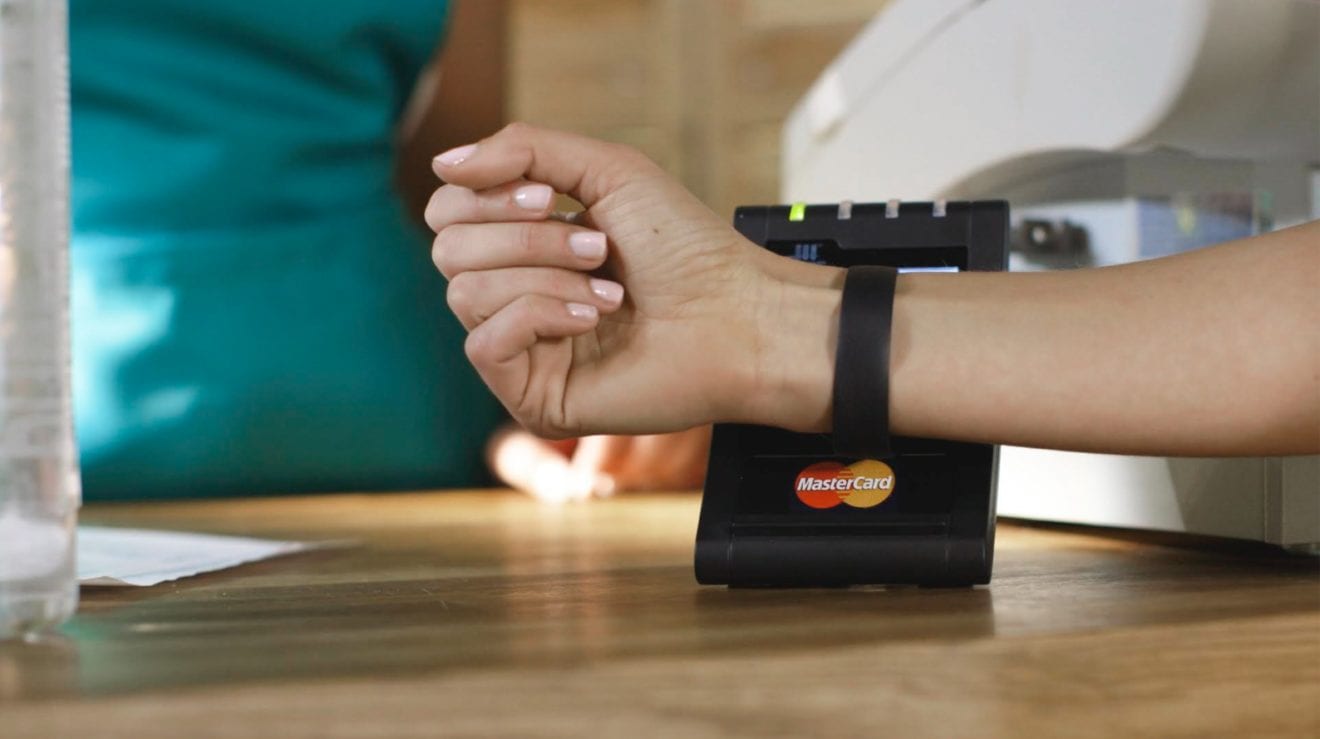
    China’s digital payment market grew to $8.4 trillion in the last quarter of 2019 and there are signs of still robust momentum in the months following the outbreak.

    By transaction volumes, Alipay retained the top rank with 55.1 percent followed by Tencent’s two platforms – WeChatPay and QQ Wallet – at 38.9 percent, according to a report (Mandarin only) by independent research firm iResearch.

    The remaining 6 percent where split between 1qianbao (1.4%), JD Pay (0.9%), UMPay (0.6%), 99bill (0.6%), Yeepay (0.5%), China UMS (0.3%), Sunin Pay (0.2%) and others (1.5%).

    59.8 trillion yuan ($8.4 trillion) in total digital payment representing a year-on-year increase of 13.4%

    Even in the midst of an ongoing coronavirus outbreak, the Chinese digital payment market signaled strength, the report underlined.

    Beijing-based grocery startup Meicai attracted 800,000 new users in one week on an online platform that connects farmers with consumers and restaurants. Between March 18 and 22, Alipay registered average daily purchase of nearly 1.1 million cups of milk tea via branding programs.

  • South Korean retail sales surge as people stay home

    South Korean retail sales surge as people stay home

    South Korean retail sales surged 9.1 percent in February, despite the advent of the coronavirus pandemic.

    The year-on-year increase reflected consumers buying more daily necessities online as the virus spread. And, with people largely staying home, substantially less was spent eating out, so consumers were buying more food to prepare or eat at home.

    According to data compiled by the Ministry of Trade, Industry and Energy, South Korean retail sales rose from US$7.92 billion in February last year to $8.68 billion last month.

    Online sales soared by 34.3 percent, the strongest increase since data was first collected in 2016. By comparison, for the whole of last year, online sales rose by 14.2 percent.

    Food sales almost doubled, driving overall growth, while sales of household products were up by 44.5 percent.

    Convenience-store turnover rose by 7.8 percent, however, overall sales across offline stores fell 7.5 percent year on year, with department stores hardest hit, down by 21.4 percent.

  • Convenience Retail Asia sales, profit rise despite Hong Kong unrest

    Convenience Retail Asia sales, profit rise despite Hong Kong unrest

    Circle K Hong Kong parent Convenience Retail Asia has recorded a 5.9 percent increase in sales last year to HK$5.632 billion (US$724.7 million), despite the onset of social unrest disrupting its core Hong Kong retail market.

    Net profit for the year rose 13.3 percent to HK$208 million on the back of higher sales, operational efficiencies, and reduced production costs resulting from the depreciating renminbi.

    Chairman Victor Fung said that if there was a silver lining to the second half-year “it was how the group responded to these challenges”.

    Convenience Retail Asia ended the year with 383 Circle K stores in Hong Kong one fewer than a year earlier, 99 Saint Honore bakery stores and nine Zoff eyewear stores. A 10th Zoff store has opened this year at Lee Theatre Plaza.

    Turnover for the convenience store business increased 7.5 percent to HK$4.524 billion with comparable-store sales growing 6.1 percent against the same period in 2018. Turnover for the bakery business decreased by 2.5 percent to HK$1.092 million due to reduced sales of festive products. And turnover for developing business increased 36 percent to HK$105 million due to the expansion of the Zoff store network.

  • Online focus pays off as Sabina sales surge

    Online focus pays off as Sabina sales surge

    An aggressive online focus saw listed Thai lingerie retailer Sabina achieve 14.3 percent sales growth last year.

    Sabina CEO Bunchai Punturaumporn, pictured above, said the company’s performance last year outperformed expectations, despite declining consumer purchasing power due to a slowing economy and falling confidence.

    Sales totaled US$103.5 million and net profit reached $13 million.

    In Thailand, Sabina opened two new stores, at Central Village and Samyan Mitrtown, and home-market same-store sales rose 3.7 percent last year.

    But the real growth engine was online, with sales up 32.3 percent year on year.

    “At the end of last year, Priceza studied online sales and found that lingerie was the best-selling product in the fashion category and that Sabina had earned the highest sales online, especially during the 11.11 and 12.12 shopping festivals held in November and December last year,” said Punturaumporn.

    Last year was the first that Sabina had participated in the shopping festivals. Apart from experiencing online success, the company also developed new lingerie collections it says caters to changing demands and requirements of today’s consumers.

    Outside Thailand, Vietnam was a standout market, with Sabina achieving 25.7 percent year-on-year growth there. Cambodia, Laos, and Myanmar also saw good growth, he said.

    Sabina also manufactures products for European retailers, but that side of its business posted a lackluster result, with sales up a mere 0.1 percent.

    Meanwhile, the company says that last year 37 percent of its products were made in China through sub-contract manufacturing with local factories, the majority 63 percent made in its own Thai factories. But since the coronavirus hit this year, Sabina has migrated some contract manufacturing from Mainland China to Vietnam, spreading its risk factor as well as becoming a base for the Vietnamese market, which has shown strong growth potential.

  • Malaysian retailers hit by coronavirus

    Malaysian retailers hit by coronavirus

    Malaysian retailers operating in tourist zones have seen sales plunge in the wake of the coronavirus outbreak.

    Locally headquartered leathergoods retailer Bonia says sales have fallen by as much as 77 percent in one location and were down overall as fewer Chinese traveled to Malaysia and locals avoided crowded locations to reduce their exposure to the virus.

    Besides its own brand, Bonia also operates stores under the Braun Buffel, Sembonia, Renoma and Valentino Rudy banners.

    Aa Bonia spokesperson said sales had dropped 30 percent overall in the first 17 days of February, the peak, so far, of the virus outbreak.

    “Our Genting Highlands outlet has been tremendously affected,” he said. “The key factor is Covid-19, which has made tourist numbers decline, while local consumers are shying away from crowded malls during their weekend outings.”

    Sales at the Genting Highlands store were down 77 percent and at the Pavilion shopping center in Kuala Lumpur by 35 percent, year on year.

    Stores in Johor Bahru and Penang have also been hit.

    Another retailer, Corn In a Cup, has experienced a drop in sales of between 15 and 40 percent, with the worst-affected store the one at Zoo Negara, where daily sales usually run from 200 to 300.

    “We have been operating at the zoo for over 10 years,” he told The Edge. “Never before in history have we only sold one cup of corn in a day.”

  • Vietnam retail sales down

    Vietnam retail sales down

    Retail sales in Vietnam’s commercial capital Ho Chi Minh City surged 11.2 percent last month to an estimated US$4.8 billion.

    But celebrations may be short-lived with the coronavirus impacting spending patterns in February and the early timing of Lunar New Year boosting January’s figures.

    According to official government data, Ho Chi Minh City retail sales in key sectors including food & beverage, household appliances and apparel reached US$3.25 billion for the month, all spurred by increased demand during Lunar New Year (it is customary for Vietnamese to wear new clothes to mark the onset of a new year).

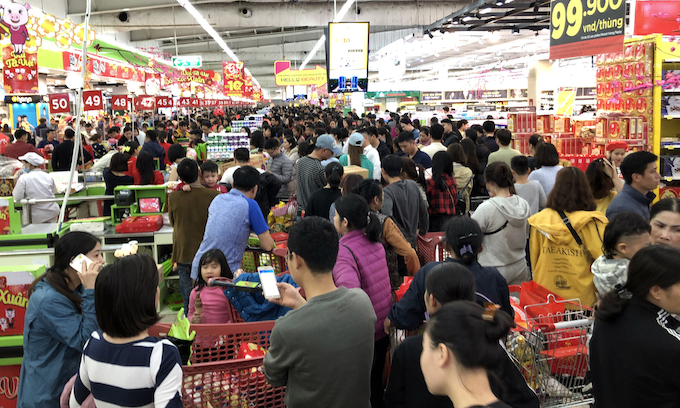
    And while shopping malls and convenience stores have suffered declining footfall due to the coronavirus crisis in February, supermarket sales have surged dramatically since reopening after the holiday, which officially ended on January 29.

    According to a spokesperson from the South Korean-owned Emart, the supermarket chain has since experienced double-digit daily sales growth, peaking at 40 percent one day. Most commonly purchased products are fresh food, dry food (such as instant noodles, sugar, rice), hand sanitizer and antiseptic water.

    “Sales of fast-moving consumer goods increased by more than 50 percent,” said the spokesperson. “While dry food increased 1.5 times, toilet paper sales nearly doubled.”

    Although the number of other retail sectors experienced declining sales, the average retail sales growth seemed to hold up, the spokesperson said.

    Supermarket and hypermarket operator Saigon Co.op also reported significant growth since the coronavirus outbreak. Fastest-moving items were essential consumer goods, especially sanitizing and consumer health products.

    Meanwhile, the coronavirus crisis has left major shopping malls and department stores such as Vincom and Takashimaya into what local media have described as “deserted” venues as people avoid going to public areas.

    For convenience stores, the circumstances are little better. Korean c-store chain GS25 has reported sales have dropped by 40 percent.

    Retail industry experts in Vietnam predict that consumption will shift from electronics products to health items and that supermarkets and e-commerce will replace traditional markets due to lower perceived risk of virus transmission.

    As of February 13, there have been only 15 confirmed cases of coronavirus infection recorded in Vietnam, of which six are listed as having fully recovered.
  • Phnom Penh Megamall launch delayed

    Phnom Penh Megamall launch delayed

    The Phnom Penh Megamall developer has delayed the mall’s launch until the fourth quarter of this year owing to lagging interior design work, according to its marketing representative CBRE Cambodia.

    The 47,000sqm, 11-storey shopping hub is being constructed as a mixed-commercial centre.

    “The delay has nothing to do with market issues,” said CBRE Cambodia MD Ann Sothida. “Companies have expressed their interest and have leased about 70–80 percent of the building’s retail space, with the ninth floor entirely leased out.”

    According to local news media reports, the Phnom Penh Megamall, which is being constructed in the building which used to house a Parkson department store, requires additional foundation works unexpectedly when the project commenced.

    CBRE Cambodia reports 19 buildings in Phnom Penh currently offering 314,000sqm of retail space in total, with an additional 261,746sqm in retail space supply expected to launch this year.

  • Japan retail sales down

    Japan retail sales down

    Retail sales in Japan dropped 2.6 percent during December compared to figures from the previous year.

    The details were released in a Ministry of Economy, Trade and Industry report last Friday, and stood in contrast to median market forecasts for a decline of just 1.8 percent.

    According to an RTT news article, the sales rate was still above a seasonally adjusted 0.2 percent on numbers for November, less than the expected 1.2 per cent gain following a 4.5 percent increase during that month. November sales had dropped 2.1 percent year on year.

    Sales for large-scale retailers were strongly affected with a full 3 percent year-on-year drop, compared to a projected fall of 2.5 percent.

  • Tea chain Nayuki expanding to USA and Japan

    Tea chain Nayuki expanding to USA and Japan

    Chinese tea chain Nayuki will launch its first stores in Japan and the US this year.

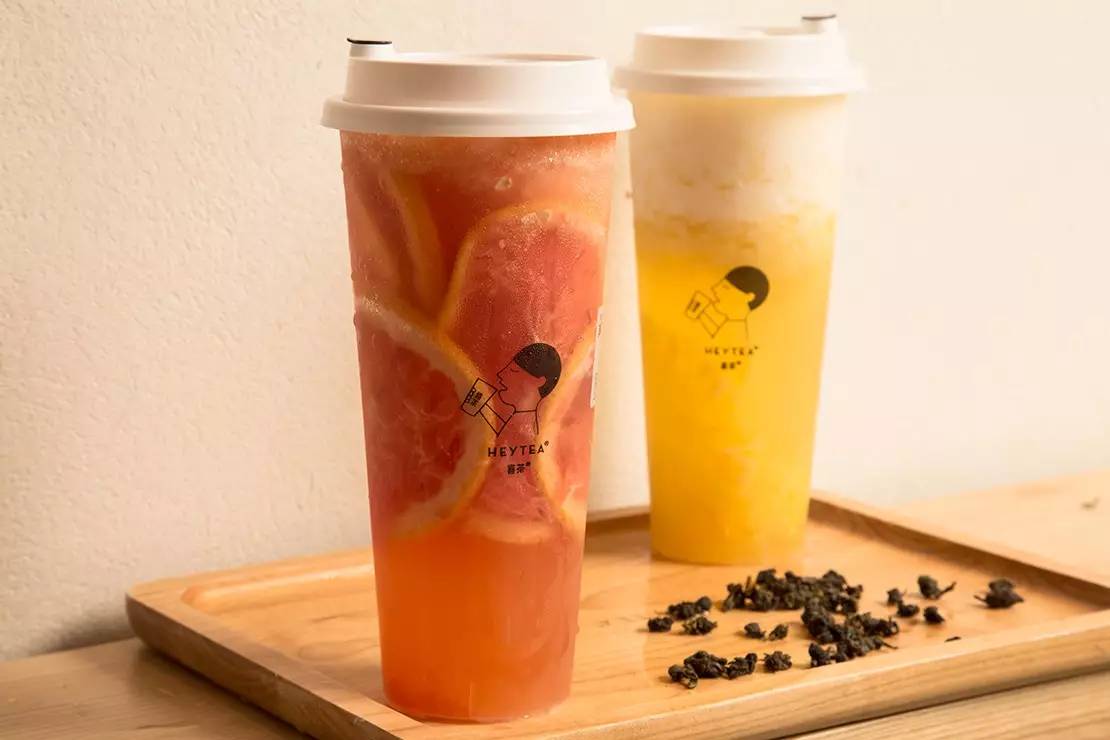
    The firm, which operates nearly 400 stores in China and three in Singapore, serves tea blended with fruit, cream cheese and toppings.

    “With our commitment to becoming an innovator and purveyor of Chinese tea culture, we hope to deliver our unique and exceptional tea experience to the world,” said Nayuki founder Peng Xin. “To achieve this goal, we have established tea fields where tea is cultivated under strict conditions from cultivation to processing.”

    In recent years, China’s traditional tea culture has been revamped by new-style tea franchises backed by large investments. The tea chain Nayuki, valued at RMB6 billion (US$865 million), received a multi-hundred-million RMB injection in Series A plus funding from TianTu Capital in 2018.

    In November last year, the company opened its largest shop – Nayuki’s Dream Factory – in Shenzhen, an 11,000sqft retail space offering an immersive in-store experience. Visitors are invited to see, hear and learn about the innovations of Nayuki’s teas while enjoying a menu of handcrafted teas, coffees, cocktails, baked goods, desserts and more exclusive to the store.

  • Indonesian retail sales growth slower as expected

    Indonesian retail sales growth slower as expected

    Indonesian retail sales growth in November slowed to 1.3 percent year-on-year, well below October’s rate of 3.6 percent.

    However, the figures, released by Bank Indonesia, reflect the continuing uptick in Indonesian retail sales which has now lasted five consecutive months.

    “Retail sales continued to grow positively in November,” wrote the central bank in a statement, “although it slowed compared to sales in the previous month”.

    Indonesia retail sales growth is expected to slow in the coming months, however, with declines recorded in several metropolitan areas surveyed – a harbinger of growth expected for December.

    Sales declined in the cities are projected to flow on from the estimated contractions of 9.4 percent and 4.8 percent over the previous period.

    The bank’s survey revealed respondents believe retail sales will decline over the next quarter.

  • Hong Kong toy shop fined for deceptive conduct

    Hong Kong toy shop fined for deceptive conduct

    An unidentified Hong Kong toy-shop owner has been convicted of misleading omission commercial practice.

    The owner was convicted of engaging in commercial practices involving misleading omission according to the Trade Description Ordinance (TDO) and sentenced to 200 hours of community service by Kowloon City Magistrates’ Courts. The court also ordered him to compensate HK$11,210 (US$1440) to three victims.

    An investigation carried out after Hong Kong Customs received a complaint from the victims alleging that a toy shop owner had engaged in unfair trade practices, showed that the owner had failed to explain the risks of late delivery to its customers on a social-media platform page. The owner has sold eighteen types of toy models without regard to the risk of delay.

    Under the TDO, any trader who engages in a commercial practice that omits or hides material information or provides material information in a manner that is unclear, unintelligible, ambiguous or untimely, or fails to identify its commercial intent and as a result causes, or is likely to cause, an average consumer to make a transactional decision commits an offense. The maximum penalty upon conviction is a fine of $500,000 and imprisonment for five years.

  • Amazon opens on Pinduoduo pop up store

    Amazon opens on Pinduoduo pop up store

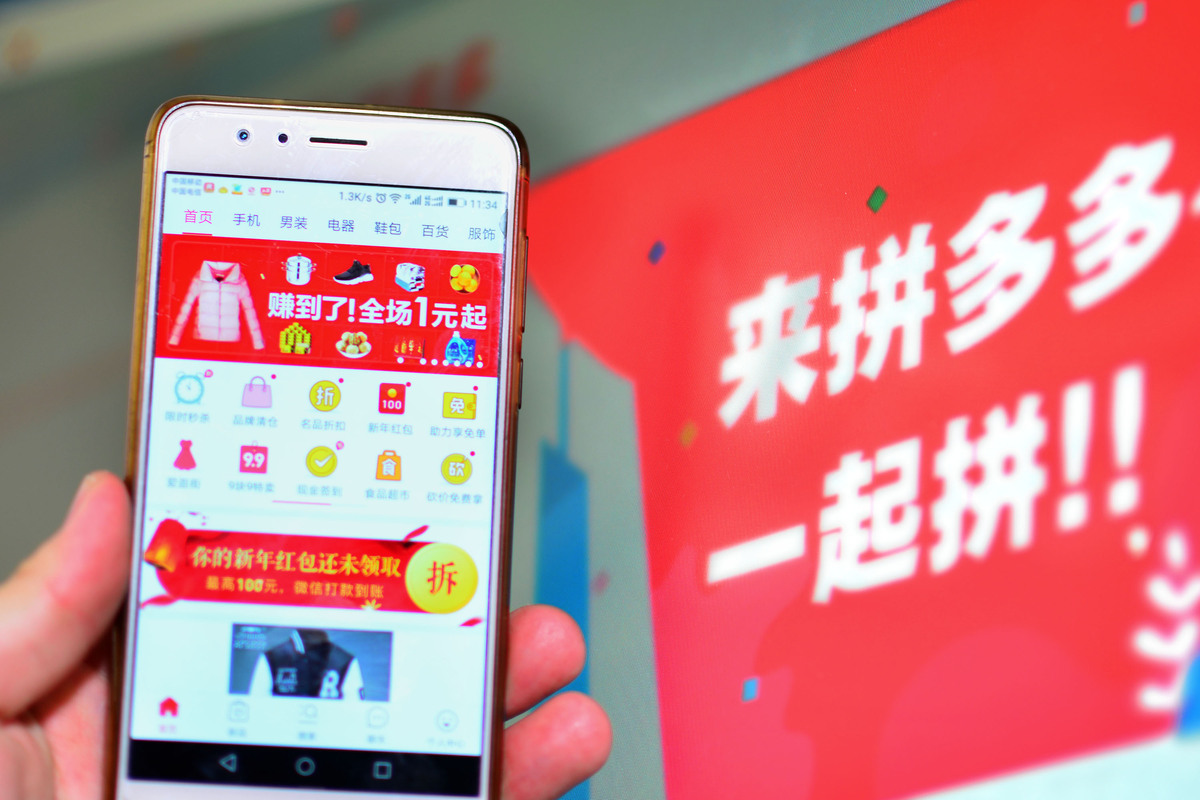
    Global online retailer Amazon is set to launch a Pinduoduo pop-up store.

    According to reporting in Reuters, the Pinduoduo pop-up store will run until the end of the year with around 1000 selected overseas products.

    Amazon recently closed its Chinese marketplace for domestic sellers and is shifting focus to products sold in the Chinese market by overseas producers, as well as offering its cloud server services.

    The decision to host its pop-up on Pinduoduo reflects the platform’s popularity with rural Chinese residents over the more established Alibaba and JD services.

    “The Amazon Pinduoduo pop-up store provides customers with a curated selection of about 1000 overseas products, with competitive prices, an authenticity guarantee and convenient shipping,” said an Amazon spokesperson.

    “We look forward to enabling customers to enjoy cross-border shopping through this store, in addition to more deals and tens of millions of products available on [amazon].cn.”

  • Sands Shoppes Macao honours its top selling retailers

    Sands Shoppes Macao honours its top selling retailers

    Sands Shoppes Macao held its fifth Sands Retail Awards this week, at the Four Seasons Hotel.

    The awards honor retailers who achieved outstanding performance this year across 13 categories including best store performance, best loyalty program, best window display, best store design, and best customer service, along with a rising star.

    “While the Sands Retail Awards recognize the best of the best, all our retailers across Sands Shoppes Macao set incredibly high industry standards,” said David Sylvester, executive VP of global retail at Las Vegas Sands Corp.

    “There is huge competition for these coveted awards and the retailers who make it through have demonstrated total commitment to ensuring visitors to our shopping malls enjoy their experience here.”

    Sands Shoppes Macao Retail Awards Winners are:

    Best Store Performance – Luxury: Louis Vuitton (Shoppes at Four Seasons)

    Best Store Performance – Luxury Watch & Jewellery: Rolex (Shoppes at Venetian, Shoppes at Cotai Central, Shoppes at Parisian)

    Best Store Performance – High Street Fashion: MSGM (Shoppes at Parisian)

    Best Store Performance – High Street Watch & Jewellery: Swarovski (Shoppes at Cotai Central)

    Best Store Performance – Beauty: Temptation (Shoppes at Parisian)

    Best Store Performance – General Retail: Mannings (Shoppes at Venetian)

    Best Store Performance – Food & Beverage: Lei Garden (Shoppes at Venetian)

    Best Loyalty Program Performance – Highest Point Redemption: Fortress (Shoppes at Venetian)

    Best Loyalty Program Performance – Highest Number of Transactions: Tai Hing Restaurant (Shoppes at Venetian)

    Best Window Display: Versace (Shoppes at Four Seasons)

    Best Store Design: Apple (Shoppes at Cotai Central)

    Best Customer Service: Victoria’s Secret (Shoppes at Venetian)

    Rising Star: Sandro (Shoppes at Venetian)