Tag: retail news

  • Doors open wider for Vietnam exports to the US

    Doors open wider for Vietnam exports to the US

    A large demand for agricultural produce and electronics products as well as rising e-commerce potential give Vietnamese exporters greater opportunities in the U.S. market, experts say.

    The U.S. is a market with much potential for Vietnamese companies, especially as Vietnam has been able to keep the Covid-19 pandemic under control, said Nguyen Huu Tien, director of the HCMC Investment and Trade Promotion Centre.

    The U.S. was Vietnam’s largest export market in the first four months with the value of shipments surging 50 percent year-on-year to $30.3 billion.

    Top export categories included machinery and equipment, textile and garment, and computers and electronics.

    Last year, Vietnamese exports to the U.S. ranked third in Asia after China and Japan.

    Ken D. Duong, director of international law firm TDL, said that traditional categories such as agriculture produce and fisheries were posting strong figures despite the pandemic.

    U.S. companies have stopped purchasing some hardwood products from China and are looking for alternative markets, he said, adding that last year, many Vietnamese companies were able to take advantage of this and got large orders.

    Many Vietnamese-Americans are looking for suppliers in Vietnam to export products to the U.S., he added.

    There are a lot of opportunities for electronics export because a number of American and Taiwanese firms have established factories in Vietnam to research and develop internet of things products.

    “There are signals that indicate that Vietnam could become a hub for researching and manufacturing advanced tech products,” Duong said.

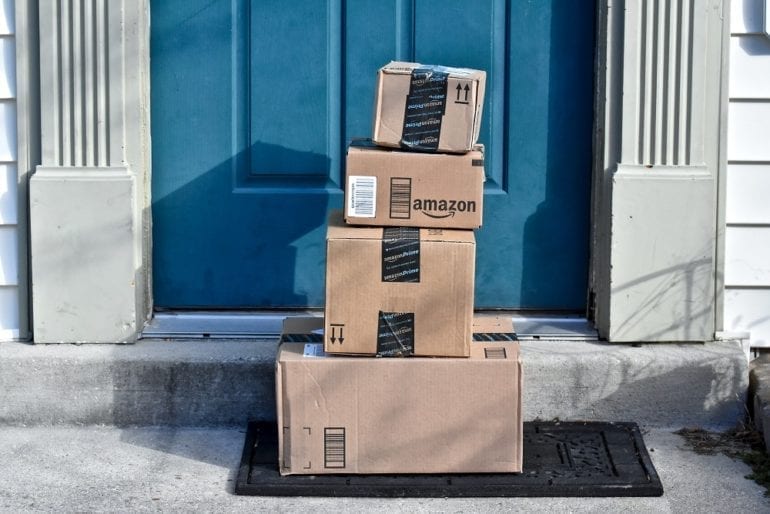
    Amazon Global Selling Wednesday announced a new campaign in partnership with the Vietnam e-Commerce and Digital Economy Agency (iDEA) that would help Vietnamese sellers sell more products on Amazon.

    But other experts said there were challenges that Vietnamese exporters face, such as trademarks. They cited the latest example of a Vietnamese rice brand, ST25, which won an international contest as the world’s best variety, being trademarked by a U.S. company.

    Duong said that usually it costs $1,000-1,800 to register a trademark in the U.S. Around 50 percent of mid-sized Vietnamese companies in the U.S. register their brand and the ratio is just 10 percent for small firms.

    Vietnamese suppliers need to understand U.S. regulations on intellectual property to step up in the global supply chain, he added.

    Dang Hoang Hai, head of the iDEA, said that as many Vietnamese sellers are reluctant to export their products to the U.S. via e-commerce, his organization will provide more training to help hundreds of small and medium companies sell their products on Amazon.

    Although there has been speculation about the U.S. rejoining the Comprehensive and Progressive Agreement for Trans-Pacific Partnership (CPTPP), U.S. officials have said that this would not happen in the short term.

    Mary Tarnowka, executive director of American Chamber of Commerce in Vietnam, cited a report by a Fulbright University professor to show that U.S. President Joe Biden will not consider signing another free trade agreement until the middle of his term.

  • Malaysia retail sales slump to worst in the recent 22 years

    Malaysia retail sales slump to worst in the recent 22 years

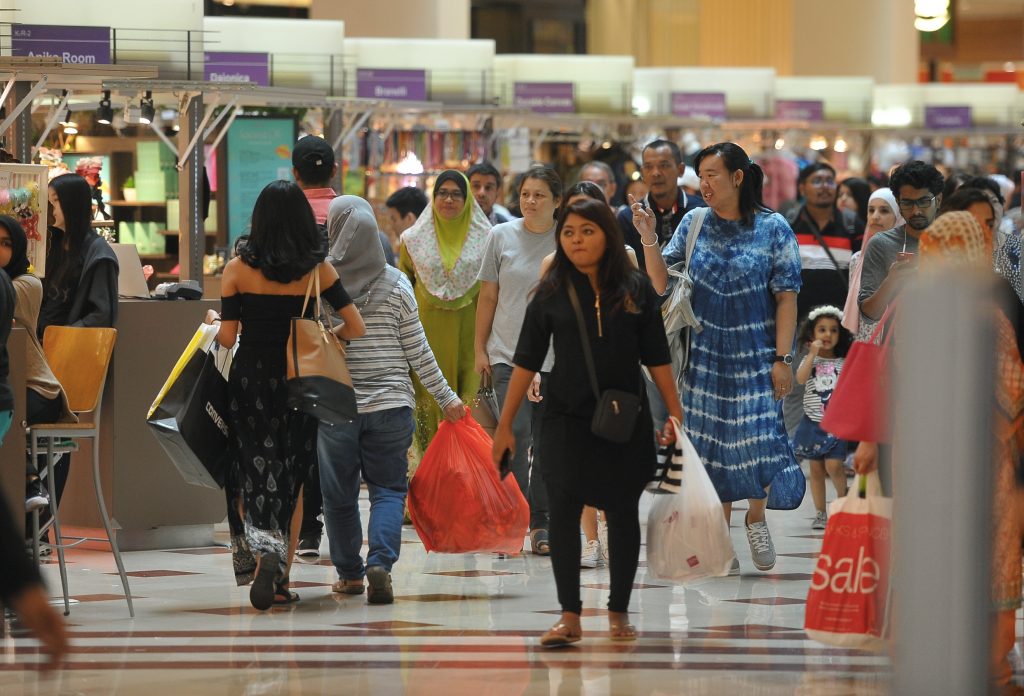
    Malaysia retail sales last year dropped to the lowest level in 22 years as the country has been heavily impacted by the Covid-19 pandemic.

    According to the Malaysia Retail Sales Report, turnover plummeted 16.3 percent last year, with most retail sub-sectors recording double-digit declines. The department store and fashion segments shrunk at 38.3 percent and 37.9 percent respectively, the worst-performing sectors.

    Since the Movement Control Order (MCO) was in place for most of the first quarter, retail sales this year are expected to drop 4.1 percent, with the first quarter’s sales down by 13.4 percent. The next three quarters will show recovery, the report predicts.

    “Last year, Malaysia’s retail industry recorded the worst performance since the Asian financial and economic crisis that took place 22 years ago,” said Tan Hai Hsin, MD at Retail Group Malaysia. “In 1998, retail sales in Malaysia dropped by 20 percent.”

    While most retail sub-sectors, including F&B, children products, and pharmacy, contracted by double digits, the convenience-store sector posted its best performance with 14.8 percent growth last year. The furniture and electronics sector surged by 0.4 percent despite the pandemic.

  • FJ Benjamin and Lazada Singapore Sign MOU for Strategic Partnership to Boost Online-Offline Sales

    FJ Benjamin and Lazada Singapore Sign MOU for Strategic Partnership to Boost Online-Offline Sales

    FJ Benjamin Holdings (FJB) and leading eCommerce platform, Lazada Singapore, today signed a Memorandum of Understanding (MOU) to forge a strategic partnership that aims to deliver the ultimate retail experience to customers across all channels and devices.

    The proposed partnership will tap Lazada’s technical and online capabilities, and eCommerce platform management expertise, and leverage FJB’s experience in fashion brand management and physical store operation, to boost the eCommerce performance of FJB’s stable of brands in Singapore, Malaysia and Indonesia, as well as to expand and incubate new FJB brands to eventually integrate brick-and-mortar and virtual stores.

    FJB will also discuss with brand principals opportunities for eCommerce in markets Lazada has a presence but where FJB does not, such as Vietnam, Thailand and the Philippines. Powered by Alibaba’s advanced eCommerce tools and systems, Lazada will develop new tailor-made solutions to deliver a truly omnichannel customer experience in managing the full online ecosystem of FJB brands across the markets.

    Group CEO Nash Benjamin said: “FJ Benjamin has been strategising and planning our omnichannel business model for some time now and this partnership with Lazada is intended to get us to where we want to be much faster and in a more cost-efficient manner. This will combine our respective capabilities to strengthen customer experience across brick and mortar and virtual channels.”

    Besides operating principal branded sites, it is also intended to host certain brands on LazMall as well as other regional sites, subject to principal approvals.

    “We are thrilled to be part of this new chapter with FJ Benjamin and value their trust in us,” said James Chang, CEO of Lazada Singapore. “Lifestyle, fashion and beauty are important pillars in our eCommerce plans and shoppers can now look forward to seeing more well-known brands and labels on our platform, for an integrated shopping experience. In the last year, Lazada has supported many businesses that adopted a multichannel approach to set up stores online and we know that our expertise in the eCommerce space will benefit and contribute to the success of a renowned brand like FJ Benjamin, and look forward to seeing positive results with them.”

    While some of the brands managed by FJB, including La Senza, Pretty Ballerinas and Petunia Pickle Bottom, are currently available on Lazada’s premiere shopping platform, LazMall, this is the first time both parties –  one, a traditional brick-and-mortar operator, and the other, the region’s leading eCommerce player – have come together to envision and execute a truly omnichannel model under which customers can control the buying process and enjoy a seamless shopping experience across multiple channels – brick-and-mortar, desktop, and mobile.

    Since the pandemic lockdowns last year forced FJB stores in Southeast Asia to shutter, the Group had secured principals’ approvals to pivot to eCommerce. It has ramped up its online presence from one brand, the cult British fashion label Superdry, to almost all its brands including Guess, La Senza, Casio, Rebecca Minkoff, Pretty Ballerinas, Airfree and Dr Barbara Sturm.

    The MOU states that  “the parties agree both physical stores and online stores are part of the retail ecosystem. With Lazada’s technical and online abilities and FJB’s experience in fashion and lifestyle brand management and physical store operations, this brings together a strong strategic partnership which leverages each other’s expertise to deliver an ultimate consumer experience.”

    Under the terms of the MOU, both FJB and Lazada will, within 90 days, work on a detailed action plan and a definitive agreement to move the partnership forward.

    Mr Benjamin said FJB will continue to take charge of all aspects of product assortment, brand management, pricing, promotions as well as key parts of logistics such as inventory and supply chain. The parties will jointly undertake online marketing and campaign strategies while Lazada will operate the online stores.

  • Indian officials to examine Amazon after Reuters probe

    Indian officials to examine Amazon after Reuters probe

    India’s federal financial crime-fighting agency will examine findings in a Reuters report, which revealed that Amazon.com Inc has for years given preferential treatment to a small group of sellers on its India platform and used them to circumvent the country’s foreign investment rules, a senior agency source told Reuters on Thursday.

    It provided an inside look at the cat-and-mouse game Amazon has played with India’s government, adjusting its corporate structures each time the government imposed new restrictions aimed at protecting small traders.

    On Thursday, a senior Enforcement Directorate source told Reuters that “we will be examining findings” of the story. The subject matter “is not entirely new for us,” said the source, without elaborating. The source asked not to be identified.

    Amazon didn’t immediately respond to a request for comment.

    Amazon is already under investigation by India’s Enforcement Directorate for possible violation of foreign investment rules. Such probes typically take years in India, and in most cases, details aren’t made public. In the Reuters report published Wednesday, Amazon said it was confident of its compliance when asked about the agency’s probe.

    In tweets issued on Wednesday, Amazon criticized the Reuters report as “unsubstantiated, incomplete, factually incorrect,” without going into specifics. “In last several years, there have been (a) number of changes in regulations; Amazon has on each occasion taken rapid action to ensure compliance,” the company said.

    In an e-mail to employees on Thursday, Amazon’s India head Amit Agarwal addressed the Reuters story, saying he understood “such instances can be distracting.”

    The company was on “the threshold of creating a legacy,” he wrote in the e-mail, which was reviewed by Reuters. “It will require significant innovation, it will push our abilities, we will be misunderstood, but it will be fulfilling.”

    Indian retailers, who are a crucial part of Prime Minister Narendra Modi’s support base, have long alleged that e-commerce giants like Amazon and Walmart’s Flipkart flout federal regulations and that their business practices hurt small traders. The companies deny the allegations.

    The documents reviewed by Reuters revealed that Amazon helped a small number of sellers prosper on its India platform, giving them discounted fees and helping one cut special deals with big tech manufacturers such as Apple Inc. The company has also exercised significant control over the inventory of some of the biggest sellers on Amazon.in, the documents show, even though it says publicly that all sellers operate independently on its platform.

    Government rules announced in 2016 required that an e-commerce platform should “not exercise ownership” over sellers’ inventory.

    Gopal Krishna Agarwal, a national spokesman for Modi’s ruling party, said the findings in the Reuters story were “serious” and that “any predatory policy, deep discounting … will not be tolerated by the government. The party will take a stand on that.”

    Small businesses are “very important” for the party, he said. “Their concerns will be taken care of.”

    In a written response to the Reuters report published on Wednesday, Amazon said it “does not give preferential treatment to any seller on its marketplace,” and that it “treats all sellers in a fair, transparent, and non-discriminatory manner.”

    A leading group of Indian retailers urged the government to ban the local operations of Amazon and said it was considering taking legal action, after the Reuters story was published.

    The Confederation of All India Traders, which says it represents 80 million retail stores, said “the shocking revelations” are “sufficient enough to immediately ban operations of Amazon in India.”

    Amazon did not respond to a request for comment on the trader group’s statement.

  • Retail chains rush for expansion

    Retail chains rush for expansion

    The race for domestic retail market share was heating up as local and foreign firms looked to expand their networks, experts said.

    At a recent meeting in HCM City, Trương Công Thắng, general director of VinCommerce Company, told partners that the retailer wanted to open nearly 10,000 stores and more than 300 Vinmart supermarkets in the next five years.

    In addition, the company also plans to attract 100 strategic partners with an ambition to lead the Vietnamese retail market. The company’s financial report showed that in the first nine months of the year, revenue reached VNĐ23.6 trillion, posting a 56.5 percent year-on-year increase.

    Meanwhile, Saigon Co.op is looking at expanding its network to at least 2,000 stores and annual average revenue growth of 8-10 percent in the next five years.

    It has already opened 849 stores in 43 provinces and cities that attract 350,000 customers a day, up 26 percent compared to five years ago.

    Another leading retailer in HCM City, Satra, said that they targeted to have five Satramart supermarkets and four malls by 2025, and depending on the market situation, 150-250 Satra branded stores.

    Local retail giants are looking to expand their market share in the face of fierce competition from big foreign investors such as Aeon, Lotte, Big C and Mega Market.

    The latest example is in October 2020, Japan’s largest retailer cosmetics chain Matsumoto Kiyoshi opened its first store in HCM City.

    In July 2020, leading Japanese retailer Muji also opened a store in HCM City. Japanese fashion retailer Uniqlo, launched its first store last year.

    Japanese retailer Aeon is also surveying a third shopping mall in HCM City in 2021, and plans to have 25 shopping malls in Việt Nam by 2025 with a capital source of US$2 billion for the investment.

    Hirai Shinji, chief representative of JETRO HCM City (Japan External Trade Organisation) was quoted as saying by Thời báo Kinh Doanh that after the COVID-19 pandemic and the market was gradually recovering, it was a favorable time for Japanese retail groups to open in Việt Nam.

    This would lead to fiercer competition, the experts said.

    It was also important to note the efforts of domestic retailers to expand their systems into neighboring areas of big cities, as urbanization and incomes in these areas had been increasing.

    Experts said that although retail sales were concentrated in major cities and key economic regions, with the high speed of urbanization, these areas would become the driving force for growth instead of existing big cities.

    As a result, many domestic retailers had been gradually expanding to areas surrounding the big cities. The evidence is quite clear from data showing that suburban stores brought in more revenue with higher growth than inner cities.

    According to retail expert Nguyễn Văn Thịnh, the number of supermarkets in 2020 had been decreased by 20 percent compared to 2019 – from 336 to 330. This decrease mainly came from Vinmart.

    Meanwhile, the number of convenience stores has marked a growth of 60 percent – from 2,495 in 2019 to 5,228 stores in 2020. This came from Vinmart+ and Bách Hoá Xanh.

    Small stores recorded a slight increase in 2020, while shopping centers posted a growth rate of about 11 percent from 96 centers in 2019 to 107 in 2020.

    Thịnh said that although there were many changes in 2020, Việt Nam was still one of the most attractive retail markets in the world, and competition in the market was becoming more and more intense.

    For some brands, it was an increase in the number of stores, others had to face restructuring, he said.

  • Arket bound to open its first retail store in China this autumn

    Arket bound to open its first retail store in China this autumn

    H&M-owned Arket has announced plans to open its first physical store in China this autumn.

    The flagship store will be located in Beijing and will stock a mix of the Stockholm-based brand’s wardrobe staples and seasonal fashion drops for both women and men.

    The store will also feature an Arket cafe and stock an assortment of beauty and home items.

    “We are incredibly happy to announce our upcoming opening in Beijing and we are looking forward to finally meeting our many Chinese customers in person,” said Arket managing director Pernilla Wohlfahrt in a statement.

    “The new store gives us an opportunity to welcome people into our world and invite them to experience the rich diversity of our collections – from beautifully-made fabrics and fashion designs to nature-inspired interiors, sustainable childrenswear and contemporary Swedish cuisine.”

    The physical store is the latest step of the Nordic band’s expansion into Asia. The company made its debut into the Chinese market in August with the launch of its digital flagship store on Alibaba Group’s B2C e-commerce platform Tmall.

    In late 2020 the brand also announced plans to open its first store in South Korea early this year.

  • India Seeks Comment On Proposal To Make Airbags Mandatory For Car Front Passengers

    India Seeks Comment On Proposal To Make Airbags Mandatory For Car Front Passengers

    India on Tuesday sought public comment on a proposal to make airbags mandatory for the front passenger in all cars from next year, in a move that could raise costs for automakers slowly seeing a revival in demand.

    Carmakers are required to provide an airbag only for the driver, though Indian officials have been talking about the need to improve safety.

    All new models manufactured from April 1, and existing models made from June 1, will have to meet the new guideline if approved, the Ministry of Road Transport and Highways said in the notification dated Dec 28.

    It asked for suggestions and objections from the public within 30 days from Tuesday before the rule is implemented.

  • Bukalapak Establishes Strategic Partnership with Microsoft to Enhance Indonesian E-commerce

    Bukalapak Establishes Strategic Partnership with Microsoft to Enhance Indonesian E-commerce

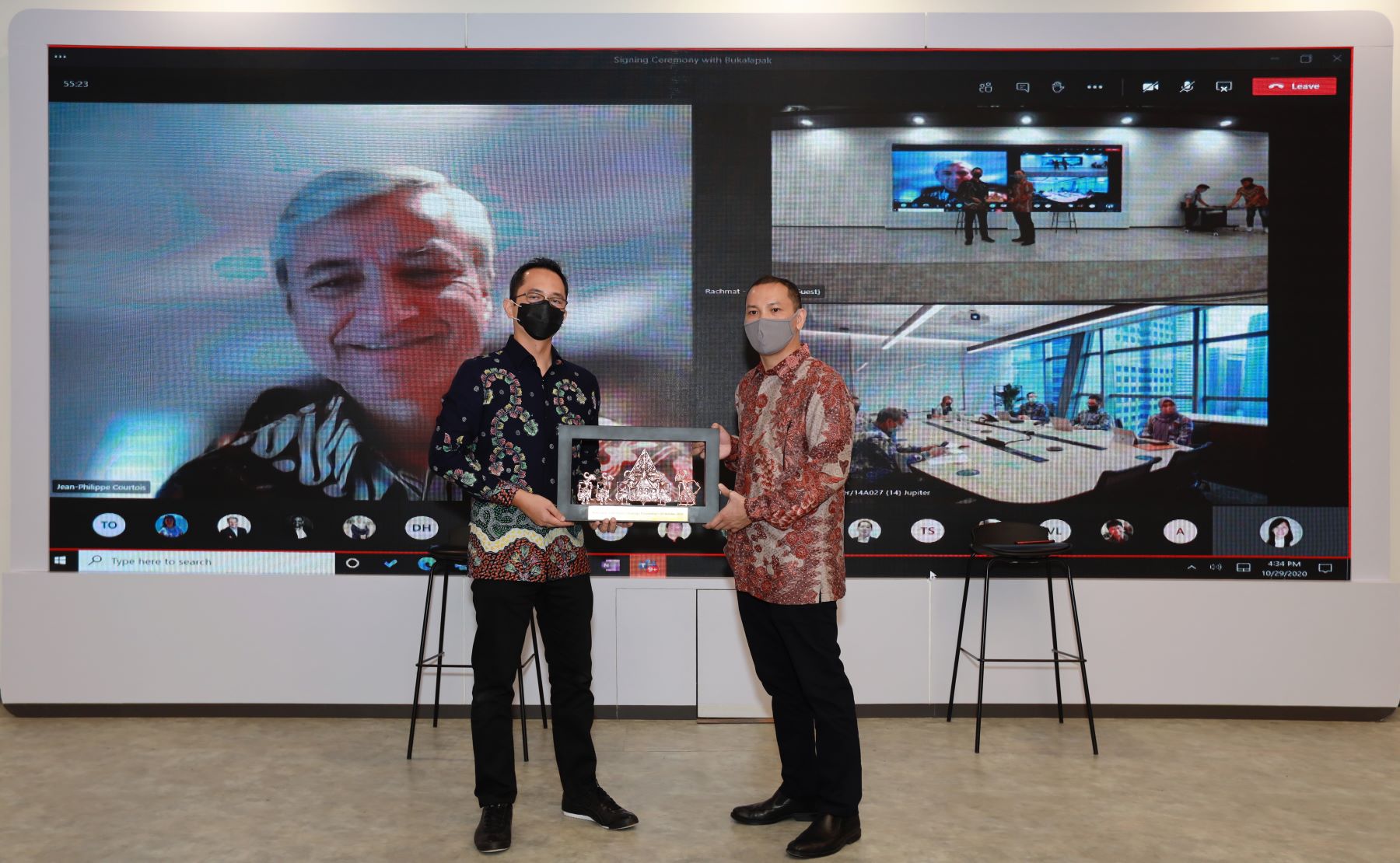
    Microsoft and Bukalapak, one of Indonesia’s leading e-commerce platforms, have formed a strategic partnership to reshape how e-commerce is conducted in the country. Kicking off the collaboration between the two companies, Bukalapak will adopt Microsoft Azure as its preferred cloud platform and Microsoft will make a strategic investment in Bukalapak.

    The partnership will leverage Microsoft’s expertise in building a resilient cloud infrastructure to support Bukalapak services for more than 12 million micro, small and medium enterprises, and 100 million customers.

    “This partnership signals a deep collaboration with Microsoft on an array of technology projects that will transform the technology-driven commerce solutions and operations solution and operations in Indonesia,” said Rachmat Kaimuddin, CEO of Bukalapak. “As a global technology leader, Microsoft’s confidence with Bukalapak highlights our position as the leading homegrown technology player in Indonesia and our continued objective to create a positive impact on our country and customers.”

    Through this partnership, Bukalapak and Microsoft will collaborate on key initiatives including:

    • Building resilient infrastructure – Bukalapak will adopt Microsoft Azure as its preferred cloud platform to support its more than 6 million online merchants, 6 million offline merchants and 100 million customers.
    • Bridging the digital gap – The companies will explore opportunities to help make the digital world relevant for every individual daily.
    • Skilling – Providing digital skills training for Bukalapak employees and their merchants.

    “Bukalapak and their services have had real and enduring impact on Indonesian society, and their innovation mindset in a rapidly changing market will create new opportunities for merchants, businesses and consumers,” said Haris Izmee, President Director of Microsoft Indonesia. “We are excited to empower Bukalapak with a trusted cloud, that allows them to scale their customer experience on Microsoft Azure. Through this partnership, merchants and consumers will have a more efficient and reliable buying and selling experiences, which in turn, creates business resilience and helps in accelerate growth in the Indonesian digital economy.”

    As a leading e-commerce platform in Indonesia, Bukalapak was founded with the singular mission of empowering Indonesia through digital technology. The company also offers financial services and payment options for its users, including but not limited to, gold and mutual funds’ investments, bill payments and credit services. They aim to transform the economy beyond e-commerce, by digitalizing traditional warungs (mom and pop kiosks) so every business in Indonesia has access to the online economy.

  • Singapore retail rents tipped to slide up to 15 percent

    Singapore retail rents tipped to slide up to 15 percent

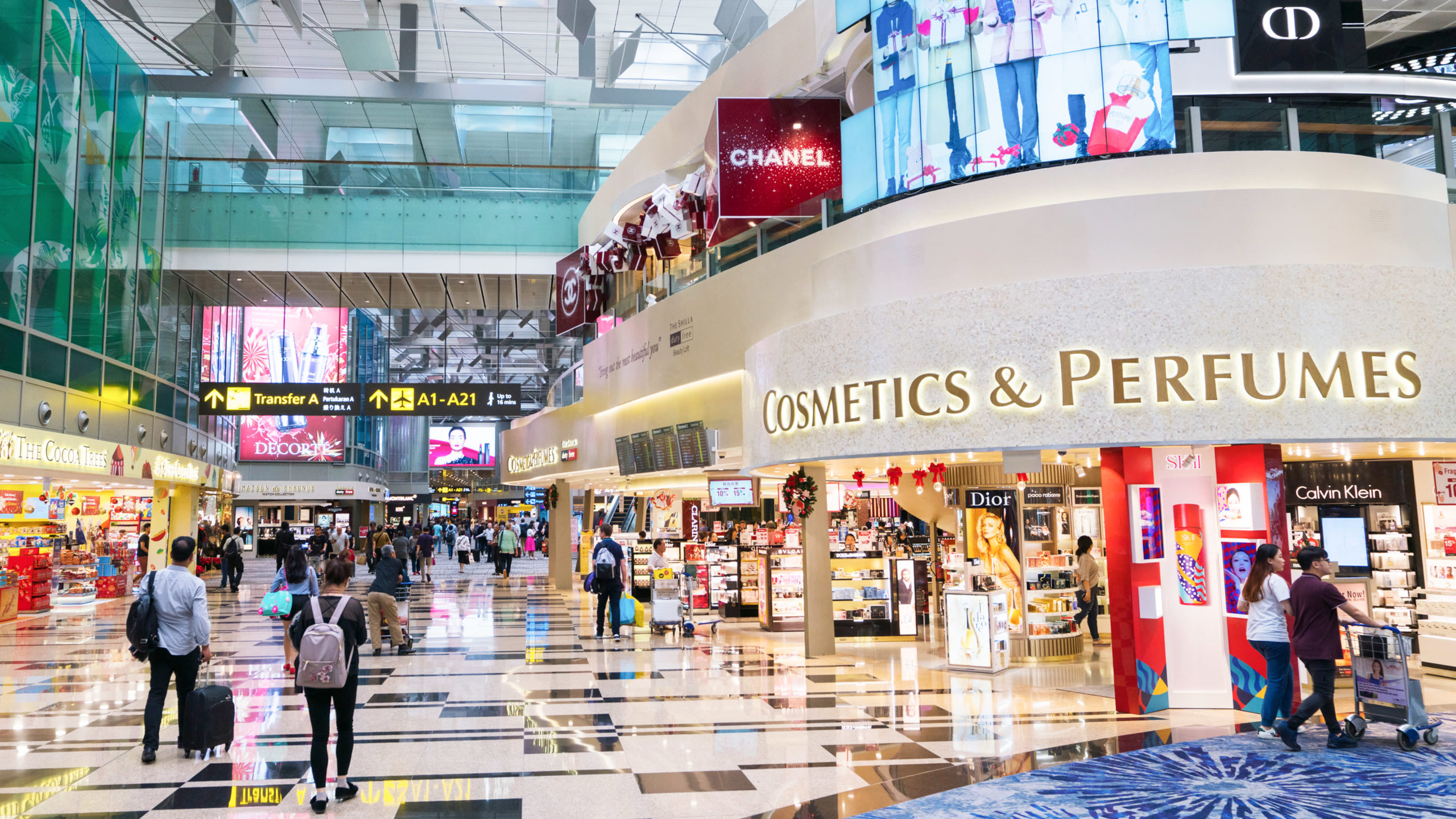
    The increased activity in Singapore’s retail sector hints at a bottoming out of rents by the end of this year or early next year, Knight Frank’s research team said in a report published on Friday (Oct 16).

    Overall retail rents are expected to fall by 10-15 percent for the whole of this year due to recessionary pressures and safe-distancing restrictions, according to the real estate consultancy.

    That being said, in the suburban region, rents of retailers will likely decline by just 7.5 percent or less.

    “As physical retail stores resumed operations, shopper traffic also returned to a greater extent in the suburban malls compared to the centrally located ones that are more reliant on the tourist dollar,” Knight Frank analysts wrote.

    Thus, the rental gap between suburban malls and those in Orchard will likely continue to narrow, given that the inflow of tourists into Singapore is still impeded by travel restrictions. Suburban retail rents are expected to recover sooner because they are supported by the domestic catchment resident population.

    In the third quarter this year, prime retail rents islandwide decreased by 10.3 percent year on year to average $27.40 per square foot (psf) per month, as safe-distancing measures and border controls remained in place.

    This drop was largely led by the 11 percent fall in gross rents for prime retail spaces along the Orchard Road shopping belt, as stores there continued to struggle with the absence of international tourists, Knight Frank noted.

    Prime spaces refer to rental-yielding units between 350 and 1,500 square feet with the best frontage, connectivity, footfall and accessibility in a mall. Such spaces are typically located on the ground level of a mall or the basement level of a mall that is linked to an MRT station or bus interchange.

    In the Marina Centre, City Hall and Bugis region, gross rents of prime retail spaces tumbled by 13.5 percent year on year to $25.40 psf per month on average for the third quarter.

    The city fringe, meanwhile, posted an 8.6 percent decline from a year ago, to $23.40 psf per month.

    Propping up the retail market was the suburban areas, where rents started to stabilize during the July-September period.

    “As more employees work from home, the malls located within residential population centers were visited by many for daily necessities and household sundries,” the analysts wrote.

    The suburban region recorded the smallest drop in gross prime retail rents during the quarter, slipping 6.9 percent on the year to average $26.60 psf per month.

    Quarter on quarter, rents of prime retail spaces in suburban areas also inched down by just 1.4 percent, compared to the bigger declines of 6.4 percent in Orchard, 7 percent in Marina Centre, City Hall, and Bugis, and 4.5 percent in the city fringe.

    While traditional retailers such as Topshop at VivoCity and Robinsons at Jem closed during the latest quarter, there were also newcomers to the scene. For instance, 100-year-old Hong Kong bakery Hang Heung opened its first Singapore outlet at Ion Orchard, Knight Frank noted.

    Other notable retail openings in the three months include store expansions such as Foot Locker at Orchard Gateway @ Emerald and Decathlon at The Centrepoint.

    In August, retail sales – excluding motor vehicles – fell by 8.4 percent year on year, according to figures released by the Department of Statistics last week.

    On a seasonally-adjusted month-on-month basis, total retail sales were higher by 1.4 percent in August. Excluding motor vehicles, sales edged up 0.1 percent on the month.

  • Singapore Economy Rebounds in Q3

    Singapore Economy Rebounds in Q3

    The improvement came on the back of the phased re-opening of the economy, following the «circuit breaker» that was implemented between April 7 and June 1, 2020.

    Singapore’s gross domestic product (GDP) in the third quarter of 2020 grew by 7.9 percent from the quarter before, based on advance estimates released by the Ministry of Trade and Industry (MTI) on Wednesday.

    On a year-on-year basis, the economy contracted by 7 percent, an improvement from the 13.3 percent contraction in the second quarter, which was its worst quarter on record.

    The ministry did not revise its full-year GDP outlook, which predicts an overall contraction of 5 to 7 percent.

    The construction sector grew 38.7 percent from the previous quarter but was still down 44.7 percent on-year. Weak external demand, travel restrictions, and sluggish travel demand contributed to the 8 percent on-quarter decline in services-producing industries – still an improvement from the previous quarter’s 13.6 percent decline.

    The manufacturing sector reversed its 0.8 percent on-year decline in the second quarter of 2020 to grow 2 percent in the third quarter. Quarter-on-quarter, the sector grew by 3.9 percent, supported by growth in electronics and precision engineering output, which were in turn driven by robust global demand for semiconductors and semiconductor manufacturing equipment, MTI said.

    On Monday, Ravi Menon, chief executive of the Monetary Authority of Singapore said that up to 20 percent of the city-state’s trade-reliant economy faces «deep scarring» as a result of the Covid-19 pandemic, highlighting the aviation and tourism industries in particular.

    The full extent of the crisis has not been seen yet, Menon said, noting that more bank loans and bankruptcies are expected, and that capital will be more difficult to raise in this environment.

    In a funny sort of way, the pandemic has made us all a lot more sensitive and aware of how vulnerable we are to the forces of nature, Menon said.

  • Hong Kong retail rents slip

    Hong Kong retail rents slip

    The world’s most expensive retail strip is likely to endure another six months of industry slump as shop owners struggle to replace premium tenants amid Hong Kong’s deepening recession.

    Global brands from Prada to Rolex and Victoria’s Secret have in the past year vacated their space near or along Russell Street in Causeway Bay – whose rents exceeded those in New York, London, or Paris at the peak of the cycle – as the economy suffered from political upheavals and public health crisis.

    “The market has not seen the bottom yet. I think the worst will only come at year-end,” said Edwin Lee, founder, and chief executive of Bridgeway Prime Shop Fund Management, which owns 18 street shops across the city. “People expect the Covid-19 vaccine to be ready and available by early or the middle of next year when confidence is expected to recover.”

    Those vacant shops could end up being absorbed by mass-market fashion stores or supermarket chains, potentially devaluing rent premiums, he added. The pandemic and dwindling tourist arrivals have been a major blow and local consumers alone could no longer support big brands, he added.

    Hong Kong’s economy has contracted in the past four straight quarters, marking its worst recession on record. The Covid-19 pandemic since January, as well as months of social unrest last year, have choked tourism and undermined the government’s efforts to revive activity.

    Without the power of tourist dollars, Hong Kong has recorded steep declines in retail sales for 18 straight months, according to official statistics. They amounted to HK$187 billion (US$24 billion) this year through July, or HK$26.7 billion a month, compared with an average of HK$36 billion a month in 2019.”>“Now that the big brands have left the scene, it is quite difficult to find new tenants,” said Tony Lo, director of shops at Midland IC&I. They are unlikely to be leased out this year as the pandemic has not been resolved, he added. “I’m not very optimistic. Many of the shops in Causeway Bay cater to individual travelers mostly from mainland China.”

    Hong Kong retailers should create experiences for local shoppers to survive with ‘zero tourists’

    Emperor International, one of the bigger landlords on Russell Street, said some of its units “are for lease now,” according to WhatsApp reply to questions from the Post. The firm has “been in touch with different tenants,” it added.

    Shop vacancy rate in Causeway Bay has risen to 11.6 percent in August, according to data compiled by Centaline Commercial, more than triple the level in January. The rate in Central has surged to 20.4 percent from 8.1 percent over the same period, and to 16.5 percent from 10.5 percent in Tsim Sha Tsui.

    “Causeway Bay has almost zero tourists and people are reducing their outings,” said Raiky Wong, director of shops at Centaline Commercial. “The streets seem deserted these days.”

    Hong Kong is not alone in bearing the brunt of the Covid-19 pandemic. Twenty out of 22 Asia-Pacific cities tracked by Knight Frank reported a drop in valuations and forecasts of prime retail property in the first half of this year.

    The bleak outlook suggests rents will weaken in the coming months, said Lee of Bridgeway Prime Shop Fund Management, who regularly buys and sells shop lots in the city.

    Rents along Russell Street have fallen by two-thirds from around HK$3,000 (US$387) per sq ft in 2013 to HK$1,000 currently, Lee said. They could bottom out at HK$500 per sq ft by year-end before some signs of recovery after the Lunar New Year in February, he added.

    Shop owners may be pressured to accept offers even if the rents are lower to generate cash flow, according to Lo of Midland. Some have offered to take up short-term leases this year as many businesses have low visibility on the recovery prospects.

    New tenants that decide to take over the vacant space will be banking on neighborhood spending to survive, said Lee of Bridgeway. These would include mass-market fashion retailers or high-end supermarkets selling imported foods like Japanese wagyu beef, he added.

    For Russell Street’s big brands, retailers can no longer sustain their businesses without tourist spending power. “They definitely cannot sustain by just relying on local consumption,” Lee said.

  • Amazon Prime Day 2020 finally has a start date

    Amazon Prime Day 2020 finally has a start date

    Everything was delayed due to the COVID-19 pandemic this year, including Amazon’s huge sale known as Prime Day. Typically, Amazon Prime Day takes place in July, but this year, due to obvious reasons, the sale was reportedly delayed for October.

    The initial reports dated early July claimed Amazon Prime Day will be scheduled for the week starting October 5, and that a definitive date will be announced later. However, a new report mentions another start date for Amazon Prime Day.

    Without further ado, Amazon’s Prime Day 2020 will start on October 13, at least according to four people familiar with Amazon’s plans. Although Amazon declined to comment on the date, it looks like the company has already “blacked out vacation for its full-time warehouse workers from October 13-20.”

    It’s important to mention that the sources of this crucial information don’t know how long the sale will last, just the start date. It’s hard to make any assumptions at this time since Amazon has already extended these huge sales in the last couple of years, so it won’t be a surprise to learn that this year we’ll have a 3-day Amazon Prime Day sale event.

    Last year, the annual deal event exclusively for Prime members lasted for two days, whereas the year before it was squeezed into a 36-hour sale event. If the information proves to be accurate, Amazon should make an official announcement in the next couple of weeks, so stay tuned.

  • New Wealth to Grow Distribution in Indonesia

    New Wealth to Grow Distribution in Indonesia

    The Singapore-based digital wealth engagement solutions provider has its sights on the retail and affluent banking segments in Indonesia.

    New Wealth has inked a strategic partnership with digital engineering firm HAXtech to distribute its solutions to banks, insurance, and fintech firms in Indonesia, the company announced in a press release on Friday.

    The partnership promises improved market access, faster project delivery, and enhanced in-country client support, New Wealth said in the announcement.

    CEO Löic Pitrou said the company is currently expanding its ability to deliver multiple digital finance projects in Indonesia to support the fast-growing digital savings and wealth management sector there.

    Pitrou, a digital finance strategy and Robo-advisory specialist, founded New Wealth company in 2018. Its senior management team includes head of the experience lab Sudhir Nain and chief technology officer Simon Mazas. The company provides sales and advisory tools and applications for both relationship managers and self-directed investors.

    Its clients and partners include Commonwealth Bank, Standard Chartered, Morningstar, Eastspring, and Savio, according to its website.

  • Japan retail sales remain lacklustre last month

    Japan retail sales remain lacklustre last month

    Japan’s retail recovery continued to proceed slowly during August following the largest recorded single-quarter sales decline in the nation’s history.

    According to the country’s Cabinet Office, the national real gross domestic product for April to June fell by 28.1 percent year on year, performing worse than at the depths of the global financial crisis in 2009.

    WWD reported a poll of major retailers in the market, finding sales performance between the firms generally low. Uniqlo operator Fast Retailing was an exception, seeing a 29.8-pera-cent increase in same-store sales growth during August, with summer products selling fast in the midst of the current Japanese heatwave. About 90 Uniqlo stores are still operating below peak hours, however, two have been permanently shuttered and six remain closed due to the Coronavirus pandemic.

    In contrast, Isetan Mitsukoshi saw sales drop by 29.1 percent under last year’s results, especially hard hit at its Mitsukoshi store in an area traditionally popular with foreign travelers, where sales fell 47.8 percent. Takashimaya’s sales dropped 18.8 percent against August figures for last year across 13 department stores.

    “In addition to a drastic decline in tax-free sales, the effects of a heatwave and the continuing trend of people refraining from going out resulted in not being able to meet the sales levels of last year,” Takashimaya was quoted by WWD. “On the other hand, we did see the movement of items meant to make people’s time spent at home more comfortable, as well as of luxury brand goods.”

    Hankyu and Hanshin department store chains operator H2O Retailing saw a sales decline of 15 percent, with same-store sales down 26.9 percent. J. Front Retailing was hit with a sales drop of 29.4 percent year on year in August, commenting “Sales of volume fashions and food products in particular suffered”.