Tag: retail news

  • Singapore startup helps companies pivot to online marketplaces during virus outbreak

    Singapore startup helps companies pivot to online marketplaces during virus outbreak

    Techsembly, a Singapore technology startup, is securing clients worldwide after developing a Software-as-a-Service platform allowing businesses to replicate a curated and customized in-store shopping experience online.

    The three entrepreneurs who founded Techsembly have a background in e-commerce and online retailing and built their own Gifts Less Ordinary marketplace into a million-dollar business. They recognized a need among companies forced to pivot their business due to the Covid-19 pandemic to maintain sales at a time it may be impossible for customers to interact in person.

    “The retail industry is at an inflection point and we are increasingly seeing the emergence of new players who are changing the rules of the game,” explains Techsembly co-founder and CEO Amy Read.

    “Businesses, whether they are retailers, media or hotels, are all impacted by the Covid-19 crisis, and marketplaces have become the new normal – already accounting for more than 56 percent of all online sales. Some industry experts are predicting that will increase to 80 percent in the future.”

    But many businesses who know they have to move online are daunted by the cost and logistics of building their own marketplace and concerned how it might integrate with their existing online experience.

    That’s where Techsembly comes in – and the company has recently signed three significant clients as customer partners: Boutique Fairs Singapore (BFS), Anglo-American fashion platform Not Just a Label, and luxury accommodation provider The Peninsula Hotel Group.

    BFS is regarded as one of the leading calendar events in Singapore, taking place bi-annually at the F1 Pit Building, attracting more than 300 local designers and artisans and 37,000 visitors per event. With social-distancing requirements due to Covid-19 forcing the cancellation of the latest edition of the fair, the company recognized the need to pivot online quickly to serve both vendors and visitors.

    In a matter of weeks, BFS was able to launch an online marketplace featuring 200 local brands and 4000 products by partnering with Techsembly.

    Charlotte Cain, Founder of Boutique Fairs Singapore, said the company needed a solution that combined offline experiences with online shopping through the launch of an e-commerce marketplace immediately.

    Not Just A Label (NJAL), another Techsembly client, is a design platform based in California and a UK-based designer showcasing and nurturing today’s pioneers in contemporary fashion. NJAL needed to pivot its business from a B2B to B2C model at the height of the pandemic. Not Just A Label operates the largest global network of contemporary fashion designers, having access to 4 million styles designed by more than 40,000 independent and emerging creative designers.

    NJAL, like BFS, reacted quickly to the global crisis by adopting a new strategy to provide a capital-light and highly profitable sales channel, thus saving a generation of emerging designers and brands that were impacted by the downfall of the brick-and-mortar retail sector during the pandemic. Many designers on the NJAL platform are also now moving to ‘Made to Order’ to increase sustainability, with more than 60 percent of items on the marketplace now carrying a made to order label.

    NJAL founder Stefan Siegel said using Techsembly’s solution allows NJAL to have multiple localized storefronts through one centralized platform, ensuring each regional storefront can be tailored to the needs of the local audience.

    Amy Read says the experiences of these companies underline the importance of moving quickly to embrace online trends and implement solutions to stay competitive.

    “This shift is not just limited to the fashion and retail industry, but many other businesses, including hotels and media outlets, are also looking to pivot and find new innovative ways to support their customers and generate additional revenue streams and value, without investing in inventory or new builds.”

    The Peninsula Hotels, like many other hospitality providers, has suffered significant a decline in turnover as a result of the global pandemic closing borders and social-distancing requirements limiting events and dining out. The firm launched a marketplace solution that allows for global sales of gift cards and experiences. As a result, despite their hotels having to remain closed, they were able to generate supplementary revenue for those customers wishing to give and purchase ‘experiences’ they could look forward to.

    “Marketplaces allow businesses to innovate and grow without the risk of holding stock, to support their local suppliers and replicate the mall experience online. This omnichannel approach is the future of modern retailing,” explains Read.
  • Covid-19 precautions drag Hong Kong retail sales in July

    Covid-19 precautions drag Hong Kong retail sales in July

    The tightening of social-distancing regulations helped fuel a 23.1-per-cent decline in Hong Kong retail sales in July.

    Nevertheless, the decline was sharper than expected given July last year was the first full month when retail was affected by the outbreak of social unrest sparked by the proposed anti-extradition law, creating a lower base for this year’s July figures.

    A government spokesman said that while Hong Kong’s Covid-19 situation has stabilized since July, potentially improving consumer sentiment, the retail business environment will continue to be “very difficult in the near term” with inbound tourism remaining at a standstill.

    The decline in Hong Kong retail sales in July was only marginally less than June’s adjusted 24.7-per-cent drop.

    For the first seven months of this year, Hong Kong retail sales have dropped by 32.1 percent compared with the same period last year. However, on a more positive note, retail sales for the three months to July rose by 16.9 percent over the prior quarter.

    Reflecting on the limitations on restaurant and cafe trading, the value of sales in supermarkets in July surged 26.5 percent over last year’s figures. Sales of fuels rose by 3.8 percent and of furniture and fixtures by 0.3 percent.

    Every other retail category recorded a decline for the month, with the greatest impact on the overall decline being sales of food, tobacco, and liquor, down by 12.9 percent. In descending order of impact, declines were posted of 7.2 percent for miscellaneous consumer goods, 53.7 percent for jewelry and watches, and 5.6 percent for electrical goods and other consumer durables.

    Sales in department stores fell by 28.8 percent, of apparel by 42.5 percent, of medicines and cosmetics by 50.9 percent, motor vehicles and parts by 13.1 percent, books, newspapers, stationery, and gifts by 41 percent, of Chinese drugs and herbs by 26.5 percent, of footwear and accessories by 53.6 percent, and at optical shops by 37 percent.

  • Vietnam suffers most phishing attacks on small businesses in Southeast Asia

    Vietnam suffers most phishing attacks on small businesses in Southeast Asia

    Vietnam led Southeast Asia in the number of phishing attacks targeting small enterprises in the first half of this year. There were more than 1.6 million attacks on small and medium-sized enterprises with 50-250 employees in the region, up 39 percent from the same period last year, Russian cybersecurity firm Kaspersky Lab said a report it released on Tuesday.

    Vietnam accounted for 464,300, followed by Indonesia (406,200) and Malaysia (269,500). Singapore had the least number of attacks, but the number of cases was up 60.5 percent. On a global scale, Brazil topped followed by Russia, France, Columbia, and the U.S.

    The most common scams included using information about the novel coronavirus as bait, swindling people by offering to sell masks, seeking donations for vaccine research, and offering relief payments.

    The report also mentioned several other common phishing tricks such as evaluating job performance, important announcements from administrators, requesting emergency password checks, and urgent press releases.

    Yeo Siang Tiong, Kaspersky’s general manager for Southeast Asia, said the surge in attacks in Southeast Asia was due to the fact many companies let employees work from home since the end of March, resulting in a large number of users clicking on an infected link or attachment.

    Vietnam recorded 2,017 cyber attacks on its information systems in the first half of 2020, down 27.1 percent year-on-year, according to the Ministry of Information and Communications’ Department of Information Security.

  • China’s retail sales fall as consumers adopt caution

    China’s retail sales fall as consumers adopt caution

    China’s retail sales slipped in July, dashing expectations for a modest rise, as consumers in the world’s second-largest economy failed to shake off wariness about the coronavirus.

    Meanwhile, the recovery in the factory sector struggled to gain momentum.

    Asian markets pulled back on Friday following the disappointing set of economic indicators, which raised concerns about the fragility of China’s emergence from coronavirus.

    China’s recovery had been gathering pace after the pandemic paralyzed huge swathes of the economy as pent-up demand, government stimulus and surprisingly resilient exports propel a rebound.

    However, the data from the National Bureau of Statistics on Friday showed weaker-than-expected year-on-year industrial output growth and retail sales extending declines into a seventh straight month in July. That was slightly offset by firmer property investment, which showed a recent stimulus was supporting construction activity.

    “Looking ahead, we expect a renewed acceleration in infrastructure investment in the coming months as planned government bond issuance continues to ramp-up,” said Martin Rasmussen, China Economist at Capital Economics.

    “This should drive a further rebound in industry and construction, helping to absorb labor market slack, indirectly shore up consumption and keep the economic recovery on track.”

    Industrial output grew 4.8 percent in July from a year earlier, in line with June’s growth but less than forecasts for a 5.1-per-cent rise.

    Retail sales dropped 1.1 percent year on year, missing predictions for a 0.1-per-cent rise and following a 1.8-per-cent fall in June.

    The decline in retail sales was broad-based with garments, cosmetics, home appliances, and furniture all worsening from June.

    A key exception was auto sales, which surged 12.3 percent, turning around an 8.2-per-cent fall in June.

    China’s economy returned to growth in the second quarter after a deep slump at the start of the year, but unexpected weakness in domestic consumption weighed on momentum.

  • Indian retail sales plummet, but RAI points to early signs of recovery

    Indian retail sales plummet, but RAI points to early signs of recovery

    Indian retail sales figures reflect signs of recovery in the nation’s economy, even as the overall number shows a massive drop against last year due to the impact of the coronavirus pandemic.

    The Retailers Association of India (RAI), in the fifth edition of its fortnightly business survey, reported a 63-per-cent year-on-year decline in retail sales during July. The massive decrease compares favorably with that recorded for June (67 percent) and April (more than 80 percent).

    The trend towards recovery was most pronounced in the food & grocery and consumer durables product categories, but not apparent in the apparel, sports goods, and beauty & wellness sectors.

    The statistics signal challenges still facing retailers despite the easing of India’s lockdown last month.

    “With Unlock 3.0 now being rolled out across the country, there is a possibility of significant sales recovery for retail businesses,” said RAI CEO Kumar Rajagopalan. “However, localized lockdowns, weekend curfews, and not allowing formats like food courts and cinema halls to reopen are creating roadblocks on the path to revival.

    “In places where local authorities have been supportive, there is confidence in the minds of consumers. If the retail industry continues to be under pressure, it will have a serious rippling effect on other sectors such as manufacturing, entertainment, and artisans among others.”

  • Asian online shoppers are visiting more sites before buying

    Asian online shoppers are visiting more sites before buying

    Savvy Southeast Asian consumers are shop-hopping across an average of 5.2 online sites before making a purchasing decision, up from 3.8 sites last year.

    The insight is among those unveiled by a new joint Facebook and Bain & Company report that shows digital growth in the region has surpassed previous projections. This year’s survey covered around 16,500 digital consumers in six nations within the territory who made an online purchase in at least two product categories within the past three months.

    The report finds that consumers are ultimately searching for better pricing (42 percent of respondents) and product quality (34 percent) when browsing across sites, suggesting the potential for building brand loyalty and growth in a fractured e-commerce market for players offering reliability and value.

    According to the report, Southeast Asian digital consumers will number around 310 million by the end of the year, 75 percent of total consumers within the region – growth originally forecasted for 2025 in last year’s study, indicating a five-year acceleration within this year alone. The average spend per consumer by 2025 is now projected to be 3.5 times that of figures for 2018, with spending patterns between Tier 1 and 2 cities narrowing.

    “With five years of digital acceleration condensed into one – the impact of digital adoption on businesses has never been more apparent,” said Gaming MD Sandhya Devanathan. “It is vital for businesses to connect with consumers in ways that are frictionless and to replicate in-person interactions through social platforms, messaging and short videos as much as possible to drive discovery and loyalty,”

    Stronger disposable incomes and a distinct lean towards contactless transactions are now significant driving factors in digital-economy growth. At the same time, 68 percent of consumers admit to not knowing what they want to purchase before going online to shop, 62 percent of whom learn about new products and brands via social platforms – especially short videos.

    “The last decade was about bringing consumers online,” said Facebook director of digital natives and technology Dhruv Vohra. “Now, with the rapid immigration of digital consumers from offline to online, coupled with the evolution of home-consumption habits, we will see more brands shifting their business models beyond the ‘omnichannel’ option to meet the consumers where they are.

    “What’s key is that businesses will need to adapt to today’s consumer trends as it continues to shape the next normal.”

  • Vietnam retail sales continued to recover before Covid-19 second wave hit

    Vietnam retail sales continued to recover before Covid-19 second wave hit

    Vietnam’s retail industry continued to recover after the March lockdown to fight Covid-19, with a 4.3-per-cent increase year on year in July’s retail sales.

    However, after being virus-free for more than three months, Vietnam is now facing the second wave of Covid-19 which originated in the coastal city of Danang. With a full lockdown in Da Nang and partial lockdown in Ho Chi Minh City and Hanoi, retail sales are expected to be impacted this month.

    According to the General Statistics Office (SGO), retail sales dropped just 0.4 percent year on year over the first seven months of this year, reaching about US$121.7 billion.

    The office said Vietnam’s retail sales have shown positive signs of economic recovery due to domestic consumption and tourism push in July. Last month, Vietnam retail sales rose 3.3 percent from June’s figures.

    Sales of consumer goods reached $96.4 billion, increasing by 3.6 percent year on year. Growth sectors include home appliances and fresh-food products with 7.6 percent and 7.5 percent increases respectively. Meanwhile, F&B revenues fell 16.6 percent, generating $12.2 billion.

  • Hong Kong retail sales in June slip

    Hong Kong retail sales in June slip

    Hong Kong retail sales in June slumped by 24.8 percent to US$3.42 billion as the territory’s borders remained all but closed to tourists due to the Covid-19 pandemic.

    The decline was lower than in May when sales were down 32.9 percent year on year and the 33.3-per-cent rate for the six months to June.

    A Hong Kong government spokesman said the slowing rate of the decline reflected the pandemic’s abatement during the month, resulting in more locals returning to the shop.

    However, with inbound tourism remaining at a standstill in July and local consumption hit by the surge in local Covid-19 cases resulting in a tightening of social-distancing measures, the retail trading environment “has turned more austere again” since June, they said.

    June last year was when the social unrest began to impact Hong Kong retail, so the year-on-year declines each month for the rest of this year will likely be less dramatic than in recent months, due to the lower base.

    In order of the category’s impact on the overall figures, the biggest declines were in department-store sales down 7 percent; miscellaneous consumer goods by 10 percent, food, alcohol and tobacco down 13.2 percent; jewelry and watches by 56.5 percent; electrical goods by 8.8 percent; and apparel by 38.8 percent.

    The medicines and cosmetics category was down by 57.4 percent; motor vehicles and parts by 17.9 percent; footwear and accessories by 39.7 percent; Chinese drugs and herbs by 29 percent; books, newspapers, stationery, and gifts by 41.3 percent; and sales at optical shops fell by 32.5 percent.

    The only categories showing growth in Hong Kong retail sales in June were supermarkets up by 4.5 percent, fuels by 8.4 percent, and furniture and fixtures by 0.3 percent.

  • Lush calls out Hong Kong landlords after flagship closing

    Lush calls out Hong Kong landlords after flagship closing

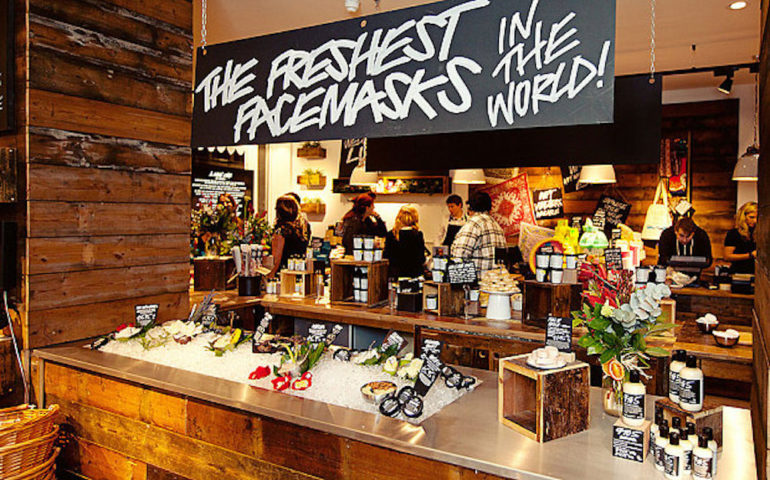
    Lush has taken a positive approach to its future in Hong Kong following the closure of its Central flagship store at the end of last month.

    But it has criticized the city’s landlords generally for failing to share the burden of a decimated retail market in the wake of the pandemic. The beauty products company said the decision to close the five-story flagship store, and its first spa in Asia at the end of its lease took “much consideration”.

    Lush said that all of its other stores in Hong Kong and Macau will continue to trade as usual.

    The Soho Square store’s closure reflected the challenges of dealing with reduced footfall during the Covid-19 crisis, the impact of “previous conditions” and a lack of early response from landlords and the government to help struggling businesses.

    “The pandemic has challenged many businesses around the world. Unfortunately, the measures to help in Hong Kong have been very late. Up until the end of January we had received little support from landlords or the government. However, the measure on salaries is very much needed and we are grateful for this.

    “Even though we are saying goodbye to Lush Soho Square Shop & Spa, we want to highlight the achievement of the team in the past five years and thank them for all their hard work. We have loved bringing the spa experience to customers in Hong Kong and we hope they have enjoyed every moment.”

    Elsewhere in Hong Kong, Lush has been engaging with landlords across the two territories because rent accounts for the majority of costs to businesses of all types.

    “We know it is also difficult for our landlords and as property owners, they also have a vested interest in the future of the retail industry,” Lush said in its email. “We would like to thank our partners who have to date been open to constructive discussion and particularly for those that have given discounts of 50 percent and above.

    “But this isn’t the time for one party to take all and one party left with all the burden. We believe there is collective social responsibility, and landlords and retailers should work collaboratively together to ensure retail survives in Hong Kong, which will benefit the local people and economy that in turn supports property owners that need rental tenants.

    “Some landlords gave us a slight discount on rent in February and March, following negotiations with us. However, this is not reflective of the reality we are facing. We have been in continual negotiations of the rent relief and payment plan with the landlords, and we are confident of keeping things under control with our strategic property plans, and where governments have offered pay schemes and guarantees we are making use of these to ensure staff payroll is protected as much as possible whilst there is little money flowing into the business.”

    Meanwhile, over the past few months, the company has worked to have a positive impact on the local communities during the pandemic.

    Underpinning the message of washing hands to keep the virus at bay, Lush donated more than 8 tonnes of soap to healthcare workers, non-profit organizations and minority groups.

    “We strongly believe that this is the time we have to help each other locally to overcome the unpredictable challenges so that we can support a positive future together.

    “We look to the future with optimism and sincere gratitude to our incredible staff and community. We are doing our best to make decisions and operate the only way we know how: honestly and transparently.”

    Lush founder Mark Constantine said the pandemic may bring many long-lasting changes to the way people live their lives.

    “Lush needs to adapt to these changes, stay agile and relevant, whilst holding true to our principles of being a business that is kind and caring. We will need the help of everyone as we enter this next phase.”

  • Record fall in retail sales in Indonesia

    Record fall in retail sales in Indonesia

    Retail sales in Indonesia have seen the sharpest drop in 12 years, according to a report, based on information from the nation’s central bank.

    Territory-wide sales fell 20.6 percent year on year during May, representing the largest contraction in the category since November 2008. The drop was steeper than figures for April, which showed a decline of 16.9 percent.

    According to the data, buyers shopping for clothing and recreational items showed the greatest reduction in spending since that manifested in last month’s figures in May.

    There remains a little prospect for relief in the immediate future, with the bank’s survey predicting last month’s figures to reveal a 14.4-per-cent drop.

  • Little respite likely as Hong Kong retail rents slump to 2003 levels

    Little respite likely as Hong Kong retail rents slump to 2003 levels

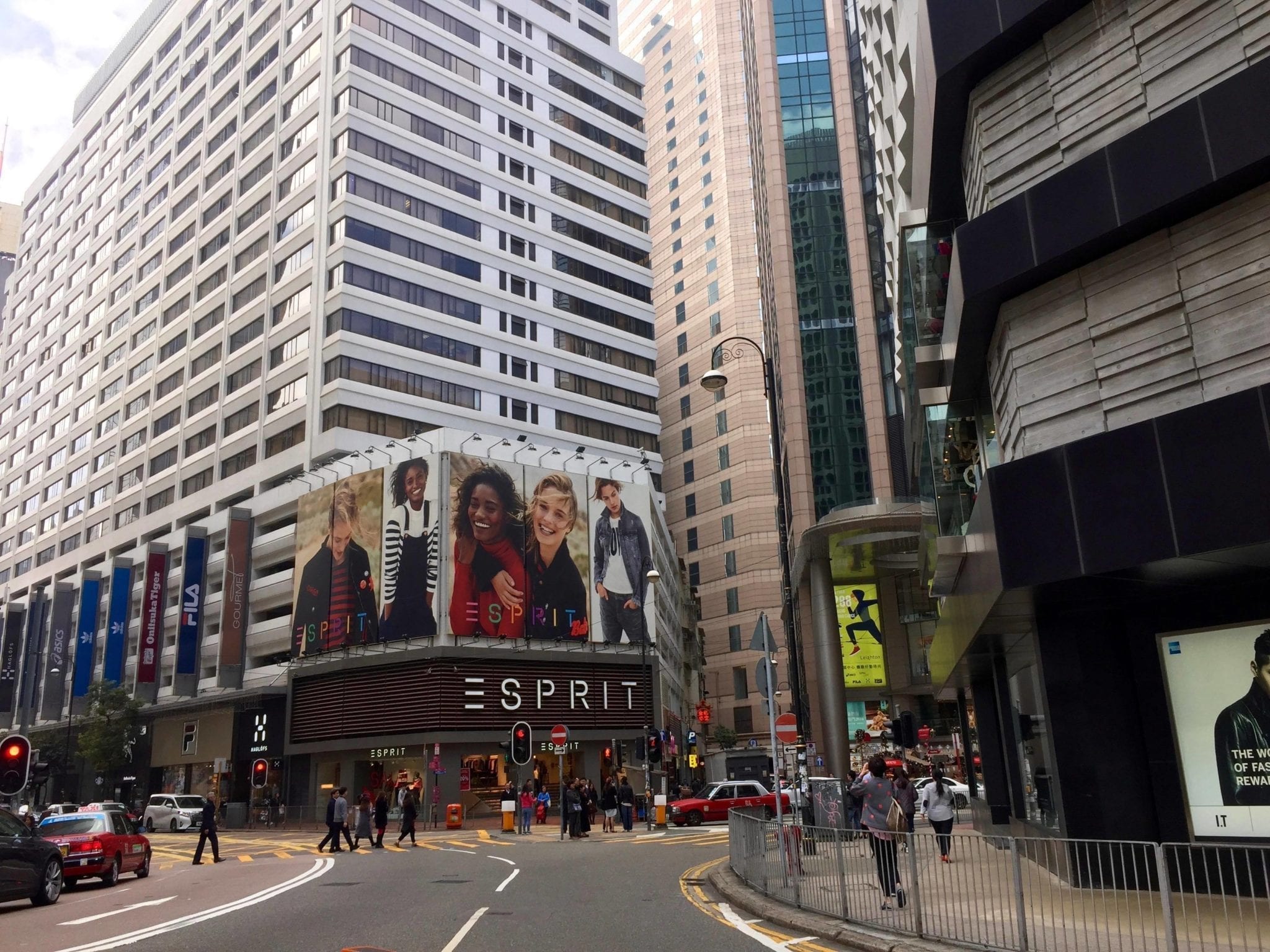
    As Hong Kong retail rents slump to levels not seen since 2003, retailers who appeal to domestic shoppers are beginning to have a stronger presence in the market.

    According to retail real estate professionals with property company Savills, brands in categories such as lifestyle products, health-related goods, and affordable family-friendly chains are taking the opportunity to lease space in commercial districts across the city. They are taking over from retailers who appealed primarily to inbound tourists from Mainland China and elsewhere, before social unrest and the Covid-19 led to a record 11-month run of double-digit declines in retail sales in the city.

    Jewelry and watch sales plummeted by more than 69 percent during the first five months of this year.

    Savills senior director, research & consultancy, Simon Smith, says that while prime street-shop and shopping-mall rents seem to have found a floor since their 2013 peak, this may only be temporary.

    “Rising vacancy levels continue to plague the market with mid-range fashion retailers joining luxury retailers in rationalizing store numbers, but rents appear to have stabilized for now.”

    With many luxury and mid-range brands struggling to break even with the desertion of tourists, they are right-sizing their networks and closing underperforming stores.

    “The market has endured a prolonged correction since 2013 but with rents now close to 2003 levels, landlords and tenants are beginning to embrace the new reality and accept new business models and a more creative approach to trade and tenant mix,” adds Nick Bradstreet, MD, and head of retail leasing.

    According to Savills’ research, the quarter-on-quarter decline in Hong Kong retail rents in the three months to June was about 1.7 percent in prime street front sites and 0.8 percent in shopping centers.

    Retailers including Valentino, Tiffany & Co, Coach and Prada have already given up prime sites on Tsim Sha Tsui’s Canton Road and Causeway Bay’s Russell Street, two of the city’s most expensive commercial strips. Victoria’s Secret has closed its multi-story flagship nearby and MCM’s largest store, in Central, has also been shuttered.

    More mid-market retailers including Swatch, SaSa, Lush and Gap have also rationalized their store networks.

    But in their place, new brands are taking the opportunity to increase their street presence, typically brands targeting local consumers rather than mainland daytrippers and tourists.

    “Local consumers are more focused on their “whole of life” needs, prioritizing health and well-being, caring about their family and community, and valuing the local culture and sustainability,” says Savills in its quarterly review of Hong Kong retail rents.

    Examples include Muji and Lululemon, which have both opened their largest stores yet in the city, at Telford Plaza and Harbour City respectively, and UK women’s activewear label Sweaty Betty, is opening its second Hong Kong store, at Causeway Bay this month. Japanese grocer Don Don Donki is opening two more stores, at Causeway Bay and Central, later this year.

    Bradstreet and Smith say shopping-mall footfalls across Hong Kong showed signs of recovery during May and June as locals began venturing out again after Covid-19-related social-distancing measures were eased. A degree of pent-up demand may have helped the trend.

    But rebounding local spending won’t be enough to help brands reliant on tourists, with Savills predicting vacancies on prime streets in traditional tourist districts will soon rise. Topshop, Gap and Adidas are all tipped as unlikely to renew their leases on Central spaces.

    “The post-Covid outlook for Hong Kong’s retail industry remains very challenging,” concludes Savills. “Some structural changes in demand profile and market fundamentals are underway and both retailers and landlords need to adapt and constantly reinvent to stay relevant.

    “A slower-than-expected recovery in the tourism market means that a more balanced approach to local consumers and mainland tourists is warranted moving forwards but the shopping preferences of locals and tourists are of course quite different.”

  • Singapore retail sales collapsed during May due to store closing

    Singapore retail sales collapsed during May due to store closing

    Singapore retail sales plummeted 52.1 percent in May as Covid-19 lockdowns shuttered malls and the majority of retail stores across the city-state.

    May’s year-on-year decline followed a 40.3 percent drop in April and represented the biggest drop since statistics were first collected in 1986.

    After removing motor vehicles from the data, the decline was only a slightly less dramatic 45.2 percent, compared with 32.5 percent in April.

    The closure of stores across the city caused a dramatic rise in online sales which accounted for 24.5 percent of the US$1.29 billion total turnovers.

    According to Statistics Singapore, 94.3 percent of sales of computer and telecommunications equipment in May were conducted online, 93.6 percent of furniture and household goods, and 9.6 percent supermarket sales.

    Every retail category recorded a sales decline except supermarkets, hypermarkets, and convenience stores. Supermarket and hypermarket turnover soared 56.1 percent and convenience stores by 9.1 percent.

    Sales of watches and jewelry, by department stores and apparel, fell by between 89.1 percent and 96.9 percent.

    As with traditional retail, the Circuit Breaker measures introduced to curb the spread of Covid-19 resulted in huge declines in the food & beverage sector as well. A 50.1-per-cent decline in May represented a tiny improvement from April’s 52.7 percent, with vendors able to supply only delivery or takeaway.

  • Digitalization key to helping Asian retailers emerge from Covid-19

    Digitalization key to helping Asian retailers emerge from Covid-19

    Retail business leaders in Southeast Asia see digitalization as the driving tool in returning to growth in the post-Covid-19 era according to a study by Ernst & Young.

    The responses reflect a slew of physical store closures as online platforms are increasingly becoming the key sales avenue for retailers during the pandemic.

    Bit, while digitalization is a very visible option in current times, an online strategy alone may be insufficient for retailers to stay profitable or successful in the long run, warns Ernst & Young ASEAN consumer products & retail sector leader Olivier Gergele.

    “We are seeing a fundamental shift in the retail industry that demands a rethinking of business and operating models.”

    According to the survey, 59 percent of retailers intend to digitalize their business within the next year, while 23 percent are looking at restructuring their businesses; 11 percent are seeking an exit due to non-performance, and 3 percent are intending to merge with another retailer.

    The majority of respondents (57 percent) saw improving topline performance through online sales and market listings as a clear and immediate priority, while 40 percent of those surveyed admitted to facing resource constraints. 61 percent of retailers surveyed are turning to work capital optimization to improve cash flow.

    “This crisis is fast-evolving consumer’s preferences, behaviors and values,” said Gergele. “Online retail penetration is expected to grow at an accelerating pace, and the industry’s economics will shift with e-commerce gaining a fair share of the profit pool.”

    The results of the survey suggested retailers in the region should focus on five key areas during the upcoming period: driving an omnichannel strategy; driving supply chain resilience; expanding offerings; engaging in timely M&A; and driving agility.

    “From what we have seen in previous crises, retailers that embrace change are more likely to emerge as leading businesses while those who persist in conducting business-as-usual may fall behind,” said Gergele.

  • Singapore retail sales down with 33 percent in April

    Singapore retail sales down with 33 percent in April

    Singapore retail sales – excluding motor vehicles – plummeted 32.8 percent in April as Covid-19-related lockdowns saw non-essential retailers closing their physical stores.

    Including motor vehicles in the data, the fall was 40.5 percent.

    Significantly, online sales accounted for a record 17.8 percent of total retailing, with 70.6 percent of sales in the computer and telecommunications category occurring online in April and 50.4 percent of furniture and household equipment. However, just 7.7 percent of the total sales of supermarkets were conducted online.

    According to Statistics Singapore, the worst-affected retail sector overall was department stores where sales fell by 87.8 percent. Sales in watch and jewelry stores fell by 84.6 percent.

    On the plus side, sales by supermarkets & hypermarkets soared 74.6 percent, partly driven by people staying at home to work or study during the Circuit Breaker lockdown and partly due to the move from eating out to preparing food at home. Minimarts & convenience stores boosted their sales by 10.7 percent.

  • No surprise as retail sales in Hong Kong down again

    No surprise as retail sales in Hong Kong down again

    Retail sales in Hong Kong have plunged by more than one-third over the first four months of this year.

    Census and Statistics Department figures show a 36.1-per-cent decline, which follows an adjusted 42.1-per-cent fall in March.

    Those two months represent the beginning of the real impact of the Covid-19 pandemic which has seen the border with Mainland China effectively closed down and starving the territory’s retailers of traditional sales to inbound tourists.

    A government spokesman said that April’s decline, while narrower than that of March, was still “huge”.

    “While the epidemic has abated in Hong Kong, the business environment for retail trade remains challenging, as Covid-19 has brought inbound tourism to a standstill, and as austere labor market conditions and various uncertainties continue to weigh on consumer sentiment.”

    Retailers received little relief in May as when local social-distancing measures were relaxed, social unrest recommenced, leading to stores being shut in the popular Causeway Bay district, with some, including I.T Group-owned premises, vandalized. Retail sales in Hong Kong are unlikely to show any lasting recovery until much later this year when the border reopens and international travel resumes.

    Broken down by category, the April data made for grim reading. Watches, clocks and jewelry sales were down a massive 76.6 percent on April last year. Apparel sales slumped 63.6 percent, cosmetics and medicines were down 62.9 percent and footwear and accessories fell by 55.6 percent.

    Optical shop sales fell by 43.2 percent, sales of books, stationery and newspapers fell by 39.9 percent, of Chinese drugs and herbs by 35.3 percent and of electrical goods and electronics by 21.7 percent.

    Department-store sales were down by 18 percent, and of food, liquor and tobacco by 14 percent.

    Just two categories posted growth: supermarket sales up by 14.4 percent and furniture and fittings by 1.6 percent.