Tag: retail news

  • Understaffed businesses need 300,000 plus workers in HCMC

    Understaffed businesses need 300,000 plus workers in HCMC

    Facing labor shortages, businesses and factories in HCMC need around 310,000 workers this year should Covid be controlled.

    According to a recent survey by the HCMC Center of Forecasting Manpower Needs and Labor Market Information (Falmi), the city’s labor market faces two scenarios depending on future Covid development.

    If Covid-19 is brought under control, businesses need to recruit 280,000-310,000 workers. The demand for human resources in the first quarter would be nearly 87,000, second quarter over 72,000, third quarter 74,000, and fourth quarter, 77,000.

    Should the pandemic situation remain complex, the city’s labor demand would be about 255,000-280,000 staff. The highest would be in the first three months of the year at over 78,000.

    The trade and service sector has shown the sharpest increase in recruitment demand this year, accounting for nearly 66 percent and including commerce, transportation and warehousing, accommodation, catering and others.

    Recruitment demand for the industry and construction group accounts for over 33 percent, including mechanical engineering, electronics production, food processing, beverage, and pharmaceuticals.

    The report found up to 86 percent of recruitment demand does not require workers to have a college degree.

    Regarding market response, Falmi stated that on average, the city produces about 500,000 students and graduates each year, including from university, college, intermediate, elementary and vocational training levels.

    Therefore, it is expected the city’s labor force would meet recruitment demand among enterprises this year.

    The agency noted that this year the city’s labor force would reach nearly 5 million employees, of which more than 3 million work in enterprises and factories.

    Last year, according to a Falmi survey, nearly 65,000 businesses across HCMC had to recruit more than 174,000 workers, though the number of job seekers was only around 135,000.

  • The Retail News Team wishes you a Merry Christmas and Happy Holidays!

    The Retail News Team wishes you a Merry Christmas and Happy Holidays!

    The Retail News Asia team wishes you peace, joy and successes throughout the coming year. Thank you for your continued support and involvement. We look forward to hearing from you in the years to come.

  • B2B shopping app taps Vietnam’s e-commerce potential

    B2B shopping app taps Vietnam’s e-commerce potential

    The ranking of businesses in Vietnam’s map of e-commerce changed in the second quarter of 2021, with the volume of Google searches for essential online stores skyrocketing, according to an iPrice Group study.

    The study showed online groceries were the only category to maintain steady and consistent growth since the beginning of the pandemic. Google searches related to online grocery stores in the second quarter of this year increased by 223 percent against the first quarter. The number of searches increased 11 times in July compared to May, and 3.6 times compared to June when the social distancing order under Directive 16 was implemented in some provinces and cities.

    People pay more attention to fresh food, beverages, pre-packaged items, fruits, and veggies as the searches of these items surge by 99 percent, 51 percent, 30 percent, and 11 percent, respectively, compared to the previous quarter. Thus, social distancing could be one of the factors driving the surge in demand for online supermarkets. With the growing necessity of purchasing essentials online, retailers are more likely to adapt to the digital platform.

    Buy2Sell, a B2B platform for imported goods, launched a new application in December to compete in the e-commerce race in Vietnam. Buy2Sell’s application focuses on high-end products, especially imported organic food, genuine cosmetics, and other lifestyle items.

    From 2022, Buy2Sell will expand to allow domestic sellers on its platform instead of only international vendors as previously. It would still enable any buyer matching a seller’s MOQ (order minimum) to purchase goods at wholesale prices.

    Buy2Sell has established a flexible delivery policy between sellers and buyers on its platform and application, where sellers can deliver the goods themselves to buyers instead of waiting for a long period of time. This helps buyers receive the goods quicker.

    All goods displayed on Buy2Sell will be authenticated from their origin. The quality of origin guarantees no imitations, fake goods, low-quality goods to be distributed through this platform. Buy2Sell established a consumer protection policy on selling prices and warranties, under the commitment for all sellers.

    Through its elaborate distribution system (both wholesale and retail) since 2015, and with a completely different market segment from other e-commerce players, Buy2Sell will become a known name. In the coming years, the company intends to strongly contribute to the development of Vietnamese technologies and bring changes to the consumer landscape.

  • Moleskine opens its first retail store in SEA

    Moleskine opens its first retail store in SEA

    It’s been a big year for Brioni. The fashion house has marked its 65th year by collaborating with us on our ’Wallpaper* Handmade… in Italy’ exhibition, opening several new stores and – of course – throwing a large party. And now it is celebrating the milestone with a commemorative Moleskine notebook, which it’s giving to friends of the brand, illustrated by the whimsical hand of the artist, Carlo Stanga.

    Eschewing fashion’s customary glossy images, Stanga has created a series of playful and informal vignettes depicting the tailoring brand’s history and identity. On one page, a team of tiny characters spills from the pockets of a giant suit jacket as they carry out its finishing touches. And on another, there are a series of Brioni-clad Oscars, with a caption that reads: ’Brioni conquers Hollywood.’

    ’We were attracted to Carlo’s work by his fresh and modern stroke,’ says Brioni. The brand has a large archive of illustrations. From its inception in 1945, up until the 1970s, it collaborated with artist, Luigi Tarquini. ’We feel that illustration is a warmer art form than photography,’ the fashion house explains.

    Next up for Brioni is the opening of its new stores in China and Düsseldorf, plus September will see its first fashion show with Alessandro Dell’Acqua at the creative team’s helm.

  • Uniqlo clothes plans to produce from recycled materials by 2030

    Uniqlo clothes plans to produce from recycled materials by 2030

    Uniqlo owner Fast Retailing says its clothes will be made of 50% recycled materials by 2030 as it works toward its goal of carbon neutrality by 2050.

    The goal was announced on Thursday along with other sustainability targets and follows an announcement in February that Fast Retailing is shooting for carbon neutrality by 2050.

    Currently, about 15% of the polyester the apparel maker uses comes from recycled PET bottles. The company says it will start with synthetic fibers such as rayon and nylon as it begins to raise its garments’ recycled materials ratio.

    Fast also articulated its carbon emissions reduction plan toward 2030. In its own operations, the company intends to reduce these emissions by 90% from 2019 levels.

    Improving energy efficiency at its stores will be key as the stores account for the majority of the company’s total emissions. Fast aims to emit 40% less from its roadside stores and 20% less from its stores inside malls.

    It will accelerate its stores’ switch from electricity to renewable energy sources. Currently, 64 Uniqlo stores in nine European countries run on renewable energy. All stores in North America and some in Southeast Asia will follow suit and complete the switch by the end of this fiscal year ending next August, the company said.

    Fast also aims to encourage companies along its supply chain to reduce their emissions. Among its raw material providers and sewing factories, it is shooting for a 20% cut in emissions by 2030, based on 2019 levels.

    It will consider granting financial support to help factories invest in facilities.

    The fashion industry is widely considered the world’s second most polluting industry.

    Fast Retailing Director Koji Yanai told reporters that the company will reduce waste by improving the accuracy of its production volume forecasts and by reforming its logistics operations. It expects these steps to help it sell out of what it makes.

    The casual apparel maker will also collect more used clothes. Yanai said the company hopes to launch a collection service that utilizes the delivery personnel involved in bringing orders to customers’ doors. In Yanai’s vision, when a new jacket is delivered, the customer will be able to hand the driver an old jacket.

    Fast also plans to collaborate more with manufacturers in other industries, including carmakers and building material producers. It and material maker Toray will set up a research facility in 2022 that will specialize in the circulation of apparel and new material development.

    Other apparel brands are moving in the same direction. Patagonia, a U.S.-based maker of outdoor clothing, intends to make its garments with all recycled materials by 2025. Swedish fast-fashion giant Hennes & Mauritz has a 2030 goal for all of its clothing to be made of either recycled or sustainably sourced materials.

    Compared with other brands, Fast’s target is relatively lackluster. “We’re putting our customers first and presenting this as the maximum number our brand can commit to,” Yanai said. “We do not consider our target low.

    “From now on, people will evaluate what kind of responsibility each brand is trying to fulfill after selling clothes.”

  • AirAsia CEO ‘bullish’ on beating Omicron as airline announces resumption of Phnom Penh flights

    AirAsia CEO ‘bullish’ on beating Omicron as airline announces resumption of Phnom Penh flights

    AirAsia Group chief executive Tony Fernandes has urged governments to stop “overreacting” to the emergence of the new Omicron variant of Covid-19 and focus on reducing the cost of PCR testing instead.

    “It’s a huge overreaction. We don’t know anything about this variant yet. Let’s wait and see before we jump the gun,” Mr. Fernandes said at a virtual address at Bangkok Post’s International Forum 2021 dubbed “Unleashing the Future: A Glimpse into 2022 and Beyond” on Thursday.

    Air Asia has also hinted that Cambodia is one potential market for new ventures. Current group president for airlines Bo Lingam says: “We will continue to review new markets to operate from in the future, like Cambodia for example when we can connect Southeast Asia once again with the best value fares and lifestyle offerings.”

    The chief executive of the low-cost carrier said the world is more equipped and better prepared to deal with Omicron — first detected in South Africa — than previous strains.

    Air Asia is also reportedly looking at resuming Kuala Lumpur-Phnom Penh flights in January 26 to take advantage of Chinese New Year travelers. During its heydays prior to COVID-19, it used to mount three flights a day.

    “There are Merck pills, and Pfizer pills are coming out. We are vaccinated. There are boosters available. I’m feeling much more bullish, and I am not doom and gloom,” he said.

    “Governments need to use common sense and see what is needed. I think travel restrictions and such measures are temporary, and the world is global. No matter how much we close the borders, the viruses will travel.”

    He criticized the pricing and frequency of the PCR tests required by many governments, including Thailand, when travelers enter their borders. He said this risks deterring passengers from taking a vacation despite the pent-up demand to venture overseas.

    “No government has looked at the cost of the PCR test. PCR tests in Southeast Asia are extremely [expensive]. It’s unfair for passengers to pay that kind of cost. Of course, we want to be safe, but make it as simple as possible.”

    He praised Thailand for planning to reduce some of these charges and procedures.

    “Thailand is ahead of the rest of ASEAN, which are still quite draconian,” he said, referring to the Association of Southeast Asian Nations.

    “In Malaysia, we have a seven-day quarantine. It’s a start. At least we are opening up borders, but there’s a long way to go before we get to where we used to be.”

    As for AirAsia’s operations and outlook for 2022, Mr. Fernandes said he had restructured the company and pivoted to more digital businesses.

    So far, the low-cost carrier has launched three logistics businesses — a food delivery super-app, online bank BigPay, and parcel delivery service Teleport. The company has no plans to cut routes yet, it said.

    The group CEO was optimistic about the future of the aviation industry. He said he expects low-cost carriers to bounce back faster than full-service airlines as most passengers prefer to travel short distances. Moreover, business travelers are getting used to attending meetings virtually instead of in person, he said.

  • Malaysian Tycoon Tony Fernandes’ AirAsia Launches Parcel Delivery Service To Tap E-Commerce Boom

    Malaysian Tycoon Tony Fernandes’ AirAsia Launches Parcel Delivery Service To Tap E-Commerce Boom

    AirAsia Group controlled by Malaysian tycoon Tony Fernandes has launched a parcel delivery service as the loss-making budget airline seeks to tap the e-commerce boom across Southeast Asia.

    The new service, called AirAsia Xpress, is the company’s latest venture as it expands its digital business to shore up the airline’s revenues that have been hard hit by the Covid-19 pandemic, AirAsia said in a statement on Tuesday. The service will initially be available in Kuala Lumpur and other areas around the densely populated Klang Valley, before rolling out to other parts of Malaysia and Southeast Asia.

    Powered by Teleport—the group’s logistics arm—AirAsia Xpress gives its super app users two options: instant delivery to receive their packages in less than an hour or same-day delivery to receive their packages within six hours. The new venture complements the airline’s food delivery and ride-hailing services, which are part of initiatives to build a super app that will compete with Southeast Asia’s tech titans such as Indonesia’s GoTo and Singapore’s Grab and Sea Group.

    “As we move forward with the post-pandemic recovery, we believe that people will remain greatly dependent on efficient and affordable delivery services—one of AirAsia’s core strengths,” said Lim Ben-Jie, head of e-commerce delivery at AirAsia’s superapp. “Combining our ease of usability and network reach across ASEAN and beyond, AirAsia Xpress will support individuals and micro-businesses with fast and convenient deliveries.”Southeast Asia is among the fastest-growing regions in the world, with gross merchandise value from the digital economy climbing 49% to $174 billion this year from the previous, according to a new study jointly published by Google, Temasek, and Bain & Company this month. As consumers across the region increasingly embrace e-commerce and other digital platforms, the study predicts the GMV to grow to $363 billion by 2025 and surpass $1 trillion by 2030.

    This strong growth trajectory bodes well for AirAsia, which is seeking to grow the share of its digital businesses to 50% of the group’s revenue by 2025. The group has been pivoting into digital businesses as Covid-19 travel restrictions drag passenger and cargo traffic lower.

    Earlier this week, AirAsia reported its third-quarter revenue declined 37% from the previous year to 296 million ringgit ($70 million). In a research note, Raymond Choo, an analyst at Kuala Lumpur-based Kenanga Research, cut his full-year earnings estimate for AirAsia by 17% to a net loss of 2.41 billion ringgit.

    “As a group, we have taken advantage of the downtime in flying to tap new revenue streams and fully transform ourselves into an investment holding company with a portfolio of synergistic travel and lifestyle businesses,” Fernandes, CEO of AirAsia Group, said in a statement when the group announced its third-quarter results. AirAsia’s superapp, along with Teleport and the group’s fintech unit BigPay, are gaining traction and building a strong presence in key markets, he added.

    Fernandes and his business partner, Kamarudin Meranun, took over AirAsia in 2001 to build a low-cost carrier that would make air travel affordable. Fernandes—who dropped out of this year’s ranking of Malaysia’s 50 Richest people—also has interests in hospitality, insurance, and education.

  • E-commerce sites report jump in 11/11 sales

    E-commerce sites report jump in 11/11 sales

    E-commerce platforms reported a surge in sales on Singles’ Day on Nov. 11, an annual shopping event, with the most popular items being masks and healthcare products. Tiki said revenues were up nine times from last year, and the number of buyers was double that on normal days.

    Face masks, products for babies and mothers, and fast-moving consumer goods were the top sellers, it said.

    It also sold some 10,000 mobile phones, including 500 iPhones, 2,000 electric motorbikes and bicycles, and 6,000 cans and bottles of beer.

    Shopee sold 1.8 million decorative items, including some 100,000 decals and stickers, 1.6 million healthcare products, one million earphones, and 150,000 mobile phone covers.

    Lazada said revenues doubled and the number of customers was up by half. Healthcare and beauty products were its best-sellers, and electronics sales almost doubled, with laptop and desktop sales nearly tripling.

    Sendo said revenues were 40 percent higher than during other promotions such as Sept. 9 and Oct. 10, with fashion, household, and beauty items seeing sales double.

    According to a report called ‘e-Conomy SEA 2021’ released this week by Google, Temasek and Bain & Co., Vietnam’s e-commerce market will increase to $13 billion this year, up 53 percent from last year, and triple by 2025.

  • iPhone 13 sees record sales in Vietnam

    iPhone 13 sees record sales in Vietnam

    Tens of thousands of iPhone 13 phones have been sold in Vietnam within days of its launch, with numbers exceeding those of Apple’s previous offerings.

    FPT Shop sold nearly 5,000 phones for nearly VND200 billion ($8.79 million) on the first day of sales on Oct. 22, breaking previous iPhone records, Nguyen The Kha, director of the chain’s mobile telecommunications division, said.

    Last year it sold 4,500 iPhone 12s on the first day.

    CellphoneS sold nearly 3,000 iPhone 13s compared to around 1,000 last year.

    Minh Tuan Mobile, which began selling Apple products for the first time this year, sold 1,000 iPhone in two days.

    Industry insiders said the large number of incentives that Apple is offering users this year is causing more buyers to go to authorized stores instead of buying them from sellers who pick up the devices in other countries and sell them in Vietnam.

    “Apple almost did not seem to care about the Vietnam market before,” a seller in HCMC’s District 1 said. “But now it offers a lot of support and commission to distributors and incentives to buyers, which makes the unauthorized market less appealing.”

    Another factor is that the iPhone 13 arrived in Vietnam one month earlier than the iPhone 12 last year, which came on Nov. 26.

    ShopDunk, a distributor of Apple products, said it opened five new Mono Stores (exclusively selling Apple products) on the first day of iPhone 13 sales.

    It also saw the number of pre-orders triple to 15,000.

    A spokesperson for Minh Tuan Mobile said only 50 percent of orders could be met so far, and others have to wait.

    iPhone 13 mini, the smallest and cheapest in the iPhone 13 lineup, is being sold in Vietnam at around VND18.4 million.

    The remaining models cost VND21.5-VND31.9 million.

  • New Google search feature shows shoppers in-store inventories

    New Google search feature shows shoppers in-store inventories

    Google has unveiled new search functions aimed at improving the online shopping experience, including allowing consumers to see retailers’ in-store inventory from wherever they are using their device.

    The enhancements have been enabled using advances in AI technology, the company said during its livestreamed Search On conference overnight.

    A new addition to search results – an “in stock” filter – will show if nearby stores have specific items on their shelves. In an example provided by the search provider, someone looking for a kids bike helmet can click on the filter to find stores nearby that have a helmet – right down to a specific brand or style – on their shelves.

    The new feature launched overnight in Australia, New Zealand and Japan, along with the UK, multiple European markets, Brazil, and Canada.

    Another feature aimed at creating what Google describes as “a more shoppable search experience” provides visual feeds. For example, search for “cropped jackets,” and Google will deliver a visual feed of jackets in various colours and styles alongside useful information like local shops, style guides and videos.

    “With this new capability, you can tap on the Lens icon when you’re looking at a picture of a shirt, and ask Google to find you the same pattern – but on another article of clothing, like socks,” said Alphabet senior VP Prabhakar Raghavan.

    “This helps when you’re looking for something that might be difficult to describe accurately with words alone.”

    This new feature is powered by Google’s ‘Shopping Graph’ which it describes as “a comprehensive, real-time dataset of products, inventory and merchants with over 24 billion listings”. This experience has been released only in the US for now, but other markets will follow.

    Another feature, called Lens in Chrome will be launched globally during the coming months, allowing consumers to select images, video and text content on a website and see search results in the same tab – without leaving the page they are on.

  • Experts warn of risks to premature economic reopening

    Experts warn of risks to premature economic reopening

    Reopening the economy is necessary but any untimely decision amid low vaccination rates and high contagion risks could stymie the country’s efforts to defeat Covid-19, experts warn.

    “The premature lifting of the lockdown and reopening the economy while the full vaccination rate remains low, new infections and fatality rates are still soaring and the health system is overburdened may even endanger the economy and people’s lives more badly,” Nguyen Minh Cuong, principal country economist at the Asian Development Bank said.

    But the country stands at a crossroads since lengthening strict social distancing is likely to inflict further socio-economic costs and endanger its medium- and long-term growth prospects, he told VnExpress International in an emailed statement.

    Prime Minister Pham Minh Chinh and Ho Chi Minh City leaders have spoken about letting economic activities resume gradually and how the lockdown “cannot go on forever.”

    Vietnam has been struggling in its Covid-19 fight since the end of April when a fourth wave began and infected nearly 609,000 people and killed over 15,000.

    HCMC, the largest city and major manufacturing and exporting hub, has imposed strict social distancing for over two months but still thousands of new cases are being found every day.

    This is why analysts are reluctant about resuming economic activities now.

    “It is complicated to find the perfect moment to reopen the economy,” Tim Evans, CEO of HSBC Vietnam, said.

    The risks of doing this too early at a time when vaccination is not up to optimum speed and the medical system is overwhelmed could lead to additional Covid cases resulting in a further increase in mortality rates, he said.

    Other experts concurred.

    “In our view, reopening the economy, especially in the epicenter HCMC, is a risky move,” Jason Yek, senior Asia country risk analyst at market research company Fitch Solutions, said.

    The rate of full vaccination in Vietnam is low, and reopening before the outbreak has been suppressed would possibly elicit a lukewarm response from consumers, he said.

    Vietnam has vaccinated 24 percent of its population, but only 5.2 percent have received two doses.

    The country has received 29.8 million doses of vaccine, or only one-fifth of its target of 150 million doses to vaccinate 70 percent of the population.

    This is why a premature opening risks a surge in infections which would overwhelm the healthcare system and could force the government to tighten restrictions again, Yek said.

  • Covid impact sees Vietnam retail sales drop

    Covid impact sees Vietnam retail sales drop

    Vietnam retail sales plunged 33.7 percent year-on-year in August as the country faced stricter restrictions due to the ongoing Covid-19 pandemic.

    According to the General Statistics Office, August’s retail sales plunged 10.5 percent compared to July. In the first eight months of this year, revenue from retail trade and service declined 4.7 percent year on year, reaching US$133.43 billion.

    The Covid-19 situation in the country has seen varying degrees of lockdown in Vietnam’s major cities including Hanoi and HCMC since June.

    In HCMC, retail revenue is estimated to reach US$1.5 billion, falling 15.9 percent month on month. The e-commerce sector, which had been expected to flourish as demand soared, recorded negative growth due to the restriction of delivery services under the Prime Minister’s Directive No.16.

    Restaurants – including online ordering with delivery or pickup – have been banned from trading for nearly two months in Ho Chi Minh City.

  • Shinsegae, Naver win bidding battle for EBay South Korea

    Shinsegae, Naver win bidding battle for EBay South Korea

    South Korean retail giants Lotte Shopping and Shinsegae Group have submitted separate letters of intent for online marketplace eBay Korea, the retailers’ spokesmen confirmed on Monday.

    It is a deal that will almost certainly shake up the country’s e-commerce retail segment, potentially propelling one of the country’s largest retailers into becoming the leading omnichannel operator in South Korea.

    SK Telecom, South Korea’s biggest mobile carrier, and private equity firm MBK Partners, the largest shareholder of discount store chain Homeplus, reportedly dropped out of the race to acquire eBay Korea, which has been up for sale since last year.

    This week’s formal bidding marks the second attempt to divest its interests by eBay Korea – which represents about 11% of global sales within the U.S.-based eBay corporation – and it wants at least $4.43 billion, a price that is looking increasingly attainable.

    South Korea’s total e-commerce transactions jumped 25% last year according to Trade Ministry estimates and eBay Korea represents about 12.8% of South Korea’s e-commerce market, just trailing Coupang at 13% and market leader Naver with 18%. Its revenue is estimated at $1.17 billion, with an operating income of $76 million.

    Coupang listed on the New York Stock Exchange in March, becoming the largest Asian company since Alibaba to go public in New York and raising $4.6 billion. Founded by billionaire Bom Kim, a Harvard business school dropout, Coupang is now the country’s most valuable start-up with a market capitalization of more than $60 billion, backed by Softbank’s Vision Fund.

    By contrast, Lotte and Shinsegae’s market shares in the country’s e-commerce sector are estimated at just 5% and 3% respectively and the takeover of eBay Korea by either could reshape the country’s online retail segment and fast-track the winning bidder into a market-leading position. Both have struggled to catch up with the major online competitors, especially after the impact of the Covid-19 pandemic.

    However, the picture is complicated. Naver could be one of the biggest beneficiaries if Shinsegae is successful as it is believed to be offering support in financing any acquisition. The retailer and portal established a strategic alliance in March and Shinsegae could switch to Naver Pay as the payment platform for three e-commerce websites operated by eBay Korea: Gmarket, Auction and G9. At present, eBay Korea uses its own online payment system called Smile Pay.

    Top South Korean cellphone carrier SK Telecom and retail group E-Mart were still among the remaining suitors as the preliminary round of bids sought by the U.S. parent closed 16 March.

    Indeed, SK Telecom had been the leading candidate. The group also operates the online platform 11Street through a subsidiary, making SK Telecom the fourth-biggest e-commerce provider. But 11Street has struggled to grow, leading SK Telecom to partner with Amazon AMZN 0.0% in November in a collaboration initially limited to 11Street hosting Amazon products, but likely to expand in scope.

    Meanwhile, Lotte will no doubt view the purchase of eBay Korea as a springboard for rebuilding the group’s online business. In April 2020, the group merged the e-commerce sites of its department stores, supermarkets, electronics shops and other physical retail affiliates under one shopping platform called LotteON but it has failed to make much headway.

    While all the potential suitors have refused to give much away, Kang Hee-tae, CEO of Lotte Shopping, admitted during a spring shareholder meeting: “We’re certainly interested.”

    Launching in 2000, eBay Korea quickly grew and last year earned around $75 million in operating profit. But eBay Korea has been squeezed by rivals in recent years, while activist investors like Elliott Management have urged eBay to shed assets with poor growth prospects.

    The U.S. parent’s hope of securing a lucrative deal initially looked ambitious but then Coupang went public successfully, boosting its hopes.

    Whoever wins the battle for eBay Korea, the fact that the rivals are both major retail players should heat up the market and could lead to an array of collaborations and partnerships to fight scale with scale. South Korea is on the brink of the biggest online shake-up since eBay announced its arrival over two decades ago.

  • Mercedes-Benz Introduces ‘Direct To Customer’ Retail Sales Model In India

    Mercedes-Benz Introduces ‘Direct To Customer’ Retail Sales Model In India

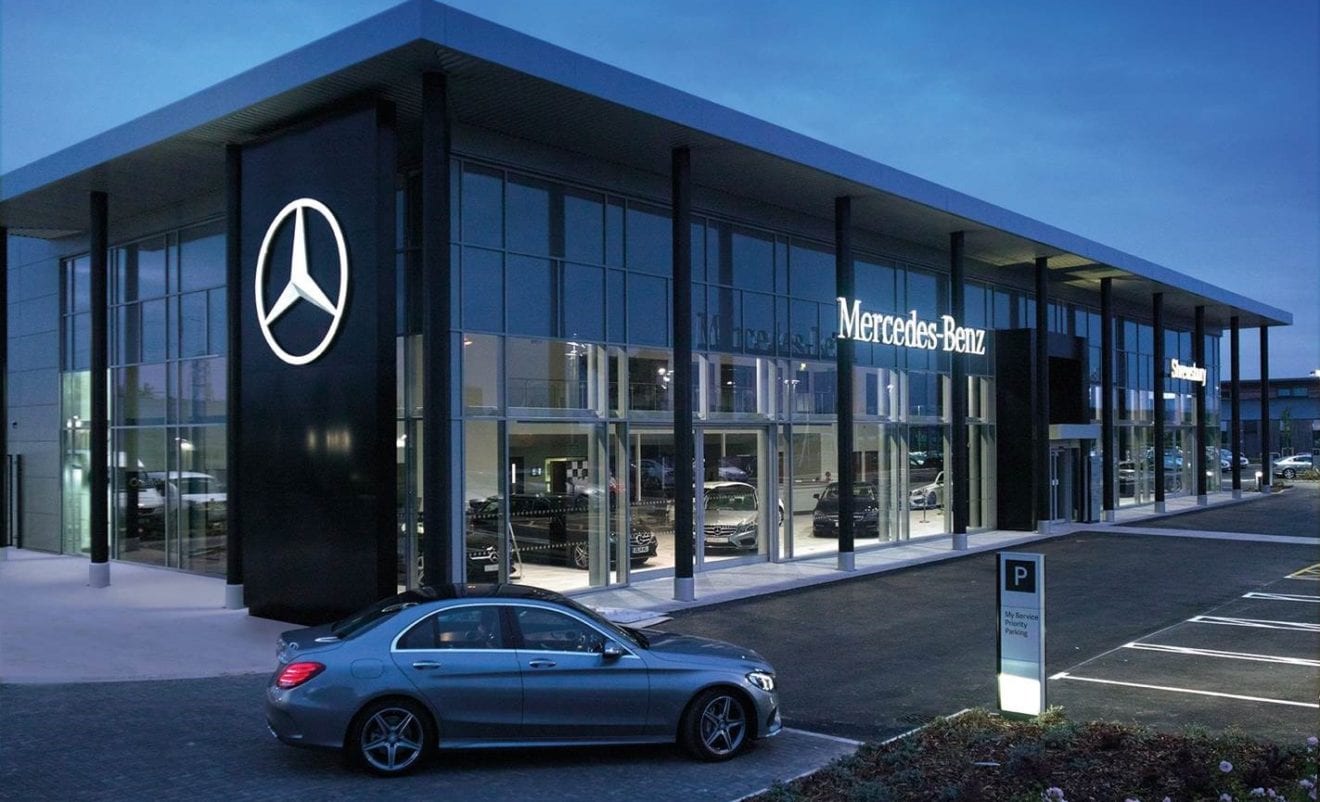
    Mercedes-Benz India today introduced its new retail sales model called ‘Retail of the Future’ (ROTF). With this new model, the company plans to promote a ‘direct to customer’ retail approach to creating a more customer-centric brand. To the effect, under this business model, Mercedes-Benz India will own the entire stock of cars, sell them via appointed Franchise Partners, invoice the new cars to the customers directly, process the order, and fulfill them. This would also mean that the company will offer one transparent price across India. The new retail model will be applicable only for new car sales, whereas other verticals like – customer service, pre-owned cars, and allied businesses will remain unchanged.

    Talking about the introduction of the new retail sales model, Martin Schwenk, MD & CEO, Mercedes-Benz India said, “This long-term strategic move will strengthen our customer focus by introducing a fundamental transition in the retail business in the market. It also will deliver a win-win solution for both customers and Franchise Partners, underscoring our clear vision for a future that is sustainable, empowering and digital. The advent of new sales channels has brought sweeping changes in customers’ aspirations and requirements and being a customer-obsessed brand, we have adapted our current business models to meet our customers’ aspirations and needs.”

    Commenting on Mercedes-Benz India’s new retail model, Vinkesh Gulati, President, FADA India said, “The agency model introduced by Mercedes India will be an out-of-the-box thinking by the company. Even though the model has tested waters internationally, India is a unique market where customer physic is very different as they change Dealers and even brands on any additional discount. Even though on the face of it, this model looks beneficial for the dealer community dealing in Premium Brands with low Volume but we will need to see if this model can work with mass-market brands so that every dealer can benefit from it.”

    Now, for customers, this might not be a big change. They will still have to visit the showroom or go online to purchase the vehicle, and, they will continue to the facilitated by the franchise representatives. What will change, however, is they’ll get uniform and transparent pricing, larger stock availability for choosing, and better customers service as that will become the major focus areas for dealerships. However, things will be widely different for franchise partners, the dealers, who will be operating on reduced risks and liabilities right now. A direct-to-customer retail model would mean they won’t have to worry about inventory cost, warehousing of the stockpile, which is added cost to dealers right now.

    However, this also means that dealers won’t be able to offer selective discounts or deals to attract buyers to compete with other dealers and gain more margin. Instead, now, in order to compete with other franchise partners, dealers will have to offer improved customer service, which will be measured based on what the company calls the CSI rating. In short, dealers will get commissions instead of sales margin.

    As for Mercedes-Benz India, it will be responsible for centrally managing the selling price of all new cars. The company will also be owning and managing the entire stock of new cars and will have to take care of order processing and fulfillment. This means the company will stop wholesale despatches to dealers. The company says that this new retail model will allow Mercedes-Benz to have better control over volume scalability and achieve price stability within segments. The company will also get improved forecasting with regards to the market trends and customer insight, along with better inventory management.

    Mercedes-Benz India will implement its new Retail of the Future sales model starting from the fourth quarter (Q4) of the 2021 calendar year.

  • Singapore retail sales growth eased up in March

    Singapore retail sales growth eased up in March

    Retail sales continued to recover in March as the Singapore economy rebounded, though the figures were boosted by the comparison with the situation a year ago when Covid-19 safe distancing measures began and border restrictions were in place.

    Takings at the till grew by 6.2 percent in March on a year-on-year basis, compared with the revised 5.3 percent increase recorded in February, according to data out on Wednesday (May 5).

    This made for a second consecutive month of retail sales growth after a 24-month-long year-on-year slide. Excluding motor vehicles, sales increased 4.4 percent in March. Almost all segments registered jumps in turnover, with the sales of watches and jewelry jumping the most, by 60.2 percent. This was followed by the sales of apparel and footwear, which increased by 35.6 percent. This was due to the lower base in March 2020 when there were low tourism receipts arising from tightened border restrictions, said the Department of Statistics (SingStat).

    Sales of recreational goods grew by 28.3 percent, while takings by retailers of computer and telecommunications equipment increased by 19.9 percent.

    Petrol service stations registered an increase of 18.6 percent, while vehicle sales went up by 15.6 percent.

    But sales at supermarkets and hypermarkets reversed their growth streak from last year and dropped by 14 percent.

    This was in comparison with March 2020 when there were higher sales as more people stayed home after safe distancing measures were introduced, SingStat noted.

    Sales of cosmetics, toiletries, and medical goods also fell, by 13.2 percent.

    On a seasonally adjusted month-on-month basis, SingStat observed that most retail industries recorded growths in sales.

    “Discretionary industries such as motor vehicles, watches, and jewelry, wearing apparel and footwear and department stores recorded growths in sales of between 5.2 percent and 7.8 percent, attributed to higher domestic spending given overseas travel restrictions,” it said.

    But sales of furniture and household equipment declined during this period, as demand for furniture slowed down, with more people returning to the workplace, it added.

    Meanwhile, sales of food and beverage services grew by 8 percent year on year in March, a reversal from the 3.4 percent decline in February.

    This growth was mainly attributed to the lower sales in March 2020 when safe distancing measures were first introduced to contain the Covid-19 outbreak, SingStat said.

    Restaurant sales grew by 17.9 percent, while cafes, food courts, and other eating places saw takings rise by 5.6 percent. But food caterers continued to suffer a slide in sales, of 25 percent. The total sales value of food and beverage services in March was estimated at $730 million, with online sales making up an estimated 23.5 percent. The estimated total retail sales value in March was about $3.5 billion. Of this, online retail sales made up an estimated 11.8 percent.