Tag: retail problems

  • Indonesian retail bussineses starts shutting down as coronavirus crisis gets worse

    Indonesian retail bussineses starts shutting down as coronavirus crisis gets worse

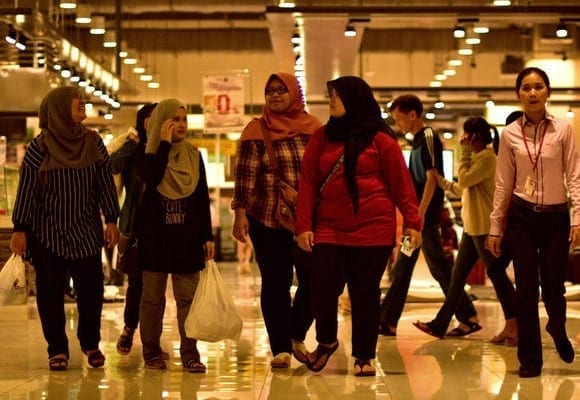
    The Indonesian retail sector has begun to shut down in the wake of the coronavirus crisis, with shopping centers and retail chains voluntarily closing the doors to non-essential categories.

    More than 30 shopping malls have been shut down in the country despite no order from authorities. Lippo Malls Indonesia Retail Trust (LMIRT) has temporarily closed 11 out of 23 shopping malls in the Greater Jakarta region, Bandung and Bali.

    According to LMIRT, the company will close its malls until April 9 and waive rent for all affected tenants. Essential services including supermarkets and pharmacies remain open during the shutdown.

    Other shopping malls across Jakarta closed include Senayan City, Plaza Indonesia, Aeon Malls, Mall of Indonesia and Lotte Shopping Avenue.

    Meanwhile, McDonald’s Indonesia will cease dine-in services across the country for two weeks starting from April 1. The company said on its social media channels that it still offers to take away, drive-through and home delivery services.

    As Indonesian retail continues to wind down, many local restaurants have also closed their doors but continue to operate through third-party apps like Gojek and Grab.

    Japanese fashion brand Uniqlo is among the latest retailers to temporarily close their stores in Indonesia.

    As of today, Indonesia has confirmed 1414 positive cases of Covid-19 including 122 deaths and 75 recovered.

  • South Korean department stores look to VIPs as sales slide

    South Korean department stores look to VIPs as sales slide

    South Korean department stores have launched an all-out effort to secure VIP customers who spend more than ordinary customers.

    Department stores have suffered fallout from the surge in popularity of online shopping malls for years, but sales have come under further pressure with the coronavirus outbreak.

    Sales at Lotte Department Store from March 1 to 22 decreased by 37.8 percent compared to the same period last year.

    At the height of the pandemic, and under the burden of its economic consequences, the top priority for South Korean department stores is to secure VIP customers.

    While VIP customers at the Galleria Department Store account for only 10 percent of all customers, their consumption amounts to 60 percent of sales.

    According to Shinsegae Department Store, the number of VIP visits last month was 2.5 times that of regular customers.

    Even when the number of visits by regular customers dropped by half after the Covid-19 outbreak, the number of VIP customers dropped by only about 20 percent.

    Managing loyal VIP customers and securing more big players in the future is a matter directly related to a store’s survival.

    This is why Lotte Department Store made changes to its VIP system. Under the old scheme, customers had to spend 20 million won (US$16,400) per year to qualify for the lowest level VIP program, as part of what was a four-level system.

    However, Lotte recently added another lower-level program to expand the scope of its VIP offerings.

    Meanwhile, Galleria Department Store, unveiled the largest VIP lounge in South Korea on the 12th floor of its newly opened Gwanggyo branch in Suwon, south of Seoul.

    VIP lounges in South Korean department stores have typically been places for customers who spend tens of millions of won a year. However, at the Gwanggyo branch, customers who spend 5 million won per year can enjoy the VIP lounge.

    “The fact that VIP thresholds have been lowered is indicative of a sales strategy to secure loyal customers by providing better services to more customers,” said a source in the department store industry.

  • South Korean retail sales surge as people stay home

    South Korean retail sales surge as people stay home

    South Korean retail sales surged 9.1 percent in February, despite the advent of the coronavirus pandemic.

    The year-on-year increase reflected consumers buying more daily necessities online as the virus spread. And, with people largely staying home, substantially less was spent eating out, so consumers were buying more food to prepare or eat at home.

    According to data compiled by the Ministry of Trade, Industry and Energy, South Korean retail sales rose from US$7.92 billion in February last year to $8.68 billion last month.

    Online sales soared by 34.3 percent, the strongest increase since data was first collected in 2016. By comparison, for the whole of last year, online sales rose by 14.2 percent.

    Food sales almost doubled, driving overall growth, while sales of household products were up by 44.5 percent.

    Convenience-store turnover rose by 7.8 percent, however, overall sales across offline stores fell 7.5 percent year on year, with department stores hardest hit, down by 21.4 percent.

  • JD to launch worldwide new products initiative

    JD to launch worldwide new products initiative

    Chinese e-commerce platform JD plans to help 3000 new products around the world become hot sellers, nurturing more than 1000 new global brands this year.

    The details were announced during the JD Worldwide online conference for merchants, which focused on customer growth, developing third-party business and nurturing merchants in order to support the growth of more international retail in China.

    The group also anticipates helping more than 100 suppliers to achieve RMB100 million in sales this year via monthly promotions designated to push new products.

    Last year an average of more than eight new products were sold on JD Worldwide every minute. Customers displayed a greater consumption-ability during this period, and the platform has more young consumers and consumers from lower-tier cities than in previous years.

    According to the firm, JD Worldwide will focus on building a healthy ecosystem for merchants this year with a more comprehensive after-sale service system and special support for those using JD’s fulfillment services.

    During the coronavirus outbreak, JD’s international supply chain system and continuous logistics service have enabled merchants to supply their products to customers without interruption, with some merchants seeing sales increase by more than 90 percent.

    JD currently has more than 1000 international transportation routes to support overseas merchants.

  • Coronavirus Drags Car Dealers Into Digital Commerce

    Coronavirus Drags Car Dealers Into Digital Commerce

    Auto retailers have been slow to embrace e-commerce, but the coronavirus pandemic is changing that. Online traffic has risen even as in-person showroom traffic has disappeared. Auto dealers are embracing digital tools to close deals without a handshake and arranging for vehicles to be picked up or delivered without requiring customers to come to their stores.

    U.S. new vehicle sales will be hit hard by the pandemic. Demand dropped 13% in the first 19 days of March, according to research firm J.D. Power. In especially hard-hit markets like Seattle, San Francisco, Los Angeles and Chicago, where the virus has spread quickly, demand slumped as much as 22%.

    Moody’s Analytics said on Friday the new and used vehicle markets could slump by as much as 20% from 2019 levels and stay depressed into 2021.

    New and used vehicle markets could slump by as much as 20% from 2019 levels and stay depressed into 2021.

    Based on a survey of some 40 dealers, analysts at Evercore ISI on Monday estimated the March U.S. seasonally adjusted annual selling rate could be 11 million to 12 million vehicles, on par with levels seen during the 2008/2009 financial crisis.

    However, online traffic for the 1,000 U.S. and Canadian dealers served by Roadster, which provides a digital sales platform for everything from financing paperwork to vehicle delivery, was up about 6%.

    “Many dealerships are going to get caught with their pants down,” said Brian Benstock, a dealer in the New York City borough of Queens. “This will be a watershed moment for the dealership industry.”

    Dealers have been doing business online for years, but it has never been a major focus. Only 15% of all transactions are online, according to a November survey of 540 dealers commissioned by the National Automobile Dealers Association. However, they expect online car sales to double by 2025.

    Benstock, who began moving most of his sales online in 2015, said companies like Tesla Inc and retailer Carvana Co, which does all its business online, have begun to change consumer expectations.

    Tesla has always relied on internet orders for its vehicles. It is implementing “touchless deliveries” in many locations, allowing consumers to unlock cars using the Tesla App, sign any relevant paperwork and return it to a drop-off location.

    Carvana, which sells used vehicles, expanded the number of cars it sold to retail customers by 89% in 2019 from 2018.

    Despite a sharp decline in its shares, Carvana has a market capitalization twice that of AutoNation Inc, the largest bricks and mortar U.S. retail vehicle chain. AutoNation started boosting investment in its online selling capability well before the virus shock.

    David Smith, chief executive of dealership chain Sonic Automotive Inc, said most customers still want to visit a showroom to see the cars they are buying.

    “There’s only a small percentage of the market who want to buy their car entirely online and have it delivered,” he said.

    “It’s what people wanted going into this,” she said, citing a Cox January survey that found consumers cited vehicle pick-up and delivery as their top desire.

    Matthew Zappone, general manager of a Chrysler Jeep Dodge Ram dealer outside of Albany, New York, is encouraging his sales staff to use FaceTime to show customers the vehicle features they want to see without visiting the store.

    “If you haven’t been doing it to this point, you’re under-prepared,” Zappone said.
  • Hong Kong government launches cash relief for retailers from Monday

    Hong Kong government launches cash relief for retailers from Monday

    The Hong Kong government will allocate US$271 million in aid for around 70,000 retailers affected by the coronavirus outbreak.

    The Retail Sector Subsidy Scheme will launch next Monday, with eligible stores set to receive an HK$80,000 (US$10,300) subsidy under the scheme to help alleviate their financial difficulties.

    Beneficiaries of the fund must be substantial retail businesses operating since at least January 1 this year, excluding restaurateurs, hawkers and stalls in department stores without a separate payment system. Mail order, internet and direct marketing businesses are also excluded from the scheme.

    Parent companies operating multiple locations can apply for up to HK$3 million ($386,200) in relief funding.

    The Hong Kong Trade Development Council will help implement the scheme with retailers instructed to apply online to speed up the application process and minimize the time required for vetting the eligibility of applications received. Applications for support will only be accepted from March 23 to April 12.

    A telephone hotline has opened (1836 111) and an email address (enquiry@retailsubsidy.hk) established for inquiries from retailers, which are operational now.

  • Malaysian retail expected to contract

    Malaysian retail expected to contract

    Retail Group Malaysia (RGM) predicts Malaysian retail sales will contract by 3.9 percent year-on-year in the first quarter of this year.

    The estimate is based on footfall having halved during the coronavirus outbreak, contradicting RGM’s expectation earlier this year that Malaysian retail sales could rise by 0.4 percent.

    “In the event, the global coronavirus outbreak and domestic political turmoil take more than the next few months to resolve, it will further affect the retail consumption pattern in Malaysia drastically,” said Tan Hai Hsin, MD at RGM.

    He said it was unable to estimate the likely retail industry growth figure for this year while preparing the report because of the unpredictable changes of the coronavirus outbreak and the new ruling government policies.

    Although shopping traffic has dropped significantly in the country, some shopping malls have remained open to the public to provide essential goods and services.

    Aeon Mall’s tenants, including pharmacies, banks and POS Malaysia, will continue to operate, however, food & beverage tenants will only provide takeaway and delivery services. Aeon Retail’s outlets will also provide dedicated check-out lanes for senior citizens, the disabled and pregnant women to ensure that they can shop for their daily needs in “a safe and worry-free environment”, the company said in a statement.

    Meanwhile, 1 Utama Shopping Centre said on its social media that its essential service tenants such as supermarkets, pharmacies or convenience stores will remain open, and reassured consumers that there is no need to start panic shopping.

    In the final quarter of last year, Malaysia’s retail sales increased 3.8 percent year on year with the best growth in the pharmacy and personal care categories. The worst-performing sector was supermarkets and hypermarkets which witnessed a 2.8-per-cent full-year decline.

  • Dire retail sales in Mainland China a harbinger for rest of the world

    Dire retail sales in Mainland China a harbinger for rest of the world

    Retail sales in Mainland China slumped by 20.5 percent in the first two months of this year according to government figures – providing a glimpse of what lies ahead for retailers in other countries where the coronavirus is now having an impact on community behavior.

    For most of January and February hundreds of millions of Chinese were subject to lockdown in their homes, and retail stores and shopping malls were closed. Most consumers moved online to purchase goods with e-commerce giants like JD and Alibaba developing safe delivery protocols to ensure distancing between delivery riders and customers.

    Combining the first two months of retail sales figures provide an accurate comparison with previous years as it eliminates any impact from the changing timing of Lunar New Year, traditionally a busy season for retailers.

    By comparison, retail sales in Mainland China grew by 8 percent in December.

    Analysts had expected sales to fall by 5 percent in January and February, a dramatic understatement of the eventual figures.

    On a more positive note, many major retail chains have reopened stores across Mainland China this month as the spread of the virus has abated. March data will be eagerly awaited to see if there is any indication of consumers spending on luxury goods and other unnecessary purchases as they celebrate the gradual return to normal life and indulge to reward themselves for enduring the lockdowns.

  • India’s Flipkart applies for food-retailing licence

    India’s Flipkart applies for food-retailing licence

    Indian e-commerce platform Flipkart has filed for approval from regulatory authorities to conduct food retail in the territory.

    According to a Times of India report, The Walmart-owned business has made the application with the Department for Promotion of Industry and Internal Trade with the expectation of a decision within three months.

    The firm registered an online grocery business in October last year under the brand name Flipkart FarmerMart. According to reported figures, the firm will make an investment of ₹2,500 crore (US$338,000) in the venture.

    Initial plans will see the firm delivering customer purchases via local “kirana” stores partnering with the Flipkart business.

    The firm will “focus on deep agri-supply chain investment, especially at the farm gate level and will encourage demand-driven sowing, which will help farmers produce right fruits and vegetables and get paid as per market price”.

    Flipkart competitor Amazon has held a food retail license in India since 2017.

  • Ebay struggling to sell South Korea division

    Ebay struggling to sell South Korea division

    US online shopping giant eBay is struggling to offload its South Korean unit.

    Sources within the e-commerce industry believe there are a few large retail companies that could potentially buy the Ebay South Korea business due to its large size.

    They estimate the business could potentially be worth 5 trillion won (US$4.18 billion), based on about one-third of the company’s 16 trillion won in annual transactions.

    Ebay Korea is the country’s largest e-commerce company, with major online shopping malls such as Gmarket, Auction and G9 under its arm. Their share is estimated to account for around 12 percent of the local market.

    The acquisition of Ebay Korea, which is one of the few profitable e-commerce businesses in South Korea which is profitable, would quickly make the purchaser one of the nation’s top players.

    There are few large retail companies that could afford such a large-scale acquisition, thus Lotte and Shinsegae have emerged as potential buyers.

    Lotte, which has yet to start its e-commerce business in earnest, was mentioned as the most prominent suitor. However, the company has reportedly ruled out a bid.

    “When Lotte was considering acquiring TMON Inc for 2 trillion won, it was said that negotiations broke down over the price,” an industry source said. “The valuation of Ebay Korea at 5 trillion won is too much.

    “Ebay has a structure that makes profits by acting as a bridge between consumers and sellers through online market brokerage,” said Nam Sung-hyun, a researcher at Hanwha Investment & Securities Co.

    “However, Ebay needed to invest in related infrastructure in the process of transforming the purchasing product group into food, but the company failed to implement it properly, losing its competitive edge,” Nam added.

  • Lunar New Year timing boosts Singapore retail sales in January

    Lunar New Year timing boosts Singapore retail sales in January

    Excluding motor vehicles, Singapore retail sales in January rose by 0.6 percent, but it will be another month until the effects of the growing coronavirus crisis on tourism and domestic consumer spending is evident.

    Including vehicles, Singapore retail sales in January decreased by 5.3 percent year on year, but this as much reflects changing criteria for vehicle ownership certificates of entitlement in the city-state as an economic trend. Month on month, retail sales were down by 0.5 percent excluding vehicles.

    Online retail sales in January comprised about 5.8 percent of the total. The major categories here were computer & telecommunications equipment, where online accounted for 25.9 percent of total category sales, furniture & household (10.9 percent) and supermarkets & hypermarkets (7.8 percent).

    Overall retail sales of furniture & household equipment declined by 16 percent in January, while sales of optical goods & books fell by 9.4 percent.

    However, sales by supermarkets & hypermarkets, food & alcohol, and apparel & footwear grew by between 6.4 percent and 8.7 percent, due partly to increased spending during the Lunar New Year.

    January saw 9.1 percent growth in sales of food & beverage services, again due mainly to the timing of Lunar New Year, which was earlier this year. On a seasonally adjusted basis, sales of food & beverage services increased by just 0.8 percent in January.

    The value of food & beverage services in January was estimated at S$963 million. Of that, online sales comprised about 9.8 percent.

    Turnover of restaurants, fast-food outlets, and food caterers increased by between 8 percent and 16.4 percent in January, again fuelled by increased spending due to the Lunar New Year.

    Sales by cafes, food courts & other eating places fell by 2 percent.

  • Online focus pays off as Sabina sales surge

    Online focus pays off as Sabina sales surge

    An aggressive online focus saw listed Thai lingerie retailer Sabina achieve 14.3 percent sales growth last year.

    Sabina CEO Bunchai Punturaumporn, pictured above, said the company’s performance last year outperformed expectations, despite declining consumer purchasing power due to a slowing economy and falling confidence.

    Sales totaled US$103.5 million and net profit reached $13 million.

    In Thailand, Sabina opened two new stores, at Central Village and Samyan Mitrtown, and home-market same-store sales rose 3.7 percent last year.

    But the real growth engine was online, with sales up 32.3 percent year on year.

    “At the end of last year, Priceza studied online sales and found that lingerie was the best-selling product in the fashion category and that Sabina had earned the highest sales online, especially during the 11.11 and 12.12 shopping festivals held in November and December last year,” said Punturaumporn.

    Last year was the first that Sabina had participated in the shopping festivals. Apart from experiencing online success, the company also developed new lingerie collections it says caters to changing demands and requirements of today’s consumers.

    Outside Thailand, Vietnam was a standout market, with Sabina achieving 25.7 percent year-on-year growth there. Cambodia, Laos, and Myanmar also saw good growth, he said.

    Sabina also manufactures products for European retailers, but that side of its business posted a lackluster result, with sales up a mere 0.1 percent.

    Meanwhile, the company says that last year 37 percent of its products were made in China through sub-contract manufacturing with local factories, the majority 63 percent made in its own Thai factories. But since the coronavirus hit this year, Sabina has migrated some contract manufacturing from Mainland China to Vietnam, spreading its risk factor as well as becoming a base for the Vietnamese market, which has shown strong growth potential.

  • Malaysian retailers hit by coronavirus

    Malaysian retailers hit by coronavirus

    Malaysian retailers operating in tourist zones have seen sales plunge in the wake of the coronavirus outbreak.

    Locally headquartered leathergoods retailer Bonia says sales have fallen by as much as 77 percent in one location and were down overall as fewer Chinese traveled to Malaysia and locals avoided crowded locations to reduce their exposure to the virus.

    Besides its own brand, Bonia also operates stores under the Braun Buffel, Sembonia, Renoma and Valentino Rudy banners.

    Aa Bonia spokesperson said sales had dropped 30 percent overall in the first 17 days of February, the peak, so far, of the virus outbreak.

    “Our Genting Highlands outlet has been tremendously affected,” he said. “The key factor is Covid-19, which has made tourist numbers decline, while local consumers are shying away from crowded malls during their weekend outings.”

    Sales at the Genting Highlands store were down 77 percent and at the Pavilion shopping center in Kuala Lumpur by 35 percent, year on year.

    Stores in Johor Bahru and Penang have also been hit.

    Another retailer, Corn In a Cup, has experienced a drop in sales of between 15 and 40 percent, with the worst-affected store the one at Zoo Negara, where daily sales usually run from 200 to 300.

    “We have been operating at the zoo for over 10 years,” he told The Edge. “Never before in history have we only sold one cup of corn in a day.”

  • Tmall Global offers relief package to merchants worldwide

    Tmall Global offers relief package to merchants worldwide

    Alibaba’s B2C platform Tmall Global is offering support to its merchants during the coronavirus epidemic, including waiving services fees.

    The firm’s annual service fee for the first half of 2020 will be waived for all Tmall Global merchants on board before this coming July. It will also provide its shop setup tool Winpool Smart Edition to all its merchants free of charge.

    “It has always been Alibaba’s mission to make it easy to do business anywhere, and now it’s the time to commit,” said Tmall import and export GM Alvin Liu. “Tmall Global will stand firmly with merchants from all over the world, supporting them and uniting as one to overcome challenges and difficulties at this special moment.”

    Along with the fee waivers, Tmall Global will reduce or exempt warehouse rent and logistics costs. lower the threshold for merchants’ automatic settlement obligations, reduce agency service fees, provide low-interest loans to merchants, and optimize its rules and regulations to allow more flexibility.

    Tmall Global’s move follows the rollout of 20 measures by Alibaba Group and subsidiary Ant Financial to support Chinese SMEs during the outbreak.

  • Indonesian retail sales fell in December

    Indonesian retail sales fell in December

    Indonesian retail sales have witnessed a downturn despite the festive season.

    According to a survey conducted by Bank Indonesia, the retail sales fell 0.5 percent in December compared to year on year.

    The survey predicted January retail sales will stay weak. Key retail sectors, including fashion and food & beverage, will drop 3.1 percent on an annual basis.

    Indonesian retail sales in November rose by 1.3 percent, marking the fifth consecutive month of growth.