Tag: retail sales

  • Strategies that will differentiate leaders in Indian retail in 2019

    Strategies that will differentiate leaders in Indian retail in 2019

    Indian retail industry has seen tremendous transformation and growth in the last few years and has become one of the most favourable market for global investment. The vibrant industry, hugely shaped by changing policies and consumer behaviour is adopting technology not only to understand changing consumer preferences but also to enhance shopping experiences. Innovations have defined a gradual shift in how companies approach retail altogether.

    Technology disruptions have taken all industries in its stride and the cash and carry business is no exception, despite it dealing with B2B customers. Technology has been a pivot for the creation of personalised, ‘instant’ buyer experiences. The players who leverage technology well will be industry leaders of the next decade.

    As we have stepped in 2019, here are some retail trends that will make news this year.

    Integrated Omnichannel presence for retail analytics – Omnichannel in retail has been a high talk point and some retailers have successfully expanded their presence across platforms. However, integration is the key to success in this game. Unless the platforms are integrated, they will present an inconsistent experience to the customers, creating confusion about the product, pricing and promotions.

    Besides ensuring an unswerving experience, a bigger advantage of an integrated Omnichannel approach would be to share and cross-leverage customer behaviour data. For instance, if a customer has a specific purchasing pattern for a product offline, the retailer can use these insights for targeted marketing on various digital platforms. It will not only help the shopper find what they need but also help the retailer generate higher sales through relevant product suggestions and repeat business.

    Shaping in-store experience through proximity marketing – Internet of Things has transformed many industries and has the potential to enable real-time interaction between retailers and consumers, providing them with a truly connected experience. It not only brings about a seamless experience but also enable guided discovery and shopping, using a network of beacons in store. These beacons can help retailers in marketing, mapping the consumer movement patterns and time spent at various sites, in-store messaging, building consumer loyalty etc. This will offer the opportunity to revolutionise in-store experience for consumers.

    Increasing focus towards sustainability – The consumer dynamics have evolved considerably over the last few years. They feel connected to a company or a brand that helps them contribute to social and environmental issues. The inclination of Indian consumers towards building a sustainable future will provide an edge to brands operating sustainably.

    The dynamic regulatory environment and shifting consumer preferences are making it imperative for retailers to decrease the social and environmental impact of their operations. Companies will be seen instituting practices and initiatives to address this need, and, the players who will ace this, will be the most preferred brands for consumers in the future.

    Decreasing wastage, promoting recycling and energy conservation will be certain immediate outcomes of bringing sustainable practices within business operations. Over a longer period, the impact of sustainability will run much deeper, with local community engagement and expected economic benefits.

    Employing Blockchain to enhance credibility through responsible and ethical sourcing –Blockchain technology helps retailers with core functions including supply chain management, inventory management, authenticity verification, auto-renewal and subscription services, customer data and loyalty programmes. However, the key benefits that the technology is delivering to retailers are to ensure authenticity and improve accuracy in tracing the origin of any product swiftly.

    Incorporating blockchain technology will enable retailers to track data right from sourcing stage to customer purchase while ensuring authenticity for their customers. It will also help establish sustainable sourcing practices being followed by the company, making a stronger connect with the millennial consumer.
  • November Singapore retail sales stagnant

    November Singapore retail sales stagnant

    November Singapore retail sales were static, rising just 0.2 per cent year on year after removing motor vehicles from the data. On a month-on-month basis, sales rose 1.4 per cent, again after disregarding motor vehicles. Perhaps the most interesting figure was the share of total retail sales which occurred online, reaching 6.6 per cent. In September, online accounted for 4.9 per cent of sales, in October 5 per cent. The November figure suggests the Singles Day shopping promotions on November 11 had a significant impact in Singapore.

    The worst-performing retail category in November Singapore retail sales was computers and telecommunications equipment, slumping 22.1 per cent year on year, which Statistics Singapore attributes to strong sales of phones in November 2017 due to the launch of new models.

    The optical goods and books categories posted sales declines of 4.6 per cent, while food retailers and supermarkets & hypermarkets fell by 3.7 per cent and 1.4 per cent, respectively.

    Department stores registered an increase of 8.7 per cent in sales, while medical goods & toiletries sales rose by 4.8 per cent.

    Turnover of fast-food outlets, restaurants and other eating places (such as cafes) increased between by 2.5 per cent and 4.5 per cent year on year in November. However, sales of food caterers decreased 2 per cent.

  • Vietnam retail sales reported soaring

    Vietnam retail sales reported soaring

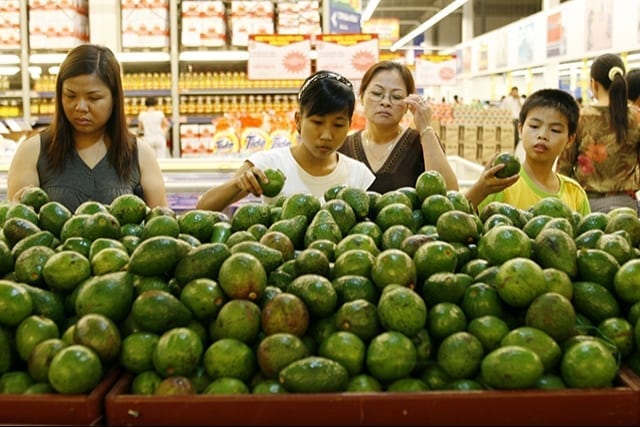
    Vietnam retail sales grew at 13 per cent last year, with food and beverage, apparel and household appliances leading the way, according to Savills Vietnam. The country’s Ministry of Industry and Trade has estimated total revenue generated from retail sales and consumer services reached US$191 billion last year. Vietnam retail sales accounted for $143.3 billion of that figure, or more than 75 per cent.

    The highest growth was recorded in precious stones and metals, wood and building materials, food, household appliances, and garments.

    Sales from accommodation and catering services grew by 9.1 per cent to $23.3 billion, accounting for 12.3 per cent of the total retail sales.

    Retail space supply

    The supply of retail space in Vietnam increased by more than 28,000sqm last year with two new shopping centres opening and  several others changing format or closing. Total stock was approximately 1.3 million sqm, up 9 per cent year on year and the average gross rent rose 2 per cent quarter on quarter.

    This year, Savills predicts, new supply in CBD locations will be only 31,700sqm with another 215,000sqm becoming available in non-CBD districts.

    Outlook

    Meanwhile, the ministry predicts total revenue from retailing and consumer services will increase at an average of 13 per cent this year, reaching $255.5 billion.

    Between 2021 and 2025, the predicted growth rate is 14 per cent with total revenue reaching $484.58 billion by 2025.

  • Malaysian businesses less optimistic on prospects for next six months

    Malaysian businesses less optimistic on prospects for next six months

    Malaysian businesses are displaying less optimistic sentiment on prospects for the next six months as the RAM Business Confidence Index (RAM BCI) fell to its lowest level since its inception two year ago. RAM said in a statement today that the corporate and the SME indices of the RAM BCI declined to 55.1 and 51.0 respectively, although the reading above 50.0 still denotes positive sentiment.

    The RAM BCI is a comprehensive survey jointly conducted by RAM Holdings Bhd and RAM Credit Information Sdn Bhd, on business sentiment in Malaysia. Released quarterly, the index is based on data from a survey of close to 3,500 SMEs and corporates across five main industry segments respectively.

    The cooler sentiment is attributable predominantly to the weak economic prospects in the next six months, with a number of firms citing this as the main challenge, rising to 41.2% and 41% both corporate and SME segments.

    Decelerating domestic growth, uncertain global demand and investment activities and a lack of positive catalysts, including the relatively neutral Budget 2019, all play a part in the generally weaker business sentiment on the next six months.

    On a sectoral basic, the construction sector appeared the least bullish with the SME sector recording a reading at 49.7 while the corporate sector declined for the third time in a row to 53.0.

    Without any new growth catalyst amid the property overhang, plus the shelving of new big-ticket infrastructure projects, it is not surprising that the construction sub-indices have hit record lows, RAM said.

    Another sector that showed pessimism in the Q1-Q2 2019 survey is SME retail as its performance outlook slipped back into negative territory after a brief expansionary momentum that had been aided by the tax-free window from June to August 2018.

    “Faced with uncertain global and domestic economic prospects, consumers are once again more prudent with their spending, leading to weaker sentiment on retail consumption in 2019,” it added.

    On the back of weaker prospects, the firms are also holding back from capacity building with the sub-indices tracking corporate business expansion, capital investment and hiring recording a fall in three consecutive surveys.

    Likewise, the capacity-building sub-indices for SMEs pulled back from the last survey and remain below those of corporates.

    RAM noted that firms’ expressed reticence on capacity building remains the most prominent downside risk, as it could weigh on the momentum of economic growth in 2019 and potential economic output over the longer run. This is particularly true in respect of SMEs, which are more vulnerable and sensitive to immediate economic challenges.

    “That said, more guidance on future economic policies that will shape the overall business environment will be crucial to building business confidence among firms, potentially being the game changer for a more resilient growth trajectory this year,” it added.

  • Malaysian consumer sentiment to remain healthy this year

    Malaysian consumer sentiment to remain healthy this year

    AmInvestment Bank has maintained its “overweight” rating on the consumer sector, as consumer sentiment is expected to remain healthy on the back of recent consumer-friendly initiatives by the government. It said in a report that recent initiatives such as the reintroduction of petrol subsidy, capping of the electricity tariff and introduction of public transport subsidies, have contained the problem of rising cost of living and effectively put more money back into the pockets of consumers.

    “The substitution of the Goods and Services Tax (GST) with the Sales and Services Tax (SST) is a net positive to consumers as the SST has a narrower scope compared with the GST,” it said.

    According to the Malaysian Institute of Economic Research, the Consumer Sentiment Index has recovered beyond the 100-point confidence threshold after three years of a low sentiment trend.

    AmInvestment Bank believes that the positive trend in consumer sentiment will be sustained as consumers become more confident of the government with expectations of more rakyat-centric government policies, better governance and transparency.

    It expects private consumption to grow at 6.5% year-on-year on the back of a healthy labour market and stable inflation.

    While the food and beverage sub-sector does not typically benefit from greater disposable income, AmInvestment Bank has identified Berjaya Food Bhd (BFood), Mynews Holdings Bhd and Power Root Bhd as the top picks for the sector.

    It said that BFood is a beneficiary as improved consumer sentiment will drive discretionary spending while Mynews will be an indirect beneficiary of the public transportation subsidy.

    “We reckon that this measure will boost foot traffic surrounding the train stations. Mynews currently operates more than 30 stores in the MRT, LRT and monorail stations,” it added.

    Meanwhile, Power Root will be a potential beneficiary as it is a producer of staple products. It will also benefit from a stronger US dollar as around 50% of its sales are in exports.

    Downside risks that may prompt it to review its call for the sector are weakening of the ringgit against the US dollar (its 2019 assumption average is RM4.12) and sluggish improvement to economic fundamentals, which could lead to a de-rating of the sector.

    “A sluggish recovery in economic fundamentals such as high operational costs and a weak ringgit may not see consumers fully benefitting from savings tied to the SST reintroduction and consumer-friendly measures, thereby dampening the recovery in consumer sentiment,” it said.

  • South Korean retail sales rise strongly in November

    South Korean retail sales rise strongly in November

    Online shopping during the month of November has driven a 4.6 per cent increase in South Korean retail sales compared to the same period in the previous year, according to government data. Ministry of Trade, Industry and Energy figures showed a 12.7 per cent year-on-year growth in online sales alongside a 0.5 per cent drop in offline retail during the month.

    Convenience stores, chain supermarkets and super supermarket sales showed positive growth, while large discount outlets and department stores saw declines of 2.8 per cent and 3.9 per cent respectively.

    Online sales in November were largely propped up by e-commerce shopping festivals in China and the US during the period.

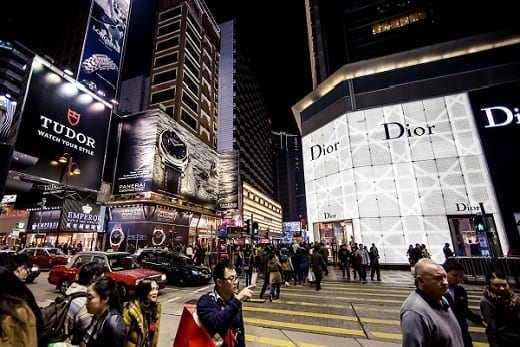
  • Hong Kong November retail sales almost stagnant

    Hong Kong November retail sales almost stagnant

    The growth of Hong Kong retail sales in November slowed to a crawl according to Census and Statistics Department figures just released. After a 6 per cent year-on-year increase in October, the value of sales in November rose just 1.4 per cent to an estimated HK$39.2 billion. That is well below the 9.7 per cent year-to-date rise for the first 11 months of the year.

    And after netting out the effect of price changes over the same period, Hong Kong retail sales in November rose by just 1.2 per cent year on year.

    A spokesman for the C&SD said the “generally moderated growth in retail sales in recent months” reflected more cautious consumption sentiment in the face of various external uncertainties such as the US-Mainland trade tensions and volatilities in the global financial markets.

    “Looking forward, while the favourable local job and income conditions and continued expansion in inbound tourism should still provide some support to the retail sector in the near term, consumer sentiment could be affected by weaker asset prices and the external uncertainties.”

    The overall figure was affected by soft sales of the key jewellery and watches category, down by 3.9 per cent, and of electronics, down by 4.9 per cent. Clothing sales fell by 3.6 per cent.

    Countering those falls were department store turnover, up 3.9 per cent; medicines and cosmetics up 10.1 per cent; food, alcoholic drinks and tobacco up 1.9 per cent; and other consumer goods, not elsewhere classified by 14.3 per cent. Optical store sales rose by 5.4 per cent and books and stationery by 6. 2 per cent.

    Quarter on quarter, Hong Kong retail sales receded during the three months to November by 2.7 per cent, compared with the preceding three months, with the volume of sales (after factoring in inflation) falling 1.8 per cent.

    For the first 11 months of last year, the volume of retail sales increased by 8.4 per cent.

  • Apple sales plummet in Greater China

    Apple sales plummet in Greater China

    “In fact, most of our revenue shortfall to our guidance, and over 100 per cent of our year-over-year worldwide revenue decline, occurred in Greater China across iPhone, Mac and iPad,” he said.

    The Apple sales decline in China, Hong Kong and Taiwan would most likely exceed $4.3 billion, roughly equal to the company’s overall drop in revenue.

    Previously, Apple had forecast revenue of between $89 billion and $93 billion. Now it expects the figure will be closer to $84 billion, but notes final figures will not be calculated for several weeks.

    Cook said the rising tension between the US and China played a part in the declining sales, with traffic to Apple stores in the region declining as the quarter progressed. This, in turn, led to lower than expected iPhone revenue in the region, which was compounded by the stalling iPhone upgrades seen in other markets.

    “We believe there are other factors broadly impacting our iPhone performance, including consumers adapting to a world with fewer carrier subsidies, US dollar strength-related price increases, and some consumers taking advantage of significantly reduced pricing for iPhone battery replacements,” Cook explained.

    In response to these trends, the business is seeking to make it easier to trade in used iPhones at Apple stores, as well as allow payments to be made over a longer period.

    “This is not only great for the environment, it is great for the customer, as their existing phone acts as a subsidy for their new phone,” Cook said.

    Despite the slowing traffic, Apple’s other categories grew over the period, with the company’s wearables category growing by almost 50 per cent due to the popularity of Apple Watch and AirPods.

  • Korea e-commerce hits high of 10.62 trillion won in November

    Korea e-commerce hits high of 10.62 trillion won in November

    The total value of online shopping in Korea reached a record high in November, government data showed Wednesday, in the latest sign that a growing number of Koreans are using computers or mobile devices to buy things ranging from clothes to electronic goods. Total online transactions reached 10.62 trillion won ($9.5 billion) in November, up 22.1 percent from a year earlier, according to the data compiled by Statistics Korea.

    The reading marked the highest amount since January 2001 when the statistics office started collecting data on online shopping.

    Sales of electronic goods and computers rose 22.7 percent on year to 1.68 trillion won, and demand for clothes jumped 10.4 percent to 1.45 trillion won in November, while online sales of food and beverages surged 32.3 percent to 911.4 billion won.

    Purchases made through smartphones, tablets and other mobile gadgets soared 28 percent on year to a record 6.59 trillion won, accounting for 62.1 percent of all online sales in November.

    Korea is one of the most wired countries in the world, with one of the highest smartphone penetration rates.

    The number of smartphones in Korea came to 50.5 million as of October, compared with 48.3 million a year earlier, according to separate government data.

  • How the retail industry has fared in 2018

    How the retail industry has fared in 2018

    The overall retail market in India 2018 stood at Rs 43,251 billion and is forecast to grow by 6.4 percent CAGR in 2018-2023. Retailing in India still predominantly takes place in physical stores and shopping behaviour between urban and rural consumers continues to be vastly different. Smaller independents (both grocery retailers and non-grocery specialists) continued to dominate the landscape they faced growing competition from modern outlets opening in out-of-town shopping centres and malls capturing the Tier II & III markets.

    This year, we witnessed modern retailers launch interesting payments schemes and effective pricing strategies to propel the sales. For example, leading retailer Future Group launched its payment wallet Future Pay which can be used in all its retail brand outlets. Retailers also capitalised on growing acceptance of modern retail by developing new marketing schemes and strategies to attract shoppers.

    Additionally, multi-channel strategies remained key for retailers as they are developed online platforms that are also smartphone and tablet compatible to drive Internet sales.

    Furthermore, retailers also increased their new private labels products. This is was done for certain grocery categories like: packaged foods, non-alcoholic drinks, beauty and personal care and home care products.

    Finally, subscription-based retailing practices started to pick up in 2018. Although still relatively niche, and limited only to urban India, the subscription-based model for beauty and personal care and consumer health became quite popular in metropolitan cities.

    What are the retail trends that are going to rule the roost in retail in 2019?

    – Retailing will continue to offer potential for grocery retailers. Convenience stores and forecourt retailers are likely to continue to see healthy growth rates as their format can meet the demands arising from changing lifestyles by offering more convenient shopping solutions, both in terms of location, business hours and product range.

    – Given the rising maturity of retailing in metros/urban areas, retailers have slowly started to focus on the semi-urban consumer base. This has resulted in the slow and steady urbanisation of shopping styles amongst semi-urban consumers.

    – As the labour crunch and high rentals continue to affect the retail landscape in India, hypermarkets are looking to ramp up investment on self-service technology and automation to reduce costs and improve customer experience. Some hypermarkets chains have implemented self-service kiosks at checkout counters, generally with positive results because of reduced waiting times. Investments have also been made into automated ordering systems, which has helped brands reduce storage space at outlets, hence control rental costs. This can be expected to grow during 2019 as well.

    – Furthermore supermarkets are likely to push the broadening of key product categories, such as organic fresh food, soft drinks and packaged food. They are also likely to further narrow the line between foodservice and grocery retailing, with the introduction and integration of new foodservice elements within their stores.

    – Non-grocery retailing will likely be impacted by the growth of internet retailing at the expense of specific store-based retailers and other non-store channels. Consumers are expected to increasingly shop and research products online, with the popularity of smartphones making mobile-optimised sites and shopping apps crucial in attracting consumers. Moreover, social media will be used more often to alert consumers to attractive price promotions and build interest in new product launches. Also, omni-channel strategies will remain key for non-grocery retailers.

    – Non-grocery retailers will increasingly integrate their online brand information with store inventory, as consumers expect to find the same products in both channels. Moreover, to minimise showrooming, players will also need compelling reasons for customers to buy their brands in store, whether in terms of product selection or price competitiveness.

    – The entry of Amazon and Flipkart could stimulate a much-needed increase in the competition, which will bring both opportunities and threats for existing food and drinks retailers in India. Amazon with ‘Amazon Pantry’ and Flipkart with ‘Flipkart Supermart’ eventually launched its online grocery business in 2018. Millennials and affluent consumers were encouraged to change from shopping in physical stores to online in 2018 with convenience and heavy discounts on offer. Also, with increasing investments from player such as Amazon who are expected to buy skate in Future Retail and PayTm who have partnered with BigBasket and Future Group to strengthen its online grocery business, the food and drinks internet retailing is expected to show tremendous growth in 2019.

  • CGS-CIMB sees strong vehicle sales in December, raises 2018 TIV growth forecast

    CGS-CIMB sees strong vehicle sales in December, raises 2018 TIV growth forecast

    CGS-CIMB expects vehicle sales to be stronger in December and has raised its 2018 total industry volume (TIV) growth forecast from 2.5% to 4% on the back of stronger-than-expected TIV year-to-date. “We expect stronger sales in December in view of year-end promotions and multiple new models that were recently launched. For example, Proton launched its first SUV, the X70 on Dec 12 and we learned that it has started delivery to showrooms. Proton has so far received encouraging bookings of over 12,000 units since the end of November,” it said in its sector note today.

    On Wednesday, the Malaysian Automotive Association (MAA) announced that TIV grew 2.1% month-on-month to 48,282 units in November due to higher passenger vehicles (PV) sold. Perodua and Mazda recorded 8% and 14% month-on-month growth respectively.

    For the 11 months ended November, TIV rose 5.5% year-on-year to 550,526 units due to stronger PV and commercial vehicles (CV) demand on the back of the tax holiday period. PV and CV recorded healthy 5% and 8% year-on-year sales growth respectively during the period.

    For 2019, it expects resilient sales in PV on the back of new model launches in the passenger car and SUV segments from Perodua, Proton, Honda and Toyota but overall, TIV delivery is expected to be flat next year.

    “We project a 10% sector net profit growth in 2019, driven by positive earnings growth from all companies, led by Sime Darby. However, we see downside risk to earnings from the depreciation in ringgit versus US dollar and Japanese yen, as this will increase the distributors’ costs of imported complete knocked-down kits and complete built units,” it said.

    Bermaz Auto Bhd (BAuto) is CGS-CIMB’s top pick, in view of the company’s undemanding valuation, attractive yield and proxy to export sales growth. It has an “add” rating on the stock with a target price of RM2.65.

    “We expect BAuto to deliver robust sales volume in FY19-20, driven by the popular Mazda CX-5 and upcoming new model launches of Mazda 3 and CX-8,” it added.

  • Party supplies sales surge in South Korea

    Party supplies sales surge in South Korea

    Demand for party supplies from South Korean retailers is soaring as a growing number of people prefer to host end-of-year celebrations at home instead of going out. According to E-Mart, wine and cake sales at six stores in Daegu last month soared 18.9 per cent and 16.1 per cent, respectively, year on year.

    Frozen foods sales jumped 16.3 per cent compared to last year.

    More South Koreans are choosing to cook at home using a variety of home meal products, as so-called ‘meokbang’ (eating shows) and ‘cookbang’ (cooking shows) are sweeping the country.

    Lotte Department Store’s Sangin Branch in Daegu also saw its kitchenware sales increase by more than 70 per cent compared to last year.

    Suppliers are coming up with various promotions to capture the attention of end-of-year party throwers.

    Lotte Department Store’s Daegu Branch is offering discounts of up to 60 per cent on dinnerware and is showcasing a variety of props to help decorate the perfect party.

    Lotte Department Store’s Sangin Branch is also holding a promotion event for Christmas-themed tableware.

  • October Singapore retail sales static

    October Singapore retail sales static

    October Singapore retail sales inched up by 0.5 per cent year on year, after excluding motor vehicle sales from the data.

    Month-on-month they fell by 2.1 per cent, reaching S$3.7 billion (US$2.69 billion).

    Online retail sales breached the 5 per cent threshold of total retail sales at 5.3 per cent for October.

    By category, sales by petrol stations soared the most, up 11.4 per cent year on year, however when the effects of price changes was removed from the data, the increase was a more moderate 1.5 per cent.

    Sales of medical goods and toiletries rose 3.4 per cent on the back of cosmetics, with furniture and homewares up 1.5 per cent.

    In contrast, sales in department stores and supermarkets decreased 3.6 per cent and 2.9 per cent respectively. Retailers of optical goods and books and recreational goods declined by 1.9 per cent and 1.8 per cent.

    Sales of food and beverage services rose 1.1 per cent, with food caterers recording a 5.6 per cent increase in turnover, other eating places (such as cafes) improving by 3.8 per cent, and fast-food outlets by 3.2 per cent.

    Restaurant turnover, however, was down 3 per cent.

  • October retail sales tide in Hong Kong turns up

    October retail sales tide in Hong Kong turns up

    October retail sales in Hong Kong rose by 5.9 per cent year on year, more than double the pace of September, which was affected by Typhoon Mangkhut. A government spokesman indicated that growth in retail sales picked up somewhat in October after a deceleration in the preceding month, supported by the faster increase in visitor arrivals and continued income growth.

    The Census and Statistics Department (C&SD) estimated the total value of October Hong Kong retail sales at HK$39.7 billion.

    After netting out the effect of price changes over the same period, the volume of October retail sales in Hong Kong increased by 5.2 per cent.

    C&SD’s revised estimate of the growth in the value of retail sales in September was unchanged at 2.4 per cent, the lowest figure year to date.

    For the first 10 months of this year retail sales rose by 10.6 per cent year on year, while the volume (netting out inflation) rose by 9.1 per cent.

    The spokesman strong inbound tourism and favourable job and income conditions should continue to support the retail sector in the near term.

    “Yet, consumer sentiment could increasingly be affected by the external uncertainties and weaker asset markets.”

    By broad type of retail outlet (in descending order of the category’s impact on the overall figure) sales of jewellery, watches and valuable gifts increased by 3.3 per cent in October. This was followed by electrical goods and other consumer durable goods, not elsewhere classified (up 16.1 per cent); commodities in department stores (up 3.5 per cent); apparel (up 2.3 per cent); medicines and cosmetics (up14.9 per cent); other consumer goods, not elsewhere classified (up 12.7 per cent); motor vehicles and parts (up 13.6 per cent); fuels (up 10.3per cent); footwear and accessories (up 9.3 per cent); books, newspapers, stationery and gifts (up 5.8 per cent); furniture (up 0.8 per cent); Chinese drugs and herbs (up 0.6 per cent); and optical shops (up 3.2per cent).

    The only categories to record a decline in sales were commodities in supermarkets, down 0.9 per cent, and food, alcoholic drinks and tobacco, down 2 per cent.

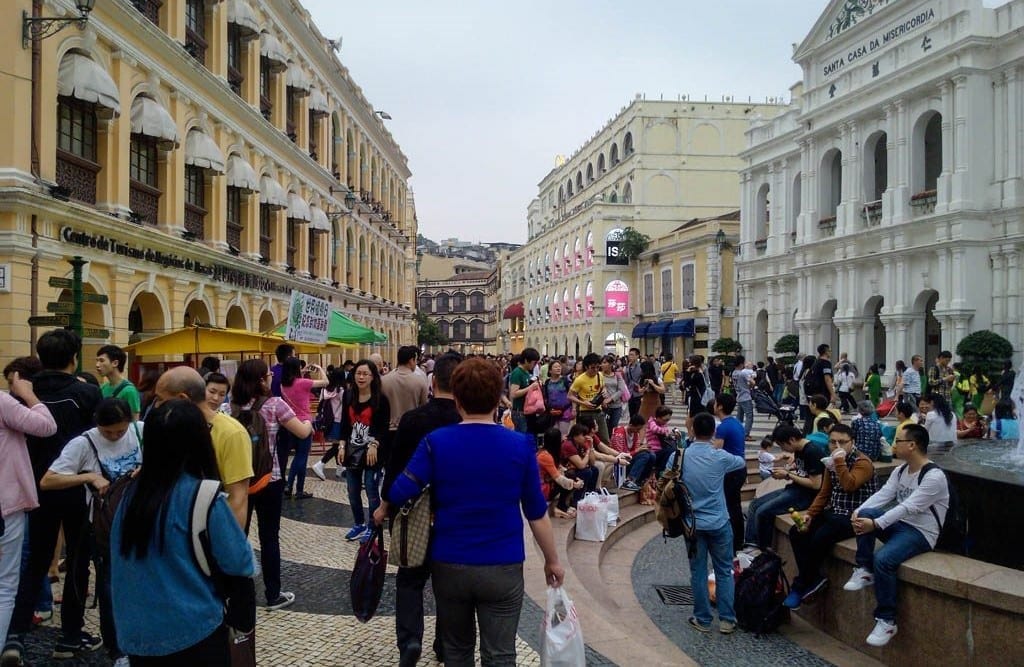
  • Q3 Macau retail sales rise

    Q3 Macau retail sales rise

    Third-quarter Macau retail sales surged 12.8 per cent year on year to 18.19 billion patacas (US$2.26 billion), according to data from the SAR’s Statistic Department. However, possibly reflecting the timing of typhoons last year and this year, sales rose only 1 per cent quarter on quarter. Watches and jewellery accounted for 21 per cent of total spending during the quarter. Department stores accounted for 16.3 per cent of the market and apparel 13 per cent.

    The increase in third-quarter Macau retail sales was driven by department stores, up 23.1 per cent, communications equipment (up 19.8 per cent) and pharmacy goods, up 19.4 per cent.

    For the first nine months of this year, Macau retail sales rose by 20.8 per cent.

    However the Statistics Department’s data suggests retailers have modest expectations for the rest of the year. Just 16 per cent of retailers questioned expect an increase in sales for the three months to December, compared with 38.2 per cent who expect a decline and 45.8 per cent who expect sales to remain steady.