Tag: Retail

  • Metro China builds eCommerce reach

    Metro China builds eCommerce reach

    Metro China has upgraded its eCommerce platform metromall.cn, which it says integrates online, offline and mobile channels for “a seamless customer experience”.

    “eCommerce is one of our strategic channels to drive for growth in China market,” said Jeroen de Groot, president of Metro China at a launch function.

    “We are determined to enhance customer experience and further expand business through leveraging the power of e-commerce.

    “Our Metromall not only integrates online-to-offline, but also incorporates an innovative mobile function. We are confident this platform will enable us to provide more exciting solutions and seamless purchasing experience to our core target professional customers, helping them to be more successful in the market.”

    With an optimised user interface and location-based services, Metromall synchronises with the wholesaler’s offline stores, covering over 20,000 products. Metro delivers all online orders directly from local wholesale stores, shortening delivery time and ensuring product quality. The platform offers customers convenient and efficient choices of goods receiving, such as home delivery or in-store pick-up.

    When it first entered China back in 1996, Metro adopted a membership system, and has since collected data from over 4 million shoppers in order to offer them customised solutions and services. Today, by tapping into this rich database, the upgraded e-commerce platform will further strengthen Metro’s customer relationship management.

    The Metro eCommerce platform currently covers 39 stores in 21 cities in China, and will unroll across all Metro stores in China by the end of 2015.

    Taking advantage of the rapid development of mobile communications and popularity of smartphones, Metromall also features an accompanying mobile app. Customers can use the app to scan barcodes and identify product features, build shopping carts, place orders, and check-out. The app’s database includes product barcodes of all articles in offline stores except for fresh and ultra-fresh products. Customers can also follow Metro’s WeChat to obtain promotional information of Metromall and place orders on their cell phones.

    Leveraging its global procurement network, Metro Group is set to enter the free-trade zone this year, partnering with China’s renowned cross-border e-commerce platforms, to provide consumers with an even broader range of high-quality imported goods.

    Metro China is committed to providing safe and high-quality products, and is the only wholesaler inChina with all stores to operate in accordance with HACCP (Hazard Analysis and Critical Control Points) standards to ensure that the processes of receiving, processing, storing and selling goods are hazard-free.

    Metro has also developed a complex traceability system, which records all processes from farm to market. Simply by scanning product barcodes, customers can view the entire product lifecycle, including where it was grown, how it was certified, and the logistics involved.

    The newly-upgraded eCommerce platform has enabled Metro to create a closed, online-to-offline loop for safe and traceable food, making Metro truly a multi-channel specialist.

    Metro Cash & Carry operates in 26 countries with over 750 self-service wholesale stores. Metro China has 80 outlets in 56 cities.
  • VIP shop doubles revenue

    VIP shop doubles revenue

    Chinese online discount retailer Vip shop Holdings says it doubled its net revenue in the first quarter.

    The cmpany says a 75 per cent year-on-year increase in customers helped it achieve net revenue of  RMB8.6 billion (US$1.4 billion).

    Some 12.9 million people shopped on VIPshop over the last year, amassing 38.5 million individual orders.

    Gross profit increased by 99.6 per cent to RMB2.1 billion (US$345.4 million).

    Eric Shen, chairman and CEO of the NYSE-listed company, described the first quarter of 2015 as “robust”, thanks to improved brand recognition and new mobile initiatives.

    “Specifically, the mobile contribution of our platform as a percentage of gross merchandise volume climbed to approximately 72 per cent in the first quarter, which is more than double the average figure across the broader Chinese online shopping industry. Going forward, we will continue to scale our business with a greater focus on further enhancing the shopping experience for customers across multiple devices, attracting new customers and expanding our product offering.”

    Donghao Yang, CFO of Vip shop, added: “We are very proud of our first quarter 2015 financial results, which saw our revenue grow by 100 per cent year over year and the expansion of our operating and net margins. Additionally, our warehouse capacity, both leased and built, reached approximately 1.1 million sqm as of March 31, 2015, up from approximately 350,000 sqm a year ago.

    “Looking ahead, we are confident that by emphasizsng operating discipline, strategically investing in fulfillment and technology, and continuing to offer great shopping experiences to our growing customer base, we will be able to capitalise on the growth opportunities ahead and continue to deliver sustainable value for our shareholders.”

    For the second quarter of 2015, the company says it expects its total net revenue to be between RMB8.7 billion and RMB8.9 billion, representing a year-over-year growth rate of between 71 per cent and 75 per cent.

  • 4G, Asia lead smartphone sales rise

    4G, Asia lead smartphone sales rise

    Global smartphone sales rose by eight per cent in value terms in the first quarter of this year.

    Sales of larger screen devices (5″ and higher) continued to drive year-on-year growth according to data from GfK.

    But while handset demand increased seven per cent to 310 million units, a slowdown in demand in China and developed Asian nations dragged down growth, from 19 per cent year-on-year in the fourth quarter of 2014.

    GfK says 4G compatible phones are rapidly gaining share – surpassing 50 per cent of the global handset market for the first time. It predicts a 4G ramp-up in China in the second half of 2015 to drive incremental demand.

    Kevin Walsh, director of trends and forecasting at GfK, said the weakness in China was caused by a significant slowdown in 3G demand, which was not offset by 4G growth.

    “We forecast China to return to growth in the second half of the year, driven by a continued 4G ramp-up. In Developed Asia, the year-on-year decline was caused by tough comparisons with Q1 2014, when demand was pulled forward in Japan due to an upcoming VAT increase in April. We forecast unit demand in Developed Asia to grow by three per cent year-on-year in 2015, driven by Japan and South Korea, which are expected to return to growth in 2Q15.”
    Smartphone growth in India and Indonesia is also expected to be helped by an expanding 4G network. In Q1 2015, 4G share in both countries was well below the global average, at four per cent and seven per cent, respectively. GfK forecasts 4G unit share within smartphones to reach seven per cent in India and 10 per cent in Indonesia in 2015.

    Q1 2015 saw a continued shift towards larger screen sizes, with sales of 166 million units equating to 47 per cent of the global smartphone market, up from 32 per cent in Q1 2014. In China, where the 4G trend is particularly pronounced, the growth in share to 57 per cent – from 32 per cent in Q1 2014 – was driven by cheaper large screen models flooding into the market.

    GfK forecasts this screen size migration to continue in 2015, with global demand for large screen devices increasing by 30 per cent year-on-year to account for 69 per cent of total smartphone unit demand this year.

    Low-end smartphones – those priced in the region of $0-250 – increased share to 56 per cent, up from 52 per cent in Q4 2014, at the expense of the high-end models ($500+), whilst mid-range ($250-500) share remained stable.

    GfK forecasts low-end smartphones to gain further share in 2015, helped by continued price erosion in emerging markets.

    Walsh added: “GfK forecasts global smartphone unit demand to grow 10 per cent year-on-year in 2015, a slowdown from the 23 per cent growth experienced last year. Emerging Asia is forecast to be the fastest growing region, driven by India and Indonesia, where low smartphone penetration leaves plenty of room for growth.”

  • Korean cosmetics a hit in China

    Korean cosmetics a hit in China

    Korean cosmetics products are expanding their presence in China on the back of the ‘Korean Wave’.

    Korea is the second biggest source of cosmetics sold in Asia’s second-largest, but fastest growing beauty market, according to data out this week.

    Out of $686.2 million worth of cosmetics China imported in the January-March period, South Korean products accounted for 19.1 per cent, or $131.2 million, coming next to France’s 33.6 per cent market share, according to the data compiled by the Korea International Trade Association (KITA).

    Japanese cosmetics took third with 15.3 per cent, followed by American brands with 11 per cent, KITA said.

    Korea moved up two notches from last year’s spot as China’s imports of Korean cosmetics more than tripled in the first quarter from a year ago, while French and Japanese products surged 10.2 per cent and 37.2 per cent, respectively, in the same period.

    Thanks to strong sales in China, total exports of Korean cosmetics nearly doubled to $582 million in the first three months of this year, which in turn improved their earnings.

    Amore Pacific, the nation’s leading cosmetics firm, posted 320.7 billion won in operating profit in the first quarter, a 50 per cent hike from a year earlier, its regulatory filing showed.

    Operating profits of Kormar, a smaller local rival, jumped 62.9 per cent over the period, far exceeding market expectations.

    LS Cosmetics, which is well-known for face mask sheets, logged 17.5 billion won in operating profit, recording an over 100 times on-year surge. Its shares, which are traded on the secondary KOSDAQ market, jumped 338 per cent this year to become one of the top earners in the local stock market.

    “Korean companies are showing stellar performance in the Chinese market based on the Korean Wave and competitive price ranges and brand lineups,” Na Eun-chae, a researcher at Korea Investment & Securities, said.

    “The outlook for Korean cosmetic makers is positive in the mid- and long- term.”

  • Online China luxury goods mall expands

    Online China luxury goods mall expands

    Xiu.com, an online China luxury goods mall, has raised another US$30 million in funding, according to 36kr.

    The investment was led by Jardine’s, followed by KPCB China and others.

    Founded in 2008, Xiu specialises in high-end clothing, footwear, bags, accessories, and cosmetics from international brands. Headquartered in Shenzhen, it also has offices in fashion capitals like New York, San Francisco, London, Milan, and Hong Kong. The store has over 600 brands, and at least 200 of them are exclusive to Xiu in China.

    Xiu’s investment comes just days after French luxury goods retailer Kering, parent of Gucci and Yves Saint Laurent, amongst others, filed a lawsuit against China’s biggest eCmmerce company, Alibaba, alleging it is profiting from the sales of counterfeit goods in wholesale quantities on its Taobao site.

    Xiu.com says it will use the new funds to create a better shopping experience, improve its supply chain, and strengthen international ties.

    Founder Jiwen Hong says Xiu’s strength lies in the relationships it has with brands. By going directly to the brands and cutting out middlemen, it can offer better prices than competitors. 36kr says most items on Xiu sell for less than the retail cost in Hong Kong and the US.

    The startup has 10 million registered users with a repeat purchase rate of 85 per cent. The average customer spends about RMB 1,500 (US$242) per purchase.

    In 2012, US auction site Ebay launched a joint venture with Xiu to list products on a subdomain of Xiu’s site. That collaboration has since closed shop.

  • India’s retail market to hit US$1.2 trillion

    India’s retail market to hit US$1.2 trillion

    New analysis predicts the Indian retail market will hit US$1.2 trillion by 2020 and $2.1 trillion simply 5 years later.

    This yr, Indian retail gross sales are projected to realize simply $550 billion.

    The astonishing progress projection comes from business organisation the Confederation of Indian Business (CII) which additionally says the retail business will generate between 10 and 12 million jobs over the subsequent decade.

    The report, titled The Indian Retail Medley, was launched collectively by CII and Wazir Advisors at a Delhi retail business convention organised by the CII, dubbed ‘Decoding the Way forward for Retail’.

    “The organised retail in India is predicted to develop seven- fold and on-line retail 26-fold,” the report stated, however stating that despute such big progress, ‘unorganised retail’ will proceed to dominate the Indian retail panorama.

    “CII & Wazir are sure the sector will get a transformational push with an aggressive collaboration between the organised, unorganised and on-line retail progress, pushed by India’s demographics with large younger and tech savvy inhabitants (500 million are aged under 25 years).”

    Rising incomes and ranges of shopper demand, growing urbanisation, attitudinal shifts and – above all – an outstanding and steady rise in web penetration throughout the nation thanks partially to the federal government’s  dedication to digitisation, may even gasoline progress, the report stated.

    “It’s estimated there can be 550 million internet customers in India by 2018, as additionally the face of the Web consumer will change dramatically, with greater penetration to the tune of 210 million in rural areas.

    “The web retail would offer an outstanding platform to the unorganised retail to succeed in out to the shoppers throughout markets in tier three and tier 4 cities”, the report stated.

    Adesh Gupta, chairman of the CII Retail 2015 and promoter with Liberty Group. stated the time “is completely opportune to Make in India for Retail in India.

    “Our nation is among the quickest rising and most dynamic retail markets on the planet. We should produce and promote in India”

    However Gupta warned of “a dire want” to strengthen the nation’s provide chain administration, indentify shoppers’ wants, developed expert, educated manpower and streamlinethe  taxation system.

    India is predicted to grow to be the world’s quickest rising eCommerce market on the again of strong funding exercise within the sector and the speedy improve in web customers. It’s anticipated that India’s e-commerce market will develop from US$2.9 billion in 2013 to over US$100 billion by 2020.

    “There’s sufficient demand and the problem might be easy methods to attain the shoppers, each from connectivity and logistics perspective,” stated Gupta.

    “On-line retail can attain tier 4 to 6 areas a lot better than offline giving it a much bigger benefit. Collaboration between each organised and unorganised retail corporations could possibly be the actual recreation changer.”

    Shreekant Somany, chairman or CII NR, stated eCommerce’s share of Indian retail is rising steadily.

    “Clients have an ever growing selection of merchandise on the lowest charges. eCommerce might be creating the most important disruption within the retail business and this development will proceed within the years to return.

    “Virtually every thing is bought on the web now and which means just about all the retail business faces the problem of both being part of e-commerce or taking it head on. Partnering is one of the simplest ways out,” stated Somany.

    Mukesh Mathur, government director with Oracle India stated it’s crucial retailers benefit from eCommerce, which can allow them to spend much less cash on actual property whereas reaching extra clients in tier two and tier three cities

    “However, the long run outlook for the business stays to be constructive on the again of rising incomes, beneficial demographics, the entry of overseas gamers and growing urbanisation”, stated Mathur.

    However Harminder Sahni, MD of Wazir Advisors described the profitability of shops as “a serious concern nowadays”.

    “The businesses ought to consider opening worthwhile shops, with thrust on hiring educated manpower. Each on-line and offline should work collectively.”

  • Ever Glory Worldwide gross sales slip

    Ever Glory Worldwide gross sales slip

    Nasdaq-listed style retailer Ever-Glory Worldwide says first quarter gross sales slid 7.7 per cent.

    The Nanjing-based enterprise reported complete gross sales within the three months to March 31 of US$97.9 million, in contrast with $106 million within the first quarter of final yr.

    It says same-store gross sales in its community of 1206 retail shops slipped 2.9 per cent, however wholesale gross sales to different retailers carrying its strains fell 15.6 per cent. The corporate’s retailer community grew by 230 retailers year-on-year.

    Wholesale gross sales fell most importantly in Germany, France and different European markets, in Japan and the US. However progress within the UK and mainland China made up for a few of the lower.

    Complete gross revenue for the quarter elevated 18.7 per cent to $30.6 million, in comparison with $25.eight million final yr. Complete gross margin elevated 700 foundation factors to 31.three per cent in comparison with 24.three per cent final yr.

    Ever-Glory was the primary Chinese language attire Firm listed on the NYSE in July 2008 earlier than  transferring to Nasdaq on December 31 final yr. It provides attire to ladies underneath its personal manufacturers La go go, Velwin and Sea To Sky in China and describes itself as a number one international attire provide chain answer supplier with a concentrate on middle-to-high finish informal put on, outerwear, and sportswear manufacturers.

  • Tango users can now shop with AliExpress

    Tango users can now shop with AliExpress

    Users of the messaging app Tango can now shop online without leaving the app – after partnerships were struck with Alibaba’s AliExpress and Walmart.com.

    US-based Tango, which boats more than 300 million users, have launched “social shopping” on their message and chat platform allowing, they say, users to choose from millions of products sold by the two retailers online.

    “The company expects to expand shopping options over time to include additional retailers and geographies,” Tango said in a press statement.

    “Tango will offer curated lists of products based on user preferences, while also allowing them to create their own collections to share with family and friends.”

    Leo Shen, AliExpress GM, said Tango offers a way for consumers to access products on AliExpress “that are relevant to their preferences and lifestyles”.

    “We look forward to teaming up with Tango to provide consumers a great shopping experience wherever they go.”

    Tango CEO and co-founder Uri Raz says the move takes Tango beyond the realm of being just an messaging service.

    “Starting today, we’re leading the way in ‘conversational commerce,’ making it simple for consumers to connect with leading retailers using the same platform they rely on every day to chat with friends and family,” he said.

    “Tango is excited to collaborate with Walmart and AliExpress to revolutionise blending commerce and communication, creating a new and exciting experience for consumers and sellers alike.”

    Founded in 2009, TangoMe Inc is the developer of Tango, a free mobile messaging app whose users enjoy free video and voice calls, texting, social discovery, browsing and sharing content with one another.

    The company works with third-party game developers, brands, content publishers, and advertisers to provide distribution, integration opportunities, and advertising. Tango is cross-platform, operating over 3G, 4G and Wi-Fi, and is available in 15 languages in more than 224 countries.

  • Liquor samplers take maintain in Korea

    Liquor samplers take maintain in Korea

    Like selecting cosmetics after utilizing a pattern, a brand new development is rising of liquor samplers in Korea’s eating places and bars.

    Based on the business, Baesangmyun Brewery, a standard Korean rice wine maker, presents 4 sorts of Sluggish Metropolis Brewery Makgeolli within the sampler course at its Sluggish Metropolis Brewery & Pub eating places. Sluggish Metropolis Makgeolli, a hand-made Korean conventional rice wine, can have 4 totally different tastes by various the extent of getting old or maturation.

    For many who can’t select what to drink for his or her makgeolli, the restaurant presents free samples of the 4 tastes and lets the client select their very own.

    A buyer on the restaurant stated: “This place is superb as we will watch the brewery course of with our personal eyes and choose the makgeolli we would like after sampling numerous sorts.”

    Soju samplers are additionally gaining in reputation, as it may be a burden to order high-quality soju by the bottle.

    Aoi Sora, a standard soju pub in Itaewon, Seoul, is promoting a sampler for soju-lovers. It presents two soju samplers with 4 soju manufacturers every at 15,000 gained (US$13.70) and 16,000 gained (US$14.60).

    As well as, craft beers at the moment are promoting in samplers. As they’re brewed in several methods, a beer sampler could be one of the best match for beer-lovers who need to attempt numerous tastes in beer.

    An government at Baesangmyun Brewery stated: “Liquor and beverage samplers are a pure improvement to satisfy the varied tastes of consumers. The samplers have acquired good response from first time guests and youthful clients who are usually not acquainted with makgeolli, notably ladies.”

  • Esquires Espresso seals Hunan partnership

    Esquires Espresso seals Hunan partnership

    New Zealand-listed Cooks International Meals has signed a three way partnership settlement with Shenzhen-listed retail and property big BuBuGao Group to develop 30 Esquires Espresso shops in Hunan by 2020.

    The three way partnership cements China’s place as Esquires Espresso’s quickest rising worldwide territory and lifts the whole variety of deliberate shops within the nation to a minimum of 150. It additionally additional advances Cooks’ aspiration for Esquires Espresso to be working 800 shops all over the world by 2020.

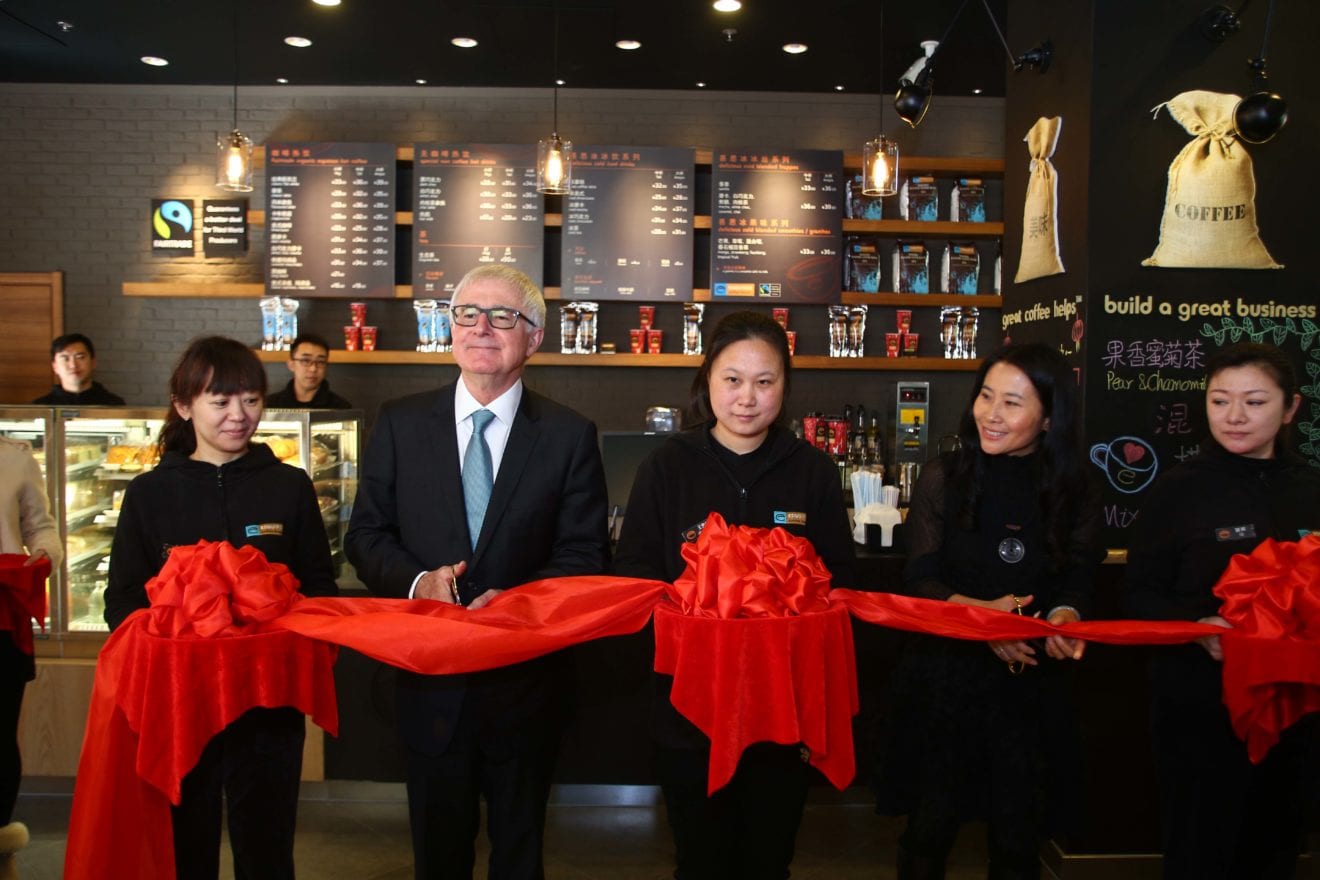
    * BBG chairman Wang Tian (left) and Esquires Espresso China MD Ellen Zhang toast their new China three way partnership.

    BBG, or Higher Life, has taken a 49 per cent stake within the three way partnership and can progressively contribute property in its buying malls which might be based within the Hunan province. Cooks, with a 51 per cent stake within the enterprise by way of its wholly-owned Chinese language grasp franchisee Beijing Esquires Administration Co, will develop and handle the shops.

    BBG has annual revenues of almost CNY12.three billion, (NZ$2.7 billion), employs over 70,000 individuals and operates over 373 shops within the Hunan, Jiangxi, Sichuan, Chongqing, Guangxi, and Guizhou provinces, together with 156 supermarkets and 29 purchasing malls. It additionally has a CNY10 billion property portfolio and is lively in on-line commerce and finance.

    Cooks International Meals government chairman Keith Jackson stated the brand new deal is additional endorsement of the potential for Esquires Espresso’s artisan fashion Natural and Fairtrade model to develop quickly in Chinese language markets.

    “The enterprise is a continuation of our technique to drive progress in China by partnering with vital home companies that may present the assets, retail experience and native information which are pre-requisites for fulfillment within the area. These capabilities, coupled with a Chinese language Esquires Espresso administration staff that understands the right way to translate the model’s distinctive tackle New Zealand café tradition into home settings, provides us nice confidence within the potential of the enterprise to develop.”

    BBG chairman Tian Wang stated that with demand for branded espresso rising in China at charges that outstrip progress charges in the remainder of the world, Esquires Espresso will fill an essential a part of the retail combine throughout its buying centres.

    “Its Natural, Fairtrade and artisan positioning makes it an aspirational vacation spot for a broad cross part of the inhabitants. We’re assured the brand new enterprise will generate appreciable worth for the BuBuGao group.”

    Cooks now operates 21 shops in China using 130 individuals, making it the third largest New Zealand non-Authorities employer within the Peoples’ Republic. It’s now concentrating on a footprint of greater than 150 shops in China by 2020.

    Earlier this yr, Cooks acquired the Esquires Espresso Chinese language grasp franchisee Beijing Esquires Administration and as a part of that transaction, one of many former house owners, Yunnan Metropolitan Funding Firm (YMCI) took a 15.75 per cent stake in Cooks.

    Cooks additionally has an identical three way partnership with Jiajiayue Group (JJY) grocery store chain to develop 50 shops within the Shandong province. JJY is among the largest corporations in Shandong, using virtually 30,000 employees and working greater than 550 supermarkets.

    “We proceed to hunt companions to increase our foot print in different areas and our administration group, led by expatriate Chinese language-New Zealander Ellen Zhang, is already in dialogue with a number of different events,” Jackson stated.

    Cooks owns the mental property and grasp franchising rights to Esquires Espresso Homes worldwide excluding New Zealand and Australia. Following the signing of a brand new grasp franchise settlement for Egypt final week, the corporate is now rising in 13 separate territories around the globe and it’s in discussions to increase its grasp franchise community additional.

  • GIC takes Seoul mall stake

    GIC takes Seoul mall stake

    Singapore funding firm GIC has partnered with the Canada Pension Plan Funding Board to purchase the D-Dice Retail Mall in Seoul, South Korea from Daesung Industries.

    The 2 buyers has paid US$263 million for the mall.

    GIC and CPPIB will every personal an equal half share in D-Dice, a 4 yr previous centre described as a top quality property in a chief location. D-Dice is situated subsequent to Sindorim Station, a serious transportation hub connecting Seoul with Incheon and different main metropolitan cities close to Seoul.

    The mall can be rebranded as Hyundai Division retailer and might be operated by Hyundai, one of many prime retail operators in South Korea. Working alongside GIC and CPPIB, Hyundai will reposition the D-Dice Retail Mall to raised serve the Korean retail market’s anticipated regular progress over the long run.

    Loh Wai Keong, MD & co-head Asia, with GIC Actual Property stated the funding displays GIC’s confidence within the long-term progress of Korean home demand and is in keeping with GIC’s technique of buying high-quality, centrally-located belongings with upside potential.

    “As a long-term worth investor, our pursuits are aligned with CPPIB and we sit up for partnering them on this acquisition.”

    Jimmy Phua, MD, head of actual property investments Asia, with CPPIB stated the D-Dice Retail Mall is a main retail asset situated in a rising and prosperous space.

    “By way of this funding, we’re happy to realize publicity to one of many largest retail markets in Asia, working alongside skilled and aligned companions.”

  • 7-Eleven Philippines gross sales soar

    7-Eleven Philippines gross sales soar

    Philippine Seven Company, the native licensee of 7-Eleven Comfort Shops, has reported a 12.9 per cent progress in internet revenue for the primary quarter of 2015.

    The corporate says the rise is the results of improved working margin and its aggressive 7-Eleven Philippines retailer enlargement program throughout the nation.

    The community of firm owned and franchised shops’ gross sales rose by 24.2 per cent from P4.four billion (US$98.9 million) within the first quarter to 2014 P5.5 billion (US$123.6 million) within the newest quarter. First quarter internet revenue reached P112.9 million ($2.5 million).

    On the finish of the quarter, PSC had constructed its community to 1341 shops – a rise of 292 year-on-year.

    The corporate stated the speed of earnings progress was slower than top-line progress because of the elevated spending attributed to increasing the logistics infrastructure of the corporate. PSC has been constructing the capability of its distribution middle to help its enlargement within the totally different elements of the nation, together with the islands within the Visayas and in DavaoCity.

    Jose Victor Paterno, president and CEO, stated PSC has taken steps to guard and broaden its management in mild of elevated competitors, recognising that rewards for market share are particularly robust within the comfort retailer sector.

    “This includes not solely an elevated tempo of enlargement in areas contested by competitors, however strategic entry into new territories. The latter could also be unprofitable for the primary few years because of the excessive fastened prices of logistics, however we consider will later be rewarded with robust first mover benefits,” he stated.

    “Final yr we entered Panay and constructed on our entry into Negros and Cebu the years prior. This yr we will probably be getting into Mindanao by way of Davao and Cagayan de Oro.”

    For 2015, the corporate might be growing its capital expenditures price range by greater than 50 per cent to help its accelerated retailer enlargement technique.

    Philippine Seven Company operates the most important comfort retailer community within the nation. It acquired from Southland Company (now Seven Eleven Inc.) of Dallas, Texas the license to function 7-Eleven Philippines shops in December 1982 and listed on the Philippine Inventory Trade in February, 1998.

  • Singapore retail gross sales slide three.2 per cent

    Singapore retail gross sales slide three.2 per cent

    Singapore retail gross sales in March slumped three.2 per cent after the distortionary impact of motorcar gross sales is faraway from the info.

    Whereas the official figures present a seasonally-adjusted 1.1 per cent enchancment in March 2015 over the earlier month, knowledge from Statistics Singapore exhibits automotive gross sales soared 37 per cent over February and 40 per cent March on March.

    There was an similar three.2 per cent general decline year-on-year for March after automobiles have been eliminated.

    Seasonally adjusted gross sales of meals & beverage providers decreased 5.2 per cent in March 2015 over February and by 1.7 per cent in contrast with March 2014.

    After seasonal adjustment, retail gross sales of automobiles, mini-marts & comfort shops and meals & drinks elevated between 12.9 per cent and 37.1 per cent in March 2015 in comparison with the earlier month (Desk 1). Retail gross sales of petrol service stations and leisure items additionally rose four.9 per cent and 1.1 per cent respectively.

    Then again, retail gross sales of optical items & books, sporting attire & footwear, telecommunications equipment & computer systems, furnishings & family gear, supermarkets, watches & jewelry and medical items & toiletries decreased between 2.four per cent and 10.four per cent in March 2015 in comparison with February 2015.

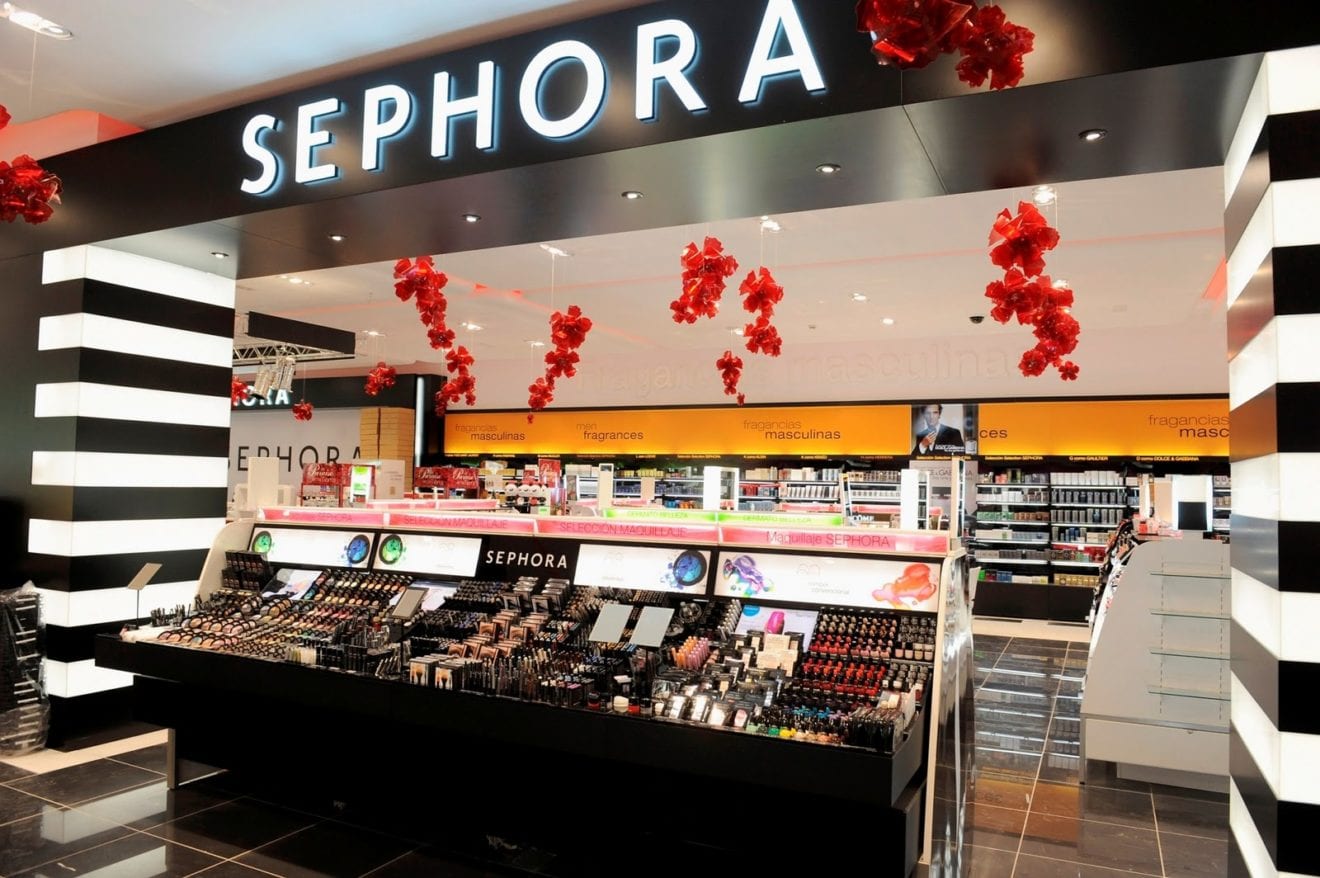
  • Sephora, JD.com staff up

    Sephora, JD.com staff up

    LVMH-owned cosmetics retailer Sephora has opened a flagship retailer on Chinese language eCommerce website JD.com.

    Sephora, which already as a profitable retail community in tier one Mainland China cities, says the transfer wil assist it break into the eCommerce market there, and attain shoppers in smaller city markets.

    “This marks a big step ahead for Sephora, the main magnificence retailer of LVMH Group, in its eCommerce and general retail technique for China,” the 2 corporations stated in a press release.

    Upon launch, Sephora’s retailer would be the largest cosmetics retailer on JD.com’s platform, that includes over 1200 gadgets from greater than 70 worldwide beauty manufacturers, together with Dior, Guerlain, Givenchy, Profit and Kenzoki.

    Anne Veronique Bruel, president of Sephora Asia, stated she is assured that Sephora, JD.com will have the ability to present Chinese language shoppers with “a very world-class on-line purchasing expertise, with out the fear of counterfeits”.

    Haoyu Shen, CEO of JD Mall added: “We’re capable of supply Sephora an end-to-end eCommerce answer that ensures Chinese language shoppers have the absolute best model expertise when buying their magnificence merchandise on-line. Our direct co-operation with Sephora additional strengthens the arrogance of cosmetics buyers in China that JD.com is the go-to website for probably the most wanted genuine name-brand merchandise.”

    Sephora, based in Limoges, France, in 1969, was purchased by luxurious group LVMH in 1997.At the moment, it has greater than 2000 shops in 32 nations stocking greater than 200 worldwide manufacturers and 10,000 of its personal distinctive personal label merchandise.

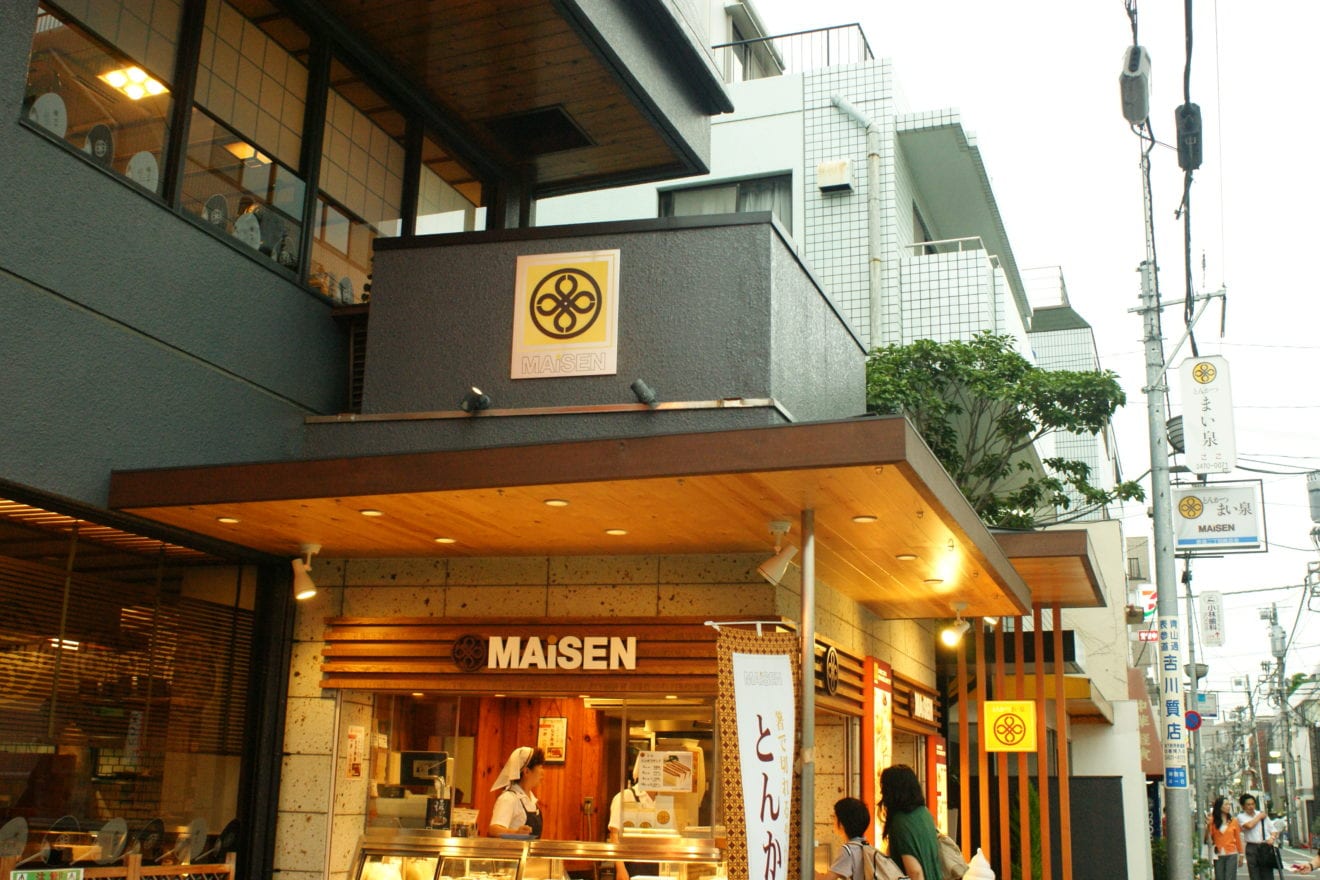
  • Maisen Tonkatsu heads to Philippines

    Maisen Tonkatsu heads to Philippines

    Maisen Tonkatsu, described as Japan’s “greatest tonkatsu restaurant”, is to open a sequence of eating places within the Philippines.

    The primary restaurant, described as a flagship, will open at SM Megamall by the third quarter of 2015.

    Maisen Tonkatsu, based in 1965, will increase into the Philippines underneath Katsucuisine Inc, a subsidiary of its Japanese father or mother Suyen Company.

    Thought-about the market chief in its class in Tokyo, the restaurant model is steadily increasing in Asia. It has six branches in Bangkok, Thailand, a part of a community now numbering 1100 worldwide.

    Foodies and vacationers alike typically queue outdoors the Tokyo eating places whose profile has been boosted by in depth reward on social media and by skilled reviewers.

    The restaurant’s positioning slogan is: “Tender tonkatsu you’ll be able to minimize with chopsticks.”