Tag: Retail

  • Singapore retail sales plunge in February

    Singapore retail sales plunge in February

    Singapore retail sales took a dive in February due to the difference in timing of the Chinese New Year.

    Excluding motor vehicles, retail sales fell 6.7 percent year-on-year in February, reversing the 5.1 percent increase in January. The estimated total value was SG$3.2 billion (US$2.3 billion), of which 14.6 percent were from online sales.

    The Department of Statistics said the decline was partly due to Chinese New Year being celebrated in February last year, as opposed to January this year.

    For the two-month period (January to February), retail sales were down 0.5 per cent.

    By industry, wearing apparel and footwear recorded the biggest sales decline of 18.4 percent, mainly due to lower sales of wearing apparel. Department stores and supermarkets and hypermarkets saw a 14.6 percent and 13.3 percent decrease, respectively.

    In contrast, retailers of optical goods and books recorded sales growth of 6.4 percent. The cosmetics, toiletries and medical goods, watches and jewellery, and computer and telecommunications equipment industries also reported modest improvements.

    Sales of food & beverage services fell 5.6 percent in February, compared to the 10.3 percent growth in January. This was also due to the difference in the timing of Chinese New Year.

  • Vietnam eyes to begin high-speed rail construction in 2026

    Vietnam eyes to begin high-speed rail construction in 2026

    Prime Minister Pham Minh Chinh has ordered the Ministry of Construction to expedite procedures to commence construction of the North-South high-speed railway project by the end of next year.

    According to a government release on Saturday, the PM wants the bidding mechanism completed this month so the National Assembly can review it for approval next month.

    This would push the construction date one year earlier than the original plan.

    The railway, one of Vietnam’s most ambitious transportation projects in this decade, was approved for investment by the National Assembly in November last year with a preliminary cost of approximately VND1.7 quadrillion (US$67 billion).

    The 1,541-km route will start at in Hanoi and end in Ho Chi Minh City, passing through 20 localities.

    It will be designed for speeds of up to 350 kilometers per hour. It includes 23 passenger stations and 5 freight stations.

    The government also eyes to start building the Lao Cai – Hanoi – Lang Son railway in December. It will be a key project linking the capital with China-bordering provinces.

    Concerning another northern rail project, Lao Cai – Hanoi – Hai Phong, officials are set to negotiate with their Chinese counterparts next month and a loan agreement is expected to be signed in November.

    The government has also tasked Hanoi and HCMC with reviewing their plans to build and acquire loans for more metro routes.

  • Return to Sender: Rethinking Retail Returns

    Return to Sender: Rethinking Retail Returns

    As major sales events reshape Asia’s retail landscape, brands must prepare for a surge in online purchases—and the subsequent rise in retail returns. With processing costs climbing and consumer expectations for seamless experiences higher than ever, efficient returns management has become essential for preserving margins and ensuring customer satisfaction.

    Across all retail sectors, the average return rate is approximately 17%. However, in the fashion industry, that figure is significantly higher, reaching 30%. This indicates that returns are not just a reality—they are a fundamental part of the online shopping experience. For example, the latest data shows that Australians purchase more clothing per capita than any other country, with an average of 56 items per year – of which, roughly one in three garments is returned to retailers.

    As these figures demonstrate, the challenge of managing returns is growing. Consumers today expect a hassle-free, fast, and convenient returns process, and they are increasingly making decisions based on the quality of a retailer’s return policy. This makes it even more critical for retailers to rethink their approach to returns, not just as a necessary cost, but as a potential opportunity to enhance customer loyalty and streamline operations.

    The Consumer’s Evolving Expectations

    Today’s consumers demand consistent, personalised experiences across all touchpoints—whether it’s in-store or online. They expect a range of payment options, faster refunds, and the ability to access products whenever and wherever they want. This level of convenience and flexibility is only achievable through a true omnichannel approach that integrates seamlessly across platforms.

    Returns are no exception. Customers want to return items in the most convenient way possible, whether that means in-store returns and exchanges, or at-home returns collection. Such offerings not only streamline the process but also enhance the post-purchase experience, which is vital for building trust and long-term loyalty.

    Reducing the Cost of Returns with Technology

    The financial impact of returns is substantial. Retail returns in the US saw a dramatic increase, surging from $308 billion in 2019 to $743 billion in 2023. While no equivalent data exists for many Asian markets, regional ecommerce sales are skyrocketing. For example, Singapore’s online retail sales reached record highs during last year’s shopping festivals, with significant portions likely subject to returns.

    Leveraging the right technology can help reduce these costs significantly. For example, optimising return shipment routing can lower shipping costs, prevent cross-border shipments, and ensure that returned items are sent to stores with higher demand or lower stock levels. Many retailers already use intelligent algorithms to optimise outbound shipments—why not apply the same principles to inbound returns?

    Additionally, in an era of workforce shortages, automation offers a solution to reduce the need for manual intervention. When refund failures occur, customer service agents often must manually reprocess transactions or contact customers for new payment details—an expensive and time-consuming process. By automating these retries or offering customers a Pay by Link option, these challenges can be addressed without the need for agent involvement.

    The Return Policy Dilemma: Charging or Not?

    Charging customers for returns is becoming a more common practice. However, this approach can be a deterrent, potentially reducing conversion rates or pushing customers to competitors. A recent study by Manhattan Associates revealed that consumers are now more cautious with their purchases, making flexible and customer-friendly return options more essential than ever. The research found that over 69% of respondents indicated that a store’s return policy affects their decision to purchase, with 40% of respondents will actively research a store’s return policy before making a purchase. While many consumers have come to expect free returns, there is a notable shift in how they view and interact with return policies, showing a growing awareness and acceptance of changing policies.

    When considering the high cost of returns on retailers, rather than passing the cost of returns onto the customer, the focus should instead be on cutting expenses in areas such as shipping, cross-border fees, and replenishment costs. This allows retailers to protect the customer experience while managing returns in a cost-effective manner.

    The importance of a positive returns experience cannot be overstated. Manhattan Associates’ research also revealed that a positive return experience was deemed pivotal for customer loyalty, with 91% of respondents indicating it makes them more likely to become long-term customers. In today’s competitive retail landscape, returns can no longer be seen as a cost but rather as an opportunity to enhance customer loyalty and drive repeat business.

    Returns as a Differentiator

    Retailers should view reverse logistics not as a burden, but as an opportunity for differentiation. Self-service return options are increasingly popular as consumers seek convenience and autonomy in managing their transactions. Providing such options allows customers to take control of their returns experience while also creating opportunities for retailers to drive sales. By leveraging technology to enable seamless returns and exchanges, retailers can transform a transactional process into a sales-driving interaction.

    Optimising the Returns Experience

    Ultimately, a poor returns experience can severely damage the retailer-customer relationship, particularly during peak seasons. To avoid this, brands must ensure that their returns processes delight customers just as much as their shopping experience. This involves optimising return shipment routing, enhancing exchange conversions, and offering transparent, hassle-free return policies.

    By providing expedited refunds, easy exchanges, and accessible self-service options, retailers can turn returns into a competitive advantage. These efforts not only reduce costs but also strengthen consumer loyalty, ensuring a better overall customer experience and driving higher sales—both of which are essential in this rapidly evolving retail landscape.

    Written by Richard Wright, Managing Director, SEA, at Manhattan Associates

    For more information, please visit: https://www.manh.com/en-sg

  • China retail sales improve as Beijing looks to consumers to ease trade pressure

    China retail sales improve as Beijing looks to consumers to ease trade pressure

    China’s retail sales growth quickened in January-February in a welcome sign for policymakers’ efforts to boost domestic consumption even as joblessness rose and factory output eased, underscoring the strains on an economy facing fresh US tariff pressure.

    Policymakers have put expanding domestic demand as the top priority this year as they try to cushion the impact of the Trump administration’s tariffs on its crucial export engine.

    China’s top leaders have maintained an economic growth target of “around 5 per cent” for 2025, but analysts say that may be a tall order given pressure on exports, tepid household demand and a protracted property crisis.

    The data followed weaker-than-expected exports and inflation indicators earlier this month, highlighting the need for more policy support to foster a sustainable economic recovery.

    “The risk to the economy is the damage from higher US tariffs on China’s exports which will likely show up in the trade data over the next few months,” said Zhiwei Zhang, chief economist at Pinpoint Asset Management.

    “I think Beijing will continue its current policy stance. There is no urgency to loosen monetary policy by cutting RRR or interest rate at this stage,” he said, adding that policymakers may choose to wait for a few months before cutting rates given the trade uncertainties.

    Data released by the National Bureau of Statistics (NBS) on Monday showed retail sales, a gauge of consumption, rose 4 per cent in the January-February period, better than a 3.7 per cent rise in December and marking the quickest rate since November 2024. Analysts had expected retail sales to grow 4 per cent.

    Household consumption in the first two months was buoyed by holiday spending during the 8-day Lunar New Year holidays, when China’s box office raked in record takings with animated hit “Nezha 2”.

    In the annual parliament meeting earlier this month, China’s leaders pledged stronger fiscal and monetary support for the economy, with a particular emphasis on spurring domestic consumption.

    Among other measures, they have lined up 300 billion yuan (US$41.5 billion) for a recently-expanded consumer goods trade-in scheme for electric vehicles, appliances and other goods.

    “Retail sales growth was decent, reflecting the vital role of subsidies in supporting home appliance and mobile phone sales,” said Tianchen Xu, senior economist at the Economist Intelligence Unit.

    However, the effect of the scheme may “fade over time”, with auto sales already down in the first two months, he added.

    The NBS data showed home appliance and audio-visual device sales grew 10.9 per cent, compared with December’s 39.3 per cent jump. Catering revenue, however, rose 4.3 per cent underpinned by the festival boost, faster than the 2.7 per cent rise in December.

    On Sunday, China unveiled a “special action plan” to boost domestic consumption, featuring measures including increasing residents’ income and establishing a childcare subsidy scheme.

    Officials from the country’s top economic ministries will brief media on consumption-boosting measures later on Monday.

    Chinese stocks were roughly flat as investors assessed the mixed set of economic data.

    Unemployment, Trump woes

    Highlighting the stress facing households, the urban survey-based jobless rate in February climbed to 5.4 per cent, the highest in two years.

    US president Donald Trump has piled an additional 20 per cent of tariffs on all Chinese goods and is threatening more action. Exports were one of the lone bright spots for China’s economy last year.

    With factories shutting down temporarily during the Lunar New Year holidays, China’s industrial output grew 5.9 per cent year-on-year in the first two months, slowing from the 6.2 per cent expansion in December. However, it was ahead of expectations for a 5.3 per cent rise.

    China publishes data for the two months in a combined release to smooth out the impact of the LNY holidays, which fall in either of the two months.

    Fixed asset investment, which includes property and infrastructure investment, expanded 4.1 per cent in the January-February period year-on-year, versus expectations for a 3.6 per cent rise. It grew 3.2 per cent in 2024.

    The real estate sector, while showing some improvement, remained frail and underlined the low investor confidence.

    Property investment fell 9.8 per cent in the first two months of 2025 year-on-year, after tumbling 10.6 per cent in 2024. An NBS spokesperson said the country’s housing market faces some pressure despite signs of stabilising.

    That suggests policymakers will have their work cut out in their efforts to keep the economy on an even keel amid the threat of more US tariffs.

    In a note to clients, Goldman Sachs analysts said the boost from exporters’ frontloading late last year may have subsided and the adverse effect from higher US tariffs may have started to kick in.

    “January-February activity data and our high-frequency tracker for early March pointed to a modest slowdown in sequential GDP growth momentum in the first quarter vs the fourth quarter in 2024.”

    For 2025 as a whole, some analysts say the growth impulse could be uneven.

    “China’s economy had a decent start to the year, likely driven by fiscal stimulus,” said Zichun Huang, China economist at Capital Economics.

    “We expect the recovery to continue over the coming months, but given the wider headwinds weighing on China’s economy, we don’t expect any near-term improvement to be sustained for long.”

  • Hong Kong’s long run of retail sales decline continued in September

    Hong Kong’s long run of retail sales decline continued in September

    Hong Kong’s September retail sales fell 6.9 percent year on year, reflecting the continued impact of a change in consumption patterns, government data showed.

    Sales fell to HK$29.57 billion ($3.8 billion) in a seventh consecutive month of decline after a revised 10 percent decline in August, an 11.7 percent fall in July, a 9.7 percent fall in June, an 11.5 percent drop in May, a 14.7 percent drop in April and a 7 percent decline in March.

    A government spokesman said the near-term performance of the retail sector would continue to be affected by the change in consumption patterns of residents and visitors.

    “Nevertheless, an improved outlook for the Mainland economy following the recent introduction of a wide range of stimulus measures, and a possible easing of the Hong Kong dollar alongside the US dollar with the commencement of the US interest rate cut, would be conducive to boosting sentiment and supporting spending.”

    The largest rate of decline in Hong Kong retail sales in September was in the jewellery, watches, and valuable gifts category, where turnover fell by 17.9 percent.

    In volume terms, retail sales fell 8.7 percent year-on-year in September, compared with a revised 11.7 percent in August.

  • How Seamless Shopping Journeys Are Reviving Physical Retail Stores

    How Seamless Shopping Journeys Are Reviving Physical Retail Stores

    With ecommerce projected to capture 41% of global retail sales by 2027, it might seem counterintuitive for retailers to continue investing in new and existing physical stores. Yet, retailers like Fujifilm, Sketchers, and North Face are not only maintaining their brick-and-mortar presence but actively innovating with new store concepts to better serve modern shoppers and stand out in a competitive market.

    Rather than signalling the decline of physical stores, the rise of ecommerce is actually fuelling the revival of retail spaces, where fresh, exciting store concepts are drawing in consumers. This trend highlights the evolving behaviours and preferences of today’s shoppers. Retailers recognise that modern consumers engage with multiple sales channels during their buying journey, and in fact, 73% of shoppers prefer to combine online and in-store experiences. This omnichannel approach underscores the enduring importance of physical stores in a digitally driven retail landscape.

    Flexible Payments

    In today’s omnichannel digital age, offering flexible payment solutions is essential. According to Manhattan’s Unified Commerce Benchmark Singapore, 31% of ecommerce consumers will not retry if they must re-enter their payment details at checkout. Modern shoppers expect to pay using their preferred method, whether it’s a credit card, digital wallet, contactless payment, cash, or pay-by-link—regardless of the shopping channel they choose.

    By providing a range of payment options, physical stores can better meet the flexibility and convenience expectations of modern shoppers. Offering popular alternative payment methods not only increases the likelihood of attracting new customers but also encourages repeat visits from those who find their preferred payment options available. Satisfying these preferences is key to fostering customer loyalty.

    Omnichannel Promotions

    Retailers plan and execute promotions to boost sales, attract new customers, and enhance brand awareness. However, without the right technology in place, promotions can negatively impact already narrow margins. It’s essential for retailers to focus on promotional effectiveness, ensuring these initiatives deliver the desired financial results and customer satisfaction.

    Seamless integration across all sales channels is critical, as promotions should be defined once and shared consistently with unified targeting, qualification, and calculation logic. If a customer is eligible for a promotion online, that same offer should be available in stores and at the contact centre, unless it is an exclusive online deal. Yet, executing promotions consistently in-store remains a significant challenge due to the fast-paced environment.

    An omnichannel promotions engine can address this challenge by providing a single source of truth for promotion logic, ensuring consistency across all sales channels. Effective omnichannel promotions are well-planned, targeted to the right customers, and executed consistently, playing a crucial role in the modern retail brand experience.

    Clienteling

    Modern shoppers highly value personalised shopping experiences, especially in retail segments like high-end luxury goods, where personalisation is expected. According to McKinsey, companies that excel in personalisation can potentially generate 40% more revenue, highlighting its significant impact.

    For brick-and-mortar retailers, personalised one-on-one shopping experiences provide a unique advantage over digital-only competitors. By incorporating clienteling capabilities, such as Mobile Clienteling, stores can seamlessly connect all sales and service functions, empowering store associates with rich customer data to enhance interactions throughout the store.

    Virtual clienteling is also emerging as a powerful tool, allowing store associates to maintain customer engagement beyond the store. Whether it’s responding to product inquiries via phone, text, or email, or providing additional information to assist with purchase decisions, virtual clienteling extends the personalised shopping experience beyond the store’s physical boundaries.

    In 2024, the key to effective clienteling lies in enabling store associates to quickly access and utilise customer purchase history, engagement history, and preferences. This allows for personalised interactions and tailored recommendations that resonate with customers, whether in-store or through virtual channels.

    Store Order Fulfilment

    Modern shoppers appreciate the convenience, immediacy, and cost savings of buying online and picking up in-store (BOPIS), driving increased demand for this fulfilment service. Simultaneously, retailers are increasingly leveraging their stores to ship orders, reducing shipping costs and speeding up delivery times.

    To meet customer expectations while maintaining profitability, modern stores must excel in fulfilment efficiency, scalability, and accuracy. BOPIS not only caters to shoppers’ desire for convenience but also drives additional foot traffic and sales in stores. According to a survey by the International Council of Shopping Centres, 67% of BOPIS users buy additional items when picking up their orders.

    Physical stores have evolved into multifunctional hubs within the omnichannel retail ecosystem, offering retailers a strategic way to meet growing shopper demands for speed and convenience. When optimised to handle increasing volumes and rising customer expectations, store fulfilment can significantly boost sales and enhance customer satisfaction.

    Unified Returns and Exchanges

    In 2022, returns cost retailers a staggering $817 billion, with 78% of shoppers finding the returns and exchanges process inconvenient, and 41% considering it time-consuming. Beyond the financial impact, returns significantly contribute to CO2 emissions and landfill waste. A March 2023 report by the British Fashion Council’s Institute of Positive Fashion, Solving Fashion’s Product Returns, revealed that in the UK, 3% of returned items are not resold—50% of which end up in landfills, 25% are incinerated, and only 25% are recycled, underscoring the environmental toll.

    Unified returns and exchanges enable modern shoppers to return or exchange any item at a store, regardless of the original sales channel, including online purchases. This approach offers customers the convenience of a straightforward return or exchange process, with the immediate satisfaction of an instant refund or a new item.

    By implementing unified returns and exchanges, retailers not only meet the needs of today’s shoppers in this crucial area of customer service but also reduce both business and environmental costs by minimising the need to ship returns.

    By Richard Wright, Managing Director, SEA, Manhattan Associates
     

  • Singapore retail sales remain subdued, but show signs of recovery

    Singapore retail sales remain subdued, but show signs of recovery

    Singapore retail sales – excluding motor vehicles – continued to decrease in August, but at a slower pace compared to the previous months.

    The city-state saw a 1.5 percent drop in retail sales for the month, a slight improvement from the 2.3 percent reduction in July and 3.1 percent decline in June.

    According to the Department of Statistics, the total value of retail sales was about SG$3.5 billion (US$2.7 billion), of which 14.1 percent were from online retail sales.

    Within the retail trade sector, wearing apparel & footwear reported the biggest drop in sales – at 6.7 per cent, followed by department stores with a 6.2 per cent decrease. The remaining majority also saw poorer results, such as petrol service stations, optical goods & books, and recreational goods.

    The food and alcohol sector swung against the trend with an 8.1 percent increase. Retailers of cosmetics, toiletries, and medical goods and supermarkets and hypermarkets also enjoyed improvements of 3.1 percent and 2.2 percent, respectively.

  • Singapore retail sales see softer decline in July

    Singapore retail sales see softer decline in July

    Singapore retail sales dropped 2.3 percent in July after motor vehicles were excluded from the data, compared with the 3.1 percent decline in June.

    According to the Department of Statistics, the estimated total retail sales value in July was SG$3.4 billion (US$2.6 billion), of which 14 per cent came from online.

    On a seasonally adjusted basis, retail sales increased 0.5 percent month on month.

    The department stores and wearing apparel and footwear industries led the decline, with sales down 11.2 percent and 10.3 percent, respectively. Sales of optical goods and books fell 8.7 percent, mainly due to lower book demand.

    Meanwhile, the petrol service stations, food and alcohol, supermarkets and hypermarkets, and watches and jewelry industries recorded sales growths of between 0.8 percent and 4.7 percent.

    Sales of food and beverage services edged up 0.2 percent in July following a 1.9 percent increase in June.

    The total sales value of F&B services in July was SG$989 million, of which 23.8 per cent were from online.

  • Industry-First Marketplace Research Reveals only 7% of Australian Shoppers Trust Temu on Product Quality, while Amazon leads for Convenience, Range, and Returns

    Industry-First Marketplace Research Reveals only 7% of Australian Shoppers Trust Temu on Product Quality, while Amazon leads for Convenience, Range, and Returns

    An industry-first study by global ecommerce accelerator, Pattern, has shown that despite their surging popularity, Australian consumers hold negative views on the quality of the products sold on emerging marketplaces Temu and Shein.

    The major Australian marketplace shopper study uncovered Australian consumers’ perceptions of the seven largest marketplace platforms: Amazon, eBay, Catch, Kogan, Temu, MyDeal, and Shein.

    Temu was ranked as the lowest marketplace in perceived product quality at only 7%, followed by Shein, with just 8% of shoppers expressing trust in its product quality. This contrasts with a majority of shoppers saying that they trusted the quality of the products sold on Amazon.

    “Temu and Shein have burst onto the Australian ecommerce landscape, attracting large numbers of younger shoppers. However, these platforms still have to play a lot of catch-up to win over Australian consumers, who didn’t rate them highly for product quality, returns, and convenience,” said Merline McGregor, General Manager of Pattern Australia.

    “With a transparent product rating and review system built into its platform that educates and builds shopper trust, Amazon has become the most trusted marketplace in Australia in relation to the quality of products it sells. This is an area where Amazon leads the sector at 58%, with eBay trailing at 39%, followed by Catch (25%), Kogan (19%) and MyDeal (11%).”

    Marketplaces attract shoppers as cost-of-living pressures bite

    As cost-of-living pressures rise, Australian consumers are increasingly turning to marketplaces to research, compare, and purchase. A large majority of Australians shopped on a marketplace in 2023, with a staggering 94% planning to buy from platforms like Amazon, Catch, and eBay over the coming year.

    “With strained household budgets, marketplaces are attracting an increasing number of shoppers with their easy-to-use price comparison functionalities and sales events. With its globally recognised Prime Day event gaining popularity in Australia, Amazon has become the leading marketplace for value-for-money purchases, attracting 48% shoppers, followed by eBay at 41% and Catch at 27%,” said McGregor.

    Not only are marketplaces attracting higher volumes of shoppers, but they are more likely to secure high income shoppers in 2024. Today, over 80% of $200K earning households shop on Amazon. Even newer marketplaces like Shein attract high income consumers, with 34% of those in the $160-$199k household income bracket buying from the platform in the past 12 months.

    Amazon wins for convenience and returns

    Amazon outperforms all other marketplaces in relation to ease-of-use shopping, with 56% of consumers highlighting it was the most convenient platform to buy from, compared with eBay (46%) and Catch (23%).

    This can be attributed to Amazon’s Prime membership benefits, where shoppers get free, fast shipping and the platform’s advanced search and recommendation algorithms that personalise the shopping experience.

    Given the sophisticated supply chain infrastructure it has established in Australia, 49% of shoppers also said Amazon has the most reliable returns process – significantly more compared to any other single marketplace.

    Brands need to be present on platforms with biggest product ranges

    Just over 60% of Australian shoppers believe Amazon has the widest product range, followed by eBay at 52%. All other platforms lagged – Catch, 20%, Temu, 17%, Kogan 14%, Shein, 11% and MyDeal 8%. Offering the most product variety and options also buys marketplaces the highest web clicks, with Amazon averaging 75.2 million monthly site visits and eBay 50.9 million.

    “It’s no surprise there’s a direct correlation between marketplaces perceived to have the best product ranges and those platforms, like Amazon, that attract the highest volumes of web traffic. Brands need to be present where their shoppers are. While the larger marketplaces may have more competition, they also have the biggest audiences of potential shoppers to target,” concluded McGregor.

    For more information and to download the full report please click here: ‘Australian Marketplace Consumer Trends Report – 2024’ 

    Research Methodology

    Pattern worked with OnePoll to survey 1,000 Australian consumers. Responses were collected online, and the survey was restricted to adults who had shopped online in the previous 12 months ensuring there was a representative sample of age, gender and location achieved.

    About Pattern Inc

    Pattern is the category leader in global ecommerce and marketplace acceleration. Since 2013, Pattern has profitably grown to more than 1,100 employees operating from 22 global locations – including Melbourne, Sydney and the Gold Coast – to help leading brands achieve accelerated growth on D2C websites and global marketplaces. As well as being one of the largest Amazon sellers in the world, we are also present on Tmall, JD.com, eBay and other marketplaces. ​​We act as the authorised Amazon seller to more than ​2​00 brands​ globally​, buying their stock to sell on the marketplace and taking care of every aspect of their Amazon presence. In 2018, Pattern acquired Practicology, a global digital consultancy and agency with a presence and strong client base in Australia. For more information, visit https://au.pattern.com/ .

    Media Contact

    Corinne Nolte

    Mulberry Marketing Communications

    cnolte@mulberrymc.com

  • Strategies for Supply Chain Resilience in the Global Permacrisis Era

    Strategies for Supply Chain Resilience in the Global Permacrisis Era

    In recent years, the concept of ‘Permacrisis’—a term denoting prolonged periods of instability and insecurity, sparked by concurrent catastrophic events—has gained prominence. This term not only encapsulated the essence of 2022 but continues to hold relevance in 2024, affecting global supply chains and subsequently, the retail sector. The ongoing challenges underscore the critical need for robust strategies that enhance both supply chain resilience and retail operations.

    Recent disruptions in global trade routes, notably through key passages like the Red Sea, have highlighted the fragile nature of international supply chains. Last year’s statistics revealed that nearly 24,000 vessels navigated the corridor between the Mediterranean and Red Sea, a route integral to facilitating around 12% of global trade. This passage, crucial for the transport of a significant portion of Asia-Europe trade, underscores the global economy’s dependency on secure and efficient supply chain routes. However, a 1.3% decline in global trade between November and December, attributed to militant attacks on merchant vessels in the Red Sea, serves as a stark reminder of the vulnerabilities that global supply chains face. Such incidents spotlight the imperative for supply chain resilience in the face of geopolitical tensions and regional conflicts, directly impacting retail by leading to stock shortages, delayed deliveries, and increased costs.

    Against this backdrop, supply chain directors and retail managers are urged to prioritise strategic considerations and consider the following strategies to shield their operations, employees, and brands from the adverse effects and ramifications of the Permacrisis.

    1. Customer-Centric Commerce

    In the competitive retail environment, the bar for customer expectations is constantly being raised. The advent of new capabilities by one retailer sets a benchmark for others, necessitating quick adaptation to similar consumer experiences. Achieving a cohesive customer journey across online, mobile, and in-store channels is vital. Implementing comprehensive software solutions that offer unified commerce capabilities is essential for providing teams with enhanced visibility into inventory, sales data, and customer preferences. This approach not only enriches the customer and associate experience but also fosters a more agile and responsive retail environment.

    1. Strategic Inventory Optimisation

    The saying “perfect planning prevents poor performance” is particularly relevant in the context of supply chain management. In an era where every channel of sale is a critical touchpoint for brand interaction, leveraging insights to devise robust inventory strategies is crucial. This involves not only aligning inventory with consumer demand across multiple channels but also employing predictive analytics and autonomous optimisation technologies. Such strategies not only aim to maximise profitability but also minimise waste in all its forms—be it time, resources, or environmental impact. The dual benefit of enhancing the bottom line while contributing positively to the planet exemplifies strategic inventory management’s importance.

    1. Consolidation for Effective Execution

    The digital transformation era demands a cohesive approach to technology integration within supply chains. The complexities of today’s digital ecosystem require a unified platform that encompasses all aspects of supply chain management—from distribution and labour to automation, transportation, and yard management. Adopting a cloud-native solution that consolidates these functions ensures that supply chain execution is not only efficient and adaptable but also capable of scaling in response to evolving business needs and challenges.

    Adapt and Innovate

    The dual challenges of technological advancement and global volatility present a complex scenario for supply chain leaders. Today, more than ever, there is a pressing need for leaders to adopt roles akin to futurists and macroeconomic analysts, anticipating trends and preparing for unforeseen challenges. The strategies outlined above—enhancing customer experience through unified commerce, strategic inventory optimisation, and technology consolidation—are critical for embedding agility and resilience into supply chain operations. As businesses navigate the intricacies of geopolitical, technological, and environmental challenges, the ability to adapt and innovate within supply chain management is not just advantageous but essential for sustained efficiency, profitability, and business continuity in the face of the global Permacrisis.

    Written by Richard Wright, Managing Director, SEA, at Manhattan Associates

    For more information on how your retail outlet can adapt to the global permacrisis era, visit the Manhattan Associates Singapore website.


  • Singapore retail sales down in January

    Singapore retail sales down in January

    Singapore retail sales – after excluding motor vehicles from the data – dropped 2.1 percent year-on-year in January, following the 2.8 percent decrease in December.

    According to the Department of Statistics, January retail sales edged up 0.5 percent on a seasonally adjusted basis compared to the previous month.

    The estimated total retail sales value was SG$3.7 billion (US$2.75 billion), of which 12.9 percent was online.

    There were mixed performances within the retail trade sector, highlighted by an 11.8 percent decline in sales of wearing apparel and footwear. Supermarkets and hypermarkets and recreational goods recorded decreases of 6.5 percent and 4.9 percent, respectively.

    Meanwhile, sales of food and alcohol and watches and jewelry increased by 8.5 percent and 5.3 percent, respectively.

    Sales of food and beverage services fell 5.6 percent in January, following the 0.4 percent growth in December. The lower sales were partly attributed to the Chinese New Year being celebrated at the end of January 2023 rather than in February this year.

    The total sales value of F&B services was estimated at SG$ 942 million (US$700 million), of which 23.1 percent was from online sales.

  • Parkson Retail Asia books lower net profit amid weak consumer spending

    Parkson Retail Asia books lower net profit amid weak consumer spending

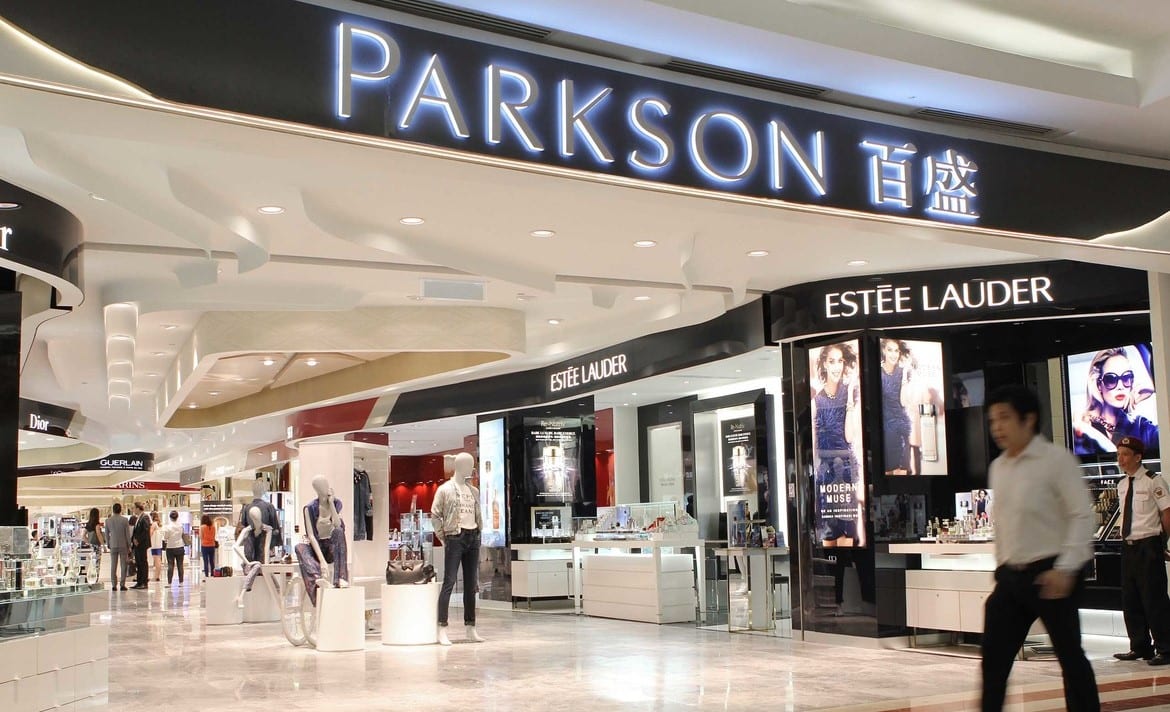
    Parkson Retail Asia booked a lower net profit last year with two fewer stores and weak consumer spending.

    The department store chain’s net profit fell 8.5 percent to S$26.3 million (US$19.6 million), while revenue fell 4 percent to S$221.6 million (US 165 million).

    The company ended the year with 37 stores, down from 39 in the prior year.

    Its gross sales proceeds from continuing operations slid 9.1 percent to S$535.7 million (US$398.8 million) as total merchandise sales and consultancy/management service fees fell 9.2 percent and 0.7 percent, respectively.

    Meanwhile, rental income grew 5.5 percent to S$1.6 million (US$1.2 million), and food and beverage increased 6.2 percent to S$2.2 million (US$1.6 million).

  • South Korea’s retail sales increase in October

    South Korea’s retail sales increase in October

    South Korea’s retail sales increased 6.4 per cent year-on-year in October amid higher demand for food items and daily necessities.

    The combined sales of 25 major offline and online merchants grew to 15.3 trillion won (US$11.87 billion) during the month from last year’s 14.4 trillion won, Ministry of Trade, Industry and Energy (MOTIE) data showed.

    Online sales grew 12.6 percent to 7.95 trillion won attributed to an increase in bulk economy-size purchases and strong demand for travel packages and outdoor autumn season activities-related items.

    Online food products sales rose 23.4 per cent while sales of cosmetic products and living/furniture items increased 21.5 per cent and 16.9 per cent, respectively.

    However, online fashion/clothing sales dropped 3.7 per cent while sporting goods sales slid 4.1 per cent.

    Meanwhile, offline sales climbed 0.5 percent to 7.36 trillion won, led by a 6.8 per cent rise in sales at convenience stores. Sales at super supermarkets advanced 3.1 percent.

    On the other hand, sales at hypermarket chains dropped 4.1 per cent as sales of innerwear and miscellaneous goods fell 10.5 per cent. Home/living, home appliances/culture sales at hypermarkets also declined 5.6 per cent and 1.5 per cent, respectively.

    Sales at department store chains went down 2.6 per cent as sales declined across all categories except women’s casual, which grew 1.0 per cent.

  • Singapore retail sales growth softens in September

    Singapore retail sales growth softens in September

    Singapore retail sales – excluding motor vehicles – were up only 0.5 percent year-on-year in September, a slowdown compared to the 4 per cent increase in August.

    According to the Department of Statistics Singapore, the total retail sales value was about US$2.5 billion, down 0.8 percent month over month on a seasonally adjusted basis. Online retail sales accounted for 15.2 percent of total sales value.

    By industry, sales of food & alcohol jumped 22.6 percent, followed by toiletries & medical goods (10.3 percent) and apparel & footwear (8.1 per cent).

    Retailers of computer & telecommunications equipment and furniture & household equipment recorded declines in sales of 12.7 percent and 4.8 percent, respectively.

    Sales of food & beverage services rose 6.9 percent yearly to US$726 million, following the 8.6 percent growth in August. Approximately 23 percent of this came from online sales.

    All industries within this sector posted sales growths, led by food caterers with a 24.1 percent increase.

  • Hong Kong retail surges

    Hong Kong retail surges

    Continued revival of inbound tourism and private consumption helped Hong Kong’s retail sales notch a 10th consecutive month of growth in September, though it was slower than in previous months, official data showed on Wednesday.

    Sales increased 13 percent year-on-year to $4.06 billion in September, the city government said, but the growth was the slowest pace since January, when it was at 6.9 percent.

    Retail sales rose by 13.7 percent in August and 16.7 percent in July.

    “Continued improvement in household income and the government’s various support initiatives, including the Night Vibes Hong Kong Campaign, should also provide support,” a government spokesman said, adding further recovery of visitor arrivals should benefit the retail sector.

    In volume terms, September retail sales increased 10.1 percent year-on-year. That compared with an 11 percent growth in August and a 14.2 percent rise in July.

    For the first nine months, retail sales value rose 18.6 percent year-on-year while volume grew 16.5 percent.

    Hong Kong’s economy grew 4.1 percent from a year earlier in the third quarter, data showed on Tuesday, accelerating from the 1.5 percent expansion in the second quarter and the 2.9 percent in the first, but missing the 5.2 percent median forecast of economists polled by Reuters.

    In August, the government revised up its economic growth forecast for 2023 to between 4.0 percent and 5.0 percent.

    Visitor arrivals for September were 2.77 million, bringing the total for the first nine months of 2023 to 23.32 million, according to Hong Kong Tourism Board preliminary data. That compared with last year’s 66,037 and 249,699, respectively, when China was still in the grip of Covid restrictions.

    The number of mainland Chinese visitors decreased to 2.16 million in September from 3.43 million in August, the data showed. That compared with 51,282 in September 2022.

    Sales of jewellery, watches, clocks and valuable gifts, which before the pandemic were mostly bought by mainland tourists, rose 27.3 percent year-on-year in September after a 57.2 percent
    jump in August, data showed.

    Sales of clothing, footwear and accessories grew 36.4 percent on the year in September after a 37.4 percent increase in August.