Tag: Retail

  • Hong Kong retail sales growth stalls

    Hong Kong retail sales growth stalls

    Hong Kong retail sales growth stalled in August, down 0.1 percent yearly, following a revised estimated increase of 4.1 percent in July.

    According to the Census and Statistics Department, August’s figures were impacted by a high base compared to a year ago, but for the first eight months of the calendar year, sales are down by 1.5 percent on year.

    Calculated with the impact of price changes removed, August sales were down by 2.9 percent, and July sales were up by 1.1 percent. Sales for the first eight months of the year combined were down by 4.5 percent.

    “Looking ahead, the moderating local epidemic situation, improving labor market conditions and [the government’s] The Consumption Voucher Scheme will continue to support consumption sentiment and demand in the near term, but the increasingly tight financial conditions will pose constraints,” said a government spokesperson. “It is crucial for the community to work in unison with the government to contain the epidemic, to create greater room for the recovery of consumption-related activities.”

    Online sales accounted for 9.1 percent of total turnover in August and were 21.3 percent higher than the same month last year. That followed an increase of 8.4 percent in July, with year-to-date online sales up by 21.7 percent.

    Categories with the largest declines in August were apparel (down by 7.4 percent), shoes and accessories (12.7 percent), and books and stationery (17.4 percent). Categories showing growth included jewelry and watches up by 4.3 percent, and motor vehicles and parts, up by 43.7 percent.

  • Vietnam national brand value gains 11%

    Vietnam national brand value gains 11%

    Vietnam saw its national brand value increase by 11% this year to $431 billion thanks to its foreign direct investment policies. Its increase of $184 billion year-on-year was the third highest of any country, U.K. consultancy Brand Finance said in a recent release.

    The country went up one place to 32nd, just behind Thailand and the Philippines.

    “The country has gained momentum as an attractive destination for foreign investment thanks to successful fiscal and monetary policies and investments in human capital, but also amid trade disruptions from China’s lockdowns and continued tensions between Beijing and Washington,” the release said.

    Among the 50 most valuable corporate brands in Vietnam, telecommunications giant Viettel led at $8.8 billion, up 44% from 2021. It was followed by another state-owned telecom firm, VNPT, at $2.9 billion. Other places in the top five were claimed by dairy giant Vinamilk, property developer Vinhomes and brewer Sabeco.

    The top sectors in terms of brand value in Vietnam are telecom, banking and food.

    Globally, the U.S. claimed top spot in the national brand list at $26.5 trillion, followed by China, Germany, Japan, and the U.K.

  • Vietnam, Cambodia trade climbs to record level

    Vietnam, Cambodia trade climbs to record level

    Trade between Vietnam and Cambodia reached a record US$7.7 billion in the first eight months of the year.

    Vietnam’s exports rose by 32% year-on-year to $4.1 billion, as the country turned last year’s deficit into a surplus, according to its customs department.

    The most significant item was iron and steel, accounting for 17% of the total, followed by garments and fuel.

    Vietnam’s imports from Cambodia rose marginally to $3.6 billion, with rubber and cashew being the main items.

    As a result, last year’s deficit of $0.4 billion turned into a surplus of $0.5 billion.

    Cambodia is Vietnam’s third largest trading partner in Southeast Asia, behind Thailand and Singapore.

  • Singapore retail sales continue to recover

    Singapore retail sales continue to recover

    Singapore retail sales continued their rebound in July, rising 18.1 per cent year on year, excluding motor vehicles.

    That followed a 19.9 per cent increase in June, both months reflecting the low base of a year earlier when Covid restrictions on border crossings and retail trading impacted shopping.

    The fastest-growing category was apparel and footwear which surged 68.3 per cent, largely due to handbags and footwear. Sales of food and alcohol, trade through department stores, and sales of watches and jewellery increased by between 41.7 and 53.1 per cent.

    Retail sales (excluding motor vehicles) in July were estimated at S$3.4 billion, of which online sales comprised 14.3 per cent, a similar level to June. Online sales of computer and telecommunications equipment accounted for 49 per cent of the category’s turnover, while 28.9 per cent of furniture and household equipment spending was online, and 14.8 per cent of supermarket sales.

    Meanwhile, sales of food and beverage services grew by 41.9 per cent in July, following June’s 59.1 per cent increase. The significant growth was due to the low base in July last year when restrictions on dining-in at restaurants and cafes were in place.

    Food and beverage service sales reached $939 million in July, of which online ordering accounted for 26.2 per cent.

  • Malaysian retail sales set new record

    Malaysian retail sales set new record

    Malaysia’s retail sales saw recorded growth in the second quarter of this year, surging 62.5 percent year on year, according to Retail Group Malaysia (RGM).

    The strong growth was estimated to result from the Hari Raya festival and the ease of Covid-19 operating restrictions. Given the swift growing pace, Malaysia Retailers Association and Malaysia Retail Chain Association project sales in the third quarter will have an average growth rate of 61.7 per cent.

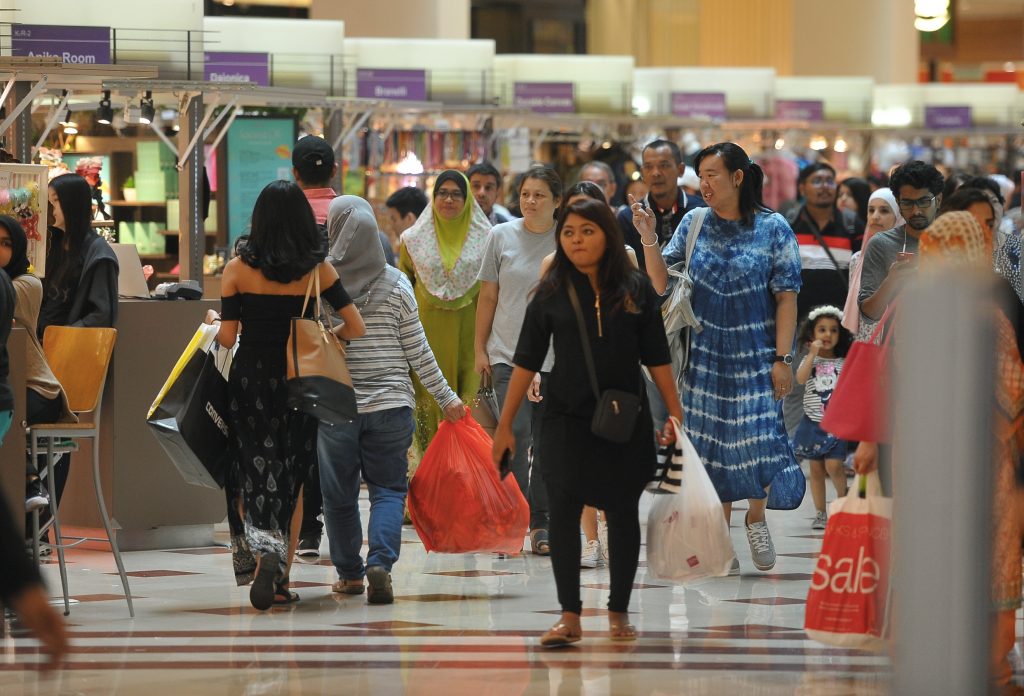
    “Hari Raya Aidilfitri was celebrated nationwide on May 3 and 4. This period had accelerated the pace of recovery of Malaysia’s retail industry,” RGM said in a statement. “Shopping centres and main commercial centers throughout Malaysia started to attract large shopping crowd three weeks before Hari Raya. The peak was one week before Hari Raya.”

    Fashion and accessories accounted for the highest growth, increasing 152 percent year on year during the quarter. Retail sales of the department stores and supermarkets jumped 59.7 percent.

    Other sub-sectors, including furniture, electronics, and healthcare, also enjoyed double-digit growth.

    RMB also added that Malaysian consumers’ purchasing power has been affected due to inflation. The manpower shortage has also influenced retailers’ sales and operation hours.

  • Retail sales in Hong Kong rebound after two months of decline

    Retail sales in Hong Kong rebound after two months of decline

    Hong Kong’s retail sales jumped 11.7% in April from a year earlier, ending two consecutive months of declines, with the rebound helped by a receding COVID pandemic and the disbursement of government’s consumption vouchers.

    The retail sector has been under pressure particularly after the financial hub imposed stringent restrictions to curb the coronavirus, although the government expects the sector to pick up as cases decline and measures are eased.

    Retail sales in April jumped 11.7% from a year earlier to HK$30.2 billion ($3.85 billion), official data released on Wednesday showed. That followed a 13.8% drop in March.

    “The retail sector should continue to recover provided that the local epidemic situation remains stable,” a government spokesman said, adding that a consumption voucher scheme and other government measures would lend more support.

    In volume terms, retail sales in April rose 8.1% from a year earlier, compared with a 16.8% decline in March.

    For the January to April period, the value of retail sales fell 3.1% from the year-ago period while volume dropped 6.1%.

    At the beginning of this year, Hong Kong implemented its strictest anti-virus measures. The Omicron variant triggered a dramatic spike in infections, with businesses hit hard by widespread closures.

    The city’s economy contracted 4% in the first quarter from the same period a year earlier, ending four quarters of recovery.

    The unemployment rate rose to 5.4% in the February-April quarter, the highest since the April-June quarter in 2021.

    The government has revised down Hong Kong’s 2022 economic growth forecast to 1% to 2%, from an earlier 2% to 3.5%.

    Sales of jewellery, watches, clocks and valuable gifts, which before the pandemic relied heavily on tourists from the mainland, rose 13.9% in April following a revised 35.9% drop in March, the data showed. The border with mainland China remains largely closed due to COVID.

    Clothing, footwear and related products increased 1.6% in April against a revised 41.4% drop in March.

    Tourist arrivals in April fell 17.8% from a year earlier to 4,692. That compared with a 73% plunge in March.

    Online retail sales were a bright spot, surging 34.8% year-on-year in April in value terms after a revised 31.2% growth in March.

    Hong Kong eased COVID restrictions further in May as cases eased, reopening beaches and swimming pools, and extending hours for bars, while restaurants are allowed to serve eight people per table, up from four.

  • South Korea’s retail sales up 9.7 per cent in July amid eased virus curbs

    South Korea’s retail sales up 9.7 per cent in July amid eased virus curbs

    Retail sales in South Korea rose 9.7 percent on-year in July amid eased COVID-19 curbs and the growth in people’s outdoor activities, the industry ministry said Tuesday.

    The combined sales of 25 major offline and online retailers came to 14.17 trillion won ($10.48 billion) last month, compared with 12.9 trillion won a year earlier, according to the data compiled by the Ministry of Trade, Industry and Energy.

    It marked the fifth consecutive month of on-year growth.

    Sales from offline stores rose 12.1 percent in July, as department stores, in particular, saw their sales surge 31.6 percent on-year. Demand for luxury goods, clothing and other fashion items logged solid growth, according to the data.

    Sales of convenience stores also went up 10.4 percent in July on the back of the popularity of food packages and other daily items.

    Sales of discount chain stores, such as E-mart and Lotte Mart, inched up 0.2 percent on-year amid the dwindling demand for home appliances, while those of smaller supermarkets fell 3.6 percent, the data showed.

    Sales from online platforms jumped 7.3 percent from a year earlier over the continued spread of the contactless shopping trend amid the prolonged pandemic.

    Demand for cosmetics via online platforms surged 14 percent on-year as people resumed outdoor activities.

    Sales of foodstuff and beverages also grew 14.7 percent, while those of home appliances and other electronic devices logged an on-year fall, the data showed.

    Online platforms accounted for 47.63 percent of the total sales in July, according to the ministry.

    South Korea has experienced a new virus wave since late July following a monthslong let-up after the worst infections here so far.

    But the government decided not to reimpose strict antivirus regulations, such as business curfews and a cap on private gatherings, to support people’s return to normalcy.

    All schools resumed in-person classes, and many companies ended their remote working policies.

  • Singapore Considers More Tightening for Retail Crypto

    Singapore Considers More Tightening for Retail Crypto

    The Monetary Authority Singapore is reeling back on retail access to cryptocurrencies with the latest consideration for more curbs.

    The MAS is considering tightening crypto rules for retail investors by «adding friction» to mass access, according to managing director Ravi Menon in a speech published online. This includes the possible addition of suitability tests as well as restrictions on the use of leverage and credit.

    Market volatility this year has led a number of crypto players in the city-state to suffer including exchange Zipmex and lender Hodlnaut. In the latest, fallen Singapore hedge fund Three Arrows’ co-founder Su Zhu reemerged in public to deliver an affidavit defending himself against liquidator claims.

    Despite its concerns, Menon notes that a regulatory ban is not a viable option as it is «not likely to work».

    The cryptocurrency world is borderless. With just a mobile phone, Singaporeans have access to any number of crypto exchanges in the world and can buy or sell any number of cryptocurrencies, Menon said in the opening address of a seminar held today.

    Singapore continues to rethink mass access to cryptocurrencies following guidelines issued in January to limit trading services providers from public promotion.

  • Amazon to invest in Japanese beauty retailer Istyle

    Amazon to invest in Japanese beauty retailer Istyle

    Amazon.com will invest in istyle, the company behind the @cosme review and retail site, gaining access to the Japanese beauty product vendor’s trove of user reviews.

    Under the agreement announced Monday, istyle will issue 2.5 billion yen ($18.7 million) in convertible bonds as well as 11.5 billion yen in warrants to Amazon on Sept. 6. If these convertible bonds and warrants are turned into stock, Amazon would become the top shareholder with a 36.95% stake.

    Amazon will open a dedicated page, tentatively named @cosme Shopping, on its site, where istyle will provide the latest on beauty products to the e-retailer’s members and sell cosmetics from a wide range of brands.

    Istyle has been pushing to merge online and offline sales, setting up a brick-and-mortar store in Tokyo’s Harajusku district. Going forward, Amazon and istyle could collaborate in operating stores using digital tech. The partnership could boost Amazon’s presence in the cosmetic market, where drugs stores and department stores are also formidable players.

    Istyle will also issue convertible bonds to investors including leading trading house Mitsui & Co.

    Mitsui plans to position the cosmetics business as one of its key growth fields and wants “to broaden access to istyle’s customers and manufacturers,” according to a spokesperson. It intends to leverage its sales network to offer Japanese-made cosmetics in overseas markets.

  • How to Meet Demand in an e-commerce Age with Supply Chain Automation  

    How to Meet Demand in an e-commerce Age with Supply Chain Automation  

    Retailers across the Southeast Asian region are under tremendous supply chain pressure due to increased demand for online orders, hyper-competitive pricing and faster delivery times. For online orders, customers want the cheapest price, shortest delivery time, up-to-date information on stock availability, access to the real-time status of their orders, and seamless return options. On top of all this, businesses continue to contend with increasing labour costs, high staff turnover, increasing costs for building space, pressures from increased regulation and safety requirements, and supply chain disruptions, be they from pandemics, natural disasters and geopolitical tensions.

    All these factors combined have made the task of cost-effective order fulfilment more challenging than ever before. However, there is a way business can tackle these challenges and turn them into an opportunity to improve competitiveness. As this new age of retail and eCommerce coerces supply chains to work faster and harder, automation and technology in Fulfilment Centres are proving to play a critical role in helping businesses streamline their processes towards achieving higher levels of efficiency in their distribution operations.

    So, what can retailers do to meet demand in an e-commerce age when the only constant appears to be disruption?

    Optimised processes make for streamlined operations

    The answer to succeeding in the future involves adopting a strategy to optimise operations around cost-effectively meeting and exceed consumer expectations. Optimisation falls into three broad categories: processes, human efficiency, and inventory management.

    Processes provide the structure for supply chains to function. Automation and technology help optimise processes by removing non-value-adding activities, improving productivity, reducing errors and increasing the speed of the necessary tasks. As an example, the order fulfilment processes can be improved significantly in terms of speed, productivity and accuracy with the implementation of wearable devices to provide real-time instructions and interaction with operators. The process of order tracking is automatically improved with the same software that drives the technology, also providing the capability to track every transaction and movement of inventory through the order fulfilment task.

    Inventory management is key

    Inventory storage has transitioned from being a static requirement to a dynamic one, with many supply chains now able to drive high levels of optimisation across their logistics operations and their retail operations as well.  Automation and technology often play a key role in achieving these high levels of optimisation.

    Manual forklift trucks and Automated Storage Retrieval Systems (AS/RS) are no longer the only material-handling technologies that can be used to store inventory.  Technologies such as Automated Guided Vehicles (AGVs), mobile robotics and shuttle systems can provide much more flexible, scalable and dynamic storage solutions in a wider range of supply chain facilities.

    Make your workers more effective

    In traditional order fulfilment operations, operator travel consumes the largest portion of an operator’s time in fulfilling a customer order. One of the most effective ways to improve the efficiency of operators is to minimise operator travel, or to eliminate it altogether. In terms of automation, Goods-to-Person (GTP) picking solutions can increase operator productivity by over 5 times by eliminating operator travel.  Advances in robotic fulfilment technology have enabled order fulfilment processes to be performed without the involvement of operators at all in some cases.

    Case Study: RedMart’s Advanced Online Grocery Fulfilment with GTP

    To meet surging demand and growth in online orders, RedMart – the online grocery service of e-commerce giant, Lazada – implemented automation at its logistics facility in Singapore, in order to improve productivity, speed, accuracy, and space efficiency.

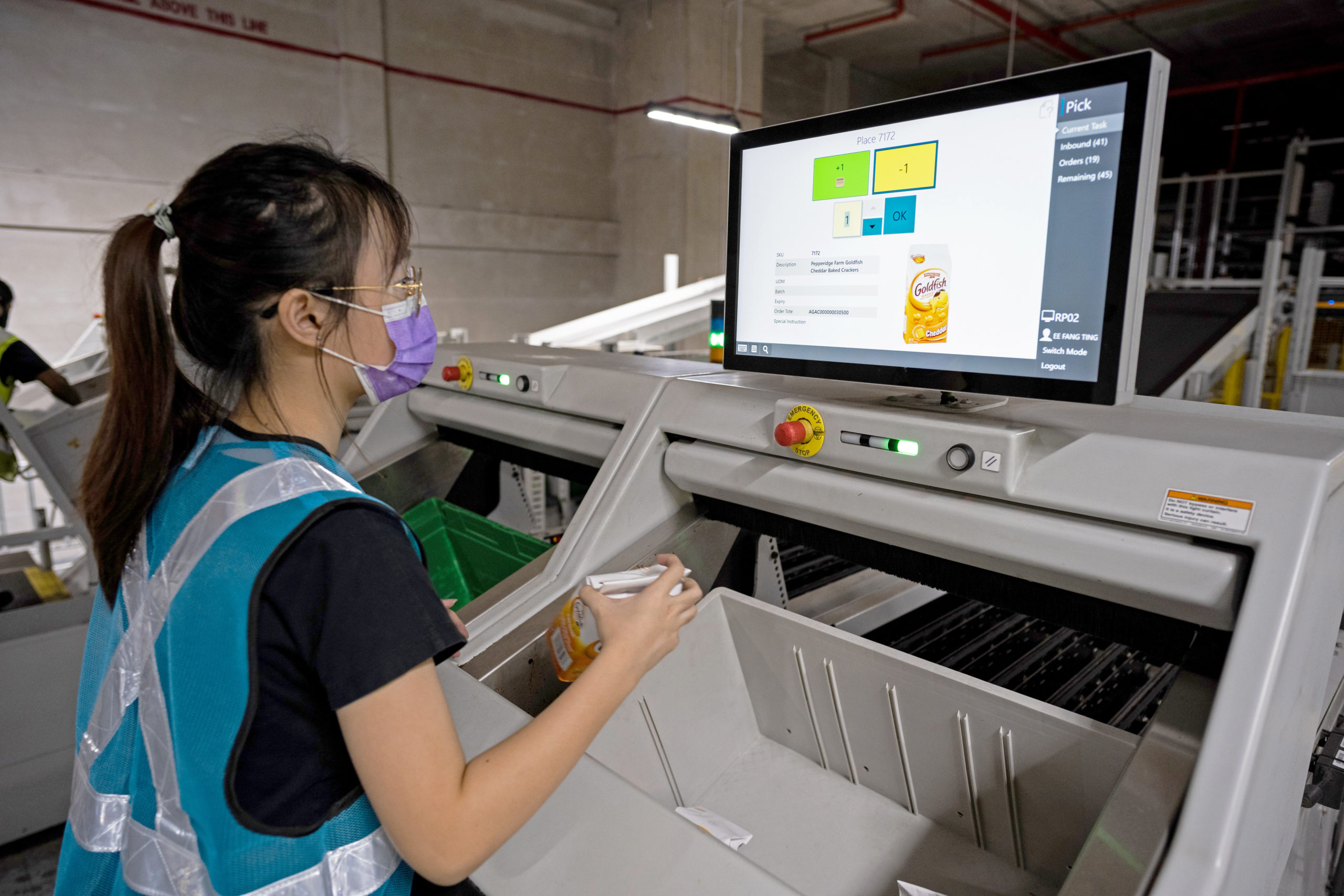
    A key part of the automation solution is the Goods-to-Person (GTP) order fulfilment, powered by a Dematic Multishuttle system. At the ergonomically designed workstations, operators pick orders up to five times faster than they were previously when they would have to manually travel through multiple aisles of shelving to pick the items required for an order.

    The GTP system covers a huge product range in a small footprint, with an extremely effective picking method. Workers stay in one place as items are automatically delivered to their workstation, increasing picking speeds, improving fulfilment accuracy, and advancing operator comfort and safety.

    Optimisation with information

    With the use of new logistics automation and technologies, retailers have a pathway to improve their fulfilment operations, achieving cost-effective and efficient fulfilment processes, higher levels of inventory availability, shorter lead times and improved traceability.  Robust and real-time integration between mechatronics, control systems and software platforms across fulfilment operations and their broader supply chain networks, is a key ingredient to achieving competitiveness and sustainable success in the future landscape of retail.

    For more information on how your business can optimise its supply chain operations and meet market demands, please visit: www.dematic.com/en-au

    Written by: Michael Bradshaw, Senior Regional Director Sales & Solution Development, Dematic Asia


  • Understanding Modern Retail Through the Gen Z Filter

    Understanding Modern Retail Through the Gen Z Filter

    Over the past decade retailers faced the challenge of managing their own digital transformation, while simultaneously scrambling to serve the needs of a younger and increasingly online-savvy audience – generally accepted as being digitally native. Today, brands are additionally tested to plan and accommodate for the increasing buying power of the emerging 11-24 age group of shoppers, colloquially known as ‘Gen Z’ or ‘Zoomers’.

    Generation Omnichannel

    Perhaps a more fitting nickname for Gen Z or Zoomers, would be ‘Generation Omnichannel’, as this is the first truly omnichannel generation to both physical and online stores and social media platforms in equal measure. This group are prepared to shop wherever suits them best, and in a more impulsive and immediate way.

    According to a recent article in Vogue, Zoomers are 56% more likely to have shopped for fashion in-store over the last three months and 38% more likely to have shopped online in the same timeframe. They are willing to shop across all channels and have an appetite for higher-quality items in an effort to stay on trend with cultural developments.

    This awareness of cultural trends is leading to some key generational spending indicators too; not to mention the fact that Gen Z consumers are more conscious about the planet and the future. They believe that the generations before them represented overconsumption, capitalism, and materialism, meaning they are more likely to associate themselves (and their wallets) with brands that match their own core values, such as sustainability, environmentalism, and equality.

    At the same time, Gen Z has been called the most critical consumer group of all, with a fundamentally different view of shopping and consumption to previous generations. They are the latest to enter the workforce and will have strong purchasing power over the next decade, meaning brands have to earn their loyalty before they become loyal shoppers.

    Furthermore, Zoomers’ frequency of shopping for new items is being disrupted by the second-hand, preloved, vintage market – a market that Zoomers are 27% more likely to shop. In Australia, preloved and vintage platforms, such as Depop & Vinted, are arguably slowing the cycle of new purchases and redefining the concept of the customer journey and what it really means to be ‘new’.

    Embracing New & All Forms of Payments

    According to PayPal, 22% of Zoomers have used buy-now, pay-later (BNPL) solutions such as Klarna and Afterpay since the start of the pandemic to buy more expensive, higher-quality products.

    Since the beginning of the pandemic, 123% more Zoomers have used BNPL than previously, representing the strongest uptake of any generation – and during April 2021, 33% of Gen Z respondents said they were likely to use BNPL solutions in the future too.

    Furthermore, Gen Z has continued to embrace mobile payment options such as mobile apps and e-wallets, including Apple and Android Pay, faster than any other consumer spending group. This expectation to be able to pay now, or later, with a device or platform is something that permeates Gen Z spending habits enormously, meaning traditional payment and Point-of-Sale (POS) technologies need to be modernised in order to offer these different payment options.

    A Window to the Future

    The pandemic and the associate rise in online activity grew usage and acceptance of eCommerce amongst consumers, regardless of generational status. If we glance into the future, beyond the Gen Z age group, Generation Alpha and subsequent cohorts will likely prove to be even more digitally-savvy – thus, the cycle of retail reinvention will likely have to start anew in another 20 years or so.

    The key to success for brands confronted by this continual sequence of progressiveness is to be agile and nimble enough to not only introduce different digital and in-store commerce options but have the capabilities to support these with the native omnichannel capabilities needed to deliver against the demanding expectations of these new generational groups.

    Gen Z is the emerging cultural and economic powerhouse in today’s retail landscape and it will continue to drive cultural change and retail spending habits on so many levels over the next two decades.

    While the full force of their dollars may not have hit retailers just yet, the race to meet the future expectations of Gen Z consumers is very much underway. The success of brands over the next two decades will not only be established by understanding what, how and from who Zoomers are likely to buy, but also on a retailer’s abilities to execute frictionless omnichannel experiences by having the right technology in place at within stores and supply chains.

    Written by Richard Wright, Managing Director, SEA, at Manhattan Associates

    For more information on how your brand can better serve customers in an omnichannel environment, please visit: www.manh.com/en-sg


  • Financial startup Anfin raises $4.8 mln

    Financial startup Anfin raises $4.8 mln

    Financial startup Anfin, which seeks to make stock investment easy for any user, has raised funding of $4.8 million in a Pre-Series A round from a consortium of investors.

    It was led by angel investor Clement Benoit and U.S.-based startup accelerator Y Combinator. The money will be used to improve its app by building a social network in it so users can share their investment knowledge.

    Anfin was launched in October last year and has raised around $7 million to date.

    Its app allows users to invest as little as VND10,000.

    Its CEO, Phuoc Tran, said the app has over 100,000 active accounts with a total transaction value of $10 million.

    Benoit said creating a product that serves many groups of people in society is the right move in a big market such as Asia.

    He hoped the company would branch out to other countries and succeed in its social investing business model.

    Interest in stocks remains sky-high in Vietnam, with 476,300 new accounts opened in May, a new record.

    Phuoc said despite the volatility in the market, stocks remain an asset class with great prospects.

    Data from investment fund Dragon Capital Vietnam shows that in the last five years, stocks have given investors an average return of 16 percent a year, higher than real estate, bonds or gold.

  • Amazon, Cartier sue counterfeiters using social media to sell fakes

    Amazon, Cartier sue counterfeiters using social media to sell fakes

    Amazon is continuing its crackdown on counterfeiters, this time against a social media influencer they claim was selling fake Cartier bracelets, necklaces and earrings.

    The online retail giant said on Wednesday that it filed two joint lawsuits with Cartier against an unnamed social media influencer and eight businesses for allegedly promoting counterfeits on social media and other websites that were then sold on Amazon. The lawsuits were filed in the US District Court for the Western District of Washington, alleging the businesses conspired together to sell counterfeits and falsely advertise them as real, infringing on Cartier’s trademarks, avoiding Amazon’s anti-counterfeiting detection tools and violating Amazon’s policies, according to the companies.

    While items on Amazon were non-branded and listed with generic product descriptions to avoid detection by Amazon’s anti-counterfeit policies, the ads linking to the Amazon product pages used the Cartier brand name to sell the allegedly fake bracelets, necklaces and earrings, according to the companies. For instance, a counterfeit of the Cartier Love bracelet was listed on Amazon as “Women’s Fashion Classic Screw Love Titanium Steel Bracelet”.

    Amazon has put more effort into detecting and removing counterfeit sellers from the site. According to the company’s second Brand Protection Report, published in 2022, Amazon stopped over 2.5 million attempts from bad actors to create new selling counts, down over 6 million compared to the previous year. The company also increased the number of brands on its Brand Registry tool, which detects infringements, leading to a 25 per cent decrease in infringements compared to the previous year.

    Amazon has also begun working directly with luxury brands to remove fake products from its site; last February, Amazon filed two joint lawsuits with Ferragamo against counterfeiters, and in April, the companies said Chinese authorities had conducted an investigation and seized the counterfeit products. In June 2020, Amazon filed its first joint lawsuit with Valentino against New York-based Kaitlyn Pan Group for allegedly counterfeiting the brand’s Rockstud shoes, though the case was settled in January 2021.

    “By using social media to promote counterfeits, bad actors undermine trust and mislead customers,” said Kebharu Smith, associate general counsel and director of the Amazon Counterfeit Crimes Unit, in a statement. “Amazon will keep investing and innovating to stay ahead of counterfeiters and working with brands and law enforcement to hold bad actors accountable. We don’t just want to chase them away from Amazon — we want to stop them for good.”

    Amazon has been making efforts to break into the luxury market: earlier this month, it rolled out its Luxury Stores concept to the UK, Germany, France, Italy and Spain after launching it two years ago with Oscar de la Renta and Roland Mouret, among others. However, experts say that the widespread selling of counterfeits and dupes by third-party sellers on the platform is holding the e-commerce behemoth back from elevating its position.

    By publicising its condemnation of counterfeits, Amazon wants to signal its trustworthiness to the luxury sector. “Amazon is deeply committed to protecting brands’ intellectual property and strictly prohibits counterfeit products in its stores,” the company said in a statement, adding that it invested $900 million and employed 12,000 people to protect against counterfeits in 2021.

  • Shopee culls staff across SE Asia, Europe

    Shopee culls staff across SE Asia, Europe

    Sea Group’s e-commerce arm Shopee is laying off staff across multiple markets as it seeks to rationalize its e-commerce business, DealStreetAsia has learned.

    The layoffs have affected employees across several of the company’s Southeast Asian markets including Indonesia, Thailand and Vietnam, sources told DealStreetAsia. The company is said to have emailed employees affected by the layoffs, the sources added.

    Shopee’s payments arm ShopeePay and food delivery business ShopeeFood are also said to be facing cuts. A general meeting was also reportedly held on Monday to address the job cuts with Shopee employees.

    The extent of the job cuts and the number of employees affected could not be confirmed at the time of publishing. DealStreetAsia has reached out to Shopee for comment.

    Two sources aware of the matter said nearly half of Shopee Thailand’s payment and food delivery teams have been affected by the downsizing. One of the sources noted that the email was said to have been managed in an off-handed manner, with the company asking staff members to return home and await further notice of termination.

    A separate source told DealStreetAsia that Shopee has stopped hiring, with several job offers for regional roles rescinded.

    While Sea Group’s business continues to show signs of improvement in overall profitability, most of its revenue continues to come from its gaming arm Garena.

    Sea Group’s first-quarter 2022 financials reflected a 64.4% year-on-year increase in Generally Accepted Accounting Principles revenue at $2.9 billion, with gross profits soaring 81.3% to $1.2 billion over the same period.

    Shopee’s business, while still losing money, has also reflected improvements, with a 71.3% year-on-year increase in orders to $1.9 billion in the first quarter of 2022 while gross merchandise value rose 38.7% to $17.4 billion. Importantly, Shopee’s gross profit margin for e-commerce increased year on year, with faster growth in transaction-based fees and advertising income generating higher margins versus other value-added services.

    Shopee, however, continues to face several macro headwinds, including rising inflation and interest rates, that may dampen retail and consumption sectors.

    The company also appears to be facing setbacks on some of its ambitious internationalization plans, including its forays into Europe and Latin America. Shopee, which has operations in Poland and Spain, decided to pull out of France after only five months as it was not meeting expectations.

  • Why E-commerce Is the Future of Retail

    Why E-commerce Is the Future of Retail

    Over the past few years, the growth of mobile technologies and a shift to remote work caused a significant increase in the global adoption rate of e-commerce strategies. Retail businesses found themselves having to adapt to these transformative changes or face the prospect of being left behind.

    Transformation is never easy, and the shift to customer-oriented, mobile service is a costly investment that can only be made after careful deliberation. Choosing e-commerce can be a risky move at the best of times, but the potential for profitability is well-documented at this point.

    Whether it’s social media campaigns, fashion Influencers, digital storefronts, or mobile app development, e-commerce strategies can be used simultaneously. These strategies define the current era, but what does this mean for the future of retail?

    Will brick-and-mortar establishments continue to decline in popularity? Or is there a chance that we’ll reach an inflection point and find a better balance between e-commerce and on-premise shopping? Let’s take a look at three factors that can inform our understanding of this unprecedented situation.

    New normals

    Unfortunately, there’s no way of knowing when dramatic changes in consumer behavior will occur. The amount of people who prefer online shopping has risen faster than anyone could expect, and the survival of the retail industry has largely depended on its ability to respond to these changes timeously.

    Reaction speed has become paramount to commercial success in an age defined by fast service and modern conveniences. Online shops are open around the clock, facilitating the sale and delivery of an astonishing amount of goods every second of every day.

    In 2021, e-commerce profits in the US amounted to over $850 billion. Compared to 2019, that’s over 50% growth in less than two years. Clearly, consumers are drawn to the convenience and simplicity of online retail, and the simple truth is that traditional retail is incapable of meeting this demand.

    To make the most of this thriving market, forward-thinking retailers have found that a combination of on-premise and e-commerce is the most effective strategy. Each strategy is able to function independently, which gives consumers the ability to follow their preferences freely.

    Accessibility

    It’s hard to overstate how important convenience is. Everyone wants fast service and premium quality, and no one wants to have to leave home to experience that quintessential shopping experience.

    Desiring that level of convenience doesn’t mean we shouldn’t have physical storefronts. In fact, it means quite the opposite. Both forms of retail have to work in unison, and the extent to which each is applied should be based on the target market’s needs and preferences.

    By prioritizing consumer-centric strategies, retail companies can ensure that they provide the best in service delivery. Failing to implement these services in time will likely result in a loss of market share, and there are many well-established companies that had to learn that lesson the hard way.

    Contrary to popular belief, e-commerce strategies aren’t meant to replace the traditions of brick-and-mortar shopping. They add to established infrastructure, essentially creating a network of access points for consumers to get what they want when they want it.

    Much like courier and delivery services, the technology behind e-commerce merely allowed us to fill a gap in the retail market. Consumers will always want on-premise shopping, as the experience of physically going out to buy a product is a need that commerce isn’t able to meet.

    Data-driven solutions

    Looking at the evidence is a key factor for success. This is another way in which technology can give retailers the upper hand. Mobile and analytics technologies have advanced in leaps and bounds, and scalable cloud platforms open up a world of possibilities for dynamic market influencers.

    At this point, you may have noticed that a combined strategy will likely be the best solution for most businesses. After all, time and time again, analyzing consumer behavior shows that profitability is the result of being able to provide the type of experience your target market seeks.

    From rewards-based behavior to online browsing habits, we have access to the kind of data marketers could only dream of back in the day. Retailers should use this knowledge to their full advantage, reacting to consumer attitudes instead of trying to manipulate them.

    For the retail industry to attain the best possible outcome, a combination of technology and tradition must be implemented as early as possible. The signs of this inevitability are all around us, and no matter which way you look at it, all clues point to e-commerce being a fundamental influence on the retail industry for a long time to come.