Tag: Retail

  • Retail sales in Singapore surge as border restrictions relaxed

    Retail sales in Singapore surge as border restrictions relaxed

    Retail sales in Singapore surged 17.4 per cent in April (excluding motor vehicles), faster than the rate of 13.6 per cent in March.

    Statistics Singapore said the increase was driven by sales of apparel, food & liquor – up by 46.6 per cent year on year – and improved supermarket turnover.

    Retail sales in Singapore, excluding motor vehicles, were estimated at S$3.3 billion (US$2.4 billion) in April, with online retail sales accounting for 14.2 per cent of that. Online sales of computer & telecommunications equipment comprised 48.2 per cent of the category’s turnover, while 28.3 per cent of furniture & household equipment was sold online.

    Statistics Singapore said the growth in apparel sales was due to increased demand for bags and footwear, partly fuelled by increased tourist spending as border restrictions were eased. Sales of food & alcohol, in department stores, and of watches & jewellery, increased by between 28.4 and 35.6 per cent.

    However, sales at mini-marts & convenience stores fell by 5.5 per cent.

  • Owndays launches premium concept store in Singapore

    Owndays launches premium concept store in Singapore

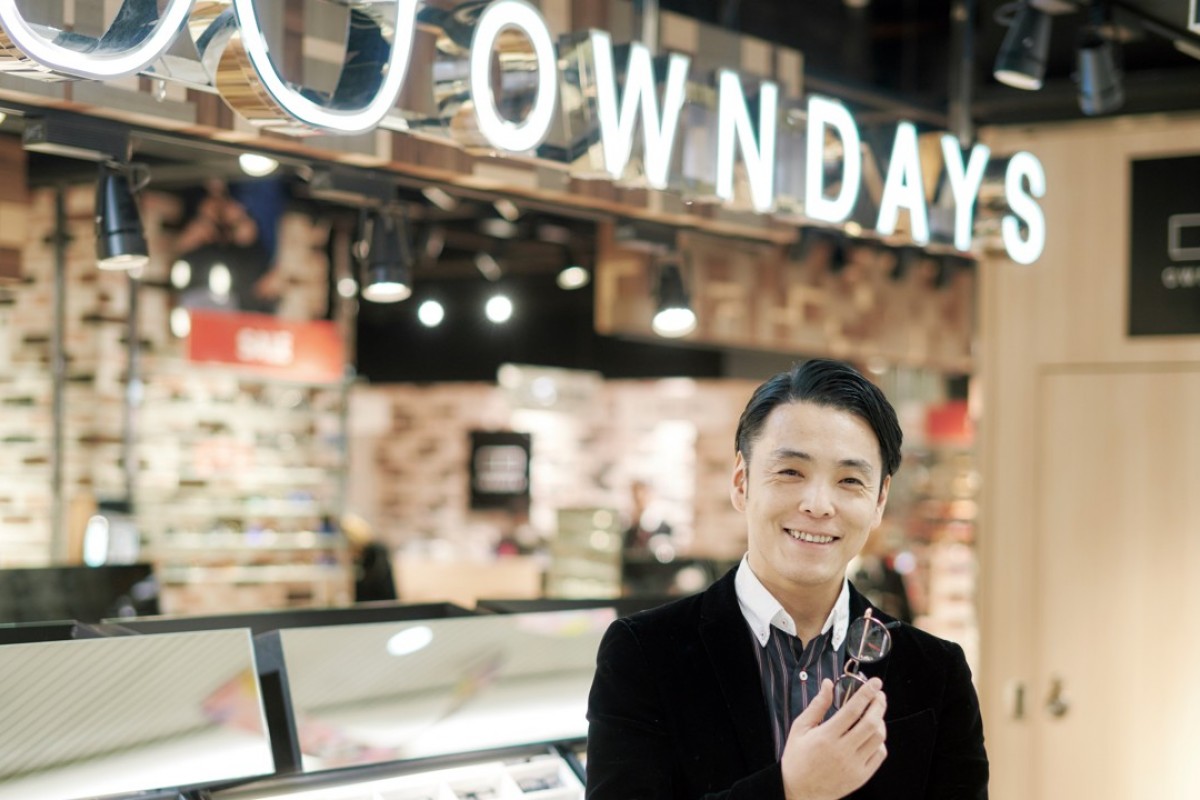
    Japanese fast fashion eyewear brand, OWNDAYS, is pleased to announce the opening of a new store at Takashimaya S.C., Ngee Ann City. This will be the brand’s second premium concept store in the world and its 33rd store in Singapore. The new store will open to public on 20 May 2022 and will house a collection of made-in-Japan eyewear and premium ophthalmic lenses curated exclusively for its premium concept stores.

    The Takashimaya S.C. store mirrors the concept of “Japanese Luxury” originally introduced at its first premium concept store at Marina Bay Sands, offering a premium eyewear shopping experience topped with Japanese hospitality and an extended product offering. Drawing inspiration from Ryoanji Temple, an UNESCO World Heritage Site and a popular attraction in Kyoto, Japan known for its famous rock garden, the new store features a distinct Japanese-styled aesthetics that pays homage to the origins of the brand while incorporating a touch of luxury.

    The main retail floor is flanked by a dry landscape complete with rock arrangements, gravel, moss and shrubs to achieve the Zen Garden interior. Beige wood elements are also heavily featured in the store interior to emphasise a sense of traditional Japanese-ness.

    Také Umiyama, Managing Director/COO of OWNDAYS INC. said, “The Takashimaya S.C. store reflects the core value of OWNDAYS, which is to constantly evolve and innovate in order to deliver quality eyewear to consumers at the best value. With a store that is located right in the heart of Orchard Road, it allows us to make well-designed, good quality eyewear more accessible to our customers. Besides, the new store is a space where we hope local consumers could enjoy a complete Japanese experience without having to physically travel to Japan. We welcome customers to visit the store even when they are not looking to purchase any spectacles and just to feel transported to Japan.”


  • The enormous cost of McDonald’s Russian exit

    The enormous cost of McDonald’s Russian exit

    McDonald’s became the symbol of glasnost in action 30 years ago when it opened its first restaurant in Moscow. But after temporarily shutting down more than 800 restaurants following the invasion of Ukraine, McDonald’s has decided to leave Russia altogether.

    The burger chain will sell its Russia business, saying the “humanitarian crisis caused by the war in Ukraine, and the precipitating unpredictable operating environment, have led McDonald’s to conclude that continued ownership of the business in Russia is no longer tenable, nor is it consistent with McDonald’s values.”
    In March, shortly after the war began, McDonald’s followed other Western companies and temporarily shut down its restaurants in Russia.
    Once the sale is finalized, the Russian restaurants will be “de-Arched,” meaning the locations will no longer be allowed to use the McDonald’s name, logo or menu. McDonald’s said its employees will still be paid until the transaction closes and that “employees have future employment with any potential buyer.”
    CEO Chris Kempczinski said he’s proud of the more than 60,000 workers employed in Russia and said the decision was “extremely difficult.”
    “However, we have a commitment to our global community and must remain steadfast in our values. And our commitment to our values means that we can no longer keep the Arches shining there,” he said.
    The decision brings to a remarkable end McDonald’s three-decade relationship with Russia. McDonald’s opened the doors of its first restaurant in Moscow on January 31, 1990. More than 30,000 were served and the Pushkin Square location had to stay open hours later than planned because of the crowds.
    Its arrival in Moscow was about more than just Big Macs and fries, noted Darra Goldstein, a Russia expert at Williams College. It was the most prominent example of Soviet Union President Mikhail Gorbechev’s attempt to open up his crumbling country to the outside world.
    “There was a really visible crack in the Iron Curtain,” she previously said. “It was very symbolic about the changes that were taking place.” About two years later, the Soviet Union would collapse.
    McDonald’s exit “represents a new isolationism in Russia, which must now look inward for investment and consumer brand development,” said Neil Saunders, managing director of GlobalData said in a note Monday. He added that other Western brands take “principled stance on the concepts of freedom and democracy” and revisit their businesses in Russia.
    McDonald’s will take a significant write-off from exiting Russia — between $1.2 billion to $1.4 billion. Shares were barely changed in early trading.
    “The fact that McDonald’s owns most of its restaurants in Russia means there is an asset rich business to sell,” said Saunders. “However, given the circumstances of the sale, the financial challenges faced by potential Russian buyers, and the fact that McDonald’s will not license its brand name or identity, it is unlikely the sale price will be anywhere near the pre-invasion book value of the business.”
    In its most recent earnings report, McDonald’s said closing its restaurants in Russia had cost it $127 million last quarter. Nearly $27 million came from staff costs, payments for leases and supplies. The other $100 million was from food and other items it will have to dump.
    McDonald’s had 847 restaurants in Russia at the close of last year, according to an investor document. Together with another 108 in Ukraine, they accounted for 9% of the company’s revenue in 2021.
  • Central Retail reports solid growth in Thailand, Vietnam and Italy

    Central Retail reports solid growth in Thailand, Vietnam and Italy

    Mr. Yol Phokasub, Chief Executive Officer of Central Retail Corporation PCL (CRC), announced “Central Retail has achieved success hitting record-high in Q4/2021 performance, with a revenue of THB 58,765 million +15%. EBITDA THB 8,031 million +42% and a net profit of THB 2,464 million +124%. We ended 2021 on a high note with profit of THB 277 million. EBITDA THB 20,059 million and a total revenue of THB 195,654 million. Despite the ongoing challenges posed by the spread of COVID-19 for extended periods across Thailand, Vietnam and Italy, Central Retail achieved profitability and generated positive returns to shareholders, with dividend payment of THB 0.30 per share.

    Thailand: Sales in 2021, excluding tourist spendings, returned higher than pre-pandemic levels. Accounting for this achievement is Central Retail’s Multi-Category Platform, providing portfolio flexibility and adaptability to changing customer needs. The focus in 2021 was the hardline segment, which aligns with consumer trends during the pandemic, enabling the segment to rapidly grow and drive sales to levels higher than the pre-pandemic era by 26%. The company launched 5 new Thai Watsadu branches and new store formats under go! WOW banner of total 15 branches within three months in 2021, of which was positively received by customers, underlining the company’s leadership position in Omnichannel Home Improvement Platform. Additionally, Central Retail successfully acquired COL, including OfficeMate and B2S, and is prepared to list MEB, the leader in the e-book business and novel website for Thais, in the stock exchange of Thailand in 2022. For the food segment, Central Retail maintains its #1 position as The Best Food Destination in Thailand, driving business expansion in 2021 by opening 46 branches to reinforce its leadership position in the category. Tops Supermarket also received the Top Influential Brands award from Influential Brand Singapore and Neo Target, a leader in corporate reputation consultancy in Thailand. The company also implemented fixed prices of consumer goods from the end of last year until the first quarter of this year to alleviate financial burdens of consumers during turbulent times. For the fashion segment, the company drove the highest levels of growth in the fourth quarter when compared to previous quarters in the last two years and the segment is still strong in momentum.

    Vietnam: Despite the impact from COVID-19, Central Retail charged ahead with investment plans, including renovations and business expansion to strengthen its leadership in the hypermarket and lifestyle mall segment across urban and rural areas. The company also expanded into the food segment by launching new store format mini go! that targets mass consumers, as well as Tops Market to serve every customer segment in Vietnam. Although Vietnam faced a difficult situation during the pandemic that forced stores to close during the second and third quarters, our sales grew by 8% higher than 2019 whilst EBITDA grew 9% compared to the previous year.

    Italy: Central Retail initiated renovations of Rinascente across 3 flagship stores, including Milan, Florence and Rome. The renovations took place during the lockdown in Italy and were completed in time for the border reopening in mid-2021, which has successfully attracted a growing number of customers, resulting in strong business growth. The spending power from domestic customers along with the return of European tourists boosted sales growth in the fourth quarter, matching 99% of sales during the pre-pandemic era. The company’s annual sales in Italy saw a strong growth of 30% compared to the previous year and has achieved a fourfold increase in EBITDA compared to the year before.

    Property: Renovated and launched new branches across Thailand and Vietnam, including the opening of GO! lifestyle mall in Vietnam and Robinson Lifestyle in Thailand, totaling 6 branches. Robinson Lifestyle maintained an occupancy rate of over 90% and the number of customers has been increasing consistently. By the end of 2021, Central Retail has a total of 69 branches across Robinson Lifestyle, Tops Plaza and GO! lifestyle malls with total net leasable space over 650,000 square metres, a 10% increase from the previous year.

    Technology and Digital: Central Retail enhanced technology integration across the organisation and its people by adopting a digital-first culture and building on the most comprehensive omnichannel platforms, securing Central Retail’s unique leadership in omnichannel retailing. These efforts resulted in omnichannel sales accounting for 20% of total sales, and a 109% growth. The company also built on the CRC Data Ecosystem and developed new techn

  • Reimagining the Customer Experience for New Breed of Shoppers

    Reimagining the Customer Experience for New Breed of Shoppers

    Retailers across the APAC region have had to quickly adapt to changing operating conditions over the previous two years, leading to many adopting new technologies and solutions to better serve customers across whichever touchpoints or platforms they prefer.

    As learned pandemic behaviours become the default setting for millions of consumers across the region, brands will continue to serve customers via click & collect and kerbside pickup, while simultaneously processing online returns in-store too.

    For many retailers, this agile, innovation-heavy fusion of online and physical demand is becoming more commonplace, placing the role of modern, dynamic Point-of-Sale (POS) technology squarely at the centre of a redefined connected commerce era.

    For brands today, a reimagined customer experience can be broken down into three key stages, with modern POS playing an important linchpin function at each of the three phases:

    • Pre-purchase: Retailers need to have full visibility of not just customer data such as purchase history, but also their own inventory too.
    • Purchase: Out-of-stock is no longer an option for retailers today. With modern POS, endless aisle capabilities mean shoppers can purchase goods from across an entire network, rather than being restricted by the availability of inventory at a single location.
    • Post-purchase: Stores have a critical role to play in the returns process, but without smart, joined-up store systems, returned goods can often fall into an inventory ‘black hole’.

    From retail industry’s first conception of a Point-of-Sale system, invented back in 1879, the retail landscape has come a very long way, and for those who want to meet the needs of the 21st century shopper, they need to be across all aspects of the omnichannel.

    But, as we observe an acceleration towards a true convergence point between physical and digital retail (fuelled by the effects of the pandemic), it’s important for retailers to continue to innovate and remove any remaining points of friction from this reimagined shopping experience.

    For example, if we go back to the perennial problem of out-of-stock predicaments, it’s hard to believe that even in this day and age, only a small minority of retailers are capable of offering in-store purchasing from another store’s inventory, or indeed from the warehouse.  From a customer experience perspective, this tends to feel like an outdated process, causing not only the risk of losing a sale but also brand loyalty.

    To truly reimagine the customer experience journey at a deeper level in 2022, we must recognise that the role of the store is no longer limited to selling, rather brick-and-mortar retail must be repositioned as a hub for fulfilment too.

    The benefits of this approach have been played out over the last two years and continue to do so today – with retailers with store fulfilment options seeing higher revenue growth – a 114% increase when click and collect is implemented and a 60% increase when ship from store is implemented.

    The future of the customer experience journey is closely linked to eCommerce, and the future of eCommerce is intrinsically linked to the evolving capabilities offered by stores.

    In order to meet supercharged customer expectations, retailers need to adopt a ‘sell/fulfil/engage’ mentality. However, when it comes to future-ready POS implementation, brands often make three common mistakes: adopting a store-only plan which could limit future agility, underinvestment in change management leading to uncertainty or failure to thrive, and selecting a “proven” vendor with old technology without consideration for new innovations.

    All too often, brands are still thinking in silos. Instead, they need to develop a unified commerce roadmap – encompassing a POS + clientele management + store fulfilment + customer engagement strategy. Likewise, retailers need to make a clear plan for organisational change and select the right vendor capable of delivering against long-term, aspirational, and often moving targets.

    As the evolution of POS continues amidst the backdrop of a pandemic-effected economy, one thing that has become increasingly clear is that customers are in the driving seat when it comes to how, when and where they want to shop.

    Today, it’s now up to retailers to take the reins of this new customer experience journey and drive the narrative forward, but they can only do this by having sophisticated, modern POS and order management systems in place that support their customers varied shopping journeys. Whether customers are shopping in-store, online, or via a smartphone or on social media, retailers need to ensure that they are capable of delivering a seamless customer experience journey across all the places their brand is represented, both online and physically.

    For more information on how your retailer business can enhance the customer experience in 2022, please visit: www.manh.com/en-sg

  • Omicron restrictions throttled Hong Kong retail sales in March

    Omicron restrictions throttled Hong Kong retail sales in March

    Hong Kong’s retail sales fell in March for a second consecutive month after the city imposed stringent restrictions to curb an outbreak of COVID-19 but the government expected the sector to draw support as cases decline and measures are eased.

    Retail sales in March fell 13.8% from a year earlier to HK$23.8 billion ($3.03 billion), official data released on Thursday showed. That followed a 14.6% drop in February.

    “The improved local epidemic situation of late and thus the progressive relaxation of social distancing measures, along with the disbursement of the first batch of electronic consumption vouchers in early April, will render support to the retail sector,” a government spokesman said.

    In volume terms, retail sales in March dropped 16.8% from a year earlier, compared with a 17.6% decline in February.

    At the start of this year, Hong Kong implemented its most draconian anti-COVID-19 measures as the Omicron variant brought a dramatic spike in infections, with businesses hit hard by widespread closures.

    The city’s economy contracted 4% in the first quarter of this year, breaking four quarters of growth, but the government expects an improving situation with the local epidemic and support measures to help lift domestic demand for the remainder of the year.

    Hong Kong’s economy is expected to grow 2.0% to 3.5% this year after expanding 6.4% in 2021.

    Sales of jewellery, watches, clocks and valuable gifts, which before the pandemic relied heavily on tourists from the mainland, plunged 36.8% in March following a 33.6% drop in February, the data showed.

    Clothing, footwear and related products dropped 41.5% in March against a 39.0% drop in February.

    Tourist arrivals in March plunged 73% from a year earlier to 1,800. That compares with a drop of more than 52% in February.

    Online retail sales were a bright spot, surging 30.9% year-on-year in March in value terms after February’s 50.0% growth.

    Hong Kong will further ease COVID restrictions as cases in the financial hub continue to ease. Beaches and swimming pools reopened on Thursday and restaurants were allowed to serve eight people per table, up from four.

  • How Twitter can be used to grow your retail business

    How Twitter can be used to grow your retail business

    Is your retail business struggling with growth and in need of some attention? Do you want to know how you can use Twitter to grow your business?

    Growing a business can be incredibly demanding and very difficult. Many business owners are not even sure what to do when it comes to marketing or how to market correctly. Marketing a business can be very expensive and time-consuming, especially if you don’t know what you are doing, however, the internet and social media have changed this.

    These days you will find many big brands using social media for marketing purposes and Twitter is a popular choice. Some of them invest in different growth services and buy Twitter followers to speed up the process and raise awareness about their brand quickly. Others turn to companies like Media Mister which claim to help with all kinds of different social media growth features. Whatever option you go for, if you are looking to grow your business, Twitter is a great place to start, and here’s why.

    Always Use Hashtags

    In recent years more and more businesses have started making use of the very popular social media platform Twitter because it can be incredibly helpful when it comes to growing your business and creating more brand awareness. Twitter is one of the best ways to market your business to a much larger audience and a great way to do this is through the use of hashtags.

    Hashtags are a very underrated tool that Twitter and most social media platforms have to offer, and many people don’t know how to use them correctly. When using Twitter to grow your business hashtags crucial and something that you shouldn’t miss out on. They are a great way to extend the reach of your content to a much larger part of your target audience.

    Hashtags allow you to extend your reach within a niche and gain the attention of more users. You could also use hashtags that are personalized to your account or your campaigns and this is also a great way to keep track of analytics and know how well your content is doing.

    Engage With Followers

    The next way that Twitter can be used to help to grow your business is the fact that you can actively engage with your followers and your customers, and this is something that people enjoy. Twitter is a social media platform that requires you to be social. Unlike other advertising methods which are directed at someone, this kind of advertising allows for your content to be directed to someone and allows for them to engage back with you.

    Engagement is one of the key elements of social media marketing and is something that makes social media marketing one of a kind. Twitter offers many ways for you to engage with your followers from liking to sharing to commenting and so much more and there are so many benefits that come along with doing this.

    More visuals

    When Twitter first launched it was a very simple platform where you could only post tweets that had words in them, and you were limited to a certain number of characters however as the years have gone by and Twitter has noticed that more and more businesses are making use of the platform a way for them to cater to both businesses and individuals was to introduce the use of visuals.

    As a business, you should take advantage of this ability and include visuals in your content at every chance you get. There are so many tweets on everyone’s timeline that you need to find a way to capture their attention and posting captivating content means using visuals like videos, pictures, or even GIFs.

    Tweet Often

    Twitter is an incredibly fast-paced platform where the lifespan of a tweet is typically between 12 to 14 minutes. After this time your content will not receive much engagement and therefore is non-existent.

    A great way to move past this and solve this problem is to tweet as often as possible to ensure that you always have content flowing out and always have something for people to see. Tweeting on the hour may seem like a lot but it is a great way to get noticed and for your business to succeed on the platform.

    Timing Your Posts

    Last but not least you need to pay attention to the timing of your tweets. Following on from the previous point where your tweets have a time frame in which they are relevant, timing your posts is incredibly important so that you can reach your target audience when they are most active.

  • Physical store or online store: Which is better?

    Physical store or online store: Which is better?

    Physical store or eCommerce, which do you prefer?

    This question has been at the center of the reflections of small companies for the last past few years. And they try to understand whether or not it is worth investing in a website to sell on the internet.

    Let’s say that there is no one answer to those who want to know if it’s a better physical store or eCommerce. It depends on several factors. But still, we can confirm that the web can be adequate support even for small local businesses.

    Also, those who decide to invest and open a quality shop can make the difference without choosing between a physical store or eCommerce.

    Physical store vs. online store

    The physical store is that establishment or local, in which our potential customers can purchase their products in person at the same place. This type of business has many years since internet platforms and the internet itself did not exist some time ago.

    On the other hand, online stores were born nowadays, and many of the newest companies we know have opted for this type. So, let’s start with the advantages and disadvantages of these two store models.

    Advantages of the physical store vs. the online store

    The physical store has several advantages, which can help you decide on how to sell your products. Therefore, we will give you a summary of some of the benefits that this type of store offers.

    Live product view

    Your customers will be able to analyze and observe all the characteristics of the product at the moment, which can help them decide to buy in this way for the simple reason that they know how the product is one hundred percent.

    Immediate product acquisition

    Having the product in your hands and making use of it without waiting for its arrival is much more convenient, and for occasions when you purchase with urgency, this type of store is much more helpful.

    Customer loyalty

    By being face to face with your potential customer, you can convince him that your store is the best in that sector and above all get his loyalty. For sure he will go to your store before the competition the next time he has to buy a product similar to the one you sell.

    You will also get them to recommend you to other potential customers and thus achieve a more significant number of visits to your establishment.

    Complexity in the sale of these products

    Suppose that in your store, you sell products that, at first glance, are challenging to sell because of the way they work or the type of utility they may have. In that case, the physical store is much more helpful in reaching customers, and encouraging them to purchase online may seem difficult.

    Advantages of an online store compared to a physical store

    As we have said before, an online store or eCommerce is that type of business with which you can make purchases in a much more comfortable way and without leaving home.

    Nowadays, the Internet world is becoming wider and wider, so many companies have opted for this type of store when selling their products.

    Attracting new customers

    With this store model, we can get a wide range of potential customers, which we would not know that we could reach, but with the help of ads and advertising, we can get them to visit our website and decide to buy our products.

    Lower costs

    When we talk about costs, we refer to the money necessary to provide when creating any store. And it is that the expenses of the online stores are much lower since the most important thing is to acquire a domain and, after that, to dedicate time to the creation. In addition to the own expenses that the brand has and the payment of the shipments of your products. While in a physical store, you need to have a store, pay the electricity, the expenses of the brand itself, etc.

    But if we make a balance, the expenses of the online store are much lower than the expenses of the physical store.

    The same applies to customers: purchasing products or services from online stores is often cheaper and more convenient.

    For example, online betting shops like sbo.net are perfect for those who want to bet online wherever they are, without the need to travel to their local betting shop. On the site, you can find trusted expert reviews of the best sports betting sites that provide the best odds, promotions, banking options, and customer service. This can all be done conveniently on a desktop or any mobile device, allowing you to place your bets anywhere, anytime.

    Plus, you’ll consistently receive better odds when you bet online.

    Greater convenience

    Another advantage is the possibility of working from wherever we want and is that when working through the web it is not necessary to be in the same physical place always.

    In addition, this type of store offers greater convenience to the store’s creator, but our customers can also get our products at any time they need.

    Extended opening hours

    Usually, in every physical store, there are opening and closing hours. However, in the case of online stores, this does not happen; why? For the simple fact that although we have our working day, the page is open 24 hours a day, allowing us to get more sales of products.

    For example, if you watch a movie at night and want to eat popcorn, you know you can order them online on ubereats.com, even if the physical shops are closed.

    Conclusion

    As you know, the business world continues to grow and change, so we recommend that before making the final decision, you analyze well what type of store is the one that can work best with your business.

    Also, in many cases, many companies decide to create both types of stores and join both to reach a more significant number of customers and future customers that will help your business grow.

    The negative side of deciding to create both types of stores is the cost since when making both, the money you will have to spend will be twice as much as choosing one of the two.



  • Singapore’s Raffles City to boast 50 new stores after revamp

    Singapore’s Raffles City to boast 50 new stores after revamp

    More than 50 new brands, including specialty stores and experiential concepts, will enter the revamped Raffles City shopping centre later this year.

    The renovation of a 111,000sqft area across Levels 1 to 3 is scheduled to complete in the fourth quarter of this year. An initial series of store openings kicked off with the launch of Acqua di Parma’s first flagship store in Southeast Asia last month. Spanning approximately 1000sqft, the store features the first of its grooming service ‘Barbiera’ in Asia Pacific.

    The downtown Singapore centre’s revamp was in part made necessary by the collapse of the Robinsons department-store business in 2020, which left a large space untenanted but opened the possibility for multiple additional smaller tenancies, as well as an expansion of the Marks & Spencer space.

    “Raffles City’s rejuvenation plans are part of our continuous efforts to keep us on the pulse of the rapidly evolving shopping and lifestyle needs of our shoppers,” said Steve Ng, GM of Raffles City Singapore.

    “Our new tenant mix has been carefully curated to cater to the diverse demographics who frequent our mall, especially those who seek more than just retail gratification and the discerning ones who appreciate the finer things in life”.

    Sephora, Marks & Spencer and L’Occtane, will introduce new concept stores in the coming months. While L’Occitane will land its first Green Store in Singapore at Raffles City, Marks & Spencer will expand its offering with a new 15,00osqft concept store, consisting of a grocer and bakery.

    Other new tenants joining the revamped premise include Lululemon, Paris Baguette x Teatra, Venchi and Läderach. Raffles City said it will disclose more new tenants in coming months.

  • Central Retail invests US$3 million for Tops Market’s new model

    Central Retail invests US$3 million for Tops Market’s new model

    Central Retail has invested US$3 million to build Tops Market’s first standalone supermarket, on Bangkok’s Pattanakarn 30.

    Catering to the residential areas in Eastern Bangkok, the new standalone supermarket spans 3400sqm, housing more than 17,000 items across seven zones, including Healthiful, Snacker, Asian Flavours and Petster. Tops Market Pattanakarn 30 offers omnichannel with personal shopper service and quick commerce service through Line.

    “The new store will cater to modern consumers who prefer shopping near their home so that they do not have to worry about commuting,” said Stephane Coum, CEO of Central Food Retail. “We recognise the spending potential of the consumers in this area, as it is an upscale residential area in Eastern Bangkok, with many large-scale real estate projects.”

    Sustainability innovations and technology are implemented at the store in line with the Central Retail Retailligence strategy. Two EV charging stations are installed to support clean energy, while energy-saving refrigerators are used to reduce the use of electricity and carbon footprints.

    Customers can also collect trash and household waste to receive points on recycling days. Each point is equal to one baht, and Tops Market adds another baht to be donated to Empty Bottles, Full Value project by Wat Chak Daeng in Samut Prakan province, to make PPE uniforms for the temple and garbage collectors.

  • How Retail Businesses Can Benefit From Machine Learning Systems

    How Retail Businesses Can Benefit From Machine Learning Systems

    Machine learning systems are a branch of artificial intelligence that enables software applications to analyze and learn from data and experience to make accurate predictions and decisions with minimal involvement by a person. When it comes to retail business operation, business leaders initially used machine learning to automate day-to-day processes like in-store robots guiding customers to the product locations and restocking empty shelves. They also used chatbots to answer basic questions and make product suggestions.

    But due to technological advances, machine learning systems are no longer limited to physical automation. Today, retail businesses leverage it to streamline their daily operations. Especially when it comes to automated data analysis, data-driven decision-making, and smooth payment processing. If you want to learn more about machine learning, cnvrg published an article on this topic and provided information about decision trees and how to build one.

    Furthermore, you may proceed to read the critical points given below if you want to know how retail businesses can take advantage of machine learning systems.

    Efficient Customer Experience

    Machine learning systems in the data-driven retail industry provide a higher level of data processing, leading to more profound business insights. It enhances the retail business processes and provides an efficient retail shopping experience. Notably, machine learning systems incorporated with chatbots can send information about new product collections, suggest similar products that retail customers might want to buy, and respond quickly to commonly asked questions.

    Also, they help customers cut down their shopping time, make the sales team focus on other valuable tasks, and improve customer experience consistently. And the good thing is that these chatbots work in the retail business without human supervision.

    With that in mind, whether a brick-and-mortar or online retail business, machine learning systems allow business owners to market their products and services more efficiently by improving the customer experience. It has become an integral tool that retail companies can employ today to deliver highly personalized customer service.

    Predicting Customer Behavior

    Understanding customer behavior is crucial for retail businesses to succeed with their new products. Each customer has a distinct thinking process and attitude towards making a purchase. If a retail business fails to understand a customer’s reaction toward a particular product, it increases the likelihood of product failure.

    But the good news is that the retail industry nowadays can incorporate machine learning systems into their day-to-day operations to make critical predictions and improve their business plan. Notably, machine learning-powered predictive analytics can help retail businesses operate with lesser costly mistakes, get insights into the best practices to approach retail customers, and predict their behavior over a long-term period.

    Furthermore, retail businesses can also utilize machine learning-powered predictive analytics to identify the signs of dissatisfaction among current customers in their database. Consequently, it helps them retain those customers and determine the customer segments likely to go to another retail company.

    Better Price Optimization

    Optimizing retail prices to increase profits and avoid customer dissatisfaction has always been challenging for retail businesses. Before artificial intelligence and machine learning systems were born, retail companies only used traditional price optimization methods like manual market and customer data analysis. Pricing managers used mathematical models to calculate how price changes affect profitability rates and customer willingness to pay.

    However, due to the increasingly complex market conditions wherein retail companies are competing, traditional retail price optimization approaches can no longer adequately help retail businesses set prices for maximum profitability. Fortunately, there are technological developments in price optimization technology that allows retail companies to utilize the full potential of their business data and effectively set prices that increase their profits.

    Accordingly, with the help of machine learning systems integrated into price optimization technology, retailer businesses can now address most of the challenges they face in price optimization. In particular, machine learning-based pricing technology can analyze significantly extensive data sets and study more variables. Also, since machine learning learns on its own and constantly gets better over time, these advanced pricing tools can determine the optimal price points for retail businesses.

    Improved Inventory Management

    Retail supply chain processes are full of risks that can lead retail businesses to severe delays and deficiencies if they are not vigilant enough. Notably, they need to track their previous sales figures, historical trends, customer preferences, and even the opinions or reviews of shoppers online.

    On top of these tasks, they need to order products earlier than expected to ensure they are making the right call. However, if they become negligent or make mistakes, they risk being stuck with nonmoving or obsolete inventory, wasting money on products, parts, transport, and warehousing.

    But the good news is that, by incorporating machine learning systems into their forecasting, retail businesses can keep their supply chain flexible and agile. Machine learning systems allow supply planners to perform what-if analysis to help them get a clear picture of the cost and service alternatives that set the proper stock levels in place. As a result, retail businesses can avoid over-stocking products and increase customer satisfaction by meeting their demands and providing seamless experiences.

    Conclusion

    Overall, as competition in the retail industry becomes fiercer, machine learning systems play a significant role in getting and keeping a competitive edge. Therefore, retail business leaders should incorporate these game-changer technologies into their operations if they want to stand out from the competition.

  • South Korea’s retail sales rebounded in February

    South Korea’s retail sales rebounded in February

    Sales at South Korea’s top department stores rebounded sharply in February from the previous month, government estimates showed on Tuesday, reflecting this year’s change of timing for the Lunar New Year holiday.

    Combined sales last month at department stores run by Hyundai Department Store, Lotte Shopping and Shinsegae Co rose 7.1 percent from a year ago, the finance ministry said.

    This was the fastest gain for department store sales since a 10.5 percent rise seen in August last year and compared to a 11.0 percent drop in January, which was the steepest contraction on record.

    Retail numbers are usually distorted at the beginning of the year as the Lunar New Year holiday, when consumers tend to splurge, can fall either in January or February. This year the holiday was in February while it was in January last year.

    Sales at the country’s top discount stores also showed a sharp gain in February, jumping 30.5 percent on-year and bouncing back from a 18.3 percent drop in January.

    The January decline was the sharpest fall seen since February 2014.

    Meanwhile, the same data showed annual sales of locally produced automobiles last month slipped 3.8 percent, undermining a 3.9 percent gain in January.

    Gasoline sales by volume last month rose 12.5 percent in annual terms, rising for a third straight month and picking up the pace from a 5.3 percent rise in January the finance ministry data showed.

  • As western retail brands exit, Russia looks east for replacements

    As western retail brands exit, Russia looks east for replacements

    Russia is looking to China, India, Iran and Turkey to plug the gap created by an exodus of western retail companies, an industry body said on Friday, as Moscow grapples to find ways to combat its growing isolation in the face of sanctions.

    The Russian Council of Shopping Centres (RCSC), an organisation representing developers, shopping centre owners and retail chain operators, said it was negotiating with its corresponding representatives in the four countries about finding alternatives to western brands.

    “A list of foreign companies that have temporarily ceased operations in Russia was sent to them so that appropriate equivalents can be found,” a statement on the RCSC website read.

    “Over time this will help supplement or completely replace goods of the defunct brands with ones of a similar quality and design.”

    Dozens of big brands have temporarily shuttered operations or exited the country since Russia sent tens of thousands of troops into Ukraine on Feb. 24 in what it calls a special operation.

    Sanctions have hampered supply chains and fuelled panic buying among some Russians, with medicine and sugar shortages reported, and accelerating inflation is set to send prices higher.

    During an RCSC meeting of more than 100 market participants, the challenges facing Russian retailers were discussed.

    RCSC cited Igor Maltinsky, director of development at Melon Fashion Group, as saying that the main challenge facing domestic retail firms was the uncontrollable growth of production costs, due to huge increases in procurement and logistics costs, as well as many other related factors.

    Melon owns four, mainly women’s, fashion brands – Zarina, Befree, Love Republic and Sela and had 846 stores across Russia and CIS at the end of 2021. It had been planning to hold an initial public offering (IPO) this year.

    On Thursday, Swedish real estate firm Eastnine, a minority shareholder in Melon, said the planned IPO had been postponed. It said western sanctions had negatively affected the company, making valuing it very difficult.

  • Vietnam unable to match minimum wages with living standards

    Vietnam unable to match minimum wages with living standards

    The minimum wage – minimum living standard gap has been widening for years, but there is no solution in sight as workers struggle to make ends meet.

    Vietnam first introduced the “minimum living standard” term in its 2012 Labor Law, which requires that the minimum wage must meet the minimum living standard.

    A decade later, the gap between the two has kept widening and the current minimum wage far is from matching the level needed for an average laborer to make ends meet.

    The minimum wage in Region 1, referring to the most developed areas of a province or city, has stayed unchanged at VND4.42 million ($194) since 2020, which is 5 percent shy of the official minimum living standard, according to a study by the Research Center for Employment Relations.

    When compared with the acceptable living standard, the figure is 41 percent lower, it said.

    One of the reasons for such a wide gap is that the starting point of the minimum wage was too low, said Mai Duc Chinh, former deputy chairman of the Vietnam General Confederation of Labor.

    In 2013, representatives of businesses and workers negotiated and agreed that the first minimum wage level would be VND2.35 million, 30 percent lower than the minimum living standard at the time.

    In 2014, the labor confederation proposed that the gap be eliminated, but the Vietnam Chamber of Commerce and Industry (VCCI) and the Ministry of Labor, Invalids and Social Affairs opposed it, saying a sudden surge would hurt businesses.

    They finally agreed to increase the wage by 15 percent to VND2.7 million.

    In the following years, the minimum wage level was increased mostly to make up for inflation, which means technically the “15 percent gap” is still there, Chinh said.

    Another reason that the gap still exists is the lack of an independent organization to determine the minimum living standard, said Vu Quang Tho, former head of the Institute of Workers and Trade Union.

    Labor representatives think that raising a child costs 70 percent of an adults’ living costs, but businesses think the ratio should be around 50 percent. The labor reps also say that the average daily amount of food a worker needs is 2,300 calories, but businesses think the figure should be 2,000 calories.

    Chinh said that current labor laws allow business owners to increase workers’ salaries “according to the ability of the business,” which is something that authorities cannot evaluate and manage.

    Therefore, if a company claims to continuous losses or plunging revenues, it can keep workers’ salaries unchanged for years, which is what happened over the last two years of Covid-19.

    Do Quynh Chi, director of the Research center For Employment Relations, said many countries have shown that a well-designed minimum wage set of policy will protect workers at the “bottom” of the labor market.

    He said: “Other countries have strong union organizations, and the wage there meets minimum living standards.”

  • High costs drive consumer prices up

    High costs drive consumer prices up

    The prices of many consumer goods, especially food and foodstuffs, have skyrocketed in the first quarter of this year driven by higher input costs and record gasoline prices. At her local retail store last weekend, Loan, a worker in a garment factory in HCMC’s District 12, could not hide her surprise at the sudden increase in the prices of many goods.

    “I estimated the prices of many consumer goods like sugar, milk, cooking oil, instant noodles, fish sauce, and beer had increased by 10-30 percent since the beginning of this year,” she said.

    She now has to pay VND500,000 ($22) to buy seasoning for half a month compared to VND400,000 earlier.

    “Other living expenses have also gone up.”

    The value-added tax was cut to 8 percent from 10 percent on Feb. 1, but many consumers said they “have yet to feel its impact” since the prices of many goods have risen sharply. Many retailers are also surprised by the price hikes. Ngoc, owner of a retail stall in HCMC’s Go Vap District, said the prices of beer, sugar, instant noodles, fish sauce, and cooking oil have increased by 10 percent this year.

    “Consumer goods prices rarely increase in the first quarter. After Lunar New Year (Tet) holidays in early February, businesses often reduce prices to stimulate demand since demand is weak”.

    Ngoc has yet to restock her stall, but the wholesaler who supplies her has announced a hike in prices during the next delivery because many manufacturers have already increased them. A survey found that the prices of eight of the nine main consumer products have surged, with seven of them seeing a double-digit increase. Saying input costs have increased by 120 percent in the last 12 months, a spokesperson for a cooking oil company added they had to raise prices by VND1,000-2,000.

    Breweries also cited costs as a reason to hike prices. Wheat prices have risen by 10-20 percent since the crisis between Russia and Ukraine, two of the world’s biggest wheat exporters, began. The chief of a HCMC-based consumer goods producer said labor and raw materials costs have soared by 40 percent since last year and they have been forced to adjust prices up.

    Acecook, the country’s leading instant noodles producer, said it has had to hike prices by 10 percent since input and transportation costs have risen. Other businesses said they have yet to raise their prices but it is “inevitable”. Truong Chi Thien, head of egg producer Vfood, said his company is losing VND100-200 on every egg it sells.

    It has yet to increase prices because of a commitment under HCMC’s price stabilization program to keep prices unchanged for a month before and after Tet, which this year fell on Feb. 1. Thien said his firm would have to seek approval from the city Department of Finance to hike prices in the next stabilization program starting April.

    The prices of other items like wood and steel also rose to new highs recently. Steel prices have gone up by nearly 8 percent in the last two weeks to over VND19 million per ton, which is higher than the VND18.3 million reached last year. Vietcombank Securities forecast its prices to keep rising as energy prices surge amid the Ukraine conflict.

    VnDirect Securities said global commodities prices are at a 14-year peak. The S&P GSCI Index, the benchmark for commodity prices, has gone up by 5.02 percent this month, it said. Rising oil prices have driven metal prices up, with aluminum rising by 3.6 percent to a new peak of US$3,850 per ton on the London Metal Exchange, it said. Iron ore futures are 15 percent up, the highest in over three months, it added. It said commodities prices will continue to increase, putting inflation risks on the global and Vietnam market.