Tag: Retail

  • Malaysia retail sales slump to worst in the recent 22 years

    Malaysia retail sales slump to worst in the recent 22 years

    Malaysia retail sales last year dropped to the lowest level in 22 years as the country has been heavily impacted by the Covid-19 pandemic.

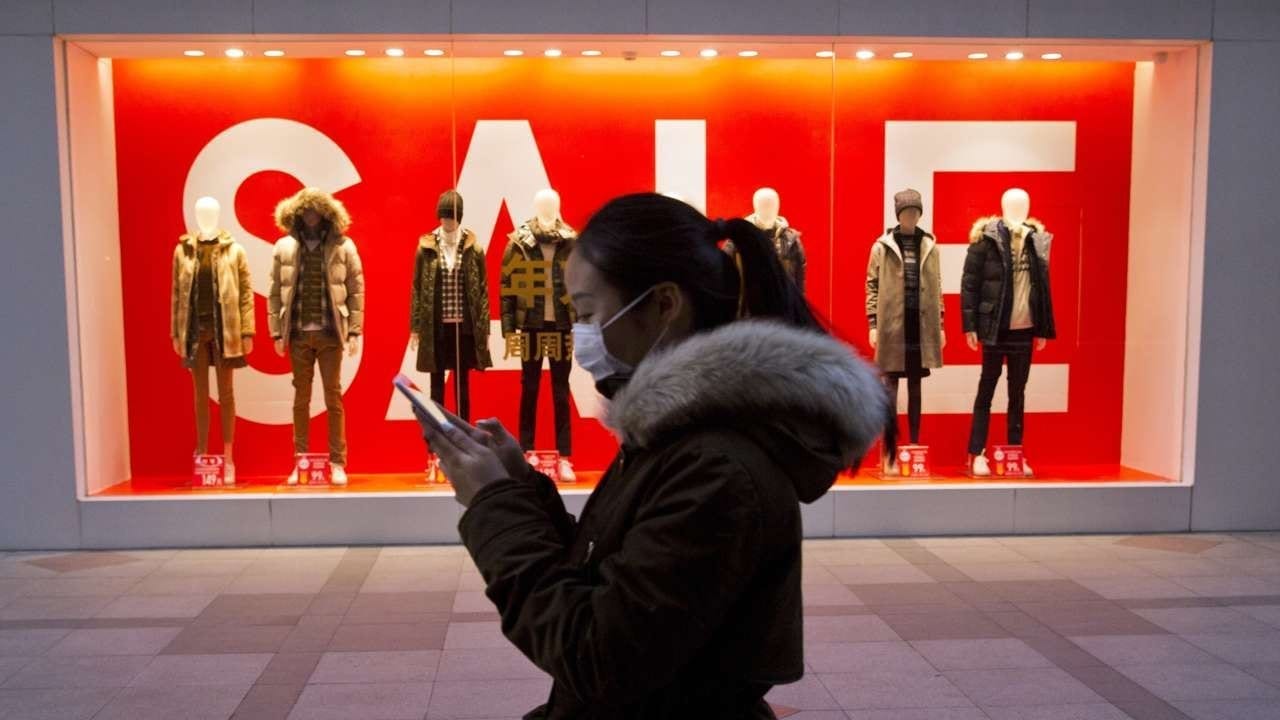
    According to the Malaysia Retail Sales Report, turnover plummeted 16.3 percent last year, with most retail sub-sectors recording double-digit declines. The department store and fashion segments shrunk at 38.3 percent and 37.9 percent respectively, the worst-performing sectors.

    Since the Movement Control Order (MCO) was in place for most of the first quarter, retail sales this year are expected to drop 4.1 percent, with the first quarter’s sales down by 13.4 percent. The next three quarters will show recovery, the report predicts.

    “Last year, Malaysia’s retail industry recorded the worst performance since the Asian financial and economic crisis that took place 22 years ago,” said Tan Hai Hsin, MD at Retail Group Malaysia. “In 1998, retail sales in Malaysia dropped by 20 percent.”

    While most retail sub-sectors, including F&B, children products, and pharmacy, contracted by double digits, the convenience-store sector posted its best performance with 14.8 percent growth last year. The furniture and electronics sector surged by 0.4 percent despite the pandemic.

  • Chinese New Year timing impacts Singapore retail sales in January

    Chinese New Year timing impacts Singapore retail sales in January

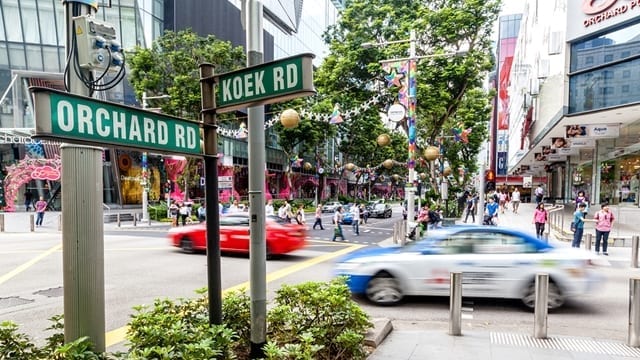
    Shops in Singapore had a quieter-than-usual January ahead of muted Chinese New Year celebrations, with official data showing retail sales down 6.1 percent year-on-year.

    “The larger decline in January 2021 was due partly to higher sales in January 2020, when the Chinese New Year was celebrated,” the Department of Statistics said in a Friday statement.

    Although Singapore has lifted most domestic pandemic-related restrictions on business and socializing, the usual street pageantry did not take place during this year’s holiday, which was celebrated in mid-February.

    The usual big and boisterous family parties, during which gifts are handed out, were limited to eight visitors or two households.

    January sales of food and beverages were down by around 25 percent, the department reported, as families did not stock up as usual ahead of the holiday.

    The annual Chinese or Lunar New Year is one of the main public holidays in Singapore, where around 70 percent of the population is of Chinese descent.

    With Singapore closed to almost all visitors and business travel limited to a handful of countries, tourist-dependent sectors such as department stores and cosmetics also saw huge declines, the department said, falling by around 30 percent compared to January 2020 “as they continue to remain affected by low visitor arrivals.”

    Singapore’s economy shrank by a record 5.4 percent in 2020, though the government expects a rebound this year and is projecting growth of around the same percentage as last year’s contraction.

  • Japan Billionaire Launches Recruitment for Moon Travel

    Japan Billionaire Launches Recruitment for Moon Travel

    Japnese billionaire entrepreneur Maezawa Yusaku is once again tapping into the public sphere to further his personal pursuits, this time for the recruitment of co-travelers in a trip around the moon.

    Eight crew members will be chosen for a private SpaceX flight around the moon in 2023, according to the founder of Japanese digital retail giant Zozo in a video posted on Twitter.

    Including Maezawa himself, the six-day trip will involve 10 to 12 people in total. Screening of applicants kicks off on March 21 with the final interviews and medical check targeted for May.

    According to Maezawa, the crew members will be selected based on how they use the trip to «push the envelope» in their respective fields and their willingness to support fellow crew members.

    Maezawa added that he was looking for people of all backgrounds and that that he hoped they would make the trip «fun» together.

    This is not the first time that the high-profiled Maezawa has attracted public interest.

    Last year, he randomly selected 1,000 of his Twitter followers to donate more than $9,000 each to test for actual boosts in happiness from monetary gains. In 2017, he paid $110.5 million for 1982 Jean-Michel Basquiat painting Untitled – an amount that broke his last record set in May 2016 for a mother untitled Basquiat valued at $57 million.

  • FJ Benjamin and Lazada Singapore Sign MOU for Strategic Partnership to Boost Online-Offline Sales

    FJ Benjamin and Lazada Singapore Sign MOU for Strategic Partnership to Boost Online-Offline Sales

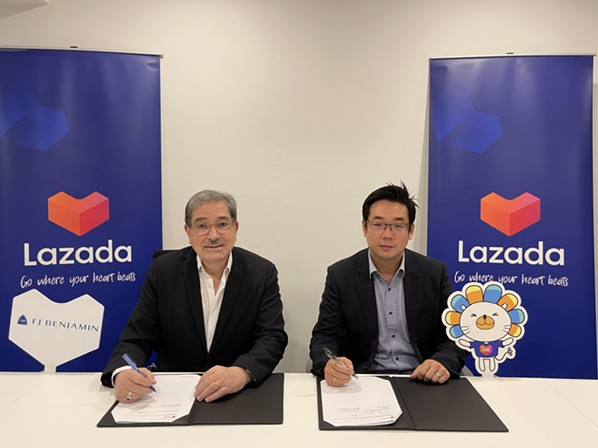
    FJ Benjamin Holdings (FJB) and leading eCommerce platform, Lazada Singapore, today signed a Memorandum of Understanding (MOU) to forge a strategic partnership that aims to deliver the ultimate retail experience to customers across all channels and devices.

    The proposed partnership will tap Lazada’s technical and online capabilities, and eCommerce platform management expertise, and leverage FJB’s experience in fashion brand management and physical store operation, to boost the eCommerce performance of FJB’s stable of brands in Singapore, Malaysia and Indonesia, as well as to expand and incubate new FJB brands to eventually integrate brick-and-mortar and virtual stores.

    FJB will also discuss with brand principals opportunities for eCommerce in markets Lazada has a presence but where FJB does not, such as Vietnam, Thailand and the Philippines. Powered by Alibaba’s advanced eCommerce tools and systems, Lazada will develop new tailor-made solutions to deliver a truly omnichannel customer experience in managing the full online ecosystem of FJB brands across the markets.

    Group CEO Nash Benjamin said: “FJ Benjamin has been strategising and planning our omnichannel business model for some time now and this partnership with Lazada is intended to get us to where we want to be much faster and in a more cost-efficient manner. This will combine our respective capabilities to strengthen customer experience across brick and mortar and virtual channels.”

    Besides operating principal branded sites, it is also intended to host certain brands on LazMall as well as other regional sites, subject to principal approvals.

    “We are thrilled to be part of this new chapter with FJ Benjamin and value their trust in us,” said James Chang, CEO of Lazada Singapore. “Lifestyle, fashion and beauty are important pillars in our eCommerce plans and shoppers can now look forward to seeing more well-known brands and labels on our platform, for an integrated shopping experience. In the last year, Lazada has supported many businesses that adopted a multichannel approach to set up stores online and we know that our expertise in the eCommerce space will benefit and contribute to the success of a renowned brand like FJ Benjamin, and look forward to seeing positive results with them.”

    While some of the brands managed by FJB, including La Senza, Pretty Ballerinas and Petunia Pickle Bottom, are currently available on Lazada’s premiere shopping platform, LazMall, this is the first time both parties –  one, a traditional brick-and-mortar operator, and the other, the region’s leading eCommerce player – have come together to envision and execute a truly omnichannel model under which customers can control the buying process and enjoy a seamless shopping experience across multiple channels – brick-and-mortar, desktop, and mobile.

    Since the pandemic lockdowns last year forced FJB stores in Southeast Asia to shutter, the Group had secured principals’ approvals to pivot to eCommerce. It has ramped up its online presence from one brand, the cult British fashion label Superdry, to almost all its brands including Guess, La Senza, Casio, Rebecca Minkoff, Pretty Ballerinas, Airfree and Dr Barbara Sturm.

    The MOU states that  “the parties agree both physical stores and online stores are part of the retail ecosystem. With Lazada’s technical and online abilities and FJB’s experience in fashion and lifestyle brand management and physical store operations, this brings together a strong strategic partnership which leverages each other’s expertise to deliver an ultimate consumer experience.”

    Under the terms of the MOU, both FJB and Lazada will, within 90 days, work on a detailed action plan and a definitive agreement to move the partnership forward.

    Mr Benjamin said FJB will continue to take charge of all aspects of product assortment, brand management, pricing, promotions as well as key parts of logistics such as inventory and supply chain. The parties will jointly undertake online marketing and campaign strategies while Lazada will operate the online stores.

  • Consumers complain most about transport sector

    Consumers complain most about transport sector

    The transport service sector received the highest number of customer complaints in 2020, with travel restrictions related to the Covid-19 pandemic triggering more disputes than usual.

    A report released Monday by the Vietnam Competition Authority (VCA) under the Ministry of Industry and Trade says that complaints in the transport sector accounted for 49.1 percent of the total, followed by banking, finance and insurance (9.3 percent), and telephone and telecommunications (8.8 percent).

    Tourism and restaurant ranked fourth with 6 percent of customer complaints, says the report, also noting that sectors hit hardest by the Covid-19 crisis, like aviation and tourism, have elicited more complaints from customers than in previous years.

    Last year, when Vietnam experienced two Covid-19 outbreaks in March and July, the government had imposed stringent travel restrictions to try and curb the spread of the virus.

    The VCA said that it had answered 9,965 out of 11,211 calls its center received last year, up 63 percent from the previous year.

    Around 56.4 percent of all complaints related to businesses’ violation of commitments. Others related to the quantity and quality of goods as also delivery time. There were complaints about contracts with service providers (7.5 percent) and information provided by sellers (5.2 percent), the report says.

    Last year, Ho Chi Minh City topped the list of localities receiving the highest number of customer complaints, followed by Hanoi.

  • Indian officials to examine Amazon after Reuters probe

    Indian officials to examine Amazon after Reuters probe

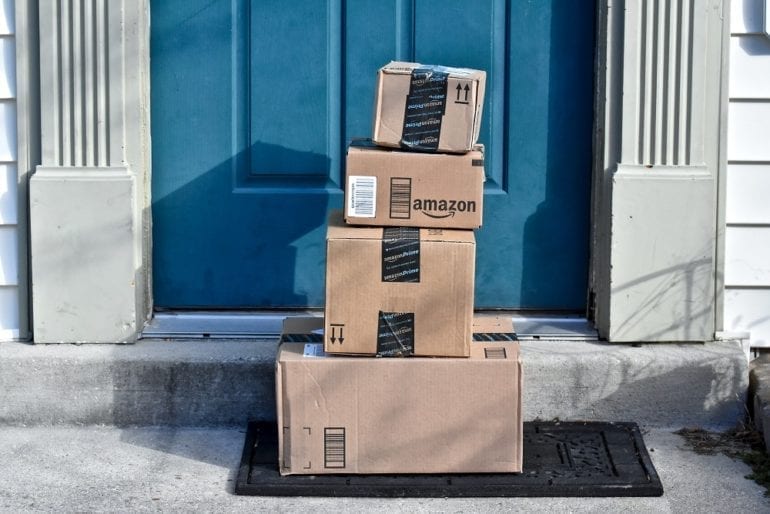
    India’s federal financial crime-fighting agency will examine findings in a Reuters report, which revealed that Amazon.com Inc has for years given preferential treatment to a small group of sellers on its India platform and used them to circumvent the country’s foreign investment rules, a senior agency source told Reuters on Thursday.

    It provided an inside look at the cat-and-mouse game Amazon has played with India’s government, adjusting its corporate structures each time the government imposed new restrictions aimed at protecting small traders.

    On Thursday, a senior Enforcement Directorate source told Reuters that “we will be examining findings” of the story. The subject matter “is not entirely new for us,” said the source, without elaborating. The source asked not to be identified.

    Amazon didn’t immediately respond to a request for comment.

    Amazon is already under investigation by India’s Enforcement Directorate for possible violation of foreign investment rules. Such probes typically take years in India, and in most cases, details aren’t made public. In the Reuters report published Wednesday, Amazon said it was confident of its compliance when asked about the agency’s probe.

    In tweets issued on Wednesday, Amazon criticized the Reuters report as “unsubstantiated, incomplete, factually incorrect,” without going into specifics. “In last several years, there have been (a) number of changes in regulations; Amazon has on each occasion taken rapid action to ensure compliance,” the company said.

    In an e-mail to employees on Thursday, Amazon’s India head Amit Agarwal addressed the Reuters story, saying he understood “such instances can be distracting.”

    The company was on “the threshold of creating a legacy,” he wrote in the e-mail, which was reviewed by Reuters. “It will require significant innovation, it will push our abilities, we will be misunderstood, but it will be fulfilling.”

    Indian retailers, who are a crucial part of Prime Minister Narendra Modi’s support base, have long alleged that e-commerce giants like Amazon and Walmart’s Flipkart flout federal regulations and that their business practices hurt small traders. The companies deny the allegations.

    The documents reviewed by Reuters revealed that Amazon helped a small number of sellers prosper on its India platform, giving them discounted fees and helping one cut special deals with big tech manufacturers such as Apple Inc. The company has also exercised significant control over the inventory of some of the biggest sellers on Amazon.in, the documents show, even though it says publicly that all sellers operate independently on its platform.

    Government rules announced in 2016 required that an e-commerce platform should “not exercise ownership” over sellers’ inventory.

    Gopal Krishna Agarwal, a national spokesman for Modi’s ruling party, said the findings in the Reuters story were “serious” and that “any predatory policy, deep discounting … will not be tolerated by the government. The party will take a stand on that.”

    Small businesses are “very important” for the party, he said. “Their concerns will be taken care of.”

    In a written response to the Reuters report published on Wednesday, Amazon said it “does not give preferential treatment to any seller on its marketplace,” and that it “treats all sellers in a fair, transparent, and non-discriminatory manner.”

    A leading group of Indian retailers urged the government to ban the local operations of Amazon and said it was considering taking legal action, after the Reuters story was published.

    The Confederation of All India Traders, which says it represents 80 million retail stores, said “the shocking revelations” are “sufficient enough to immediately ban operations of Amazon in India.”

    Amazon did not respond to a request for comment on the trader group’s statement.
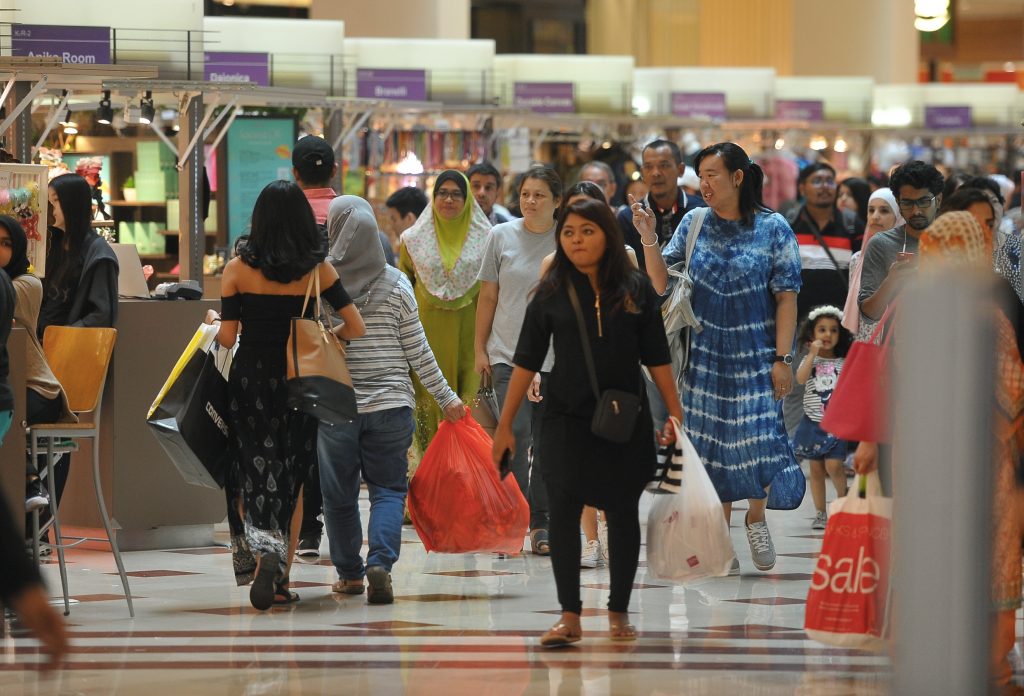
  • Singapore retail sales slide overall while E-commerce goes up

    Singapore retail sales slide overall while E-commerce goes up

    Singapore retail sales – excluding motor vehicles – fell 4.5 percent y-o-y last Dec, a slightly higher decline than Nov’s 2.8 percent. M-o-m sales were down 0.7 percent. DOS estimates total retail sales value at SGD3.5 billion (US$2.62 billion) and that online retail sales accounted for 12.6 percent of that. The strongest categories online were computer and telecommunications equipment, accounting for 35.2 percent of the category’s overall turnover, furniture and homewares (23.4 percent) and supermarkets (11.8 percent).

    Most retail industry categories posted declines in sales in Dec on a y-o-y basis. However, supermarkets and hypermarkets, computer and telecommunications equipment, and furniture and homewares recorded growth rates of between 20.8 percent and 25.3 percent, due mainly to higher sales of groceries, mobile phones and household appliances respectively.

    Sales of recreational goods rose 10.3 percent, largely driven by strong demand for sporting goods. Sales of F&B services fell 16.5 percent in Dec, y-o-y, which was a lesser rate than Nov’s 22.4 percent decline. Online orders made up 19.9 percent of the estimated total spend of $800 million.

  • Strong China sales fail to ease European Covid pain for Capri

    Strong China sales fail to ease European Covid pain for Capri

    Capri Holdings is expected to post a fourth straight fall in quarterly revenue on Wednesday as the blow from fresh lockdowns in Europe eclipses a China-driven recovery in sales of its luxury handbags and apparel.

    A spike in coronavirus infections from late last year forced many European governments to put their economies back into lockdown, keeping consumers away from stores during the crucial holiday shopping season.

    Capri not only has to deal with store closures in Europe and sluggish department store traffic due to the pandemic but also a “stale” Michael Kors brand image, Jane Hali & Associates retail analyst Jessica Ramirez said.

    Investors will be hoping that Capri’s Versace and Jimmy Choo brands can emulate fashion giant LVMH’s growth in China, which helped cushion some of the pandemic’s impact in other markets.

    Sales of luxury goods in China have been rising since the easing of COVID-19 measures in the second half of 2020, sparking hopes that one of the world’s biggest markets for high-end fashion could ease the pain of companies suffering in regions where the virus continues to rage.

  • Vietnam retail sales surge ahead of Lunar New Year

    Vietnam retail sales surge ahead of Lunar New Year

    Total retail sales of goods and revenue from consumer services in January are estimated at 479.9 trillion VND (nearly 20.77 billion USD), up 3.7 percent month-on-month and 6.4 percent year-on-year, according to the General Statistics Office (GSO).

    Goods-retail sales totaled 378.9 trillion VND, accounting for 79 percent of the total and up 4.1 percent month-on-month and 8.7 percent year-on-year.

    Revenue from accommodation and food service stood at around 48.7 trillion VND, representing 10.1 percent of the total. It increased 2.7 percent against December but was down 4.1 percent against January 2020.

    Tourism revenue was around 1.6 trillion VND, or 0.3 percent of the total, up 0.7 percent compared to December but down 62.2 percent year-on-year.

    Earnings from other services were estimated at 50.7 trillion VND, accounting for 10.6 percent of the total and up 1.1 percent month-on-month and 7.3 percent year-on-year.

    The GSO said retail sales and consumer services have become more vibrant as the Lunar New Year (Tet) holiday nears.

    Most enterprises, shopping centers, supermarkets, and business establishments have readied an abundant supply of goods and offered various promotional programs to stimulate consumption ahead of the lunar new year, the office noted.

  • Arket bound to open its first retail store in China this autumn

    Arket bound to open its first retail store in China this autumn

    H&M-owned Arket has announced plans to open its first physical store in China this autumn.

    The flagship store will be located in Beijing and will stock a mix of the Stockholm-based brand’s wardrobe staples and seasonal fashion drops for both women and men.

    The store will also feature an Arket cafe and stock an assortment of beauty and home items.

    “We are incredibly happy to announce our upcoming opening in Beijing and we are looking forward to finally meeting our many Chinese customers in person,” said Arket managing director Pernilla Wohlfahrt in a statement.

    “The new store gives us an opportunity to welcome people into our world and invite them to experience the rich diversity of our collections – from beautifully-made fabrics and fashion designs to nature-inspired interiors, sustainable childrenswear and contemporary Swedish cuisine.”

    The physical store is the latest step of the Nordic band’s expansion into Asia. The company made its debut into the Chinese market in August with the launch of its digital flagship store on Alibaba Group’s B2C e-commerce platform Tmall.

    In late 2020 the brand also announced plans to open its first store in South Korea early this year.

  • NBA signs licensing deal with Decathlon, entering 1200 stores globally

    NBA signs licensing deal with Decathlon, entering 1200 stores globally

    DECATHLON, one of the world’s largest sporting goods retailers, and the National Basketball Association (NBA) today announced a new multiyear merchandising partnership that makes DECATHLON an official licensee of the NBA across Africa, Asia, Europe, the Middle East and Latin America and marks DECATHLON’s first partnership with a North American sports league.

    The partnership will feature a dedicated range of NBA team and league-branded base layers, accessories and footwear* designed by DECATHLON and sold under their basketball brand “TARMAK.” The collection will be sold exclusively in more than 1,200 DECATHLON stores worldwide and online at Decathlon.com. Products will be available for pre-order beginning in March 2021 ahead of the April 2021 launch in stores.

    “Since the creation of TARMAK four years ago, it has been our dream to collaborate with the NBA, the greatest basketball league in the world,” said TARMAK Leader Damien Dezitter. “We have a common objective to develop basketball all over the world, so it’s natural to work together to make this possible.”

    “We are excited to partner with DECATHLON, a leader in sporting goods retail with a global footprint,” said NBA EME Director, Global Partnerships Steve Griffiths. “Through this partnership, NBA fans and basketball players around the world will have access to an exciting and innovative range of merchandise to help them get in the game.”

    Fans can download the official NBA App on iOS and Android for the latest news, updates, scores, stats, schedules and videos and follow the NBA on Instagram at NBAEurope.

  • EBay close to selling Korean unit

    EBay close to selling Korean unit

    Global e-commerce business eBay is reportedly selling off its Korean businesses G-Market, Auction, and G9, in a deal worth $4.5 billion (5 trillion won).

    eBay is exploring a number of “strategic alternatives” for its Korean business and is looking for options that will maximize value for shareholders and create growth for the wider business.

    “From last week, we heard there is going to be an announcement made by our headquarters in the United States. Given that it said it was considering a variety of options, it seems to be in the process of selling the platforms,” an eBay Korea official said.

    EBay’s Korean platforms provide around 11 percent of its annual sales, and it’s expected any player that acquires the three businesses could become one of the top three e-commerce platforms in Korea.

    Rival marketplace Coupang, which is considered South Korea’s most popular online retailer, is reportedly looking to go public in the first half of 2021.

  • Giordano International warns for a profit decrease

    Giordano International warns for a profit decrease

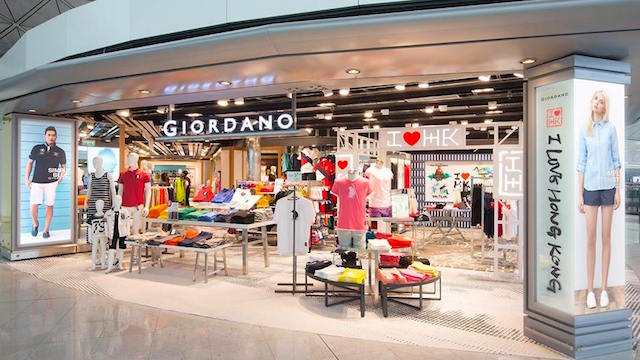
    Giordano International (0709) warned that it expects to record an annual net loss of between HK$110 million and HK$130 million in 2020, as compared with a profit of HK$230 million in 2019.

    As stated in the interim results announcement last year, a net loss of HK$175 million was recorded for the six months ended June 30, 2020. However, the group expects to record a net profit of between HK$45 million and HK$65 million in the second half of the year due to the positive trend in retail sales and improvement in consumer sentiment.

    The forecast net profit has not taken into account further potential asset impairment charges.

    As of end-December, 2020, the group’s merchandise inventory was worth about HK$435 million, below that of 2019 by about HK$113 million.

  • Think tank forecasts some growth for Vietnam

    Think tank forecasts some growth for Vietnam

    A government think tank has pegged economic growth at 6.46 percent this year thanks to the country’s success in containing the Covid-19 outbreak and maintaining stability.

    Vietnam is one of the fastest recovering economies in Asia, the Central Institute for Economic Management (CIEM) said in a report.

    In the best-case scenario, credit growth would be 13 percent against 10.1 percent last year, it said.

    But it also warned of risks that could hamper growth, like the unpredictable global economic situation as the pandemic situation remains severe in many countries and possible anti-dumping and countervailing investigations by the U.S. and other countries.

    Several international organizations have forecast a strong recovery for Vietnam this year, with lender HSBC forecasting growth of 7.6 percent. The International Monetary Fund and Asian Development Bank have forecast 6.5 percent and 6.1 percent growth.

    The government has set a target of 6.5 percent.

  • Indonesian retail sales fell 16.3 per cent in November

    Indonesian retail sales fell 16.3 per cent in November

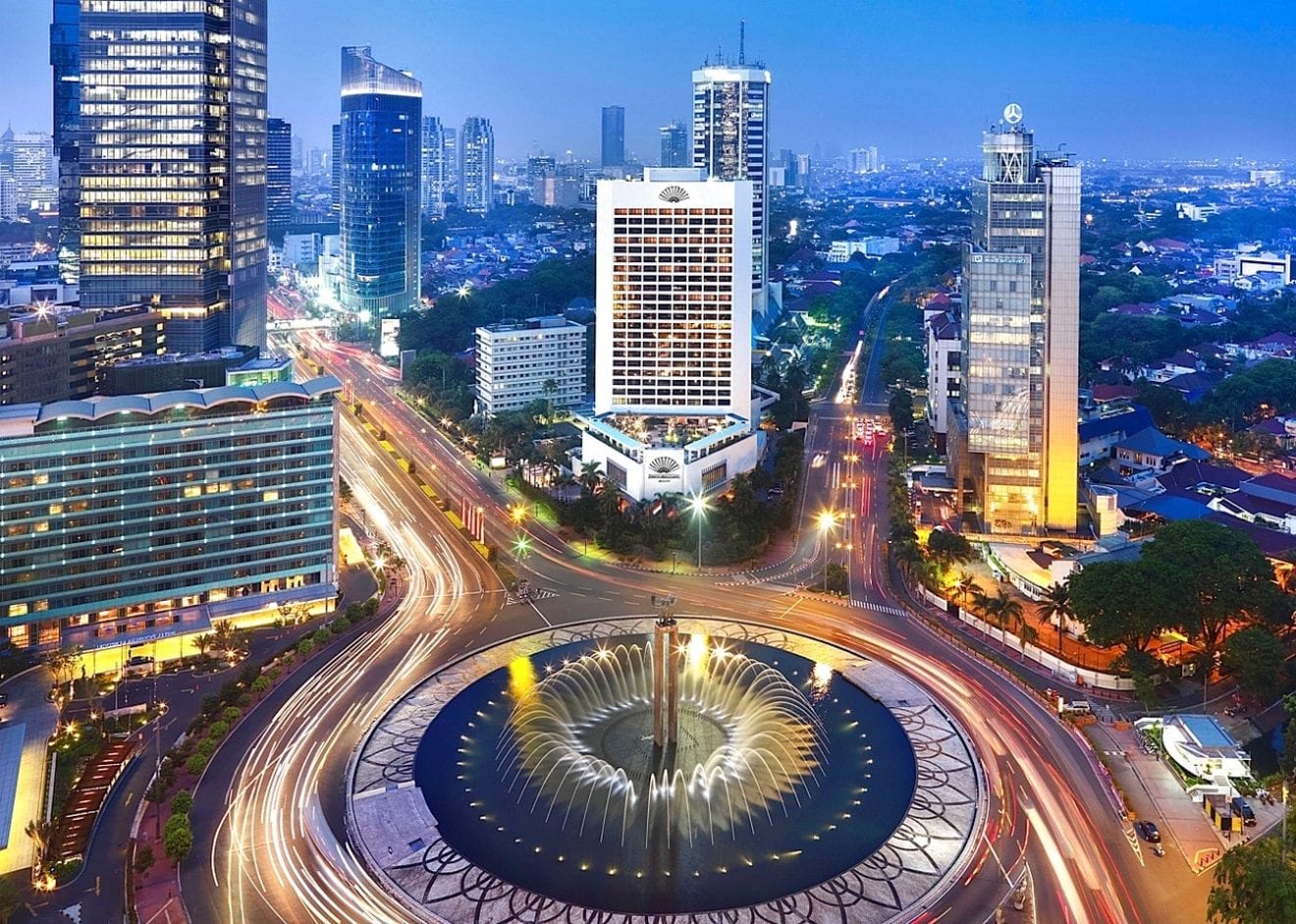
    Retail sales in Indonesia dropped 16.3% year-on-year in November following a 14.9% fall a month earlier, a central bank survey showed on Tuesday.

    Sales of telecommunication types of equipment and other household goods contracted in November, the survey showed.

    The survey also forecasts an even deeper contraction of 20.7% in December.