Tag: Retail

  • Japan and South Korea battle for Vietnamese retail market

    Japan and South Korea battle for Vietnamese retail market

    South Korean companies are engaged in a fierce battle with Japanese rivals in the Vietnam retail market, which has emerged as a “post-China.”

    According to the Korea Trade-Investment Promotion Agency, the Vietnam retail market has been growing rapidly, with an annual average growth rate of 10.9 percent between 2013 and 2018.

    Currently, South Korea and Japan lead the market in all areas, including convenience stores, department stores and online shopping.

    Lotte Group has had a presence in the Vietnam retail market since 2008 and has invested US$390 million so far.

    Currently, the company has 14 shopping malls, one department store, and two duty-free shops operating across the country.

    Japanese rival Aeon entered Vietnam in 2011 with a capital of $190 million. Since then, it has built and operated shopping malls in three centers: Ho Chi Minh City, Hanoi and Binh Dương.

    Besides Aeon, Japanese companies such as 7-Eleven, Fuji Mart are also operating in Vietnam.

    The channels that are growing rapidly in the local market are convenience stores and e-commerce.

    In particular, the growth of the convenience-store market is steep due to rapid urbanization, rising income levels and the expansion of the young consumer population.

    IGD Research ranked Vietnam as the top country among the fastest-growing convenience store markets in Asia by 2021.

    The South Korean convenience store chain GS25 entered Vietnam in January last year when it opened a store in Ho Chi Minh through a joint venture with SonKim Group, a Korean company that has emerged in the region.

    It currently operates about 50 stores but plans to expand to 70 by next year and to 2000 over the next decade.

    South Korea’s BGF Retail, which operates the convenience store chain CU, also recently signed a master franchise contract with Vietnam’s CUVN to start making inroads into the Vietnamese market.

    Japan’s 7-Eleven entered Vietnam in 2017 and is currently operating 24 stores. It aims to build 1000 new stores, mostly focused for now on Ho Chi Minh City and Hanoi. It followed Circle K and FamilyMart which have gained considerable traction in Ho Chi Minh City.

    South Korean conglomerates such as Lo
  • Singapore retail rents up as vacancy rate tightens

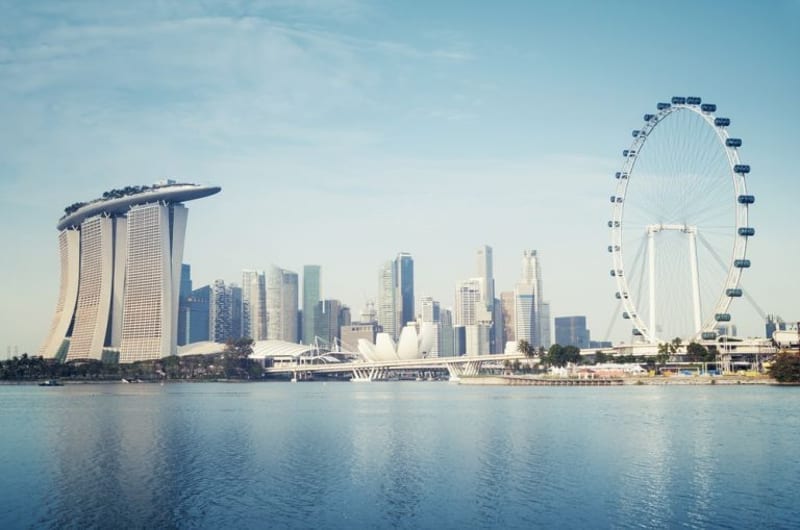
    Singapore retail rents up as vacancy rate tightens

    Singapore retail rents increased in the third quarter of this year, according to Urban Redevelopment Authority.

    Figures published by The Straits Times show the rental rates increased by 2.3 percent, overturning a fall of 1.5 percent during the previous quarter.

    According to the URA, the total supply of retail space available in ongoing projects within the territory stood at 288,000sqm, a reduction from 320,000sqm previously. Occupied retail space went up by 29,000sqm, as opposed to 74,000sqm in the second quarter.

    This is what drove the turnaround in Singapore retail rents in the three months to September 30, says the URA.

    Vacant retail space across the island now stands at 7.5 percent. This despite the opening of major shopping destinations Funan mall in downtown Singapore and Jewel Changi at the airport this year.

  • Saigon retail rents rise

    Saigon retail rents rise

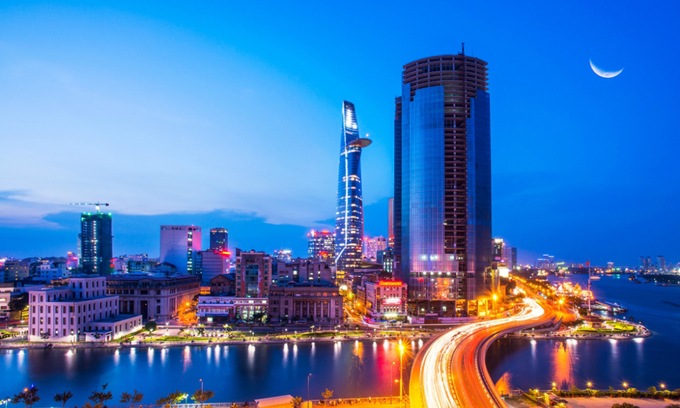
    Saigon retail rents are rising with space in the CBD hitting an average of US$135.50 per square meter in the third quarter, up by 5.8 percent year-on-year.

    According to a report by real-estate company CBRE, the average monthly rents outside the CBD were only US$35.80 per square meter, down 3.7 percent quarter on quarter.

    Saigon is commonly used to refer to the CBD, or District 1, of Ho Chi Minh City, Vietnam’s largest population center.

    As several shopping centers have witnessed renovation and tenant mix revision, abandoned retail space rates increase by 2.5 percent and 8 percent in CBD and non-CBD areas, respectively.

    Ho Chi Minh City has become attractive to many investors and developers as a growing number of international retailers have chosen the city for their Vietnam debut.

    The nation’s retail industry has also been drawing investment from offshore, with recent deals including Japanese apparel company Stripe International buying Vietnamese fashion brand Vascara, and a franchise agreement which will see South Korea’s CU convenience stores open next year. With the evolution of the industry, retail rents in Ho Chi Minh City are expected to continue to increase in the near future.

    The city is predicted to add a further 237,000sqm of new retail space next year, including a new Vincom Megamall project in District 9 but it has yet to be seen how the new supply will impact on Saigon retail rents.

  • Nike culls Indian retail partner network

    Nike culls Indian retail partner network

    Sneaker giant Nike India has more than halved the number of its retail partners, from around 350 to just 150.

    The cull is part of a global strategy to reduce the number of physical sales points to focus online and on its own flagship stores. Nike has singled out 12 major cities internationally where it will focus on building brand awareness and market share, including Tokyo and Shanghai, in Asia.

    Moving forward, Nike India will work with just a single reseller partner which will operate the brand’s offline stores. Nike will run its own online store.

    The consolidation of the Nike India network began in 2016 but has gathered pace in recent months as the international initiative gained a higher profile.

  • Alibaba launches 2019 11.11 Global Shopping Festival

    Alibaba launches 2019 11.11 Global Shopping Festival

    Alibaba Group has launched its 2019 11.11 Global Shopping Festival, taking the annual event into its second decade.

    The shopping holiday this year focused on “new consumption,” “new business” and actively contributing to a greener society.

    “Our goal is to stimulate consumption demand and support lifestyle upgrade in China through new brands and products,” said Taobao and Tmall president Fan Jiang. “We will enable merchants in China and around the world to grow their businesses through data-driven product innovation and consumer insights, as well as leverage our recommendation technology and content-driven user engagement to delight consumers in urban coastal cities and less-developed areas of China.

    “Given its scale, minimizing environmental impact is essential and our technology will ensure it is a green 2019 11.11 Global Shopping Festival.”

    The festival taps a global supply chain to meet the growing demand of Chinese consumers for new brands and new products. More than 200,000 brands are participating; one million new products are on offer and more than 500 million users are expected to participate in this year’s festival – about 100 million more than last year.

    Estimated consumer savings from brand and platform promotions and coupons are around RMB 50 billion (US$7 billion).

    For the first time, Alibaba held a concurrent kickoff event in the northeastern city of Harbin, underscoring its focus on serving consumers and small businesses in China’s less-developed markets. In the last quarter, more than 70 percent of Alibaba’s new annual active consumers came from lower-tier cities.

    “The success of our focus on less-developed markets in China is reflected in our new customer acquisition growth,” said Alibaba Group CMO Chris Tung. “We are equally driven to help local enterprises and factories digitize, which improve their operational efficiency and ability to engage with customers across the country.”

    More than 22,000 international brands from 78 countries and regions will participate in this year’s 11.11 on Tmall Global, Alibaba’s cross-border online marketplace, providing an expansive international product selection for consumers.

    For the second year, Lazada will take part and expects its “shoppertainment” – a blend of shopping and entertainment – to attract a record number of participating merchants and consumers in its six markets.

    While continuing to serve over 200 countries and regions, AliExpress will enable local merchants from Russia, Spain, Italy, and Turkey to participate in 11.11 for the first time.

    Daraz disrupted South Asia’s retail market with 11.11 last year and is gearing up again with celebrations in Pakistan, Bangladesh, Sri Lanka, Myanmar, and Nepal. India will celebrate with the UC Shopping Fest, in association with Paytm, VMate, and 9Apps.

    Fliggy will offer 30,000 different vacation packages to over 200 destinations to serve Chinese tourists. Thousands of travel experts will offer tips and suggestions via live streams during 11.11.

    Cainiao and its partners will make November 20th a day focused on the recycling of cardboard packaging. They will work to convert 75,000 locations into permanent recycling stations, and express courier companies to pick up used cardboard boxes and wrapping.

    Consumers will be incentivized to recycle through rewards of “green energy” points on Ant Forest.

    Alibaba Cloud expects to save 200,000 kilowatt-hours of energy on November 11th at its data centers, which will be powered by renewable energy and energy-conserving technology such as liquid-cooled servers.

  • Lazada, Tiki locked in delivery speed race

    Lazada, Tiki locked in delivery speed race

    Giants Lazada and Tiki are racing to reduce their delivery times as competition heats up in Vietnam’s e-commerce market.

    Singapore-based Lazada Friday launched a 4-hour delivery service for flowers in Vietnam, a move in response to Vietnamese startup Tiki’s 2-hour delivery for a large number of products.

    Nguyen Ngoc Thang, head of express solutions at Lazada, said that this was a new step in e-logistics for the company.

    Earlier this month, the company began to offer 2-hour and 4-hour delivery for products weighing under 15 kilograms in Hanoi and Ho Chi Minh City.

    Almost 200 Lazada sellers are eligible for the service, mostly in beverage, fashion and baby products.

    The move followed other e-commerce companies in Vietnam, like Shopee, Sendo and Lotte, also announcing delivery times of one to four hours after Tiki introduced its 2-hour delivery for over 100,000 products.

    Tiki is able to do this by investing in expanding its fulfillment center, which is now at 60,000 square meters and set to triple to 200,000 square meters by the end of next year.

    The company’s average delivery time is less than two days, against the market average of four-five days, said Tiki chairman Tran Ngoc Thai Son.

    Meanwhile, Lazada has introduced its new 24/7 receiving points in Hanoi and HCMC where customers can pick up their items at a time of their choice.

    In the third quarter of this year, Tiki ranked fourth in terms of of web traffic, followed by Lazada. Both of them fell two places from Q2, according to market research firm iPrice.

    Singapore-based Shopee remained the market leader, followed by Vietnamese players Sendo and Mobile World, it said.

    Vietnam’s e-commerce market is estimated at $5 billion this year and is set to reach $23 billion in 2025, according to a recent report by Google, Singapore-based investment firm Temasek, and U.S.-based consultancy Bain.

  • Tesco Malaysia marks 60-store milestone in country

    Tesco Malaysia marks 60-store milestone in country

    Tesco Malaysia has opened its 60th store. The more-than 2000sqft store at Wangsa Walk is the retailer’s largest in the country, with recent changes in regulations reducing costs for an operation of this size and opening the path for similar formats going forward.

    “In providing a 2000sqft superstore with a targeted range of our famous value for money pricing, we are providing convenience and value for money to the customers in this area who were not able to enjoy all these before,” said Tesco Malaysia CEO Paul Ritchie as reported in the New Straits Times.

    “Going forward, we plan to keep expanding in Malaysia within this format as it believes that there is still a lot of growth opportunities in this country.”

    Tesco Malaysia has been operating for 17 years.

  • Geox Singapore opens X Store concept

    Geox Singapore opens X Store concept

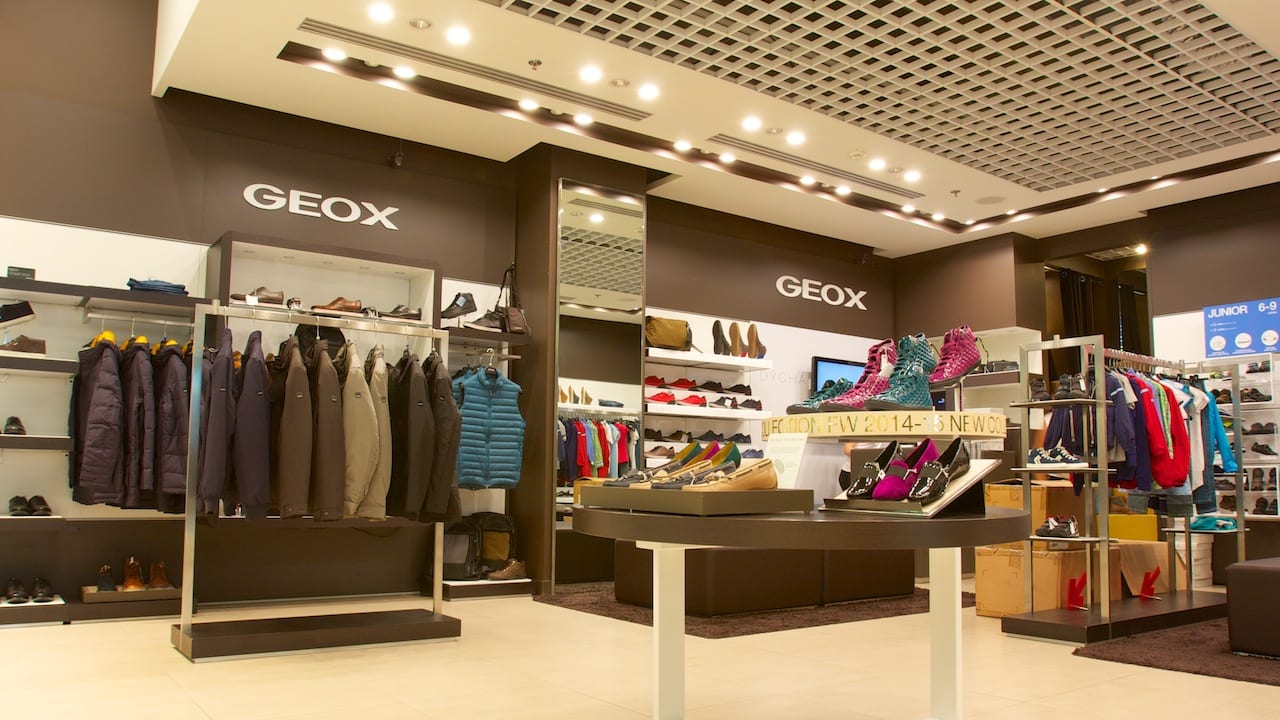
    Italian shoe brand Geox has opened an X Store concept in Singapore with a new outlet in Paragon, Singapore.

    The concept fuses various design elements under one roof designed to convey Italian quality, contemporary design, sustainability and digital technology. It offers a multi-sensorial shopping experience which uses technology to engage the senses both inside and outside the premises. A wide entrance door is pierced with circular cut-outs alluding to the holes on Geox soles.

    The core of the new store rests on a digitalised screen that explains the principle of breathability to customers, detailing current trends and available collections as well as providing detailed descriptions of the patents for each unique Geox product.

  • Amazon has no specific time frame for Vietnam website

    Amazon has no specific time frame for Vietnam website

    A senior Amazon official says the firm sees Vietnam’s potential but has not decided on a time to launch services for Vietnamese buyers.

    Bernard Tay, head of Amazon Global Selling Southeast Asia, Australia and New Zealand, said at an event Thursday that the global e-commerce giant sees Vietnam has a potential market.

    He noted that after launching Amazon in Singapore, they would look at opportunities to expand their services to more countries, including Vietnam.

    Amazon Thursday established a team of specialists in Vietnam to support Vietnamese sellers in taking their products to global customers. The company stated that it sees the majority of Vietnamese businesses are small and medium enterprises with large demand for global sales.

    Many Vietnamese leather, footwear, handmade and consumer goods items are selling well on Amazon’s website, Tay said.

    Vietnamese sellers can reach up to 300 million Amazon accounts in 185 countries and territories. Amazon also has 175 fulfillment centers worldwide, he added.

    Bui Kim Thuy, owner of a textile company whose products are being sold on Amazon, said that the e-commerce giant has strict criteria on product origin and quality which Vietnamese sellers will have to meet.

    An apparel product that suits Vietnamese customers might not suit Americans, therefore Vietnamese sellers need to make careful research for international sales, she added.

    Amazon launched a Singapore website last week, the first in Southeast Asia. Vietnamese shoppers can access Amazon.com, but many products are not available for shipping to Vietnam, and those that are available typically involve high shipping fees.

  • School House creates La Mer retail experience in Shanghai

    School House creates La Mer retail experience in Shanghai

    New York-based creative agency School House has partnered with cosmetics brand La Mer for its Edge of the Sea campaign exhibition at Shanghai’s Power Station of Art.

    The immersive, multi-sensory campaign activation is “designed to explore the joyful, powerfully truthful story of the sea and its role in discovery, healing and recollection,” according to School House.

    “This was the first international exhibition that School House has had the opportunity to conceptualize and produce,” said School House founder and principal Christopher Skinner. “It required us to bridge strategic thinking, retail experience and brand storytelling in a new way, for a new market.”

    Located within and upon the canvas of the Power Station of Art (home of the Shanghai Biennale), Edge of the Sea celebrates La Mer’s signature Creme de la Mer through immersive storytelling art. Inspired by the colliding force of two artistic lenses, the activation features a collaboration by father and daughter photographers Mario and Gray Sorrenti – across two generations and two perspectives, the Sorrentis have captured the impact of the sea and shore on our collective and individual imaginations.

    For the project, School House suspended a projection ring of Sorrenti content, in which consumers could pass through and sit within the 360-degree visual and audio sea-going memories of the father-daughter duo.

    Edge of the Sea opened October 9 and can be experienced through October 23 at Shanghai’s Power Station of Art.

  • Asos profits tumble as international sales growth slows

    Asos profits tumble as international sales growth slows

    Global fashion online retailer Asos has seen profits tumble 68 percent in the year to August, despite a 13-per-cent increase in sales.

    In what Sofie Willmott, lead retail analyst at GlobalData, described as “a tumultuous” year, Asos reported sales of £2.73 billion and a profit of just £33.1 million. After two profit warnings during the year, investors were unsurprised by the numbers and its share price actually rose 16 percent in post-announcement trading.

    Asos says it received 72.3 million orders and its core UK market performed the best, where sales rose by 15 per cent.

    “This financial year was a pivotal period for Asos, where we have invested significantly and enhanced our global platform capability to drive our future growth,” said CEO Nick Beighton.

    “Regrettably this was more disruptive than we originally anticipated. However, having identified the root causes of our operational issues, we have made substantial progress over the last few months in resolving them.

    “Whilst there remains lots of work to be done to get the business back on track, we are now in a more positive position to start the new financial year.”

    Willmott said with overseas sales accounting for 62.6 percent of group turnover, a modest 11.4-percent rise had a major impact on top-line growth.

    “Although its reliance on territories outside of the UK has been an asset in the past, helping to drive total performance while its domestic market has been challenging, its troubles overseas remain a concern going forward as Asos attempts to improve its proposition and entice shoppers back. The retailer’s plans to bolster its management team with the addition of four new c-suite roles, alongside the four non-executive directors due to join imminently, is a wise one considering it has a number of key areas of focus in the year ahead.”

    Willmott said it bodes well for Asos that it is clearly willing to adapt to survive – unlike some of its multichannel rivals that have been slow to respond to changing consumer needs and shopping habits.

    “Although a quantifiable forecast for the new financial year was omitted from the results today, we expect the online pureplay to continue to outperform in the year ahead.”

  • Hong Kong street-front rents are down

    Hong Kong street-front rents are down

    Hong Kong street-front rents have plunged by 54 percent from their peak in the first quarter of 2013, according to data from real-estate advisor Savills.

    Much of that decline has occurred in recent months since the Sino-US trade war broke out and amidst growing social unrest on Hong Kong’s streets, triggered in June by the now-axed extradition bill.

    According to Savills, Hong Kong street-front rents in all prime areas experienced double-digit declines during the third quarter of this year. Causeway Bay was hit hardest, down 17.5 percent, as weekend and public holiday trade was disrupted by protest activities. Retail categories popular among mainlanders have seen significant retrenchment.

    Hong Kong Street-front rents in Tsim Sha Tsui and Mong Kok fell by 15 percent quarter on quarter, and in Central by 13.9 percent.

    Mall rents have also been hit hard, dropping by 14.2 percent overall. By region, Hong Kong Island mall rents were down by 13.6 percent, Kowloon by 12.7 percent and in the New Territories by 16.4 percent.

    “Amid the doom and gloom, the positive news is Sheung Shui continues to see mainland visitors, and sales in the area are down ‘only’ 10 to 20 percent in the absence of disruption,” observed Savills.

    More locally-oriented centres in Tseung Kwan O and Tuen Mun Town Plaza are also bearing up, while local restaurants are proving relatively immune, said Savills.

    ‘Difficult to see any upside’

    Simon Smith, senior director, research & consultancy at Savills, said poor macroeconomic conditions compounded by social unrest are undermining Hong Kong’s traditional role as a retail hub in Asia.

    “It is difficult to see any upside at this point.”

    With more than 10 countries and regions have issued travel advisories for Hong Kong; several major events have been canceled or postponed and August’s hotel occupancy rate dropped to 66 percent, he said.

    “But, looking ahead, it is worth noting that Hong Kong is expected to remain a key market for retailers in the region and that while the trade war has undermined local and overseas consumption, the local residential market has remained relatively resilient and interest rates remain low.”

    Savills believes that without a resolution in sight to either issue affecting Hong Kong retail, the current market conditions could prevail into next year. The negative impact of the Occupy Movement in 2014 was felt for at least 12 to 18 months, although day-trippers are expected to be the first to return when things returned to normal.

    Nick Bradstreet, MD, head of leasing at Savills, said some street-front landlords are offering short-term and ad-hoc rent relief, cutting rents by 15 to 20 percent for three months, or occasionally longer.

    “Mall landlords are less forgiving and are tending to wait and see. At Pacific Place, Swire has proved the exception, offering 10 to 30 percent reductions on a case-by-case basis,” said Bradstreet.

    As earlier reported, Hong Kong retail sales plunged by a record 23 percent in August, with the luxury goods sector hit hardest, with sales down about 50 percent year on year.

    On a more positive note, given the weaker Renminbi, lower taxes and less inclination to travel, some luxury retailers are expecting record sales in mainland China in 2019.

  • Singapore retail rents will remain subdued

    Singapore retail rents will remain subdued

    With growing economic headwinds and weak retail sales, islandwide Singapore retail-rental rates are projected to remain subdued, according to real estate company Edmund Tie.

    The company is projecting mixed fortunes across the city, ranging from a 2-per-cent decline to a 1-per-cent improvement this year.

    “However, the limited supply pipeline from next year onwards will provide some support to rents and occupancy,” the company said in its quarterly report Real Estate Times.

    “In addition, the continued investment sales activity since early 2019 suggests investors’ confidence in the sector, although the landlords and retailers’ ability to transform and adapt to the changing retail landscape is increasingly becoming more important.”

    Edmund Tie says the net absorption and supply rose of space rose significantly, largely underpinned by the opening of Jewel Changi Airport and Funan malls in the second quarter of this year, and PLQ Mall in the latest quarter.

    “Nonetheless, given current geopolitical uncertainties, islandwide rental rates are projected to remain subdued and mixed,” the report concluded.

    Totalling more than 1 million sqft of retail space, these malls were more than 90-per-cent pre-leased before opening. Accordingly, occupancy rates increased by 1.1 percentage points quarter on quarter to 91.2 per cent.

    However, Edmund Tie sounded a warning.

    “Despite the improved occupancy rates, the retail environment remains challenging with further closure and down-sizing of departmental stores and bookstores. Conversely, food & beverage appears to be ‘bucking the trend’ and continues to play an increasingly important component as part of a mall’s retail mix.”

  • ‘Unprecedented’ South Korean boycott damaging Japan’s retailers

    ‘Unprecedented’ South Korean boycott damaging Japan’s retailers

    Having now run for more than 100 days, the scale and impact of the South Korean boycott movement against Japanese products is unprecedented.

    It is costing retailers, importers, airlines and travel companies millions of dollars as a largely volunteer group of consumers rally citizens to their cause, popularised by its slogan ‘I Will Not Buy, I Will Not Go, and I Will Not Wear”.

    The South Korean boycott is rooted in discord between the two countries dating back to Japan’s colonial occupation of the Korean Peninsula before and during the Second World War and controversy over forced labor and sexual slavery. It expanded into a diplomatic crisis in July after Japan threatened to throttle exports of materials essential to South Korean industries.

    Prior to July, Japan was South Korea’s largest source of imports by value. Shortly after the boycott began, its ranking fell to third in July and to 13th in August. Last month it fell to 28th.

    Emforce, a South Korean digital marketing firm, has reported that the word ‘boycott’ appeared 1.18 million times on social media networks this year, which was 10 times the size of the previous boycott movement following Japan’s celebration of Takeshima Day in 2013.

    Japanese retailer Uniqlo is a prime example of the impact of the ‘I Will Not Wear’ boycott movement. Uniqlo has closed four Uniqlo stores since July and the number of people visiting stores that remained open has plummeted.

    According to records from eight credit-card companies, Uniqlo sales plunged by 70.1 percent to 1.77 billion won (US$1.49 million) in the fourth week of July from 5.94 billion won ($5 million) in the last week of June.

    However, amid the decrease in brick-and-mortar store sales, there is a sign of consumption picking up at Uniqlo’s online mall, with its popular winter products, heat-retaining underwear called Heattech and light-weight padded jackets selling out.

    Uniqlo is still expected to experience mixed fortunes in Korea this winter, as social media is still awash with messages urging users not to buy Japanese products and support the boycott.

    According to the Emforce analysis, among some 1.28 million posts on Twitter related to the boycott movement between July and August, 93.3 percent were retweets, and 6.7 percent were new posts. While retweets still account for the majority, there were 85,000 new posts about the boycott movement between July and August, which was eight times more than the total number of relevant tweets posted in the entire year of 2013.

    “It shows the scale of the movement and how each participant is taking deep interest in the matter from various standpoints,” said the report.

    “Netizens retweeted posts made not by the media or civil groups, but by other netizens advancing their own opinions and sharing the boycott list of Japanese products.”

    Data Lab, Line parent Naver Corp’s big-data platform, reported a decrease in the number of clicks on Japanese products throughout almost all sectors at online shopping malls.

    “The initial drive that’s been leading the movement is weakening. Nevertheless, it is now being replaced with a collective habit of rejecting Japanese products since more consumers are less inclined to buy due to the bad economy,” Data Lab said.

    “The aftereffects of the movement are expected to continue.”

    While some South Koreans are still purchasing Japanese products, the voluntary participation of the public still leaves little room for Japanese companies, according to Korea Bizwire.

    Japanese beer has all but disappeared from store shelves, with the Korea Customs Service, reporting just $6000 worth of Japanese beer crossed the border in September.

    The South Korean boycott of travel to Japan has also sent shockwaves through the Japanese economy. Passengers on flights bound for Japan dropped 30 percent in September from a year earlier during the Chuseok holiday season, the peak travel season.

    According to the Korea Economic Research Institute, there was a 27.6-per-cent drop in the number of South Korean tourists visiting Japan in July-August which cost the Japanese economy an estimated US$292 million.

    The October reservation rate also dropped and despite a reduction in the number of flights, occupancy was just 60 per cent on those still scheduled.

  • Singapore retail sales down in August

    Singapore retail sales down in August

    Singapore retail sales eased down by 1 percent year on year in August, after excluding motor vehicle sales.

    A 20.3-per-cent fall in the value of motor vehicles sold during the month caused the topline figure to decline by 4.1 percent.

    However, month on month, real retail sales rose by 2.2 percent (they fell by 1.3 percent with motor vehicle sales included in the data).

    On a year-on-year basis, sales of furniture & household equipment and watches & jewelry fell by 9.8 percent and 8.6 percent respectively, largely attributed to lower demand for household equipment and jewellery, according to Statistics Singapore.

    Other retail industries that recorded declines in sales included petrol service stations (down 3.3 percent), recreational goods (down 2.7 percent) and food retailers (down 2.3 percent).

    Conversely, sales of apparel & footwear, in department stores, and of medical goods & toiletries rose by between 4 percent and 4.9 percent.

    Online sales comprised 5.5 percent of the total.

    Sales of food & beverage services

    Meanwhile, sales of food & beverage services grew by 3.6 percent year on year in August.

    On a seasonally adjusted basis, sales rose by 1.4 percent, month on month.

    Turnover of fast-food outlets, restaurants and food caterers increased by between 3.7 percent and 10 percent, while sales of other eating places (such as cafes) decreased by 0.4 percent.