Tag: Retail

  • Thai Union Group Increases stake in Thammachart Retail

    Thai Union Group Increases stake in Thammachart Retail

    Food business Thai Union Group has increased its shareholding in Thammachart Seafood Retail to 65 per cent in a move to capture a greater portion of the seafood industry in Thailand.

    The firm purchased its initial 25.1-per-cent shareholding in Thammachart last year to build on its existing strength in frozen seafood and food services.

    “Thammachart Seafood provides professional management services to leading Thai retailers for their seafood counters, handling fresh and frozen products at 190 locations throughout Thailand,” Thammachart Seafood Retail CEO Julian G Davies told The Nation.

    “This includes four food-and-beverage concepts at 18 locations, The Dock Seafood Bar, The Lobster Lab, Seafood Mahanakorn as well as management of the Ocean Bar. We opened our third business unit earlier this year, the seafood-focused food service business, and this currently supplies top-end hotels and restaurants including several Michelin-star restaurants in Bangkok,” said Davies.

    “Having Thai Union on board will help us realise our mission to be the customers’ first choice in seafood.”

    Thai Union is expected to cross over into the Laotian, Cambodian and Chinese markets following its domestic expansion phase.

  • Singapore retail sales down, but car market exaggerates the decline

    Singapore retail sales down, but car market exaggerates the decline

    Singapore retail sales – excluding motor vehicles – slipped by 0.6 percent year-on-year in October. Including vehicles, the headline figure was down 4.3 percent.

    Month-on-month, sales declined by 1.5 percent, excluding motor vehicles.

    Statistics Singapore estimated the city-state’s retail sales were worth about S$3.6 billion (US$2.7 billion) in October, of which about 6.1 percent were conducted online.

    The impact of car sales on the overall figure is clear: that sector declined by 22.7 percent in October, due to reduced government quotas for new vehicle registrations, while the second-worst performing category was furniture and homewares, down by 10.6 percent.

    Sales of optical goods and books fell by 2.4 percent, and of recreational goods by 6.9 percent.

    Conversely, sales of watches and jewelry industry increased 7.2 percent, largely attributed to higher demand for jewelry. Apparel and footwear sales, and trade at supermarkets, hypermarkets, mini-marts and convenience stores improved by between 1 percent and 4.7 percent.

    Food and beverage services

    Meanwhile, sales of food and beverage services grew by 4.5 percent year on year.

    The total sales value of food & beverage services in October 2019 was estimated at $893 million, compared to $854 million in October last year.

    Turnover by fast-food outlets, restaurants and cafes, food courts and ‘other eating places’ increased by between 3.3 percent and 7.9 percent.

    In contrast, sales by food caterers decreased by 1.5 percent during the period.

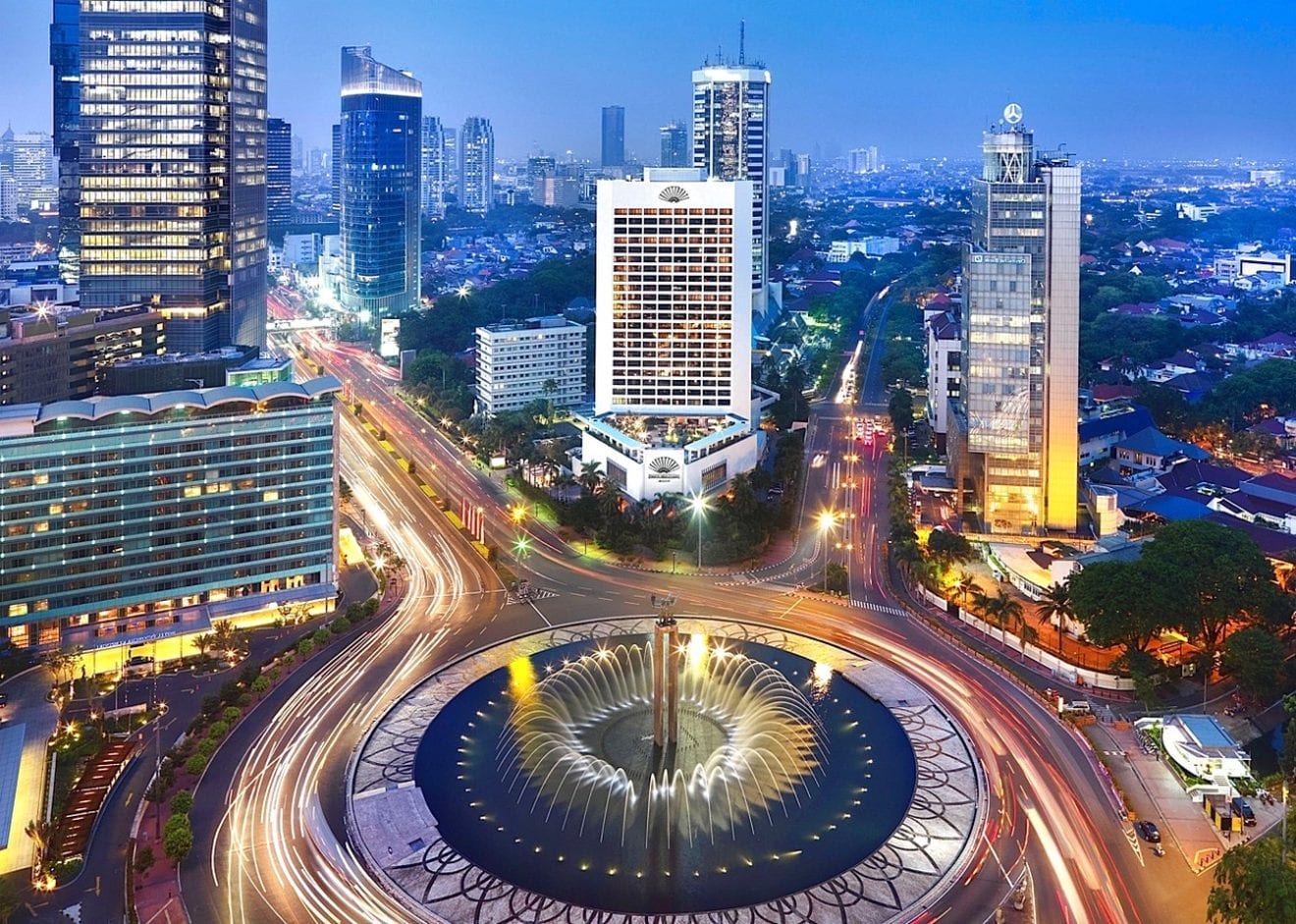
  • Indonesia retail sales growth at five-month high

    Indonesia retail sales growth at five-month high

    Indonesian retail sales grew at their fastest rate in five months, according to government data.

    Growth levels are currently at 3.6 percent, the highest increase over last year’s figures in five months. Growth for the previous month stood at just 0.7 percent.

    The figures were released as part of a central bank survey, which showed that sales of food and auto parts were largely behind the measured increase. Sales of communications equipment, however, were lower than expected during the period.

    The survey results predict growth in Indonesian retail sales for November at 3.4 percent.

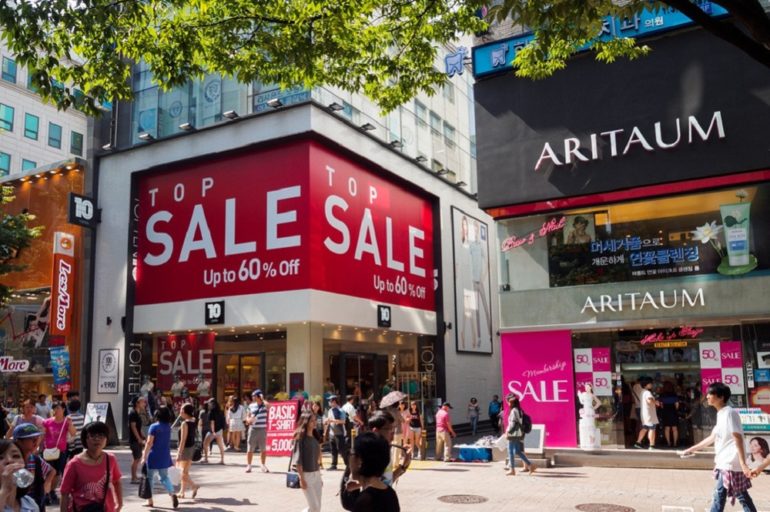
  • Shops without stock draw crowds in South Korea

    Shops without stock draw crowds in South Korea

    There’s a new trend capturing South Korean consumers’ attention: shops without stock, focusing on experience rather than instant retail sales.

    With a growing number of consumers choosing and purchasing products online or on mobile devices, hands-on stores that target such customers are becoming a new marketing trend.

    Amore Seongsu, which opened in early October as a customer experience-oriented store of AmorePacific, a South Korean cosmetics giant, had surpassed 24,000 cumulative visitors as of December 5, about two months after its opening.

    At Amore Seongsu, customers can test and experience the brand’s cosmetics – but nothing is for sale in this shop without stock.

    Visitors can apply and spray products tailored to them from the beauty library, which features more than 30 brands and 2300 products from AmorePacific.

    Furthermore, Amore Seongsu offers various other services, including makeup classes, flower box- and perfume-making classes every month to encourage customers to participate.

    “We only offer customers the opportunity to check out products suitable for them at our stores, and customers purchase the products online afterward,” said an official from AmorePacific.

    Online shopping transactions of cosmetics reached 1.15 trillion won (US$966 million) as of October, up 28 percent year on year. Meanwhile, sales via mobile devices rose 32 percent to 648.8 billion won, according to Statistics Korea.

    In fact, data shows that 20 percent of customers who visit Amore Seongsu purchase products from the brand online within a week of their visit.

    In addition, AHC, a cosmetics brand operating under Carver Korea, opened its flagship store “Future Salon” in Myeong-dong, Seoul, in late October.

    American mattress maker Simmons opened a cultural complex, Simmons Terrace in Icheon, Gyeonggi Province, last year.

    Moreover, Aekyung Industrial Co, a South Korean household-goods and cosmetics maker, also launched Luna Signature, a hands-on cosmetics store near Hongdae in Seoul, in June. The two stores also place more weight on experience rather than sales.

    “We don’t put much importance on sales performance at experience stores,” a source from Aekyung said. “If we increase brand awareness by communicating with more consumers, it will lead to an increase in sales online.”

    The furniture industry, which already operated showrooms and flagship stores, has also recently attracted visitors by decorating exhibition and sales halls as cultural spaces.

    American mattress maker Simmons opened a cultural complex, Simmons Terrace in Icheon, Gyeonggi Province, last year. It has welcomed more than 100,000 visitors in just one year since its opening.

    In addition to the showroom-like shops, museums and exhibitions featuring gardens, lounges and brand stories have been set up at Simmons Terrace.

    “Customers do not purchase products immediately on site, but visitors become strong potential customers,” a furniture industry source said.

  • How Visitor Engagement Starts with Identification

    How Visitor Engagement Starts with Identification

    As shopping malls strive to connect business and customers on a more personal level, retailers are making technology investments to help them learn about their customers and to provide services and transactions that are tailored to the individual. Customers expect easy access to information nearly everywhere they go. They talk to digital assistants in their homes to get answers to questions, to automate many of life’s tasks and to transact shopping. This raises the bar for facility managers to more easily connect visitors with the information they are seeking when they are outside of the home.

    Interactive digital signage and next generation kiosks are being deployed across Australia and the Asia Pacific region at an increasing rate, but what does this mean for retail managers? How can they ensure visitors are able to get information and a personalised experience even when there is not a person available to assist them?

    Kiosks and digital signage devices can provide a more personal experience if they can identify the customer. This is commonly done by reading a mobile coupon that is presented on the display of a mobile phone. In other cases, barcodes that appear on paper statements are often used to link to a customer’s account. For more secure transactions, a kiosk can verify a user’s identity by imaging a driver’s license or an identification (ID) card.

    New digital portals can capture the identity of a user with higher accuracy. Customers can “opt in” to being identified when they present their driver’s license or ID card, or have their features matched against a profile in a database. But which technology is best suited to helping identify individuals so that personalised service can be offered through next generation digital signage or kiosks?

    Facial Recognition Technology

    Personal engagement starts by identifying the person. Facial recognition by machines has been used in many applications. A camera captures an image of the person and compares features of the face to a database to find the closest match. However, this technology has several drawbacks. The first limitation is social acceptance. Some people in other cultures may consider it a violation of their privacy to be watched, identified, or tracked by cameras. They often prefer to be in control and to present their ID when they want to be identified. Another limitation is that facial recognition cannot achieve the same accuracy as many competing technologies.

    Two-Dimensional Image Reading Technology

    2D image readers are ubiquitous in access control applications where it is essential to identifying the people who want to gain admittance. No other machine-readable technology has the accuracy of 2D barcodes because the inventors of these codes built in powerful mathematical codes that can detect and correct reading errors. The accuracy of 2D technology is so reliable that the technology is used to detect and correct errors in communication with satellites in deep space. Mathematicians have shown that the probability of a decode error is roughly 1 in 100 million.

    Mobile Coupons

    Retail facility managers will understand coupons have been used for decades to entice shoppers with incentives, but only recently have they been able to pinpoint individual shoppers. Before the technology for mobile coupons was developed, it was common for retailers to print pages of coupons with various offers to serve a wide group of would-be customers. Shoppers who were looking for a bargain would have to search through dozens of paper coupons to find offers that interested them.

    Mobile coupons that are delivered to a person’s smartphone and tailored to their individual preferences are typically more likely to be seen and acted upon. In many cases, these coupons are used as a link between the digital world and the physical store. To complete the link, many retailers are installing 2D image readers in the store, whether it be in the check-out lanes or in a tablet computer that an employee carries. Sometimes shoppers are unable to find a store employee, but they can often find a price checker device that is mounted in store aisles to answer basic questions, like price. Retailers would like to reduce their labour costs, but they risk damage to customer loyalty if it becomes too difficult for a customer to get answers to questions quickly and easily.

    Enriching the Customer’s Experience

    Kiosks and digital signage solutions are often being deployed in retail facilities to provide rich information about products. Instead of simply displaying the price of a product, if the kiosk is also showing a promotional video about the product, it is possible that the visitor’s interest will be roused and they may visit the promoted retailer to purchase the product. By incorporating an advanced 2D image reader the kiosk could scan a mobile coupon that is displayed on the customer’s phone, instantly identifying the customer and the personalised offer. Once the customer is identified, the kiosk could look up the customer’s preferred size and colours. It could advise the customer about inventory and store location.

    Secure Transactions

    Security is a concern to all retailers. The need for security is especially important where a kiosk may be set up to access sensitive personal data, or where a kiosk is used for a financial transaction. In these cases, a person may self-identify by scanning their ID card at the kiosk, and then the system performs a secondary authentication.

    A common practice today is to send a unique code to the person’s smartphone. The code is displayed on the smartphone, which is scanned at the kiosk as a second level of authentication. Most people carry their smartphone with them, so while it may be possible for a thief to skim a credit card number, it is less likely that the thief will also have the victim’s smartphone and the ability to unlock the phone.

    Facility managers responsible for a range of fashion or entertainment retailers commonly found in large-scale malls, can promote to stores the queue-busting benefits of new digital kiosks. For instance, movie-goers could purchase tickets for a show at home, and have a secure 2D code sent to their smartphone. When they arrive at the theatre, they can scan the code at a kiosk and it will print tickets, saving them from having to wait in line for the new blockbuster movie.

    Next generation kiosks enhance visitor experiences

    The adoption of smartphones and tablets is strong evidence that people are more comfortable using technology to access information on the Internet. A kiosk offers a similar user interface, and through the technology’s ability to securely identify individuals using a 2D code on an ID card, a mobile coupon, or a mobile ticket; facility manages can securely provide messages that are relevant to the individual to foster a positive customer service experience.

    Claudio Bratovic is a retail technology leader and the ANZ Regional Manager for Honeywell. With 23 years of industry experience, Claudio is committed to helping retailers fulfil their potential through innovation. For more information www.honeywellaidc.com


  • Asia will account for 45 per cent of global retail sales next year

    Asia will account for 45 per cent of global retail sales next year

    The world’s retail market is expected to slow down next year, but Asia will account for 45 percent of global retail sales, according to a new report from economic and business research group The Economist Intelligence Unit.

    In terms of volume, sales growth will slow compared to this year, but in US-dollar terms growth will accelerate. This divergence will reflect differing regional trends in demand, pricing and exchange rates, with developing markets outpacing developed ones.

    “It’s a mixed picture for global retail sales in 2020,” said The Economist Intelligence Unit consumer goods analyst Shveta Sharma. “Although there will be areas of opportunity, particularly in Asia, there are several threats to the industry.

    “The US-China trade war, Brexit and the protests in Hong Kong will all take a toll, while some retailers will also struggle to keep up with the continued shift online. We expect more store closures and job cuts.”

    Online retail will continue to undermine the competitiveness of brick and mortar stores next year, she said. Growth will be driven by social media apps such as TikTok and Instagram, as well as better digital payment systems. Retailers and consumer goods producers will need to adapt quickly to changing local conditions, shifting suppliers and closing stores as demand patterns change.

    The EU, however, is leading a backlash, scrutinizing the marketing tactics of online players as well as their efforts to avoid taxes. The scale of job cuts will also prompt more scrutiny in the US, in the run-up to November’s presidential election.

    The group’s full report on global retail sales is available for download here.

  • Hong Kong retail ‘will recover’ says analyst

    Hong Kong retail ‘will recover’ says analyst

    The Hong Kong retail industry – hammered by declining visitor numbers from the mainland will recover, says leading analyst Pascal Martin, a partner at OC&C Strategy Consultants.

    As reported earlier this week, Hong Kong retail sales in October plunged by 24.3 percent year on year – the largest decline since records began. That followed a revised fall of 18.2 percent in September and several retailers have told Inside Retail Asia they expect November’s figures to be even worse.

    But Martin has a positive spin: “The Hong Kong market will recover, as it always does. As soon as Chinese tourists are reassured about the safety and convenience of visiting Hong Kong, they will come back.”

    However, he cautions than the recent events have accelerated “a structural trend” that Hong Kong is not as attractive a retail destination as it used to be.

    “There are a variety of reasons contributing to this trend – among them the lower China taxes and duties, and brands’ global pricing structures that have become much more homogeneous and harmonized, with smaller price differences across markets because of the transparency created by the Internet.

    “Additionally, Chinese travelers also have a greater diversity of shopping destinations beyond Hong Kong, with Japan, South Korea, France, and Italy becoming increasingly popular.”

    Martin says many brands that have built extensive retail footprints in Hong Kong on the assumption that Chinese tourist numbers and spending power will continue to grow without limit will have to adjust their presence in Hong Kong.

    “The impact of this trend will not be felt immediately, but gradually, as brands reach the renewal date of their stores, one store at a time, over the next few years. There will be adjustments in the number of stores, and adjustments in rent levels.”

    Meanwhile, the Hong Kong Retail Management Association this week predicted Hong Kong retail will experience a “low double-digit drop” in sales for the full year.

  • Malaysia retail sales forecast remains gloomy

    Malaysia retail sales forecast remains gloomy

    Malaysian retail sales are expected to fall for the third consecutive quarter.

    Retail Group Malaysia, which prepares quarterly reports for the Malaysia Retailers Association, is now projecting total sales of RM107.5 billion (US$25.75 billion) for the financial year to March 31, a 3.7-per-cent growth over last year. However, early projections suggest a more positive performance next year with an expected growth of 4.6 percent.

    “The coming New Year will remain a challenge for the Malaysian retail industry,” said RGM MD Tan Hai Hsin. “Externally, trade disputes among countries are not expected to end soon. Internally, economic policies that can stimulate consumer spending are limited in the near term.”

    Particularly worrisome figures for the supermarket and hypermarket sector predict a contraction of around 9 percent for this year’s final quarter.

  • Retailers in Singapore Driving Efficiencies to Free Up More Time for Customers

    Retailers in Singapore Driving Efficiencies to Free Up More Time for Customers

    In today’s fast-paced and constantly changing retail sector, where consumer activity is always evolving, there is much conjecture about the state of the Singapore market.

    While there has been talk of slumping retails sales, a Department of Statistics Singapore Retail Sales Index report in September 2019 showed that total sales value was up 1.9 percent month-on-month, and some retail categories had grown year-on-year, including apparel & footwear by 4.2 percent, computer & telecommunications equipment by 8.7 percent and medical goods & toiletries by 3.2 percent.

    In the current market, a number of retailers in Singapore are reporting success in a challenging operating environment. And a key focus for these retailers is optimising a number of areas of their operations to reduce costs and deliver an enhanced consumer experience.

    Freeing up more time for customers

    Behind the scenes, retailers spend a large amount of time and budget on administration tasks and optimising their staff – hiring and onboarding staff, training staff, rostering, covering shifts due to sickness or holiday leave, diverting staff to tasks such as stocktake, as well as payroll.

    Time spent on administration tasks takes away from the time that managers have available to concentrate on enhancing the customer experience. And in an ever-shifting retail environment, managers need to be investing as much time as possible on understanding and meeting the desires of consumer if they are to achieve success into the future.

    Additionally, with the rising popularity of online shopping, retailers need to focus a lot of time and effort on enhancing the in-store experience of customers, to ensure they still get foot traffic through the doors.

    In order to free up more time to prioritise the customer experience, many retailers are moving from manual or outsourced methods of managing their staff, to automating and handling it all in house on one single automated digital platform.

    Optimising operations

    Given the complexity of the modern retail environment, managers need to have full visibility of staff across multiple stores so they can optimise their operations. Solutions, such as automated workforce management, helps to reduce costs, cuts time spent on admin and provides a better service to employees, all of which allows retail managers to spend more time and budget on meeting the needs of their end customer.

    By accessing a central solution, retailers can also respond quickly and effectively to staffing needs for a few, a few hundred, or thousands of staff, across every store and department, during every retail season. This ensures retailers have the right level of staff rostered so they can have peace of mind that their customers are always being looked after.

    With automated rostering, staff can access their roster anytime online, which reduces errors and confusion that might lead to understaffing. And, with a POS integration, a manager can make staffing changes on the go, such as moving workers from stocktake to the shop floor, or increasing worker numbers during a lunch-time rush and then reducing them during quieter periods.

    Retailers finding success

    Many retailers are working hard to find success in the current Singapore market, and a big focus for them is becoming more efficient and cost effective in many areas of their businesses. Improving the way in which the workforce is managed is one way in which many retailers are reducing costs and finding more time to concentrate on enhancing the retail experience to ensure customers continue visiting their stores.

    Humanforce is a global provider of workforce management solutions for companies who need a flexible solution to manage complex workforces. For more information: www.humanforce.com


  • APAC driving Fortnum & Mason growth

    APAC driving Fortnum & Mason growth

    Upmarket British department store firm Fortnum & Mason has enjoyed double-digit growth this financial year largely driven by its operations in Asia.

    The company’s 2018/19 financial statements show strong international growth of 16 percent, while growth in Hong Kong and Japan stands at 28 percent.

    The store recently launched a new flagship branch in Hong Kong (encompassing a shop and restaurant) as its first standalone location in Asia, intending to reduce its reliance on the UK and capitalize on international demand for British goods.

    ‘‘Fortnum & Mason has delivered another year of strong sales growth, with revenue rising to £138 million as its proposition proves to be the right cup of tea for shoppers,” said GlobalData Retail analyst Emily Salter. “Though total revenue was bolstered by the opening of its new Royal Exchange restaurant in November 2018, it is clear that its premium and unique products enhanced by its strong British identity resonate well with domestic shoppers and tourists, even in the tough UK trading environment.”

    The company is coming under increased pressure from premium department-store competitors, with Selfridges and Harrods investing significantly in their stores. Harrods has restored its food halls, and Selfridges has renovated numerous areas of its flagship London location to boost footfall, as well as improving the experiential elements of its store, adding restaurants and a cinema.

    The brand’s Hong Kong launch coincides with a period of heavy political turmoil for the territory, prompting some criticism of Fortnum & Mason’s sense of timing.

    “It’s not our place to get overly political,” said Fortnum & Mason CEO Ewan Venters. “We are an English brand that goes out into the world to sell tea, biscuits and jam. We are continuing to trade as we would normally but we are being respectful of what is going on in the country – there was no launch party for example as it just wouldn’t have felt right.” Venters added.

  • Myanmar Opens Doors to Foreign Insurers

    Myanmar Opens Doors to Foreign Insurers

    In a significant move towards financial liberalization, the country issued its first-ever licenses to five foreign fully owned life insurers. It also awarded licenses to six joint ventures to operate in the country.

    Myanmar’s Financial Regulatory Department has issued full licenses to Prudential, Dai-ichi Life, AIA, Chubb and Manulife to issue life insurance policies through fully-owned subsidiaries in the country, «The Myanmar Times» reported on Thursday.

    The five firms were granted provisional licenses in April.

    With a fast-growing middle class and an urbanized and tech-savvy population, the domestic insurance market is a lucrative one. The country currently has one of the lowest insurance rates globally with only 4 percent of the population having any cover, but could be worth some $2.66 billion in 10 years, the report said, citing data by local insurer IKBZ Insurance.

    A total of six licenses were also awarded to joint ventures between foreign and local firms.

    Licenses were granted to three life insurance JVs: Capital Life Insurance and Taiyo Life Insurance; Citizen Business Insurance and Thai Life Insurance; and Grand Guardian Life Insurance and Nippon Life Insurance.

    Licenses were granted to three non-life insurance JVs: AYA Myanmar General Insurance and Sompo Japan Nipponkoa Insurance; Grand Guardian General Insurance and Tokio Marine & Nichido Fire Insurance; and IKBZ Insurance and Mitsui Sumitomo Insurance.


  • Japan retail sales tumble as tax rise takes effect

    Japan retail sales tumble as tax rise takes effect

    Japan retail sales fell by 7.1 percent in October – the greatest single monthly fall in almost five years.

    The reason: the implementation of a sales-tax increase from 8 percent to 10 percent on October 1, aimed at helping reduce the country’s public debt, which is running at twice the size of its GDP.

    The headline figure was driven by a significant reduction in sales of big-ticket items such as motor vehicles and appliances. But department stores and apparel retailers also bore the brunt.

    Japan retail sales fell by 14.4 percent month on month, higher than the 13.7-per-cent month-on-month decline which followed previous sales-tax increases 1997 and 2014.

    Some analysts, however, have suggested the October decline may have been worsened by weather during the month, which included severe typhoons in the central and eastern parts of the country. There was also likely to be an element of extra spending in September as consumers tried to mitigate the tax effect.

  • Taiwan retail sales hit new high in October

    Taiwan retail sales hit new high in October

    Taiwan retail sales set a record in October, according to data from the Ministry of Economic Affairs (MOEA).

    Retail sales rose 4.2 percent year on year to NT$340.7 billion (US$11.16 billion), the highest ever recorded for October and following year-on-year sales increases for every month of this year to date.

    The figures indicate that global trade tensions have largely not impacted private consumption in the country.

    “Wealth effects arising from a booming local stock market prompted consumers to shop,” said MOEA’s statistics department deputy head Wang Shu-chuan, “although the domestic economy has been affected by a global slowdown amid unfavorable trade issues.”

    Taiwanese retail sales by department stores rose 2.5 percent to NT$40.6 billion ($1.33 billion) while supermarket sales grew 8.8 percent to NT$18.0 billion ($590 million).

    For the first 10 months of the year, Taiwan retail sales rose 2.9 percent.

  • Amazon opens on Pinduoduo pop up store

    Amazon opens on Pinduoduo pop up store

    Global online retailer Amazon is set to launch a Pinduoduo pop-up store.

    According to reporting in Reuters, the Pinduoduo pop-up store will run until the end of the year with around 1000 selected overseas products.

    Amazon recently closed its Chinese marketplace for domestic sellers and is shifting focus to products sold in the Chinese market by overseas producers, as well as offering its cloud server services.

    The decision to host its pop-up on Pinduoduo reflects the platform’s popularity with rural Chinese residents over the more established Alibaba and JD services.

    “The Amazon Pinduoduo pop-up store provides customers with a curated selection of about 1000 overseas products, with competitive prices, an authenticity guarantee and convenient shipping,” said an Amazon spokesperson.

    “We look forward to enabling customers to enjoy cross-border shopping through this store, in addition to more deals and tens of millions of products available on [amazon].cn.”

  • Korean retail giants expect improved profits next year

    Korean retail giants expect improved profits next year

    After a tough year, South Korean retail giants are tipped to log a modest improvement in their earnings next year on the back of improved business conditions and cost-cutting efforts, industry sources say.

    This year has been the toughest ever for two homegrown South Korean retail giants, Emart and Lotte Shopping, as they struggled to battle with e-commerce giants such as Coupang and TMON, which launched aggressive promotion and free delivery services to woo more customers.

    Hit by increased competition and an economic slowdown, Emart, the country’s No 1 retailer, suffered a 40.3 percent year-on-year fall in its third-quarter operating income to 116.2 billion won (US$98.8 million).

    Analysts said Emart will be on a roll next year, as the company’s efforts to improve margins have started to bear fruits since the third quarter, according to IBK analyst Lee Myung-hee. The brokerage estimated an 18 percent on-year rise in sales for 2020 and a 60 percent jump in operating profit.

    Emart saw the number of its underperforming or loss-making offline stores fall to 141 this year, down from 147 in 2016. The company also expanded shipping infrastructure for its online-only retail corporation SSG.com, launched on March 1, in a bid to win back customers from e-commerce operators.

    To bolster its delivery services, Emart also plans to open its third pick-and-packing station in Gimpo, 29 km west of Seoul, by the end of the year. The company currently runs two facilities, one in Gimpo and another in Yongin, 49km south of Seoul.

    Lotte Shopping, the operator of the supermarket chain Lotte Mart, also suffered a sharp fall in its third-quarter earnings because of poor performance by its supermarket chain. Lotte Mart takes up about 30 percent of its business portfolio.

    Lotte Shopping’s July-September operating income stood at 87.6 billion won, falling 56 percent on-year. The earnings shock came due to the nationwide boycotting of Lotte’s products since July, triggered by trade tensions between Korea and Japan.

    But the market consensus is that the discount store chain’s quarterly operating profit will go up thanks to reduced costs stemming from layoffs of contract workers.

    Ju Young-hoon, an analyst at Eugene Securities, forecast a 2.9 per-cent year-on-year gain in Lotte Mart’s annual sales for next year, compared to a 1.3-per-cent decline this year.