Tag: Retail

  • Ebay struggling to sell South Korea division

    Ebay struggling to sell South Korea division

    US online shopping giant eBay is struggling to offload its South Korean unit.

    Sources within the e-commerce industry believe there are a few large retail companies that could potentially buy the Ebay South Korea business due to its large size.

    They estimate the business could potentially be worth 5 trillion won (US$4.18 billion), based on about one-third of the company’s 16 trillion won in annual transactions.

    Ebay Korea is the country’s largest e-commerce company, with major online shopping malls such as Gmarket, Auction and G9 under its arm. Their share is estimated to account for around 12 percent of the local market.

    The acquisition of Ebay Korea, which is one of the few profitable e-commerce businesses in South Korea which is profitable, would quickly make the purchaser one of the nation’s top players.

    There are few large retail companies that could afford such a large-scale acquisition, thus Lotte and Shinsegae have emerged as potential buyers.

    Lotte, which has yet to start its e-commerce business in earnest, was mentioned as the most prominent suitor. However, the company has reportedly ruled out a bid.

    “When Lotte was considering acquiring TMON Inc for 2 trillion won, it was said that negotiations broke down over the price,” an industry source said. “The valuation of Ebay Korea at 5 trillion won is too much.

    “Ebay has a structure that makes profits by acting as a bridge between consumers and sellers through online market brokerage,” said Nam Sung-hyun, a researcher at Hanwha Investment & Securities Co.

    “However, Ebay needed to invest in related infrastructure in the process of transforming the purchasing product group into food, but the company failed to implement it properly, losing its competitive edge,” Nam added.

  • Convenience Retail Asia sales, profit rise despite Hong Kong unrest

    Convenience Retail Asia sales, profit rise despite Hong Kong unrest

    Circle K Hong Kong parent Convenience Retail Asia has recorded a 5.9 percent increase in sales last year to HK$5.632 billion (US$724.7 million), despite the onset of social unrest disrupting its core Hong Kong retail market.

    Net profit for the year rose 13.3 percent to HK$208 million on the back of higher sales, operational efficiencies, and reduced production costs resulting from the depreciating renminbi.

    Chairman Victor Fung said that if there was a silver lining to the second half-year “it was how the group responded to these challenges”.

    Convenience Retail Asia ended the year with 383 Circle K stores in Hong Kong one fewer than a year earlier, 99 Saint Honore bakery stores and nine Zoff eyewear stores. A 10th Zoff store has opened this year at Lee Theatre Plaza.

    Turnover for the convenience store business increased 7.5 percent to HK$4.524 billion with comparable-store sales growing 6.1 percent against the same period in 2018. Turnover for the bakery business decreased by 2.5 percent to HK$1.092 million due to reduced sales of festive products. And turnover for developing business increased 36 percent to HK$105 million due to the expansion of the Zoff store network.

  • Hongkong Land posts record profit, despite protests

    Hongkong Land posts record profit, despite protests

    Property developer Hongkong Land has reported a 4-per-cent rise in underlying profit to a record US$1.076 billion for last year – but warned that the advent of the coronavirus outbreak will dent results this year.

    “The group’s results in 2020 will be impacted by the COVID-19 outbreak, with the performance of development properties in the Chinese mainland and the group’s retail properties expected to be most affected,” said chairman Ben Keswick.

    “The extent of the impact will be dependent on the duration and geographic extent of the outbreak. Stable contributions are expected from the group’s other businesses, although there are expected to be higher financing costs,” he said.

    In Hong Kong, where the company’s high-profile retail portfolio is centred, beneath its Central office towers, all store spaces were fully occupied and delivered “a respectable performance over the Christmas period” following several challenging months for the retail market in the city relating to anti-extradition bill protests.

    “Despite positive base rental reversions, however, the average retail rent in 2019 decreased to HK$222 per sqft from HK$233 per sqft in 2018, due to temporary rent relief and a decline in turnover rent,” the company said in a statement.

    Meanwhile, planning of the group’s 49-per-cent owned prime mixed-use retail and Grade A office development in Bangkok’s CBD, a partnership with local Central Group, continues on schedule. The development is expected to complete in 2025.

  • Hong Kong retail sales down in January

    Hong Kong retail sales down in January

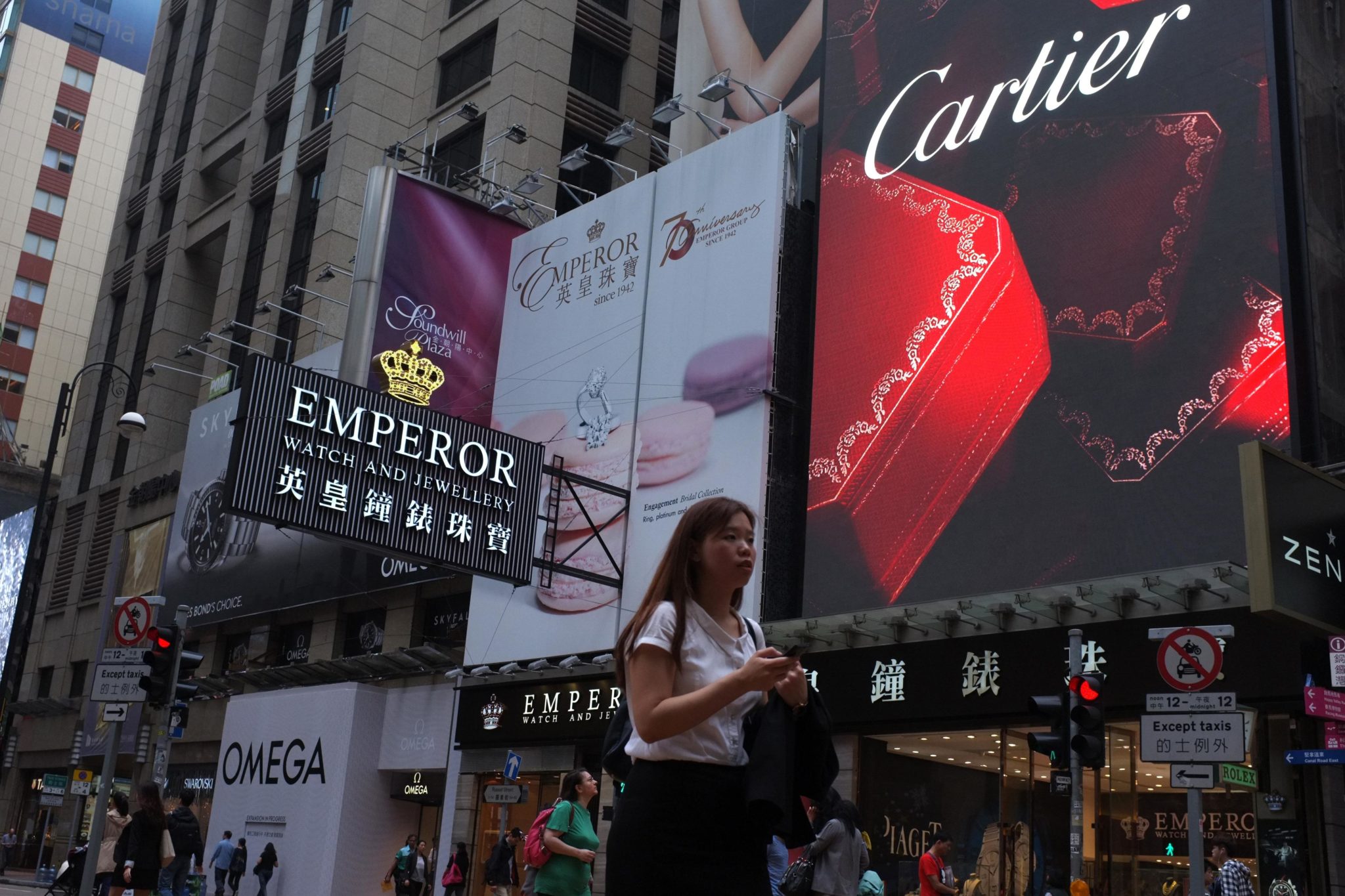
    Hong Kong retail sales slumped 21.4 percent in January, further than the 19.4 percent of December – but the worst is yet to come.

    The Census and Statistics Department (C&SD) provisionally estimated Hong Kong retail sales at HK$37.8 billion (US$4.86 billion) but cautioned that the timing of Lunar New Year – on January 25 this year and February 5 last year – may have lessened the statistical impact of January’s data.

    “Retail sales continued to record a sharp fall in January, notwithstanding the possible boost from the Lunar New Year, which fell in late January this year but early February last year,” said a government spokesperson.

    This hints at a bleak outlook for February’s Hong Kong retail sales, given the advent of the coronavirus which saw inbound tourist numbers drop by 98 percent in what should have been one of the best trading months of this year.

    The coronavirus hit just as the peak Lunar New Year holiday season kicked off, a time when thousands of mainlanders traditionally head across the border to holiday and shop. Sales during the month were already affected by the anti-extradition protests which had been running since June last year.

    Sales of jewelry, watches, and clocks slumped by 41.6 percent in January, with medicines and cosmetics down 32.3 percent and apparel by 28.9 percent. Department-store sales were down 27 percent, books, newspapers, stationery, and gifts by 25.9 percent and optical goods by 23.9 percent, furniture, and fittings by 22 percent, footwear, and accessories by 21.6 percent and electrical goods by 20.4 percent.

    Sales of Chinese drugs and herbs fell by 16.2 percent and of food, alcohol and tobacco products by 6.8 percent.

    The only categories to buck the downturn were sales in supermarkets, up 10.2 percent, and of fuel, up 12.3 percent.

  • Retail, e-commerce biggest marketers in Vietnam

    Retail, e-commerce biggest marketers in Vietnam

    Retail and e-commerce accounted for nearly a quarter of online marketing in Vietnam last year as players compete for more customers.

    The category claimed 23.9 percent of $1.26 billion spent on online ads in the country, Ho Chi Minh City-based advertising company Adsota reported.

    It was followed by fast-moving consumer goods (FMCG) with 12.9 percent and automobiles with 6.7 percent.

    Vietnam digital advertising spending by industryRetails & e-commerceFMCGAutomobilesFinancial servicesTourismTelecomTechnologiesOthers

    “Figures indicate the resources e-commerce businesses are willing to invest in digital advertising in recent years, linked to the “money burning” race of Shopee, Lazada, Sendo and Tiki,” the report stated.

    Rising expenditure follows Vietnam’s growing market of internet users. The country ranked 14th in the world in its number of smartphone users at 43.7 million last year, a rate of 44.9 percent.

    In a number of app downloads, Vietnam ranked second to Indonesia in ASEAN and seventh globally. The most popular app categories in Vietnam are games, photography and social.

    Vietnamese spend 2 hours and 33 minutes on social networks, 17 minutes higher than the world average, according to U.K.-based We Are Social.

    Vietnam’s online advertising expenditure is set to reach $1.4 billion in 2022.

  • Malaysian retailers hit by coronavirus

    Malaysian retailers hit by coronavirus

    Malaysian retailers operating in tourist zones have seen sales plunge in the wake of the coronavirus outbreak.

    Locally headquartered leathergoods retailer Bonia says sales have fallen by as much as 77 percent in one location and were down overall as fewer Chinese traveled to Malaysia and locals avoided crowded locations to reduce their exposure to the virus.

    Besides its own brand, Bonia also operates stores under the Braun Buffel, Sembonia, Renoma and Valentino Rudy banners.

    Aa Bonia spokesperson said sales had dropped 30 percent overall in the first 17 days of February, the peak, so far, of the virus outbreak.

    “Our Genting Highlands outlet has been tremendously affected,” he said. “The key factor is Covid-19, which has made tourist numbers decline, while local consumers are shying away from crowded malls during their weekend outings.”

    Sales at the Genting Highlands store were down 77 percent and at the Pavilion shopping center in Kuala Lumpur by 35 percent, year on year.

    Stores in Johor Bahru and Penang have also been hit.

    Another retailer, Corn In a Cup, has experienced a drop in sales of between 15 and 40 percent, with the worst-affected store the one at Zoo Negara, where daily sales usually run from 200 to 300.

    “We have been operating at the zoo for over 10 years,” he told The Edge. “Never before in history have we only sold one cup of corn in a day.”

  • South Korea’s CU fined US$1.4 million for unfair trading

    South Korea’s CU fined US$1.4 million for unfair trading

    South Korean convenience-store operator BGF Retail has been fined for pushing exorbitant sales promotion costs onto its suppliers.

    The firm was ordered to pay KRW1.67 billion (US$1.4 million) for its breach of the Act on Fair Transactions in Large Retail Business, according to a report in The Korea Times.

    While the act forbids any retailer from forcing its supplier to shoulder more than half of any promotional cost, BGF was found to have run “two-for-one” promotional events from early 2014 to late 2016 at its CU-branded stores and passed on the majority of expenses.

    The firm pushed KRW2.39 billion ($2 million) in costs on 79 suppliers to pay for 338 promotions conducted during the period at more than 13,000 CU locations. It also failed to sign written agreements with suppliers prior to holding sales events in 76 cases.

    “This is the first time that the FTC has punished a company for forcing suppliers to shoulder more than 50 percent of the cost for two-for-one events,” said an official at Korea’s Fair Trade Commission. “The FTC will enhance monitoring and punishments for similar violations.”

    CU is currently in second place among Korea’s leading convenience store chains, with a 31.14 percent market share.

  • Indonesian retail sales fell in December

    Indonesian retail sales fell in December

    Indonesian retail sales have witnessed a downturn despite the festive season.

    According to a survey conducted by Bank Indonesia, the retail sales fell 0.5 percent in December compared to year on year.

    The survey predicted January retail sales will stay weak. Key retail sectors, including fashion and food & beverage, will drop 3.1 percent on an annual basis.

    Indonesian retail sales in November rose by 1.3 percent, marking the fifth consecutive month of growth.

  • Singapore retail sales flat in December

    Singapore retail sales flat in December

    Singapore retail sales were flat in December, after motor vehicles were removed from the data, rising by a mere 0.1 percent.

    Including motor vehicles, a decrease of 3.4 percent was recorded, but this relates more to the scarcity of Certificates of Entitlement by which Singapore’s government restricts the number of vehicles on the roads. New vehicle sales were down by 24 percent year on year.

    Compared with November, and again excluding vehicles, retail sales slipped by 1.4 percent.

    Singapore retail sales totaled SG$4.2 billion (US$3.2 billion) for the month. Significantly, online shopping accounted for 6.8 percent of that figure, one of the highest rates yet.

    Aside from cars, the worst-performing retail categories were furniture & household equipment down 8.2 percent, and computer & telecommunications equipment, down 6.3 percent. Sales at department stores fell 5.6 percent, and optical goods & books recorded a 1.2 percent decline.

    Categories to post growth included watches & jewelry (up 8.9 percent). Retailers of petrol service stations, medical goods & toiletries, and mini-marts & convenience stores achieved growth rates between 3.1 percent and 5.4 percent.

    Compared to the same period last year, Sales of food & beverage services in December increased by 2.7 percent to an estimated SG$964 million, compared to $938 million in December 2018.

    Turnover of fast-food outlets, cafes, food courts & other eating places, and restaurants

    Increased by between 2 percent and 7.7 percent year on year.

  • Vietnam retail sales down

    Vietnam retail sales down

    Retail sales in Vietnam’s commercial capital Ho Chi Minh City surged 11.2 percent last month to an estimated US$4.8 billion.

    But celebrations may be short-lived with the coronavirus impacting spending patterns in February and the early timing of Lunar New Year boosting January’s figures.

    According to official government data, Ho Chi Minh City retail sales in key sectors including food & beverage, household appliances and apparel reached US$3.25 billion for the month, all spurred by increased demand during Lunar New Year (it is customary for Vietnamese to wear new clothes to mark the onset of a new year).

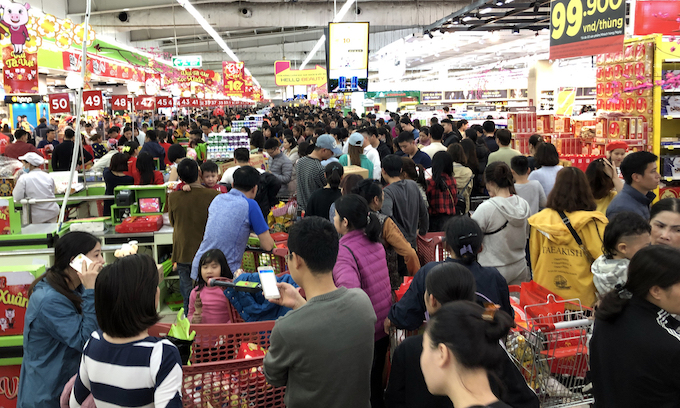
    And while shopping malls and convenience stores have suffered declining footfall due to the coronavirus crisis in February, supermarket sales have surged dramatically since reopening after the holiday, which officially ended on January 29.

    According to a spokesperson from the South Korean-owned Emart, the supermarket chain has since experienced double-digit daily sales growth, peaking at 40 percent one day. Most commonly purchased products are fresh food, dry food (such as instant noodles, sugar, rice), hand sanitizer and antiseptic water.

    “Sales of fast-moving consumer goods increased by more than 50 percent,” said the spokesperson. “While dry food increased 1.5 times, toilet paper sales nearly doubled.”

    Although the number of other retail sectors experienced declining sales, the average retail sales growth seemed to hold up, the spokesperson said.

    Supermarket and hypermarket operator Saigon Co.op also reported significant growth since the coronavirus outbreak. Fastest-moving items were essential consumer goods, especially sanitizing and consumer health products.

    Meanwhile, the coronavirus crisis has left major shopping malls and department stores such as Vincom and Takashimaya into what local media have described as “deserted” venues as people avoid going to public areas.

    For convenience stores, the circumstances are little better. Korean c-store chain GS25 has reported sales have dropped by 40 percent.

    Retail industry experts in Vietnam predict that consumption will shift from electronics products to health items and that supermarkets and e-commerce will replace traditional markets due to lower perceived risk of virus transmission.

    As of February 13, there have been only 15 confirmed cases of coronavirus infection recorded in Vietnam, of which six are listed as having fully recovered.

  • Coronavirus may fundamentally change retail across South East Asia

    Coronavirus may fundamentally change retail across South East Asia

    The coronavirus is driving many Asian consumers to shop online – and it could mark the early stages of a long-term fundamental shift in the region’s retail industry.

    As the virus continues to spread, especially in Mainland China, physical retailers are being forced to shutter stores – either by local-government decree or due to a lack of available staff or customers to make trading viable.

    But as the crisis nears entering its second month, consumers still need supplies and many are going online.

    Hong Kong online portal HKTV Mall, has revealed the average number of daily orders on its site last month was 22,400 – up 64.7 percent on January last year and nearly 20 percent on December.

    HKTV Mall’s average daily gross merchandise volume last month was $10.9 million, up 49.3 percent on the same time a year ago, when it was $7.3 million.

    February figures are expected to be higher still with the growth momentum extending into this month and the fact the virus really only began to impact retailers during the second half of January.

    ‘Long-lasting effects’

    Pascal Martin and Veronica Wang, partners at OC&C believe the coronavirus outbreak may have long-lasting effects on the retail industry, especially on the mainland.

    “By forcing many consumers to try grocery shopping online for the first time and to experience the convenience of it, is accelerating the adoption of this channel – providing a structural boost to the growth outlook of new retail grocers like Alibaba supermarket, Hema and JD’s 7Fresh – and at the same time accelerating the relative decline of traditional players,” the pair said in an email to Inside Retail Asia.

    “And once grocery-shopping shifts to online, the entire retail sector may move online at an even faster pace than before, because grocery is the category that requires the most frequent shopping transactions and therefore fundamentally shapes consumer behavior.”

    Their predictions are supported by S&P Global Ratings in a research note issued this week which likened the current shift online to the similar Sars outbreak back in 2003 which was widely credited with kick-starting China’s e-commerce market. S&P said coronavirus would “further the long-term structural shift” to an online economy, according to an AFP report.

    The move to online is not only affecting purchases of essential supplies. Gift Flowers HK, an online florist, has reported Valentine’s Day orders are up by 20 percent this year.

    “Hong Kong has always been slow in shopping online and the events in the past eight months has really shifted people away from brick and mortar stores to online,” said founder Justin Chung.

    Since June, conventional florists have suffered declining sales due to the social unrest, a situation made far worse by the arrival of coronavirus.

    Logistics challenge

    The challenge for online players is delivering products at a time when many people are effectively self quarantining at home to avoid catching the virus. Logistics has become a major headache along with the sourcing of some goods given border restrictions between Mainland China and other territories.

    As of yesterday, HKTV Mall raised the delivery threshold for orders until the end of the month from HK$350 for VIP members and $500 for general members to $800. A delivery fee of $80 (previously $40) will be charged if the total bill fails to fulfill the free-delivery threshold.

    “In addition to this, we are working with our merchant partners to have their stores become our order pick-up points,” said Jessie Cheng, a spokesperson for HKTV mall.

    “As for issues getting products into stock from across the border, we do encounter this issue and the operations of some factories and warehouses are suspended at the moment.”

    There is a broader challenge evident for regional trade, with an increasing number of reports of export orders being canceled due to cross-border logistical challenges and falling sales in restaurants and physical retail stores. New Zealanders were told this week they may expect lower beef and lamb prices in supermarkets as export orders were canceled or cut back. And in the north of Vietnam, there are reports of fresh produce shipments unable to be shipped across the border into China, resulting in appeals for local consumers to buy products to support struggling local growers.

    Restaurant impact

    The impact of coronavirus is clearly being felt across Asia, not just in Greater China. In Singapore yesterday, the Restaurant Association of Singapore said it had written to 24 major retail landlords in the city-state seeking temporary rent reductions for food-and-beverage outlets.

    Some restaurateurs are fearing a reduction in sales of as much as 80 percent during the next three months due to a downturn in inbound tourism (especially from Mainland China) and a teen by locals to reduce going out.

    “Looking at the situation right now, we are hoping at least 50-per-cent rental rebate for the first three months,” RAS president Vincent Tan was quoted by Channel News Asia.

    Tan, MD of foodservice company Select Group, says with rent and wages comprising more than half a typical Singapore restaurant operator’s costs, relief is urgently needed, especially when margins were as tight as 1.7 percent before the virus broke out.

    “If your sales drop by 50 per cent and your margin is about 1.7 percent, you just imagine how difficult we are at this moment,” he said.

    In Thailand, inbound tourism arrivals are expected to decline by between 50 and 60 percent during the next three months as outbound tour groups are banned from leaving Mainland China and most international airlines have canceled or curtailed services to almost all mainland airports.

    HKTV Mall to boost resources

    Meanwhile, HKTV Mall is introducing changes behind the scenes to smooth the ordering and delivery process after customers experienced long loading times and difficulties in checking-out during peak times last month.

    The company will launch a separate “purchase by invitation” platform to direct the heavy user traffic flow on popular products, such as personal health items, away from the main HKTV Mall platform. Customers will need to pre-register for each popular product offered at this new platform and based on the available stock level, a unique code will be allocated on a random basis for inputting to HKTV Mall for purchase.

    The group is working on adding staff and work shifts, strengthening the partnership with existing merchants and recruiting new ones.

    It will also partner with retail chain stores to expand its order pick-up network so as to increase the geographic convenience and available pick-up time slots for customers. At the moment, the Group has already added seven pick-up points from Foodwise, one of its existing merchant partners.

    HKTV Mall will also expand its delivery fleet capacity by increasing outsourced logistics resources, including third-party logistics companies and individuals, to increase the door-to-door fulfillment capacity and thus reduce delivery lead times.

  • Phnom Penh Megamall launch delayed

    Phnom Penh Megamall launch delayed

    The Phnom Penh Megamall developer has delayed the mall’s launch until the fourth quarter of this year owing to lagging interior design work, according to its marketing representative CBRE Cambodia.

    The 47,000sqm, 11-storey shopping hub is being constructed as a mixed-commercial centre.

    “The delay has nothing to do with market issues,” said CBRE Cambodia MD Ann Sothida. “Companies have expressed their interest and have leased about 70–80 percent of the building’s retail space, with the ninth floor entirely leased out.”

    According to local news media reports, the Phnom Penh Megamall, which is being constructed in the building which used to house a Parkson department store, requires additional foundation works unexpectedly when the project commenced.

    CBRE Cambodia reports 19 buildings in Phnom Penh currently offering 314,000sqm of retail space in total, with an additional 261,746sqm in retail space supply expected to launch this year.

  • Hong Kong retail sales dropped in December

    Hong Kong retail sales dropped in December

    Hong Kong retail sales in December slumped 19.4 percent, a softer fall than November’s 23.7 percent, but continuing the decline which began with the civil unrest after June.

    For the whole year,  total retail sales decreased by 11.1 percent in value and by 12.3 percent in volume terms (after accounting for price fluctuations) compared with 2018.

    A government spokesman said that Hong Kong retail sales in December continued to decline sharply, as the impact of the local social incidents on consumption- and tourism-related activities remained “severe”.

    “The business environment for retail trade has become even more difficult recently, with the threat of the novel coronavirus infection heavily weighing on inbound tourism and local consumption sentiment,” the spokesman said.

    “The near-term outlook for retail sales depends critically on how the situation of the novel coronavirus infection will evolve.”

    According to figures from The Census and Statistics Department (C&SD) the value of total Hong Kong retail sales in December was estimated at HKD36.2 billion, (US$4.66 billion). After adjusting for inflation, December sales were down 21 percent year on year compared with a 25.5 percent decline in November.

    Listed in terms of their impact on total sales, the worst-performing categories were jewelry, watches, clocks and valuable gifts, down by 36.7 percent, supermarket sales down by 3.1 percent; apparel by 22.1 percent; and department-store sales by 25.3 percent.

    Food, alcoholic drinks and tobacco sales were down by 1.9 percent; electrical goods and other consumer durable goods, by 17.4 percent, other consumable goods not otherwise classified by 14.5 percent; medicines and cosmetics fell 29.9 percent; footwear and accessories by 20.4 percent; furniture and fixtures by 1.4 percent; books, newspapers, stationery and gifts by 14.8 percent; Chinese drugs and herbs by 9.8 percent; and optical shop sales fell 19.3 percent.

    The only category of Hong Kong retail sales in December to show growth was fueled, up by 13.5 percent.

  • Should retailers use emoticons in customer service support chats?

    Should retailers use emoticons in customer service support chats?

    Service providers who use emoticons are perceived as warmer, but less competent, according to a new research paper, which offers sage advice for retail brands engaging with consumers across digital platforms.

    The effect held true regardless of whether or not a customer service employee used emoticons that were pictorial or text-based, showing that the impact of emoticons is not purely driven by eye-catching graphics and colors.

    The Hong Kong Baptist University study investigates what happens when emoticons figure into commercial service discussions. Through laboratory and field experiments, the research showed the major effects of emoticons in customer service interactions and found that emoticon usage by a customer service employee had conflicting effects.

    According to the report, how emoticons are perceived is highly dependent on the recipient’s preferences. The individual customer’s personality and expectations on how a service relationship should be conducted plays an important role in how emoticon senders are ultimately seen. Customers who enjoy friendlier relationships with brands perceive service providers who use emoticons to be warmer, which in turn makes them feel more satisfied with the service provided. Conversely, exchange-oriented customers see a customer service employee using emoticons as less competent, making them more likely to be less satisfied. These effects apply to all emoticons, regardless of whether the emoticon used had positive or negative connotations.

    When service is deemed unsatisfactory and is failing to resolve the situation, the study reasons that all customers will increasingly place value on competence as opposed to warmth. In these situations, any emoticon usage by a customer service rep will have a negative impact on the customers’ attitude towards the employee.

    Conversely, when a customer service employee successfully addresses a customer’s needs with messages accompanied by an emoticon, the study finds that customers are more likely to buy.

  • Conscious consumers a major threat to fashion and footwear retailers

    Conscious consumers a major threat to fashion and footwear retailers

    Conscious consumers pose “the biggest threat to clothing and footwear retailers in 2020” according to research by GlobalData.

    When asked about their intentions last month, 19.2 percent of UK consumers said they planned to spend less than average on retail products, according to the survey of 2000 nationally representative shoppers.

    “A worrying 48.9 percent of these consumers said they are making a conscious effort to buy less stuff,” said Sofie Willmott, lead retail analyst at GlobalData.

    “Although some shoppers will struggle to keep up this mindful mentality past January, the shift away from spending on non-essential retail products is set to continue throughout the year as consumers prioritize spend on holidays, activities and meals out, and especially as sustainability concerns seep into their consciences.

    “With sustainability becoming a bigger consideration for more consumers, the easiest way they can reduce their impact on the environment is by not buying anything new. Buying second-hand items or reducing the number of clothing and footwear products they purchase is a win-win for consumers who are focused on spending their disposable income wisely while also acting in a sustainable way, but these shifting shopping habits will not help struggling retailers in what is already a challenging and highly competitive trading landscape,” said Willmott.

    Early signs of a new wave of conscious consumers came with the results of discount-fashion retailer Primark. For the 16 weeks to January 4, Primark recorded a marginal decline in like-for-like sales. Willmott says that suggests volume growth will be difficult for clothing retailers to achieve this year.

    “In order to thrive in testing times, it is vital that retailers provide transparency in their supply chains and although years of building a production process with the main aim of providing fast fashion at accessible prices will be difficult to transform into an environmentally sustainable operation, retailers should clearly convey the steps they are taking.

    A brand’s positive environmental stance must be communicated through aspects that customers can interact with. For example, & Other Stories offers 10 percent off a purchase when you bring back an empty beauty container and H&M has garment collection bins in store which customers can donate a bag of clothes to and receive a £5 voucher to use at H&M when they spend £25 or more,” she said.

    “Sustainable clothing pioneer Reformation has taken it to more of an extreme giving their customers the option to purchase ‘climate credits’ such as a credit for an international flight for £22 which offsets the carbon emissions.”