Tag: Retail

  • The changing face of retail

    The changing face of retail

    There’s a common misconception that a job in retail starts and ends on the shop floor. Or that working in the industry is merely a ‘rite of passage’ young people must traverse while studying at school or university.

    However, for a growing band of retail professionals, working in the industry represents a diverse and exciting career spanning years, roles and even countries.

    Today, there’s no limit to where a job on the shop floor could end up leading – from unique career development initiatives to giving back and having a positive impact on the world.

    As a global business operating in 19 countries, the Cotton On Group says the need to attract and retain great talent across all levels of the business is front of mind for the company.

    Moving beyond the structured pathway programs; COG says targeted global recruitment drives and tactics to ‘future proof’ its talent pool of 22,000 people globally, will be key in building and nurturing the retailer’s team.

    Jo Barr, global careers manager for the Cotton On Group, is confident in the business’ ability to maintain the momentum of its talent strategy and continue supporting its growth.

    “Having worked for other global retailers and seeing other environments, I know what we have to offer is really unique – whether that’s working in store or in a role within one of our six head offices,” she says.

    “The culture, the opportunities and the programs we provide for our teams are like no other – we truly put our people first and genuinely want to give them an experience they will take with them for life.”

     Start here, go anywhere

    The sheer range and number of opportunities that retail can offer is exemplified by a global business like Cotton On Group.

    A business model which distinctly favours in-house capabilities over out-sourced resources has unlocked a diverse suite of roles within the group’s operations. Couple this with a growing footprint and head offices located in six markets and there’s no doubt that the global retailer makes for a unique proposition in the market.

    Barr says the business’ sustained success on an international scale is challenging people to see a career in retail in a new light.

    “We have a ‘start here, go anywhere’ attitude at the group, and we really mean it. Our business has so many examples of people who may have started in one country or one role, then moved to another, then to another – the opportunities are as far and as wide as people want to take them,” she says.

    Brad Rowland is one of many team members at the group who started on the shop floor while studying and went on to pursue a career in the industry after discovering a real passion for retail.

    “When I joined the group in 2000, it was a small business with only 33 stores in Victoria and Western Australia. At that time, Nigel (Cotton On Group founder & owner) was doing everything himself…his drive was like a machine,” Rowland says.

    In the sixteen years that followed, “bloody hard work” has seen Rowland progress through a range of roles including store manager, area manager, operations manager and Cotton On Group national retail manager.

    In early-2017, Brad was approached by the business to move into the newly created position of head of outlets for Cotton On – a behind-the-scenes role that encompasses buying, planning and marketing.

    “The business has always been incredibly supportive of my development and saw an opportunity to grow my skills,” Rowland said.

    “Senior members of our business are incredibly passionate about growing their teams and developing leaders for the future and my career progression at the group is a great example of that.”

    Creating a learning culture

    Barr adds that an increased focus from universities and training and education institutions on the retail industry is helping to build interest among graduates looking to start their career.

    Capturing this increased interest and offering effective pathways into the industry has been the catalyst behind a number of initiatives put in place by the group’s recruitment and careers team.

    Earlier this year, in partnership with Deakin University, the group launched its first graduate program aimed at attracting and nurturing talent in the areas of merchandise planning and allocation

    “As a business, we’ve set ourselves some big goals for the next 10 to 20 years, and are committed to adequately resourcing our teams to help us achieve these goals. Merchandise planning and allocation are areas where we believe there is huge opportunity for growth, and are fundamental to supporting the expansion of our business both locally and internationally,” says Barr.

    Another new initiative, aimed at existing employees, is the group’s international work experience program known as Adventureships. This program sees the group deploy retail team members from across the globe to support various international shopping events such as Black Friday in the United States and Chinese New Year – providing them with invaluable in-market experience.

    The group have pioneered learning and development programs for a number of years – launching their $30 million educational platform, COG Uni, back in 2013.

    More recently, COG Uni has launched YOU Learning – an online education tool aimed at promoting personal and professional growth and fostering career development.

    Developed by a specialist team at the group’s headquarters, YOU Learning consists of over 1,000 learning bites which cater to all levels of the business including retail, distribution and head office. The URL-based platform is easily accessible to the group’s 22,000 people and covers topics including ‘culture and values’, ‘lead and manage others’ and ‘supply chain and planning.

    Not just a career

    COG is a firm believer that its responsibility as a global fashion retailer goes far beyond just selling clothes and as a result it is committed to giving its team members the opportunity to give back and have a positive impact on communities around the world.

    Through the support of its people and customers, the group’s philanthropic arm, the Cotton On Foundation, has raised $60 million since 2007 – funding a host of healthcare, education, infrastructure and sustainability projects in Southern Uganda, Thailand, South Africa and Australia.

    With ambitious plans for the future, the COG says it is a firm believer in developing leaders for the future, and will continue to invest in people’s personal and professional development to support the company’s continued growth.

  • KFC Japan to launch new healthy dining retail concept

    KFC Japan to launch new healthy dining retail concept

    KFC Japan is to open a new healthy food retail concept called The Table by KFC in Sendai City on August 5.

    The Table by KFC aims to offer deli-style foods, including salads, along with versions of its traditional favourites – like a full-size KFC chicken – targeting commuters passing through railway stations and shopping precincts.

    The first store will be located in the S-Pal Sendai shopping center in Sendai City, Miyagi Prefecture, which is located in the northern part of Honshu.

    News of the concept was revealed in English on the Sorai News 24 website, which has published a number of photos of the dishes one can expect, following a local announcement by KFC Japan.

    Sorai News 24 says the store is “designed to have a natural look, using plenty of wood-grain material for a ‘home kitchen’ feel”.

    “The foods will be displayed in bowls and dishes of different designs, so that the setup is enjoyable to look at too.”

    New dishes to join the menu include Spanish-style Garlic Chicken Gizzard and Oriental Smoked Chicken Caesar Salad.

  • Impact’s The Portal offers restaurants and retail space

    Impact’s The Portal offers restaurants and retail space

    The managers of the Impact Exhibition and Convention Center have opened a four-story commercial building to house retail stores and other facilities for locals, exhibitors and visitors alike.

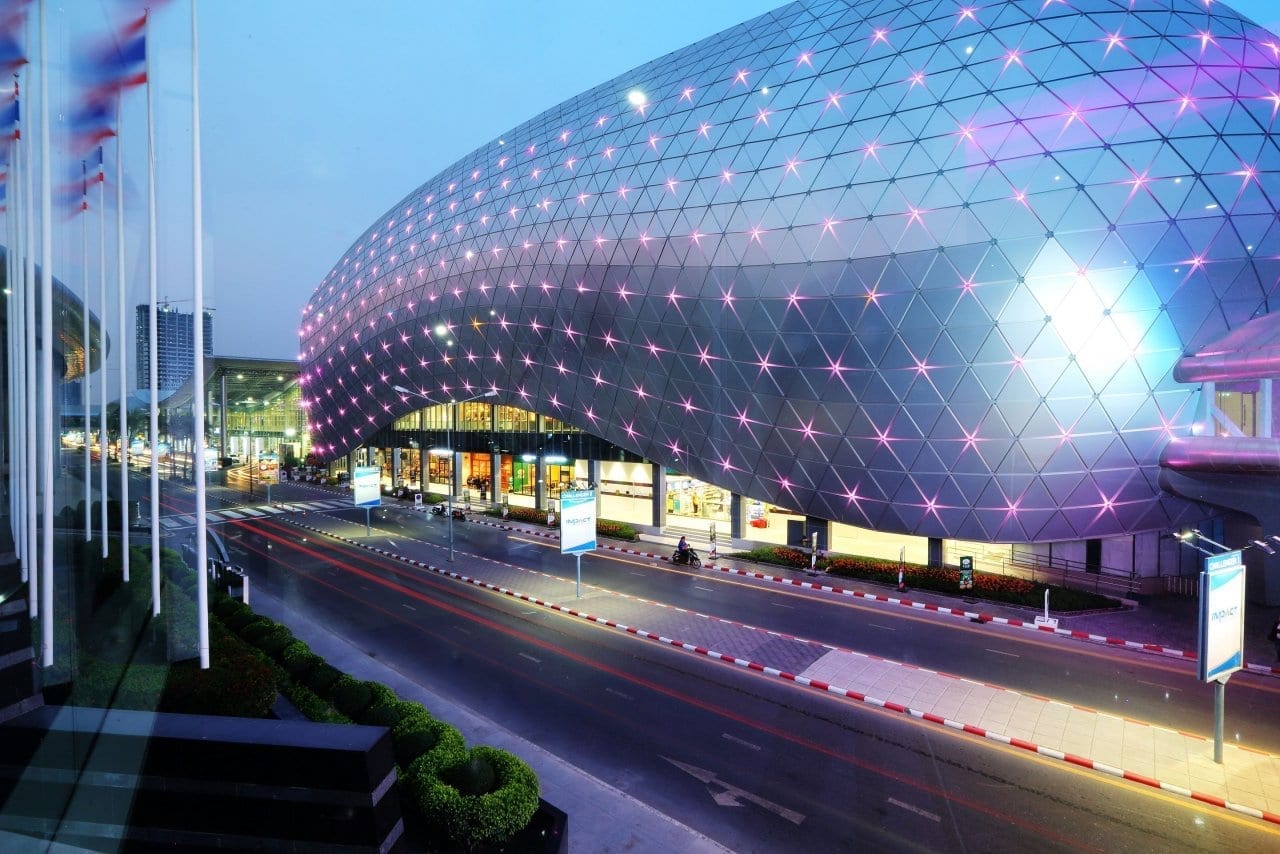
    Dubbed The Portal Lifestyle Complex, the futuristic-looking building connects to the Impact Arena, Impact Challenger and Impact Exhibition Center via link bridges. It houses retail stores, a foodcourt, restaurants and brand-name outlets as well as providing a lifestyle venue for the general public visiting Muang Thong Thani, an outlying suburb of Bangkok.

    Paul Kanjanapas, Impact Exhibition Management MD says the building, which cost about THB600 million to construct, is a response to a growing demand for exhibition space and services.

    The curved design of the exterior was inspired by “the movement of undercurrents” according to a statement.

    A number of retail, food and beverage and service companies have leased space, including Burger King, The Pizza Company, After You, Watsons, Thai Ticket Major, Isan@Arena, Tsubohachi Express and Hong Kong Suki. The retail areas are open from 10am to 8pm.

    The third floor of The Portal Lifestyle Complex features a large food arena and the top floor the 1500 sqm Portal Ballroom, offering an elegant function area.

  • 18th​ ​APRCE 2017 to address new retail trends and issues in Asia-Pacific’s largest retail event

    18th​ ​APRCE 2017 to address new retail trends and issues in Asia-Pacific’s largest retail event

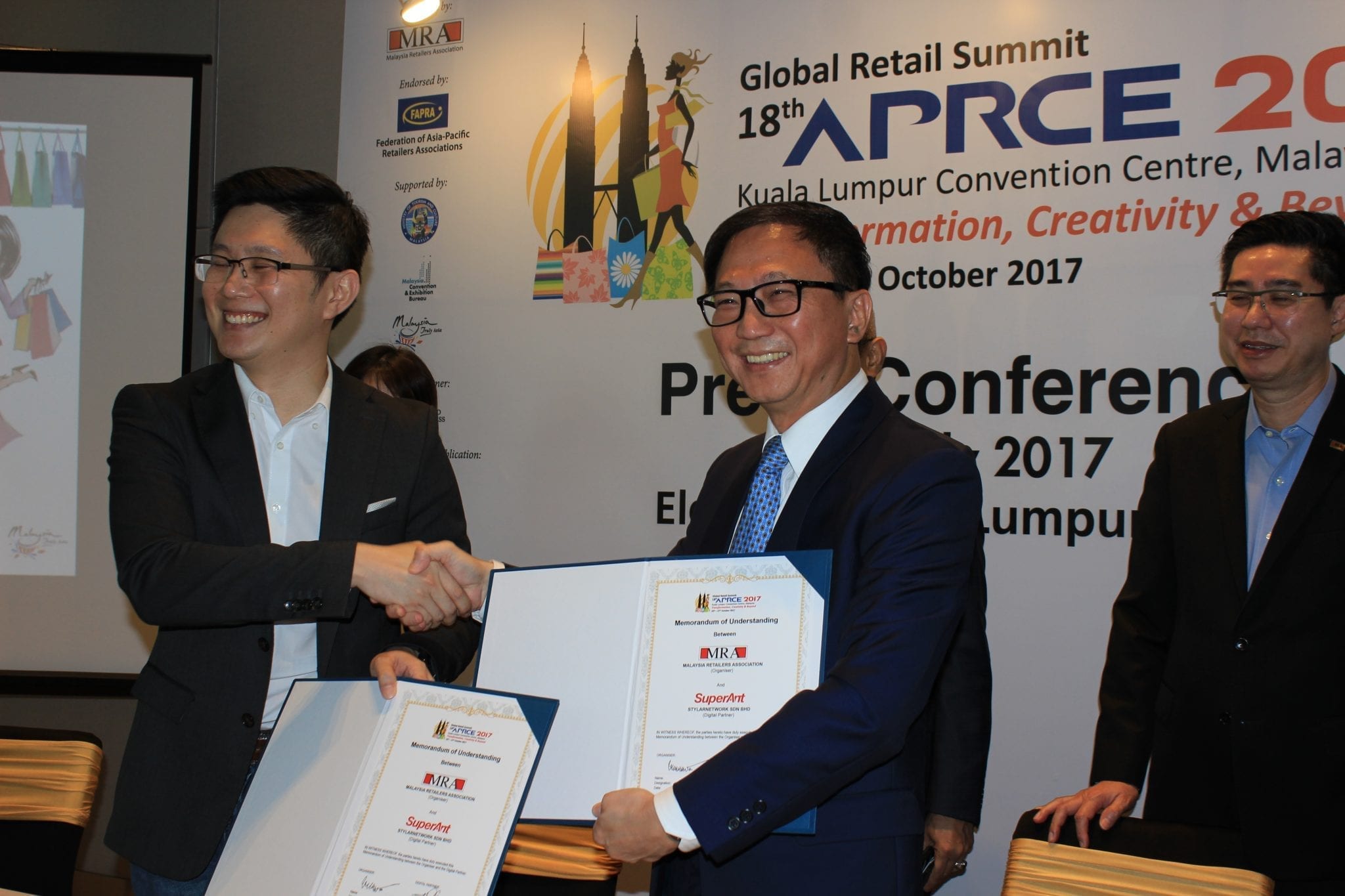
    The 18th Asia-Pacific Retailers Convention and Exhibition (APRCE) will take place at the Kuala Lumpur Convention Centre from October 25 to 27, 2017. About 3,000 delegates from 18 countries are expected at Asia Pacific’s largest retail event which is held once every two years.
    Organised by the Malaysia Retailers Association (MRA) and endorsed by Federation of AsiaPacific Retailers Associations (FAPRA), the theme of the 18th APRCE 2017 is “Transformation, Creativity and Beyond”.
    Key global retailers are expected at this event which will spearhead a re-think on retail and how to drive change through innovation, transformation and staying ahead of the pack for business success. It will explore opportunities to capture the next decade of discerning digitised customers.
    World-class speakers, retail leaders and solution providers from the US, UK, Japan, China, Korea and, of course, Malaysia will share their business success stories, new retail trends, ways to retail excellence and e-commerce trends and challenges in retailing, among others.
    Among the 22 speakers at the 18th APRCE2017 are: Mr Howard Saunders, Retail Futurist, Twenty Second and Fifth Ltd, US; Mr Christopher Sanderson, Co-Founder, Future Lab United Kingdom; Mr Motoya Okada, President and CEO, AEON Co. Ltd; Mr Benjamin Yong, Founder and Group Chief Eating Officer of the BIG Group, Malaysia; Mr Hoseok Kim, CEO of Celcom Planet Sdn Bhd (11Street), Malaysia; Ms Michelle Grant, Head of Retailing at Euromonitor International, US; Mr Chan Kok Long, Co-Founder & Executive Director of IPay88 Sdn Bhd, Malaysia; Mr Roger Wang, Chairman of Golden Eagle International Group, China and Mr Chen Xiaodong, CEO of Intime Retail Group, China.
    The delegates attending 
    According to APRCE 2017 Organising Chairman, Mr James Loke, about 1,300 foreign delegates have confirmed their attendance. They include those from Japan, China, Korea, Indonesia, the Philippines and other FAPRA-recognised national retail trade organisations such as in Malaysia, Singapore, Thailand, Vietnam, Myanmar, Australia, New Zealand, Taiwan, Hong Kong, India, Mongolia, Turkey and Fiji.
    The event is the perfect focal point for international networking, and Malaysia, as the host, is the ideal location to mix business with leisure. Representatives from Asia-Pacific will be converging here to exchange ideas, connect with suppliers, seek business opportunities and network.
    The 18th APRCE 2017 is supported by the Ministry of Tourism and Culture, and the Malaysia Convention and Exhibition Bureau (MyCEB).
    How APRCE started 
    Since 1983, APRCE has been the main activity of the Federation of Asia-Pacific Retailers Associations (FAPRA), which has 18 association members from 18 countries. It is the longest running biennial retail conference in Asia-Pacific. The host country is selected by FAPRA members through a bidding process held every 2 years.
    For the record, the 17th APRCE 2015 was held in Manila, Philippines while the 16 th APRCE 2013 took place in Istanbul, Turkey. The 18th APRCE 2017 will bring together participants to learn, discover and network, and make meaningful connections with other industry professionals. It will also highlight innovative solutions to help retailers differentiate themselves from their competitors.
  • Urban Chinese consumers are more selective spenders in 2017

    Urban Chinese consumers are more selective spenders in 2017

    While China’s economy continues to grow at a moderate pace, consumers have become more selective spenders in 2017 as a result of increased pressures both at work and with their personal finances. New research from global market intelligence agency Mintel reveals that, today, urban Chinese consumers* are more conservative with regard to increasing their spending than they were in 2016, as 36% of surveyed consumers report spending more in 2017 compared to 43% who said the same in 2016. Meanwhile, consumers are more likely to control their spending this year, with nearly half (49%) reporting that they are spending “about the same” as they did in 2016.

    However, while consumers in general have a positive outlook for their financial status, they are aware of potential future risks in life, and want to make sure that every purchase they make can be justified, and that what they buy is worth the price.

    Mintel research indicates that overall consumer expenditure increased by 10.5% to reach RMB 33,511 billion in 2016. The categories that experienced the most growth in 2016 include transportation, holiday, leisure and entertainment, and OTC (Over-the-Counter) and pharmaceuticals. Mintel forecasts that consumer expenditure will increase 8.4% year-on-year through 2021, while holidays will surpass clothing and accessories to become the third largest spending sector. Meanwhile, transportation and leisure and entertainment, as well as beauty and personal care, will also see an increase in consumer spending .

    Laurel Gu, Research Director at Mintel, said,

    “Demand for upgraded consumption for new options, better quality and greater convenience will be the major driving factor in 2017. The development of the consumer products and services market is expected to remain active over the next five years to 2021, with health and experience being the two major themes. When it comes to Chinese consumers in tier one to three cities, perceived trends in spending are similar with holidays being the most popular and alcoholic drinks the least popular. However, although in-home food, clothing and accessories, as well as eating out, are enjoying moderate increases in total spending, they are among the top sectors where consumers claim to be spending more this year. This suggests potential gaps that consumers living in towns or rural areas are not yet picking up as a part of upgrading their living quality.”

    Achieving a healthy lifestyle continues to be Chinese consumers’ top priority, with “have a healthier diet” (80% of consumers say they will definitely do this in 2017) and “exercise more” (75% report they will definitely do this in 2017) the top two goals that consumers are determined to achieve in 2017, as was the case in 2014. “Travelling to new places” is a goal that has become increasingly important to consumers over the last four years, rising from ninth place in 2014 to third place in 2017. Meanwhile, “spend more time with family” – which 73% of consumers say they will do this year – dropped from third position in 2014 to sixth position in 2017.

    “While living a healthy lifestyle continues to be a focus area for consumers, over the last few years we see that spending time with family and having a better work-life balance are being deprioritised for other goals like traveling and getting household finances in order. The reason for these changes in life priorities is likely because consumers, Mintropolitans in particular, tend to associate a healthy lifestyle with not just exercising and watching what they eat, but also a variety of meaningful leisure and social experiences.” Laurel continued.

    When it comes to the quality of their life, one quarter (24%) of Chinese consumers say spending on holidays is what makes them feel their quality of living has improved. Other top areas include spending on technology (eg. mobile phones) (9%), clothes and accessories (eg. apparel) (9%) and leisure (eg. working out) (4%), which is largely in line with consumers’ spending priorities.

    Mintel’s annual Chinese Consumer 2017 report tracks spending across 15 major consumer markets, revealing the categories that present areas of opportunity, disruption and innovation in the years ahead. Highlights from the 2017 report include:

    Better-for-you foods drive further growth

    Mintel forecasts that the in-home food market will reach RMB 7,001 billion in value by 2021, driven by the demand for more trading-up options in the form of better-for-you versions and higher quality ingredients. Looking forward, yogurt products positioned as an indulgent pleasure and cheese for snacking occasions will see the greatest potential. On the other end, both ready meals and instant noodles are in jeopardy due to the thriving food delivery service.

    Healthy drinks take leading positions in non-alcoholic drink market

    Thanks to a nourishing and healthy image, plant protein drinks (PPDs), functional beverages (eg. sports drinks, energy drinks), as well as some light flavoured beverages, are all growing in popularity. Overall, the Chinese non-alcoholic drink market is likely to retain its positive growth with a CAGR of 7.2% in the next five years. Besides consumers’ ongoing interests in pursuing healthy food and drinks, their knowledge of nutrition and ingredients is also growing. As such, the premium soft drinks market is expecting products featuring a clean and natural ingredient list that create associations with functional health benefits.

    Beauty products designed for special occasion have room to grow

    Consumer spending in the beauty and personal care (BPC) sector is estimated to have reached RMB 566 billion by the end of 2016 – increasing by 8.1% from 2015. Mintel forecasts that the sector will grow, driven by innovations from local brands, imported products and consumers trading up to premium products for better quality. In 2017, there will be increasing demand for safety products and segments that are designed to cater to special occasions, including the athbeauty trend and consumers in need of time-saving routines.

    Technology and communication market on a slow incline over the next five years

    Smart phones and more niche technology gadgets like smart wristbands or VR (virtual reality) headsets will enjoy strong growth in 2017, while computers and games consoles face challenges. Upgrading technology products, especially those consumers use daily (like smartphones), may help consumers improve their quality of living. High product quality, such as high processing speed for smartphones or reliable health-monitor function of smart wristbands, are essential for technology brands to win fans in the years ahead.

    More demands on social and leisure activities drive transportation spending

    The fact that the segment is closely related to two other strong sectors – holiday, and leisure and entertainment – together with accelerating new car sales, growing car usage spending, as well as increasing public transport cost, are all key drivers of spending in transportation. In the five years to 2021, Chinese consumer expenditure on transport is projected to see a 12.7% CAGR and reach RMB 3,605 billion. Opportunities exist for market players tackling daily commute issues, including those in the ridesharing and bike-sharing industries.

    Urban Chinese consumers seek more experimental activities

    Chinese consumers are becoming more sophisticated and selective in terms of where they spend their time and money for entertainment and relaxation. Mintel forecasts that the leisure and entertainment sector will reach RMB 2,823 billion in value by 2021. This is largely driven by the shift from products to lifestyle services and experiences, and the trend of trading up from mass to premium offerings; both are reflecting the change in life priority from wealth accumulation to a more balanced life. In 2017, there will be increased demand for virtual entertainment products, health and fitness services and family-focused recreations.

  • Japan’s department stores see June uplift

    Japan’s department stores see June uplift

    Japan department stores saw higher sales in June, which was welcome news after they had fallen in the previous month, the sector’s industry body has said.

    Japanese department stores saw a welcome sales rise last month.

    Sales rose 1.4% year-on-year on a comparable basis at the 229 stores operated by the 80 companies that are part of The Japan Department Stores Association.

    Those 80 firms accounted for turnover of ¥472 billion last month.

    Department stores have faced major challenges in recent years but June’s figures offered some cause for hope, especially as sales had fallen 0.4% in May after rising 0.7% in April. April’s increase  had been the first for 14 months.

    The June rise also helped the three-month average to a 0.7% increase, the first growth in 18 straight quarters.

    The Japan Department Stores Association cited a number of reasons for the increase, from the start of the summer clearance sales (which had been switched from July to June) to high-spending foreign tourists and a return of confidence among more affluent local shoppers.

    In fact, sales to foreign visitors rose a massive 41.4% to ¥18.4 billion.

    It was the second consecutive month that such sales rose more than 40%.

    The Association said cosmetics was one of the key categories to benefit and Chinese tourists were out in force.

    However, there was bad news for the fashion sector as clothing sales fell year-on-year, despite the added impetus of lower prices.

    That said, the clothing that did do well was warm weather fashion as high temperatures and a relatively dry rainy season boosted demand and expensive items such as watches and jewellery were popular too.

  • South Korea tips fastest growth in three years in 2017

    South Korea tips fastest growth in three years in 2017

    The forecast for 2017 marks the strongest projected growth of the South Korean economy since GDP expanded by 3.3 percent in 2014. South Korea said Tuesday its economy is set to grow at its fastest rate in three years in 2017, on the back of strong exports and a $10 billion stimulus package aimed at creating jobs and bolstering welfare.

    South Korea has enjoyed a decades-long boom, but expansion has slowed more recently and economic and social frustrations were among the drivers of left-leaning President Moon Jae-In’s election in May.

    The finance ministry raised its forecast for Asia’s fourth-largest economy, saying gross domestic product was expected to expand by 3.0 percent — up 0.4 percentage points from an earlier projection in December.

    The forecast for 2017 marks the strongest projected growth of the South Korean economy since GDP expanded by 3.3 percent in 2014.

    Authorities also cited a recovery in the country’s exports for the improved outlook as the global economy rebounds.

    “We believe the 3.0 percent growth will be possible if the economy continues to undertake reforms for consumption-led growth,” deputy finance minister Lee Chan-Woo told reporters.

    The tweaked forecast comes after the government passed a giant stimulus package over the weekend promising 110,000 new jobs in response to record-high youth unemployment.

    Unemployment among under-30s hit 11.2 percent in April, more than double the rate for the entire working population.

    Economic frustrations were among the factors that fuelled mass anti-corruption protests that saw former president Park Geun-Hye impeached and arrested over corruption.

    Among the new jobs being targeted are firefighters, police, assistant teachers and social workers, while young job seekers, small businesses and tech startups will also be helped.

    Financial assistance will be increased for women on maternity leave, more daycare centers and nursing homes for the elderly are to be opened, and businesses hiring more full-time workers are to be given extra funding.

  • Macau retailers still cautious, despite better sales

    Macau retailers still cautious, despite better sales

    While retail outlets and dining establishments had better year-on-year sales in May, Macau retailers are still cautious about their business prospects, says the Macau Statistics and Census Service (DSEC).

    For its monthly business climate survey, the DSEC interviewed 167 dining enterprises that account for 53 per cent of the industry’s receipts, and 135 retailers that account for 70 per cent of trade.

    Despite their caution, 26 per cent of retailers expect a year-on-year increase in sales, up three points from May, while 38 per cent are less optimistic. During May, 36 per cent of the retail respondents indicated a year-on-year sales decline, a drop of two points.

    Experiencing better-than-expected results were adults’ clothing retailers and supermarkets, which exceeded forecasts by 40 and 33 points respectively.

    For June, 80 per cent of the respondents in the leather-goods area expect improved sales with all respondents having year-on-year increases in May.

    Watches, clocks and jewellery retailers had a 24-point rise in expectations for June, hitting 50 per cent, while department stores predict a 22-point increase to 56 per cent.

    Restaurants had a six-point drop from the previous month in the percentage of respondents reporting year-on-year growth, while those who had a year-on-year decline rose 10 points to 33 per cent.

    DSEC says the results were better than expected, as the April survey indicated only 18 per cent of respondents expected better sales figures.

    Expectations for last month are mainly pessimistic with 41 per cent of respondents expecting receipts to dip while while only 22 per cent expect a rise. Predicting increases are 27 per cent of Chinese restaurants, 25 per cent of Western restaurants and 18.8 per cent of Japanese and Korean restaurants.

    On the other hand, 60 per cent of Western restaurants foresee a drop.

  • Korean online shopping growth surge as retail sales stumble

    Korean online shopping growth surge as retail sales stumble

    Online shopping is experiencing a growth surge, accounting for close to 20 percent of all retail sales in the first quarter of this year.

    Retail transactions in the three months to March totaled 96.56 trillion won (US$85.83 billion), a growth of 4.7 percent from the same period a year before, according to Statistics Korea. The sum of online shopping was 18.21 trillion won, or 19 percent of the total.

    This represents a 19.6 percent leap from the same quarter of the previous year and the largest total since related record keeping began in 2010.

    The ratio of online sales to all retail sales has grown in double digits every quarter since the fourth quarter of 2012, when it was 10.2 percent. It reached 17.7 percent in the last quarter of 2016.

    In monetary terms, the amount of transactions has also expanded by double digits, increasing the growth pace from 11.2 percent in the first quarter of 2013 to 23.2 percent in the third quarter of 2016. It fell to 19.6 percent in the first three months of this year.

    The mobile sector played a critical part in contributing to online shopping, accounting for 59 percent of the sales in March.
    “Mobile shopping has grown with the wide penetration of smartphones, and shopping malls have also been pushing their mobile platforms,” a Statistics Korea official said.

    Such high performance of online sectors contrasts with sluggish figures in the overall retail market. Retail sales gains that reached over 10 percent in the first two quarters of 2011 shrank to 0.6 percent by the second quarter of 2013. They bounced back somewhat to 3-5 percent last year.

    Sales at department store, the strongest source of offline shopping, have backtracked. The monetary amount of transactions fell 1.5 percent in January from a year before, 5.6 percent in February and 3.5 percent in March. The figures showed a decrease of 2.2 percent in April and 4.6 percent in May.

  • 3,000 stores to open in India, world’s most promising retail market

    3,000 stores to open in India, world’s most promising retail market

    The recent implementation of the GST along with the rise of e-commerce has caused over 50 brands to announce that they will launch in India in the next six months.

    Data compiled by Franchise India states that a large number of brands, including 14 from the US and 11 from Singapore, are set to start business in India. The main sectors they will be doing business in are the food and beverage industry where 18 new brands will be launching and the apparel and lifestyle industry where 13 brands will be launching.

    Just some of these international fashion, cosmetic, and lifestyle brands launching at present in India are Greece’s bag manufacturer Migato and Lush Addiction, a jewellery company from Singapore using Swarovski crystals in its designs. Others include Korres, Monnalisa, Evisu, and Melting Pot. Education-focused brands will also be coming to India from abroad.

    An AT Kearney report stated that this month India overtook China as the most promising retail market in the world. Many international companies are experiencing troubles in their home countries due to the economic downturn and so are hoping that launching in India will help to boost their finances.

    India is currently an attractive market to launch in due to its growing middle class as well as increasing urbanisation. Moreover, e-commerce is blossoming as more and more labels are experiencing success through online retail portals.

    The government has now allowed 100% foreign ownership in business to business e-commerce ventures and has made efforts to boost cashless payments which is making the online market easier to break into for foreign firms.

  • Philippines convenience-store market among the least mature in Asia

    Philippines convenience-store market among the least mature in Asia

    The Philippines convenience-store market is one of the most unsaturated in Asia.

    The country had one store for every 35,000 people last year – a ratio similar to China – whereas in Indonesia, Malaysia and Thailand that figure ranges between 5500 and 10,000 people. In developed Asia, Japan and South Korea have around 1700 people to each store.

    With per-capita income growing about 5 per cent a year in the Philippines, the number of convenience stores has risen by 21.5 per cent a year over the past five years.

    Convenience-store sales have risen 20 per cent each of the past five years, double the rate of normal retail sales.

    With the nation’s historic ties to the US, 7-Eleven leads the way in the Philippines. The chain is licensed by Philippine Seven, which owns 45 per cent of the 1995 stores and franchises out the rest.

    Japan’s Nomura works through Robinsons Retail Holdings, which has exclusive rights to the Ministop chain for the Philippines.

    Only 7-Eleven has anything of an e-commerce presence in the Philippines, says the report, delivering goods from the country’s largest online-sales platform, Zalora Philippines.

  • China’s retail sales grow 10.4 per cent

    China’s retail sales grow 10.4 per cent

    China’s retail sales of consumer goods grew 10.4 per cent year-on-year in the first half of this year to RMB17.24 trillion (US$2.55 trillion), new official data shows.

    The pace was slightly faster than the 10 per cent for the first quarter, the National Bureau of Statistics (NBS) says.

    Retail sales last month grew by 11 per cent year-on-year, the fastest rate since December 2015.

    The NBS attributes the pick-up in growth partly to online sales, which surged 33.4 per cent year-on-year in the first half, 1.3 points higher than in the first quarter.

    Online sales of goods rose 28.6 per cent to RMB2.37 trillion, accounting for 13.8 per cent of China’s total retail sales, up from a share of 11.6 per cent for the first half of last year.

    NBS spokesman Xing Zhihong says the larger share proves new growth sources in the economy are rising.

    Retail sales in rural areas rose 12.3 per cent in the first half, outpacing the 10.1 per cent expansion for urban areas.

    Booming retail sales are behind China’s stabilising economy, which grew 6.9 per cent in the first half.

    The contribution of final consumption to GDP growth stood at 63.4 per cent, slightly down from last year’s 64.6 per cent.

    “Consumption demand is the most important engine of our economic growth,” says Xing.

  • Singapore exports rebound in June, beating forecasts with 8.2% rise

    Singapore exports rebound in June, beating forecasts with 8.2% rise

    Non-oil domestic exports (NODX) bounced back in June, topping expectations with an 8.2 per cent increase from the year earlier, with a strong rise in non-electronic shipments offsetting a smaller increase in electronic sales.

    Analysts polled by Bloomberg had expected NODX to rise 5.1 per cent in June from the same month a year ago. Exports in May edged up just 0.4 per cent in May, revised up from an earlier estimate of a 1.2 per cent decline, and dipped 0.3 per cent in April, after expanding for six straight months.

    On a month-on-month seasonally adjusted basis, NODX declined by 2.7 per cent in June, after the previous month’s 9.4 per cent increase, as the decline in electronic shipments outweighed the increase in non-electronic sales, data from trade agency International Enterprise (IE) Singapore showed on Monday (July 17). Some S$14.5 billion exports were recorded in June, lower than the S$14.9 billion in May.

    Exports of electronics cooled in June, expanding by 5.4 per cent year-on-year compared to the 28.9 per cent surge in May. Data last Friday showed that Singapore narrowly avoided a technical recession, growing at 0.4 per cent in the second quarter from the quarter before, saved by solid global demand for its tech products.

    Electronic exports in June were led by ICs, disk media products and capacitors which increased by 20.7 per cent, 2.9 per cent and 10.5 per cent respectively.

    Exports of non-electronics grew by 9.3 per cent year-on-year, in contrast to the 8.6 per cent drop in the previous month. Economists have been concerned that the pick-up in Singapore’s economic growth has thus far been driven limited to certain segments of the economy – mainly, electronics manufacturing.

    Exports in non-electronics were lead by non-monetary gold, specialised machinery and petrochemicals, which increased by 148 per cent, 76.1 per cent and 13.7 per cent respectively.

    In terms of export markets, the top contributors to the NODX increase were China (+48.9 per cent), South Korea (+56.9 per cent) and Japan (+26.7 per cent) – outweighing the declines to the US, Taiwan, the EU 28, Thailand and Indonesia.

  • Queenstown retail centre’s first stage complete

    Queenstown retail centre’s first stage complete

    The first stage of the NZ$130 million Five Mile Retail Centre development at the gateway to Queenstown has opened, after the site’s conversion from an abandoned construction project into a state-of-the-art shopping precinct.

    The 14,000sqm site is now home to retailers including Countdown, Briscoes Homeware, Rebel Sport, Warehouse Stationery, Number One Shoes, Supercheap Auto, and ANZ Bank.

    The complex will also eventually accommodate 800 carparks (including 250 underground) food operators, offices, serviced apartments and a child care centre.

    Australasian design firm The Buchan Group was appointed by Queenstown Gateway Ltd in 2012 to complete architecture, master planning, interior and graphics works for the project, located beside Queenstown Airport.

    The site had been home to a 2.4ha hole created from a construction project that was abandoned when the previous developer was placed into receivership in 2008.

    The Buchan Group Principal David Thornton said the first stage of the Five Mile Retail Centre had finally created an inviting gateway to Queenstown from the eastern approach through to Frankton.

    “Our vision was to design a development befitting the region that reflected the unique characteristics of the stunning surrounding vistas,” he said.

    “This meant not only designing a modern retail centre that was appealing to locals and visitors, but also one that was suitably striking for one of the best locations in the Frankton and Shotover region.

    “The buildings also frame view shafts to Double Cone, Peninsula Hill, Cecil peak and Walter Peak, ensuring the development highlights these natural assets.”

  • Supply of Bangkok retail space keeps growing

    Supply of Bangkok retail space keeps growing

    Despite the challenges of low consumer purchasing power and the growth of online shopping, the supply of Bangkok retail space is continuing to grow.

    Colliers International Research expects about 300,000 sqm of new retail space to enter the Thai market this year.

    “Shopping malls have multiplied in numbers over the past few years, currently occupying the highest share in retail supply,” says Colliers International associate director Surachat Kongcheep.

    Around 114,350 sqm of new retail space opened in the first half of this year, pushing the total retail area in Bangkok to more than 7.6 million sqm. The new space mostly involves malls and office buildings in outer Bangkok, which comprises more than 60 per cent of total retail supply.

    Although Thailand’s economy has not fully recovered, many developers are still launching retail projects as long-term investments.

    Show DC shopping complex is the only large retail project to have opened so far this year.

    A source at IconSiam says the developer has postponed this year’s opening of the IconSiam Project, a 750,000 sqm retail space by the Chao Phraya River. Luxury Japanese department store Takashimaya is one of the project’s main anchors.

    Surachat says the growth of community malls, which boomed in Bangkok’s retail sector three years ago, started to slow down last year because of the developers’ lack of expertise in the retail business.

    As of the second quarter of this year, shopping malls in Bangkok and surrounding areas covered 4.4 million sqm, or 58 per cent of the capital’s total retail supply, which is about 7.6 million sqm.

    Even more malls

    Colliers’ research shows the major players in the retail sector will continue to increase the number of shopping malls in Thailand, especially in major cities, while other retailers will focus on expanding their portfolios internationally.

    Despite weak spending power, most hypermarkets, speciality stores and large shopping malls in Bangkok’s suburban areas are at 100 per cent occupancy level, says Surachat. Occupancy rates in all retail categories in the second quarter were nearly the same as those in the previous quarter, at rates above 96 per cent. Most of these areas are occupied by hypermarkets and surrounded by speciality stores and entertainment complexes.

    Meanwhile, shopping malls also show high occupancy rates as they are popular for local and international brands.
    “Bangkok’s total retail area has quickly risen within the past quarter through the addition of many new office buildings,” says Surachat. Office buildings have added retail space for tour and travel services, convenience stores and dessert cafes.

    Average rental rates of all locations in Bangkok in the first half of the year have risen by 5 to 10 per cent. Large shopping malls have the highest rents, says Colliers.

    Rental space in Bangkok’s city area can add up to more than THB3000 (US$88) a sqm per month, especially in central malls with direct access to BTS stations. Meanwhile, monthly rents in community malls beyond the main roads start at around THB800 a sqm.

    Despite the increasing average rental rate, Bangkok’s suburban community malls are not likely to raise their rents in the next two quarters because of their decreasing popularity, says Colliers.