Tag: Retail

  • Alibaba’s 11.11 sale to showcase brand new Retail concepts

    Alibaba’s 11.11 sale to showcase brand new Retail concepts

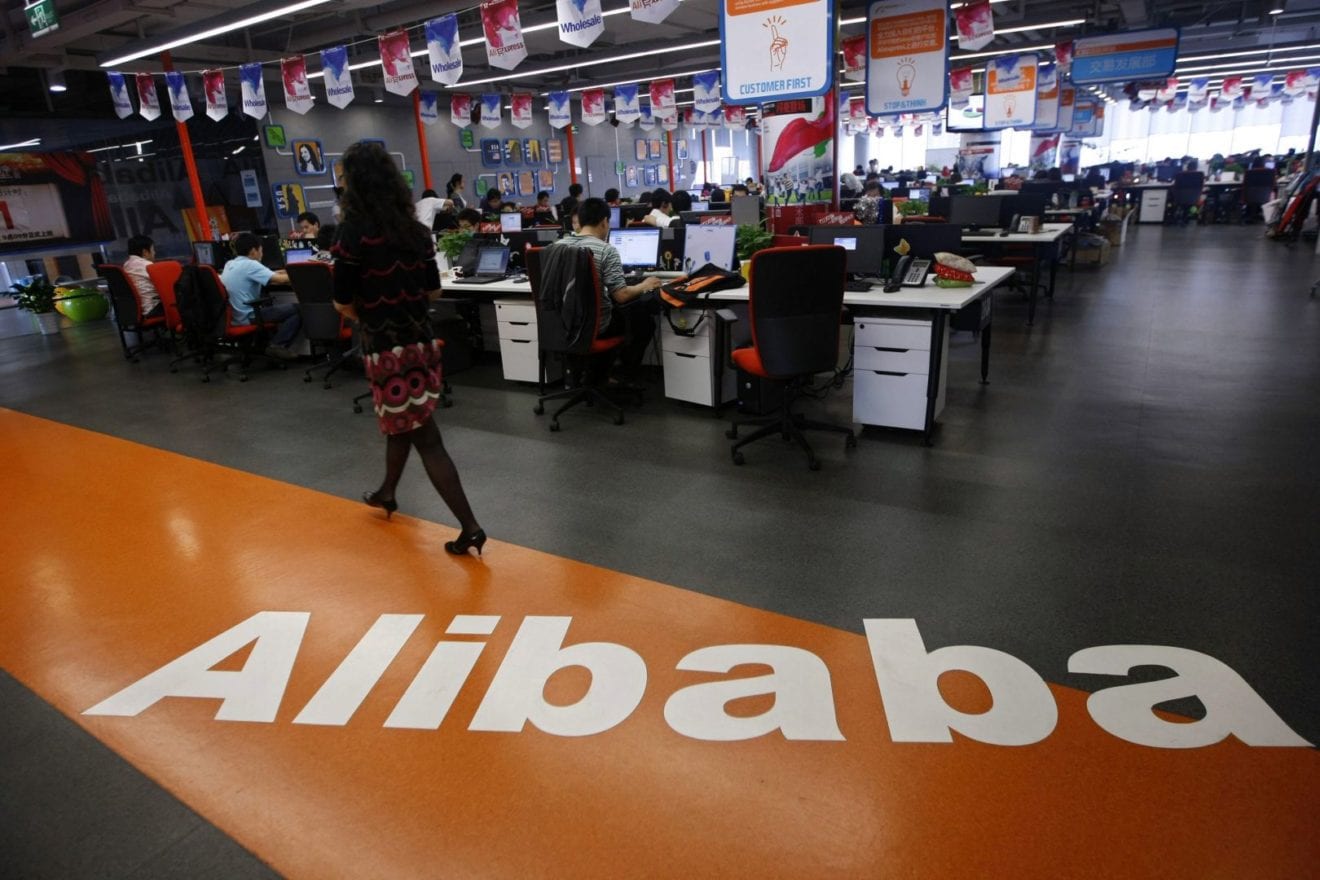
    In its sixth year, the online 11.11 Global Shopping Festival will introduce Alibaba Group’s New Retail concept which integrates online and offline shopping experiences.

    With the event bringing together consumers, retailers, logistics companies, financial institutions and online as well as offline stores and shopping centres internationally, Alibaba Group CEO Daniel Zhang says it is a “grand stage” for showcasing the New Retail initiative.

    During the festival, Alibaba will collaborate with 52 shopping malls to set up 60 New Retail-powered pop-up stores across 12 cities in China. Consumers can visit a pop-up store of a cosmetics brand, for example, to experience an augmented-reality (AR) lipstick trial.

    Nearly 100,000 stores in 31 provinces and 334 cities throughout China will also be converted into “smart stores” with a range of New Retail experiences such as facial-recognition payment and scan-and-deliver O2O shopping.

    New Retail will also be rolled out for community stores such as Rural Taobao service centres and neighbourhood convenience stores.

    In the lead-up to the November 11 event, Alibaba is running an array of promotional initiatives. The 24-hour online sale involves more than 140,000 brands and 15 million product listings globally, with more than 60,000 international brands available to Chinese consumers them across the Alibaba marketplaces, including Adidas, Bose, La Mer, L’Oreal, Mac, Mattel, Mondelez, Nike, P&G, Shiseido, Siemens, Unilever, Uniqlo, Wyeth, Zara, and more.

    Through a new Tmall initiative inaugurated in June this year, 100 Chinese brands can sell globally, with a focus on the Southeast Asian markets at the initial stage. Free shipping will be introduced to 10 countries during this year’s Festival to extend the global reach.

    This year, Alibaba will continue to leverage its media and entertainment assets to drive online consumption. Chris Tung, Alibaba Group’s chief marketing officer, says this year’s event “brings consumers around the world a step closer to realising the aspirational life where entertainment and retail become one”.

    “Regardless of their physical location, consumers will be able to participate in more experiences than ever before this year, all showing the reality of New Retail. We start today but this is a festival with nearly two weeks of celebration and so many different ways to participate.”

    Entertainment components include:

    • An AR game on Mobile Taobao App called Catch the Cat will drive online traffic to offline locations. Consumers will use their mobile device to catch the virtual Tmall Cat mascot at a number of retail partner locations to win special perks, discounts and coupons for use at online and offline stores.
    • Red envelopes of more than RMB250 million will be shared among Chinese consumers through various interactive games. One of which shoppers can invite friends to form special teams, and once their team’s purchases reach a certain amount collectively, all team members will be able to get discounts and coupons.
    • The 11.11 Countdown Gala Celebration will be held on November 10 in Shanghai’s Mercedes Benz Arena. Directed by Hollywood producer David Hill for the second year in a row, the gala will be broadcast live on three of the leading satellite TV channels Zhejiang TV, Shenzhen TV and Beijing TV, and will feature top-tier singers and movie stars who will be announced in the weeks ahead.

  • Terminal 4 brings new retail brands to Changi Airport

    Terminal 4 brings new retail brands to Changi Airport

    Changi Airport retail has received a boost, with some 20 new retail brands making their debut at the new Terminal 4 (T4) which opened yesterday.

    The retail mix at the terminal, which was five years in the making, spans 81 shops, 62 of them retail and service outlets and 19 food and beverage operators. About a quarter of them are making their Changi Airport retail debut.

    Centrestage are integrated cosmetics and perfumes and liquor and tobacco stores operated by The Shilla Duty Free and DFS respectively. In a first for the airport, shoppers are able to pay for all their purchases from the two stores in a single transaction.

    In the departure transit area, there are several “double volume retail outlets” with frontages spanning up to 11 metres high.

    One of the main retail attractions at T4 is the Heritage Zone, with its facades of old Singapore shop houses, as well as the row of F&B outlets exuding nostalgia through their local delights and old-school furnishings. They serve up traditional Singaporean breakfast and snack items such as kaya toast, mee siam and kopi. At Live Prata Station, Indian roti is prepared right in front of customers.

    “We have received very encouraging feedback from passengers that the offerings curated for T4 are refreshing and bring a new dimension to shopping and dining at Changi Airport,” said Teo Chew Hoon, CAG’s group senior VP for airside concessions.

    “Our commercial team has paid attention to bringing in innovative concepts and new experiences for passengers spanning a range of categories, from the live cooking stations for prata and BBQ pork, to the sampling of cocktail mixes and the test-flying of drones. We will continue to work with our tenant partners to create a fun, vibrant and positively surprising experience for passengers and visitors at T4,” she said.

    On its first day of operations yesterday, following extensive testing, the terminal handled 19 arrivals and departures, carrying about 4200 passengers. Cathay Pacific and Korean Air are the first two of nine airlines scheduled to use the new facility.

    Tan Lye Teck, Changi Airport Group’s executive VP for airport management said the new terminal will increase Changi Airport’s capacity by 16 million passenger movements per annum, taking the total capacity to 82 million.

    Japanese theme

    Meanwhile, Changi Airport retail welcomed a Japanese Farmers Market to Terminal 3 last month, along with other retailers.

    Located in the Departure Hall, the market sells an extensive range of produce including Wagyu beef cuts, fruits, and bento boxes imported from Japan.

    Across from the Farmers Market, Kalms’ automated retail machines offer a range of gifts such as flower bouquets, soft toys and jewellery.

    And in the public area of T3, local beverage store LiHo opened its first airport outlet last month.

    In Terminal 1’s transit area, Michael Kors opened its second Changi Airport store.

  • Singapore retail rent decline ‘moderated’

    Singapore retail rent decline ‘moderated’

    Fresh research from real estate house Edmund Tie & Company suggests the decline in Singapore retail rents has moderated.

    Dr Lee Nai Jia, head of research with Edmund Tie, says the retail leasing market remained subdued in the third quarter, despite the decline easing.

    “While e-commerce and the accessibility to shopping havens in neighbouring countries continue to affect retailers and the overall retail market, the impact seems contained for now,” he said in a research note.

    “In fact, we see more online shopping portals adopting the brick and mortar strategy, such as Reebonz.

    “Separately, local retailers are engaging consumers via omni-channels.”

    In the short term, Jia predicts food and beverage operators and educational institutions will most likely form the bulk of demand for retail space.

  • Nike CEO says Undifferentiated, mediocre retailers won’t survive

    Nike CEO says Undifferentiated, mediocre retailers won’t survive

    Sportswear giant Nike has a message for its thousands of retail partners around the world: shape up or ship out.

    Speaking at an investor day in the US yesterday, Nike brand president Trevor Edwards outlined a step-change for the iconic business in the way it deals with its retail partners, saying that “undifferentiated, mediocre retailers won’t survive,” and committing Nike to “moving away from this over the next five years.”

    Nike, which currently has 30,000 retail partners globally, plans to select around 40 “differentiated retailers”, such as Nordstrom, Footlocker and Amazon, for special collaborations and branded space in-stores.

    No-names were mentioned in terms of who might be on the chopping block in the coming years, but the company is drastically stepping up its direct-to-consumer efforts as part of its plan to reach its $50 billion annual sales target by 2020 – a goal set in 2015 that investors have previously expressed scepticism about.

    To service its ambitions Nike laid out a raft of new targets under a “triple double strategy” laid out by chairman, president and CEO Mark Parker.

    “The consumer today expects a premium experience, with innovative product and services delivered faster and more personally,” Parker said. “Fueled by a transformation of our business, we are attacking growth opportunities through innovation, speed and digital to accelerate long-term, sustainable and profitable growth.”

  • Australia’s Retail Food Group to target China

    Australia’s Retail Food Group to target China

    Australian-headquartered food and beverage retailer Retail Food Group says it will focus on greater China for its next phase of growth.

    RFG is Australia’s largest multi-brand retail food franchise owner, developer and manager, with a network of more than 2500 outlets across 12 brands and 81 territories. RFG CEO international, Mike Gilbert, says the company plans to introduce a selection of its coffee-based retail food brands to Chinese consumers.

    “We’re excited to replicate our successful Australian operations in the Chinese market and accelerate the growth of brands like Gloria Jean’s Coffees, Donut King, Crust Gourmet Pizza Bar, Brumby’s Bakery, Michel’s Patisserie, Pizza Capers Gourmet Kitchen, Cafe2U and It’s A Grind in the region,” he said.

    The company also owns the BB’s Cafe, Esquires, The Coffee Guy franchise systems and the premium Di Bella Coffee Co brand.

    Gilbert says RFG’s international expansion model is based on recruiting master franchise partners who purchase a license to develop a certain brand system in a defined territory, and provides the company and local partners with the opportunity to forge sustainable alliances.

    A key strategy driving the group’s global growth is its hub network, which provides a platform for fast-tracking coffee and brand system expansion in international markets, whilst also more efficiently servicing the company’s existing markets.

    RFG is developing a Middle East hub next year which it believes will help it expand quickly through the MENA region, whilst enabling the group to more efficiently service and grow brands  in the Gulf.

    “We currently have hubs in Australia, New Zealand and the US, and plans for the Middle East underway, and will be looking to replicate them in Asia and Europe,” said Gilbert.

  • HP develops POS solution for retailers

    HP develops POS solution for retailers

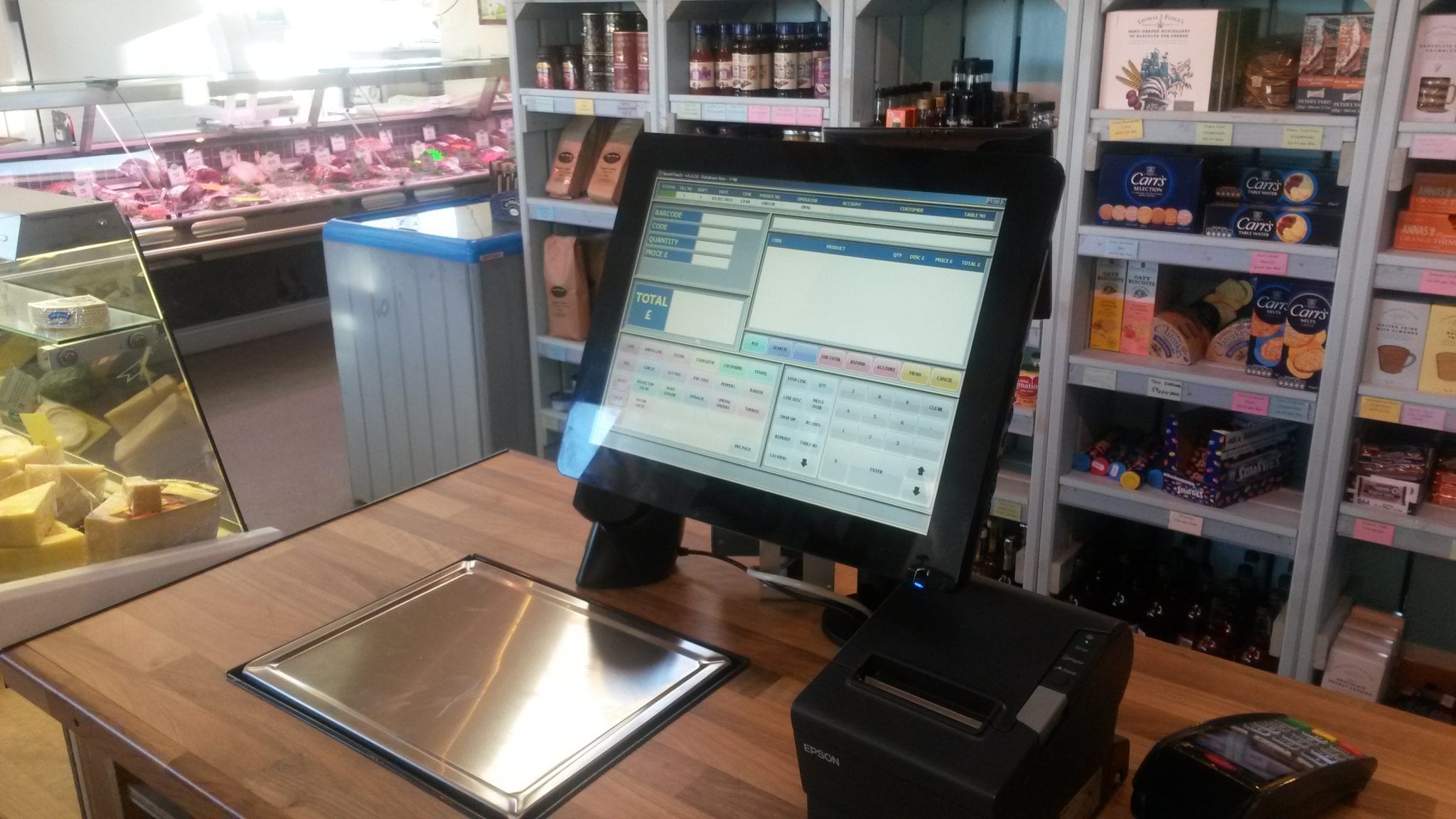
    HP has developed a point of sales solution aiming to reimagine how technology can transform the in-store experience for customers.

    HP ElitePOS supports several use cases including interactive signage, employee attendance, and self-service applications like a customer check-in and access to additional product offerings in the “endless aisle”.

    For retailers who want a clean and clutter-free counter space, or who need greater versatility in the placement of their point-of-sale terminal, the display can be separated from the input/output (I/O) base for maximum placement versatility.

    With point-of-sale devices increasingly targeted by hackers, security continues to be top of mind for the retail industry. According to Verizon’s 2016 Verizon Data Breach Investigations Report, 64% of breaches in the retail industry that contained data loss were caused by point-of-sale intrusions.

    “As the retail and hospitality industries undergo a revolutionary shift, the point-of-service device will be a critical hub in delivering the in-store experience for customers,” IDC VP of retail insights Leslie Hand said.

    “But with this rapid transformation in digital business also comes increased threats, in the form of targeted attacks and malware. Retail POS systems, including the new HP ElitePOS, must be able to balance the growing needs of the customer and the brand while also acting as a guardian of the  sensitive information that passes through the device on a daily basis.”

  • Singapore retail sales rise 3.7 per cent in August

    Singapore retail sales rise 3.7 per cent in August

    Real Singapore retail sales – those excluding motor vehicles – rose by 3.7 per cent in August, compared with the same month last year.

    Compared with July, they fell by 1.2 per cent.

    Adding motor vehicles into the data, August sales rose by 3.5 per cent year-on-year and eased 0.3 per cent month-on-month.

    Statistics Singapore estimates total retail sales in August at $3.7 billion, higher than the $3.5 billion in August last year.

    Sales by petrol service stations, department stores and supermarkets and of recreational goods, medical goods and toiletries, apparel and footwear, computer and telecommunications equipment and furniture and household equipment rose between 2.8 per cent and 9.5 per cent in August.

    In contrast, retail sales of optical goods and books and watches and jewellery, and sales by food retailers, mini-marts and convenience stores, fell by between 0.4 per cent and 4.1 per cent.

    Sales of food & beverage services increased 3.7 per cent in August 2017, year-on-year, to $729 million.

  • Lancome Travel Retail opens airport pop-up

    Lancome Travel Retail opens airport pop-up

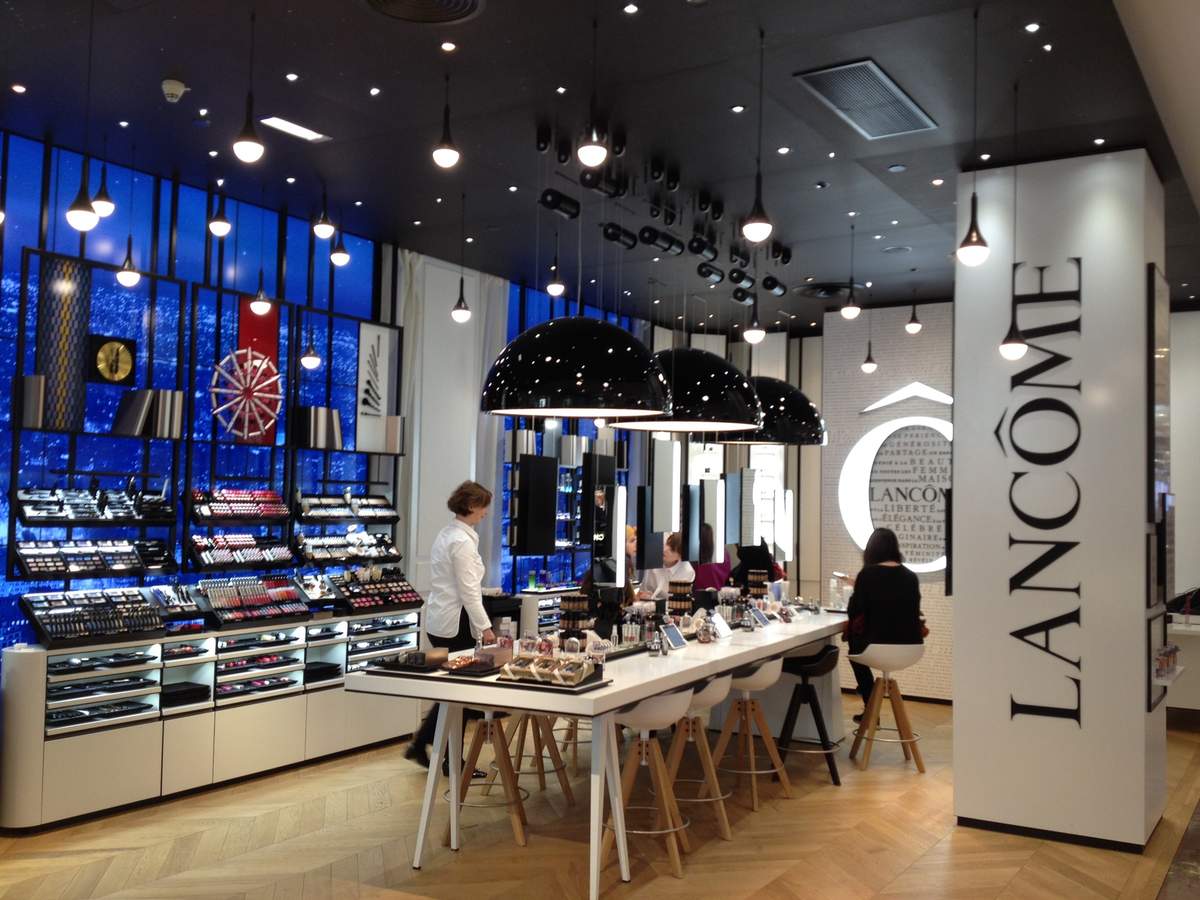
    French luxury beauty brand Lancome Travel Retail has opened a Holiday Wonders pop-up store at Singapore’s Changi Airport.

    In partnership with The Shilla Duty Free and Changi Airport Group, it is at the Terminal 3 Departure Transit Hall (Central) until November 10.

    The first of its kind at the airport and a first for the brand, the pop-up celebrates the brand’s new “Declaring Happiness” global campaign and the release of Lancome Advanced Genifique Sensitive. It also introduces Lancome’s augmented-reality virtual makeover app, Virtual Mirror.

    Another digital touchpoint is at the pop-up entrance, where customers can play an interactive game with a chance to win samples of Lancome’s bestselling L’Absolu Rouge lipstick.

    Immersive retail experiences at the pop-up invite travellers on an Parisian escapade. Outfitted with wooden floors and chimney, the store also features a special window with an Eiffel Tower view. Customers can take selfies of themselves “flying” over Paris holding a Lancome floating gift balloon at a custom photobooth.

    A sharing table lets customers experiment with textures and colours, as well as test-drive tailored skincare routines or makeup looks under the guidance of beauty advisors.

    Lancome Travel Retail national makeup artist Vic Tu will host a beauty show at the pop-up on October 14 and 15.

    As well as the experiential offerings, travellers can also take advantage of beauty travel exclusives at the pop-up store as well as at Changi Airport’s online duty-free shopping site, iShopChangi. Buyers of the “Your Perfect Travel Companion” sets at the pop-up store will also receive an exclusive collectible, a Lancome x Singapore luggage tag with complimentary engraving services at specified times.

  • Five tips for using messaging in retail

    Five tips for using messaging in retail

    Messaging in retail is increasingly becoming a tool of choice both online and offline. Instead of just phone or email, companies can now reach people through social messaging channels, such as Facebook’s Messenger, Twitter Direct Messages, Line or WhatsApp.

    Business Insider Intelligence recently reported the use of messaging apps has surpassed the use of social networks, while a report by The Economist states over 2.5 billion people have installed at least one messaging app on their smartphones. And while messaging may have started out as a way for friends to chat socially, its high engagement levels means customers are on these channels and that messaging is an ideal way to reach out to them.

    For example, by using Facebook Messenger – which has more than 1.2 billion active monthly users – customers can shop, purchase and communicate with businesses. Two years ago, global customer support software company Zendesk partnered with Facebook to allow businesses to easily manage conversations on Messenger.

    Many businesses chose to use messaging as a way of improving their customer service. For instance, when BarkBox, a service provider for dog owners, began managing customer conversations on Messenger, it saw a dramatic decrease in average response time from 60 minutes to four minutes. This helped earn the company a ‘responsive badge’ on their Facebook page.

    Effective engagement

    In today’s connected world, no one leaves home without their mobile phone. Therefore, when used correctly, messaging can be very effective for retailers to engage with customers. Here are some practical tips on how businesses should get started when it comes to messaging their customers:

    Know your entry points:  Not everyone may be comfortable with messaging a company, so it’s best to introduce them to the concept. Businesses with existing Facebook pages or Twitter handles should use the “Message us” button to bring relevant conversations from a social media platform into a one-to-one setting. Similarly, various messaging apps have embeddable buttons that allow customers to message businesses from the website. For retailers without a website, you can encourage customers online through QR codes, which they can scan at retail outlets and start following your messaging profiles. Usually pairing this with a discount or promotional item, helps incentivise the customers.

    Identify your audience and the needs: Don’t try and put all customer conversations onto a messaging platform.

    Instead identify who will be best served by messaging, and which are the best situations. Generally, messaging works well when relatively short answers need to be provided quickly, but not necessarily immediately. For example, if you run a travel business, and offer online travel bookings, things can get complicated due to the many different permutations. In situations where you need to explain numerous details on a particular travel destination, it may be better for the customer to talk over the phone to one of your staff, who can convert the sale more effectively. However, if you want to send out an alert on a price reduction or communicate how to make payment via the website, then messaging is ideal.

    Contextual information: Customers hate having to repeat themselves, so if you need to transfer a conversation from one support agent to another, make sure you pass the necessary context, like customer details, previous purchases, outstanding queries, or shipping updates. When using Facebook Messenger, it is also helpful to link their Facebook identity with your records.

    Response time matters: Response time has a strong correlation with customer satisfaction scores. This is particularly important with messaging, as it’s meant to be a way to get answers fast. Messaging is often used for time-sensitive communications, such as someone asking about their food delivery, or a customer having problems in the middle of his/her e-commerce purchase. The golden rule is to answer at least 90 per cent of your messages within 15 minutes. If you can hit this goal, you will earn a “Very responsive” badge on Facebook. In situations where you are not able to respond quickly, for instance after office hours, set an auto-responder so that customers are aware and not left waiting.

    Pair humans with bots: This works well as long as you have boundaries about how you use your bots. As the accuracy of conversational bots isn’t there yet, masquerading your bots as a human or having open-ended conversations is not recommended. Instead, use bots for repetitious answers, such as checking account balances, tracking delivery, or handling FAQs. Whenever a bot is driving the conversations, make sure the customer has the option to switch over the conversation to a human agent, with the full context available. The bot space is very exciting and has great potential. For example, one of our customers allows people to order online from restaurants, grocery stores and other businesses. They are leveraging Facebook’s AI-powered concierge that inserts recommendations on Messenger. So, if two friends are messaging each other, discussing dinner, the bot can suggest placing an order online. Ordering and payment can all be seamlessly completed within the same messaging app.

    The messaging space has evolved significantly over the past few years, and is still evolving. As this technology and the way people are using it is still so new, the best way for retailers to use messaging is to start slowly and test each approach. Then evaluate the response and if it works well, expand your messaging channels.

  • Hong Kong retail sales rise ‘moderate’ in August

    Hong Kong retail sales rise ‘moderate’ in August

    Hong Kong retail sales continued their steady but sure recovery in August, rising 2.7 per cent year-on-year.

    The Census and Statistics Department (C&SD) estimates retail sales totalled

    HK$34.8 billion. After taking into account the revised estimate of 4 per cent for July, retail sales rose 0.3 per cent during the first eight months of this year, compared to last year. That takes the year-to-date figure out of the red after a shaky first two months of the year.

    A government spokesman described August’s growth as “moderate” and said the rise was mainly supported by “the prevailing sanguine consumer sentiment amid a full-employment situation”.

    “The near-term outlook for retail sales should remain positive given the favourable job and income conditions and stabilisation of inbound tourism. However, the various external uncertainties remain causes for concern.”

    Categories to perform well (in order of the category’s impact on the total figure) were jewellery, watches and clocks, up by 7.3 per cent, supermarket sales (up 2.3 per cent),  department store sales (up 5.2 per cent), medicines and cosmetics (up 2.3 per cent), electrical goods and cameras (up 1.4 per cent), books and stationery (up 1.8 per cent), and furniture and homewares (up 3.5 per cent).

    Apparel sales fell 0.6 per cent, food and liquor sales by 3.9 per cent, footwear and accessories by 5.2 per cent, Chinese drugs and herbs by 3.2 per cent and optical shop sales by 0.1 per cent.

    After netting out the impact of inflation and other price changes year-on-year, Hong Kong retail sales rose 3.2 per cent in August.

  • Global e-commerce expected to double in next five years

    Global e-commerce expected to double in next five years

    Global e-commerce continues to revolutionise the air cargo industry, and is forecast to increase 19 per cent a year over the next five years, from US$1.9 trillion in 2016 to US$4.5 trillion in 2021, according to the annual E-Commerce Revolution Report released recently by Air Cargo Management Group (ACMG). The 2017 E-Commerce Revolution Report provides an in-depth look at the explosive growth of global e-commerce air logistics.

    The report features fresh and insightful analysis of the major marketplaces, sellers, and logistics providers that are fuelling this revolution. It is not just the best-known participants, such as Amazon and Alibaba, driving this revolution, but also global express airlines, along with players lesser known outside their home countries, such as JD.com in China and Otto in Germany. The report tracks the companies using and providing e-commerce air logistics, and offers insights on global trends in the industry.

    “E-commerce has disrupted retail and is now revolutionising logistics,” said Alan Hedge, senior director of Air Cargo Management Group. “This, our second annual report, builds on the strengths of the first and covers new territory by offering descriptions of additional e-commerce companies and additional discussion of fulfilment networks in China, the largest e-commerce market on the planet.”

    New for the E-Commerce Revolution Report this year is a web-based companion database tool for exploring relationships between major e-commerce players and logistics providers. The tool allows users to search particular logistics providers and users to isolate logistics transactions worldwide. Additionally, the tool can be used to quantify e-commerce air logistics transactions on a global basis.

  • The Australian shopper has never had so much power

    The Australian shopper has never had so much power

    As the retail sector evolves, the average customer’s expectations are changing. To stay ahead of the curve, businesses need to adapt.

    The average Australian has been quick to adopt online shopping. In 2016, online sales exceeded $20 billion for the first time. Key emerging trends signify beyond doubt that the retail landscape is changing rapidly. To avoid being left behind, Australian retailers need to act now.

    The recent Salesforce Empowered Shopper report highlights the challenge: “We’re in the age of the customer. They expect personalised experiences everywhere, not just in marketing communications, and physical stores are just one touch-point in their increasingly dynamic retail interactions.”

    So what does this mean for Australian retailers as they develop their approach to e-commerce over the next few years? Uber has created an expectation that when a traveller finishes a journey they simply need to get out of the car. The same shift in expectations is happening in the online retail world. Local e-commerce stores such as The Iconic and Showpo are continuously making the ways their customers engage with them easier, faster and more relevant. Step by step, they are raising the bar for all digital retailers.

    Australia’s e-commerce revenue is sitting at $9.54 billion USD, but it is expected to hit $14.151 billion USD by 2020. For retailers this means focusing on a connected customer experience where competitive advantage can be created, with 66 per cent of customers expecting consistent experiences across every brand interaction.

    Another key insight from the report is the evolving view of privacy as part of the overall customer experience. Consumers expect businesses they deal with to maintain their personal privacy. This means brands that focus on transparency around what data they have and how it is being used are rapidly gaining consumer trust.

    While the Amazon and Apple global giants will always exist, Australian businesses can compete through adopting established customer-centric technologies and processes to ensure you maintain the right focus for your business:

    1. Don’t think about catching up, focus on leading in one area

    You can’t do everything. Maintaining focus on a core brand experience is where you can build momentum and differentiation. It’s the harder path initially as the work may not impact sales results in the short term, but it can pay off in a big way.

    A great example of this is The Iconic, they’re all about providing consistent, amazing customer experience. They do this by delivering on what they say they will; next day delivery and free returns. They back this up by being available via multiple channels to resolve issues efficiently and with autonomy, should they arise.

    Action: Use design research techniques to map the customer experience, identify one customer problem that will have a major impact and differentiate. Focus on addressing that issue to build capability and velocity within your organisation.

    2. The customer is central

    The customer, as always, is king. Each interaction with your customer is an opportunity to understand them better. Transactional data allows you to build profiles so you get to know what makes them tick.

    But now you can build profiles that allow you to understand them in greater detail. This knowledge also gives you great power. But, at the risk of sounding like a superhero comic, with that power comes great responsibility. Misuse turns customers off fast. Used correctly, this information can help you focus on driving value for your customer firstand foremost.

    Action: Use the data you have, and may be able to access, to build rich views of Customer Lifetime Value. This will ensure your organisation can see the impact of action in a more holistic and long term way.

    3. Create experiences that allow the customer to live your brand

    Consumers no longer want to passively watch brands tell stories. They want to be part of the action. Design experiences, in the real and digital world, that allows the customer to experience your brand promise.

    Take a look at Nike, and you’ll see they’ve become much more than a brand that sells shoes and sportswear. Their invention of Nike+, first as a sensor in a shoe, then as a wristband and now as a suite of apps, allowed them to focus on what their brand is really about: athletic performance. In doing so they gathered vast amounts of information about how their customers were using their products and created a very ‘sticky’ digital ecosystem.

    Action: Create user experience projects, with design researchers, data analysts and interaction designers, with the intent of defining how your brand would be experienced as an interaction or digital product.

    4. Focus on a long term competitive advantage

    Marketing through technology is not like delivering passive media. You now have the opportunity to introduce technology to your strategy that can help you communicate with your customer, empower your customer and allow you to build relationships over time. Spend more time on creating long term connections, and less time on flashes in the pan.

    Don’t rely on gimmicks and promotions to create loyal customers, utilise customer data and insights to build relevant, meaningful conversations, and stay focused on what your customer needs. Everything else will follow.

    Action: Use hypothesis based testing to build knowledge of what customers actually want. Then use this knowledge to design and build online experiences that create a long term brand differentiator, and a unique relationship between the brand and each customer.

    While many commentators will say that traditional forms of advertising still have their place, what recent events have shown us is that place is increasingly at the bottom of the pile. What’s clear is that businesses need to ‘become digital’ – simply doing digital marketing won’t cut it. Now is the time to invest seriously in your customer, digital technologies and data-driven communications.

    To win in today’s environment it’s critical that businesses start to create a balance between digital advertising and customer focused digital innovation. They need to make the shift from just making people want things, to creating things and experiences that people want.

  • Online retail sales going strong in Thailand

    Online retail sales going strong in Thailand

    Thailand has seen an explosion of Internet shopping in recent years as consumers become more tech-savvy. If that is anything to go by, e-commerce in South-east Asia is taking off as well.

    Online retail sales in Thailand of everything, from washing machines and televisions to fish sauce, are growing more than 100 per cent, far outpacing purchases made at traditional stores, where sales are rising by about 10 per cent.

    That is down to a combination of stronger and faster Internet speeds in the country and the success of online merchants, such as Lazada.

    Thailand’s third-biggest mobile-phone company, Total Access Communication, estimates that Thais spend up to six hours a day on social media websites, including Facebook and YouTube.

    Thailand is the only country in South-east Asia that breaks down retail sales data into an online category, providing a useful guide of what e-commerce growth may be like in the region, according to Maybank Kim Eng.

    Bigger markets, such as China and South Korea, already have higher penetration rates of online retailing at 16 per cent and 18 per cent, respectively.

    That shows the potential for South-east Asia, where e-commerce sales could grow to 5 per cent to 10 per cent of overall retail purchases over the next five years, according to Maybank.

    Alibaba founder Jack Ma recently signed up to be a member of a government panel in Indonesia tasked with steering the e-commerce industry in South-east Asia’s most-populous nation. Macquarie Research estimates online retailing in the country can reach US$65 billion (S$88 billion) by 2020.

    The surge in e-commerce and a lack of official data means the health of the consumer in South-east Asia may be underestimated, according to Maybank. Tracking consumer patterns will involve more than just looking at official retail sales, it said.

  • Indonesia retail sales down first time in six years

    Indonesia retail sales down first time in six years

    Retail sales in Indonesia declined 3.3% in July 2017, compared to last year, according to a central bank survey released this week, marking the first drop in retail sales in nearly six years.

    Food and beverage sales, as well as home furnishing and electronic appliances were particularly weak in July, Bank Indonesia wrote in the survey report.

    The news follows a strong result in June for the month, were retail sales grew 6.3% on a yearly basis.

    The last month to show a contraction was September 2011, when sales were 5.9% below a year earlier, said BI.

    Compared to previous years, consumption has been weak in Indonesia.

    Typically, strong sales occur ahead of the holidays at the end of the Muslim fasting month, followed by a period of weak consumption. This year, the fasting month ended in late June.

    The same survey – made up of 700 retailers in 10 major cities – went on to project retail sales in August would make a come back for a 5.3% gain on last year.

    Prices are expected to increase in the next three to six months, followed by better sales in January 2018, the survey found.

  • Singapore retail sales continue to rise

    Singapore retail sales continue to rise

    Real Singapore retail sales rose in July – but restaurants noticed a downturn.

    According to Statistics Singapore, retail sales (excluding motor vehicles) rose 2.2 per cent year-on-year for the month, to S$3.7 billion. Including motor vehicles, they rose 1.8 per cent.

    Against June, retail sales (excluding cars) rose 2. 6 per cent.

    Sales of food & beverage services declined 0.5 per cent in July, to an estimated total of $723 million.

    Compared to July 2016, retail sales by petrol service stations, of medical goods & toiletries, by department stores, of watches & jewellery, wearing apparel & footwear, computer & telecommunications equipment, recreational goods and at supermarkets increased between 0.1 per cent and 8.1 per cent in July.

    But sales of furniture & household equipment, by food retailers, mini-marts & convenience stores and of optical goods & books decreased between 1.2 per cent and 6.3 per cent.

    Turnover of restaurants decreased 5.8 per cent year-on-year in July. But, sales of fast food outlets, by food caterers and other eating places rose between 1.5 per cent and 7.1 per cent.