Tag: Retail

  • Interviewing For A Career In Retail Management: Tips For Success

    Interviewing For A Career In Retail Management: Tips For Success

    Sitting through an interview is not easy. Coming up with the right questions is often a difficult process; you want to make a good impression and come across as intelligent, but you don’t want to accidentally offend anyone. If you need help, the information below should help.

    Retail Management: Is It Right For You?

    Retail management is a great career choice. Not only will it challenge you, but you’ll be faced with new situations on a regular basis, which means that you will never get bored. You’ll have a large amount of inventory to work with, plenty of coworkers, and a strategy to implement on a daily basis. Your hours may vary, but you can expect to be eligible for some great benefits. There is plenty of opportunity to move up the career ladder; you can start at the bottom and wind up on top one day if you work hard enough!

    Retail management is something that graduates should consider for a variety of reasons. For example, the salary can be very competitive. You may be able to travel, and depending on your job performance, you could move into a senior position over time.

    It is not easy to secure a position in retail management, however. If you want to do well, you’ll have to learn how to make your mark and stand out from the rest that are trying to secure the same positions that you are.

    A great resume is important, after all it’s the first thing people tend to look at when looking to hire someone. Ambitious people who showcase their drive on their CV are always going to be certs when it comes to getting as far as the interview stage. The character Jessica Pearson from suits is a good example of this, she’s driven, savvy and ambitious and there’s a lot that we can learn from the fictional character – you can see what can be garnered in this post about a resume makeover for tv hit “suits” character Jessica Pearson. Yes, she’s fictional, but there’s a lot to be learned from her. Yes, she’s fictional, but there’s a lot to be learned from her.

    To start, find out as much as you can about the company you are interviewing with. However, you should also take things a step further and also look into the industry as a whole. For example, check the news and trade magazines. Find out what the trends are in the industry at the moment. Form your own opinions and be ready to convey those opinions in an intelligent manner.

    If you truly want to stand out, asking well-thought out questions is the best way to do so. Many interviewers want to see that a graduate is invested in their potential new career, and asking questions is one way to show that you are serious about the job.

    By asking questions, you can also convey your enthusiasm for the retail sector. Many interviewees are hesitant to ask questions, but you shouldn’t be; it is important to do so.

    Types Of Questions

    As the interview draws to a close, the person in charge will normally ask you if you have any questions. This is your time to speak; take it seriously, because you have the opportunity to leave the interviewer with a positive impression of you.

    Remember, simply because the interview is winding down does not mean that the employer is paying any less attention to you. He or she wants you to ask intelligent questions. They want to see that you understand the business as a whole and have a firm grasp on what your job responsibilities might be.

    Determine what questions you want to ask ahead of the actual interview. It can be difficult to think of them while you are sitting in the interview chair.

    It is a good idea to have five questions prepared. You likely won’t get to ask that many; the interview will have to end some time, and if people are coming in after you, it can’t extend for too long. However, you should have extra questions ready because a few of the ones you prepared might get answered early in the conversation.

    When you are looking up the specifics of the job, the company and the industry, you can form your questions. However, some people still have a hard time coming up with questions to ask. There are a few questions you can fall back on. For example, ask how the position will help the company as a whole, as it relates to their goals and objections. That question will help you learn more about the mission of the company and what your responsibilities will be.

    You can also ask about current challenges. For instance, note something specific about the company (e.g., they are opening up several new stores) and then follow by asking what type of challenges may crop up as a result.

    Another good question involves the type of training or support you will receive if you get the job. A lot of retail management positions offer job training. Not only will it help you learn your role, but any type of training looks great on your resume. If no training is available, find out what type of support will be offered as you learn the position.

    Also, make sure to ask about career advancement. This question shows the employer that you want to do well in your role and have an eye on the future. You can learn a bit about the structure of the company as well. Another question to ask is how you can show early on that you are mastering your new role. You’ll find out more about what is expected of you.

    Finally, ask why the company is a great place to work for. Your interviewer may not be expecting this question, but it can help you learn more about the benefits involved and what the organization is like as a whole.

    When asking questions, make sure not to pose an inquiry that is easily answered through a bit of research. Don’t ask about money right away either; that is something you can talk about once the job is offered to you.

     

  • China’s 2018 Slowdown Imminent

    China’s 2018 Slowdown Imminent

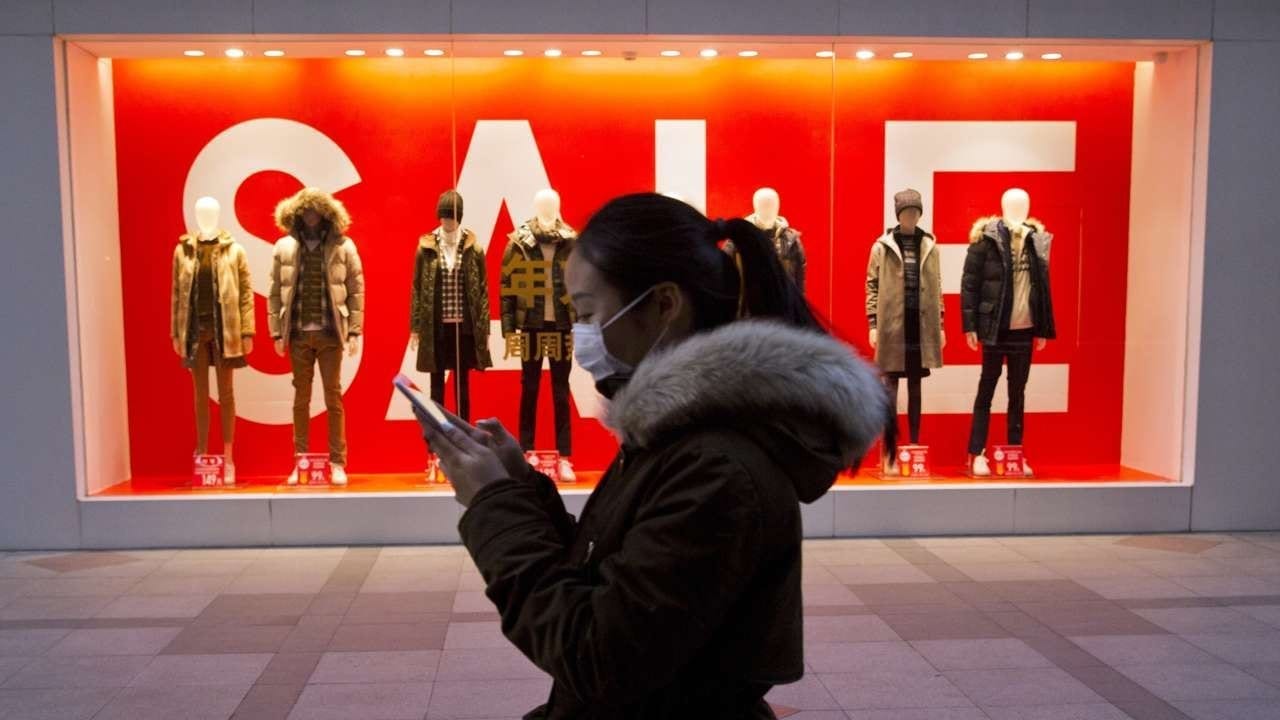
    Chinese industrial firms continued to ramp up production in the fourth quarter, a private survey on Wednesday showed, but growth in wages and hiring slowed in a further sign of cooling momentum in the world’s second-biggest economy. The quarterly survey of thousands of Chinese firms by China Beige Book International showed “old economy” firms in the commodities sector sustained an increase in net capacity and production. Overall, wages and hiring ebbed in the December quarter, with the retail sector suffering the biggest blow on weak revenue, a hiring slowdown and worsening cash flow.

    The results reinforce views that China’s economy will slacken in 2018 after posting better-than-expected 6.9% growth through the first-three quarters of this year in the run-up to a key meeting of the ruling Communist Party.

    For much of this year activity was supported by robust exports and a construction boom, thanks to a government-led infrastructure spending spree. But a relentless crackdown on debt risks has started to weigh on the economy. “If you expect a noticeable slowdown in 2018, the first post-congress returns support those expectations,” CBB said of its fourth quarter findings. Performance in the retail sector lagged that of other industries, the survey showed, despite Beijing’s efforts to restructure growth towards domestic consumption from years of overreliance on exports and credit-intensive investment.

    Authorities are in the second year of an extended campaign to foster sustainable growth by reducing high levels of debt across the economy, particularly targeting speculative lending in the financial sector and the housing market.

    Mixed Results

    While fourth quarter corporate borrowing fell from the third, and banks sold fewer ‘shadow banking’ investment products, average lending rates fell for a second quarter in a row, CBB said, underscoring the mixed results from the deleveraging process. CBB highlighted weakness in the auto retail segment, where growth is slowing from a high base, while apparel and luxury goods saw rapid inventory growth, which could point to future weakness.

    The fourth quarter survey again showed little evidence of supply-side reform, with industrial commodity firms adding net capacity and ramping up production, as well as boosting their payrolls.
    Beijing said last week that it will push forward structural supply-side reform that saw outdated capacity taken offline, including surpassing a target for cutting 50 million tons of steel capacity this year.

    Trade Deficit Widens

    China’s trade deficit in services widened to $18.3 billion in November from $17.8 billion in October, the foreign exchange regulator said on Wednesday. The deficit was largely due to a $14.9 billion gulf in spending between foreign tourists and the Chinese, who splurge more abroad than do visitors to China, data from the State Administration of Foreign Exchange showed.

    For the January-November period, China’s services trade deficit stood at $234.8 billion, versus a gap of $216.5 billion for January-October. Shanghai stocks suffered their biggest loss in two weeks on Wednesday amid signs of slowing economic growth and year-end liquidity tightness. Benchmark rates in the banking systems kept climbing in signs of liquidity stress. The one-month Shanghai Interbank Offered Rate climbed to 4.93% on Wednesday, the highest level since April, 2015. The 14-day repo rate rose as much as 10%, the highest level in four years.

    Profits Fall

    China’s major industrial firms reported slower profit growth in the first 11 months, but saw progress in improving profitability and lowering debt levels, the National Bureau of Statistics said Wednesday. Businesses with annual revenue of more than 20 million yuan (about $3 million) reported aggregate profits of 6.88 trillion yuan in the first 11 months, a 21.9% increase from one year earlier.

    The growth marked a mild slowdown from 23.3% in the January-October period. In November alone, profits were up by 14.9%, down from 25.1% during the previous month and the weakest pace since April. Combined revenue from main business was up 11.4% in the first 11 months, down from 12.4% in October. NBS statistician He Ping said slowing price growth bit into corporate profits. “Primary calculation showed price changes… reduced profits by 94.4 billion yuan month on month, dragging down the profit increase by 13.8 percentage points,” he said.

  • Singapore inflation rises 0.6% in November

    Singapore inflation rises 0.6% in November

    That is the fastest year-on-year increase since July, when headline CPI also rose 0.6 per cent from a year earlier.

    Core inflation, which excludes accommodation and private road transport costs, remained unchanged from the previous month at 1.5 per cent, the Monetary Authority of Singapore (MAS) and the Ministry of Trade and Industry (MTI) said in a joint press release on Tuesday (Dec 26).

    Private road transport costs rose 4.1 per cent in November from a year earlier, data from the Singapore Department of Statistics showed.

    Accommodation costs fell by 3.9 per cent in November, moderating from the 4.2 per cent drop in the previous month. The smaller decline reflected the dissipation of the dampening effect of the disbursement of Service & Conservancy Charges (S&CC) rebates on the year-ago change in accommodation costs in October, the joint release said.

    Services inflation edged up to 1.6 per cent in November from 1.5 per cent in October. This was on account of a rise in airfares, which was a reversal from the decline registered in the previous month, as well as a larger increase in telecommunications services fees and holiday expenses which more than offset the smaller increase in recreational & cultural services fees.

    Food inflation was unchanged from the previous month at 1.5 per cent, as the pace of increase in prices for non-cooked food and food services was similar in both months.

    The overall cost of retail items registered a smaller 0.5 per cent increase in November compared to the 0.9 per cent increase in October. This largely reflected a fall in the prices of personal care products, as well as a smaller rise in the prices of personal effects, the joint release said.

    FUTURE OUTLOOK

    Looking ahead, the MAS expects core inflation to be around 1.5 per cent in 2017 and average between 1 and 2 per cent in 2018. MAS said in a media release that the CPI is projected to come in at around 0.5 per cent this year and stay in the range of between 0 and 1 per cent next year.

    However, Francis Tan, economist at UOB, said he does not expect major risks of a higher inflationary trend, but noted that all eyes could be on MAS’ next policy meeting in April.

    “The market expectation, and our expectation, is that the MAS, in their next policy meeting in April 2018, will start to normalise. I think that goes to show that among all the central banks in the world, they are more or less looking at or already started the monetary policy normalisation and the MAS is likely to continue to likewise,” said Mr Tan.

    “Of course we are not looking at a very steep increase in the S$NEER slope even at the start. We are only looking at a 0.5 per cent per annum at the start, but with more data coming in, the central bank will definitely tweak its policy appreciation stance.”

  • Macau retail sales continue to climb

    Macau retail sales continue to climb

    Macau retail sales are on the rise with businesses reporting increased turnover year-on-year. Data from the Statistics and Census Service (DSEC) shows 68 per cent of interviewed restaurants and similar establishments registered a year-on-year rise in receipts or a stable business performance in October, a six percentage point rise from September.

    And the proportion of interviewed retailers reporting a year-on-year sales increase in October rose by eight percentage points from September to 59 per cent.

    The best performing retail categories were cosmetics, with 78 per cent of retailers reporting an improvement, leather goods, (80 per cent), and apparel, (60 per cent).

    Some 21 per cent of interviewed retailers registered a year-on-year sales decline, down by three percentage points over September. Of department stores, 11 per cent reported a decline and 22 per cent of watch and jewellery vendors.

    Generally, retailers expected their sales to be stable in November, with 77 per cent predicting a year-on-year sales increase or a steady business performance, the same proportion as in October.

    Dining out data

    The proportion of western restaurants (25 per cent) reporting a year-on-year growth in receipts went up by nine percentage points, while that of Japanese & Korean Restaurants (44 per cent) was down by 13 percentage points. On the other hand, the share of establishments recording a year-on-year decline in receipts decreased by six percentage points over September to 32 per cent.

    Restaurants and similar establishments interviewed were cautious about their business prospects, with 68 per cent expecting a year-on-year rise in receipts or a steady performance in November, up by four percentage points from October. Among the various types of establishments, 50 per cent of the western restaurants and 73 per cent of the Chinese restaurants predicted their receipts to increase or to remain stable in November, up by 10 and three percentage points respectively from October.

    The DSEC says the sample of the Business Climate Survey on Restaurants & Similar Establishments and Retail Trade was selected based on the value of receipts of the establishments, comprising 167 restaurants and similar establishments (accounting for 53 per cent of the industry’s receipts) and 135 retailers (accounting for 70 per cent of the industry’s receipts).

  • Retail Food Group shares continue to plummet battling other retailers

    Retail Food Group shares continue to plummet battling other retailers

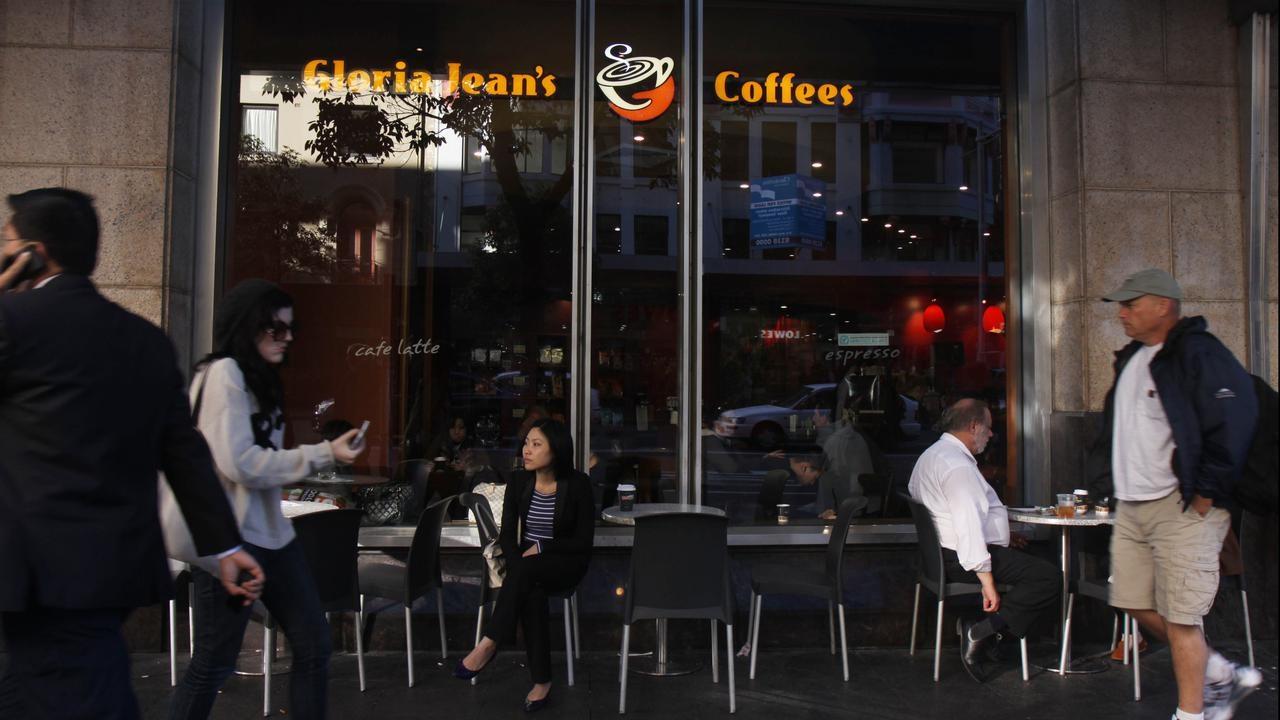
    Shares in Retail Food Group have continued to plummet for a second day after a damaging profit warning from the embattled owner of the Gloria Jean’s, Michel’s Patisserie and Donut King brands.

    RFG shares fell 17.9 per cent to $1.625 on Wednesday – their lowest value since July 2009, compounding a 25 per cent slump suffered on Tuesday when the company warned its first-half profit is expected to decline by more than a third.

    The franchise chain owner’s shares have now fallen 63 per cent since December 11, after Fairfax Media first published stories from an investigation into allegations of high fees and financial stress suffered by franchisees.

    The Fairfax reports have also claimed that significant proportions of Gloria Jean’s and Pizza Capers franchises are up for sale.

    On Thursday morning, shares recovered and bounced up over 20 per cent to $1.96.

    The plummeting stock prices has wiped $507 million from RFG’s market value in just eight trading days.

    RFG did not respond to requests for comment from AAP on Wednesday, however the company has previously denied all allegations in the reports and has blamed a tough retail environment as having a negative impact on its franchisees’ sales.

    The company said on Tuesday that its Crust Pizza and Donut King brands have continued to perform in line with forecasts but Michel’s Patisserie, Brumby’s and Gloria Jean’s are trading below expectations.

    It said domestic franchise revenue is now expected to be lower than previously anticipated, and it will book one-off costs of $7 million, including expenses linked to a business-wide review, in its accounts for the six months to December.

    As a result, the group’s now expects a net profit of around $22 million for the half year, down 34 per cent on $33.5 million in the same period a year ago.

    Meanwhile a law firm involved in a class action against Volkswagon has turned its attention to Donut King and Gloria Jean’s owner the Retail Food Group.

    Bannister Law says it is investigating a potential class action against RFG, and whether the company had reasonable grounds to issue forecasts between August 29 and December 7 of underlying annual profit growth, and whether it should have corrected its guidance earlier than December 19.

  • Rescued retailers’ employees finally paid out

    Rescued retailers’ employees finally paid out

    Administrators for rescued retail chains Marcs and David Lawrence have paid out all employees affected by the company’s transition to new ownership.

    Deed administrator Rodgers Reidy said M. Webster Holdings, which formerly traded as Marcs and David Lawrence, paid a distribution to the employees of the company representing payment in full of employee entitlements.

    “While many current employees were re-employed by FFS Retail, a subsidiary of Myer, when it purchased the assets, those employees who were not re-employed have now been paid their entitlements in full,” said Andrew Barnden of Rodgers Reidy.

    “We have been working closely with Myer to transition the assets to FFS Retail in a seamless manner.

    “In the new year we expect to pay a distribution to the unsecured creditors of the company, which will finalise the successful sale and restructure of the company. We also understand that many former suppliers have also benefited from the sale through ongoing trade.”

    Myer salvaged the Aussie fashion duo from liquidation in April.

    The fashion retailers, which are two of Australia’s best-known labels, had employed about 1130 staff in Australia and another 42 in New Zealand across their 52 stores, 11 outlets and 140 concessions, until entering administration in February.

  • More disruption ahead in China, warns KPMG survey

    More disruption ahead in China, warns KPMG survey

    As their spending power grows, Chinese millennials are set to disrupt the nation’s retail sector, says a joint survey by KPMG China and shopping platform Mei.com.

    Already retailers are transforming their businesses in response with new strategies such as omnichannel platforms, says the fourth annual China’s Connected Consumers survey. It analyses responses from 3004 mainland consumers to understand their current and future shopping habits.

    Online shopping has effectively become a national pastime in China, the research shows, with 77 per cent of respondents identifying it as their favourite leisure activity. This is reflected in the popularity of online shopping festivals such as Double 12 and Single’s Day.

    Nearly nine in 10 millennials are shopping online more than once a week, and 80 per cent expect the frequency to increase in the year ahead. As well as this, 31 per cent of millennials say they are expecting a significant increase in income over the next five years.

    “The modern retail industry is less about what companies can create, but more about what consumers want,” says KPMG China partner/head of consumer and retail Jessie Qian. “We’re living in an increasingly customer-centric world, and the strategic focus of businesses should be on how they can build customer engagement and product distribution based on immediate demands.”

    With the rise of the experiential generation there has been a surge in demand for luxury and affordable-luxury products. In the next year, say 70 per cent of millennials, they plan to spend more on luxury goods and services, mainly clothing, shoes, cosmetics and perfume.

    “It is increasingly difficult for a single brand to be able to fill multiple segments,” says Qian. “As China’s retail market continues to develop, more consumer groups such as millennials will rise to prominence. It is imperative for companies to diversify and maximise their relevance to different groups of consumers.”

  • Indonesian Retail Sector Sees More Growth

    Indonesian Retail Sector Sees More Growth

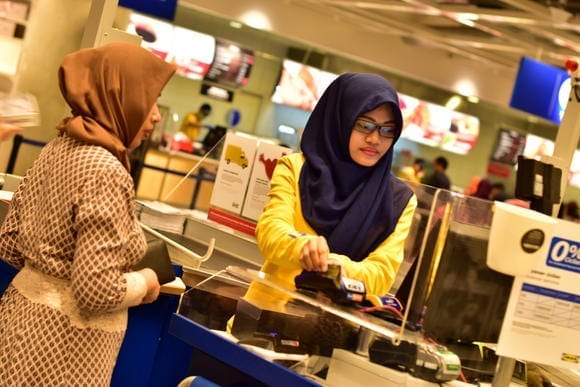
    Despite the expected sluggish economic growth this year, Indonesian food and clothing retailers are gearing up for expansion to capture a greater share of the middle class and its higher income.

    “Expansion is crucial for the retail industry to boost sales turnover, other than renovating old branches,” said Tutum Rahanta, executive at Indonesian Retailers Association (Aprindo), adding he estimated sales turnover from the nation’s retailers to grow between 10 percent and 12 percent this year.

    Last year, Aprindo’s data showed turnover at Rp 150 trillion ($12.75 million).

    Tutum added that competition between retailers is intensifying, so companies must take risks by expanding.

    He said if expansion is delayed, a retailer may lose its market share.

    One retailer eager to expand is Hypermarket operator Matahari Putra Prima, which plans to open 20 new branches over this coming year.

    The company, which is controlled by the Lippo Group, has set aside Rp 700 billion for capital expenditure this year, an increase of 7 percent from 2013, most of which will be used for financing expansion of outlets in eastern Indonesia.

    Danny Kanjongian, corporate communication director at MPP said in January the company plans to open up to 22 outlets this year, mostly in the eastern islands of the country.

    “The company’s cash generation capability is strong, so it can support expansion plans,” Danny told reporters on Friday on the sidelines of an inauguration ceremony of a Foodmart Gourmet outlet in Cilandak Town Square, South Jakarta.

    As of the end of last year, MPP operated 99 Hypermart outlets in as well as 97 Boston Health & Beauty stores and 30 Foodmart outlets.

    Other retailers in different segments, including supermarket chain operator Indomarco Prismatama, department store Ramayana Lestari Sentosa, fashion retailer Mitra Adi Perkasa and electronic retailer Ace Hardware are also in expansion mode.

    Indomarco, controlled by Salim Group through Indoritel Makmur Internasional, the operator of Indomaret, plans to spend Rp 1.3 trillion adding 1,300 new outlets.

    Ramayana, which sells clothes to low-income consumers, plans to spend Rp 350 billion adding six branches this year.

    Mitra Adi Perkasa, which sells a number of well-known fashion brands, is also keen on a massive expansion with previous reports suggesting plans to spend up to Rp 600 billion opening 250 new outlets across the country.

    Despite increasing competition and ballooning expenses, retail businesses in Indonesia will continue to grow over the next few years, according Maybank Kim Eng Securities analyst Janni Asman.

    The country’s growing purchasing power and living standards are the catalyst to that growth, Janni said.

    Indonesia, over the past few years, has been the darling of the investment community, with economic growth of around 6 percent each year since 2007 to 2012 though it is predicted to slow in 2014.

    Gross domestic product has increased five times within 10 years and GDP per capita has increased four times to around $5,000 now.

  • Search Engine Optimization For Retail Businesses

    Search Engine Optimization For Retail Businesses

    Search engine optimization (SEO) is a special marketing technique that can help your site rank better in the search engines. The process itself involves not only optimizing the actual content of a company’s website but also external factors such as the quality of the links that are pointing at the website and the company’s social media presence. SEO is a complicated and time-consuming process – especially for retail businesses since they usually have a lot of pages to maintain. Further complicating the matter is the fact that the search engines are continually tweaking their algorithms. That means that you have to stay on the cutting edge of SEO if you want to get good results.

    Retail businesses typically have pages dedicated to every product that they sell. They also have complicated search forms that allow visitors to search for products based on a variety of different factors. Every product on the site needs to be properly optimized to ensure that they come up during these searches.

    That is one of the things that makes optimizing a retail website so challenging. Not only do you have to optimize your site as a whole but you also have to optimize each product page if you really want to connect with potential buyers.

    Understanding The Importance Of Getting Listed Well In The Search Results

    Although the SEO process can take a lot of time, it is definitely worthwhile. Obtaining one of the top spots in the search engines can provide the following benefits:

    * An increase in traffic. Studies have shown that nearly 70% of all of the clicks on a typical search engine page go to the top five results. That means that if your site isn’t in one of the top positions, it most likely won’t get a lot of clicks from the search engines.

    * Instant trust. Search engines do an excellent job of curating content, only delivering high-quality results to their users. As a result, people have naturally come to expect that the top few results in the search listings are high-quality websites. That means that if you can obtain one of these spots, you will instantly have a measure of trust with the people who click through to your site. Appearing in a top position can make your website seem more credible and trustworthy.

    * Decreased advertising costs. Getting your site listed well in the search engines can result in a lot of free, highly-targeted traffic. When compared to other advertising methods such as pay-per-click advertising, SEO is far less expensive. Best of all, the visitors who land on your site are usually easy to convert since they are already looking for the products that you sell.

    The only downside to search engine optimization is that it can take time to see results. It is not an overnight process. Instead, all of the changes that you make cumulatively add up over time, helping your site to rank better and better in the search results. As frustrating as it might be to have to wait for results, it is well worth the effort. The sooner you start, the sooner you can start seeing an increase in traffic.

    Remember – regardless of the size of your business, you can succeed online. You don’t need a huge advertising budget or a large retail shop. Instead, all that you need to do is get your business in front of the eyes of the people who are searching for the products that you sell. Here are some tips that you can use to start optimizing your site today.

    1. Include the right keywords in your content.

    Keywords are the words that people type into the search engines when they are searching for a particular product or service. When deciding what keywords to use in your content, think about the types of words that people type in. For instance, if you sell dresses, avoid general terms such as “clothing”, opting instead for more specific words such as “red evening gowns” or “blue maxi dresses”. Being more specific will help bring in targeted traffic.

    There are also a lot of different keyword tools out there that you can use to help figure out which keywords and search phrases people are using when they are searching for the items that you carry in your store.

    When people are shopping, they tend to use very specific keywords. Because of that, you should incorporate specific keywords in your content. These keywords should clearly identify what the product is as well as other details such as its color, size, and the type of material that it is made from. See more about keywords here.

    1. Create a large site.

    SEO guru Matthew Woodward suggests adding additional pages to your website may help it rank better since search engines tend to favor larger sites over smaller ones. Retail sites are usually already quite big, simply because they have a separate page for every product.

    Along with your product pages, however, you should consider adding additional content such as blog posts, interesting articles, or testimonials from past customers. Product reviews can also be beneficial for helping people find the products that they need. The more time and effort you can put into building a helpful, informative website, the more likely your site is to rank well in the search results.

    The key through all of this, however, is to focus on creating the highest quality content that you can. Check out Matt’s seo tutorials if you want more on this.

    1. Leverage your images.

    Adding images to your website is a great way to help people get a better idea of what they are buying. Images can also be used to help optimize your site. All that you have to do is add a description to them.

    Adding relevant keywords to the name of the image file and to the alt tag for every image on your site is a great way to help the search engines better understand what your content is about. This can boost your rankings, allowing your site to appear higher and bringing in more traffic. SEO tool Yoast have some good tips here.

    1. Make it easy for people to share your content.

    Although social media doesn’t have a direct impact on your overall ranking, it never hurts to have your content shared on as many social media platforms as possible. The easier you can make it for people to share your content, the more likely they are to do it.

    You should have share buttons displayed prominently on every page of your website. That way, all people have to do to share your content is to click on one of those buttons. The more times your content gets shared, the more likely you are to connect with potential buyers.

    1. Make your site mobile-friendly.

    A large percentage of people rely on their cell phones when accessing the Internet. In fact, there are now more people using mobile devices to search the Internet than there are people using desktop or laptop computers. Because of that, you should make sure that your content is mobile-friendly and that it displays correctly on cell phones, tablets, and other mobile devices. Make sure your text is large enough to easily read and that your layout works well on small screens.


  • Solid Advice For A Successful Distribution Business

    Solid Advice For A Successful Distribution Business

    Retail stores depend heavily on wholesale distributors, seeing as they make sure all products get transported and delivered. And just like retail stores depend on distributors, distributors depend on retail stores for business. However, this is just a basic explanation that typically comes with several challenges, difficult choices, and complexities. Here is a deeper look at what builds the foundation of a strong and successful wholesale distribution company.

    1. Retail Clients

    There are several ways to approach retail clients, but keep in mind, the size of the network plays a huge part in terms of the profit margin. Locking in as many retailers as possible (while still being able to handle the workload), will directly influence how much profit the company stands to make. In addition to gaining more clients, there has to be a focus on how regularly orders come in.

    Ultimately, it works in the distributors best interest to get closer to manufacturers as well, because they represent another source of business on its own.

    1. Manufacturing Clients

    A very effective tactic used by successful distributors is to offer products directly to the retail store, which they purchase or carry from manufacturers. This makes it more convenient for the retail store, and possibly more practical depending on the circumstances.

    However, manufacturers typically have a vetting system in place, especially if they produce popular brand products. In other words, they are going to assess the distributor before allowing them to re-sell or transport their products. When this is the case, pay close attention to the requirements they have according to the application form. Read on if you want more about distribution.

    1. Marketing Team

    Yes, if the service is good and the retailers along with the manufacturers are impressed, there will be referrals. This will lead to expansion and better opportunities. But it doesn’t mean a marketing team shouldn’t be on the outside, focused on selling the distributor. In fact, it only makes sense to build a client base via the help of a professional marketing team.

    1. Minimizing Expenses

    Like any other business, wholesale distributors also aim to cut expenses as much as possible. One way of doing so is by investing in a warehouse facility that is closer to your clients. This reduces the shipping costs, enabling the distributor to offer more competitive prices. Although, this is only a good plan if the network of the distributor reaches a significant extent. If all the retailers are in a concentrated area, a warehouse will be redundant.

    The advice above is solid and no nonsense and could help you either improve your current business or to start a new one up successfully.

  • Prices of retail space and retail rent fall slightly

    Prices of retail space and retail rent fall slightly

    The retail property market remained subdued in the third quarter although the decline in rents moderated, the Urban Redevelopment Authority said.

    Prices of retail space fell 0.9 per cent in the three months to Sept 30, compared with the second quarter. That followed a 3.2 per cent decline in the second quarter.

    Retail rent dipped 0.2 per cent in the third quarter compared with a drop of 1.2 per cent in the second – a sign that the worst may be over, analysts said.

    Ms Tay Huey Ying, JLL head of research and consultancy, said: “This is the mildest quarterly correction since the downturn started in the first quarter of 2015, and comes alongside the strongest quarterly net absorption so far this year.

    “Demand for islandwide retail space expanded by 15,000 sq m in the third quarter, a reversal from a contraction of 41,000 sq m in the first quarter and a contraction of 3,000 sq m in the second quarter.”

    Mr Desmond Sim, CBRE Research senior director, noted that the rental index for the Central area saw its first increase in 10 quarters, up 0.7 per cent in the third quarter from the second quarter.

    He said the retail market is finding its footing, thanks to improved tourism traffic. “Retail rents in Orchard Road are leading the recovery, as median rents of new leases recorded in the quarter inked its first quarter-on-quarter increase of 1 per cent after 10 quarters. This is in line with the continually strong interest for retail space in Orchard Road malls, particularly from new-to-market international brands.”

    Weakness still lies in the fringe areas, he added. While overall consumer sentiment has improved, challenges such as high operating costs, labour constraints, the threat of e-commerce and competition from shopping havens in other countries, remain.

    Edmund Tie & Company research head Lee Nai Jia noted that there are also more online shopping portals such as Reebonz opening brick-and-mortar stores.

    Cushman & Wakefield research director Christine Li said: “With Amazon Prime Now in the market, retailers are looking to innovate to stay relevant and compete for shoppers’ dollars.”

    “Many other big box retailers such as Courts, Decathlon, Gain City and Harvey Norman are upping their ante and investing heavily on their e-commerce platform to complement their brick-and -mortar presence,” she said.

    Shopping centres like Century Square, Funan Mall and SingPost Centre do not want to be left out and have embarked on aggressive asset enhancement works to refresh its tenant mix and overall look and feel, she added.

  • Importance of customer service

    Importance of customer service

    The golden rule for every business man is this: “Put yourself in your customer’s place.” – Orison Swett Marden

    I know, I get it, it’s November and we need to get staff on board for our Christmas period, not too early and certainly as inexpensively as possible.

    For so many retail businesses, the Christmas trading period is the most profitable trading period of the year. This applies to both small and large businesses where typically some categories can take as much as 25 per cent of their annual sales in December, which could translate into more than half of their annual profit. Department stores included.

    Yet during this period, so many sales positions are left to the young inexperienced junior casuals who have been poorly trained, if at all, in the art of selling. The product knowledge can be mixed, their selling skills can be variable and in many cases their care factor is careless.

    So, why would a retail business, at the best time of the trading year, have the most inexperienced people on the front line, dealing with customers who are in the mood and mindset to spend, perhaps more freely than at any other time of the year? Is this good logic?

    When a retail business seeks the very best temporary sales people, invests in training them on products, the features and benefits thereof and as well as the art of selling, we consistently see a huge difference to the sales outcome.

    Although what is the commercial sense of training staff that may not be with us in the New Year?

    Well here’s the logic of investing in all staff regardless of their tenure,

    Let us assume a business decided to attract the best casuals, and employed them on attitude, paid them 20 per cent above the going rate (NSW) of $13.65 per hour and rewarded them for over achieving their sales targets, could we expect them to produce 33 per cent more sales than the normal, unmotivated casual staff that we so often see in stores at that time of the year. And the wage cost % improves in that equation.

    Weekly wage     Sales          Wage per cent

    Normal 17 yo @ award rate 30hrs pw                  $410              $2,000       20 per cent


    Motivated, trained @ $17.00 ph, 30 hrs             $510             $2,700         19 per cent

    Not only is the business ahead in pure financial terms, but in the experience that customers will have and the lasting impression of the business though having these ‘Effective People’ in your business.

    I suggest that one of the best investments a business can make around Christmas is to make sure it has the very best skills available to care for their customers in the best possible way. After all, one indifferent experience in a store is another reason to go online and avoid inferior service and sale skills, in stores.

    Train, motivate, measure and reward your casuals and Christmas sales could be as good as you hope! Put untrained, unmotivated and cheap staff to serve your customers and Christmas could be not to your liking.

  • China’s singles day VS black friday

    China’s singles day VS black friday

    For the past few years, Black Friday has become a focal point for many US and UK retailers – and for media outlets hungry for images of shoppers bursting into stores in pursuit of posh televisions. The event, supposedly named after the moment when retailers move into profit for the year, has quickly escalated into a four-day shopping festival. But it is not the only game in town – or even the biggest.

    Black Friday falls the day after Thanksgiving in the US (November 23 this year) and is followed up by a long-weekend extravaganza which culminates in the online-focused “Cyber Monday”. It has recalibrated, and brought forward, many consumers’ pre-Christmas shopping plans.

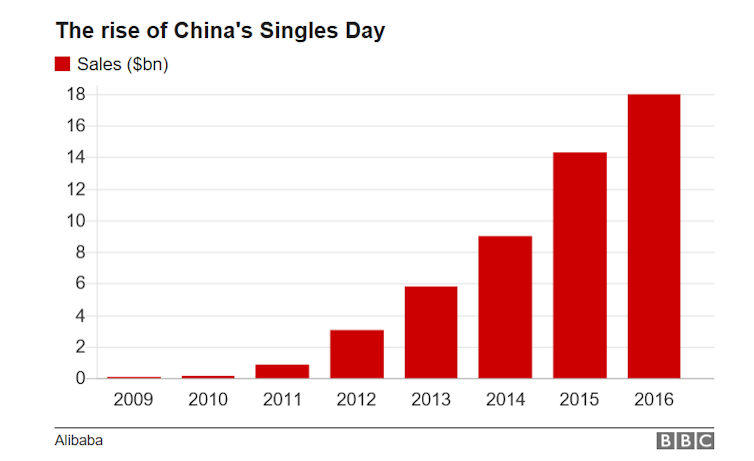
    However, unlike Black Friday, China’s November 11 “Singles Day” is still predominately focused on local consumers and completely dominated by one online retailer – Alibaba. The economic impact of Black Friday is dwarfed by this online one-day retail festival from China. Singles Day has gone under the radar for most of the general public in the West, but in 2016, Chinese shoppers spent an incredible US$17.8 billion in 24 hours on the Alibaba online platform – China’s Amazon equivalent.

    This online sales bonanza shifts more goods than the Black Friday and Cyber Monday sales days in the US combined. Black Friday in the US saw online sales hit a record of just over US$3 billion in 2016.

    Origins

    Singles Day started as an obscure “anti-Valentine’s” celebration for single people in China back in the 1990s. The popular story is that it was started by students at Nanjing University who celebrated their singledom by treating themselves. It takes place on November 11 every year and is sometimes known as “bare sticks holiday”, after the way the date is written (11/11).

    The event is also known as “Bachelors’ Day”, and it’s not hard to see why. China has a surplus of males caused by years of the government’s “one child” policy. By 2020, sociologists expect the gender imbalance to have widened to 35m and by 2030, it is estimated that one in four Chinese men in their late 30s will never have married. That is a big market.

    Black Friday was, of course, initially driven and then “exported” to the UK and other markets by major US retailers, specifically Walmart and Amazon. In China, it was the e-commerce giant Alibaba which adopted Singles Day in 2009, just as online shopping started to explode.

    It has now become a day when everyone, regardless of their relationship status, buys themselves gifts. Alibaba spotted this as a chance for retailers to generate interest and excitement and to boost sales in the lull between China’s Golden Week national holiday in October and the peak Christmas season.

    Like much of the global growth in online sales, Singles Day has been driven by mobile. Nowhere is this more stark than in China where, with 1.3 billion smartphone users, mobile shopping is huge. Around 37 per cent of Chinese shoppers buy products using their phones, compared to the global average of 13 per cent.

    We’ve seen that Alibaba’s sales numbers for Singles Day are astonishing. And the growth has been too. The chart below shows how Singles Day sales for Alibaba have risen over the past seven years. Last year alone, sales were up 32 per cent on the previous year.

    Alibaba/BBC, Author provided

    According to Alibaba, during the event on 2016 they processed more than a billion payment transactions in total, with 120,000 transactions per second at peak and their distribution system processed more than 657m delivery orders.

    Analysts have predicted this year’s event could see Alibaba rack up sales of US$20 billion despite a slowdown in China’s economy, partly due to it having a broader audience.

    Copy cats

    Of course those kinds of numbers attract the interest of Western retailers too and the 2016 event saw 37 per cent of total buyers purchasing products from international brands or merchants. Companies like US retailers Costco and Macys as well as Britain’s Top Shop and House of Fraser have marketplaces on Alibaba’s Tmall site have already got involved.

    And, for the first time, Alibaba’s 2017 Singles Day festival will bring more than 100 Chinese brands to overseas buyers, offering special promotions targeting over 100m overseas Chinese consumers in Asia and around the world.

    There is one rather sensitive obstacle to the adoption of Singles Day in the UK, however. The eleventh day of the eleventh month is Armistice Day when Britain marks the end of World War I and the nation remembers all those who have died in military service. There will be many who think it distasteful to run a shopping event on that day. However, as David McCorquodale, head of retail at KPMG, pointed out: “Singles Day in China is the biggest promotions day in the world. [The date] will stall its entry to the UK, but not forever.”

    Given the rapid globalisation of most retail trends and the way online retail now allows immediate access to millions of products from thousands of manufacturers, it is indeed impossible to envisage that Singles Day won’t extend it’s reach, in some form, to Western consumers very quickly.

  • Vietnam retail sales already faced a growth with 10 per cent

    Vietnam retail sales already faced a growth with 10 per cent

    Vietnam has seen a surge in retail sales, which topped VND 3258 trillion (US$106.9 billion) for the first 10 months of this year.

    This was year-on-year growth of 10.7 per cent, says the General Statistics Office (GSO) in releasing statistics of retail sales of consumer goods and services. Excluding inflation, the increase evens out at 9.4 per cent.

    These sales make up 74.9 per cent of the total for the sector.

    Accommodation, restaurant and catering services raked in an estimated $18 billion, accounting for 12.5 per cent of the total as well as being a 12.5 per cent improvement on the same period last year.

    Spending on travel for the 10 months reached about $1.3 billion, 15.2 per cent more than the same period a year ago, and making up 0.9 per cent of the total.

    Sales of textiles and garments rose 9.8 per cent, home appliances by 8.8 per cent, and transport services by 8.4 per cent.

    Other services totalled $16.8 billion to be 11.7 per cent of the total and 9.2 per cent up from last year.

    During the 10 months, international arrives rose by 28.1 per cent year on year to reach nearly 10.5 million, according to the Vietnam National Administration of Tourism.

  • Healthy jump in Hong Kong retail sales

    Healthy jump in Hong Kong retail sales

    Hong Kong retail sales rose at their fastest rate in more than 30 months in September, underlining the industry’s steady recovery.

    The Census and Statistics Department (C&SD) estimated retail sales totalled HK$35.7 billion during the month, up 5.6 per cent on the same month last year.

    That follows a revised estimate of August’s sales increase of 2.7 per cent.

    For the first nine months of 2017, retail sales are running at a more modest 0.9 per cent higher.

    Even after netting out the effect of price changes year-on-year, sales were up by 5.5 per cent, said C&SD.

    A government spokesman describe September’s improvement as “notable growth”.

    “This reflected the upbeat consumer sentiment and continued improvement in inbound tourism, as most broad types of retail outlets registered varying degrees of year-on-year rises. The performance of retail sales in the near term should continue to be bolstered by the prevailing favourable job and income situation as well as the recovery in inbound tourism,” the spokesman said.

    The recovery was driven by watches and jewellery, with sales up 14.7 per cent, cosmetics and medicines, up 12.7 per cent and department store sales up 9.4 per cent. Supermarket sales rose 2.6 per cent.

    Apparel and footwear sales lagged at just 1.7 per cent and 1.2 per cent respectively, while furniture and homewares were up 5.2 per cent and optical shops by 5 per cent.

    The only major sector to post a decline in sales was electrical goods and photographic equipment, likely to receive a boost in October and November from the launch of new Samsung models and the iPhone X.