Tag: Retail

  • Loss-making shipping company turns down real estate investors

    Loss-making shipping company turns down real estate investors

    Despite continuous losses for many years, Northern Shipping Joint Stock Company (Nosco, ticker NOS on UPCoM) attracts many investors due to its abundant land reserves. In 2016, Nosco earned a revenue of nearly VND131 billion ($5.76 million), which accounted for 92.4 per cent of its initial plan. However, it still suffered a loss of VND340 billion ($14.96 million).

    The technical analysis of Nosco revealed that the main reason for this loss is the VND117 billion ($5.15 million) depreciation of fixed assets and interest expenses of VND170.7 billion ($7.5 million). Besides, the company had to spend handsomely on provisions, exchange rate differences, and accounting for the costs incurred.

    According to Trinh Huu Luong, chairman cum general director of Nosco, said that the loss did not derive from business activities but from a huge investment in purchasing ships. As a result, these ships’ depreciation are putting a burden on Nosco.

    For example, previously, Nosco Victory ship was purchased at VND1.2 trillion ($52.8 million) but is only worth VND50 billion now. Similarly, Nosco Glory was purchased for VND1.8 trillion ($79.2 million) and is now worth about VND30 billion ($1.32 million). “If such an investment were made at present, Nosco could earn profit,” Luong said.

    According to the 2017 plan, Nosco expects to generate a revenue of VND87.5 billion ($3.85 million), an equivalent of 56 per cent of the 2016 revenue. One of the reasons for its declining revenue is that in 2017 the company cut down three ships compared to 2016. Now Nosco operates four ships, however, since the beginning of 2017 two of them that had to be repaired.

    Attractive land bank

    Despite its business situation, gloomy future, and negative owners’ equity, Nosco attracts numerous investors. Three investors contacted the company asking to purchase it. Nevertheless, Luong said that they are real estate investors, therefore, what they really want to buy is Nosco’s land bank.

    Some of Nosco’s lands include its headquarter at 278 Ton Duc Thang Street, Hanoi (1,637 square metres), the shipbuilding and repair factory in Lien Mac ward, North Tu Liem District, Hanoi (2,087sq.m), the office at 102 Ly Thuong Kiet Street, Haiphong (91sq.m), and the office at 92 Le Thanh Tong Street, Halong city, Quang Ninh province (36sq.m).

    Meanwhile, according to the Nosco leadership, despite current difficulties, the company’s future is not completely gloomy. Nosco’s losses have been decreasing gradually, so the firm expects to reach the breakeven point soon.

    In 2015, Nosco suffered a loss of VND578 billion ($25.4 million), and in 2016 its loss was VND340 billion ($14.96 million) only. In 2017, Nosco expects to lose a bit over VND200 billion ($8.8 million).

    As of the first quarter of 2017, although Nosco suffered losses, its business prospects are getting brighter. Its loss in this quarter was about VND57 billion ($2.5 million), a significant decrease compared to the VND94.7 billion ($4.17 million) in the same period of 2016.

    Also, in this period, its net cash flow from operating activities was nearly VND3.5 billion ($154,000). If Nosco can maintain these results, it could be feasible for the company to reach the target of reducing losses to VND200 billion ($8.8 million) in 2017.

  • Blue Chip Group targets travel retail expansion for its emerging Korean brands

    Blue Chip Group targets travel retail expansion for its emerging Korean brands

    Asian travel retail distribution company Blue Chip Group is aiming to expand its business with existing and new travel retailers following its debut at this year’s TFWA Asia Pacific Exhibition.

    The company, which specialises in travel retail distribution of emerging Asian – in particular Korean – brands, also offers advertising and media, e-commerce and logistics services. Its headquarters are in Hong Kong and has offices in Shanghai, Seoul and Singapore.

    At TFWA Asia Pacific, Blue Chip Group highlighted leading Korean beauty brands CLIO, SNP, Jayjun and Papa Recipe. Colour cosmetics brand CLIO ran an advertising campaign at Singapore Changi Airport to drive traffic to the distributor’s stand at the show. Blue Chip Group also represents Banila co, Missha, Dr Jart + and Atopalm among other brands.

    Blue Chip Group Vice President Flora Lee said: “The show was very successful, we had a number of meetings with prospective business partners and operators and it proves that Korean beauty is in strong demand from the market.”

    Blue Chip Group has been the main distributor of Korean beauty brands to DFS Group since 2014. It has launched more than 20 brands in 22 DFS stores around the world, including T Galleria Siem Reap, T Galleria Cairns, T Galleria Hawaii, Hong Kong International Airport, San Francisco International Airport and Ho Chi Minh Airport.

    The company also partners with Shilla Duty Free, Dufry, Shenzhen Duty Free and China National Service Corporation for Chinese Personnel Working Abroad (CNSC).

    Blue Chip Group has recently launched Jayjun, Papa Recipe and Guerisson at Duty Free Americas’ Venetian Macau Resort Hotel stores. In Q3 of 2017, it will launch Leaders and Mediheal with Dufry onboard the Norwegian Joy cruise ship and will make its move into the inflight channel with Banila co.

    The company said it is targeting key Chinese customers on the Hong Kong/China border with a partnership with Free Duty at Lok Ma Chau railway station. Four beauty brands, including CLIO, are available there.

    Lee added: “This year, we have set the company objective to expand the business with existing travel retail operators as well as new partners, and to enrich their brand profiles, not limited to Korean or Asian brands but also to develop worldwide quality brands. That is why we finally made our first appearance at TFWA Asia Pacific.”

  • Consoveyo Singapore welcomes new general manager

    Consoveyo Singapore welcomes new general manager

    Consoveyo S.A. has appointed Poul H. Lorentzen as general manager for Consoveyo Singapore, effective 1 April 2017. In his new role, Poul’s top priority will be to identify and develop business opportunities for the company in Southeast Asia (SEA).

    Prior to joining Consoveyo, Poul was director of the logistics systems division at Jungheinrich Lift Trucks Pte. Ltd. He has also held various management positions at MHE-Dematic, Siemens L&A, Siemens Dematic, and Dematic, where he was responsible for the business and strategic objectives for regional growth and profitability.

    Poul hails from Denmark but has spent over 30 years in SEA. Sharing from his familiarity with the demands and intralogistics requirements of this market, he said, “There is much potential for automated material handling technologies in this region, as countries like Singapore are encouraging local businesses to stay competitive by adopting advanced warehousing solutions that enhances productivity. My experience in this industry has prepared me for this new role at Consoveyo, and I look forward to leading my team as we work towards meeting the new objectives set out by Körber Logistics Systems.”

    Jorge Couto, chief sales officer at Consoveyo, concluded, “It is an exciting time for Consoveyo as the company aligns itself to meet Körber’s expansion strategy. We have built a very qualified and motivated team to support our clients operating in the SEA region. Poul’s experience in this field will bring a great boost to the team, and I’m confident that his presence will further strengthen our Singapore team to bring Consoveyo to greater heights.”

  • Retail robot coming to a shop near you

    Retail robot coming to a shop near you

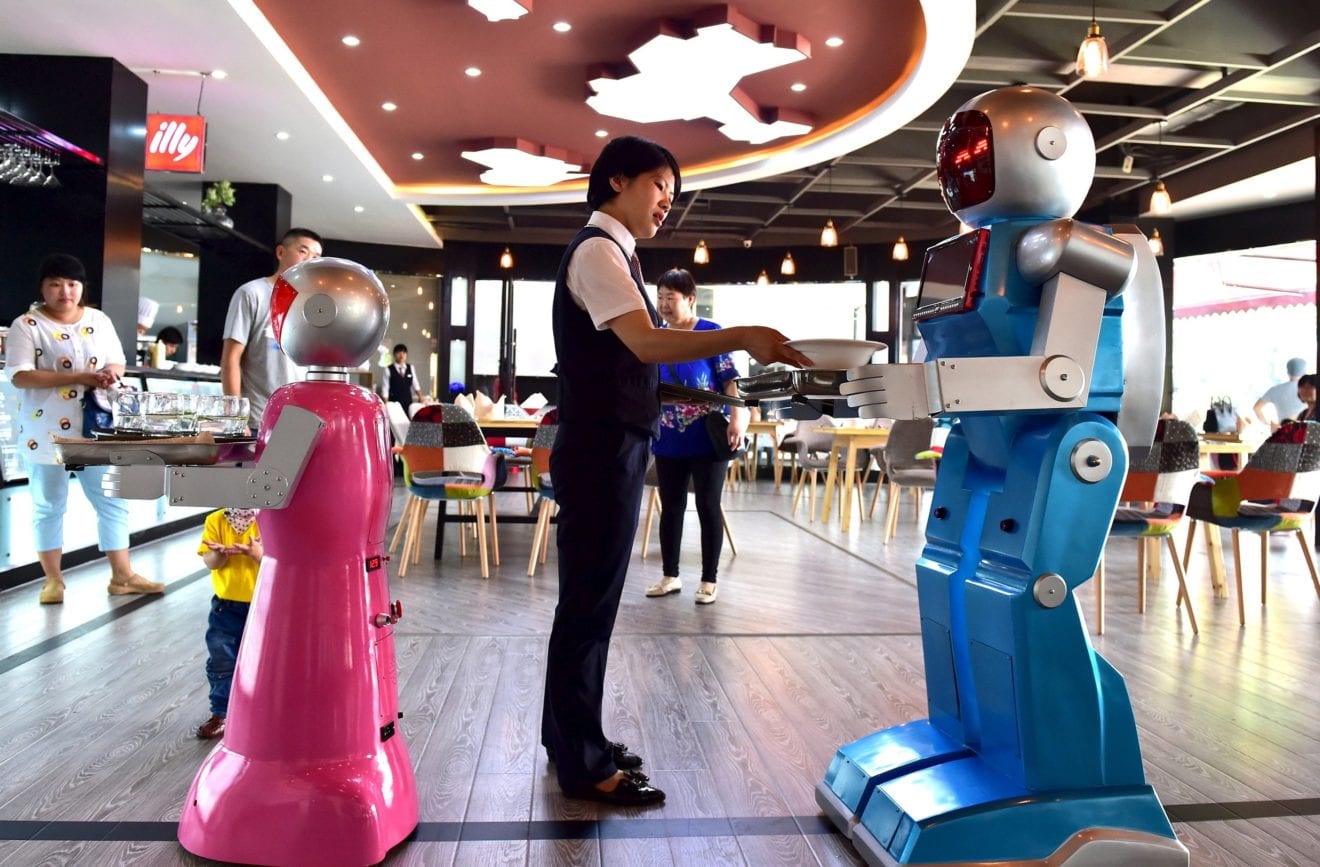
    Designed as a sales assistant, this robot can talk, guide shoppers and even receive credit card payments. In a demonstration yesterday at Marina Mandarin Hotel, the XYZrobot greeted a prospective customer with “It’s a pleasure to be at your assistance”, told him there was a special promotion on 3D printers, and led him to where the printers were supposed to be.

    The robot was even able to moderate its pace to the walk of the shopper. It was launched yesterday by Singapore consumer electronics retailer Newstead Technologies, ahead of the upcoming PC Show 2017.

    The XYZrobots could help retailers save costs, said Mr Sky Chen, 36, general manager of retail and global distribution services at Newstead Technologies.

    “This robot does not get sick or need to take leave. So if you calculate the costs of purchasing the robot verses hiring an employee, a shop could easily see how it is worth it.”

    It is understood to be the first retail robot in Asia which is able to receive payments by credit card.

    Each robot can run for about eight hours on a four-hour charge. It will also be able to return to its charging point as often as it needs.

    The robot was manufactured by Taiwanese tech firm New Kinpo Group.

    Its chief executive officer Simon Shen, 51, said: “Fewer young people (in Singapore) want to do jobs that pay less such as retail. So as our population ages, we must keep up with the manpower shortages.”

    The idea was conceived three years ago to help cope with manpower shortages and the company invested $5 million to develop it.

    Mr Shen said that people ought to be doing jobs that require higher thinking and that robots can fill in the gaps for tasks that require less of a human touch.

    But Professor Chen I-Ming of the School of Mechanical and Aerospace Engineering in Nanyang Technological University thinks that humans are always needed in certain sectors such as retail.

    “Sales is all about persuading people to buy things. You need to use hard sell or soft sell tactics based on the consumer. This is a communication skill that robots simply cannot do as of now.”

    The XYZrobot will be on display for visitors to engage with at the PC Show 2017, which will be held at Marina Bay Sands Expo and Convention Centre from June 1- 4.

    From August this year, it will be sold in Newstead’s Suntec City store for at least $12,000.

  • Three key areas that will help grow Malaysia’s retail industry

    Three key areas that will help grow Malaysia’s retail industry

    The e-commerce market is one. According to BMI Research, three specific areas: big-box boulevards, e-commerce, and duty-free shopping will be the key growth areas in Malaysia’s retail sector over the coming years. They are attracting significant investment initiatives that are in line with the government’s National Economic Transformation Program.

    The government is currently stimulating public-private investment in modern ‘big-box boulevards’-large scale integrated shopping malls on the outskirts of urban centres. Multinational corporations are predicted to be attracted by Malaysia’s strong outlook for consumer spending.

    “We forecast total household spending in Malaysia to expand at an annual growth rate of 7.5% between 2017 and 2021, rising from MYR774b ($250.12b) in 20 17 to MYR1t ($323.45b) in 2021,” BMI said.

    Malaysia’s e-commerce sector is still noted to be nascent, with consumers generally preferring to shop using cash in local stores due to a lack of trust with regards to online payments. However BMI estimates that this will gradually change as consumer purchasing habits evolve, supported by the government’s National e-Commerce Strategic Roadmap.

    “We forecast Malaysia’s e-commerce market to reach MYR21.04b ($6.81b) in sales in 2017, a 28.2% y-o-y increase,” BMI said.

    Malaysia’s tourist industry is another key part of the government’s economic transformation strategy, and like retail, is one of the 12 designated areas for investment. The government’s aim is to position Malaysia as a duty-free shopping destination for the Asia-Pacific Region, centred upon Kuala Lumpur International Airport.

    “Our forecasts for tourist arrivals into Malaysia will underpin growth in duty-free retail sales. 2017 will see 28.1m international tourists , rising at an average of 5.2% y-o-y to hit 34.3m by 2021. This will be driven by ongoing weakness in the Malaysian ringgit, making the country affordable for tourists,” BMI said.

  • Consumer spending in Malaysia to increase 5.8% in 2017

    Consumer spending in Malaysia to increase 5.8% in 2017

    It will grow at an annual average of 5.3% between 2017-2021. BMI Research reported that consumer spending in Malaysia is set to increase. The rise will be brought about the increasing disposable income. Real household spending growth in Malaysia will continue to expand the medium term.

    However, it will be modest on the back of an uptick in inflation and slightly weaker currency. Household spending will become more dynamic over the medium term as the share of non-essential spending rises. BMI foresees household spending real to grow at an annual average of 5.3% between 2017-2021. In 2017 we project a y-o-y increase of 5.8%

    Rising disposable incomes will foster discretionary spending, highlighted by robust growth in education; restaurants and hotels; and recreation and culture spending. According to BMI, these categories are set to grow at an annual average rate of 8.7%, 8.5% and 8.2% respectively.

    Consumer spending in Malaysia will benefit from a youthful and increasingly urbanised population; rising household incomes; and low levels of unemployment. The growing middle class and relatively low inflation will help generate demand for non-essential items and luxury goods.

  • Philippine Double Digit Growth to Attract Investors

    Philippine Double Digit Growth to Attract Investors

    The year 2016 was a great period for Philippines in the field of consumer lending which recorded a massive growth. The presidential elections in 2016 led to political stability and consumers had more confidence to take consumer loans. When the global market was highly volatile, consumer lending in the Philippines was an attractive destination with its strong consistently growing economic and financial systems that operate in a safe and sound approach.

    The new government has focussed on tax system and introduced a tax reform program that helped the country’s economic growth with respect to consumer lending. The World Bank signified that the Philippine financial market system will grow rapidly due to its consumer confidence and transparency of building regulations. According to research report “Consumer Lending in the Philippines”, country’s robust banking system is crucial in the consumer lending field where it ensures stability and rapid growth in the country’s economy. Thus, the Filipinos are now more confident to take more loans from the retail banks for automobile or domestic purpose.

    The rapid growth in Philippine domestic economy has created more jobs which washed out poverty to some extent. The recent economic developments in Philippines was somewhat driven by the presidential elections. The fixed capital investment rose to 25.6%. There were vast opportunities in the field of construction, manufacturing and service sectors.

    As per the economy growth statistics for the first quarter of 2017, it showed that the primary income for the nation slowed down by 3.9% and the gross national income has risen to 5.9%. The Philippines economy is aiming at a 6.5% to 7.5% GDP for the year 2017.

    The services sector is the highest contributor to the growth of the nation’s economy. The industry sector stands second and agriculture sector stands in the third place. The IPP (Intellectual Property products) are outstanding with the growth contribution of 27.2%. The export and imported goods contributed 22.3% and 20.8% respectively.


  • Slow US retail growth filters through to Asia

    Slow US retail growth filters through to Asia

    Retail sales for April in the US rose slightly to 0.4%, up from 0.1% in March. Although this growth is some cause for encouragement, it was expected to be as high as 0.6% for last month. The fragile picture for the retail sector in the US is having a noticeable impact on many of its key trading partners throughout Asia.

    China, South Korea and India are amongst the US’ biggest trade partners. Exporting goods such as electronics and clothing, they all see the country as a major export market. With demand for Asian goods sluggish, there are tentative signs that the picture for retail sales across the region are beginning to slow down.

    For April, Chinese retail sales grew by just 0.79%, down from 0.84% in March. In January, sales growth stood at an even more unimpressive amount of just 0.51%, so there has at least been a small upturn. Part of that is down to other factors, most notably industrial production.

    Industrial output

    Elsewhere in Asia, industrial output figures seem to correlate with the slow rate of retail growth in the US. Japan is a prime example, with output figures for March contracting. In that month, industrial output nationwide shrank by 2.1%, coming soon after a rise in output for February. Concerns over the historically strong Japanese tech sector have been prevalent for a while.

    The picture in other major Asian markets for industrial output is mixed. Growth in India is erratic – contraction in output was recorded in five of the last 12 months. In South Korea, figures for March are positive, but contraction occurred in January and February.

    Low demand for home-made products, alongside similarly low demand from the US and sluggish industrial output could all hint at a more prolonged economic malaise. When spread betting, the most sensible choice would be to back against share price rises for major Asian retailers.

    Malaysian recovery 

    One possible ray of light for Asian retail is Malaysia. Despite some of its’ neighbours not performing too well, retail sales growth is pretty healthy. The most recent monthly figures saw month-on-month growth of 4.7% for March, jumping from a position of slight contraction for both January and February.

    Among the reasons behind the growth include wider economic growth exceeding expectations for the first quarter of 2017 and increased consumer confidence. Interest rates have remained steady, but the bad news coming from across the Pacific Ocean is likely to dent confidence going into the summer months.

    The future for retail in Asia is a little uncertain. The contractions and slow growth experienced in Malaysia, China and Japan may return, with one eye focused on how events are unfolding in the US and Europe.

    Should all go to plan and retail sales in the US return to more favourable levels, there is a possibility that the feelgood factor will move to Asian markets. More demand from consumers would equate to higher sales to US firms by Asian manufacturers, but it remains to be seen how this scenario would be played out.

  • Hong Kong retail market enters post-correction era

    Hong Kong retail market enters post-correction era

    Hong Kong’s retail sector is transitioning into a period of normality. After several years of correction, the retail market is showing genuine signs of stability and renewed tenant activity.

    The driver is, simply, cost. In the first half of 2017, rental costs of core shopping areas have finally come down to a level considered acceptable from a tenant perspective. Significantly, with this normalization, low-to-middle range retailers are now confident and less likely to succumb to outlandish rental costs and fierce competition with luxury jewelry stores for retail space. Higher up the value chain, landlords of shopping malls and street shops have become so nimble with their portfolio strategy that a more diversified market has brought in a new era of retail.

    The change is conspicuous. Major streets in Hong Kong are no longer dominated by jewelry shops, pharmacies or luxury brands.

    Outside forces are increasingly influencing this retail shift; Chinese tourists’ diminishing consumption have changed the consumer profile. And as a result, landlords have to cater to the needs of a more local clientele. To reflect the transition in the market, landlords are actively leasing to more trendy tenants such as affordable luxury brands, diversified fashion concepts, cosmetics stores and food & beverage establishments.

    The change is also occurring away from the street level. Most shopping malls have transformed or are about to transform their tenant mix by adding unique restaurants, niche fashion brands, international lifestyle stores or sports-related gadget shops. In addition to cinemas, landlords are signing boutique-style gyms as alternative tenant anchors. They are successfully attracting footfall, complemented with a sports brand added to the trade-mix.

    But retailers have still not fully regained their confidence and a meaningful recovery in Hong Kong will take time. Signs of a more measured rebound are more obvious with well-established brands who are still regrouping from their extensive expansion across Greater China. As such, newer brands are taking advantage of the situation and are actively acquiring.

    Innovative hybrid concepts, mingling entertainment with dining, have been imported from the overseas market into Hong Kong. As opposed to previous cycles, international operators of these new concepts have found space in revitalized industrial buildings. Some of these family-friendly restaurants, like Mr. Tree and Crazy Car Cafe in Lai Chi Kok, have become so sought-after that customers have to book one month in advance to secure a place for a child’s birthday party.

    Nonetheless, the current retail market is at its healthiest it has been in the last ten years. Hong Kong’s landlords are now adopting proactive and flexible strategies to attract tenants and foot traffic, paving the way for the long term development of the retail industry. Only time will tell.

  • Vietnam sees rise in mobile e-commerce

    Vietnam sees rise in mobile e-commerce

    By January 2017, Vietnam was home to almost 47.2 million mobile internet users, half of the country’s population, according to the report “Vietnam Digital Landscape 2017” by We Are Social.

    Some 39 percent of the population have purchased products or services online, of them 29 percent have placed at least one online order via a mobile device.

    The total value of the country’s e-commerce market was estimated at about 1.8 billion USD in 2016, the report said.

    The 2017 Vietnam e-Business Index by the Vietnam e-Commerce Association (VECOM) shows that the internet has been a great tool for local enterprises in cross-border trade.

    They can communicate with overseas partners via the internet and can access online public services, for example, e-customs and e-certificate of origin.

    It also found that 45 percent of domestic enterprises own a website but only 19 percent of the websites are compatible with mobile devices, down from 26 percent in 2015.

    To succeed, domestic firms must catch up with mobile e-commerce trends to maintain a competitive edge over the others, said VECOM Vice President Nguyen Ngoc Dung at the Vietnam Mobile Day last weekend.

    Dung suggested that selecting a suitable domain name should be the first step in building a reliable online presence for a business as a domain name is not simply an address on the internet but is closely attached to the enterprise’s operations and branding.

    A mobile-friendly website will draw more customers to the brand name and improve its competitiveness, he added.

    For those who wish to reach out to the global markets, the domain name “.com” indicates credibility thanks to its popularity and stability over the past 18 years, said Executive Director of Mat Bao Corporation Huynh Ngoc Duy at the event.

    Sharing this view, Nguyen Tu Hong Quan, Director of the Nhan Hoa software company, noted that many international companies, including those listed in the Fortune 500, use “.com” for their website, aiming to reach new customers outside their regions.

  • China’s Growth Engines Are Slowly Converging

    China’s Growth Engines Are Slowly Converging

    Growth in China’s economy has long centered on the coast, where Shanghai and the Pearl River Delta form some of the world’s most productive regions on their own.

    But now that tide of internal migration that drew hundreds of millions of workers from the farm to factory is shifting, and lifting the economic prospects of the country’s interior.

    As big-city living costs rise and job openings become less abundant, more migrants are now leaving China’s urban centers than new ones arriving, according to Oxford Economics Ltd.

    “Labor costs on the East Coast are now too high for industries further down the value chain to remain competitive internationally,” London-based economist Alessandro Theiss wrote in a report, citing an 8 million decline in the migrant population from 2014 to 2016.

    The shift should benefit inland provinces, especially in southwest regions like Sichuan, as companies move production to take advantage of lower costs while remaining connected to coastal export hubs and industrial clusters, he said.

    Southern and northwestern provinces are are likely to keep expanding relatively fast as they benefit from catch-up growth, fiscal support and geographic location, while the northeast is likely to remain the slowest-growing region as population declines and coal mining consolidates more in inland provinces, according to Theiss.

    While the east coast was hit by slower global trade in recent years, conditions are now improving. Specialized manufacturing clusters and export hubs are innovating and moving up the value chain, and research activity is boosting the region.

    That’s good news for some of China’s biggest drivers: Coastal Guangdong, Jiangsu and Shandong provinces each account for around 10 percent of national output and all had output last year that exceeded Mexico’s, Theiss said. The future looks favorable for east coast provinces with more mature economies, as well as those in central China.

    “They continue to innovate and to move-up the value chain, specializing in advanced manufacturing such as robotics and genomics, and expanding and developing specialized manufacturing clusters,” Theiss said. “First-class infrastructure, significant R&D spending, large FDI inflows, a rapidly growing domestic market as well as a highly educated workforce should allow them to continue to grow at a solid pace.”

  • How brands use short videos for marketing in China

    How brands use short videos for marketing in China

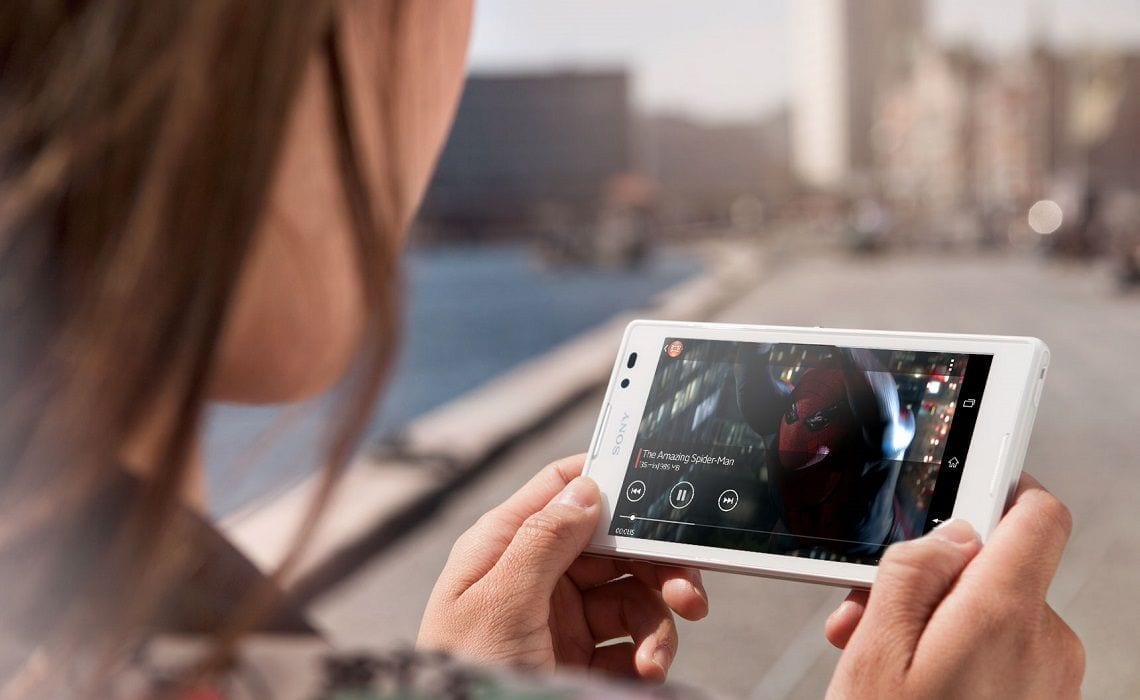
    As the luxury industry discusses Snapchat’s marketing possibilities and, more recently, Instagram’s latest filter feature, brands looking toward the China market are facing a completely different short video industry. It’s one that has witnessed rapid development thanks to the popularity of smartphones and upgraded communication networks in China.

    In March this year, Kuaishou, a popular short video app, was on the receiving end of a US$350 million investment from Tencent, and Alibaba put RMB 2 billion toward the transformation of Tudou from a large, formerly popular online video platform to a short video community. Also, Yixia Technology, owner of Miaopai and Xiaokaxiu, both popular short video apps in China, has already spent RMB 2 billion to encourage short video content creators and producers by building several video creation bases and providing professional studios.

    Short videos are perfect for young, tech savvy consumers who take their phone with them everywhere and use it to access social media or to fill in short breaks in the day between other activities.

    But which short video apps are the most popular in China? Who are the viewers of these short videos? How can brands market to them? What should brands take into consideration when launching short video campaigns?

    China’s short video apps

    Similar to short video platforms like Viddy and Instagram, there are numerous short video platforms and apps in China where users can record real-time short videos and share them with friends. As for users, there were 153 million regularly watching China’s short videos in 2016. This is estimated to reach 242 million by 2017, an increase of 58.2 percent.

    CIWEEK, an internet content magazine, released a list of their top 10 short video apps in China in the first half year in 2016 and Kuaishou, Miaopai, and Meipai were the most popular.

    Of these, there are actually two types of short video platform in China:

    1. Comprehensive platforms: professional short video platforms

    These platforms, such as Meipai, Miaopai, and Xiaokaxiu, provide a one-stop user experience. Users can use various shooting tools, effect settings, and formats while filming or editing a video. They also offer a community for users to share their videos with friends. Short videos uploaded on those platforms can also be shared with WeChat friends, WeChat Moments, and Weibo.

    2. Content recommendation: news apps

    These platforms, such as Toutiao, NetEase, Tencent News, and Yidian Zixun, focus on suggesting popular or professional short videos. These platforms were originally news-based and mass communication oriented. They have millions of viewers and short videos recommended on these platforms can get huge amounts of traffic.

    Who are the viewers?
    The main users of China’s short video apps are young. Most of them belong to the post-90s generation. According to a report published in March 2017 by JIGUANG, a big data provider, users ages 16 to 25 make up 39.7 percent of the total, while users aged 26-35 are at 33.3 percent. Meanwhile, over half of the users are female, making them 69.4 percent of the total number of users.

    In terms of regions, 66.9 percent of the total come from third-tier and below third-tier cities in China. The top 3 provinces for viewer numbers are Guangdong, Henan, and Shandong.

    How are brands using short video?
    Short video is becoming a new favorite marketing tool for brands for several reasons. Short videos can be used for various types of promotional materials, such as product reviews, product seeding, promoting brand culture and more. With interesting and meaningful content, short videos can deliver specific brand messages to a target audience while avoiding the annoyance that longer videos may cause. The production cycle of short videos is quick with great flexibility, which works well with brands’ marketing plans and budgets. Through audience interactions with short videos, brands can better understand their preferences, rapidly improve their user experience, and come up with effective marketing plans quickly. Integrated campaigns launched on short video platforms can be creative and diverse.

  • Vietnam’s retail market is promising, but there are pitfalls

    Vietnam’s retail market is promising, but there are pitfalls

    Family Mart has had losses in Vietnam, Thailand and Indonesia. Reuters quoted Koji Takayanag, president of FamilyMart UNY, which now owns the second largest convenience store chain in Japan, as saying that the chain has decided to stop injecting more money into Family Marts in Vietnam.

    According to Tri Thuc Tre, Parkson reported another loss of VND20 billion in Vietnam in the first quarter of the year, which means a total loss of VND50 billion in the last nine months of the fiscal year.

    Parkson Retail Asia has two subsidiaries in Vietnam – Parkson Hai Phong Co Ltd and Parkson Vietnam Company Ltd. The latter has two subsidiaries – Parson Vietnam Service Management Company Ltd and Parkson Hanoi Company Ltd.

    Parkson Hanoi which manages two buildings Parkson Keangnam and Parkson Viet Tower. Both shopping malls have shut down (the former in January 2015 and Viet Tower in mid-December 2016). Also in 2016, Parkson Paragon in HCMC also stopped operation.

    Though FamilyMart has taken a big loss, it will stay in Vietnam. While some retailers have left, others have arrived. Aeon Mall has announced the construction of a second mall in Hanoi.The Malaysian retailer’s fiscal year will end in three months, but analysts don’t think the business performance of the year will be satisfactory. Parkson’s managers have admitted that it is more and more difficult to do business in Vietnam as the market is getting more crowded.

    Other retailers have left, including Metro Cash & Carry, Best Carings, Wonderbuy, HomeOne and Sapomart.

    Meanwhile, market analysis firms, in their latest reports, say that Vietnam is a lucrative market.

    Phap Luat quoted Pham Thanh Cong from Nielsen Vietnam as saying that it is among the top three markets of investors.

    David Tan, CEO of Abeo Vietnam, said the Vietnamese retail market in 2016 was valued at $118 billion with the 10 percent growth rate. Of this, revenue from food service reached acrecord high of $41 billion.

    In fact, though the Vietnamese market is attractive, it has become ‘cramped’ with the presence of many retailers, both foreign and Vietnamese.

    According to Cong, there are 20 supermarket brands in Vietnam, while other countries have only five.

    A report of the Ministry of Industry and Trade shows that Vietnam has more than 700 supermarkets, 132 shopping malls and hundreds of convenience stores. By 2020, Vietnam is expected to have 1,200-1,500 supermarkets and 180 shopping malls, while traditional markets still exist.

  • China’s retail sales up 10.7 pct in April

    China’s retail sales up 10.7 pct in April

    China’s retail sales, a key indicator of consumption, grew 10.7 percent year on year in April, 0.2 percentage points slower than the March level, official data showed Monday.

    Total retail sales of consumer goods hit 2.73 trillion yuan (about 395.4 billion U.S. dollars) last month, according to the National Bureau of Statistics (NBS). It increased 0.79 percent month on month.

    In the first four months, total retail sales of consumer goods rose 10.2 percent year on year, 0.2 percentage points faster than the growth in the first quarter, according to Xing Zhihong, a spokesperson with the NBS.

    Consumption activities were relatively stronger in rural areas, with retail sales expanding 12.6 percent in April, outpacing urban areas, where retail sales climbed 10.4 percent year on year.

    Online spending was robust. From January to April, online retail sales surged 32 percent year on year to 1.92 trillion yuan.

    Xing said the April figure indicates continued expansion of domestic consumer demand, which was partly driven by consumption upgrades and new business patterns such as online sales.

    China is trying to shift its economy toward a growth model driven by consumer spending, innovation and services, while weaning it off reliance on exports and investment.

    China’s economy expanded at a 6.9-percent pace in the first quarter, accelerating from 6.8 percent in the previous quarter, and 77.2 percent of it was driven by consumption, 12.6 percentage points higher than the 2016 level, according to official data.

  • Demand for People Counting Systems Stirs up With Increasing Retail Stores

    Demand for People Counting Systems Stirs up With Increasing Retail Stores

    Globally, the increasing number of supermarkets, shopping malls, and retail stores is triggering the deployment of people counting systems. There is a strong need for retailers to monitor footfalls in order to remain competitive.
    Traffic to sales ratio can help retailers in accurately comparing stores on the basis of sales volume. A report by TMR Research, titled “People Counting System Market – Global Industry Analysis, Size, Share, Trends, Analysis, Growth, and Forecast 2017–2025,” offers a comprehensive study of the market. It provides a detailed analysis of the various parameters of the global people counting system market, including trends, opportunities, geographical segmentation, and competitive scenario, for the forecast period between 2017 and 2025.

    The availability of easy set-up and low-cost solutions is stoking the growth of the global people counting system market. The snowballing demand for people counting solutions in the transport sector is also contributing to the overall revenue generation of the market. Rapid technological advancements and robust growth of the retail sector, particularly in emerging countries, are likely to provide a significant push to the market.

    On the flip side, the expansion of the worldwide e-commerce industry and the growing popularity of online sales channel are challenging the growth of the brick and mortar commerce, which in turn is hampering the growth prospects of the market.

    Geographically, Asia Pacific will account for a large chunk in the revenue pie of the global market. The rising number of shopping malls, retail stores, and supermarkets are prompting global participants to invest in the region. Besides this, favorable government initiatives are promoting the presence of foreign retailers in India, which is also leading to the widening pool of retail stores in Asia Pacific. Countries such as Hong Kong, China, Japan, India, Malaysia, and Singapore will be the sites of high growth rate throughout the forecast horizon.

    Other developing regions such as Latin America and the Middle East and Africa are likely to witness similar growth conditions. The presence of infrastructure such as airports, train stations, and bus stations along with a substantial number of upcoming projects are boosting the adoption of people counting systems. The robust growth of the hospitality industry is also supporting the growth of the regions.