Tag: Retail

  • Hong Kong retail sales climb 3.1% in March

    Hong Kong retail sales climb 3.1% in March

    Hong Kong’s retail rut is no more. For the month of March, Hong Kong retail sales lifted 3.1%, the first gain in two years, as visitors from mainland China returned to the city’s shopping regions.

    The 3.1% uptick in Hong Kong was a measure of total revenues, while retail sales in volume terms gained 2.7%, rising for the first time since July 2015 according to figures released by the Hong Kong government’s Census and Statistics Department (C&SD) on Monday.

    “Retail sales resumed moderate year-on-year growth in March,” said the government in a statement.

    “This reflected partly the continued recovery of visitor arrivals and partly the robust local consumption demand.”

    Local tourism surged 10.4% in March compared to the same month last year, pushed on by the return of mainland Chinese arrivals. It was the most growth recorded since February 2015.

    March’s return to growth follows a dire start to 2017 for local retailers. Hong Kong retail sales dived 5.7% in February, after January sales contracted just 1%, said the C&SD.

    In recent months, Hong Kong tourism has been hurt by an influx of Chinese tourists to Macau, the only Chinese territory where gambling is legal. The region is fast becoming a shopping hotspot too, with major retailers opening stores close to casinos and restaurants.

    This includes US lingerie heavyweight Victoria’s Secret, who bowed its assortment retail store in Macau this month.

  • JD.com swings to profit first, revenues surge 41%

    JD.com swings to profit first, revenues surge 41%

    E-commerce giant JD.com said on Monday first-quarter revenues lifted 41% for fiscal 2017, as the second-biggest online retailer in China recorded its first profit as a publicly listed company.

    JD.com reported net income of 239 million yuan ($35 million) for the three months ended March — its first time in the black since listing in 2014. Sales rose 41 percent to 76.2 billion yuan, also topping the 73.6 billion yuan projected.

    JD, which bought Walmart’s Yihaodian local shopping platform in 2016, saw a rapid expansion into household supplies and food, as well as fashion and homewares during the last quarter, which increased users.

    JD also dipped into data, cloud and artificial intelligence services – moves that saw it swing to a profit from a loss in the previous quarter.

    “Margins benefited from our rapidly growing scale across all of our product categories,” JD’s chief financial officer, Sidney Huang, said in a statement.

    In November, JD.com said that it would seek to split off JD Finance, its financial unit, making it a fully Chinese-owned entity. The move allows JD to apply for licenses that Chinese laws forbid foreign-listed firms from holding, including mutual funds and securities. Under the restructuring, CEO Richard Liu will be one of the buyers and JD.com will receive 40% of any pre-tax profit.

    In the financial statement, JD forecast second-quarter revenues to lie between 86.6-89.1 million yuan excluding JD Finance, representing a growth rate of 33-37%, in line with analyst predictions of 36%.

    However, Huang cautioned future investments, such as the construction of warehouses, would “significantly increase” capital expenditure resulting in falling free cash flow.

    “Our quarterly earnings will likely be lower in one or more of the next few quarters,” he said. “The Chinese e-commerce market remains highly competitive and we remain committed to returning a meaningful portion of our incremental gains from scaled economies onto our customers.”

  • Australia’s retail slugout adds to worry over weak inflation

    Australia’s retail slugout adds to worry over weak inflation

    A fierce price war among retailers is threatening to keep a lid on improving inflation in Australia, compounding the problems of policymakers struggling to support still-weak domestic demand.

    An uptick in consumer inflation has lowered the chance of another rate cut this year, but competition from global retailers such as Amazon.com Inc is set to keep prices under pressure – good news for shoppers but worrying for the central bank.

    The country’s biggest retailers are suffering from a long spell of deflation that is unlikely to subside soon. Amazon and German supermarket chain Kaufland want to fortify their global presence Down Under and will join recent entrants such as H&M, Uniqlo and Aldi.

    The Reserve Bank of Australia (RBA) said on Friday that “heightened competitive pressures” in the retail sector were among key factors keeping inflation subdued.

    “The arrival of further new foreign retailers will be an important influence on final retail prices over the next few years,” the RBA said in its quarterly statement on monetary policy in which it expects underlying inflation may only fully return to its 2-3 percent target band by mid-2019.

    Worried about deflation risks, the RBA slashed rates twice last year to a record low 1.50 percent. It is widely expected to hold rates until mid-2018 but subdued consumer prices could become a trigger for a move lower, and push the Australian dollar weaker.

    “While consumers will benefit from lower prices, ongoing weakness in retail inflation is a key factor weighing on the broader inflation outlook,” said ANZ economist Jo Masters.

    There was some relief headline consumer prices rose in the first quarter, taking the annual pace to its fastest since 2014 at 2.1 percent. But five of 11 sectors – about 30 percent of the CPI basket – saw price falls. Prices for women’s clothing, for example, were at their cheapest on record.

    A study by Capital Economics shows price increase in what it classifies as ‘luxuries’ – clothing, alcohol and recreation – halved to 0.6 percent from 1.2 since the start of last year. Inflation in ‘essentials’ – food, electricity and insurance – accelerated to 3.4 percent from 1 percent.

    “In other words, it now costs much more to live, but not much more to have fun,” said economist Paul Dales, adding that this situation was hitting household spending on discretionary items. “It implies that consumption growth will be a little bit weaker.”

    Clothing and homeware prices have fallen due to cut-throat competition among major retailers, which only intensified with the arrival of foreign chains to Australia.

    While there are few details on how Amazon will position itself, the retail giant’s expected entry this year will worsen the pain of a retail industry that has been largely insulated by a housing boom and pick-up in global growth, analysts said.

    Jefferies expects Amazon to capture between A$3 billion to A$8 billion ($2.25-$6 billion) of sales in Australia – about 30 percent of current online retail sales.

    Australian retailers are already being forced to change their business models but four major firms going into voluntary administration in the first two months of the year highlights the deepening crisis.

    Not surprisingly, the sector has been shedding jobs, with more workers lost in the year to November 2016 than any other industry.

    “Foreign retailers are attracted by relatively high margins in Australia and will continue to enter the market as long as that additional margin is on offer,” said Masters of ANZ.

    So far, only 16 percent of the world’s top 250 retailers have a physical presence in Australia, according to Deloitte.

  • Singaporeans feel ignored by retailers 40% of the time

    Singaporeans feel ignored by retailers 40% of the time

    Qualtrics conducted a recent survey of 1,700 shoppers including respondents from Singapore. Findings show that 40% of the time, shoppers in Singapore believe that feedback never reaches the relevant department or right employee that would be able to assist them, while online shoppers believe the same holds true 39% of the time.

    Singaporean shoppers see little distinction between the efficiency of feedback channels and believe that complaining via social media, surveys or directly to an employee has no significant impact to their feedback reaching the right people within the company.

    Despite that, Singaporeans still expect retailers to respond promptly to their questions and complaints especially on social media. When sharing feedback on an offline retailer’s social media page, 31% of shoppers expect a response on the same day, and 78% expect a response within a few days. For online retailers, 36% of shoppers expect a response on the same day and 74% expect a response within a few days.

    Creating a positive retail experience for shoppers is key to customer acquisition. With 61% of shoppers stating that their expectations of offline retailers are shaped by social media, friends and family referrals, retailers need to be able to live up to customers’ perceptions. When it comes to online retailers, 68% of shoppers indicated that their expectations are influenced by social media, friends and family referrals.

    The Qualtrics survey reveals that delivering an ideal brick-and-mortar experience lies in the availability of a wide selection of products and the least important is automatically emailed receipts. The most important element that makes for a stellar online shopping experience is easy-to-see product pictures and details while the least important factor is the ability to receive email support.

    Other data points reinforce the urgency for online retailers to listen to and act upon customer feedback:
    • 16% of shoppers expect retailers to respond to their email question or complaint same day while 22% of shoppers expect the same from online retailers
    • 28% of shoppers will drop a retailer without notice if they experience a major service failure while 29% of shoppers will do the same when it comes to an online retailer
    • 50% of shoppers like a retailer more than before if their problem is quickly resolved while 51% of shoppers would feel the same when it comes to an online retailer
    • 72% of shoppers blame a retailer if one of their employees provides unfriendly or unhelpful service while 68% of shoppers would blame an online retailer for the same incident

    “Companies are witnessing what we call an “experience gap” which refers to the gap between the experience that companies believe they are delivering and the experience their customers are actually receiving, said Bill McMurray, Managing Director for Asia-Pacific and Japan at Qualtrics. “The challenge for companies is to close this gap through the use of an experience management solution, which makes it easy to capture, gain insights and take actions from experience data. There are two sets of data: operational data “O data” and experience data “X data”. X data is the human-factor data, the beliefs, emotions and sentiments that tell you why things are happening and that help predict what will happen next. For too long organisations have only focused on collecting O data, and often fail by not leveraging their X data. To address the experience gap, shown in the survey results above, the retail industry must improve the level of customer experience they provide. When they are able to do this, they will satisfy and retain their customers, generate increased revenues and grow faster than their competitors.”

  • Singapore to help SMEs compete in the global marketplace

    Singapore to help SMEs compete in the global marketplace

    Finance Minister Heng Swee Keat’s Budget 2017 has placed a strong emphasis on helping businesses stay competitive and grow in an increasingly global marketplace.

    Helping Singapore SMEs Go Digital

    Mr Heng has emphasized the importance of digital capability as the Singapore economy continues to mature. He says it is essential that SMEs in particular embrace the digital age and adopt new and innovative digital solutions. Digital technology has the power to transform all businesses, but many SMEs lack the capability to use digital technology.
    The new Go Digital Programme is a government ‘leg up’ for SMEs and an exciting new addition to a series of strategies to strengthen small and medium-sized businesses in Singapore. More than $80 million will be made available from the government to fund these initiatives.

    Industry Digital Plans

    Industry Digital Plans will be provided by the government to help businesses use technology at each stage of their growth. Sectors targeted by the Go Digital Programme include retail, wholesale trade, food services, logistics, security and cleaning. Mr Heng indicated that he felt these sectors were the ones where digital technology could make the biggest difference to productivity levels.
    Network of SME Centres.

    Start-ups and SMEs can seek basic ICT help in person from SME centres, where advisors can offer help with everyday technology solutions. If businesses need more specialist advice, specialist advice will be made available from new SME Technology Hubs, which are being set up by IMDA and will complement existing SME Centres. SMEs can also seek advice and funding support for pilot ICT solutions already in place.
    Corporations have also been included in the Go Digital Programme. There is support available for them to help them adopt impactful and interoperable digital solutions.

    Cybersecurity Measures

    Mr Heng recognises that SMEs need to strengthen their data and cybersecurity, so the Cyber Security Agency of Singapore will be working with professional bodies to help increase cybersecurity and ensure business networks function smoothly.
    The Singapore government is also keen to promote innovation in technology, and will be creating Regulatory Sandboxes where rules and regulation is suspended, so companies can experiment with FinTech platforms like City Index and self-driving vehicles.

    Technology Innovation

    A Tech Access Initiative is designed to help small companies build prototype products. The Agency for Science, Technology and Research (A*STAR) will work with companies, providing access to its advanced machine tools so small businesses can prototype and test. SMEs will also have access to the Headstart programme so they can co-develop intellectual property licences.
    Most analysts and the majority of SMEs have welcomed the digital initiatives, as they say it fills a gap in the ecosystem, but some experts believe the measures don’t go far enough. However, these changes are definitely a step in the right direction, and with a strong network of SME centres in place throughout Singapore, thousands of small and medium-sized businesses now have access to help as they work to digitise their businesses.

  • UnionPay International’s Cross-Border Marketing Platform

    UnionPay International’s Cross-Border Marketing Platform

    With the May Day holiday approaching, tourism in Asia is set to experience another peak. In anticipation of the increased tourist arrivals around the world, UnionPay International announced the expansion of its cross-border marketing platform, U Plan, to 1,600 stores in nine countries and regions around the world.

    With U Plan, UnionPay Cardholders around the world can enjoy more savings when shopping with UnionPay Cards locally and overseas. To take advantage of the U Plan benefits, Cardholders can simply download the UnionPay International mobile app on iOS and Android phones prior to their travels. Through the app, Cardholders can access all the latest merchant discounts and promotions available at their travel destinations, and download exclusive U Plan discount coupons to be presented at the participating merchant’s point-of-sales counters together with their UnionPay Card (card number starting with 62), to enjoy additional savings on their travels.

    Since the launch of U Plan in July last year, the cross-border marketing platform has expanded to 300 stores in Hong Kong, Macau, Singapore and Thailand in November 2016. With this latest expansion, the platform now covers 1,600 stores across the globe, as well as merchants in countries including Australia, Japan, New Zealand and the USA.

    Some of the new merchants that have come on board U Plan include:

    Country/Region Merchant U Plan Benefits
    Thailand ShowDC Enjoy 5% and an additional THB100 off when you spend a minimum of THB1,000 with UnionPay Cards upon presentation of U Plan coupon


    Emporium, EmQuartier, Paragon Department Stores Enjoy 10% off with UnionPay Cards upon presentation of U Plan coupon
    Korea Doota Mall Enjoy KRW30,000 off when you spend a minimum of KRW150,000 with UnionPay Cards upon presentation of U Plan coupon


    Doota Duty Free Enjoy KRW20,000 off when you spend a minimum of KRW200,000 with UnionPay Cards upon presentation of U Plan coupon


    Japan Mitsui Outlet Park, Mitsui Shopping Park LaLaport (Toyosu, EXPOCITY), DiverCity Tokyo Plaza, Coredo Muromachi


    Enjoy 10% off with UnionPay Cards upon presentation of U Plan coupon
    Matsumoto Kyoshi Enjoy 7% off when you spend a minimum of JPY30,000 with UnionPay Cards upon presentation of U Plan coupon


    USA Macy’s Enjoy 20% off with UnionPay Cards upon presentation of U Plan coupon


    Australia JR Duty Free Enjoy 10% off with UnionPay Cards upon presentation of U Plan coupon


    T Galleria Sydney Enjoy AUD25 off when you spend a minimum of AUD500 with UnionPay Cards upon presentation of U Plan Coupon


    New Zealand JR Duty Free Enjoy 10% off with UnionPay Cards upon presentation of U Plan coupon


    T Galleria Auckland Enjoy NZD25 off when you spend a minimum of NZD500 with UnionPay Cards upon presentation of U Plan Coupon


    U Plan is the world’s first open cross-border marketing platform launched by UnionPay for Cardholders. By bringing together service providers in the finance, tourism and retail industries, U Plan provides a one-stop marketing platform for UnionPay and its partners to market products and services to Cardholders across geographical borders. Through the use of mobile applications and location services,U Plan enables a high-level of precision for UnionPay and partners to reach out to potential travelers prior to their travels, to promote special privileges and discounts that UnionPay Cardholders can enjoy at their travel destinations.

    To date, U Plan has been well received by merchants and UnionPay Cardholders around the world. Moving forward, UnionPay International plans to expand the platform to more merchants in Europe and the USA, providing a wider range of gifts, discounts and VIP shopping booklets to enhance the overall experience for UnionPay Cardholders.

  • Online retail growth reflects changing consumption

    Online retail growth reflects changing consumption

    China’s online retail sales posted robust growth in the first quarter of the year, reflecting a changing consumption pattern, official data showed. Online retail volumes reached over 1.4 trillion yuan ($203 billion) in the first three months, up 32.1 percent year-on-year and more than double the pace of total retail sales, the Ministry of Commerce said on Wednesday.

    Online consumption of services such as tourism, dining and entertainment continued to rise, with sales of travel and take-away food rising by 64 percent and 163 percent, respectively.

    Central and western regions posted stronger growth in online spending and online shoppers in third- and fourth-tier cities.

    “Ten years ago, people said e-commerce would not take off in China. But as soon as you overcome the payment barrier, consumers here are so much more ready than in other countries to take it on,” said Richard McKenzie, a partner at consultancy Oliver Wyman.

    With the advent of better logistics, it is no wonder that online marketing is bringing more sales growth, said Vishal Bali, managing director of Nielsen China.

    “Physical and online stores don’t have to be against each other. That means more connection and integration, which is not simply for retailers but also affects consumer behaviour, manufacturers and other areas of industry,” he said.

    According to research firm Mintel, the cross-border shopping market is expected to post an annual growth rate of 15 percent from 2016 to reach 1.3 trillion yuan by 2021.

    “Haitao, or shopping directly from overseas sites, is likely to be more relevant to brands looking at initial market entry. Retailers and brands should therefore play to their different national specialties when attempting to differentiate themselves from their competitors,” said Matthew Crabbe, Mintel’s Asia-Pacific director of research.

    Another trend the Ministry of Commerce observed is that online players such as Alibaba Group Holding Ltd and JD.com Inc are expanding offline to improve the consumer experience with convenience stores as an emerging market.

    For instance, Alibaba and Shanghai-based retail conglomerate Bailian Group Co announced a partnership in February to jointly design bricks-and-mortar stores to deliver enhanced customer services through technologies such as geo-location, facial recognition and big-data driven customer management systems.

  • Prime retail rents in Singapore dip 0.4% in Q1

    Prime retail rents in Singapore dip 0.4% in Q1

    Marina Centre, City Hall, and Bugis precincts reported lower rents. The challenging retail scene was proven by the drop in island-wide prime retail rents, which slipped 0.4% in the first quarter of the year.

    According to the Singapore Retail Bulletin by Knight Frank, this was largely due to lower rents in the Marina Centre, City Hall and Bugis precincts.

    Rents of prime spaces in Marina Centre, City Hall and Bugis precincts fell by 3.7% YoY as landlords continue to offer attractive rental packages to draw retailers.

    On a yearly basis, prime rents at the Orchard Road reported precinct reported a 0.7% slump.

    Meanwhile, average rents of prime spaces in suburban malls fell by 2.1% compared to one year ago.

    “Whilst well-established and well-managed malls generally report strong footfall trends, some other suburban malls still grapple with weakening patronage and having to achieve the right retail trade mix in a bid to improve attractiveness for consumers,” Knight Frank noted.

  • SK Telecom to build O2O platform with Bluebell

    SK Telecom to build O2O platform with Bluebell

    SK Telecom has signed a memorandum of understanding (MOU) with Bluebell Korea to cooperate on bringing cutting-edge ICT to the luxury retail industry.

    Bluebell Group is a leading operator of luxury brands in Asia, which also specializes in consulting, and has eight branches in Asia distributing products from over 100 brands. Bluebell Korea is in charge of distributing luxury goods to duty free shops and shopping malls in Asia.

    Under the MOU, SK Telecom and Bluebell Korea will work together to build an O2O (offline to online) platform to enhance travelers’ shopping convenience; bring innovative changes to luxury goods stores and distribution channels; and develop luxury goods based on ICT.

    SK Telecom plans to apply its industry-leading ICT – including its cloud-based digital signage platform “Smart Signage” and IoT-based location tracking solution – to luxury brand stores and goods so as to increase customer loyalty and sales of luxury brands.

    The luxury industry has so far strictly adhered to the craftsmanship of products and traditional sales channels – that is, offline stores. However, a slowdown in market growth coupled with the rise of young, tech-savvy consumers who are taking up a growing share of luxury spending is driving new changes in the conservative industry.

    “Through the MOU with Bluebell Korea, SK Telecom expects to bring innovative changes to the luxury market through the application of its state-of-the-art ICT including IoT technologies,” said Cha In-hyok, EVP and head of IoT business division at SK Telecom.

    “The convergence between ICT and the luxury retail industry will not only create new business opportunities for both parties but also deliver enhanced value and experience for customers.”

  • Tumi announces travel retail exclusives to mark Singapore Airline’s 70th anniversary

    Tumi announces travel retail exclusives to mark Singapore Airline’s 70th anniversary

    Travel, business and lifestyle accessories brand Tumi is offering two travel exclusive ranges on Singapore Airlines flights.

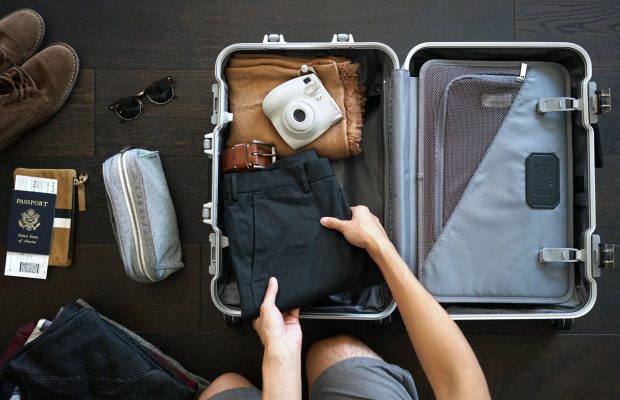
    Passengers can purchase the Alpha 2 International Expandable 4 Wheeled Carry-On case and a Just In Case Travel Duffel bag onboard the carrier, for home delivery. Tumi created the new designs especially for the airline’s 70th anniversary.

    The wheeled case comes with an Atlantic Blue embossed luggage tag as well as a matching blue zipper with a monogram patch. A unique insert card and story patch are also integrated to share the heritage of the limited edition item, according to the brand.

    “The Just In Case is truly versatile, whether it’s accompanying you on a shopping trip, a day out exploring your destination or wherever your journey may take you”

    Describing the duffel bag’s features, Tumi added: “This fashionable, practical and ultra-lightweight duffel bag features lightweight nylon with leather trim and a top zip closure while folding flat in an instant to be completely packable.

    “Often used with an adjustable removable Add-a-Bag sleeve, the Just In Case is truly versatile, whether it’s accompanying you on a shopping trip, a day out exploring your destination or wherever your journey may take you.”

    The bag’s features are displayed in the image to the right. Along with the wheeled case, the item has been available on Singapore Airlines flights since the end of March.

  • Web retailers join hands for membership programme

    Web retailers join hands for membership programme

    In anticipation of the launch of Amazon here, online shopping site Lazada and online supermarket RedMart teamed up with other online services here to launch a membership programme yesterday.

    And retail experts said such moves could work in favour of e-commerce sites.

    The programme, called LiveUp, offers users benefits such as rebates and discounts for Netflix, Uber, UberEats and Taobao Collection.

    Currently, new users will get a 60-day trial. Subsequently, membership costs $28.80 a year for a limited time. Its usual annual membership fee is $49.90.

    Among the benefits are a six- month Netflix subscription, 10 per cent rebate on Lazada, and $10 off every 10th ride on Uber for up to 12 times a year. More partners are expected to come on board.

    The announcement comes after tech news site TechCrunch reported last month that Amazon’s launch here has been delayed to “later this year”, instead of the first quarter as earlier planned.

    60 days of trial period for new users

    $28.80 annual membership fee for a limited time

    $49.90 regular annual membership fee

    While Amazon has yet to make a formal announcement on its plans in Singapore, it is expected to set up a warehouse here for faster shipping and easier returns.

    Yesterday, Lazada Singapore chief executive officer Alexis Lanternier told The Straits Times he believes the LiveUp membership programme will put up a strong competition against the incoming e-commerce giant, which is likely to also offer its Prime membership here.

    In the United States, it costs US$99 a year and offers perks such as free two-day or same-day shipping, streaming of movies, TV shows and music, and unlimited cloud storage for photos.

    Mr Lanternier said: “We have a head start at Lazada as we’ve been here for a longer time… But the membership programme is something that Amazon is strong in, and we didn’t have.”

    “It’s something we wanted to do because it makes sense for our customers, but we also want to give Amazon no chance, so we are bringing something to the table.”

    Mr Lanternier previously headed Amazon France’s video games and software division.

    In 2015, e-commerce was worth US$1 billion (S$1.4 billion and made up 2.1 per cent of retail sales in Singapore, and could increase to US$5.4 billion and 6.7 per cent by 2025, according to a report released by Temasek and Google last year.

    Retail experts told ST that the pre-emptive move to stave off Amazon’s move into Singapore could work.

    Senior lecturer of marketing Geoffrey Da Silva, from Singapore Management University, said: “It’s a lock-in strategy to build a loyal base of customers, and whoever is the first to do it will be the winner.”

    Singapore Polytechnic senior retail lecturer Sarah Lim said the fact that established tech companies here have banded together gives them a good chance of fending off the competition.

    She added: “I wouldn’t be surprised if other retailers are also looking to retain or recapture their market because by the time Amazon arrives, it would be too late to react.”

  • Tianjin FAW Xiali Auto expects Q1 net loss to widen

    Tianjin FAW Xiali Auto expects Q1 net loss to widen

    Tianjin Faw Xiali Automobile Says it expects Q1 net loss to widen to 240-290 million yuan from 166.9 million yuan ($24.24 million) year ago.

  • L Catterton Asia launches beachwear platform

    L Catterton Asia launches beachwear platform

    Australian swimwear brand Seafolly and Colombian beachwear brand Maaji are the first signings for a global lifestyle platform launched by L Catterton Asia.

    Based in Singapore, L Catterton Asia is an arm of private equity firm L Catterton, formed last year through a partnership between Catterton, LVMH and Groupe Arnault. It will be the controlling shareholder of the combined business, with the Maaji and Seafolly founders as minority shareholders.

    It is the first step in the aggregation of the fragmented swimwear/beachwear industry.

    Seafolly was founded in 1975 by Peter and Yvonne Halas, and has been led by Anthony Halas since he became CEO in 1998. He has built the business across international markets in Europe, North America and Asia. L Catterton Asia acquired a controlling interest in the brand in December 2014, and now it is sold in 41 countries (there are four stores in Singapore) as well as online.

    Maaji was founded by sisters Manuela and Amalia Sierra in 2002, and has a presence in more than 54 countries.

    “With this unparalleled combination of Maaji and Seafolly we look to grow our portfolio and create the largest independent house of beach lifestyle brands,” says L Catterton Asia chairman/managing partner Ravi Thakran. “This combination will drive many synergies, including geographic expansion, retail rollout and product sourcing.”

    L Catterton Asia’s goal is to preserve each brand’s DNA and heritage, while enabling the brands to enhance their global growth.

    Previously known as L Capital Asia, L Catterton Asia was launched in 2009 and manages more than US$1.6 billion across two private equity funds, and more than US$2 billion including co-investments. It has offices in Singapore and Mauritius, with further regional advisory presence in Hong Kong, Mumbai, Shanghai and Sydney. Its investments include Charles & Keith, Crystal Jade, Pepe Jeans Group and YG Entertainment, which promotes Korean singers and entertainers like Big Bang and Psy.

  • Mitsubishi open to helping Renault in Southeast Asia

    Mitsubishi open to helping Renault in Southeast Asia

    Mitsubishi is open to rebadging and selling models from alliance partner Renault in Southeast Asia. It’s one way the newest member of the Renault-Nissan alliance could create synergies with its partners, Mitsubishi Chief Operating Officer Trevor Mann told Automotive News Europe.

    “Renault is almost non-existent in Southeast Asia,” Mann said at the auto show here this month. “If it made sense for Mitsubishi to cross badge a Renault product in Southeast Asia that could be an interesting discussion.”

    Mitsubishi also has a more dominant presence than Nissan in much of Southeast Asia. Mann said the company’s strength in places such as Thailand, where it has three factories that have produced more than 3 million vehicles, could be used to help boost Nissan’s market share and its bottom line.

    For instance, Mann told Reuters the two companies are studying joint production of pickup trucks in Southeast Asia. Mitsubishi, which builds the Triton pickup in Thailand, could supply Nissan with its next-generation Navara pickup. Nissan currently builds the Navara for local sales in Thailand.

    “If you look at our cost performance in that region, we are the benchmark within the alliance,” Mann said. “Our cost-base on pickups is better than Nissan’s.”

    Mitsubishi’s pickup architectures are likely to become the basis for future alliance models, added Mann, who was formerly Nissan’s chief performance officer but was dispatched by CEO Carlos Ghosn to help turn around Mitsubishi after Nissan paid $2.3 billion for a 34 percent controlling stake in the scandal-hit company last October.

    Mitsubishi’s admission that it cheated on fuel-economy ratings for several nameplates sold in Japan opened the door for Nissan to make the move. The two companies expect the deal to lead to combined savings of 49 billion yen ($473.2 million) in the 2017 fiscal year that ends in March 2018.

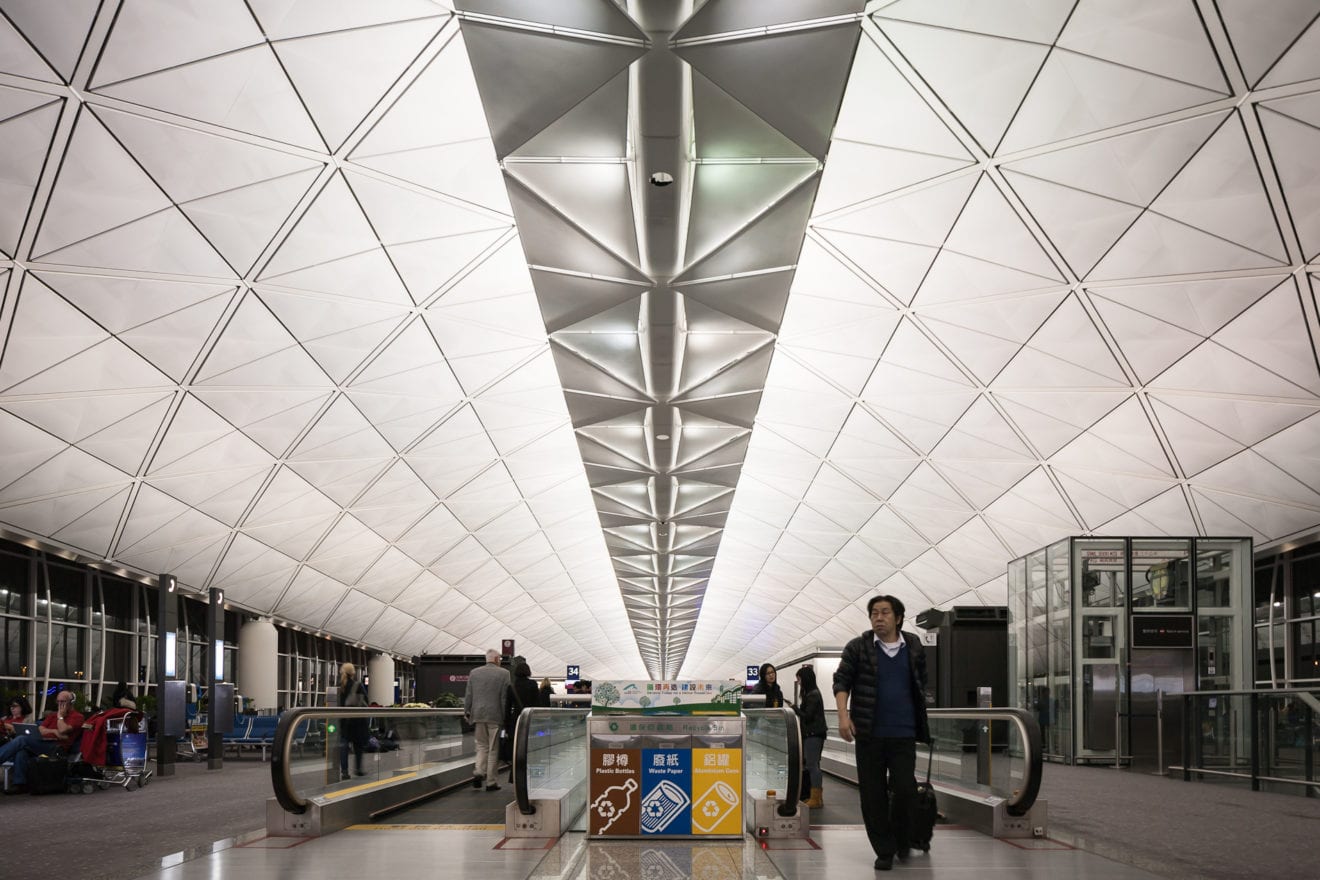
  • New Anchor Travel Retail Concessions Set to Elevate Overall Airport Experience

    New Anchor Travel Retail Concessions Set to Elevate Overall Airport Experience

    Airport Authority Hong Kong (AA) has awarded the “Liquor & Tobacco” concession to CDF – Lagardère Company Limited (CDF – Lagardère), and the “Perfume & Cosmetics and Fashion Accessories” concession to Shilla Travel Retail Hong Kong Limited (Shilla) at Hong Kong International Airport (HKIA), which would open for business from November 2017. The award is a result of the open tender exercise held earlier.

    Cissy Chan, Executive Director, Commercial of the AA said, “As a world-class international and regional aviation hub welcoming over 70 million passengers in 2016, we strongly believe that this collaboration will form HKIA’s signature stores introducing attractive and diverse choices, sought after brands, as well as unique and engaging shopping experiences. We are confident that the new concessions will elevate the overall airport experience and create a new shopping journey for the worldwide passengers.”

    The Liquor & Tobacco concessionaire will have the flexibility to include complementary products and upmarket gourmet food items.  The Perfume & Cosmetics and Fashion Accessories concessionaire will offer a one-stop shopping destination for beauty and fashion accessories, such as sunglasses, fashion watches, small leather goods and handbags.

    CDF – Lagardère, the awardee of the Liquor & Tobacco concession, will be introducing new experiential concepts, which include the widest selection of Chinese liquor assortment, a whisky chamber bringing an extensive offering under one roof, an in-store VIP lounge, tasting bars and more.

    Shilla, who will be operating the “Perfume & Cosmetics and Fashion Accessories” shops, will bring a wide spectrum of beauty products and fashion accessories representing almost 100 brands that are new to HKIA.  There will be a dedicated zone for male-specific products, as well as a “New Generation” zone providing a platform for emerging Korean and Japanese brands

    With the emerging trend of omni-retailing, both concessionaires will bring in new ideas to deepen customer engagement through digital initiatives. Interactive zones with virtual reality (VR), interactive and digital devices, together with iBeacon technology, will be installed inside the shops to enhance in-store navigation and real-time promotional offers.

    Charles Chen, President of China Duty Free Group said, “We are honoured to be awarded the Liquor & Tobacco concession at HKIA. This marks an important milestone in the international development of our organisation’s duty free business. We extend our sincere gratitude to the AA for their trust, and we will join hands with Lagardère Travel Retail to present a world class duty free shopping experience to the HKIA passengers.”

    Dag Rasmussen, Chairman & CEO of Lagardère Travel Retail said, “We look forward to growing our long-standing partnership with one of the world’s finest airports. Our teams across the world are excited to collaborate with our brand partners to bring to life a new benchmark for quality and engagement in travel retail.”

    Roberto Graziani, President, Hotel Shilla Travel Retail said, “This highly competitive win is attributed to our teams’ innovative category insights, our deep understanding of customer needs as well as our long standing operational excellence. We are grateful to the AA for this vote of confidence and look forward to warrant to our customers and all stakeholders, offers, services, and operational performances which will stay abreast of trends and changes in the consumers’ preferences, always maintaining a strong competitive edge throughout the length of the concession.”

    The two concessions will be open for business from November and December 2017 respectively. The AA will also fully assist the two concessionaires for a smooth fitting out and changeover.