Tag: Retail

  • DataLase & Xerox Team for Late-Stage Inline Digital Printing Solutions

    DataLase & Xerox Team for Late-Stage Inline Digital Printing Solutions

    Xerox, the global leader in digital print technology and services, has signed an agreement with DataLase, the newly acquired SATO subsidiary and inline digital printing experts, to launch a new inkless printing solution that allows brand owners to connect with consumers with personalisation and late-stage ability to differentiate products and packaging.
    Variprint™ is the next generation of revolutionary inline digital printing solutions from DataLase which uses the new Laser Imaging Module (LIM) designed and built by Xerox. The LIM is capable of printing at higher resolutions than most inkjet digital printing solutions, creating sharper images. The LIM can produce greyscale images with a natural resolution up to 1,200 dpi and can digitally print variable information such as graphics, barcodes and text up to 1 metre per second.
    The patented laser reactive pigments are incorporated into a coating that is conventionally printed onto a variety of products or packaging. When exposed to the LIM, a colour change reaction is generated in the coating resulting in a high definition, premium quality, digital print.
    “Building on the huge interest we generated at drupa 2016, the DataLase solution can deliver a unique way to help connect brands with consumers on a one-to-one basis through personalisation and late stage differentiation of products and packaging – such as adding timely local promotions and marketing material. Real time marketing capability on pack is now a reality,” said Dr. Chris Wyres, CEO of DataLase.
    “The digital print and packaging market is growing at a healthy pace,” said Aanand Parthasarathi, Manager, Packaging Programs at Xerox. “Our new lasers, coupled with DataLase technology, will deliver new capabilities in the fulfilment process such as switching languages or a last-minute change in an ingredient list.”
    DataLase is seeing the development of a range of market applications for its technology on a global basis. Its technology can be used across a wide range of product and packaging applications in the food and drink, pharmaceutical, personal care and household sectors for case coding, labelling, product coding and folding cartons.
  • Central bank to launch app for monitoring food prices

    Central bank to launch app for monitoring food prices

    Bank Indonesia (BI) plans to launch a mobile app through which the public and regional administrations can monitor harga pangan (the prices of staple foods) on a daily basis.

    The public would be able to use the app to avoid being deceived, while the regional administrations can use it to observe when prices go too high so they can tackle them faster.

    The public can already download the app or use it on the hargapangan.id website, but it has not been officially launched.

    The program managed by the Information Center for Strategic Food Prices (PIHPS) collects data from traditional markets in 82 cities in all 34 provinces in the country for 10 commodities: rice, shallots, garlic, red chili, birdseye chili, beef, chicken, eggs, sugar and vegetable oil.

    “The PIHPS has been running, but we’ll wait for the official launch,” Dody Budi Waluyo, the BI governor’s assistant for monetary and economic policy, said recently.

    “BI keeps improving the program. We’ll also collect prices not only from traditional markets, but also from modern markets; also maybe from big traders and touch on more commodities, as well as prices at the producers’ level. The point is we keep innovating with this,” he added.

    Previously, BI deputy governor Sugeng told the media that the central bank also plans to create a data system to track supplies of staple foods in the regions.

    All the aforementioned systems were developed so BI and the government could come up with better policies to achieve a 4 to 5 percent inflation rate.

  • Bankruptcy looming for Payless ShoeSource?

    Bankruptcy looming for Payless ShoeSource?

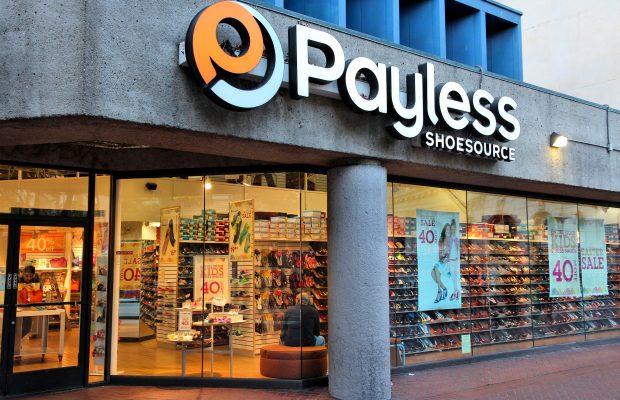
    Struggling US retailer Payless ShoeSource is headed for bankruptcy, reports Bloomberg.

    Payless, which has not commented on the report, operates some 4000 stores globally and under the reported Chapter 11 protection likely to be sought next week, will immediately shutter between 400 and 500. As many as 1000 may be closed as part of the restructuring plan aimed at rescuing the 61-year-old company.

    The company is owned by Golden gate Capital and Blum Capital Partners, who bought the business in 2012 as part of the break-up of Collective Brands. Headquartered in Kansas, it employs about 22,000 staff.

    Bloomberg cited sources familiar with the discussions but unable to comment publicly because they were not public.

  • Amazon Ready to Launch in the Philippines

    Amazon Ready to Launch in the Philippines

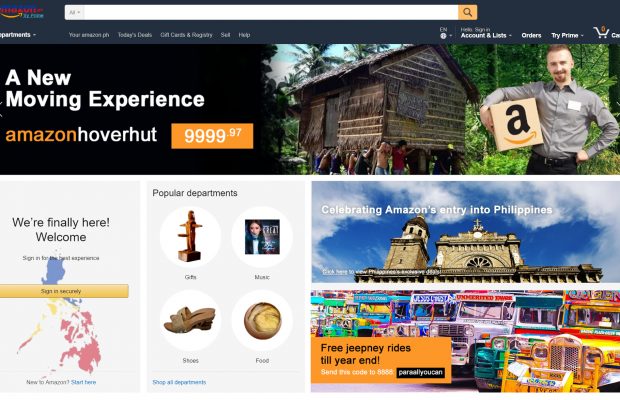
    Amazon with exclusive affiliate partner iPrice Philippines premieres the first screenshots of the all new and exciting online shopping platform: Amazon.ph. Slated to be launched late 2017, millions of local and international products will be made available to Filipinos with same-day delivery service throughout the nation.  Maintaining the ethos of Amazon, the new e-commerce platform in the Philippines will be guided by four principles: customer obsession rather than competitor focus, passion for invention, commitment to operational excellence, and long-term thinking.

    Partnering Amazon in this new endeavor is iPrice, a meta-search website in seven major countries in Southeast Asia as Amazon’s prime affiliate partner. With similar values and vision for ecommerce in Southeast Asia, iPrice’s partnership with Amazon will empower the Seattle based company with the needed marketing channels to aggressively market its products and services to the competitive ecommerce sector.

    Further details of Amazon’s affiliate partnership with iPrice will be revealed at the annual AWS Summit on 20th of April 2017 at the Marriott Hotel Grand Ballroom in Manila. Here is an exclusive screenshot of Amazon.ph.

    The Baguio Barrel Man

    Often seen as the souvenir of choice of most travelers, the Barrel Man offers more than just it’s barrel. Handcrafted from tropical wood unique only to the Philippines, the Barrel Man is a figure that is built of quality material and has the magical powers suited to relieve men of their physiological and psychological barriers.

    Amazon.ph and the Baguio Barrel Man was reviewed by test audiences prior to launch. It assisted in saving a marriage, and restoring one’s manhood.

  • Snapcart raises US$3million in quest for Southeast Asian offline retail data

    Snapcart raises US$3million in quest for Southeast Asian offline retail data

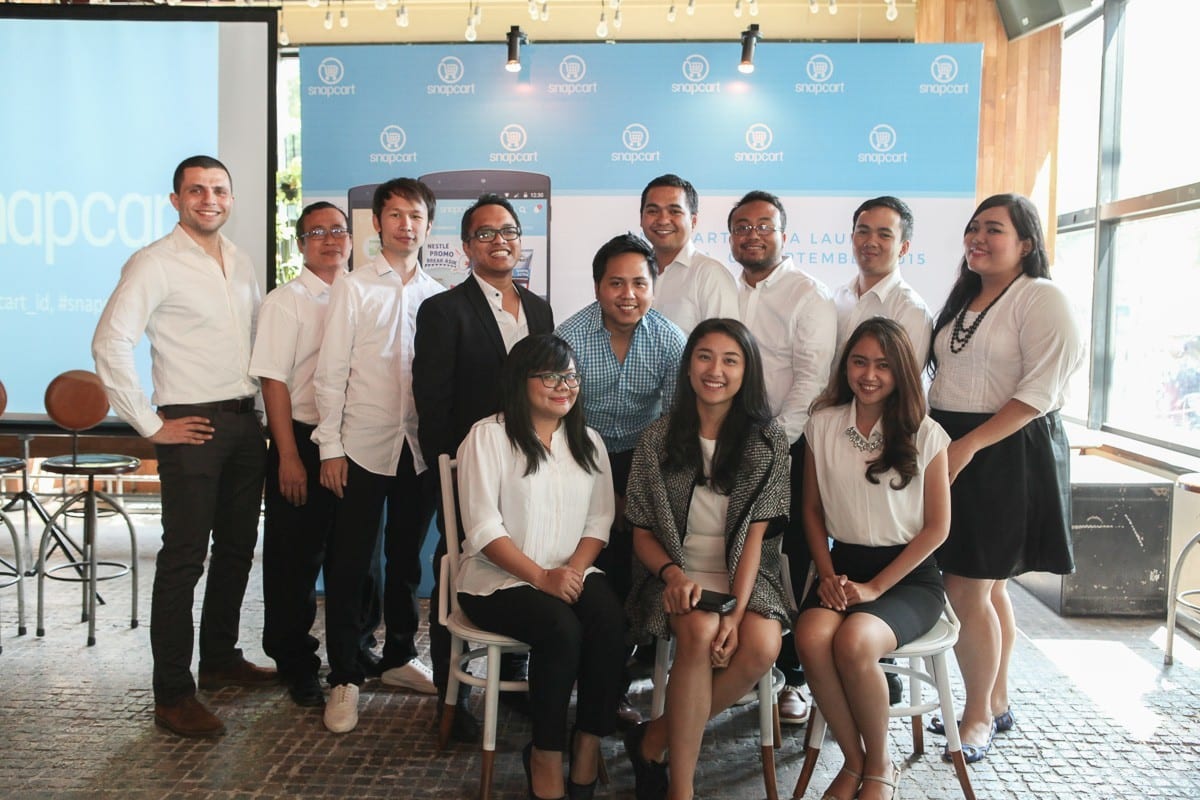
    In a bid to shed light on the offline retail market of Southeast Asia, startup Snapcart has raised US$3 million in pre-Series A funding,

    “Southeast Asia is a black hole and brands don’t know what is happening,” explains Snapcart CEO Reynazran Royono.

    The new funding round comes after Snapcart raised US$1.7 million in January of 2016. Since then Snapcart has expanded from Indonesia to the Philippines.

  • Lotte founder’s 50-year reign comes to an end

    Shin Kyuk-ho, founder and general chairman of the Korean retailer Lotte, has been removed from his company by shareholders, solidifying the succession of his second son, Shin Dong-bin, and coming closer to ending a family feud that started in 2015.

    Lotte is the country’s fifth-largest family controlled conglomerate, with 90 affiliates here and abroad.

    The shareholders voted in favor of denying the 95 year-old patriarch the position of board director of Lotte Shopping on Friday, which he has held since the affiliate was founded in 1970.

    The elder Shin’s term was terminated on March 20.

    Kang Hee-tae, CEO of Lotte Department Store, and Yoon Jong-min, Lotte Group’s human resource director, were newly appointed to the directors’ post at Lotte Shopping. Friday’s decision has completed the full control of the younger son, Dong-bin, who took his current role in 2011.

    “Lotte Group was able to grow with Shin Kyuk-ho’s leadership until now, but it is time for a new era under the new leadership of Shin Dong-bin,” said Lotte Group spokesman.

    Despite taking the role of chairman, Dong-bin was not allowed to make independent business decisions without the final call coming from his father, who held the board director position at most of Lotte’s affiliates.

    The father has been losing his board director position starting with Lotte International in 2015, followed by Lotte Confectionery and Hotel Lotte in March 2016.

    Lotte Confectionery is the founding company and the foundation of Lotte Group, while Hotel Lotte is the de facto holding company.

    Shin Kyuk-ho has been losing his title since he sided with his older son, Shin Dong-joo, who was trying to take full ownership of the group, and fired Dong-bin and six other executives at Lotte’s key operation in Japan.

    The founder still has several director positions, but his tenure is coming to an end and is unlikely to be extended. His role at Lotte Engineering & Construction is poised to be terminated on Sunday, followed by Lotte Aluminum and the Lotte Giants in coming month.

    Unlike his father, Dong-bin on Friday was appointed as the new director of Lotte Chilsung Beverage during the shareholders’ meeting, which industry insiders say is a necessary step to realigning the organization under his new leadership.

    Hwang Kak-gyu, who has worked with Shin Dong-bin for 27 years, was newly appointed as the CEO of Lotte Confectionery, a position that he will share with Dong-bin and Kim Yong-soo. The company said the decision was made to strengthen the company’s overseas business.

    Meanwhile, Dong-bin has been increasing his efforts to appease China, which has been bombarding Lotte’s business there as a retaliation against the Korean retail conglomerate’s decision to offer its golf course for the deployment of the U.S. antimissile defense system known as Thaad.

    In an interview he had with the Wall Street Journal on Thursday, Dong-bin said, “We definitely want to continue our business in China.”

    He added that he “loves” China and believe there has been a “misunderstanding.

    “If the government asks a private corporation like ours to give up land, then I don’t think we have the luxury of rejecting the government,” Dong-bin was quoted as saying in the Wall Street Journal.

    Lotte Mart, which runs 99 local branches in China, shut down 90 of them in the past couple weeks, partly forced by the Chinese government, which cited safety concerns, and also because of fierce protests in front of its stores.

    Lotte Shopping on Friday announced it will issue new shares worth 230 billion won and borrow 130 billion won in order to maintain its Chinese Lotte Mart branches.

    “Due to the suspension of Lotte Mart operations in China, there is no revenue generated, which we plan to compensate through capital increase,” Lotte Mart explained. “We need to pay local staff and purchase products.”

    Shares of Lotte Shopping jumped 2.61 percent on Friday, closing at 216,500 won.


  • IoT adoption in retail set to take off

    IoT adoption in retail set to take off

    Retailers will connect 12.5 billion business assets such as products, digital signs and Bluetooth beacons to IoT platforms by 2021, up from 2.7 billion in 2016, Juniper Research has predicted.

    The company has argued ‘next-gen’ processes, such as personalized retail, could be achieved by integrating enterprise software and emerging technologies, with data from connected IoT assets.

    Juniper forecasts that software spend for enterprise resource planning (ERP) systems to integrate this data would reach $11.3 billion annually in 2021, from $1.5 billion in 2017.

    The research firm also predicted that radio-frequency identification (RFID) will re-emerge as the industry’s ‘killer app’ becoming the key factor in the IoT retail ecosystem.

    RFID tags, used to identify and locate retail assets in real-time, are now at a low enough price point for mass deployment and integrate well with new IoT systems and analytics. New services, such as dynamic pricing or enabling promotional offers via in-store digital signs are also poised for growth.

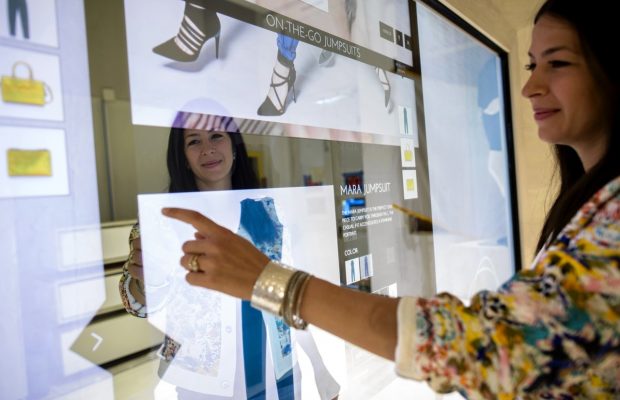
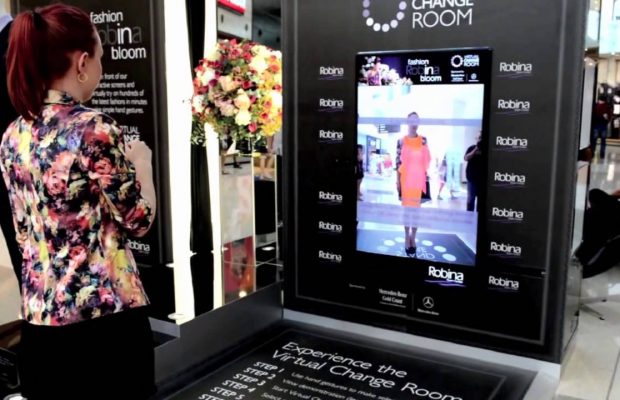
    “Innovative retailers such as Rebecca Minkoff have combined RFID with smart mirrors,” said research author Steffen Sorrell. “Integrating these systems allows real-time information to improve the store experience and bridge physical and virtual worlds – in this case, the concept drove a 200% increase in sales.”

    Juniper believes that physical retail spaces still have many benefits, not least in terms of being able to avoid the sterility of online shopping. It predicts online retailers’ focus would be on technologies such as machine learning to provide digital assistance, or digital performance management.

  • Cross-border e-commerce to hit $900b by 2020

    Cross-border e-commerce to hit $900b by 2020

    Cross-border e-commerce is now the fastest growing segment in the retail market, according to a report published by DHL Express.

    Cross-border sales volumes are predicted to increase at an annual average rate of 25% – from $300 billion to $900 billion – between 2015 and 2020. This is twice the pace of domestic e-commerce growth, DHL Express said.

    The study found that online retailers are boosting sales by 10-15% on average simply by extending their offering to international customers.

    By including premium service offering such as faster shipping options, retailers and manufacturers also grew 1.6 times their online stores faster on average than other players.

    “Shipping cross-border is much, much easier than many retailers believe, and we see every day the positive impact that selling to international markets can have on our customers’ business growth,” DHL Express CEO Ken Allen said.

    In Asia (Singapore, Hong Kong, and India) and Europe (Italy, Spain, France, Germany), key markets for high-value purchases are being expanded — with growth rates up to two or three times higher than the global average driven by rising consumer education and e-tailer awareness of opportunity.

    The report also noted that the $30 billion market of high-basket value transactions is evenly divided between Asia, Europe, and North America.

    Allen added that DHL Express sees that virtually every product category has the potential to upgrade to premium, both by developing higher quality luxury editions and by offering superior levels of service quality to meet the demands of less price-sensitive customers.

    “The opportunity to ‘go global’ and ‘go premium’ is there for many retailers in all markets,” he said.

    The main challenges highlighted by consumers to cross-border purchases relate to logistics, trust, price, and customer experience.

  • VW trucks division targets strong profitability gain in 2017

    VW trucks division targets strong profitability gain in 2017

    Volkswagen’s truck division aims to significantly increase its profitability this year as deepening cooperation between the MAN and Scania brands and improving overseas markets spur business, it said on Monday.

    Volkswagen, which launched a new truck & bus division in 2015 to challenge global rivals Daimler and Volvo, is targeting a long-term operating margin target of 9 percent, up from 6.1 percent last year.

    “We are not striving to become a volume champion, we want to be the most profitable ones,” chief executive Andreas Renschler told journalists, referring to improving markets in Western Europe, Russia and China.

    But finance chief Matthias Gruendler made clear a significant improvement in financial results requires a rebound in the key Brazilian market where the VW division commands a 37-percent share of the country’s commercial-vehicles market.

    Overall truck and bus sales in Brazil have been falling for four years but demand is expected to rebound slightly in the second half of the year amid the improving economy with a chance for stronger growth in 2018, Gruendler said.

    “Brazil has always been an important market and is characterized by a high degree of cyclicality,” chief executive Andreas Renschler said.

    Under Renschler, who ran Daimler Trucks before joining VW in February 2015, Europe’s largest automotive group has also been seeking to expand its footprint in international truck markets.

    Last year, VW announced a stake purchase in U.S. truck maker Navistar International which may earn the German group access to the vast North American truck market, and is also in talks about finding a new partner in China.

    “We are currently in discussions about different opportunities,” Renschler said. “All options are open” including a possible increase in MAN’s stake in China’s Sinotruk and finding a new partner.

  • Vietnam e-commerce competition hotting up

    Vietnam e-commerce competition hotting up

    The competition between shopping websites has now switched focus from prices to rapid delivery.

    Analysts said competing by cutting prices by up to 50 per cent is an old story, and with customers’ demand for good service increasing, delivery times have become a key factor.

    Alexandre Dardy, the CEO of the country’s largest online shopping platform, Lazada, said besides increasing the number of merchants and products, his company would soon reduce delivery times.

    Currently the average delivery time that Lazada offers customers is more than two days, with urban areas served faster than rural for obvious reasons.

    At the end of last year the company tied up with AhaMove, a motorbike-based delivery service, and began a new delivery schedule that enables customers to get their product within just 60 minutes in certain cases.

    Another online shopping website, tiki.vn, is also taking measures to improve its delivery process. Currently its average delivery time is two to three days.

    Trần Ngọc Thái Sơn, director of tiki.vn, said product quality and delivery time are the most important factors for customers.

    His company has begun to deliver within 24 hours, he said.

    In case of late delivery, customers will receive a Tiki coin worth VNĐ30,000 (US$1.3) for use next time while shopping.

    The speedier delivery does cost more, the company said.

    Express delivery costs two or three times higher than standard delivery.

    For instance, while standard delivery costs only around VNĐ15,000 for a package weighing less than three kilogrammes, express delivery costs VNĐ30,000.

    However, 50-75 per cent of this is covered by the online shopping companies.

    Dardy said Ahamove gets VNĐ30,000 for express delivery, with Lazada covering VNĐ20,000 of it and only passing on VNĐ10,000 to the customer.

    But despite this, companies have no hesitation in offering express delivery, realising this will encourage customers to return in future.

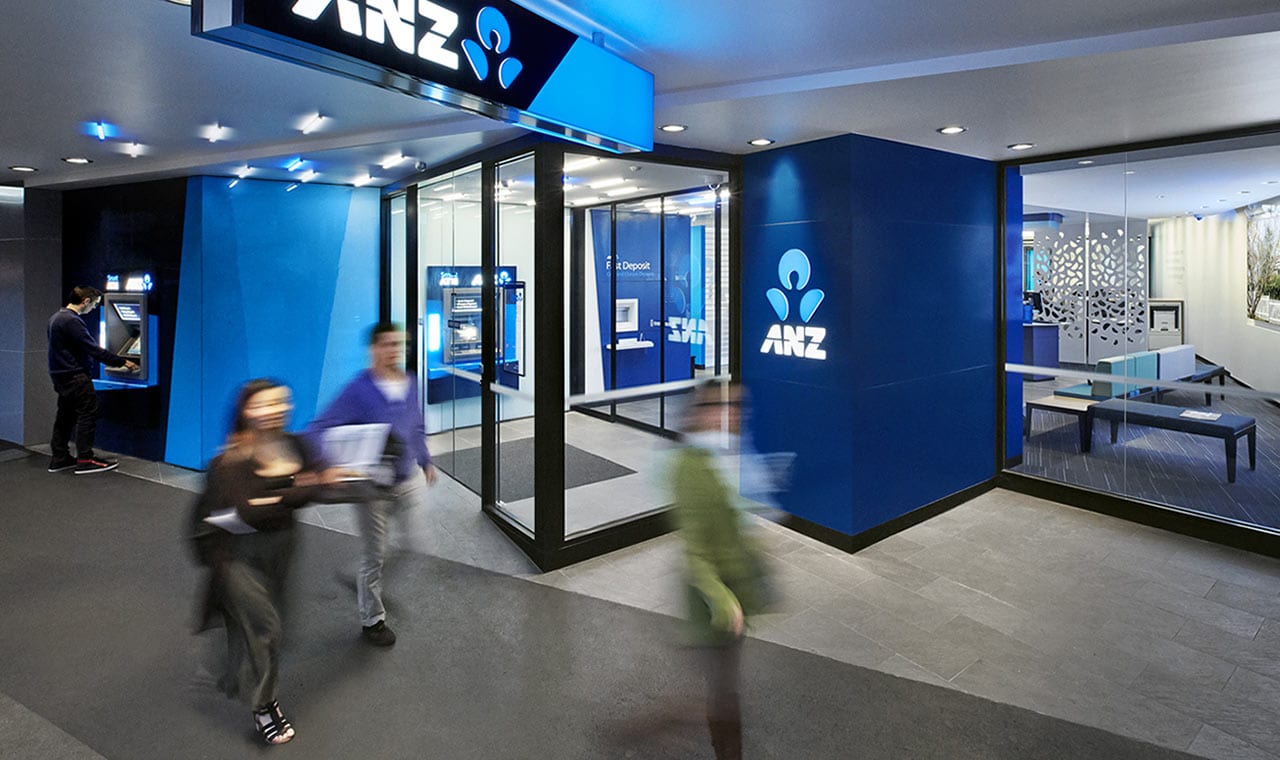
  • ANZ Vietnam to sell retail banking business

    ANZ Vietnam to sell retail banking business

    Three foreign banks and two domestic banks, which have not been named, were reported by SaigonTimes as being interested in acquiring the retail businesses of the 100 per cent foreign-owned bank.

    Last October, ANZ Group CEO Mr. Shayne Elliot was quoted as telling foreign media that the bank would look to exit its retail and wealth assets in the Philippines and Vietnam but had no plans to do likewise in Cambodia and Laos.

    “Further investments do not make sense for us given our competitive position and the returns available to ANZ,” he said.

    In the same month, Singapore’s largest bank, DBS Bank Ltd (DBS), acquired the wealth management and retail banking business of ANZ in five markets for $77.7 million more than the book value.

    The businesses acquired were in Singapore, Hong Kong, China, Taiwan and Indonesia, with total deposits of $1.2 billion, loans of $7.77 billion, investment assets under-management (AUM) of $4.6 billion, and total revenue of $582.7 million in FY 2016.

    They serve about 1.3 million customers, of which 100,000 are affluent and 1.2 million are retail customers.

    DBS, however, will not be allowed to acquire ANZ Vietnam’s retail banking business, according to a source, who added that the Singaporean bank is not among the five potential suitors.

    ANZ Vietnam was not available for comment at the time of writing.

    Last November, an ANZ Vietnam representative told local media there were no plans to sell its retail and wealth businesses in Vietnam but it would continue to examine ways to improve its retail and wealth operations.

    Regardless, the exit is reasonable given its modest figures for the first half of 2016.

    During the January-June period, interest income fell 17.3 per cent year-on-year to VND578 billion ($25.4 million) and fee and commission income was down 5.6 per cent to VND153.3 billion ($6.7 million).

    The bank would have made a loss if drastic changes in other income sources had not saved the day.

    From a net loss of VND21.7 billion ($953,000) during the first half of 2015, foreign currency exchange recorded a net gain of VND163.3 billion ($7.2 million) for the bank in the first half of 2016, securing an after-tax profit of VND176.8 billion ($7.7 million) as at June 30, up 30 per cent year-on-year. Its bad debt ratio rose to 1.25 per cent from 1.16 per cent as at the beginning of the year.

    ANZ Vietnam now has eight transaction offices in Hanoi and Ho Chi Minh City, providing Retail & Wealth, Consumer Finance, Corporate, Financial Institution, and Public Sector services to customers.

    Last year, the State Bank of Vietnam (SBV) withdrew the business license of the ANZ Banking Group Limited – Hanoi Branch (ANZBLG), which opened in 1993, at the request of the ANZ Group, to bring together the two entities of the bank operating in Vietnam.

    In 2009 the ANZ Group established a fully foreign-owned local bank called ANZ Bank Vietnam Limited and has since continued to operate the latter.

  • Retailers alerted to surge in trade for counterfeit goods

    Retailers alerted to surge in trade for counterfeit goods

    In Singapore and other parts of South East Asia, there has at least been a minimal market for counterfeit goods. Retailers across the region have wrangled with this issue for many years and today, it shows little sign of waning.

    Statistics for 2016 revealed that, worldwide, the market for counterfeit goods worldwide was worth an astonishing $650bn (US$460bn). Many of these products were sold online to customers the world over, with popular items sold including eyeglasses, electronics and designer footwear. Bargain-hunting consumers may find the price outweighs whether or not what they buy is genuine.

    Local trade

    The range of fake goods finding their way at customs is pretty wide. Aside from luxury items such as jewellery and smartphones, everyday items bearing counterfeited brand names including rice, noodles and chocolate are also sold as the genuine article. Singapore, as a major global port, sees a fair few of said goods reach customs.

    In September 2016, Singapore Customs seized over 5,000 bags of counterfeit rice imported from India. That same month, more than 1,300 wallets, bags and purses were confiscated. Both bore trademarks of brands which local authorities deemed to be illegal, highlighting the need for retailers to be wary of what they buy in from suppliers.

    When determining what is real and what is fake, Singapore Customs do a lot of the work, whether through performing checks at airport terminals and ports or by enforcing the Trade Marks Act. However, retailers are also tasked with staying on-side, whether selling products online or offline in the bustling streets and markets.

    Telling real from fake

    Retailers are advised to read the Trade Marks Act. Introduced in 1998 and revised in 2005, it states that it is illegal for traders to sell any products bearing un-trademarked logos or other forms of branding. Inspecting goods thoroughly is a must before buying; a good way of doing this is to compare a fully-trademarked product against one that has been offered for sale.

    Any differences in fonts, brand names, colours and materials should be easy to spot. If there are any signs that a product offered by a wholesaler is fake, it is recommended to contact local customs and turn down those products. This should be done regardless of whether or not they seem to represent value for money.

    Should any business find itself selling counterfeit goods, knowingly or otherwise, there are grave consequences. Hefty fines are often given per fake item sold, reaching as much as $10,000 per item. In such an instance, legal advice from local firms including Withers LLP is advisable, whether it’s before or after buying fake goods.

    Multiple sources

    Many counterfeit goods sold across Asia find their way onto online marketplaces such as Amazon, AliBaba and eBay. Retailers using these channels to sell their products are advised to take precautions to ensure what they sell on said sites are the real thing. AliBaba account holders are advised to register with AliProtect.

    Whether they come from China, India, Europe or within Singapore, the market for fake goods shows no sign of slowing down. Attempts by governments and online retailers to clamp down on them are improving, though.

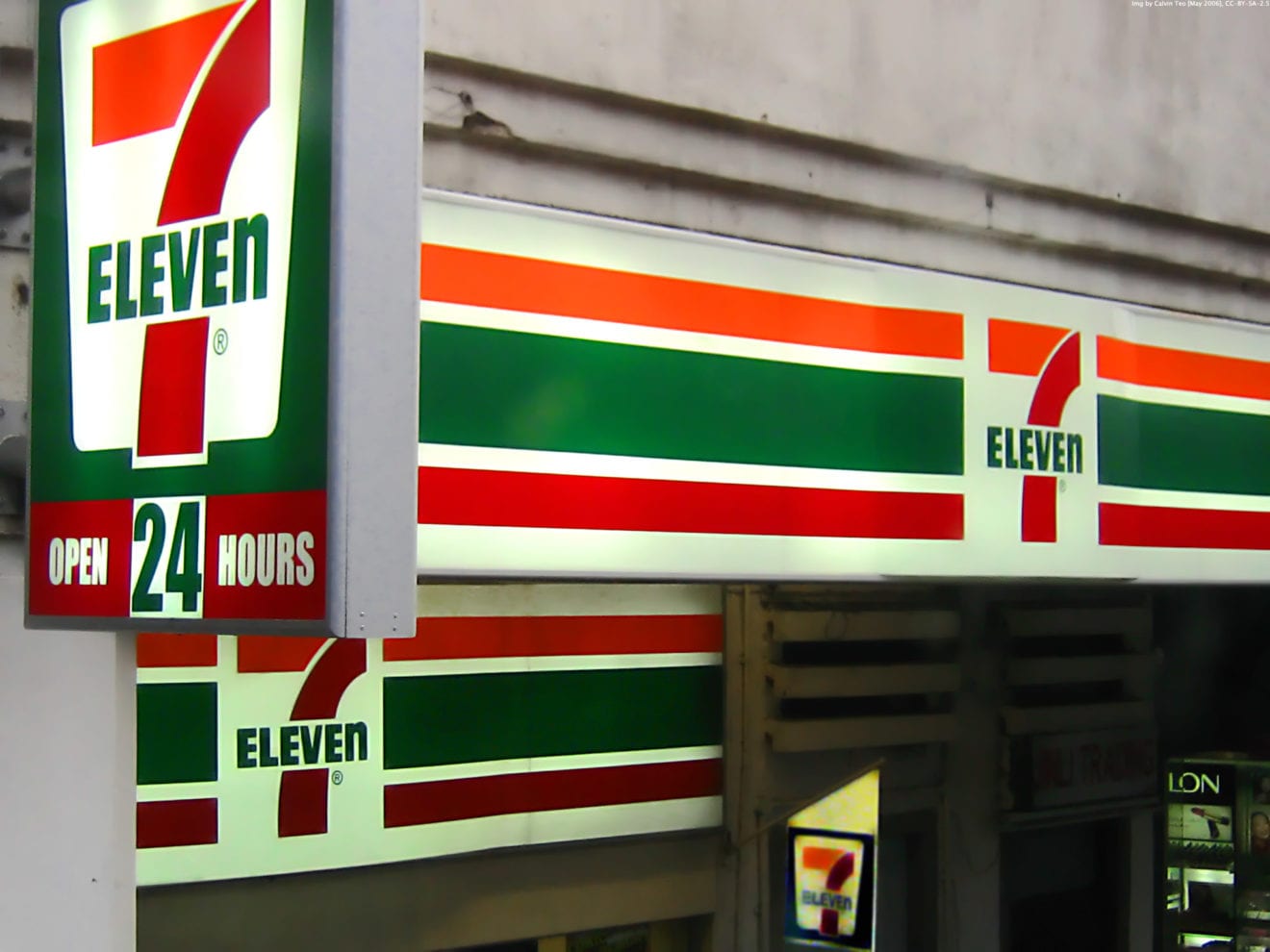
  • 7-Eleven Philippines to open 412 stores

    7-Eleven Philippines to open 412 stores

    Philippine Seven Corp, the 7-Eleven Philippines operator, says it will open 412 new stores this year.

    For the second successive year the listed company will budget P3.5 billion (US$70 million) for capital expenditure.

    The company has just opened its 2000th outlet, at Legaspi Village in Makati City.

    The majority of the new stores will be opened in Luzon, with 50 scheduled for the Visayas and 50 for Mindanao.

    Philippine Seven president and CEO Jose Victor Paterno says half the new stores will be company owned and operated, the other half franchised.

    “We will stick to the provinces first because we have experience and we know the market. The sales of the others can’t support the high rents in the metro. If we cannot pay it, we won’t enter,” Paterno said during a press briefing.

    Sales at 7-Eleven Philippines stores rose 23 per cent in 2016 to P32 billion (US$636 million).

    Paterno said there is a lot of room for the convenience store industry to expand. He anticipates the total number of all brands of c-stores in the nation will exceed 15,000 within 10 years – almost four times the current number.

  • Augmented Reality Empowers Indonesian Women to Operate Online Stores

    Augmented Reality Empowers Indonesian Women to Operate Online Stores

    While its direct-selling model echoes brands like Avon and Tupperware, Indonesia’s MindStores gives the approach a modern twist—with augmented reality.

    Recognized as the first partnership store network to use augmented and virtual reality, MindStores equips its store owners with their own unique partner cards which customers use to access the stores virtually. The whole process is relatively simple, and takes place in-person only.

    A store owner, who can be located anywhere—from their living room to a public coffee shop—shows a customer their partner card. Using a dedicated app on their own smartphone, that customer scans the card to see a 3D retail store appear on their screen. From there, the customer enters that partner’s virtual store and can browse and purchase merchandise to have shipped to them. The store owner then gets a cut of the sale.

    Slingshot, the Indonesian technology and media company that operates MindStores, announced this week that the store network has opened more than 7,000 stores in Indonesia since its launch last June. They estimate that they will have more than 150,000 active stores by the second quarter of 2017, with the potential to open more than 4 million new stores in the country over the next two years.

    As part of the pilot program, MindStores partnered with Alfamart, a large Indonesian convenience store chain, to have their wares sold through branded Alfamind virtual stores by individual store owners. However, augmented reality gives MindStores the potential to expand their retail partnerships to other companies, with many stores appearing side by side on each scanned store owner card.

    “The future will be an augmented reality city that is working flawlessly with people, with stores, with consumers,” said Daniel Surya, CEO of Slingshot and its parent company, WIR Group, in an interview with NextReality. “Now is just the first phase. We’re looking at a data-driven city using augmented reality.”

    Surya noted that MindStores already has an agreement with one of the largest insurance companies in Indonesia, Astra Life, in collaboration with UK-based Aviva, as their next retail partner. Eventually, MindStores will also give its store owners the ability to sell their own merchandise and crafts—not just partner brands—like on Etsy.

    The company expects to expand to China and India by the end of the year, Latin America and Africa next year and, eventually, the United States. Each expansion will require recruiting partners that resonate with consumers in those markets.

    Working in emerging markets presents challenges in rendering AR and VR animations, since most consumers are equipped with lower-end phones running on processors two or three generations old.

    The stores are designed to render smoothly through its Android or iOS app. To ensure consistent operation, the company built the stores on their own engine, which is compatible with more modest hardware. For instance, minimum requirements to run on Android include OS version 4.2 Jelly Bean, quad-core 1.8 GHz CPU, and 2 GB RAM.

    “We need to be able to present this technology on the simplest, most modest phone available on the market,” said Surya. The app is also optimized to compensate for available connectivity in the emerging markets. According to a spokesperson, the app is designed to allow for offline browsing, though an internet connection is required to place an order.

    Nonetheless, they are also testing the experience with smart glasses, namely Vuzix and HoloLens, and their research and development team maintains relationships with the leading hardware makers so that they are familiar with the next wave of devices.

    Empowering Women Through Community-Based Selling

    Along with the eye-catching AR and VR aspects, community-based selling has been a significant component of the company’s success.

    The direct selling model appeals to mothers of single-income families as supplemental income, according to Surya. Since brand loyalty is low in Indonesia, the ability to offer goods at a discount to friends and neighbors gives store owners and their partner retailers an advantage.

    Through Mindstores we’ve used innovative technology to create something as equally innovative as it is meaningful, through its proven ability to make a positive impact to empower women worldwide. Slingshot will continue enhancing the Mindstores experience, for the benefit and futures of an often-overlooked population: women in less developed regions of the world.

    — Daniel Surya, CEO of Slingshot and WIR Group

    Compared to the cost of opening a brick-and-mortar store or securing a franchise license, the start-up cost for MindStores is relatively modest. Store owners invest a minimum fee (the equivalent of about $100) to serve as capital to purchase inventory credit from Alfamart, the partner retailer.

    Their customers order products through the store and pay the customer in cash. The retailer applies the purchase towards the inventory credit and ships to the customer. Customers pay the store owners directly in cash. Store owners can purchase additional credits once the initial investment is exhausted.

    The store owners receive about 15% of each sale for most of Alfamart’s product categories, such as fashion and household goods, which have 30-40% margins. MindStores takes a 2% cut, with the remainder of the proceeds going to Alfamart. Slingshot reports that participants average $900–$1,200 per month in sales.

    Next Stop: SXSW

    Slingshot is one of five Indonesian companies appointed by BEKRAF (Indonesian Government Agency for Creative Economy) to attend the South by Southwest (SXSW) Conference and Festival, taking place March 10–19 in Austin, Texas. The companies will exhibit in the Indonesian section named Archipelageek.

    “It is a tremendous honor to represent our Country at such a prestigious event,” said Surya. “We’re proud to showcase the creative and innovative technological achievements from Indonesia, which we believe are highly relevant in today’s worldwide marketplace.”

    In addition to its MindStores business unit, Slingshot also operates AR&Co., which specializes in augmented reality content development, and DÄV, an AR media placement company. Founded seven years ago as the AR Group, Slingshot has offices in New York, Los Angeles, Silicon Valley, Jakarta, Singapore, Barcelona, and Malta.

    Slingshot has completed more than 500 projects in 20 countries, working with brands such as Disney, Cartoon Network, Samsung, LG, Intel, Lenovo, and Sony, to name a few.

    Among their notable campaigns include AR-enabled ads for the successful Nigerian presidential campaign of Muhammadu Buhari, holographic Star Trek collectible pins, and the first AR children’s books in Spain.

    “We’ve always been excited about the possibilities of augmented reality and the power it has as an engaging and immersive platform,” said Surya.

  • 58 percent of Filipino women delay marriage and kids for career

    58 percent of Filipino women delay marriage and kids for career

    Most Filipino women believe there has never been a better time to be a woman and that femininity is strength, according to research made by global marketing communications brand J. Walter Thompson (JWT).

    That they are among the least likely to experience sexism in the workplace compared to their sisters in the Asia-Pacific region reflects this world view.

    ‘Too superficial’

    Filipino women also wish to mentor their juniors—whether in the family, office or other social circles—in the self-taught independence and expression they have honed as part of growth. One reason for this is that Filipino women apparently feel it is dangerous to leave young girls looking for role models in media, since female celebrities are “too superficial.”

    JWT revealed the results of its study called “Filipina Next” in time for the celebration of International Women’s Day last March 8. The quantitative and qualitative research covered Filipino women across socioeconomic levels, from 18 to 70 years old.

    “Filipina Next” is an offshoot of the group’s more exhaustive poll in 2016 called “Female Tribes” that involved 4,300 participants from the United States, China, United Kingdom, Brazil, Saudi Arabia, Russia, India, Australia and South Africa. In that study, women, ages 18 to 70, were asked about money, career, religion, sex and other “relevant topics.”

    Highlights

    Among the highlights that JWT Philippines managing director Golda Roldan and executive strategic planning director Pamela Pacete-Garcia shared from “Filipina Next” are:

    98 percent of Filipino women believe in establishing “strong and substantial women in television and film,” but 76 percent find female celebs “too superficial.”

    Still, 15 percent credit a female role model in media for inspiring them to leave an abusive relationship.

    94 percent want women in general to “step up and serve as mentors to young girls.”

    80 percent consider themselves “the main household purchaser,” with 73 percent saying they make majority of financial decisions at home.

    72 percent claim they “don’t need anyone but themselves to achieve their goals.”

    Among those who turned to role models, 41 percent “have taken risks in life that they otherwise would not have taken;” 40 percent “became more ambitious,” while 33 percent were encouraged to go to school or pursue further education.

    63 percent consider sexual fulfillment important as a lifelong concept, with 70 percent agreeing that sexual fulfillment is not just for the young; 50 percent expect to remain sexually active even in their advanced years.

    58 percent would delay getting married and/or having children to pursue their chosen career.

    More than career advancement and the acquisition of material wealth, 47 percent measure success as “achieving a higher level of religious and spiritual awareness.”

    Policy issues

    While JWT studies showed Filipino women as the least likely to experience sexism at work, guest panelists in the presentation agreed that mentoring young women would help them overcome challenges, especially in the workplace.

    Taguig Rep. Pia Cayetano said this means it becomes more crucial now to confront policy issues such as maternity leave, age discrimination and reproductive health because “we still live in a time when women are very much discriminated against.”

    In the case of Olympic medalist Hidilyn Diaz, she recalled facing opposition from family members, particularly her mother, Emelita, after she decided to concentrate on weightlifting—a sport normally associated with “macho” men.

    Luminaries

    Other panelists attributed their success to strong women in the family who raised them, and mentors at work who encouraged them to find their place.

    Trickie Lopa of Art Fair Philippines had grandmothers who were both luminaries in the faculty of University of Santo Tomas, and a mother who also worked.

    “I never experienced women being Maria Clara (the weak female character in Rizal’s “Noli Me Tangere”). These days I work with women… I’m surrounded so it’s never been an issue,” Lopa said.

    Armie Jarin-Bennett of CNN Philippines recalled asking too many questions (“Tanong ako nang tanong”) at work “so people had the tendency to take me under their wing.”

    Melissa Henson, senior vice president and chief marketing officer of Manulife Philippines, once had a “Turkish lady” who taught her the ropes during a stint abroad.

    “In the US, I was the quiet Filipina who didn’t speak. Kasi nakakahiya, baka mali ang sasabihin ko, mas matalino sila sa akin,” she said.

    Henson said her boss encouraged her to speak up “or they’ll think you don’t know. If I turn out wrong, so what? Do better next time. I grew significantly, professionally under her watch.”

    Role models

    Johnson & Johnson country director Tina Sabarre noted that her women role models “did not act like men,” which made her realize “I can really be a woman, be strong in my femininity, and not work as if I am a man, and succeed.”

    Globe Telecom senior vice president and head of consumer mobile marketing Issa Cabreira grew up watching a grandmother, who was widowed at 49, raise seven children, and a mother who raised four kids after separating from her husband.

    “Having two very strong role models made me who I am today. If I am asked what drives me, it’s always those two amazing women—professionals who were doing the (traditional) jobs of men because they were running businesses,” Cabreira said.

    “I did not follow them as entrepreneurs, but they drove me to be at least half as successful on my own,” she added.