Tag: Retail

  • Korean sales +30.9% to $10.6bn as growth slows

    Korean sales +30.9% to $10.6bn as growth slows

    South Korea’s duty free industry saw total sales grow by +30.9% or $2.5bn to a record-breaking $10.6bn in 2016, although senior sources in Seoul tell TRBusiness that sales growth is expected to slow to between 10% to 15% in 2017 – resulting in incremental sales of between $1bn to $1.5bn.

    These estimates nevertheless assume that foreign tourist numbers (primarily Mainland Chinese) continue to increase in 2017 as expected.

    According to senior sources in Seoul, foreign visitors’ duty free purchases amounted to US$7.6bn in 2016, accounting for 72% of South Korea’s total US$10.6bn purchases last year. This sales result includes contributions from all airport, seaport and downtown shops (including internet) sales and ‘domestic duty free’ sales on Jeju Island, although it excludes inflight duty free sales.

    BIG CHINESE TOURIST DEPENDENCY

    Highlighting the dependence on foreign tourists for duty free growth, South Korean travellers’ share of sales came in at $2.9bn last year, which was equivalent to 28% of the national duty free revenue total.

    “In 2015 we had a big impact from MERS on our duty free market from July to October, then the market recovered from November. It meant half of 2015 was impacted by MERS so we had a big 31% sales increase last year,” said a senior industry duty free source in Seoul.

    He told : “Sales to foreign tourists increased about 40% last year in value, about 80% of them are Chinese; but sales to South Korean travellers saw only a 9.7% increase.

    A busy cosmetics counter at the Lotte World Tower duty free shop in Seoul.

    Meanwhile, per capita duty free spending amongst foreign visitors grew last year, allaying fears among duty free operators that changes made to China’s luxury goods import regulations in April might force a reduction in individual spending.

    20.6M FOREIGNERS BOUGHT DUTY FREE

    According to industry figures, a total of 20.6m foreign visitors bought duty free products in South Korea last year – a rise of 28% compared to those purchasing in 2015.

    In addition, 27.9m South Koreans purchased duty free goods last year – an increase of 13.6% compared to 2015.

    “Sales to foreign customers increased 40% in value and the number of foreign customers rose by 28%, so total per capita spending by foreign visitors increased last year,” said the source.

    By contrast, South Korean per capita customer spending slowed slightly in 2016 as total South Korean duty free purchases rose by 9.8% in value, although this was less than the rise in the number of customers making purchases.

    As expected, perfume and cosmetics continues to dominate as South Korea’s largest duty free category accounting for more than 50% of duty free sales, with Lotte Duty Free – the country’s leading operator – generating total sales of $5.7bn, of which perfume and cosmetics sales accounted for almost $3bn. These sales included all of Lotte’s various downtown and airport stores.

    HOTEL SHILLA SALES REACHED $2.6BN

    Hotel Shilla Duty Free was the next biggest operation with total sales registering $2.6bn in 2016 (not including its HDC Shilla joint venture in Seoul) and once again, perfume and cosmetics accounted for a large share of revenue.

    Other South Korean duty free operators – including new entrants to the industry – also registered good P&C sales, with many finding it easier to arrange supply deals with local cosmetics manufacturers rather than international brand suppliers.

    “The numbers are incredible; cosmetics is the number one item for Chinese visitors,” said the senior source. “South Korean cosmetics brands are about 60% of the purchases and imported cosmetics are 40%. South Korean cosmetics are very good quality and the prices are reasonable.

    “South Korean cosmetics companies are developing products to please East Asian customers, as their skin texture is different. They know what products Chinese visitors are looking for. South Korean face mask products are very famous with Chinese customers.

    SOUTH KOREAN COSMETICS GROWTH

    “The other thing is the price gap between the South Korean and Chinese markets. There are big perfume and cosmetics import tariffs in China; also, Chinese people do not trust products made in China, as there are many fake products.”

    While duty free operators are obviously happy to see products fly off the shelves, a number of perfume and cosmetics brands and luxury goods brands have started to limit the volumes sold to individual customers, as suspicions grow amongst some suppliers that not all these purchases are for personal use.

    ‘SURROGATE SHOPPERS’ ARE A CONCERN…

    “Many people are saying that a significant ratio of purchases are by surrogate shoppers,” said the source. “As foreign brands begin to withdraw from China, so mainland tour companies are sending tourists here to buy luxury branded goods and pay them a commission for buying.

    “The travel companies collect these products for re-sale in China, as there is a 30% to 40% price gap between South Korea and China because of the luxury goods tariffs. Chinese wholesalers organise these purchasing trips; they’re common now.”

    Individual brand product purchasing limits also vary, with most international P&C brands – along with top South Korean brands – limiting the number of pieces sold to individual customers to five items. For luxury fashion goods and accessories, many international brands also limit purchases to one or two items per customer.

    “The purchase limits are set by the brands, not the operators; the operators only think of profit. It’s the same around the world,” the source remarked.

    Foreign visitors are the major customers in South Korea’s downtown duty free stores, spending $6.4bn in downtown outlets in 2016, a huge figure which is five times the value of foreign traveller purchases worth $1.1bn in airport duty free shops last year.

    AIRPORT SALES EQUALLY DIVIDED

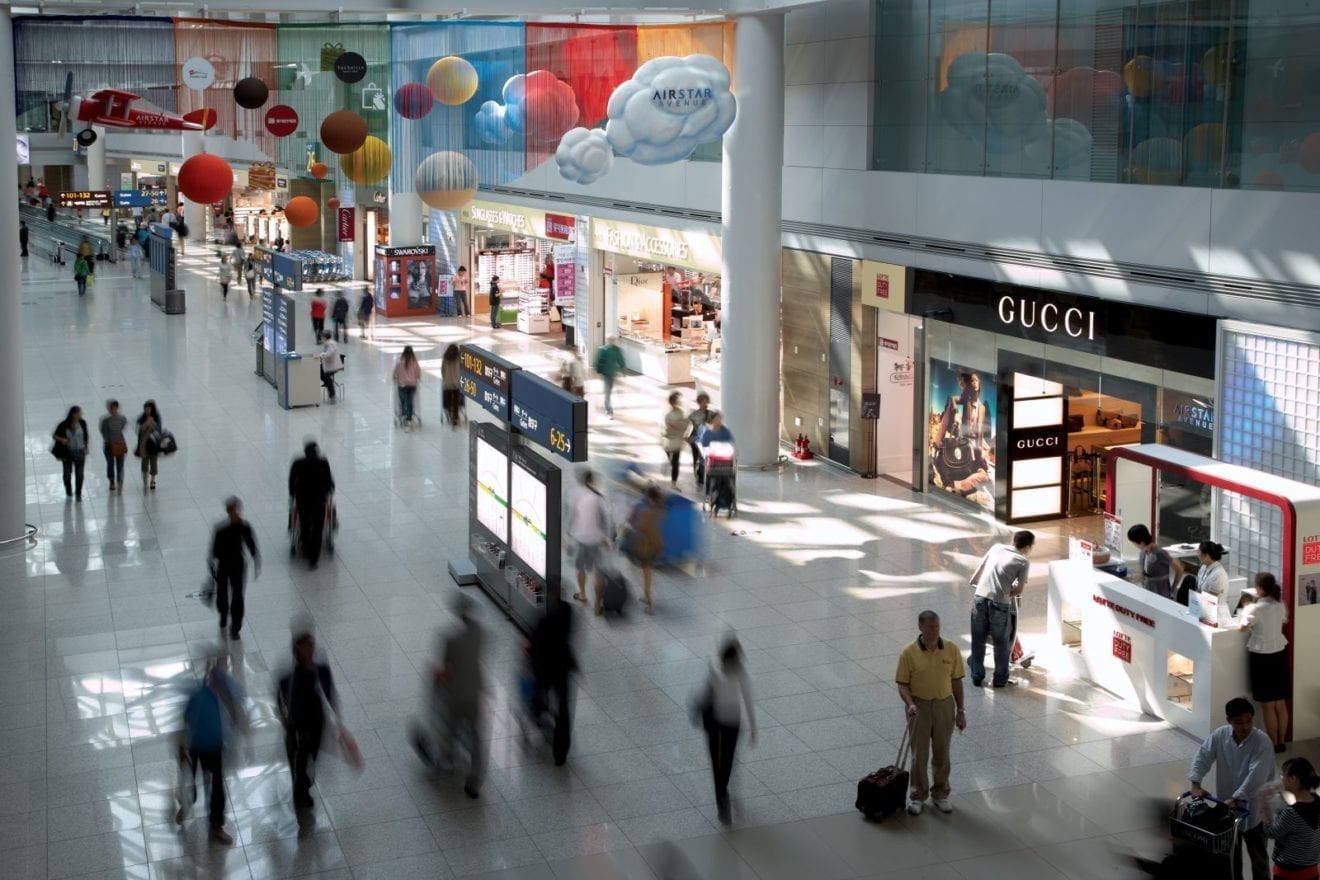
    Foreign and South Korean customers each accounted for half of the country’s total airport duty free sales that were worth $2.4 billion in total in 2016, of which the major share was recorded at Incheon International Airport.

    South Korean customer purchases were divided equally between downtown and airport shops, with spending reaching $1.3bn in the country’s downtown stores and $1.2bn in international airport shops last year, plus almost $500m was spent in Jeju Island’s domestic airport and seaport duty free shops.

    Foreign visitors accounted for 83% of all downtown store duty free purchases worth a total of $7.7bn in 2016, according to industry figures. Outbound South Korean traveller purchases accounted for just 17% of downtown duty free stores’ overall sales and included online and internet purchases estimated to account for 25% to 30% of total downtown revenue.

    More than 80% of purchases in almost all downtown duty free stores in South Korea were made by foreign customers (primarily Mainland Chinese) with the exception of the Shinsegae Duty Free and Lotte Duty Free Busan downtown shops, where South Korean customers accounted for 48% and 34% of purchases respectively.

    In addition, foreign visitors accounted for 71% of total sales in South Korea’s various SME downtown duty free stores, which recorded combined total sales worth $68m last year, a sales total equivalent to less than 1% of the nation’s total duty free revenue.

    Meanwhile, government policy to increase the number of duty free operator licenses in an effort to reduce large conglomerates’ dominance of the domestic duty free market has led to increased competition.


    LOUIS VUITTON STILL DELIVERS…

    “Last year there were 8m Chinese visitors to South Korea,” said the source. “South Korea’s duty free market is very concentrated and it’s difficult to make money as travel agents dominate an important share of the market. If they do not send tourists here there will be no group tour sales, so they receive huge a commission from South Korean duty free operators.

    “Two to three years ago the maximum commission paid was 20% for group tour customers, but nowadays over 30% is being paid. It’s impacting on operator profits. Most small operators and new starters cannot expect a profit – it’s a severe and critical problem in this market.”

    This follows the opening of new downtown stores in Seoul over the past 18 months by Shinsegae Duty Free, HDC Shilla, Doota (Doosan), Hanwha Galleria and SM Duty Free and another four downtown stores are also scheduled to open this year.

    As reported, Lotte has only recently reopened its Lotte World Tower store after winning a new downtown license, while three completely new downtown stores are scheduled to open in the capital city.

    DIPLOMATIC FALL OUT DUE TO MISSILE DEFENCE SYSTEM

    Work is underway preparing the Shinsegae Kangnam and Hyundai CO-EX duty free stores that are scheduled to open in Seoul’s growing southern area by the end of 2017 – along with the SME Top City Sincheon (City Plus) store in the capital’s western region.

    Meanwhile, one large dark cloud on the horizon is the deterioration in South Korea’s current diplomatic relations with China, which are causing serious concern for duty free operators.

    This has resulted in a dramatic reduction of Chinese visitor arrivals in both November and December, according to the Korea Tourism Organization.

    At the same time, South Korea’s current domestic political crisis, after the National Assembly voted to impeach Park Geun Hye over corruption allegations, has left the country in a leaderless limbo with no major statesperson in place to handle the escalating dispute with China – until new presidential elections in the spring of this year.

    GROUP TOUR NUMBERS ARE SUFFERING

    Some operators say this dispute has already prompted Beijing to quietly reduce group tour numbers visiting South Korea in January, as a clear warning that it means business with its protest against Seoul installing the proposed Terminal High Altitude Area Defense (THAAD) defence system.

    “South Korea’s duty free market should be increasing this year by 10% to 15%, but already in January we are losing the group tour market. We have already felt impact from South Korea and China’s tension,” said the source.

    “We will have presidential elections in April or May. Now there is no president as President Park is impeached and the South Korean government cannot react to China properly.

    “For the first half of 2017 we will be impacted by the China group tours situation. Also, Chinese customers are getting smarter and they are looking not only for luxury products, but reasonably-priced products and leveraging down their spend.”
  • Lotte may close three retail stores in China’s capital

    Lotte may close three retail stores in China’s capital

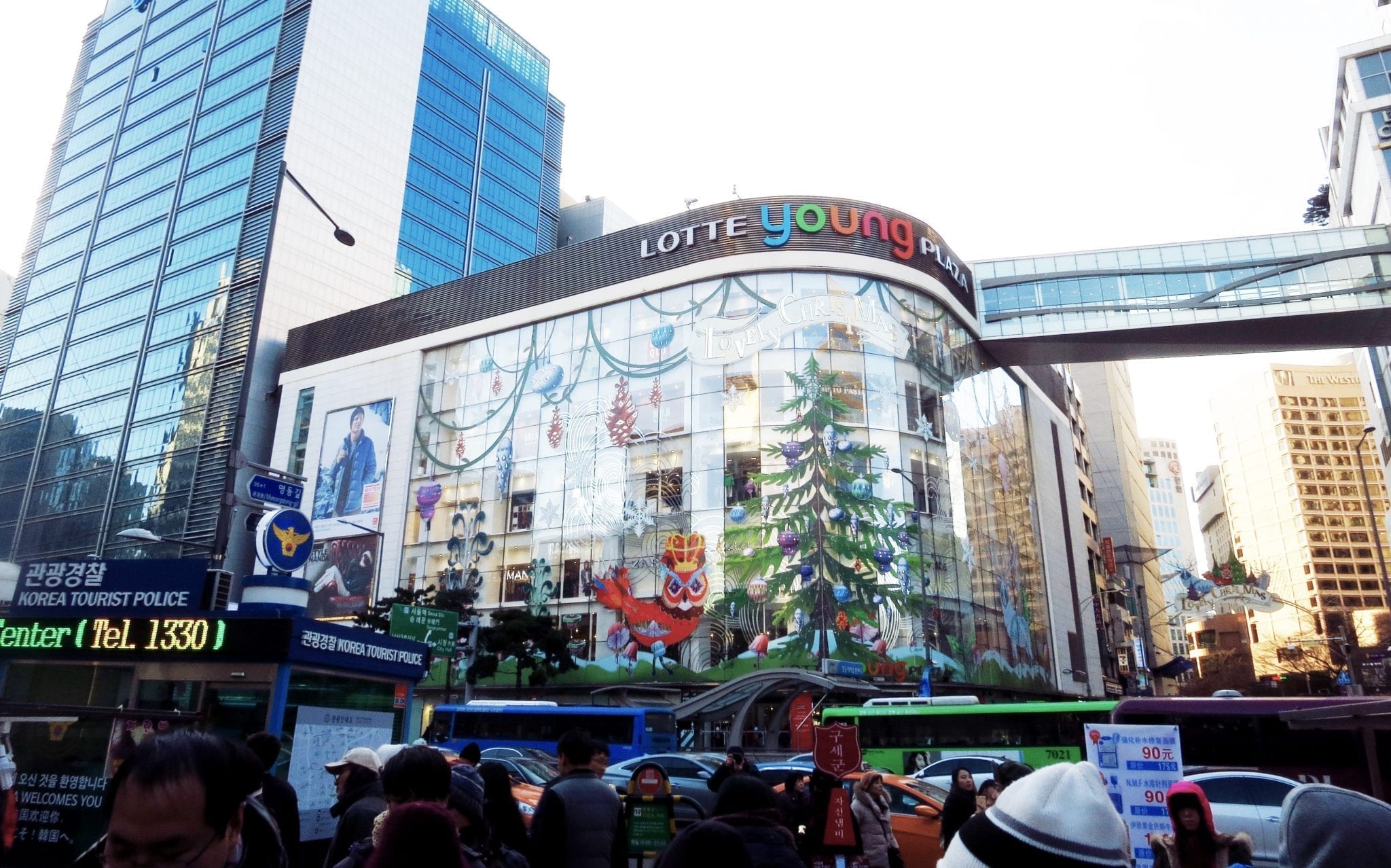
    “Three of Lotte Super’s 16 branches in Beijing are considering shut-downs,” said a spokesman for Lotte Mart, which oversees Lotte Super’s overseas business.

    “The final result is scheduled to be announced within this month,” the spokesman added.

    The company denied any connection with the ongoing Terminal High Altitude Area Defense (Thaad) anti-missile system controversy.

    “This is just the result of an annual management checkup,” said the spokesman.

    “The three branches have posted weak operating profits in recent years. This is not the first time we have closed down branches that didn’t generate enough profit. There were shutdowns last year and the year before that as well.”

    Beijing’s hostility towards Korean business in China has been growing over the past three months, and especially to affiliates of Lotte Group, which is providing the land on which the missile defense system will be deployed in Seongju, North Gyeongsang.

    In November, Beijing rolled out unprecedented tax audits and safety check of some 150 factories, storage facilities and store branches of Lotte affiliates, including Lotte Department Store, Lotte Confectionery and Lotte Super. At the time, a group spokesman said it was “unusual” for the Chinese government to conduct inspections simultaneously on multiple affiliates.

    In fact, one of the Lotte sites that was subject to an abrupt safety inspection had been given an award by the local fire department for its first-rate safety systems.

    In the face of such retaliation against its businesses, Lotte Group has been delaying final approval of swapping a golf course, which will be the Thaad battery’s home, for a plot of land in Namyangju, Gyeonggi, currently owned by the Korean military.

    Board members of Lotte International, which owns the golf course, held a meeting on Feb. 3, which delayed a final decision. The company said it would hold another meeting soon.

    Maintaining good relations with the Chinese government is crucial for Lotte because it operates many retail operations in China and gets much of its business in its duty free shops from Chinese customers.

    Lotte Department Store set up a joint venture with China’s state-owned Citi Group in October to advance into Shanghai, a new market for Lotte affiliates. The department store held a business fair on Jan. 20 to attract Korean brands that wish to go into Shanghai.

  • ‘Affordable’ brands replacing top luxury shops

    ‘Affordable’ brands replacing top luxury shops

    There will be a rise in “affordable luxury,” a manpower agency said yesterday, while predicting a pay rise of 3-5 percent for employees this year, the same estimate as last year.

    Adecco said as mainland tourist numbers and spending fall, some luxury retail shops are being replaced by affordable luxury brands in busy districts. The human resources solutions firm published its Greater China Salary Guide 2017 yesterday.

    From its database of vacancies it received from clients – about 600 companies in accounting, finance and banking, office, sales and marketing, retail, merchandise and logistics, pharmaceuticals, information technology and technical engineering sectors in Hong Kong – Adecco said companies are adopting a relatively conservative approach to employee salaries.

    It found that adjustments tend to fall into the usual range of 3-5 percent this year, which is the same as last year.

    “While hiring more talent who are familiar with new technology to meet the digitalization needs, enterprises have to at the same time bridge the value gap between new and old generation employees,” said Audrey Low, managing director of Adecco in Hong Kong and Macau.

    “This led to a more cautious approach in searching for the right talent. Apart from making the interviewing process more complex and raising the standards for the skills and attitude to work required, this has also led to an increasing number of enterprises choosing not to fill their vacancies.”

    In retail, Adecco said a lot of luxury brands such as Prada and Coach moved from busy districts because mainland tourists are increasingly visiting other destinations and because of weak economic sentiment. Salespeople in some luxury brands who do not meet targets are redundant.

    Henry Chu, practice manager of the retail sector at Adecco, said: “A lot of salespeople in the luxury brands told me in 2016 that they are pressurized into meeting sales targets and some have to meet 2015 targets.” He also said a small number of sales managers in the luxury sector went into insurance.

    Although a lot of luxury brands are closing their stores in business districts, Adecco found that they are being increasingly replaced by affordable luxury brands such as Tory Burch, Michael Kors, Lululemon and Kate Spade as consumers are switching their focus and these brands will need to hire more frontline salespeople.

    “Instead of selling their products through distributors like Lane Crawford, some of these brands have decided to go for their own stores. We have a number of affordable retail brand clients planning to expand in 2017,” Chu said.

    “They are also looking for talent who have experience in e-commerce and customer relations management.”

  • The outlook for Singapore’s real estate market in 2017

    The outlook for Singapore’s real estate market in 2017

    Singapore’s soft real estate market in Singapore was given a boost last year. Investment volume rose 34 percent year-on-year to US$9.4 billion, underpinned by major deals such as the sale of Asia Square Tower 1 and a series of transactions, including a top bid for the prime Central Boulevard white site in the Marina Bay area.

    “The Singapore property market is poised for a recovery in 2017. GDP growth and inflation are expected to pick up in 2017, driving stronger demand for real estate,” says Regina Lim, JLL’s National Director, Advisory and Research, Capital Markets. “In most sectors, we also saw an increase in transaction volumes, including residential property sales and office building transactions.”

    The Lion City is traditionally seen as a safe haven for property investment. It is likely that investment volume will hold up 2017 even as new supply continues to enter the market. Among them are Grade A buildings in the Central Business District, Marina One and Tanjong Pagar Centre. These new office buildings have attracted stronger than expected pre-commitments. And about 50 percent of the office space in buildings completed in 2016 to 2017 have already been leased.

    The sale of Central Boulevard at S$2.57 billion, or S$1,689 per square foot per plot ratio, which is the highest bid ever for a Government Land Sale site in Singapore, signals strong investor optimism – with projections that prime rents would rise over the next five years.

    Retail and residences
    “While demand for office, retail and food and beverage real estate slowed between 2012 and 2015, we believe this bottomed out in 2016 and we expect a modest recovery in the next couple of years,” says Chris Fossick, Managing Director, Singapore and Southeast Asia, JLL.

    Gross domestic product is expected to grow 2.3 percent in 2017, an increase from 1.8 percent in 2016.

    The stronger tourist arrival figures and slightly higher economic growth will help bolster retail assets. “We expect more retail malls to transact. Good quality, well-positioned retail assets are likely to be attractive to core investors as yields are still higher than office assets, and occupancies have always been resilient even in recessions,” adds Lim.

    Singapore’s prime residential market remains attractive for investors compared to other global cities. The latest data from JLL shows that prime residential prices are 126 percent higher in Hong Kong, 62 percent higher in New York and 22 percent higher in London.

    And based on JLL estimates in a report, luxury prime properties in Singapore have corrected on average 18 percent, while mass market prices have softened about 10 percent.

    Developers are keen to attract buyers and beat the deadline of selling units within two years of completion as mandated by the Residential Property Act by offering discounts and block deals. Nearly S$2 billion worth of residential units were sold via block deals or structured vehicles in 2016; more of such deals are expected in the next two years.


  • Retail offers banks a lifeline

    Retail offers banks a lifeline

    Retail customers offer a silver lining for banks amid tepid demand in corporate lending and the fragile state of small and medium-sized enterprises (SMEs), says Kasikorn Research Center (KResearch).

    Lending to individual customers in 2017 is expected to continue to outshine overall loan growth and the traditional mainstay of Thai lenders — commercial loans — said the research unit of Kasikornbank (KBank) in a report.

    KResearch forecasts 5.5% growth in retail loans this year, compared with 3% in commercial loans and 4% in overall lending.

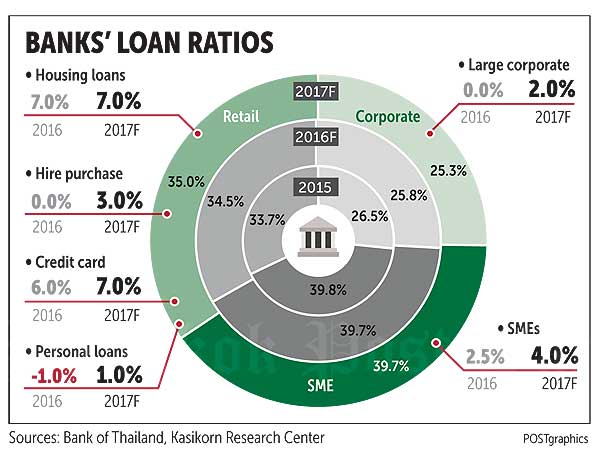
    Over the past few years, retail lending also grew at a faster pace than overall and commercial loans. Retail loans rose by 6.2% in 2015 and 4.5% in 2016, well above 2.9% and 1.5%, respectively, for commercial loans those two years and 4.0% and 2.5% for overall lending, according to KResearch data.

    Thai banks’ exposure to retail loans is expected to climb to 35% this year from 34.5% last year, with SME loans steady at 39.7%, said the report. The share of large corporate loans or so-called wholesale banking is projected to fall to 25.3% from 25.8%.

    As Thailand’s economy has struggled with subpar growth since 2013, it is not a surprise banks have pushed into the retail banking business — mortgages, credit cards and personal loans in particular — as companies’ investment projects have stalled. Companies have also turned to debt instruments to raise capital because of low interest rates.

    Retail banking business offers a better profit margin than corporate loans, but carries lower default risks than loans to SMEs struggling with the uneven economic turnaround.

    Moreover, retail borrowers, white-collar workers in particular, on average have seen their income continue to grow slowly, while the unemployment rate remains low at less than 1%.

    “We expect retail lending will deliver the strongest growth in that segment this year as large corporates move toward the capital market for fund mobilisation, while only a handful of banks, especially large lenders, have expertise in SMEs lending,” said Thanyalak Vacharachaisurapol, deputy managing director of KResearch.

    “Even though retail loan growth is expected to increase at a fast clip, overall lending will only record single-digit growth as banks remains cautious amid high household leverage. However, the end of the lock-up period for the first-time car buyer scheme will add to consumer purchasing power this year.”

    The lock-up period is five years for most cars bought under the excise tax rebate scheme. KResearch estimates some 320,000 car owners, representing 30% of those in the first-time car buyer scheme, will have their lock-up period end this year, and some may consider replacing their cars.

    Auto-hire purchase is expected drive retail lending growth this year, said the report.

    KResearch predicts auto loans will expand 3% this year, up from zero last year, while housing loans — accounting for more than half of retail lending — are expected to grow steadily at 7%.

    Although banks will likely focus on retail banking business this year, lenders’ focus areas will be diverse, said the report.

    Krungthai Bank (KTB) and Siam Commercial Bank plan to pay more attention to the wealth customer segment to offset fee-based income expected to be hit by PromptPay, electronic money transfer under the government’s national e-payment scheme.

    KTB, the country’s second-largest lender by total assets, aims to increase assets under management (AUM) for wealthy clients by 25% this year from 600 billion baht. Its provincial customer base is the bank’s strength for expanding both its wealthy client numbers and its AUM.

    KBank, the country’s fourth-largest lender by assets, set a total loan growth target of 4-6% and retail loan growth of 5-7%, with mortgages contributing the highest growth among other retail lending.

    Bank of Ayudhya (BAY) targets double-digit growth for its retail banking business this year compared with total loan growth of 6-8%. The bank recorded the highest loan growth among its industry peers last year at 11.2%, with retail blazing the trail, increasing 15.9%.

  • Email Users in Indonesia Check Inboxes Hoping for a Retail Promo

    Email Users in Indonesia Check Inboxes Hoping for a Retail Promo

    Email has long served as a reliable beast of burden for marketers —a bankable but unexciting way for brands to tap into a dedicated audience that has opted-in to communication. The same holds true in Indonesia, but on steroids.

    A survey of email users in the country conducted by research firm JakPat in January 2017 found that a significant portion were interested in receiving marketing communications. Interestingly, 30.6% of respondents named receiving shopping promotions as one of the main reasons they used email.

    Marketers looking to craft messages for email users in Indonesia should be aware that the vast majority of respondents, more than 80%, primarily used mobile phones to check their email, according to the survey. That means that to effectively reach consumers in Indonesia, mobile-optimized email design is a must.

    Mobile phone email users also overwhelmingly relied on a dedicated email app over a web browser. Fully 86% of respondents used an app, compared with just 14% who checked email on a browser.

    A March 2016 survey of mobile device owners in Indonesia from Experian Marketing Services underscores how effective email ads can be. It found that 57% of respondents had been influenced to make a purchase by an email ad—more than had been swayed by either website banner ads or search ads.

  • Startup dreams bring real money to Vietnam’s office market

    Startup dreams bring real money to Vietnam’s office market

    Young companies looking for their first home are spiking the demand for small-sized office space. Tan, a self-employed real estate broker, paid $5,000 per month for the use of a six-story building in downtown Ho Chi Minh City. He then turned it into 15 office rooms with polished tiled floors, private bathrooms and internet connections.

    The offices, ranging from 25 to 40 square meters, are now rented out to startups at between VND5 million and VND10 million ($220 – $440) per month, said Tam, who asked to be identified by his first name only.

    For fledgling startups, which try to make every penny count, these small-sized offices with good locations fit their budget.

    Tan said currently 10 companies are his tenants, claiming a return of 20-25 percent.

    Local brokers said some estates in the city’s downtown areas are becoming mini-hubs for startups. These young companies give the office market in Ho Chi Minh City and Hanoi a much-needed boost as many landlords struggle to fill space, they said.

    However, according to Le Huu Dung, chief executive at brokerage Weland Investment, not just any space will do.

    “We have seen a strong growth in mini-office rentals in Ho Chi Minh City in the past two years following the recent startup boom,” Dung said. “While some investors have earned decent profits, others are losing money.”

    No one who starts out in such a tiny office expects to stay there for long, Dung said, referring to the fact that when startups become bigger, they will move to larger offices.

    Another flip side of the business is that this segment mainly relies on idea-stage companies, which may not even last longer than just a few months.

    Dung warned that if the occupancy rate is lower than 80 percent, the investor will start losing money.

  • Third Party Logistics Market in China Growth at a CAGR of 10.16% by 2021

    Third Party Logistics Market in China Growth at a CAGR of 10.16% by 2021

    The third-party logistics market in China to grow at a CAGR of 10.16% during the period 2017-2021.

    Third Party Logistics Market in China 2017-2021, has been prepared based on an in-depth market analysis with inputs from industry experts. The report covers the market landscape and its growth prospects over the coming years. The report also includes a discussion of the key vendors operating in this market.

    One trend in the market is increase in overseas shopping. The preference for overseas shopping is increasing in China owing to the increased internet penetration. Consumers have access to various communication devices and payment methods and have become familiar with the mechanics and benefits of shopping online. In addition, the Internet has raised awareness of new online shopping destinations across the globe. Online shopping user base and the total amount of online shopping are showing strong growth momentum in China.

    The cross-border e-commerce transactions are expected to have more than 20% share in the total import and export trading volume of China by the end of 2016. E-commerce companies like Alibaba Group, JD.com, and NetEase have also entered the cross-border e-commerce business. To adapt to the changing demands, the logistics service providers need to be efficient in the supply chain process.

    According to the report, one driver in the market is growing demand from e-commerce sector. China is a leader in the global online retail market. In 2015, the share of online sales in the total retail sales in China was 11% while the online sales constituted only 8% of the total retail sales in the US. Online retail sales are growing at a YoY rate of 53%. Thus, in order to stay competitive in the e-commerce industry, the vendors need to find an effective approach to delivering their goods on time and meet the customer expectation of on-time delivery of goods. Thus, many e-commerce industries are demanding highly efficient logistics services like 3PL. 3PL also allows vendors to focus on other activities to promote their business while the logistics are handled by 3PL service providers.

  • Positioning Malaysia as hub for Islamic funds

    Positioning Malaysia as hub for Islamic funds

    The Securities Commission Malaysia (SC) launched its latest Islamic capital market (ICM) initiative with the unveiling of a five-year Islamic Fund and Wealth Management Blueprint, which vision is for Malaysia to be a leading international centre for Islamic fund and wealth management (IFWM) and to drive further development and growth of the ICM.

    IFWM, despite having a longer history than sukuk and banking in general, continues to be the Cinderella of the ICM. This is despite the fact that there are almost 1.5 billion Muslims in the world and the size of the Muslim professional and middle classes with an increasing amount of disposable income and affluence, continues to grow both at home and in the diaspora.

    Wealth management in the form of estate planning, inheritance and pension provision in old age is vital both for investment and social security reasons. It is set to proliferate, especially following the launch in January of the dedicated RM100 billion Islamic pension fund, Simpanan Syariah, by the Employees Provident Fund (EPF), which has confirmed its plan to increase the fund by an additional RM50 billion next year.

    But, why has IFWM been slow to take off as the industry enters its fifth decade in its contemporary history? The reasons are manifold. The three main asset classes in investment portfolios are usually gilts (bonds and certificates of various sorts including sukuk), real estate and equities. While in the conventional system, all the above asset classes are tried and tested and culturally accepted, the same is not true of Muslim markets. The old adage that Arabs (and many Muslims) prefer to invest in bricks and mortars because they are tangible and can be “felt” is still having a psychological impact in the investment psyche of some Muslims, including high net worth (HNW) ultra-conservative ones. This despite the fact that the real estate sector, especially in the Gulf Cooperation Council countries, has seen several bubbles over the last few decades which has seen market collapses and affected ordinary investors badly. Governments have lowered the ceiling of exposure to real estate of banks and also banned gearing — stopping individuals borrowing money to speculate in property.

    In the equities market, Saudi Arabia and Malaysia are the two largest ICM markets by far, accounting for most of the estimated US$70 billion to US$80 billion (RM310 billion to RM354 billion) global Islamic equities market, of which the kingdom accounts for an estimated US$30 billion to US$40 billion and Malaysia RM132.4 billion.

    But, they pale in insignificance compared with the conventional counterpart, which has assets under management (AUM) in excess of a few trillion dollars. The sudden proliferation of the sukuk market over the last decade has detracted from the development of the equities market as financial institutions spent more resources in innovating sukuk structures as opposed to equity offerings, which on the whole remain vanilla.

    These asset classes, of course, are subject to the vagaries of economic cycles. Even global sukuk issuances in 2016 for instance is set to top US$80 billion, way below the US$130 billion in the halcyon days of 2012.

    IFWM, like most of the direction of investment financing in the industry has traditionally been geared towards HNW people. The Islamic finance industry has failed to democratise the syariah-compliant investment space, in particular access to capital markets. How many sukuk are aimed at retail and ultra-retail investors? Here Malaysia has set the standard with Dana Infra, which has issued retail sukuk to part fund the LRT expansion in Kuala Lumpur.

    Given that sukuk is now a globally acceptable investment asset class, it is not unusual to see the Californian State Pension Fund as an investor in such certificates. At least, in the equities side, Malaysia’s Islamic unit trusts and the Saudi National Commercial Bank (NCB’s) Al Ahli Islamic equity fund suite have pioneered access to syariah-compliant products. But, whether they have enjoyed the same government support in terms of tax and other incentives is a moot point.

    It is against the above challenging background that Second Finance Minister Datuk Johari Abdul Ghani launched the SC Blueprint on behalf of Prime Minister Datuk Seri Najib Razak.

    Malaysia has an impressive record of launching blueprints and master plans for the various segments of the Islamic finance industry, backed by the requisite legal, regulatory and enforcement frameworks. This is because it is the only country where Islamic finance has been treated in a holistic, systemic way. The Islamic asset and wealth management blueprint is the latest and, perhaps, belated manifestation.

    Najib in his message in the blueprint was to the point: “The IFWM Blueprint is a further demonstration of the country’s continuing leadership in Islamic finance as we seek to develop yet another new growth driver for the industry to enhance its value proposition and ensure its sustainability.”

    The three strategic thrusts of the blueprint are predictable — strengthening Malaysia’s positioning as a global hub for Islamic funds; establishing Malaysia as a regional centre for syariah-compliant sustainable and responsible investment; and developing Malaysia as an international provider of Islamic wealth management services.

    Similarly, the 11 recommendations of the blueprint, once again, feigns ambition than substance. There are interesting themes, including enhancing market access and international connectivity; promoting the growth of private equity; facilitating new digital business models, products and services for IFWM; and providing targeted incentives to strengthen international competitiveness.

    SC chairman Tan Sri Ranjit Ajit Singh reiterated at the launch: “As part of the holistic development of Malaysia’s Islamic markets and consistent with the Capital Market Masterplan II, the blueprint will also drive greater internationalisation of the Islamic fund and wealth management industry through enhanced cross-border capabilities and connectivity.”

    The reality, unfortunately, is that the Malaysian IFWM industry and institutional investors have been frustrating, parochial and ultra-conservative in their cross-border activities save for a few forays in Asean and Australia. For the blueprint to realise its potential, a mindset change by Malaysian asset managers is similarly required!

  • Singapore businesses eye growth in China despite slowdown

    Singapore businesses eye growth in China despite slowdown

    Singapore brands continue to eye growth in China despite increased domestic competition, higher costs and a slowdown in the world’s second-largest economy.

    For some, China provides an alternate avenue for growth in sectors such as property and retail, helping to buffer lower-performing regions.

    Other Singapore companies in sectors that have taken harder hits recently, such as manufacturing, have been reassessing and realigning their business models to stay competitive.

    China is, after all, “too large a market for ambitious foreign investors to ignore” despite having lost some shine, said Mr Chio Kian Huat, CEO of accounting and business advisory group Stone Forest.

    This is especially so as the central government continues its crackdown on corruption and improves the transparency and predictability of doing business in China, said Ernst & Young Asia Pacific transaction advisory services leader, Harsha Basnayake.

    For CapitaLand, diversification in China has provided “respite from weakness in the Singapore property market”, said Maybank Kim Eng analyst Derrick Heng.

    The real estate developer has increased its presence in China over the years with the country accounting for 45 per cent of its asset base today, up from just six per cent in the early 2000s, Mr Heng told The Business Times.

    “With robust China home sales in recent years… we expect strong earnings contribution from the country in the next one to two years,” he said.

    CapitaLand Retail China Trust Management Limited (CRCTML), the manager of CapitaLand Retail China Trust, announced its 2016 Q4 net property income (NPI) on Jan 26, bringing the NPI for the whole of 2016 to a total of RMB669.8 million (S$139 million) – 4.1 per cent higher than in 2015.

    “We remain positive that CRCT’s portfolio of family-oriented shopping malls will continue to benefit from China’s growing urban population and rising retail sales,” said CRCTML chairman Victor Liew.

    Singapore-based beauty products seller Best World International is also projecting growth in China, its second largest market.

    China contributed 30 per cent of the group’s revenue as of the third quarter of 2016, after growing more than 200 per cent year-on-year, and the company is aiming to grow its sales in China eight-fold from 2016 to 2020, said Maybank Kim Eng analyst John Cheong.

    “Demand for Best’s products has not been impacted by the general slowdown, its products continue to gain traction from a low base, market expansion in China and increase in popularity from the recent approval of its direct selling licence,” he said.

    In announcing the licence approval in November, which allows Best World to conduct direct selling in Hangzhou, group co-chairman and president Doreen Tan said Best World is “cautiously optimistic” about its China growth prospects in the next five to eight years.

    “We will continue to expand the geographical coverage of our direct selling licence, drive membership growth through more marketing activities and introduce new products and services,” she said.

    Those in manufacturing have not been as fortunate – labour costs in China have been increasing at an average of 20 per cent annually for the past four years, and other rising costs such as electricity and natural gas are also eroding margins, said Mr Chio.

    Singapore design manufacturer Koda would know.

    The company was forced to shut down its manufacturing facilities in China in the last few years and has shifted its focus to its furniture retail arm, Commune, “to cater to the rising middle class”, Koda chief financial officer Joshua Koh told BT.

    “Commune is well received by this younger and more design-savvy generation and we still have a positive outlook on growth in this segment.”

    The China arm has been “growing consistently” and has “helped to buffer the drop in sales from our other markets like Malaysia, which has suffered due to the uncertain economic situation and reduced margins”, he added.

    Over in the food and beverage sector, stiffer domestic competition and changing consumer demands have translated into a race to deliver fresh tastes.

    BreadTalk, for one, has been working on new concepts for its stores to continually engage and excite customers, said a company spokesman. The company’s first store in China, which opened in 2003, has since undergone “its fifth round of renovations with a brand new concept”.

    BreadTalk has grown its total number of outlets from 453 across the mainland and in Hong Kong as of end 2015 to “about 500 outlets in 50 Chinese cities” today.

    Annual reports show that the company’s business in Hong Kong and mainland China contributed about 42.7 per cent of total revenue in the 2015 financial year, up slightly from 41.3 per cent in 2012.

    “Despite the slowing economy, the growth of consumerism and influx of new brands in China remains unabated,” said the BreadTalk Group spokesman.

    “Consumer spending continues with the desire to try new products and experiences all the time. Brands will always need to present exciting and engaging offerings to attract consumer loyalty with competition being stiff in such a diverse market.”

    For restaurants, establishing a niche product is the key to good business, said Mr Basnayake.

    Singapore’s Jumbo Group of chilli crab fame may be one such example of building success on a signature dish that continues to draw crowds of Chinese diners.

    Jumbo had percentage revenue contribution from its restaurant operations in Shanghai increase from eight per cent in the 2015 financial year to 15 per cent in 2016, and intends to expand its brands to other major Chinese cities, CEO and executive chairman Ang Kiam Meng told BT.

    China’s economy may not be expanding at the rate it was a decade ago – the Chinese Academy of Social Sciences forecast economic growth to dip again this year to 6.5 per cent, which would be the slowest pace in more than 25 years – but Mr Ang is among those who are confident that business opportunities remain.

    So, too, is Citi’s chief China economist Liu Li-Gang.

    “It is no longer as easy as in the past for foreign investors to make money… but in many areas there should be many investment opportunities, especially in the service sector,” said Dr Liu, noting that China is progressively liberalising its healthcare and financial services.

    Stone Forest’s Mr Chio said: While China is no longer a low-cost producer, there is a still a “huge market for services and products that cater to the needs of its growing middle class.”

    China is also making strides in technology and other emerging sectors, he added.

    “These factors, along with China’s growing middle class and their increasingly sophisticated demand, mean that businesses need to look at the Chinese domestic market for opportunities and not depend on low cost production to succeed.”

  • China retail sales grow 10.4 pct in 2016

    China retail sales grow 10.4 pct in 2016

    China’s retail sales of consumer goods, a key indicator of consumption, grew 10.4 percent year on year in 2016, the same as the first three quarters, official data showed Friday.

    Retail sales grew 9.6 percent year on year after deducting price factors, according to the National Bureau of Statistics (NBS).

    Total retail sales of consumer goods hit 33.23 trillion yuan (4.84 trillion U.S. dollars) last year.

    The data showed strong consumption potential in rural areas, with retail sales expanding 10.9 percent, outpacing the 10.4 percent rate in urban areas.

    The NBS said that retail sales of communication equipment and housing goods had grown fast. Sales of communication equipment jumped 11.9 percent year on year, furniture went up 12.7 percent, and building and decoration materials climbed 14 percent.

    The catering industry garnered 3.58 trillion yuan in revenue last year, up 10.8 percent year on year.

    Online sales boomed, surging 26.2 percent year on year to reach 5.16 trillion yuan.

    Per capita spending was 17,111 yuan, representing a nominal growth of 8.9 percent year on year, though real growth was 6.8 percent after deducting price factors.

    In December, nominal growth of retail sales was 10.9 percent year on year, slightly higher than the 10.8 percent increase in November.

    Retail sales contributed significantly to China’s economic growth as the country shifts from an export-driven economy to a consumer society.

    Consumption contributed 64.6 percent of China’s economic expansion in 2016, the NBS said.

    Retail sales of consumer goods are expected to jump by 10.2 percent year on year to exceed 37 trillion yuan in 2017, contributing more than 70 percent of the country’s economic growth, according to a report issued by the China General Chamber of Commerce.

    China’s economy grew 6.7 percent year on year in 2016, well within the government’s annual growth target of 6.5 to 7 percent.

  • SGX Welcomes Dasin Retail Trust To Mainboard

    SGX Welcomes Dasin Retail Trust To Mainboard

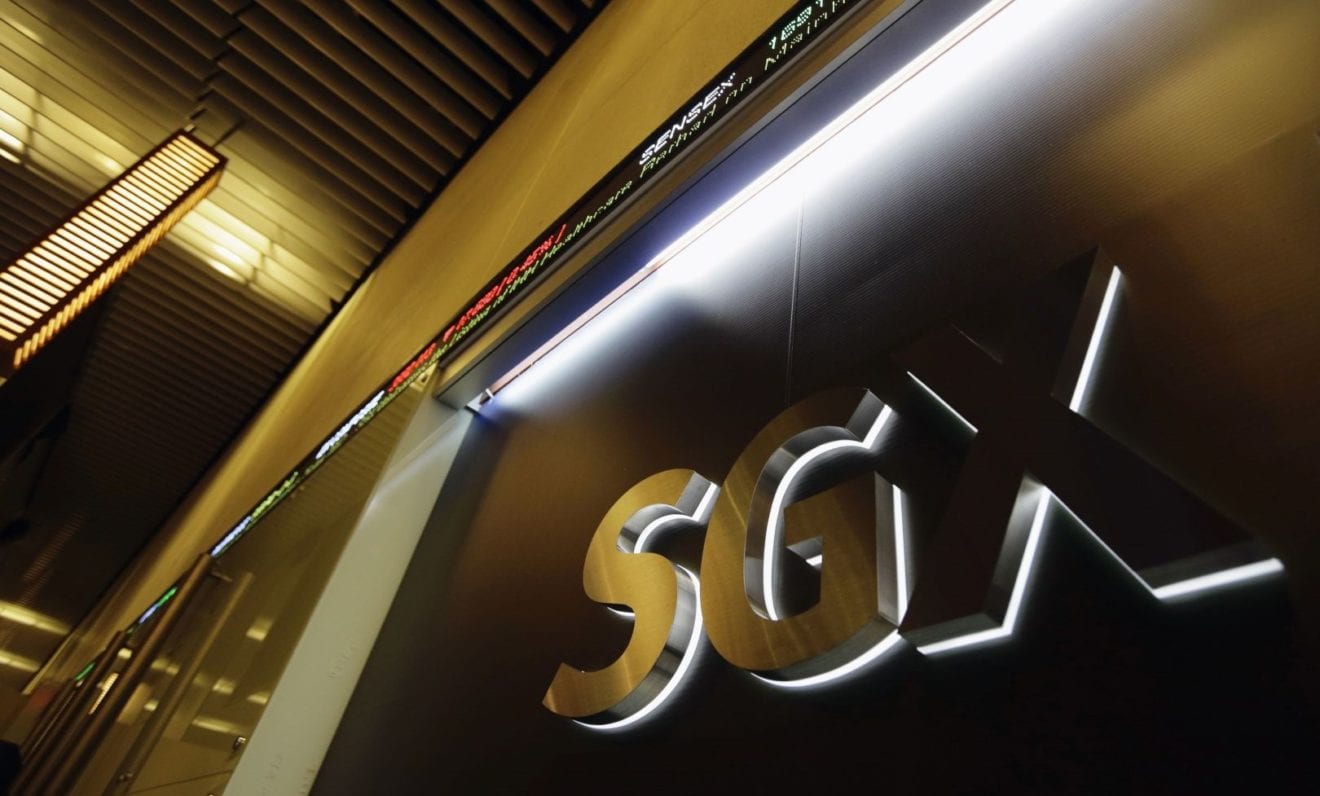
    Singapore Exchange (SGX) welcomed Dasin Retail Trust to Mainboard under the stock code “CEDU”.  

    Dasin Retail Trust is the first SGX-listed China retail property trust providing direct exposure to the fast-growing Pearl River Delta region.  Dasin Retail Trust’s principal investment mandate is to own, develop or invest in land, uncompleted developments and income-producing real estate in Greater China, used primarily for retail purposes, as well as real estate-related assets initially focused on retail malls. The Trust has an initial portfolio comprising three retail malls strategically located in Zhongshan City in the People’s Republic of China.

    Yang Bin, Chief Executive Officer of Dasin Retail Trust Management Pte. Ltd., the trustee-manager of Dasin Retail Trust, said, “We are pleased to celebrate Dasin Retail Trust’s successful listing on the SGX-ST as the first mainboard listing in 2017. Our defensive asset portfolio offers a mix of stable and growth assets, which offer investors cash flow stability and strong growth potential. Backed by the vast economic growth opportunities in the Pearl River Delta region, strong consumer spending culture, standard of living in the region and the Sponsor’s strong fundamentals, we are confident of the portfolio’s potential to provide unitholders with attractive returns from regular distributions and long-term income growth.”

    Simon Lim, Head of Equity Capital Market (Sectors), SGX, said, “We are delighted to welcome Dasin Retail Trust as the first Mainboard listing in 2017. This listing offers investors a proxy to invest in China’s growing retail market through our robust business trust framework.”

    The listing of Dasin Retail Trust brings the total number of SGX-listed REITs and property trusts to 43, with a combined market capitalisation of about S$70 billion.

    Dasin Retail Trust opened at $0.805 today.

  • Taiwan, South Korea feel pinch as Chinese Lunar New Year tourism slows

    Taiwan, South Korea feel pinch as Chinese Lunar New Year tourism slows

    The weeklong Lunar New Year holiday season has started in China, and surrounding countries and regions are expecting the usual surge in spending by Chinese tourists. This year, however, things may be different.

    According to China’s biggest online travel agency, Shanghai-based Ctrip, the number of Chinese visiting foreign countries during the holiday period this year is expected to level off, at around 6 million, as a weaker yuan has made shopping overseas less advantageous.

    The depreciation of the yuan has slowed the growth in the number of Chinese tourists going abroad. A survey found that prices of tours to Asian destinations from China during the Lunar New Year holiday season rose more than 10% after the yuan fell 6.6% against the U.S. dollar.

    In addition, the popularity of countries and regions whose relations with China have been strained has sharply dropped among Chinese tourists. The hardest hit may be Taiwan and South Korea.

    Taiwan has seen a decline in Chinese tourists since President Tsai Ing-wen, whose party advocates independence for the island, took office last May. Relations between Taipei and Beijing have cooled significantly under Tsai, compared with the eight-year reign of her predecessor, Ma Ying-jeou.

    The number of Chinese tourists visiting Taiwan during all of 2016 fell to 3.51 million from 4.18 million a year earlier, according to the Taiwanese Tourism Bureau.

    “We haven’t been seeing Chinese tourists lining up for visas for Taiwan since mid-2016,” a Taiwanese Tourism Bureau official said. The situation has been improving recently thanks to the approaching Chinese New Year holiday, but “incoming Chinese tourists will still drop substantially from a year ago, for sure,” the official said.

    The decline in tourists participating in group tours has been the most noticeable, compared with visits by self-guided Chinese tourists, according to the bureau.

    Self-guided Chinese travelers tend to go to different places and eat differently, compared with group tourists. Group tourists visit popular spots such as Sun Moon Lake or Alishan, shop more in souvenir stores, and eat group meals, while self-guided tourists like to visit exotic towns such as Jiufen, Shifen and Pingxi. Independent travelers also spend more time in the southern Taiwanese town of Kenting, enjoying beaches and water activities.

    South Korea

    South Korea expects 140,000 Chinese tourists will come to the country during the Lunar New Year holidays, an increase of 4% from a year earlier, according to the Korea Tourism Organization.

    The country used to be one of Chinese tourists’ most popular destinations. During all of last year, 8.1 million Chinese visited South Korea, up 34.8% from 2015. They accounted for 46.8% of foreign visitors to the country. But growth has slowed, reflecting China’s souring relationship with South Korea over the U.S. military’s introduction of the Terminal High Altitude Area Defense missile defense system on the Korean peninsula. Word in the local tourism industry has it that Chinese government officials have instructed travel agencies to reduce the number of visa applications for South Korea.

    The slowing growth in Chinese visitors is worrisome for duty-free shop operators in South Korea. In an attempt to attract Chinese tourists, industry leader Lotte Duty Free has begun giving gifts to all shoppers from greater China at its head store in Seoul if they make purchases worth $1,000 or more.

    At Gimhae International Airport in Busan, the Busan Tourism Organization set up a photo zone where tourists can take a photo with a model dressed in Korean royal apparel. The agency will also host welcoming events at the Busan International Passenger Terminal for Chinese tourists arriving on cruise ships. Interpreters and volunteers will be dispatched to the terminal to help them.

    In a distinct contrast, Malaysia, which has maintained good relations with Beijing, is enjoying a substantial surge in Chinese tourists.

    Thanks to a number of promotions by the Malaysian government, tourist arrivals from China have increased considerably. Between March and December last year, the number reached 2.2 million, compared with 1.2 million during the same period in 2015. That number is expected to increase further as the country looks to draw in more holidaymakers during China’s “golden week” break.

    Alibaba Group has launched Alitrip Malaysia Tourism Pavillion, an e-marketplace offering travel products and services.

    Following in the footsteps of budget carrier AirAsia, Malaysia Airlines has extended its reach further into China’s second- and third-tier cities. The national flag carrier will start nine new routes in 2017, connecting Malaysian cities to destinations including Haikou, Nanjing, Fuzhou, Wuhan, Chengdu and Chongqing. AirAsia is one of the biggest foreign airlines operating in China, offering over 300 weekly flights.

    Retailers in Hong Kong are also feeling the effect of the weaker yuan. Mainland visitors may be back for the Chinese New Year, but their waning spending power is seen as bad news. “Many of them are looking for bargains rather than luxury goods, and shopping for themselves rather than friends and relatives,” said Thomson Cheng Wai-hung, chairman of the Hong Kong Retail Management Association.

    Businesses have mixed views on Chinese New Year sales. Retailers are worried about a falling Chinese yuan that discourages spending. The Hong Kong dollar’s peg to the stronger U.S. dollar will make shopping more expensive for mainlanders. “This is negative for us,” said Cheng. Tourism sector lawmaker Yiu Si-wing expects hotel bookings to be satisfactory, as a recent correction in room rates will partly offset the currency impact for mainland tourists.

    In December, Chinese tourist numbers in Hong Kong reversed months of declines to grow 6.1% from a year earlier, led by a 9% spike in mainland arrivals during the four-day Christmas holiday. But recent official statistics show that their average spending per trip was 7,100 Hong Kong dollars ($915) in the first half of last year, down from HK$9,000 in 2014.

    “Hong Kong’s tourism industry has entered a period of adjustment,” Gregory So Kam-leung, the territory’s secretary for commerce and economic development, said on Jan. 23. He said the territory would roll out 16 food trucks selling local snacks and international cuisine, in addition to an annual night parade at an estimated cost of HK$33 million, to woo visitors during the week of the Chinese festival.

  • Retail seen robust in Year of the Rooster

    Retail seen robust in Year of the Rooster

    Retail scene in the metro is expected to remain robust given the enhanced purchasing power of Filipinos. Never has the local retail scene become more competitive than it is today.

    Considering that shopping malls and commercial centers have sprouted in practically every corner of the country, it would be hard to believe that the local market remains far from its saturation point.

    Sure, competition may have gotten stiffer today compared to a decade ago, as more local and foreign brands fight over a share of the Filipinos’ increasingly insatiable appetite for consumer goods and services.

    But the fact remains that there remained huge and potentially lucrative business opportunities that can be tapped.

    And this is being attributed to the country’s young and growing population and its strong, sustained economic growth, which make it more economically viable for retailers to further expand their presence, and for developers to put up more malls in whatever form or wherever these may be.

    Property consultancy firm Colliers International Philippines said in its 2017 forecast that it expected Metro Manila retail to remain robust given the enhanced purchasing power of Filipinos fueled by revenues generated by the IT and business process outsourcing (IT-BPO) industry and remittances by the overseas Filipino workers (OFWs).

    “Colliers sees a bullish retail segment over the next 12 months given a vastly improved consumer outlook. According to the Central Bank’s latest poll, consumer confidence is at its highest since the survey started in the first quarter of 2007,” said Joey Roi Bondoc, research manager at Colliers

    Colliers sees a bullish retail segment over the next 12 months given a vastly improved consumer outlook.

    High occupancy

    In an interview, Bondoc noted that retail vacancy in Metro Manila has remained low as regional and super-regional malls continue to record high occupancy rates.

    “Regional and super regional malls are at near full-occupancy, registering occupancy rates of 98 to 99 percent. If we factor in smaller formats such as neighborhood and district shopping centers, overall vacancy in Metro Manila remains at about 7 percent,” he said.

    “Colliers expects the figure to rise to about 10 percent following the completion of additional retail space in the fourth quarter of 2016, but we see this easing to 7 to 8 percent as retailers absorb the new space,” Bondoc further explained.

    According to Bondoc, food and beverage remained the major driver of retail spending in Metro Manila, accounting for anywhere between 30 and 40 percent of the leasable space in shopping centers—reportedly the highest in Asia Pacific.

    This is supported by Filipinos’ high expenditure on food and beverage, which typically covers about 40 percent of Philippine household spending.

    “Colliers sees this trend being sustained over the long term as consumer spending, which accounts for about two-thirds of the country’s gross domestic product (GDP), continues to drive the overall growth of the economy,” he added

    Higher consumption

    Real estate consultancy firm Santos Knight Frank Inc. meanwhile predicted that upcoming retail developments in Metro Manila will add about 485,000 square meters (sq.m.) of gross leasable area until 2018.

    “Retail expansion will be driven by developments outside Metro Manila as demand in the countryside remains robust. In the long run, there will be sustained consumer confidence backed by strong consumption pattern and increased disposable income,” the company said in a statement.

    According to Santos Knight Frank, the year 2016 was marked by increased consumption expenditure. Shopping malls, it noted, have adopted a lifestyle-oriented trend, building community malls and retail podiums in Metro Manila as well as outside cities.

    “Retail openings in clothing apparel and food chains were still prevalent because of current lifestyle trends. The steady increase of consumer spending evident (last) year has required manufacturing firms to expand operations and increase size of storage facilities,” it said.

    “Firms have been aggressively searching for warehouses and manufacturing spaces in known industrial locations especially in Central and North Luzon,” it disclosed.

    Aggressive expansion

    Such opportunities are not lost on companies like DoubleDragon Properties Corp., which is aggressively expanding its retail footprint nationwide.

    Through its subsidiary CityMall Commercial Centers Inc. (CMCCI), DoubleDragon is looking to put up 100 CityMall branches by 2020 and become the become the largest independently branded community mall chain in the Philippines.

    As of end 2016, there are already 10 operational CityMalls located in prime provincial city centers mostly in the Visayas and Mindanao region.

    The first CityMall opened its doors to the public in Roxas City, Capiz last March 2015.

    CityMall will not only provide prime spaces to the top Philippine fast food brands such as Jollibee, Mang Inasal, Chowking, Greenwich, Red Ribbon and Highlands Coffee. It will also serve as a platform for the provincial expansion of modern retail brands such as Savemore, Ace Hardware, Watson’s, SM Appliance, SM Simply Shoes, BDO, and Chinabank Savings, among others.

  • Daphne International expects loss to balloon

    Daphne International expects loss to balloon

    Footwear products group Daphne International Holdings expects its net loss to balloon by more than half for the year ended December 31.

    Five main factors are listed for the projected loss by Daphne, which makes, distributes and retails its products and accessories…

    • A significant decrease in sales.
    • Negative same-store sales growth.
    • Lower gross profit margin resulting from aggressive clearance efforts and a higher
      weighting of aged products in the overall sales mix.
    • Operational charges related to inventory and store rationalisation.

    However, the group says its net cash position has improved and the inventory level lowered as a result of the liquidation of aged inventory.

    Also, the group’s eCommerce activities continued to achieve sales growth.
    Daphne says its announcement is based on a preliminary assessment, with its annual results expected to be published in late March.