Tag: Retail

  • Standard Chartered to Exit Thai Retail Banking Next Year

    Standard Chartered to Exit Thai Retail Banking Next Year

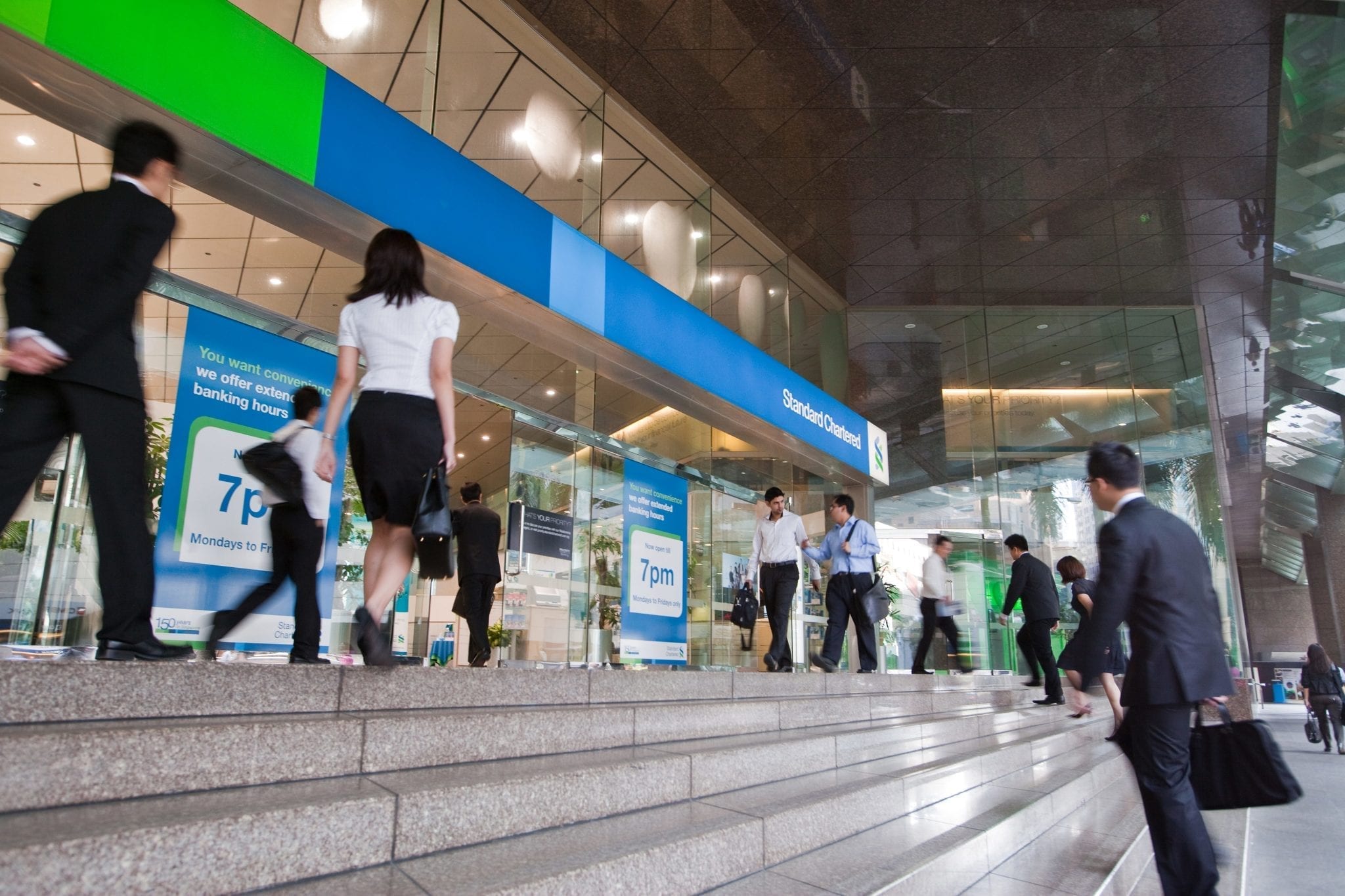
    Standard Chartered Plc plans to transfer its Thai retail-banking business to Thailand’s Tisco Financial Group Pcl next year, exiting an operation that the U.K. lender said lacked the scale to generate adequate returns.

    The net asset value is about 5.5 billion baht ($153 million), according to a stock exchange filing by Tisco on Thursday, which didn’t disclose a price for the deal. Tisco shares climbed to a record.

    Standard Chartered will continue to operate corporate, institutional and commercial banking businesses in Thailand, but the small size of the retail operation made it “increasingly difficult to achieve the returns that we aspire to,” the lender’s Thai head, Plakorn Wanglee, said in a press release.

    “It’s very tough to survive in Thailand’s retail-banking business for small players with very fierce competition,” Isara Ordeedolchest, an analyst at SCB Securities in Bangkok, said by phone. “The outlook for banks should improve significantly in 2017 as a consumption recovery and higher government spending will spur economic growth.”

    The Asia-focused Standard Chartered is targeting a turnaround after last year posting its first annual pretax loss since 1989. In a sign that the Thai operations were not a bright spot, the bank in February recorded a $126 million goodwill impairment on its business in the country.

    One unit of Tisco Financial, Tisco Bank Pcl, will take over operations including personal lending, mortgages and deposits, while another, All-Ways Co., will take over the credit-card business, the exchange filing said. The deal is subject to approvals.

  • Singapore eyes increased investments, more flights to Manila

    The government of Singapore has expressed interest in further increasing its investments in the Philippines, as well as adding more flights to Manila in anticipation of increased demand in air travel between the two countries.

    In a recent meeting with Finance Secretary Carlos Dominguez III, Singaporean Ambassador to Manila Kok Li Peng said Singapore’s private sector would like to explore new growth opportunities in the Philippines, particularly in the retail, transportation, infrastructure and tourism sectors.

    Ambassador Kok said Singaporean businessmen were planning to schedule the next meeting of the Philippines-Singapore Business Council (PSBC) in Davao City and, if possible, meet with President Rodrigo Duterte to discuss new business and investment activities in the Philippines.

    “We’re trying to get a mixed meeting of the PSBC here. They want to bring the members to Davao to meet with the President,” Kok said, to which Dominguez responded that a possible date for such a dialogue could be in February.

    Singapore’s investments in the Philippines–valued at P16.8 billion in 2015–are mostly in real estate activities, electricity, gas, steam and air conditioning supply, and manufacturing.

    Singapore was the Philippines’ fourth largest trading partner in 2015. The country’s total exports reached $3.8 billion in 2015, mainly comprising electronic products, petroleum products, and electronic equipment and parts.

    The Philippines, in turn, imported a total of $5 billion worth of goods from Singapore in 2015, mostly mineral fuels, lubricants, food and live animals, and industrial machinery and equipment.

    Kok also said that Singapore was looking at the Philippines in exploring more markets for its airline industry.

    “More competition is good for the consumer,” Kok said in explaining Singapore’s plan for its airline companies—Singapore Airlines, SilkAir and Tiger Airways—to add more flights to the Philippines.

    In response, Dominguez, a former chairman of the Philippine Airlines, agreed that opening the Philippines’ air travel industry to competition and even partnerships with other airlines would benefit the economy and boost the growth of the tourism sector.

    Dominguez said the Duterte administration was “engaging more with ASEAN and countries around Asia” as a way to “move forward” and achieve a balance in strengthening the Philippines’ diplomatic ties with other nations across the globe.

    In Beijing last October, Dominguez and Socioeconomic Planning Secretary Ernesto Pernia, who were part of President Duterte’s delegation on his state visit to China, jointly announced that while the Philippines would maintain its good relations with Western economies, it pushed for “stronger integration” with its neighbors in the region.

    The move, they said, would open for the Philippines countless opportunities for trade and investment in a market of 1.8 billion people across the region, especially now that other ASEAN economies had also committed to greater integration and China had pledged to open its capital markets.

    ASEAN groups the Philippines, Malaysia, Singapore, Brunei, Thailand, Indonesia, Laos, Cambodia, Myanmar and Vietnam.

    Both Dominguez and Kok agreed that technology and innovation are indispensable to sustaining growth under the current knowledge-based global economy.

    “We’re now [living under] a knowledge-based economy. We think innovation is the way to go in the future,”Kok said.

    Dominguez said the rapid growth of online-based businesses and investments was among the reasons the Duterte administration considered it a priority to improve “interconnectivity and internet speeds” in the country.

    “The structure of the industry in the Philippines right now is really holding us back. And it’s becoming quite obvious that the system now we have, where we basically have two service providers, is not really working,” Dominguez told Kok.

    In the meeting, Kok also informed Dominguez of Singapore’s request to review and update the terms of its 40-year old double taxation agreement with the Philippines.

    Dominguez assured Kok that he would discuss Singapore’s concerns regarding the double taxation agreement with the Bureau of Internal Revenue.

  • Why omni-channel payments need to be the new norm in retail

    Why omni-channel payments need to be the new norm in retail

    Electronic payments account for 69%1 of consumer transactions in Singapore – just slightly higher than the global average of 65%. The country’s e-commerce market, valued at US$1.39b in 2015, is predicted to exceed S$7b in 2025 with 60% of consumers saying they bought products online at least once a month2 – some even showing a growing preference to shop online and pick up their purchases in-store.

    Consumer buying habits aren’t rooted solely at retail locations or online. They shift between retail stores at malls, smartphones, laptops, and transient, yet trendy, pop-ups. In other words, consumers are omni-channel shoppers. So why haven’t payment systems followed in the same direction?

    In Singapore, it’s a common sight to see retail counters with multiple terminals serving different modes of payment: one for credit cards, another for debit cards, yet another for contactless payments. On the back-end, business owners spend hours liaising with various vendors, different banks, grappling with multiple platforms and numerous devices.

    Businesses could instead integrate payments across multiple platforms – increasing efficiency and profits by adopting a seamless, omni-channel payments system. In doing so, they would be able to process payments with greater speed and efficiency saving time and resources in their back-offices, leverage integrated data for actionable insights, and offer customers a seamless, integrated experience.

    1. Greater efficiency
    70% of businesses surveyed in a KPMG report agreed that there are simply too many payment methods to deal with. Many retailers have multiple banking contracts and relationships across Singapore to manage, each of which provides part of the company’s in-store payment solution. This represents an enormous investment in managing reports and financial flows.

    By adopting omni-channel payments, businesses will be able to work across a single centralised platform that enables businesses to accept and process payments across multiple markets. In doing so, retailers can drastically simplify these processes, cut down on the human resource and financial investments needed to manage their payment acceptance.

    2. Leverage data for actionable insights
    The use of technology and data allows local retailers to gain business intelligence and insights into areas such as purchasing habits. Integrating payments from the point-of-sale (POS) system with accounting software or customer relationship management (CRM) systems to capture disparate pieces of information enables retailers to better serve their customers. Leveraging insights gleaned from payment information, retailers can decide when and who to offer discounts and deals to drive sales.

    Having access to cross-channel shopper data gives merchants a treasure trove of information that can be analysed for patterns online and offline. They can then mine this information for customer retention and loyalty marketing. Many merchants are already beginning to offer their customers an omni-channel shopping experience and in doing so significantly improve the shopper experience.

    An example: a shopper makes a number of purchases from an e-commerce site. Several months later, she goes shopping whilst on vacation. At the checkout, the terminal recognises the shopper’s card, and the staff member adds a discount and a personal thank you thus delighting the customer with an even more seamless, personalised experience.

    3. Seamless customer experience
    Businesses need to recognise that the customer journey today is fluid, accessible, and continuous. Shoppers can, and want, to purchase whatever they want, without restrictions on time, location, and across social, online, and mobile channels.

    Businesses too need to provide a seamless experience and allow customers to start a purchase in the channel of their choice and complete it in a potentially different channel of their choice.

    Here’s what a customer journey might look like: a shopper goes into a store and wants a shirt in a different colour than what’s currently available in-store. If a store has adopted an omni-channel approach, the shopper can go to the in-store tablet-assisted sales terminal that carries the entire web-based inventory, choose the colour they want, make the payment on the spot, and have it delivered to the address of their choice.

    Omni-channel payments enable retailers to service customers across multiple channels (in-store, online, or mobile); retail sectors, payment types (NETS or debit and credit cards), and payment methods (contactless, chip and PIN, magnetic and online) through mobile point-of-sales devices, payment gateway, or virtual terminal. In doing so, the store has gained a purchase rather than losing an opportunity.

    With discerning consumers becoming increasingly accustomed to omni-channel payment capabilities, it will transform “the next big trend” into “the new norm” for consumers in Singapore.

    1.https://newsroom.mastercard.com/asia-pacific/press-releases/singapore-among-top-markets-in-asiapacific-advancing-towards-a-cashless-society-new-mastercard-report/
    2.https://www.pwc.com/sg/en/publications/assets/total-retail-sea-2016.pdf

  • Live Streaming, Gaming Apps And Chat Bots – Here Are 6 Trends We’re Excited For In 2017!

    Live Streaming, Gaming Apps And Chat Bots – Here Are 6 Trends We’re Excited For In 2017!

    As we enter into the new year, it seems only natural that we share all the Singapore technology trend in 2017 what we’re excited about, and what we foresee happening in the digital space this year.

    Here are our top 6 picks!

    1. The Rise Of Chat Bots

    Chat bots have been made popular especially since June 2016 – when Facebook launched them in Messenger.

    Over the past few months, developers have been experimenting with various chat bot use cases, and according to Facebook, while the early chat bot attempts by developers have been “really bad“, the quality of chat bots have generally improved over time.

    According to David Marcus, Facebook’s vice president of messaging products, the best use cases include driving people toward subscriptions, facilitating small transactions, and customer service.

    This year, we definitely expect companies in Singapore to come out with smart use cases for Chat Bots and integrate them into their product offerings. We also expect a rise of companies offering professional services around Chat Bots.

    2. Mega Apps

    One of the fastest growing regions in the world now is China – and if you have been following its development closely, the dominant platform now is undeniably WeChat.

    WeChat introduced the idea of “apps in apps” or “instant app”, and is literally the “one app to rule them all” in China.

    Its concept is very interesting, because with it, you can perform everything beyond just chatting with your contacts – from product purchases to payment, to joining interest clubs (WeChat has a fitness tracking feature called WeRun), to booking a cab and making restaurant reservations, there’s a high possibility of relying on the app for most everyday processes!

    If you are interested in finding out more, here are 10 WeChat travel industry case studies where companies integrating their business with WeChat’s platform – very fascinating.

    And who knows, we might just see a mega app in Singapore to rule them all this year.

    3. Breakout Gaming Apps

    The third thing we’re excited about this year is in the mobile gaming space.

    We’re expecting at least 2 or 3 mega breakout gaming apps this year. While we have no clue on what would pop up, we expect more gaming developers to take the cue from Pokemon GO’s brilliant use of augmented reality to create a real world interactive gaming experience. Pokemon GO was (still is) a game that transcends age, gender and race, and sets very high standards in the gaming community.

    We have yet to see a huge breakout gaming app from Singapore – and hopefully, 2017 is the year we will see one that will fly our Singapore flag high and proud in the global gaming arena.

    After all, there’s a dedicated area by the government called Pixel Studios dedicated to catalyse the creation of valuable gaming apps in Singapore.

    4. Smart Companies Taking Up Dead Retail Space

    One of the biggest trends is that retail vacancy is at its highest in decades. With recession (Singapore only reported an overall economic growth of 1% in 2016, and projects a growth of 1% this year) looming, as well as competition from e-commerce, it’s no wonder that retailers are unable to make ends meet, and some are even forced to move out from their physical locations.

    Of course, not all is doom and gloom though – we’re expecting resourceful and entrepreneurial individuals to negotiate contracts and/or deals with shopping mall operators which would be flexible and thus beneficial to the former.

    We expect smarter usage of spaces, with digital companies taking up physical locations around in Singapore as an extension of their business.

    Take Naiise for example. Originally a design centric e-commerce company, it has now expanded to 6 physical locations around in Singapore. Or take co-working space operator Spacemob for example, which raised almost S$8 Million in funding last year.

    Both Naiise and Spacemob are examples of smart innovators taking advantage of retail space in Singapore, and bringing the arrangement’s benefits to both space owners and consumers alike.

    5. Live Streaming

    Another space that we (ok, maybe just me) are personally very excited about is the live streaming space.

    At this moment, I think that we are still barely scratching the surface of the possibilities of live streaming. Live streaming is something different from usual platforms, and allows brands and personalities to appear more authentic and spontaneous. It also helps garner immediate interaction with the public – something which brands are all severely lacking nowadays, as they seem to chase quantity over quality.

    Another thing about live streaming is that it is completely powered by millennials, given how they often have FOMO (fear of missing out), and want to always be in-the-know of the latest trends and happenings. Where stock images and highly-edited content flood our social feed, live streamed content also offers experiences that are more ‘honest’.

    Live streaming has already exploded in China, but we have yet to see mainstream adoption in Singapore – but that’s something we’re expecting to change dramatically this year.

    6. Government Becoming Increasingly Digitised

    The last thing that we are excited about this year is that Singapore is becoming increasingly digitised.

    Taking the lead for digitising Singapore is GovTech, which sits under the newly-formed stat board IMDA. As the agency responsible for most of the digital applications used by the different government bodies, they are helping government services to move online and become mobile-friendly, all in the name of convenience for the average Singaporean.

    They also constantly monitor data from these e-Government services and get user feedback so as to keep improving what’s offered.

  • Vietnam retail e-commerce to earn US$10 billion by 2020

    Vietnam retail e-commerce to earn US$10 billion by 2020

    Data from the Association of Vietnam Retailers (AVR) indicates that in 2015, retail e-commerce surpassed US$4.07 billion, with a growth rate of 20%.

    Ho Thi Kim Thoa, Deputy Minister of Industry and Trade, told a forum on e-commerce and mobile phone technologies in Hanoi on December 8 that e-commerce was a vital development trend in the retail sector.

    Thoa said last year, the growth rate of the retail sector was 9.5%. Traditional retail made up 80%, while modern retail including supermarkets, convenience stores and e-commerce accounted for only 20%. “Notably, in the modern retail channels, the portion of e-commerce was at a low level of around 2.8%,” she added.

    The country had 217 e-commerce trading floors with total revenues of VND1.66 trillion in 2014, double the 2013 figure.

    “Vietnamese businesses have seen positive changes in e-commerce by big firms. The number of small- and medium-size enterprises (SMEs) participating in e-commerce was modest even though 97% of the country’s 600,000 firms are SMEs,” she said.

    The deputy minister noted that the Prime Minister had promulgated a decision on master planning of e-commerce in 2016-20.

    She gave the recent Online Friday on December 2 as an optimistic example of e-commerce development. The number of enterprises joining in the event this year was 3,000, higher than last year.

    She urged businesses to catch up with e-commerce trends and have plans to enhance e-commerce development.

    Dinh Thi My Loan, AVR’s chairwoman, said there were many factors promoting e-commerce development, including the popularity of mobile devices.

    Nguyen Thanh Hung, chairman of Vietnam E-commerce Association (VECOM), agreed that the development of mobile phones and applications had contributed to promoting purchasing activities.

    Hung said the country’s e-commerce had been developing at a growth rate of 30% a year. “Businesses have quickly shifted from offline to online retail. Several are even totally doing business online,” he said.

    However, Pham Thanh Cong  from Nielsen said the sector should ha solutions to meet demand in rural areas as there are 1.3 million traditional shops, accounting for 85% of the retail sector’s revenue.

  • South Korea’s consumer sentiment suffers due to political turmoil

    South Korea’s consumer sentiment suffers due to political turmoil

    It’s been a dramatic year for South Korea. And that drama has played out both in the political and business spheres.  Let’s show you what it’s done to consumer spending.

    Consumer sentiment last month dropped its the lowest level since the 2009 financial crisis. The Bank of Korea, says the consumer sentiment index stood at 95.8 in November.

    Retail sales in South Korea have dropped more than 1 percent on a yearly basis since the beginning of November. Box office receipts plunged 17 percent on the year in November alone.

  • Retail trends for 2017: AI shopping, mini stores

    Retail trends for 2017: AI shopping, mini stores

    Today’s consumers are increasingly looking for specific and engaging experiences while shopping, according to an analysis from Lotte Department Store’s research team for retail trends. The team proposed a set of guidelines to help retailers prepare next year’s business strategies.

    “For modern customers, shopping is not only about buying products, but a complex experience,” said Na Hyun-jun, head of Lotte Department Store’s retail research team. “The key would be how successfully retailers provide new shopping experiences while catering to the increasingly segmented needs of consumers.”

    The first is the trend for smaller department stores that focus on catering to tastes of specific demographics. Mini department stores are frequent in Japan. Tokyo-based retail giant Isetan Mitsukoshi has more than 120 small and midsized stores nationwide near airports and train stations. Lotte Department Store opened three “el CUBE” stores in a similar concept this year, and their contents slightly differ according to visitors’ demographics.

    Personal curation for shoppers is another target selected by the team. Item choice is becoming more difficult for consumers as new products are constantly released. In the past retailers used personal shopping assistants, but recently shoppers have been using new technology like artificial intelligence and big data. In March, KT released the app Shodoc, which recommends products according to consumer demographics.

    Lotte also pointed out that consumers are more impulsive due to the development of technology related to shopping, like easy payment methods via apps. This has helped consumers purchase items immediately after seeing them online or via smartphones. The human-less supermarket Amazon Go launched this month, marked the start of a trend of moving offline.

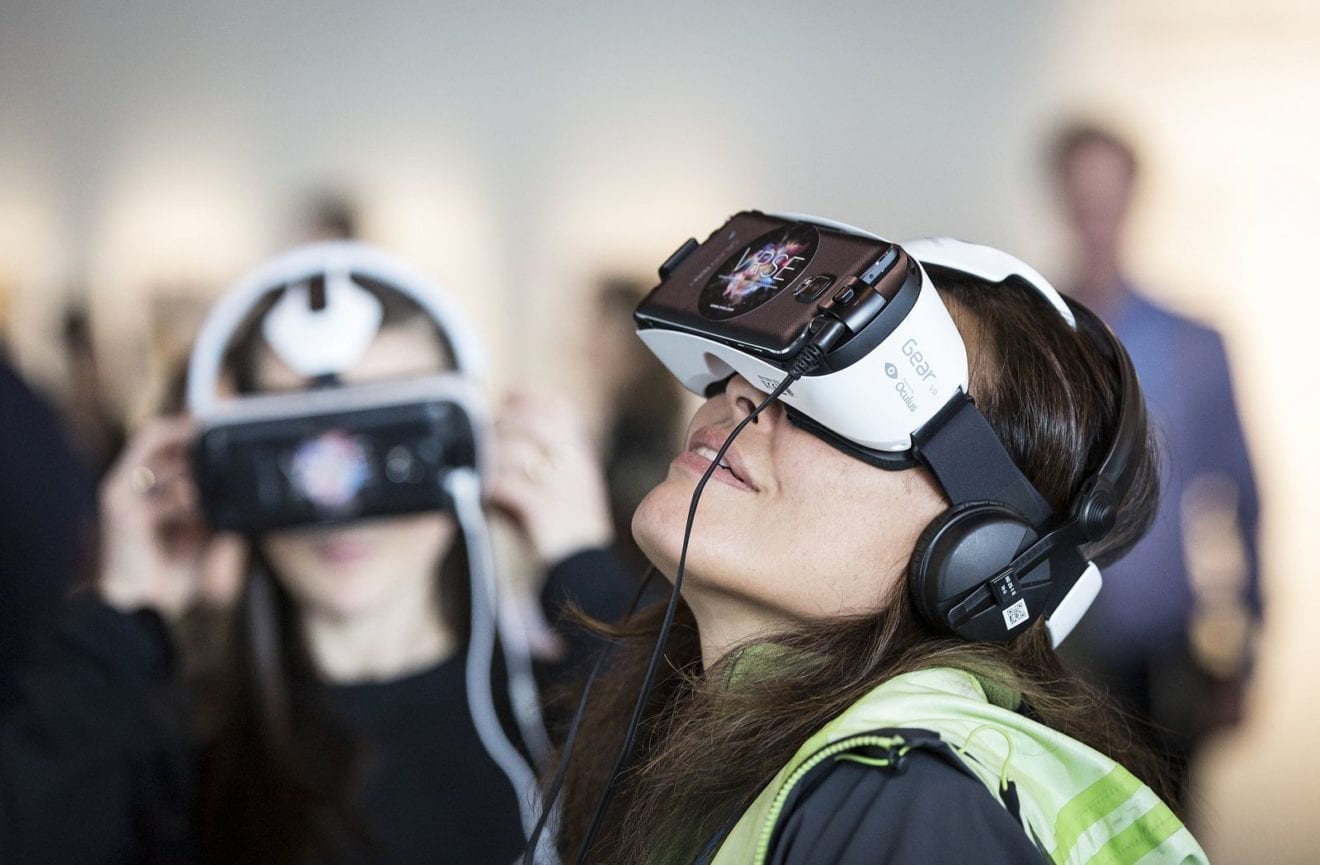
    Retailers are providing virtual reality services at brick-and-mortar stores. Virtual reality is a field especially favorable in the fashion industry. In May, eBay and U.S. retail brand Myer launched a VR department store that is accessible by a VR headset and an app. For luxury or high-end brands, however, expanding contact with consumers and providing the chance to experience products will become a core task in establishing brand image. In the past, companies had the image of being too difficult to relate to due to their premium images. This year, high-end car brand Bentley set up a showcase “studio” in a London mall just for brand image rather than sales.

    In terms of product category, retailers are slowly expanding their reach outside industrial goods to products they have not carried in the past. This year, Harrods Department Store in London had a pop-up store to display Emaar Properties’ real estate in Dubai.

  • Use underground space to boost retail in Singapore

    Use underground space to boost retail in Singapore

    In land-scarce Singapore, land optimisation is a strategic thrust that is achieved by reclaiming land, intensifying land use upwards, and building downwards.

    However, there are limits to land reclamation and building upwards due to maritime and aviation constraints respectively.

    Therefore, unlocking underground space and synergising below and above-ground land use is the next frontier for Singapore.

    To facilitate the growth of an extensive underground pedestrian network, the Urban Redevelopment Authority (URA) developed an Underground Master Plan to guide the construction of underground walkways in the Central Area.

    INCENTIVE SCHEME

    While the government has the ability to finance public underground development, the commercial viability of an underpass is a significant consideration for building owners and developers.

    Consequently, URA implemented an incentive scheme in 2004 to co-fund the construction of strategic underground links in the Central Region, in particular Orchard Road.

    However, no developer on Orchard Road has voluntarily capitalised on the URA incentive scheme to construct underground connections.

    This provided the key impetus for this study, which focuses on the integration of underground walkways with existing buildings on Orchard Road.

    It evaluates the feasibility of an underpass from the perspective of developers, retailers, and the public.

    PERSPECTIVES OF DEVELOPERS, RETAILERS AND THE PUBLIC

    From a developer’s perspective, there are two motivations for an underpass.

    First, an underground walkway provides a seamless, all-weather retail experience.

    Second, an underpass enhances underground connectivity which could generate higher foot traffic, resulting in higher rents for landlords.

    Furthermore, we found that there are two tiers of underpass in terms of connectivity efficiency, whereby a primary underground linkway provides a direct connection between an MRT station and shopping mall, while a secondary underpass connects two adjacent shopping malls.

    However, there are six barriers to the development of an underground walkway, namely:

    • (a) high construction cost;
    • (b) subterranean land premium;
    • (c) extensive underground infrastructure beneath public roads;
    • (d) structural building limitations;
    • (e) loss of rental revenue during construction period; and (f) diversion of pedestrian traffic to competitors’ shopping malls.

    Consequently, the total development cost – comprising high construction cost and subterranean land premium – renders an underpass commercially infeasible.

    A robust tenant mix is central to the success of an underpass, and the demand for retail space along the link depends on the rent and trade mix.

    Generally, retail rent is contingent upon the location within a shopping mall, shop size, and the building’s proximity to transportation nodes.

    The rents are highest on the ground-level retail spaces fronting Orchard Road, while rentals in the basement levels are typically lower than those of levels one through three, except in cases with direct connectivity to an MRT station.

    Our study found that the suitable tenant mix for an underground walkway includes fashion, convenience, pharmacy and healthcare, food and beverage, and accessories.

    Furthermore, the tenant mix within an underpass is distinguished from those in the basement levels of a shopping mall.

    From a shopper’s perspective, one may use an underpass to commute, shop, or do both.

    It is dependent on the visibility and connectivity efficiency of an underpass.

    For instance, the primary underpass between Orchard MRT Station and Tangs Plaza is heavily utilised because it is not only highly visible, but it also serves as an efficient linear connection between the two shopping malls.

    Conversely, the secondary underpass between Orchard Central and The Centrepoint was previously underutilised due to a lack of both visibility and awareness of its existence.

    However, the completion of Orchard Gateway provided a more seamless underground connection between Somerset MRT Station and Orchard Central, generating higher traffic flow to The Centrepoint.

    RECOMMENDATIONS

    Our study proposes four recommendations to encourage the development of new underpasses:

    First, the government could undertake the construction of an underground linkway and sell the retail spaces to investors.

    The precedent was set by the sale of Tangs Underpass, connecting ION Orchard and Tangs Plaza, to joint-venture partners CapitaLand and Sun Hung Kai Properties.

    Today, the Tangs Underpass is lined with retail spaces on both sides of the walkway.

    Second, our study proposes further enhancement to the subsidy on public pedestrian walkways and an introduction of a subsidy for retail space under the URA incentive scheme.

    These refinements significantly reduce the construction cost of an underpass, thereby making it commercially viable for building owners and developers.

    Third, the government may consider the provision of feasibility studies and infrastructure support under the URA incentive scheme, which would benefit both the state and the market.

    From the state’s perspective, this would develop the underground database to aid future planning of subterranean space.

    Furthermore, it would provide the market with clarity on the physical conditions encompassing land parcels and technical requirements of an underpass.

    Additionally, infrastructure support could be offered in the form of cash subsidies to partially offset the high construction costs of underground tunnels on Orchard Road.

    Fourth, an increase in plot ratio could incentivise developers to undertake redevelopment or major addition and alteration works, leading to the construction of an underpass which is mandated by URA.

    The 2014 URA Master Plan allows up to a 15 per cent bonus in base plot ratio for land sites above 10,000 square metres in the Orchard Planning Area.

    Furthermore, there is a variety of space and design incentive schemes to maximise a site’s development potential.

    The upcoming Orchard Boulevard MRT Station in 2021 may motivate building owners to amalgamate land parcels in West Orchard and carry out redevelopment or major addition and alteration works, giving rise to the creation of new underground walkways.

    In conclusion, an effective incentive scheme entails a delicate balance between the objectives of the state in enhancing underground connectivity and the market, where profit matters.

    Ultimately, the exploitation of underground space has limitless potential in expanding Singapore’s physical space boundary vertically downwards and optimising land use through the seamless integration of below and above-ground activities.

  • Retail sales in Japan rise by 1.7 percent

    As per industrial data released on Wednesday, Japan has witnessed economical growth after months of stagnation. The country’s industrial output increased 1.5 percent on month, and inventories fell 1.5 percent on month and 4.8 percent on-year.

    Japan’s retail sales also rose by 1.7 percent on-year in November, however, sales of large retailers were down by 0.3 percent on year. The manufacturing industry is meanwhile expected to grow 2 percent in December and 2.2 percent in January.

    The country released revised figures earlier this month, showcasing that its gross domestic product (GDP) for the July-to-September quarter grew 1.3 percent on-year.

    Izumi Devalier, Head of Japan economics at Bank of America-Merrill Lynch said, “We’re now down to levels we saw pretty much at the time of the VAT value-added tax hike. So, inventories are very lean, which means that we should some pretty strong production numbers in the months ahead.”

    “While domestic demand still lacks strength, a pick-up in exports is driving up production. Output will likely continue recovering moderately ahead,” said Takeshi Minami, Chief Economist at Norinchukin Research Institute.

    Growth in exports and factory outputs is offering the country’s economy a boost, while also encouraging policymakers to pull the country’s economy from stagnation.

    Further, the data released showed that Japan’s core consumer price index including oil products dropped 0.4 percent on-year.

    Such a drop has been recorded for the ninth straight month in November.

  • Chinese retail is obsessed with Donald Trump

    Chinese retail is obsessed with Donald Trump

    Despite all his contentious campaign rhetoric, Chinese retail has embraced Donald Trump in a big way.

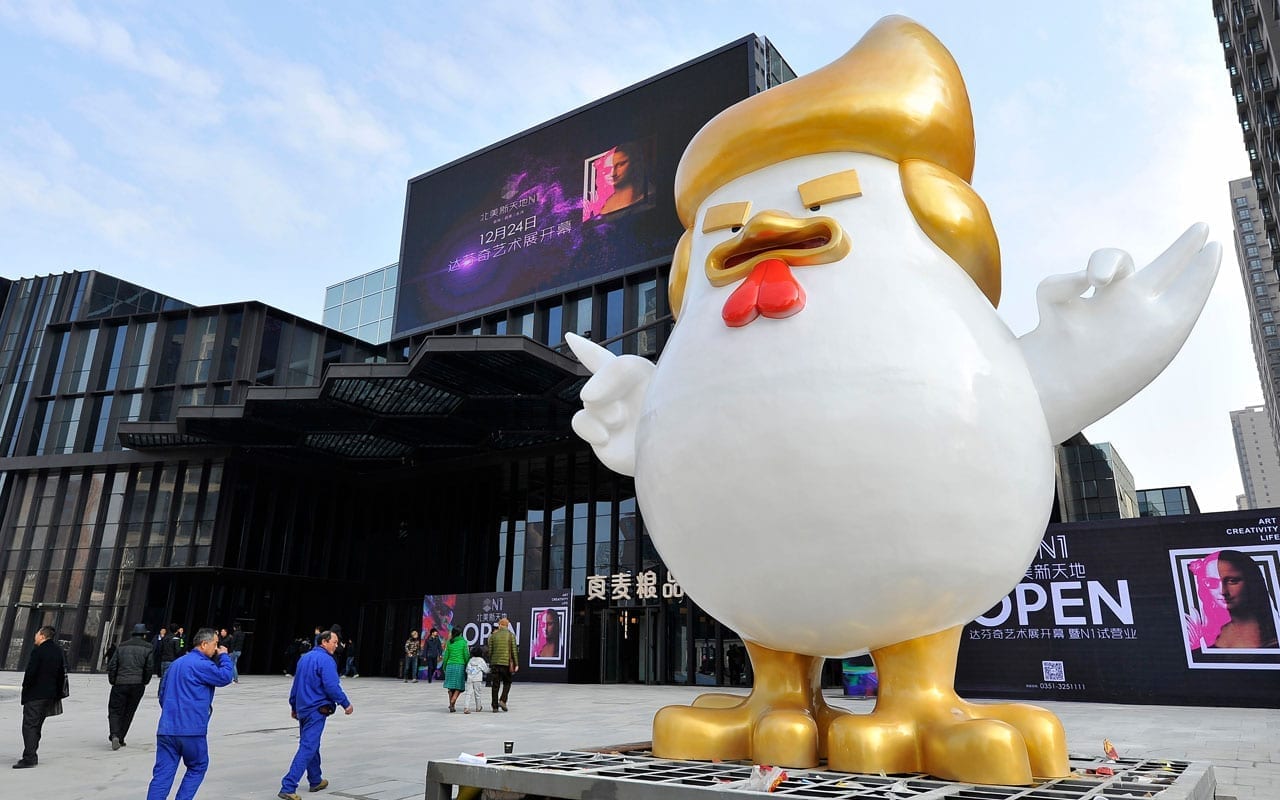
    Take the Trump-rooster statue just erected at a shopping mall in Taiyuan, the capital city of China’s Shanxi province, for example. The enormous effigy —  to celebrate 2017, the Chinese Year of the Rooster — stands 32 feet tall, complete with the president-elect’s unmistakable quiff and hand gestures. In fact, Chinese retailers incorporate Trump’s “look” or name into their products frequently, including caricatured figurines, skincare items, condoms, and more.

    “This is the first time we’ve had a president who is a brand, and it’s not unusual to see various markets try to co-opt brands for their own success,” said Greg Portell, lead partner for consumer industries and retail practice at global consulting firm A.T. Kearney. “But China, in particular, is trying to capitalize on the Trump brand.”

    Without hard data, it’s unclear whether Chinese consumers have bought into the push. But retailers are betting they will.

    Halloween was a good indication. The Jinua Partytime Latex Art and Crafts Factory, among others, started churning out masks of then-candidate Trump. While the company also produced other political masks, including one depicting Democratic presidential candidate Hillary Clinton, workers stockpiled Trump’s, expecting them to sell out in 2016, as reported.

    Now, just weeks before Trump’s inauguration, multiple Chinese retailers have started selling scaled-down versions of that gigantic rooster statue, including Taobao, a large e-commerce site owned by Alibaba. And of course, Alibaba hasn’t missed out on the Trump trend either, offering a multitude of bobbleheads as well as Trump’s iconic red “Make America Great Again” baseball caps — although Amazon, the U.S. equivalent, sells its fair share of paraphernalia too.

    “If you go back to what retailers are looking for in general, they’re looking to drive traffic and drive conversation. Selling products is almost secondary,” Portell noted. “In China, they’re achieving all the above.”

    But China’s Trumpmania isn’t entirely new. In the past decade, Trump has filed 126 trademark applications in China for products from pet care to lingerie, according to data from the Trademark Office of the State Administration for Industry and Commerce, reported by the Washington Post. And the president-elect wouldn’t be filing them if they didn’t make him money.

    But his next battle lies in fighting off other people trying to use his brand. Registered trademarks already exist in China for Trump condoms, paint, and even toilets.

    “It is just a psychological effect,” Zhong Jiye, founder of Shenzhen Trump Industrial Co., told the Washington Post. “They are interested because they want to sit on a toilet or use a urinal that has the name of a U.S. president.”

  • Aprindo Foresees 10% Increase in Retail Sales Volume for 2016

    Aprindo Foresees 10% Increase in Retail Sales Volume for 2016

    Indonesian Retailers Association (Aprindo) said that this year’s retail performance has been better than last year. Aprindo chairman Roy Mandey is confident that volume of retail sales will increase 10 percent this year.

    “We are confident of ending 2016 with 10 percent increase in volume of retail sales compared to last year,” Roy Mandey said in Jakarta on Wednesday.

    Roy explained that the figure of 10 percent is equal to Rp200 trillion. Last year, with national economic growth at 4.7 percent, the volume of retail sales reached 8 percent or equal to Rp181 trillion. “Adding processed food and beverages into the equation would take the sales volume to Rp1,630 trillion.”

    Roy said that sales volume increased significantly in November and December, despite some rallies staged during that period.

    As for next year, Aprindo is confindent of achieving similar figure of sales volume because Indonesian economic growth is predicted at 5.4 percent, which will help the growth of retail industry.

    Roy revealed that the growth of Indonesia’s retail industry is better compared to that of other countries. The United States, for instance, only saw 0.1 percent increase in retail industry. “Indonesia’s [retail sector] is better [in terms of growth], more so because inflation rate is low.”

  • 9 upcoming retail mall projects in Singapore

    9 upcoming retail mall projects in Singapore

    According to a Savills report, there are at least nine major mall projects in the pipeline from Q4 2016 to 2020, totalling around 6.2 million sq ft of retail supply.

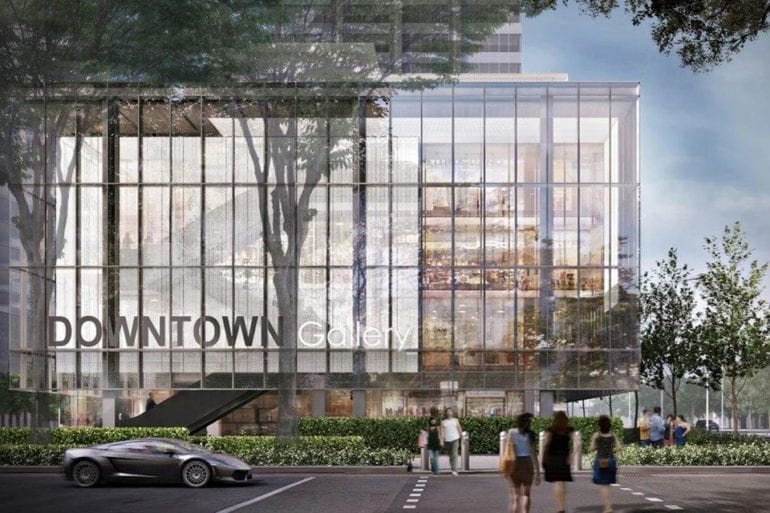
    The upcoming retail supply for 2016 is mainly from the new mixed-use developments in the Central planning region, mainly from two new integrated projects: Downtown Gallery and Tanjong Pagar Centre.

    From 2017 to 2020, approximately 6.2 million sq ft of new retail space is expected to enter the physical stock. Major developments consist of the new retail mall at Singapore Post Centre and The Heart at Marina One.

    Hillion Mall in the Bukit Panjang planning area is the only significant development in 2017 that is not located within the Central planning region.

    9 upcoming mall projects in Singapore

    1. Downtown Gallery
    Location: Shenton Way
    Estimated NLA (sq ft): 160,000
    Estimated completion: 2016

    2. Singapore Post Centre AEI
    Location: Eunos Road 8
    Estimated NLA (sq ft): 269,100
    Estimated completion: 2017

    3. Hillion Mall
    Location; Jelebu Road
    Estimated NLA (sq ft): 152,500
    Estimated completion: 2017

    4. Marina One (The Heart)
    Location: Marina Way/Straits View
    Estimated NLA (sq ft): 140,000
    Estimated completion: 2017

    5. Paya Lear Quarter
    Location: Paya Lear Road/Sims Avenue
    Estimated NLA (sq ft): 340,000
    Estimated completion: 2018

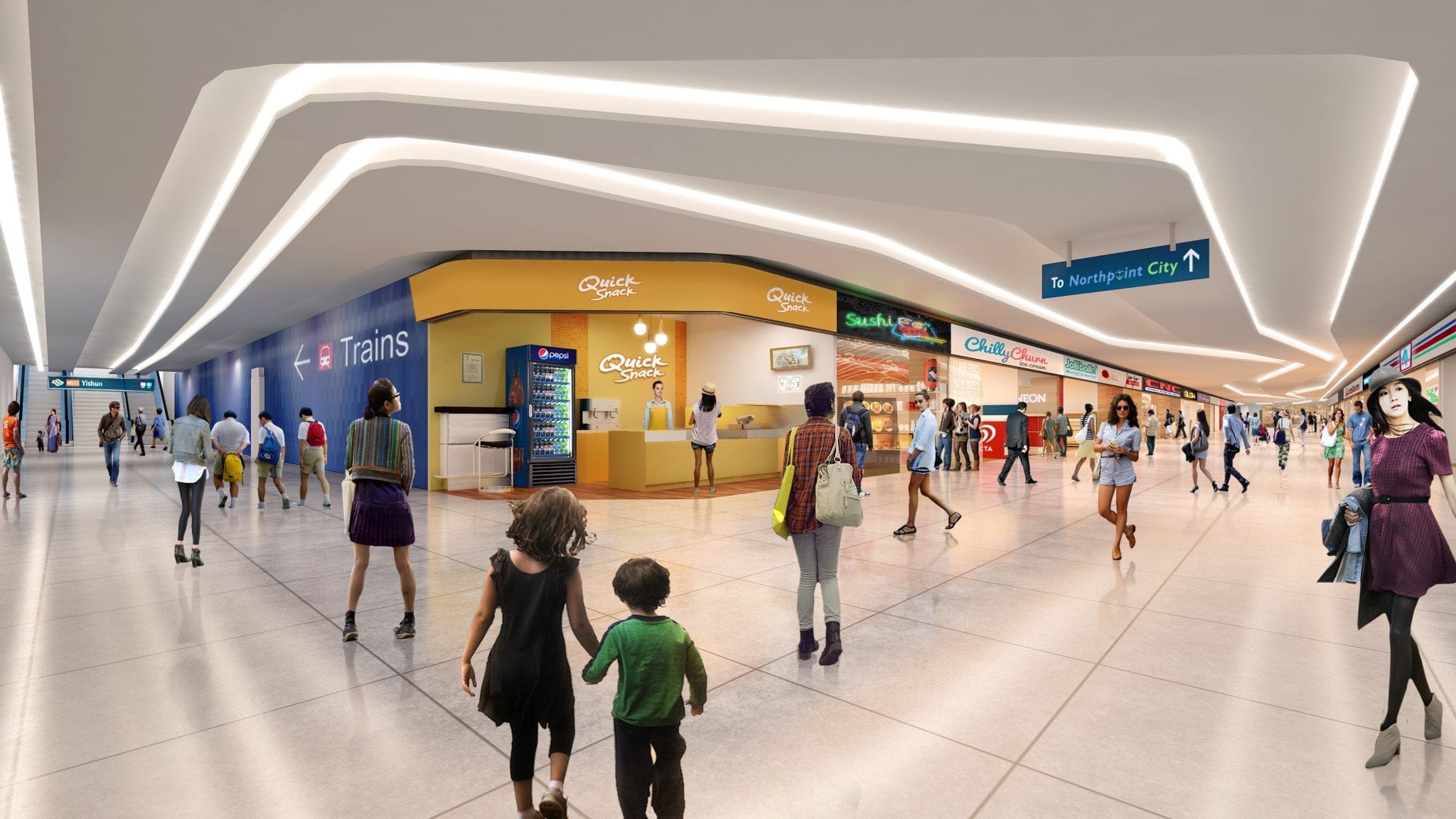
    6. Northpoint City
    Location: Yishun Central 1
    Estimated NLA (sq ft): 315,250
    Estimated completion: 2018

    7. TripleOne Somerset Podium AEI
    Location: Somerset Road
    Estimated NLA (sq ft): 88,500
    Estimated completion: 2018/9

    8. Jewel Changi Airport
    Location: Airport Boulevard
    Estimated NLA (sq ft): 576,000
    Estimated completion: 2019

    9. Funan
    Location: North Bridge Road
    Estimated NLA (sq ft): 324,000
    Estimated completion: 2019

  • Thailand becomes 10th largest investor in Vietnam

    Thailand becomes 10th largest investor in Vietnam

    Thailand’s foreign direct investment into Vietnam has been increasing sharply in recent years, according to a survey report by researcher Pittaya Suvakunta from Thailand’s Thammasat University

    Suvakunta’s report on Thai FDI in Vietnam was circulated at an international conference on Vietnam studies held in Hanoi recently.

    The researcher cited data from Vietnam’s Ministry of Planning and Investment as saying that as of June 2016, Thailand had had 466 projects in Vietnam with total pledged capital of US$9.44 billion, ranking 10th out of the 116 countries and territories investing in Vietnam.

    In 2015, as many as 53 new Thai projects were licensed into Vietnam, besides many others allowed to raise their investment capital, totaling US$262 million of fresh capital.

    Key Thai investors in Vietnam include CP Vietnam Corporation with US$328 million of investment capital, SAS CTAMAD with US$72.6 million, Long Binh Development Joint Venture Company with US$46 million in Dong Nai Province, and TCP VINA Chemical Plastic Company with US$90 million in Go Dau Industrial Park, Dong Nai Province.

    Thailand’s FDI in Vietnam flows into a wide range of sectors such as energy, retail, agriculture, processing, building material, and animal feed.

    “Thousands of Thai firms wish to join hands with Vietnamese partners to leverage the existing potential of both countries,” said Sanan Angubolkul, president of the Thailand-Vietnam Business Council, at a recent press conference in Hanoi.

    According to Tharabodee Serng-Adichaiwit, general manager of Bangkok Bank Public Company Limited in Vietnam, Vietnam is one of the best destinations for Thai investments in Asia and there will be more Thai investments into Vietnam in the near future.

    Bangkok Bank has recently tripled its capital so that it can provide more loans for Thai investors to expand business in Vietnam.

    Many Thai firms have plans at hand to expand their Vietnam operations.

    For example, CP will spend US$150-200 million building a fish feed processing plant, and a processed chicken and cold storage plant in Vietnam.

    Meanwhile, Siam Cement Group (SCG) is also seeking additional funds to increase investment in the domestic market and Southeast Asia. SCG is currently building a new petrochemicals complex in Vietnam and recently announced plans to inject at least 100 billion baht (US$3.3 billion) to expand operations in Southeast Asian markets.


  • New retail hub rises in Xiamen

    New retail hub rises in Xiamen

    YCH Group, a supply chain management, and logistics company in Asia-Pacific, has launched a retail hub in Xiamen, China, which is envisioned to support the Pilot Free Trade Zone project in the region.

    The project, which will be the first major mall in the region, will serve the needs of the population in the immediate vicinity and the rapidly growing city of Xiamen. It will be managed by YCH Group on behalf of XPD-YCH Logistics, a joint venture between YCH Group and Xiamen Port Development, a subsidiary of the Xiamen Port Group.

    Spanning 55,000 square meters with a built-up space of 100,000 square meters, the facility was converted from XPD-YCH Logistics’ existing warehouse in Xiamen and will be fully operational this month.

    This comes at an opportune time as Xiamen, which is currently one of the fastest growing cities in China, is growing at 6.7 percent with a population of 4.4 million. Aside from local demand, the mall aims to cater to the burgeoning Chinese retail scene while playing a key role in strengthening Xiamen’s status as one of China’s most popular tourist destinations.

    According to the Xiamen Tourism Bureau, Xiamen receives 1.63 million tourists from home and abroad, and rakes in RBM1.853 billion ($258.9 million) in tourism revenue. Moreover, China has also overtaken the US to become the world’s largest retail market in 2016 with total sales of $4.886 trillion.

    Two of the most well-known brands in China – Sam’s Club and Red Star Macalline – will form the mall’s anchor tenants, occupying approximately 85 percent of the facility. This will be the first Sam’s Club Store opened in Xiamen by Wal-Mart, and will be the 15th Sam’s Club store across 13 cities in China.

    Sam’s Club is a division of Wal-Mart, the world’s largest retailer. It offers an extensive inventory with exceptional value on famous-brand merchandise at “member only” prices for both business and personal use.

    Red Star Macalline, on the other hand, is the largest national home improvement and furniture retail platform in China, with stores in most major cities in China. It targets the rapidly growing middle class in China through the operation of malls that offer home improvement and furniture materials, including flooring, bathroom and kitchen fixtures, with approximately 18,000 well-known brands.

    Strategically situated within the Pilot Free Trade Zone, the mall is located in a highly populated region in Xiamen and is in close proximity to both air and sea ports and numerous famous hotels, bringing numerous trade and business benefits for prospective clients.

    “With the dynamic and growing retail sector in the country, we want to equip retailers with game-changing capabilities that help them simplify processes and optimize costs. This will enable them to remain competitive while simultaneously boosting trade and facilities investment for China with the Pilot Free Trade Zone,” said Koh Yong Seng, Operations Director of North Asia, YCH Group.

  • Macau retailers and restaurants struggling

    Macau retailers and restaurants struggling

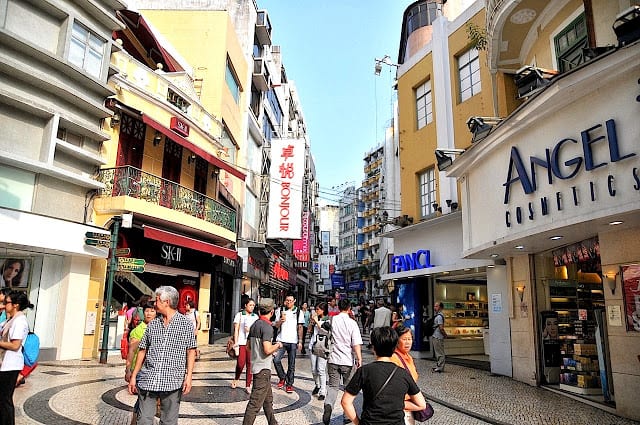
    Most Macau retailers and restaurants have had a difficult October, reporting depressed sales.

    More than half of the city’s dining establishments had strong revenue declines for the month, with just a quarter reporting a slight improvement.

    According to the latest industry climate survey by the Department of Statistics and Census Services (DSEC), the 26 per cent of respondents who had increased turnover say this was driven by an increase in visitors to the city during the one-week National Day holiday.

    Overall, the rise in revenue was 5 per cent compared to September. But for 49 per cent of the Chinese restaurants interviewed and 13 per cent of the Japanese and Korean restaurants, revenue was up by 20 and 6 per cent respectively.

    However, 51 per cent of the respondents reported a decrease in turnover of 12 per cent overall.

    Macau’s retail sector paints a similar picture. About 58 per cent of respondents (1 per cent more than in September) saw their turnover fall, while about 35 per cent (5 per cent more) reported increased sales.

    By sector, leather goods retailers had higher sales, as did 53 per cent of the watches, clocks and jewellery segment, half of adult clothing retailers, 44 per cent of supermarkets and 22 per cent of department stores.

    A 20 per cent or more drop in sales was reported by 78 per cent of department stores and 60 per cent of cosmetics and healthcare retailers.

    Survey respondents do not expect the situation to change soon.