Tag: Retail

  • Retail sector key in attracting tourists

    Retail sector key in attracting tourists

    It is the most wonderful time of the year as far as the retail scene is concerned. Shopping malls are busy once again, cash tills are ringing ever merrily and, perhaps more important, Singapore’s tourist numbers are rising. Despite the threat of online shopping to the domestic market and poor footfall numbers at certain malls, the Singapore retail scene has been a star performer in wooing the tourist dollar.

    A report reveals that for the first time since 2012, shopping has overtaken gambling as the biggest earner in Singapore’s tourism industry. Higher-spending visitors helped boost tourism receipts in the first half of this year. The readiness of tourists to spend more on shopping, accommodation, and food and beverage contributed, in fact, to offsetting a fall in sightseeing, entertainment and gaming. The Chinese, Indian and Indonesian markets played a strong role, with visitors from secondary cities such as Chongqing and Fuzhou attesting to the the vitality of the Singapore Tourism Board’s marketing efforts.

    Clearly, more attention could be paid to such markets within the broader imperative of attracting Asian visitors, given that more than one in four travellers at Changi Airport are either going to or coming from Jakarta, Bangkok, Kuala Lumpur or Hong Kong.

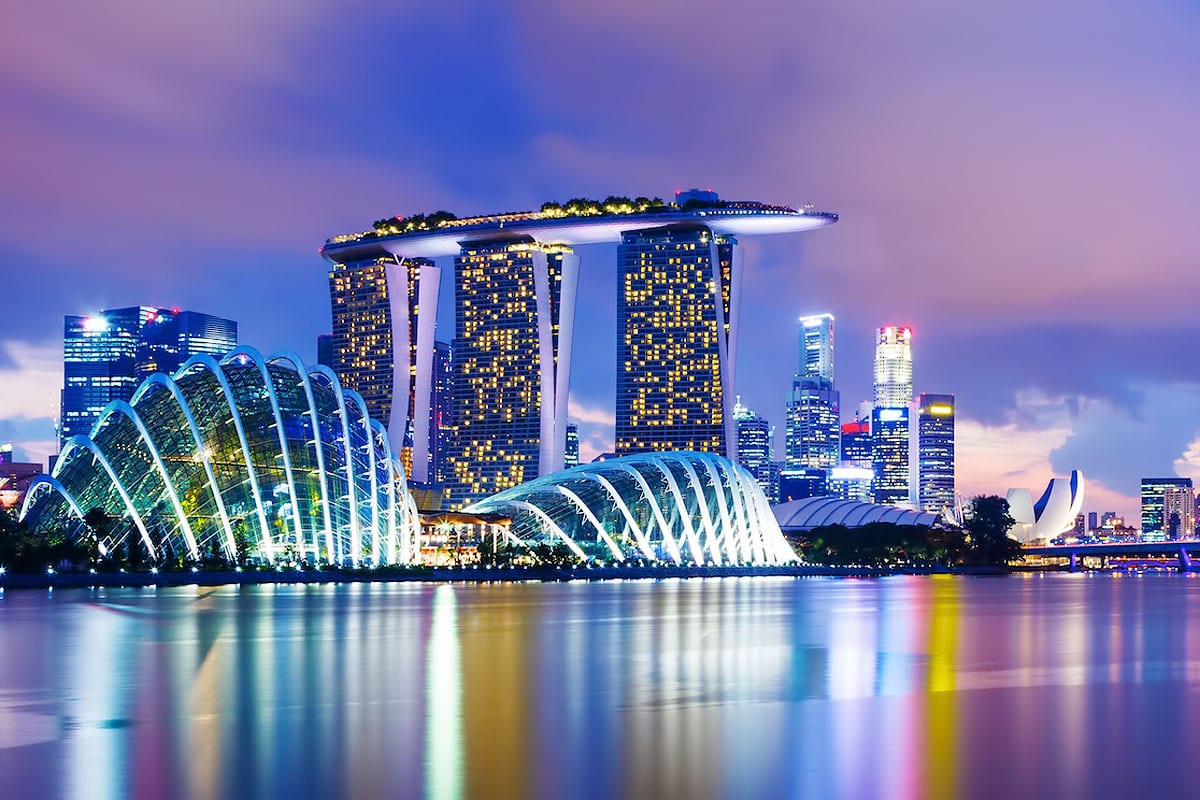
    Unavoidably, Singapore is running out of novelty factors to attract tourists: The integrated resorts and Gardens by the Bay, for example, are no longer new. The challenge for the tourism authorities, therefore, is to constantly create fresh reasons for visiting Singapore. The imaginative reworking of the retail scene could be useful here. As an indication of what is possible, this year’s Great Singapore Sale was held to coincide with China’s summer holidays. Livening up the retail scene is one way for Singapore to remain nimble in meeting the demands of tourists.

  • YCH Group opens retail hub in Xiamen

    YCH Group opens retail hub in Xiamen


    The four-storey mall aims to cater to the burgeoning Chinese retail scene while strengthening the Xiamen’s status as one of China’s most popular tourist destinations.

    YCH Group — an integrated end-to-end supply chain management and logistics company in Asia Pacific — has launched its retail hub in Xiamen, China in an effort to support the Pilot Free Trade Zone project in the city.

    To be fully operational from today (15 December 2016), the four-storey facility aims to cater to the burgeoning Chinese retail scene. According to eMarketer’s latest findings, China has overtaken the U.S. to become the world’s largest retail market, with total sales of US$4.886 trillion this year.

    The retail hub will also play a key role to strengthen the status of Xiamen as one of the most popular tourist destinations in China. Xiamen Tourism Bureau revealed on 7 October 2015 that  Xiamen received 1.63 million tourists from home and abroad, and raked in 1.853 billion RMB in tourism revenue last year.

    “With the dynamic and growing retail sector in the country, we want to equip retailers with game-changing capabilities that help them simplify processes and optimise costs. This will enable them to remain competitive while simultaneously boosting trade and facilities investment for China with the Pilot Free Trade Zone,” said Koh Yong Seng, Operations Director of North Asia, YCH Group.

    The mall, which used to be Xiamen Port Development- YCH Logistics’ warehouse, is strategically located within the Pilot Free Trade Zone. It is in close proximity to both air and sea ports, as well as numerous famous hotels.

    Sam’s Club and Red Star Macalline will be the mall’s first two anchor tenants, occupying about 85 percent of the facility.

    Sam’s Club is a division of Wal-Mart, which offers an extensive inventory with exceptional value on famous-brand merchandise at “member only” prices for both business and personal use.

    Meanwhile, Red Star Macalline targets the rapidly growing middle class in China through the operation of malls that offer home improvement and furniture materials, including flooring, bathroom and kitchen fixtures, with approximately 18,000 well-known brands.

  • Sunlight returns to retail

    Sunlight returns to retail

    Chief executive of Sunlight Real Estate Investment Trust (0435) Keith Wu Shiu- kee said the volatile period in the retail market at the start of the year has passed.

    Wu said though the local retail market was not performing well over the past two to three years but its impact on rents for shops in shopping malls was limited. He pointed out that rents for shops extending their rental contract in the REIT’s shopping malls went up 6.5 percent during the three months ended September 30. A slowdown in the retail market had not affected shops selling daily necessities, he said. He expected the retail market to continue to improve next year. Commenting on increasing demand for Hong Kong’s office spaces from mainland companies, Wu said it might increase the cost for purchasing offices.

    Meanwhile, he said the revamp of Sheung Shui Centre is nearing completion but admitted that the occupancies was not 100 percent.

    Retail spaces occupied by food and beverages shops in the mall has gone down following revamp, he said, but rents from the food and beverages shops have gone up by a double digit. Seperately, Lifestyle International (1212) said the total investment cost for its Kai Tak commercial project is expected to be about HK$13 billion.

    Lifestyle, operator of Sogo department store, acquired the first commercial site in Kai Tak development zone in November for HK$7.39 billion.

    The company said it intend to develop the site into two blocks of commercial buildings to provide spaces for both retailing and office use.

    Lifestyle planned to house a department store and other facilities which are complementary to the department store operations in the retailing portion, while the office space will be held partly for self-use and partly for leasing out.

    It expected the development to be completed before 2022.

  • Singapore shoppers want cross-channel options more than new-age services

    Singapore shoppers want cross-channel options more than new-age services


    When it comes to Christmas shopping, Singaporeans prefer retailers with a physical store, coupled with both e-commerce and mobile app. Singapore shoppers want cross channel options more than new age services like digital wallets and augmented reality store experiences, according to the SAP Hybris Singapore Christmas Shopper survey.

    More than 1,000 consumers in Singapore were surveyed to uncover their Christmas shopping habits.

    When it comes to Christmas shopping, 68 percent of respondents said they prefer retailers with a physical store coupled with both e-commerce and mobile app, enterprise application software provider SAP said in a press statement on 8 December 2016.

    In addition, 54 percent prefer those who offer self-pickup services at a physical store.

    According to the results, 65 percent of respondents stated that retailers can improve their Christmas shopping experience by offering free shipping.

    “Singaporeans are amongst the most tech-savvy spenders in Asia, and no strangers to e-commerce,” said Nicholas Kontopoulos, Global Vice President of Fast Growth Markets for SAP Hybris in the Asia Pacific region. “Despite that and reports of Singapore’s continuously challenging retail landscape, the brick and mortar stores are definitely not dead.

    “In fact, the SAP Hybris survey found that 39 percent of Singaporeans still enjoy browsing through stores. This [shows that] Singapore is a truly multi-channel market, where most consumers are using a combination of devices in their online and offline shopping. In the future, offline and online shopping are no longer two separate business models. Singaporeans are demanding a seamless omnichannel shopping experience,” Kontopoulos concluded.

  • E-retailers must offer personalized services to win customer trust

    E-retailers must offer personalized services to win customer trust

    With its uniquely young population, the lack of big-box retail and unmatched digital adoption rates, Southeast Asia’s e-commerce market is growing much faster than the global rate.

    A report by Google and Singapore investment company Temasek forecasts that the e-commerce market in Southeast Asia will grow from $5.5 billion in 2015 (0.8 percent of the total retail market) to US$87.8 billion in 2025 (6.4 percent of the total).

    According to the report, Singapore’s e-commerce market was valued at $1 billion in 2015, with online shopping making up 2.1 percent of retail sales. By 2025, Singapore’s e-commerce market is expected to make up 6.7 percent of all retail sales, at a value of $87.8 billion.

    Unique characteristics, unique challenges

    While digital adoption in Southeast Asia is exceptionally high, the industry has some unique characteristics and faces some unique challenges.

    Southeast Asia’s later uptake of digital technology means that e-commerce ventures in the region have the luxury to learn from others’ mistakes made in mature e-commerce markets like the US and China.

    What we are seeing is a compressed timeframe of e-commerce business model development, with the established evolution from classified sites like Craigslist through C2C (eBay, Taobao), B2C (Amazon, JD.com), B2B2C (Amazon, Tmall, Lazada) to Brand.com (Estee Lauder, Nike) happening faster and in many cases, simultaneously.

    This pattern is very much influenced by consumer preferences and online behavior. The region is a unique e-commerce market. Consumers here are leapfrogging technologies. Outside of tier-one cities, many have bypassed PCs, accessing digital platforms primarily through mobile phones.

    In Thailand for example, 85 percent of consumers not living in major metropolitan hubs use mobile devices for their online purchases.

    While in mature e-commerce markets desktop C2C still plays a pivotal role, Southeast Asia’s leapfrogging towards mobile is disrupting traditional, desktop-first marketplaces. Mobile-only C2C marketplaces like Carousell and Garena-backed Shopee are making aggressive moves against their older desktop counterparts like Tarad in Thailand and Tokopedia in Indonesia.

    Kicking the tyres on social media

    As a result of this fragmentation, shoppers are more likely to head first to search engines when looking for products as opposed to checking company websites. They show little loyalty to retailers and shop via social media. More than 80 percent of Southeast Asia’s digital consumers use social media such as Instagram to research and review products.

    Since sales via social media comprise up to 30 percent of all transactions, companies are rapidly expanding their services to attract consumers. The message to retailers is that the game changer will be the use of data to build real relationships with customers.

    Capture the data – then interpret it

    Beyond ease of purchase and the ability to consult the opinion of other consumers, e-commerce has revolutionized the way information about a retail customer’s journey to purchase is captured.

    Today, such information is captured on a more individual basis. E-commerce enables retailers to know what particular customers looked for, how they reached the site, what they bought, and even associated and abandoned purchases.

    Reconstructing the customer’s journey was difficult when the sole purchasing channel was the physical store and the only traceable element the purchase. At best, the customer was only identified at the checkout, which militated against personalized recommendations.

    Thanks to a better understanding of the journey to purchase, e-commerce has made it possible to better understand customer behaviour and react in real time. Distributors have considered applying these concepts across all sales channels – stores, call centers, etc. So, retailers today are challenged with fully understanding the customer journey across each one, while benefitting from greater accuracy.

    This is not easy. Depending on the channel chosen by the customer, the knowledge obtained by the seller is not the same: as we know, while at the checkout, the customer will only be recognized if they own a loyalty card or have already visited the store. But, in the latter case, it will be extremely complex to make the link with past purchases.

    Similarly, a website may enable the collection of data on the intention to buy but it is extremely difficult to correlate these events with the purchasing transactions if they are not made online and in the same session. The stakes are high, given that 78 percent of consumers now do their research online prior to making a purchase .

    Talend suggests that one solution is to integrate sensors into the elements that constitute a customer’s purchasing journey, then analyze and cross-reference this data to extract information from it.

    Some of our customers are already engaged in this process. It all usually begins with a detailed analysis of the customer’s online journey, to collect information on intent, cross-reference it at an aggregated level with actual purchases, at the catchment area level, for example, to determine correlations and refine segmentations.

    Then, this information is cross-referenced for a second time with transactional data from the physical stores and the website, which enables us to map the customer’s journey from intention to buy to the purchase or beyond. Thirdly, it’s a matter of developing a recommendation system in real time throughout the customer’s journey to drive increased sales and greater loyalty.

    Value-added services

    The main future challenge facing distributors lies in the value-added services that they may be able to provide to customers, to accompany their products or service offering. Consumers have learned to be wary of digital technology. More than ever, they will only be inclined to share information on their intentions and their profiles if their trust has been gained and they can perceive the benefit in it.

    How do you create this trust? Via value-added services: when consumers see that their interests are being considered, they do not feel constrained or trapped by a commercial logic that is beyond them.

    Amazon, with its “1-Click” ordering, has shown the way. In other sectors, such as the taxi industry, newcomers have gone even further, revolutionizing the customer’s journey by utilizing digital technology, from searching for a service to payment through a range of innovative services that make the customer’s life easier, such as the automated capture of expense forms.

    In a world in which advertising and tracking are increasingly present, data analysis carried out with the sole aim of commercial transformation is doomed to failure, as it is based on an imbalance between the benefits offered to the customer and those gained by the supplier. Until now, personalization in retail has tended to limit itself to marketing and measure itself in conversion rates, except for distributors, who have increasingly relied on customer loyalty.

    Multichannel is not the invention of the distributors but a reaction to consumers’ wishes. Think about it, even Amazon is going to start opening physical stores. Why? Because it has fully understood that a key element was missing in its bid to become better acquainted with its customers’ journey, while responding more effectively to their wishes.

  • Gucci owner meets Korea’s retail giants

    Gucci owner meets Korea’s retail giants

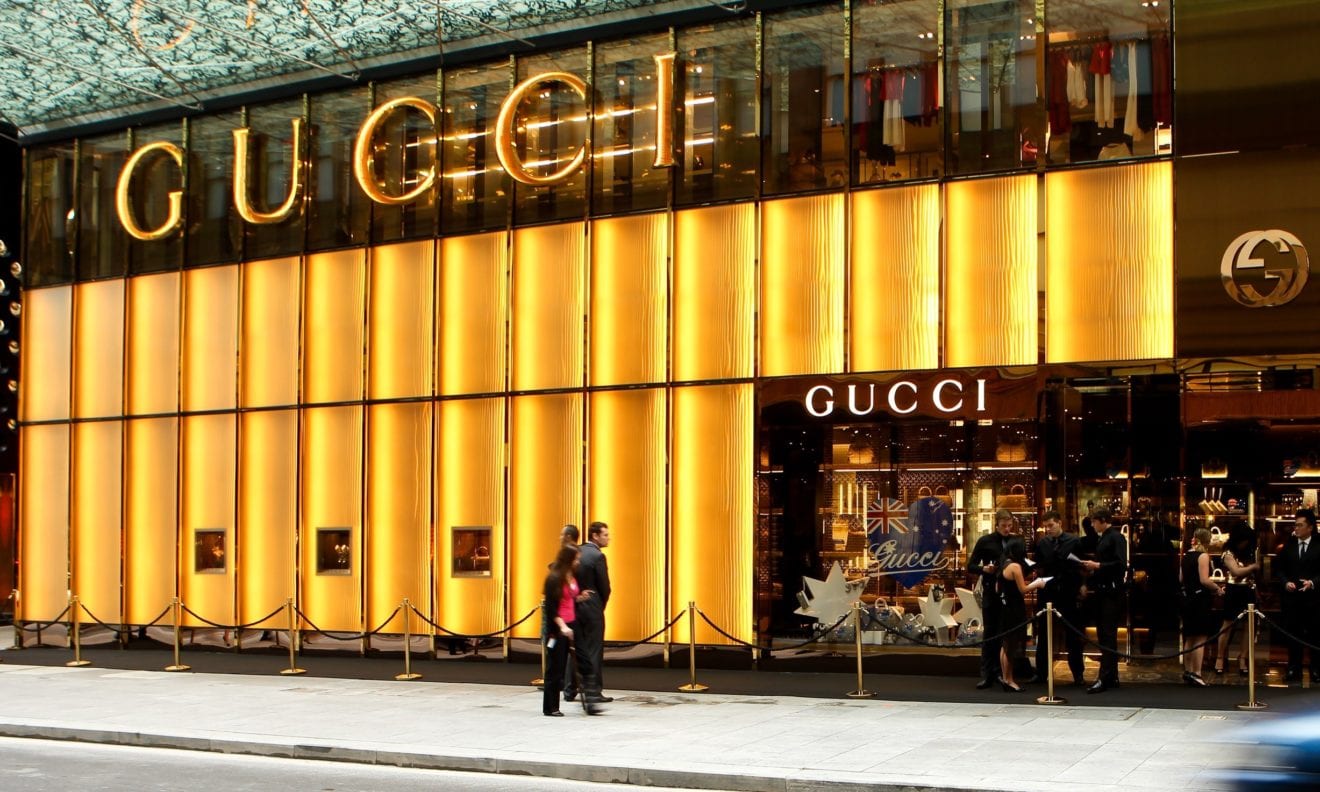
    Kering CEO Francois-Henri Pinault came to Korea, Wednesday, to meet owners and CEOs of retail giants here, according to industry sources. Kering, which changed its name from PPR in 2013, is the French luxury goods holding company owner of more than 20 luxury sport and lifestyle brands including Gucci, Bottega Veneta, Saint Laurent Paris, Balenciaga, Brioni and Puma, which are sold worldwide,.

    Pinault reportedly visited Hyundai Department Store in Apgujeong, southeastern Seoul, Wednesday, and was shown around by CEO Park Dong-woon. Chairman Chung Ji-sun did not meet Pinault, due to a scheduling conflict.

    The sources said Pinault also met Shinsegae Department Store President Chung Yoo-kyung and Lotte Group Chairman Shin Dong-bin on Thursday.

    Pinault is also reportedly scheduled to meet Hotel Shilla President Lee Bu-jin. In 2012, Pinault visited Korea as PPR chairman and met Shin and Lee. At that time, he looked around Lotte Department Store, Lotte Duty Free, Hanwha Galleria Department Store, Shinsegae Department Store and Shilla Duty Free over three days.

    Observers are paying attention to Pinault’s visit, which is only a week before new duty-free store operators are named, Dec. 17. Some sources anticipate Pinault and Korean retailers will discuss offering Kering’s luxury brands at the stores.

    However, candidates for duty free store cannot name what was not included in their business proposals submitted in October, during their final presentations. Other observers therefore believe Pinault’s visit is not related to duty free stores.

    Those observers say Pinault was here to talk with Korean retailers, so Kering’s brands can expand their presence here and in other Asian countries, especially China.

    With rapid sales growth, Asia has recently been in the limelight among global luxury brand retailers.

    In April, Moet Hennessy Louis Vuitton SE (LVMH) Chairman Bernard Arnault visited Korea and met Hotel Shilla’s Lee and Shinsegae’s Chung.

    Arnault also came to Korea last year for the opening celebration of The House of Dior, a flagship store in Apgujeong.

  • 3 in 4 Singaporean consumers want more personalized retail rewards

    3 in 4 Singaporean consumers want more personalized retail rewards

    Though many consumers are currently lukewarm about their relationships with brands and retailers, three in four consumers in Singapore will buy more from retailers if they are better rewarded for their loyalty, a study conducted by ICLP finds.

    Out of 750 consumers surveyed, only 3 percent consider themselves to be devoted to their preferred retail brands, expressing willingness and desire to forge enduring relationships with them. They also gave average to low scores in terms of passion (brand enthusiasm), commitment (loyalty), and intimacy (willingness to share information with a retailer).

    These findings come at a time when Singaporeans’ love affair with shopping and retail has been under strain. Even as retail sales show a modest year-on-year growth of 2 percent as of September 2016, there have been a slew of notable closures in the local retail landscape, most recently that of John Little, one of Singapore’s oldest department stores.

    These findings come at a time when Singaporeans’ love affair with shopping and retail has been under strain. Even as retail sales show a modest year-on-year growth of 2 percent as of September 2016, there have been a slew of notable closures in the local retail landscape, most recently that of John Little, one of Singapore’s oldest department stores.

    “What we are seeing from our research is that many Singaporean consumers still relate to brands and retailers at a transactional level, so when times are uncertain, they easily resort to the myriad of choices that are at their disposal, often literally at their fingertips now,” said Bruno Tay, Country Manager of the global loyalty marketing agency ICLP, which conducted the survey as part of an international study across nine markets.

    “It’s not too late to turn things around, though. In fact, retailers now have a chance to truly stand out if they appeal to the heart too — by approaching communication, reliability, consistency, reward and recognition from a human perspective,” he suggested.

    The study asked Singaporean consumers  to rate their retail experience with brands on seven core relationship criteria, namely recognition, rewards, reciprocity, reliability, respect, trust and communication. These were then mapped onto a model based on Sternberg’s Triangular Theory of Love, in partnership with an expert on relationship dynamics Professor Ron Rogge at the University of Rochester in the United States.

    Based on the three dimensions of a relationship — passion, commitment, and intimacy, the consumers’ experiences with brands and retailers are then further classified into six types. In increasing order of desirability, these range from empty, liking, casual, romantic, companionate to devoted.

    Devoted consumers — who currently form the marginal minority in Singapore — are those most willing to share personal information, opinions and desires with their favourite brands, and are least likely to stray to competitors. Notably, 92 percent of customers that fall into this group would recommend a brand they are devoted to. This is a significantly higher proportion than for consumers in the other types of relationships with their retail brands.

    Only 12 percent of customers in a ‘liking’ relationship would recommend a retailer to others, 27 percent in a ‘casual’ relationship, 56 percent in a ‘companionate’ relationship, and 69 percent in a ‘romantic’ relationship.

    “The rarity of devotion among Singaporean consumers underlines a sizeable gap and opportunity for local retailers and brands. Devoted consumers are keen to be advocates, so driving this pinnacle relationship can have tremendous effect on retailers’ business through word of mouth and social media sharing,” Tay said.

    The research findings suggest that Singaporeans do not just want traditional points-based reward programs, but also personalized rewards. Much like in a relationship with friends and loved ones, they would engage more when they receive genuine gestures that surprise and delight them.

    Around 67 percent of Singaporean consumers will buy more if retailers use their data in carefully considered, contextual ways to better understand their individual needs and preferences. This suggests the need for retailers to better leverage data technology and put in place more robust customer relationship management practices.

    Another 61 percent of consumers also place an emphasis on the importance of better communication, indicating that they will buy more if brands communicate with them better, in ways that express reciprocity and shared passion.

    Within the global context of the study, Singaporean consumers appear to parallel quite closely their counterparts in Hong Kong and Australia, where only 1 percent and 3 percent,respectively are in devoted relationships with brands.

    This is in stark contrast with the 21 percent of consumers in India who are devoted to their preferred brands. However, across the nine markets surveyed, including United Kingdom, United States, Brazil, United Arab Emirates, mainland China, Hong Kong, India, Singapore, and Australia, there is broad consensus that a well thought out loyalty programme can help deepen consumers’ connection with brands.

    “Thinking about our own personal relationships, we know that people fall in and out of love and friendships — lured by ‘greener pastures’,” Tay said. “Now we know that the same thinking can be applied to brand relationships that are dynamic and ever changing. Retailers looking to build and maintain devoted customer relationships should seek to truly understand the emotional factors that drive consumer loyalty.

  • Spark deploys 200G OTN technology

    Spark deploys 200G OTN technology

    New Zealand’s largest operator Spark has deployed the market’s first 200G per wavelength production fiber link using equipment from Nokia.

    The operator’s new 200Gbps network link connects its core network with the global gateway, and will co-exist with Spark’s existing 10G and 100G channels.

    Spark general manager of networks Colin Brown said the upgrade is aimed at meeting massive growth in demand for bandwidth in an increasingly digital world.

    “Nokia has helped Spark NZ reach a new milestone with our world-class optical transport network, achieving our vision of a data-driven future for New Zealand and underpinning an integrated network including fiber, 3G, 4G, 4.5G, wireless broadband and Wi-Fi,” he said.

    Spark is using Nokia’s optical transport network technology. The vendor said it has now shipped its 200G solution to more than 88 customers worldwide, and demand is growing rapidly as operators see the benefits of 200G 8x quadrature amplitude modulation (8QAM).

    “Like many operators, Spark has faced relentless growth in bandwidth demand, largely driven by an increase in video streaming by business and consumer users,” Nokia head of Oceania Ray Owen said.

    “By taking a flexible approach to this challenge with New Zealand’s first 200Gbps fiber link, together with Nokia, Spark is well placed to meet continued demand growth while meeting existing user expectations.”

  • China’s Social Consumer Retail Sales Up 10% In October 2016

    China’s Social Consumer Retail Sales Up 10% In October 2016

    China’s social consumer retail sales in October 2016 reached CNY3.112 trillion, representing a year-on-year nominal increase of 10% and actual increase of 8.8% if deducting price factors.

    Meanwhile, from January to October 2016, China’s total social consumer retail sales reached CNY26.96 trillion, a year-on-year increase of 10.3%.

    By location of operating units, China’s urban consumer retail sales were CNY2.689 trillion in October, a year-on-year increase of 10%; while rural consumer retail sales were CNY422.6 billion, a year-on-year increase of 10.3%. During the first ten months of 2016, China’s urban consumer retail sales were CNY23.183 trillion, a year-on-year increase of 10.2%; and rural consumer retail sales were CNY3.777 trillion, a year-on-year increase of 10.9%.

    By consumption type, China’s food and beverage sales in October were CNY349.2 billion, a year-on-year increase of 10%; and commodity retail sales were CNY2.763 trillion, a year-on-year increase of 10.1%. From January to October 2016, China’s food and beverage sales were CNY2.911 trillion, a year-on-year increase of 10.9%; and its commodity retail sales were CNY24.05 trillion, a year-on-year increase of 10.3%.

    In addition, during the first ten months of 2016, China’s Internet retail sales reached CNY3.929 trillion, a year-on-year increase of 25.7%. Of the total, Internet sales of physical goods increased by 24.9% year-on-year to CNY3.174 trillion, accounting for 11.8% of the total social consumer retail sales of China.

  • Retail e-commerce small but growing in Vietnam

    Retail e-commerce small but growing in Vietnam

    However, growth is expected over the next few years as increasing numbers of young consumers go online for the first time, largely through smartphones, said speakers at the conference.

    Deputy Minister Ho Thi Kim Thoa of the Ministry of Industry and Trade (MOIT) told the conference participants he has set a target to grow e-commerce to reach 5% of the nation’s total retail sales by 2020.

    Which, he said, in absolute dollars equates to US$10 billion for 2020.

    Tran Thi Phuong Lan, deputy director of the Municipal Department of Industry and Trade, in turn said he estimated that retail e-commerce revenue in the capital city of Hanoi registered US$1.16 billion last year.

    Mr Lan also predicted that the e-commerce retail sector would see strong growth over the next few years.

    However, despite all the optimism and the strong growth forecasted, retail ecommerce would still account for just 5% of total retail sales by 2020, if the target were to be reached, which puts Vietnam well behind Western countries.

    Most notably Vietnam lags far behind China, where retail ecommerce has been estimated to reach 18.4% of total sales in 2016 and is anticipated to grow in the double digits through the end of 2020.

    Lai Viet Anh, deputy head of the MOITs E-commerce and Information Technology Department, said she believes the country’s population with its relatively young median age would help expand the e-commerce consumer class.

    Vietnamese youth are learning to access the internet via smartphones at a very young age, said Ms Anh, and consequently have shown much more of a willingness to make purchases on their mobile devices than the older generations.

    Ms Anh opined that the number of digital shoppers—those who browse or research products online but who haven’t necessarily completed a purchase transaction would also see their ranks grow over the coming years.

    Though Ms Anh is sanguine for the prospects of e-commerce in Vietnam she openly acknowledged that the country lags far behind others in the region in e-commerce (including m-commerce) development.

    If one just looks at the absolute dollar value of e-commerce revenue the disparity is obvious, she said, noting that while online sales reached just US$4 billion in Vietnam for 2015— in China it was US$617 billion, the Republic of Korea (US$39 billion) and India (US$14 billion).

    The growth of m-commerce over the next few years should make the US$10 billion of revenue by 2020 target readily attainable, noted Ms Anh.

    Nguyen Thanh Hung, president of the Vietnam E-Commerce Association, said most urban residents are familiar with e-commerce with the number of rural residents using it is climbing steadily.

    This, he noted would also help strengthen e-commerce usage over the next few years.

    The implementation of robust 4G networks by mobile carriers (which is already underway) would also help drive increasing digital purchases made via smartphone, particularly from the rural areas.

    In addition, the declining costs of 4G devices and service plans would make it much easier for consumers to research, browse and buy via smartphones noted Mr Hung, making the targeted US$10 billion by 2020 a realistic and achievable target.

  • Fashion franchises are a popular trend in Vietnam

    Fashion franchises are a popular trend in Vietnam

    At a one-day event held last week at the japan External Trade Organisation (JETRO) Office in Ho Chi Minh City, a group of more than 10 Japanese fashion giants introduced their wares to potential Vietnamese partners. These firms include Isato Design Works; In Design Lab; M-Trading, Inc; Kobe Leather Cloth Co., Ltd.; T-Three Co., Ltd; and Sachiyo Hayashi Beauty Laboratory Co.; Ltd. They all aim to open franchise stores in Vietnam in the future.

    This event was the first of its kind held by JETRO Office in Ho Chi Minh City, targeting Vietnamese companies which have already organised franchising deals or are interested in such deals in the future. In total, 30 Vietnamese firms attended.

    Maison Fashion Group and Imex Pan Pacific (IPP Group) are the most prominent Vietnamese firms to form franchise deals with international brands, but more look to be on the way.

    In recent years, Japanese firms have invested in many service-related projects in Ho Chi Minh City. This market is expected to develop even more in the future. “In addition, Vietnam is home to specific regulations on foreign investment and trading habits, thus penetrating this market via co-operative agreements with local partners is an optimal choice”, said Teramoto Ukai, a JETRO official.

    Japanese electronic products and consumer goods have long been famous in Vietnam for their quality. And now, Japanese firms want to tap into the local fashion market, which is growing at an annual rate of 10%-15%.

    Miniso, a leading Japanese lifestyle brand, is one of the latest firms to connect with Vietnamese market. In April 2016, Miniso signed a franchise deal with le Bao Minh Group.

    “Vietnam has growing consumer demands, thanks to rising incomes and [interest in] global trends. In addition, Vietnam is considered to be one of the 10 Asian retail markets with the fastest growth. The important thing is how to select brands and partners to cash in on the potential”, said Le Thi Ngoc Hai, chairwoman of Le Bao Minh Group.

    Miniso, which has been franchised successfully in the Republic of Korea, Malaysia, China, the Philippines, and Thailand, opened its first three stores in Hanoi in August 2016. It plans to have 13 stores in-country by the end of 2016, between Hanoi, Ho Chi Minh City, Danang, Nghe An, Can Tho, and Haiphong, Hai added.

    This franchising path follows a greater franchising trend in Asia. Along with the food and beverage sector, healthcare, education, and retail, fashion in Vietnam has attracted many famous global brands.

    The UL’s Monsoon Accessorize entered the Vietnamese market in 2009 after signing a franchise deal with Maison, and has since opened three stores nationwide. Spain’s Mango, which also has Maison as its franchise partner, opened its first local Mango store in 2004 and now has 10 stores in Ho Chi Minh City and Hanoi.

    In 2011, the UK’s Karen Millen entered Vietnam in partnership with Maison, and now has stores in Hanoi and Ho Chi Minh City. That same year, France’s Christian Louboutin entered the local market, with one store in Ho Chi Minh City.

    Singapore’s Charles & Keith and the UK’s Topshop also appeared in Vietnam via franchise deals. Charles & Keith now has seven stores in Vietnam after six years in the local market, while Topshop has one store in Ho Chi Minh City. In another case, IPP Group, owned by Jonathan Hanh Nguyen, has also been a favoured franchise partner for international fashion groups, including Italy’s Bulgari S.p.A., the US’s GPS Strategic Alliances with Gap and Banana Republic, and the UK’s Warehouse. They each have opened three stores in Vietnam.

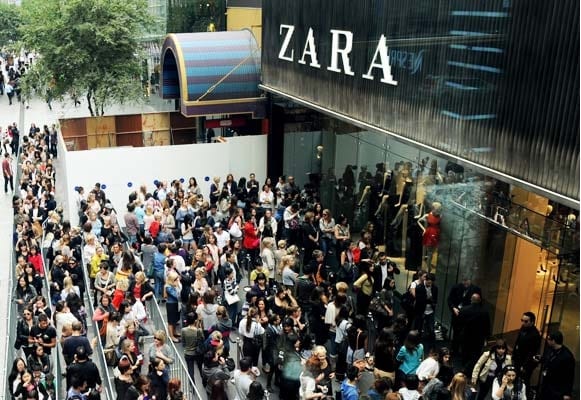
    Zara, a famous Spanish clothing and accessories retailer, officially opened its first store in Vietnam in early September 2016. The opening was wildly successful- on its opening day, it chocked up around VND5.5 billion (US$251,000) in revenue.

    According to a source from Zara, it plans to open a chain of seven stores in Vietnam in the future, including two in Hanoi in 2017.

  • Singapore’s new tallest building a ‘vertical city’

    Singapore’s new tallest building a ‘vertical city’

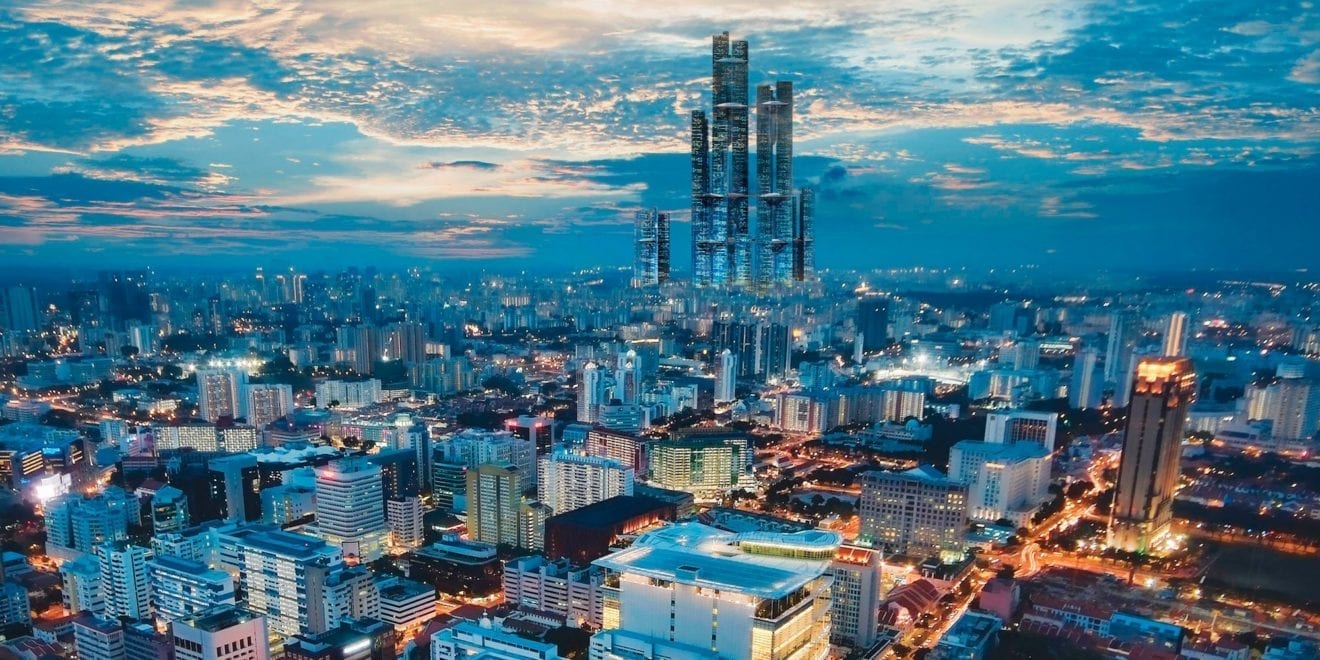
    Singapore’s canyon of skyscrapers has a new peak with the opening of the Tanjong Pagar Centre on the fringes of the central business district, sitting atop one of the wealth city state’s busiest train stations.

    The complex, dubbed a “vertical city”, marks the revival for an area of the business core of Singapore, about a kilometre away from the three soaring burnt-glass coloured towers at the Marina Bay Financial Centre (MBFC) complex built on land reclaimed from the sea and adjacent to the Marina Bay Sands hotel and casino.

    With office, retail, residence, hotel, fitness, and even an urban park, the new complex will be home to more than 150,000 square feet of green community space. The Tanjong Pagar site at 290 metres high pips its nearest rivals by just 10 metres, with three other building in Singapore at 280 metres high, One Raffles Place, UOB Plaza One and Republic Plaza.

    But it comes at a time that Singapore’s office and retail vacancy rates are rising and online shopping gathers pace with the arrival of a Singapore-based unit of China’s massive e-commerce firm Alibaba and the expected launch of new services by U.S.-based Amazon.

    “The approach of an integrated development solves the congestion problem so that we minimise travels. It also helps people do more things within the same location,” Cheng Hsing Yah, Managing Director of GuocoLand Singapore told CNBC Asia during a tour of the property.

    The towers promise 32-per cent in energy savings compared to similar code-compliant buildings by using glazing and directional shading which reduces the sun’s glare from Singapore’s year-round tropical climate.

    The project – which includes nearly 30 floors of office space–comes to market at a time when Singapore’s office vacancies has hit its highest levels in more than four years and been on its longest stretch of declines since the financial crisis.

    “The market has been challenging in terms of the leasing, because of the economic situation as well as the supply, but we’re quire fortunate to experience a very strong tick up rate of our office as well as our retail and f-and-b (food and beverage)space,” Cheng said.

    Guoco says office space for Tanjong Pagar Centre is already more than 85-per cent leased and the retail space is more than 90-per cent. Still, there are no signs of inventory slowing down.

    Next year, Marina One, adjacent to MBFC, is expected to open, which will bring nearly 2-million square feet of space to market, and Singapore’s government is reportedly selling prime land in the Marina Bay financial district, making it the first such sale in nine years.

    Follow CNBC International on Twitter and Facebook.

  • ​Samsung Pay available at Korean department chain Shinsegae after delay

    ​Samsung Pay available at Korean department chain Shinsegae after delay

    Samsung Pay will now be available for franchises in South Korea owned or run by Shinsegae, which owns its own brand of department stores, Samsung Electronics has announced.

    The mobile payment service will be available in Starbucks — the coffee chain is run by Shinsegae in South Korea — and famous brands such as E-mart, Shinsegae Food, Shinsegae Dutyfree, and Every Day Retail.

    Samsung said the delay was caused by the difficulty in providing consumers with discounts, points, and membership services.

    Shinsegae has been resisting allowing Samsung Pay in its franchises to promote its own counterpart SSG Pay.

    Samsung Pay hit 2 trillion won transaction as of August and is among the most popular mobile payment services provided by a handset manufacturer. Samsung controls over 70 percent market share in South Korea, its home country.

    It supports all credit cards except Citi’s in South Korea. Support for Citi will begin in the first half of next year, Samsung said.

  • Can we fix Singapore’s retail scene?

    Can we fix Singapore’s retail scene?

    Industry players reveal what needs to be done to revive the retail sector and bounce back from the slump

    In January, the oldest department store in Singapore, John Little, will be shuttering for good after being in business for 174 years.

    The Plaza Singapura outlet will be the latest addition to the whopping 5.4 million square feet of vacant space in the malls — the highest in the past decade, according to data for Q3 2016 from the Urban Redevelopment Authority of Singapore (URA).

    This number is set to climb, as many retailers are also right-sizing their operations due to a significant slowdown in retail expenditure, stiff competition from e-commerce and an expensive labour market.

    Within the next three years, it is expected that the retail industry will experience a supply glut of retail space, with an additional four million square feet standing vacant, according to the URA.

    One could say that for a country with a population of 5.6 million, the retail market here is not sizeable enough to support so many malls.

    Although the retail industry has been a key contributor to the tourism dollar in the past few decades, the current slowdown in the economy is expected to continue into 2017, and will hit the retail industry hard.

    With a relatively strong Singapore dollar, Singapore continues to be an expensive city for tourists to shop in. Locals take advantage of the strong dollar to shop overseas, be it online or offline. This has resulted in a double whammy for retailers.

    To add salt to the wound, the high rental rates and labour costs have left retailers with no choice but to downsize or shut down their operations. This is not a phenomenon exclusive to small and medium enterprises: Well-known international brands such as New Look and Celio were casualties early this year.

    With all this doom and gloom, are consumers and tourists still visiting malls and spending?

    From where I stand as the business owner of a seven-year old privately held company, and based on my daily interactions with the customers in my boutique, I would say “yes”.

    Judging from the continuous influx of foreign brands here, such as Victoria’s Secret, Michael Kors and Uniqlo (which opened its flagship at Orchard Central), there is still hope.

    Shopping is a national pastime: The millennials love hanging out at malls as a social activity; tourists enjoy the ease of shopping in a country where they can get everything under one roof, and public transport is safe, reliable and accessible to all.

    Homegrown businesses need to stay creative and nimble, and have to embrace changes and new technologies much more readily than their larger competitors.

    For too long, the retail industry has been stagnant in terms of creativity, originality and authenticity. Key stakeholders — from the Reits, mall operators and business owners to the consumers — all need to play a part for a total revamp of this state of affairs, if we are to make the retail scene vibrant again.

    There are opportunities in crises, and there is no better time to give the industry an overhaul.

    RETAILERS NEED TO BE OPEN TO CHANGE

    Some industry players, such as Naiise founder Dennis Tay, feel retailers need to evolve and enhance their overall retail experience to consumers, covering key aspects such as diverse product offerings, prompt customer service, and the overall concept of the space.

    “While customer convenience is key, retailers should not forget to find ways to be creative and consistently innovate themselves to engage customers and work closely with other brands to keep each retail experience fresh and relevant,” he said.

    That is a thought shared by Metro’s Erwin Oei, who is Head of Business Analytics, Marketing, Customer Relations Management and Merchandising Controller.

    “We continually innovate our product offerings through better service and the incorporation of new technologies,” he said in an interview with TODAY, adding that Metro is taking on “an omni-channel approach” to provide “seamless purchases for customers”.

    The voices clamouring for a unique shopping experience have never been louder. Retailers must lead the change, be willing to walk the talk, and start by creating unique concepts, establish individual styles, connect with the present and future in the retail scene, and move out of their comfort zone.

    Consumers are tired of seeing the same brands in different parts of Orchard Road, or in Singapore in general. The country is compact enough for us to travel for good products and good retail experiences, so retailers must engage makers, collaborate with visionary mall operators, and develop strong partnerships. This, in turn, will lead to interesting brand identities and retail-excellent products delivered with top-notch service.

    Retailers need to attract, retain and train good retail professionals to be subject-matter experts in their respective fields in order to better serve consumers.

    Business owners and retail companies must look into investing in human capital in order to attract talents to be part of their team.

    In addition to the four Ps of retail — price, product, place and promotion — a fifth P, “professional”, is needed ensure the survival of businesses.

    MALLS OPERATORS NEED TO RETHINK THEIR STRATEGY

    Mall operators need to wake up after having it easy all this while — collecting rentals, service charges and A&P fees, and upping the rents with every renewal. Slightly older malls are turning to asset enhancement initiatives as yet another reason to increase the rents.

    If the tenants are doing well, the mall operators will be immediately “rewarded” with turnover rents computed as a percentage of the gross turnover while in contract; and “duly rewarded” with an increase in rentals at the end of the contract term, thereby giving the operators an additional uplift in the rent yields.

    But in this climate, when consumers are more demanding, mall operators need their retailers on their side more than ever. Many consumers have labelled shopping malls across Singapore as boring and cookie-cutter.

    The dynamic landscape of retail has changed drastically with the Internet, e-commerce and disruptive technologies, such that mall operators have to start again from ground zero and go back to the basics of interacting with the tenants, the shoppers, and the community.

    “We believe that mall operators need to be more focused on their offerings to carve an identity for themselves, and prevent over-replication so that malls can become different and interesting again,” said Naiise’s Tay.

    “Malls can also support retailers with more marketing activities, lower rentals and (creating) loyalty programmes to continuously attract shoppers,” he added.

    The question is: Do mall operators really know their valued shoppers? Do they communicate with all the tenants on ways to overcome challenges together?

    Visionary mall operators need to ensure a unique tenant mix and create an individual mall identity, instead of replicating the usual brand names as the anchor tenants.

    The relationship between the mall operators and the tenants must also evolve into a partnership. Big data should be shared with tenants in order to work out specific strategies to continuously attract new consumers and keep existing ones coming back for more.

    SHOPPERS CAN ALSO PLAY A PART

    It is always easy to criticise the state of affairs in the retail industry and complain about poor quality of service and standard boring offerings.

    But it is also time we start looking at ourselves to see what type of consumers we are. Are we supporting originality and authenticity? Are we really concerned about sustainability? Are we funding child labour by buying cheap goods, or counterfeit goods that do not respect intellectual property rights?

    As consumers, we must play our part to buy from responsible retailers, support creativity and promote a certain cause that you and the retailer believe in.

    According to Metro’s Oei, customers can support retailers by providing insights into their purchasing behaviour.

    “(Metro) recently started an electronic feedback system called the “Rateit” programme. This helps to sharpen our decision-making to improve on matters that impact the customers directly and almost instantly,” he added.

    “If customers are able to provide their feedback, our in-house business analytics team will be able to … develop new initiatives to cater to shoppers,” said Oei.

    A business is only able to expand if there is a consistent growing demand for its products and/or services.

    Everyone has a role to play in ensuring that the Singapore retail industry emerges stronger and better, thus adequately serving customers’ needs and wants.

    Get offline for a while. Go out into the stores and give feedback to retailers, who can then convey your insights to the mall operators. We need to show them what needs to be done.

    Let’s get shopping again.

    Andrew Tan is the owner of Atomi, a lifestyle store at Mandarin Gallery, and the managing partner for atomi consulting, where he is working with a property owner in Kobe in Japan to revitalise a shopping mall slated to open in Q4 of 2017.

  • Hong Kong still suffering a retail slump, despite signs of recovery

    Hong Kong still suffering a retail slump, despite signs of recovery

    The retail downturn here is showing signs of recovery ahead of the holiday shopping season, but a further weakening of the Chinese yuan against the dollar could return to haunt the industry.

    Retail sales fell for 20 months in a row to reach 36.1 billion Hong Kong dollars ($4.65 billion) in October. However, the contraction in retail sales narrowed to 2.9% year on year, marking the smallest drop since July last year.

    Leading the decline were sales of electrical goods and photographic equipment, which plunged 21.7% on the year. Sales of luxury items such as watches and jewelry — popular among wealthy mainland spenders — edged down 0.1%, ending a streak of double-digit declines since September last year.

    Some brighter spots include supermarket sales, which were up 3.5% on the year, helped by stronger local consumption. But sales of clothing, as well as cosmetics and medicine, both dived back into negative territory, shrinking 5.1% and 1.8%, respectively.

    The government attributed the better-than-expected retail sales to improving tourist traffic. The number of mainland Chinese visitors to Hong Kong declined 3.5% year-on-year in October, against a 5% decline a month before. Overall tourist arrivals were down 2.4%, according to official statistics. “The stable job market and increasing household incomes also rendered support to local consumer sentiment,” a government spokesperson said on Thursday.

    Describing the October figures as “rays of hope” for the industry, Retail Management Association Chairman Thomson Cheng Wai-hung expected sales in the next three months to stabilize with the coming of high-spending holiday seasons such as Christmas and the Chinese New Year in late January.

    But Cheng said February will be a more critical time for the industry, referring to the impact of the yuan, which recently slid to an 8.5-year low. With the Hong Kong dollar’s peg to the stronger greenback, after the anticipated hikes in U.S. interest rates, “our goods would be more expensive for the mainlanders,” Cheng added. “It’s a big negative for us.”

    A positive dimension is that Hong Kong retailers that do sourcing in Asia are likely to benefit from the region’s weaker currencies resulting from the rate hikes, leaving them “more room” to counteract the currency impact with promotional discounts, Cheng said.

    Nonetheless, a turnaround might seem unlikely for some retailers. Hong Kong-listed French premium beauty brand L’Occitane saw Hong Kong as its worst-performing market across Asia-Pacific. Sales in the territory declined 11% on the year from April to September, little improved from the 12% slump reported in the same period in 2015.

    “Our Hong Kong business remains challenging, with a continued drop in mainland Chinese tourist traffic and heavy discounts offered by competitors,” said Chief Financial Officer Thomas Levilion on Tuesday, following L’Occitane’s announcement of a modest 1% increase in overall sales, which were helped by growth markets such as Brazil and Russia. With a net opening of 17 stores in Asia, the group shut down two stores in Hong Kong in the April to September period.

    Hong Kong mid-tier fashion retailer Bauhaus also closed four of its 80 stores at home and in Macau in the period, citing “stiff headwinds” in the retail market. Its net loss more than doubled to HK$60 million in the half year ended in September, dragged lower by an 18.5% fall in Hong Kong sales. The group slashed its headcount by nearly 14%, with the biggest reduction in Hong Kong.

    Bauhaus may also consider relocating some of its stores away from the prime shopping districts to trim costs. “More seriously, intensive discount-driven retail dynamics in recent years have gradually diminished the effectiveness of certain traditional promotional campaigns,” said Chairman Wong Yui-lam in a statement on Nov. 25, adding that there has yet to be “any significant indicator of a rebound in the near term.”