Tag: Sales

  • iPhone sales declined in every part of the World

    iPhone sales declined in every part of the World

    As Apple confirmed in its two most recent earnings calls, iPhone sales have been consistently down year-on-year since October. The Cupertino giant blamed this primarily on weak demand in China, but recent SEC filings show this isn’t the full story.

    Apple’s recent Form 10-Q filing with the SEC (US Securities and Exchange Commission) contains a detailed breakdown of performance over the past six months by both product category and geographical region.

    iPhone sales, as mentioned above, have been down for the past six months. The Greater China region which includes China, Hong Kong, and Taiwan has undoubtedly impacted Apple’s total shipments the most, but in actual fact, the company has been experiencing “lower iPhone unit sales in all the reportable geographical segments” since October. This has resulted in year-on-year revenue declines for all regions except the Americas (North and South America), with Greater China being the most affected followed by Europe and Japan.

    In almost every geographical segment, Apple’s lower iPhone shipments were partially offset by improved performance in other product categories. For example, in Europe, the company’s Services and Wearables businesses grew significantly, while over in Japan Services and iPad were key. In the Americas, however, strong Services and Wearables performance managed to entirely offset weak iPhone shipments and push year-on-year growth to a decent 4%.

    Taking a look at the company’s performance over the past three months rather than six, it seems as though Apple’s efforts in certain regions are finally beginning to pay off. Other markets, however, seem to be in decline.

    As mentioned by Apple in its recent earnings call, the company noticed improved demand in Greater China towards the end of the quarter. It didn’t elaborate on the matter, but it seems to have translated into slightly better financial results for the brand as, for the three months ending March 31st, the year-on-year sales decline was 22%. This is still pretty major, but it represents an improvement over the -25% average Apple has experienced in the region since October.

    Another region that has improved in Japan. Over the past six months, Apple’s sales have dropped an average of 2%, but throughout the first three months of 2019 sales were actually up 1%. Similarly, the Americas continued to experience growth throughout the past quarter.

    Moving on to Europe and the Rest of Asia Pacific, these two geographical segments didn’t fare as well. Since October, Apple has experienced an average revenue decline in these regions of 4% and 2% respectively. But during the first quarter of the year, these numbers nosedived to 6% and 9% due primarily to even lower iPhone demand.

    Regarding Apple’s performance throughout the rest of 2019, the Cupertino giant now appears confident that it can improve the situation in Greater China and ultimately slow down its year-on-year decline. Nevertheless, it’s still forecasting a drop for this current quarter and, with business in Europe and the Rest of Asia Pacific seemingly struggling, it’ll remain to be seen how Apple handles the situation.

    Towards the end of 2019, Apple’s next-gen iPhones should provide a decent boost to demand. However, analyst Ming-Chi Kuo recently predicted almost no growth. Instead, Kuo expects iPhone sales to pick up towards the end of 2020 as a result of the first 5G models which should feature modems from both Samsung and Qualcomm.

  • HTC’s April Revenue Figures Still Low Despite Efforts

    HTC’s April Revenue Figures Still Low Despite Efforts

    HTC had a pretty rough start to 2019 with record-low revenue numbers in both January and February. Nevertheless, things then started to look more positive in March as HTC’s sales increased dramatically thanks to the popularity of its VR headsets. But as revealed by the company’s latest figures, this resurgence was short-lived.

    Between April 1st and April 30th, HTC generated a total of NT$0.59 billion ($19.07 billion) in revenue. It’s unclear how this figure is split between smartphone and VR sales, but it, unfortunately, represents yet another record-low for the HTC One creators. Comparing the results to previous ones, April’s numbers translate into a big 54.85% month-on-month drop from the NT$1.31 billion ($42.46 billion) it generated in March and also amount to an even bigger 71.77% year-on-year decline.

    Way back in December, HTC stated that its focus for 2019 would be turning a profit and regaining its market share in the smartphone segment. So far, though, the Taiwan-based company has done little to achieve this with zero launches since December and no devices on the horizon. HTC has, however, released the Vive Focus Plus VR headset and launched its Viveport Infinity subscription service.

    Looking to the second half of 2019, HTC is largely expected to announce its first 5G flagship smartphone. Presumably, this will be available to purchase through multiple carriers and will provide a decent boost to the company’s finances. Additionally, rumor has it HTC is negotiating a brand licensing deal in India which could prove beneficial too.

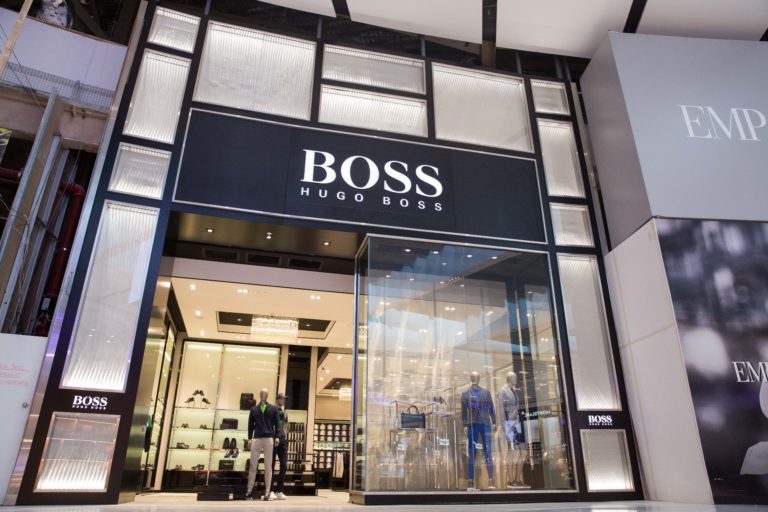
  • Hugo Boss in Asia Down in latest Quarter

    Hugo Boss in Asia Down in latest Quarter

    Sales by Hugo Boss in Asia rose by 4 percent in the latest quarter.

    However, the German fashion company observed that double-digit growth in Mainland China overshadowed a “tougher” market environment in Hong Kong and Macau.

    Worldwide sales rose by 4 percent, a rate tempered by an 8 percent decline in currency-adjusted terms in the US market.

    First-quarter operating profit fell 22 percent to €55 million on sales of €664 million.

    While Hugo Boss’ share price has slumped by 19 percent over the past year, the company says its performance has been impacted by reorganization costs, higher marketing spends and the strength of the dollar.

    Finance chief Yves Mueller said the revamp of key stores should boost the company’s performance with New York and Tokyo flagships already performing well since their reopening and renovations of others in Paris and Chicago soon to be completed.

    “Store optimizations will drive performance,” he told an analysts briefing.

    A shift in focus to a younger target demographic is also paying dividends for Hugo Boss. Sales of its Hugo brand of casual wear rose in the double digits, compensating for flat sales of the core Boss brand and a marginal decline in business apparel.

    First-quarter online sales rose by 26 percent and the company plans to continue to invest in digitalization.

  • Little Dip in Hong Kong Retail Sales Last Month

    Little Dip in Hong Kong Retail Sales Last Month

    Hong Kong retail sales in March slipped by a negligible 0.2 percent, a slower decline than the 1.6 percent of January and February combined.

    But figures from the Census and Statistics Department show first-quarter retail sales were still down 1.2 percent year on year.

    After netting out the effect of price changes over the same period, the provisional estimate of the volume of retail sales in March decreased by 0.8 percent compared with a year earlier, and for the first quarter by 1.6 per cent.

    March’s decline was driven largely by the watches, jewelry and valuable gifts sector, which fell by 2.6 percent, and apparel, down by 2.3 percent. Sales of electronic goods fell by 15.6 per cent, of optical shops by 5.7 per cent and of books and stationery by 2.5 percent.

    Conversely, sales by supermarkets increased 3.3 percent, of medicines and cosmetics by 2.5 percent, in department stores by 5 percent, and of food, liquor and tobacco by 3.6 per cent.

    Footwear and accessories sales rose by 7.1 percent, furniture by 4.3 percent and Chinese drugs and herbs by 1 percent.

    A government spokesman said the decline in Hong Kong retail sales in March “reflected the cautious consumption sentiment amid various external uncertainties”.

    He said that looking forward, retail sales business will likely continue to be affected by various external uncertainties in the near term, but the largely stable labor market and the sustained growth in inbound tourism should provide some support.

  • Global smartphone sales still in freefall

    Global smartphone sales still in freefall

    The global smartphone market remains in “freefall”, having experienced its sixth consecutive quarter of declining shipments during the first quarter, according to Canalys.

    Total unit shipments fell 6.8% year-on-year to 313.9 million during the quarter, the lowest result in nearly five years, the research firm said.

    Apple was the hardest hit of the big smartphone vendors, with iPhone shipments dropping 23.2% year-on-year to 40.2 million units, which marked the largest single quarter decline in the history of the iPhone.

    But market leader Samsung also experienced a 10% decline in shipments to 71.5 million.

    By contrast, Huawei had a strong performance during the quarter, with shipments growing 50.2% during the first quarter to 59.1 million.

    Huawei has publicly set its sights on overtaking Samsung as the world’s top smartphone vendor by unit shipments by 2020, but it will not be an easy battle, the research firm said, with its chance of success hinging on its ability to take customers in the low to midrange price bands.

  • Honda Car India’s Sales Grow By 23% In April

    Honda Car India’s Sales Grow By 23% In April

    Honda Cars India registered monthly domestic sales of 11,272 units in April 2019 as against 9,143 units in April 2018 registering a growth of 23 per cent. The company has seen a strong sales growth thanks to the new-gen Amaze as also the WR-V. The company even exported 220 units in April 2019.

    Rajesh Goel, Senior Vice President and Director, Sales and Marketing, Honda Cars India Ltd said, “HCIL’s April sales growth is primarily due to lower base effect, as there was no Amaze in corresponding month last year during model runout. The ongoing elections and overall subdued market sentiment continues to affect the sales momentum. Going forward, the industry is heading towards a tougher year impacting sales due to volatility in fuel prices, increase in car prices owing to new regulations and stricter inventory control for smooth switchover to BS6 regime by year end.”

    The company plans to bring more cars to India in 2019. In fact the company had already announced that there would be 6 new models in three years starting 2018. The company has already launched 3 new models in the country in the form of the new-gen Amaze, CR-V and even the Civic. We wait to see what more the company brings to the table.

  • Toyota Domestic Sales Down By 22%

    Toyota Domestic Sales Down By 22%

    Toyota Kirloskar Motor sold a total of 10,112 units in the domestic market. The domestic sales saw a drop of 22 per cent which is a big drop compared to March 2019 which showed a growth of 7 per cent. The company exported 1301 units of the Etios series this month thus clocking a total of 11,413 units. Toyota Kirloskar Motor sold a total of 13037 units in the domestic market this month of April 2018. The company exported 834 units of the Etios series this month thus clocking a total of 13871 units.

    Toyota had even in March talked about the slow pace of the market and also the soaring prices of input costs and even the high insurance costs. Commenting on the sales performance, Mr. N. Raja, Deputy Managing Director, Toyota Kirloskar Motor said, “The industry is currently experiencing a slowdown due to uncertainty of upcoming general elections that looms over the market and this slow pace is expected to continue until the new government is formed. Consumer sentiments has currently dampened due to several factors like tight liquidity, high insurance, high costs.We hope the sales growth momentum to pick up in the upcoming months post election results are out.”

    Things are about to change though as the company is all set to launch the new Glanza Hatchback as also the rebadged version of the Vitara Brezza which will mark the company’s entry into the subcompact SUV segment. The company does say that the sales are likely to pick up post election results

  • Gome profit warning issued to Shareholders

    Gome profit warning issued to Shareholders

    Another Gome profit warning has been issued as the company’s massive restructuring program continues.

    However the group says the reforms are beginning to show results and while a loss is anticipated for the latest quarter, it will be less than that of the previous period.

    According to a stock exchange filing, Gome says its loss attributable to owners is expected to range somewhere between RMB20 million (US$3 million) and RMB90 million ($13.4 million), as compared with a profit of RMB113 million for the corresponding period last year. The loss will be “significantly reduced” compared with the loss for the December quarter, the company said. Last full year, Gome lost RMB4.887 billion ($728 million).

    The group says it continued to actively pursue its transformation into an integrated home solution, service solution and supply chain provider based on its strategy of ‘Home • Living’. It expects the group’s total GMV for both online and offline to grow about 5 per cent year on year for the March quarter.

    Of that, GMV from Me Shop is expected to grow by more than 200 per cent, service GMV by more than 30 per cent, GMV from smart products by more than 50 per cent; and GMV from new businesses such as home solution and integration of kitchen cabinets with electrical appliances, by more than 100 per cent.

  • Mobile phone sales drive wireless power market

    Mobile phone sales drive wireless power market

    It used to be that wireless charging was a nice-to-have but not got-to-have feature. These days, however, high-end smartphones have started to pick up on the interest and including this as standard feature.

    So when IHS Markit made its forecasts of the wireless power market, the analyst made it clear that mobile phones were an important factor driving the growth in this segment in 2018, comprising 71% of all receiver units shipped.

    The latest IHS Markit Wireless Power Market Tracker report put annual unit shipments of wirelessly charged mobile phones up by nearly 40% in 2018, reaching 300 million units, mainly driven by flagship models. The growth is expected to build in the mid-range smartphone category, as mobile phone companies plan to extend the adoption of wireless charging in that price band.

    Fortified by the growth in the sales of wirelessly charged mobile phones, global shipments of wireless power receivers and transmitters across all applications and product segments grew by 37% in 2018 to 600 million units, compared to the previous year. Global shipments will continue to grow to approximately 2.1 billion units in 2023, according to HIS Markit.

    “Wireless power technology continues to evolve rapidly, with reach expanding beyond smartphones to wider applications and product segments,” said Dinesh Kithany, wireless power and power supplies analyst, IHS Markit. “Wireless power technology is also undergoing further sub-segmentation, with regard to wider power levels and distance range.”

    He noted that wireless charging feature is used as a market differentiator to promote flagship models. “For example, Huawei and Samsung both included some cool innovations in their smartphones, with features like reverse-charging, wireless power-sharing, multi-device charging and the introduction of NFC wireless charging,” Kithany said.

    Opportunity outside mobile

    Beyond the mobile ecosystem – which also includes smartwatches, wireless earphones, and wearables – wireless charging is expanding into computing devices, smart home devices, IoT sensors, medical devices, small home appliances, power tools, robots and drones, augmented reality and virtual reality devices, gaming applications, industrial sector, 5G applications, electric vehicles and public infrastructure.

    “This wireless charging expansion creates opportunities for emerging wireless power solutions such as high-frequency-based resonant and radio-frequency, infrared and other uncoupled solutions to gain entry into the overall wireless power market,” Kithany said.

    According to IHS Markit, the smart home devices market is an especially promising segment for wireless power, because of the opportunities it presents to manufacturers and the benefits that accrue to consumers. Led by smart speakers, the wireless charging enabled smart home market is expected to grow to more than 100 million units in 2028.

    “Smart thermostats, air-control devices, electronic door locks, garage-door systems, intruder alarms, video cameras, video doorbells and other smart home devices will follow,” Kithany said. “The IoT sensors market alone is expected to add more than one billion wireless charging devices to this market in the next five years.”

  • Puma profit Down

    Puma profit Down

    Sportswear giant’s sales and profit soar, with China one of its greatest performing markets.

    Puma is celebrating its “best quarter ever” as sales, gross margin and profit reached record levels.

    On a currency-adjusted basis sales reached €1.319 billion (US$1.476 billion) up 15.3 per cent, while on a reported basis, sales growth was 16.6 per cent.

    The German-headquarted sportswear retailer said the increase reflected continued growth in all regions and product divisions across the business.

    Gross profit margin improved by 80 basis points to 49 per cent and EBIT by 27 per cent to €143 million. Net earnings rose 40.1 per cent to €94.4 million in the quarter.

    “The first quarter of 2019 was the best quarter Puma has ever seen,” said Bjorn Gulden, Puma’s CEO. “Revenues … were the highest Puma has ever achieved in a quarter and the EBIT … was also the highest absolute EBIT Puma has ever achieved. So, it has been a very good start into the year.”

    By region, Asia-Pacific – driven by China – and the Americas contributed with double-digit sales growth, while sales in Europe, Middle East and Africa increased “solidly,” the company said.

    By division, apparel was the main growth driver in the quarter, followed by accessories and footwear. The categories running and training, teamsport, motorsport and golf on the performance side, as well as sportstyle all recorded strong growth.

  • South Korean E-Commerce Under Pressure

    South Korean E-Commerce Under Pressure

    Mounting losses in the South Korean e-commerce industry are calling local business models into question. Competitive pricing and fast delivery capacities have made the industry an ascendant phenomenon in the territory, with the purchase of a whole spectrum of consumables now possible via mobile phone. The industry hit a record high of KRW111.8 trillion (US$98.4 billion) in transactions last year, putting the economy among the top five e-commerce markets worldwide.

    But gigantic operational losses have emerged out of stiff competition on price and logistics set-up costs. Korea’s top e-commerce firm Coupang shattered its own records with KRW4.42 trillion ($3.8 billion) in sales last year, but made a staggering KRW1.1 trillion ($950 million) operational loss.

    While Coupang’s deficits have been widening for nine years, CEO Kim Beom-seok stubbornly insists the losses are planned and says investment will continue.

    “We have pushed for massive investment to impress our customers,” said Kim, “and will continue to aggressively invest in technology and infrastructure.”

    The firm has single-handedly changed the outlook for South Korean retail and put brick-and-mortar operators on red alert – but has yet to prove profitable.

    Rival operator Tmon faces a similar issue, with its KRW492 billion ($425 million) sales last year sad-tromboned by KRW125.5 billion (108.4 million) in operating losses that have been accumulating since the year 2000, now standing at KRW770 billion (665.5 million) in total. The firm’s latest nose dive was attributed to “investment in core technologies”.

    “Customers frequently visited our app on expectations for new products and promotions changing every hour, which raised their royalty and created a virtuous cycle,” said Tmon CEO Lee Jae-hu. “We will continue efforts to strengthen the market position and seek ways to improve profitability this year.”

  • Huawei continues to close in on Samsung with impressive Sales Results

    Huawei continues to close in on Samsung with impressive Sales Results

    2018 has been something of a roller coaster for Huawei, the highly controversial telecommunications equipment vendor that also somehow managed to beat Apple for second place in global smartphone shipments for two consecutive quarters. Ultimately, the China-based tech giant ranked third overall in the mobile device market last year, selling however a colossal 206 million units or so around the world, up from “only” 153 million in 2017.

    While market research firms like Strategy Analytics and the International Data Corporation (IDC) are not yet ready to release their full Q1 2019 reports, Huawei has just confirmed another impressive new set of numbers that puts the company on track to substantially narrowing the gap to Samsung by the end of the year and possibly reaching its most ambitious goal yet in 2020.

    No less than 59 million Huawei smartphones were shipped between January and March 2019 worldwide, up a staggering 50 percent or so from the 39 million third-party estimate of Q1 2018. That should be enough to open a big gap between the Chinese company and Apple, since only around 52 million iPhones were sold globally during Q1 2018, a number most analysts expect to take a bit of a plunge when 2019’s first-quarter reports start rolling in.

    It will then be pretty much impossible for Apple to catch up to the market’s silver medalist, as iPhone shipments may need a couple more quarters to start recovering, while Huawei’s figures are expected to continue growing. In total, Huawei could sell anywhere between 250 and 260 million units in 2019, which probably won’t be enough to secure the company first place over Samsung, but it might hint at a new leader next year.

    Until then, we should point out Huawei’s substantial boost in Q1 smartphone volumes crucially contributed to overall revenues of close to $27 billion, representing a 39 percent year-on-year jump. Incredibly enough, the company reported massive growth for its carrier and enterprise business departments, as well as the consumer electronics group, expecting all three divisions to post double digit increases in revenue throughout 2019. That means both smartphone and 5G equipment sales are going well, despite strong opposition from the US government.

  • A Short Review Guide On Jared Goetz Shopify Ecom Hacks Academy 

    A Short Review Guide On Jared Goetz Shopify Ecom Hacks Academy 

    eCom Hacks Academy is an in-depth course for building your online business in Shopify. CNBC and Entrepreneur, Inc. featured its founder, Jared Goetz, in 2017 as he was able to earn 2 million USD in 60 days from his store. A lot of people are enticed by how Jared worked for only 30 minutes a day, which is included in the eCom Hacks Academy training. If it sounds too good to be true, check out this Jared Goetz review for a rundown of what you can learn in the eCom Hacks Academy.

    If you’re considering to avail of the training included in eCom Hacks Academy, take note that the price is 1,999 USD. Before enrolling, it’s best to know what to expect, which are the following:

    1. Training Course

    Jared teaches what he called dropsurfing, which is different from the more commonly known dropshipping. Here are some differences between the two:

    • Accordingly, dropsurfing only sells viral products while dropshipping sells what seems like a profitable product of your own choice.
    • With dropsurfing, you can travel the world without worrying for your inventory, unlike in dropshipping where you need to buy products in bulk, which could pile up in your garage.
    • Dropsurfing uses Shopify as its store while dropshipping uses both Shopify or Amazon. However, the difference is controlling traffic sources for dropsurfing, and it only hopes to make a sale on Amazon.
    • The profit dropsurfing promises for using Shopify ranges from 30-40%, which is higher from dropshipping earnings that range from only 5-10%.

    The dropsurfing concept is what Jared offers through his course: a dream business where you can work at home and travel any time. In the course, he shows you how it’s done from his own formula, which consist of the following:

    • Structure of the store
    • Techniques to convert leads
    • Effective ways to find products
    • Partnering with suppliers
    • Ads creation and scaling
    • Customer service

    Moreover, the content of the course that incorporates videos are as follows:

    • Module 1 – Overview of the structure, which has ten lessons, such as how to register with Shopify’s free 21-day trial, creating a store, establishing your domain name, phone setup, your store’s mode of payment, and basic search engine optimization (SEO) meta descriptions. Although helpful, almost all of these are available online.
    • Module 2 – Talks about setting up your store, which comes in 16 lessons. It focuses on conversion rate methods, email setup, and maximizing sales through upsells and free shipping.
    • Module 3 – Includes four lessons focusing on the products, from finding products and suppliers, to the fulfillment of orders through Oberlo.
    • Module 4 – Has 16 lessons that discuss strategies to keep your store running. Marketing campaigns such as Facebook Ads and using it like a pro, testing methods, and your budget are included in this module.
    • Module 5 – A bonus lesson that talks about conversion hacks, customer services, customer audience, and templates for abandoned cart email, which are in PDF form.
    1. Pros

    The best part of the eCom Hacks Academy is that it is legitimate, unlike many online training courses being offered on the internet these days.

    Moreover, the following are pros that make the eCom Hacks Academy beneficial:

    • Proven Method – Since the structure and formula are personally tested by its founder, eCom Hacks Academy’s strategies can give you financial freedom, similar to what happened to Jared.
    • Suitable for Beginners – Since lessons are understandable, a zero-knowledge Shopify wannabe can learn a lot from the training.
    • Teaches, Not Feeds – Unlike other courses that offer a website they’re affiliated to, Jared’s academy only guides you on how to create and operate your own site. You may even learn how to increase your sales through a new website, akin to what happened to Walmart.
    1. Drawbacks

    The training program may teach you a lot, but like any other program, there are also drawbacks to the eCom Hacks Academy. Here are some of them:

    • Expensive – A lot of online training courses come way cheaper than what Jared offers, and with the content of the program, it has a high price.
    • Not suitable for Shopify experts – Because the content is not new for existing Shopify users, the structure may only be beneficial for beginners. When it comes to setting up an account and website, which existing users may already know, it may not be worth the price for them.
    • Unrealistic Expected Sales – A promise of 5 million USD as your income may be too much. Moreover, the highlight that attracts people, which is working for four hours each week while earning 5 million USD, is a high expectation. Especially if you’re a beginner, this may not be reachable.

    Conclusion

    This review guide may help you balance your expectations regarding the eCom Hacks Academy training program. What is guaranteed is the legitimacy of Jared’s academy, but his claims may not be realistic, as his working style may not be applicable when starting up. Reaching a large amount of income may mean working hard and working smart, but it may take some time for most people. Nevertheless, feel free to try out the training program if you think this will suit and benefit you.


  • Tata Motors Group’s Global Wholesales Down By 5%

    Tata Motors Group’s Global Wholesales Down By 5%

    Tata Motors has officially come out with its global wholesale numbers for the month of March 2019, and the company has reported a 5 per cent de-growth. Last month, Tata Motors’ total wholesales, including Jaguar Land Rover sales, accounted for 1,45,459 vehicles, compared to the 1,53,114+ units sold by the company during the same month in 2018.

    The company’s passenger vehicle wholesales for the month stood at 88,314 units, witnessing a decline of 9 per cent, as against the 97048 vehicles sold during the same month last year. This also includes the combined global wholesales of Jaguar Land Rover and CJLR (JV between JLR and Chery Automobiles) which sold 70,171 vehicles in March 2019. CJLR contribution to this was 4,812 units. Furthermore, Jaguar wholesales for the month were 20,985 vehicles, while Land Rover wholesales for the month were 49,186 vehicles.

    On the other hand, global wholesales of all Tata Motors’ commercial vehicles and Tata Daewoo range in March 2019 reached up to 57,163 vehicles. The company bagged a marginal growth of 1 per cent in commercial vehicle sales, compared to the 57,740 vehicles sold in March 2018. As for the company’s performance in India, Tata Motors’ CV and PV sales combined, accounted for 68,709 units, witnessing a drop of 1 per cent, against the 69,409 units sold in March 2018.

  • Vietnamese agriculture giant enjoys fruitful year

    Vietnamese agriculture giant enjoys fruitful year

    The fruit sales of VND2.9 trillion ($125.05 million) accounted for 54 percent of the corporation’s revenue, according to Hoang Anh Gia Lai JSC’s (stock code: HAG) consolidated financial statements for 2018.

    Other agricultural products like chilli and pepper also contributed VND550 billion ($23.71 million) in revenues.

    Meanwhile, revenues from cattle raising fell 83 percent to VND126 billion ($5.43 million); and that from rubber plantations fell 24 percent to VND345 billion ($14.87 million).

    The corporation recorded VND5.4 trillion ($232.83 million) in total sales last year, an increase of 11 percent over the previous year.

    Last year, HAG’s subsidiary Hoang Anh Gia Lai Agriculture JSC (HAGL Agrico) invested VND976 billion ($42 million) in 5,300 hectares of land in Cambodia to grow bananas for export to China in response to rapidly rising demand.

    HAGL used to be a leading property developer in Vietnam, but restructured itself in 2010 to focus on agriculture, rubber and livestock farming.