Tag: Sales

  • How to deal with centennials

    How to deal with centennials

    All eyes are on Southeast Asia as the world’s next consumer powerhouse, with its young population and increasing purchasing power. Almost 280 million centennials – those born since 1995, also known as Generation Z, currently call this region home. While the size of this new generation alone makes them attractive prospects for retailers, their distinct behaviours set them apart as the ones to watch to crack Asia’s hyper-competitive retail landscape during the next few decades.

    Born into the digital age and mobile natives, centennials will soon be one of the world’s most demanding consumer groups with high standards and expectations of the online-shopping experience.

    Here’s what we know about the centennials….

    Webrooming vs showrooming

    Almost all centennials in Southeast Asia use the internet as part of their buying journeys, but their route is much more converged than other generations. Latest research commissioned by Dentsu Aegis Network, Here Comes the Centennial reveals that centennials like to use both online and offline channels – 97 per cent browse for products online before purchasing online (‘webrooming’) and 90 per cent look for products in store before buying online (‘showrooming’). Detailed research is a key part of their buying decisions – whether online or offline – to ensure they get the best price, as well as the best quality by going into stores to experience the product. Some 70 per cent browse online to find the best price, while 67 per cent use the internet for checking out product details and specifications and 65 per cent are checking out reviews.

    Smartphones have also created an environment where centennials can browse products wherever they are, whatever they are doing – multi-tasking to the extreme. For example, 52 per cent look at products online while eating, watching TV or hanging out with friends or family, while 38 per cent do so while commuting, and 34 per cent browse products while at school or college.

    Centennials use social-media platforms differently to previous generations, as an important and intimate touchpoint in their purchase and decision-making journey.  Social media applications (47 per cent) such as Facebook and Instagram are the second most popular place for them to shop in, while 49 per cent turn to such platforms for research on their future purchases, rather than asking friends (45 per cent) or family (27 per cent). Even a good reputation with friends and family does not feature highly as a motivator to purchase – just 15 per cent choose this as an option.

    Digital natives

    As digital natives, centennials expect technology to be an integral part of the experience, and are highly optimistic about the use of technology.

    Eighty-two per cent of centennials are excited about futuristic shopping technology such as virtual reality. They demand fast-and-easy experiences that allow them to research and buy products with minimal frustration.

    To this audience, commerce has moved beyond “buying something on a website” to a series of interactions, from enticing them to view a product to providing a personalised purchase experience, to where and when the product should be delivered. In this context, online retailers need to focus on understanding the centennial customer journey, specific to the category being sold. This can be done by incorporating relevant technologies which seamlessly enhance engagement along the path to purchase. For example, the research showed that “Good customer service/reliability” ranks third among qualities of an online store with this audience, with delivering a superior and excellent customer service option using chatbots rather than call centres a more significant differentiator than low prices and free/fast delivery that every other marketplace claims to offer.

    Brand irrelevance

    Brand name and image are no longer a priority of centennials. Only 11 per cent of centennials cite having a prestigious or famous brand as one of their top three attributes when choosing where to shop online. Instead, personalisation and convenience are key, as 76 per cent of respondents are happy to share data with websites, if it makes more relevant recommendations.

    E-commerce payments provide a unique example of this; despite being digital natives, the concept of a cashless society has yet to fully take off for centennials in the six countries surveyed, with 56 per cent of respondents still preferring to pay cash on delivery for their purchases. Whilst preferring digital shopping experiences, the next generation of online shoppers enjoy having a variety of payment methods to choose from, and 43 per cent of centennials will readily abandon their purchases because their preferred payment option is not available.

    This is also accompanied by a shift towards values-based purchasing, with 82 per cent agreeing that they “prefer to buy products from ethical or sustainable brands,” while 70 per cent express a preference for local brands.

    With centennials less responsive to traditional campaign and brand-based purchasing, and increasingly influenced by disparate sources of dynamic information and opinions, retailers can no longer just rely on well-designed stores or brand campaigns to drive sales. Instead, driving a unified brand experience across multiple touchpoints will be key to unlocking the centennial consumer opportunity.

    This year

    So what does this all mean for retail this year and beyond?

    Southeast Asia’s internet economy is expected to exceed US$240 billion by 2025, according to research from Google and Temasek. One in two of centennials surveyed are already spending more than $30 per month online. Nine per cent indicated that they spend more than $100 a month – and as the centennial generation comes of age and joins the workforce, their disposable incomes will increase further.

    This combination of large populations, high connectivity and smartphone penetration rates, and increasing online spending power means the centennial opportunity in Asia is large and growing. We will increasingly see e-commerce technology accelerating this year to help create innovative and memorable brand experiences of the consumer.

    Centennials represent tomorrow’s consumer. They are looking for integrated solutions and a seamless experience that will allow them to purchase anywhere, anytime, and on their own terms. As this new group of consumers become increasingly elusive and multi-channel savvy, retailers need to harness creativity and technology in new ways. Combining new media and technology to deliver innovative and memorable brand experiences is the key to success – and brands are learning quickly in order to tap the huge centennial opportunity here in Asia.

    For example, in Thailand, Cotton USA worked with Vizeum and Isobar to launch the Cotton USA online store through an experiential shopping campaign “Shop the Runway”, partnering e-commerce marketplace 11Street.

    Targeted at the Centennial audience, Shop the Runway was the first real-time online shopping fashion show in Thailand which streamed the live programme on 11Street, while clothes from the catwalk were displayed in real time – within the same page – so viewers could purchase their favourite looks direct from the runway.

    At the heart of the campaign was a unique offline-to-online (O2O) feature within the 11Street mobile application which allowed fashion-show attendees to simultaneously view and shop the runway outfits.

    Shopping coupons were also given to all customers who downloaded and registered their details on the app to further encourage conversions. The campaign drew close to 500,000 campaign visitors, a 13 per cent increase in 11Street app downloads following the campaign, and ultimately boosted Cotton USA sales and brand awareness amongst the target centennial audience.

    Shop the Runway is one example demonstrating how brands can leverage technology and O2O features in innovative ways to reach consumers in today’s competitive e-commerce environment. Combined with a seamless shopping experience, and varied account and purchase options to suit different consumers, moments like these will attract tomorrow’s consumers on their terms, arrest their attention in a hyper-competitive commerce landscape, and allow brands to win in Asia’s digital-led retail landscape.
  • Greater China helps ease Tod’s Group European challenge

    Greater China helps ease Tod’s Group European challenge

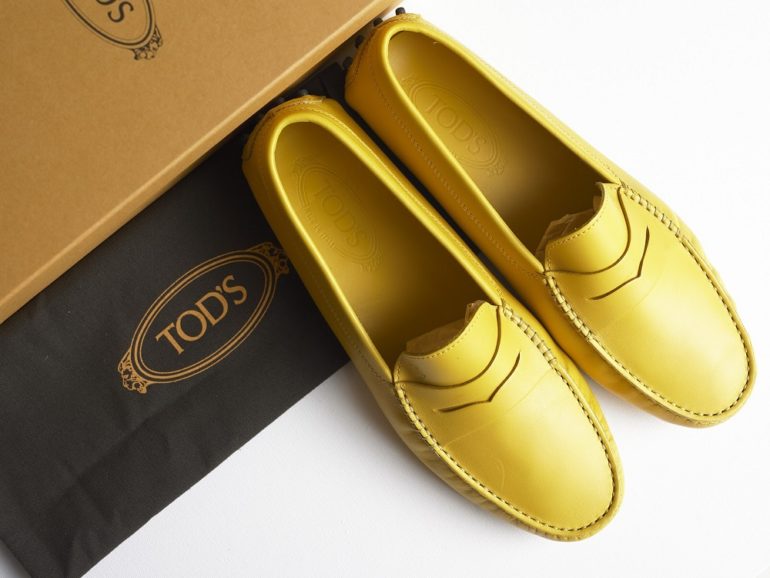
    Luxury fashion retailer Tod’s says Greater China sales rose 3.2 per cent last year, to reach €218.7 million. Releasing annual sales results, the Italian-based company said Greater China sales growth accelerated during the fourth quarter, especially on the mainland which now accounts for 60 per cent of its Asian turnover. Hong Kong and Macau also performed well, although the company did not disclose detailed figures for the two territories.

    Tod’s consolidated global sales reach €958.2 million at constant exchange rates, which was essentially the same as for 2017. Tod’s and Roger Vivier were affected by currency fluctuations.

    Retail sales reached €622.3 million, with wholesale revenue comprising the rest. However same-store sales fell by 3 per cent, due to declines across Europe which erased the China growth. In Italy, consumers were spooked by political and economic uncertainties and greater Europe by lower sales to tourists.

    “Last year’s sales results were substantially in line with our expectations, despite the growing international economic and political uncertainties,” said chairman and CEO Diego Della Valle.

    By label, Hogan sales rose 1.8 per cent, Tod’s and Roger Vivier held steady and Fay slipped 3.4 per cent.

  • Low export numbers put Hyundai profit in the red

    Low export numbers put Hyundai profit in the red

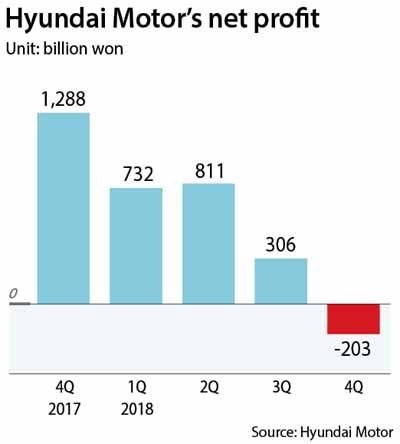
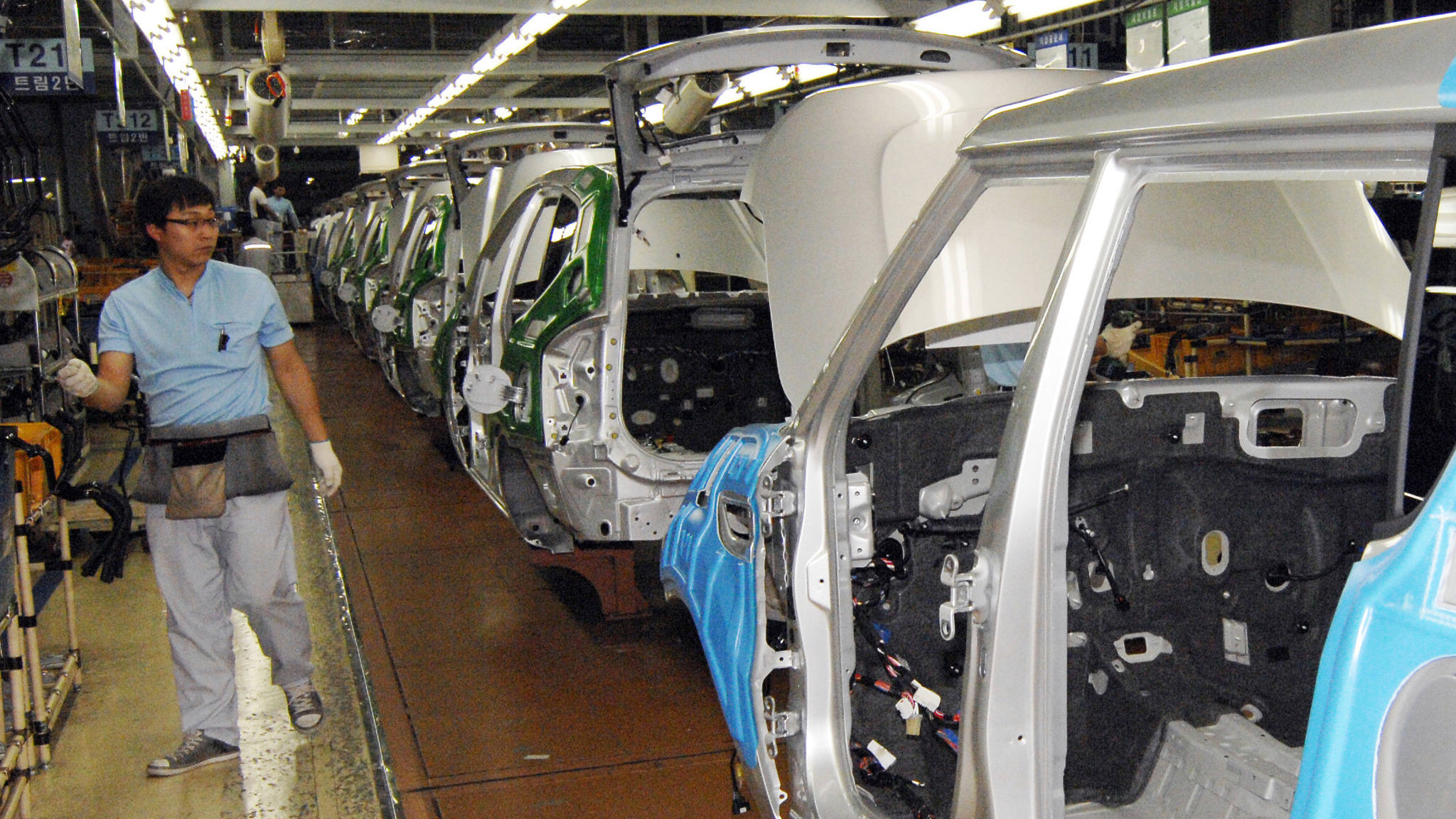
    Hyundai Motor swung to a net loss in the fourth quarter last year, largely due to the strength of the won over the U.S. dollar and weak global sales. It is the worst quarterly earnings reported since 2010, when the company first started posting earnings based on the International Financial Reporting Standards. Korea’s No. 1 automaker by sales on Thursday posted a net loss of 203.3 billion won ($180 million) for the quarter that ended December, a considerable drop from the 1.29 trillion won net profit inked a year earlier.

    The company cited weak earnings from its affiliated locomotive maker Hyundai Rotem, unfavorable currency rates and the sluggish growth of the global automotive industry as major reasons that pulled down earnings in the fourth quarter.

    It added that the cost of its investment into developing futuristic cars was also reflected.

    Hyundai already surprised investors when it posted 306 billion won in net profit in the third quarter, a 67.4 percent year-on-year drop. At the time, the company blamed one-off costs of airbags, engine quality control and marketing activities as well as currency rates to explain its losses and said the fourth quarter would be a better quarter.

    Following the two bad quarters, the carmaker’s annual net profit also dropped to a record low since 2010 – 1.645 trillion won last year, less than half of 2017’s 4.546 trillion won. In 2012, its annual net profit exceeded 9.056 trillion won.

    Choi Byung-chul, chief financial officer at Hyundai Motor, however, said the automaker was able to ramp up automotive sales in the fourth quarter thanks to newly-released SUVs and that the company’s performance could bounce back with several new car launches scheduled this year.

    According to the earnings report, revenue from the automotive business increased by 9.3 percent on year to 20,399 billion won in the fourth quarter. Operating income also jumped up 556.7 percent year on year to 463 billion won for automotives.

    The most recently launched Palisade SUV has been well received by Korean consumers after its launch last month, and a Hyundai Motor spokesperson said it is considering expanding production of the SUV in accordance with the demand. The carmaker has taken orders for 30,000 Palisades so far, according to Koo Za-yong, head of investor relations at Hyundai Motor.

    “Growth of the global automotive market is expected to slow down, but we will strengthen our brand competitiveness by launching cars in segments [that Hyundai had little presence in],” said Koo during a conference call with analysts on Thursday.

    Highly anticipated Hyundai cars this year include a new Sonata sedan and a premium SUV GV80 branded under Genesis.

    Hyundai plans to sell a total of 4.68 million cars this year by selling 712,000 units domestically and 3.97 million units abroad. Last year, the company sold 4.59 million cars at home and abroad, a 1.8 percent increase year on year.

    The automaker commented on its governance reform plans during the conference call as well. It plans to complete reforms this year to break the cross-shareholding structure between affiliates and improve shareholder returns. Last year, its attempt to reform its governance structure failed after facing a series of complaints from U.S. activist hedge fund Elliott Management.

  • Reliance Retail Q3 revenue up 89.3 percent

    Reliance Retail Q3 revenue up 89.3 percent

    Healthy festive season sales and new store openings led Reliance Industries’ organised retail business — Reliance Retail — to report a 89.3 per cent rise in its revenue for the third quarter of 2018-19. The firm’s revenue figure was disclosed under the Reliance Industries (RIL)’s third quarter results, on Thursday. Accordingly, the firm’s revenue for 3Q FY19 grew by 89.3 per cent to Rs 35,577 crore from Rs 18,798 crore reported for the corresponding quarter previous year.

    The company’s Earnings Before Interest and Taxes (EBIT) rose 210.5 percent on a year-on-year (Y-o-Y) basis to Rs 1,512 crore from Rs 487 crore demonstrating strong operating profit during the quarter.

    In addition, EBIT margin for the segment improved by 160 basis points to 4.2 percent reflecting scale benefits. Retail now has 9,907 stores with a reach across more than 6,400 towns and cities

  • Mainland China, US and Japan fuel I.T Group sales growth

    Mainland China, US and Japan fuel I.T Group sales growth

    I.T Group sales slipped in the company’s home market, but the fashion retailer is achieving high growth in Mainland China, the US and Japan. Unaudited sales data for the three months to November show an 8.5 per cent year-on-year improvement in Japan and the US and 6.8 per cent growth on the mainland. Hong Kong and Macau sales slipped by 1.8 per cent in the same period.

    Figures for the nine months to November are even better in the US and Japan, up 11.1 per cent, while sales growth in the home market reached 4.8 per cent and on the mainland 1 per cent.

    I.T Group operates its own brands, including Chocoolate and 5cm, concept stores Izzue and Double-Park; international brands it has local licences for including Kurt Geiger and Camper; and A Bathing Ape, which the company rescued from Japanese owners in 2011.

    Chairman Sham Kar Wai said “complex macroeconomic conditions” affected the business in all three regions during the third quarter.

    “Our Hong Kong and Macau operations registered negative same-store sales growth as a result of multiple typhoons, and weaker consumption appetite during the period. In contrast, our Mainland China business delivered positive same-store sales growth, and our Japan and  the US regions continued to progress on a positive trend.”

    He said the group continued to execute measures to safeguard its gross margin, including holding back discounting.

    “However, enhancements to gross margin was overshadowed by the negative impact of the depreciation of currencies of our merchandise purchase. As a result, gross margin decreased during the period.”

    Sham Kar Wai said the company has been even more cautious about the overall operating environment over the last few months, as the recent escalation of trade dispute between Mainland China and the US has cast “greater uncertainties on the future economic outlook”. “Moreover, the warm weather in Hong Kong and Macau may further weigh negatively on the consumer spending momentum across the region.”

  • Supermarket, apparel sales not looking good in Japan

    Supermarket, apparel sales not looking good in Japan

    Japanese supermarket sales edged down 0.2 per cent in a third consecutive year of declines, according to figures released by an industrial body this week showing last year’s financial performance. The data for last year shows sluggish consumption regardless of the country’s current period of economic growth. Observers have attributed the slump to a low demand for apparel in supermarkets relative to stronger sales in food.

    Apparel sales fell 5.3 per cent, the 27th straight year of declines, influenced by the warm winter and increased competition with retailers online. Food, by comparison, saw 0.4 per cent higher sales with an uptick in prices for vegetables and sweltering summer temperatures.

    While total sales rose 0.5 per cent to ¥12.99 trillion ($118.71 billion) last year, they still fell short of the hoped-for ¥13 trillion mark for the second year in a row.

    “Spending is weak as a deflationary mindset is still deeply rooted among consumers”, said Atsushi Inoue, a senior official of the Japan Chain Store Association.

  • Boom abroad for Hyundai Mobis high-tech car parts

    Boom abroad for Hyundai Mobis high-tech car parts

    Hyundai Mobis said Tuesday it logged $1.7 billion worth of orders for high-tech automotive parts from non-Korean customers last year, setting a new record for overseas sales. High-tech parts include sensors, display and lamps used for self-driving and electric cars. Last year’s figure is a 40 percent jump from $1.2 billion worth of orders in 2017. The parts company has been rapidly expanding its global presence over the years. Orders for high-tech parts from overseas customers totaled just $500 million in 2015.

    The Hyundai affiliate said the record-breaking result is largely due to increasing demand from overseas electric vehicle companies and its focus on developing future car technologies.

    According to Mobis, it received nearly $1 billion worth orders, 60 percent of its total overseas orders, from electric vehicle companies in North America, Europe and China.

    Many electric car companies are start-ups. A Mobis spokesperson said companies at this stage of development tend to be more aggressive when it comes to investment in technology.

    Recently, Mobis signed a deal to supply steering wheel-mounted displays and smart lamps to electric car companies. The products have yet to be commercialized.

    Steering wheel-mounted displays are fit in the center of the wheel.

    Smart lamps will be used for communicating with pedestrians or other cars through the display of light pattern messages.

    The parts maker also signed a contract to supply lateral radars to a North American company. This type of radar extends the sensing coverage of autonomous vehicles.

    The company said it will continue to expand sales of high value-added electronic parts this year as global automakers increasingly rely on digital features to differentiate their products.

  • Hugo Boss Asia-Pacific boosted sales

    Hugo Boss Asia-Pacific boosted sales

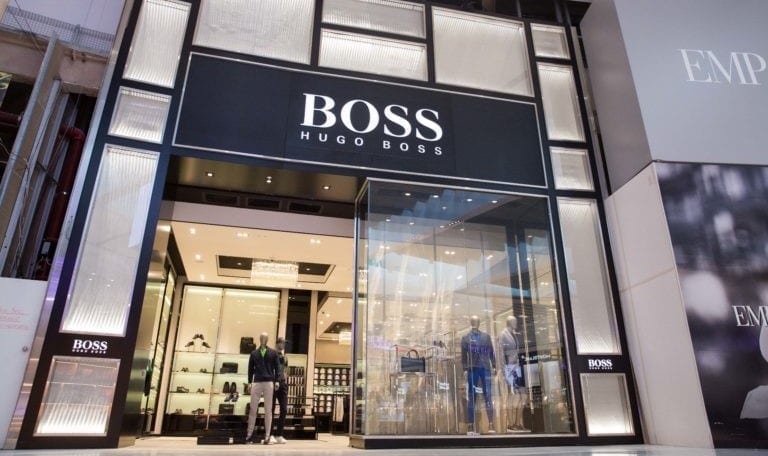
    German menswear retailer Hugo Boss has seen sales growth accelerate in the fourth quarter of 2018, driven by Asia. Comparable-store sales rose 4 per cent compared to the previous corresponding period and online sales rose 37 per cent, marking the fifth consecutive quarter of double-digit e-commerce sales growth. Group sales also grew 6 per cent in the fourth quarter, adjusted for currency differences, to €783 million – compared to €735 million in the previous corresponding period.

    On a comparable-store basis, Asia Pacific was the fastest growing region for the brand, with China achieving high single-digit currency-adjusted store-sales growth for the period.

    Europe and the Americas saw comparable-store sales growth in the mid-single-digit and low-single-digit rates respectively, while sales in the business’ wholesale division increased 15 per cent.

    The brand issued a preliminary full-year total sales figure of €2.79 billion for 2018 – an increase of 2 per cent compared to 2017 – with the “dynamic growth” of the brand’s retail business seen as the key contributor.

    Hugo Boss expects operating income to remain flat at approximately €491 million – the same figure seen in 2017.

    “We look back on a successful 2018. We increased our pace of growth and achieved our full-year targets, supported by a very good fourth quarter,” Hugo Boss CEO Mark Langer said.

    The brand is to focus on sustainable growth and profitability this year, according to Langer, who notes that the new year will be focused on the execution of the business plan until 2020.

    “We will personalise our offerings even more and accelerate important business processes. In doing so, we drive brand desirability and set an important milestone for achieving our mid-term targets,” Langer said.

  • Vietnam liquor maker makes a loss, 4 years in a row

    Vietnam liquor maker makes a loss, 4 years in a row

    Nation’s leading liquor maker Halico has reported a loss of VND75 billion ($3.22 million) for 2018. With Vietnamese consumers moving towards foreign brands, the 120-year-old liquor maker, in which Vietnam’s second biggest brewery Habeco has 54.29 percent ownership and British multinational Diageo holds a 45.5 percent stake, Halico has reported losses for the fourth year in a row.

    It reported a loss of over VND20 billion ($859,780) in the fourth quarter of 2018, raising the total annual loss to VND75 billion ($3.22 million).

    In its annual statement for 2018, Halico’s board expressed doubts that the company can continue operating, with Vietnamese consumer tastes shifting to imported beer and foreign alcoholic products. It conceded that it has failed to capture younger consumer segments.

    In addition, Diageo has been unable to negotiate any substantial supply contracts with foreign partners, so the company has not been able to do well in exports.

    Furthermore, management costs have risen to over 60 percent of revenue. Despite a 30 percent rise in sales in 2018 (VND155 billion or $6.66 million), the difference was not able to compensate for expenses incurred.

    The Hanoi Liquor Joint Stock Company was originally a Hanoi winery, founded in 1898 and equitized in 2004 with initial charter capital of nearly VND50 billion ($2.15 million).

    In early 2011, Diageo Plc, a British multinational alcoholic beverages company, acquired an 18.67 percent stake in Halico for a total of VND800 billion ($34.4 million) from investment fund VinaCapital.

    Diageo is the world’s biggest liquor company, owning famous brands such as Johnnie Walker, Bailey and Smirnoff. It bought another 26.83 percent stake in 2012, hoping to cash in on the growing consumer market.

    Halico’s accumulated losses at the end of last year topped VND330 billion ($14.19 million), 1.6 times higher than its current charter capital at VND200 billion ($8.6 million).

  • Air purifier sales up 414 % after dust attack in Korea

    Air purifier sales up 414 % after dust attack in Korea

    As fine dust blows into Korea, demand for products that defend against pollution spike. According to an Emart study released Friday, mask sales between Jan. 10 and Jan. 16 surged 458 percent from the same period a year earlier while the sales of air purifiers are up 414 percent. Usually, the products are in high demand around late February and in March, when the yellow dust from the northern deserts descend on the Korean Peninsula. But sales this year are already 95 percent of the total usually reported in March.

    Sales of consumer appliances that clean clothing, such as LG’s Styler clothes closest, are up 186 percent compared to the same period a year ago, according to the retailer. Sales of dryers have increased 67 percent as the worsening pollution has made it difficult to dry laundry outdoors.

    Emart said it will be holding a special sale on fine-dust countering goods through Jan. 30.

    It plans to offer discounts on the bulk purchase of masks: 10 percent when buying two and 30 percent when buying three at a time.

    The Samsung Electronics air purifier with model number AX6ON5081 WDD will be sold at 379,000 won ($338), a 90,000 won discount, while Coway’s AP-1818C model will be sold at 439,000 won, a 60,000 won discount. The purchase of Coway’s air purifier also comes with 85,000 won worth of additional filters and 50,000 won in gift certificates.

    The retailer is also providing discounts on vacuum cleaners, including Dyson’s V10 Fluffy, the LG Electronics A9, which also has a mopping feature, Samsung’s VS8ON8062KKS and Tepal’s Air Force 360.

    Online shopping malls are ramping up their marketing of fine dust-related products. Coupang has been promoting 650,000 fine-dust products since Jan. 10.

    An exclusive study by the JoongAng Ilbo found that much of the recent air pollution is coming from China.

    The Korean Meteorological Administration is forecasting a return of high fine-dust readings. It said the level of concentration of pollutants started rising on Friday and will continue to increase today.

    When the concentration is at 15 micrograms per square meter or lower, the government rates the air quality as “good.” When it is between 16 and 35, it is deemed “normal.” When the figure is between 36 and 75, the government rates the air quality as “bad.”

    On Jan. 14, the fine-dust concentrations in the greater Seoul area peaked at 122 micrograms per square meter, the highest level since related data was first collected in 2015.

    That was two days after air pollution in major areas in China, including Beijing, Tianjin, Tangshan and Hubei Province, peaked.

    The Korean Meteorological Administration forecasts air pollution levels dropping from Sunday afternoon.

    Kweather, a private weather company, has advised people to stay indoors over the weekend and wear a protective mask when having to go outside.

  • Tiffany sales reported drops

    Tiffany sales reported drops

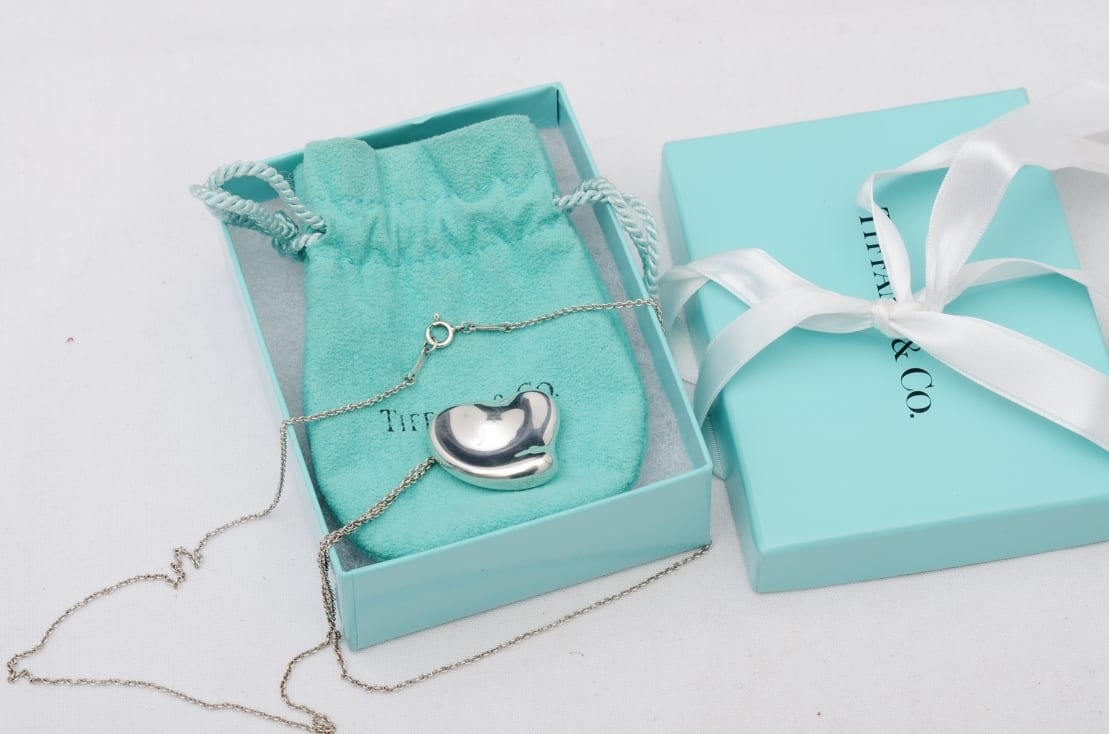
    US jewellery retailer Tiffany & Co has reported a 1 per cent drop in worldwide net sales and 2 per cent drop in comparable sales for the two months to December 31. While Tiffany sales grew strongly in China over the holiday period, softening in other markets that are more dependent on foreign tourist spending led total net sales across Asia Pacific to fall 3 per cent from the prior corresponding period to US$226 million. Comparable sales in the region fell 4 per cent.

    “With continued strong sales growth in mainland China (by a double-digit percentage), solid results in Japan and healthy growth in e-commerce sales, overall holiday sales results came in short of our expectations which had called for modest year-over-year growth,” Tiffany CEO Alessandro Bogliolo said.

    “We attribute the difference partly to lower sales to foreign (primarily Chinese) tourists globally, and to softening demand attributed to local customers in the Americas and Europe, which we believe may have been influenced more than expected by external events, uncertainties and market volatilities.”

    Total sales across the Americas declined 1 per cent to US$514 million, while Europe dropped 4 per cent to US$132 million.

    Japan, however, saw positive growth over the period of 4 per cent – increasing to US$150 million, attributed to higher spending by local customers.

    Based on these results, the business now expects worldwide net sales for fiscal 2018 will increase by 6 to 7 per cent compared to the prior year, as opposed to the high-single digits previously expected.

    “Now the focus is to grow to new heights,” Bogliolo said. “To this purpose, we will continue to pursue the six key strategic priorities we introduced earlier in 2018 … which will require our ongoing effort and commitment for years to come.

    “We acknowledge that external pressures, difficult year-over-year sales comparisons and annualised internal spending are expected to have some negative effects on fiscal 2019 results, mostly in the first half of the year, but we believe Tiffany is on a solid path for improved sales, margins, earnings and cash flow generation over the long term.”

  • Vans, The North Face boost parents sales

    Vans, The North Face boost parents sales

    VF Brands has posted strong third-quarter results, with balanced growth across its entire portfolio. The US-listed apparel company, which owns and operates Vans, The North Face, Timberland, Wrangler and Lee, among others, says sales grew 8 per cent in the third quarter, to US$3.9 billion. Its share price soared 12.39 per cent after the announcement on Friday (US time) to $82.47.

    Vans sales soared 25 per cent and The North Face’s, by 14 per cent.

    “VF’s third-quarter results were fuelled by strong growth in our largest brands and balanced growth across the core dimensions of our portfolio,” said VF Brands president, chairman and CEO Steve Rendle.

    Revenue from VF’s ‘active’ segment, which includes brands such as Vans and JanSport, increased 16 per cent, while revenue from its ‘outdoor’ segment, which includes brands such as The North Face and Timberland, increased 11 per cent.

    VF reported $592 million in operating income, 22 per cent up on the prior year. Net income for the period was $463 million, a 613 per cent increase over the $90 million loss posted in the same period last year.

    “Based on the strength of our third-quarter performance and the growth trajectory we see for the remainder of fiscal 2019, we are again increasing our full year outlook,” Rendle said.

    The business expects revenue from its ‘work’ segment, which includes brands such as Dickies, is expected to increase 39 per cent, while revenue from its ‘active’ segment is expected to increase 16 per cent and revenue from its ‘outdoor’ segment is expected to grow 8 per cent.

    VF expects revenue from its ‘jeans’ segment, which includes brands such as Wrangler and Lee, to decline 3 per cent, while direct-to-consumer revenue is expected to increase 13 per cent, and digital revenue is set to increase by more than 30 per cent.

  • Shilla Duty Free recruits Asia’s top social media influencers to pitch K-beauty

    Shilla Duty Free recruits Asia’s top social media influencers to pitch K-beauty

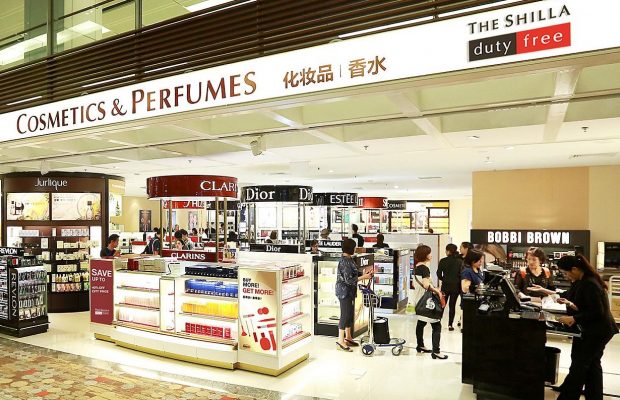
    South Korean Hotel Shilla has recruited five social media influencers across Asian countries to hype K-beauty products through Shilla Duty Free stores. The company said that it will work with top influencers from China, Japan, Vietnam, Malaysia, and Thailand on its “Beauty&You” project to guide customers on how to shop at travel retail online stores via social media platforms.

    Social media influencers with access to a large audience can endorse opinions about products and services, which eventually leads to promote sales.

    Those influencers who have partnered up with Shilla Duty Free reportedly have more than 1.7 million followers worldwide in total. They will work with the travel retailer to guide customers on how to use Shilla Duty Free online store as well as show the latest makeup trends using Korean cosmetics products via their social media channels.

    The company expects its partnership with the top influencers to bolster its brand awareness across the world on top of expanding its share in online travel retail market.

    Currently, its online duty-free shop is available in four languages – Korean, Chinese, Japanese, and English. It also has offline outlets overseas in international airports of Singapore, Hong Kong, and Macao as well as downtown Tokyo and Phuket.

  • Central Retail to double online after Shopee acquisition

    Central Retail to double online after Shopee acquisition

    Central Retail Corporation has announced plans to to double its online sales to THB10 billion (US$315.76 million) this year. Central’s CEO Nicolo Galante said the firm intends to lead in the omni-channel e-commerce business, overtaking Shopee. “Non-food businesses globally have been disrupted by digital transformation and are struggling against the likes of Amazon and Alibaba. As the biggest non-food player in Thailand, Central Retail pledges to move aggressively this year to tap into digital transformation,” said Galante in an interview.

    “We can be for Thailand what Amazon is in Western countries and Alibaba is in China. Everywhere in the world, the No.1 player in e-commerce and digital is always a new-economy company, but in Thailand it could be a company that is 71 years old.”

    In this regard, Central intends to launch an omnichannel platform of services distinctive from those of Lazada, Alibaba and Shopee, whereby the company will retail products and services both at physical stores and online. Central will assist partner brands who lack the resources to build their presence in the marketplace.

    It will launch the first such marketplaces for Central Department Store, PowerBuy and SuperSports within the next six months.

    “We will launch our omnichannel marketplaces for our retail business,” said Galante. “If there are some problems with the products, the customer can return the products to the store, get advice and other services at the store.”

    For apparel, Central will launch launch a “Reserve and Collect” service that allows buyers to reserve two or more sizes or colours of products online and choose which to buy after trying them in-store.

    The move is part of the firm’s considerable investment in technology, teams and new services in the hopes of taking the lead in the e-commerce business by 2021.

  • Indonesia Posts Biggest Trade Gap in 2018

    Indonesia Posts Biggest Trade Gap in 2018

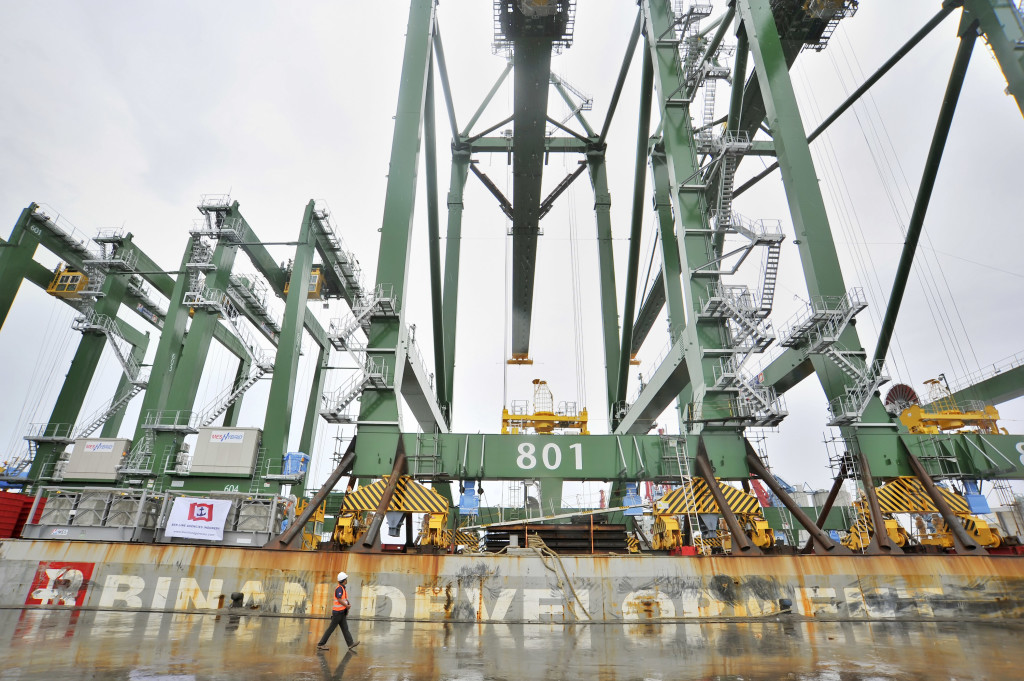
    Indonesia posted a wider than expected trade deficit in December, bringing the gap for 2018 to the largest ever, the Central Statistics Agency, or BPS, said on Tuesday. December’s trade deficit was $1.10 billion, in a third consecutive month where the gap was wider than market expectations. A Reuters poll had expected a deficit of $930 million. Southeast Asia’s largest economy had a deficit of $8.57 billion in 2018, the widest ever, a stark contrast to its $11.84 billion surplus in 2017, BPS chief Suhariyanto said.

    Last year was challenging because exports had slowed at a time when imports surged due to a recovering domestic economy, said Josua Pardede, an economist at Bank Permata in Jakarta. This year would probably be equally challenging, he said.

    “Global economic growth is stagnating. Growth in our major trading partners such as China, the United States, Japan and Europe is slowing. If we can’t find new destinations for our products, export growth could slow further,” Josua said, noting that falling oil prices could cool down imports.

    Economists also warned that the trade data could mean Indonesia’s current-account deficit in the final quarter of 2018 was also wider than expected.

    Bank Indonesia Governor Perry Warjiyo previously said the current-account gap in the fourth quarter was expected at more than 3 percent of gross domestic product, though the full-year gap was seen at about 3 percent.

    The authorities issued a slew of measures to control imports last year, including mandating wider use of biodiesel, raising import tax and delaying big, import-heavy infrastructure projects.

    The central bank also raised interest rates six times by a total of 175 basis points last year to try to bring the current-account gap down, and Perry said the deficit in 2019 was expected at 2.5 percent.

    Fakhrul Fulvian, Trimegah Sekuritas economist, said December trade data proved that Indonesia may need to slow its GDP expansion further to “bring back the balance” and improve the current-account deficit.

    In December, exports dropped 4.62 percent to $14.18 billion on a yearly basis, a second month of contraction, compared with the poll estimate of 1.81 percent increase, largely because of a slump in shipments of mining products.

    Exports to China, Indonesia’s largest trading partner, also fell in December mostly because of a decline in coal and steel sales.

    Meanwhile, December imports were worth $15.28 billion, 1.16 percent up from a year ago, but slower than the forecast of 6.6 percent.