Tag: Sales

  • Alibaba’s second-quarter revenue jumps high

    Alibaba’s second-quarter revenue jumps high

    Alibaba’s second-quarter revenue grew 54 per cent year on year, reaching RMB 85.1 billion ($US12.3 billion). Net income attributable to shareholders was RMB 20 billion ($2.9 billion), a 13 per cent year-on-year increase. “Alibaba had another strong quarter of rapid growth,” said Alibaba Group CEO Daniel Zhang.

    “Annual active customers increased by 25 million to reach 601 million in the year ended September 30.”

    “Annual active customers increased by 25 million to reach 601 million in the year ended September 30.”

    Alibaba’s cloud-computing arm saw 90 per cent year-on-year growth to RMB 5.6 billion, launching more than 600 products and features during the quarter ranging from big data analytics, AI application innovation, security and internet-of-things enhancements.

    The business’s online Tmall operations saw a 30 per cent increase in gross merchandise value, driven by improved conversion rates and increased traffic in the fast-moving consumer goods, home furnishings and apparel categories.

    Alibaba’s New Retail strategy has continued to pay off across its Hema supermarkets network, with stores that have been in operation for at least 1.5 years seeing online sales account for 60 per cent of turnover for the September quarter. By the end of the quarter, 77 Hema stores had been opened in China.

    The group has dropped its forecast revenue guidance for the full year by 4 to 6 per cent to between RMB 375 billion and RMB 383 billion. As it stands, the group expects revenue to grow by 54 to 56 per cent.

  • Parkson Retail Asia continues drowning

    Parkson Retail Asia continues drowning

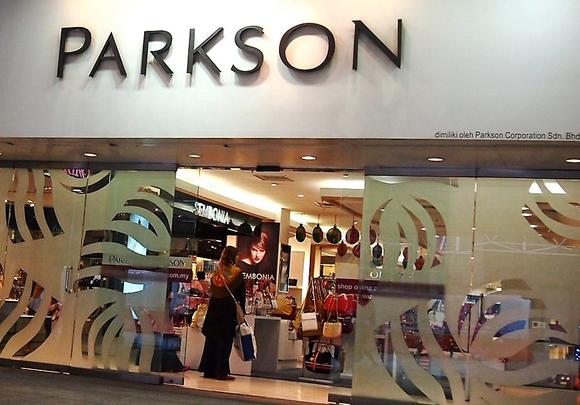
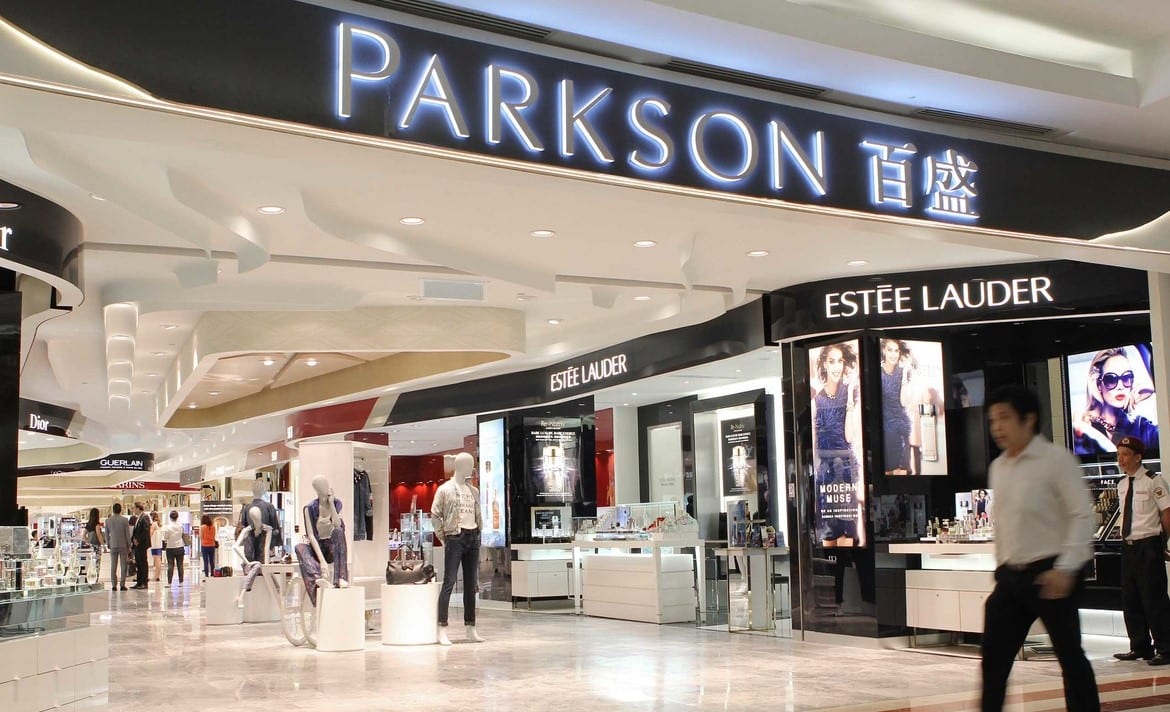
    Struggling department store operator Parkson Retail Asia has hinted it may close further stores as it posted yet another loss. For the first quarter of the new trading year, the Singapore headquartered company lost S$11.1 million, a slight improvement on the $12.9 million of a year ago.

    Last full trading year, the company lost $40.1 million for the full year.

    In a statement, the company said it would will continue to prioritise on enhancing product offerings “as well as on optimising both our operational efficiency and network of stores,” suggesting further exits, most likely in Vietnam where it has just five stores remaining from a peak of 10 and continues to lose money.

    Parkson credited the reduced loss on an improved performance of the Malaysian and Indonesian store networks, together with the effect of the closure of seven loss-making stores last financial year.

    Group sales rose 1.7 per cent to $92.6 million.

    On Friday the company announced the immediate resignation of its CFO Chia Cang Yang, with immediate effect. CEO Michael Remsen will oversee financial matters until a replacement is recruited.

  • Latest iPhone models sell well in first week out in Korea

    Latest iPhone models sell well in first week out in Korea

    After a week of presales, Apple’s new series of iPhones officially rolled out in the Korean market Friday. The response for the three phones – iPhone XS, XS Max, and the budget XR model – has been good.  According to local mobile carriers, the trio attracted the same number of or slightly more preorders than the previous iPhone generation: the iPhone X and the iPhone 8.

    “Overall, the new phones are generating more interest than the previous series,” a spokesperson from KT said. “Though the iPhone XS is getting more attention than the XR.”

    Presales data from Korea’s largest mobile carrier SK Telecom released Friday shows that 62 percent of the preorders were for iPhone XS, while 26 percent were for iPhone XS Max and 12 percent for the iPhone XR.

    The most popular color option was gold for iPhone XS and XS Max, followed by space gray and silver. For iPhone XR, black and white models led.

    The new phones are big with the young. About 30 percent of the early buyers were women in their 20s, according to SK Telecom. People in their 20s including men accounted for half of all customers making early reservations for the iPhones.

    “Younger people seem to be more interested in buying the new iPhones,” SK Telecom said in statement.

    As for storage, the 256 gigabyte (GB) option was the most popular for both iPhone XS and iPhone XS Max. Considering users have to pay over 1.8 million won ($1,611) for the 512GB option, many customers favored the slightly less pricey option. For iPhone XR, the mid-priced 128GB option was more popular than units with 64GB or 256GB of storage.

    It will take time to judge the true demand for the new phones from Apple, and questions are being raised as to whether the brand is up against the limits of efficiency gains and losing momentum.

    Apple posted $14.1 billion in net profit in the third quarter, up 32 percent year on year. Investors focused on weak unit sales and weaker-than-expected revenue guidance for the fourth quarter. Apple said it sold 46.89 million iPhones in the third quarter, a mere 0.4 percent increase year on year and below analyst expectations of 47.5 million unit sales. The revenue increase came from higher pricing.

    The U.S. phone maker also announced that starting next year it will not be reporting a breakdown of sales by product line. Luca Maestri, chief financial officer at Apple, said in a conference call Thursday that unit sales are no longer a good measure of the company’s performance.

    Apple stock fell by as much as 7.4 percent in aftermarket trading.

  • Amorepacific profits slump

    Amorepacific profits slump

    Amorepacific Group announced lower-than-expected results for the third quarter on Monday with operating profits dropping 36 percent year on year. The fall comes as a stark contrast to rival LG Household & Health Care, which saw operating profits in its beauty business soar 30 percent during the same period.

    Amorepacific Group’s operating profit between July and September was 84.7 billion won ($74.2 million), down 36 percent compared to the same period last year. Its revenue rose 3.1 percent year on year to 1.46 trillion won. This was lower than the three-month analyst consensus of 1.56 trillion won in quarterly revenue and 166.9 billion won in operating profits, compiled by stock information provider FnGuide.

    The company explained in a statement that the main reason for the low profitability was the increase of costs in human resources and marketing expenditure.

    “Despite growing competition in the beauty market in and outside the country, Amorepacific continued investments to enforce brand competence and secure future growth engines,” the company said in a statement.

    The group’s main affiliate, also called Amorepacific, saw sales increase 6 percent year on year to 1.28 trillion won in the third quarter. Amorepacific’s sales success was thanks to the popularity of its brands, including Sulwhasoo, Hera, Iope and Laneige, with tourists and duty-free shoppers. However, the sales increase was nullified by a rise in costs, resulting in a sharp 24 percent fall in operating profit to 76.5 billion won.

    The results were grim for the smaller single-brand stores under the group as well: Etude House remained in the red while revenue dropped 23 percent year on year. Innisfree sales slightly increased by 3 percent, but operating profit steeply dropped 29 percent year on year. Espoir saw operating losses once again while revenue slightly rose by 1 percent.

    The good news for Amorepacific was the 36 percent year-on-year rise in revenue in the United States, thanks to strong performances from Laneige and Innisfree. Although its foothold there is still small compared to Asia, the company has been making efforts to diversify its global business, which used to heavily rely on China.

    LG Household & Health Care, on the other hand, recorded its highest-ever profit for the 54th quarter in a row. Between July and September, revenue generated from its three business sectors – beauty, daily necessities and beverages – was 1.73 trillion won, up 10.6 percent from the same period last year, while operating profit was up 9.8 percent to 277.5 billion won.

    The year-on-year jump was even higher in its beauty business: operating profit soared 30.6 percent to 184 billion won while revenue increased 23.5 percent to 954.2 billion won in the year’s third quarter. Its high-priced luxury brands, which were relatively unaffected by the Thaad row, were once again huge contributors.

    “With its high brand loyalty, The History of Whoo hit a quarterly sales record once again,” the company said.

  • Nestle Malaysia earnings up 15.7% in Q3, declares 70 sen dividend

    Nestle Malaysia earnings up 15.7% in Q3, declares 70 sen dividend

    Nestle (Malaysia) Bhd’s net profit for the third quarter ended September 30, 2018 rose 15.7% to RM137.69 million from RM119.01 million a year ago, underpinned by higher sales on the back of strong marketing and promotional activities.

    Revenue for the quarter under review increased 8.3% to RM1.43 billion from RM1.32 billion in the same quarter last year, driven by stronger domestic and export sales as well as the zero-rating of the Goods and Services Tax (GST), which boosted consumer spending.

    Nestle has proposed to declare an interim dividend of 70 sen per share for the quarter under review.

    For the cumulative period of nine months, the group’s net profit grew 4.7% to RM535.06 million from RM511.14 million, while revenue expanded 4.8% to RM4.17 billion from RM3.98 billion.

    “Against the backdrop of a more encouraging year for the Malaysian economy, we remain committed to our long-term strategy to ‘Fuel the Growth’ via our innovative drive and enhancing our strong brand portfolio,” Nestle said on its prospects.

    “We are confident that our investments, including the new Nestlé distribution centre, will enable us to maintain our solid growth momentum. In line with this commitment, the group has recently announced the RM100 million investment in Milo manufacturing making the Chembong factory the largest Milo manufacturing centre of excellence in the world. The company strives to improve efficiencies across our supply chain and reinvest savings to achieve sustainable and profitable growth,” it added.

    Nestle’s shares dipped RM1.50 or 1% to close at RM143.50 on 111,600 shares traded.

  • aCommerce Launches BrandIQ to Help Brands grow sales

    aCommerce Launches BrandIQ to Help Brands grow sales

    Southeast Asia’s leading brand ecommerce enabler, aCommerce, introduces BrandIQ, the company’s new ecommerce measurement and analytics suite. BrandIQ will enable brands to understand and visualize more than 11 million SKUs across 600 brands and 160,000 sellers online across Southeast Asia, enabling global consumer brands and retailers to grow online sales and market share.

    BrandIQ is envisioned to provide brands in Southeast Asia with measurable data and actionable insights for their online commerce strategy. Using sophisticated ecommerce data collection and proprietary machine learning technologies, BrandIQ will empower brands to monitor online merchandise, analyze competitors, offer better promotions, understand consumer sentiments, and improve the overall ecommerce experience.

    “We are now entering an era where usage of survey data is not sufficient to succeed in Southeast Asia’s growing ecommerce landscape,” said Poonpat Wattanavinit, Regional Director of Product, aCommerce. “BrandIQ is a new technology platform that collects data from all the leading online marketplaces to offer brands real-time insights. Through BrandIQ, brands will be able to benchmark their own performance on marketplaces over time as well as compare against competitors in terms of online sales and share of digital shelf.”

    As part of the launch, BrandIQ is also rolling out additional services to help brands and consumers engage in a more meaningful and personal way. Brands can now discover brand advocates and generate authentic product reviews, reward and retain them, and grow brand advocacy at scale.

    “For the last five years, aCommerce has helped brands in Southeast Asia overcome ecommerce challenges, including physical infrastructure and distribution barriers,” added Phensiri Sathianvongnusar, Chief Executive Officer, aCommerce Thailand. “Throughout these years, we saw that data and information is incredibly important to operate a business. The launch of BrandIQ comes naturally as a stepping stone for aCommerce to utilize data and further advance the success of our brands, along with the right tools, teams, and mindset throughout their ecommerce journey.”

    BrandIQ kicked off its pilot operations in Thailand last year and since then has expanded its presence across the Southeast Asian region covering six countries, Indonesia, Malaysia, Philippines, Singapore, Thailand, and Vietnam. BrandIQ will continue to expand the service to other Southeast Asian countries and marketplaces as the ecommerce space continues to grow throughout the region.

  • Moncler sales boosted by China market

    Moncler sales boosted by China market

    Asia has proven to be the core driver of Moncler sales growth year to date. The edgy Italian fashion house which specialises in outdoor wear reported a 23 per cent increase in global sales this week in the nine months to September 30, measured in constant currency.

    But Asia and the ‘rest of world’ (which excludes Europe and the Americas) significantly outperformed the brand’s core markets, with sales up 39 per cent.

    And Chinese shoppers – who now account for about one-third of the world’s luxury goods market – are behind the trend, spending up at large in the brand’s new Hong Kong shops and on the mainland.

    “Chinese demand has been very strong in the third quarter, totally in line with the first half,” Moncler COO Luciano Santel said during an analyst conference call after the figures were released.

    Trading during the Golden Week holiday in early October was better than last year, signalling the growth trend will continue, said Moncler CEO Remo Ruffini: “The fourth quarter has just started, but we continued to see very positive signs in all our markets,” he said.

    Global sales topped €872.7 million euros for the nine months.

  • LimeLife acquisition helped boost L’Occitane sales

    LimeLife acquisition helped boost L’Occitane sales

    Hong Kong-listed, Luxembourg-headquartered beauty products retailer L’Occitane has reported healthy sales growth on the back of a key acquisition. Same-store L’Occitane sales in Hong Kong rose 18.6 per cent on a currency-neutral basis in the six months to September 30, and by 14.1 per cent in Mainland China.

    Chairman Reinold Geiger said the Hong Kong growth was primarily driven by “dynamic” travel retail sales.

    But that was far less dramatic than the 65.8 per cent boom in the US, driven by the LimeLife by Alcone business which became part of L’Occitane in January, and the continued recovery of the core L’Occitane en Provence brand.

    Global group sales rose 8.6 per cent at reported rates and 12.4 per cent at constant exchange rates. After excluding the LimeLife business, like-for-like sales growth rose 4.9 per cent, which was higher than the 3.6 per cent of the first quarter.

    Global L’Occitane sales reached €595.4 million for the six months. It finished the period with 1555 of its own stores.

  • Furla growth report slowing down

    Furla growth report slowing down

    Italian handbag label Furla has posted a 5.8 per cent rise in sales for the first half of the year, down from 23.5 per cent growth during the same period last year.

    Furla sales growth in Asia has similarly slowed, showing a 27 per cent growth in the Asia-Pacific region as opposed to last year’s 63 per cent increase. Furla recently assumed direct control of retail distribution in the greater China region.

    Furla generates 23 per cent of its sales in Japan against 7 per cent in the US. Revenue growth for Japan was 9.5 per cent, while growth for the US market was 24.2 per cent. E-commerce sales are up 24.1 per cent.

    Furla’s GM Alberto Camerlengo said: “For us, 2018 is a year of consolidation.” He described the firm’s plans to strengthen its delivery organisation via the adoption of a more advanced IT system as better suited to the company’s increased size.

  • Samsung sets quarterly profit, revenue records

    Samsung sets quarterly profit, revenue records

    Samsung Electronics once again set quarterly records for profit and revenue thanks to high demand for the semiconductor chips needed to propel today’s key technologies.

    However, Korea’s biggest company is facing challenges as its current portfolio is heavily dependent on computer chip sales. Its smartphone business is struggling as sales of its flagship Galaxy S9 smartphone sales failed to reach expectations.

    According to Samsung Electronics’ guidance report on third-quarter performance, released on Friday, the company’s revenue grew 4.7 percent compared to a year ago to 65 trillion won ($57.5 billion) while its operating profit expanded by 20.4 percent to 17.5 trillion won. It is a new record for both quarterly revenue and operating profit. The earlier market consensus on Samsung Electronics’ operating profit was between 16.8 trillion won and 17.1 trillion won. Compared to the previous quarter, revenue was up 11.1 percent and operating profit was up 17.7 percent.

    Although the guidance report did not give details on the earning performance of each business, market experts believe the company’s record-breaking performance was due to the company’s semiconductors.

    Brokerage firms estimated that Samsung Electronics made roughly 25 trillion won in revenue in semiconductors in the third quarter, up 24 percent from last year’s 19.9 trillion won.

    The operating profit of the memory business is estimated to have increased by 36 percent to 13 trillion won, which would be an all-time record.

    DRAM revenue is believed to have surged 47 percent year-on-year to around 14 trillion won while NAND flash was up more than 8 percent during the same period to 7 trillion won.

    “The recent starting of additional production line manufacturing DRAM and NAND flash of the company’s memory plant in Pyeongtaek, Gyeonggi, is said to have contributed to the robust sales of the company’s memory chips,” said Doh Hyun-woo, NH Investment & Securities analyst.

    The company’s display business is estimated to have improved sharply in the third quarter as well, contributed by Apple’s release of the latest iPhone, equipped with organic light-emitting diode (OLED) display, in September.

    While the liquid-crystal display (LCD) business revenue is estimated to have dropped 28 percent, OLED business is estimated to have increased 35 percent year-on-year to over 7.5 trillion won. LCD prices have recently been falling on the attacks of low-price competition from Chinese companies. The overall display revenue is estimated to have increased 14 percent to around 9.5 trillion won.

    On the contrary, Samsung’s mobile communication business is believed to have suffered. Sales of the Galaxy S9, which was released in the second quarter, are middling, and the company is believed to have spent a large amount on marketing the Galaxy Note9, which was released in August. This likely had an effect on the company’s operating profit.

    In the third quarter, market analysts believe the mobile business dropped 9 percent to 25 trillion won, while operating profit fell nearly 30 percent year-on-year to 2.3 trillion won compared to the 3.3 trillion won recorded a year ago.

    The company’s dependency on its semiconductor’s business is becoming an increasingly large concern.

    “While the third quarter guidance report is positive in that it exceeds earlier market consensus, heavy dependency on semiconductor performance is a negative [for Samsung Electronics],” said Kim Yang-jae, analyst at KTB Investment & Securities. “[Samsung Electronics] is facing a slowdown on earnings momentum, as DRAM prices has been falling since the fourth quarter.”

    DRAMeXchange, a computer chip market research firm, estimated that DRAM and NAND flash prices will fall in the fourth quarter compared to the third quarter due to difference between supply and demand. When compared to the third quarter, DRAMeXchange projected a 5 percent drop in the fourth quarter, sharper than earlier estimates of a 1 to 3 percent decline.
  • Tesco Lotus Thailand profits down

    Tesco Lotus Thailand profits down

    Falling sales by Tesco Thailand impacted the UK parent company’s first half results released overnight.

    Like-for-like sales across Asia – which also includes the neighbouring Malaysia stores – fell by 4.8 per cent, explained by the company’s decision to exit its unprofitable Tesco Thailand cash-and-carry business.

    But the company’s profit in Asia fell by 29.1 per cent.

    Despite the disappointing numbers, Tesco CEO David Lewis moved to reassure investors that tesco Thailand was still an important focus.

    “In Thailand we’re market leader, it’s still the most profitable part of the group and there’s still significant growth to be had,” he said.

    Tesco reported an operating profit before one-off items of £933 million, which has 24 per cent ahead of the same time last year, but missed analyst expectations of £978 million.

    “I don’t think the market had fully factored in the Asian [business] but we’re really encouraged by the UK,” said Tesco CFO Alan Stewart.

  • H&M India sales jump 49 pc in June-August qtr to Rs 352 crore

    H&M India sales jump 49 pc in June-August qtr to Rs 352 crore

    Swedish fashion retailer Hennes & Mauritz (H&M) posted a 49 percent growth in sales in India to 428 million Swedish Krona (around Rs 352 crore) in June-August quarter of 2018.

    While, for the nine-month period (December 2017 to August 2018) H&M India sales reported a 34 percent growth to 1,124 million Swedish Krona (around Rs 924 crore) including VAT compared to the corresponding period.

    H&M, which follows December-November financial year, has added 7 stores during the last nine months in India, totalling to a network of 34 stores.

    The company had posted sales of 178,817 million Swedish Krona in December-August, H&M said in a nine-month report.

    In the June-August quarter, H&M reported a global sales of 64,800 million Swedish Krona.

    During the quarter, H&M’s online sales increased by 32 percent, it added.

    “The group’s online sales increased by more than 30 percent in the third quarter. Today H&M online is in 47 markets and we are continuing at full speed to roll out online globally to all our existing store markets as well as to other markets,” said H&M CEO Karl-Johan Persson.

    During the three-month period, Germany was the highest contributor with 9,851 million Swedish Krona sales, followed by USA with 6,869 million Swedish Krona sales. H&M operates 458 and 559 stores in Germany and USA, respectively.

    While, China had a sales of 3,225 million Swedish Krona during the June-August quarter of 2018, where it operates 522 stores.

  • H&M sales rise during third quarter, despite logistics hitches

    H&M sales rise during third quarter, despite logistics hitches

    Global H&M sales rose 9 per cent during the third quarter to August 31 as the fast-fashion retailer made the most of a new supply chain system put in place in Europe and North America.

    On a constant-currency basis, sales rose by a more modest 4 per cent.

    According to a brief announcement, which did not include any geographical breakdown of the company’s quarterly performance, sales excluding VAT reached SEK 55.821 billion (US$6.26 billion).

    “The H&M group’s continuous transition, to face the major shift within the industry, has contributed to a gradually improved sales development and increased market share in many markets in the third quarter,” the company said.

    “However, sales and cost development in some of the group’s important markets such as the US, France, Italy and Belgium were in the third quarter considerably affected by the issues that emerged during the implementation of new logistics systems in the spring.”

    The new logistics systems enable a faster and more efficient supply chain as well as a continued integration of store and online.

    A more detailed set of figures is expected with the release of nine-month results on September 27.

  • Samsonite Asia sales experiences positive growth

    Samsonite Asia sales experiences positive growth

    Strong performances throughout Asia helped Samsonite International lift sales by 12.9 per cent in the first half of this year, to US$1.849 billion.

    Samsonite Asia sales across the group’s entire brand portfolio grew 14.4 per cent year on year, behind Latin America’s 17 per cent, but ahead of Europe’s 11.4 per cent.

    Tumi sales rose 16.6 per cent, with Asia the fastest-growing market where sales rose 39.4 per cent. American Tourister sales rose 24.2 per cent.

    Globally, Samsonite’s namesake brand achieved a stunning 50 per cent increase.

    Chairman Tim Parker said the first half of 2018 saw generally better trading conditions and more favourable foreign currency effects globally, which helped the group achieve what was another new record in total sales.

    In Asia, net sales of the American Tourister brand rose by 17.7 per cent during the first half, largely driven by the Cristiano Ronaldo marketing campaign, while the group’s value-conscious, entry-level Kamiliant brand achieved the fastest growth of all of its brands, up 57.5 per cent.

    In Hong Kong, where the company is listed, net sales increased by 28.3 per cent, driven by net sales of the Tumi brand (which included sales to Tumi distributors in some other Asian markets) and by the Samsonite and American Tourister brands. Those brands also drove an 11 per cent increase in sales in Mainland China.

    Sales in Japan, driven by Tumi, American Tourister and Samsonite, grew 18.5 per cent. India was up 17.8 per cent, South Korea by 2 per cent and Australia by 8.7 per cent.

    Group operating profit grew by 24.5 per cent year on year to $201.8 million and adjusted net income by 19.5 per cent to $119.8 million.

    Parker concluded: “This solid performance is not only a testament to the resilience of our multi-brand, multi-category and multi-channel business model and our devolved management structure, it is above all a reflection of the strength of our people. Our business enjoys strong team management at the top, but we also rely on a community of managers around the world and in different functions to ensure prompt and effective execution in response to changes in the marketplace. This collective effort by the experienced people within our company remains one of the keys to our success.”

  • Parkson Asia profit slumps as Vietnam gives disappointing number

    Parkson Asia profit slumps as Vietnam gives disappointing number

    Vietnam operations continue to be at the bleeding edge of Parkson Retail Asia’s ongoing losses.

    The company’s full-year results show declining same-store sales in its department stores in all four markets, with Vietnam the worst performing market. Sales fell 14.6 per cent in the last quarter and by 8.3 per cent over the full year. Sales in Myanmar and Indonesia both fell by 3.8 per cent and in the home Malaysia market by 1.5 per cent.

    Parkson Retail Asia finished the financial year with a pre-tax loss of S$17.6 million for the last quarter and of $40.1 million for the full year. It said that with the exclusion of a gain on the disposal of a subsidiary and allowances for doubtful debts, the reversal of impairments relating to closed stores, the group’s operational pre-tax loss would have been $29.9 million for the year.

    “This reflects the challenging operating environments encountered by the group as evidenced by the overall negative same-store sales growth, while new stores and ventures might require longer gestation period given the aforementioned backdrop.

    “We have been taking active measures in monitoring and assessing the viability of stores and ventures. With ongoing measures in place to rebuild top-line growth and monitor expenditures, coupled with the discontinuance of underperforming stores and ventures this year, the group expects its performance will show improvement in the coming financial year.”

    Addressing the Vietnam problems, the company said the operating environment there remains challenging amidst a crowded retail scene, and “intensive promotional activities had to be carried out to capture sales”.

    It said Indonesia’s sales were impacted by the downsizing of a store in Jakarta, as well as the aftermath of a volcanic eruption in Bali. Excluding those effects, Indonesia would have recorded a lower drop of 2.4 per cent for the year.

    The Myanmar operations were impacted by the closure of the first store at FMI Centre in January last year, with the replacement at Junction Square, Yangon, opening two months later.

    Throughout the network, “against the backdrop of competitive operating environments, we continue to take active measures in monitoring and assessing the viability of our stores and ventures,” the company said.

    While the group added four new stores (including one managed store) to its network, it also took steps to exit seven underperforming stores (including one managed) during the year.

    The company also closed its theme park and education centre operations to curb further losses, and exited its interest in the LOL-branded retail chain.