Tag: Sales

  • What’s happening at Pandora?

    What’s happening at Pandora?

    Pandora said it expects to make less sales revenues in 2018, despite plans to open some 250 retail stores globally, of which 25% will be in Asia-Pacific. Meanwhile, the ailing Danish jeweller dismissed its CEO last week amid staff cuts of hundreds of employees.

    Anders Colding Friis is stepping down as President and CEO of the company effective as of 31 August 2018. Pandora’s CFO, Anders Boyer, and the newly recruited COO, Jeremy Schwartz, who joins September 1, will be jointly responsible for replace Friis until a new CEO is found, according to a press release from the Copenhagen-based firm.

    Meanwhile, staff cuts operationally will affect 397 globally, including 218 staff in pandoraThailand.

    Pandora adjusted its 2018 financial guidance for 2018 just three days prior, and said the move reflects lacklustre results for the second quarter, as well as weaker than anticipated total like-for-like sales-out growth in July.

    Pandora said new charms have failed to sell as well as expected, adding that a change in inventory levels and a soft performance in the wholesale channel have also made a negative impact on revenues.

    For 2018, expected revenue growth is now 4-7% in local currency from the previously 7-10%. Finally, Pandora said it now expects its earnings before interest tax depreciation and amortisation margin to be 32%, down 3 percentage points from its previous forecast.

    In the second quarter of this year, sales grew 4 percent in local currency to DKK 4.82bn. The EBTIDA margin was 31.1%, down from 33.4% in the second quarter of 2017.

    Furthermore, Pandora said it expects to add around 50 more concept stores in 2018. Some 60 of these are slated for the Asia-Pacific region.

    In July, Pandora lowered its prices in China across its jewellery collections for instore, online and on Tmall.

    “We are committed to servicing our Chinese customers and are very pleased with the opportunities for continued growth in China,” said Kenneth Madsen, President of Pandora’s Asia Pacific region.

    “This price reduction across our jewellery assortment is one element in our strategic programme to limit grey market trading of our products in China, and continue to enhance our customer experience in the world’s largest jewellery market.”

    Pandora first entered China in 2010, and today has 170 stores in 50 Chinese cities.

  • Thai 7-Eleven number goes down

    Thai 7-Eleven number goes down

    Thai 7-Eleven operator CP All has reported slowing profit growth, despite increased revenue.

    Net profit growth of 2.8 per cent was its weakest quarterly result in years, according to Thomson Reuters. Its net surplus was 4.78 billion baht (US$144.2 million). In the same period a year ago, growth reached 10.8 per cent.

    The company’s gross margin slipped a half percentage point to 27.7 per cent due to higher sales of alcohol, cigarettes and game cards, which have low margins.

    Total sales across the 10,000-strong Thai 7-Eleven store network was 129.7 billion baht, up 7.5 per cent, but the company was impacted by an increase in the minimum wage, rising power prices and higher supply chain costs.

    CP All expects to have 13,000 stores by 2021.

  • Asia’s large format retailers prepare for steady growth

    Asia’s large format retailers prepare for steady growth

    Global research organisation IGD has reported that Asia’s large format retailers are set to grow 3.3 per cent a year to 2022, with Vietnam, India and the Philippines forecast to see double-digit growth from large format players over the next five years.

    Most of this growth is predicted to be driven by domestic retailers, except for Vietnam where foreign retailers have been investing to gain a foothold in this fast-growing market. Indonesia will see steady growth, also driven mainly by domestic players; with China coming through as another market with significant growth opportunities due to its vast geography.

    Many large format retailers in Asia are still enjoying steady growth through expansion although they are facing pressures from increased competition in more developed markets.

    Besides expansion to new regions, retailers are also digitising physical stores to create a seamless shopping experience in more matured markets.

  • L’Occitane Hong Kong sales rises

    L’Occitane Hong Kong sales rises

    L’Occitane sales rose to HK$2.7 billion (US$344 million) over the last three months.

    The French headquartered, Hong Kong-listed retailer’s as-yet unaudited trading update for the three months ended June 30, shows a rise of 6.2 per cent (reported rates) and 12.3 per cent (constant rates) year-on-year for the three month period.

    The market showing the highest sales growth was the US at 73.7 per cent, attributed to the resurgence of the L’Occitane en Provence brand and LimeLife. Same-store sales grew 0.6 percent year on year.

    Local currency sales in Hong Kong were shown to have risen 25.5 per cent with same-store sales growth as high as 11.1 per cent.

    Detailed financials are expected to appear in the firm’s annual report due at the end of the 2019 financial year.

  • Asia boosts Swatch Group sales record

    Asia boosts Swatch Group sales record

    An overview of watchmaker Swatch Group’s international business has revealed record half-year sales, largely led by Asia.

    The group’s net sales increased by 14.7 per cent during the first half of this year, with growth in all regions led by Asia and America. Its net income has increased by 66.5 per cent to CHF468 million (US$467 million), with a net margin of 11 per cent, compared to the previous year’s 7.6 per cent.

    Consumer demand, particularly from millennials, for authentic, innovative brand products is greatly increasing on a worldwide scale regardless of region or price segment. The company sees an increasing interest in pre-owned and vintage products as an immense opportunity for the 18 Swatch Group brands.

    Further growth is projected for the second half of this year.

  • Singapore Sales stays under the Expectations

    Singapore Sales stays under the Expectations

    Falling sales of electronics and apparel muted the overall figure for Singapore retail sales in April.

    The year-on-year headline figure rose by just 0.7 per cent after sales of motor vehicles were excluded from the data. Sales of computers and phones fell by 9.8 per cent, while apparel and footwear sales fell by 3.4 per cent.

    Supermarkets and hypermarkets slipped by 2.3 per cent and department stores by 1.7 per cent.

    Categories which improved were led by petrol service stations, up 8.5 per cent, and medical goods and toiletries, up 7.8 per cent.  Sales of furniture and household goods rose 4.8 per cent.

    Month-on-month retail sales declined 1.7 per cent and Statistics Singapore estimated online shopping accounted for just 4.4 per cent of total retail sales in April.

    Food retailers also had a forgettable month, with total sales falling 1.7 per cent year on year. Within that category, fast-food outlets boosted sales by 5.4 per cent, at the expense of restaurants and cafes, which declined 4.3 per cent.

  • HK’s Chow Tai Fook FY profit soars 34 pct, in line with forecast

    HK’s Chow Tai Fook FY profit soars 34 pct, in line with forecast

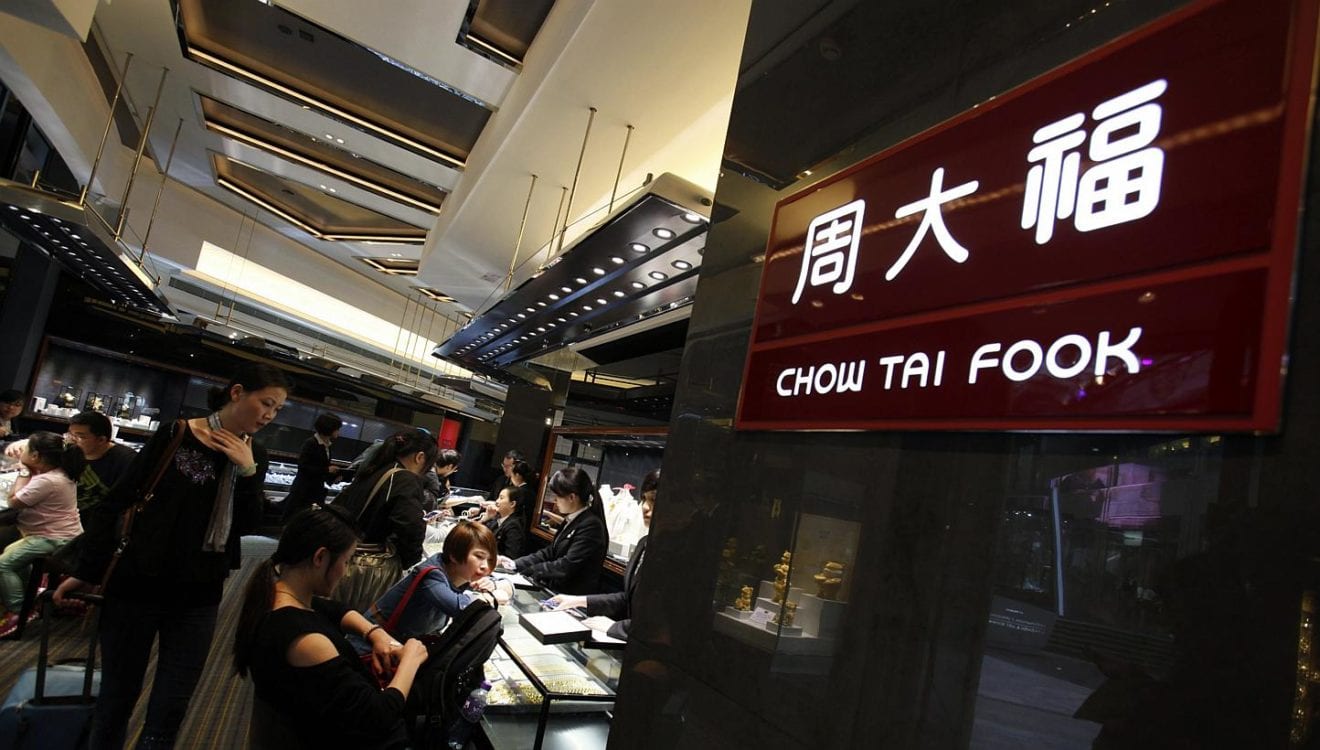
    Chow Tai Fook Jewellery Group Ltd, China’s largest jeweller by market value, on Thursday reported a 34 percent rise in full-year net profit, buoyed by improving consumer sentiment and an uptick in mainland tourists arrivals.

    Net profit rose to HK$4.10 billion ($521.98 million) for the year ended in March from HK$3.06 billion a year earlier. It was its highest yearly profit in three years. That compared with a HK$4.25 billion forecast by SmartEstimate.

    Revenue for the 12-month period rose 15.4 percent to HK$59.16 billion from HK$51.25 billion in the same period a year earlier.

    Same-store sales of its jewellery business in mainland China rose 8 percent for the year, while that in Hong Kong and Macau climbed 10.2 percent.

  • Michael Kors sales up 11%, driven by Jimmy Choo revenues

    Michael Kors sales up 11%, driven by Jimmy Choo revenues

    Michael Kors Holdings recorded $1.18bn in the crucial fourth quarter, close to an 11% gain on last year, a revenue result driven most by sales brought in from Jimmy Choo, the luxury shoe business it acquired last summer for $1.2bn.

    Like-for-like sales during the three months to end of March were up 2.3%, besting expectations for a 1% decline, marking the first time in two years that Michael Kors reported a comp sales rise. For the same period last year, comp sales were down 14.1%.

    By brand, Michael Kors sales hit $1.07bn, the rise in sales at its own stores helped offset the decline in wholesale

    Less discounting also boosted operating margins and helped the company swing back into the black. Net income was $44.1m, or 29 cents a share during the quarter, compared to a net loss of $26.8m or 17 cents per share last year.

    For the year, the company reported profit of $591.9 million, or $3.82 per share. Revenue was reported as $4.72 billion.

    In light of sluggish in-store retail sales, Kors has been trying to overhaul its business as shoppers shift many of their purchases online, where there’s an abundance of luxury goods at lower prices.

    The company said it also closed some locations during the quarter, cutting some costs.

    Looking forward, the American company reiterated that it remained on the lookout for further acquisitions following the Jimmy Choo deal.

    “We will continue to explore acquisitions to complement our existing luxury portfolio,” said chairman and chief executive John Idol.

    For the current quarter ending in July, Michael Kors said it expects revenue in the range of $1.14 billion

    The company expects full-year earnings to be $4.65 to $4.75 per share, with revenue expected to be $5.1 billion and flat same-store sales.

  • Smartphone Sales Will Drop for Second Straight Year, IDC Predicts

    Smartphone Sales Will Drop for Second Straight Year, IDC Predicts

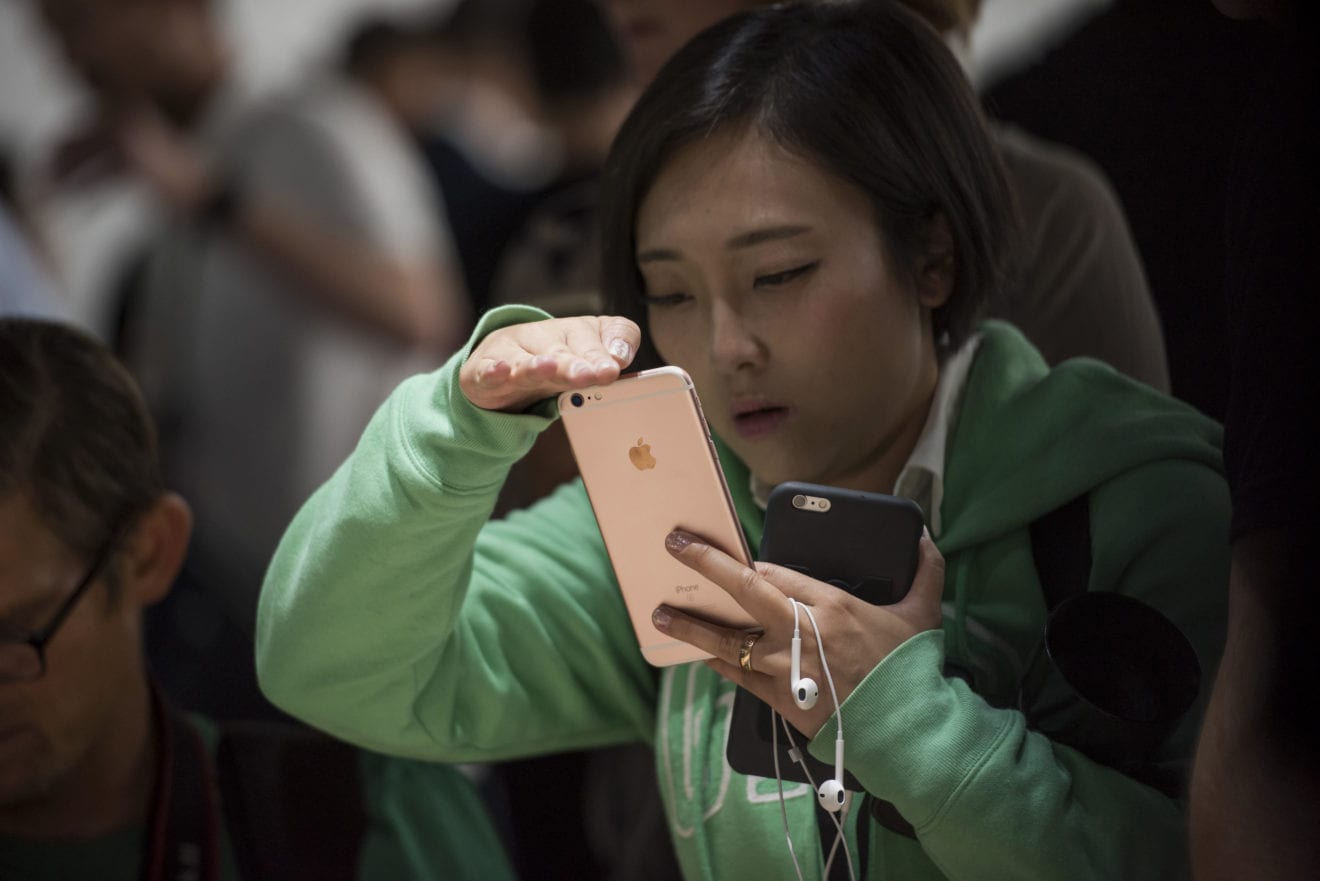
    Global smartphone sales are expected to fall for the second year running this year, before  returning to growth next year, according to analysis by the International Data Corporation (IDC).

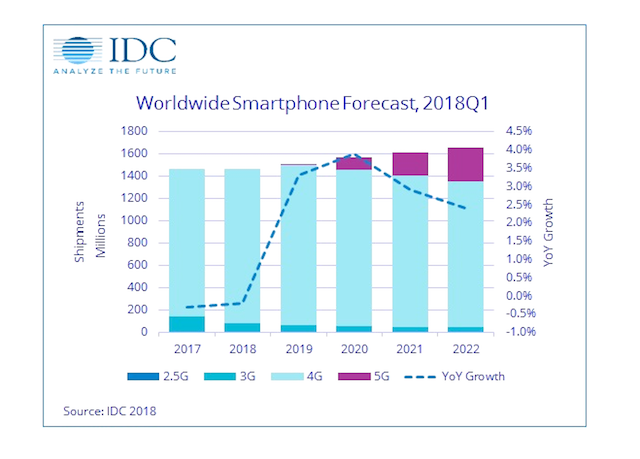
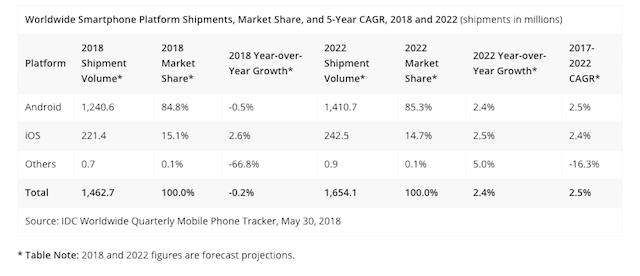
    In the research house’s Worldwide Quarterly Mobile Phone Tracker, smartphone shipments are forecast to drop 0.2 per cent this year to 1.462 billion units, after a 0.3 per cent decline last year. Looking further out, IDC expects the market is to grow roughly 3 per cent annually from next year onwards, with worldwide shipments reaching 1.654 billion in 2022 and a five-year compound annual growth rate (CAGR) of 2.5 per cent.
    The biggest driver of last year’s decline was China, where smartphone sales declined 4.9 per cent year-on-year. And the IDC expects sales in China to decline a further 7.1 per cent this year before flattening out next year.

    The biggest growth market in Asia Pacific continues to be India, with volumes expected to grow 14 per cent and 16 per cent this year and next.

    “Chinese OEMs will continue their strategy of selling large volumes of low-end devices by shifting their focus from China to India,” says IDC. “So far, most have been able to get around the recently introduced Indian import tariffs by doing final device assembly at local India manufacturing plants. As for components, almost everything is still being sourced from China.”

    “With 2017 now behind us a lot of interesting market dynamics are unfolding,” says Ryan Reith, program VP with IDC’s Worldwide Quarterly Mobile Device Trackers. “Even though it declined 5 per cent last year, China remains the focal point for many given that it consumes roughly 30 per cent of the world’s smartphones.

    “But plenty of pockets of growth can be found beyond China. India is now grabbing headlines and the market itself is going through some rapid transformation. Local Indian manufacturing continues to ramp up, despite still having a heavy dependence on China for components. The boom in India is likely to continue in the years to come, but the move toward building up local production has certainly caught the eye of many in the industry.”
    Outside of Asia Pacific, the biggest regions for growth will be the Middle East, Africa, and Latin America. All three regions have relatively low penetration rates and plenty of upsides, says IDC. Economic challenges have been the main inhibitor over the past two years, but IDC expects consumer spending to rise throughout the forecast and smartphones to be a big benefactor.

    5G opportunity

    The other catalyst to watch will be the introduction of 5G smartphones. IDC predicts the first commercially ready 5G smartphones will appear in the second half of next year with a ramp up across most regions happening in 2020. IDC projects 5G smartphone volumes to account for roughly 7 per cent of all global smartphone sales in 2020 or 212 million in total. The share of 5G devices should grow to 18 per cent of total volumes by 2022.

    “Although overall smartphone shipments will decline slightly this year, the average selling price (ASP) of a smartphone will reach US$345, up 10.3 per cent from the $313 of last year,” said Anthony Scarsella, research manager with IDC’s Worldwide Quarterly Mobile Phone Tracker.

    “This year will continue to focus on the ultra-high-end segment of the market as we expect a surge of premium flagship devices to launch in developed markets. Devices featuring large Amoled bezel-less displays, advanced camera functions, and an overall increase in speed and performance will be the driving factor in the increase of ASPs. Moving forward, we can expect this trend to continue as the ASP for a smartphone will continue to grow throughout the forecast period. In 2022, the final year of our forecast period, the average selling price for a smartphone will be $362, resulting in a five-year CAGR of 2.9 per cent.”

    Android vs Apple

    Android’s share of t sales is expected to remain relatively stable at 85 per cent of total global smartphone sales. Volumes are expected to grow at a five-year CAGR of 2.5 per cent, with shipments totaling 1.41 billion by 2022.

    “There is no question that Android is the OS of choice for the mass market and nothing leads us to believe this will change,” says IDC. “Given the large number of Chinese OEMs dependent on Google’s OS, as well as components from other US companies like Qualcomm, it will be interesting to see how things develop with all the discussion about a US-China trade war. Android OEMs continue to drive down the cost of new technology features at a rapid pace. IDC estimates that 98 per cent of Android phones will ship with screens larger than five inches by 2022, with 36 per cent being six inches or larger. While some of these will remain premium flagship models, the aggregate ASP of Android phones with a six-inch screen or greater by 2022 is projected to be $414.

    Meanwhile, iPhone volumes are expected to grow 2.6 per cent this year to 221 million. IDC is forecasting iPhones to grow at a five-year CAGR of 2.4 per cent, reaching volumes of 242 million by 2022. With rumors of some upcoming larger screen iOS smartphones, IDC has changed its screen size forecast for Apple by introducing volumes greater than six inches. Products are likely to begin shipping in the fourth quarter of 2018, with volumes ramping up and accounting for 36 per cent of all iPhones shipped by 2022.
  • Ralph Lauren shines bright in Asia, only

    Ralph Lauren has reported another decline in net sales, but the overall results confirm the company is headed in the right direction, albeit slowly.

    The company says its fourth-quarter sales decreased by 2.3 per cent to US$1.5 billion on a reported basis and were down 7 per cent in constant currency, driven by initiatives to increase quality of sales, reduce promotional activity, and elevate our distribution, as well as brand exits and lower consumer demand.

    But that is an improvement on the full-year Ralph Lauren sales figures of a 7 per cent decline to $6.2 billion on a reported basis and 8 per cent in constant currency.

    Fourth-quarter sales in Asia rose by 17 per cent to $257 million on a reported basis and by 11 per cent in constant currency, driven by strength in both retail and wholesale channels. Same-store sales were up 4 per cent.

    That’s significantly better than the full-year figure of 6 per cent on both a reported and constant currency basis to $934 million.

    Ralph Lauren’s big problem is the North American market, where sales continue to fall – in the last quarter, by 13.9 per cent, a greater rate than the 11.4 per cent of the same period a year ago.

    Some of this decline was deliberately engineered as Ralph Lauren reduced sales through wholesale channels that it believes damage its brand.

    “We applaud this corrective effort, though we think there is still much further to go.

    Stores like Macy’s still stock and sell Ralph Lauren product, and merchandising and general retail standards fall short of what the brand should be aiming for. While we do not think it is necessary for Ralph Lauren to withdraw from a retailer like Macy’s, we do think that it should work more closely with the buying and store teams there to create an elevated in-store experience. Until it does, the inconsistency between what Ralph Lauren wants its brand to be and the reality on the ground will remain.”

    Ralph Lauren is now more operationally stable. The partnership between Ralph Lauren himself and Patrice Louvet appears to be working well, and there is a sense that the company is serious about resolving its various issues. We are also encouraged by the appointment of Angela Ahrendts (former CEO of Burberry and current head of Apple’s retail business) and Mike George to the board.

    George’s expertise in e-commerce will be valuable as this is an area where Ralph Lauren seriously underperforms. and Ahrendts’ experience in luxury and her ability to create coherent retail brands and propositions will be extremely beneficial to Ralph Lauren.

    Overall, while we believe Ralph Lauren is a long way from full health, it is most certainly recovering nicely.

  • Luxottica sales hit by China restructure

    Luxottica sales hit by China restructure

    Luxottica announced a decrease in first-quarter sales for fiscal 2018, hurt by a slump in European revenues due to bad weather, and distribution restructuring in China.

    The maker and distributor of luxury eyewear said first-quarter revenue plummeted 10.7 percent to 2.13 billion euros, compared with 2.39 billion euros in the same period the previous year. With the effect of currency swings, sales were down 0.8 percent.

    For the three months ended March 31, the Italian firm’s wholesale channel recorded an 11.1 percent to 830 million euros, or 4.2 percent at constant exchange rates, hurt by bad weather in Europe, which delayed orders by several weeks.

    For the quarter, retail sales were down 10.4 percent to 1.3 billion euros, but grew 1.3 percent at constant exchange rates, while comparable-store sales decreased 0.6 percent, said the firm.

    By region, Asia-Pacific sales declined 9.3 percent to 279 million euros, representing 13 percent of total sales for the quarter.

    The dive was driven by China’s negative performance, as Luxottica continues to restructure its distribution channel, taking it to a more direct-to-consumer model.

    The overall China downfall was offset by Australia, Japan and India, as well as travel retail, benefitting from stellar retail performances at Sunglass Hut at OPSM in Australia and LensCrafters and Ray-Ban stores in China.

    By comparison sales in North America were down 13 percent to 1.19 billion euros, accounting for 56 percent of total revenues; Europe retail sales decreased 5.5 percent to 489 million euros, after twelve consecutive quarters of growth; and sales in Latin America decreased 9.8 percent to 131 million euros.

    Looking ahead, the Italian company confirmed its full-year guidance and remains in the process of merging with French lens maker Essilor. The merger has been cleared by antitrust authorities in 18 separate countries but awaits approval from China still.

    Luxottica is licensed to make eyewear frames for luxury fashion brands such Armani, Michael Kors and Prada, and is the owner and maker of sunglass brands Ray-Ban, Oakley and Oliver Peoples.

  • Vietnam’s April car sales fall 4 pct on-year

    Vietnam’s April car sales fall 4 pct on-year

    Toyota remained the leading brand last month, with sales rising 3 percent from a year earlier to 4,234 units. Vietnam’s car sales fell slightly in April, declining 4 percent from a year earlier to 20,557 units, according to data released by the Vietnam Automotive Manufacturers Association (VAMA).

    Sales in April were 2 percent lower than in March, VAMA said in a statement.

    Toyota remained the leading brand last month, with sales rising 3 percent from a year earlier to 4,234 units.

    Truong Hai (Thaco) group, the local assembler and distributor of brands such as Kia, Mazda, Peugeot and Hyundai and a significant player in the commercial vehicle segment, reported a 0.5 percent rise in group sales to 8,679 units in April.

    Ford’s sales were 47 percent lower at 1,359 units in April while Honda sales rose four-fold to 2,815 units.

    For the first four months of this year, total car sales in the country fell 2 percent from a year earlier to 79,115 units, VAMA said.

  • China smartphone sales fall sharply in Q1

    China smartphone sales fall sharply in Q1

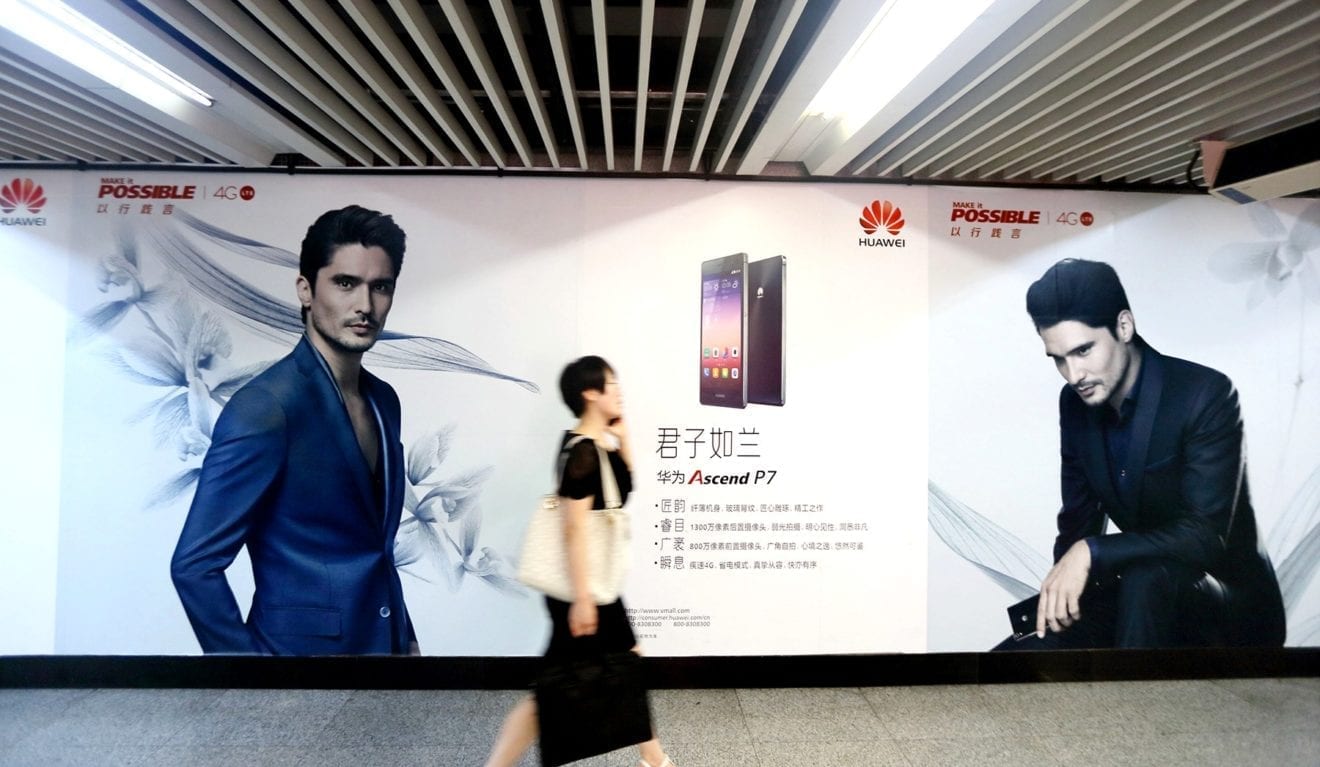
    Chinese smartphone shipments suffered a steep decline in the first quarter, according to estimates from two separate research firms. Canalys estimates that shipments had their biggest ever decline during the quarter, falling more than 21% year-on-year to 91 million units – the lowest sales since the fourth quarter of 2013.

    Eight of the top 10 smartphone vendors recorded annual declines in shipments, with Gionee, Meizu and Samsung’s sales shrinking to less than half of their sales figures from the same quarter a year ago, the company said.

    Market leader Huawei recorded a modest growth rate of 2% to 24 million units, while second placed Oppo saw a decline of 10% to 18 million units and third ranked Vivo saw shipments decline 10% to 15 million units.

    But Xiaomi managed to buck the trend with a shipment growth of 37% to 12 million units, overtaking Apple to take fourth place. Canalys Research analyst Mo Jia said the results show that the Chinese smartphone market is increasingly becoming a four-horse race..

    “The level of competition has forced every vendor to imitate the others’ product portfolios and go-to-market strategies,” he said.

    “But the costs of marketing and channel management in a country as big as China are huge, and only vendors that have reached a certain size can cope. While Huawei, Oppo, Vivo and Xiaomi must contend with a shrinking Chinese market, they can take comfort from the fact that it will continue to consolidate, and that their size will help them last longer than other smaller players.”

    Counterpoint: Chinesee smartphone market faced its steepest ever decline during the quarter

    Meanwhile Counterpoint estimates that the Chinese smartphone market fell 8% year-on-year and 21% sequentially, with the top five brands capturing a record 82% of the market.

    The company predicts that Xiaomi recorded 51% growth and increased its market share to 13.1%, but still placed Apple ahead with a market share of 14.3%.

    The research firm’s top three rankings mirror that of Canalys, with Huawei on top with a market share of 21.6%, followed by Oppo at 17.6% and Vivo at 15.5%.

    Looking ahead, Canalys has predicted that the Chinese smartphone market will return to growth in the second quarter.

    “The inventory issues that Oppo and Vivo suffered in Q4 and Q1 are now behind them. New smartphones will definitely entice people to upgrade, but vendors are more careful of avoiding oversupply in the channel,” Jia said.

    “China’s smartphone market may see a short period of stagnancy as vendors refocus on research and development, relying on new use cases to excite refreshes rather than spending heavily on the channel and marketing.”

  • Massive rebound in Hong Kong retail sales

    Massive rebound in Hong Kong retail sales

    Hong Kong retail sales for the first two months of this year soared 15.7 per cent against the same period of last year, the first double-digit increase in years.

    Census and Statistics Department figures just released showed a 29.8 per cent increase in February, which reflects the shifting of Lunar New year from January last year to February this year. That followed a revised figure of 4.2 per cent growth for January, a month when a decline might well have been expected given New Year’s timing.

    But while many retailers were providing anecdotal reports of improved fortunes for the start of this year, no one predicted an increase of more than 15 per cent for the two month period.

    The value of retail sales in February was provisionally estimated at $45.2 billion. After netting out the effect of price changes over the same period, the provisionally estimated increase of the volume of retail sales for the first two months of this year was 13.9 per cent.

    A government spokesperson said retail sales have strengthened visibly this year, thanks to favourable job and income conditions and a further pick-up in visitor arrivals.

    Luxury leads

    Predictably, sales of jewellery, watches and valuable gifts drove the first two months sales growth, rising 21 per cent.

    Apparel sales rose 19.5 per cent, medicines and cosmetics by 17.4 per cent, electrical goods by 27.9 per cent and accessories by 18.2 per cent. Food, alcoholic drinks and tobacco sales were up 10.5 per cent, department store sales up 10.9 per cent and footwear and accessories by 18.2 per cent.

    The only category showing a decline in the first two months was books, newspaper and stationery, down 1.3 per cent.

    The government spokesperson said the outlook for retail sales should remain positive in the near term, underpinned by upbeat local consumer sentiment amid a full employment situation and by continued improvement in inbound tourism.

  • Weak sales brought H&M to bad raport

    Weak sales brought H&M to bad raport

    Swedish fashion retailer H&M has posted a decline in its first quarter profit and has warned that it may need to cut prices to clear unsold stock.

    H&M posted a 61 per cent drop in profit for the three months to February. Pretax profit fell to 1.26 billion crowns ($154 million). The clothing retailer’s net profit of 1.37 billion crowns was boosted by a one-off positive tax income of 399 million crowns related to US tax reform.

    The company had warned recently that markdowns due to weak demand in its main H&M brand stores would hit earnings, and this month said quarterly sales had fallen by two per cent.

    Online sales increased by approximately 20 per cent year on year.

    “As communicated previously, the start of the year has been tough,” said Karl-Johan Persson, company CEO. “2018 is a transitional year for the H&M group, as we accelerate our transformation so that we can take advantage of the opportunities generated by rapid digitalisation.”

    “The weak sales development combined with substantial markdowns had a significant negative impact on results in the first quarter,” Persson said.

    But, the retailer had said it expected sales and profits to return to growth.

    “Many of our ongoing initiatives are giving good indications and results, even though they have not yet been implemented at a large enough scale to have a decisive effect on the overall results,” Persson added.

    This year, H&M announced it is planning to open 220 new stores. Most will be H&M stores, but 90 will be its newer spin-offs including & Other Stories, Cos and Monki.