Tag: Sales

  • 65% jump for Lotte Duty Free’s overseas sales

    65% jump for Lotte Duty Free’s overseas sales

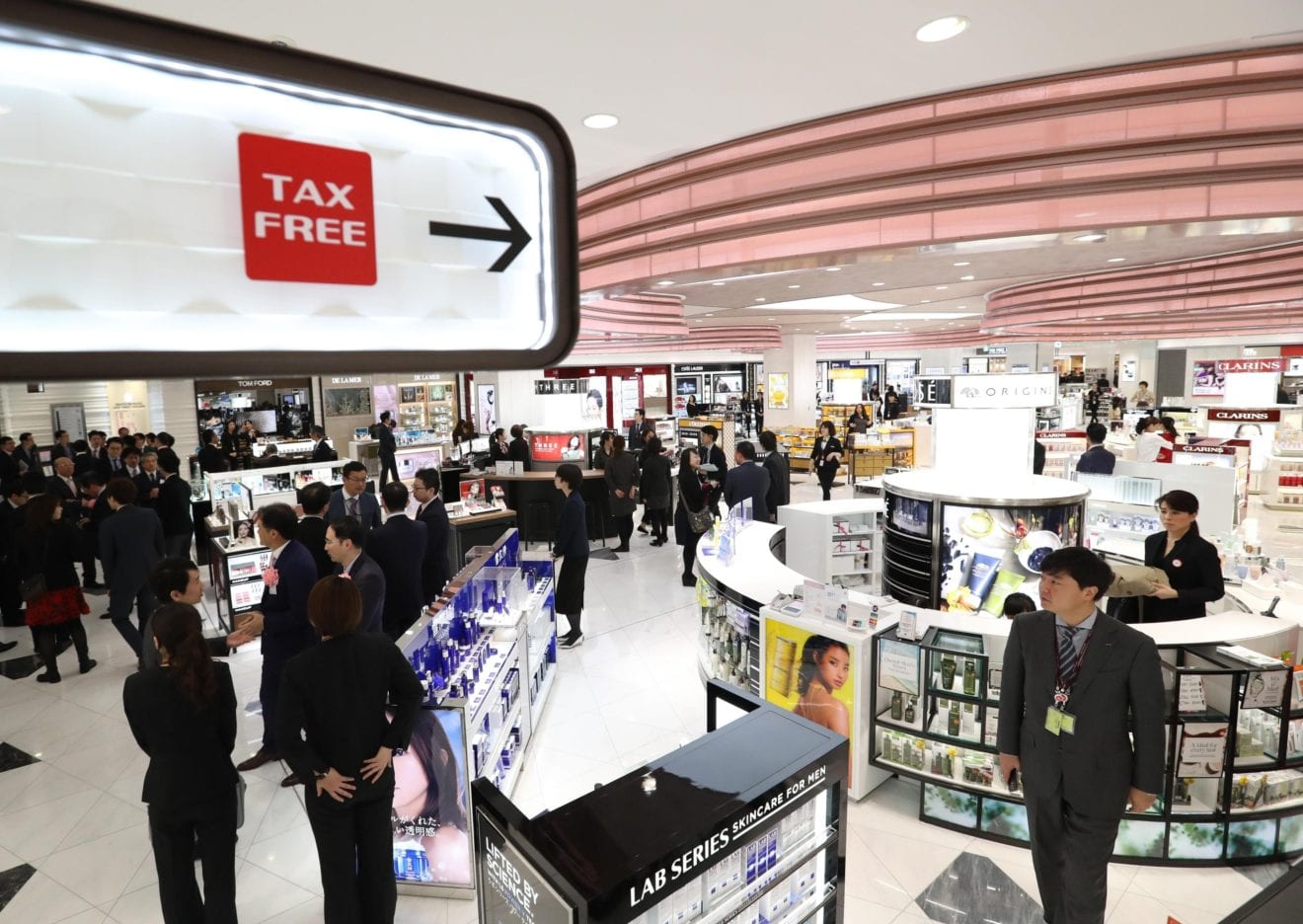
    South Korean retail giant Lotte’s duty-free operator Lotte Duty Free posted a rapid hike in overseas sales in its quarterly performance report. According to the company, sales for the third quarter this year hit a record-high 4.1 trillion won (US$3.6 billion), a 25 percent on-year increase.

    The sales from its downtown city stores and its overseas stores amounted to 3.8 trillion won and 164 billion won, respectively.

    Lotte Duty Free currently operates seven overseas stores in countries including Japan, Vietnam and Thailand. Sales at its overseas stores increased 65 percent from a year ago, and the outlet in Vietnam recorded an 800 percent jump in sales.

    The company said it expects 200 billion won worth of overseas sales by year-end.

    It will also soon open its first duty-free store in Australia.

    According to the company, its operating profit in the third quarter totaled 228 billion won, representing an on-year jump of 550 percent.

    The company said the number proves that the retailer is recovering from China’s apparent retaliation over the deployment of the Terminal High Altitude Area Defense system here.

    After withdrawing stores from Terminal 1 at Incheon International Airport in February due to a sharp drop in sales, Lotte Duty Free is focusing on aggressive marketing for its online mall and its downtown outlets.

    Compared with last year, its sales online and at its downtown stores rose 42 percent and 50 percent, respectively, the company said.

  • JD sales jumps as shoppers reached 300 million

    JD sales jumps as shoppers reached 300 million

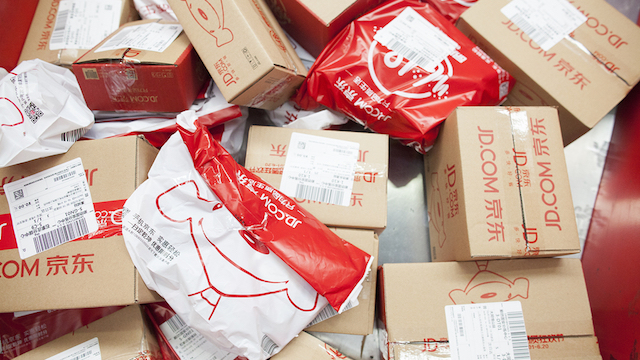
    JD sales lept 25.1 per cent in the third quarter, to RMB104.8 billion (US$215.3 billion). “We are pleased to report solid results for the third quarter, with our core JD Mall business driving consistent growth under its highly experienced management team,” said CEO and chairman Richard Liu.

    “JD’s commitment to convenient, reliable service and high-quality, authentic products continues to translate into an increasingly loyal user base. Our ‘Retail as a Service’ strategy is also gaining traction as we provide a wide range of partners with innovative retail infrastructure solutions,” he said.

    Annual active customer accounts increased to 305.2 million in the year to September 30, from 266.3 million at the same time a year earlier.

    Net income from continuing operations attributable to ordinary shareholders for the third quarter was RMB3.0 billion (US$400,000), three times more than for the same period last year.

    “JD’s strategic focus on improving customer experience helped drive strong performance across the business,” said Sidney Huang, JD’s CFO. “We will continue our disciplined strategy of investing in key technologies as we focus on optimising operations and driving economies of scale over the coming quarters.”

    Among highlights of the quarter was the signing of a raft of major international brands to the JD platforms, including L’Occitane de Provence, House 99, Hera, Salvatore Ferragamo,  Furla, Gieves & Hawkes, Kent & Curwen, Cerruti 1881 and D’Urban. JD’s dedicated luxury platform Toplife welcomed John Galliano, Buccellati and Shang Xia among others.

    As at September 30, JD had some 200,000 merchants on its online marketplace, and 175,366 full-time employees.

  • “Falling Stars Challenge” has striked Asia

    “Falling Stars Challenge” has striked Asia

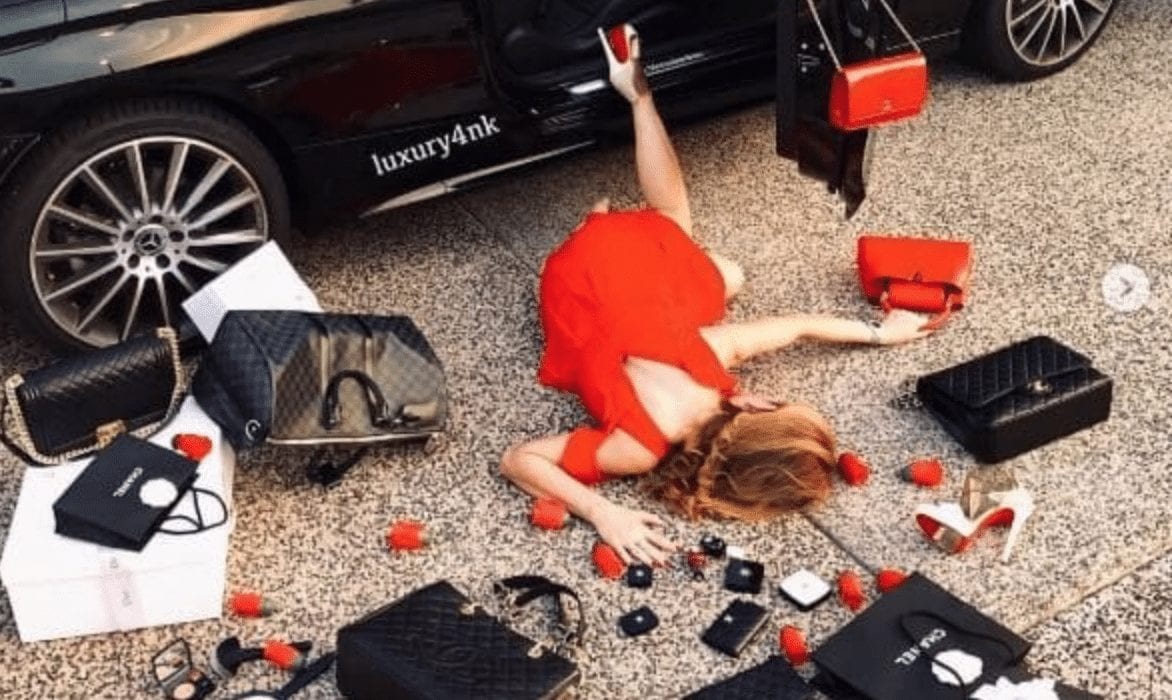
    The Falling Stars Challenge, a meme that has rocketed through Asia, features people posing as if they’ve fallen out of their luxury cars, with the luxury contents of their luxury bags spilling out on the pavement for all to see. The expensive goods are meticulously arranged so followers can admire the makeup, jewelry, shoes and other items that have oh-so-embarrassingly been laid bare.

    But the meme has become democratized, spreading from its beginnings as a way to take the humble out of humblebragging.

    It now encompasses any number of chosen identities, becoming a way to display the physical items and pursuits most closely associated with oneself.

    It’s popular among beauty and photography bloggers, fitness and food enthusiasts, and artists of all sorts.

    Hospital workers have shown off the tools of their trade, while others, with a touch of self-deprecation, have offered their more accessible collections of yoga mats, junk food and trash. They don’t even need to fall out of cars.

    The challenge originated in Russia and has spread throughout Asia, especially in China, where thousands of people have participated on Weibo, a popular social network.

    Even rigid government departments have joined in.

    The Consular Protection Center of China’s Ministry of Foreign Affairs posted a photo that showed a worker falling into a pile of paper.

    A police school photographed a fallen officer surrounded by bullets.

    The challenge has spread beyond Russia and China, with tens of thousands of posts from various countries appearing on Instagram.

  • Malaysia’s October vehicle sales up 0.5% to 47,273 units in Oct

    Malaysia’s October vehicle sales up 0.5% to 47,273 units in Oct

    Vehicle sales in October 2018 were up marginally 0.5% to 47,273 units from 47,041 units in the same month a year ago, according to the Malaysian Automotive Association (MAA). However, MAA said the sales volume in October 2018 was 51% higher than September 2018, due to availability of stocks replacing the depleted post-zero Goods and Services Tax (GST) period.

    In addition, it said year-to-date, the total industry volume (TIV) was 6% higher than the similar corresponding period in 2017.

    The sales volume for November 2018 is expected to be slightly better than October 2018 on the back of new model launches and aggressive year-end promotional campaigns, it added.

  • Hugo Boss growth relies on Asia sales

    Hugo Boss growth relies on Asia sales

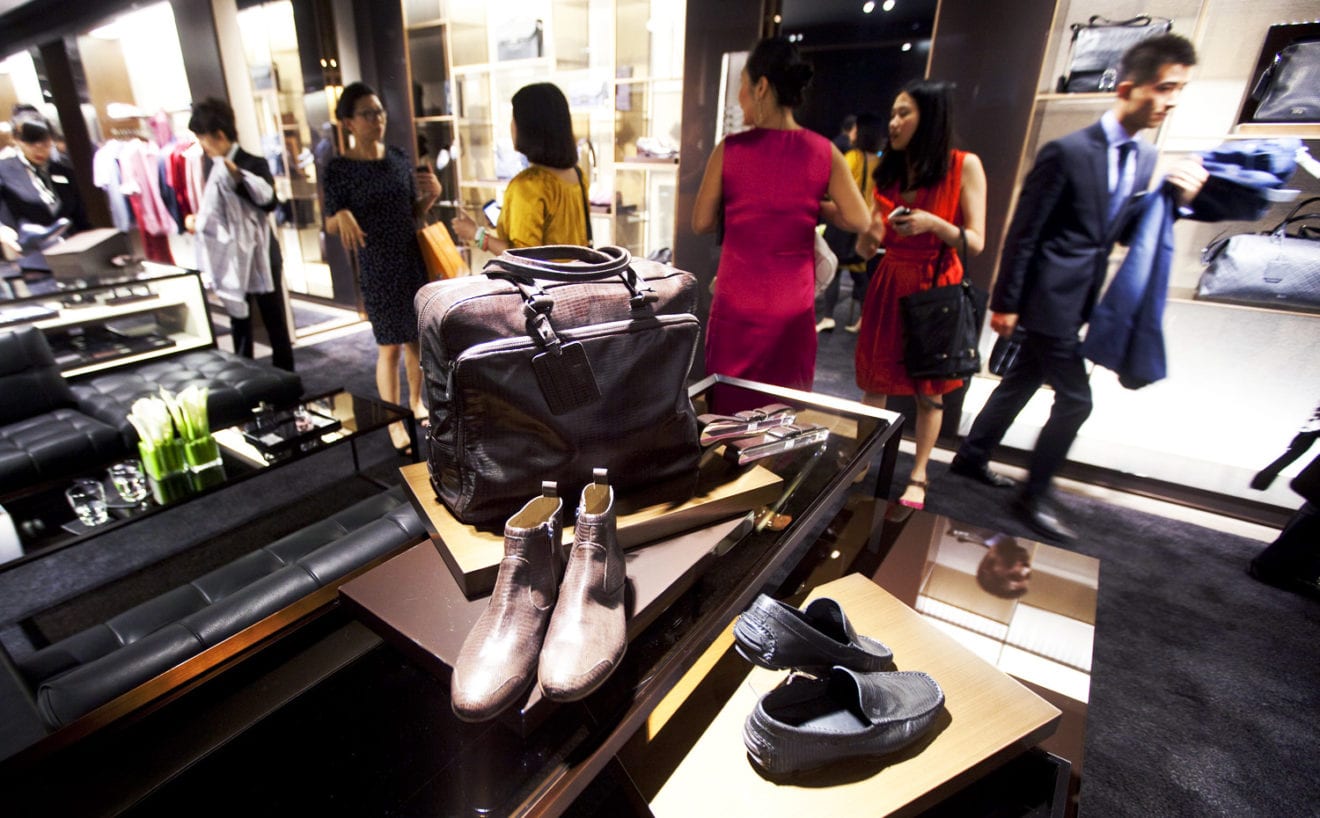
    German fashion retailer Hugo Boss sees Asia as a cornerstone of its growth strategy, saying while it already enjoys above-average growth in the region, there is potential for more. In a briefing to investors in London, the company’s managing board said it expects Asia will account for 20 per cent of its global sales by 2022, up one third from the current 15 per cent.

    “The board is convinced the group still has considerable growth potential particularly in Asia. Sales in the region are expected to increase on average at a double-digit percentage rate per year by 2022, with China playing a key role,” the company said in a statement.

    “In addition to the optimisation and expansion of the local retail network, the online business, also in cooperation with various multi-brand platforms, should contribute to above-average sales growth in particular.”

    Globally, Hugo Boss will focus on personalisation and speed to boost brand desirability between now and 2022. The company plans to increase currency-adjusted sales by between 5 per cent and 7 per cent annually for the next four years and grow its operating margin to 15 per cent. Operating profit will grow “significantly faster than sales,” the company said.

    “We have set ourselves high targets for the coming years”, said CEO Mark Langer.

    “We want to grow faster than the market, and expect our operating profit to develop significantly better than our sales. The successful realignment of our brands Boss and Hugo has laid the foundation for this. We will further increase the personalisation of our offerings in the future and speed up central processes in the course of further developing our strategy. Our overall aim is clear: We want to be the most desirable premium fashion and lifestyle brand globally.”

    Personalisation will be developed by adopting a more individualised customer approach, a personalised product range, “a unique shopping experience” and by building on its extensive experience in made-to-measure clothing.
    On the speed front, Hugo Boss plans to make its business processes “considerably more agile”.

    “This will enable the company to react to customer needs and to new market trends even more quickly and flexibly in the future. The existing skills of Hugo Boss in product design and development, our modern logistics and IT infrastructure and the use of digital showrooms will be the key levers,” the company said.

    It also plans to quadruple its own online sales by 2022.

  • Walmart sales goes back on track

    Walmart sales goes back on track

    US retailer Walmart has reported a 4.7 per cent increase in operating income in the third quarter to US$4.98 billion, and a 3.4 per cent increase in year-on-year comparable sales. Walmart sales for the period reached US$124.9 billion, an increase of 1.4 per cent.

    “We have momentum in the business as we execute our plan and benefit from a favourable economic environment in the US,” Walmart president and CEO Doug McMillon said in a statement.

    “We’re accelerating innovation and using technology to shape the future of retail [and] making shopping at Walmart faster and easier.”

    The retailer saw a 43 per cent increase in online sales in the quarter, largely thanks to its investment in its e-commerce business, as well as key acquisitions, according to GlobalData Retail’s MD Neil Saunders.

    “Making online work for customers has been a priority for Walmart, but the company is also conscious that online needs to deliver in terms of profitability,” Saunders said.

    “On this front, we are impressed with the experimentation on automation and the testing of various last mile solutions for grocery. We believe that Walmart has the skill, financial muscle, and the physical infrastructure to drive profitable online growth in a way that many other retailers, especially grocery players, will struggle to achieve.”

  • Tencent finished Q3 with strong result despite regulation

    Tencent finished Q3 with strong result despite regulation

    Gaming and chat specialist Tencent has reported a strong third-quarter profit despite ongoing issues with Mainland China regulatory authorities over its gaming software. Tencent’s share price has fallen by about one third this year, shedding US$165 billion off its value, although last year its share price doubled. In September the company announced a restructuring program aimed at lessening its reliance on games and expanding its interests into areas such as cloud and industrial services in the transport, fintech and healthcare sectors.

    Tencent profit in the September quarter rose 30 per cent to RMB23.3 billion (US$3.36 billion) which exceeded analysts’ forecasts. This was partly due to fair-value gains from the IPO of food delivery service Meituan Dianping.

    Growth in its gaming division was ahead of expectation, but the company was unable to update shareholders on the status of its negotiations with mainland government officials over a regulatory block which has frozen new game approvals. The government has yet to decide on whether or not to allow Tencent to begin charging for features of its popular PUBG Mobile game. Chinese authorities are concerned that many Chinese are becoming addicted to mobile games.

    Those roadblocks were cited as the reason Tencent’s growth rate – a respectable 24 per cent, nonetheless, to US$11.6 billion – was its slowest quarter in more than three years.

    Sales of smartphone games grew 7 per cent year on year and 11 per cent quarter on quarter, while advertising sales, the company’s single largest revenue source, rose 47 per cent

    Revenue from cloud and payment services (WeChat Pay) helped fuel a 69 per cent increase in Tencent’s “other” revenue category.

  • China retail sales surges in October

    China retail sales surges in October

    Official figures for China retail sales show an 8.6 per cent year-on-year increase in October. That’s a little shy of the 9.2 per cent achieved in September and the same pace of growth for the first 10 months of the year.

    The data was released by the National Bureau of Statistics (NBS), which blamed the slowing growth rate on delayed consumption ahead of the 11.11 Singles Day shopping festival. Many products sold on Singles Day are pre-ordered, but not settled until the 24-hour sale commences, to boost the event’s topline figure.

    The NBS said sales in rural areas rose by 9.7 per cent in October, a faster rate than the 8.4 per cent in urban areas.

    Online spending soared 25.5 per cent to reach RMB 7 trillion during the first 10 months of this year.

  • Apple concerns hit supplier stocks

    Apple concerns hit supplier stocks

    Shares in Asian suppliers and assemblers for Apple fell on Tuesday after several component makers warned of weaker than expected results, leading some market watchers to call the peak for iPhones in several key markets. Following a poor forecast earlier this month, analysts and investors voiced concern over the state of Apple’s business, contributing to growing worries that iPhone sales were stagnating and could hurt suppliers.

    Fresh warnings on Monday from screen maker Japan Display, British chipmaker IQE and Lumentum Holdings, the main supplier of the Face ID technology in the latest generation of iPhones, hurt technology stocks in Asia on Tuesday.

    Taiwan-based assembler Hon Hai Precision Industry (Foxconn) dropped more than 3 percent. Rival Pegatron fell more than 5 percent but later recouped losses. Both companies count Apple as a major customer.

    The world’s largest contract chipmaker, Taiwan Semiconductor Manufacturing, fell 2.6 percent, while Flexium Interconnect was down 1.5 percent. The Taiwan Weighted Index was down around 1.6 percent.

    “Apple’s iPhone weakness has been a long-term issue for the Asia supply chain,” said Arthur Liao, an analyst at Fubon Research in Taipei.

    “For Apple, iPhone shipment has reached its peak. For tech suppliers facing the future, they have no other big client like Apple.”

    The company’s shares fell to their lowest level in more than three months on Monday.

    Last week, a media report saying the iPhone maker had told its smartphone assemblers to halt plans for additional production lines dedicated to its new lower-priced iPhone XR had pressured supplier stocks.

    Analysts said the lack of technological breakthroughs had put a cap on demand.

    “With no new technology in sight next year for the supply chain, this is not ideal for the companies involved,” said Nicole Tu, a Taipei-based analyst at Yuanta Investment Consulting.

    “Up through the first half of 2019, we likely won’t see any breakthrough.”

    Lumentum on Monday slashed its profit and revenue forecast for the current quarter, while IQE warned that current-year results would be lower. Japan Display lowered both sales and margin outlook for the year as well.

    Apple warned earlier this month that holiday sales would miss Wall Street expectations due to weakness in emerging markets.

  • Tumi boosts Samsonite sales growth

    Tumi boosts Samsonite sales growth

    Rapid Tumi expansion is powering solid sales growth for Hong Kong-listed luggage specialist Samsonite International. Group sales rose 5.2 per cent in the third quarter to US$945.2 million, with sales in Asia up 7.2 per cent to $324.2 million. Global sales for the first nine months were up 10.1 per cent.

    The company says the Asian sales growth was primarily driven by the Tumi, American Tourister, Kamiliant and High Sierra brands. Tumi sales in Asia surged 27.7 per cent year-on-year, driven by expansion in key Asian markets. Kamiliant, the group’s value-conscious, entry level brand, saw net sales increase by 31.8 per cent as the brand continued to gain market share, while the High Sierra and American Tourister brands grew by 22.2 per cent and 3.6 per cent respectively.

    In Japan, sales grew 12.5 per cent in the third quarter, driven by the Tumi and Samsonite brands.

    Net sales in Hong Kong increased by 23.5 per cent, driven by increased net sales from the Tumi and American Tourister brands, however Mainland China net sales decreased by 3.2 per cent due to weak consumer sentiment amid concerns about trade relations and a decrease in business-to-business orders. Excluding business-to-business orders for both periods, net sales in China increased by 4.1 per cent.

    The Samsonite, American Tourister and Kamiliant brands drove a net sales increase of 28.6 per cent in India. Sales in South Korea decreased by 4.1 per cent due to “continued challenging domestic market conditions”.

    CEO Kyle Gendreau said the group was pleased with the third quarter results and especially its continued progress in Asia.

    Sales in Europe rose 10 per cent and in Latin America by 13.4 per cent.

    Profit attributable to shareholders during the third quarter rose by $18.9 million, or 33.3 per cent, to $75.5 million, driven by a reduction in the group’s income tax expenses. For the nine months ended September 30, profit attributable to shareholders, excluding a non-cash charge to write-off the $53.3 million of deferred financing costs, increased by $42.9 million, or 30.6 per cent.

    Gendreau said the company is excited about the opportunities ahead, despite global concerns about the US-Sino trade war and subdued consumer sentiment in many markets.

    “With consumers still showing a strong propensity for travel, our industry continues to enjoy favorable long-term growth prospects. We will continue to invest in marketing, product innovation and development of our distribution channels, including direct to consumer. We are confident that we can continue to leverage our strong, diversified portfolio of brands to expand our global presence.”

  • Chinese grocery market set for solid growth, says IGD

    Chinese grocery market set for solid growth, says IGD

    A report released by the international grocery research organisation IGD has forecast growth of 32.6 per cent in the Chinese grocery market by 2022, preserving its status as the largest grocery market in Asia. Grocery retail sales in China are set to rise to CNY 11.4 trillion (US$1.637 billion), more than India, Japan and Indonesia combined.

    The market is expected to see a CAGR of 5.8 per cent over the next five years, on par with Thailand but slower than markets such as India, Vietnam and Bangladesh, where the economy is growing faster.

    Globally, China will remain the second largest grocery market in the world by 2022, behind the US in terms of value.

    Shirley Zhu, programme director for IGD’s Asia-Pacific research, said China continues to be an exciting market to watch with its significant size and rapid growth. “Retailers with nationwide networks such as Sun Art, Yonghui, Walmart, CRV and Carrefour will reap rewards from ongoing expansion, partnerships with e-commerce players, improved efficiency and investment in small formats.

    “Similarly, e-commerce giants such as Alibaba and JD.com will see significant growth from both online and offline channels and become the second and third largest grocery retailers in China, respectively. Regional players such as NGS, Wumart and Bailian will continue on their journey of transformation and consolidation and focus on profitability.”

    Market share for hypermarkets and supermarkets will remain steady, close to 40 per cent of the market up until 2022. However, the supermarket channel will overtake hypermarkets as the largest sales channel with a market share of 20.7 per cent, says IGD.

    “Convenience will be the fastest-growing physical store channel”, said Zhu. “This will be driven by Alibaba and JD transforming traditional mom-and-pop stores, retailers opening smaller format stores and both local and overseas players expanding their networks through partnerships. Online and offline integration will drive online growth. As the fastest growing channel, we forecast online to contribute up to 11.1 per cent of sales in 2022.”

    Less than half of the grocery sales in China currently go through traditional trade. As the market continues to mature, traditional trade will keep losing share to modern trade, which currently accounts for about 57 per cent of total grocery retail sales and is predicted to grow to 66 per cent by 2022.

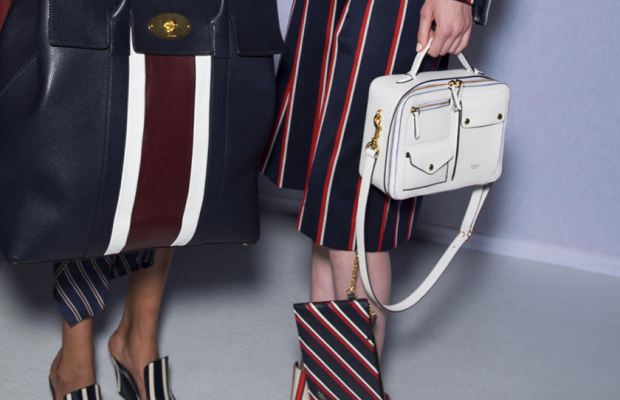
  • UK Mulberry sales drop rescued by Asia growth

    UK Mulberry sales drop rescued by Asia growth

    Strong Asia performances helped mitigate falling UK Mulberry sales in the latest half year. While the UK fashion house’s total revenue was down 8 per cent to £68.3 million, international sales were up 13 per cent. Within that figure, new entities in South Korea and Japan saw the company’s retail chain expand to 29 stores, compared with just one a year earlier.

    And new digital partnerships in China with Toplife, Secoo and VIP.com also boosted sales. Mulberry says further such reseller agreements are planned.

    The core UK business was profitable, but the company was affected by the administration of House of Fraser and “soft retail conditions” in its home market. Overall UK retail sales were down 11 per cent during the six months.

    Globally, e-commerce sales rose 5 per cent and now representing 17 per cent of Mulberry sales, up from 14 per cent the same period last year.

    The company posted an underlying loss before tax of £3.6 million, compared with a £600,000 loss the previous year.

    However, after one-off costs for House of Fraser (£2.1 million) and the South Korea launch (£2.5 million), the company reported a loss pre-tax loss of £8.2 million.

    CEO Thierry Andretta said the company is delivering on a strategy to develop Mulberry as a global luxury brand and the new South Korean and Japan businesses, along with the creation of the China digital partnerships were big steps on that pathway.

    “We are confident that our focus on international growth is the correct strategy to develop Mulberry.”

  • Courts Asia shows negative number after Malaysian woes

    Courts Asia shows negative number after Malaysian woes

    Singaporean electronics and furniture retailer Courts Asia has posted a net loss of SG$3.1 million (US$2.25 million) in its second quarter.

    The result is a reversal of a net profit of $1.5 million (US$1.09 million) during the same period last year.

    Courts Asia said in a statement that Malaysia revenue came under pressure after the introduction of the Consumer Protection (Credit Sale) Regulations 2017 which saw consumer interest rates capped at 15 per cent per annum from January. However, ongoing transformation work with a persistent focus on cost and productivity efficiencies in Malaysia reaped results, with Malaysia’s PBT crossing into positive terrain after two consecutive quarters of loss.”

    Group CEO Terence Donald O’Connor said: “We are encouraged by the early signs of stabilisation in the Malaysia business. We have closed 10 underperforming stores since the start of our financial year in April and continue to review our store network performance. Impairment loss on trade receivables charged to the profit and loss statement has also been on a declining trend from the fourth quarter ended March.”

    The Singapore firm recorded $3.4 million profit before tax after starting out on its store transformation process, up from $3 million last year. It renovated its Ang Mo Kio outlet last month.

  • New iPhones sell slowly in Korea

    New iPhones sell slowly in Korea

    A week after Apple introduced its latest iPhone series at stores in Korea, sales are only about 60 percent of those reported for the previous lineup over the same period of time. According to estimates compiled by local mobile carriers, a total of 170,000 iPhone XS, XS Max and XR models were purchased between Nov. 2 and Nov. 7. A total of 280,000 iPhones 8 and X models were sold in the first week of their release in November 2017. Sales of the two models began three weeks apart.

    Industry watchers assumed that Apple’s simultaneous release of the three models was designed to garner greater attention and boost sales in the early days.

    However, figures so far show that the latest iPhones are selling more slowly than earlier models.

    “It’s not doing that great,” said an employee at a brick-and-mortar phone shop in central Seoul on Friday when asked if the new iPhones are popular.

    “There’s the expensive price tag, but it also has to do with the fact that there aren’t dramatic function upgrades. To be honest, even I can’t really notice a big difference between the iPhone X and XS. Maybe the next series will come with more innovative features – we’ll see.”

    Price became an issue as soon as Apple introduced the new models. In Korea, the 512-gigabyte iPhone XS Max sells for nearly 1.97 million won ($1,745), while the 256-gigabyte XS retails at 1.56 million won.

    Even the budget XR model is priced slightly below one million won.

    Despite the price concerns, presales have been reasonably strong. SK Telecom, KT and LG U+ took orders between Oct. 26 and Nov. 1.

    Presales results for the three new models differed per company, but the general assessment was that demand was similar or stronger than for previous generation iPhones.

    Presale results don’t necessarily indicate success. Customers who preorder iPhones in Korea, even before actually touching the product, are likely to be loyal Apple fans.

    “The thing about Apple maniacs is that they will get their hands on the next iPhone no matter what,” said a source from one of the mobile carriers.

    “But success doesn’t just come from them. The general public, especially those switching between smartphone brands, should be attracted to buying it, too. The new iPhone seems to be failing in that respect this time.”

    Up until a few years ago, a few manufacturers like Apple and Samsung dominated the smartphone market. Customers nowadays have a much wider ranges of options in terms of price and style.

    Over the last decade, smartphone technology has advanced so much that even budget models priced at half that of the latest iPhones come with high-tech functions, such as face unlock.

    From Apple’s side, there are signs that the company is well aware of the slower demand.

    Japan’s Nikkei Asian Review reported on Monday that Apple told smartphone assemblers Foxconn and Pegatron to halt plans to bring on additional lines for iPhone XR production. All companies involved declined to comment.

  • Post-Instagram age : What’s next?

    Post-Instagram age : What’s next?

    Oscar de la Renta was early to Twitter, early to Tumblr and, yes, early to Instagram. So in July 2013, when the American fashion house debuted its fall advertising campaign via the app, the industry was hardly surprised. It was a little thing. An experiment. After all, the Norman Jean Roy-shot images would still run in the September issues of every major fashion magazine.

    Actually, it was a “really big deal,” recalled Jason Wagenheim, a former Condé Nast publishing star who was, at the time, Teen Vogue’s chief revenue officer.

    “That was a real tipping point for fashion,” said Wagenheim, who left the legacy publisher in 2015 and is now chief revenue officer of Bustle Digital Group.

    “Here is this expensive luxury brand and their fall campaign, which everyone looked forward to seeing in the print pages of Vogue; and yet everyone is talking about the engagement — the bajillion likes within hours — that the campaign got on Instagram. It foreshadowed that this could be bigger than any fashion magazine.”

    In reality, each of the Oscar de la Renta advertising images attracted not much more than 1,000 likes within the first hour of their posting.

    But the campaign was indicative of a much wider shift that has transformed fashion, changing how publishers publish, how brands brand themselves, and how consumers consume.

    Brands have closed, stores have shuttered, magazines have folded — and both survivors and upstarts alike are fighting for consumer dollars in a new world where the formula for success is not nearly as clear as it is once was.

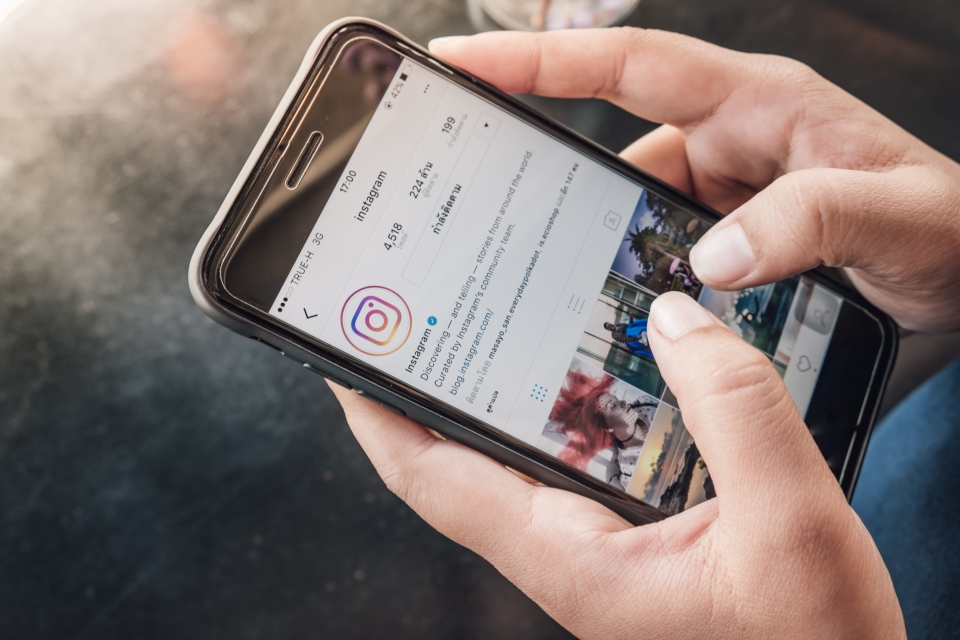
    And no single entity has had as lasting an effect on the fashion ecosystem as Instagram, the photo-sharing service let loose on Apple’s App Store on October 6, 2010.

    Three years later, when Oscar de la Renta drip-dropped those images down its feed, traditional print magazines like Vogue were still the arbiters of style.

    It feels like a long time ago. But back then, their authority remained intact and largely unchallenged, despite the rise of independent publications that operated outside of the traditional publishing industry and the emergence of digital brands that sold directly to consumers.

    But it’s 2018 now, and times have changed.

    Instagram, which was acquired by Facebook for $1 billion in 2012, is where people now go to discover fashion content and, increasingly, to shop, with 72 percent of users saying they have made fashion, beauty or “style-related” purchases after perusing the app, according to a 2017 study of 2,000 Instagram users.

    Instagram claims that more than 90 million users tap to see tags on shopping posts each month.

    In some ways, it was inevitable.

    Americans spend only 4 percent of their media-technology consumption hours with print, compared to 20 percent on personal computers and 28 percent on mobile.

    Many of them are spending their mobile phone screen time on Instagram.

    In June 2018, the app surpassed the billion-users-a-month mark, up from 800 million users in September 2017. More than 400 million people use Instagram Stories — the app’s more casual slideshow feature — every day.

    Rival Snapchat had 186 million daily active users in its most recent quarter, down from 191 million at the beginning of the year.

    As of August 2017, Instagram users under the age of 25 spend more than 32 minutes a day on the app.

    But the number dips only slightly to 24 minutes for those older than 25. That’s length of a sitcom…or a scan of a magazine.

    Of course, fewer and fewer consumers are buying those magazines. And brands have responded by following consumers online and shifting their marketing budgets from print to digital.

    In 1998, US print advertising revenue was $61 billion.

    In 2008, it was $54 billion, just a 12 percent decrease despite rising internet usage.

    But in 2018, it’s set to clock in at under $15 billion — down a staggering 75 percent from 20 years ago.

    Brands are increasingly using Instagram — via both organic and paid posts — to communicate directly with consumers.

    “Given the rising importance of social media for luxury brands — especially in the context of millennial’s growth — we believe Instagram data can no longer be ignored as a data point for luxury investors, to help them pick the winning brands,” Swiss investment bank UBS said in a recent note, going on to say that high Instagram engagement was a dependable reflection of brand heat.

    There is an unmistakable correlation between the size of a brand’s Instagram following and its retail sales.

    So it’s no surprise that, in the second quarter of 2018, global advertising spend on Instagram was up 177 percent year on year, significantly ahead of Facebook, which saw 40 percent growth in the same period.

    While Facebook still generates the majority of the company’s revenue, which hit nearly $41 billion in 2017, analysts estimate that Instagram will generate $8 billion to $9 billion in 2018.

    Projections predict that Instagram will account for about a third of its parent company’s overall ad revenue — and 70 percent of its new revenue — by 2020.

    In some ways, Instagram is to fashion what Napster was to music.

    You still can’t download a dress, but Instagram has fundamentally rewired the industry, replacing print magazines as the primary way in which people discover fashion.

    It’s the foundation on which the industry has built everything from new labels to an influencer economy worth $1.6 billion in 2018.

    All of Fashion Uses Instagram

    Consumers were quick to embrace Instagram, thanks to its simple user experience and flattering, colour-washed filters that made even grainy images look a little bit more perfect.

    They posted photos of their food, their travels and, yes, their outfits. Fashion brands picked up on this quickly, realising that creating content on Instagram — a highly visual platform — would allow them to reach more customers, and soon found themselves locked in a race for followers.

    Even luxury houses like Chanel, which has resisted selling core products online, took it seriously, using the service to post runway looks, campaign outtakes and inspiration boards.

    Some — from Proenza Schouler to Kith — have used the platform to tease their latest collections instead of waiting for a live Fashion Week moment.

    Earlier this year, Dior used Instagram as the main vehicle for the promotion of the relaunch of its classic saddle bag, tapping more than 100 influencers to spread the word.

    While the campaign proved controversial — several of the influencers did not disclose that they were paid to post on behalf of Dior — it was a blockbuster success.

    The #DiorSaddle hashtag drove $3.4 million in earned media value in the third quarter of 2018, beating #PFW, which garnered $2.6 million in earned media for the same time period.

    But it goes beyond the legacy players. “Instagram brands” — mostly independent startups with minimal capital — have caught the eye of major retailers looking to woo increasingly discerning customers.

    Why? Because their audiences are highly engaged, using Instagram stories to shop and direct message — “DMing”, in Instagram parlance — with the brands themselves.

    Labels like Doen, Cult Gaia and By Far boast little-to-no presence at major fashion weeks or within the traditional fashion system, and yet they are the brands industry insiders are most curious about because of the communities that they’ve built on Instagram.

    While Los Angeles-based bohemian apparel line Doen has just about 140,000 followers, it DMs with members of its community every day.

    The result? The brand regularly sells out of its peasant blouses and prairie dresses, creating an online frenzy.

    Cult Gaia, another Los Angeles-based label, may only have 317,000 followers on the platform, but the company says that it is on track to generate $15 million this year: far more than many independent high-end fashion brands with, in some cases, millions of followers.

    Through Instagram, we’ve built our own community.

    Instagram influencers are also launching brands, many with great success.

    Arielle Charnas, the influencer behind the account Something Navy, sold more than $4 million worth of product on the launch day of her collection with Nordstrom.

    In fact, the American department store has released multiple influencer collections, all of which are promoted via Instagram.

    Then there is the creative community, including relatively unknown artists, illustrators and photographers — from Gucci collaborator Jayde Cardinalli to artist Suzanne Jongmans, who has worked with Valentino’s Pierpaolo Piccioli— whose work now has global reach.

    But for Charles Porch, Instagram’s head of global creative programs, the platform’s crowning fashion moment came in October 2015, when American Vogue editor-in-chief Anna Wintour held a dinner during Paris Fashion Week in honour of Instagram co-founder and chief executive Kevin Systrom.

    Together, they celebrated the “Instagirls,” or models who earned or boosted their fame through Instagram, including Kendall Jenner and Gigi Hadid. Donatella Versace was there. So was Pat McGrath. They, too, were hooked.

    “To see the biggest designers, models, people in the industry talking about how much they love the platform, giving their feedback and, actually, huge people being able to talk about the product in depth … seeing their passion for a tech product … that really clicked for me,” Porch said. “They’re in so deep.”

    Earlier that year, Porch had wooed Eva Chen, an Anna Wintour protégé and the former editor-in-chief of now defunct Condé Nast shopping title Lucky, to lead fashion partnerships at the company.

    If Instagram is the modern equivalent of a fashion magazine, then you could call Chen its de facto editor-in-chief.

    Her personal brand — warm, friendly and, yes, democratic — aligns almost too perfectly with that of the platform itself. With more than one million followers, she has developed her own hashtag, written a children’s book, set to be published later this autumn, and earned a seat on the YNAP’s board of directors.

    Part of Chen’s job is to convince fashion industry stars like Kate Moss and Donatella Versace to join and use the app. But most importantly, she helps brands, image-makers, publishers and influencers get more out of their Instagram accounts.

    Chen travels the world to help fashion brands, holding master classes — filled with executives from brands like Madewell, Birchbox and Ralph Lauren — where she offers step-by-step instructions on how to take a good photo, how to get the most out of Instagram Stories, how to use hashtags without spamming people. All things that, if done well, can help improve engagement — and potentially increase sales.

    She also advises them on how to spend their advertising money on the app, although, like a traditional editor-in-chief, she is not cutting the deals and is more focused on organic marketing.

    “Instagram has made fashion more accessible,” Chen said recently one late Friday afternoon at the company’s New York city offices, wearing a pair of brown Gucci loafers and a checked blazer, the sort of off-duty look preferred by many of her friends who remain in print media.

    The Collateral Damage

    In many ways, Instagram has helped to modernise the fashion industry.

    But what about the collateral damage left in the wake of its success?

    Brands are not only pulling advertising from print, but also from legacy publications in general.

    While traditional publishers are still earning a part of the digital pie, brands are splitting up their marketing spends differently than they used to.

    Today, they might devote a certain percentage of budget to influencer marketing, and another slice to advertising directly on Instagram and other social media platforms.

    Oscar de la Renta has been using Instagram as an organic marketing tool for years, but it wasn’t until recently that it began spending a significant amount of its budget there.

    Three years ago, less than 5 percent of the overall budget was dedicated to digital advertising.

    For the spring 2019 season, it will be at least a third, said chief executive Alex Bolen, a portion of which will be spent on Instagram.

    Some brands are taking even bigger swings.

    About 55 percent of Gucci’s total 2018 media spend will go to digital efforts — mostly native advertising and paid social — per a report released by the Kering-owned brand in June. That is up from 44 percent in 2017 and 33 percent in 2016.

    And digital retailer Net-a-Porter has eliminated all national print advertising for 2018 bu for a few ads which will still run in local publications.

    Critically, the retailer also has its own newsstand-available magazine, Porter, that serves as a several-hundred-page advertisement.

    But moving away from print was not a small decision.

    “Instagram is where our customers expect to find us,” said Net-a-Porter managing director Matthew Woolsey.

    “Social media platforms certainly rise and fall, and while our outlook is agnostic, we are going to the platforms that enable us to have the brand conversation that we want to have and emotionally connect. Instagram does enable that.”

    Then there’s the talent drain.

    Image-makers and writers who would have normally held positions within legacy publications are now fleeing to digital-first publishers as well as brands, which are creating more content in-house to populate social channels.

    Many are also working independently as free agents, using Instagram to promote their projects.

    What’s more, declining advertising revenue means that there is less job security within traditional editorial.

    Today, editors might have to work across multiple publications within a company without any sort of raise or recognition. Going it alone often makes more fiscal sense.

    Legacy publications that cater to an older, affluent audience still have clout.

    As do those that still resonate with the industry.

    Doen — known for dreamy imagery and romantic silhouettes, created in limited-edition batches that often sell out — credits Instagram with much of its success.

    But it uses traditional media as a way to communicate to the trade.

    “Those are more of a tool to establish us as a brand within the fashion community,” said Doen co-founder Katherine Kleveland.

    “Through Instagram, we’ve built our own community.”

    But what happens if that community goes away?

    Testing Instagram’s Staying Power

    Eventually users will abandon Instagram.

    The question is when.

    Digital consumers can easily switch from one platform to another, making loyalty low.

    How long can Instagram keep them entertained?

    In September, the company made two significant announcements that could impact that answer.

    First, there was the introduction of new shopping features that make it easier for users to transact via the app.

    Then, just a week later, co-founders Kevin Systrom and Mike Krieger, who had carefully guided the business since its inception, announced their resignations.

    Reports in The New York Times and technology site Recode suggested that the two founders felt that parent company Facebook was moving too fast to change — and commercialise — the product, sacrificing the simplicity that made Instagram so popular in the first place.

    As Instagram has become the ultimate browsing tool, it has also become increasingly transactional.

    The company encourages this behaviour by making it easier for paying advertisers to link out and run targeted advertising both within the feed and Instagram Stories.

    Business accounts can also link out through Instagram Stories and tag products within posts.

    The addition of these tools is a natural — and welcome — progression, said Lauren Price, director of client strategy for luxury and special retail at research firm Gartner L2.

    “It doesn’t feel like it’s a huge divergence from the way that brands and consumers have used Instagram from the get-go,” she added. “The intention [to shop] has always been there.”

    After rumours that it would launch a standalone shopping app surfaced, Instagram announced that it would instead introduce a shopping channel on its “Explore” page, populated with products from brands the user follows, but also brands surfaced by its recommendation engine.

    While it is not yet possible to shop within the app, the company has linked up with major e-commerce providers including Shopify to ensure that the transition from post to check-out cart is as frictionless as possible.

    “Personalisation is a key principle,” said Layla Amjadi, Instagram’s product lead on Shopping. “In Explore, we want to make sure it’s your personalised mall.”

    Instagram insists that its focus remains on the user. That discovery is still the soul of the product.

    “Shopping is an inspiration-first product,” Amjadi said. “It maps to your interest, leans into relationships that you have… and is fantastic opportunity to help with consideration.” By “consideration” she means, “Should I buy this?”

    But as Instagram becomes more transactional, does it risk losing some of its magic?

    “I think it’s fine [for shopping] to be a part of the functionality,” said L2’s Price. “If you’re following a brand, you’re aware that it’s a brand.”

    The trouble comes in if Instagram integrates too deeply with Facebook and turns more into a pay-to-play platform.

    Right now, 93 percent of brands that advertise on social media advertise on Facebook, which prioritises advertising and organic posts from friends and family over organic posts from brands in its algorithm.

    “I advise the brands that we work [with] to get the most value out of that organic growth on Instagram in case it does change,” Price added.

    New Instagram head Adam Mosseri, the former vice president of the Newsfeed at Facebook, one of the platform’s most successful — and polarising — products, is said to have been Systrom and Krieger’s choice to lead the app into this next phase.

    But Mosseri has quite a bit of work ahead of him.

    Social networks fade as users grow tired of relentless promotions and frustrating user experiences.

    “You could certainly argue that there is an inherent scaling to the point of collapse in a social newtowrk,” said Benedict Evans, a partner at Silicon Valley-based venture capital firm Andreessen Horowitz.

    “But there isn’t an obvious next thing.”

    On the fashion front, competitors like YouTube and Snapchat are also hip to the success Instagram has seen with Chen, hiring fashion insiders Derek Blasberg and Vogue editor Selby Drummond, respectively, to head up fashion partnerships.

    And brands are likely to find it increasingly difficult to stand apart on Instagram, where they are competing for attention not only within their peer group, but with brands of all price points, quality and missions.

    The cost of advertising on the app will likely increase, as will the investment brands need to make on quality organic content.

    What if Facebook’s drive to squeeze more revenue out of Instagram makes it a less-fun experience?

    What’s more, if this “time well spent” movement actually catches on, how will this affect the new world order?

    Special interest groups are lobbying the government and private companies to better regulate the technology that powers social media.

    Instagram itself has contributed to this conversation, testing a feature that allows users to monitor their time on the app.

    Overall, fashion is still bullish on Instagram and eager to see what an easier shopping experience can do for its top line.

    For instance, the app’s bookmarking tool could be used, like Pinterest — a platform many brands still spend marketing dollars on — as a shopping list.

    If consumers continue to seek out Instagram for the fun stuff, and if Instagram can contain more of that fun stuff within the app, it could lead to more content creation, more talent discovery and more sales.

    “I don’t think Instagram is going anywhere,” Bustle’s Wagenheim said. “I feel like there’s a big opportunity to open the gates.”

    Of course, right now, fashion doesn’t really have a choice but to hope that’s the case.