Tag: samsung

  • Japan okays one shipment of material Samsung needs for its most advanced chips

    Japan okays one shipment of material Samsung needs for its most advanced chips

    The term Free trade has become an oxymoron. Just look at the mess that is taking place with the U.S. and China. As we’ve pointed out countless times, the tariffs that the U.S. is imposing on imports from China are import taxes that are paid by U.S. corporations. The latter can decide to eat some or all of the additional taxes lowering their profit margins or pass along the higher costs to U.S. consumers. China is retaliating by devaluing its currency, the Yuan. This makes Chinese goods cheaper to buy in the states but will force Apple to raise the price of the iPhone in China.

    This isn’t the only trade war going on. Japan and South Korea have been fighting since last October. That’s when a South Korean court ruled that South Koreans forced to work for Nippon Steel during World War II must be compensated for their labor. Calling the decision “unthinkable,” Japanese authorities said that the issue had already been decided when the two countries restored diplomatic ties in 1965.

    To retaliate against the court decision, Japan started restricting the export to South Korea of materials like fluorinated polyimide and resist, and high-purity hydrogen fluoride (HF). These are used in the production of chips used inside smartphones, and for smartphone displays, respectively. Beginning last month, companies looking to ship these materials to South Korean phone manufacturers like Samsung and LG need to apply for permission to do so. Receiving such approval could take as long as 90 days. That’s because Japan has removed South Korea from its “white list” of trade partners that have fast-track trade status. South Korea plans on discussing the removal of Japan from its “white list” but has tabled the matter for a future time. It does plan on tightening regulations on some of Japan’s exports into South Korea for materials used in other industries besides tech.

    For the first time since announcing the restrictions, Japan has approved a shipment of EUV photoresists to South Korea. Samsung uses this material to help it mask or map out designs on the silicon that ends up in chipsets. These show the placement of billions of transistors and EUV, or extreme ultraviolet lithography allows for more precise designs to be made. This leads to the design of more powerful chips that consume less energy. Japan controls as much as 90% of the global market for this material, so Samsung cannot simply move on to another country to source the EUV photoresist it needs.

    “Usually, we don’t announce each time we give export permission. However, the South Korean government has referred to our moves as an embargo on exports, which is unfair criticism.”-Hiroshige Seko, Japanese Industry Minister

    “Even if there are any gains, it will be short-lived. In the end, it is a game without winners, where everyone, including Japan itself, becomes a victim.”-Moon Jae-in, president, South Korea

    However, it doesn’t seem as though this approval changes anything between the two countries. A South Korean senior trade ministry official pointed out that Japan “approved only one out of a number of items,” and a presidential official said that  Japan’s actions “doesn’t mean that uncertainties have been completely removed for the other items.” While these materials can be used to produce smartphones, they also can be used to manufacture weapons.

    Apple iPhone models that sport an OLED display and those expected to be equipped with such a screen (iPhone 11, iPhone 11 Max) could be affected by this trade war. That’s because, as we’ve mentioned, high-purity hydrogen fluoride (HF) is used to produce smartphone displays. As one of the materials that Japan will no longer allow to be shipped to South Korea without permission, both Samsung and LG could face delays in obtaining it. And that could mean that Apple, which purchases its OLED panels for the iPhone from both South Korean firms, could find itself scrambling for this important part as production gears up for the 2019 iPhone models.

  • Samsung unveils the chip that will be installed in the Galaxy Note 10 series

    Samsung unveils the chip that will be installed in the Galaxy Note 10 series

    Just hours before Samsung is set to unveil the Galaxy Note 10 line in the U.S., the manufacturer officially introduced the chipset that will power the phones outside of the U.S. The Exynos 9825 SoC is manufactured at Samsung’s own fabrication facilities using the 7nm EUV process. Using this process, more transistors fit inside the new chip than the number employed in the 8nm Exynos 9820. This should lead to performance improvements of 20% to 30% while the Exynos 9825 consumes 30% to 50% less power. The EUV stands for extreme-ultraviolet lithography. This is a technology that uses ultraviolet beams to etch silicon in finer details allowing for more precise placement of circuitry inside the chip.
    Samsung says that the Exynos 9825, similar to the Exynos 9820 it replaces, is equipped with two Samsung custom CPUs, two Cortex-A75 CPUs for complex tasks and four Cortex-A55 CPUs for less taxing demands. The graphics process unit (GPU) on the chip is the ARM Mali-G76 MP12 (also the same as the one on the Exynos 9820). The A-75 cores and the GPU will run at faster clock speeds than the same components on the Exynos 9820; the faster clock speeds and the use of 7nm EUV helped the newer chip to run faster in tests against its predecessor. The chip will have an integrated Neural Processing Unit (NPU) to help run Artifical Intelligence features for a smartphone camera allowing for the recognition of objects to optimize photographs. It also is used to learn user patterns and help apps pre-load faster. The NPU can also support Augmented Reality capabilities on a handset.
    The Exynos 9825 also comes with Universal Flash Storage (UFS) 3.0, which has twice the bandwidth and uses less energy than UFS 2.1. It also can run at higher temperatures, which is important considering all of the demands that are thrown at a smartphone these days. UFS 3.0 has a sequential read speed of almost 2280 MB/sec compared to roughly 800MB/sec with UFS 2.1. As for the modem on the Exynos 9825, it is an integrated 4G LTE-Advanced Pro modem with 8x Carrier Aggregation. The latter combines carriers to form larger data channels in order to increase capacity on a network. It is one of the tools used by wireless providers to increase data speeds. And when paired with Samsung’s Exynos 5100 5G modem (which supports both mmW and sub-6GHz 5G airwaves), the Exynos 9825 will support the next generation in wireless connectivity.
    The Exynos 9825 supports LPDDR4X memory and 22MP cameras in back and front. It also will work with a dual-camera setup (16MP + 16MP). Video can be shot in 8k at 30fps and 4K UHD video shoots at 150fps. Using a technology known as physically unclonable function (PUF), the chip isolates and secures users’ personal data.
    Historically, Samsung usually employs the latest Snapdragon Mobile Platform to run the latest Galaxy Note model in the U.S. with the Exynos chipset used just about everywhere else. However, a recent rumor called for all Galaxy Note 10 units (as opposed to the Galaxy Note 10+) in the states to also feature the Exynos 9825 SoC except for Verizon branded models. That rumor turned out not to be true, and all Galaxy Note 10 variants in the U.S. should be equipped with the Snapdragon 855 (+) Mobile Platform. The latter is manufactured by TSMC using its 7nm process.
    The last time that a Samsung Galaxy Note phone was sold in the U.S. with an Exynos chip was back in 2015 with the Galaxy Note 5. This was the year that the Snapdragon 810 had problems with overheating and the Galaxy S6 and the Galaxy Note 5 were both powered with the Exynos 7420 SoC in the states.
  • Android Messages will reportedly become the default messaging app on Samsung phones

    Android Messages will reportedly become the default messaging app on Samsung phones

    A Reddit poster who claims to be a Samsung engineer says that the company is thinking about making Android Messages the default messaging app on its phones replacing Samsung’s own messaging app. The Redditor says that this is being done to “to reduce headaches down the road for US devices.” The headache involves creating a universal version of the Rich Communication Services (RCS) messaging platform called RCS Chat in the country. Recently, Google was able to bypass carriers in the U.K. and France in order to complete the rollout of RCS in those two countries. And while the search giant says that it will soon announce more markets where the SMS replacement will be disseminated, it isn’t clear whether the U.S. will be one of them.

    The U.S. has some complications including the fact that some carriers have their own RCS systems. This makes it a complicated task to build a universal platform in the states, according to the person claiming to be a Samsung engineer. With RCS, users will have a much larger character cap than the 160 now available with SMS apps. There also is support for group messages, “read-receipts” that let you know when the recipient has looked at the message you sent, and an alert that tells you when that person is writing a reply. While Google would like RCS to compete against Apple’s Messages app and its encrypted iMessages platform, RCS won’t totally encrypt messages.

    It seems that Google’s best bet to implement universal RCS in the states is to skirt around the carriers. Whether or not Google is considering this end-around is not clear. For those Android users in the states using their carrier’s messaging app or the one that is pre-loaded by their phone’s manufacturer, universal RCS would be a big step forward.

  • Samsung may launch new Galaxy Buds color to match the Note 10

    Samsung may launch new Galaxy Buds color to match the Note 10

    We’re less than two weeks away from Samsung’s big Galaxy Note 10 reveal, but information about the phone continue to pour in. But the Galaxy Note 10 might not be the only new product Samsung plans to reveal next month. The South Korean company is expected to introduce a brand new tablet, the Galaxy Tab S6, and a new set of accessories to go with its new flagship smartphone.

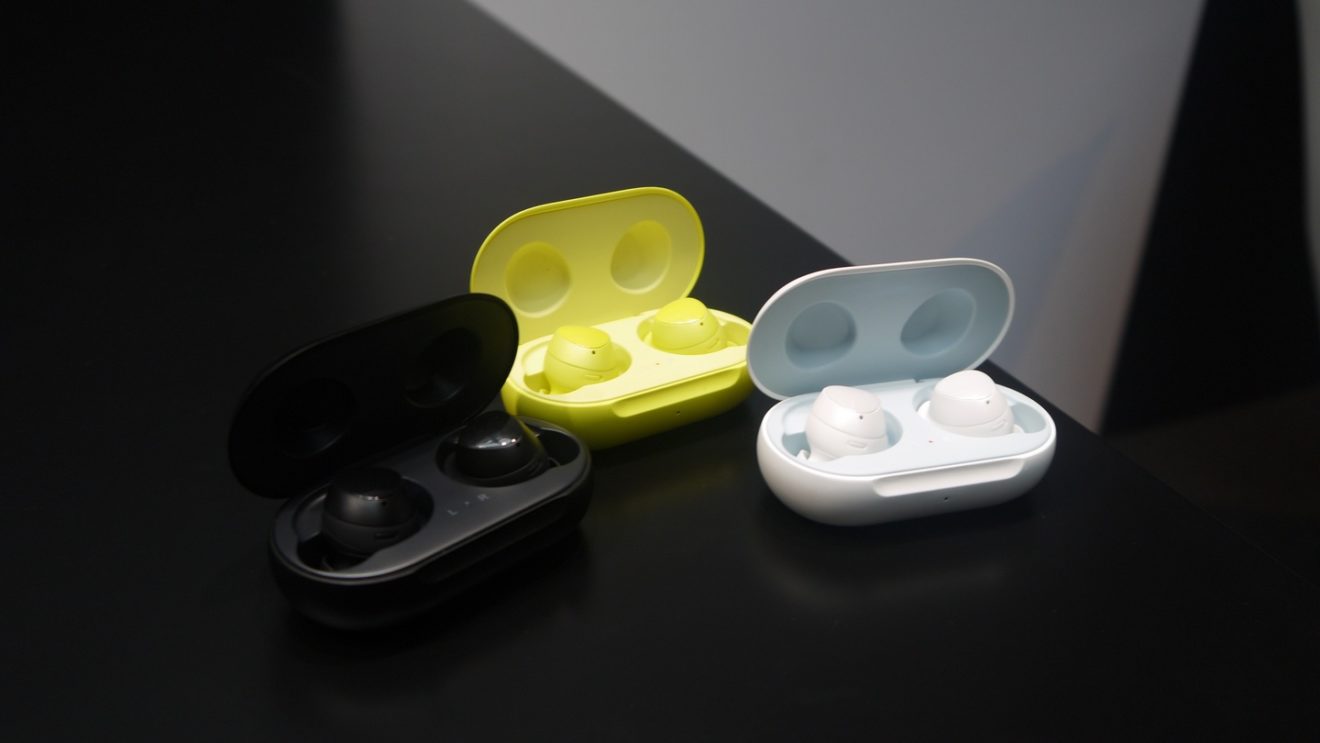
    A new pair of Galaxy Buds will be unveiled along with the Samsung Galaxy Note 10 on August 7. Unfortunately, these are not a new model, but a different color of the current model.

    The new Samsung Galaxy Buds earphones will match the Galaxy Note 10/10+ color, which is called “Aura Glow.” Both the buds and the carrying case will have the same white-silver color to match the Galaxy Note 10/10+.

    As far as price goes, these will cost the same as the original model that was launched back in April: €150/$150. It’s yet unclear whether or not they will be offered for free as an incentive for those who pre-order the Galaxy Note 10/10+, but we’ll most likely find out more about that on August 7.

    In the same piece of news, the same report claims Samsung plans to launch a few new in-ear headphones with AKG branding, created especially for the Galaxy Note 10/10+. The so-called Samsung ANC Wired Headphones will connect via USB Type-C port to the Note 10/10+ and will feature Active Noise Canceling technology for a low price. There will at least one other new pair AKG-branded headphones unveiled next month along with the Galaxy Note 10/10+, but that’s about all we know for now.

  • Samsung brings new messaging feature, more AR Emoji options to Galaxy S9/S9+

    Samsung brings new messaging feature, more AR Emoji options to Galaxy S9/S9+

    More than a year after the release of the Galaxy S9/S9+, Samsung continues to bring new features and important improvements to its last year flagship. The month of July comes with one new feature aimed at Samsung fans and more customization options for AR Emoji.

    These changes come in addition to the July security patch, which is now rolling out to Galaxy S9 and S9+ devices across the world. The update weighs in at 533MB and includes a new feature – Call and Message Continuity. Call and Message Continuity is meant for customers who own not just a Samsung smartphone, but a tablet as well.

    With the new feature, those using Galaxy tablets will be able to accept calls and read their messages from their slate as long as they are logged in to the same Samsung account as their Galaxy phone. The new feature uses either Wi-Fi or mobile data connection, so your phone doesn’t have to be close by to be able to take calls from the tablet. You can find the new feature in the Connections menu.

    Furthermore, the latest update brings the Galaxy S9/S9+ closer to the newest Galaxy S10 series by adding a couple of new customization options for AR Emoji. Also, the UI has been updated to be cleaner and easier to use.

    For the time being, the update is only available in Germany, but Exynos-powered Galaxy S9/S9+ units all over the world should get it as well in the coming weeks.

  • iPhone loyalty drops to its lowest level in a long time as users flock to Samsung

    iPhone loyalty drops to its lowest level in a long time as users flock to Samsung

    Like many other major mobile device vendors, from Samsung to LG, Apple has seen its sales numbers decline recently, a trend that’s unlikely to be reversed anytime soon. But the Cupertino-based tech giant has largely relied on two things when maintaining a positive outlook. Namely, profit margins and loyalty rates.

    While companies like Samsung and Huawei still have a long way to go until catching up with Apple’s major cash cow, a new report compiled by BankMyCell suggests brand loyalty among iPhone owners might not be as impressive right now as just a couple of years back.

    Before sinking our teeth into this data collected from over 38,000 people in the last nine months, we should probably highlight brand and OS loyalty are significantly harder to measure objectively and accurately than things like shipment figures and profit margins. That’s why staggering differences can sometimes be found between similar reports released just six months apart.

    Case in point, iPhone loyalty sits at 73 percent today, according to BankMyCell, compared to 91 percent back in January, as per research conducted by CIRP (Consumer Intelligence Research Partners). Essentially, these numbers vary widely depending on who you ask and especially the sample size of your survey. Although the 38,000 aforementioned people represent a small piece of the US trade-in market, CIRP extrapolated its figures from a sample of only 500.

    With all that out of the way, let’s see if we can understand exactly what that 73 percent rate means. Basically, it means only 73 percent of those who traded in their iPhones since October 2018 chose a new model from Apple, with the other 27 percent instead picking an Android device. If that doesn’t sound too bad, you may want to contrast the number with the 92.3 percent loyalty rate of Samsung smartphone users.

    What’s even worse for Apple is that a whopping 18 percent of iPhone trade-ins migrated to a Samsung handset in June 2019 alone, presumably contributing to the box-office success of the Galaxy S10 family. Meanwhile, by using a combination of first and third-party data, BankMyCell claims iPhone loyalty has fallen to its lowest level in no less than eight years. The slide from as recently as 2017 is outright shocking, as 92 percent of iPhone users expected to stick with Apple just two years ago.

    While things might not be as bad in reality as this new report suggests, the enthusiasm of long-time iPhone owners to immediately upgrade to the next version has undoubtedly declined in recent years to a greater or lesser extent. You don’t have to dig very deep for a reason either, as the iPhone X, XS, XS Max, and XR have all racked up sales below expectations, failing to impress the masses with their designs and largely lacking groundbreaking new features.

    Of course, competition has also stiffened, as Samsung and other top Android brands have managed to make headlines with sleeker high-end designs and excellent price/quality ratios. Apple may need a major redesign to bring iPhone loyalty rates and sales numbers back up, but alas, it looks like we’ll have to wait until 2020 for that to happen.

    In the meantime, this fall’s iPhone 11 lineup will try to stand out primarily with a bunch of camera enhancements, although the new shooter arrangement remains just divisive enough to pose a big problem for Apple in terms of mainstream popularity.

  • Galaxy S11’s chipsets may support fast DDR5 memory and 5G modem integration

    Galaxy S11’s chipsets may support fast DDR5 memory and 5G modem integration

    Next year, we are going to see a real competition in the world of mobile processing units, it seems, as both the next Exynos and Snapdragon 865 chipset lines will be done at Samsung’s second-gen 7nm production facilities. Currently, Snapdragon 855 that is in the Galaxy S10 for the US is done at the first-gen 7nm production node, while Exynos 9820 for the global versions is on 8nm.

    What we were wondering most about, however, is whether Qualcomm and Samsung’s venerable 5G modems will be soldered together with their processors, in a true system-on-a-chip fashion, or will they be separate entities like this year. The need for two separate components to tack on Snapdragon 855 forced many a phone maker to do “5G” versions of their flagships, often with bulkier bodies and larger batteries, and we hope that this tendency won’t stick around next year as well.

    The last thing we heard about Snapdragon 865 is that it will have two versions, with and without 5G connectivity, just like this year, but what wasn’t clear was whether the 5G variant will have the modem integrated in a chipset fashion. Well, the latest tip from Roland Quandt doesn’t really clear that up, either, as he confirms the two models codenames Kona and Hurracan, but says “one likely with, one without integrated 5G modem (SDX55)” is in store which is the same speculation we’ve heard before.

    What we do learn as a new bit of info, however, is that both will come with support for the latest DDR5 mobile memory generation, and the fastest UFS 3.0 storage standard that the OnePlus 7 Pro shipped with. Samsung already announced it is mass production-ready for LPDDR5 memory chips but we wouldn’t hold our breath to see those in phones before next spring and the Galaxy S11 season.

    Samsung recently tipped that it is planning to integrate a 5G modem into a chipset (presumably of its own Exynos making) faster than anyone, and we’d expect to hear about it before the end of the year, with the inevitable end goal to see it make a cameo in the S11 alongside the Snapdragon 865.

  • Samsung to reportedly unveil the Galaxy Note 10 line

    Samsung to reportedly unveil the Galaxy Note 10 line

    According to CNET, a source familiar with Samsung’s plans says that the unveiling of the Samsung Galaxy Note 10 and Galaxy Note 10 Pro will take place on August 7th. It will occur during Samsung’s next Unpacked event to be held at Brooklyn’s Barclays Center, home to the NBA’s Brooklyn Nets. It also is the location where Samsung introduced the Galaxy Note 9 last year. This year, we expect to see four models introduced including the 4G LTE Galaxy S10 and Galaxy S10 Pro, and the 5G versions of the same units.

    The “standard” Samsung Galaxy Note 10 (SM-N970) is expected to carry a 6.3-inch curved AMOLED display. The version sold in the states will be powered by the Snapdragon 855 Mobile Platform with the Exynos 9825 chipset under the hood almost everywhere else. A triple-camera setup is likely to be found on the rear of the device consisting of a 12MP wide-angle camera, 12MP telephoto camera, and a 16MP Ultra-wide camera. A 3400mAh battery will supply the power and there will be an ultrasonic in-display fingerprint scanner. The standard 4G LTE Galaxy Note 10 is expected to be priced in the range of $1,100-$1,200. The 5G version of this phone will be model number SM-N971.

    The Samsung Galaxy Note 10 Pro (SM-N975) will carry a curved 6.7-inch AMOLED display, and have a Time of Flight (ToS) sensor in back beside the three cameras found on the standard model. This sensor measures how long an infrared light takes to bounce off a subject and return to the phone, allowing the device to compute more accurate depth information for the bokeh effect and for face mapping. An ultrasonic in-display fingerprint scanner will be on board, and the Galaxy Note 10 Pro will be equipped with a 4500mAh battery along with a 25W fast charger. The 5G version of this phone (SM-N976) has appeared on the Geekbench benchmark site twice with one of the units apparently heading to Verizon (SM-N976V). This model was equipped with the Snapdragon 855 SoC and included 12GB of RAM. The international version (SM-N976B) had the Exynos 9825 under the hood and 8GB of RAM.

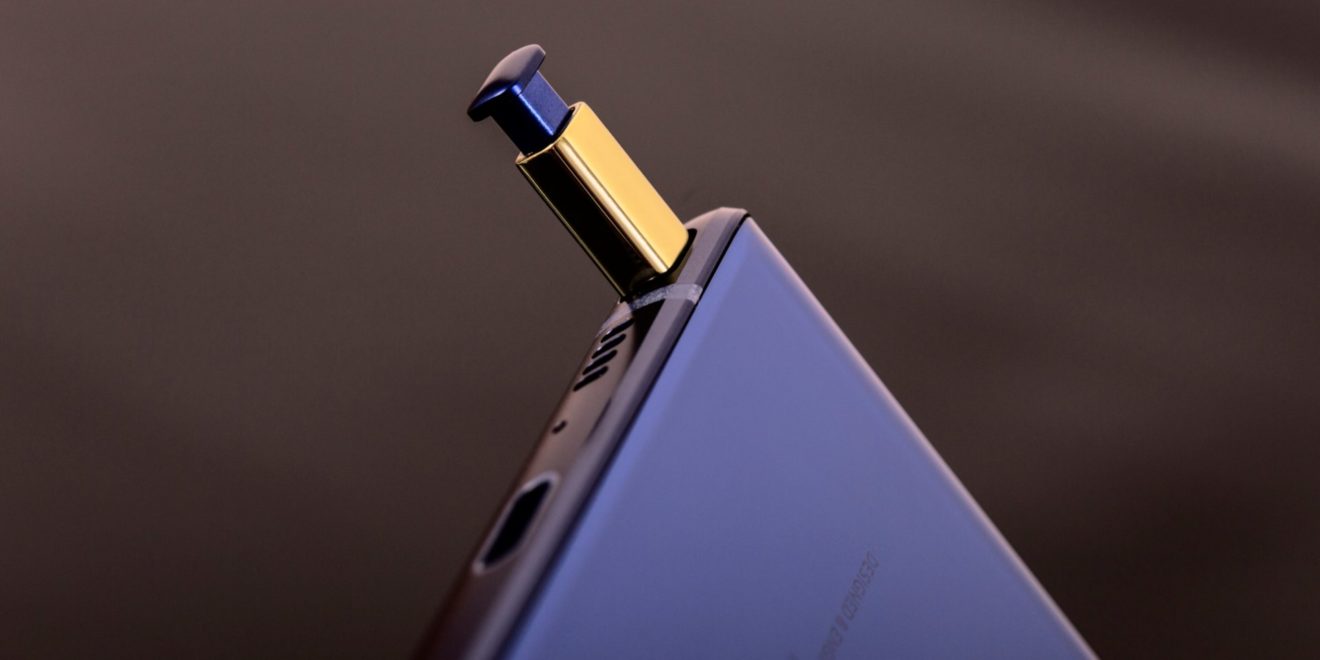
    All four models will come with the S Pen. Last year, following a number of rumors, Samsung added Bluetooth LE support to the stylus allowing it to be used as a remote shutter for the Galaxy Note 9’s camera and as a tool to remotely control streaming media. This year, things have been quiet on the S Pen front so we don’t expect to see drastic changes here. Additionally, none of the four units will have a 3.5mm earphone jack nor will they have a Bixby button. And in an interesting design, the rear cameras will be mounted vertically along the left side of the rear. Last year’s model used a camera housing that was placed horizontally on the phone’s back panel. The Galaxy Note 10 line uses Sammy’s Infinity-O display; this means that punch-holes are used for the phones’ selfie snappers.

    From the looks of things, it appears that the Galaxy Note 10 will be introduced before the release of the Galaxy Fold. Considering that the latter was due to be released on April 26th, this was not expected. AT&T and Best Buy have canceled pre-orders for the foldable device, and Samsung has too unless it was expressly told not to by its customers; some of these consumers, willing to shell out $1,980 for the Galaxy Fold, might decide to save some money and purchase a Galaxy Note 10 model instead.

    So for now, if you’ve been looking forward to the unveiling of the Galaxy Note 10, you should circle August 7th on your calendar. Last year, two weeks separated the August 9th unveiling of the Galaxy Note 9 and its launch on August 23rd. With that in mind, the Galaxy Note 10 could launch this year on August 21st.

  • Samsung cuts production in China as local struggles continue

    Samsung cuts production in China as local struggles continue

    Samsung has been struggling in the Chinese smartphone market for quite some time. In fact, around six months ago the company shut down one of its factories in the region. Now, suggesting things have improved little, Samsung has confirmed that its scaling back production at its only remaining Chinese manufacturing plant.

    At its peak back in 2013, Samsung accounted for an impressive 20% of all smartphone shipments in China. But as local rivals with thinner profit margins became more competitive, the company’s sales quickly began to decline. Over the course of the past year, Samsung has struggled to retain a 1% market share and, while the Galaxy S10 has certainly boosted performance, it seems sales still aren’t at the required level.

    The company’s plants in China previously served both local and international markets, but over the past few years Samsung has shifted a big portion of its production over to countries such as India, leaving Chinese factories to cover local demand only. As such, any cuts suggest the company’s revival strategy isn’t going as smoothly as hoped.

    The South Korean-based brand hasn’t yet revealed the exact extent of these latest production cuts, so the adjustments could potentially be minimal. But it’s reported that Samsung is offering voluntary layoffs with compensation to interested employees until the 14th of June.
  • Huawei reassesses goal of overtaking Samsung

    Huawei reassesses goal of overtaking Samsung

    Huawei has made no secret of its plans to overtake Samsung as the world’s largest smartphone manufacturer by the first quarter of 2020. But in light of its recent US trade ban, the company is reassessing its goal.

    According to Honor President Zhao Ming, Huawei is currently looking into the possibility of adjusting its internal goals. He says it’s still “too early” to say whether or not the Chinese company is capable of achieving the goals it currently has set, although things aren’t looking too good.

    Per sources familiar with the matter, Taiwanese manufacturer Foxconn that also assembles iPhones and Xiaomi devices recently shut down Huawei production lines. This happened because the company suddenly reduced its orders for new phones in light of weakened demand due to the US ban.

    It’s unclear at this point if Huawei’s production cut is temporary or long-term, but the request could negatively impact Foxconn. After all, the latter reportedly hired lots of new workers earlier this year in order to cope with the growing demand for Huawei’s smartphones.

    On a related note, analyst Ming-Chi Kuo recently forecast a significant drop in sales for Huawei this year. The best-case scenario, which involves launching an Android replacement at some point in the near future, would see Huawei ship between 240 and 250 million smartphones by the end of the year, down from the previous estimates of 270 million devices. However, if the company fails to release an in-house OS by the end of the year, Huawei’s shipments could fall to just 180 million devices.

  • Samsung and Apple phone business still going down

    Samsung and Apple phone business still going down

    The latest report from Gartner shows global smartphone sales declined 2.7% in the first quarter of 2019. The fallout continues for both Apple and Samsung, each recording quarter one revenue of 17.6% and 8.8% respectively. The other smartphone maker, Huawei, despite a lack of presence in the US, is the only vendor in the top three rankings that reported positive growth across all regions, growing 44.5% with shipment totaling 58.4 million units.

    “Demand for premium smartphones remained lower than for basic smartphones, which affected brands such as Samsung and Apple that have significant stakes in high-end smartphones,” said Anshul Gupta, senior research director at Gartner. “In addition, demand for utility smartphones declined as the rate of upgrading from feature phones to smartphones has slowed, given that 4G feature phones give users great advantages at a lower cost.”

    Slowing innovation in flagship smartphones and rising prices continued to extend replacement cycles. The two countries that sell the most smartphones, namely the US and China, saw sales decline by 15.8% and 3.2%, respectively, in the first quarter of 2019.

    Huawei’s fortunes are in question, however, as news of the pullout of its licensing by Google of the Android operating platform, have seen a stoppage by retailers of Huawei-branded smartphones.

    “Unavailability of Google apps and services on Huawei smartphones, if implemented, will upset Huawei’s international smartphone business which is almost half of its worldwide phone business. Not the least it brings apprehension among buyers, limiting Huawei’s growth in the near term,” said Gupta.

    Rounding out the top five are the two other Chinese brands – Oppo and Vivo, each reporting an increase in unit shipments in the first quarter. Falling off the top five is Xiaomi which, Gartner estimate, shipped 27.2 million units – 200,000 thousands unit fewer than Vivo.

  • Samsung Galaxy S10 update adds Night mode improvements

    Samsung Galaxy S10 update adds Night mode improvements

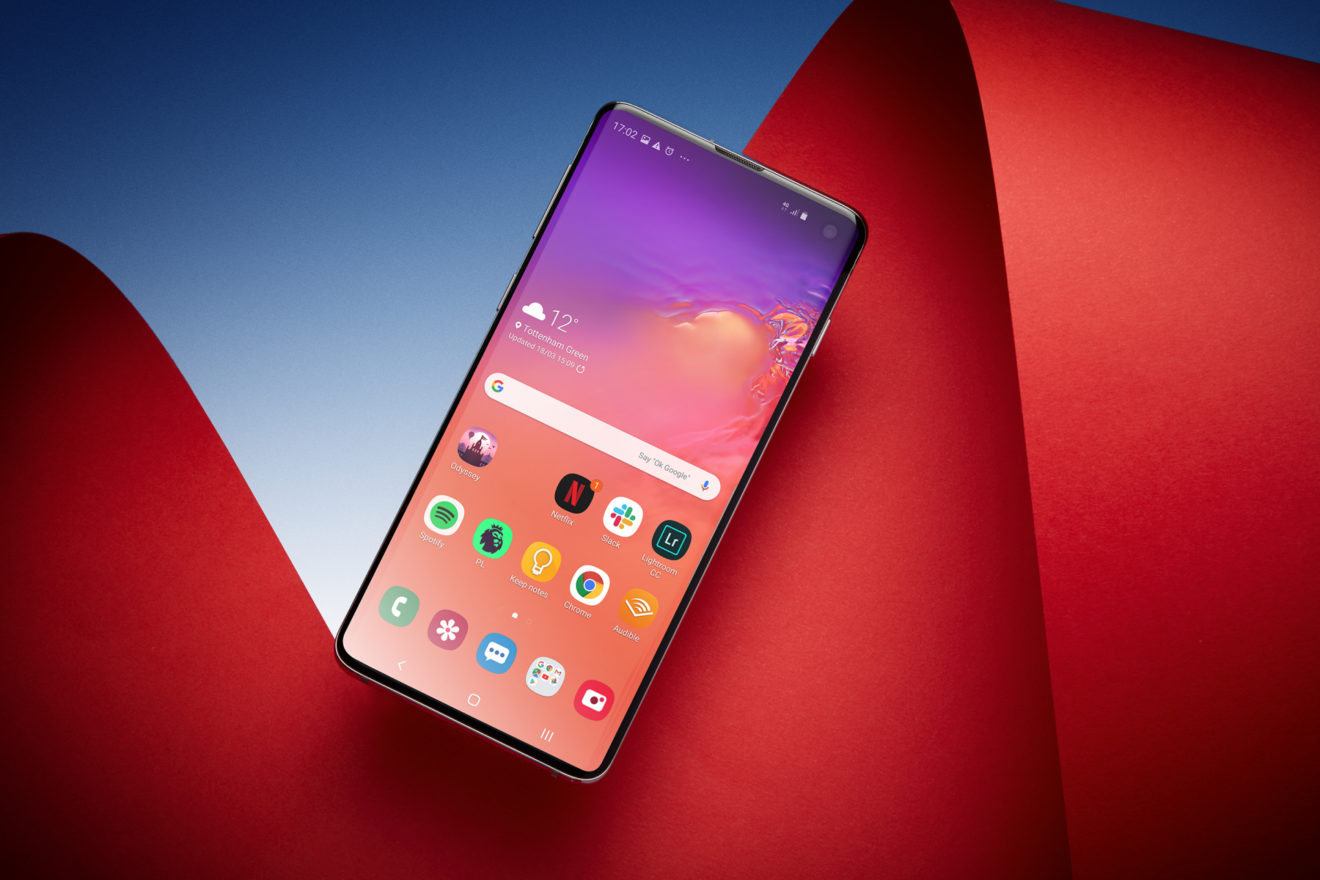
    Samsung continues to improve the Galaxy S10 family with important new features and additional functionality. The upcoming update focuses on camera enhancements by adding a couple of nifty new features, as well as improvements to the phones’ performance when taking night shots.

    As the title says, it appears that the Galaxy S10’s decent Night mode has just been upgraded to very good. According to SamMobile, the May security update improves the Night mode by allowing users to take much cleaner pictures in low-light conditions.

    The differences are quite important as the update reduces noise that sometimes appears in night pictures. Moreover, Galaxy S10 users will now be able to use the Night mode with the ultra-wide camera, and even though noise still pops up in pictures taken with it, they are brighter and more detailed.

    Another important improvement is the fact that you can take Live Focus photos with the telephoto lens, something that was only possible with the Galaxy S10 5G. The new addition will allow users to take bokeh pictures of large objects much easier.

    Now, the update is currently being deployed in Switzerland as May 2019 security patch, but all three Galaxy S10 units should receive it worldwide in the coming days. We don’t have a release date for the United States, so you’ll just have to hope it will be rolled out sooner rather than later.

  • The Galaxy Note 10 Will be Sold in 6 Colors

    The Galaxy Note 10 Will be Sold in 6 Colors

    The Galaxy Note 10 will arrive this summer packed full of flagship features and specs, and according to MySmartPrice, Samsung hopes to pair all of this with an extensive range of colors. The Galaxy Note 8 and Galaxy Note 9 both launched initially in a range of four colors which were subject to availability. But with this year’s Galaxy Note 10, Samsung is reportedly preparing a grand total of five finishes that’ll include both old and new colors.

    Borrowing from the Galaxy S10 that Samsung released earlier this year, the Galaxy Note 10 will reportedly be available in Prism Black, Prism White, and Flaming Pink upon launch. It’s unclear if other Galaxy S10 colors will be used at a later date, but the possibility certainly exists.

    Like the Galaxy Note 9 that precedes it, Samsung’s next flagship is also set to be sold in a Cloud Silver finish. Completing the lineup will apparently be an all-new red color. Curiously, Samsung was planning a red variant of the Galaxy S10 but ultimately scrapped it ahead of launch.

    As per usual, the availability of the Galaxy Note 10 colors mentioned above will vary by market and storage configuration. Moreover, it’s worth pointing out the fact that Samsung could still choose to cancel or delay certain finishes prior to the flagship’s announcement. Nevertheless, as things stand the Prism Black, Prism White, Flamingo Pink, and Cloud Silver versions are set to be sold internationally, while the red model will be available in just a handful of markets.

    Following in the footsteps of the Galaxy S10 series, the Galaxy Note 10 is expected to arrive powered by Qualcomm’s Snapdragon 855 in the US and the Exynos 9820 over in Europe and many other markets.

    Presumably, these high-end chipsets will arrive paired with 8GB of RAM and 128GB of storage as standard. However, if this configuration isn’t sufficient, other variants with up to 12GB of RAM and 1TB of storage are extremely likely. Accompanying all of this should be Android 9 Pie paired with Samsung’s One UI custom interface and a large 6.3-inch curved AMOLED display. Speaking of which, this is expected to retain the slim bezels and punch hole found on the Galaxy S10 line. Over on the rear of the Galaxy Note 10 is expected to set a minimum of three rear cameras rather than the two found on last year’s model. There is, however, a strong possibility Samsung will add a fourth camera to the setup.

    If this happens, consumers can expect to find a 12-megapixel variable aperture camera accompanied by a second 12-megapixel sensor paired with a 2x telephoto zoom lens. The flagship is also set to benefit from a 16-megapixel ultra-wide-angle camera that’ll give users the ability to capture more in their photos, and a dedicated Time-of-Flight sensor which should provide depth data for improved bokeh imagery and more accurate AR content.

    In addition to the regular Galaxy Note 10, which itself will also be accompanied by a 5G variant, Samsung is reportedly preparing a Galaxy Note 10 Pro and Note 10 Pro 5G. These two devices are set to look identical to the regular Galaxy Note 10 models, but will apparently feature massive 6.7-inch AMOLED displays and huge 4,500mAh batteries.

    Rumor has it the smartphones will also feature two front-facing cameras and potentially more storage and RAM as standard.

  • Apple TV and AirPlay 2 are now available on Samsung smart TVs

    Apple TV and AirPlay 2 are now available on Samsung smart TVs

    Earlier this year, news broke that Apple would bring the Apple TV app to all Samsung smart TV models from 2018 and 2019. Today, alongside the redesign of the Apple TV app, support for it and AirPlay 2 is going live on Samsung’s smart TVs, turning the South Korean tech giant into the first TV manufacturer to natively support Apple’s services without a set-top box.

    In order to gain access to Apple TV and AirPlay 2, Samsung Smart TV owners will have to install a new firmware update that enables the services. Users in Australia have already started receiving the update, though there’s no official schedule for when the update will be rolled out in other regions.

    Starting this year, all new Samsung smart TVs should have AirPlay 2 and Apple TV integration out of the box, meaning that the app will be compatible with Samsung’s TV search function, Bixby Voice, and the Universal Guide feature, which surfaces shows and movies based on your interests and preferences. The update also enables casting content from iPhones and iPads to Samsung TVs via AirPlay 2.

    The redesigned Apple TV app now features a Channels tab, where users can find their favorite content from various networks and streaming services, as well as a curated section, where content will be surfaced on a per-user basis, depending on interests.

    If Apple TV is available in your country, and you own a Samsung smart TV model from the last year, keep an eye out for the firmware update. If you’d like to manually check for an update, go to Settings > Support > Software Update on your TV and select “Check for updates.”

  • Samsung Galaxy Note 10 Supports 50W Charging

    Samsung Galaxy Note 10 Supports 50W Charging

    Samsung recently released two phones that support 25W fast charging, but you may have missed that because they are not available worldwide. Those are the 5G version of the Galaxy S10 and the Galaxy A70. More Samsung phones may get super-fast charging in the future, starting with this year’s Galaxy Note 10.

    We’ve already heard rumors that the Galaxy Note 10 is likely to great battery life, and it seems like Samsung is also planning to introduce 25W fast charging alongside the increased battery capacity. It’s too early to tell whether the base Note 10 will get super-fast charging, or whether it will be reserved for the “Pro” version only, but prolific leaker Ice Universe claims that the charge speed may actually exceed 25W. We may be talking about 50W, which is the current bar set by the competition.

    OnePlus’s DASH Charge works at 30W, while Oppo’s SuperVOOC charge can hit around 50W, and both have been tested with great results. Similarly, Xiaomi has an insane 100W prototype charging solution that’s said to be able to fully juice up a 4000mAh battery in just 17 minutes. Over the last three years, Samsung has understandably been a bit more careful in regards to battery capacity and charging speeds, as the memory of the ill-fated Galaxy Note 7 still lingers in the public mind.

    The Samsung Galaxy Note 10 and Galaxy Note 10 Pro are likely to launch in mid-August, and if recent rumors are to be believed, they won’t disappoint. The more expensive Pro variant is said to feature the same hexa-camera setup as the Galaxy 10 5G. That includes four cameras on the back (12MP primary with OIS + 12MP telephoto with 2x optical zoom + 16MP ultra-wide angle+ depth sensor) and two selfie snappers in front. The base Galaxy Note 10 will reportedly have a penta-camera setup that includes everything on the Note 10 Pro, except for the depth sensor. The U.S. version of all Note 10 units will be powered by the Snapdragon 855 Mobile Platform, equipped with at least 8GB of memory.