Tag: samsung

  • Samsung Display workers asked to be quarantined in Vietnam

    Samsung Display workers asked to be quarantined in Vietnam

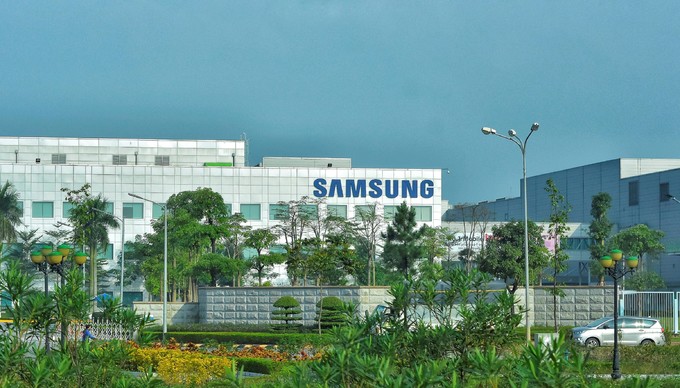
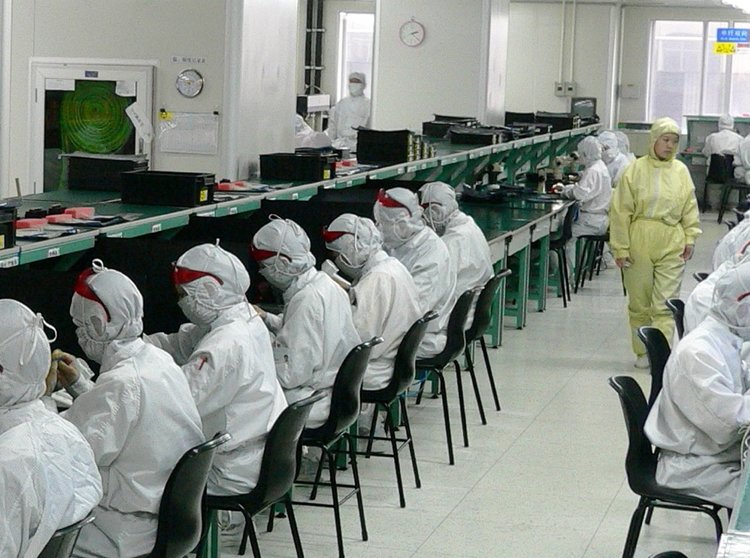
    Based on a statement released by the anti-COVID-19 task force of Vietnam’s Bac Giang province, a worker at the Samsung Display factory’s EQC-SI unit, age 25, had tested COVID-19 positive on Sunday.

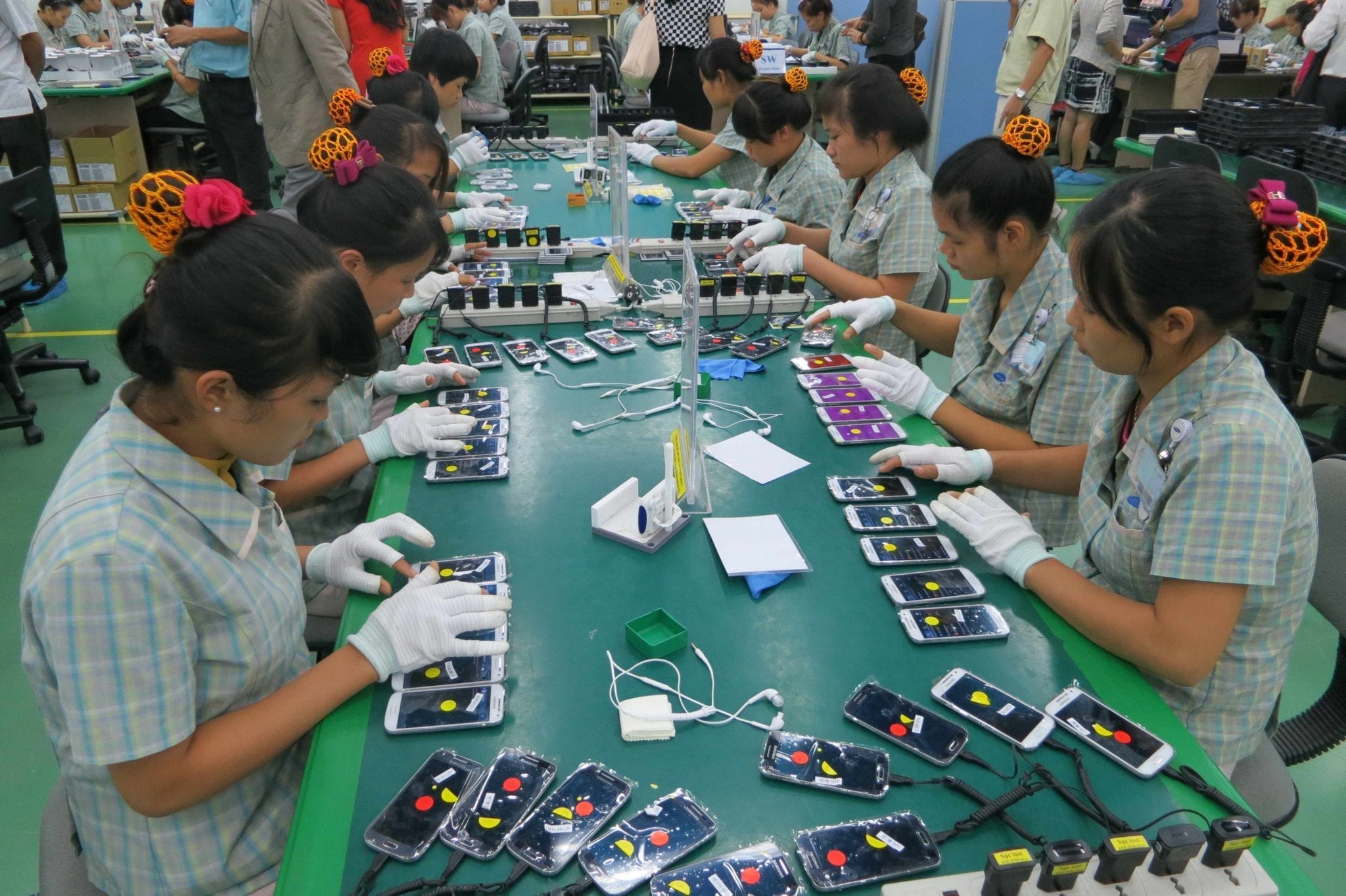
    This led to the quarantine of all 44 people in that unit, while the factory, located in the province of Bac Ninh, and buses used for transporting workers have been additionally sprayed with disinfectants. Samsung has confirmed the case, while noting that Samsung Display’s production lines in the country have not been affected.

    Samsung is Vietnam’s largest foreign investor, and the world’s largest OLED screen manufacturer, holding over 90% of the entire market.

    Worldwide, most smartphone companies have been experiencing various setbacks due to the coronavirus pandemic. Phone sales hit a 10-year low in sales, as people are increasingly reluctant to update their older smartphones or purchase expensive new flagships due to the financial uncertainty the virus brings.

    We recently reported that an Apple supply partner in Taiwan prepared for decreased production in the upcoming months, while COVID-19 is also expected to delay the manufacturing processes of many other companies’ upcoming flagship and 5G smartphones.

    Several tech companies took measures towards supporting their customers and various affected groups around the world during the coronavirus pandemic. Apple is letting Apple Card users skip monthly payments without occurring interest, and is donating millions of dollars towards the fight against COVID-19. Samsung began offering door-to-door servicing of their Galaxy products in some regions, encouraging customers to remain safely at home. In addition, Google recently made its Premium Google Meet service free until the end of this year, in an effort to help businesses and schools remain connected.

  • Samsung Internet Browser beta shows privacy and interface improvements

    Samsung Internet Browser beta shows privacy and interface improvements

    Samsung devices come with the South Korean giant’s own app ecosystem, including an email client and an internet browser app. And although most Android users usually stick with Google’s offerings, namely Gmail and Google Chrome, Samsung’s own internet browser is becoming a respectable alternative to the latter.

    In its new beta version, the Samsung Internet app brings a number of security and privacy-related updates, including support for DuckDuckGo, which is a search engine that’s primarily focused on user privacy, its tagline being “The Search Engine That Doesn’t Track You.”

    Another great addition is support for third party content (advertising) blockers. SamMobile also reports that a new feature called “Block unwanted pages” will combat shady websites that would normally be a hassle to get out of, requiring several back button taps.

    The Samsung Internet Beta app also introduces some convenient customizations, such as the ability to add shortcuts to actions like Share or activating Secret Mode (an alternative to Incognito in Chrome) to the menu bar.

    Its other notable features include support for progressive web apps, allowing for certain websites to be installed as apps. Samsung’s Video Assistant also made a return recently, letting users switch between viewing modes while watching videos. 360° video support and an Amazon Shopping assistant, allowing for comparing products and finding deals, are also available.

    The browser itself is based on the open-source Chromium project, much like Chrome and Microsoft’s new Edge browser, so web pages should load and behave as they do in those alternatives, with no issues.

    It’s not certain if all of the features seen in the beta will make it to the main Samsung Internet Browser app, and when, though generally a jump from beta shouldn’t take too long.

  • Samsung beats first-quarter estimates, despite virus-driven retail slump

    Samsung beats first-quarter estimates, despite virus-driven retail slump

    Samsung Electronics has delivered better-than-expected first-quarter earnings as robust demand for chips apparently offset a slump in smartphone and home appliance sales amid the novel coronavirus pandemic.

    But analysts warned that the company may feel the pinch of the COVID-19 outbreak during the current quarter.

    The South Korean tech giant put its March-quarter operating profit at 6.4 trillion won (US$5.2 billion), up 2.73 percent from 6.23 trillion won a year ago.

    It beat the market consensus of 6.19 trillion won in operating profit in the survey conducted by Yonhap Infomax, the financial arm of Yonhap News Agency, on 20 Korean brokerage houses.

    Samsung recorded an 11.6-per-cent operating margin in the first quarter, the lowest since the third quarter of 2016.

    Samsung, the world’s leading memory chip and smartphone vendor, did not break down performances of its respective business divisions, saying it will announce the detailed earnings later this month.

    Analysts in Seoul said Samsung’s semiconductor business may have helped the company stay afloat amid the novel coronavirus crisis on the back of increased demand for server chips for data centers and a steady rise in memory-chip prices.

    “Increased non-face-to-face activities prompted by the COVID-19 outbreak has led to a surge in data traffic and server expansion,” Kim Dong-won, an analyst at KB Securities, said.

    “It pushed up the average selling prices of memory chips.”

    However, smartphone and home-appliance sales may have slumped in the face of weak demand amid the COVID-19 outbreak around the globe, the analysts said.

    Samsung had to temporarily shut down about one-fourth of its global manufacturing bases, including those in India, Brazil and Russia, amid the spread of COVID-19. Last month, it even shifted some of its premium smartphone production from South Korea to Vietnam.

    Samsung also had to close its home-appliance stores in North America and other countries and asked consumers to buy products online.

    Analysts said Samsung is expected to have shipped only 60 million smartphones in the first quarter, down from 72 million units a year ago, despite the launch of its new flagship smartphone line, the Galaxy S20, last month, as COVID-19 limited marketing activities.

    Postponement of major sporting events, such as the Tokyo Summer Olympics and the UEFA Euro Championship, also dealt a hard blow to Samsung’s TV sales, they added.

    Analysts predicted Samsung’s mobile and consumer-electronics units to have posted an operating profit of 2.4 trillion won and 400 billion won, respectively, in the first quarter.

    In particular, Samsung’s display business may have suffered an operating loss in the January-March period due to the double whammy of projected slumps in mobile and TV sales, according to analysts.

    Analysts expected Samsung’s mobile and TV businesses to take a heavier toll in the second quarter as the pandemic is likely to further dampen demand for mobile handsets and home appliances in advanced markets like North America and Europe.

    “Samsung’s smartphone business suffered relatively little impact from COVID-19 in the first quarter as it does not rely much on the Chinese market,” Yoo Jong-woo, an analyst at Korea Investment & Securities, said.

    “The company started to see its smartphone shipments taking COVID-19 impact from mid-March as it spread across the US and Europe.”

  • Samsung responds to critics over Exynos 990-Snapdragon 865 performance gap

    Samsung responds to critics over Exynos 990-Snapdragon 865 performance gap

    Just a day or so ago, we told you that some members of Samsung’s chip unit were feeling “humiliated.” That’s because Samsung decided to power its three new flagship models with the Qualcomm Snapdragon 865 Mobile Platform everywhere except Europe. On that continent, the Galaxy S20, Galaxy S20+, and Galaxy S20 Ultra 5G are equipped with the Exynos 990 SoC produced by Samsung. This is the opposite of Sammy’s traditional processor pairings; historically, Galaxy S phones sold in the U.S. and China would be equipped with a Snapdragon chipset while the rest of the world would find an Exynos SoC under the hood.

    The lone exception to this setup (prior to this year) took place in 2015 when the Samsung Galaxy S6 was powered by the Exynos 7420 worldwide. Fears that the Snapdragon 810 was prone to overheating lead Samsung to make this move. So imagine that you work on the Exynos 990 in South Korea for Samsung and you discover that in that market, the only versions of the Galaxy S20 models available are those powered by the Snapdragon 865 Mobile Platform. That might humiliate you.

    Samsung said on Friday that “the Galaxy S20 is a smartphone that’s been reimagined to change the way you experience the world and depending on the region, the Galaxy S20 will either ship with the Exynos 990 or the Snapdragon 865. Both the Exynos and Snapdragon processors go through the same strict and rigorous, real-life testing scenarios in order to deliver consistent and optimal performance over the entire lifecycle of the smartphone.”

    Some Samsung fans in Europe are upset because they feel like they are paying more for what they consider an inferior product. That’s because they don’t consider the Exynos 990 to be a match for the Snapdragon 865. There are some who note that the Exynos 990 has a habit of throttling the GPU, negatively impacting the frame rate when playing a game; that can result in choppy looking animation.

    In addition, the Snapdragon 865 Mobile Platform uses ARM Holdings’ Cortex-A77 CPU cores providing it with a 20% performance advantage over the Exynos 990 chipset which uses the older Cortex-A76 CPU cores. And the GPU paired with Qualcomm’s SoC, the Adreno 650, outperforms the ARM Mali G77 GPU used with the Exynos 990.

    Last month, we told you that a petition was started on the Change.org website asking Samsung to stop selling flagship phones powered by its own Exynos chips. The petition has a goal of 35,000 signatures and as of this morning, it has attracted 34,222 leaving it just 778 short of the target.

    The actual petition reads, “Outside of the US, Samsung sells phones that use their own-branded Exynos SoC chips, instead of using Qualcomm’s Snapdragon. Samsung also use (sic) their own-brand camera sensors, whereas in the US, they use parts from specialists Sony. Based on experience, and studies from numerous sources online, we believe Samsung’s parts to be inferior to their US counterparts. Phones with Exynos SoC chips are shown to perform slower, have less battery life, use inferior camera sensors and processing, overheat and throttle faster, amongst other issues.”

    It goes on to say, “At the very least, we would appreciate if Samsung were transparent about their inconsistencies. Alternatively, for Samsung to ensure we weren’t paying the exact same price or even higher than our US friends. We have had to accept this over many years over different iterations of the flagship phones. Every year we have hoped for Samsung to either give us the same device or make their own parts perform on par with the competition. They have failed to deliver on these requests over and over again and the performance gap only seems to widen over time. In the age of transparency, it is time for a change and for us consumers to have the right to choose what we spend our hard-earned money on.

    Samsung, please hear us! We love your devices and want to be treated fairly so that we can continue to enjoy them.” Even if the manufacturer takes the time to read the petition, there is no guarantee that it will follow through on the request with future flagship models.

  • Samsung temporary closing its smartphone and home appliance factory in Brazil

    Samsung temporary closing its smartphone and home appliance factory in Brazil

    Another factory falls victim to a global pandemic. As the coronavirus begins spreading rapidly in Latin America, Samsung has decided to shut down its factory in Manaus, Brazil. The measure is temporary and comes after the Brazilian government called out for help in containing the spread of the virus.

    Manaus is situated in the northern part of the country, and the Samsung facility near the city is producing smartphones and home appliances for the local market. The factory will remain closed until Sunday, while the other facility in Campinas, Sao Paulo state, will remain operational, at least for the moment

    There are 1960 confirmed cases of COVID-19 infections in Brazil with 24 deaths. Europe is now at the peak of the pandemic with hundreds of people dying in Italy each day. Researchers think that in countries with warmer climates the virus will slow its spread, but that won’t halt the pandemic.

    The situation in India and Latin America shows some correlation to that prediction. However, governments use the welcomed delay to apply preventive measures. Samsung already closed its biggest smartphone factory in India and it will remain closed until May 25 in response to a request from the Indian government. COVID-19 cases in the country are still under 1000, but officials expect numbers to ramp up fast in the following weeks.

  • Smartphone shipments suffer a record breaking decline

    Smartphone shipments suffer a record breaking decline

    Thanks to the coronavirus, February was the worst month in the history of the smartphone industry as global shipments plunged 38% year-over-year. Strategy Analytics says that this was the biggest year-over-year decline in the history of the worldwide smartphone market. The number of smartphones delivered globally last month plunged to 61.8 million units from 99.2 million handsets during the same month last year. On a sequential basis, the 61.8 million phones shipped in February represented a 39% drop from January’s total. The COVID-19 outbreak forced manufacturers in China to shut down assembly lines and retail stores in the world’s largest smartphone market.
    “February 2020 saw the biggest fall ever in the history of the worldwide smartphone market,” according to Neil Mawston, Executive Director at Strategy Analytics. He added that “Supply and demand of smartphones plunged in China, slumped across Asia, and slowed in the rest of the world. It is a period the smartphone industry will want to forget.”
    During February, Samsung led the way in global smartphone shipments and sales. During the month, the manufacturer unveiled the new Galaxy S20 line and released the foldable Galaxy Z Flip. Following Samsung in both shipments and sales were Apple, Xiaomi, Huawei, OPPO and Vivo. And the research firm expects the numbers for this month to show weakness as well. Yiwen Wu, Senior Analyst at Strategy Analytics, says, “Despite tentative signs of recovery in China, we expect global smartphone shipments overall to remain weak throughout March 2020. The coronavirus scare has spread to Europe, North America and elsewhere, and hundreds of millions of affluent consumers are in lockdown, unable or unwilling to shop for new devices. The smartphone industry will have to work harder than ever to lift sales in the coming weeks, such as online flash sales or generous discounts on bundling with hot products like smartwatches.”
    It’s ironic that just as assembly lines are ramping up in China and Apple has reopened all 42 Apple Stores in the country, it shuts down its stores throughout the rest of the world. It obviously is going to be sometime before we return to some semblance of normalcy. As a result, we can expect further weakness for the industry not only for the current month but perhaps throughout the spring and summer.
  • Samsung is looking into its own cloud service, likely to ditch its current provider

    Samsung is looking into its own cloud service, likely to ditch its current provider

    Samsung has decided upon self-reliance and is trying to substitute its cloud service provider. Samsung’s cloud currently relies 60% on Amazon Web Services, reports SamMobile, while the remaining 40% is outsourced to other providers. The cloud platform supports its smartphones, IoT devices and other products.

    Basically, Samsung is planning to first conduct several tests, bringing its cloud infrastructure to some of its departments in order to slowly limit its dependence on Amazon Web Services (AWS), and eventually stop using it altogether.

    So, why has Samsung decided to do this? First of all, of course, there are cost-related reasons. According to SamMobile, the company has been paying hundreds of millions of dollars every year for the service. Last year, more than $483 million, for Samsung Electronics alone, was paid to AWS. Additionally, as the number of users grows, the company has to pay even more for cloud computing solutions. If Samsung would rely on its own cloud, reportedly this could save a lot of money for the company.

    Secondly, there is the reason for security. The South-Korean-based firm wants to maintain its cloud by itself and thus ensure a secure environment, dependent on Samsung’s own efforts. However, it is not clear which organization will support Samsung’s cloud yet. It’s said that the company may choose Joyent, a cloud service that Samsung bought in 2016, as Amazon Web Services’ replacement.

  • Samsung expects 5G demand to drive chip sales higher in 2020

    Samsung expects 5G demand to drive chip sales higher in 2020

    Thanks to the coronavirus, most of the world’s tech manufacturers are facing a situation that they’ve never had to deal with before. Navigating a global economy that has been turned upside down because of the disease, Samsung Chief Executive Kim Ki-nam cited the pandemic and the U.S.-China trade dispute for continued weakness in the global smartphone market. While Kim is negative on the outlook for smartphones this year, he is positive about the company’s chip business; he expects a rebound in 2020 after weak global demand and the U.S.-China trade war ate into Sammy’s chip business last year. The unit accounts for half of the company’s operating profit.

    Koh Dong-jin, president of Samsung’s mobile and network business, told the annual general meeting in Seoul that “The global smartphone market was expected to turn to growth this year, but with virus showing signs of being prolonged, the smartphone market is contracting. But 5G smartphone demand is expected to rise.” Samsung just released its first-half flagship phones and the early word is that sales of the Galaxy S20 line are well below the pace seen after the release of previous Galaxy S models.

    The coronavirus surely has a lot to do with that and while the Space Zoom feature with a 100x hybrid zoom sounds enticing, the $1,400 price tag on the Galaxy S20 Ultra 5G is quite daunting in a world where a small bottle of hand sanitizer now costs over $100-if you can find one. For global consumers with no idea whether they will still have a job a few weeks from now, making the purchase of an expensive new phone seems unnecessary when the mortgage is due and the children need to be fed.

    Still, Samsung’s consumer electronics chief Kim Hyun-suk said that it is too early to figure out how COVID-19 will affect the company’s consumer business. Kim said, “We had expected the consumer electronics market to rise slightly this year, but with the coronavirus fast-spreading, uncertainties are growing faster than ever, and it is very difficult to predict the future.”

    But then it comes to chips, Samsung feels positive about 2020, unlike rival chipmakers who have been chipping away at their sales forecast. Samsung sees strong demand for chips used in 5G wireless networks, data centers, and automobiles. While demand for chips will rise, supply will shrink according to Kim as foundries (including Samsung’s) move to 5nm chip production instead of increasing capacity. At 5nm, Samsung’s chips will carry 127 million transistors per square mm making them more powerful and energy-efficient than current chips made using the 7nm node.

    The report helped Samsung’s shares rise .6% earlier today against a broader market decline in South Korea of .5%. The number of people attending Samsung’s stockholders’ meeting dropped from 1,000 last year to 400 this year because of the coronavirus outbreak. Those showing up at the gathering were scanned with a thermal camera and had their temperature taken when they first arrived at the venue. They also were seated two seats away from each other to help prevent attendees from spreading the virus. The company also instituted electronic voting for the meeting and suggested that stockholders vote online.

    It has been a busy first quarter for Samsung with the release of the Galaxy Z Flip foldable phone and the launch of the Galaxy S20, Galaxy S20+ and Galaxy S20 Ultra 5G. Later this year, we should see Samsung release the Galaxy Fold 2, and the Galaxy Note 20. Last year Samsung remained the largest smartphone manufacturer in the world followed by Huawei and Apple.

  • Indian retailers boycott Samsung products

    Indian retailers boycott Samsung products

    Indian retailers are staging a three-day nationwide boycott on selling Samsung mobile devices in response to the firm’s exclusive discounting deals with e-commerce operators.

    The All India Mobile Retailers Association (AIMRA) has arranged the Samsung boycott at brick-and-mortar outlets following several rounds of unanswered communications with Samsung country heads extending back over the past five years.

    “We will be showing our protest through digital posts, covering Samsung branding with a black cloth in our stores, and not doing business with Samsung distributors for three days,” said AIMRA president Arvinder Khurana, adding that Samsung representatives had neither met with leaders of their organization nor responded to emails.

    The association has been working to end deep discounting and cashback offers for e-commerce mobile retailers and has drawn guarantees of fair pricing across channels from Vivo, Oppo and Realme.

    Samsung is “adamant and underestimating the power of offline,” said Khurrana. “They are the only brand with M Series exclusive tie-up and now to grab our customers they have also tied up for a cashback offer through Amazon Pay … Such activities have caused great damage to us but the brand does not seem to be interested in working with offline traders.”

    Industry commentators have noted that the move will heavily impact Samsung’s revenues and shake consumer confidence in the brand.

  • South Korea hopes Vietnam will not quarantine Samsung experts

    South Korea hopes Vietnam will not quarantine Samsung experts

    he South Korean envoy has expressed concern Samsung may suffer huge losses if 1,000 South Korean experts are isolated upon arrival in Vietnam.

    “If experts and engineers of Samsung Electronics enter Vietnam and are placed in quarantine for 14 days, this giant can suffer great damage,” Ambassador Park Noh-wan told reporters in Hanoi Friday.

    Samsung needs to bring in another 1,000 experts to Vietnam to support production line operations, he said.

    Vietnam has suspended entry for those arriving from Daegu City and North Gyeongsang Province, South Korea’s two largest Covid-19 outbreak areas, over the past two weeks. Those arriving from South Korea are automatically quarantined for 14 days as a preventive measure.

    The South Korean Embassy in Vietnam has proposed that the Vietnamese government adjusts its policy, allowing representatives of Korean businesses, including experts and engineers of Samsung and LG, to enter the country and not be quarantined.

    South Koreans with diplomatic and official passports should also be considered for this policy, Park said, adding that all people with a medical certificate issued by Korean medical authorities should be allowed to enter Vietnam normally.

    “The fact that they are in an isolated area will cause a lot of damage. We are very worried,” Park said.

    Park said the number of South Koreans coming to Vietnam has plummeted after Vietnam halted visa waivers for South Korean nationals starting February 29. During the first two months of this year, only 100 South Koreans arrived every day, compared with the previous figure of 13,000, he said.

    The ambassador said that from March 7, Vietnamese airlines are suspending all flights to South Korea. Previously, there were 80 non-stop flights every day between Vietnam and South Korea, around 550 flights per week. About 170,000 South Koreans live in Vietnam now.

    “I hope that the two countries will take effective measures to prevent the (Covid-19) epidemic (from spreading) but not affect the two countries’ long-term relations,” he said.

    South Korea sent three emergency response teams to Vietnam Thursday to provide consular support to more than 270 citizens quarantined over the novel coronavirus outbreak.

    The teams plan to stay in Vietnam for a week starting Thursday, but they could decide to extend their stay if needed. They will discuss with Vietnamese authorities the possibility of lifting the quarantine, while helping citizens who want to return home and those facing visa and other consular problems.

    South Korea is one of Vietnam’s biggest trade partners and investors. The country is the second-largest feeder market of Vietnamese tourism, after China.

    Samsung, the world’s biggest smartphone maker, is the largest foreign investor in Vietnam, employing around 160,000 people.

    Samsung Electronics began construction on a $220 million research and development center in Hanoi, the first of its kind outside South Korea, on Monday.

    Samsung Electronics said on Friday that it would temporarily move some smartphone production to Vietnam from South Korea. The announcement was made after another of its Korean staff tested positive for the coronavirus, forcing it to temporarily close a factory in the southern city of Gumi in South Korea.

    Since late February, a total of six workers have tested positive at the factory complex in Gumi, close to the city of Daegu – the epicenter of South Korea’s virus outbreak – leading to previous temporary closures at the plant. “Once the Covid-19 situation stabilizes, we plan to move back the output to Gumi,” it said in a statement.

    The global death toll from the Covid-19 epidemic had reached nearly 3,600 in 102 countries and territories by Sunday morning, mostly in mainland China (3,097), followed by Italy (233), Iran (145) and South Korea (50).

    The Vietnamese government has deployed various measures to prevent the spread of the virus, including requiring everyone coming from mainland China, Italy, Iran and South Korea, the worst-hit countries so far, to be quarantined for at least 14 days on arrival.

    As of Sunday afternoon, Vietnam has confirmed 30 Covid-19 infections, with the latest nine being foreign tourists. All nine have been quarantined.

  • Samsung’s new television ad promotes its 5G Galaxy phones

    Samsung’s new television ad promotes its 5G Galaxy phones

    By now, you would have to be Rip Van Winkling your way through life not to know that wireless operators worldwide are building out their 5G networks. Why is 5G so important? As the next generation of wireless connectivity, 5G offers download data speeds 10 times faster than 4G LTE. That will help with the creation of new industries and technologies, most of which haven’t even been thought of yet. Consider that the move from 3G to 4G LTE helped create the rideshare industry which has a pair of billion-dollar companies competing for business (Lyft and Uber). In other words, the countries that are first to embrace 5G will be the first to benefit from the coming 5G economic boom.
    Now that’s not to say that individuals won’t see amazing changes as well. Videos that currently take minutes to download will take seconds to load on a 5G phone. In fact, that is one of the advantages of running a 5G Galaxy phone on a 5G network according to a new television commercial released Friday by Samsung. The timing of the spot coincides with the official release date of the company’s latest flagship series, the Galaxy S20. The new line is comprised of three models, the Samsung Galaxy S20, the Galaxy S20+, and the Galaxy S20 Ultra 5G. All three phones are available with support for 5G.
    Besides rapid downloads of streaming video content, Samsung points out that its Galaxy 5G phones will also be able to offer faster video gaming, enhanced video chats, and more immersive live events. In the commercial, Samsung shows a Galaxy 5G user sitting on a bus while at the same time she is able to experience a live concert through her phone (and view it from any seat in the house).
    Right now, not everyone’s 5G experience is going to be the same; much depends on their wireless provider. T-Mobile was the first to launch nationwide 5G service in the states thanks to the use of its low-band 600MHz spectrum. These airwaves have the advantage of traveling farther than high-band signals which is why T-Mobile already covers 200 million Americans with 5G. And while these low-band airwaves penetrate structures better than high-band signals do, they cannot offer the blazing-fast download speeds that high-band mmWave spectrum delivers. In addition, mmWave signals can carry more traffic and provide lower latency. That means that the time it takes to send data from one device to another is shorter. Low latency is one of the features of 5G that could lead to driverless vehicles.
    Verizon is advertising that its 5G network is “Built Right.” The nation’s largest carrier is talking about the use of mmWave spectrum to build its 5G network. While this will require Verizon to spend more time to complete the network, when it is finished it will deliver faster download data speeds than the competition. Last month, Open Signal released the results of its real-world tests and Verizon’s 5G network, using mmWave spectrum, had the fastest average download data speed in the states at 722.9Mbps. T-Mobile’s 600MHz 5G network had an average download speed of 47.5Mbps. Sprint’s 2.5GHz mid-band 5G signal (which will soon belong to T-Mobile) averaged 183Mbps down and AT&T’s consumer 5G service, using its 850MHz spectrum, recorded an average download data speed of 59.3Mbps.
    There is a long way to go before the next generation of wireless connectivity starts to reach its potential. But 5G is available now and with the Galaxy S20 series officially released, you can now own a phone that supports both mmWave 5G signals and signals produced by sub-6GHz networks. The question is whether you want to spend big bucks now for technology that is clearly in its infancy. Samsung is hoping that this commercial will motivate you to make the switch to 5G now.
  • Coronavirus case confirmed in Samsung factory in South Korea

    Coronavirus case confirmed in Samsung factory in South Korea

    We have been hearing news about different factories’ production struggles over the coronavirus outbreak for almost two months now. Unfortunately, on Saturday, Samsung temporarily closed one factory in South Korea over a confirmed case of the coronavirus, reports Reuters. Until now, Samsung has remained fairly unaffected by the public health crisis.

    The aforementioned factory complex is situated in the South Korean city of Gumi, close to the center of South Korea’s largest coronavirus outbreak (in the city of Daegu), where, reportedly, the cases of infected with the illness amount to around 433. However, the factory is responsible only for the production of a small portion of high-end phones, in particular the Galaxy Z Flip and the Galaxy Fold, primarily for the domestic market.

    The facility is to remain closed until Monday morning, while the floor where the infected employee worked will be shut down until February 25, Tuesday. Workers that came into contact with the employee in question are now in self-quarantine and will be tested for possible infection with the virus.

    Samsung states that production in other factories in South Korea will remain unaffected for now.

  • Samsung and BTS enter global marketing collaboration

    Samsung and BTS enter global marketing collaboration

    South Korean electronics giant Samsung and BTS the K-pop superband, have entered a global collaboration to market smartphones.

    Samsung will first work with BTS for the boy band’s global contemporary art initiative, “Connect, BTS,” before expanding their collaboration to other areas, according to the officials.

    Connect, BTS is a global initiative spearheaded in collaboration with curators from five major cities — London, Berlin, Buenos Aires, Seoul and New York — to connect people from across the world through art.

    The project was designed to dovetail with BTS’ philosophy that centers around diversity, love and ‘care for the periphery’.

    Samsung said it will support augmented reality (AR) docent service for the project, in which members of BTS appear and explain art pieces in a virtual system.

    The South Korean tech giant also installed a media facade with its Galaxy devices for the art project in Seoul and New York.

    Samsung and BTS did not disclose further details of the partnership, but industry insiders expect that the septet will participate in the company’s various promotion and marketing events regarding its new smartphones launched earlier this month.

    BTS member V was spotted at Samsung’s “Galaxy Unpacked 2020″ in San Francisco, where the company unveiled the new-generation 5G Galaxy S20 series and the Galaxy Z Flip smartphones.

    “We hope we can deliver a good experience to fans of BTS and Galaxy devices around the globe through collaboration with BTS,” a Samsung official said. “We are planning various activities other than ‘Connect BTS.’”

  • KT and Samsung to develop 5G-powered medical service

    KT and Samsung to develop 5G-powered medical service

    KT Corporation, along with Samsung Medical Center (SMC), has announced the launch of a 5G-enabled medical service as an initial step to set up a 5G-based smart hospital. The pilot project, which is developed by the Seoul-based South Korean telecom giant, developed service environments in operating and proton therapy rooms and performed a test operation.

    Based on the results from the pilot, both KT, formerly Korea Telecom, and SMC are planning to continue the development of smart patient care and 5G-powered new medical practices and better the hospital operational efficiency. Park In-Young, vice president of KT’s ICT convergence business department, said: “KT, in partnership with the Samsung Medical Center, is pioneering innovative medical services for the new 5G era. We will continue to further refine 5G-powered medical technology by applying VR and AR technologies for real-time education.”

    In the coming years, 5G-enabled medical services would, in theory, speed up surgery and other treatment processes by allowing uninterrupted access to surgeons that will help them obtain pathological data that is critical in determining the serious conditions of patients. The network would also provide quick access to CT and MRI data on proton therapy.

    Last September, KT entered into roaming agreements with Italy’s TIM, Switzerland’s Sunrise, and Finland’s Elisa, allowing the company’s 5G subscribers to use the 5G networks provided by the three European operators. The Korean operator has standing agreements with operators in 185 countries for 3G and LTE roaming and now is extending those contracts to 5G as soon as 5G services go live in those countries.

    According to reports from the South Korean Ministry of Science and ICT, the country hit the milestone of four million 5G subscribers last December. As of October, the Ministry reported 3.98 million 5G subscribers in the country and in September, it said that 516,000 more people subscribed to the 5G services.

  • Samsung’s net profit dips in Q4 amid declining sales

    Samsung’s net profit dips in Q4 amid declining sales

    The world’s biggest smartphone maker, Samsung Electronics, reported a slump in fourth-quarter net profits, blaming weakening demand in key products and falling chip prices.

    Net profits in the October-to-December period were 5.23 trillion won ($4.4 billion), down 38 percent from a year ago, it said in a statement.

    “Fourth-quarter profit dropped from a year earlier due to the continued fall in memory chip prices and weakness in display panels,” Samsung said in a statement.

    The firm is the flagship subsidiary of the giant Samsung Group, by far the largest of the family-controlled conglomerates known as “chaebols” that dominate business in the world’s 12th-largest economy.

    But it suffered a series of difficulties in 2019, with the global memory chip market — which has driven profits in recent years — hit by rising supply and falling demand.

    The premium smartphone market has also grown fiercely competitive, with buyers waiting longer before upgrading to new models.

    Samsung said it expects “weak sales from seasonality in memory chips, OLED and consumer electronics” in the first quarter of 2020 as the firm navigates “continued uncertainties in the global business environment”.

    Operating profit dropped more than 30 percent year-on-year to 7.2 trillion won, while sales in the fourth quarter stood at 59.9 trillion won.

    For full-year 2019, the firm reported net profits of 21.7 trillion won, down 51 percent from a year ago.

    Samsung has been strained by a trade war between China and the US and caught in a diplomatic row between Seoul and Tokyo over wartime history, with Japan imposing tough restrictions on exports crucial to South Korean tech giants in July.

    In another shadow hanging over the firm, its vice chairman and de-facto leader Lee Jae-yong is on trial for the second time over a sprawling corruption scandal that led to the impeachment of South Korea’s former president Park Geun-hye.

    A guilty verdict and long prison sentence would deprive the firm of its top decision-maker.

    Lee was initially jailed for five years in 2017 on multiple charges including bribery, then released after several of his convictions were quashed, only for the Supreme Court in August to order a retrial.

    In the mobile business, strong demand for Samsung’s mid-range A-series handsets gave the firm a much-needed boost over the last few quarters, said Gerrit Schneemann, a senior analyst at IHS Markit.

    The premium devices, such as the latest Galaxy Note that was widely available in the fourth quarter, faced competition from Apple – which reported its best-ever quarter powered by the new iPhone 11 and iPhone 11 Pro models.

    “A strong quarter from Apple in key markets will have had an impact on Samsung,” Schneemann said.

    In 2020, Samsung is pinning its hopes on increasing availability of 5G telecom services driving sales of its handsets — it is a world leader in the technology — and said it will roll out an “enhanced” 5G lineup.

    Global demand for the superfast 5G handsets in 2019 was higher than expected, with nearly 19 million units shipped worldwide, according to the latest data from market researcher Strategy Analytics.

    Samsung held 36 percent of market share, it said, closely trailing Huawei, which was leading the tight race with 37 percent, although most of its shipments were in China, where US sanctions made relatively less impact.

    “Samsung’s 5G smartphone shipments are international and span a wide spread of countries, from South Korea to the UK to the United States,” said Ville-Petteri Ukonaho, Associate Director at Strategy Analytics.

    Samsung said earlier this month it had shipped more than 6.7 million Galaxy 5G smartphone devices globally last year, claiming it had more than half the world’s 5G smartphone market as of November.

    The firm is due to unveil new Galaxy devices next month in San Francisco that it said — without offering details – will “shape the next decade of mobile experiences”.

    Samsung shares were down 1.1 percent in early morning trade in Seoul.