Tag: samsung

  • KT and Samsung to develop 5G-powered medical service

    KT and Samsung to develop 5G-powered medical service

    KT Corporation, along with with Samsung Medical Center (SMC), has announced the launch of a 5G-enabled medical service as an initial step to set up a 5G-based smart hospital. The pilot project, which is developed by the Seoul-based South Korean telecom giant, developed service environments in operating and proton therapy rooms and performed a test operation.

    Based on the results from the pilot, both KT, formerly Korea Telecom, and SMC are planning to continue the development of smart patient care and 5G-powered new medical practices and better the hospital operational efficiency. Park In-Young, vice president of KT’s ICT convergence business department, said: “KT, in partnership with the Samsung Medical Center, is pioneering innovative medical services for the new 5G era. We will continue to further refine 5G-powered medical technology by applying VR and AR technologies for real-time education.”

    In the coming years, 5G-enabled medical services would, in theory, speed up surgery and other treatment processes by allowing uninterrupted access to surgeons that will help them obtain pathological data that is critical in determining the serious conditions of patients. The network would also provide quick access to CT and MRI data on proton therapy.

    Last September, KT entered into roaming agreements with Italy’s TIM, Switzerland’s Sunrise, and Finland’s Elisa, allowing the company’s 5G subscribers to use the 5G networks provided by the three European operators. The Korean operator has standing agreements with operators in 185 countries for 3G and LTE roaming and now is extending those contracts to 5G as soon as 5G services go live in those countries.

    According to reports from the South Korean Ministry of Science and ICT, the country hit the milestone of four million 5G subscribers last December. As of October, the Ministry reported 3.98 million 5G subscribers in the country and in September, it said that 516,000 more people subscribed to the 5G services.
  • Samsung ships nearly 7 million Galaxy 5G devices in 2019

    Samsung ships nearly 7 million Galaxy 5G devices in 2019

    Even though 5G services are still in the early stages of development, consumers have already started to invest in 5G devices. Samsung is one of the biggest providers of 5G smartphones, at least according to the numbers revealed today by the South Korean company.

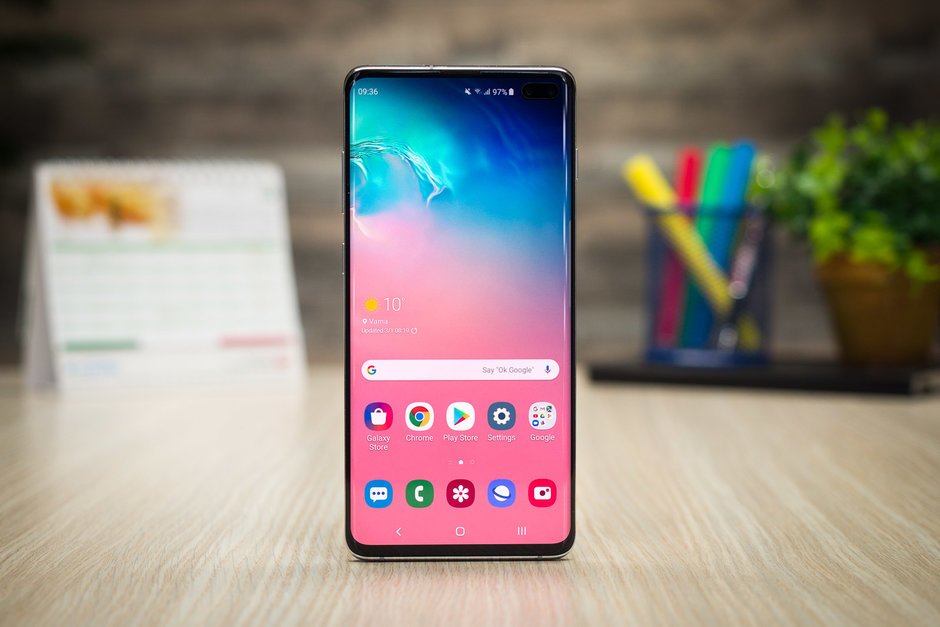
    During 2019, Samsung has shipped no less than 6.7 million Galaxy 5G devices, which accounts for nearly 54% of the global smartphone market. Currently, Samsung offers five 5G-enabled smartphones, including the Galaxy S10 5G, Note 10 5G, Note 10+ 5G, Galaxy A90 5G, and Galaxy Fold 5G.

    Also, Samsung will launch the Galaxy Tab S6 5G, the world’s first tablet to feature 5G support, in the first quarter of 2020. The slate should be initially released in South Korea, but customers in the United States will be able to buy it soon afterward.

    Samsung Electronics’ president TM Roh promised that 2020 will be the year of Galaxy 5G and that his company will slowly bring the technology to more device categories, so expect even more 5G Galaxy devices to arrive in the coming months.

    On a side note, Samsung confirmed that it is now providing network equipment for the 5G commercial service in South Korea and that it’s been selected to offer 5G network equipment for three major US carriers.

  • Samsung smartphones market share dips to annual low in Vietnam

    Samsung smartphones market share dips to annual low in Vietnam

    Samsung smartphones’ market share slipped 2.3 percentage points to 38.45 percent in October, the first time it has dipped below 40 percent this year.

    The South Korean brand sold over 500,000 smartphones in October, an increase of 20 percent compared to the previous month, according to a report by market research firm GfK.

    But total sales of smartphones in Vietnam surged 28 percent month-on-month in October to nearly 1.37 million units, resulting in a drop in Samsung’s market share, the report said.

    A focus on high value products was also a reason Samsung lost market share in October, a representative of cellphoneS, a leading smartphone retailer in Vietnam, told VnExpress.

    In October

    With 38.44 percent market share in October, Samsung still led the Vietnam market, followed by Chinese brands OPPO and Xiaomi with 25.2 percent and 10.2 percent respectively.

    China’s Realme had dislodged Apple from its fourth position in September, gaining 6.2 percent of the market share. Apple slipped a notch to fifth place with 6.1 percent. Industry insiders said Vietnamese consumers waiting for the latest iPhone model, which was released in November, was the main reason for the falling sales in October.

    Strong sales in the first quarter of 2019 allowed Samsung to retain its leading position in terms of market share in the first 10 months this year, accounting for over 43 percent of total sales. Samsung’s market share had peaked at over 50 percent in March, two times higher than second-placed Chinese brand OPPO, according to the GfK report.

    The report said the market could see major shifts in the last two months of 2019, with Apple having released its three new Iphone 11 models, new products from Xiaomi, Realme, and Chinese phone-maker Vivo entering the market and retailers simultaneously launching discounts for year-end promotional events like the Singles Day (November 11), Black Friday, Christmas and the New Year.

  • Samsung tipped to announce 144MP imaging sensor

    Samsung tipped to announce 144MP imaging sensor

    As we told you earlier today, the 108MP sensor rumored to be found on the Samsung Galaxy S11+ could employ a 9:1 pixel binning ratio as opposed to the usual 4:1 ratio. This would produce sharp 12MP images with a record pixel size of 2.4 microns. But if Samsung is going to keep using 12MP images, the pixel binning ratio could be rising to 12:1 before the end of next year. That’s because graphs tweeted by tipster Ice Universe suggest that the tipster believes Samsung will announce a 144MP image signal processor (ISP) built using the 14nm FinFET process.
    Interestingly, it was just last week when Samsung announced a new manufacturing system to produce imaging sensors using the 14nm FinFET process. The process number relates to the number of transistors inside a chip; the smaller the process figure, the larger the number of transistors packed inside an integrated circuit. Chips with more transistors offer improved performance and energy efficiency. The information that Ice Universe included with his tweets bare that out.
    First, we should point out that the planar method involves building individual components of a transistor and then putting them together. FinFET ICs use “fins” to control the voltage of a chip helping it to increase performance with lower energy consumption. One graph shows that a 12MP ISP made using the 14nm FinFET process uses 37% less energy in digital and 18% less in analog than a 12MP ISP made using the 28nm planar process. A second chart simulates the power consumption of a 144MP ISP in 10fps capture mode. The chip, manufactured using the 14nm FinFET process, consumes 42% less energy in digital and 21% less in analog when compared to a similar ISP built using the 28nm planar method.
    And with Qualcomm announcing that the Snapdragon 865 Mobile Platform will support sensors up to 200MP, the rumor about an upcoming 144MP sensor could very well be true. We shouldn’t expect to see a 144MP sensor in the Galaxy S11+, but perhaps the technology will be ready for the Galaxy Note 11+.
    The Samsung Galaxy S11 line could be unveiled on February 18th and we could see as many as five cameras on the back of the Galaxy S11+. That would include the aforementioned 108MP primary camera, an improved ultra-wide camera, two telephoto cameras (one using a periscope technology to produce 5x optical zoom) and a Time of Flight (ToF) sensor for improved bokeh blurs on portraits, enhanced AR capabilities and secure 3D mapping. The 108MP sensor will reportedly team up with the telephoto cameras to deliver 50x hybrid zoom and 100x digital zoom. This is a feature that might be called “Space Zoom” by Samsung. A 144MP sensor is sure to take the potential of “Space Zoom” even higher.
    Photography remains one of the most competitive battlegrounds in the smartphone industry. Apple took its game to a new level this year by adding the Deep Fusion computational photography feature, an ultra-wide camera, slow-motion selfies and Night Mode. But Samsung and Huawei are poised to set the tone for 2020 with the Galaxy S11 and P40 lines. And while photography has always been an evolving feature of the smartphone industry, this might be the most cutthroat we’ve seen it since Nokia, Apple, and Samsung battled over photographic supremacy (including low-light capabilities) six years ago. At that time, the Nokia Lumia 1020 featured the most ambitious smartphone camera ever used on a handset to that point. That camera weighed in at 41MP, offered OIS and an aperture of f/2.2. That compared to the 8MP rear camera used on the iPhone 5 and the 13MP camera employed by the Galaxy Note 3.
  • Samsung reportedly makes surprise decision about which chip will power the Galaxy S11 line

    Samsung reportedly makes surprise decision about which chip will power the Galaxy S11 line

    Traditionally, Samsung powers its latest flagship phones in the vast majority of markets with chipsets it designs and produces itself. In the U.S., China, and Japan, Galaxy S and Galaxy Note handsets typically employ the latest Qualcomm Snapdragon SoC. That’s because Qualcomm’s chips work better with the 4G networks in those regions. For example, earlier this year Samsung packed the Snapdragon 855 into U.S., Chinese and Japanese versions of the Galaxy S10 series. In other markets, these phones were equipped with the Exynos 9820 chipset.
    Now, the reverse could happen with the new Galaxy S11 line rumored to be unveiled in San Francisco on February 18 of next year. According to a report in South Korea’s The Elec, the Snapdragon 865 Mobile Platform will be employed in Galaxy S11 devices in all regions except one. Samsung Galaxy S11 models launching in Europe next year will be powered by the Exynos 990 SoC; elsewhere, these units will have the Snapdragon 865 Mobile Platform under the hood. The reason? According to the report, Samsung executives noted that the Snapdragon 865 outperforms the Exynos 990. The latter was unveiled by Samsung in October and the manufacturer said that the chip offers a 20% performance boost over the Exynos 9825 SoC. Interestingly, both the Exynos 990 and Snapdragon 865 are manufactured by Samsung using its 7nm EUV process. We should note that Samsung has stopped developing its own custom cores.

    One difference between the Snapdragon 865 and the Exynos 990 involves the CPU cores being used. The former features ARM’s latest and most powerful Cortex-A77 while the latter includes the older Cortex-A76. In addition, the new flagship Snapdragon chipset’s Neural Processing Unit (NPU) for AI functionality runs up to 15 Tera Operations Per Second (TOPS) compared to 10 TOPS for the Exynos 990. The Image Signal Processor (ISP) on Qualcomm’s chip has support for 200MP cameras while Sammy’s chip supports cameras up to 108MP. Interestingly, Samsung has decided to use MediaTek’s 5G processor on some of its low to mid-range models.

    You might recall that Samsung had to adjust which chip to use on 2015’s Samsung Galaxy S6 in the U.S., China, and Japan. That’s because the Snapdragon 810 SoC was fond of overheating. So Samsung decided to employ the Exynos 7420 chipset in Galaxy S6 units that normally would have featured the Snapdragon 810. But that adjustment lasted all of a year before Samsung reverted to its previous pattern.
    We expect the Samsung Galaxy S11 family to include a 6.2-inch Galaxy S11e, 6.5-inch Galaxy S11, and a 6.8-inch Galaxy S11+. All three displays are expected to refresh at 120Hz allowing for buttery smooth scrolling and improved animation. The Galaxy S11+ should come with five camera sensors on the back including a 108MP primary (producing 27MP images with pixel binning), an ultra-wide camera, a telephoto camera with 2x optical zoom, a telephoto camera with 5x hybrid zoom and a Time of Flight depth sensor. Using a combination of sensors the Galaxy S11+ could offer 50x hybrid zoom and 100x digital zoom.
    It should be interesting to see what Samsung does in 2021 when TSMC will manufacture the 5nm Snapdragon 875 Mobile Platform and Samsung turns to its 5nm process to produce the successor to the Exynos 990. At 5nm, both chips will be packed with billions of transistors making them more powerful and energy-efficient than next year’s chips. The 2021 integrated circuits will contain as many as 171.3 million transistors per square millimeter. Both TSMC and Samsung have roadmaps taking their chip manufacturing down to 2nm over the next few years.
  • Commune to start retailing premium Samsung TVs

    Commune to start retailing premium Samsung TVs

    Singapore furniture retailer Commune has become the first non-electronics authorized retailer for selected premium Samsung TVs.

    The exclusive partnership is a first-of-its-kind for both Samsung and Commune. It is unusual for an upmarket interiors store to stock TVs – in this case, Samsung products that double as wall-mounted artworks when not screening video content.

    “Commune is honored to collaborate with Samsung, whose design-centric lifestyle TVs complement our modern contemporary furniture collections and home interiors,” said Commune Lifestyle COO & CMO Gan Shee Wen. “Like Samsung TVs, our furniture encapsulates quiet modernity, unifying function and effortless form with intelligent craftsmanship.”

    Consumers now have the opportunity to visit Commune stores in Singapore and see for themselves how the high tech premium Samsung TVs can seamlessly blend with modern furniture.

    “We are delighted to partner Commune to bring Samsung’s premium lifestyle TVs, The Frame and The Serif, to their stores,” said Samsung Electronics Singapore director, consumer electronics business Steven Koh. “Where design meets technology, this collaboration reinforces our commitment to providing consumers with enhanced sophistication and harmonious balance between form and function.”

  • Samsung China’s first flagship opens, in front of Apple store

    Samsung China’s first flagship opens, in front of Apple store

    Samsung China has opened its first flagship experience store in the market – and it is right opposite its archrival.

    The almost 1000sqm Shanghai store is the brand’s largest in Asia, and stands opposite Apple’s Nanjing East Road store. The store has two sections and stocks Samsung’s full range of mobiles as well as featuring a 5G experience zone for customers to participate in large-scale cloud games and watch HD video broadcasts.

    Samsung has recently readjusted its strategy in the territory, shifting all mobile device manufacturing to India and China. The experience store is the latest development in the new strategy.

  • Samsung Pay Cash is a new virtual prepaid card aiming to help you spend less

    Samsung Pay Cash is a new virtual prepaid card aiming to help you spend less

    Samsung Pay has come a long way since making its US and Korea debut more than four years ago, spreading to over two dozen additional markets around the world and pretty much working anywhere physical credit and debit cards are accepted nowadays. That said, the mobile payment service seems to have slowed down its expansion and development a little in the last few months, returning to the spotlight just yesterday by releasing a killer new feature that its two main rivals are yet to support.

    But there’s actually another addition to the digital wallet platform worth discussing today in Samsung Pay Cash functionality. Despite what the name suggests, this doesn’t involve the exchange of real cash money, instead of keeping your funds within Samsung Pay “like cash in your wallet.” The idea is basically to help you spend less, which feels rather counterintuitive for an app that still has a long way to go before catching up to Apple Pay in terms of how many transactions it processes worldwide.
    Apart from simply storing your conventional credit and debits cards digitally, the newly launched feature enables Samsung Pay users to transfer funds from said cards or even directly from your bank account to a “virtual prepaid cash card.” That way, you can better manage your budget by only keeping a certain amount of money on hand for routine spending. In case you’re wondering, no, Samsung isn’t also launching its own physical credit or debit card to go after you-know-who.
    Your Samsung Pay Cash funds will obviously be accessible wherever you can use the main Samsung Pay platform, which means you’ll be able to spend this money in physical stores that use either NFC or magnetic POS terminals, as well as online at supporting e-commerce retailers. You can even effortlessly send money from your Samsung Pay Cash card to contacts in your phone. By the way, you’ll still need one of only a few Galaxy devices to download and access the Samsung Pay app, as well as this Pay Cash functionality. The list essentially includes all flagships starting with the Galaxy S6.
    Last but not least, it’s certainly worth pointing out that early Samsung Pay Cash adopters have a little something, something to gain from signing up for a “virtual prepaid cash card.” The first 20,000 people in the US to complete the registration process will receive a free $5 credit that they can use immediately without having to transfer any of their own funds.
  • Samsung arm increases ownership in Vietnam IT firm

    Samsung arm increases ownership in Vietnam IT firm

    South Korea’s Samsung SDS has bought a five- percent stake on the market in leading IT services provider CMC Corporation.

    Its combined 30 percent stake now, after buying a 25 percent stake comprising newly issued shares last month, is reportedly worth over $40 million.

    CMC said it would use most of the proceeds for developing Internet of things (IOT) and artificial intelligence (AI) technologies with Samsung SDS, the systems development subsidiary of Samsung Electronics.

    CMC Chairman and CEO Nguyen Trung Chinh said this commitment from Samsung would propel CMC into the global league in the next five years and double its overseas sales to more than 30 percent of total sales by 2023.

    CMC also aims to integrate its IT systems with Samsung SDS’s and use IOT and AI to automate production lines, a model that would be implemented first in Vietnam before being exported to other markets, he said.

    Samsung SDS had announced in late July it would buy a 25 percent stake in CMC through a private placement, which it hoped would accelerate its foray into Vietnam’s fledgling cloud market and other markets in Southeast Asia.

    Samsung Electronics has two smartphone factories in the northern provinces of Bac Ninh and Thai Nguyen, which produce more than 150 million units a year, or half of Samsung’s all global sales.

    It also has a home appliances factory in Ho Chi Minh City. Last year Samsung products accounted for over $60 billion of Vietnam’s exports, or around 25 percent of its total.

    Founded in 1993, CMC is one of Vietnam’s largest IT services companies with revenues of VND5.23 trillion ($224 million) in 2018.

    The Hanoi company has eight subsidiaries and 3,000 employees, and it works mainly in system integration, software development, cloud computing, and IT infrastructure management.

    The strategic partnership would also help CMC’s goal of reaching $1 billion in sales by 2023, Chinh said.

  • Samsung discontinues its mirroring app for smartphones

    Samsung discontinues its mirroring app for smartphones

    Samsung is notifying customers that the SideSync app will be discontinued next month. The South Korean company cites changes “in internal operation policy” for the removal of the app, which has more than 50 millions of downloads in the Google Play Store.

    Ironically, Samsung added support for Android 9.0 Pie early this year, which suggests that the decision to discontinue SideSync was probably taken more recently. For those unaware, the SideSync app lets users share their smartphone’s screen and data with a tablet or PC. Instead of SideSync, Samsung now recommends Galaxy smartphone users to download Samsung Flow, an app that does exactly what the soon to be discontinued SideSync app does.

    Dear SideSync customers, SideSync is no longer available as of [09:00 AM, 15, October 2019, GMT+9], according to a change in internal operation policy. Though SideSync service is no longer running, you can continue to use the mirroring through Samsung Flow. Thank you for using SideSync. We will endeavor to continue providing you with high-quality services.

    Effective October 15, Samsung SideSync will no longer work, so if you want to be able to share your smartphone’s screen with your PC or tablet, you’ll have to switch to Samsung Flow.

  • Samsung PlayGalaxy Link for Android now available for download

    Samsung PlayGalaxy Link for Android now available for download

    Samsung is advertising Galaxy Note 10’s gaming features just like it did with the previous Note series phone. This time, however, some of these features were not available at launch. The PlayGalaxy Link is a game streaming app that allows users to connect to their PC over Wi-Fi or mobile data and stream their library of games on a Samsung phone or tablet.

    The PlayGalaxy Link app must be installed on a PC and Android smartphone to make the game streaming work, but it wasn’t available along with the Galaxy Note 10 at launch. The good news is Samsung announced gamers can now download the PlayGalaxy Link app if they want to start streaming their games.

    The app supports third-party Bluetooth controllers, mice, and keyboard, but players can also use on-screen controls if they don’t want to attach any peripherals to their phones. Of course, downloading and using PlayGalaxy Link is completely free, although you will only find it in the Galaxy Store.

    The PlayGalaxy Link game streaming app is still in beta and, for the time being, it’s only available in the United States and South Korea. You can download the PC version directly from the PlayGalaxy Link website, while the Android app can be downloaded via Galaxy Store on your Samsung smartphone.

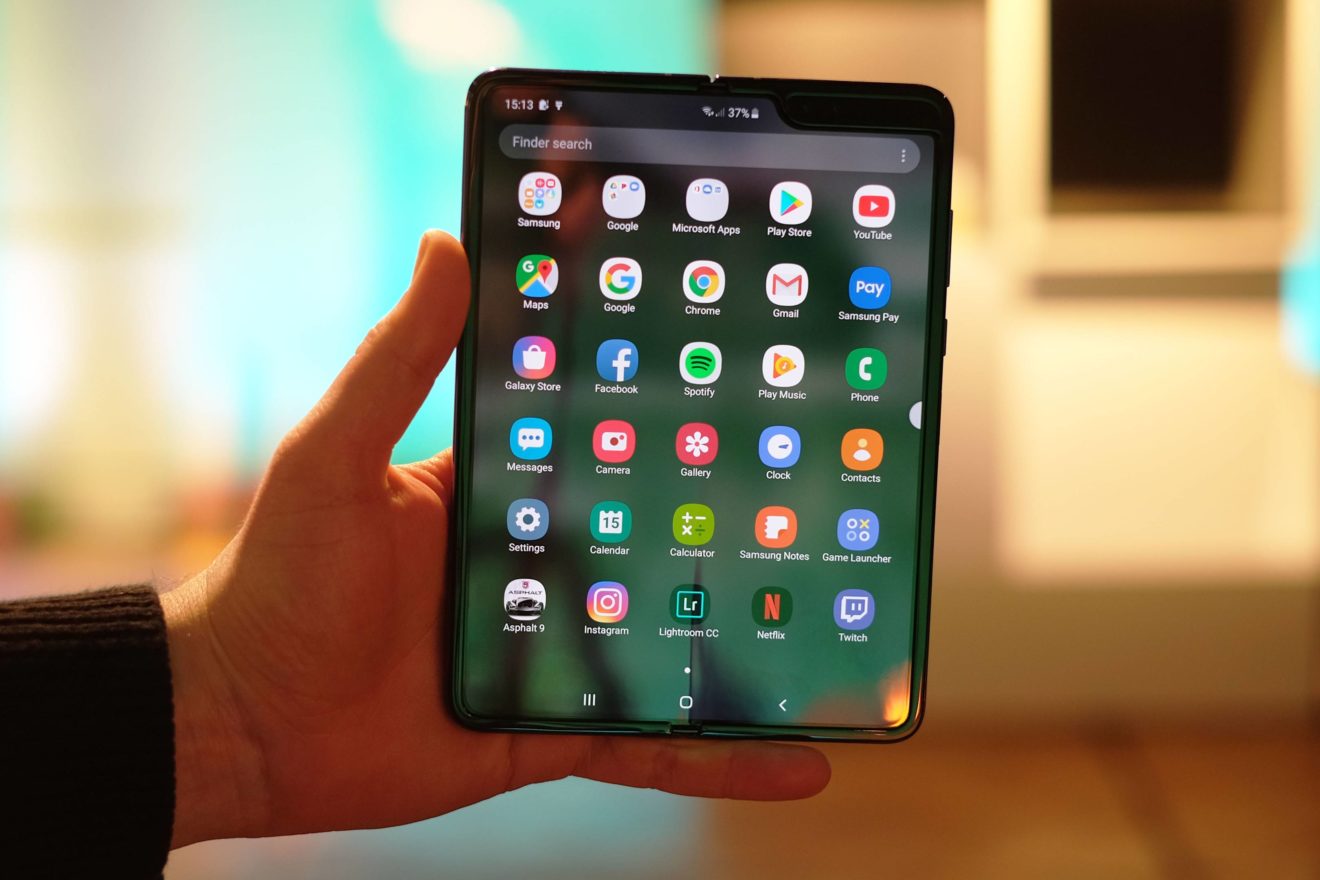
  • Samsung Galaxy Fold launched

    Samsung Galaxy Fold launched

    Samsung confirmed that the Galaxy Fold will be launched on the market in September, but it didn’t reveal an exact release date. Although reports pointed to a rather late September launch, it looks like Samsung has decided to greatly advance the launch schedule.

    The Korean media reports Samsung is ready to launch the Galaxy Fold on September 6, the first day of IFA 2019 trade fair. Even though pre-registrations for the foldable smartphone recently opened in China, South Korea will be the first country to get the Galaxy Fold.

    The same report claims Samsung Galaxy Fold will be released in September in the United States and China, although an exact release date hasn’t been unveiled yet. Samsung expects to sell around 20-30,000 Galaxy Fold units in South Korea by the end of the year.

    A Samsung official responded to the report by saying that “the specific launch schedule is not yet confirmed,” but if the information is accurate, we’ll learn more about the Galaxy Fold availability in less than a week from now.

  • Samsung unveils the new Galaxy A50s and A30s

    Samsung unveils the new Galaxy A50s and A30s

    Samsung continues to add tons of new smartphones to its Galaxy A series and the latest additions, Galaxy A30s and A50s, promise upgraded essential features, made even more powerful. Their main selling points are the triple-camera and big battery, but that doesn’t mean the rest of the features aren’t top-notch for a mid-tier phone.

    Unfortunately, there’s no information about price and availability yet, but Samsung announced they will come in four colors: Prism Crush Black, Prism Crush White, Prism Crush Green, and Prism Crush Violet.

    On paper, the Galaxy A30s seems to be the cheapest of the two, but probably not by much since the phones share many of the specs. For example, both phones boast massive 6.4-inch Super AMOLED Infinity-V displays, but the one on the Galaxy A30s has HD+ resolution, whereas the Galaxy A50s’ offers full HD+ resolution.

    Furthermore, Samsung Galaxy A30s packs an impressive triple camera (25MP+5MP+8MP), a secondary 16-megapixel selfie snapper, a 1.8GHz octa-core processor, either 3GB or 4GB RAM, 32GB/64GB/128GB expandable storage, and a huge 4,000 mAh battery.

    As mentioned earlier, the Samsung Galaxy A50s features similar specs, but it’s got a better triple camera (48MP+5MP+8MP), a larger 32-megapixel selfie shooter, a more powerful 2.3GHz octa-core processor, either 4GB or 6GB RAM, and 64GB/128GB expandable storage.

    Also, both Galaxy A series phones feature on-screen fingerprint, 15W fast charging support and USB Type-C port. However, it’s just the Galaxy A50s that comes with a dedicated Bixby button. Naturally, the Galaxy A30s and A50s will ship with Android 9.0 Pie right out of the box.

  • Samsung has responses for Android users to send to green bubble haters

    Samsung has responses for Android users to send to green bubble haters

    Apple iPhone, iPad, Apple Watch and even Mac users know that when they are using the Messages app to communicate with others using the Apple ecosystem, they are sending and receiving iMessages. This is signified by the blue bubble that the conversations are housed in. And iMessages are encrypted from end-to-end.
    But when someone using an Apple device sees their conversation in a green bubble it means that the person on the other side of the chat is probably using an Android device. The green bubble means that the conversation is being handled as a SMS or a text message. Besides the lack of encryption, the special features offered for those chatting via iMessage (such as Animoji) cannot be used. And that doesn’t sit well with many iPhone, iPad, Apple Watch or Mac users.
    If you use an Android device and are sick and tired of getting scolded by your Apple wielding buddies in the middle of a group or individual chat simply because they can’t use iMessage, Samsung has your back. The manufacturer has created a GIPHY page containing more than 30 GIFs that you can use to send back a salvo after taking a hit from a green bubble hater.
    Perhaps one day in the future, people won’t be discriminated against simply because they create a green text bubble instead of a blue one on a device screen. Would Apple ever offer iMessage to Android users? We wouldn’t hold our breathe.
  • Samsung angers its customers by advertising the Galaxy Note 10 line in the wrong place

    Samsung angers its customers by advertising the Galaxy Note 10 line in the wrong place

    You just can’t escape the Samsung Galaxy Note 10 and Galaxy Note 10+ anywhere after Samsung introduced the new line this past week. And that happens to be true especially if you use an older Samsung Galaxy handset model with Bixby, Samsung Pay and the Samsung Push Service that disseminates updates and notifications meant for Samsung phones only. As spotted by a number of Twitter users including XDA’s Max Weinbach, those using the aforementioned features are being spammed by Samsung with ads for the new Galaxy Note 10 line.

    Bixby implores users curious about the new phones to inquire about them. “Curious about the Note 10? Ask Bixby!” shouts the virtual digital assistant. A screenshot of Samsung Pay shows the mobile payment system offering users a closeup of the Note 10 at AT&T, T-Mobile, and Verizon. Needless to say, the response from Samsung users is not positive especially since many of those spammed have already pre-ordered one of the new phones. And the manufacturer is making it harder to disable the spam it delivers via Bixby by forcing users to go into the Bixby settings to disable marketing notifications. To do this, open Bixby and tap on the menu icon on the top right. Tap on Settings and turn ‘Marketing Notifications’ to off.

    We also have to wonder what Samsung is saying to those who shelled out big bucks for the Galaxy Note 9. What is the message here? Is it that the phone you shelled out $1,000 for last year is no longer capable of doing great things? We get that Samsung is proud of the new Note 10 line, but spamming its own customers seems more than a bit unsavory.