Tag: samsung

  • Samsung to sell latest generation chip to IBM

    Samsung to sell latest generation chip to IBM

    Samsung Electronics will supply next-generation microprocessor chips to IBM, which will use the chips for artificial intelligence (AI) computing and cloud system applications, both companies said Friday. The product Samsung will manufacture for IBM is a seven-nanometer processor made by extreme ultraviolet (EUV) lithography technology. The seven-nanometers in the name refers to the width of the circuit through which electricity flows on the semiconductor. The dominant product until recently has been rated 10-nanometer.

    Narrower circuits ensure faster data processing speeds, less electricity consumption and higher area efficiency, with more transistors printed on a given amount of silicon, the base material for semiconductors.

    IBM said in a press release that the strategic partnership will position the two companies to lead “the new era of high-performance computing specifically designed for AI.”

    “IBM selected Samsung to build our next generation of microprocessors because they share our level of commitment to the performance, reliability, security and innovation that will position our clients for continued success on the next generation of IBM hardware,” said John Acocella, vice president of Enterprise Systems and Technology Development for IBM Systems.

    The U.S. company and Samsung have been research and development partners for 15 years.

    For Samsung, the deal is a significant milestone for its foundry business, which is to manufacture semiconductors for external clients that do not have chip fabrication facilities.

    The company is already a leader in DRAM and NAND memory chips, but it is now focusing on the fast-growing foundry market. IHS Markit estimates that the subsector will grow an average of 7.8 percent a year until 2021-which is faster than 5.3 percent expected for DRAMs and 6.1 percent for NANDs.

    Samsung is currently ranked global No. 4 among foundries, with a market share of less than 10 percent. As it works to climbing up the rankings, a client like IBM helps establish momentum for future deals.

    In February, Samsung signed a foundry deal with Qualcomm to supply seven-nanometer processors for 5G mobile devices. The company hopes the seven-nanometer processor chip will help as it works to expand its market share. It is currently one of two foundries known to manufacture the product. The other is Taiwan Semiconductor Manufacturing Company, the No. 1 semiconductor foundry with more than 50 percent market share.

    Samsung’s EUV lithography technology was developed earlier this year to mass produce seven-nanometer semiconductors, as the conventional way of printing circuits on 10-nano chips were not sophisticated enough to print thinner circuits.

    A new facility specializing in EUV lithography is under construction at Hwaseong, Gyeonggi, and is due for completion by the second half of next year. Samsung also revealed in May that it plans for the mass production of three-nanometer processors by 2020.
  • Galaxy A9 has a camera ready for every occasion

    Galaxy A9 has a camera ready for every occasion

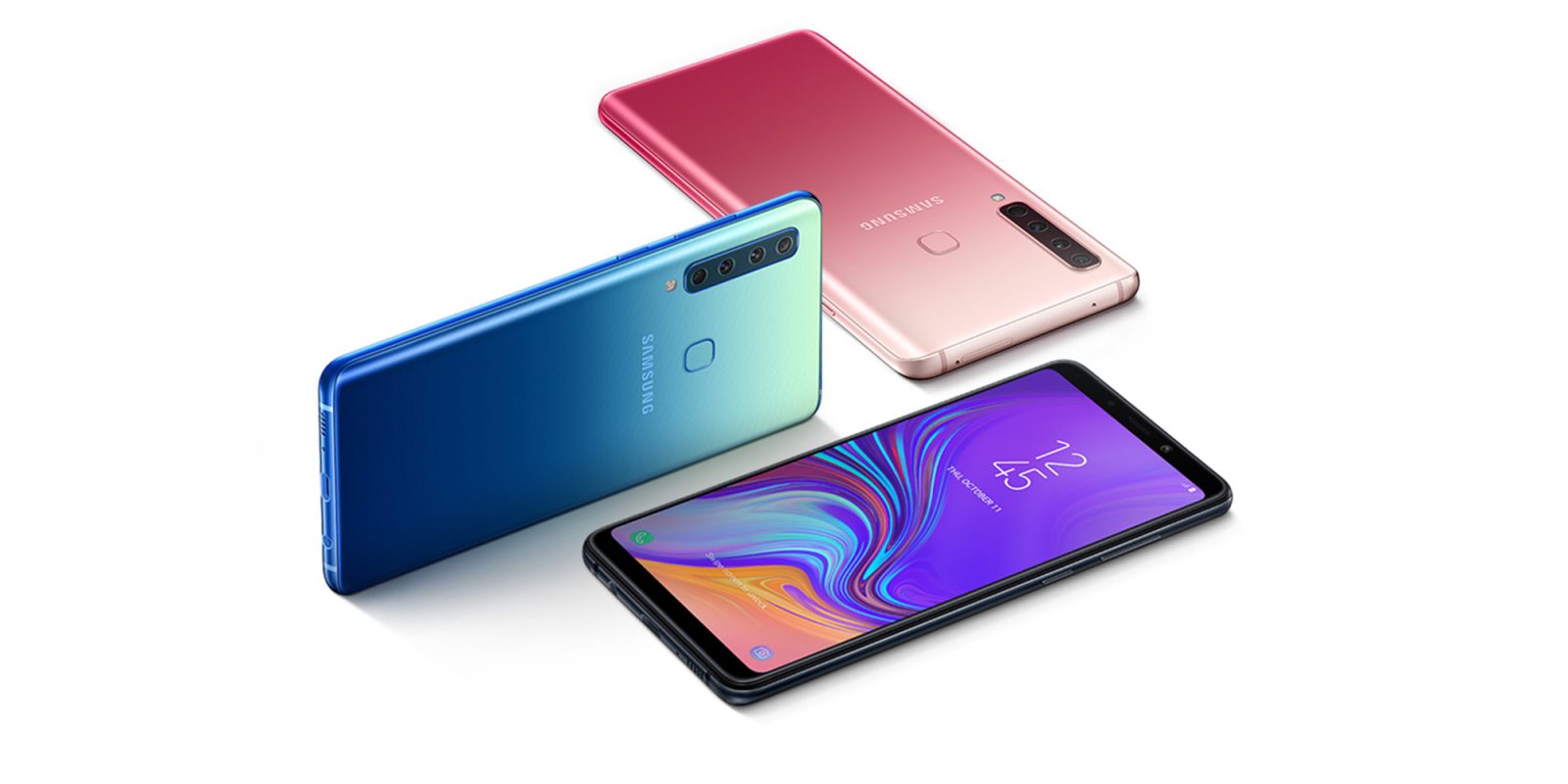
    Samsung Electronics started domestic sales of its mid-range Galaxy A9 smartphone today – the company’s first model to be equipped with four rear cameras. The Galaxy A9 was first revealed in October in Kuala Lumpur, Malaysia, and has already started sales in China, India and several countries across Southeast Asia and Europe. In Korea, the device will cost 599,500 won ($530), nearly half the price of Samsung’s most recent premium phone release, the Galaxy Note9.

    Overseas, the A9 comes with either six or eight gigabytes of RAM, but in Korea only the six-gigabyte option will be available. The device comes with 128 gigabytes of data storage, which is expandable to 512 gigabytes with a microSD card. There are three color options – black, blue and baby pink.

    Its most notable feature is its five cameras – one on the front and four on the back – which are the reason it is known as a “quad camera” smartphone. The front camera can take photos up to 24 megapixels and comes with a function to blur out the background when taking a selfie.

    Until a few years ago, Samsung was one of the top manufacturers of smartphones along with Apple. Recently, its global performance has dwindled as demand for up-scale premium phones have retreated. Another big threat is the advance of Chinese manufacturers like Huawei that upped their game in technology and released a wide range of mid-priced smartphones. Budget phones are especially important in that they cater to the massive Chinese and Indian markets, explaining why global smartphone makers are getting so competitive in the price sector. The main rear camera can also take photos up to 24 megapixels with a very low aperture of F1.7, which means the camera will perform better in darker environments. The other three cameras have slightly different functions.

    A 10-megapixel telephoto camera offers a 2X optical zoom lens, while an eight-megapixel ultra-wide camera can capture a up to 120 degrees. The final camera, a five-megapixel depth camera, is used to blur out the background of an image.

    Despite being a budget model, the A9 is equipped with smart camera functions normally found in top-of-the-range models. The “intelligent camera” function can optimize an image’s brightness and contrast after automatically recognizing the object or scene. It also alerts the user if the image is shaky or somebody blinks.

    Samsung said in a statement that it anticipates the five cameras to make the A9 “an optimal model for generations of ‘visual communication’ who mainly communicate with photos and videos.”

    The inclusion of quad cameras on a budget model reflects Samsung’s shifting smartphone strategy that Koh Dong-jin, CEO and head of the IT giant’s mobile business, stressed earlier this year – to apply state-of-the-art functions to mid-priced models.

    “In the past, I brought the new technology and differentiation to the flagship model and then moved to the mid-end. But I have changed my strategy from this year to bring technology and differentiation points starting from the mid-end,” Koh said to CNBC in an interview in October.

    The A9 isn’t the first affordable Samsung phone with high-end features. On Dec. 10, it unveiled the Galaxy A8s, a smartphone in the mid-price range and the first to have a so-called hole display. Its screen covers the phone’s entire front, except for a small hole in the display’s corner for the front camera. The unpacking event, which was Samsung’s first in China, also sent a signal that Samsung is determined to win back market share in the country.

    “You might think this is an ordinary unpacking event, but it’s more of an occasion to send an ambitious message to you all – Samsung Electronics will embark on a full-fledged competition with Chinese manufacturers,” said Kwon Gye-hyun, the company’s vice president for its China business, during the event.

  • Samsung to take eight C-Lab start-ups to CES

    Samsung to take eight C-Lab start-ups to CES

    Samsung Electronics will introduce eight in-house artificial intelligence (AI) start-ups at the Consumer Electronics Show (CES) 2019 to take place next month in Los Angeles, the company said Wednesday. All eight start-ups are under Samsung’s C-Lab, an in-house incubating program that allows employees to embark on a one-year project to realize a business idea. Samsung will organize an independent booth to present their products and services at the four-day exhibition scheduled to take off on Jan. 9.

    All eight of the projects use AI as a core part of their business.

    For example, the mobile app SnailSound uses AI technology to remove background noise and provide clear human voices in a tailored way based on the app’s test results of the user’s hearing abilities.

    Another app called Medeo uses AI to select the best shots in a video while it is being shot.

    Prismit is an AI-based news app that shows news articles of the same topic automatically aligned in the form of a timeline.

    The list also includes Girin Monitor Stand, which helps to correct posture while sitting in front of computer screens, and the Alight desk light, which adjusts light in the best way to enhance one’s concentration.

    The Perfume Blender suggests the best perfume recipe based on a user’s preferences and also comes with a device to make the personalized perfume.

    As well as the eight in-house start-ups that are currently working under Samsung’s C-Lab, eight groups that have already graduated from the scheme will take part in CES 2019 to set up booths of their own.

    Among them, three have earned awards from this year’s CES. Since the program’s launch in 2012, C-Lab has produced 36 spin-offs that now conduct business as start-ups outside of Samsung.

  • Samsung is No. 1 in world for R&D spending

    Samsung is No. 1 in world for R&D spending

    Samsung Electronics was the No. 1 investor in R&D in the world this year, according a report from the European Commission. The annual R&D Investment Scoreboard report released by the commission analyzes R&D indicators of top companies in the world, based on their most recent accounts and annual reports. The 2018 report studied 2,500 companies worldwide from 46 countries.

    Samsung Electronics invested a total of 13.44 billion euros ($15.2 billion) in R&D this year, an 11.5 percent year-on-year increase compared to last year’s report, when it took third place on the list. This is the first time a Korean company has come in first since the European Commission first published the report in 2004.

    Tailing Samsung in second place was Alphabet, Google’s holding company. It spent a total of 13.39 billion euros. Volkswagen was ranked third at 13.14 billion euros. The list went on to include Microsoft, Huawei, Intel and Apple, all having spent between 9.7 billion and 12.3 billion euros.

    Samsung was the only Korean company within the top 50 R&D spenders worldwide. However, the report showed that, in terms of the ratio of R&D investment to sales – which the report dubbed “R&D intensity” – Samsung fell behind other major companies higher up the list.

    The local company’s R&D intensity was 7.2 percent – lower than second rank Alphabet’s 14.5 percent and Chinese IT company Huawei’s 14.7 percent. It was slightly higher than Apple, however, which had a ratio of 5.1 percent.

    The report also showed that, apart from Samsung, Korea was falling behind in R&D investment compared to neighboring countries Japan and China.

    The 2,500 companies studied for the report had invested a combined 736.4 billion euros, with 14 percent of that total coming from Japan-based companies and 10 percent from China. The top contributors were the United States at 37 percent and the European Union at 27 percent.

    A total of 70 companies from Korea were included in the study. LG Electronics was the only other one mentioned by name, coming in third place in the “Top 3 companies by R&D for the main industries: Other” category after Japan’s Panasonic and Sony.

  • Samsung Electronics gives stability a try

    Samsung Electronics gives stability a try

    The CEOs of Samsung Electronics semiconductors, smartphones and consumer electronics divisions all kept their jobs in the company’s annual corporate reshuffle announced Thursday. Kim Ki-nam, head of Samsung’s device solutions division, which includes semiconductors, retained his position but has been promoted from president to vice chairman. Samsung’s semiconductor business has seen operating profit grow for the past 11 quarters as of September.

    The other two division heads – Koh Dong-jin of IT and mobile communications and Kim Hyun-suk of consumer electronics – were reappointed as CEOs and will retain their current president job titles.

    Roh Tae-moon of the IT & mobile communications division was promoted from vice president to president and will continue to head the smartphone development team. Roh has been at the core of technology development for Samsung’s Galaxy smartphone brand since the range was first introduced.

    For a company well known for rapidly exchanging executives based on performance, the minor superficial changes at the top made this year suggest that Samsung is shifting instead to put more weight on stability rather than expansion next year.

    The company already went through a major generation change last year when it laid off older executives to replace them with younger ones. A total of 14 top executives were reshuffled at the time. Samsung said in a statement on Thursday that it “re-appointed business executives from last year to realize ‘innovation within stability.’”

    The drive for stability also comes at a time when Samsung faces several uncertain factors that analysts say will halt this year’s rally of record profits. The global chip market, which has been on an unusually long supercycle over the last few years, is anticipated to slow down in 2019.

    Outlooks on the global economy are also grim due to the remaining risk of the United States and China continuing their trade war.

    Samsung also stuck to its performance-based HR strategy by heavily compensating executives and managers in the device solutions division, including CEO Kim Ki-nam.

    Kim has been heading the semiconductor business at Samsung since December 2014. Under his lead, the company celebrated the last two years as the No. 1 chip manufacturer in the world. Chips were also a major contributor to Samsung’s record-high quarterly profits this year.

    Kim wasn’t the only one to be rewarded. Among a total of 158 senior executives promoted at Samsung, including those below president, 80 were from his division.

    Samsung employees in the device solutions division will receive bonuses between 300 to 500 percent of annual wages. Even external partners and suppliers for the division will reap incentives this year of up to 89.7 billion won ($79.8 million) in total.

    Meanwhile, this was the first time in three years that Samsung Electronics has released annual reshuffle results at the year’s end – a sign that Samsung is getting back on its feet after Vice President Lee Jae-yong’s return from prison in February.

    There were no annual reshuffles at all in 2016 when Lee was investigated for bribery charges regarding former President Park Geun-hye. It was only in October last year that the company announced a reshuffle plan among top executives.

    Other Samsung affiliates announced annual reshuffle results on Thursday. Samsung C&T Vice President Kim Myeong-soo was promoted to president. He was in charge of the task force in charge of improving competitiveness in engineering, procurement and construction.

    Vice Chairman Lee’s sister Lee Seo-hyun was appointed as chairman of the Samsung Foundation, which conducts social welfare projects. She was formerly president of the fashion division at Samsung C&T.

  • Samsung to support the Olympics through 2028

    Samsung to support the Olympics through 2028

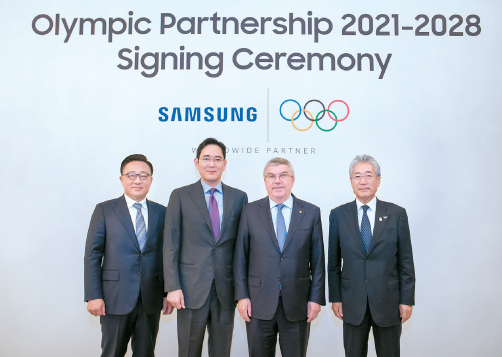
    Samsung Electronics announced on Tuesday it will extend its partnership with the International Olympic Committee (IOC) through 2028, from the original 2020 end date of the collaboration. The two parties signed an agreement at a ceremony at the Hotel Shilla in central Seoul in the presence of IOC President Thomas Bach and Samsung Electronics Vice Chairman Lee Jae-yong, as well as other executives from the company and officials from the committee.

    Samsung said it will continue as a Worldwide Olympic Partner in the wireless communications equipment and computing equipment category and promote the artificial intelligence (AI), virtual reality (VR), augmented reality (AR) and 5G features of the supplied equipment. Samsung will continue the support beyond the Olympic Games in Tokyo in 2020 through to the Los Angeles 2028 Olympics. The agreement also covers the Youth Olympic Games through 2028.

    Samsung will continue to support the IOC, the national Olympic Committee and the teams, the technology company added. The company will remain a Worldwide Partner of the International Paralympic Committee, extending a relationship that began in 2006.

    In collaboration with the IOC and the Organizing Committees, Samsung plans to continue its Athlete Phone Program. Under this program, it provides Olympic Edition Galaxy phones to all participating Olympic and Paralympic athletes.

    “As part of the agreement, the IOC and Samsung will further develop their strategic digital collaboration to engage young generations around the world in order to promote the power of sport and the values of Olympism,” Samsung said in a statement.

    “As a Worldwide Olympic Partner for the last 22 years, Samsung has been inspired by the spirit of hope, friendship and unity,” said Koh Dong-jin, president and CEO of the IT and mobile communications division at Samsung Electronics. “Through our innovative wireless and computing equipment, which supports AI, VR, AR and 5G technology, we hope to spread the excitement of the games so that fans and athletes around the world can stay connected and share in the journey to achieve greatness at the highest level of sportsmanship.”

  • Samsung is still top smartphone producer

    Samsung is still top smartphone producer

    Samsung Electronics managed to retain its position as the No. 1 smartphone maker in the world in the third quarter, but it may have a fight on its hands in the fourth quarter as Apple is expected to lower prices and increase production, according to a recent report from TrendForce.

    The report said Samsung was the top smartphone vendor in the third quarter with quarterly shipments of 74.5 million units, or almost 20 percent of the market.

    “While Samsung grew its sales by releasing its flagship Galaxy Note 9 ahead of schedule, the device was not a significant upgrade from last year’s Note 8 and made limited contribution to the brand’s total volume in Q3,” said the report.

    The Galaxy J series, on the other hand, was still instrumental in sustaining the brand’s overall production, the report noted. Samsung has also been promoting the Galaxy A devices, emphasizing their improved cost-to-performance ratios and cameras since the beginning of the fourth quarter.

    In the fourth quarter, however, iPhone production is estimated to reach around 76 million units, which would see it surpass Huawei and compete with Samsung for the top position, the report noted. Samsung’s volume in the last quarter is estimated to reach around 75 million units, in line with the company’s target for the period.

    Huawei was the world’s second largest smartphone producer in the third quarter, beating Apple for the second consecutive quarter. The firm’s production volume stood at a new high of 55.5 million units. iPhone production for the third quarter totaled 47.1 million units.

    “Huawei’s in-house research and development capabilities and extensive product lines across all market segments have benefitted its expansions in overseas markets during the recent years,” the report said.

  • Samsung Galaxy A9 to debut in Indian market

    Samsung Galaxy A9 to debut in Indian market

    Samsung Electronics has chosen India as the first country in which to release its Galaxy A9 mid-range smartphone. The company is set to begin sales of the model on Nov. 28.  The A9, introduced on Oct. 11 in Kuala Lumpur, in the presence of some 1,000 journalists and businessmen, is the first Samsung smartphone with four cameras on the back.

    “We are beefing up the smartphone lineup and marketing activities in India,” a Samsung spokesman said. “We plan to churn out smartphones best optimized for the Indian market at the newly established factory in India and supply directly to the local market.”

    In July, Samsung completed the expansion of its smartphone factory in Noida, south of the Indian capital of New Delhi. Work began on the 800-billion-won ($707,780) project in June 2017.

    Once the No. 1 smartphone vendor in India, Samsung has been overtaken by Chinese rookie Xiaomi, the world’s fourth-largest smartphone vendor. India is the world’s third-largest smartphone market.

    According to Counterpoint Research in October, Xiaomi accounted for 27 percent of the India smartphone market, up 5 points year on year, whereas Samsung captured 23 percent, the same share as a year earlier.

    India is a crucial market for Samsung, given that the company lost China to Chinese players. According to Strategy Analytics, Samsung’s market share in China slumped to a mere 0.8 percent in the second quarter, with Huawei taking 27 percent.

    Samsung launched eight models in its low-end Galaxy J series alongside premium models, such as Galaxy S9 and Note9, in India this year. The J series is the company’s the most popular lineup in India

    The A9 is a part of the trend of adding as many cameras as possible to smartphones. Its four cameras on the rear boast four different resolutions – 24, 10, eight and five megapixels. The first one is regular, the second has a telephoto lens and the third is for ultra-wide angle shots. The fourth, with the lowest resolution, serves as a depth camera that gives users the ability to manually adjust the depth of field of their images. That helps create so-called bokeh-effect photos, whereby the subject is in focus but the background is blurred.

    Xiaomi is betting aggressively on India. Its Indian unit promised to open 500 offline stores under the Mi brand and hire more than 15,000 staff by the end of 2019. Huawei followed suit, vowing to expand production facilities and open over 1,000 stores.

  • LG seeks AI, robotics, big data talent in Silicon Valley

    LG seeks AI, robotics, big data talent in Silicon Valley

    LG Electronics Vice Chairman Jo Seong-jin will be in Silicon Valley on Nov. 14 scouting employees with expertise in future technologies such as artificial intelligence, robotics, big data and the cloud. He will meet with job candidates – mostly those with doctoral degrees in the areas of interest – and introduce LG’s vision for growth and plans to staff up in research and development. He will then meet with academics focused on artificial intelligence, including professors at Stanford University, to discuss technological trends and future prospects in the field, according to LG.

    Jo will also visit San Diego, San Jose and Seattle to meet with corporate leaders in IT, finance and consumer goods to discuss the company’s blueprint for the future.

    “LG must hire global talent to become a leader in future businesses based on artificial intelligence, big data and the cloud,” Jo was quoted as saying by LG in a release.

    LG will continue investing in leading companies and cooperating with other businesses in related fields, he added.

    Inaugurated as chief executive of LG Electronics in 2016, Jo has been outspoken about the company’s future in artificial intelligence.

    Delivering a keynote speech at the opening of the IFA tech fair in Berlin in August, he said LG will be “pouring the company’s resources into artificial intelligence,” given that the technology will determine LG’s future.

    LG launched an artificial intelligence research center in June. It is led by the company’s chief technology officer and devoted to voice, video and bio recognition as well as deep-learning algorithms.

    Earlier this year, the country’s second-largest electronics appliance producer established another center connected to LG’s Silicon Valley lab. It is focused on deep learning and automobile technologies.

  • Foldable phone coming early 2019

    Foldable phone coming early 2019

    Samsung Electronics will make its foldable smartphone available by the first half of 2019, with initial shipments estimated at least at 1 million units, according to Koh Dong-jin, president of the IT and Mobile Communications division at the company.

    The comments were made Thursday in San Francisco on the day two of the Samsung Developer Conference, where he discussed the rollout of the new flagship phone with considerable confidence.

    “We will definitely introduce the phone before the end of the first quarter next year, although I cannot pin down the date at this moment,” he said. “And we will maintain the line each year.”

    His comments indicate that Samsung will be adding foldables to its existing two flagship lines, the Galaxy S – released most recently in February – and the Galaxy Note – released in the fall. But the foldables will be released in a limited number of countries, including Korea and the United States. Koh added that Samsung has yet to confirm the name of the lineup.

    Given Samsung’s status as the No.1 smartphone vendor in the world and the fact that its flagship models sell at least 1 million units, Samsung is gearing up to churn out over 1 million foldables from the outset “if the market reaction is positive,” he added.

    Koh’s meeting came a day after Samsung introduced the foldable phone. The company demonstrated what it calls the “Infinity Flex Display,” which measures 7.3 inches diagonally when the phone is open like a book. The screen is slightly larger than the largest smartphone screen and slightly smaller than those of a conventional tablet PCs.

    The company has so far declined to provide additional specifications, including thickness, weight and the battery power.

    “We showcased the display to show off Samsung having reached the stage of commercializing the device,” he said. “We have overcome several barriers, such as making the central hinge through the screen invisible. What remains to be done is working on the user interface to make it more concrete.”

    He went on to say that Samsung distributed the foldable device to developers before the event so that they could help in designing the best-possible user experience.

    Two months earlier, he met with Google CEO Sundai Pichai to launch a task force for foldable user experience.

    Beginning with foldables, Samsung is getting ready to revolutionize smartphone display form factors – to rollables as well as stretchables.

    “As much as foldables will have a huge technological impact, so will rollables and stretchables. That’s why we are studying them,” he said. “But the entire workforce is devoted to foldables at present.”

    Samsung has been grappling with declining sales and revenue from smartphone business. Operating profit for the division during the third quarter fell 29.8 percent year on year to 2.22 trillion won ($1.96 billion), while revenue slid 10 percent to 24.91 trillion won over the same period.

    Chinese rookie Huawei is rapidly catching up.

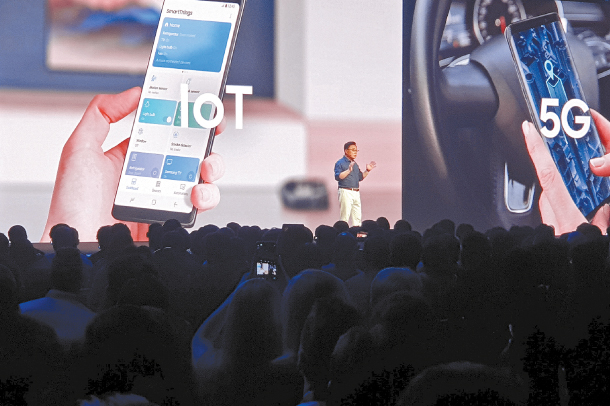
    Koh mentioned 5G connectivity, artificial intelligence and the Internet of Things as breakthrough technologies that will help Samsung compete.

    “While we have been maintaining leadership with 4G over the past decade, 5G, AI, IoT and augmented reality will offer a new opportunity in 2019.”

    He added that foldables will achieve another leap when such technologies become reality and are combined with the device.

    “Next year will be the 10th anniversary of Galaxy smartphones, and it’s very meaningful to me,” he said. “We will be coming up with an impressive Galaxy S10 as well.”

  • SK Korea keeps building Vietnam ties

    SK Korea keeps building Vietnam ties

    SK Chairman Chey Tae-won met with Vietnam Prime Minister Nguyen Xuan Phuc in Hanoi Thursday to discuss the conglomerate’s plans to invest more in both private and public companies and introduce measures to ease environmental problems there.

    They met for the second time in a year. As a result of the previous meeting, SK purchased a 9.5 percent stake in the holding company of Masan Group, one of Vietnam’s largest private enterprises, for $470 million in September.

    “We are pursuing further cooperation with private companies after our first meeting beginning with investment in Masan Group,” said the chairman of Korea’s third-largest conglomerate. “We expect cooperation in other areas such as privatization of state-owned companies to speed up.”

    Nguyen explained Vietnam’s privatization plans to Chey while asking SK to help develop the country’s growing industries.

    “Chairman Chey is the only foreign company chief that I meet every year, my interest in SK is special,” said Nguyen.

    Chey also said the group will help Vietnam combat environmental problems that stem from industrial development. SK Group currently supports the reforestation of a mangrove forest in Vietnam.

    Mangrove forests used to cover 4,400 square kilometers (1.08 million acres) of Vietnam, but only 30 percent remains. Since last May, SK Innovation has provided support to reforestation efforts in a mangrove forest in Tra Vinh province and reforestation research by Ho Chi Minh City University of Technology.

    SK’s relationship with Vietnam has grown over the years. Energy subsidiary SK Innovation has taken part in oil exploration and crude oil production from the country’s offshore oil fields since 1998. SK’s construction unit, SK E&C, has helped build petroleum complex projects in the country.

    Chey also participated in the Hanoi Forum Friday and Saturday.

    The Korea Foundation for Advanced Studies, an academic non-profit organization, and Vietnam National University in Hanoi jointly launched the forum this year to encourage academic cooperation between the two allies.

    Korea Inc. has been paying increasing attention to Vietnam as an alternative investment destination to China. Vietnam is expediting privatization amid a difficult fiscal situation, putting on sale several government-owned companies.

    In late October, Samsung Electronics Vice Chairman Lee Jae-yong paid a visit to Vietnam and vowed to increase investment during a meeting with the Vietnamese prime minister. Samsung Electronics operates major phone manufacturing lines in Vietnam, which has helped Vietnam become the second-largest exporter of mobile phones after China. As a manufacturing location, Vietnam serves as an important strategic partner for many Korean companies’ global supply chain.

    LG Display and textile giant Hyosung are also Korean companies with manufacturing units in Vietnam.

    During President Moon Jae-in’s visit to the country earlier this year, senior executives from SK and Samsung were in the president’s entourage in an effort to establish stronger business relations.

    In 2017, Korea placed second in terms of direct foreign investment in Vietnam, following Japan. Vietnam is currently Korea’s fourth-largest export partner.

  • Korea’s KT skips Huawei for 5G

    Korea’s KT skips Huawei for 5G

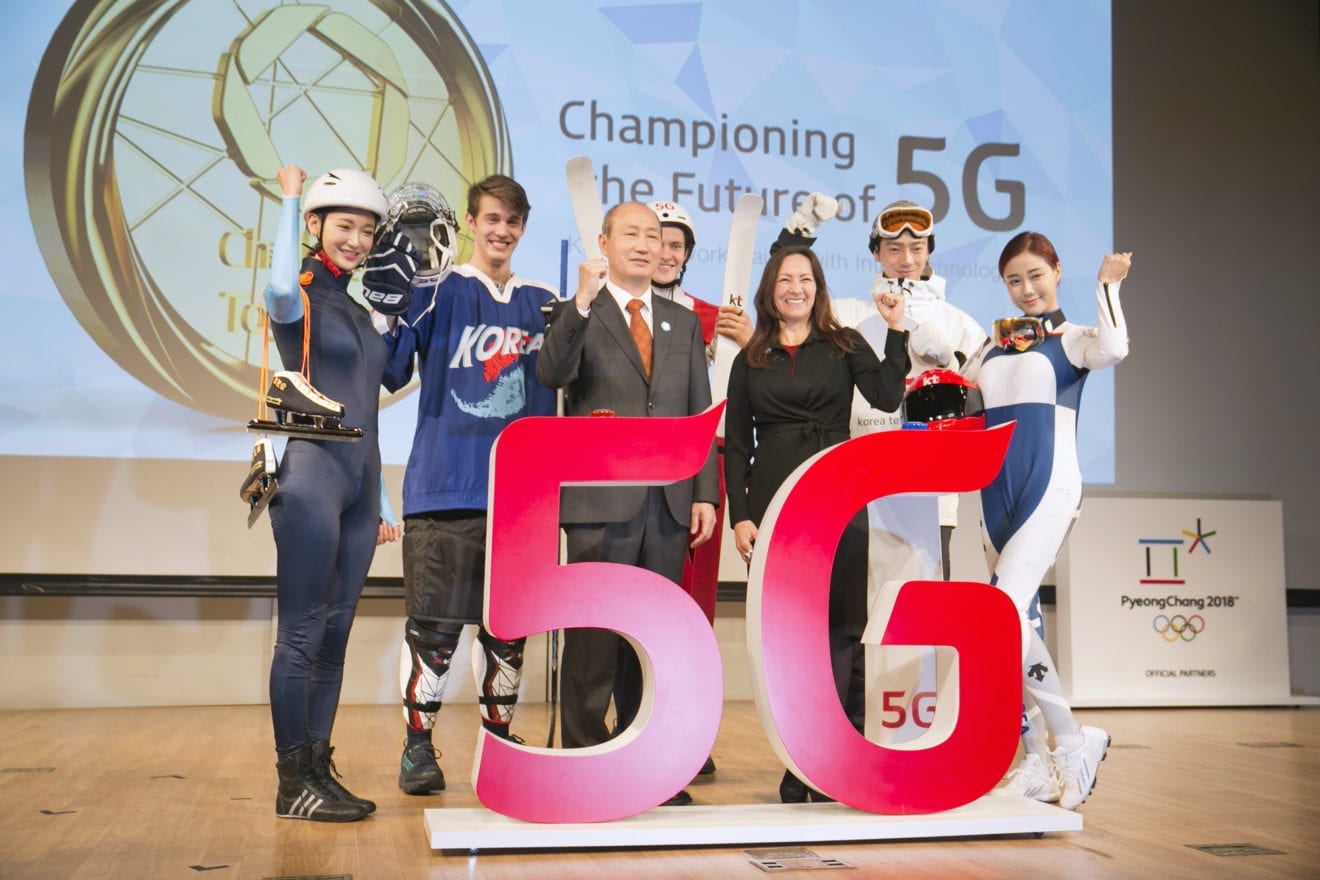
    KT has chosen Samsung Electronics, Ericsson and Nokia as suppliers of 5G network equipment. As expected, Huawei was excluded from the list.  “In choosing 5G equipment providers, the company considered a wide range of factors: the level of technology, investment costs and management stability based on the compatibility with the existing LTE network,” KT said in a statement.

    The bid results, announced by the company Thursday, come a month after SK Telecom named Samsung Electronics, Ericsson and Nokia as its 5G equipment providers.

    This is the second time Huawei was left out despite having participated in internal tests along with the three selected.

    SKT and KT’s choices were anticipated because both had used equipment from Samsung, Ericsson and Nokia for their 4G LTE networks.

    Compatibility of equipment is an advantage for mobile carriers in terms of cost and maintenance, especially in the early stages when 5G equipment is not fully installed nationwide.

    LG U+ is the only one among Korea’s three mobile carriers that has not yet announced 5G equipment suppliers. The smallest mobile carrier is likely to include Huawei on its list. It partnered with the Chinese company for its 4G LTE network, along with Samsung, Ericsson and Nokia.

    An LG spokesman said Thursday that the company “does not have plans to openly disclose selected bidders for 5G network equipment at the moment,” as it is not mandatory.

    However, LG U+ Vice Chairman Ha Hyun-hwoi gave a strong hint at the parliamentary audit late last month when he gave a positive answer to a lawmaker’s question on whether it was “unavoidable” to use Huawei’s 5G equipment as its 4G equipment was from the same company.

    The biggest advantage of Huawei’s 5G equipment is cost efficiency. The Chinese company is known to charge prices that are 20 to 30 percent lower than other global competitors for high-quality 5G equipment. A factor that argues against Huawei is security concerns.

    Due to its ties to the Chinese government, there have been worries that the company’s equipment is being used for spying. In August, the U.S. and Australian governments banned Huawei from supplying equipment for their 5G wireless infrastructure citing security reasons. Britain said in July it “is less confident” about the integrity of Huawei products.

    The concern is shared by some local customers as well. Online petitions at the Blue House’s official website have been posted since June requesting a stop to LG’s adoption of Huawei’s 5G equipment. Huawei has been denying such allegations.

    In a press release last month, the Chinese tech company highlighted that, despite ongoing security concerns, there has been zero cases of actual information leakage in the past.

    “We have supplied LTE equipment for LG U+ since 2013, and until now, there were no cases of security accidents,” said the statement. “After multiple verifications by the government, it has been proved that there have been no problems.”

  • Samsung steps up Microsoft cooperation

    Samsung steps up Microsoft cooperation

    Samsung Electronics Vice Chairman Lee Jae-yong met with Microsoft CEO Satya Nadella in Seoul Wednesday and vowed to increase cooperation with the U.S. company in artificial intelligence and cloud computing. Nadella is visiting Seoul this week for the first time in four years and delivered a keynote speech at Microsoft Korea’s “Future Now” artificial intelligence (AI) conference Wednesday.

    The two met in the morning before the conference and agreed to step up partnership in artificial intelligence, cloud computing and big data, said a Samsung spokesman.

    Microsoft currently uses Samsung’s semiconductors for cloud servers, and Samsung could sell more of its chips to the American partner in the near future.

    Media reports in Seoul say, as a result of the meeting, some Samsung devices, including smartphones, will be embedded with Microsoft cloud services in the future. Samsung already uses Azure, a Microsoft cloud computing platform, for its system air conditioners to collect data on the surrounding environment, including temperature and humidity, so the machines run more efficiently.

    The two executives might meet on a regular basis and exchange ideas on tech development, according to reports. The two leaders met in Seoul four years earlier.

    During his keynote speech at the conference at a hotel in western Seoul, Nadella mentioned Samsung as one of several Korean companies that had developed offerings based on Microsoft’s Azure platform.

    “Take the example of Samsung Electronics’ IoT [Internet of Things]-based air conditioner that runs on Azure. By taking into account environmental factors, like the number of people, the smart air conditioner can save up to 25 percent in energy and 30 percent in costs,” he said.

    Other sections of the Microsoft CEO’s speech were centered around the need to use artificial intelligence responsibly.

    “We need to ask ourselves not only what computers can do, but what computers should do,” he said, addressing an audience of over 1,500 programmers and businesspeople.

    He also spoke of the necessity to find ways to develop AI for “people who don’t have the ability to participate” in the digital economy.

    As an example, Nadella shared the case of Korea University Prof. Lee Seong-whan using Microsoft’s deep learning Cognitive Toolkit. Lee, who heads the brain and cognitive engineering department, analyzes brain signals in the development of computer systems that amputees can use to move prosthetic arms or robotic arms.

    Earlier on Tuesday, Samsung hosted “Tech Forum 2018,” an event for developers in Silicon Valley. Around 150 developers and designers were invited to the Samsung Research America center there.

    Kim Hyun-suk, president and CEO of Samsung’s consumer electronics division, said in opening remarks that the company was developing many “unfamiliar acquaintances,” which he believes will shape Samsung’s future innovation.

    “Samsung encounters a vast number of customers, rapidly changing technologies and new staff from various backgrounds,” he said. “Our strength is in selling more than 500 million consumer devices a year. We will expand contact points with our customers to reach into the smallest corners of their living spaces and bring innovation to their lifestyles in general.”

    Kim added that in terms of working with various employees, the company will continue to develop a corporate culture where global staff can cooperate and freely suggest ideas. Samsung also introduced the company’s developments in future technologies and held open discussions.

  • All Kia motoring needs in one handy app

    All Kia motoring needs in one handy app

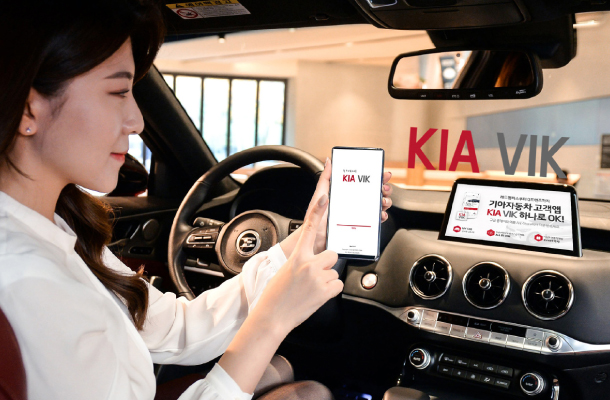
    Kia Motors on Monday launched an all-in-one mobile app that integrates all of its scattered online customer service channels. The new app, dubbed VIK, offers 60 different services including information on car purchases, maintenance and customer membership points and a basic guide to its driver assistive technologies.

    “It’s like having a virtual assistant specializing in car management,” a spokesperson from Kia said.

    The most notable service of the app is the augmented reality (AR) tutorials. If a user scans their steering wheel and dashboard with the in-app camera, the screen shows red dots marked with the specific features that the shown parts control.

    When users click each red dot on their screen, the phone plays a video tutorial of how that particular feature works.

    The AR-based service is made for Kia’s Stinger sedans now, but will be expanded to other models next year, the carmaker said. The app also understands voice commands.

    If a driver thinks something is wrong, they can ask the app where the closest maintenance center is without taking their hands off the steering wheel, Kia said.

    The carmaker said in-app mobile payments will be available soon so that people can pay for maintenance or car accessories without opening up another application. A service dubbed Kia Pay will be added by the end of this year.

    The carmaker is trying to promote the app by adding a social platform for Kia car drivers.

    It created a tab where users can post their trips and experiences with Kia cars. The company said it will award good stories to boost user interest in the newly launched app. To better market the app, Kia inked a partnership with Samsung Electronics on Monday to develop phones customized for Kia customers.

    The two are planning on launching Galaxy smartphones that come with Kia’s service apps, including VIK, preinstalled.

    Kwon Hyug-ho, executive vice president and head of domestic sales at Kia Motors, said the company will continue to expand its partnership with Samsung to make phones specialized for better car management in a press briefing held Monday in Seoul.

  • Make Vietnam your largest strategic base, PM urges Samsung

    Make Vietnam your largest strategic base, PM urges Samsung

    PM Nguyen Xuan Phuc has suggested that Samsung expands its scale to make Vietnam the group’s largest strategic base. Receiving Lee Jae Yong, vice chairman of Samsung Group, in Hanoi on Tuesday, Phuc said Samsung should not just stop at making Vietnam its largest smartphone production base.

    He suggested the South Korean giant expands its business to other major fields like semiconductors, infrastructure and energy in Vietnam rather than focusing mainly on manufacturing and assembling electronic products, as it has been doing so far.

    A statement posted on the government’s website cited the prime minister as saying that Samsung should work towards building its largest strategic base in the country.

    He also wanted Samsung to continue providing practical support in terms of training and technology transfer to assist Vietnam’s supporting industry.

    As Samsung is making a significant contribution to developing e-government in South Korea, the PM suggested it does the same for Vietnam.

    He promised that the Vietnamese government will keep creating favorable conditions for Samsung’s operations in the country.

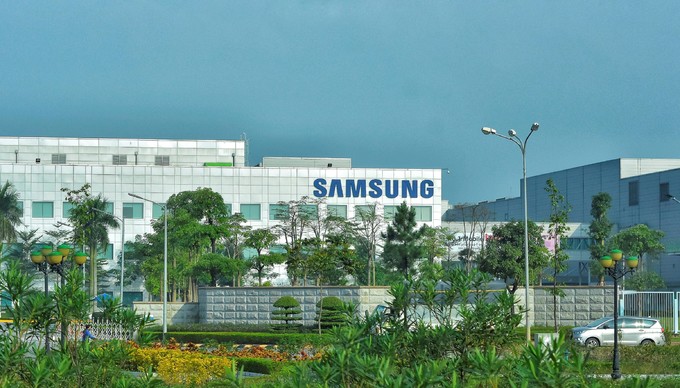
    Samsung Electronics Co. has invested $17.3 billion in eight factories and one research and development center in Vietnam, creating jobs for more than 160,000 locals.

    Exports from Samsung Electronics’ factories in Vietnam totaled $54 billion last year, it said.

    In April, CEO Koh Dong-jin of Samsung Electronics told PM Phuc that the company was determined to further expand production in Vietnam.

    He said Samsung will recruit more Vietnamese employees and develop electronics in smart cities in Bac Ninh province in the northern region and other places.

    Samsung is the largest foreign investor in Vietnam and accounts for around a quarter of the country’s total export revenue. It operates two cellphone factories in Bac Ninh and Thai Nguyen provinces in northern Vietnam.

    The factories produce around half of all the cellphones that Samsung supplies to the global market.