Tag: samsung

  • Samsung offers laptop with millennial style

    Samsung offers laptop with millennial style

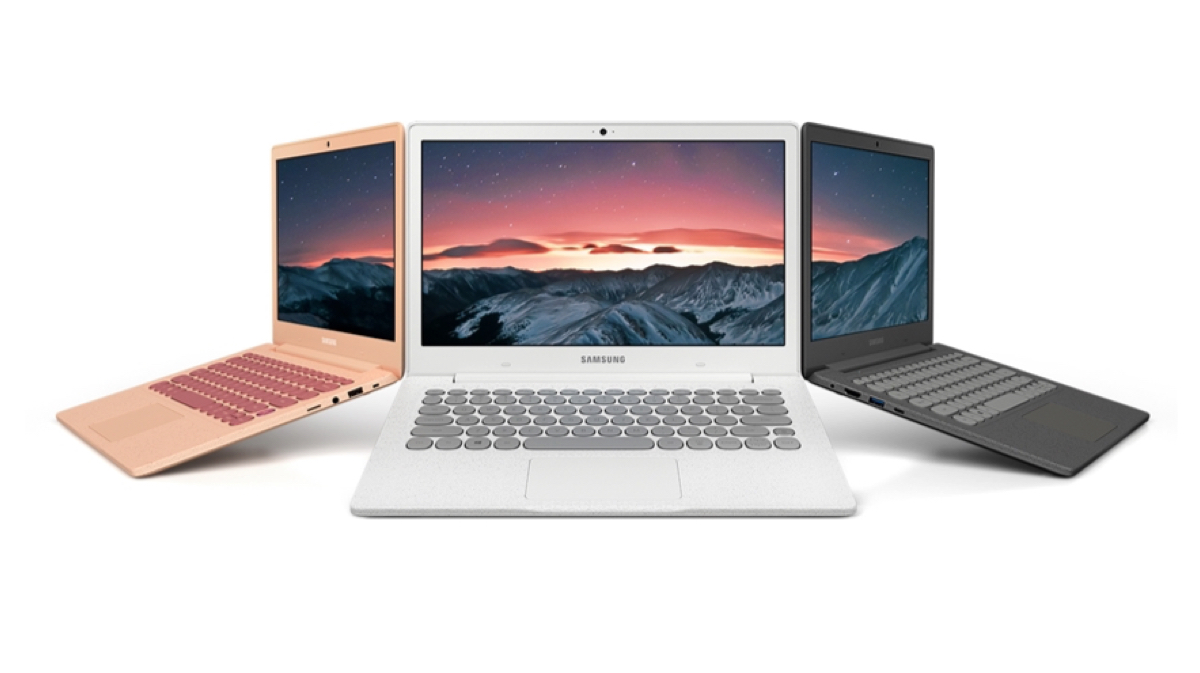
    Samsung Electronics introduced on Monday a laptop it believes will appeal to millennials.  The 13.3-inch computer, the Samsung Notebook Flash, has rounded key caps reminiscent of old typewriters. Its palm rest has a coarse fabric, not conventional metal, which feels comparatively warm, Samsung explained.  The new device is based on the Windows 10 operating system.

    “We worked with Samsung Design Europe to come up with a refined European model that millennials would want,” said Lee Min-chul, managing director of the company’s PC business unit at a launch event in northern Seoul on Monday.

    The laptop comes in three cover designs: linen white, twill charcoal and soft coral. It is powered by Intel’s latest gigabit WiFi chip, rated for download speeds of up to 1.7 gigabytes per second – a speed that Lee says is currently the fastest.

    The laptop supports universal flash storage, a flash storage that achieves five times the reading speeds of MicroSD technology.

    Fingerprint login capabilities and a secret folder, in which the user can save important files, contribute to a high level of security.
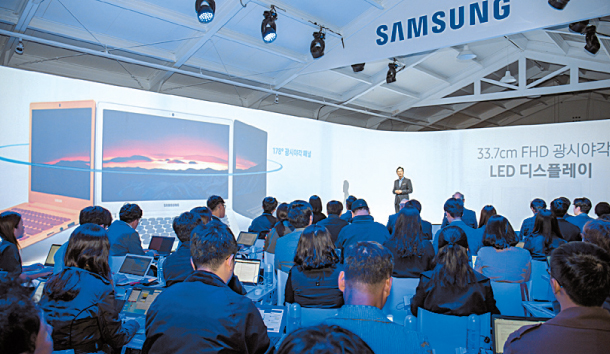
    But at 1.37 kilograms (three pounds), the new device is relatively heavy, weighing much more than typical one kilogram ultra-light laptops.

    For Samsung, a top global vendor of smartphones, semiconductors and TVs, laptops are a weak spot.

    The tech giant ranks behind the six largest players – HP, Lenovo, Dell, Apple, Asus and Acer. Those six have about 89 percent of the global market, according to TrendForce in a February report.

    Samsung, LG and others make up the remaining 11 percent.

    Samsung currently retails laptops only in Korea, the United States, China and Brazil. A full 45 percent of all laptops sold globally are sold in these markets.

    Samsung’s annual shipment of laptops totals about 3.2 million units, according to the company.

    The target for Flash laptop sales in the four target markets is one million units.

    Despite its minimal global presence, Samsung is committed to the laptop business, said Lee, citing the device’s “connectivity” with other devices.

    “PCs are central when it comes to IT devices they support – such as monitors, printers and even mobile phones,” Lee said.

    Laptops have been evolving in different ways in recent years, and Samsung wants to develop hybrid products, including laptops with foldable displays.

    “But it’s not only about hardware. It’s important to provide new usability,” he added.

    Coming in two storage sizes – 64 gigabytes and 128 gigabytes – the Flash laptop carries a price tag of 810,000 won ($717).

    But a model specifically designed for wireless operator KT can be purchased for 8,000 won per month on a 36-month subscription with KT’s internet service and the Olleh internet protocol TV.

  • Samsung buys Spanish AI firm Zhilabs in prep for 5G

    Samsung buys Spanish AI firm Zhilabs in prep for 5G

    Samsung Electronics announced that it has acquired Barcelona-based artificial intelligence startup Zhilabs in a bid to further enhance its 5G capabilities.

    Financial details of the deal were not disclosed.

    Zhilabs will be fully owned by Samsung, but it will continue to operate independently under its own management, the South Korean vendor said in a statement.

    Zhilabs provides AI-based network and service analytics solutions and its products are used by telecoms carriers including Celcom, Maxis, NTT East, Telenor, O2, Vodafone, TIM, and Telefonica.

    Samsung said AI-based automation will play a central role in the introduction of new services driven by 5G, such as industrial Internet of Things (IoT) and connected cars, as carriers seek to implement new automated solutions and network virtualization features.

    “5G will enable unprecedented services that generate exponentially greater data traffic, for which automated and intelligent network analytics tools are vital,” said Youngky Kim, president and head of networks business at Samsung Electronics.

    “The acquisition of Zhilabs will enable Samsung to help carriers meet these demands to measure and ensure the quality of each subscriber’s service experience.”

    The acquisition of Zhilabs is also part of the company’s pledge, announced in August, to invest 25 trillion won ($22 billion) in AI, 5G, automotive electronics components and biopharmaceuticals technologies.

  • Dialog Axiata launches VoWiFi

    Dialog Axiata launches VoWiFi

    Sri Lanka’s Dialog Axiata has launched what it says is the nation’s first voice over Wi-Fi calling service. The operator’s VoWiFi service does not require a third party app to be installed and allows calls to be received over Wi-Fi as if they were standard incoming calls.

    Dialog Axiata is offering five Huawei smartphones that support the VoWiFi service, and plans to extend it to other VoWiFi supported handsets from Samsung, Apple and other vendors in the near future.

    “Dialog is committed to delivering the latest in technology and connectivity to all Sri Lankans, and VoWiFi is another key step in offering next generation solutions to our customers,” Dialog Axiata CTO Pradeep De Almeida said.

    “We started this journey by enhancing the infrastructure in our network and migrating to a new state-of-the-art core network. For our customers, this means a better experience through greater agility and flexibility.”

  • Samsung works with Dutch on blockchain

    Samsung works with Dutch on blockchain

    Samsung SDS said on Sunday it signed a partnership with two Dutch entities, ABN AMRO and the Port of Rotterdam, to use blockchain technologies for logistics. The IT solutions and logistics arm of Samsung will link its Nexledger blockchain product with ABN AMRO’s Corda platform by February. In doing so, it will verify whether the system is compatible with other blockchain systems.

    ABN AMRO’s system is designed mainly for financial transactions.

    Blockchain technologies, which allow for the validation of data without central management, will be used for the paperless administration of container financing and logistics, the Samsung SDS pilot project integrating container payments, administration and physical transportation.

    At present, the various processes in the handling of containers utilize separate circuits.

    “The project came after Europe took note of Korean marine logistics blockchain services,” said Kim Hyung-tae, vice president and general manager of the smart logistics unit at Samsung SDS. “It will help our global blockchain business expand and improve our competitiveness.”

    Last year, Samsung SDS led a consortium to conduct tests on blockchain-powered storage in marine transport. The consortium included companies and government bodies.

    “The ultimate goal is to reach an open, independent and global platform that operates from the perspective of shippers,” said Daphne de Kluis, ABN AMRO’s CEO of commercial banking. “This will make the logistics chain more transparent and efficient, and millions of euros can be saved in the long term.”

    According to the bank, the hope is to create an entirely new industry standard.

    “The transportation, monitoring and financing of freight and services should be just as easy as ordering a book online,” said Port of Rotterdam in a release.

    The pilot with the Dutch companies starts in January, and the results will be announced in February.

    The cooperative network will become open to other parties, according to ABN Amro and Port of Rotterdam.

  • Samsung opens its incubation

    Samsung opens its incubation

    Samsung Electronics is opening up its internal incubating program, C-Lab, to young entrepreneurs from outside the company, and it plans to help 300 of them over the next five years. It will incubate 200 internal start-up projects during the same period, bringing the total to 500 by 2023. Expanding support to start-ups is part of Samsung’s massive 180-trillion-won ($158-billion) investment plan announced in August.

    “There were lessons learnt during our last six years running C-Lab inside the company, so we suggested sharing our experience and know-how externally as a way to contribute to solving the problem of youth unemployment,” said Lee Jai-il, vice president of the company’s Creativity & Innovation Center, at a press event held Thursday at Samsung’s R&D center inside Seoul National University.

    Started as an internal program to encourage young staff to freely suggest new ideas, C-Lab has produced substantial results.

    Of a total 230 ideas suggested to C-Lab, 78 eventually became a Samsung product or service while 36 people who had those ideas quit their jobs to establish start-ups of their own.

    Some went as far as to set up offices in Silicon Valley or show their products at the Consumer Electronics Show.

    “Another thing I noticed working with 200 C-Lab teams is that there is a type of person more suited than others to do innovative work,” said Lee. “When it comes to realizing their own idea, these people have a tendency to completely immerse themselves in that task and I believe these are the type of people that will lead this country’s future.”

    Opening the one-year program up to outsiders, Samsung will select 20 external teams every year, mainly in their early stages.

    It already has chosen 15 teams this year and they are working inside the R&D center, which the company built in partnership with Seoul National University last November.

    The center looks more a co-working space, not the typical feel for an office at Samsung, which has a reputation for a hierarchical and inflexible corporate culture.

    Several groups were having discussions inside meeting rooms while smaller groups of three to four worked on laptops on random tables in open spaces.

    The building also has a space equipped with 3-D printers and laser cutters to create prototypes.

    There’s a cafeteria that serves three meals a day on the fourth floor, and across from that is a meeting space that offers a wide view of trees in the campus.

    A Samsung staffer said they tried to create “a soft and cozy space fit for young start-ups.”

    All the facilities in the building are offered for free for a year to C-Lab teams. Other advantages include financial support of up to 100 million won and mentoring from various experts from Samsung.

    “What I’m looking forward to, even more than the infrastructure and financial support, is the possibility to find collaboration points with existing Samsung services or businesses and possibly find new service ideas we couldn’t think of before,” said Jinu Kim, CEO of the mobile app Liner, which is one of the 15 external C-Lab teams.

  • Samsung Launches New Chipsets To Make Cars Smarter

    Samsung Launches New Chipsets To Make Cars Smarter

    Samsung Electronics, a part of the Samsung Group, has announced the introduction of two new chipsets or processors for the automotive segment for connected cars technology. Christened the Samsung Exynos Auto and Samsung ISOCELL Auto, the new chipsets claim to offer cutting-edge application processor and image sensor technology solutions to the road.  While the former Exynos will help manufacturers develop in-car apps for infotainment, advanced driving assistance systems, and telematics, the ISOCELL Auto is targeted at developing in-vehicle infotainment systems and telematics solutions.

    Talking about the two new chipsets, Kenny Han, vice president of Samsung’s Device Solutions Division said, “Samsung’s new automotive brand solutions, Exynos Auto and ISOCELL Auto, bring Samsung’s market-proven technologies to automotive applications with enhanced features and durability required by the market. With fast telecommunication, accurate sensing and powerful processing capabilities, Samsung’s Auto-branded solutions will enable new driving experiences to next-generation smart vehicles.”

    Processors from Exynos Auto range come in three sub-categories: Exynos Auto V series for advanced in-vehicle infotainment (IVI) systems, Exynos Auto A series for ADAS, and Exynos Auto T series for telematics solutions. On the other hand, Samsung’s ISOCELL image sensors are built on the company’s innovative pixel isolation technology, which provides greater visibility of the road and surroundings even in low-light environments, while enabling more precise identification of objects. The sensors also allow vehicles to perceive road conditions or potential hazards even when driving through tunnels or other high-contrast environments.

  • SKT, Samsung complete 5G NSA call

    SKT, Samsung complete 5G NSA call

    SK Telecom and Samsung Electronics have completed a 5G call using 3GPP non-standalone new radio standards and commercial 5G new radio equipment. The trial at SK Telecom’s 5G testbed at its Bundang office building used end-to-end solutions jointly developed by the two South Korean companies. It utilized 100MHz of 3.5-GHz 5G spectrum and 5G NR, LTE radio and 5G non-standalone core infrastructure.

    The 5G non-standalone new radio architecture has been designed to allow 5G to be supported by legacy LTE infrastructure, allowing mobile devices to be connected to both 4G and 5G for data traffic, and to use the 4G network for non-data traffic  such as exchanging signals for mobility controls.

    This configuration is expected to be one of the promising 5G architectures for initial deployments.

    Sasmsung announced last month that it has secured a contract to deliver 5G equipment including core and RAN technologies for SK Telecom’s 5G deployments, which will commence later this year.

    The companies have been collaborating on 5G development since 2014, and jointly completed the first successful interworking of LTE and 5G new radio utilizing both 3.5-GHz and 28-GHz spectrum during a trial last year.

  • Samsung launches Galaxy A9 with rear quad camera

    Samsung launches Galaxy A9 with rear quad camera

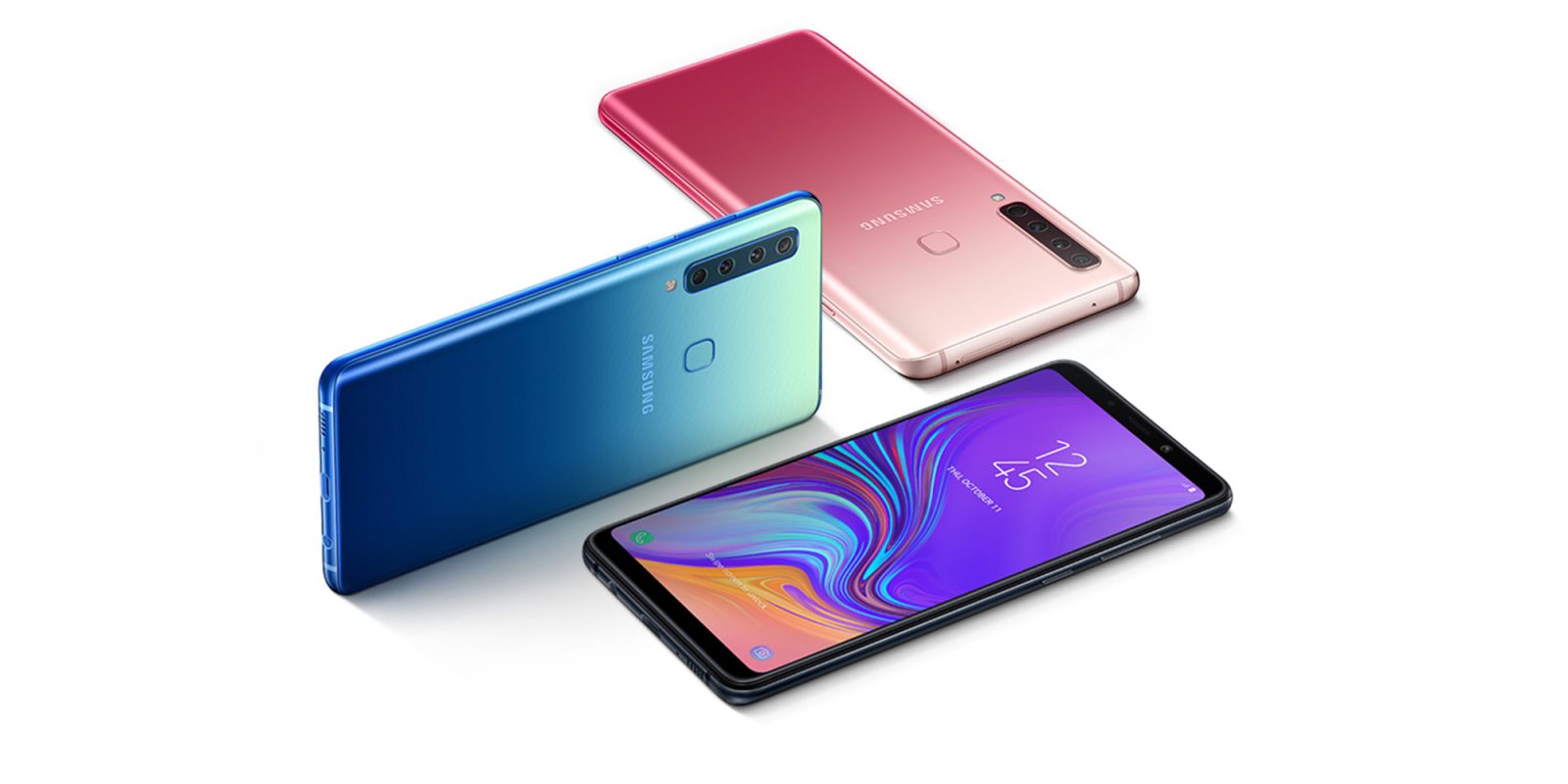
    Samsung Electronics on Thursday unveiled the world’s first smartphone with four rear cameras, packed with new features to capture moments more effectively.  The Galaxy A9 debuted at a launch event held in Kuala Lumpur, Malaysia, highlighting the first rear quad camera built for a world driven by visual communication.

    “Building on our legacy in smartphone camera development, we’re introducing next-generation technology across our entire Galaxy portfolio to give more consumers the opportunity to experience cutting-edge innovation,” said Samsung smartphone chief Koh Dong-jin. “We’re excited to deliver on this promise and debut world-leading smartphone camera technology with the Galaxy A9.”

    The Galaxy A9 with a 6.3-inch AMOLED display is packed with Samsung’s best camera innovations, Koh added.

    The rear quad camera, with four lenses on the back of the smartphone, allows users to get close, with a 2x optical zoom feature for detailed close-up shots even from far away.

    The 24-megapixel main lens captures clearer and brighter images in both bright and low-light conditions, while the ultrawide lens and the scene optimizer allow users to shoot scenes more like a professional.

    In addition, the camera’s AI Scene Recognition feature allows users to identify subjects and adjust settings accordingly for the best photo, in an instant.

    The Galaxy A9 comes with a 3,800-milliampere-hour battery, allowing an all-day performance. The new phone also provides 128 gigabytes of storage and up to 512 gigabytes of expandable memory for storing high-quality images and visual content.

    It will be released globally starting in November, in unique colors: Caviar Black, Lemonade Blue and Bubblegum Pink.

    The A9 also boasts a sleek and ergonomic design that fits in one hand with a curved back made of 3D glass for a luxurious comfortable feel, the company said.

    Smartphones with five cameras are becoming a major trend in the market.

    LG Electronics unveiled the V40 ThinQ smartphone with three cameras on the rear and two on the front on Thursday.

  • Samsung sets quarterly profit, revenue records

    Samsung sets quarterly profit, revenue records

    Samsung Electronics once again set quarterly records for profit and revenue thanks to high demand for the semiconductor chips needed to propel today’s key technologies.

    However, Korea’s biggest company is facing challenges as its current portfolio is heavily dependent on computer chip sales. Its smartphone business is struggling as sales of its flagship Galaxy S9 smartphone sales failed to reach expectations.

    According to Samsung Electronics’ guidance report on third-quarter performance, released on Friday, the company’s revenue grew 4.7 percent compared to a year ago to 65 trillion won ($57.5 billion) while its operating profit expanded by 20.4 percent to 17.5 trillion won. It is a new record for both quarterly revenue and operating profit. The earlier market consensus on Samsung Electronics’ operating profit was between 16.8 trillion won and 17.1 trillion won. Compared to the previous quarter, revenue was up 11.1 percent and operating profit was up 17.7 percent.

    Although the guidance report did not give details on the earning performance of each business, market experts believe the company’s record-breaking performance was due to the company’s semiconductors.

    Brokerage firms estimated that Samsung Electronics made roughly 25 trillion won in revenue in semiconductors in the third quarter, up 24 percent from last year’s 19.9 trillion won.

    The operating profit of the memory business is estimated to have increased by 36 percent to 13 trillion won, which would be an all-time record.

    DRAM revenue is believed to have surged 47 percent year-on-year to around 14 trillion won while NAND flash was up more than 8 percent during the same period to 7 trillion won.

    “The recent starting of additional production line manufacturing DRAM and NAND flash of the company’s memory plant in Pyeongtaek, Gyeonggi, is said to have contributed to the robust sales of the company’s memory chips,” said Doh Hyun-woo, NH Investment & Securities analyst.

    The company’s display business is estimated to have improved sharply in the third quarter as well, contributed by Apple’s release of the latest iPhone, equipped with organic light-emitting diode (OLED) display, in September.

    While the liquid-crystal display (LCD) business revenue is estimated to have dropped 28 percent, OLED business is estimated to have increased 35 percent year-on-year to over 7.5 trillion won. LCD prices have recently been falling on the attacks of low-price competition from Chinese companies. The overall display revenue is estimated to have increased 14 percent to around 9.5 trillion won.

    On the contrary, Samsung’s mobile communication business is believed to have suffered. Sales of the Galaxy S9, which was released in the second quarter, are middling, and the company is believed to have spent a large amount on marketing the Galaxy Note9, which was released in August. This likely had an effect on the company’s operating profit.

    In the third quarter, market analysts believe the mobile business dropped 9 percent to 25 trillion won, while operating profit fell nearly 30 percent year-on-year to 2.3 trillion won compared to the 3.3 trillion won recorded a year ago.

    The company’s dependency on its semiconductor’s business is becoming an increasingly large concern.

    “While the third quarter guidance report is positive in that it exceeds earlier market consensus, heavy dependency on semiconductor performance is a negative [for Samsung Electronics],” said Kim Yang-jae, analyst at KTB Investment & Securities. “[Samsung Electronics] is facing a slowdown on earnings momentum, as DRAM prices has been falling since the fourth quarter.”

    DRAMeXchange, a computer chip market research firm, estimated that DRAM and NAND flash prices will fall in the fourth quarter compared to the third quarter due to difference between supply and demand. When compared to the third quarter, DRAMeXchange projected a 5 percent drop in the fourth quarter, sharper than earlier estimates of a 1 to 3 percent decline.

  • Samsung opens biggest store ever in India

    Samsung opens biggest store ever in India

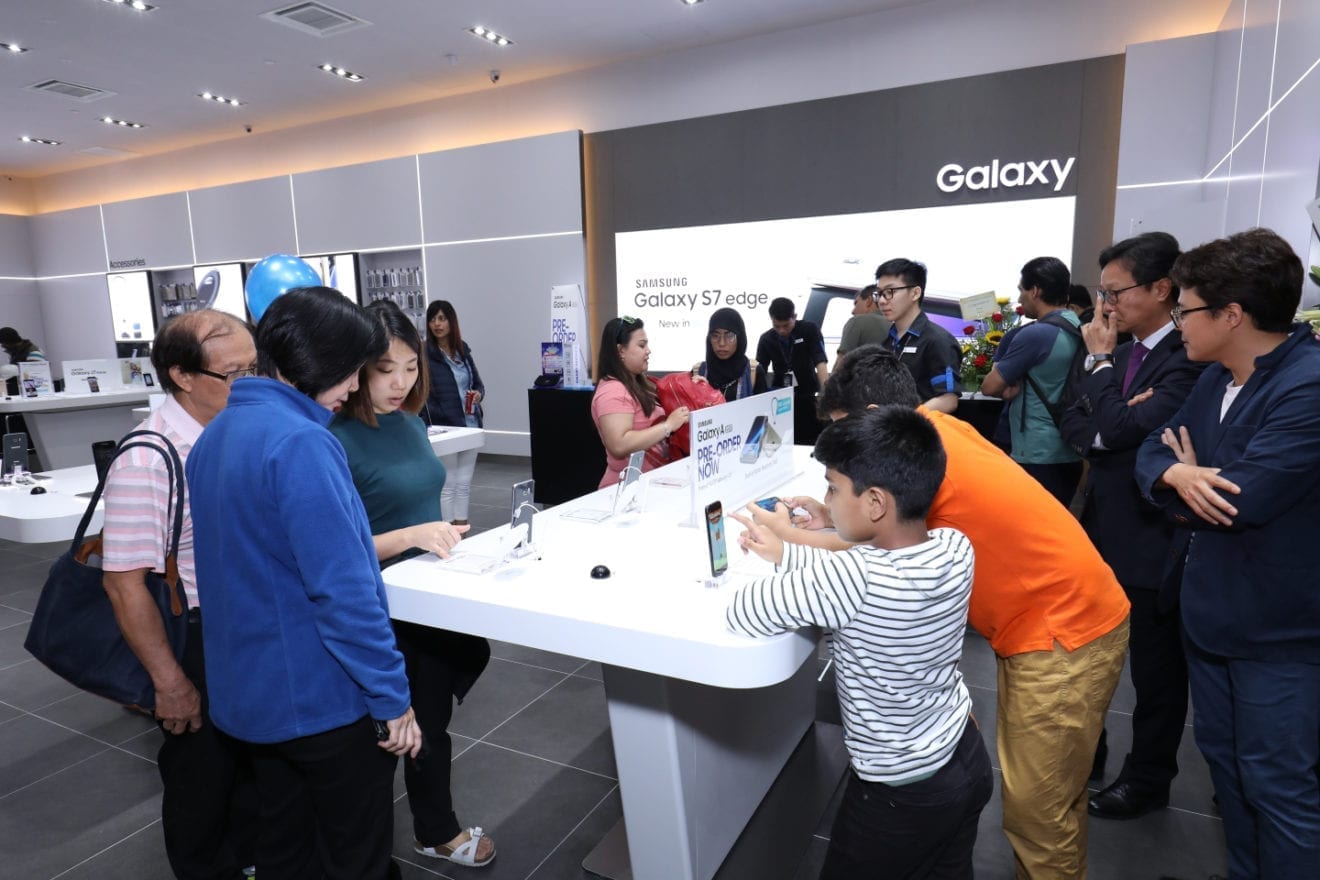
    South Korea’s Samsung Electronics announced the opening of the world’s largest mobile experience centre in Bengaluru.

    Located in the iconic Opera House building situated on Brigade Road, the new India flagship is the smartphone maker’s largest mobile experience centre.

    Dubbed “Samsung Opera House”, the renovated and redesigned retail space houses a mix of “technology, lifestyle and innovation to offer people unique experiences,” according to the Seoul headquartered Samsung, in a press release.

    Restored over two years, the store’s Opera House façade retains its original look and feel. On the inside, a modern experiential space has been developed with extensive use of modern technology.

    The store showcases Samsung’s full line-up of smartphones and wearable devices at the experience centre alongside flagship consumer electronics products such as smart tvs, ovens and refrigerators

    Harnessing the brand’s #DiscoverTomorrowToday mantra, Indian shoppers can also expect a differentiated product experience, centred on virtual reality and artificial intelligence, as well as the internet of things.

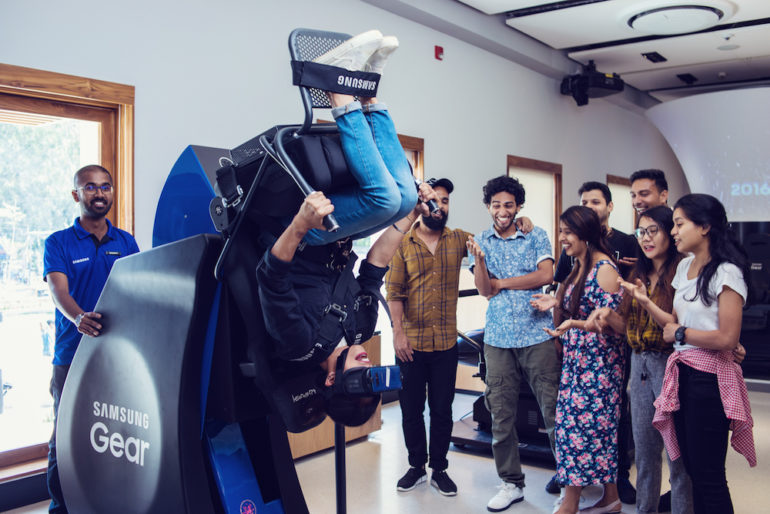
    VR experiences include a 4D Sway Chair and the Whiplash Pulsar 4D chair that makes 360 degrees three-dimensional movements, designed to simulate a fighter pilot doing extreme aircraft stunts, or experience a space battle, or a roller coaster ride.

    Consumers can also pre-book the centre’s home theatre zone for watching movies and shows.

    “Today’s consumers, especially millennials, seek unique experiences. They want to interact with the brand, touch, feel and create. This is what Samsung Opera House is about.

    We have curated never seen before experiences that will excite people of all age groups alike. Opera House will also organize workshops, activities and events, bringing together Samsung’s innovations with people’s passions. We are proud of the transformation that this place has seen,” HC Hong, President & CEO, Samsung SouthWest Asia, said.

    Samsung selected Bengaluru as host city given its notoriety as India’s tech capital, which has attracted many Millennials and tech-savvy consumers to the area.

    The new store in India comes two months after Samsung inaugurated the world’s largest mobile factory in Noida in July this year, reinforcing the company’s commitment to India.


  • Samsung cleans up its cross-shareholding web

    Samsung cleans up its cross-shareholding web

    Samsung Group affiliates sold off shares in each other’s companies on Friday in a major step toward revamping the conglomerate’s governance structure and removing its byzantine web of cross-shareholding.

    Samsung Fire & Marine Insurance put 2.61 million shares, or 1.37 percent, of Samsung C&T for sale at a suggested price of 328.5 billion won ($294.3 million) through a block deal. Samsung Electro-Mechanics had 5 million shares in the company, equivalent to 2.61 percent, which it aimed to sell at 642.5 billion won.

    The main buyers were institutional investors, industry sources said. They purchased each Samsung C&T share for 122,000 won, 5 percent down from the previous day’s closing price. This will leave Samsung Fire & Marine Insurance with 319.3 billion won and Samsung Electro-Mechanics with 610 billion won.

    The sell-offs put an end to the conglomerate’s long history of cross-shareholding in which companies in a group own shares in other companies. In Korea, the tactic is often used by a conglomerate’s owner family to tighten its ownership across affiliates without directly owning shares in each.

    Samsung, the country’s largest conglomerate, originally had six affiliates forming a complicated spoke-and-axle structure with Samsung C&T at the center. The other five companies were Samsung Electronics, Samsung SDI, Samsung Life Insurance, Samsung Fire & Marine Insurance and Samsung Electro-Mechanics.

    Its first step toward breaking the structure came in April, when Samsung SDI sold off 4.04 million shares worth 559.9 billion won in Samsung C&T. This effectively terminated three out of seven cross-shareholding arrangements that existed across affiliates. Friday’s sell-off cut off the remaining four.

    Industry analysts expected Samsung C&T to buy back the shares sold by the two affiliates, but all of them were sold to outside investors through block deals, a form of transaction in which two parties agree on a price outside the stock market. Samsung SDI also sold its shares to institutional investors in a block deal in April.

    The current administration under President Moon Jae-in has sent multiple warnings to Samsung to resolve its cross-shareholding structure. It was one of Moon’s pledges when he ran for office last year.

    As for Samsung’s Lee family, the effect on their ownership inside the group is minimal. Its members, including the ailing patriarch Lee Kun-hee and his son Lee Jae-yong currently own 33 percent of Samsung C&T, the group’s de facto holding company. Friday’s sell-off of 3.98 percent in the affiliate won’t make much difference.

  • Samsung expected to post record operating profit

    Samsung expected to post record operating profit

    Samsung Electronics is expected to post a record operating profit of 17.2 trillion won ($15.4 billion) in the third quarter, backed by firm demand for memory chips, market sources said Tuesday.

    The consensus by major brokerage firms marks an 18.5 percent on-year increase in the tech behemoth’s profit for the July-September period.

    The revenue is forecast at 65.2 trillion won, up 5.1 percent from a year ago.

    The company is expected to release its third-quarter earnings preview next Friday.

    The world’s top smartphone maker logged a record high 65.9 trillion won in sales in the fourth quarter of last year and a record high of 15.6 trillion won in operating profit in the first quarter of this year.

  • Samsung, LG show off hottest gadgets at IFA

    Samsung, LG show off hottest gadgets at IFA

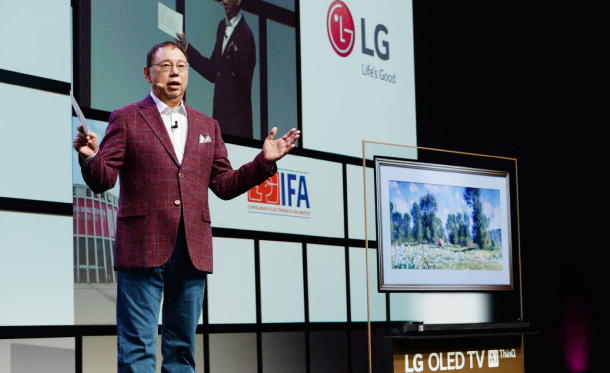
    The 2018 IFA, the biggest trade show in Europe for electronic appliances, kicked off Friday with a lot of buzz about connected homes, artificial intelligence (AI) and televisions with extraordinary resolution.

    IFA is a “place for many different industries – each with their expert knowledge – to share, discuss and develop their innovation and vision,” said Christian Goke, CEO of Messe Berlin, host of the annual tech fair, in a statement. “Nowadays, hardly any company can innovate without partners, alliances or open ecosystems. That brings a new mindset and heralds the Age of Co-innovation.”

    Korean tech giants Samsung Electronics and LG Electronics as well as dozens of smaller business operators have booths showing off their latest products.

    But Samsung and LG opted for different strategies for this IFA. Whereas Samsung highlighted its technological prowess by showing a few notable new products, LG was more ambitious in unveiling a flurry of new gadgets.

    Two top leaders from LG jointly delivered an opening keynote welcome.

    Jo Seong-jin, vice chairman and chief executive officer, and Park Il-pyung, president and chief technology officer, talked about what is next for the company as it looks to the future. They emphasized its signature ThinQ artificial intelligence platform, which has the slogan “Think wise, be free: Living freer with AI.”

    It was the first time that an LG executive delivered a keynote speech at the IFA.

    Jo provided his insights into how LG’s AI strategy can change customers’ lives with its “open platform, open partnership and open connectivity” philosophy.

    “Combined with cutting-edge computing, big data and enhanced connectivity through 5G, AI will integrate life, space and time into one, and open new possibilities that allow people to pursue freer, more valuable lives,” Jo said.

    Park explained how LG’s AI technology is being used in refrigerators, televisions and washing machines and why an open AI strategy was designed with the consumer in mind.

    Other tech company leaders speaking at the trade show over the next several days include those from Huawei, Microsoft and Amazon.

    More than one third of LG’s exhibition space is dedicated to AI, with a range of LG ThinQ products displayed in three different lifestyle zones: ThinQ Travel, ThinQ Gourmet and ThinQ Style. Each zone has been designed to reflect the diverse lifestyles of modern consumers by incorporating AI-enabled products into futuristic home environments.

    The ThinQ Travel zone will demonstrate the process of searching for an optimal holiday destination using AI televisions and booking flights and accommodations using the LG G7ThinQ smartphone.

    In the Internet of Things (IoT) living room – designed in collaboration with Italian luxury furniture company Natuzzi – the XBOOM AI ThinQ smart speaker shows it can turn on a TV and alter the settings of connected sofas and lighting installations.

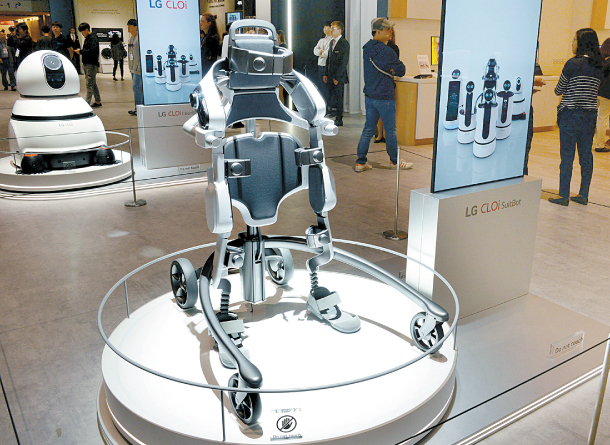
    The CLOi SuitBot, a wearable robot, is being shown for the first time at the IFA. It is meant to empower humans at work. The robot supports lower limbs and enhances a human worker’s power, helping him lift or move heavy things with ease. That makes it useful in manufacturing and construction. A person with weaker lower-body strength may also use it to more easily walk around.

    The robot is equipped with sandal-type shoes and automatically adjusts itself to fit the body.

    The core tech zone highlights innovative technology used in LG ThinQ products such as LG OLED TVs and LG SUPER UHD TVs. An 88-inch 8K OLED TV is debuting in the zone, boasting 7,680 by 4,320-pixel resolution and the ability to generate deep blacks and vivid colors while making wide-viewing angles possible.

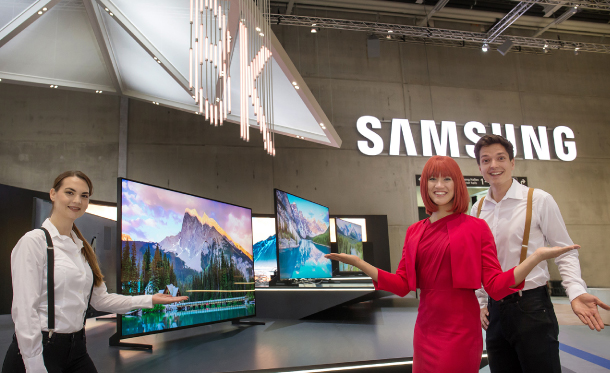
    Samsung took the wraps off an 8K QLED TV, which Kim Hyun-seok, president and CEO of the consumer electronics division, said would “revolutionize the visual display industry.”

    Available in four sizes – 65, 75, 82 and 85 inches – the extraordinarily high resolution televisions boast 16 times better resolution than currently available 4K and ultra high-definition televisions.

    He did not disclose the time of their launch or their prices but said Samsung may release them before 2020.

    “Samsung has been a leader in TVs for the past 12 years globally and 13 years in Europe,” said Kim at a press conference on Thursday. “We will keep up that status with 8K.”

    Currently, 4K televisions account for 70 percent of all televisions sold by Samsung, even though video content for such high-resolution televisions is not widely available. Samsung’s AI technology upgrades the original lower-resolution videos into a format matching the 4K television.

    The tech behemoth also showcased The Wall, a 146-inch MicroLED modular screen. It can transform into any size or shape according to a user’s needs. It also eliminates the need for color filters or backlighting.

  • Samsung Electronics No. 3 globally for R&D spending

    Samsung Electronics No. 3 globally for R&D spending

    Samsung Electronics ranked third globally in terms of research and development (R&D) expenditures last year, data showed Thursday.

    According to the report compiled by Ernst & Young, a global accounting firm, Samsung Electronics spent 13.1 billion euros ($15 billion) on various R&D projects in 2017.

    U.S. online commerce giant Amazon topped the list with 20.1 billion euros, trailed by Alphabet, the parent company of Google, with 14.8 billion euro. Samsung’s semiconductor rival Intel came in fourth with 11.6 billion euros.

    The Korean tech company said in its business report that it spent 8.7 trillion won ($7.77 billion) on R&D projects over the January-June period of 2018.

    The report said the world’s top 500 players in terms of R&D expenditures spent a combined 532 billion euros for the whole of last year, up 6 percent on-year.

  • China is now the largest market for Samsung

    China is now the largest market for Samsung

    China accounted for more than 30 percent of Samsung Electronics’ overall sales over the January-June period, industry data showed Monday, emerging as the company’s largest market and outpacing the American continents for the first time.

    The South Korean tech giant, which posted sales of 83.9 trillion won ($74.6 billion) over the first six months of 2018, raked in 27.4 trillion won, or 32.7 percent, from China, the corporate data showed. It marked a sharp rise from 18.5 percent tallied in 2013.

    Asia’s top economy accounted for 20.6 percent of Samsung’s sales in 2014, with the number rising to 28.3 percent for the whole of 2017.

    In contrast to its rising dependency on the Chinese market, Samsung’s latest data sales to the Americas was equal to 26 percent of the total in the first six months of this year, falling from 31.8 percent posted for all of 2016.

    Industry watchers said the increase apparently came as Chinese tech giants’ demand for Samsung’s chips increased sharply. The U.S. government’s protectionism policies also weighed down on Samsung’s sales in the key North American market, they added.

    Samsung’s business report showed Chinese tech giant Huawei Technologies was included as one of the South Korean firm’s top five clients. Other major buyers of Samsung products were Apple, Verizon Wireless, Germany’s Deutsche Telekom AG and Hong Kong’s Techtronics.

    The company said five firms accounted for 11 percent of its first-half sales, without providing further details. The latest list is significant as Chinese and Hong Kong firms joined the top five.

    In 2017, Samsung’s five major buyers were Apple, Best Buy, Sprint, Verizon and Deutsche Telekom.

    Experts said Samsung Electronics should take a careful approach to the Chinese market at the same time, as Beijing’s latest push to foster its own semiconductor industry may adversely impact the company.

    “Samsung Electronics, whose dependency on China has significantly increased, may become the victim of the irrational trade dispute between Washington and Beijing, which is ignoring the existing international system,” an industry watcher said.
    “Samsung Electronics, whose dependency on China has significantly increased, may become the victim of the irrational trade dispute between Washington and Beijing, which is ignoring the existing international system,” an industry watcher said.