Tag: samsung

  • Samsung releases new Star Wars accessories

    Samsung releases new Star Wars accessories

    At this point, the Samsung Galaxy Z Flip 4 is just as much a foldable smartphone as it is a fashion accessory. For the most part, this is the result of the Korean tech giant’s persistent efforts to consolidate the latter’s status as one through extensive collaborations with many different brands.

    This time around the clamshell foldable will be receiving a Star Wars treatment in the form of a number of exclusive accessories. Today, Samsung launched a Star Wars Bundle Pack consisting of a Ring Case and a strap for the Galaxy Z Flip 4, in addition to a Star Wars case and band for the Galaxy Watch (4 or 5), and a Star Wars case and strap for the Galaxy Buds 2 Pro.

    The entire bundle costs $149.99 and is available at Samsung’s official online store. Each item can be purchased independently, however. It should be noted that this is just the latest in a series of exclusive accessories that Samsung has debuted this year.

    We have already seen Pokémon-themed merchandise and a fair share of other less-prominent collaborations. It should be noted that this is not nearly as ambitious as the company’s limited edition bundles.

    For reference, they always feature the device itself, sometimes with a unique design tweak, and are much more expensive. The bundles are also most often available for a limited time only and seldom make it out of South Korea.

    A notable exception to the general rule outlined above is Samsung’s recent collaboration with Maison Margiela. The Galaxy Z Flip 4 Maison Margiela edition has been released internationally and is still available.

    These Star Wars accessories are much more accessible in comparison and make the perfect present for a Samsung user who is also a fan of the cult classic.

  • Smartphone exports drop in November

    Smartphone exports drop in November

    Smartphone exports fell nearly 10% in volume and 7.4% in value in November after the country’s largest manufacturer, Samsung Vietnam, lowered production the second time this year.

    According to the General Statistics Office, Vietnam produced 20.6 million phones in November, and export of phones and phone components was worth $5 billion. This is the third month the export value of phone and components has dropped.

    Smartphone production in the first 11 months decreased by over 7% year-on-year. Most of the smartphones produced in Vietnam are exported to the western market.

    Typically, phone output increases before Christmas, but it has dropped this year because inflation pressures have prompted companies to limit production.

    Of the total smartphone output in Vietnam, Samsung Vietnam contributes half. The tech giant recorded an export turnover of over $34 billion in the first half of this year, accounting for more than 18% of the country’s total.

    Samsung Vietnam has reduced smartphone production twice this year, the first time in the first half of the year over Covid-19 impacts and the second early November.

    Vietnam recorded a total export turnover of $342.21 billion in the first 11 months, while import turnover was $331.61 billion, resulting in a trade surplus of $0.78 billion, according to the General Statistics Office. The surplus in the same period last year was $0.6 billion.

  • Samsung might be expanding its self-service repair program to include more devices

    Samsung might be expanding its self-service repair program to include more devices

    The topic of self-repair is, thankfully, an increasingly developing one. Tech manufacturers are starting to open up more and more to it thanks to the push enthusiasts, governments, and eco-activists are constantly engaging in.

    As one of the most successful and large contributors to the mobile tech scene, Samsung has its self-service repair program, which it announced back in March this year. Given its relatively recent start, however, the program does not include that many devices yet, and the tech giant has plenty of space to expand this initiative.

    Currently, the supported products are the Galaxy S20, Galaxy S21, and Galaxy Tab S7+. Yes, only these three are among the massively colorful gamut of gadgets Samsung has in its arsenal. However, a recently patented trademark filing revealed a potential expansion of this list to include other types of Samsung tech such as earbuds and wearables.

    Samsung has a patent application with the United States Patent and Trademark Office (USPTO) dubbed “Self Repair Assistant,” which is the name of an upcoming computer app that would assist users of Samsung devices to self-repair their devices, maintain them, and help with self-installation. The patent says that the app will offer guidance, information, and easy access to replacement parts for the supported devices.

    Currently, Samsung has a partnership with iFixit, which takes care of all of these services. However, this patent implies that this partnership might soon end if Samsung goes along with the launch of the Self-Repair Assistant.

    Suffice to say, this is some great news for passionate DYI enthusiasts who like to take care of and repair their own devices. That being said, nothing is certain until Samsung makes an official announcement or statement about this app and service, so don’t get your hopes up just yet. Given that this is becoming a hotter topic by the minute, though, there are good grounds for speculation that we will see a launch in the future.

  • Samsung dominates global Android market this month

    Samsung dominates global Android market this month

    Worldwide, most people have an Android phone in their hands. According to Statcounter, Android has a 71.3% global share of the smartphone pie this month compared to 71.1% for the same month a year ago. And while more than one billion Android phones were shipped last year, there are a total of 2.8 billion active Android users. Based on a report from SportsLens.com, 7.4% of those handsets are Samsung Galaxy models.
    It probably doesn’t come as a surprise that the Galaxy brand is the world’s most popular line of Android phones. After all, Samsung ships the largest number of smartphones each and every year. Samsung’s Android market dominance was probably one reason why LG dropped out of the business. What about HTC? Let’s say that its problems were from choices that the company made itself along with Samsung’s popularity.
    AppBrain data shows Samsung is responsible for a 34.6% market share of the global Android market this month. Behind the South Korean manufacturer is Xiaomi with a respectable 14.3% followed by Oppo’s 10.3% share. Vivo (9.8%) and Huawei (6.7%) round out the top five. As recently as 2019, Huawei was the second largest smartphone company in the world with a 17.6% share of the global market trailing only Samsung’s 21.8%.

    But in both 2019 and 2020, the U.S. made life difficult for the company by blocking it from obtaining supplies from its U.S. supply chain and preventing the company from obtaining chips produced by foundries using American technology. The company ended up selling off its Honor sub-unit, developing its own HarmonyOS to replace the Google Mobile Services version of Android, and is using Snapdragon 8+ Gen 1 chips designed to work with 4G LTE only.

    So what is the most popular Android device worldwide for the first half of the current month? That would be the mid-range Samsung Galaxy A12 with a 2.1% slice of the Android pie so far this month. The Samsung A21s follow that model with a 1% share, and the Galaxy A10s also with a 1% share. These phones all are part of the mid-range Galaxy A line which includes large screens, viable cameras, and large batteries.
    For example, the Galaxy A12 features a 6.5-inch LCD display with an HD+ resolution of 720 x 1600. It is powered by the 12nm MediaTek Helio P35 and includes 4GB of memory with 64GB of storage (48.2GB available to the user). There is a 1TB capacity microSD slot for additional storage and on the back is a quad-camera setup consisting of a primary 48MP snapper (f/2.0), a 5MP ultra-wide camera, a 2MP Macro camera for close-ups, and a 2MP depth sensor. There is an 8MP front-facing camera for selfies and video chats.
    And it is not surprising, considering it’s a Galaxy A device, that the Galaxy A12 sports a 5000mAh battery that charges up to 15W. Considering that the display is HD+, the battery life on this device should be tremendous.
    Samsung is the leader when it comes to the foldable phone market. Last year, the Galaxy Z Flip 3 was the most popular handset in this category. Earlier this year, the company released the Galaxy Z Fold 4 (which opens to reveal a 7.6-inch tablet-sized display), and the Galaxy Z Flip 4 (a clamshell that flips open to produce a 6.7-inch display).
    It should be noted that while worldwide Android’s market share is about 71%, in countries such as Brazil, India, Indonesia, Turkey, and Vietnam, Android enjoys 85% of the market. As for iOS, its global market share is around 28% leaving it flat on an annual basis. But the longer-term trend seems to favor Apple. Over the last five years, Android’s share of the global market slipped by 1.8 percentage points while iOS has seen an improvement of 8 percentage points over the same time span.


  • Samsung launches a duo of rugged devices in the US

    Samsung launches a duo of rugged devices in the US

    Samsung introduced two rugged devices a few months ago, the Galaxy XCover6 smartphone and the Galaxy Tab Active4 Pro tablet, but they were not available in the United States at launch. Today, the South Korean giant announced both devices are now available for purchase in the US.

    These products have their own niche target, which seems large enough to convince Samsung to continue expand its offering of rugged phones and tablets. Since we previously reported about the Galaxy XCover6 and Galaxy Tab Active4 Pro, here is a short recap in case you need a reminder.

    If you’re looking for a durable smartphone, the Galaxy XCover6 definitely delivers. It’s Samsung’s most advanced rugged phone, but don’t expect the same level of power as the company’s top-tier lineups. It’s safe to say that the Galaxy XCover6 is a standard mid-range phone in a very solid, durable body.

    Under the hood, the Galaxy XCover6 packs a 2.4GHz octa-core Qualcomm Snapdragon 778G 5G processor, paired with 6GB RAM and 128GB internal storage. It’s a fairly standard specs list for an above average mid-tier phone, so the Galaxy XCover6 might appeal to other types of customers too.

    The massive 6.6-inch PLS LCD display supports FHD+ resolution and features Corning Gorilla Glass Victus+, the latest type of panel protection in the industry. The latter should provide enough scratch and damage resistance to save your phone from being destroyed in some extreme cases.

    According to Samsung, the phone is MIL-STD-810H compliant to withstand extreme altitudes, temperatures, vibration and humidity. The Galaxy XCover6 can also withstand drops of up to 1.5m and is IP68 rated for dust and water resistance.

    Long gone are the days when every rugged phone looked like a brick. The Galaxy XCover6 isn’t the thinnest phone on the market, but it’s pretty sleep at just 9.9mm. However, this is a pretty heavy device, at least in comparison with Samsung’s flagships.

    The XCover6 weighs in at 235g, whereas the Galaxy S21 is much lighter at 167g. On the bright side, in case of extreme conditions, your Galaxy XCover6 is more prone to survive rather than the much more expensive Galaxy S21, so each has its strengths and weaknesses.
    When it comes to camera, let’s say the Galaxy XCover6 is pretty decent. The phone sports a dual camera setup (50MP+8MP) and a 13-megapixel selfie snapper. A 4,000 mAh keeps the lights up, which should provide enough juice for a few days of average usage.

    Moving on to the Galaxy Tab Active4 Pro, this feels like the tablet version of the Galaxy XCover6, at least on paper. Obviously, the tablet is going to have a larger display and battery, but much of the other specs will be the same.

    For starters, the tablet is powered by the same Qualcomm Snapdragon 778G 5G CPU and has the same memory configuration, 6GB RAM and 128GB storage. However, the Galaxy Tab Active4 Pro is also available in a cheaper 64GB version if you can’t afford the 128GB model.

    As far as the display goes, the Galaxy Tab Active4 Pro’s 10.1-inch TFT LCD display with FHD resolution is protected with Corning Gorilla Glass 5, a slightly weaker type of glass than the one protecting the Galaxy XCover6.

    On the back, the rugged tablet features a 13-megapixel main camera, while in the front there’s a secondary 8-megapixel sensor. The large 7,600 mAh battery benefits from 15W fast charging, but that’s about all we know so far about its capabilities.

    Samsung Galaxy Tab Active4 Pro shares the same rugged features as the Galaxy XCover6, including MIL-STD-810H compliance and IP68 rating. However, since the Galaxy Tab Active4 Pro features Corning Gorilla Glass 5 instead of Victus+, it can “only” withstand drops of up to 1m, or 1.2m when using the included protective cover.

    If you haven’t guessed yet based on the name of the chipset powering these rugged devices, then we can confirm that they support 5G. Also, they ship with Android 12 out of the box and can be purchased in the US through Samsung’s Business store, Amazon Business, and Samsung’s tier one and two IT channel partners.

    Pricing for the Samsung Galaxy Tab Active4 Pro begins at $649, while the Galaxy XCover6 Pro does not have a price yet, but we do know it will be available in the US on October 20, through select carrier.
  • Samsung is reportedly giving Apple the chance to close the gap in phone shipments this year

    Samsung is reportedly giving Apple the chance to close the gap in phone shipments this year

    Earlier this month we passed along a report from Reuters stating that smartphone production at Samsung’s Vietnam factories, which are responsible for half of the company’s annual phone production, had been curtailed sharply. Samsung continues to lead the world in smartphone shipments, it has dropped its target for 2022 and now plans to deliver 260 million units down 13.3% from its earlier estimate of 300 million units.

    The report added that Samsung originally planned to build 334 million smartphones this year and ship 300 million of them. Out of the 334 million units scheduled for production, 284 million handsets were set to roll off of Samsung’s own assembly lines with 50 million being produced by its China-based contract manufacturers. But after taking the headwinds into account such as supply chain issues (like the chip shortage and a shortage in experienced workers), inflation, and the drop-off in demand for smartphones, Samsung reportedly has cut production plans.

    TheElec says that between October and November, Samsung plans on building only 34 million smartphone units in its own factories. It says that this would be a huge decline compared to the same time period in previous years.

    Last year, the South Korean manufacturer shipped approximately 270 million units, so if Sammy does deliver 260 million handsets, it would be a 3.7% decline on an annual basis. It also could give Apple a chance to close the gap with Samsung. Last year, Apple delivered 235 million iPhone units and this year the iPhone 13 line has been selling well with the iPhone 14 series to be unveiled possibly inside three weeks.
    During the second quarter of 2022, Canalys reported a 9% year-over-year decline in smartphone shipments. Samsung still had the highest market share in the industry at 21% thanks to its mid-range Galaxy A product line. More affordably priced than its premium handsets, the Galaxy A models have big screens, viable cameras, and huge batteries. Apple was next with a 17% slice of the global smartphone pie followed by Xiaomi (14%), Oppo (10%), and Vivo (9%).
    If Samsung does see its smartphone shipments decline to 260 million units, it would be its lowest annual total since the pandemic reduced 2020 deliveries to 253 million. The year before, it had shipped 296.5 million smartphones.
  • Samsung to start producing semiconductor components in Vietnam

    Samsung to start producing semiconductor components in Vietnam

    Samsung is testing its ball grid array products and will mass produce them at the tech giant’s factory in northern Thai Nguyen Province in July 2023.

    Roh Tae-Moon, head of Samsung’s key smartphone division, said this at a Friday meeting with Prime Minister Pham Minh Chinh.

    On its homepage, Samsung has said that it is preparing trial production for semiconductor chip grid products and planning to open a research and development (R&D) center in Hanoi later this year or early next year.

    The company said the R&D center was about 85% complete.

    “Semiconductors would mark a third business for Samsung in Vietnam, where the company makes home appliances and half of its smartphones.

    In the first half of 2022, Samsung Vietnam’s export revenue was $34.3 billion, up 18% from the same period last year.

    In February, Samsung announced an additional $920 million investment into its factory in Vietnam.

    Before Samsung, Vietnam had Intel Products Vietnam (IPV), the largest assembly and testing plant in Intel’s network. During the global chip crisis, IPV not only maintained stable operations, but also made a number of innovative contributions to help it fill the shortage in semiconductors. One of the key initiatives was to improve the substrate treatment process at the plant.

    “Vietnam has the ability to establish the necessary infrastructure and policies needed to support cutting-edge manufacturing operations in the chip sector,” Steve Long, general manager of Intel’s Asia-Pacific and Japan region, had said during an interview with VnExpress in May.

    He said the stable socio-political environment, increasingly liberalized trade and investment policies, and a young and talented workforce were the reasons for foreign investors, especially large tech corporations, finding Vietnam an attractive destination.

    Vietnam is home to 60 percent of Samsung’s total smartphone production.

    Samsung, Vietnam’s biggest foreign direct investor, first invested $1.3 billion in its electro-mechanics unit in 2013. The unit produces main boards and other electronics components.

    As of last year, the world’s largest memory chip maker had invested $18 billion in Vietnam.

  • Samsung workers in Vietnam bear brunt of slowdown in global demand for electronics

    Samsung workers in Vietnam bear brunt of slowdown in global demand for electronics

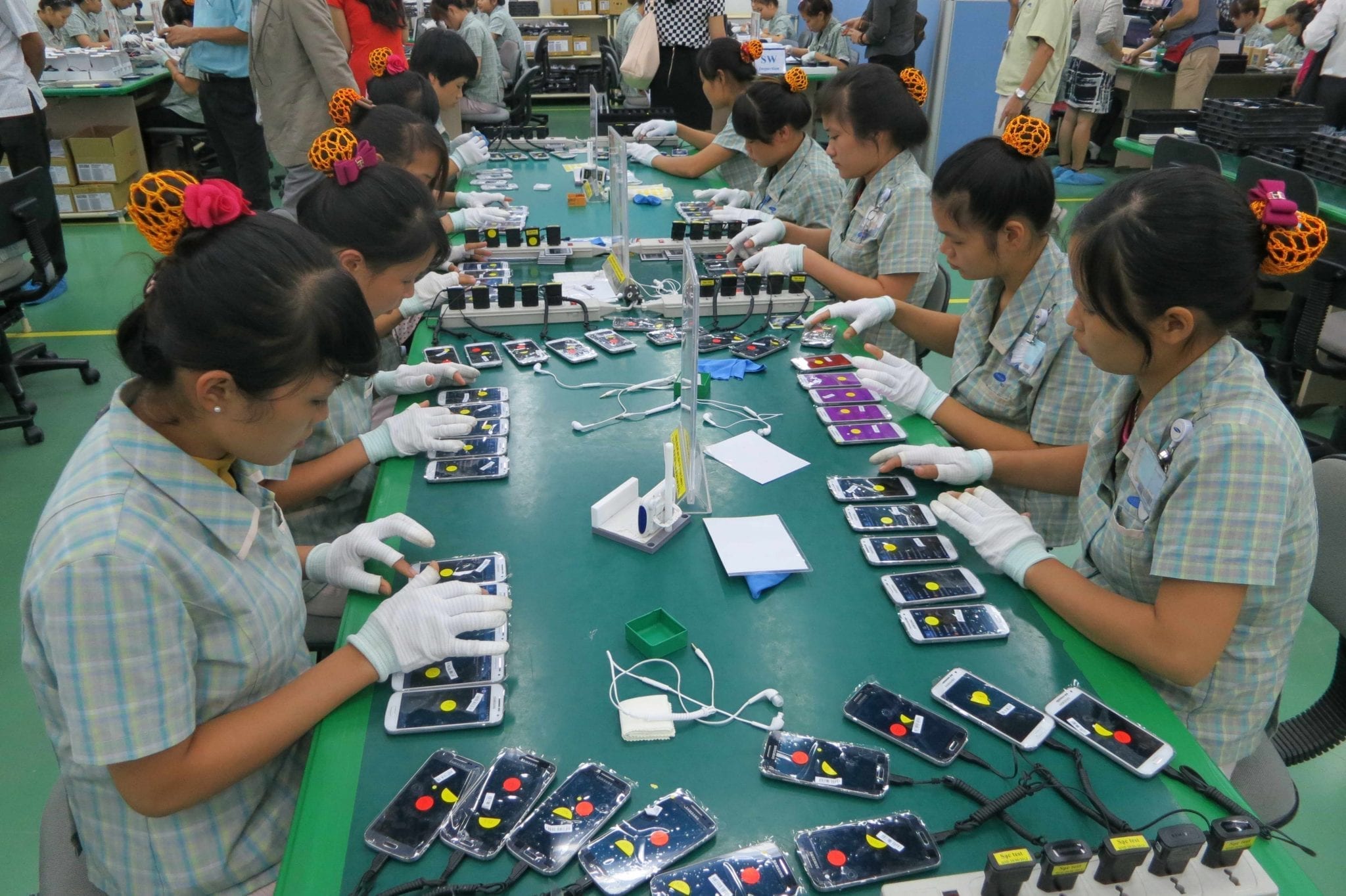
    Samsung Electronics Co Ltd has scaled back production at its massive smartphone plant in Vietnam, employees say, as retailers and warehouses grapple with rising inventory amid a global fall in consumer spending.

    America’s largest warehouse market is full and major U.S. retailers such as Best Buy and Target Corp warn of slowing sales as shoppers tighten their belts after early Covid-era spending binges.

    The effect is acutely felt in Vietnam’s northern province of Thai Nguyen, one of Samsung’s two mobile manufacturing bases in the country where the world’s largest smartphone vendor churns out half of its phone output, according to the Vietnam government.

    Samsung, which shipped around 270 million smartphones in 2021, says the campus has the capacity to make around 100 million devices a year, according to its website.

    “We are going to work just three days per week, some lines are adjusting to a four-day workweek instead of six before, and of course no overtime is needed,” Pham Thi Thuong, a 28-year-old worker at the plant said.

    “Business activities were even more robust during this time last year when the Covid-19 outbreak was at its peak. It’s so tepid now.”

    Reuters could not immediately establish whether Samsung is shifting production to other manufacturing bases to make up for reduced output from the Vietnamese factory. The company also makes phones in South Korea and India.

    Samsung told Reuters it has not discussed reducing its annual production target in Vietnam.

    The South Korean tech giant is relatively optimistic about smartphone demand in the second half, saying on its earnings call last week that supply disruptions had mostly been resolved and that demand would either stay flat or even see single-digit growth.

    It is aiming for foldable phone sales to surpass that of its past flagship smartphone, the Galaxy Note, in the second half. It is expected to unveil its latest foldables on Aug. 10.

    But a dozen workers interviewed by Reuters outside the factory almost all said business is not good.

    Thuong and her friends who have been working for Samsung for around five years said they had never seen deeper production cuts.

    “Of course there is a low season every year, often around June-July, but low means no OT (overtime), not workday cuts like this,” Thuong said.

    She said managers had told workers inventories were high and there were not many new orders.

    Research firm Gartner expects global smartphone shipments to decline by 6% this year due to consumer spending cuts and a sharp sales drop in China.

    Samsung town

    Samsung is Vietnam’s biggest foreign investor and exporter, with six factories across the country, from northern industrial hubs Thai Nguyen and Bac Ninh where most phones and parts are manufactured, to Ho Chi Minh City’s plant making fridges and washing machines.

    The South Korean company has poured $18 billion into Vietnam, powering the country’s economic growth. Samsung alone contributes one fifth of Vietnam’s total exports.

    Its arrival nearly a decade ago in Thai Nguyen, about 65 km (40 miles) from the capital Hanoi, transformed the area from a sleepy farming district into a sprawling industrial hub that now also manufactures phones for Chinese brands including Xiaomi Corp.

    Generous benefits including subsidised or free meals and accommodation have lured tens of thousands of young workers to the region, but reduced workhours have now left many feeling the pinch.

    “My salary was cut by half last month because I just worked four days and spent the remaining week doing nothing,” said worker Nguyen Thi Tuoi.

    Job cuts are on some workers’ minds but so far none have been announced.

    “I don’t think there will be job cuts, just some working hour cuts to suit the current global situation,” said one worker, declining to be named because she did not want to risk her team leader role.

    “I do hope that the current cut will not last long and we will soon be back to normal pace.”

  • Samsung executive says foldable phones are about to go mainstream

    Samsung executive says foldable phones are about to go mainstream

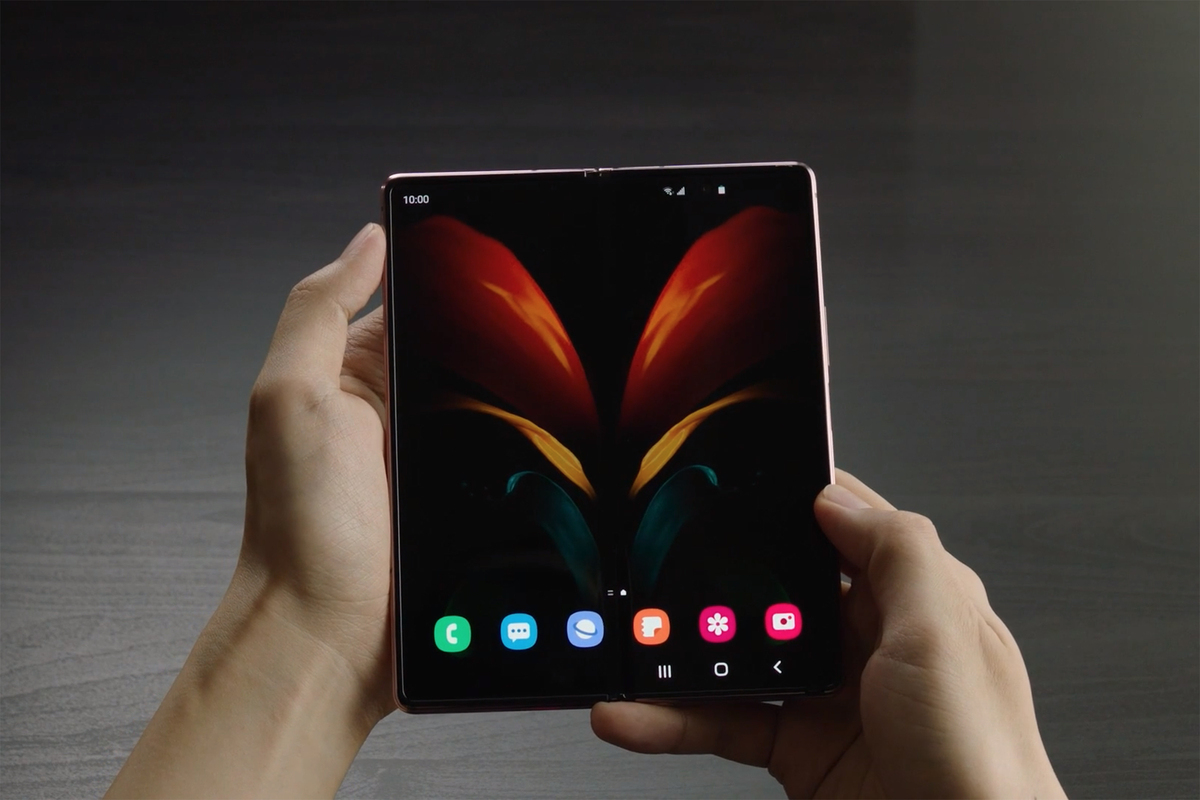
    Whether it’s because of the abrupt and satisfying way that you can hang up on someone who is being a pain in the ass, or because of the pocketability of such a device, consumers favor flip-style foldables like the Galaxy Z Flip 3 and the upcoming Galaxy Z Flip 4. In Roh’s blog post called “The Mainstream Moment for Foldable Smartphones Is Here,” the executive pointed out that last year 70% of Galaxy Z foldable phone buyers voted with their own money and picked the Galaxy Z Flip while the remaining 30% chose the Galaxy Z Fold.
    Of course, it did help that the Galaxy Z Flip 3 was priced at $999 and up, a nice-sized discount from the $1,380 price for the basic version of its predecessor. Samsung might not get as aggressive when pricing the Galaxy Z Flip 4 although a smaller decline to $899 is possible.

    While the Galaxy Z Flip can open from a device that fits comfortably in your pocket to become a tall and thin 6.7-inch handset. Roh writes that “Flip users love owning a device built for self-expression, whether choosing bold color options for their device or taking pictures in a new way with Flex mode.” He says that Galaxy Z Fold users also have their reasons to buy that model. “Fold users love the multitasking capability of a screen that doubles in size, so they can be more efficient and get things done faster,” Roh said.

    With the next Unpacked event taking place on August 10th, the Samsung executive states that the thing to watch is not what the latest technology can do. It is all about what you can do with the latest technology. He adds that Samsung customers are the muse that the company draws from to develop innovative new ideas for the company’s foldable handsets.
    Roh says, “I can’t wait to show you the potential of our new Samsung Galaxy foldables as the ultimate tool for both productivity and self-expression. Now, you can do more than you ever thought possible, all at once, on one device.”

    It seems that the head of Samsung’s Mobile Experience Business is happy to spread the credit for the success of Samsung’s foldable phones. Roh even called out Google and Microsoft as “industry leaders that are helping to expand the experiences that are now being made possible throughout the foldable ecosystem.”

    Samsung’s goal is to take the Galaxy Z Flip 4 closer to being a mainstream phone, something that seems much more possible with the Galaxy Z Flip 4 than the Galaxy Z Fold 4. Yeah, some of it is the pricing which is why the manufacturer is reportedly looking at building another line of foldable Flip and Fold handsets for its budget-priced Galaxy A line. But based on last year’s sales, the flip build is overwhelmingly the favorite foldable among consumers.
    Will there be a day when foldable smartphones dominate the landscape? It’s hard to see how until the most influential smartphone brand, the Apple iPhone, has its own foldable device. However, even Apple won’t be able to ignore the trend if foldables continue to be bought up by consumers. Last year 10 million foldable phones were shipped, up 300% year-over-year. Numbers like that cannot be ignored for long.
    As Roh writes in his post, “We are reaching the moment where these foldable devices are becoming widespread and staking a bigger claim in the overall smartphone market.” Consumers, keep your eyes on this area of the industry to find the fastest growing sector of the smartphone industry.
  • Vietnam benefits from manufacturing exodus from China

    Vietnam benefits from manufacturing exodus from China

    Apple, Samsung and Xiaomi have moved their assembly lines out of China to Vietnam, as they seek to reduce dependence on the country.

    The country offers manufacturers access to the 10-member Association of Southeast Asian Nations (ASEAN) free trade bloc and preferential trade pacts with countries throughout Asia and the EU as well as the U.S., according to Nikkei Asia.

    Apple Inc. has 11 factories run by its Taiwanese partners in Vietnam.

    Four of them, Foxconn, Luxshare, Pegatron, and Wistron, are expanding.

    Apple would consider using more Vietnamese suppliers, CEO Tim Cook said during a meeting with visiting PM Pham Minh Chinh on May 17. A few weeks later Apple moved its iPad production out of China and to Vietnam, marking the first time the iconic tablet was assembled in Vietnam.

    Its AirPods Pro 2 wireless earbuds may also be produced in Vietnam by mid-2022, analyst Ming-Chi Kuo told Apple Insider.

    Apple is not the only smart device manufacturer expanding operations in Vietnam following China’s Covid-19 lockdowns.

    South Korea’s Samsung has just completed construction of a US$220-million research and development center in Hanoi, its largest in Southeast Asia.

    Its flagship phones Galaxy Z Fold and Z Flip are produced in the country.

    Last year Samsung reported $74.2 billion sales for its Vietnam branch, up 14 percent from 2020. They included exports of $65.5 billion, up 16 percent.

    China’s Xiaomi also moved part of its production to Vietnam, with the first batch of its ‘made-in-Vietnam’ devices debuting Tuesday.

    They are made by DBG Technology, a subsidiary of Hong Kong’s DBG Electronics Investment Limited, at a newly built $80-million factory in the northern Thai Nguyen Province.

    Delivery and logistics costs, driven up by the pandemic, were hindering Xiaomi’s Southeast Asia production, a spokesperson said.

    Comparatively cheap labor is one of Vietnam’s most prominent advantages, pointing out that Chinese workers earn CNY7,000 ($1,044) a month, twice as much as Vietnamese.

    But Vietnam’s land cost advantage is diminishing, while factories are relying on parts and raw materials from China.

    Industrial land rent in HCMC surged to a record high of $198 per square meter followed by Hanoi at $140 and Da Nang City at $80, according to a report by real estate consultancy Cushman Wakefield.

    Average land rentals in southern industrial parks in the first quarter was $120 per square meter, a 9 percent increase from a year earlier, commercial real estate services company Jones Lang Lasalle reported in May.

    Earlier this year Vietnam’s production was by supply chain delays due to China’s pandemic lockdowns.

    Yang Zhongwei, production manager at a Chinese router parts maker’s subsidiary in Vietnam, told Nikkei that clients had threatened to cancel orders as shipments from China were delayed.

    Vietnam’s weak industrial base and higher costs are other hurdles, and so while his company is considering switching to local suppliers it has yet to manage to do so, he said.

    Carbon taps for printers cost 21 yuan per roll in Vietnam, three times the price on Alibaba’s Taobao in China, he pointed out.

  • Samsung starts building 3nm smartphone chips in Korea

    Samsung starts building 3nm smartphone chips in Korea

    We’re slowly moving toward the size limitations of our Universe but before we reach that Planck volume, there’s still some wiggle room. This means smaller, faster, and more efficient chips in our smartphones of tomorrow.

    Let’s leave quantum physics behind, and go straight to the news (feel free to discuss Planck constants in the comment section below). After TSMC published its roadmap, shedding light on when we can expect 3nm and 2nm chips, now Samsung has announced the production start of its 3nm semiconductor chips in Hwaseong factory in South Korea.

    Samsung is moving to a new architecture, swapping FinFET (fin field-effect transistor) for GAA (Gate All Around). And if you’re worried that more physics is coming your way, just breathe. GAA offers several advantages over FinFET – the main one being higher power efficiency.

    Another new technology involved in Samsung’s 3nm manufacturing node is the nanosheet transistor manufacturing. It replaces the nanowire technology, again boosting efficiency and also performance in this case. Using nanosheets gives the ability to very easily adjust this efficiency and performance parameters by simply altering the size of the nanosheet.

    Samsung is quoting some impressive numbers, comparing the new 3nm node with the old 5nm manufacturing process. The new chips should come with 23% improved performance, a 45% reduction in power usage, and an area reduction of 16%, and this is just the first generation of 3nm silicon.

    The second generation will bring a hefty 50% increase in power efficiency, 30% better performance, and 35% less area. Here’s a little inspirational quote from Dr. Siyoung Choi, President and Head of Foundry Business at Samsung Electronics:

    “Samsung has grown rapidly as we continue to demonstrate leadership in applying next-generation technologies to manufacturing, such as foundry industry’s first High-K Metal Gate, FinFET, as well as EUV. We seek to continue this leadership with the world’s first 3nm process with the MBCFETTM. We will continue active innovation in competitive technology development and build processes that help expedite achieving maturity of technology.”

    The Korean company is also working to allow clients to design their chips faster and easier. Samsung’s SAFE ((Samsung Advanced Foundry Ecosystem) will be taking care of partners who want to design their 3nm chips using the new technology.
    The first 3nm smartphone processor leaving the factory will most likely be the next generation Exynos 2300 (S5E9935 codename Quadra). The jump to GAA and 3nm could rehabilitate the Exynos processors, which are not very popular among smartphone enthusiasts, and are lagging behind their Qualcomm counterparts. Samsung teamed up with AMD to try and turn things around (the Exynos 2200 is armed with the new Xclipse GPU based on AMD RDNA 2 architecture) but this partnership has yielded mixed results so far.
    With TSMC hiking the prices of its manufacturing processes, it’s also very interesting to see how would Samsung play its cards on that front. If the new 3nm node turns out to be cheaper at Samsung’s factories, it can swing the pendulum once again. On the other hand, don’t expect the next Galaxy S23 with Exynos onboard to be cheaper than the Qualcomm variant, as it won’t make any marketing sense.
  • Samsung rumored to begin mass production of 3nm chips next week

    Samsung rumored to begin mass production of 3nm chips next week

    Right now there are only two independent foundries that are able to manufacture cutting-edge chips. The companies are TSMC and Samsung Foundry. Independent foundries take chip designs created by other firms and build the actual chips off of that design. Both TSMC and Samsung are working on building chips using their 3nm process nodes. The smaller the process node used, the larger the number of transistors found inside a chip.
    This is important because the more transistors employed in a chip, the more powerful and energy-efficient that chip can be. Every two years or so, the process node gets smaller and more transistors fit inside an integrated circuit. This is the famous “Moore’s Law” that you’ve heard about, named after Intel and Fairchild semiconductor co-founder Gordon Moore. Remember, this is not an actual law and as smaller and smaller components are being built, this “observation” no longer can be fully counted on to double the transistor count every other year.
    Still, over time, you can see how “Moore’s Law” has forecast the incredible increase in processing capabilities over the years. Let’s take the iPhone X, which was released in November 2017 powered by the Apple A10 Bionic chipset. The latter carried 4.3 billion transistors in each chip. Now let’s move ahead to the 2021 iPhone 13 series which sports the A15 Bionic chipset. The A15 Bionic contains 15 billion transistors, up 27.1% from the 11.8 billion transistors employed by the A14 Bionic chip.
    So now Samsung and TSMC are battling for supremacy in the business of building chips for third-parties. TSMC is number one in most metrics and its customer list includes top tech firms such as Apple (its number one customer), MediaTek, Nvidia, Qualcomm, and others. But it appears, according to ExtremeTech, that Samsung will soon beat out TSMC by starting mass production of chips made using its 3nm process node next week with TSMC starting 3nm mass production later this year.
    Additionally, Samsung is going to use a new transistor structure on its 3nm chips called GAA or gate-all-around. With this structure, the flow of current is controlled by gates that contact the transistor on all four sides. TSMC will continue to use the FinFET structure which has been in place since the 22nm process node debuted. TSMC will finally scrap FinFET for GAA when it starts shipping 2nm chips in 2026.
    Samsung’s GAA design is called Multi-Bridge Channel Field Effect Transistor (MBCFET) also known as nanowires. This is one of only two different gate-all-around designs currently available with the second one known as GAAFET or nanowire.
    The report cites a major Korean news agency that says Samsung is expected to make a major announcement about its 3nm chip production shortly. It also notes that the move to gate-all-around from FinFet will reduce the area of a chip by 45% to help deliver a performance bump of 30% while reducing energy consumption by 50%. However, there is a big problem. Samsung was reportedly getting yields of only 10% to 20% at 3nm meaning that the vast majority of its 3nm chip dies cut from a wafer could not pass quality control.
    Back in February, a report indicated that Samsung’s yield on 4nm production was only 35% resulting in Samsung losing some business from chip designer Qualcomm. The latter supposedly moved some of those orders to TSMC. However, if Samsung Foundry is about to announce the start of high volume manufacturing (HVM) at the 3nm process node, one could come to the conclusion that Samsung Foundry has improved its 3nm yield.
    Speaking of 3nm, TSMC’s major customers such as AMD, Apple, Broadcom, Intel, MediaTek, Nvidia, and Qualcomm, have started to queue up for 3nm capacity. And next on the horizon, of course, is the 2nm process node that both TSMC and Samsung are working on. Another name is expected to join TSMC and Samsung on the list of  cutting-edge foundries. Intel Chief Executive Pat Gelsinger has announced that the American company will regain process leadership from Samsung and TSMC by 2025.


  • Samsung Australia fined $14 million over false water-resistance claims

    Samsung Australia fined $14 million over false water-resistance claims

    Samsung Australia admitted to misleading buyers of some of its ‘Galaxy’ phones about the water-resistance level, the Australian Competition & Consumer Commission (ACCC) said. The regulator had first sued the company in July 2019.

    Samsung Australia said in a statement that this was not an issue in its newer, current models.

    The regulator said between March 2016 and October 2018, the company ran in-store and social media advertisements that claimed the phones could be used in pools or sea water.

    The ACCC, however, received hundreds of complaints from users saying the smartphones did not function properly or even stopped working entirely after being exposed to water.

    The claims “promoted an important selling point for these Galaxy phones. Many consumers who purchased a Galaxy phone may have been exposed to the misleading ads before they made their decision to purchase a new phone,” said ACCC Chair Gina Cass-Gottlieb.

    Samsung and the ACCC agreed that changes the company had made to newer models of the smartphones launched in Australia from March 2018 did not face such risks from water exposure, the company said.

  • Samsung Internet’s latest release focuses on privacy and security

    Samsung Internet’s latest release focuses on privacy and security

    The 17th iteration of Samsung Internet is finally ready for primetime, the South Korean company confirmed this week. We’ve previously reported about the beta version of Samsung Internet 17.0, but if you missed the news, here is what’s coming in this release.

    As the title says, this release mainly focuses on privacy and security. First off, Samsung Internet 17.0 further improves the AI-powered Smart anti-tracking feature, which is now turned on by default. The privacy function is meant to prevent third parties attempting to track users’ personal information from being successful at that.

    Additionally, Samsung Internet 17.0 offers users an interesting overview of how the browser is protecting their web experience. The updated version of the browser features a visual snapshot of a user’s privacy dashboard via the Quick Access page, which provides a detailed record of weekly activities and settings that can be adjusted.

    The latest version of Samsung Internet now allows users to take advantage of external security or on-device security keys as an alternative for SMS or app-based two-factor authentication.

    Last but not least, Samsung Internet 17.0 comes with several improvements to its overall user experience such as the ability to drag and drop tabs into custom tab groups. Also, the update brings enhanced search experience across bookmarks, history and saved pages. The official version of Samsung Internet 17.0 is now available for download on Google Play and Galaxy Store.

  • Samsung seeks to supply Apple with an important part of the latter’s M2 chip series

    Samsung seeks to supply Apple with an important part of the latter’s M2 chip series

    Apple’s initial line of M-series chips includes the M1, M1 Pro, M1 Max, and the M1 Ultra. Built by TSMC using its 5nm process node, these SoCs feature a large number of transistors starting with the M1’s 16 billion and moving ahead to the 33.7 billion on the Pro, 57 billion on the Max, and the whopping 114 billion on the Ultra (which is essentially two M1 Max chips combined.
    The M-series chips are based on Arm’s architecture and the M1 is employed inside the latest versions of the iPad Pro and iPad Air. Apple has finished the M1 series and is now moving on to the M2. One of Apple’s main rivals says that it wants a role in Apple’s M2 supply chain. Samsung, which was involved in the production of the M1 series, wants to continue peddling supplies to Apple for the M2 series.
    According to SamMobile, Samsung supplied Apple with FC-BGA (full-chip ball grid array) substrates that are used by CPUs and GPUs that have a large number of circuit connections. A substrate used in the production of chips is basically a thin copper wire placed in resin that helps transmit user instructions to chips and relay the answers. It is used because the extremely thin wiring attached to chips can’t handle being soldered directly to a circuit board.
    In other words, a substrate helps connect a chip to the motherboard of a device. As important a task as that is, it is not as high tech as other parts of a chipset are and margins are low.
    Last December, Samsung invested 1.3 trillion Korean won ($1.04 billion USD) to build an FC-BGA substrates factory in Vietnam. The company also spent another 300 billion won ($241 million USD) on its existing FC-BGA substrates facility in its home country of South Korea.
    Will Samsung get the job? Considering that there has been under-investment in the production of substrates (typical for such a low-margin business), supplies are tight and Apple has been known to tie up production for years in situations like this. And if Apple doesn’t go with Samsung, there are many chipmakers that need to find a source for advanced substrates.