Tag: samsung

  • Samsung has invested nearly $18 bln in Vietnam

    Samsung has invested nearly $18 bln in Vietnam

    Samsung has invested $17.74 billion in Vietnam in the last 24 years, 29 percent of it in the last five.

    With eight manufacturing and research facilities in the country, the South Korean electronics giant achieved revenues of nearly $60.5 billion in the first 10 months of this year, Samsung Vietnam CEO Choi Joo Ho told Deputy Prime Minister Le Minh Khai at a meeting in Hanoi Monday.

    It marked a 15 percent year-on-year rise despite the challenges to keeping factories going and sourcing parts amid Covid-19, he said.

    Exports accounted for nearly 89 percent of the revenues, he added.

    The company is building a $220-million research and development center in Hanoi, the first of its kind outside of its home country.

  • Samsung To Supply New Advanced Auto Chip To Volkswagen

    Samsung To Supply New Advanced Auto Chip To Volkswagen

    Samsung Electronics on Tuesday revealed new auto chips targeting demand for advanced chips in cars, including one mounted in Volkswagen’s infotainment system developed by LG Electronics. Demand is rising for “high-tech” automotive chips that can handle more entertainment consumption and increased electrical components in cars, Samsung said in a statement, saying that it plans to actively respond to the growing demand.

    The chips, developed by Samsung’s logic chip design business System LSI, includes a chip enabling 5G-based telecommunications for downloading high-definition video content during transit, and a power management chip for stable electricity supply.

    A third chip, an infotainment processor that can control up to four displays and 12 cameras at once, has been mounted in Volkswagen’s high-performance computer called In Car Application Server (ICAS) 3.1, developed by LG Electronics’ vehicle components business, Samsung said.

    Samsung and cross-town rival LG Electronics have both targeted the expansion of the global electric vehicle market and the rapid electrification of cars as opportunities to sell more high-tech chips and sophisticated components, analysts said.

  • Samsung finally brings one of the most requested features to its Internet browser

    Samsung finally brings one of the most requested features to its Internet browser

    Even though it misses some important features, Samsung’s Internet browser is becoming better with each update. We reported early this month that Samsung is testing a couple of features with the beta version of the browser, but there was no way to tell when exactly these would be made available to everyone.

    It looks like today is the day that Samsung Internet users are getting what we knew it came since the beginning of the month. Spotted an MSPU reader, the update brings one of the most requested features: the ability to move the URL bar at the bottom of the screen.

    Coincidentally, the UI layout strongly resemble that of the Safari in iOS 15, but the important thing that the feature is there, and Samsung users can take advantage of it. But this is not the only change included in the latest update.

    The official changelog also reveals a few other important features that either improve the usability or security of the browser. For example, the Smart Anti-Tracking feature has been enhanced to block tracking by using small pixel images. The same goes for the search experience in URL bar, which now provides search suggestions while you enter search keywords into the URL bar.

    If you own a Samsung smartphone, you should be able to download the latest update via the Galaxy Store, but the app is listed in the Google Play Store as well.

  • New Samsung Internet Browser beta adds better tabs

    New Samsung Internet Browser beta adds better tabs

    Samsung released Internet Browser 16 beta back in September, which added several important improvements to the Android app. Today, the South Korean company revealed even more new features coming to the mobile app this week.

    Some of the most important changes introduced by Samsung Internet 16 include the updated Chromium engine and the improved user experience. If you haven’t tried Samsung Internet 16 beta, you can find it in the Google Play Store or Galaxy Store, but keep in mind that this is still a work in progress.

    Without further ado, here is what you can expect from the new beta version of Samsung Internet Browser:

    • Results that are pre-loaded domains or answer suggestions
    • Search suggestions related to the user input
    • Bookmarks & history suggestions

    Besides the enhanced search experience, Samsung Internet Browser 16 beta adds Smart Protect against transparent pixels, a type of malicious tracker where tracking sites use a very small image to see what websites a user visits across domains. Also, this beta version of the browser features page zoom support on both phones and tablets.

    Today, Samsung announced it has released another small iteration of its mobile browser, which includes a couple more improvements. The newest Samsung Internet Browser beta 16.0.2 brings some interesting improvements.

    For example, the address bar can now be moved to the bottom of the screen. Also, Samsung has added support for tab groups to make it easier to keep related tasks together. It will allow users to create, edit and delete tab groups.

    More importantly, developers announced that with the new version of Samsung Internet Browser beta users can switch on support for https, which is meant to make connections to websites more secure.

  • Samsung wants to double its foldable phone shipments in 2022

    Samsung wants to double its foldable phone shipments in 2022

    It looks like Korean manufacturer Samsung is very serious and confident about the future of its foldable smartphone lineup. According to analyst firm UBI Research the giant manufacturer wants to double its foldable OLED panel production next year.

    Currently, Samsung is said to produce 8.1 million panels in 2021. This should translate into about 8 million foldable phones shipped. The yield rate of assembly lines is reported to be about 80 to 90%, which could result in a lower number.

    Doubling foldable OLED displays’ production to 18 million should translate into about 14 to 16 million foldable phones produced next year. A subsidiary of Samsung Display called Dowoo Insys is the company processing the Ultra-Thin Glass cover needed for the Galaxy Z Flip and Z Fold devices which is supplied by SCHOTT Germany. It is reported that Samsung is going to set up more production lines in order to double the manufacturing capacity. UBI Research also says foldable panels shipments could reach 49 million units in 2025.

    The increased production of foldable panels will also allow Samsung Display to sell them to other phone manufacturers. Chinese manufacturers like Xiaomi and Vivo are said to be looking to get the Samsung panels for their own foldable devices. Rumors about Google and Apple looking into adding a foldable phone to their lineups are also circulating, with Samsung being the obvious choice for a display supplier.

    This year the Korean phone manufacturer was very aggressive as far as its foldable strategy is concerned. Instead of releasing a successor to the 2020 Galaxy Note, it opted for a big release of new foldable phones.

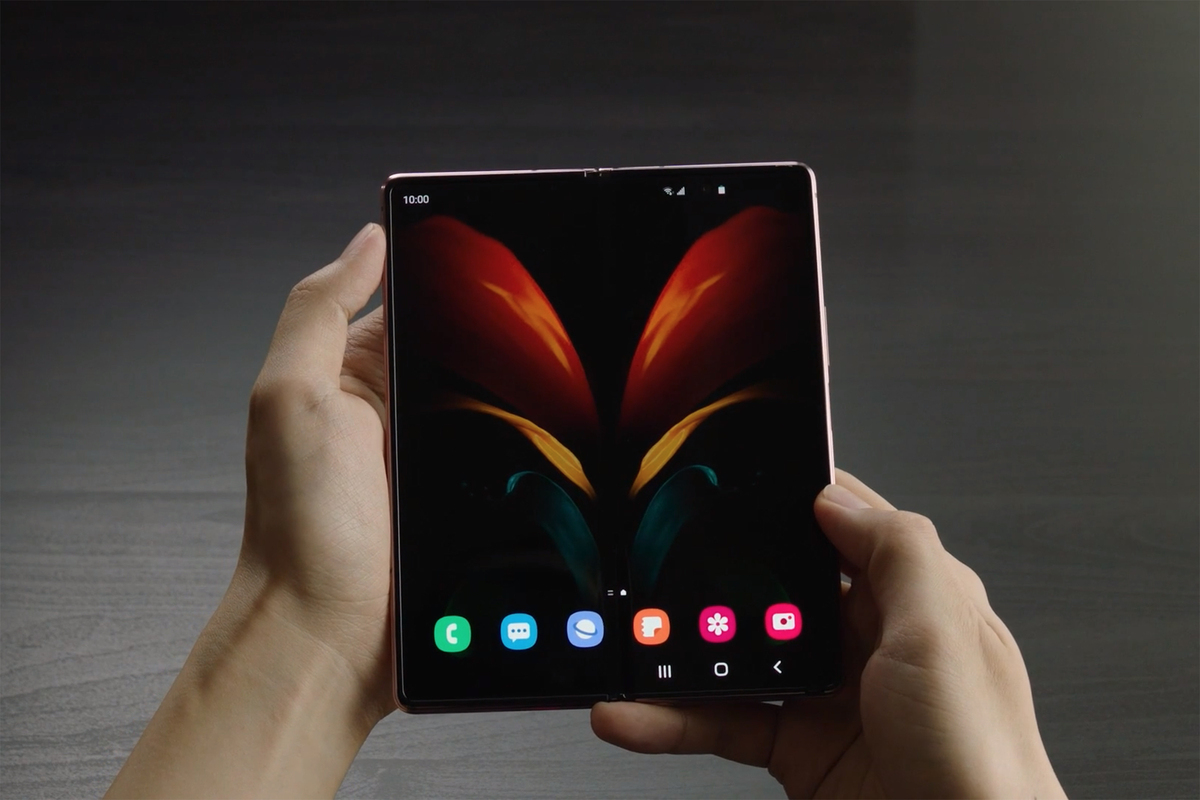
    In August Samsung revealed the Galaxy Z Fold 3 and Galaxy Z Flip 3. Both phones offered significant improvements in their foldable display technology and more attractive pricing. The Galaxy Z Fold 3 is praised for its versatility and S Pen support, while the Galaxy Z Flip 3 is liked for its looks and pocketable size.

    It is unclear whether Samsung will expand its foldable phone lineup in 2022. An even more affordable folding phone for the masses might be on the horizon. The company is already the leader in this category of devices and such a move could only expand its lead even further. It is also a leader in manufacturing with 91% of all foldable OLEDs in 2021 being made by Samsung Display.

  • Samsung reports record third quarter revenue despite global chip shortage

    Samsung reports record third quarter revenue despite global chip shortage

    Samsung had a record third-quarter revenue as it reported the U.S. Dollar equivalent of $63.1 billion for the period. That works out to a 10% increase for the top line while operating profit for the quarter came to $13.5 billion (or 26% higher than the operating profit reported during the previous quarter). $22.6 billion in revenue during the quarter came from Sammy’s semiconductor business.

    Samsung was able to navigate its chip business through the global chip shortage “by flexibly operating its product mix.” Samsung’s mobile business also played a huge role in the company’s record-breaking third-quarter. Thanks to strong sales of its flagship phones including foldable like the Galaxy Z Fold 3 and the Galaxy Z Flip 3, Samsung generated $24.2 billion in revenue during the period from July through September.

    Demand for semiconductors improved thanks to strong sales of computers; the latter benefited from the increased number of people working at home because of the pandemic.

    The company’s profits were impacted by the larger marketing outlays it made for its foldable line. Strong demand for Samsung’s phones also led its display business to deliver $7.5 billion in revenue. Earnings for the display segment were helped by strong demand for small to medium OLED panels. Demand for larger-sized displays was sluggish.

    Samsung is optimistic about Q4 and 2022 results, but cannot estimate results for the chip business because of the supply issues in that market. For the fourth quarter, the company expects to report higher earnings “due to expanded supply of SoCs and related products for launches of new 5G smartphones in 2022.”

    The company expects that the Galaxy S22 series will be its first flagship series of the new year with the Galaxy S22, Galaxy S22+, and the Galaxy S22 Ultra kicking off 2022 in January. Meanwhile, investors were happy with the report as the shares soared 2.28% on Wednesday (or $1.45 USD) to $61.22.

  • Samsung authorizes Best Buy to provide in-store repairs for Galaxy S and Note series

    Samsung authorizes Best Buy to provide in-store repairs for Galaxy S and Note series

    Samsung announced it has partnered with Best Buy to offer customers the option to have their Galaxy devices repaired at over 100 of the retailer’s stores across the United States. Starting October 26, in-person support is available to all Samsung customers at any of the authorized Best Buy store.

    To benefit from the new service, Galaxy owners must first schedule an appointment with Best Buy’s team of Geek Squad Agents, the only ones certified and trained to repair Samsung Galaxy smartphones.

    Samsung also announced that its care service at Best Buy locations will offer front and back screen replacements, battery replacements, port and camera repairs, and other in- and out-of-warranty support service for Galaxy S series and Galaxy Notes series devices. Those who own any of Samsung’s Galaxy Z foldable phones should be able to benefit from the same care service starting early November.

    In order to find a Best Buy store authorized to perform in-store repairs, customers must check out the store locator on Samsung’s website. To schedule an appointment, you’ll have to visit another Samsung website, but first make sure that your Galaxy smartphone is eligible for this kind of service.

  • Intel, Samsung to resume full production next month

    Intel, Samsung to resume full production next month

    Units of electronics manufacturing giants Intel and Samsung are set to fully resume operations by the end of November after months of social distancing-triggered production disruption.

    Saigon Hi-Tech Park is helping its tenants, many of which are currently running at about 70 percent capacity, to resume full operations next month, the park’s deputy manager Le Bich Loan said in an interview.

    The park is home to Samsung, Intel, and Nidec Sankyo Corp, a maker of magnetic card readers and micromotors.

    Nidec is also looking to resume full capacity by the end of next month, according to Saigon Giai Phong.

    Many companies operating in Saigon Hi-Tech Park lost about 20 percent of their export orders in July and August, Loan said.

    In the last several months HCMC has been imposing various levels of social distancing, which restricted the operation of factories.

    The city started resuming activities on Oct. 1.

  • Samsung starts removing advertisements from its first-party apps

    Samsung starts removing advertisements from its first-party apps

    Samsung has started removing ads from its first-party apps. The company held a ‘town hall meeting’ back in August at which time we quoted Samsung’s mobile chief TM Roh who said, “We decided to delete ads from basic apps such as Weather, Samsung Pay, and Samsung Themes.” Samsung eventually released an official statement confirming the removal of the ads.

    The new versions of these apps sans advertisements were first spotted by Samsung customers in South Korea who posted the news in the company’s Community Forum. A comment from a Samsung executive announced that the ads were removed from the Health app on October 1st. The executive said, “This is the Samsung Health Operation Manager. Please note that the banner at the top of the Samsung Health app will not be provided from October 1.

    Even though Samsung has only confirmed that it was removing ads from the aforementioned first-party apps in its home country of South Korea, U.S. users have also seen ads disappear from these apps as well. Banner ads have been removed from Samsung Pay, the previously mentioned Health app (which used to show advertisements for Samsung’s line of smartwatches along with workout tips), and the Weather and Theme apps. For example, the Weather app has replaced the banner ads it used to show at the top of the screen with the temperature and forecast.

    It should be pointed out that while the banner ads are no longer seen on the Samsung Pay app, there is still a “Featured section” that includes offers. But that is in line with the app’s use as a mobile payment system. If the ads do not disappear from the first-party apps on your Samsung handset, you might need to “force stop” them to remove them from these apps.

    To force stop the app on your Samsung device, go to Settings > Apps and scroll to find the name of the app that you want to stop. Tap on the name of the app and tap on “Force stop” located in the bottom right corner. A pop-up menu will appear stating that if you stop the app, errors could occur. Tap on “OK.” Reopen the app and the ads should be gone.

    Samsung is not the only smartphone manufacture to include ads. Xiaomi and Oppo are two such companies to include them with their UI. But Samsung was hearing from customers who didn’t want to shell out $1,800 for a premium phone like the Galaxy Z Fold 3 only to feel that Samsung was trying to convince them to spend more money on their products. The removal of the ads is taking place via a server-side update which means you should not expect a new update to be sent your way OTA.

    While Samsung offers other first-party apps, the firm has yet to announce that ads will be dropped from these titles as well. Still, it would be a good look for Samsung if it were to finish the job and offer all of its own apps without ads on a global basis. Some Samsung customers also noted how cluttered first-party apps look with the ads included.

    At the time Samsung announced back in August its plan to drop the ads from the four basic first-party apps, the company said, “Our priority is to deliver innovative mobile experiences for our consumers based on their needs and wants. We value feedback from our users and continue our commitment to provide them with the best possible experience from our Galaxy products and services.”

  • Samsung Electronics Close To Finalising $17 Billion Texas Chip Plant

    Samsung Electronics Close To Finalising $17 Billion Texas Chip Plant

    Samsung Electronics Co Ltd is close to finalizing the construction of a $17 billion semiconductor factory in Williamson County in the U.S. state of Texas, three people with knowledge of the matter said. Samsung told Reuters that it is continuing due diligence in multiple locations and that it has yet to make a decision. The factory will make advanced logic semiconductor chips and is likely to create about 1,800 jobs, Samsung previously said in filings to state officials.

    One of the people said though no decision has been made, the Austin suburb of Williamson County is the frontrunner due to the subsidies on offer as well as the likelihood of stable sources of electricity and water. A winter storm shut down at Samsung’s existing chip plant in Austin during the first quarter caused the equivalent of 300 billion to 400 billion won ($254 million to $339 million) of damage to wafer production.

    All three people declined to be identified as they were not authorized to speak with the media. Samsung previously said it would start construction on the new 6-million-square-foot (557,418-sq-meter) plant in January, with production up and running by the end of 2024. The plan comes at a time when the global auto industry faces a significant semiconductor shortage.

    “With the United States turning semiconductors into a strategic material, it is becoming a risk to be concentrated only in Asia,” said Park Sung-soon, an analyst at Seoul-based Cape Investment Securities. “Samsung wants to be on the ground in the U.S.”

    In the global chip contract manufacturing industry, Samsung is second to TSMC which had 52.9% of market share compared to Samsung’s 17.3% as of end-June, according to analysis provider TrendForce.

  • Samsung turns Galaxy smartphones into digital car keys

    Samsung turns Galaxy smartphones into digital car keys

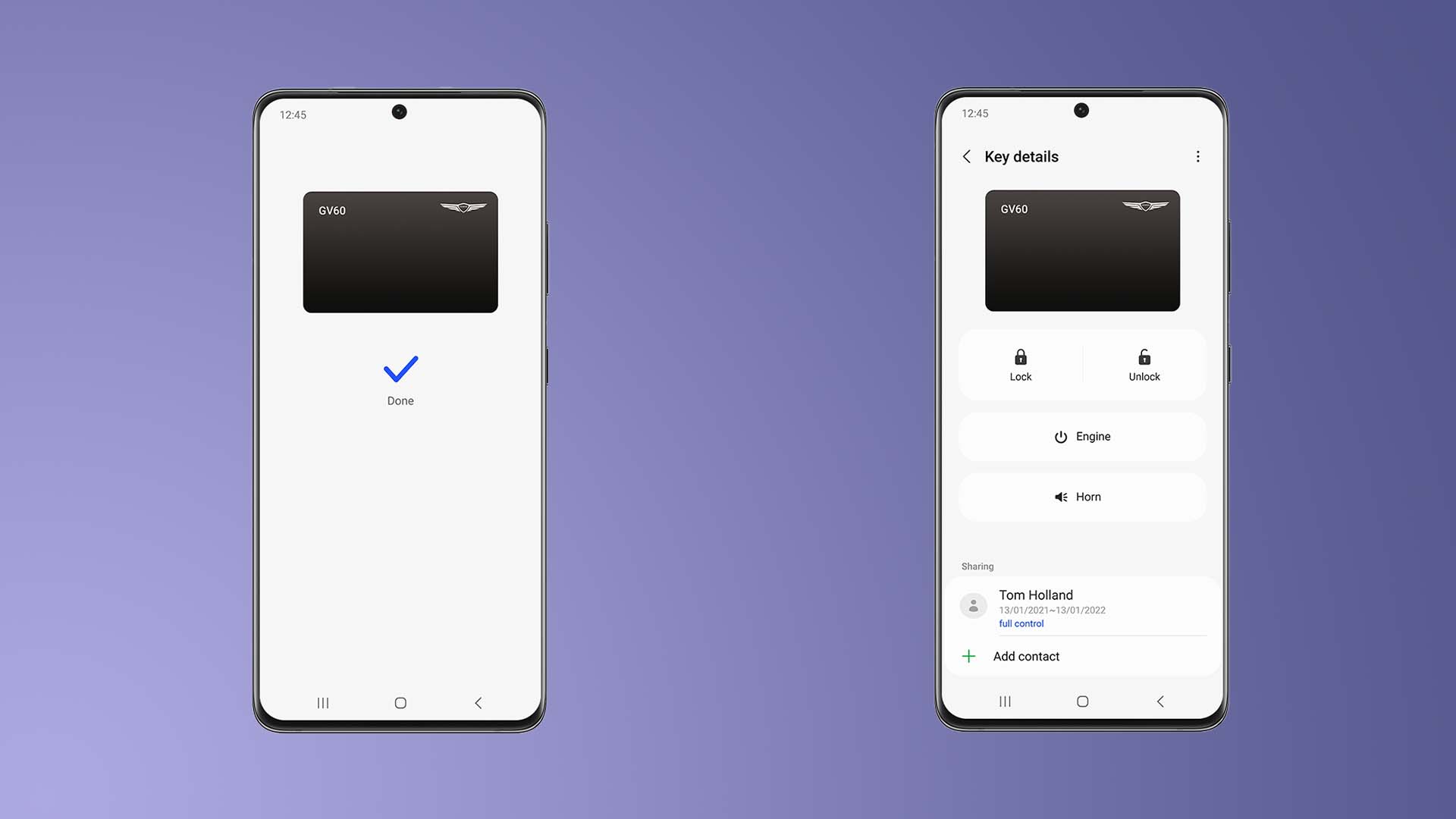
    Samsung is making its Galaxy devices even more useful than they are right now with the addition of a new feature that will turn them into digital car keys. Thanks to the revolutionary UWB technology, Samsung Galaxy users will be able to unlock, lock, and start their cars using their smartphones.

    UWB is a short-range, wireless communication protocol that uses radio waves to function, similar to Bluetooth and Wi-Fi. Unlike these two though, UWB sends radio wave at a much higher frequency, enabling highly accurate spatial awareness and directional capabilities that allow smartphones to correctly understand their surroundings better.

    More importantly, UWB enables passive entry, which means you’ll be able to lock and unlock your car, start the engine, open the trunk and even activate your personalized settings through your smartphone. The digital key can be shared if you’re lending your car to a friend, and you can even set a time limit on how long the shared key will work.

    Initially, Samsung’s digital key will be available in NFC and UWB with the Genesis V60 luxury electric vehicle in South Korea by the end of the year. Also, the smartphone maker announced that the UWB digital key is compatible with Galaxy S21+ and Ultra, Note 20 Ultra and Z Fold 2 and 3.

  • LG, Samsung are hiring again in Vietnam

    LG, Samsung are hiring again in Vietnam

    Two Korean technology giants are seeking to hire thousands of people in Vietnam, including workers, engineers and IT staff. In September, Samsung announced it is looking to hire 1,000 production staff for its Bac Ninh factory. A month earlier it said it wanted to recruit 3,000 workers for its Thai Nguyen plant.

    The company plans to expand operations at the former to increase production of flagship phones Z Fold and Z Flip to 25 million units a year.

    It is also looking to recruit thousands of employees to work in R&D. It is building a $220-million R&D center in Hanoi with 2,200 – 3,000 researchers and other staff, and plans to open it in 2022.

    LG’s factory in Hai Phong is also hiring new laborers, including IT and R&D engineers.

    It is offering VND9,5-13 million for a technician’s position. The LG Display factory in Hai Phong also announced that it is in need of 5,000 more production workers.

    Due to Covid-19, the recruitment is only in Hai Phong and candidates from elsewhere cannot apply this time, an HR official said.

    LG has three large factories in Hai Phong, mainly producing phones, TVs, air conditioners, vacuum cleaners, washing machines, and refrigerators.

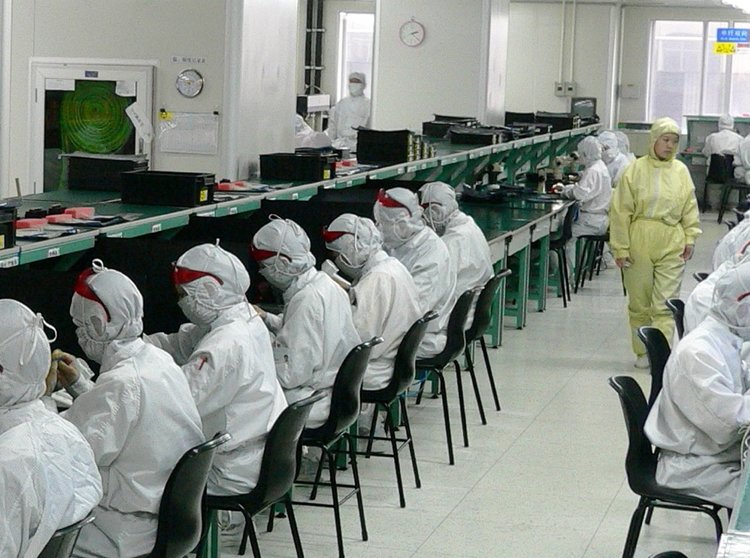
    Samsung has six production facilities in Ho Chi Minh City, Hanoi and Bac Ninh and Thai Nguyen provinces that make handheld devices and home electronics, and employ more than 160,000 workers.

  • Samsung to expand northern Vietnam plant

    Samsung to expand northern Vietnam plant

    Samsung is set to expand its plant in the northern province of Bac Ninh this year to increase its production capacity of foldable devices.

    The company would kick off the expansion project within the second half of this year, targeting full operation by the end of 2021 or early next year at the latest.

    This is to increase Samsung’s annual production capacity of foldables by 47 percent from the current 17 million to 25 million.

    Experts say once Samsung completes the expansion, the company would be able to produce 10 million units of Galaxy Z Fold models and 15 million units of Z Flip models a year.

    Samsung’s decision to ramp up capacity is mainly driven by soaring market demand. Its third-generation foldable models recorded 920,000 pre-orders in South Korea, 1.8 times more than its latest smartphone Galaxy S21, the report stated.

    “Samsung’s factories that make foldable devices are already operating at full capacity. Samsung has no option but to expand its facilities,” a source told the newspaper.

    It will likely add three more production lines to its current seven, which would allow the company to manage the production volume more flexibly, the source added.

    Samsung, the biggest foreign investor in Vietnam, has six plants and is building a new research and development center in Hanoi, which would open next year. Around 3,000 Vietnamese engineers are set to be employed there.

    The South Korean company has invested over $17.7 billion in Vietnam, has 110,000 employees and exported over $56 billion worth of products last year.

  • Microsoft optimizes all Office mobile apps for Samsung’s new foldable phones

    Microsoft optimizes all Office mobile apps for Samsung’s new foldable phones

    The announcement of the new Galaxy Z Fold 3 and Galaxy Z Flip 3 marked a few premiers for Samsung’s flagships. For example, there are the first smartphones that allow users to seamlessly transfer all their WhatsApp chat history when they switch from an Apple iPhone to an Android phone.

    This WhatsApp feature only works on the Galaxy Z Fold 3 and Galaxy Z Flip 3, but its availability will soon be expanded to most Android and iOS devices. Another interesting premiere revealed this week focuses on Microsoft’s Office mobile apps, which have been fully optimized to work on Samsung’s new foldable phones.

    The Redmond-based giant announced a new partnership with Samsung to perfect the way its Office mobile apps work on the Galaxy Z Fold 3 and Galaxy Z Flip 3. Also, the partnership between the two companies has expanded to further integrate Teams and Outlook into the foldable smartphone experience.

    Starting with these two foldable phones, you’ll be able to run multiple apps at the same time via the Multi-Active window. For example, running Microsoft Excel and PowerPoint dragging and dropping a table right into your presentation will be a breeze now. Even running two instances of the same app will be possible.

    Samsung Galaxy Z Fold 3 and Galaxy Z Flip 3 are now available for pre-order for $1,800 and $1,000, respectively, with availability expected August 27 starting from the United States and Europe. You can pre-order either of the two flagships via the widgets below.

  • Intel to build chips for Qualcomm; hopes to rival TSMC

    Intel to build chips for Qualcomm; hopes to rival TSMC

    TSMC and Samsung, the two top contract foundries in the world, will soon have a new rival. Reuters reports that yesterday Intel announced that it will start producing chips for other companies such as Qualcomm and Amazon. Intel expects to challenge TSMC and Samsung by 2025.

    Intel was once the T-Rex of chipmakers, but Taiwan’s TSMC has become the global leader with Samsung right beside it. Both of those firms produce chips for Apple, Qualcomm, AMD, and other top tech companies. The pair also currently manufacture chips using 5nm process nodes and have roadmaps down to 2nm. As an example of what each of the two foundries can offer,  TSMC is the foundry rolling out Apple’s M1 chip that carries a whopping 16 billion transistors (no typo here folks) in each chip.

    Intel says that over the next four years, it will introduce five new technologies related to the production of these vital components. One of the five is the introduction of Intel’s first new transistor design in ten years. As early as 2025, Intel will get its hands on ASML’s next-generation extreme ultraviolet lithography (EVL) machines that place on the silicon an image of where the circuitry will be placed.

    The EVL machine is important because it needs to produce extremely thin lines as transistor size shrinks allowing foundries to pack more transistors inside the components they manufacture. Intel also plans on revamping the way it names its chips to be more in line with TSMC and Samsung. Dan Hutcheson, chief executive of VLSIresearch, an independent semiconductor forecasting firm, said that Intel’s current naming protocol gave the impression that the company was less competitive.

    The larger the number of transistors that fit inside a square mm, the more powerful and less energy-guzzling a chip is. And while Intel has been losing the process node war with TSMC and Samsung, it does plan to reveal a design for transistors smaller than 1nm by 2024.

    Intel’s first major new customers will be Qualcomm and Amazon. The former is known for the Snapdragon chips that drive mobile phones with some helping to connect handsets to 5G networks. These chips will use Intel’s 20A manufacturing technique that will produce chips that consume less power than current components thanks to the use of new transistor technologies.

    Amazon plans on using Intel’s packaging technology for the components it produces itself for the data center chips used for its Amazon Web Services. Intel Chief Executive Pat Gelsinger stated that “There have been many, many hours of deep and technical engagement with these first two customers, and many others.”

    While some analysts remain cautious about whether Intel can deliver on the promises it has made, Real World Technologies’ David Kanter said that the chipmaker is being more cautious than it has been in the past. He says, “Intel is absolutely going to catch up, and be ahead in some dimensions, with TSMC over the next few years. Intel really does have people who spend all their time looking at how to deploy new materials and technology to juice their performance.”

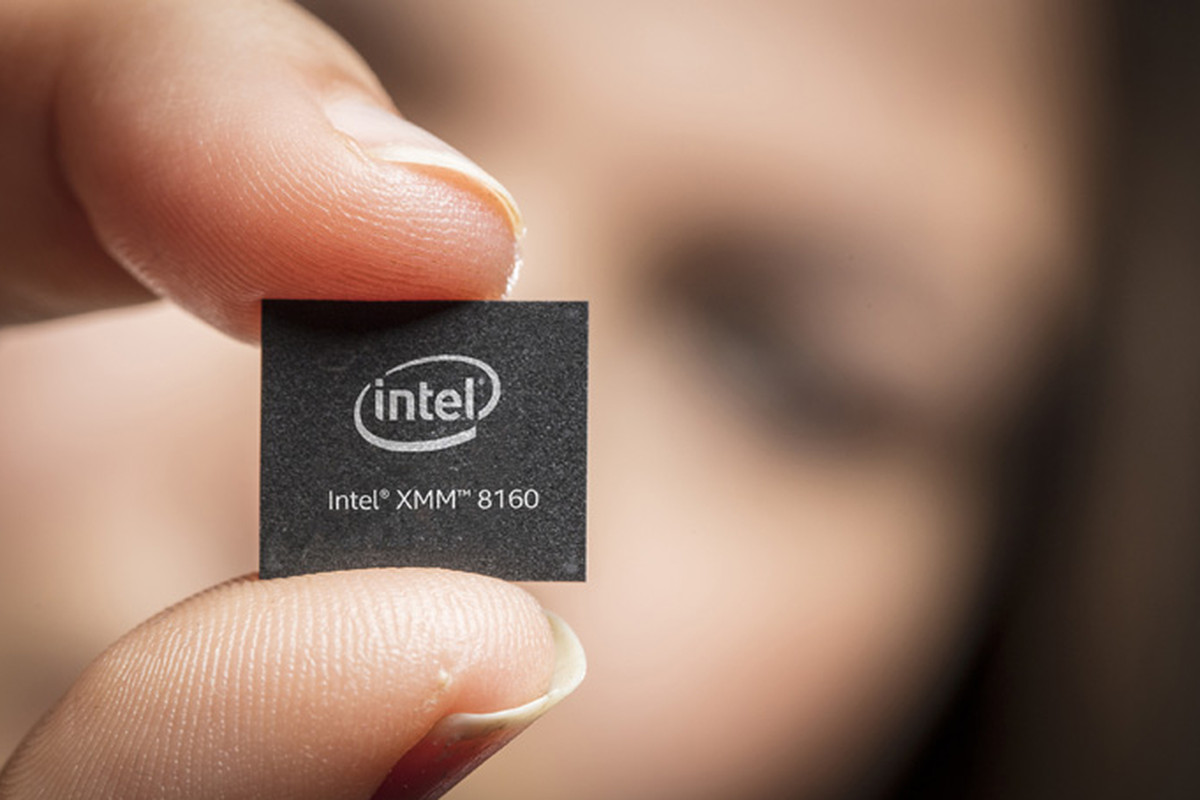
    You might recall that a legal feud between Apple and Qualcomm had Apple scrambling for a 5G modem chip to replace the one it wanted from Qualcomm. Apple planned on using a new 5G modem chip designed and produced by Intel. But Apple wasn’t thrilled about this and eventually reached a settlement that allowed it and Qualcomm to bury the hatchet resulting in the use of Qualcomm’s 5G modems on the iPhone 12 line, the first iPhone models to support 5G.

    Eventually, Apple plans on designing its own 5G modem chip and ended up purchasing most of Intel’s smartphone modem business in July 2019 for $1 billion.