Tag: samsung

  • Leaked promo confirms when Samsung will unveil two new foldables and a pair of new watches

    Leaked promo confirms when Samsung will unveil two new foldables and a pair of new watches

    A week ago, we passed along images of the devices we expect Samsung to introduce at its next Unpacked event, the second for 2021. Those products include the Samsung Galaxy Z Fold 3, the Galaxy Z Flip 3, the Samsung Galaxy Watch 4, and the Galaxy Watch 4 Classic. The huge leak had been posted on Twitter by tipster Evan Blass.

    On Saturday, Blass posted a promo from Samsung Russia that confirms that the next Unpacked will take place on Wednesday August 11th. The promo says that the event will start at 17:00 Moscow time (or 5 pm ). That equates to 10 am Wednesday Eastern Daylight Time.Leaked promo confirms when Samsung will unveil two new foldables and a pair of new watches

  • South Korea’s Samsung SDI Considers Building Battery Cell Plant In U.S.

    South Korea’s Samsung SDI Considers Building Battery Cell Plant In U.S.

    South Korea’s Samsung SDI Co may build a battery cell plant in the United States to support the auto industry’s shift to electrification, a company source with close knowledge of the matter told Reuters on Thursday. Samsung SDI, an affiliate of Samsung Electronics, has been in talks with automakers including Stellantis, Amazon and Ford Motor-backed electric vehicle startup Rivian to supply batteries manufactured at its potential U.S. factory, the source said.

    The South Korean battery maker is considering investing at least 3 trillion won ($2.62 billion) to manufacture batteries for Stellantis and a minimum of 1 trillion won for batteries to Rivian, according to the source.

    The source added that Samsung SDI has not yet decided whether they would launch the U.S. plant as a joint venture with carmakers, or as an independent manufacturing site.

    The source said the decision to build in the U.S. reflects the changes on tariff rules in the United States-Mexico-Canada Agreement (USMCA) that took effect last year, replacing the 1994 North American Free Trade Agreement (NAFTA).

    The South Korean battery maker is considering investing at least 3 trillion won ($2.62 billion) to manufacture batteries for Stellantis

    The USMCA requires that vehicles have 75% North American content compared with a 62.5% threshold under NAFTA in order to avoid tariffs.

    “We have been reviewing our expansion in the United States, but nothing has been decided yet,” a Samsung SDI spokesperson said, adding that the company cannot disclose details of talks with customers.

    Samsung SDI has EV battery plants in South Korea, China and Hungary, which supply customers such as BMW, Ford, Volvo, and Volkswagen.

    Samsung SDI’s domestic rivals LG Energy Solution and SK Innovation Co Ltd have announced separate plans to manufacture EV battery cells in the U.S. Samsung SDI is also considering investing 1 trillion won for batteries to Rivian

    Formed in January by the merger of Italian-American group Fiat Chrysler and France’s PSA, Stellantis has battery plant projects in France and in Germany, both in a joint venture with a subsidiary of TotalEnergies.

    Reuters reported on Wednesday that Stellantis is making progress on finalizing a deal to build a battery plant in Italy.

    The carmaker has said it would take a decision on additional battery factories in Europe and in the U.S. this year.
  • Samsung expects 53% increased profits amid the global chip shortage

    Samsung expects 53% increased profits amid the global chip shortage

    Samsung is reportedly expecting a notable 53% increase in its quarterly profit following a very healthy demand for memory chips during the global semiconductor shortage. One of the largest electronics manufacturers in the world forecasts a profit of nearly $11 billion for the quarter that ended with June.

    This uptrend can be attributed to strong sales of memory chips, which is offsetting the weakened sales of TVs, phones, and other electronics in the first couple of months into the coronavirus pandemic and is shaping up to be Samsung’s biggest quarter since 2018. As more and more people stayed and worked from home, the demand for electronics has surged, and Samsung is finally bringing home the bacon thanks to this. This is all despite the chip shortage that’s plaguing not only the smartphone but many other industries and businesses as well.

    Of course, the exact figures remain to be confirmed in the financial report released later this month, but Samsung will easily beat analysts’ expectations by a lot.

    Samsung is one of the largest semiconductor manufacturers globally, a leading contractor that produces chips for Apple, Qualcomm, and others. Samsung is reportedly working closely with its overseas partners to mitigate any supply disruptions that may arise as a result of the disruption.

    Recently, we’ve heard rumors that Samsung might have been forced to postpone the release of its anticipated Galaxy S21 FE to Q4 2021 due to the chip shortage. Another concession is reportedly resorting to using Exynos chips alongside Qualcomm’s Snapdragon solution. There are even rumors that the phone could skip some markets due to the same reasons.<

  • Samsung to sell business that made a specific iPhone component

    Samsung to sell business that made a specific iPhone component

    Apple does depend on Samsung to supply it with certain iPhone components although Apple has made a point of trying to reduce its reliance on its rival over the last few years. But there is a business that Samsung plans on exiting over the next year forcing Apple to change the mix of suppliers for rigid-flexible printed circuit boards (RFPCB). According to TheElec, Samsung will provide Apple with only 30% of the RFPCB that will be used on this year’s iPhone 13 series.
    As a result of Samsung’s decision to stop production of the component in November, South Korea’s BH will deliver approximately 55% of the RFPCB ordered by Apple with Youngpoong Electronics expected to chip in roughly 15% of the total. In 2022, BH could be called on to supply Apple with 70% of its RFPCB needs with the remaining 30% coming from Youngpoong Electronics.
    The component is used to connect the main circuit board with the phone’s OLED panel. Being rigid and flexible might sound like a contradiction, but the combination helps companies like Apple more easily design their products. Compared to FPCB, RFPCB sends electric signals faster but is more expensive.
    Samsung’s RFPCB production facilities are located in Vietnam and the company could start the sales process in August. Samsung is apparently planning to sell the unit in two parts. The business has been losing 50 billion won ($44.2 million USD) a year. Samsung originally planned on disposing of the division last year but decided to keep production going for another year.
  • Details of new upper mid-range Samsung chip emerge

    Details of new upper mid-range Samsung chip emerge

    Samsung appears to be testing a midrange Exynos chipset. Dutch website Galaxy Club has reported the existence of a new chip with the model number S5E8825.

    The Exynos 2100 that fuels the Galaxy S21 is known by the model number S5E9840 and its successor, colloquially being referred to as the Exynos 2200, is apparently the S5E9925.

    Previously, leaker Ice Universe had said that Samsung would release three chips this year: a flagship Exynos 22xx SoC, a mid-tier 12xx processor, and an entry-level 8xx silicone. Judging by the model name, it seems that the newly discovered S5E8825 is a midrange chip that Samsung might call Exynos 1200. It looks like it will slot below the Exynos 2100.

    In the past, it was relatively easy to differentiate between premium and mid-range chips. The Exynos 990, which powered the Galaxy S20 series, was known as the S5E9830, and the Exynos 9820 that underpinned the Galaxy S10 series had the model number S5E9820. Mid-tier Galaxy A50’s Exynos 9610 had the model number S5E9610.

    Starting last year, Samsung stopped using its proprietary Mongoose cores and adopted Arm’s designs instead. That could be why it has slightly changed the model name nomenclature too as the models seem more aligned now.

    The Exynos 1200 will presumably succeed the Exynos 1080 – a 5nm mid-tier chip that was announced late last year. It seems to be in the advanced stages of development as it is allegedly undergoing extensive testing.

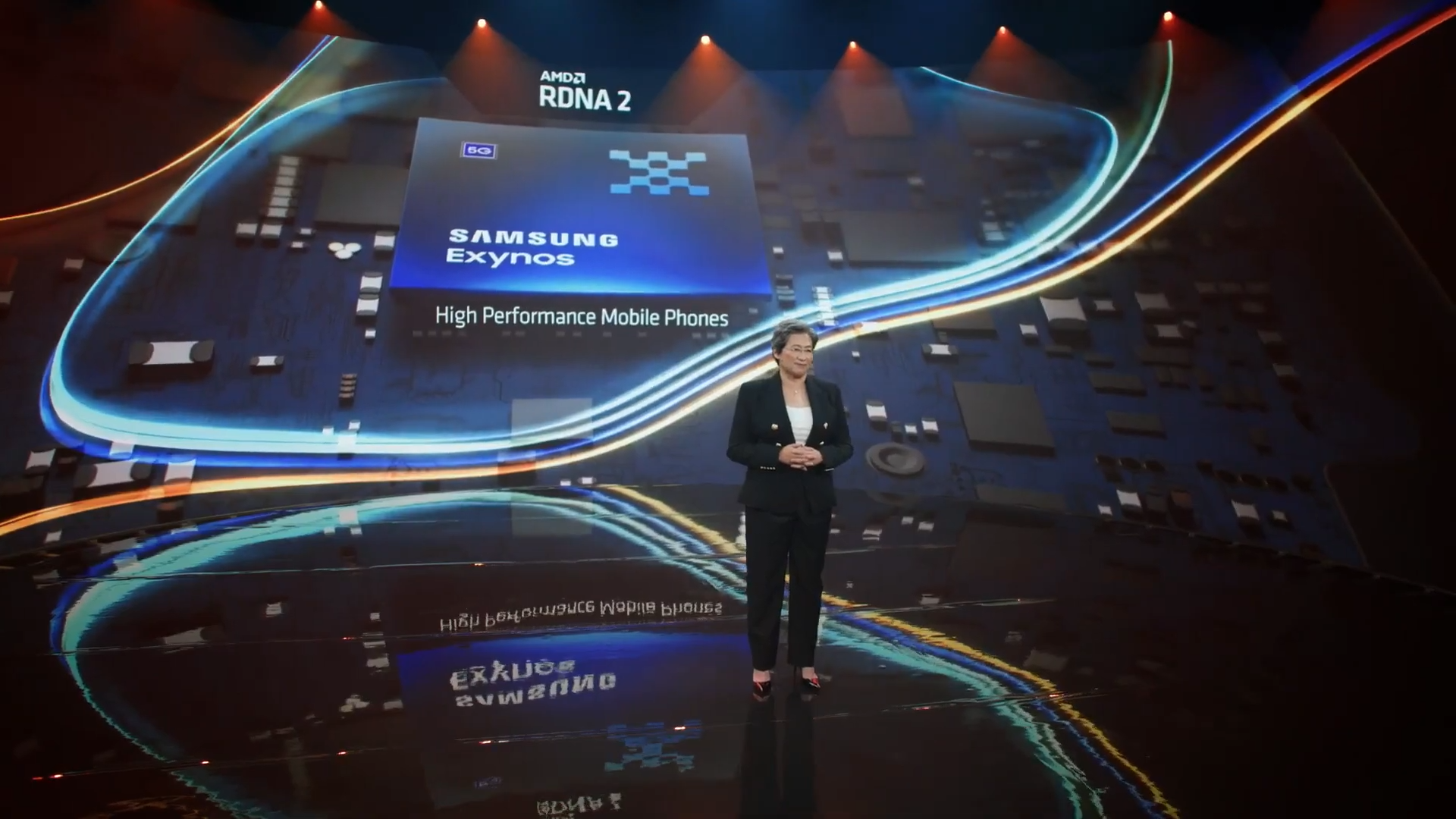
    The chip reportedly has a built-in 5G modem and per a separate report, it may come with an AMD GPU. If a recent report that doesn’t come from a verifiable source is to go by, this new processor could use Arm’s Cortex X1 as the main core.

    As good as that sounds, Samsung may not use the Exynos 1200 for its phones and instead sell it to Chinese smartphone makers, as was the case with the Exynos 1080.

  • EU Extends Investigation Into Samsung’s EV Battery Plant In Hungary

    EU Extends Investigation Into Samsung’s EV Battery Plant In Hungary

    EU competition enforcers have extended a near two-year investigation into Hungarian state aid for South Korean manufacturer Samsung SDI Co Ltd’s electric vehicle (EV) battery factory after Hungary submitted new data to back its case.

    Samsung SDI, an affiliate of South Korean tech giant Samsung Electronics Co Ltd, began production at the Hungarian plant in 2018, making batteries for 50,000 EVs a year.

    The European Commission opened an investigation in October 2019 to assess whether Hungary’s plans to grant 108 million euros ($128.5 million) in state aid complied with the bloc’s competition rules.

    “Hungary now argues that Samsung could have benefited from an investment grant and a tax exemption in an alternative location outside the EU, which would have increased the viability of the alternative location with respect to Hungary,” the Commission said.

    It said Budapest has also produced new documentary evidence to show that Samsung’s search for a location for the plant had also included a number of new production facilities in Europe and an alternative location in a less developed region in the EU.

    Extending the EU investigation will allow third parties to comment on the Hungarian aid.

    Earlier this year, Samsung said it would invest 942 billion won ($849 million) to expand the plant.

  • Samsung to launch another mid-range 5G smartphone in Europe

    Samsung to launch another mid-range 5G smartphone in Europe

    After Galaxy A52 and A72, Samsung plans to launch yet another mid-range smartphone in Europe, which is supposed to bring 5G to the masses. The unannounced phone is known as Galaxy M52 and it’s likely to be cheaper than the other two Galaxy A series phones.

    Based on a benchmark spotted by GalaxyClub, the upcoming Galaxy M52 will be equipped with Qualcomm’s Snapdragon 778G processor. It’s the same chipset that will be used by Honor inside its 50 series, so it’s bound to be good enough for a mid-range phone.

    Apart from its chipset, we also know that the Galaxy M52 will pack a 64-megapixel main camera, complemented by a secondary 32-megapixel camera in the front. There’s no info yet about the size of the display, but the phone is expected to feature a massive battery, just like the predecessor.

    It’s too early to talk about price, but it looks like information about color variants has already leaked, so we’re happy to let Samsung fans know that the Galaxy M52 will be available in at least three different colors: black, blue, and white.

  • Samsung Internet gets a bucketload of new features after latest beta update

    Samsung Internet gets a bucketload of new features after latest beta update

    Samsung Internet has become a very decent mobile browser thanks to the many updates Samsung released in the last year or so. Less than a month ago, the South Korean giant released Samsung Internet 14.0, but work on the next version of the browser has already begun.

    Those of you who don’t mind installing beta apps can now download Samsung Internet 14.2 beta, a new version of the browser that brings a wide range of new features and improvements.

    An important new feature involves site permission. This beta version of Samsung Internet lets users customize individual site permission, as they can now activate or deactivate permissions by switching on/off at the sites list. For the time being, permissions are available for Location, Camera, and Mic.

    A Bookmark Bar now shows up in the upper toolbar area in DeX mode and on tablets. You’ll need to enable the “Show bookmark bar” menu so that the bookmark bar is shown. Context menus like “Open in new tab” and “Edit bookmark” are supported too.

    The “Continue Apps on other devices” feature is getting a couple of improvements. For example, you can now use Samsung Internet on a different Samsung device and automatically sync clipboards across devices for copying and pasting text and images. However, for the feature to work, devices will need to be on the same Wi-Fi network with Bluetooth enabled to use Continue Apps.

    Several other features and enhancements have been included in Samsung Internet beta 14.2, such as S Pen Air Action, tab bar GUI enhancement, update popup for new password fill, quick access page at fresh launch, and tip card for desktop view setting.

    The new beta version of Samsung Internet Browser is available for download via Galaxy Store and Google Play Store.

  • Samsung Vietnam proposes direct purchase of renewable energy

    Samsung Vietnam proposes direct purchase of renewable energy

    Electronics giant Samsung Vietnam has proposed that it joins a trial program to purchase power directly from renewable power plants instead of monopoly distributor Vietnam Electricity.

    Choi Joo Ho, CEO of Samsung Vietnam, submitted the proposal to the Ministry of Industry and Trade last week. He asked that the company participates in the Direct Power Purchase Agreements (DPPA) policy that is being studied for a three-year trial.

    Three to four other big companies also want to join the program, a person familiar with the matter told VnExpress.

    The program will allow manufacturing companies with a minimum of 22-kilovolts power lines to negotiate and buy directly from solar and wind power plants.

    In the first three years, when the policy will be trialed, the customer needs to buy at least 80 percent of the agreed amount of power.

    Solar and wind farms with a capacity of 30 megawatts or more can sign these agreements and need to begin commercial operation within nine months of joining the pilot program.

    The program with a total capacity of around 1,000 megawatts is set to start this year and run until 2023. At the end of the trial period, the ministry will review it and take a decision on making the arrangement permanent.

    The program is being considered amid the challenges solar power plants face in running at full capacity due to the limited capacity of the country’s transmission lines. Vietnam is set to cut up to 1.74 billion kilowatt-hours of renewable energy in the second half this year to deal with national grid overload, Vietnam Electricity, has announced.

  • Apple & Samsung continue to dominate the tablet market

    Apple & Samsung continue to dominate the tablet market

    The Coronavirus affected and continues to affect all kinds of businesses. The tech industry is no exception. There are various component shortages, delayed shipments, and delayed product releases, most notably Huawei’s P50 series of phones that were supposed to arrive almost two months ago (expected to arrive this May/June).

    However, the need to work from home has helped certain businesses do much better than before. Unsurprisingly, that’s the tablet and Chromebook market. Tablets had an exceptional first quarter of 2021 (1Q21) with 55.2% year-over-year growth and a total of 39.9 million units shipped, according to initial data from the International Data Corporation (IDC).

    This is exceptional in and of itself, but it’s even more impressive when put into some context. For example, the last time the tablet market grew to such an extent was in 2013, when it surged by 56.9% year over year. Although Chromebooks are becoming more popular, they’ve only managed to sell about 13 million units in 1Q21, up from 2.8. million the year before. Tablets remain more popular, but the competition is real, and we are here for it since it always results in better products and value for the end-user.

    Unsurprisingly, Apple remains on top of the food chain when it comes to tablet shipments. Its year-over-year growth is 64.3%, and the Cupertino-based company holds 31.7% of the global market share. Samsung has seen a very similar growth – 60.8% year-over-year, and it currently holds exactly 20% of the global market share for tablets.

    However, it’s not Apple or Samsung that saw the most significant growth, compared to last year. Amazon and Lenovo hold the first two spots if we take into account the year-over-year increase in tablet sales. Amazon is first, with 143.0% growth, with Lenovo being close second with a 138.1% surge in shipments.

    As expected, Huawei’s influence in the market has died out due to the fact that its latest devices don’t run Google Services due to the US trade ban. If it weren’t for that, Huawei and Honor would have been one company, and the combined entity likely would have been on the second spot when it comes to market share, second only to Apple.
  • Samsung overtakes Apple in smartphone shipments as Xiaomi closes in

    Samsung overtakes Apple in smartphone shipments as Xiaomi closes in

    Samsung Electronic reclaimed its crown as the world’s biggest smartphone maker from Apple in the first quarter, cornering a fifth of overall global shipments.

    China’s Xiaomi rounded out the top three positions with its best quarterly performance ever as shipments surged 62% to 49 million phones and its market share rose to 14%, market research firm Canalys said.

    Overall, global shipments surged 27% to 347 million units in the first quarter as the Chinese economy opened up after the pandemic and a swift vaccine rollout in the United States raised hopes of an economic recovery.

    South Korea’s Samsung shipped 76.5 million smartphones in the quarter to grab a 22% share of the market, Canalys said. The company on Thursday reported a 66% surge in quarterly profit in its mobiles business, thanks to robust sales of its flagship Galaxy S21 smartphone series.

    Canalys said Apple shipped 52.4 million iPhones in the January-March period, falling to the second spot with a 15% share of the market.

    Apple still grabbed record market share in the United States, China, India and Japan, Counterpoint analyst Varun Mishra said, adding that the iPhone Pro Max was a top seller in the United States.

    Smartphone sales have surged over the past year as people stayed and worked from home. But the shopping frenzy has fuelled a global shortage in semiconductor chips that has roiled industries including autos and large appliances.

    “Supply of critical components, such as chipsets, has quickly become a major concern, and will hinder smartphone shipments in the coming quarters,” Canalys analyst Ben Stanton said.

    Apple said on Wednesday that the chip shortage could cost the company $3 billion to $4 billion in revenue in the April-June quarter, affecting primarily iPads and Macbooks.

    March-quarter smartphone shipments for China’s Oppo and Vivo brands also surged, Canalys said. But Huawei, the former No. 1 that remains shackled by U.S. sanctions, took only seventh place after selling its Honor brand last year.

  • Samsung rumored to team up with top camera supplier

    Samsung rumored to team up with top camera supplier

    Having a world-famous camera company supply a phone manufacturer with parts for the photography system on the firm’s handsets is not new. Huawei uses lenses supplied by Leica, and in the latest partnership, OnePlus uses camera parts from Hasselblad. The public might not know that name, but among professionals it is well known and the company has a great reputation.

    Tipster Ice Universe posted an interesting rumor on Weibo the other day that was seconded on Twitter by another (albeit lesser-known) tipster using the handle @heyitsyogesh. Both say that Samsung is in talks with Olympus about supplying Samsung with cameras for future smartphone models. The cameras provided under the rumored partnership will be high quality with Samsung continuing to use its own image signal processors (ISP).

    A tweet sent by @heyitdyogesh mentions that an Olympus camera might end up on a special edition model of the Galaxy Fold. Turning to regular production models, we could see Olympus take over Samsung’s camera module for the first time with next year’s Galaxy S22 flagship series. If tradition holds, we could see that line launch sometime during the first quarter of 2022.

    Samsung is believed to be working on the successor to its current top-of-the-line Exynos chipset which it has codenamed Olympus. Reportedly, the chip will deliver improved performance compared to the Exynos 2100. Do you believe that the use of the Olympus codename is a clue Sammy is giving us or is it just a coincidence?

    Despite the rumors, we would be amiss if we didn’t point out that Olympus sold its camera and imaging business to Japan Industrial Partners last year. That would seem to put the kibosh on the rumors, and so far no partnership has been announced anyway. If it turns out just to be a failed rumor, it isn’t clear anyway whether the use of a high-profile camera brand actually helps to generate smartphone sales.

  • Authorities find over 2,000 fake Samsung chargers in Hanoi shop

    Authorities find over 2,000 fake Samsung chargers in Hanoi shop

    Hanoi market authorities found more than 2,000 fake Samsung power banks in a store in Thanh Tri District on Friday.

    They all had ‘20+ Samsung’ printed on the surface, and 836 said made in China while the rest had no indication of origin.

    Hoang Dai Nghia, head of the Hanoi Market Surveillance Department’s Team 1, said the power bank packages that did not carry the Samsung name, and so if the inspectors had not been thorough they might not have noticed the illegal use of the Samsung trademark.

    Market authorities warned that using batteries and power banks without clear origins or of dubious quality could result in fires and explosions.

  • Samsung To Develop Autonomous Driving Chip For Google’s Waymo

    Samsung To Develop Autonomous Driving Chip For Google’s Waymo

    Samsung Electronics recently won a project for Google parent Alphabet’s autonomous driving unit Waymo to develop chips for next-generation self-driving cars, South Korean media reported on Monday.

    Samsung will develop a chip that computes data collected from various sensors installed in autonomous vehicles or centrally controls functions by exchanging information with Google data centers in real-time, South Korean newspaper Herald Business reported, citing an unnamed industry source.

    The project is expected to be carried out by Samsung’s logic chip development division System LSI’s Custom SOC Business Team, it added.

    Samsung Electronics declined to comment regarding client company matters. Alphabet did not have an immediate comment.

  • Samsung introduces ISOCELL 2.0 for new killer cameras

    Samsung introduces ISOCELL 2.0 for new killer cameras

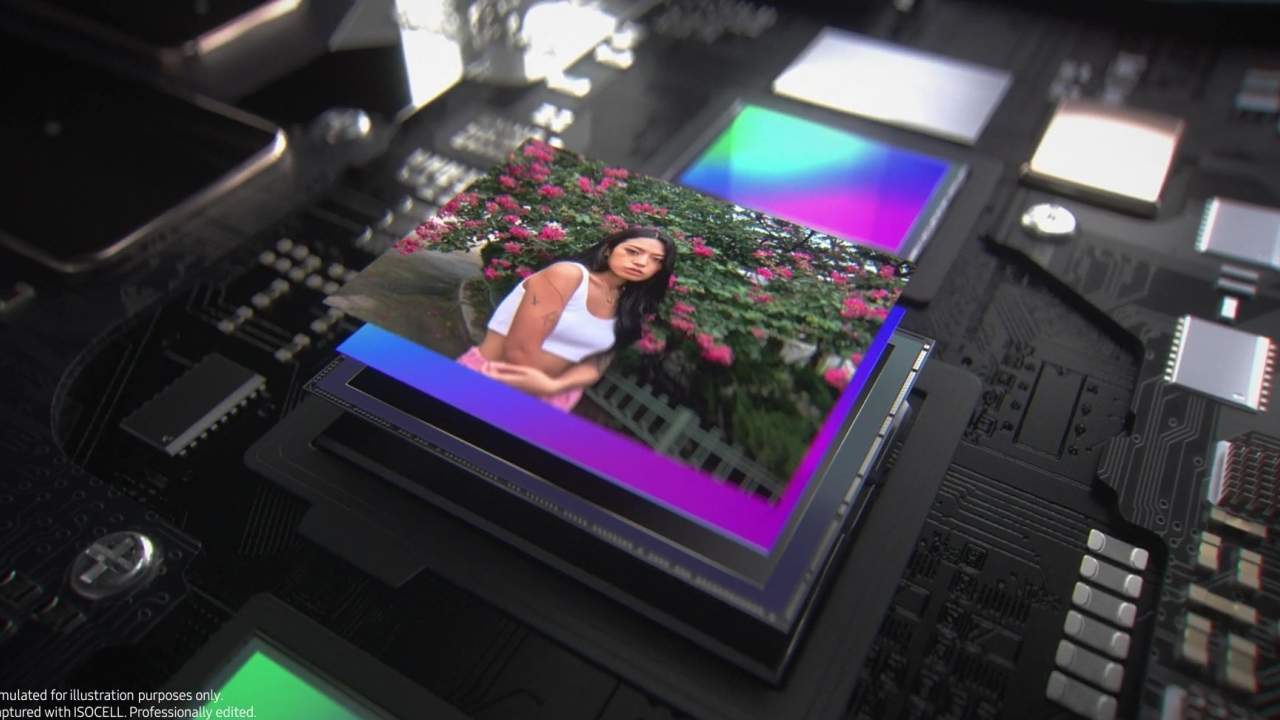
    Samsung just released a Youtube video announcing its implementation of a new ISOCELL 2.0 technology on upcoming phones sporting its 0.7-micron-pixel camera sensors. These will allow the cameras to continue performing excellently despite the challenges brought by decreasing pixel sizes. Samsung claims this new technology will further enhance the wall structure between cells, resulting in added light sensitivity of up to 12 percent compared to the current ISOCELL Plus technology.

    In order to enhance both light sensitivity and color fidelity in upcoming Samsung models, ISOCELL Plus technology “isolates each pixel with a physical barrier to reduce light crosstalk between pixels”—which is what happens when some of the light that is supposed to hit a specific photodiode leaks to neighboring photodiodes, causing noise in the final image.

    Although ISOCELL Plus enables higher-color-fidelity image production, the metallic grid between color filters absorbs some of the incoming light, resuting in some optical loss. ISOCELL Plus first improved on this issue by replacing the metallic grid between color filters with a new material. However, in this next phase of innovation in ISOCELL 2.0, the lower portion of the barrier is being upgraded with even more reflective material.

    Samsung boasts that these upgrades “minimize optical loss and significantly improve light sensitivity for more vivid pictures with reduced noise. With enhanced light sensitivity, ISOCELL 2.0 empowers even smaller pixels to absorb more light. As a result, image sensors can pack in more pixels to produce finer details without compromising vivid color reproduction.”

    We are already aware of the possibility of future cameras sporting several-hundred-megapixel sensors, with both Samsung’s flagship S21 Ultra and S20 Ultra boasting 108MP—way ahead of Apple’s iPhone 12 Pro in terms of sheer megapixel count. Only Xiaomi and a single Motorola model currently offer similar cameras on the smartphone market. For the coming future, ISOCELL’s 2.0 innovation could offer a whole new horizon of image-capturing possibilities in varying light conditions. Although smartphones with their compact technology will never truly be able to rival professional DSLR cameras, Samsung has already come a long way in providing the most bang for your buck in the phone photography department.