Tag: semiconductors

  • OpenAI Projects $278 Billion Cash Burn Through 2030 on Infrastructure Push

    OpenAI Projects $278 Billion Cash Burn Through 2030 on Infrastructure Push

    OpenAI expects to burn $278 billion between 2026 and 2030 as infrastructure costs outpace revenue, according to an internal presentation. The company plans to spend $856 billion on computing power and hardware over those five years. Annual revenue is projected to climb from $36 billion this year to $350 billion in 2030.

    Cumulative revenue through the decade is forecast at $840 billion from enterprise and consumer adoption. Computing power represents the group’s largest single operational expense.

    Depleting Capital Reserves

    That spending trajectory puts direct pressure on the balance sheet. OpenAI raised $122 billion in March at an $852 billion valuation. Internal forecasts show those cash reserves will run out by 2028.

    Management has held talks with private investors for fresh funding at a valuation near $1.2 trillion to plug the gap. The deficit leaves little room for operational missteps or weaker enterprise software demand.

    Hardware Demand and Asian Supply Chains

    Asian technology suppliers, data centre builders, and hardware vendors will see sustained procurement from that $856 billion computing budget. High-bandwidth memory makers, advanced packaging specialists, and server assemblers in Taiwan, South Korea, and Japan sit directly in the flow of that capital.

    Monetization carries the real risk. Enterprise buyers across retail and consumer tech face higher prices as model builders try to recover infrastructure costs. Competing open-source architectures offer lower operational expenses.

    Delayed Public Listing

    A confidential filing for an initial public offering in June laid the groundwork for a public market debut. Chief executive Sam Altman ruled out a 2026 listing soon after, citing internal concerns over artificial intelligence safety protocols.

    Delaying the float leaves the company dependent on private equity consortia, sovereign wealth funds, and strategic tech partners. These backers must absorb hundreds of billions in negative cash flow before the 2028 cash cliff.

    The Next Funding Milestone

    Attention now turns to the final terms of OpenAI’s prospective $1.2 trillion financing round. Investors will watch whether enterprise subscription revenue meets the target run rate required to hit $36 billion before the current fiscal year concludes.


  • Li Auto to Sell EV Tech Externally After 1.7 Billion Yuan Loss

    Li Auto to Sell EV Tech Externally After 1.7 Billion Yuan Loss

    Li Auto is preparing to sell its proprietary Mach chips, silicon carbide modules and range-extender powertrains to third-party clients after posting a 1.7 billion yuan net loss in the second quarter.

    Quarterly research and development spending at the carmaker ran at around 3 billion yuan for six consecutive quarters, pushing management to monetize proprietary vehicle architecture beyond its own fleet.

    Spinoff of the Mach chip division

    Senior leadership approved a corporate spinoff of the semiconductor design unit to facilitate third-party deals. Executives have already started pitching the Mach M100 driver-assistance chip to external businesses, including embodied artificial intelligence companies. The chip operates on a 5-nanometer automotive-grade process and delivers 1,280 TOPS of computing power.

    Corporate records show Li Auto registered a wholly owned operating entity, Xinchuang Zhihe (Shanghai) Technology Co Ltd, on July 13 to house integrated circuit design and commercial sales. Customer adoption will largely depend on how easily external engineering teams can port proprietary software algorithms onto the hardware architecture.

    Silicon carbide unit prepares for listing

    Power electronics subsidiary Sike Semiconductor restructured its internal reporting ahead of the chip division. Formed as a joint venture with Hunan Sanan Semiconductor in 2022, Sike changed its management structure in February so executives report to an independent board rather than Li Auto’s internal manufacturing division.

    Li Auto retains a 70 percent equity stake in Sike, which now operates with independent profit-and-loss accountability. The unit is soliciting external capital and has started preparatory work for an initial public offering, an equity shift intended to assure rival carmakers that supply chains remain separate from Li Auto’s vehicle assembly business.

    Automotive rivals open tech playbooks

    Selling proprietary vehicle hardware to outside buyers represents a broader structural shift among Chinese automotive manufacturers seeking to offset margin compression. Nio carved out its semiconductor unit into GeniTech, pitching its M97 processor to competitors such as Geely. Xpeng expanded commercial offerings covering electronic architecture, intelligent cockpits and autonomous driving code to international clients beyond existing partner Volkswagen.

    For automotive component suppliers and tier-one vendors across Asia, direct component commercialization by vehicle makers increases competitive pressure in power electronics and high-performance computing. Li Auto holds a structural advantage by testing components at volume in production cars, but it faces client hesitation over sharing software telemetry with an active market rival.

    Financial pressure and internal battery shift

    The monetization drive follows a sharp earnings reversal. Li Auto swung to a 1.7 billion yuan loss in the second quarter from a 1.1 billion yuan profit a year earlier, even as cash reserves stood at 87.5 billion yuan at the end of June. Third-party component sales allow the company to spread manufacturing overhead across broader production volumes without raising retail vehicle incentives.

    While range extenders and computing chips are now open to third parties, the company is keeping its custom traction battery program entirely internal. Li Auto plans a lineup-wide transition to proprietary battery packs, starting with production shifts on the updated Li Mega and upcoming Li i9, alongside the fourth-quarter rollout of the refreshed i6 sport utility vehicle.

  • Global Used ETF Managers Court South Korea as Retail Assets Hit 25 Percent

    Global Used ETF Managers Court South Korea as Retail Assets Hit 25 Percent

    Global ETF managers are expanding in South Korea. They want to reach retail investors, who now account for up to 25 percent of their total assets.

    Russell Tencer, president of Tradr ETFs, visited Seoul on Thursday to meet investors. His trip followed a promotional roadshow by Tuttle Capital Management last week.

    Direct pitches in Seoul

    Tradr operates as an ETF brand under AXS Investments. It oversees roughly $500 million across about 60 used products, with South Korean retail accounts making up approximately 10 percent of that pool.

    Individual Korean traders took note of the issuer in 2022. That interest followed the launch of single-stock inverse vehicles for Tesla and Nvidia under tickers TSLQ and NVDS. Today, its catalogue covers single-stock used funds tied to Coupang, SK hynix, SanDisk and SpaceX.

    “We want to meet with our investor base,” Tencer said at a press briefing in Seoul. “We would love to meet and educate Korean investors.”

    Tuttle Capital Management holds an even larger share from the country. South Korean accounts represent 25 percent of the firm’s $5 billion in assets across 70 active funds, which include its double-exposure T-REX series. The US firm ran its own investor presentations in Seoul earlier this month.

    Trading volumes eclipse direct shares

    Korean retail activity in used overseas instruments now beats direct equity buying in major global tech firms. Direxion Daily Semiconductor Bull 3X Shares, traded under ticker SOXL, generated $72.64 billion in combined buy and sell volume from Korean traders this year.

    That turnover was nearly six times the $12.6 billion worth of Tesla shares traded locally over the period. High-beta exposure drives these offshore flows across Seoul desks.

    Domestic brokerage houses are aiding the shift. Many host issuer seminars and marketing events for offshore managers seeking local distribution.

    Domestic curbs push capital abroad

    Local regulations helped push retail capital into US-listed instruments. Financial authorities allowed domestic single-stock used funds to trade in late May. However, they attached heavy friction to the rollout.

    Regulators enforced minimum cash deposits and mandatory order-size caps on domestic single-stock used instruments. These rules slowed domestic turnover. Individual accounts turned to offshore equivalents instead, using standard global brokerage accounts to trade higher use multiples.

    Shifts in currency added extra volatility. The South Korean won recently strengthened into the 1,300 won range against the US dollar. That move led some retail traders to trim dollar gains, but overall trading velocity stayed high.

    New products tied to Korean tech

    Appetite from Seoul is reshaping product design in the US ETF market. Foreign managers now build instruments tailored directly to retail demand for domestic tech and semiconductor names listed abroad.

    Filings from Tradr show additional funds coming for the country’s hardware sector. These target active trading in memory chips and display components.

    US regulators will review incoming offshore single-stock filings as foreign issuers test how deeply South Korean retail capital backs specialized tech funds heading into 2027.

  • Global Memory Shortage to Squeeze Device Makers Through 2027

    Global Memory Shortage to Squeeze Device Makers Through 2027

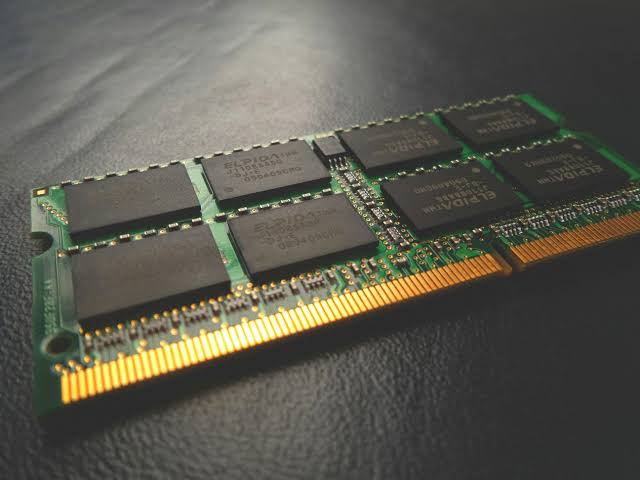
    A global memory chip shortage will squeeze independent phone and laptop makers through 2027, forcing product redesigns and price increases across entry-level consumer electronics.

    Counterpoint Research forecasts worldwide smartphone shipments will drop 13.9 per cent this year to 1.08 billion units, marking the steepest annual decline on record as memory costs make low-cost handsets uneconomical to produce.

    Memory now accounts for almost 60 per cent of the bill of materials on handsets priced around $400, according to Raymond van Eck, chief executive of Dutch repairable-phone maker Fairphone. Component availability rather than unit price has become the primary operational bottleneck for smaller manufacturers.

    Surging Prices and Supply Bottlenecks

    Market researcher TrendForce expects conventional volatile memory (DRAM) contract prices to climb 13 to 18 per cent this quarter, following a 93 to 98 per cent surge in the first quarter. The prolonged imbalance stems from severe production limits at major Asian fabricators.

    In July, the chief executive of South Korea’s SK Hynix warned that 2027 would be the worst year in industry history for supply availability, projecting that demand will exceed fab capacity past 2030.

    If you don’t have allocation, you’re out of the game anyhow.

    Smaller hardware makers are taking defensive operational measures to secure volume. Framework, a US-based modular laptop producer, now submits noncancelable purchase orders without confirmed delivery schedules, prices or volumes to maintain supplier allocation.

    Engineering Workarounds on the Factory Floor

    Hardware teams are altering board layouts to bypass supply chokepoints. Finnish handset maker Jolla created two distinct motherboard configurations so production lines can switch between integrated memory packages and discrete silicon chips.

    Counterfeit risks have mounted alongside component costs. Jolla now runs stress tests on sample components from every incoming batch to confirm shipments contain new silicon rather than recycled parts repackaged as firsthand inventory.

    Retail pricing strategies differ across hardware brands. Framework reprices machines immediately as raw component invoices arrive, Jolla introduced a standalone paid tier for memory upgrades, and Fairphone has held retail prices steady to protect volume.

    Shifting Inventory Dynamics

    Supply hoarding accelerated late last year when hardware makers realised the severity of Asian fabrication deficits. Companies attempted to build inventory buffers simultaneously, pulling forward chip volumes and compounding market tight spots.

    Jolla executives noted that combined storage and DRAM module costs peaked in late March and held flat through summer, averting earlier projections that component prices would double by autumn. Supply parity across mobile and personal computing memory lines is not projected to return until 2028.

  • Exchange Traded Concepts Launches 20-Stock Korea Semiconductor ETF on NYSE Arca

    Exchange Traded Concepts Launches 20-Stock Korea Semiconductor ETF on NYSE Arca

    Exchange Traded Concepts announced Monday it has partnered with Kiwoom Securities (USA) to launch the KICK Korea Semiconductor Index ETF on NYSE Arca under the ticker KCHP.

    The fund tracks an index of 20 semiconductor companies listed on the Korea Exchange across memory, foundry, equipment, materials, packaging, and design, anchored by Samsung Electronics and SK Hynix.

    How the Index Structure Works

    American institutional and retail buyers can now trade direct exposure to South Korea’s chip supply chain through standard brokerage accounts. They do not need local accounts on the Korea Exchange. Because underlying assets trade in Korean won, currency swings against the US dollar will directly affect net investor returns.

    Exchange Traded Concepts uses a modified market-capitalization weighting model to cap exposure to individual heavyweights. This structure prevents Samsung Electronics and SK Hynix from dominating the fund. Beyond the two primary chipmakers, the basket holds domestic producers of specialty materials, design houses, packaging contractors, and manufacturing equipment.

    The Play on Asian Hardware Suppliers

    Most broad Asian equity funds dilute exposure across consumer internet, banking, and conglomerates. That dilution blunts direct participation in the memory chip cycle. Packaging Korea’s specialized fabrication network into a single product targets investors seeking pure hardware exposure tied to global computing infrastructure, bypassing single-stock settlement risk on Seoul’s bourse.

    Earnings power remains heavily concentrated at the top. The supply chain beneath Samsung and SK Hynix relies directly on the capital spending plans of those two anchor tenants. When memory pricing or capital budgets swing in Seoul, ancillary tooling and packaging vendors face sharper revenue volatility.

    Tracking Capital Shifts Across the Pacific

    Yoon Gu Eric Lee, president and CEO of Kiwoom Securities (USA), said the index captures the secondary equipment, materials and design companies built around the country’s memory and foundry sectors.

    Trading in KCHP will test US investor appetite for targeted Asian hardware suppliers. Portfolio managers will have to balance foreign-exchange risk against direct equity holdings in Seoul.

  • Foreign Funds Buy $4.7 Billion in Asian Equities Ending Nine-Month Selloff

    Foreign Funds Buy $4.7 Billion in Asian Equities Ending Nine-Month Selloff

    Foreign investors poured a net $4.72 billion into Asian equities in August. The buying ended a nine-month selling streak across seven regional markets. Strong hardware demand and better-than-expected corporate earnings drew international funds back to North Asian technology exporters after heavy selling in July.

    Capital flowed heavily into Taiwan, which took in $11.15 billion in net purchases during August. Fresh allocations continued into early September. Global funds added another $1.52 billion across regional bourses through Tuesday.

    Tech Earnings Power North Asian Rebound

    Quarterly profits from regional technology suppliers accelerated sharply, shifting market sentiment. Across Asia, 2,108 large and mid-cap companies tracked by LSEG beat analyst projections by an average of 10.2 per cent, posting 44.7 per cent overall profit growth. Technology exporters led the charge. Their profits surged 88.3 per cent.

    Suppliers in Taiwan benefited directly from higher revenue guidance issued by US hyperscalers including Amazon, Microsoft, and Nvidia. Broader markets gained ground as well. The MSCI Asia-Pacific ex-Japan index climbed 3.01 per cent in August, rebounding from a July low of 797.6.

    The latest foreign inflows appear to reflect a renewed AI allocation rather than a broad-based return to Asia.

    Divergent Flows Across Seoul and Southeast Asia

    Rallies bypassed parts of the region during August. South Korea recorded foreign outflows of $8.65 billion, extending net foreign selling in Seoul to a fourth straight month. Sentiment turned only in the first week of September. Overseas buyers then picked up $1.1 billion of South Korean shares alongside $1.45 billion in Taiwanese equities.

    India maintained steady foreign interest. The market pulled in $3.1 billion in August for its second consecutive month of net foreign purchases. Southeast Asian bourses presented a more fragmented picture. Indonesia and Vietnam recorded modest foreign inflows of $68 million and $11 million. Meanwhile, foreign funds withdrew $749 million from Thailand and $216 million from the Philippines.

    Earnings Visibility Counters Macro Risks

    Asset managers are targeting compute infrastructure rather than broad consumer recovery plays. For corporate treasurers and regional operators, these selective flows deepen the divide between high-margin tech supply chains and local consumer sectors.

    Market volatility persists as investors weigh high US bond yields against fluctuating energy costs. Attention now turns to third-quarter order books for regional semiconductor and component manufacturers to see if they match the optimistic guidance set by North American cloud buyers.

  • Film & Tape Expo 2026 Sets Shenzhen Gathering for 1,200 Materials Suppliers

    Film & Tape Expo 2026 Sets Shenzhen Gathering for 1,200 Materials Suppliers

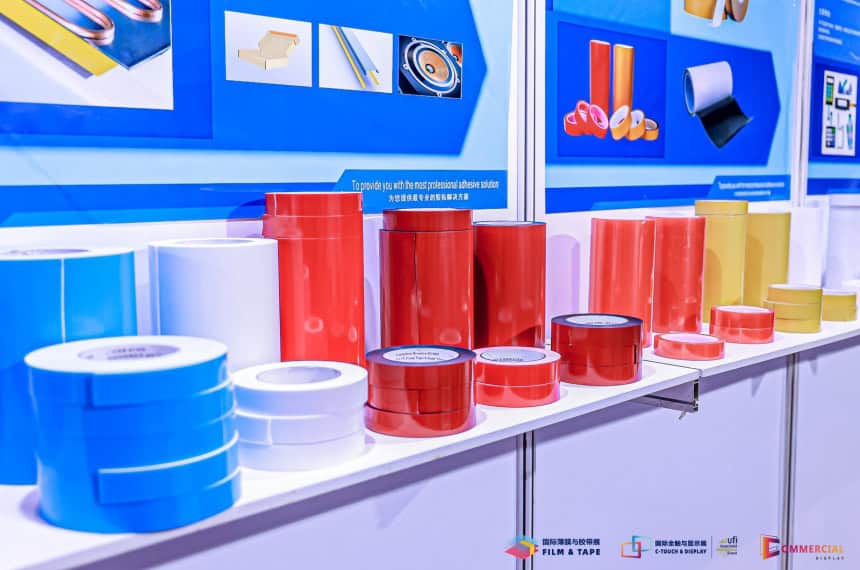
    Kuozhan Exhibition Services will run Film & Tape Expo 2026 in Shenzhen from October 27 to 29, gathering 1,200 exhibitors across 80,000 square meters of floor space. The trade show targets component makers in consumer electronics, automotive manufacturing and semiconductor packaging.

    Organisers expect more than 60,000 commercial buyers at the Shenzhen World Exhibition & Convention Center in Bao’an. The show includes 30 technical conferences, over 200 product launches, and roughly 3,000 pre-arranged one-to-one supplier meetings under a dedicated matchmaking programme.

    Sourcing Across Hardware and Battery Chains

    Exhibitors will present functional films, adhesive tapes, chemical raw materials, and precision converting machinery. Demand centres on high-grade materials for lithium battery separators, aluminum-plastic packaging, and tab adhesives required for electric vehicle powertrains.

    Display manufacturers will source optically clear adhesives, polyimide films, and optical layers tailored for foldable handsets and automotive digital dashboards. Semiconductor suppliers plan to exhibit wafer tapes, thermal interface materials, and protective release films used in microchip assembly.

    Supply Chain Consolidation in South China

    Shenzhen remains the operational centre for South China’s consumer hardware ecosystem. Staging the event inside Asia Material Week allows industrial buyers to source specialty chemical inputs alongside downstream converting equipment in one visit.

    For consumer electronics brands and automotive tiers across Asia, access to domestic film and tape producers offers a way to trim bill-of-materials costs. Heavy capital spending on advanced coating machinery in China has steadily narrowed the quality gap with Japanese and Korean specialty chemical makers, tightening price competition across standard optical and protective grades.

    Trade Matching and Technical Forums

    The 2026 edition follows previous annual gatherings that expanded from base converting equipment into precision semiconductor substrates. Industrial procurement teams increasingly require custom die-cutting and heat dissipation solutions rather than off-the-shelf roll stock.

    Technical sessions across the three days will cover thermal management, multi-layer ceramic capacitor materials, and flexible printed circuit substrates. Floor registration and commercial matchmaking bookings open ahead of the October 27 start date.

  • Goldman Raises Asia Pacific Ex-Japan Index Target to 1,120

    Goldman Raises Asia Pacific Ex-Japan Index Target to 1,120

    Goldman raised its forecast for the MSCI AC Asia Pacific ex-Japan Index to 1,120 from 1,080, projecting a 26 per cent upside driven by higher earnings expectations in Korea and Taiwan.

    Second-quarter earnings across the benchmark grew 102 per cent, with 44 per cent of companies beating forecasts compared with 27 per cent that missed.

    Earnings growth was led by Singapore, Taiwan and Indonesia, while Australia, Malaysia and India lagged, with Singapore and Taiwan recording the highest number of firms exceeding expectations.

    North Asian Tech Dominates the Rally

    The bank assigned an overweight rating to Japan, South Korea, Taiwan and mainland China A-share equities. South Korea’s benchmark Kospi received a revised 12-month target of 12,000, representing a 79 per cent upside from current trading levels, underpinned by heavyweight chipmakers Samsung Electronics and SK Hynix.

    By contrast, Hong Kong, Singapore, Malaysia, India and offshore Chinese equities remain rated at market weight. Southeast Asian markets face a split outlook, with Thailand, Indonesia and the Philippines assigned underweight ratings alongside Australia.

    Consumer Retail and Hardware Divergence

    Sector allocations show a sharp divide between capital-intensive tech manufacturing and consumer-facing retail. Goldman designated tech hardware, semiconductors, capital goods, healthcare and non-Australian, non-Chinese lenders as its most favored sectors.

    Consumer retail, media and property remain ranked at market weight across the region, reflecting steady but unspectacular domestic consumer demand. Transportation, utilities and automotive manufacturers received underweight ratings.

    Earlier Forecast Trajectory

    The revised projections build on earlier upgrades from May, when Goldman set an initial 12-month Kospi target of 9,000 before tech earnings accelerated. The broader index target of 1,120 reflects cleaner investor positioning following recent portfolio unwinds across regional exchanges.

    Investors now track third-quarter tech hardware order books and upcoming United States midterm election policy rhetoric, which remain key external risks alongside elevated bond yields and Middle East tensions.

  • Taiwan Targets Silicon Photonics to Cut AI Chip Power Use by 50 Percent

    Taiwan Targets Silicon Photonics to Cut AI Chip Power Use by 50 Percent

    Taiwan is mobilising its chipmaking sector to commercialise silicon photonics and copackaged optics, with the Ministry of Economic Affairs backing efforts to overcome artificial intelligence computing bottlenecks.

    The island holds over 90 percent of global manufacturing capacity for chips at 7 nanometers or below, while more than 30 firms including Taiwan Semiconductor Manufacturing Co and MediaTek Inc formed an industry alliance in 2024.

    Silicon photonics replaces conventional copper wiring between chips with optical signals. Because optical transmission generates negligible heat, the technology cuts device power consumption by 30 to 50 percent, according to the Ministry of Economic Affairs. That saving eases cooling limits in high-density AI data centres. It also clears the 1.6-terabit-per-second bandwidth ceiling that hampers electronic links.

    Optics Replace Copper Interconnects

    Heavy capital is pouring across the hardware supply chain. Nvidia invested US$4 billion into silicon photonics development in March. The chipmaker needs architectures that sustain real-time AI workloads and high-definition streaming without overheating server racks.

    Taiwanese authorities have folded the technology into their New 10 Major AI Infrastructure Projects. Funding flows through the government’s A+ Enterprise Innovation research programme. The scheme subsidises domestic research teams and equipment developers building local manufacturing tooling.

    Alliance Mobilises Heavyweights

    Execution on the ground rests on the Silicon Photonics Industry Alliance, a consortium established in 2024 with industry group SEMI. The group brings together more than 30 technology suppliers. Members include Taiwan Semiconductor Manufacturing Co, ASE Technology Holding, MediaTek and Hon Hai Precision Industry.

    Asian hardware vendors and server assemblers face shifting procurement cycles. Traditional printed circuit board layouts will yield to integrated optical packaging. As a result, component suppliers must retool production lines for optical transceivers and precision glass substrates.

    Manufacturing risks centre on packaging yields and costs. Integrating laser sources and optical waveguides directly alongside silicon dies requires packaging tolerances tighter than standard wire bonding. These yield hurdles could delay volume delivery.

    Race for Next-Generation Packaging

    Foundry and packaging operators have spent years researching optics to counter the slowdown of traditional transistor scaling. Physical node shrinking now delivers diminishing returns. Advanced packaging formats like copackaged optics have become the primary path to computing efficiency.

    Prototype lines are now running across alliance members to finalise copackaged optics standards before volume production begins for 2026 data centre hardware cycles.

  • Xiaomi Launches 18 Fold Smartphone at 10,999 Yuan with Custom Silicon

    Xiaomi Launches 18 Fold Smartphone at 10,999 Yuan with Custom Silicon

    Xiaomi launched its flagship 18 Fold smartphone in Beijing on Monday, pricing the device from 10,999 yuan (US$1,639) to compete directly with high-end foldables from Huawei and Apple.

    The phone carries Xiaomi’s proprietary Xring O3 processor and LPDDR6 memory from ChangXin Memory Technologies, with sales opening on Thursday at 10am across mainland retail channels.

    Founder and chief executive Lei Jun detailed the hardware specifications at the Beijing presentation. The device includes a 7.58-inch inner display, a reinforced hinge mechanism, an aluminium chassis, and strengthened cover glass. The 24-billion-transistor Xring O3 artificial intelligence processor raises central processor performance by 60 per cent over the prior Xring O1 generation while cutting energy consumption on select workloads by 25 per cent. Lei said Xiaomi has earmarked 50 billion yuan specifically for custom chip development, part of a wider 200 billion yuan research and development budget planned over the next five years.

    Silicon Independence and Electric Vehicle Pricing

    Alongside the phone, Xiaomi rolled out its Pad 9 Pro Max tablet starting at 4,799 yuan, also powered by the Xring O3, and priced its extended-range Skynomad sport utility vehicles. The five-seat N70 Pro SUV starts at 209,900 yuan, while the seven-seat N90 Max begins at 269,900 yuan. Both undercut Tesla’s Model Y L, which retails from 339,000 yuan in China. The extended-range powertrain uses an auxiliary petrol engine to charge the battery pack, delivering a driving range exceeding 1,000 kilometres on a single cycle.

    For consumer tech retailers and premium device vendors across Asia, Xiaomi’s dual offensive in mobile silicon and electric mobility tightens pricing pressure across two categories simultaneously. By pairing domestic memory from CXMT with proprietary processors, the company shields its bill of materials against international component shortages that are squeezing entry-level hardware margins. The aggressive SUV pricing also demonstrates that Xiaomi is treating hardware margins as secondary to ecosystem lock-in, forcing traditional carmakers and handset specialists to defend their retail territory on compressed margins.

    Premium Tier Resists Smartphone Downturn

    The product blitz lands during an intense competitive window in China. Huawei unveiled its Mate XT 2 trifold handset on Monday starting at 19,999 yuan, using its Kirin 9050 Pro processor. Richard Yu Chengdong, chairman of Huawei’s Consumer Business Group, confirmed that Huawei has sold more than 1 million trifold devices worldwide. Meanwhile, Apple is scheduled to present its product line-up on Wednesday in California, where analysts anticipate the launch of a foldable model priced above US$2,000.

    This surge in premium launches contrasts sharply with the broader consumer hardware environment. Counterpoint expects global smartphone shipments to contract 12.4 per cent this year, hit by surging memory costs and lengthening replacement cycles among budget consumers. Premium foldables remain an exception. Counterpoint projects cumulative worldwide foldable shipments will cross 100 million units by year-end, with annual category shipments set to expand 37 per cent in 2027.

    Xiaomi built up to this release after spending 105.5 billion yuan on research and development over the past five years and first previewing the Skynomad vehicle architecture in late July. The group had previously rolled out the first-generation Xring O1 chip last year to test its custom silicon pipeline in select devices.

    Market attention now shifts to Thursday morning retail sell-through figures for the 18 Fold, followed by initial delivery volumes for the Skynomad SUV series ahead of fourth-quarter earnings.

  • Tencent-Backed Enflame Draws 4,073 Times Retail Demand in Shanghai IPO

    Tencent-Backed Enflame Draws 4,073 Times Retail Demand in Shanghai IPO

    Shanghai Enflame Technology drew 4,073 times retail subscription for its public offering on Shanghai’s STAR Market, raising 6.12 billion yuan ($860 million) to expand production of domestic artificial intelligence chips.

    Individual buyers lodged seven million orders totaling 5.98 trillion yuan, taking up the retail tranche of an issue priced at 142.18 yuan per share. The sale of 43 million shares represents 10 percent of the company’s enlarged equity base.

    Anchor Customer And Rising Shipments

    Founded in 2018, Enflame develops AI accelerator hardware designed for cloud infrastructure and large data centers. Tencent Holdings owns 20 percent of the business and generated 84 percent of Enflame’s total revenue in 2025, up from roughly 38 percent a year earlier.

    The company builds processor cards deployed in chatbots, recommendation systems and generative computing workloads. SWS Research estimates Nvidia commanded 55 percent of China’s AI accelerator market in 2025, while Enflame captured 1.7 percent of local shipments.

    The Final Dragon Reaches Public Capital

    Enflame is the last of China’s four emerging AI chip startups, known locally as the four little dragons, to complete a public listing. Peers Moore Threads, Biren Technology and MetaX Integrated Circuits reached the market earlier, with Moore Threads gaining 425 percent on its trading debut last December.

    While local computing platforms continue to substitute imported silicon, profitability remains unproven across the cohort. Enflame cut its net loss to 1.2 billion yuan in 2025 from 1.5 billion yuan in 2024. For the first half, the company projects a loss of 600 million yuan against anticipated revenue between 10.6 billion and 11.5 billion yuan.

  • Taiwan Pitches Global Chip Alliances as Market Heads for 1.5 Trillion Dollars

    Taiwan Pitches Global Chip Alliances as Market Heads for 1.5 Trillion Dollars

    Taiwan President William Lai told tech executives in Taipei that international chip partnerships will anchor an industry projected to exceed 1.5 trillion dollars this year.

    Foreign semiconductor leaders continue to pour capital into the island, led by Nvidia’s annual procurement and investment topping NT$3 trillion ($94.84 billion). Micron Technology has committed more than NT$1.4 trillion to local operations, while Advanced Micro Devices pushed its research spending in Taiwan past NT$300 billion.

    TSMC’s Overseas Buildout

    Taiwan Semiconductor Manufacturing Co is matching domestic research with heavy spending abroad to insulate buyers against supply shocks. The world’s largest contract chipmaker announced an additional $100 billion commitment to its Arizona facilities in July, while its plant in Kumamoto, Japan, continues on schedule.

    In Europe, TSMC expects its Dresden fabrication facility to begin commercial chip production before the end of next year. That site will supply automotive and industrial customers across the European Union.

    For consumer electronics makers and device brands across Asia, the dual strategy offers reassurance. Taiwan is retaining cutting-edge wafer fabrication and packaging on home soil while duplicating mature and specialized capacity in Western markets to guarantee steady silicon delivery during regional crises.

    State Support for Next-Gen Tech

    Taipei plans to back corporate spending by funding core infrastructure, including power generation, water supplies, land access, and computing capacity. State research backing will focus on silicon photonics, quantum computing, and artificial intelligence robotics.

    US Undersecretary of State for Economic Affairs Jacob Helberg told attendees via video link that concentration without resilience creates systemic vulnerabilities. He pointed to the Pax Silica framework, an alliance designed to secure technology supply lines among trusted trade partners.

    Discussions continue this week as the Semicon Taiwan trade exhibition runs through Friday at the Taipei Nangang Exhibition Center.

  • Google to Roll Out Two AI Chips a Year and Expand Taiwan Hub

    Google to Roll Out Two AI Chips a Year and Expand Taiwan Hub

    Google will accelerate its custom artificial intelligence chip rollout from a two-year cycle to two processors annually while expanding its Taiwan research footprint by 60 per cent.

    The revised schedule shifts the company away from its traditional multi-year hardware cadence as competition for proprietary cloud computing silicon intensifies across the tech sector.

    Faster Silicon Cadence

    Amin Vahdat, Google’s senior vice president and artificial intelligence infrastructure chief, announced the accelerated timeline during a keynote address at Semicon Taiwan in Taipei on Wednesday. The company plans to release two bespoke chips every year and expects to lift that frequency even further over time.

    Backing the faster production tempo requires more engineering capacity on the ground. Google is growing its dedicated research and development floor space across Taiwan by 60 per cent to house expanded design and testing teams.

    Regional Hardware Footprint

    Taiwan sits at the centre of global advanced semiconductor fabrication and packaging. By enlarging its local engineering hubs, Google tightens operational proximity to key foundry partners, contract assemblers and component supply chains that manufacture its custom processing units.

    For cloud platforms and enterprise services operating across Asia-Pacific, in-house silicon helps control operational power costs and workload efficiency in regional data centres. Competing tech operators across the region are running similar programs to secure custom processing capacity.

    The company will now focus on staffing the expanded Taiwan design facilities ahead of its next scheduled processor rollouts.

  • TSMC Agrees to Produce Three 3Nm Chips for Xiaomi

    TSMC Agrees to Produce Three 3Nm Chips for Xiaomi

    Taiwan Semiconductor Manufacturing agreed to produce three custom chips for Xiaomi, including a next-generation three-nanometre smartphone processor starting in 2026.

    The contract ties the $2.0 trillion Taiwanese foundry directly into the Chinese brand’s hardware expansion across flagship handsets, smart devices and automotive platforms. Xiaomi plans to deploy the primary 3nm design, designated the Xring O3, in its premium smartphones before rolling out two companion processors for consumer artificial intelligence devices and autonomous vehicle controls.

    Expanding beyond data centres

    Adding Xiaomi diversifies TSMC’s advanced-node order book at a time when top-tier 3nm wafer allocation has remained heavily concentrated among Western computing and mobile clients. Handset manufacturers in Asia have spent three years attempting to bring proprietary silicon in-house to reduce their dependence on merchant chipmakers. Xiaomi’s commitment to custom designs manufactured on TSMC’s cutting-edge lithography mirrors earlier silicon strategies from rival hardware makers, though extending those designs into vehicle autonomy widens the operational scope.

    For consumer tech brands in Asia, controlling chip architecture allows tighter software integration across connected ecosystems, from living-room appliances to electric sedans. The arrangement secures advanced fabrication capacity for Xiaomi while providing TSMC with volume demand outside its core server and cloud computing base.

    Wafer volume targets

    Initial commercial success hinges on the manufacturing yield and delivery pace of the Xring O3 line during 2026. Market performance will depend on the speed at which Xiaomi ramps retail shipments of its 3nm handsets and incorporates the subsequent automotive silicon into its production vehicles.

  • Canadian Chip Startups Team up with Taiwan Foundries on Advanced Packaging

    Canadian Chip Startups Team up with Taiwan Foundries on Advanced Packaging

    Canadian semiconductor developers showed design automation and packaging technologies in Taipei, seeking integration with Taiwan’s high-volume manufacturing lines ahead of SEMICON Taiwan.

    The Canada-Taiwan Semiconductor Co-Creation Forum 2026 brought together specialized tech firms offering solutions for bottlenecks in artificial intelligence hardware, hybrid bonding and analog circuit layout.

    Targeting packaging bottlenecks

    Rather than funding domestic wafer fabrication plants, Canadian firms are positioning themselves upstream in research, design tools and specialized metrology. AsterQuanta presented an AI-driven platform that applies reinforcement learning to automate analog circuit design, a discipline that still depends heavily on manual engineering adjustments.

    Digitho introduced programmable photomask software designed to adjust lithography patterns dynamically based on placement offsets of chiplets during heterogeneous integration. The system aims to increase interconnect density by adapting exposure patterns directly on the substrate.

    Metrology and vacuum subsystems

    In quality control, ICSPI presented micro-scale atomic force microscopy systems built onto one-square-millimetre chips. Operating multiple AFM probes in parallel allows high-throughput, nanoscale surface measurement required for hybrid bonding and advanced copper pad inspection.

    Meaglow exhibited hollow-cathode plasma source reactors engineered to reduce oxygen contamination in thin-film nitride layers. Toronto-founded AI processor developer Tenstorrent, which established an operating unit in Taiwan last year, also outlined its RISC-V and neural network processor roadmap.

    For Asian foundries and packaging houses facing skilled engineering shortages and tighter hybrid bonding tolerances, adopting specialised toolsets from overseas research hubs provides immediate productivity gains without rebuilding core manufacturing infrastructure.

    The participating suppliers now face qualification trials to demonstrate throughput and defect-reduction targets on standard 300mm wafer production lines across Taiwanese contract manufacturers.