Tag: Shanghai

  • Lego to open largest retail store in Shanghai

    Lego to open largest retail store in Shanghai

    Danish toy giant Lego A/S will open its largest retail store in the world near the Shanghai Disney Resort, the company said on Tuesday.

    The 1,000-square-meter store will be located on the main shopping street outside Disneyland, and will be operated by Lego.

    The resort, the first Disney theme park on the Chinese mainland, is scheduled to open in mid-June.

    “It will be a testament to our confidence in the China market,” said Jacob Kragh, general manager of Lego China.

    Lego to open largest retail store in Shanghai

    Kragh was speaking during a conference call following the release of Lego’s annual report, which showed revenue surged 25 percent to 35.8 billion kroner ($5.2 billion) last year.

    The company did not share the size of individual markets, but China has enjoyed what Lego called a “highly satisfactory” 34 percent growth year-on-year in 2015.

    Meanwhile, CEO Joergen Vig Knudstorp told China Daily that he believes there will be opportunities for Lego to grow as China transforms into a consumption-driven economy.

    While all of the 140 countries where Lego products are sold have posted double-digit growth in 2015, China has been one of the fastest-growing markets.

    Knudstorp expects that China will join the United States and Germany as the top three largest markets for Lego soon.

    Consulting firm Euromonitor International has forecast that by 2017, the Chinese toy market will be worth 100 billion yuan ($15.36 billion) and the Asia-pacific region will outnumber North America in sales as the world’s largest traditional toy market.

    While domestic brands still dominate the market, experts said that Chinese parents are likely to spend more on foreign toys in the coming years.

  • World of Beer Asia launch confirmed

    World of Beer Asia launch confirmed

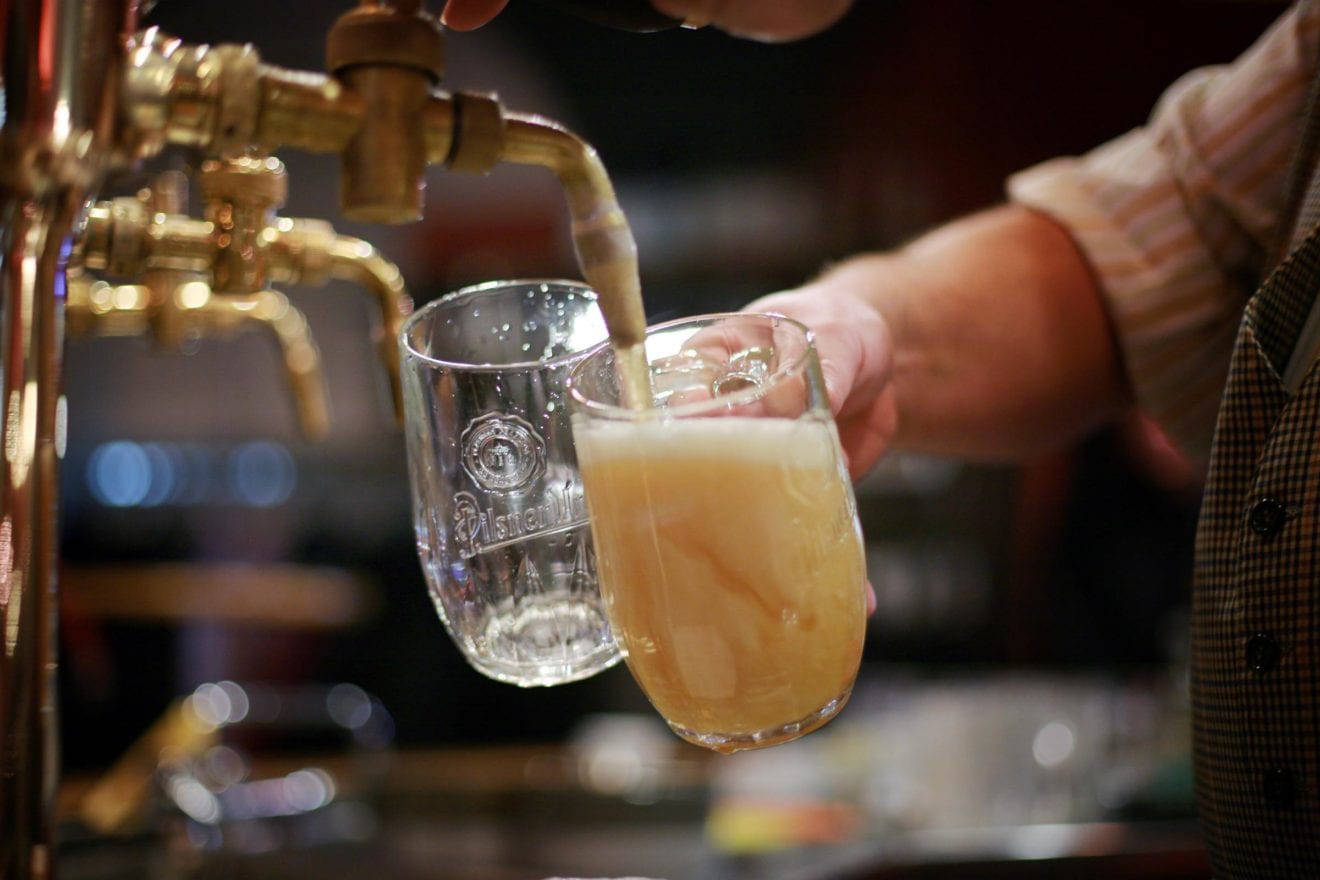
    An American tavern chain known for its craft beer is headed for Asia this year, opening first in Shanghai, then India and The Philippines.

    It is the first overseas bar for World of Beer, based in Tampa, Florida. CEO Paul Avery, a 20-year veteran of the Outback Steakhouse chain, says the move to open franchisee-owned taverns overseas is the next logical step for the brand’s growth.
    “I am very confident that World of Beer will do well in international markets,” he says. “Craft beer is already there, but no-one offers what we do.”
    Avery, 56, bought a controlling interest in the six-year-old company in January 2013, and has built it up to now offer craft cocktails. The footprint is nearly double in size, and most of the taverns serve food. But the focus is squarely on craft beer, reports Tampa Bay Times.
    World of Beer has 77 locations in 19 states in mainland America. Fourteen are company owned, the rest by franchisees.

    Avery says the company will open 35 new restaurants this year, including at least one of the three World of Beer Asia locations.. The goal is to grow the number of company-owned stores to 30 per cent.

  • Build-A-Bear builds back profits

    Build-A-Bear builds back profits

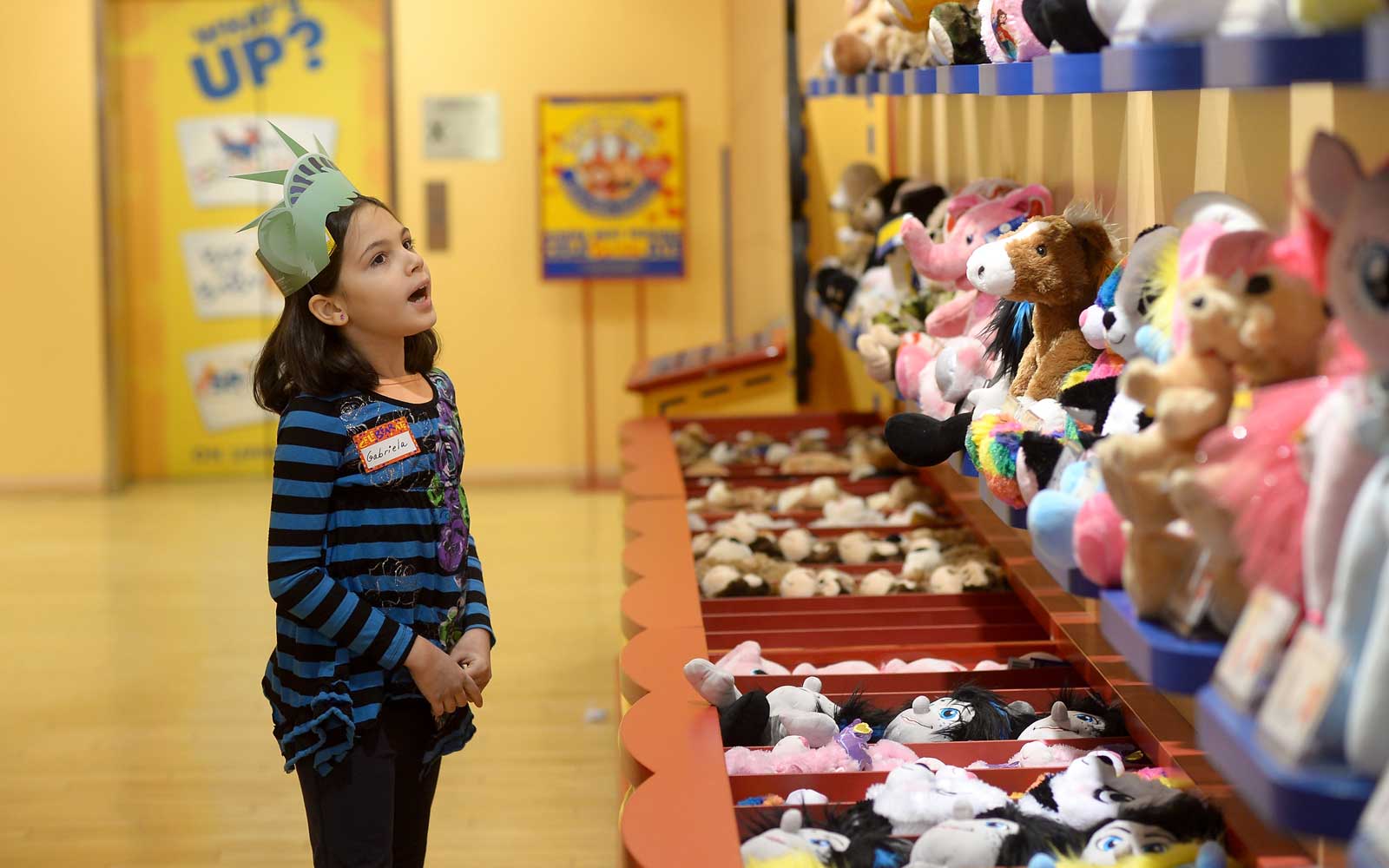
    Build-A-Bear Workshop has recorded its third consecutive year of increased profit.

    CEO Sharon Price John has attributed the ongoing improvement in the once-challenged children’s experiential workshop concept to initiatives including store remodelling in the new Discovery format, which generated double-digit growth compared to our heritage stores, focusing on key consumer segments and investing in infrastructure.

    “We made steady progress toward our stated long-term sales productivity goals as we achieved the highest average transaction value in our history and highest units per transaction since 2008. We remain committed to the ongoing disciplined execution of our strategy while we continue to leverage our powerful brand in order to deliver both sales and profit improvement,” she said.

    In the 52 weeks to January 2, 2016, Build-A-Bear achieved total revenues of US$377.7 million, compared to $392.4 million in the previous financial year (which had 53 weeks, hence the higher figure).

    Same store sales rose 1 per cent – growth was flat in North America, but increased 4.8 per cent in Europe, and online sales rose 11.8 per cent.

    The company’s retail gross margin expanded 150 basis points to 47.1 per cent compared to 45.6 per cent in the previous year. Pre-tax profit  improved 11.7 per cent to $17.9 million.

    During 2015, the company closed 20 stores and opened 25 locations, including 11 in its new Discovery format, to end the year with 329 Company-owned stores; 269 in North America and 60 in Europe. The company’s international franchisees ended the year with 77 stores in 11 countries.

    In June this year, Build-A-Bear Workshop will open a new store in the new Disneytown retail precinct at the Shanghai Disney Resort in China.a

  • Shanghai Disney Resort Launch of huge Disney theme park in China lifts stocks

    Shanghai Disney Resort Launch of huge Disney theme park in China lifts stocks

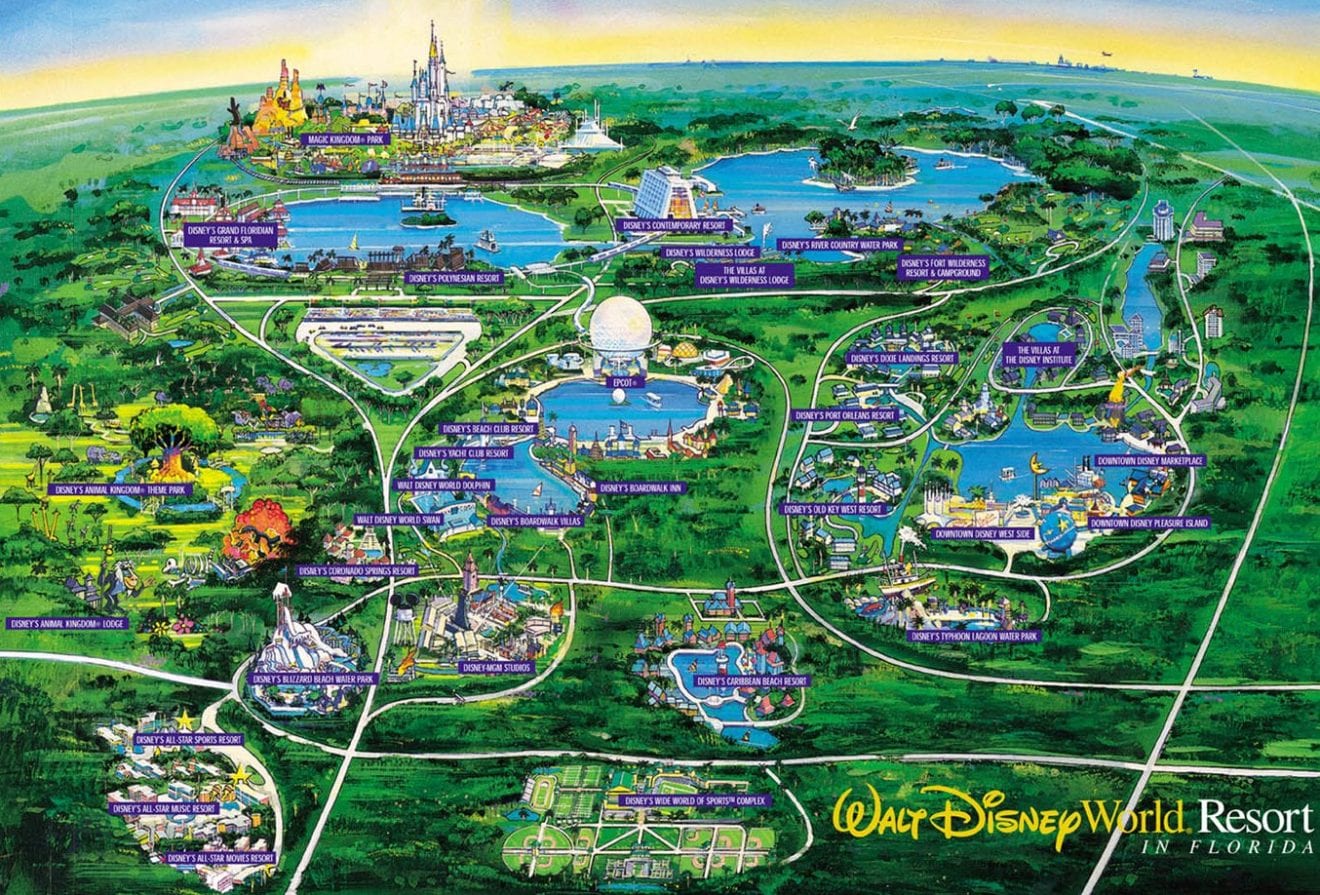
    The launch this coming June of Shanghai Disney Resort, which will be one of the largest theme parks in mainland China, is the first upbeat topic in a long time for the country which has been swayed by economic slowdown and the stock market plunge.

    Meanwhile, Hong Kong Disneyland — some 1,200km southwest of Shanghai and which celebrated its 10th anniversary last year — is concerned that the new Disneyland in mainland China could result in a decline in visitors in its home turf.

    Walt Disney of the U.S. and Shanghai Shendi Group of China, which are jointly building Shanghai Disney Resort, said Jan. 13 that the first phase of the theme park will open on June 16. The announcement boosted shares in Shanghai Jinjiang International Hotels Development, the operator of nearby hotels, and real estate developer Shanghai Jinqiao Export Processing Zone Development. These companies are expected to benefit greatly from the launch of the theme park. The stock price of Shanghai-based China Eastern Airlines, which partners with Shanghai Disney Resort, also soared on the Hong Kong stock market.

    Nearly 10 years from the plan, five years from the start of construction and two years behind the original plan, the dream of the Shanghai economic community will finally come true. Shanghai Disney Resort — which will be the sixth in the world and the third in Asia after Tokyo and Hong Kong — will be equipped with hotels and commercial complexes, with the construction cost totaling $5.5 billion.

    Structural shift

    Stock market players predict the theme park will see more than 12 million visitors in its first fiscal year, easily surpassing Hong Kong Disneyland’s 7.5 million in 2014. The numbers are expected to jump to 40 million a year once the third phase of the park is complete. The numbers could top the 31.3 million visitors to Tokyo Disneyland and Tokyo DisneySea in 2014.

    Major Chinese brokerage Haitong Securities expects Shanghai Disney Resort will “boost the city of Shanghai’s annual retail sales by 4%,” on the assumption of 15.6 million visitors and the daily average spending of 700 yuan ($106) per visitor in the first fiscal year. The theme park will also been seen as a test of whether China can shift from a manufacturing- and infrastructure-based economy to a service-driven economy.

    Meanwhile, the Hong Kong stock market was once buoyed by the Disney boom. During the period from the end of October 2004 to the opening of Hong Kong Disneyland on Sept. 12, 2005, the stock prices of luxury hotel operator Shangri-La Asia and jewelry store operator Chow Sang Sang Holdings International surged 37% and 48%, respectively, on expectation that the opening of Hong Kong Disneyland would help boost tourist numbers. The share price of Macau casino operator Galaxy Entertainment Group also jumped 120%, and the benchmark Hang Seng Index rose 16%.

    However, the share prices of retail and leisure companies in Hong Kong have remained sluggish, as the number of mainland visitors to Hong Kong has declined due to the Chinese government’s anti-corruption campaign and growing anti-China sentiment in Hong Kong.

    In a survey of mainland Chinese members conducted by U.S. travel information website operator Travelzoo on their most preferred travel destination in 2016, Hong Kong was ranked 32nd, down from 23rd place, losing out to the 31st-ranked Africa.

    Mainland-dependent

    In addition to such unfavorable trend, officials of Hong Kong Disneyland are concerned they may have to compete with their Shanghai counterpart for customers.

    Hong Kong Disneyland posted its first profit in fiscal 2012, hit by the 2008 global financial crisis and the 2009 swine flu pandemic. Its revenue base is not stable and is becoming more dependent on mainland visitors. The total number of visitors was up more than 60% to 7.5 million in 2014, from 4.6 million in 2009. The number of mainland visitors surged more than 120% during the same period, with their ratio to total visitors up from 36% to 48%.

    Comparing the share prices of Shanghai Disney Resort-related companies and retail and leisure companies in Hong Kong with the end of 2012, when the construction of Shanghai Disney Resort began full swing, property developer Shanghai Jinqiao Export Processing Zone Development and Shanghai International Airport, the operator of the two international airports in Shanghai, saw their stock prices jump 70% and 110%, respectively. On the other hand, the stock prices of Shangri-La Asia and cosmetics retailer Sa Sa International Holdings in Hong Kong fell about 60% to 70%.

    A spokesman for Hong Kong Disneyland stressed to Nikkei Quick News that the company is proud to be one of the top tourist attractions in Hong Kong over the last decade, and they strive to provide customers from around the world with a whole new experience. All eyes are on whether the two Disneylands in Hong Kong and Shanghai can coexist and prosper.

  • Disney Resort expected to bring realty-and-retail boom to Shanghai

    Disney Resort expected to bring realty-and-retail boom to Shanghai

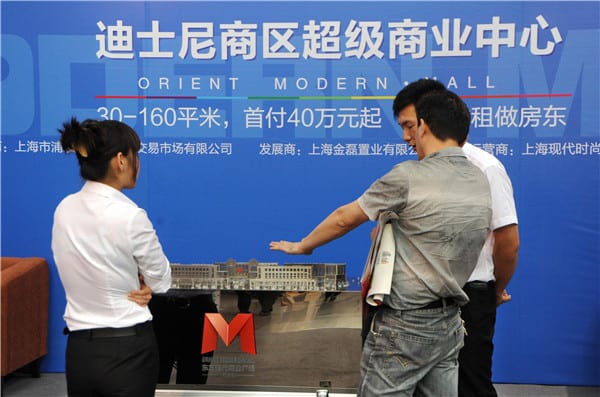
    Lu Jianxin, a real estate agent with Shanghai Huayu Property Ltd, has had some of his busiest business weeks in January since he joined the sector in 2002. Lu receives more than 50 phone calls every day asking him if he can find unoccupied retail properties near Shanghai Disney Resort, the long-anticipated multi-billion-dollar amusement project that is scheduled to open this summer (June).

    Typically, Lu tells his callers they should have acted earlier. “Supplies of retail properties are really limited now and prices have more than doubled in the past 12 months. Obviously, investors believe that even a 10 square meter space for a noodle stand will be really profitable if it is close enough to Disneyland,” said Lu.

    Disney Resort expected to bring realty-and-retail boom to Shanghai

    It’s not just business-minded people who are all excited about Shanghai Disney. Even 13-year-old Zhang Zihao in Hangzhou, Zhejiang province, can’t wait for Disney to open its gates. He has been saving his pocket money for a long time so he could visit Shanghai Disney Resort during the summer vacation.

    “The admission ticket price is expected to be announced this week. I have saved 500 yuan ($75.92) so far for the ticket alone, and another 1,000 yuan for dining and accommodation, and another 500 yuan for merchandise like stuffed animals, stationery, T-shirts and gifts for friends. That’s about 2,000 yuan in total.”

    The project has been under construction for more than six years now. Jun 16-that is, 6-16-2016-has been apparently chosen as the date of opening because the three 6s are believed to be auspicious, heralding success.

    Real estate professionals believe any success of Shanghai Disney Resort would entail all-round benefits for the area. For example, visitors in huge numbers would likely spark a retail boom in Shanghai.

    According to Centaline Property Agency, the average price of commercial properties within a 5 kilometer radius of Shanghai Disney Resort, including shops and restaurants, has grown more than 300 percent in the past five years.

    What used to cost some 20,000 yuan per square meter in 2011 would now command a price of more than 60,000 yuan per square meter. Some properties are even priced more than 72,000 yuan per square meter, about 50 percent higher than that of other suburban areas in Shanghai.

    The growth rate is among the highest for premier locations such as Nanjing Road, Huaihai Road and Lujiazui.

    In comparison, the average price of residential properties in the same area doubled from 20,000 yuan per square meter to 40,000 yuan per square meter in the same period, similar to that of the city’s average growth rate.

  • Young, rich, e-savvy will transform Chinese economy

    Young, rich, e-savvy will transform Chinese economy

    China has been one of the world’s fastest-growing consumer markets in recent decades and there’s no sign that is going to change anytime soon, slowing economy or not, US management advisory firm Boston Consulting Group says in a new report.

    However, the profile of Chinese consumers and the products they buy will change over the coming five years, according to BCG’s report, The New China Playbook: Young, Affluent, E-savvy Consumers Will Fuel Growth, which predicts three trends to watch in the country’s consumer market through 2020: upward mobility, a new generation of consumers and the continued rise of eCommerce.

    BCG expects China’s upper middle class and affluent households to overtake the emerging middle class as the main drivers of consumption growth. At the same time, a younger generation of sophisticated consumers will rise in prominence, and eCommerce through online marketplaces such as Alibaba Group’s Taobao and Tmall.com will play an increasingly important role in the Chinese economy.

    “The growing role of richer, younger, Internet-savvy consumers will boost demand for different kinds of products purchased through different kinds of retail channels,” BCG said in the report. “Indeed, this emerging consumer class will transform the structure of China’s economy.”

    This transformation is already underway as Chinese consumers increasingly go online to make purchases via desktop computers and smartphones, according to BCG. In 2010, eCommerce made up just three per cent of total private consumption, but that number will reach 20 per cent five years from now, generating $1.6 trillion in sales. In the US, eCommerce accounted for 7.4 per cent of total consumption in the third quarter of this year, according to the US Department of Commerce. Also, within this category, 15 per cent of Chinese eCommerce transactions will be cross-border, another burgeoning sales channel as the Chinese government takes steps to make the import and export of goods via eCommerce easier for both consumers and retailers.

    The report, which was carried out in partnership with AliResearch, the research arm of Alibaba Group, arrives as investors across the globe watch growth targets for China’s gross domestic product decline in the face of decreased exports, once the backbone of the economy. But Chinese consumers are unfazed, BCG said.

    The consultancy predicted that even if China’s economic growth slows to 5.5 per cent – well below the 6.5 per cent target – the country’s consumer economy will expand by about half to $6.5 trillion by 2020 from $4.2 trillion now. The $2.3 trillion differential over those five years is still 1.3 times larger than Germany’s entire $1.8 trillion consumer market.

    Rising incomes will help to fuel that growth. The number of upper middle class and affluent households – those with more than $24,000 and $46,000 in annual disposable income, respectively – will double to 100 million by 2020, and they’ll account for 81 per cent of total consumption growth during that period.

    Increasing affluence will also help to push shopping trends in new directions and to new locales. Where consumer goods such as personal care products once dominated sales, the next five years will see the demand for services take over, especially in areas such as healthy foods, education and travel, BCG researchers wrote. Moreover, merchants that want to reach this growing demographic will have to move beyond major cities such as Beijing, Shanghai and Guangzhou. BCG said that about half of the 46 million new upper middle class and affluent households expected by 2020 will be located in fourth-tier cities or lower, or those outside China’s top 100 cities.

    eCommerce sites such as Taobao have made moves to capture this growth in services. The report pointed to Taobao’s lifestyle service channel, which had customers in 300 cities only six months after launch. And most of those customers were 35 or younger and they were making online arrangements for home-based services such as house cleaning, with as many as 2600 maids booked in a single day at one point.

    Omnichannel retailing, where consumers are driven from online promotions to offline services accessed via smartphones, will be another key area of growth, BCG said. eCommerce purchases made on mobile devices currently generate 51 per cent of all online sales in the country – well above the global average of 35 per cent. Mobile transactions will account for nearly three out of every four online purchases by 2020, BCG predicted, as Chinese consumers increasingly rely on the internet to obtain local services and purchase products, such as organic foods, that they can’t find in local brick-and-mortar stores.

    An ability to attract a younger demographic, those born in the 1980s, ’90s and the first decade of the 2000s, will increasingly spell success or failure for companies selling into China, BCG said. The country’s up-and-coming crop of college-educated shoppers under the age of 35 are sophisticated and brand conscious in ways the previous generation was not. Their consumption is growing at 14 per cent annually, double that of consumers over 35, and they spend more than their elders – as much as 40 per cent more in many product categories. By 2020, BCG said the young generation’s share of total consumption is projected to reach 53 per cent in 2020 from 45 per cent.

    Companies that wish to remain competitive in China – or those entering for the first time – will need to adjust their strategies to fit in with these shifting demographics, BCG said, as the days of ubiquitous and insatiable Chinese demand across all product categories are over.

    “Even though overall consumption will continue to boom in China over the medium term, targeting the wrong income segment, playing in the wrong categories, and being underrepresented in the fast-growing online channels will be a formula for slow growth,” the report said.


  • Garuda Indonesia to open direct flight on Shanghai-Denpasar route

    Garuda Indonesia to open direct flight on Shanghai-Denpasar route

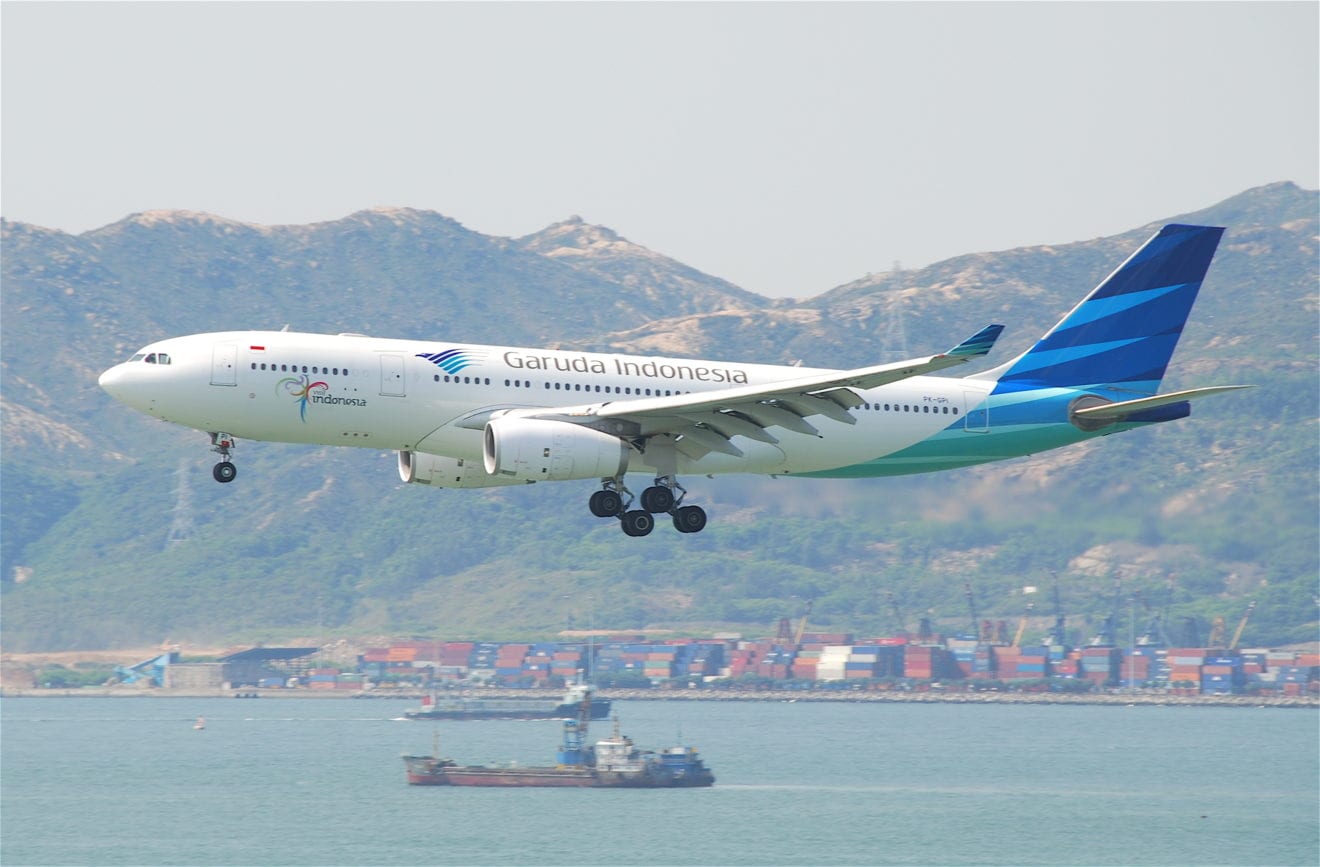
    Indonesian flag carrier Garuda Indonesia is planning to start a direct flight between Shanghai, China, and Denpasar, Bali, on January 13.

    “The non-stop flight between Shanghai and Denpasar will operate twice e a week using an Airbus-330 aircraft,” Vice President of Garuda Indonesia for China Region I, I Wayan Subagja, in Beijing, on Tuesday.

    As Bali is the favorite destination for Chinese tourists visiting Indonesia, hence Garuda will continue to increase the number of direct flights to Bali through regular and unscheduled flights.

    Garuda Indonesia also provides regular flights on the Beijing-Jakarta route that operate thrice a week and seven weekly flights each on the Shanghai-Jakarta and Guangzhou-Jakarta routes.

    Since January 2013, the national flag carrier has been operating four non-stop weekly flights on the Beijing-Denpasar route and has also added a new flight on the Guangzhou-Denpasar route at the end of 2015.

    Moreover, Garuda facilitates unscheduled flights for people from eleven Chinese cities who plan on visiting Bali for the Chinese New Year and summer holidays.

    “They still have huge interest to visit Bali due to which Garuda has tried to provide ease and comfort to tourists who want to visit Bali. We also promote other destinations in Indonesia,” Subagja emphasized.

    The opening of flights between several cities in Tiongkok and Bali is expected to support an increase in the number of Chinese tourists to Indonesia, which is targeted to reach ten million people in the next five years since 2015.

  • Giant Muji Shanghai flagship store opens

    Giant Muji Shanghai flagship store opens

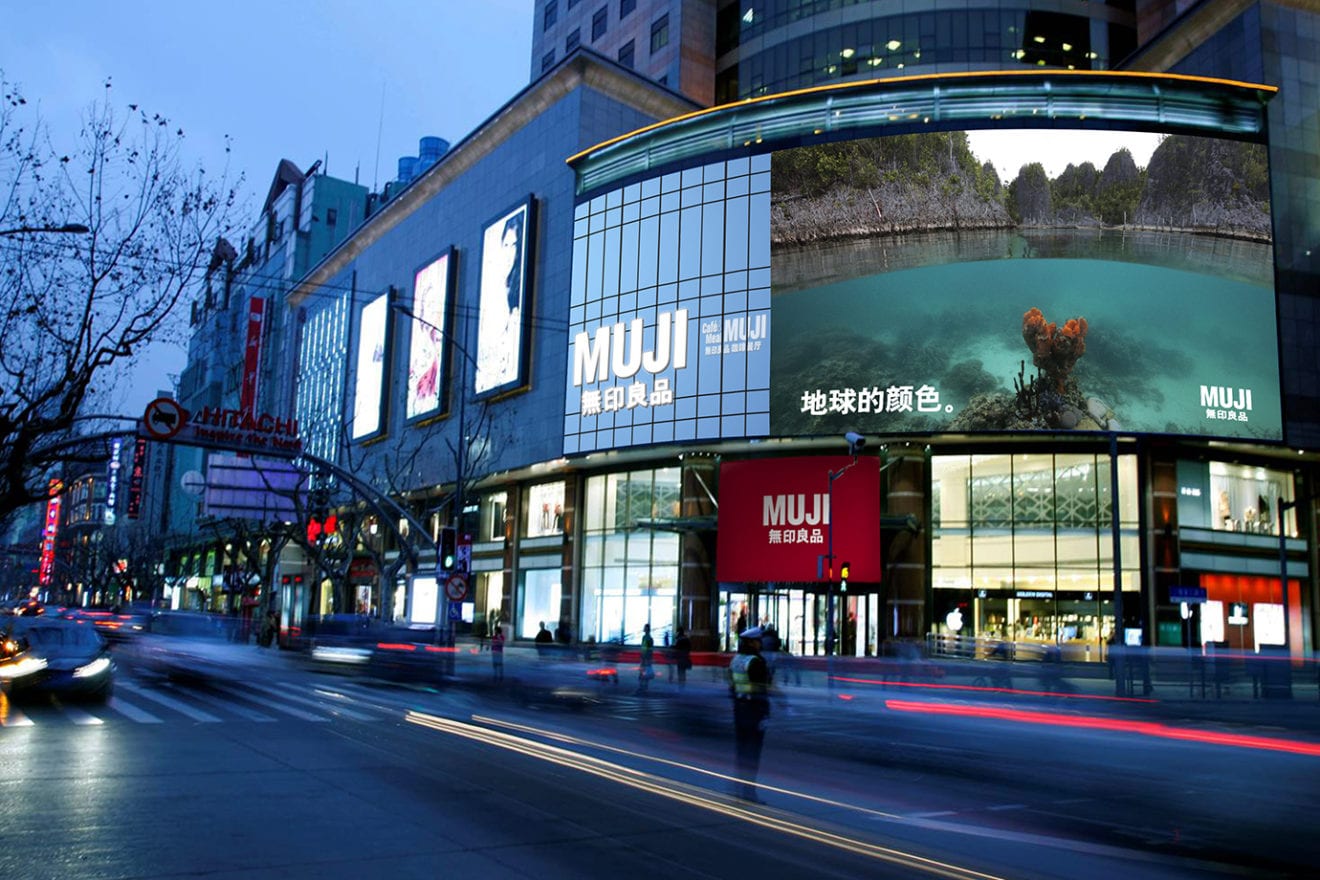
    The new Muji Shanghai flagship just opened marks the Japanese department store brand’s largest shop in China.

    Muji says it built the massive store so consumers in China “can experience the Muji lifestyle concept”.

    MUJI Shanghai Huaihai 755 - 6

    MUJI Shanghai Huaihai 755

    The new store is located at 755 Huaihai Rd, Shanghai’s premium high street shopping strip which is also home to flagships from brands as diverse as Uniqlo and Alfred Dunhill.

    MUJI Shanghai Huaihai 755 - 5

    MUJI Shanghai Huaihai 755 -1

    From a design perspective, each of the store’s three levels uses a different natural material to create three unique, differentiated shopping environment: Wood, iron (metal) and glass (earth).

    MUJI Shanghai Huaihai 755 - 4

    The flagship also incorporates  the cafe & Meal Muji dining concept, for the first time in Shanghai.

    MUJI Shanghai Huaihai 755 - 10

    “We seek out food ingredients that are tasty as natural food, and produce menus that make use of the original tastes of those ingredients with simple cooking methods,” said a Muji spokesperson of the new eatery offer.

    MUJI Shanghai Huaihai 755 - 3

    And – for the first time in China – Muji Books has opened featuring a curated range of reading materials and stationery products.

    MUJI Shanghai Huaihai 755 - 7

    MUJI Shanghai Huaihai 755 - 9

    MUJI Shanghai Huaihai 755 - 2

    In one corner of the store, customers can create their own scents mixing and matching various essential oils for their own unique recipe.

    MUJI Shanghai Huaihai 755 - 8

    Muji says the store is large enough for it to host seminars and events for customers.

  • Blackmores cuts the ribbon on Bondi store amid mad China scramble

    Blackmores cuts the ribbon on Bondi store amid mad China scramble

    Blackmores chairman Marcus Blackmore admits he had no idea just how much the opening up of China would turbocharge sales of his company’s vitamins, creams and supplements.

    The ASX-listed natural health business has been showered with awards this year while booming sales have seen the stock light up the local sharemarket.

    Around 80 per cent of our products are sold through pharmacy in Australia and they give fantastic advice.

    Christine Holgate, Blackmores

    Shares in Blackmores, of which Mr Blackmore owns 24.5 per cent, have surged from $32 in January to around $189, giving the company a market value in excess of $3 billion.

    “It has been an unbelievable year,” Mr Blackmore told Fairfax Media at the unveiling of the company’s first retail store in Australia.

    Advertisement

    “It is beyond any expectations. We’ve been in China for four years but we had no concept of what China would deliver.”

    At a recent dinner in Shanghai Mr Blackmore met a man from Guangzhou who runs three hospitals treating 20,000 people a day with traditional Chinese medicine.

    He said that China’s long history of using traditional medicines means customers in that market are much easier to win over.

    “Chinese people have a very clear understanding of the philosophical values of natural health,” he said.
    Blackmores floated on the ASX 30 years ago, and for most of that time the company sold 3000 tubs of vitamin E cream a month. In November 2015 the company sold 800,000 tubs of vitamin E cream.

    For the three months to September 30, Blackmores reported a 64.7 per cent increase in sales to $162.2 million and a 161.5 per cent increase in profit to $22.6 million.

    Mr Blackmore said “things come in threes” and the opening of Blackmore’s first Australian retail store at Bondi Junction Westfield caps off the trifecta.

    The other two things brightening the vitamin king’s mood happened last week.

    Last Thursday Blackmores boss Christine Holgate was named chief executive of the year by CEO Magazine, and on Friday federal trade minister Andrew Robb awarded Blackmores the health and biotechnology exporter of the year award.

    New store boosts connection

    Ms Holgate said the Bondi store is not about building a retail presence across Australia but is intended to help connect with Blackmores customers.

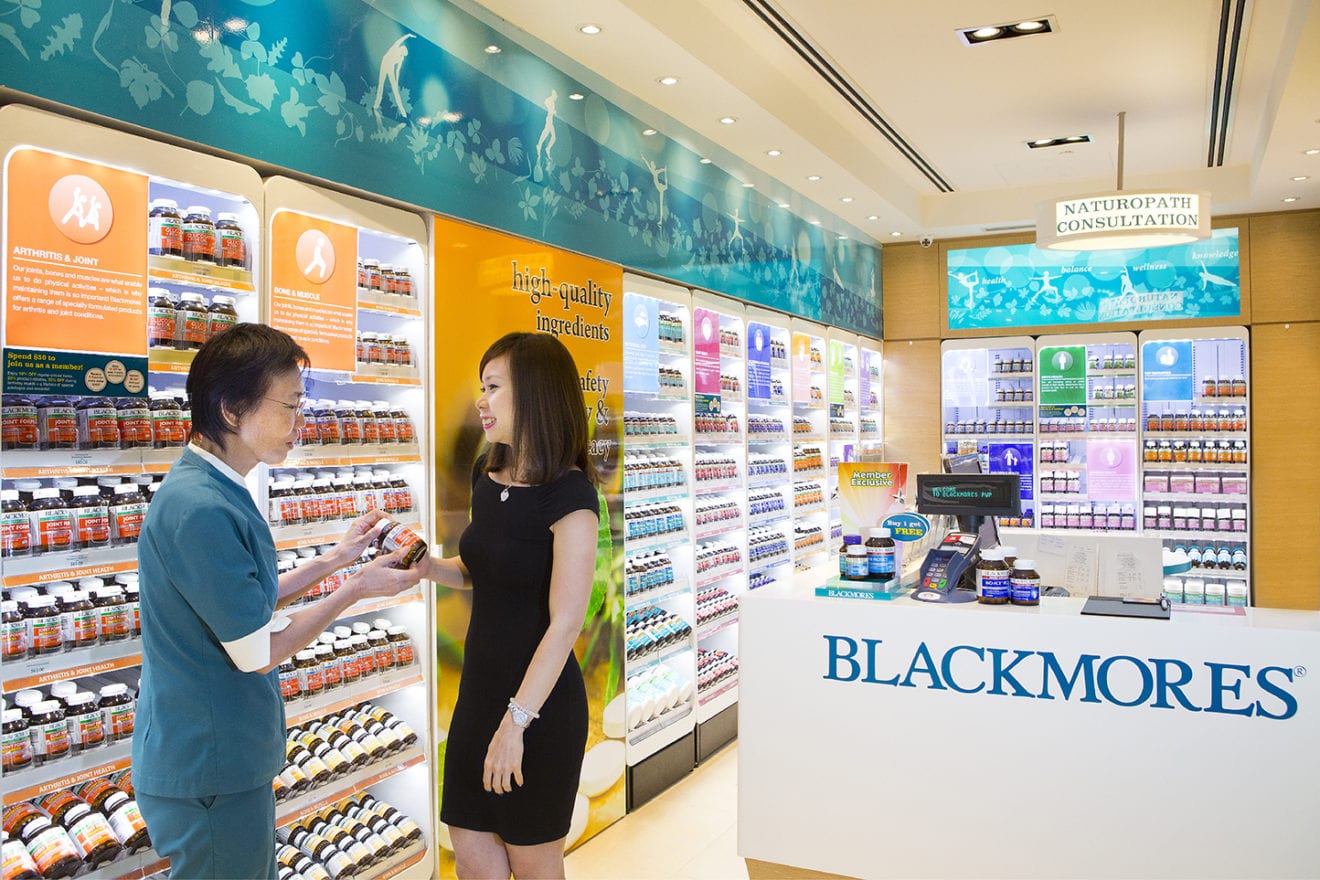
    “We are not going to become retailers, we partner with pharmacy. Around 80 per cent of our products are sold through pharmacy in Australia and they give fantastic advice,” she said.

    “What this allows to do is to bring our products and our therapies much closer to the consumer and enables us to listen to the consumer and better understand their health needs.”

    While Ms Holgate is trying to deepen ties with her local customers, the big issue she has is satisfying voracious Asian consumers.

    In the past six months Blackmores has increased it production capacity by 60 per cent. The company has hired 100 extra people but has now run out of office space.

    In November, which Mr Blackmore believes was “probably a record month”, Blackmores produced 2.7 million bottles of product. It will have capacity to produce 4.2 million bottles a month in April next year.

    “The things that keep me awake at night are: availability of raw materials, availability of raw materials, and availability of raw materials,” Ms Holgate said.

    In some product lines there is a natural brake on boosting production immediately. For example, evening primrose oil, a market dominated by Blackmores, comes from a plant harvested once a year.

    In other cases Blackmores is constrained by its strict quality criteria.

    Ms Holgate is loath to put the brand name at risk by compromising even slightly on quality.

    “I’m sure I could give you a lot more sales, but not at the quality levels we want,” she said.

    Last month Blackmores inked a joint-venture deal with dairy group Bega Cheese to supply infant formula and other nutritional products to Asia, opening a range of new opportunities for both companies.

    Ms Holgate said the company actually uses a dairy rival, New Zealand’s Fonterra, as a case study for an internal quality workshop.

    Fonterra has been embroiled in a number of dairy food scandals including the 2009 melamine crisis in China and the false botulism alert, which prompted a massive product recall, in 2013.

  • Joyce Boutique plunges into the red

    Joyce Boutique plunges into the red

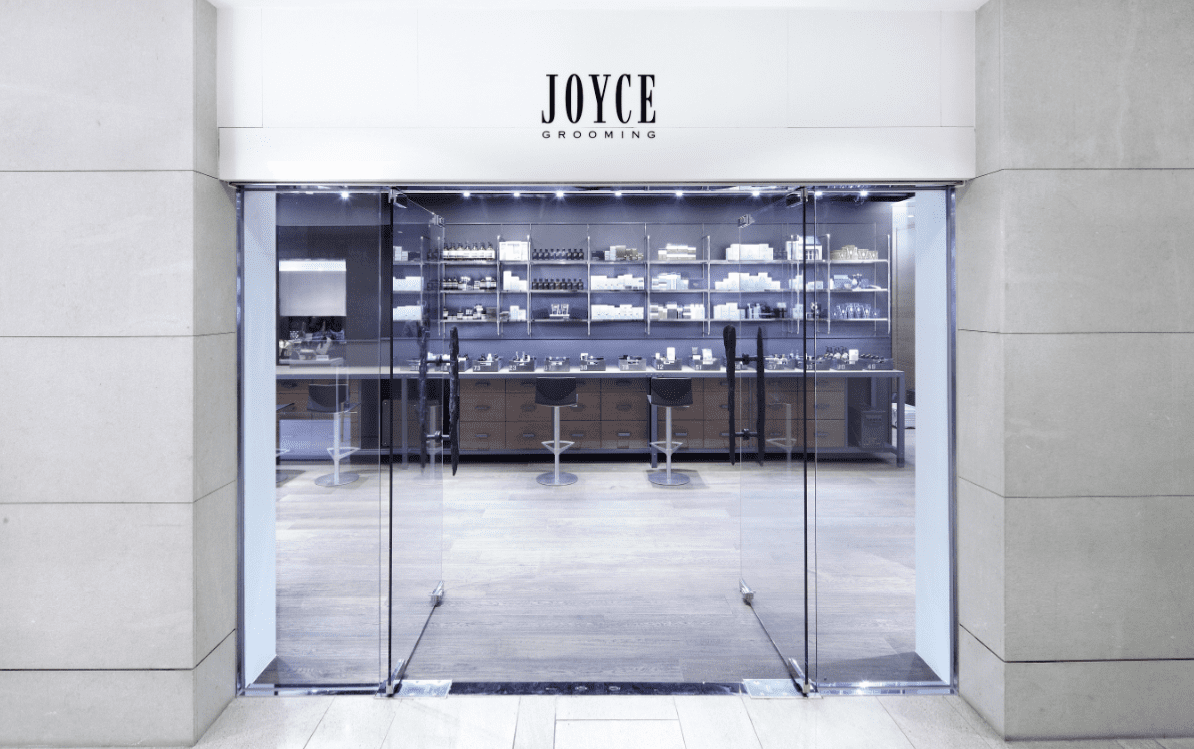
    Listed fashion boutique operator Joyce Boutique says it will continue to take a cautious approach to business expansion and focus on consolidation of the Joyce multi-label business towards higher-productivity stores in the year ahead.

    It will renovate and expand the Joyce flagship store in Central and relocate the Shanghai Joyce flagship store to a bigger space within Plaza 66 to introduce a completely new look and unique shopping experience to customers.

    The move follows revelation of a HK$34.9 million half year loss for the company – a major turnaround from the $32.8 million profit in the same period last year.

    Sales slumped 10.9 per cent, and gross margin lost 3.5 percentage points, the company has reported to the stock exchange.

    “The persistent fall-off in customer spending on luxury goods in Hong Kong and Mainland China drove down the sales performance of the luxury retail market in the period. Depreciation of the euro and yen against the dollar and renminbi led to an increase in overseas shopping and online shopping for luxury goods and impacted on bricks-and-mortar local retailing.” the company said in its interim report.

    Joyce Boutique’s Hong Kong, turnover dropped by 10.3 per cent against the same period last year and accounted for 82.5 per cent of group turnover (2014: 81.9 per cent). Further impacted by declined gross margin and increased rental costs, the Hong Kong division incurred an operating loss of $12.6 million for the period (2014: a profit of $36.6 million).

    Mainland China turnover declined by 14.6 per cent versus the same period last year and operating results turned into a loss of $22.9 million from last year’s profit of $3.1 million, chiefly the result of a general decline in turnover and margin and an additional $7.6 million provision made for a loss making shop in Shanghai.

    Joyce Boutique inside

    The joint venture with Marni made a loss contribution of $1.0 million (2014: profit of HK$1.3 million) due to a drop in turnover and an increase in operating costs.

    “In view of the difficult trading environment, the group adopted a cautious shop strategy. While opening new shops for three potential brands as planned in the previous financial year (the first Hong Kong shop for Thom Browne at On Lan St, the first China shop for Sacai at Beijing Sanlitun and the first Macau shop for Alexander Wang at Galaxy Macau), the group closed certain non-performing shops to improve shop productivity,” the company reported.

    As well as the change in store focus and the renovation of the Hong Kong and Shanghai flagships, the company says it plans to further strengthen customer loyalty and drive sales from VIP customers through enhanced personal stylist services and the introduction of private customer mobile apps.

    Joyce Boutique says it expects the near term trading environment will remain “tough and challenging”.

    “Rental levels in prime shopping malls remain high relative to turnover. Online shopping and overseas shopping for luxury goods will continue to impact on bricks-and-mortar specialty retailing. In view of the challenges, the group will focus on driving cost efficiency and shop productivity, fashion editing and reducing business risks through taking cautious approach to business expansion and stock purchase planning.”

  • Char Raises The Bar for Steaks in Shanghai

    Char Raises The Bar for Steaks in Shanghai

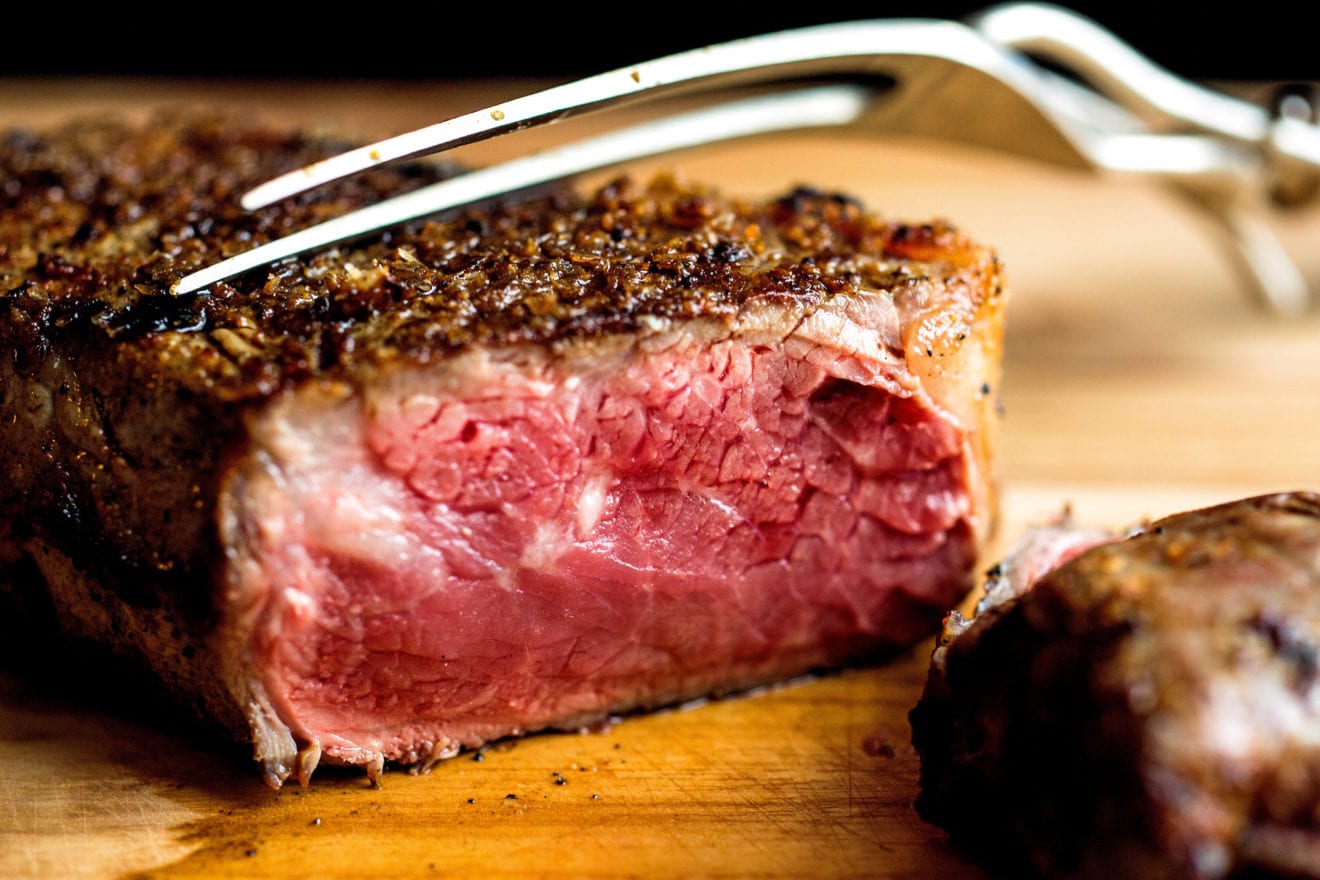
    Great food is produced long before it ever gets to the kitchen. Soil, sunlight, clean air and water, and scrupulous farming practices are essential ingredients for any quality dish. Quality and authenticity are especially true for steak. It’s why CHAR in the Hotel Indigo Shanghai on the Bund serves Wagyu, Black Angus, and grass-fed beef from some of the world’s most renowned cattle ranches. Diners can explore this further starting in January 2016, on the last Thursday of every month, when CHAR will host a Beef Appreciation Steak Masterclass. The class will be from 1-3pm in CHAR for RMB 350 per person, which also includes a light lunch. Reservations are highly recommended.

    The CHAR Steak Masterclass begins with a classroom style lecture available in English or Chinese and presented by one of Shanghai’s largest and most reputable Australian beef imports. Topics covered will be on animal husbandry, why the diet is important, the various cuts of beef, the types of cows, dry aging and ultimately, how to select a quality beef product. This will be followed by a practical demonstration by Chef Willmer Colmenares himself where he will point out visual indicators of quality such as marbling, color and texture. Participants will sample some of the beef and then be able to use this knowledge when enjoying beef in the future. Lastly, Chef Willmer will discuss various means of preparation from the oven to the pan to the grill and which one is preferred. So what are some of CHAR’s 11 different steak offerings?

    David Blackmore beef is, without question, the crown jewel of CHAR’s menu. It is the Rolls Royce of beef. This Australian ranch only raises cattle with bloodlines that can be fully verified and traced back to Japan. It’s grain-fed for 600 days, using traditional Japanese farming methods. The end result is an exceptional marbling score of 9+. This means a steak that tender, succulent, and devastatingly rich. A slice of it will melt on the tongue like a pat of butter. And as if that weren’t indulgent enough, CHAR serves their Blackmore fillets with foie gras, lobster, sautéed wild mushrooms, and shaved truffles.

    Tajima Wagyu is another exemplary beef on offer at CHAR. This unique strain of cattle is what made Japanese beef famous. Its luxuriant marbling produces a luscious texture, and excellent flavor. CHAR sources beef from full-blood Tajima cattle raised in the Australian countryside. 500 days of a traditional Japanese cattle diet gives this beef a marbling score of 7–9. Guests can savor a 220g Tajima eye fillet or 300g rib eye, both seared to tender, juicy perfection.

    Australia is also renowned for world-class certified Black Angus beef, and Jack’s Creek is one of the most respected names in the business. Top-quality cattle are fed a proprietary, high-energy grain diet for 150 days to produce beef with a 3+ marbling score. It’s tender, succulent, and can be experienced at CHAR with a 250g eye fillet or a 300g sirloin.

    Grass-fed beef has built a strong reputation not only for its unique flavor but for its nutritional benefits, too (a grass diet produces a leaner meat than grain diet). Cape Grim has struck a perfect balance between leanness, tenderness, and flavor with its famous grass-fed beef. Their cattle are raised in the pristine pasturelands of Northern Tasmania, where they graze on an all-natural diet of grass. Guests can enjoy this premium beef as a 250g eye fillet or a 500g bone-in rib eye.

    But it doesn’t stop at world-class steaks. Chef Will Colmenares has created a menu of creative gourmet indulgences inspired by the cuisine of Asia, the Mediterranean, and Latin America to complement the steaks. He puts an intriguing twist on that steakhouse staple, lobster bisque, by infusing it with lemongrass and adding mussels, scallops and a lime cream. His coconut-and-lime-marinated lobster and salmon ceviche brings an unexpected freshness to the menu. Avocado and jalapeño give the dish a zesty flair. His creamy roasted bone marrow with seasonal mushrooms, smoked octopus, and potato flan is a fun and inventive exploration of taste and texture. And of course, there is no shortage of fresh seafood, with a selection of imported live oysters and CHAR’s “Seafood Harvest”, a sharable shellfish tower, featuring half a lobster, king prawns, a crab claw, Irish king razor clams, mussels, oysters, and Amur Caviar.

    Then for something sweet, there is a bevy of creative desserts, like Colmenares’s “Piña Colada”, a tropical treat made with caramelized pineapple, rum, honey jelly, and coconut ice cream. Or guests can take a decadent escape with a spicy hot chocolate fondant with tonka bean ice cream and rum ganache.

  • New Valentino Shanghai IFC mall

    New Valentino Shanghai IFC mall

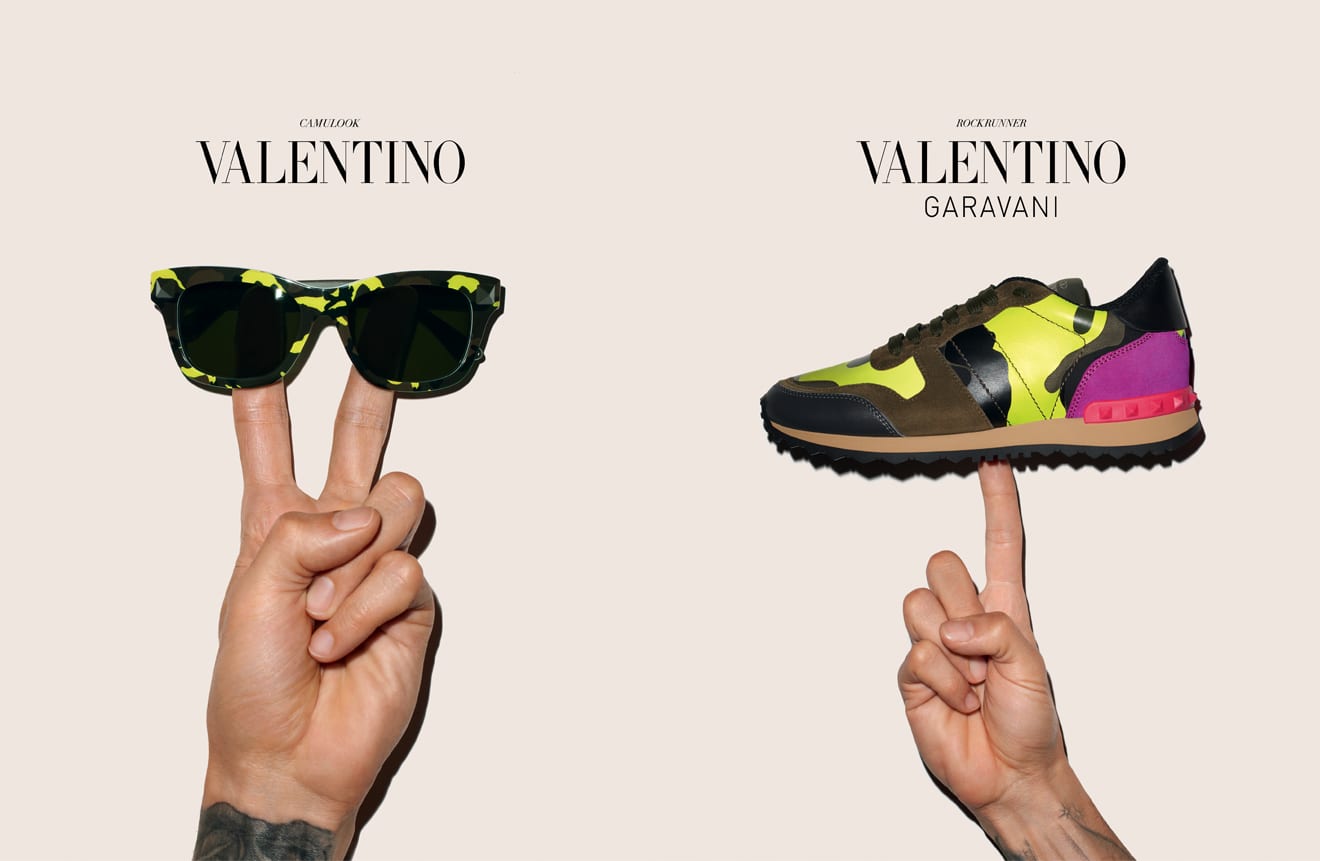
    Luxury fashion brand Valentino has opened a new boutique in Shanghai.

    The new Valentino Shanghai IFC Mall boutique features 490 sqm of retail space.

    Valentino Shanghai IFC mall 5


    It was developed by creative directors, Maria Grazia Chiuri and Pierpaolo Piccioli, together with British architect Sir David Chipperfield.

    Valentino Shanghai IFC mall 3


    Valentino says the store “perfectly represents the core values of the Maison: luxury, elegance and Italian craftsmanship.”

    Valentino Shanghai IFC mall 2

    The store concept combines old and new, heritage and style co-exist in the idea of a new future that is not nostalgic, but full of memories.

    Valentino Shanghai IFC mall 4

    The Shanghai IFC mall store carries womenswear, menswear and accessories.

    Valentino Shanghai IFC mall 1

    IFC Mall in the Pudong financial district is one of the premium retail destinations in the city.

  • French lingerie brand Etam opens first China store

    French lingerie brand Etam opens first China store

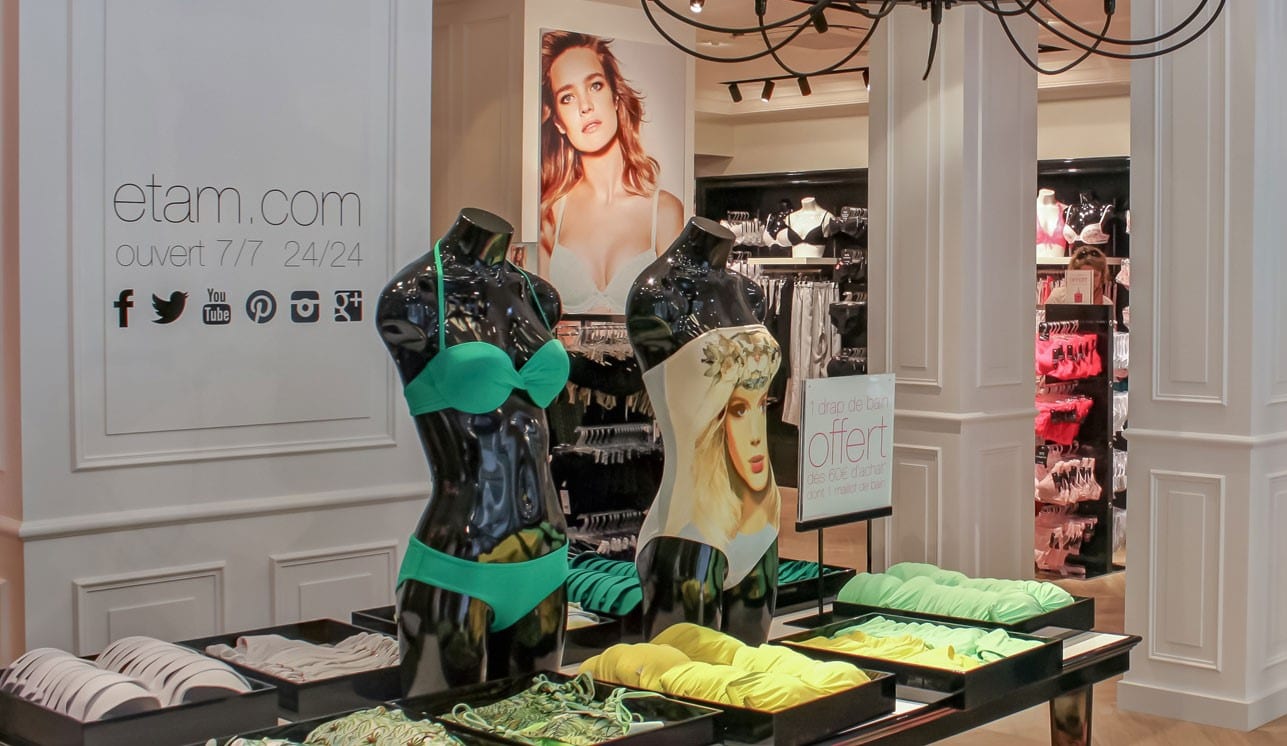
    French lingerie brand Etam has opened its first retail store in Super Brand Mall, Shanghai.

    The 100 sqm store features a tasteful black, white and pink color scheme, displaying the sophisticated array of elegant French-designed underwear for women marketed under the tagline “so sexy, so chic”. It also stocks Etam’s swimwear, sportswear and legwear.

    Etam started selling its clothing in China in 1994 through wholesale channels and the market now accounts for about one third of its total sales.

    But despite the importance of the country to its business, it has not until now opened its own stores there.

    Founded in 1916, Etam is now sold in 4400 stores in 48 countries. The Shanghai store will sell the same lines as in Paris.

    China marks a major strategic expansion for the company which to date has only opened stores in Asia in the Philippines. Its store network is largely concentrated on Europe and the Middle East.

  • Jacob Delafon China opens first store

    Jacob Delafon China opens first store

    Jacob Delafon, a leading French fashion bathroom brand, has launched its brand in China and opened its first store there.

    The new Jacob Delafon China showroom opened on Tuesday, November 17 in Shanghai.

    Bruno Chenesseau, kitchen & bath design director of Jacob Delafon Europe, Middle East and Africa, said given the company is based in Paris, “we were naturally inspired by the city”.

    “By its architecture, its atmosphere, its unique diversity and above all, by the elegant and audacious Parisian style. It is a truly creative playground,” he said.

    The heritage of the Jacob Delafon brand helps the design team to “jump out of the box” and present a more elegant lifestyle.

    “Jacob Delafon speaks the same language with French fashion trend, and is inspired from the elegant and independent Paris ladies,” said Chenesseau.

    “Then, from these observations, Jacob Delafon created three brand “universes” of collections. The Presqu’ile collection is inspired by the flea markets, a perfect mix between bric a brac and eclecticism. The Terrace collection takes place in an industrial loft with refined lines. And the Stillness collection is the modern reinterpretation of an Haussmannian apartment. The brand spreads these different universes throughout our design, which makes Jacob Delafon’s products so unique and recognisable among others.”

  • Jenny Bakery Singapore opens doors

    Jenny Bakery Singapore opens doors

    Scam-struck Hong Kong biscuit maker Jenny Bakery has opened in Singapore.

    And unlike the Shanghai store which opened last week, it’s the real deal, not a copycat.

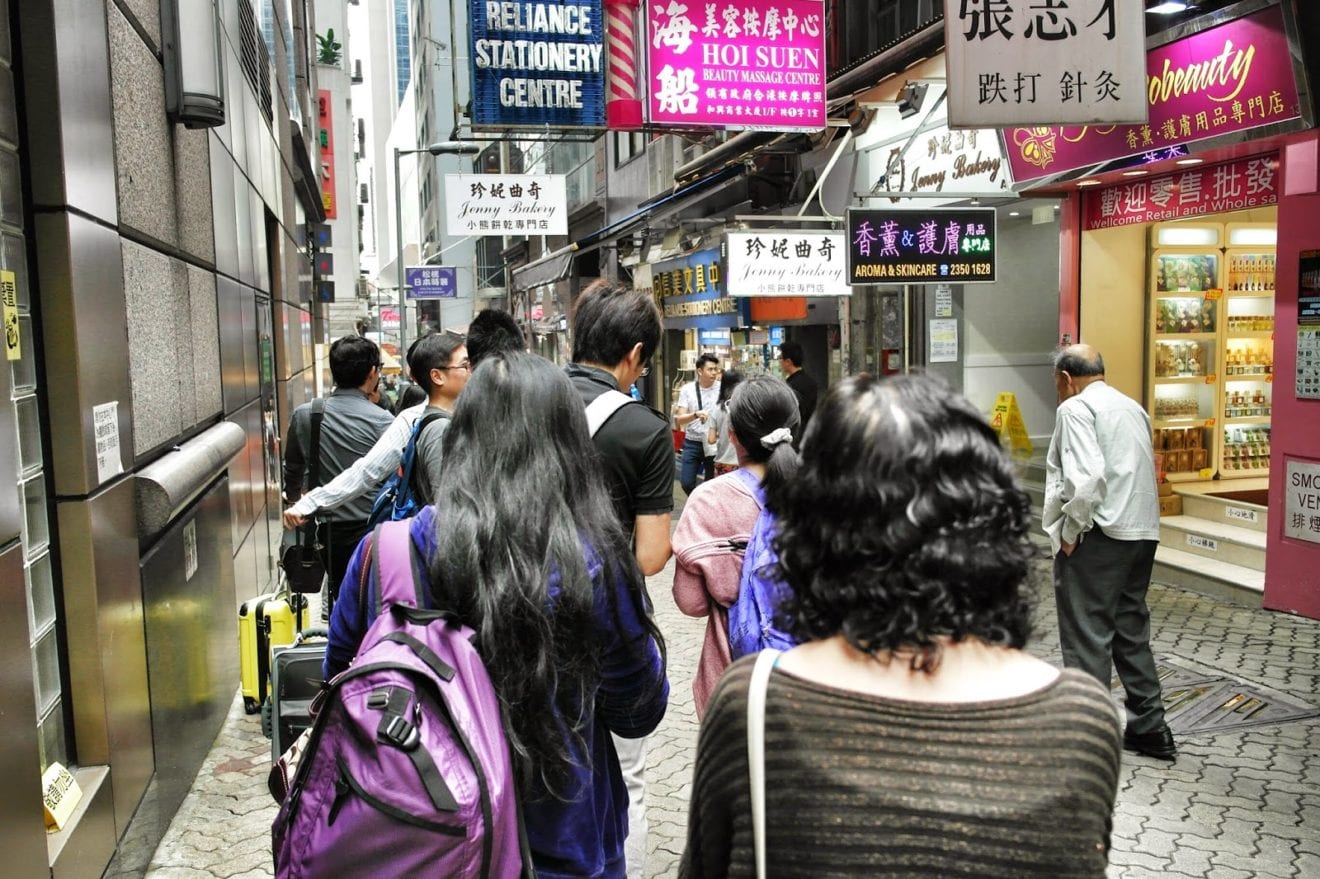
    The new Jenny Bakery Singapore store is located at Block 422 Ang Mo Kio Avenue 3. Like its real parent in Hong Kong, the store offers handmade butter cookies in tins adorned with teddy bear pictures.

    The store will be run by members of the same family which launched the original Hong Kong bakery, which is gaining a growing following around Asia for its unique taste and packaging. Which is perhaps why a copycat was launched under the same brand name in Shanghai, raising the ire of city officials, not to mention hundreds of customers who queued on opening day only to discover the shop was not genuine.

    Jenny Bakery Hong Kong has two stores – one in Tsim Sha Tsui and the other in Sheung Wan.

    Jenny Bakery Hong Kong

    Jenny Bakery Singapore MD Lawrence Lim says the cookies are flown in from Hong Kong weekly. The main reason for opening an official store was to protect the brand’s trademark and discourage copycats… like the Shanghai store, whose cookies are actually baked in a factory in Shenzhen.