Retail News CRM

Tag: Shanghai

  • Tesla, VW, SAIC Look To Recommence Shanghai Operations

    Tesla, VW, SAIC Look To Recommence Shanghai Operations

    Tesla VW and SAIC are among several companies that are looking to get production back up and running at their Shanghai facilities after almost three weeks of COVID-19 related shutdowns. The news comes following Beijing having drawn up a “whitelist” of companies prioritised to re-open or keep operations going in Shanghai. The list included a number of companies ranging from carmakers to semiconductor manufacturers and medical firms.

    As per Reuters, Tesla had already recalled workers to its Shanghai factory where they would be required to live on-site. The company had planned to commence production today though it has now been deferred to tomorrow citing logistical issues from a supplier. SAIC Motor meanwhile reported that it was commencing stress testing from Monday with an eye on recommencing production while VW said it was evaluating the feasibility of resuming production at its SAIC joint venture.

    However, with COVID-related closures in other cities in the country, it remains to be seen how manufacturers work around supply chain disruptions.

    Shanghai meanwhile aims to stop the spread of COVID-19 outside of quarantined areas by Wednesday with reports saying that the city had stepped up testing measures and transfer positive cases and their close contacts to isolation.

    Companies are being required to ensure ‘closed loops’ for workers being called into work while also maintaining medical supplies. Under ‘closed loops’ employers have been asked to minimise employee exposure to others while transiting to work or arranging for employees to live on their factory premises.
  • Blue Bottle makes Mainland China debut

    Blue Bottle makes Mainland China debut

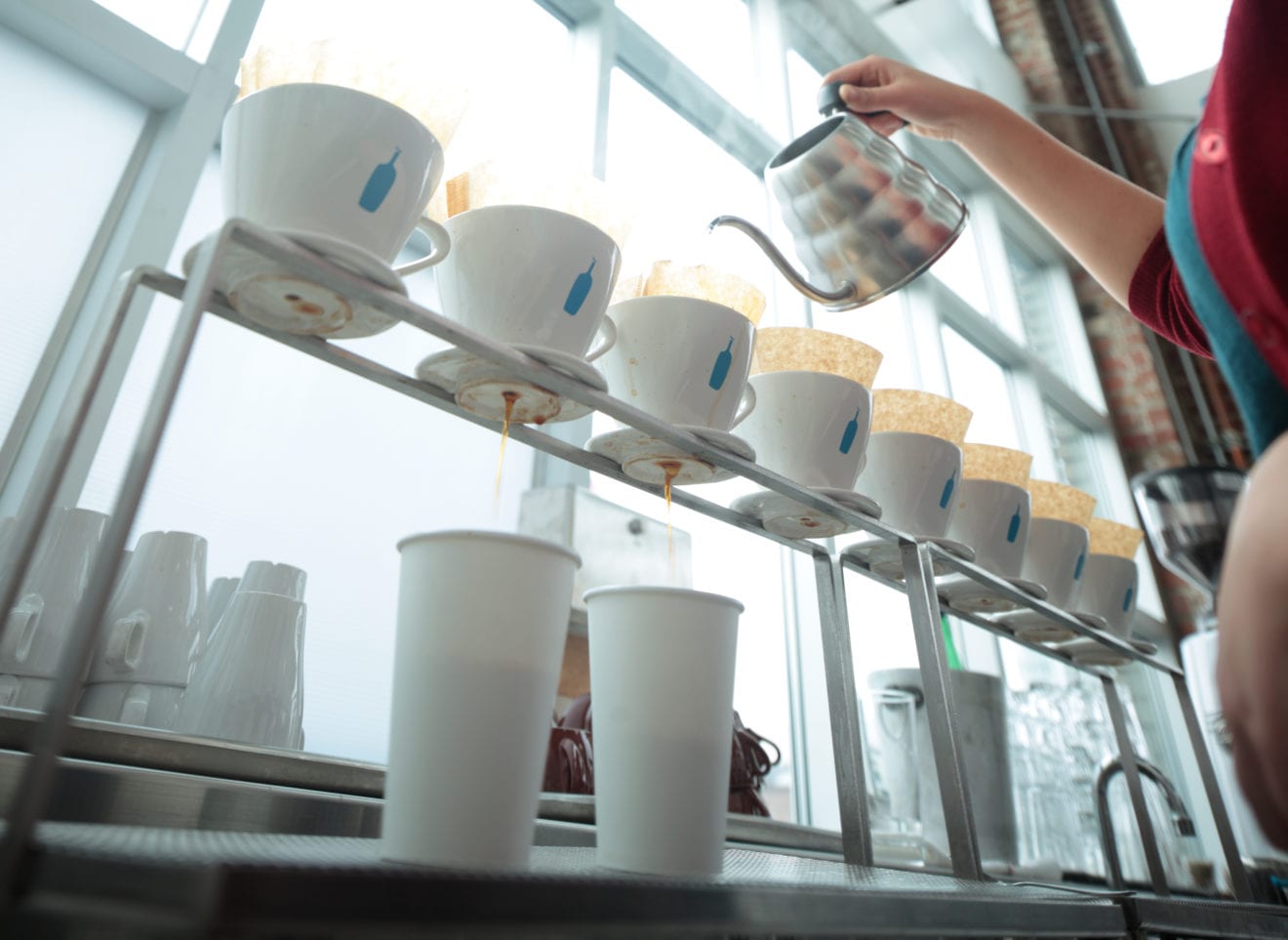
    Blue Bottle Coffee opened its first store in the Chinese mainland on Friday in Shanghai, a city boasting the highest number of coffee shops worldwide.

    Naming its Shanghai debut “Yutong Cafe”, the American coffee chain selected a historic venue by Suzhou Creek, a river that passes through the Shanghai city center, symbolizing its resonance with the local market.

    The two-storey, vintage-looking building houses a selection of classic drip coffee and its signature espresso-based drinks. It also provides snacks inspired by an iconic portfolio from its worldwide operations.

    Unique to the Shanghai store are offerings from merchandise co-created with a local illustrator to a pastry palette featuring local specialties.

    The California-headquartered coffee brand was founded in 2002. Apart from the US, it currently has over 100 branches in markets like Japan, South Korea and Hong Kong.

    A study by Shanghai Jiao Tong University said Shanghai has the most coffee shops of any city globally by January 2021, with more than 6,900 coffee shops in the metropolis.

    Shanghai has vowed to build itself into an international consumption city, promoting the concept of a ‘debut economy’, meaning that businesses from home and abroad are attracted to open their first stores and launch new products in Shanghai.

    Local authorities expect 1,000 such “first stores” in the city to open last year.

  • Inside Swarovski’s first Asian flagship store, at Shanghai

    Inside Swarovski’s first Asian flagship store, at Shanghai

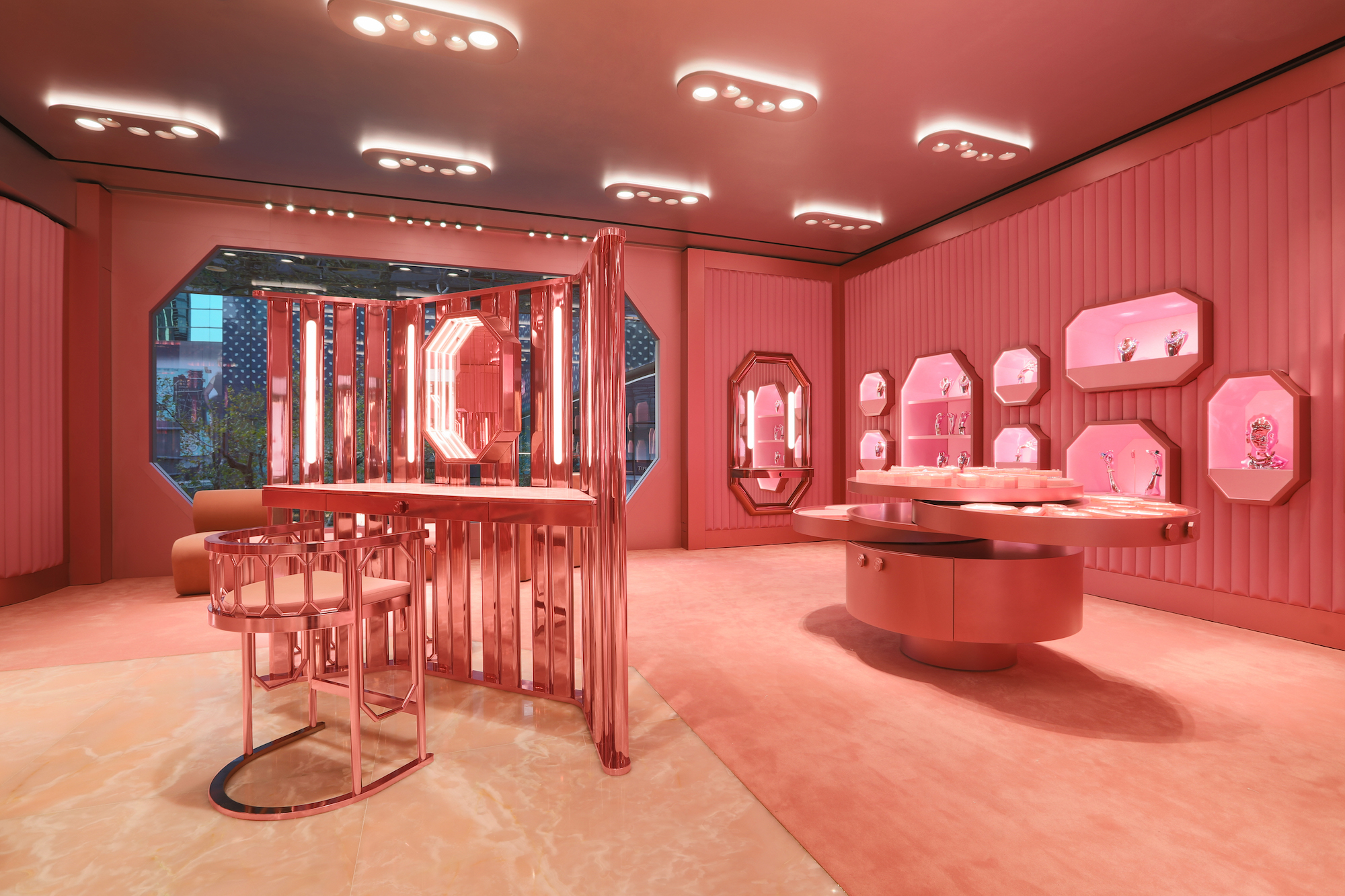
    Swarovski has just opened its first Asian flagship store in HK Plaza, Shanghai. On the heels of the brand opening its Instant Wonder pop-up boutiques in 27 key locations around the world earlier this year, the Shanghai flagship will welcome customers into Swarovski’s world on a more permanent basis.

    “Throughout the journey of our transformation, we have been working towards a moment like this,” notes CEO Michele Molon, “The moment where guests can not only explore Swarovski products, but immerse themselves in our point of view, our personality, and the experience of intimately understanding the sense of joy and innovation from which each item is created.”

    As one of the key markets of Swarovski — and luxury as a whole — China, in particular the creative hub of Shanghai, feels like the natural place to open the brand’s first flagship in Asia. And this is no normal flagship. Creative Director Giovanna Engelbert sought to create in Wonderlab a place that transports customers into the imaginative world of Swarovski.

    Rooted in brand codes, colors, packaging, and heritage, the Swarovski Wonderlab does just that. “I am incredibly excited to unveil this beautiful space, inspired by the forward-moving landscape of China and her people. It’s the biggest, most ambitious store we’ve made, centimeter by centimeter thought through and brought into reality,” commented Englebert.

    Ambitious isn’t even half of it. Take in the metallic pink of the Wonder Room with a rotating central display and custom Swarovski Swan chairs or the Lucent stairwell which climbs to the Dream Room. Robotic arms nod to the innovation behind Swarovski’s developing offering, standing in stark contrast to the pastel pinks and mesmerizing crystals that define the rest of Wonderlab. The Swarovski Wonderlab is nothing short of a dreamscape in the heart of Shanghai.

    Swarovski’s Shanghai flagship opened on December 10, so be sure to visit for a taste of the future of retail if you’re in Shanghai.

  • China Mobile shares rise marginally in Shanghai debut

    China Mobile shares rise marginally in Shanghai debut

    China Mobile Ltd shares debuted on the Shanghai Stock Exchange on Wednesday, soaring to 63 yuan, 9.4% higher than the offer price of 57.58 yuan in early trading, before closing at about 0.52% higher at 57.88 yuan.

    The carrier’s Shanghai shares traded more than 40% higher compared to its Hong Kong-listed shares, which closed 3.33% higher on the same day, boosted by an earlier announcement to buy back up to 2.05 billion shares worth about US$13 billion.

    Raising US$7.64 billion, China Mobile’s public share offering is also China’s largest in a decade.

    China Mobile’s homecoming listing is closely watched. In May 2020, China Mobile exited the New York Stock Exchange when it was added to a growing list of Chinese companies blacklisted by the US. China Telecom and China Unicom were also ousted from the US exchange.

    China Mobile said that proceeds from the offering will be used to expand 5G capabilities, cloud infrastructure, and intelligent ecosystems.

  • Bimba Y Lola opening in China

    Bimba Y Lola opening in China

    Spanish contemporary fashion label Bimba Y Lola is launching in China with a joint venture with ImagineX, Lane Crawford Joyce Group’s distribution and brand management arm.

    With a corporate office to be set up in Shanghai, the brand aims to establish a retail presence on Alibaba’s Tmall and Tencent’s WeChat, and physical pop-ups by 2022, to ramp up brand awareness and customer following.

    It will be followed by store rollouts, with plans to open 30 points of sale across 15 major cities in China, including Shanghai, Beijing, Shenzhen, Chengdu, and Chongqing in the next five years.

    Founded in 2005, Bimba Y Lola targets fashion-forward Millennials and Generation Z with ready-to-wear, jewelry, and accessories. It operates more than 290 stores across 20 countries, including the U.K., France, Singapore, and South Korea.

    According to researchers at SEMrush, Bimba Y Lola’s website traffic saw some of the biggest surge pre-pandemic, outperforming traditional retail fashion leaders such as macys.com and online giant Amazon.

    Last month, Madonna’s daughter Lourdes Leon made her fashion campaign debut with the brand’s fall 2021 campaign, a jaunt through a digital landscape.

    Uxia Dominguez, founder and president of Bimba Y Lola, believes that in China, a market of strategic importance yet one that is unique and complex to navigate, ImagineX has the right channels to unlock the potential of the brand.

    Alice Wong, president of ImagineX, thinks that the brand will resonate well with “Chinese consumers, especially the Gen Zs and Millennials.”

    “They have an increasing appetite for international accessible-luxury and affordable brands with cutting edge design, which truly stands out from the crowd,” she added.

    ImagineX manages 25 brands, including Salvatore Ferragamo, Canada Goose, Ba&sh and Club Monaco, with 448 points of sale across 48 cities in the Greater China region.

  • Hermes reopens it’s Shanghai flagship

    Hermes reopens it’s Shanghai flagship

    On 29th October 2021, Hermès is delighted to open the doors of its newly renovated store in the prestigious Plaza 66 in Shanghai. Spanning over two floors and 656 m2, the vision for this store evokes the richness of the local culture and Hermès’ connection with the city of Shanghai, creating an engaging backdrop for discovering the 16 métiers of the house.

    The new design is established with the store’s powerful façade, which now features a long window carved into its impressive stone surface to allow more natural light to filter through. The transparency of the storefront below is also improved thanks to the generous addition of windows set in a deep-green tinted glass that mingles invitingly with the mineral hues of the stone tiles.

    Transformed by the Parisian architecture agency RDAI, the interiors feature a fluid, curved layout, drawn in response to the existing volumes of the space. Distinctive architectural gestures, like the sculptural lines carved into the soaring ceilings and the rounded walls, enhance the customer path from one side of the open-plan area to the other. Throughout the store, a richly evocative colour palette of deep blue-green, burgundy, and caramel, alternating between matte and lacquer surfaces with added accents of plush velvet, are employed in an impactful way to create a sense of intimacy for each métier. Three-dimensional custom designed carpets with superimposed geometric forms in vivid, saturated colour give structure and individuality to each universe.

    From the main street side entrance, guests are greeted with an animated display of women’s silk and a generous offer of fashion accessories. On the other side of the mall, there is a wider selection of women’s silk and accessories, perfume and beauty. These two entrances include mirroring features that are hallmarks of the house: the Hermès ex-libris underfoot and the iconic “Grecques” globe lighting overhead. The hand-assembled inlaid stonework reflects the house’s savoir-faire: based on the rue du Faubourg Saint-Honoré motif, the pattern disperses before merging again on the other side of the store. The surrounding terrazzo flooring is flecked with preserved pieces of stone from the existing interior façade. Intimate corner spaces and salons on the ground floor are dedicated to the jewellery and watches, as well as the perfume and beauty métiers – fitted out in saturated blue-green tones that contrast with the hand-painted walls and cherrywood cabinetry.

    A new, sweeping staircase serves as an architectural feature and an eye-catching exploration of form that undulates. Above the stairs floats a commissioned work by Chinese artist Xiaojing Yan. The delicate sculpture, almost 2m in height, is a cloud-like vision of a horse at full gallop, crafted from over 10,000 glass pearls suspended by threads. The ascent from the first to the second floor follows a gradient, hand-painted frescoed wall that carries on through to the men’s universe and home collections on the second floor. Natural light from the new window bathes the space in a lustrous warmth and a communal table encourages guests to linger for a coffee. Arriving from the mall through a third entrance here, the line of sight travels past the home and equestrian

    collections, the leather goods, enveloped in warm and glossy tones of red and deep burgundy, through to the spacious women’s universe. Elegantly clad fitting and VIP rooms, as well as numerous lounge areas furnished with deep leather sofas and armchairs, create an inviting ambience throughout the space.

    In the tradition of establishing a distinct identity for each Hermès locale, a collection of carefully selected artwork, contemporary photography, carré prints, and works from the Émile Hermès collection seamlessly blends the past and present.

    This new Hermès store offers local customers and new visitors an utterly bespoke retail experi- ence, set in an engaging and welcoming environment. It binds the culturally vibrant essence of Shanghai with the Parisian house’s contemporary creative spirit and fine craftsmanship.

    Since 1837, Hermès has remained faithful to its artisan model and its humanist values. The freedom to create, the constant search for beautiful materials, the transmission of savoir-faire of excellence, and the aesthetic of functionality all forge the singularity of Hermès, a house of objects created to last. An independent, family owned company, Hermès is dedicated to keeping the majority of its production in France through its 51 workshops and production sites and to developing its network more than 300 stores in 45 countries. The group employs almost 17,000 people worldwide, including nearly 10,600 in France, among whom more than 5,600 are craftsmen*. Axel Dumas, a sixth-generation family member, has been Hermès CEO since 2013.

    Founded in 2008, the Fondation d’entreprise Hermès supports projects in the areas of artistic creation, training and the transmission of savoir-faire, biodiversity, and the preservation of the environment.

  • Gentle Monster opens Haus Shanghai

    Gentle Monster opens Haus Shanghai

    Luxury eyewear label Gentle Monster has unveiled the design of its first Haus concept store outside South Korea in Shanghai, the world’s largest Gentle Monster store.

    The launch of the Shanghai store follows the opening of Haus Dosan in Seoul earlier this year, opening chapter two of the Haus project. Featuring a ‘Future Retail’ theme, the four-story Haus Shanghai houses fragrance brand Tamburins’ first physical store in China and dessert brand Nudake.

    “Haus Shanghai provides more than a commercial experience,” Gentle Monster said in a statement. “By inciting emotional provocation in visitors, Haus aims to deliver an unprecedented cultural experience.”

    Gentle Monster combines retail experiences, pop-ups, and art exhibitions inside the 3270sqm retail space. Haus Shanghai’s first floor houses the Nudake store, where visitors can find a variety of artistic desserts. Gentle Monster’s signature six-legged walking robot, The Probe, is located at the centre of the floor alongside kinetic horses, “capturing Nudake’s spirit of experimentation and fantasy”. Visitors can also find various forms of collaged media art and aesthetic furniture here.

    The second floor, Gentle Monster’s largest retail space, is designed under the theme ‘Circulation’ with pliant art pieces cutting through the centre, forcing an unexpected flow of traffic inside the space.

    Meanwhile, the third floor presents a large exhibition space designed for media art exhibitions and collaboration pop-ups. At the heart of the space, a robotic face called ‘The Giant’ is located alongside sculptures and installations, depicting the theme ‘The Giant Who Arrived at the Bird Village’.

    China’s first Tamburins flagship store is situated on Haus Shanghai’s top floor, “expressing elegance and individuality through the delicate balance of spatial elements”. The space is highlighted by a wall art installation ‘Twig’ covered in tree branches, illustrating “the intersection of luxury and rawness through the combination of contrasting materials”.

  • Tesla Shanghai’s Jan-Sept 2021 Production To Reach 300,000 Units Despite Chip Shortage

    Tesla Shanghai’s Jan-Sept 2021 Production To Reach 300,000 Units Despite Chip Shortage

    Tesla’s Shanghai factory is expected to produce 300,000 cars in the first nine months of the year, capped by a delivery rush in the end of the July-September quarter, despite a global semiconductor shortage, two sources said. The factory makes the electric Model 3 sedans and Model Y sport-utility vehicles for domestic and international markets, including Germany and Japan.

    Around 240,000 vehicles were shipped from the factory in the first eight months, including many for export, according to data from the China Passenger Car Association. Tesla has not announced details on the factory’s production.An official in the area where Tesla’s factory is located said it is expected to produce 450,000 vehicles this year, including 66,100 for export.

    The sources requested anonymity, as they were not allowed to speak to media. Tesla did not immediately respond to a request for comment.

    In August, an official in the area where Tesla’s factory is located said it is expected to produce 450,000 vehicles this year, including 66,100 for export.

    Tesla is hiring managers for legal and external relations teams in China as it faces public scrutiny in the country over data security and customer service complaints.

  • Shanghai encourages ‘duty-free economy’ as part of consumer push

    Shanghai encourages ‘duty-free economy’ as part of consumer push

    The Shanghai government will support companies applying for approval to sell duty-free goods, and encourage duty-free shops to be set up at airports, hotels, malls and other commercial venues, municipal authorities said.

    The development of a “duty-free economy”, which will encourage spending on imported products, including heavily-taxed luxury goods, was outlined in a 2021-2025 consumption plan released on Saturday.

    Presently, duty-free spending in China is largely concentrated in the southern island province of Hainan, where the annual limit on individual duty-free spending was hiked to 100,000 yuan (US$15,467) last year from 30,000 yuan previously.

    Tariffs on imported consumer goods vary in China, with taxes on some luxury items such as perfumes and watches exceeding 30 per cent.

    Lured by the substantially lower prices, millions of domestic tourists flock to Hainan’s malls each year, and the numbers have been boosted by restrictions on overseas travel resulting from the Covid-19 pandemic.

    Otherwise, there are more than 300 duty-free shops across the country selling products from fragrances and cosmetics to clothing and shoes. China Tourism Group Duty Free Corp is the dominant player, with nearly 200 stores.

    Annual duty-free spending is in the tens of billions of yuan.

  • H&M closes Shanghai flagship

    H&M closes Shanghai flagship

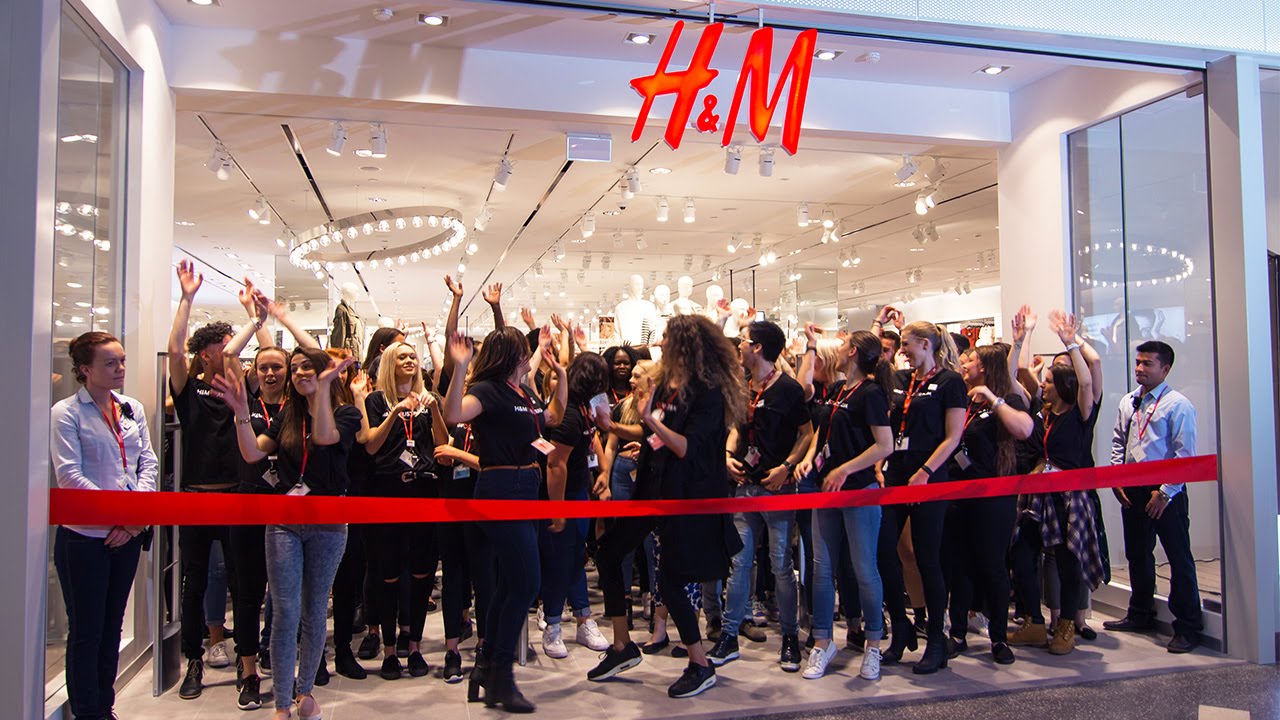
    H&M has closed one of its Shanghai flagship stores on the Nanjing West Road. The store, which was open for ten years, was considered a key part of the brand’s retail strategy as it was on a high-traffic shopping street.

    According to a statement made to Chinese media, H&M closed this store due to the lease ending. H&M says they will continue to review locations as business develops in China.

    Both Bloomberg and The New York Times have reported that landlords in China have forced the closure of H&M stores across the country after the controversy in late March regarding the company’s stance on using cotton sourced in China’s Xinjiang region. H&M products currently aren’t being sold on China’s top two e-commerce platforms, Tmall and JD.com.

    It’s been a tough year for H&M. In addition to taking a hit last year due to the global COVID-19 pandemic, H&M also saw a 21 percent fall in sales for Q1 2021. The company is projected to close 250 stores this year.

  • Tesla Puts Brake On Shanghai Land Buy As U.S.-China Tensions Weigh

    Tesla Puts Brake On Shanghai Land Buy As U.S.-China Tensions Weigh

    U.S. electric car maker Tesla Inc has halted plans to buy land to expand its Shanghai plant and make it a global export hub, people familiar with the matter said, due to uncertainty created by U.S.-China tensions. With 25% tariffs on imported Chinese electric vehicles imposed on top of existing levies under former U.S. President Donald Trump still in place, Tesla now intends to limit the proportion of China output in its global production, two of the four people said.

    Tesla had earlier considered expanding exports of its China-made entry-level Model 3 to more markets, including the United States, sources told Reuters, a plan that had not previously been reported.

    Tesla currently ships China-made Model 3s to Europe, where it is building a factory in Germany.

    Shares of Tesla fell as much as 5.3% early on Thursday.

    Tesla sold 25,845 China-made vehicles in China and overseas in April, down from 35,478 in March, according to data from China Passenger Car Association.

    Tesla’s Shanghai factory is designed to make up to 500,000 cars per year and has the capacity to produce Model 3 and Model Y vehicles at a rate of 450,000 total units per year.

    In March, Tesla refrained from bidding on a plot of land across the road from the plant as it no longer aimed to boost China production capacity significantly, at least for now, three of the people said, declining to be named as the discussions were private.

    In a statement to Reuters, Tesla said it’s Shanghai factory was “developing as planned.”

    The Shanghai city government, a key supporter in Tesla’s establishment of a wholly-owned factory in China – the first and only foreign passenger car plant not required to form a joint venture – did not respond to a request for comment.

    Tesla had never declared an intention to acquire the land, which is about half the size of the 200-acre (80 hectares) plot housing Tesla’s current facility and would enable the company to lift capacity by another 200,000 to 300,000 cars, said two of the people.

    Tesla’s China sales are surging despite mounting regulatory pressure in the country after consumer disputes over product safety and scrutiny over how it handles data.

    It generated $3 billion in revenue in China in the first three months of this year, more than tripling year-earlier sales and accounting for 30% of total revenue.

  • Tesla To Add EV Components Recycling Facilities At Shanghai Factory

    Tesla To Add EV Components Recycling Facilities At Shanghai Factory

    U.S. electric vehicle (EV) maker Tesla Inc plans to add facilities at its Shanghai factory to repair and reproduce key components such as electric motors and battery cells, a document submitted by Tesla to Shanghai authorities shows.

    China, the world’s biggest car market, sold over 1.3 million electric and plug-in hybrid vehicles last year. China’s regulators are adding rules on the recycling of key EV components to save materials and protect the environment.

    The document also said Tesla will add manufacturing capacities for car structures and electric motor controllers. It did not put detailed figures of its manufacturing capacities.

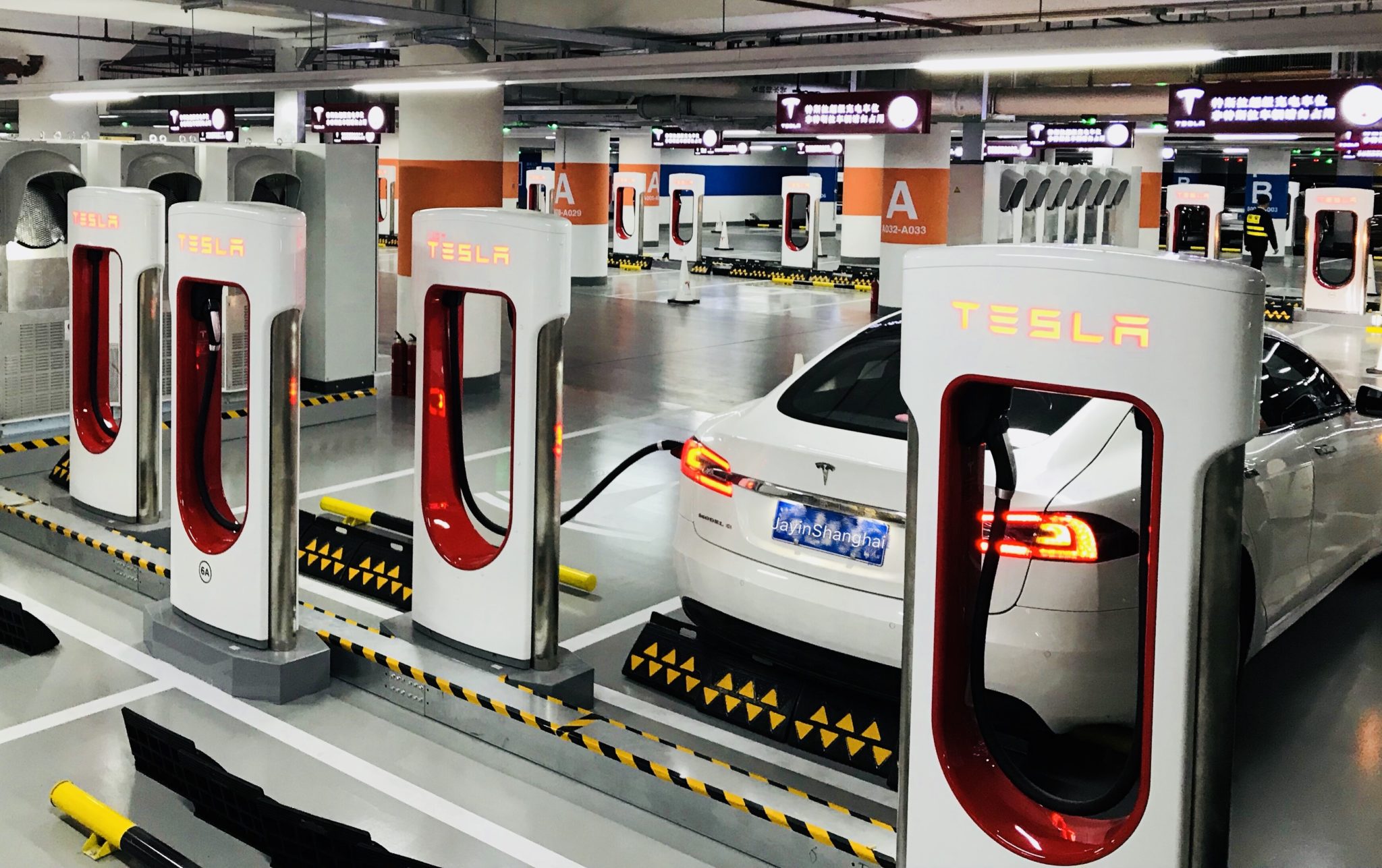
    Tesla, which is making electric Model 3 and Model Y vehicles, is expanding the manufacturing capacity of EV components to localize the supply chain. It also added a factory to make EV chargers in Shanghai last year.

    Tesla, which said on its website that materials in a Tesla car’s battery are recoverable and recyclable, did not immediately respond to a request for comment.

    Tesla sold more than 35,000 locally-made vehicles last month in China and is exporting China-made cars to Europe.

  • Diesel Hub concept store opens in Shanghai

    Diesel Hub concept store opens in Shanghai

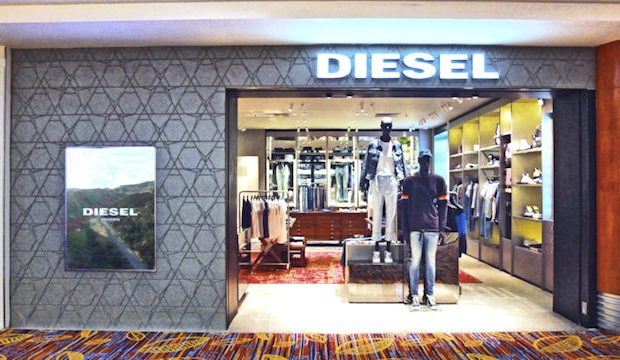
    Glenn Martens may still be prepping his debut collection for Diesel, but he’s already leaving his mark on the brand. The Belgian designer, who was tapped as the Italian brand’s creative director last October, has imagined a new store concept for Diesel, an immersive branding experience in itself.

    Painted floor-to-ceiling in the brand’s signature red color, the new concept is being introduced at two temporary pop-up stores in Amsterdam and on the outskirts of Washington, D.C., at the mall Tyson’s Corner Center.

    The company said it will be extended to other pop-up units and be flanked by experiential initiatives, and the concept will also appear in the first permanent unit, called Diesel Hub, that the brand will open in Shanghai later this year.

    “This new pop-up represents a first step toward elevating the design and brand experience of Diesel, starting from its iconicity and heritage,” said Massimo Piombini, Diesel’s chief executive officer. “It is a bridge to the new permanent store concept coming at the end of the year, starting from our Diesel Hub in Shanghai.”

    Paying homage to the brand’s DNA, Martens has had a giant Diesel logo and “For Successful Living” catchphrase brushed across the spaces’ elements, including displays and shelves, which customers will be able to read in their entirety upon entering the store, giving the impression of jumping into the brand’s tag.

    Both pop-ups will carry the spring 2021 and pre-fall 2021 assortments — which were not designed by Martens. Parent company OTB, controlled by Italian industrialist Renzo Rosso, recently said the first collection designed by Martens will bow for spring 2022.

    The Paris-based Martens arrived at Diesel nine months after Piombini, previously CEO of Balmain, was named CEO at Diesel, and amid brightening prospects for the flagship property of OTB.

    Rosso has had Martens on his radar for several years and tapped him in 2018 as a guest designer of its experimental capsule series Diesel Red Tag, one year after Martens bagged the prestigious ANDAM fashion prize, of which OTB is a historical sponsor and mentor.

  • Maison Margiela opens new retail concept store in Shanghai

    Maison Margiela opens new retail concept store in Shanghai

    Set to open on December 18 in Shanghai’s Reel Department Store, the new 160sq m boutique is the brand’s first store in China with the new store concept.

    Founded in 1988 and headquartered in Paris, French luxury fashion house Maison Margiela produces both haute-couture collections and ready-to-wear collections. The brand’s products include womenswear, menswear, footwear, fine jewellery, fragrance and home goods which will all be available at the new boutique.

    The new concept store has been designed by Dutch architect Studio Anne Holtrop in line with Creative Director John Galliano’s vision. The store is fitted with artisanal furnishings and hand-cast textile moulds. The ceilings and walls are painted in a dark-green gloss that creates a shimmering shine.

    This new store has been inspired by the brand’s first concept store that launched in London’s Bruton Street, this was followed by Avenue Montaigne in Paris, and Osaka Shinsaibashi Parco in Japan.

  • Korloff opens new store in Shanghai

    Korloff opens new store in Shanghai

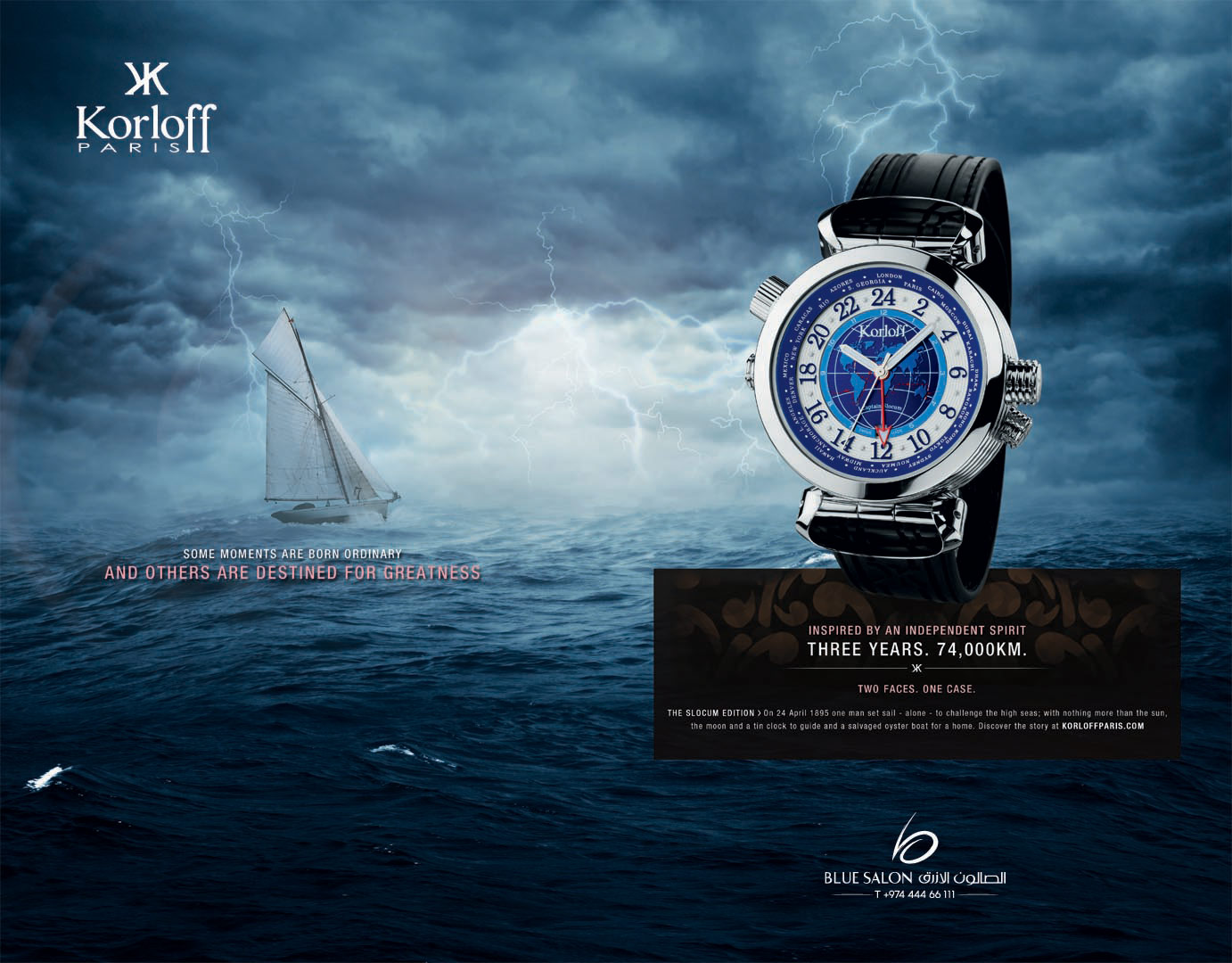
    French jewelry house Korloff has opened its first flagship store in Shanghai.

    Located at Shanghai Avenue Mall, the store offers Korloff’s full range, including fine jewelry, bridal collection, watches, small accessories, and fragrances.

    The store’s facade features glass doors and windows highlighted with back frames. The interior uses beige and brown as its theme colors.

    The launch is part of the brand’s international expansion plan and its strategy to strengthen its presence across Asia. According to Korloff, the company aims to expand in more international markets in the coming months.