Tag: Shopping

  • SM Group introduces first Customer Service Robot

    SM Group introduces first Customer Service Robot

    SM Group has employed its first in-mall customer service robot, at SM Megamall.

    Named Sam, the AI humanoid robot is designed to help customers with directions and information about the latest mall deals, promotions and events.

    “Innovation is what SM strives for in providing better customer service to all and we are proud to introduce our latest innovation yet,” said Steven Tan, SM Supermalls COO.

    “Sam is easy to approach and has answers to almost everything SM mall related, making shopping more seamless and fun for our customers.”

    Equipped with an advanced face-recognition technology, Sam can also make personalised greetings to customers at Mega Atrium, Mega Fashion Hall and Bank Drive.

    Customers can also chat with Sam through the SM Supermalls Facebook page 24/7 to get information on branch locations, mall schedules and promotions.

    Created in partnership with the Cal-Comp Technology, Sam will be upgraded with more functions to provide a more fun and engaging shopping experience.

  • Online grocery marketplace Dei Lifts Off in Singapore

    Online grocery marketplace Dei Lifts Off in Singapore

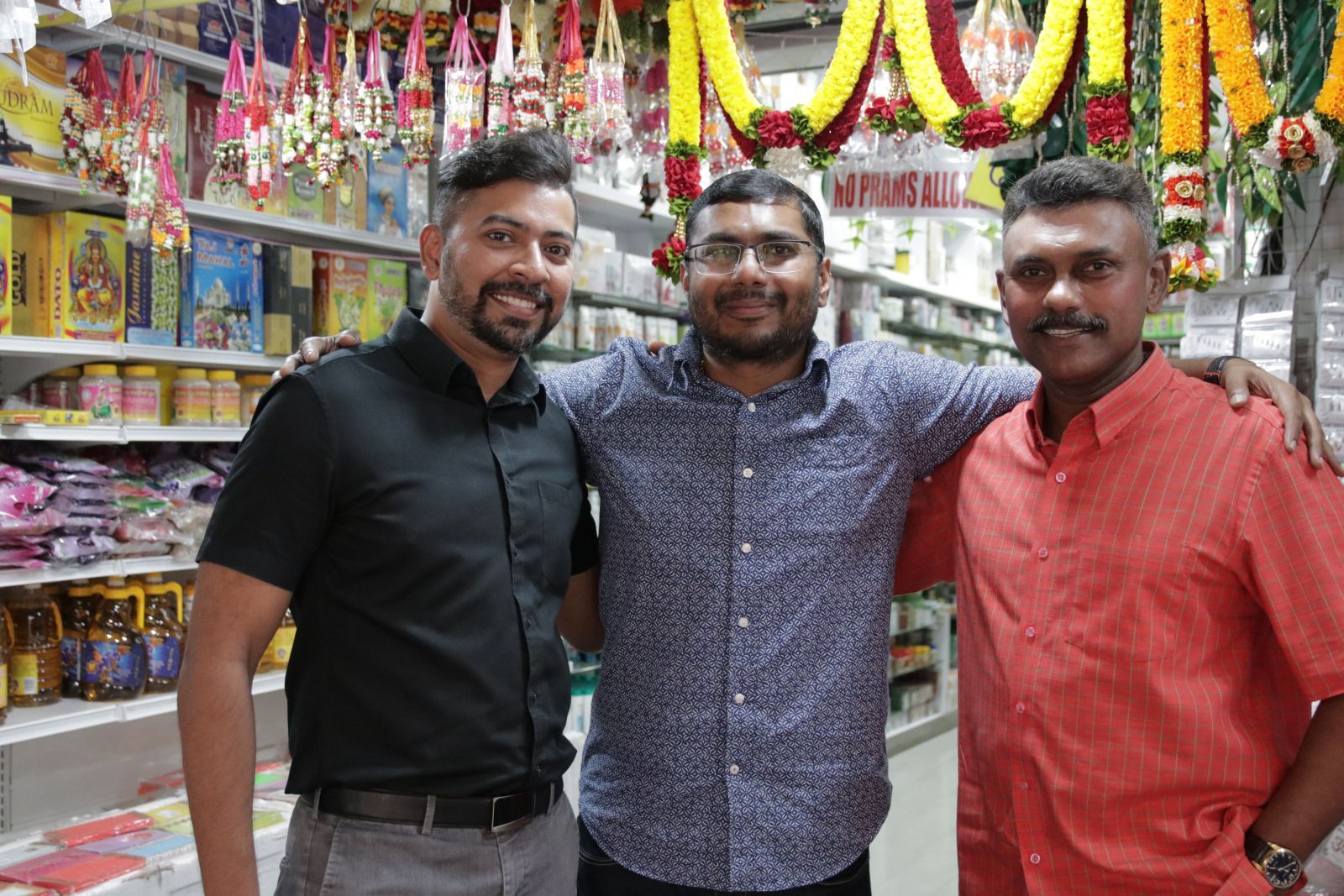
    Home-grown online grocery marketplace Dei has launched in Singapore.

    Standing for ‘Daily Everything’, Dei hosts more than 70 physical Singapore-based Indian retailers, and 15,000 products categorised into canned goods, clothing, locally sourced vegetables, fruit and meat.

    Consumers will enjoy same-day delivery along with post-sale services.

    “Dei was founded to promote digital transformation and introduce new technologies for Little India’s merchant community,” said Jay Varman, co-founder and CEO.

    “With Dei, Little India’s retailers and merchants can enjoy greater access to the greater Singapore community and increase their revenue by up to 30 per cent.”

    Appointed by the Little India Heritage Association (LISHA) and the Singapore India Chamber of Commerce and Industry (SICCI), Dei was soft-launched in 2016, and has gained year-on-year growth of 120 per cent, peaking at an average of 50 daily orders with an estimated $900,000 in total revenue.

    “Dei helps to bridge the gap between e-commerce and the traditional brick and mortar space, allowing for the consolidation of shipments into one,” said Rajakumar Chandra, chairman of LISHA,

    “We hope to collectively onboard all business owners and merchants of Little India to ensure that everyone benefits from the nationwide digitalisation push. Furthermore, we are in discussions with representatives from Chinatown and Kampong Glam to expand into their respective precincts, thus providing a truly seamless experience for all Singaporeans.”

    The platform is currently raising seed funding for future expansion. It plans to build hyperlocal, omnichannel-integrated marketplaces across Southeast Asia.

  • Cineleisure mall unveils new retail concept

    Cineleisure mall unveils new retail concept

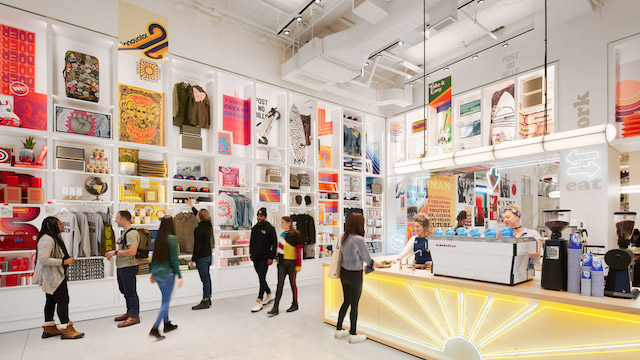
    Cineleisure mall has unveiled its new look, welcoming three new tenants. Targeting youth, the revamped mall gets interiors fitted with concrete juxtaposed against rustic wood timber, with a blend of earthy hues and cool steel palettes.

    The mall also extends its mix of food, fashion, and entertainment choices.

    Three new concepts are added this month including Tenkaichi Japanese BBQ and Shabu Shabu, The Alley Luxe, and Amazing Castle.

    New tenants

    Making its debut in Singapore, Taiwanese bubble tea chain The Alley is set to feature its first-ever premium lifestyle cafe concept The Alley Luxe. The outlet will offer the brand’s beverages alongside European-inspired foods such as croissants and cruffins.

    Japanese restaurant Tenkaichi Japanese BBQ & Shabu Shabu will offer a premium buffet, along with Donburi sets.

    As the first of its kind in Singapore and in Asia, Amazing Castle is a kingdom-themed entertainment play centre consisting of nine different activity stages.

    Based on the legend of a fairy kingdom being attacked by invaders, each activity stage features a physically interactive game for participants to confront challenges and ‘fight off invaders’.

    New redemption

    Cineleisure has also launched the Cathay Lifestyle Mall Redemption Mobile app, which allows shoppers to make redemptions seamlessly anywhere, anytime.

    Shoppers who spend a minimum amount at the mall have to photograph their receipt and upload via the app. Once verified, e-vouchers will be sent to the shopper for use at participating shops.

  • Vingroup buys Vietnam c-store chain Shop&Go

    Vingroup buys Vietnam c-store chain Shop&Go

    Vingroup has acquired 87 Vietnamese Shop&Go convenience stores for just US$1.

    Vingroup’s retail arm VinCommerce, which manages Vinmart supermarkets and Vinmart+ convenience stores, will upgrade infrastructure, staff and goods at the acquired stores by the end of next month.

    According to a VinCommerce statement, Shop&Go made the approach and offered to sell itself.

    “The competition is more intense than we imagined; that is why we’ve decided to leave,” a Shop&Go spokesperson said, admitting Vietnamese retail market still has potential for growth.

    “We have sold our stores to Vingroup so it can continue to develop them.”

    Opened in 2006, Shop&Go was one of the earliest convenience store chains in Vietnam.

    By 2016, it had aggregated losses of almost VND205 billion (US$8.81 million).

    VinCommerce runs 108 VinMart supermarkets and 1900 VinMart+ convenience stores.

    Last year, it acquired supermarket chain Fivimart with 23 outlets.

    In a report last year, Nielsen Vietnam observed a rise in visits by Vietnamese to convenience stores. The average shopper uses a convenience store 4.5 times per month – three times the frequency of 2010.

  • Pandora asked to fix refund policies

    Pandora asked to fix refund policies

    Jewellery retailer Pandora has been told by the consumer watchdog to amend its refund and warranty policies in Australia following complaints from some of their customers.

    The Australian Competition and Consumer Commission said they have received complaints from customers who were told by Pandora sales staff that they do not offer refunds to faulty products and that its own warranty policy applies instead of the protections afforded to consumers under Australian Consumer Law (ACL).

    According to ACCC Commissioner Sarah Court, the jewellery retailer acknowledged they may have misled customers about their legal rights.

    “Pandora has acknowledged that it may have misled customers about their consumer guarantee rights to refunds when there was a major fault with their product,” Court said. “They also have admitted that by doing so they likely breached the Australian Consumer Law.”

    Court said consumer rights to a repair, replacement or refund cannot be excluded, restricted or modified by a business’ warranty policy.

    “If consumers have purchased a product that has a major fault, they can request a full refund from their place of purchase,” she said.

    The ACCC has accepted a court-enforceable undertaking from Pandora to review its consumer rights policies and staff training after Pandora acknowledged it is likely to have contravened the ACL by making misleading representations to consumers about their consumer guarantee rights.

    The ACCC’s investigation showed that Pandora’s website contained confusing or inaccurate information on consumer guarantee rights under the ACL.

    It also noted that information on Pandora’s website about its product warranty failed to include mandatory text that states that consumers are entitled to a replacement or repair, and in some cases a refund, if their goods are faulty.

    The ACCC said Pandora has undertaken to arrange for an external review of its policies and procedures relating to exchanges, repairs and refunds, to ensure customer claims for refunds and other remedies are dealt with appropriately and in accordance with the ACL.

    “Pandora will also conduct a review of its ACL compliance program and improve its staff training and complaints handling systems,” Court said.

  • Instagram users can now buy items from ads inside the App

    Instagram users can now buy items from ads inside the App

    Instagram is taking its Shopping ads one step further by making it possible for people to buy the products in the ads without leaving the app.

    The feature, called Checkout on Instagram, is currently being tested in a closed beta program by nearly two dozen businesses and is only available to users in the US.

    Retail News has asked for details about if and when the feature will be available outside the US but had not received a reply at the time of this writing.

    Adidas, Burberry, Dior, H&M, Michael Kors, Nike, Outdoor Voices, Uniqlo and Zara are among the 23 fashion, beauty and accessories brands now rolling out the feature. Others will be added in future, according to Instagram, which is owned by Facebook.

    When users tap on a product in a Shopping ad from one of these businesses, they now see a “Checkout on Instagram” button. By tapping the button, they can select the size and colour of the item they want and enter their payment and shipping details to purchase.

    Users receive notifications about shipment and delivery within the Instagram app, and the platform saves all their information for future purchases.

    In the past, if users wanted to purchase a product linked to a Shopping ad, they were redirected to the brand’s website. The new feature removes this step and – crucially for Instagram – keeps consumers in the app.

    “Social selling is really taking shape both in Australia and globally and it’s great to see Instagram leading the way through the next stage of the social selling journey. Giving consumers the option to complete a purchase right then and there in the app will simplify the shopping process and allow brands to connect more easily with shoppers,” said Jordan Sim, group product manager at BigCommerce, an e-commerce platform that has been active in offering integrations with Shopping on Instagram to its users.

    “We’ve seen our merchants both globally and locally in Australia have a great deal of success using BigCommerce’s integration with Shopping on Instagram and are looking forward to unlocking the power of this new integration for our Aussie retailers in the near future. We know the value of simplifying the checkout process to drive sales and this new function on Instagram will facilitate just that.”

    Many brands have said that Shopping ads drive sales, but there’s a trade-off: visibility and control over their customer data. As Instagram continues to make the purchasing process more seamless – that is, takes control of the process – some businesses will undoubtedly question whether the trade-off is worth it.

    It is unclear whether the Checkout feature applies to Shopping posts in Instagram Stories, or only to posts in the feed. Last June, Instagram revealed that of the 500 million people using Instagram every day, 300 million use Stories every day.

  • Malaysia’s KIP Group plans a few new malls

    Malaysia’s KIP Group plans a few new malls

    Malaysia’s KIP Group will establish three new malls within the coming three years, according to CEO Valerie Ong.

    The new locations in Raub, Kuantan and Sungai Petani will involve RM150 million (US$36.7 million) in gross development costs and cater to middle-mass-market demand. They are being located in growing markets where consumers still prefer physical buying over online purchases.

    “This means we will have a total of 12 shopping malls in our portfolio, including the six properties that had been injected to our listed entity, KIP Reit”, Ong said at the launch of the firm’s ninth shopping mall at Desa Coalfield Sungai Buloh.

    KIP Griup’s portfolio includes a shopping mall in Bangi and five KIP Marts in Tampoi, Kota Tinggi, Masai, Senawang and Malacca. It has also acquired Aeon Mall Kinta City, Ipoh in a RM208 million ($50.9 million) deal.

    According to Ong, Malaysia’s retail sector is expected to grow by 4.5 per cent to RM109 billion this year. She added that the Desa Coalfield mall has already achieved an 80 per cent occupancy rate in advance of its scheduled opening later this year.

  • Understanding shopping centre traffic trends to adapt consumer strategies

    Understanding shopping centre traffic trends to adapt consumer strategies

    Kepler Analytics is in a unique and privileged position. We have our sensors in over 60 retail brands within 1,700 locations across Australia. We collect traffic and other consumer behaviour measures. By aggregating and anonymising our information we can provide the retail industry with benchmark measures on traffic, sales, conversion and other related KPIs focussed on understanding sales and the drivers of retail sales.

    The Kepler Retail Radar newsletter is published every 6-8 weeks. We try to keep our analysis relevant and deliver helpful insights which assist in understand historical performance but also highlight where learnings can be implemented to deliver better retail results in future.

    Below are the key learnings from October 2018 to the End of February 2019, calculated on a Year on Year, Like for Like Basis.

    • There is a sustained drop in foot traffic into shopping centres in general.
    • Those consumers visiting the centres are doing so with a greater propensity to purchase – there is less of a browsing element than in the past.
    • Retailers are converting a higher percentage of inside traffic (in store traffic) into sales – due to the more serious nature of the ‘buying trip’ and the greater ability of store staff to satisfy their needs – either there is a lower ratio of staff:customer giving more time to focus on each sale opportunity or better abilities to convert (as these stores have been using the Kepler Conversion Programme for some time).
    • The reduction in dwell time and repeat visits and the increase in ATV reaffirm the premise that customers come into stores better equipped to make the purchasing decision than before – it takes less time and less visits to get to the buying decision point.
    • Retailers should consider tweaking their sales approach – it might not be a case of ‘how can I help you?’ but rather ‘what can I help you with?’ – subtle change of focus acknowledging the customer can done their homework and is prepared to buy.

    Where have all the browsers gone?

    The key metrics reveal that whilst centre traffic was down by approximately -8% in October and November (and Black Friday did little to stem the decline), the rate of decline has increased to -17.5% in February
    2019.

    The desire for customers to enter stores as they pass by (Shopfront Conversion) is also in decline, though it is improving. Whilst the rate of Year on Year decline in February 2019 is -1% on prior year, the November
    2018 result reached its nadir at -4.7%. Black Friday delivered its promise to drive the bargain shoppers into store… just not as many stores as retailers would have liked.

    The combination of these two elements means that retailers are having to cope with as much as a -18.4% change in their store traffic levels. This could well lead to catastrophic sales results. And those customers that do enter, are spending -7.6% less time in store. The impacts for merchandising and service focus can also be felt.

    Thankfully stores have been able to offset most of this decline through huge boosts in the Sales Conversion. Once a customer has entered a store, their propensity to purchase has increased by as much as +18.2%. For those retailers that had a softer than desired Christmas 2018, contemplate the result you would have had if your staff, stores (not to mention your online assets to support consumer research pre-visit) had not delivered a +17% change in sales conversion.

    The final piece that has returned sales for Australian stores into a marginally positive result is boosts in the average purchase value. These real aggregated figures show that a change in ATV of +3.8% are what is required to maintain
    even the smallest LFL growth.

    Your store staff are now facing vastly lower potential customers who are more aware of what they want, and willing to spend less time to find it. At the same time, they need to convert a greater proportion of them, and at higher values just to stay flat. Both simple and complex, all at the same time.

    The ability for Australian retailers to respond to these changes are critical. Awareness of the underlying factors that deliver the sales capability and potential of stores is the starting point. Modifying and supporting positive behavioural shifts both at a store and support office level are now the fundamental drivers of sales parity.

  • Shoppers prefer human interaction over bots, says study

    Shoppers prefer human interaction over bots, says study

    New research reveals 75 per cent of shoppers prefer live-agent support for customer service verses 25 per cent support for self service and chatbots. The research, from cloud contact-centre operator NewVoiceMedia, identified consumer concerns about sharing sensitive information, a lack of understanding of bots and their inability to resolve issues.

    “Chatbots can provide customers with quick answers to frequently asked questions or issues, and the survey notes the benefit of chatbots for certain interactions, such as 24-seven service,” the survey’s authors concluded.

    But when it comes to handling sensitive financial and personal information, most customers are more comfortable with a live agent, and just 13 per cent say they would be happy if all service interactions are replaced by bots in the future.

    Foremost among consumer concerns about using chatbots include:

    • A lack of understanding of the issue (65 per cent).
    • The inability to solve complex issues (63 per cent).
    • The inability of chatbots to provide answers to simple questions (49 per cent).
    • The lack of a personal service experience (45 per cent).

    While less than half of the people surveyed (48 per cent) said they would be willing to use chat bots for service – versus the 38 per cent who wouldn’t – 46 per cent also felt that bots kept them from reaching a live person.

    Banks (82 per cent) and medical services (75 per cent) were the businesses that people were least likely to want to deal with bots.

    Customers prefer live agents for technical support (91 per cent); getting a quick response in an emergency (89 per cent); making a complaint (86 per cent); buying an expensive item (82 per cent); purchase inquiries (79 per cent); returns and cancellations (73 per cent); booking appointments and reservations (59 per cent); and paying a bill (54 per cent). However, when asked about buying”a basic item”, 56 per cent would choose a chatbot over a live interaction.

    The top benefit cited for dealing with chat bots was 24-hour service.

    “When a situation becomes emotional or complex, people want to engage with people”, says Dennis Fois, president of NewVoiceMedia. “As businesses add more customer service channels, conversations are becoming more complex and higher value, and personal, emotive customer interactions play a critical role in bridging the gap for what digital innovation alone cannot solve,” he said.

    “For this reason, companies must find the right balance between automation and human support to deliver the service that customers demand. Frontline contact centre teams will continue to be the difference makers on the battlefield to win the hearts and minds of customers, and organisations deploying self-service solutions should ensure that there is always an option to reach a live agent”.

    There is a sense consumers may warm to chatbots in the future, however, given that younger respondents (aged 18-44) were more open to using chatbots overall and across the individual scenarios compared to older consumers (45-60+).

  • JD to hire 15,000 new employees

    JD to hire 15,000 new employees

    Chinese e-commerce giant JD has announced it plans to recruit up to 15,000 staff this year – just a week after saying it would let go 10 per cent of its senior executives. The majority of positions expected to be filled this year will be in logistics, with up to 10,000 delivery and low-level management positions being recruited. Other staff will be hired to improve user experiences in the firm’s retail arm.

    JD pledged in its announcement to promote competent staff and offer more leadership training to young people as part of its contribution to society. The firm currently hires around 170,000 full-timers, according to last year’s estimates, and is moving to extend its supply network throughout every one of China’s county-level territories.

    Some 20,000 R&D staff were hired last year in an RMB8.64 billion (US$1.29 billion) investment in technology research.

  • Korean wave fuel 25% growth in Korean e-commerce exports

    Korean wave fuel 25% growth in Korean e-commerce exports

    South Korea’s online exports surged 25 percent in 2018 from a year ago on the back of growing demand for K-beauty and K-pop related items such as album records and stationery supplies, government data showed. According to Korea Customs Service, Korea’s electronic commerce (e-commerce) exports or reverse overseas direct purchase volume reached US$3.25 billion last year, up 25 percent from a year earlier. The total number of online export cases also jumped 36 percent to 9.61 million during the same period.

    E-commerce growth is staggering when compared to the modest 5 percent annual growth in total Korean exports last year.

    The customs agency said that the rapid growth of online exports comes amid growing demand for Korean items on the back of hallyu or Korean Wave, as well as simplified retail procedure, and aggressive overseas marketing integrated with offline stores.

    By item, apparels and cosmetics accounted for 69 percent of total online export. In particular, the number of export cases for clothing surged a whopping 162 percent last year from a year ago, becoming the top pick after beating out cosmetics. Online exports of cosmetics jumped 43 percent last year from a year ago, recovering to average level after falling in 2017 as a result of diplomatic tension between Korea and China over Seoul’s deployment of U.S. anti-missile system.

    The customs agency said that exports of K-pop related items such as albums and stationery items surged significantly last year amid hallyu or Korean Wave overseas. In particular, sales of items related to K-pop icon BTS rose sharply.

    Data from Korea Customs Service, meanwhile, showed that overseas direct purchases of foreign goods amounted to US$2.75 billion last year, up 31 percent from a year ago. There were a total 32.25 million purchases last year, up 37 percent from a year ago.

    By region, the United States accounted for the largest 50.5 percent of Koreans’ direct purchases, followed by China with 26.2 percent, European Union with 12.5 percent, and Japan with 8 percent. The U.S. share fell from the previous year’s 56.4 percent while that of China jumped almost 10 percentage points from the previous year’s 17.3 percent.

  • 8 trends set to shape Southeast Asian e-commerce

    8 trends set to shape Southeast Asian e-commerce

    Southeast Asia’s e-commerce market is set to exceed US$102 billion by 2025, according to a study by Google and Singapore’s Temasek. As more and more consumers are attracted to shopping online for convenience and they build trust in the channel, investors in the e-commerce industry are gaining confidence and seeking opportunities. That helped startups raise and estimated $9.1 billion in the first half of last year, almost as much as for the whole of 2017.

    If last year was dubbed ‘The Year of E-commerce’ for Southeast Asia, what can the industry expect this year? We speak to industry leaders to discover the anticipated trends for online retailers and brands in Southeast Asia.

    1. Brands shift their focus from data gathering to data use

    The biggest differentiator between online and offline retail is the ability to track, collect, monitor, and manage information, all in real time. Through online channels, brands are able to access customer data through chats, social media, and their own websites. This information can be used to devise online strategies. Globally, 73 per cent of brands plan to allocate their e-commerce budget on data and analytics services this year.

    However, despite general agreement of its importance, many brands have no concept of how to use data to their advantage.

    “Even today, not all retailers have embraced data fully to the point where they think of themselves as data companies, and this might be why many companies are suffering,” observes Harvard Business School Professor Srikant M Datar.

    Data collection is easy but having and optimising the analytics capability to use it is a completely different ball game.

    A survey by ecommerceIQ identified data analysis as one of the most difficult skills to find among the digital talents in Southeast Asia. Brands are constantly searching for data aggregators to consolidate information into one place for convenient retrieval and use to target, retarget, and personalise products and services.

    Reagan Chai, head of regional business intelligence and business development at Shopee said that data acquisition enables the company to map out and optimise buyer and seller user experience while pre-empting customer demand and anticipating future potential. The company has seen an increase of website traffic in the past year that even surpasses the other regional players.

    In China, Alibaba and JD have taken this a step further by using the data gathered online to improve inventories and experiences at their physical stores. Alibaba chief marketing officer Chris Tung said the company wants to help brands find the right consumers by tracking them throughout Alibaba’s system.

    “We’re finding all data that has to do with people, their behaviour, what they like, what they buy and binding this online data to real people,” concluded ChrisTung.

    Last year, the region’s leading brand ecommerce enabler, aCommerce, launched a data analytics platform BrandIQ to enhance their capabilities as a data partner to help brands centralise their customer data and offer customised products or services to each target group.

    This leaves brands with two options: find an economical way to use the data or continue looking for a needle in a haystack.

    1. Social-commerce channels are brands’ new sales outlets  

    Social commerce in this region boomed before the rise of e-commerce as we know now. Facebook groups have long established as an online space where people connect to buy and sell goods, even before the launch of Facebook’s Marketplace feature. The rapid growth in Southeast Asia is propelled by the mobile adoption and smartphone, where 90 per cent of the online population access the internet via smartphones. For some, Facebook even defines the internet itself.

    With multitudes of potential customers gathered via social media platforms, brands naturally saw alternative sales channels. Following Facebook’s footsteps, social platforms like Instagram and Pinterest have also developed their own shoppable features.

    “Brands will miss out if they don’t have a social media presence. The best way to get feedback from consumers is by having a direct conversation,” Deb Liu, VP at Facebook Marketplace in an interview with Forbes.

    Line recently acquired social-commerce management startup Sellsuki in Thailand, where it has the second-biggest user base, to build a strong foundation for its e-commerce business. The company has also formed a joint venture with three local banks to offer personalised loans to SMEs.

    A few big brands like L’Oreal have already equipped their social media page with ‘Shop’ feature that allows consumers to purchase the order directly on the page and it is only a matter of time before more brands activate the platforms as one their sales channels and remove another layer between them and the consumers.

    1.  E-marketplaces launch new services to differentiate

    Looking at the successful existing e-commerce players in more developed markets, one thing they have in common is full control over their supply chain.

    JD’s investment to the development of its own supply chain allows it to scale its technology and offer a Retail-as-a-Service proposition to help other retailers or brands sell online. Alibaba is unrivalled for its extensive ecosystem beyond commerce, including its logistics network Cainiao and payment firm Ant Financial, not to mention its recent foray into the entertainment industry.

    The same practice has infiltrated down to Southeast Asia where Alibaba subsidiary Lazada has strengthened its logistics arm FBL (Fulfilled by Lazada) post-acquisition, and although no concrete plans have been disclosed, Shopee has expressed an intention to build its own logistics network.

    More e-marketplaces are coming up with new services to get more sellers onboard. Singapore’s Qoo10 is set to launch its blockchain-based ecommerce site QuuBee this year, using blockchain technology to eliminate the transaction and listing fee which in turn increase the retailers’ profit margin and make a more sustainable commerce approach.

    In Indonesia, Tokopedia is set to offer “Infrastructure-As-a-Service” with a fresh funds injection of $1.1 billion. It also plans to use AI for customer-care services and to run credit checks on merchants seeking loans to expand their businesses.

    Facebook is also showing more intention to jump onto the region’s e-commerce bandwagon. The social network has launched Marketplace feature in Thailand and Singapore without much fanfare, but its recent partnership with Kasikorn Bank in Thailand to allow in-app payments might be the start of the company’s effort to bulk up its commerce capabilities and cater to those that use the platform for their business.

    The practice is not exclusively done by the general e-marketplaces. Fashion e-marketplace Zilingo scored $226 million in funding due to its focus on building a fashion supply chain network that any merchant – small or large – can tap into.

    “It is imperative for us to build products that introduce machine learning and data science effectively to SMEs while also being easy to use, get adopted and scale quickly,” said Zilingo CTO Dhruv Kapoor in an interview with TechCrunch.. “We’re rewiring the entire supply chain with that lens so that we can add most value.”

    In a bid to recruit more brands to sell on their platforms, we anticipate that e-marketplaces will continue to go head-to-head with each other through new services, acquisitions, and partnerships. But are the e-marketplaces ready to burn more cash to win in this battle?

    1. Brands to reinforce reviews and fund user-generated content to win e-commerce consumers

    E-marketplaces in Southeast Asia have been upscaling and building add-ons which provide consumers with the utmost convenience. The search for better technology and assistance for the consumers is constant and never-ending.

    Online consumers begin their online purchasing journeys by searching for product information or reading reviews, usually on e-marketplace platforms, before making their purchase decision. They are looking for real opinions and user-generated reviews to validate the products.

    The habit of leaving product reviews on an e-commerce platform is not as common in Southeast Asia as it is in the US where Amazon even has a dedicated page for its most prolific reviewers. When they do, the reviewers usually left little information about the product and more about the other aspect of the purchase (for example, comments about the delivery time or packaging).

    Platforms like ReviewIQ are used by brands to increase their ratings and reviews engagement on their e-marketplace listings to help consumers make their decision. While the use of chatbots is an increasingly popular solution to help smooth the online customer experience, it is more suitable for generic questions such as “where is my order?” or “is this product available?” instead of personalised questions such as “will this lipstick look good on a yellow-undertone skin?”.

    Community-crowd models like one popular with travel platforms such as Airbnb might also be suitable for e-commerce in the region, to help consumers overcome their apprehension about online shopping. This is something that Edouard Steinert, aCommerce Thailand’s director of channel management, is investigating to help the company’s clients as this model has proved to save time, increase results, and keep costs low.

    “Consumers today want to hear genuine feedback and reviews about a product and they are becoming more averse to hard-sell methods. User-generated reviews, especially from people who share the same passion with them, drive better conversion for the brand,” he adds.

    1. Brands use direct-to-consumer strategies to acquire direct consumer data

    Some 89 per cent of companies are now competing mostly on a customer-experience playing field. The direct-to-consumer (DTC) approach is becoming more important for these brands because it allows them to gain insights into their end users and anticipate their needs.

    One trend observed among brands to promote DTC is e-commerce subscriptions. From a consumer perspective, subscriptions offer a convenient, personalised, and often cheaper way to buy what they need. For brands, it is a subtle method to create customer loyalty in the digital landscape.

    One brand adopting subscription e-commerce in the region is Nescafe Dolce Gusto, which offers free coffee machines in exchange for a minimum 12-month subscription of coffee. Besides witnessing sales growth, Nescafe Dolce Gusto also noticed that consumers continued to purchase goods from its brand despite dropping out of the subscription plan.

    “They may have dropped out of the subscription, but not the brand,” says Bhuree Ackarapolpanich, brand director & digital expert at Nescafe Dolce Gusto. “They still buy capsules from different channels: e-commerce websites, online marketplaces and supermarkets. A subscription strategy is not just a long-term consumption enabler but also a consumer acquisition channel for the whole brand,” he says.

    Acommerce’s regional director of project management, Mandy Arbilo said e-sampling is a popular strategy used by brands to evaluate demand, especially for e-commerce.

    While normal sampling techniques used by offline retailers are expensive, e-sampling saves brands up to 40 per cent as well as providing essential customer data.

    As DTC becomes widely adopted, consumers will see brands coming up with attractive gimmicks using digital tools to gain insights and entice consumers to spend more on their brands.

    1. This year will finally see regulation of e-commerce across the region

    E-commerce has remained largely unregulated across the region until now, but as the industry grows, it is only a matter of time until governments step in to tax this fast-growing segment, levelling the playing field for foreign companies to offer digital services and goods locally.

    Discussion of the implementation of e-commerce tax regulations in Southeast Asian countries has been noticeable since the beginning of last year but nothing concrete has yet materialised.

    Late last year, economic ministers from ASEAN signed an agreement to facilitate cross-border e-commerce transactions within the region.

    While nothing has yet been written in stone, predictions abound concerning the impacts of an e-commerce tax on goods imported into the region. In Indonesia and Thailand, e-commerce tax is predicted to bolster the growth of social commerce because, unlike marketplaces, they are uncontrolled.

    “If tax regulations restrict e-commerce platforms, making selling in Bukalapak complicated, there will be an exodus of people who prefer selling on Instagram and Facebook,” said Bukalapak co-founder and CFO Muhamad Fajrin Rasyid. “These platforms are uncontrolled and not chased for tax because they sell through the back door.”

    Singapore might also see a decrease in cross-border shopping as prices increase with the introduction of GST)on goods and services bought online from overseas. Currently, 89 per cent of all cross-border transactions in Asia Pacific are conducted by Singaporeans.

    Another e-commerce market with strong potential, India is to introduce new e-marketplace laws that indicate the prohibition of marketplace “owners” to sell products on their own marketplace through vendor entities in which they have an equity interest. It also prevents marketplaces from making deals with sellers that grant the marketplace exclusive rights to the product. Could we see such laws be applied in Southeast Asia?

    Regardless, brands will have very little influence on how the new tax policies take root but they will be behoven to anticipate the ruling and adjust online strategy accordingly to mitigate the impact of a shift in customer behaviour. This ASEAN agreement will encourage more local entrepreneurs to create new products and venture online to access a larger and more diverse market. Brands will now need to be nimble and innovative to adapt to local nuances and preferences.

    1. Grab and Go-Jek challenge logistics providers to capture e-commerce and online food delivery

    Since Uber’s Southeast Asian exit last March, Grab has inherited a monopoly in countries like Thailand, the Philippines and Malaysia, leading to complaints about falling service standards and increasing prices.

    But with the recent regional expansion of Indonesia’s Go-Jek, the competition between the two will only get more fierce. Go-Jek has successfully carved niches in Vietnam, Singapore and Thailand last year alone. In addition, Grab’s competitor in Malaysia, Dacsee, has also hinted at  expanding into Thailand.

    Neither company is racing to be the best ride-hailing provider; they are aiming for something much bigger: superapps. Go-Jek has secured $1 billion in funds from Google, Tencent and JD, already halfway towards its goal of raising $2 billion for the venture. Meanwhile, Grab recently secured a $200 million investment from Thailand’s Central Group, boosting its valuation to $11 billion to date.

    This year, these two competitors will steer towards the same goal of food and e-commerce delivery, which Google and Temasek predicts will grow 73 per cent on a CAGR basis this year. By 2025, they predict online food delivery growth of 36 per cent CAGR with online transport only growing by only 23 per cent.

    “We will be expanding our GrabFood and delivery business and deepening our relationships with restaurant merchants and key partners in some markets,” said Grab’s head of regional operations Russell Cohen.

    Same-day delivery providers can expect more competition during the next year. The impact of Grab and Go-Jek on market vibes will definitely raise the bar for the logistics and delivery sector.

    1. Brands and retailers will double down on omnichannel as Southeast Asians prefer pure-play e-commerce

    The omnichannel shopping experience is not a new concept, but companies do have diverse interpretations of the concept. Headlines reveal that online retail behemoths such as Amazon and Alibaba are moving into physical retail.

    Alibaba’s decision to venture offline reflects its determination to solve core problems of the shopping experience, such as scattered operations and lack of payment transparency.

    JD, meanwhile, pipped Alibaba in Indonesia by opening the first unmanned convenience store in the region. Its goal was to use and refine its enormous database by offering beneficial insights to brands such as the best products to stock and advertise. Through their joint venture with Central Group in Thailand, JD Central is planning a similar concept there this year.

    Pure-play e-commerce retailers and brands recognise drawbacks in online marketing channels with fragmented infrastructure and a limited pool of shoppers. That is why they began to promote offline as an attractive option to push sales growth.

    Elsewhere in Southeast Asia, companies are slowly but surely adopting this strategy across all categories. E-commerce fashion players like Thailand’s Pomelo and Singapore’s Love, Bonito have opened physical stores in their respective countries.

    Last year, Pomelo opened five new outlets, initially away from Bangkok’s prime shopping areas before moving into CBD locations like Asoke and residential areas like Bangna, once it refined the model. Love, Bonito has 17 retail outlets spread across Singapore, Malaysia, Indonesia and Cambodia.

    Rachel Lim, co-founder of Love, Bonito said, “Data can tell you what’s selling but being on the ground tells you why something is not selling and what the customer is looking for.”

    Visiting shopping malls is a popular social activity in Southeast Asia and this trend is not set to disappear anytime soon.

    Brands should take advantage of dual physical and online presence.

  • Amorepacific facing painful dilemma

    Amorepacific facing painful dilemma

    For Amorepacific, the last year has been painful in terms of both sales and brand development. The cosmetics giant saw its operating profit halve to 549 billion won (US$491 million) in 2018, just two years after it joined the “1 trillion-won sales club” in 2016 for the first time as a cosmetics maker. With its glory falling to the past, Amorepacific has been outpaced by rival LG Household & Healthcare. LG Group’s cosmetics arm became the newest member of the 1 trillion-won sales club last year, cementing its No. 1 status in terms of market capitalization, which totaled 23.1 trillion won as of June last year.

    In the fourth quarter of 2018, Amorepacific’s operating profit came to 16.4 billion won, down 82 percent on-year.

    The company had many reasons to blame for its profit decline, including a rise in the minimum wage, weak performance of its budget cosmetics brand with the advent of numerous competitors at health and beauty stores, e-commerce and even home shopping channels.

    This has put the brakes on Amorepacific’s drive to construct a beauty industrial complex in Yongin, Gyeonggi Province. In 2017, the cosmetics giant had unveiled its plan worth 163 billion won for the complex to develop cosmetics and beauty products.

    But the company announced last month that it would scrap its complex project due to dwindling profits as well as fierce opposition from local residents.

    Market watchers voice concerns that this year will be a make-or-break period for the group, as a continued sales downfall will make it harder for the company to recover from its ongoing slump.

    “Profit recovery from the domestic beauty market as well as pulling up sales among Chinese customers will be the major points for Amorepacific to overcome this year,” said Na Eun-chae, a researcher from Korea Investment and Securities.

    Sulwhasoo vs. History of Whoo

    Although South Korea-China ties started mending last year after the detrimental diplomatic and economic fallout from the deployment here of the US Terminal High Altitude Area Defense missile system in 2017, the China comeback is still not so evident.

    Amorepacific’s Sulwhasoo, the company’s flagship luxury skin care brand, had been the most favored brand among Chinese tourists in the past few years. Market data showed that mainland China accounted for at least 10 percent of Sulwhasoo’s total sales, followed by Hong Kong at 6 percent and Taiwan with 0.5 percent as of 2018.

    But The History of Whoo, the latecomer in herbal cosmetics, has now taken the limelight.

    Whoo, a luxury skin care brand by LG Household & Healthcare, posted high sales at duty-free shops largely backed by Chinese consumers. This led Sulwhasoo to hire actress Song Hye-kyo as its global brand ambassador, seeking a breakthrough. It was Sulwhasoo’s first-ever attempt to have a celebrity promote its products.

    In terms of sales, Whoo has outpaced Sulwhasoo by recording 2 trillion won of sales last year. Whoo has also made a 40.8 percent on-year increase. Sales of Sulwhasoo had been around 1 trillion won since it peaked in 2015.

    “It is not an exaggeration that Sulwhasoo is the only, but very strong, cash cow of Amorepacific Group. It is the most important department in the entire company. Employees, especially in that department, feel grave responsibility and pressure about having to pull up the sales,” an insider said.

    According to the group, around 55 percent of the company’s sales come from its luxury cosmetics brands. Of them, Sulwhasoo is responsible for 36 percent.

    Market insiders said budget cosmetics brands are also enduring fierce competition in the “red ocean” market, with more consumers looking for luxury, premium brands as the beauty trend now centers on anti-aging efforts.

    Industry experts see the causes of Sulwhasoo’s lackluster performance as coming from its brand positioning and sales strategy at duty-free stores.

    “In the luxury cosmetics market, Sulwhasoo has only focused on its simple, basic skin care products, whereas Whoo diversified its luxury product lineup and upgraded all the products of the brand,” said an industry insider surnamed Jung, who has been in charge of overseas sales for a cosmetics brand for 30 years.

    Amorepacific also restricted Chinese shoppers, or “daigou,” from purchasing in bulk at duty-free stores, he added.

    “As a result, Amorepacific could not stabilize its supply chain in China. But LG, unlike Amorepacific, rolled out flexible rules for daigou and increased their demand,” Jung added.

    Others added it may simply be the product design and brand concept that work better for Chinese customers, who prefer gold, royal and fancy images.

    “To Korean customers, design and concept of Whoo may be regarded as ‘too much.’ But Whoo wisely focused in the concept that can appeal to Chinese customers. Hiring Lee Young-ae as its main model was also very clever, because Hallyu stars like her are still very influential in the Chinese market,” said an industry insider who is very familiar to exporting cosmetics to China.

    Is overseas sales expansion only way?

    To overcome the situation, Amorepacific plans to once again focus on strengthening its luxury brand lineup, including cosmetics brand Amorepacific, which is a luxury skin care brand named after the company.

    The brand rolled out only 2,000 limited edition facial creams last year, priced at 750,000 won per bottle.

    The reason is largely due to weak sales of budget cosmetics brands such as Innisfree and Etude in the domestic market, as well as in China.

    In 2012, the company launched budget cosmetics brand Innisfree in China. It now operates 512 stores in cities like Hangzhou and Shanghai. As of last year, 50 percent of sales of Amorepacific’s Chinese corporation came from Innisfree.

    But sales had been on a decline amid competition with local players that launched brands like One-leaf with similar concepts — natural and clean.

    “There are already too many budget cosmetics in China. That’s why Chinese tourists coming to Korea are now looking for luxury, premium cosmetics that they cannot find in their market,” said a market insider, adding that the trend is especially evident among Asian countries.

    The company said it will renew the Innisfree brand and debut Primera to China this year, aiming for 601 billion won in operating profit by the end of the year. It will also accelerate Sulwhasoo store openings in additional Chinese cities, and expand touch points in online retail in major e-commerce sites such as VIP.com and JD.com.

    Earlier this year, the cosmetics giant announced the business goal of securing a 10 percent increase in sales and a 24 percent increase in operating profit this year. The group said it would focus on investing in innovative beauty sectors such as customized cosmetics or overnight beauty items based on developing the customer experience.

    “The company believes in the value of traditional Korean beauty. It is also Chairman Suh Kyung-bae’s business philosophy to create beauty products that can instill Korean beauty, products with value that can last for a century,” said a company insider.

    Overseas expansion actually did pay off for Amorepacific last year. Despite its increased investment in overseas markets, both sales and operating profits inched up by 8 percent to 1.9 trillion won and 6 percent to 2.6 trillion won, respectively.

    But some say it is time for Amorepacific to bring in a new cash cow for practicality, referring to LG Healthcare & Household’s budget brand The Face Shop that bought Avon’s manufacturing facility in China last year.

    “It is time for Amorepacific to make the bold move and seriously consider active M&A ideas. M&A can offer positive opportunities in terms of global market expansion and investment for future. Especially when global beauty companies like Loreal and Unilever are buying Korean beauty brands, it is important for the company to take a strategic position to diversify brand portfolio for global competition,” said a researcher at Euromonitor International.

    Seo Yong-koo, a professor of business at Sookmyung Women’s University, said Amorepacific should not put all its risk in the Chinese market.

    Seo said since Amorepacific saw aggravating sales following its downfall in the Chinese market, the company experienced that its market portfolio is important. He added the group should also take the Muslim market into consideration, which will add up to 1.8 billion customers.

  • Newest Esprit stores reveals new concept

    Newest Esprit stores reveals new concept

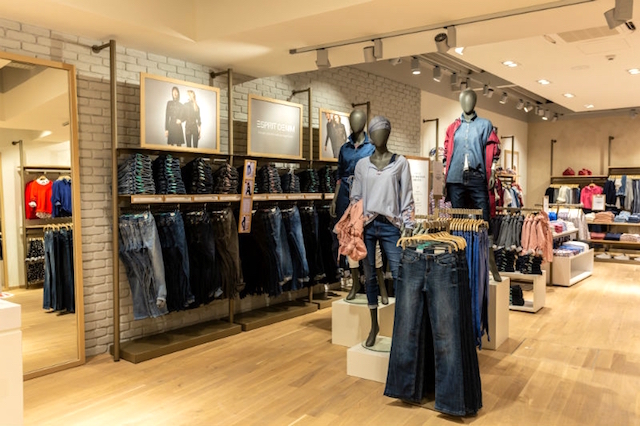
    Two new Esprit stores opened in Europe this month give an insight into the new direction of the embattled brand as it rebuilds. In the historic centre of Liege in Belgium a new 400sqm boutique stocks only womenswear. According to an understated news release issued in Germany, the “modern and bright store design creates a pleasant and warm atmosphere”.

    A standout feature is a denim wall standing in front of a brick wall painted in light grey. The floor comprises terrazzo tiles and oak parquet.

    The new store also reflects a growing focus on Esprit’s e-commerce offer, with a click & collect area for customers to pick up items they have ordered online.

    The second of the Esprit stores to open in Europe this month is an outlet store at Wolfsburg in Germany.

    The 400sqm store is described by Esprit as “an important location” in its outlet portfolio. It offers both women’s and men’s apparel.

    Michael Ernst, centre manager of Designer Outlets Wolfsburg, says customers have been asking for an Esprit store at the centre for several years.

    “We are delighted to be able to fulfil this wish now. The new store offers an attractive range of fashion at excellent value.”

    Designer Outlets Wolfsburg is the first inner-city outlet centre in Germany, home to more than 70 designer and lifestyle brands.

    After ongoing losses, Esprit last year launched a massive overhaul of its business with a new management team at the helm, promising changes to product, its retail network and its e-commerce offer.

    The company is due to release its interim results this week.

  • India’s V-Bazaar opens 1st outlet in Lalitpur

    India’s V-Bazaar opens 1st outlet in Lalitpur

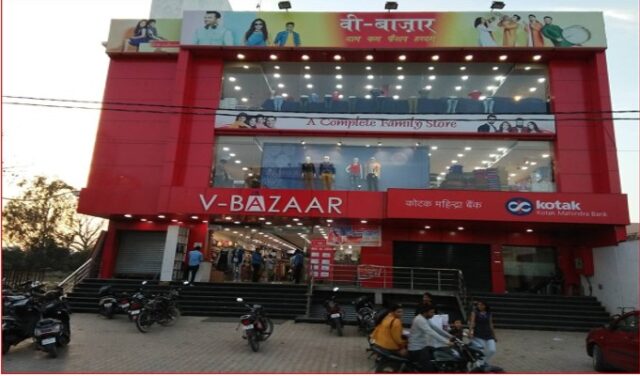
    V-Bazaar has announced the launch of its 1st store in Lalitpur and 30th in Uttar Pradesh. V- Bazaar is a complete family fashion store which brings trendy and fashionable merchandise to every category of people, at reasonable prices by eliminating the middleman between manufacturers and customers. The store is spread over 8,856 sq.ft. area.

    Announcing the launch, Hemant Agarwal, CMD of V-Bazaar said, “It is a very happy and proud moment for us to open our 1st store in Lalitpur. Looking at the overwhelming response of our other store, we thought of providing the convenient shopping experience to the customers of the city. It has been our attempt to provide our customers the superior merchandise, service and the overall international shopping experience. This 1st new store in Lalitpur is a significant achievement for us. Our new store is fashionable and individualistic, showcasing a collection of the finest quality merchandise at unbelievably pocket-friendly prices.”

    The new showroom has been spread over large area with spacious interiors. The new store offers a vibrant trendy line for the youth which includes shirts, pants, sherwanis, kurta pyjama, jackets for men and fancy wedding sarees, wedding designer suits, cotton suits, pants, half sleeve and full sleeve t-shirts for women. There is large variety of dresses for your young ones too.

    The range offers funky, stylish, and incredibly comfortable garments that are a must in every teenagers and young adult’s wardrobe. Created while keeping current international trends in mind, the collection is trendy, fashionable and is available at unbelievably low prices. Customers can make their shopping fun with special opening offers at V-Bazaar as on every purchase they get assured gifts.

    V-Bazaar primarily operates in Tier II and III cities. It is chain of value retail fashion stores offering apparels for men, women, kids, home furnishing, footwear and accessories catering to the entire family.