Tag: Singapore

  • Singapore and Nasdaq Unite to Establish Groundbreaking Dual Listing Link: A New Era for Asian Equities

    Singapore and Nasdaq Unite to Establish Groundbreaking Dual Listing Link: A New Era for Asian Equities

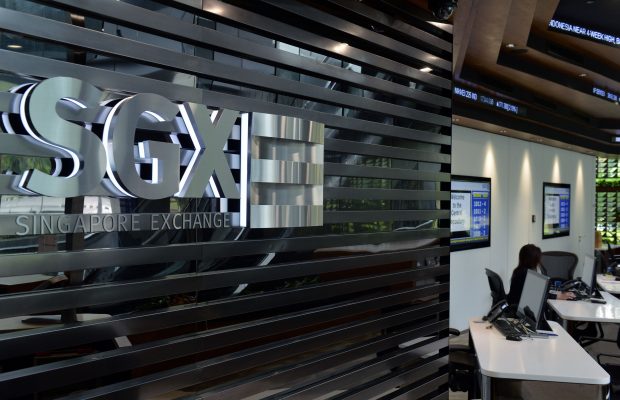
    Singapore is extending and enriching its equities market through a new collaboration with Nasdaq for dual listings. The Monetary Authority of Singapore (MAS) has developed a dual listing conduit that links the Singapore Exchange (SGX) and Nasdaq in the United States, thereby creating a novel board, as per the latest announcement.

    The New Board

    The new board is anticipated to commence operations around mid-2026 and will have a focus on “top-tier Asian growth firms” that have a market capitalisation of S$2 billion ($1.5 billion) or higher. The primary objective is to facilitate firms that have “an Asian connection and worldwide objectives” to raise funds from investors in both markets.

    The two exchanges have suggested a number of measures, all of which are subject to regulatory procedures. These include the use of a single set of offering documents to minimize regulatory hurdles and costs. According to MAS, the new system will “offer a direct and harmonized route for businesses to simultaneously access capital and liquidity across North America and Asia.”

    Equities Market Review

    As part of a broader initiative being undertaken by the Equities Market Review Group, the new bridge has been established. The group has recently concluded its examination of the stock market and released a final report.

    Additional initiatives announced include the introduction of a S$30 million package designed to assist listed companies in unlocking shareholder value and deepening engagement. There will be appointments for a second batch of asset managers as part of the S$5 billion Equity Market Development Program (EQDP). The program will also see several enhancements, such as strengthening market making, modernizing post-trade custody, and reducing board lot size.

    The second batch of asset managers will be allocated S$2.85 billion. The group includes Amova Asset Management (previously known as Nikko Asset Management), AR Capital, BlackRock, Eastspring Investments (Singapore), Lion Global Investors, and Manulife Investment Management (Singapore).

    Questions & Answers

    What is the objective of the new board?
    The new board aims to facilitate “top-tier Asian growth firms” with a market capitalization of S$2 billion ($1.5 billion) or more to raise funds from investors in both the Singapore and US markets.

    What measures have been proposed by the two exchanges for the new board?
    The two exchanges have suggested a number of measures including the use of a single set of offering documents to help reduce regulatory hurdles and associated costs.

    What are some of the initiatives announced by the Equities Market Review Group?
    The Group has announced several initiatives including a S$30 million package to assist listed companies, appointment of a second batch of asset managers under the Equity Market Development Program (EQDP), and various enhancements to strengthen market making, modernize post-trade custody, and reduce board lot size.


  • Philippine Sensation Mary Grace Cafe Set to Debut in Singapore: A Milestone in Global Expansion

    Philippine Sensation Mary Grace Cafe Set to Debut in Singapore: A Milestone in Global Expansion

    The popular food and beverage chain from the Philippines, Mary Grace Cafe, is set to establish its inaugural full-service cafe in Singapore in the coming year. This expansion represents the brand’s initial venture into international markets.

    Mary Grace Cafe was established in 2006 and has since flourished, boasting over 140 cafes and kiosks scattered throughout the Philippines. The brand is renowned for its inviting and cozy store design, reminiscent of a homely atmosphere.

    The Singapore branch’s menu will showcase the brand’s beloved culinary offerings. Customers can expect to enjoy hot chocolate, ensaymadas, cheese rolls, and a variety of traditional Filipino dishes like tapsilog and Vigan longganisa sandwiches.

    For Mary Grace Dimacali, the founder, president, and CEO of the brand, the expansion signifies not just a business milestone but also a personal achievement. She reflected on her humble beginnings when she first started baking in her home kitchen, admitting that she never anticipated the brand would extend its reach beyond the Philippines.

    Questions & Answers

    What is Mary Grace Cafe?
    Mary Grace Cafe is a well-known food and beverage chain from the Philippines, noted for its warm, home-style store design.

    What new venture is Mary Grace Cafe embarking on?
    Mary Grace Cafe is preparing to launch its first full-service cafe in Singapore next year, marking its debut in overseas markets.

    What are some signature items on the Mary Grace Cafe menu?
    The menu of Mary Grace Cafe features items such as hot chocolate, ensaymadas, cheese rolls, and traditional Filipino dishes like tapsilog and Vigan longganisa sandwiches.

  • Tokyo Emerges as Global Fintech Powerhouse: Insights from Singapore FinTech Festival 2025

    Tokyo Emerges as Global Fintech Powerhouse: Insights from Singapore FinTech Festival 2025

    Japan demonstrated its aim to be a prominent platform for global fintech growth at the Singapore FinTech Festival 2025. The country’s aspirations are bolstered by regulatory transparency, digital-asset amendments, and an increasing interest from investors.

    Tokyo: The New Frontier of Fintech Innovation

    During the Singapore Fintech Festival 2025, FinCity.Tokyo gathered policy makers, venture capitalists, and fintech pioneers to elucidate why Tokyo is quickly evolving into a critical hub for worldwide financial innovation. The institution underscored how regulatory changes, cross-border partnerships, and the development of digital-asset infrastructure are transforming Tokyo from a conventional banking hub into a fintech-centric ecosystem.

    Policy Progress Enhances Japan’s Attractiveness

    Tokio Morita, the executive director of FinCity.Tokyo, underlined the organization’s objective to assist foreign fintech firms in understanding and penetrating the market. Speaking at the Japan Pavilion, Morita highlighted that Tokyo’s evolution is based on extensive public-private partnerships, a transparent regulatory landscape, and continuous investor engagement.

    “We are here to guide you through the regulatory intricacies, introduce you to business associates, capital, and specialists, and aid in expanding your operations,” Morita stated. He noted that Japan was one of the initial countries to legally acknowledge crypto assets and continues to refine its digital asset structures.

    Expanding Market Indicates Long-Term Prospects

    The fintech market in Japan is anticipated to attain $30.2 billion by 2033, growing at a Compound Annual Growth Rate (CAGR) of 14.1 percent. Tokyo also stands at the eleventh position in the global ecosystem index by Startup Genome, which further validates its escalating importance for founders and investors seeking steady growth.

    Natalie Shiori Fleming, APAC head at Banking Circle, shared her insights as a new participant in the Japanese market. She pointed out that Japan’s regulatory framework is explicit and progressive, particularly in the digital-asset sector.

    Establishing Tokyo as a Reliable Hub for Innovation

    The Singapore Fintech Festival 2025 session is part of FinCity.Tokyo’s broader strategy to project Japan as a reliable center for innovation, backed by policy stability, substantial capital resources, and robust institutional support.

    The organization strives to attract global fintech firms by offering a systematic, transparent route into one of Asia’s most advanced markets.

    Questions & Answers

    What is the projected growth of Japan’s fintech market?
    The fintech market in Japan is anticipated to reach $30.2 billion by 2033, growing at a CAGR of 14.1 percent.

    What are the factors contributing to Tokyo’s evolution into a fintech-centric ecosystem?
    Tokyo’s transition into a fintech-centric ecosystem is driven by regulatory changes, cross-border partnerships, and the development of digital-asset infrastructure.

    How does FinCity.Tokyo plan to attract global fintech firms?
    FinCity.Tokyo aims to attract global fintech firms by offering a systematic, transparent route into one of Asia’s most advanced markets.

  • Boku Leverages Singapore as Gateway to Revolutionize Global Payments Market

    Boku Leverages Singapore as Gateway to Revolutionize Global Payments Market

    Boku, a leading mobile payments company, has selected Singapore as the site for its latest Innovation Hub. This decision aligns with the company’s strategic plan to secure a portion of the rapidly expanding global payments market, which is projected to reach nearly $290 trillion by 2030.

    Introducing the Innovation Hub

    Boku’s new Innovation Hub is dedicated to developing advanced capabilities aimed at guiding businesses through the complexities of global monetary transactions. The company, founded in 2008 and currently headquartered in London, maintains a global presence with offices throughout North America, Asia-Pacific, Europe, and Latin America.

    Given the anticipated growth in global payments, Boku is focusing its efforts on addressing the key difficulties in foreign exchange, payouts, and the interoperability of digital wallets. These areas have become essential for businesses looking to scale internationally.

    The Rise of Local Payment Methods

    The transition from traditional card-based payment methods to local payment methods (LPMs) is progressing at a pace much faster than industry experts predicted. According to research conducted by Boku in partnership with Juniper Research, LPMs surpassed traditional card payments in popularity in 2025 and are predicted to comprise 59 percent of all global ecommerce transactions by 2028.

    Leadership of the Innovation Hub

    Yi Hahn Chin, former Citibank executive with over two decades of experience in transaction banking and cross-border payment innovation, will lead the Hub. Chin’s appointment underscores Boku’s commitment to marrying global expertise with regional proximity. He noted the persistent challenges of cross-border payments for digital merchants operating in multiple markets. According to Chin, basing the team in Singapore will enable closer collaboration with merchants and partners, resulting in capabilities that directly address the evolving needs of the market and improve commercial outcomes.

    Singapore as a Strategic Location

    Singapore was chosen as the location for Boku’s new Hub due to its abundant fintech talent, clear regulatory framework, and its pivotal role in the Asia-Pacific’s burgeoning mobile-first payment landscape. The Hub will leverage Singapore’s position to collaborate with fintech companies and merchants in designing and testing solutions aimed at minimizing cross-border complexities and broadening acceptance.

    Moving Beyond Traditional Payments

    Stuart Neal, CEO of Boku, emphasized the need for merchants to have access to a payment infrastructure that simplifies processes while extending reach. He indicated that the Innovation Hub will enable Boku to create and trial solutions in actual markets with real partners, and that basing the team in Singapore will be key to enhancing relationships with Asia-Pacific merchants and driving growth.

    Global Reach of Boku’s Network

    Boku presently offers over 200 local payment methods, reaching more than 7 billion consumer accounts across over 60 countries. The company processes transactions for over 100 million active users monthly, with digital wallets and account-to-account payments forming the backbone of the company’s growth. With the introduction of the new Singapore Hub, Boku is signaling its intention to climb higher up the value chain by not just linking payment methods, but also by facilitating smooth, data-driven cross-border trade.

    Questions & Answers

    What is the purpose of Boku’s Innovation Hub in Singapore?
    The Hub is intended to develop new capabilities to help businesses navigate the complexities of global monetary transactions, with a focus on addressing key difficulties in foreign exchange, payouts, and the interoperability of digital wallets.

    Who will be leading Boku’s new Innovation Hub?
    Yi Hahn Chin, a former Citibank executive with over 20 years of experience in transaction banking and cross-border payment innovation, will be leading the Hub.

    Why was Singapore chosen as the location for Boku’s Innovation Hub?
    Singapore was chosen due to its rich fintech talent pool, clear regulatory framework, and because of its central role in the Asia-Pacific’s burgeoning mobile-first payment landscape.

  • Revolutionizing Finance: Singapore and UK Launch Innovative AI Partnership for Cross-Border Growth

    Revolutionizing Finance: Singapore and UK Launch Innovative AI Partnership for Cross-Border Growth

    Singapore and the United Kingdom’s financial regulators have initiated a novel partnership that focuses on artificial intelligence (AI). The aim of this collaboration is to enhance cross-border opportunities between the two markets.

    The Monetary Authority of Singapore (MAS) and the UK’s Financial Conduct Authority (FCA) recently revealed their latest venture – an AI-focused partnership – during the Singapore FinTech Festival 2025. The primary goal of this UK-Singapore AI and Finance Partnership is to encourage the sharing of best practices and foster cross-border opportunities within the two markets.

    Enhancing AI Solutions

    MAS’s fintech chief, Kenneth Gay, emphasized the potential benefits of this partnership. He believes that these collaborations will significantly improve the AI services provided by both parties, leading to increased adoption in their respective financial sectors. Furthermore, he predicts that the collaboration will result in a more efficient, safe, and robust financial sector powered by AI.

    A Corridor for Growth

    Jessica Rusu, the FCA’s chief data, information & intelligence officer, echoed Gay’s sentiments. She stated that firms are increasingly seeking out cross-border opportunities and collaboration. Through this partnership, firms can learn from one another and collectively shape the future of responsible AI. Rusu sees this partnership as more than just a collaboration; she views it as a corridor for growth within London, Singapore, and the industry as a whole.

    Questions & Answers

    What is the primary aim of the UK-Singapore AI and Finance Partnership?
    The main objective of the partnership is to encourage the sharing of best practices and foster cross-border opportunities within the two markets.

    How will the partnership enhance AI solutions?
    The collaborative efforts between the two parties are expected to greatly improve the AI services provided, leading to increased adoption in their respective financial sectors.

    What does the partnership represent for the industry, according to Jessica Rusu?
    Jessica Rusu, the FCA’s chief data, information & intelligence officer, views the partnership as a corridor for growth within London, Singapore, and the industry as a whole.

  • BNP Paribas Wealth Management Amplifies AI Integration with New Excellence Center in Singapore

    BNP Paribas Wealth Management Amplifies AI Integration with New Excellence Center in Singapore

    BNP Paribas Wealth Management has recently established an Artificial Intelligence (AI) Center of Excellence in Singapore. This new AI hub signifies the bank’s commitment to harnessing digital innovation in Asia’s burgeoning financial sector.

    The Four Pillars of Success

    The newly-formed AI Center of Excellence is built upon four fundamental principles: innovation, deployment, acceleration, and upskilling. The center aims to work in conjunction with BNP Paribas Wealth Management’s central office in Paris and various Singapore-based innovation ecosystems. This will foster responsible AI adoption across the region, with a particular emphasis on co-developing generative and predictive AI solutions. These solutions are aimed at enhancing portfolio analytics, streamlining client onboarding, and automating advisory services.

    Investing in Employee Learning

    In addition to the establishment of the AI hub, BNP Paribas has rolled out a comprehensive learning and development curriculum. This program is designed to equip employees with practical AI skills, catering to all tiers of the workforce. From technology experts and business leaders to AI ambassadors and catalysts, the bank is committed to fostering a culture of continuous learning and innovation.

    Arnaud Tellier, CEO for Asia at BNP Paribas Wealth Management, acknowledges the transformative role of AI in the wealth management industry. He also emphasizes the center’s alignment with Singapore’s national AI strategy. Tellier stated that this development aims to “integrate innovation, governance, and human expertise to deliver trusted, insightful, and high-value client experiences”. He added that this will be “powered by AI that is secure, seamless, and deeply personalized to each individual’s goals.”

    Questions & Answers

    What is the primary purpose of the AI Center of Excellence?
    Its main goal is to foster responsible AI adoption across the region, with a focus on co-developing generative and predictive AI solutions for portfolio analytics, client onboarding, and advisory automation.

    What is the bank’s approach to employee learning in light of the new AI hub?
    BNP Paribas has launched a comprehensive learning and development curriculum designed to equip its employees, from tech experts to AI ambassadors, with practical AI skills.

    How does the CEO of BNP Paribas Wealth Management see the role of AI in the industry?
    Arnaud Tellier sees AI as a transformative force in wealth management, enabling the delivery of secure, seamless, and deeply personalized client experiences.

  • 5G Power Play: How China, South Korea, and Singapore Race to Champion Smart, Ultra-Fast Networks

    5G Power Play: How China, South Korea, and Singapore Race to Champion Smart, Ultra-Fast Networks

    Asia’s broadband and mobile landscapes are quickly transforming, spurred on by economic goals, digital sovereignty, and leadership in industries powered by artificial intelligence (AI). Significant investments are being poured into denser radio networks, more rapid fixed connections, and smart AI automation, particularly in China, South Korea, and Singapore. But what advantages do these leaders hope to reap from such extensive efforts?

    The Economic Imperative

    In the Asia-Pacific region, mobile technologies have already become a major economic cornerstone. The sector was responsible for approximately $950 billion and 5.6% of the regional GDP in 2024, and these numbers are expected to rise with the expansion of 5G.

    Rapid strides are being made in China to roll out both 5G and 5G-Advanced (5G-A) networks. The country now hosts over 4.486 million 5G cell sites, accounting for 35.3% of all mobile base stations, as of May 2025. In just the first five months of that year, 235,000 new 5G base stations were installed, highlighting the government’s ongoing dedication to expanding connectivity. Furthermore, China’s move toward 5G-A signifies a shift from basic connectivity to intelligent networking.

    South Korea’s 5G rollout is similarly comprehensive and widespread. By the third quarter of 2024, the country had approximately 36.1 million 5G connections, and operators had achieved nationwide 5G coverage that same year. Additionally, South Korea ranks highest in terms of 5G infrastructure density.

    Singapore, too, is making substantial strides in the 5G domain. By early 2024, key operators such as StarHub reported over 99% outdoor 5G coverage. The city-state has also dedicated SGD 25 billion (~USD 18 billion) in R&D funding to back enterprise testbeds for 5G in sectors like smart estates, Industry 4.0, and urban mobility.

    The Consumer Imperative

    Both consumers and businesses in Asia are pressing for lower latency, higher capacity, and full coverage. Emerging technologies such as cloud gaming, immersive video, and factory automation depend on low-latency, robust connections and are transitioning to actual deployment.

    In the race for speed, South Korea and Singapore often rank among the fastest worldwide. High speeds are essential to support business workloads, AR/VR services, and AI tasks.

    In China, where average 5G download speeds exceed 400 Mbps, operators like China Mobile and China Unicom report an increase in customer satisfaction and a reduction in churn rates as users upgrade to premium 5G plans.

    Networks are not only becoming faster but also more adaptive. Vendors and carriers are incorporating AI into the radio access network, core, and operations stacks, supporting functions like energy optimization, traffic prediction, and self-healing.

    The Geopolitical Imperative

    Networks play a critical role as key geopolitical assets. As such, governments are diversifying their suppliers and promoting investments in backup cables, localized cloud and edge computing, and corporate cloud services. Security and economic objectives further propel the demand for faster, more reliable networks.

    The advent of software as the primary differentiator in a market where hardware has become largely standardized, along with subsidies and targeted policies, is accelerating deployment. The large-scale rollouts in China underscore how favorable policy can rapidly reduce costs and expand coverage.

    A Pragmatic Race with High Stakes

    Rapid progress, however, comes with its own set of challenges. Densely packed networks are expensive, and some countries still grapple with spectrum and backhaul limitations. AI networks are complex to manage, and privacy, localization, and cybersecurity rules introduce additional regulatory hurdles.

    Yet, the pursuit by China, South Korea, and Singapore of the fastest, smartest networks revolves around maintaining economic competitiveness, enabling AI and cloud services, achieving digital resilience and independence, and unlocking future business verticals.

    Network investment has now become a central pillar for economic growth and national strategy. AI and smart infrastructure drive continuous upgrades; resilience and digital sovereignty guide policy-making; and vendor competition hastens rollout. The real victors in this race won’t simply have the highest speeds, but the ability to balance speed, intelligence, regulatory clarity, and expenditure effectively.

    By pushing forward with 5G and 5.5G leadership, China, South Korea, and Singapore are poised to benefit economically through new digital industries and productivity growth, satisfy consumer demands for faster, smarter connectivity, and solidify their geopolitical influence as global frontrunners in next-generation technology.

    Questions & Answers

    What is driving the rapid evolution of Asia’s broadband and mobile landscape?
    Economic ambitions, digital sovereignty, and leadership in AI-powered industries are the key drivers behind the swift transformation of Asia’s broadband and mobile landscape.

    How is 5G contributing to the economies of China, South Korea, and Singapore?
    5G is expected to boost the economies of these countries through the creation of new digital industries, productivity growth, and by meeting consumer and business demands for faster, smarter connectivity.

    What challenges are being faced in the deployment of 5G and AI networks?
    The key challenges include the high costs of dense network deployments, limitations related to spectrum and backhaul, complexity of managing AI networks, and regulatory hurdles related to privacy, localization, and cybersecurity.

  • Sea Battles Rivals with Heightened Spending: Revenue Soars, Profits Dip Amid Competitive E-Commerce Landscape

    Sea Battles Rivals with Heightened Spending: Revenue Soars, Profits Dip Amid Competitive E-Commerce Landscape

    Sea Ltd, a Singapore-based conglomerate, has announced a significant increase in its sales and marketing expenditure during the third quarter. This resulted in a jump in revenue, but it also had a negative impact on profits. This increase in spending comes as the company seeks to maintain its market position in the fiercely competitive e-commerce sector of Southeast Asia.

    However, this increase in expenditure has had a negative effect on share prices. Shares listed in the United States dipped by 2% on Tuesday, following a slide of up to 6% in pre-market trading.

    Sea Ltd has significantly increased spending on marketing, advertising, and user acquisition to counter competition from rivals such as TikTok Shop and Alibaba. Their e-commerce platform, Shopee, has introduced financial incentives like cashbacks, buy-now-pay-later schemes, and loyalty currencies. These initiatives are aimed at appealing to consumers who are exercising caution due to economic uncertainty.

    Despite this, Sea Ltd reported earnings per share of 59 cents in the quarter, falling short of the analysts’ estimate of 76 cents.

    Zavier Wong, a market analyst at eToro, stated that Sea Ltd is not looking for immediate profits, but is instead focusing on preserving and expanding its market share. Although this strategy may seem risky now, if executed correctly, it could be crucial in retaining relevance for its platform.

    The growth in Sea Ltd’s primary e-commerce, digital entertainment, and financial services sectors has remained robust, indicating that the increased spending has been somewhat successful in reaching consumers.

    The company announced total quarterly revenue of US$5.99 billion, surpassing estimates of $5.65 billion. Sea Ltd is also working to enhance its delivery business by investing in shipping logistics and fulfillment, as was revealed by company executives in a post-earnings conference call.

    Expectations are high for Shopee’s annual gross merchandise value (the total value of products sold on the platform) to grow by over 25%.

    The overall quarterly operating expenses increased by 28% to $2.12 billion, compared with $1.66 billion the previous year. Sales and marketing expenses also experienced a 31% increase.

    Sea Ltd’s e-commerce unit reported revenue of $4.3 billion, surpassing estimates of $3.99 billion.

    Questions & Answers

    Why has Sea Ltd increased its sales and marketing expenditure?
    The company has increased its marketing and sales spending to counter competition from rivals and maintain its market position in the e-commerce sector of Southeast Asia.

    Has the increased spending affected Sea Ltd’s share prices?
    Yes, following the announcement of the increased expenditure, the company’s shares listed in the US dipped by 2%.

    What initiatives has Sea Ltd’s e-commerce platform, Shopee, introduced to attract consumers?
    Shopee has introduced financial incentives such as cashbacks, buy-now-pay-later schemes, and loyalty currencies to appeal to consumers amid economic uncertainty.

  • Singapore to Implement Up to $32 Sustainable Fuel Levy on Flights from 2026: What Travelers Need to Know

    Singapore to Implement Up to $32 Sustainable Fuel Levy on Flights from 2026: What Travelers Need to Know

    Air travellers departing from Singapore will be subject to a sustainable aviation fuel levy starting October 2026. The levy, whose rates will vary between S$1 to S$41.60 (US$0.77 to US$31.92), applies to tickets sold from April 1, 2026, onwards for flights departing on or after October 1, 2026, as stated by the Civil Aviation Authority of Singapore.

    Detailed Breakdown of the Levy

    The exact levy amount is contingent on the travel class and destination. The destinations are divided into four geographical bands, with the levies increasing progressively.

    Passengers travelling to destinations in Band 1, which encompasses Southeast Asia, will incur an additional charge of S$1 for economy or premium economy tickets and S$4 for business or first class tickets.

    For Band 2, which includes Northeast Asia, South Asia, Australia, and Papua New Guinea, travellers will face an added fee of S$2.80 for economy class and S$11.20 for business class.

    Travellers to destinations in Band 3 – Africa, Central and West Asia, Europe, the Middle East, Pacific Islands, and New Zealand – will incur additional levies of S$6.40 and S$25.60 respectively.

    Lastly, passengers flying to the Americas, falling under Band 4, will be charged an extra S$10.40 for economy class and S$41.60 for business class.

    Exceptions and Special Cases

    Passengers merely transiting through Singapore will not be subjected to the above levies. For multi-stop flights, the fee will be determined by the next destination after departing Singapore.

    Moreover, the levy will also extend to cargo, with rates ranging from S$0.01 to S$0.15 per kilogram. This calculation will follow the same geographical bands as those used for passenger flights.

    The levy will also be applicable to general aviation, which includes private, non-commercial flights, and business aviation, such as private jets and chartered flights.

    Origins and Impact of the Levy

    The levy was first introduced in 2024 as a component of the Singapore Sustainable Air Hub Blueprint, which aimed to achieve net-zero aviation emissions by 2050.

    Han Kok Juan, the director-general of the aviation authority, emphasized the commitment of Singapore, as a global air hub and an International Civil Aviation Organisation council member, to its environmental responsibilities. He reiterated that the country would take necessary steps to contribute to the cause while maintaining the competitiveness of the Singapore air hub.

    Unlike green fuel mandates or incentive programs prevalent in other countries, this levy operates on a “fixed cost envelope.” This means that regardless of fluctuations in sustainable aviation fuel prices in 2026, the levy will remain unchanged.

    Questions & Answers

    When will the aviation fuel levy take effect?
    The aviation fuel levy will take effect from October 2026.

    Will passengers transiting through Singapore be charged with the levy?
    No, passengers only transiting through Singapore will not be charged the levy.

    What is the goal of the Singapore Sustainable Air Hub Blueprint?
    The Singapore Sustainable Air Hub Blueprint aims to achieve net-zero aviation emissions by 2050.

  • Swiss Innovation Meets Asian Fintech: Spotlight on Switzerland at Singapore Fintech Festival 2025

    Swiss Innovation Meets Asian Fintech: Spotlight on Switzerland at Singapore Fintech Festival 2025

    Switzerland is set to be a focal point at the Singapore Fintech Festival 2025, which will mark the country’s ninth consecutive year of participation. The Swiss Pavilion is a testament to how Swiss innovation, trust, and cooperation continue to significantly impact Asia’s rapidly transforming fintech and digital finance sector.

    Switzerland’s Stalwart Presence

    Since its initial appearance at the Singapore Fintech Festival, the Swiss Pavilion, facilitated by Switzerland Global Enterprise and the Swiss Business Hub South East Asia + Pacific, has become a fundamental aspect of the event. The combination of Switzerland’s extensive financial expertise and avant-garde technology offers a one-of-a-kind value proposition for global partners.

    The Pavilion, themed ‘Innovation Meeting Trust,’ underscores the nation’s leadership in digital assets, AI-driven finance, and secure financial infrastructure.

    Switzerland’s Deep Tech Prowess

    “Switzerland has become a beacon for deep tech capabilities, bolstered by its capacity to innovate with integrity,” stated Renée Koh, Deputy Head of the Swiss Business Hub South East Asia + Pacific.

    She indicated that Switzerland could serve as a connecting bridge for Asia’s vast deep tech ambitions, linking ecosystems through trust, expertise, and a shared vision.

    Establishing Connections Among Innovation Hubs

    The Pavilion, part of Switzerland’s broader global innovation strategy, which includes its forthcoming participation at Expo 2025 Osaka, emphasizes the country’s dedication to sustainable, trust-based innovation.

    Given the rapidly growing fintech scene in Asia, Swiss institutions are positioning themselves as trustworthy partners for research, venture scaling, and digital transformation efforts.

    Koh highlighted the Swiss collaborative model that underpins their global success, “Our innovation infrastructure is intended for partnerships, be it through talent acquisition, R&D alliances or venture scaling.”

    Showcasing Swiss Excellence

    The 2025 Pavilion congregates an impressive variety of Swiss companies and institutions pushing the frontiers of global finance. The participants, including the Swiss National Bank, Securosys, ti&m, Chartered Investment, QAI Ventures, Scenario-X, Unique.ai, and Zweyberg, showcase Switzerland’s strengths in secure technology, asset tokenization, AI, and wealth management innovation.

    The exhibits represented at the Pavilion, ranging from tokenized investment structures to AI-based identity verification, reflect the expanse of Switzerland’s fintech ecosystem. The Swiss National Bank’s involvement, in particular, underscores the central role of innovation in contemporary central banking and digital currency research.

    A Platform for Collaboration

    The Singapore Fintech Festival, the world’s largest fintech gathering, is organized by the Monetary Authority of Singapore (MAS) in partnership with The Association of Banks in Singapore. The Festival brings together policymakers, technologists, and financial leaders, providing an excellent platform for Switzerland to bolster its reputation for stability, integrity, and superior quality innovation.

    Switzerland’s consistent presence via the Swiss Pavilion not only highlights the country’s fintech leaders but also strengthens cross-border collaboration with Asia’s financial juggernauts.

    This year’s participation emphasizes Switzerland’s message: that innovation, trust, and global collaboration are the core pillars of the digital economy.

    Questions & Answers

    What is Switzerland’s theme for the Singapore Fintech Festival 2025?
    Switzerland’s theme for the festival is ‘Innovation Meeting Trust,’ which highlights its leadership in digital assets, AI-driven finance, and secure financial infrastructure.

    What is the role of the Swiss Pavilion at the Singapore Fintech Festival?
    The Swiss Pavilion demonstrates Switzerland’s extensive financial knowledge and cutting-edge technology, offering a unique value proposition for global partners. It also showcases a variety of Swiss companies pushing the boundaries of global finance.

    What does Switzerland’s consistent presence at the Singapore Fintech Festival signify?
    Switzerland’s ongoing presence highlights the country’s financial technology leaders, while also strengthening cross-border collaboration with Asia’s financial powerhouses. It underlines Switzerland’s commitment to innovation, trust, and global collaboration.

  • Singtel Unlocks SGD 1.5B in Airtel Stake Sale: A Strategic Move Towards Portfolio Optimization

    Singtel Unlocks SGD 1.5B in Airtel Stake Sale: A Strategic Move Towards Portfolio Optimization

    Singapore Telecommunications Limited (Singtel) has divested approximately 0.8% of their direct investment in their regional associate, Airtel. The sale generated SGD 1.5 billion, marking an important step in Singtel’s ongoing plan to streamline operations via asset recycling. The transaction was conducted through a private placement to institutional investors, a move that demonstrates significant market demand and confidence in Airtel. It is anticipated that the sale will yield profits of around SGD 1.1 billion.

    Singtel’s Strategy and Outcome

    The Group Chief Financial Officer of Singtel, Mr. Arthur Lang, shed some light on the company’s strategy. He explained that Singtel has been collaborating closely with Bharti Enterprises to gradually balance their effective stake in Airtel. He further affirmed that the transactions have allowed them to unlock value while retaining a significant stake in Airtel. This approach enables them to continue to invest in India’s rapidly growing digital economy.

    Mr. Lang spoke of the success of the capital management program, which he said has already amassed SGD 5.6 billion. This is over half of their recently adjusted mid-term asset recycling target of SGD 9 billion. He explained that this financial strategy affords Singtel the flexibility to bolster its balance sheet, fund growth opportunities in digital infrastructure and services, and ensure sustainable dividend growth.

    Progress and Future Plans

    As of May 2025, Singtel had already exceeded half of its original SGD 6 billion mid-term asset recycling target, which had been declared a year prior. Following this achievement, the target was revised to SGD 9 billion. The raised capital will be directed towards supporting growth and providing capital returns via its value realization dividend and share buyback program.

    In the wake of this recent transaction, Singtel is set to retain a 27.5% stake in Airtel. The retained stake is estimated to be worth approximately SGD 51 billion.

    Questions & Answers

    What is Singtel’s ongoing strategy?
    Singtel is optimizing its portfolio through asset recycling, which includes selling some of its stakes in associates and investing the proceeds in new growth opportunities.

    What is expected to be the outcome of Singtel’s recent divestment from Airtel?
    The sale is expected to yield profits of around SGD 1.1 billion, contributing to their mid-term asset recycling target of SGD 9 billion.

    What is the future of Singtel’s investment in Airtel?
    Following the recent transaction, Singtel will retain a significant 27.5% stake in Airtel, demonstrating its continued commitment to invest in India’s digital economy.

  • Singapore FinTech Festival 2025: Blueprint for Next Decade’s Financial Technology Revolution Begins This Week

    Singapore FinTech Festival 2025: Blueprint for Next Decade’s Financial Technology Revolution Begins This Week

    The Singapore FinTech Festival (SFF) 2025, the country’s premier annual financial technology event, is set to begin this week. The highly anticipated conference will feature over 800 speakers covering a myriad of topics within the industry.

    Looking Ahead to a Decade of Innovative Finance

    This year’s theme, “Technology Blueprint for the Next Decade of Finance,” aptly underscores the forward-looking spirit of the event. Scheduled for November 12 to 14, the festival marks its 10th year of being a central hub for fintech thought leadership and innovation. The event is a collaborative effort between the Monetary Authority of Singapore (MAS), the Global Finance & Technology Network (GFTN), Constellar, and the Association of Banks in Singapore (ABS).

    Across more than 400 sessions, over 800 speakers will discuss topics such as artificial intelligence, tokenization, settlement assets, quantum technology, and financial inclusion. In addition to these speakers, the event will host over 500 sponsors and exhibitors, creating a truly global platform with over 40 international pavilions spread across six exhibition halls.

    Insights Forum and Beyond

    Before the main conference, the Insight Forum will take place from November 10 to 11. This pre-event will include Public-Private Roundtables, the second annual Layer 1 Summit, and Thematic Spotlights.

    Kenneth Gay, Chief FinTech Officer at MAS, reflected on the significance of this milestone. He noted that SFF 2025 presents a pivotal moment in the financial technology industry, setting the stage for the next decade of fintech growth and transformation.

    Similarly, Sopnendu Mohanty, Group CEO of GFTN, highlighted the importance of responsible AI utilization, safe scaling in tokenization, and the readiness for a quantum future. According to Mohanty, these areas will be critical in shaping resilient and innovative financial infrastructures.

    Chua Wee Phong, Group CEO of Constellar, shared that apart from the exhibition, the festival will also offer immersive experiences, such as a new interactive digital engagement initiative powered by Ant International’s Antom. This, along with elements like the SFF Gallery, live-streamed sessions, and after-party celebrations, will contribute to a unique festival atmosphere centered on discovery, networking, and innovation.

    Questions & Answers

    What is the theme of the Singapore FinTech Festival (SFF) 2025?
    The theme for SFF 2025 is “Technology Blueprint for the Next Decade of Finance.”

    What topics will the speakers at SFF 2025 cover?
    The speakers will cover a range of topics, including artificial intelligence, tokenization, settlement assets, quantum technology, and financial inclusion.

    What are some highlights beyond the exhibition at SFF 2025?
    Beyond the exhibition, the festival will feature immersive experiences like a new interactive digital engagement initiative, the SFF Gallery, live-streamed sessions, and after-party celebrations.

  • OCBC Maintains Steady Q3 Profit Amid Lower Interest Income: A Balance Sheet Analysis

    OCBC Maintains Steady Q3 Profit Amid Lower Interest Income: A Balance Sheet Analysis

    OCBC, the Singapore-based banking corporation, has reported that its profits remained stable in the third quarter of 2025. The bank’s net earnings for the period matched the previous year’s figures, standing at approximately S$2 billion ($1.5 billion).

    Income and Expenditure Details

    The results showed that the bank’s non-interest income experienced a growth of 15 percent. It rose to S$1.6 billion, an increase driven by diversified earnings from fees, trading, and insurance. However, this upturn was balanced out by a drop in net interest income. Lowered by 9 percent due to contracting margins in a weakening interest rate environment, the net interest income fell to S$2.2 billion.

    The report also indicated a rise in operating costs, with an increase of 4 percent taking total expenses to S$1.5 billion.

    Year-To-Date Profits

    Considering the performance over the year to date, the bank’s net profit is reported to be S$5.7 billion. This signifies a decrease of 4 percent, indicating a drop in earnings from previous periods.

    Future Outlook

    Looking forward, the prospects appear challenging due to the dynamic policy environment and geopolitical tensions. Despite these complexities, OCBC’s strong balance sheet and robust capital position provide the flexibility to navigate these uncertain times. In the words of OCBC group CEO Helen Wong, their solid financial standing allows them to manage risks while continuing to serve their customers and invest in future growth.

    Questions & Answers

    What is the reported net profit of OCBC for the third quarter of 2025?
    The bank reported a net profit of S$2 billion, which is equivalent to $1.5 billion.

    How do changing dynamics in the policy environment and geopolitical tensions affect OCBC’s future prospects?
    These factors complicate the external environment, creating potential risks. However, OCBC’s robust capital position and strong balance sheet provide the flexibility to manage these uncertainties.

    What factors contributed to the 15 percent growth in OCBC’s non-interest income?
    The growth is attributed to diversified earnings from fees, trading, and insurance income.

  • Singapore Retail Sales Rise in September, Pace Moderates: Jewellery and Watches Lead Growth

    Singapore Retail Sales Rise in September, Pace Moderates: Jewellery and Watches Lead Growth

    Retail sales in Singapore continued their upward trajectory in September, albeit at a slower rate than in August.

    Retail Sales Trend

    In September, retail sales, excluding motor vehicles, rose by 2 per cent. This is a slight dip compared to the 4.7 per cent increase witnessed in August. The total value of retail sales for September was estimated at SG$3.5 billion ($2.67 billion USD), with online sales accounting for 17.6 per cent of that figure. However, on a seasonally adjusted basis, retail sales in September saw a decline of 2.3 per cent when compared to August.

    Industry Performance

    The watches and jewellery sector remained at the forefront of sales growth in September with a substantial year-on-year increase of 16.6 per cent. This growth was primarily fueled by a surge in jewellery sales. The recreational goods sector trailed behind in second place with an 11 per cent increase, followed by supermarkets and hypermarkets, which saw a 5.1 per cent rise.

    On the other hand, petrol service stations and retailers of clothing and footwear saw a drop in sales by 8 per cent and 3.6 per cent respectively. The food and beverage services also experienced a decline, with sales slipping by 1.6 per cent, a steep fall from the 0.2 per cent decrease reported in the previous month. This slump was largely attributed to the underperformance of the restaurant sector.

    The overall sales value of food and beverage services was estimated at SG$966 million, with online sales representing 26.3 per cent.

    Questions & Answers

    Q: How did the retail sector perform in Singapore in September?
    A: Retail sales, excluding motor vehicles, rose by 2 per cent in September, a slower pace compared to the 4.7 per cent increase in August.

    Q: What sectors led the growth in retail sales in September?
    A: The watches and jewellery sector led the growth with a 16.6 per cent year-on-year increase, followed by the recreational goods sector and supermarkets and hypermarkets.

    Q: Which sectors experienced a decline in sales in September?
    A: Petrol service stations and clothing and footwear retailers saw a decrease in sales, with declines of 8 per cent and 3.6 per cent respectively. The food and beverage services sector also experienced a drop in sales, declining by 1.6 per cent.

  • End of Sweet Saga: Twelve Cupcakes in Singapore Declares Liquidation, Shuts Down 20 Stores Unexpectedly

    End of Sweet Saga: Twelve Cupcakes in Singapore Declares Liquidation, Shuts Down 20 Stores Unexpectedly

    Once a beloved destination for dessert lovers, Singapore’s bakery cafe chain, Twelve Cupcakes, has entered a temporary state of liquidation. This unfortunate circumstance has led to the immediate closure of all its 20 establishments and the termination of approximately 80 employees.

    The announcement, made on October 29, marks the end of a 14-year-long chapter in Singapore’s thriving food and beverage industry. The company expressed regret over the current predicament and offered a sincere apology. “We are deeply sorry for any inconvenience this may cause. We appreciate the unwavering support and partnership we have received over the years,” the brand conveyed in its statement.

    Twelve Cupcakes’ employees, many of whom are represented by the Food, Drinks, and Allied Workers Union (FDAWU), were taken by surprise by the abrupt closure. The company had been unionised since 2021, so the sudden shutdown without prior notice was met with shock and disappointment.

    The union criticized the company’s decision, describing it as “irresponsible and unacceptable.” Currently, it is extending support to the affected staff in dealing with wage and retrenchment claims.

    Twelve Cupcakes was founded in 2011 by popular celebrities Daniel Ong and Jaime Teo. The bakery cafe chain experienced a period of swift growth and was acquired in 2016 by the Dhunseri Group, an Indian conglomerate. The acquisition, which was worth S$2.5 million (US$1.9 million), was a strategic move aimed at expanding the brand’s presence across Asia.

    Questions & Answers

    **What led to the closure of Twelve Cupcakes?**
    Twelve Cupcakes has entered a temporary state of liquidation, which forced the company to close all its 20 locations and terminate about 80 employees.

    **How did the staff react to the sudden closure?**
    The staff, most of whom are represented by the Food, Drinks, and Allied Workers Union (FDAWU), were shocked and disappointed by the abrupt closure, as there was no prior warning.

    **What does the Dhunseri Group’s acquisition of Twelve Cupcakes signify?**
    The Dhunseri Group, an Indian conglomerate, acquired Twelve Cupcakes in 2016 for S$2.5 million (US$1.9 million). This was a strategic move aimed at expanding the bakery cafe chain’s presence across Asia.