Tag: Singapore

  • Singapore retail rents show signs of stabilisation

    Singapore retail rents show signs of stabilisation

    Singapore retail rents stabilised island-wide in the last quarter of last year, according to real estate specialists Edmund Tie & Company.

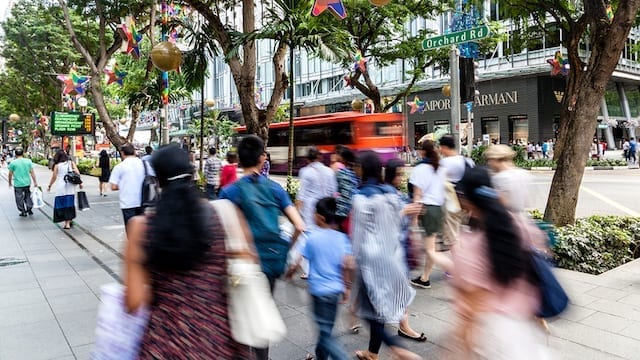
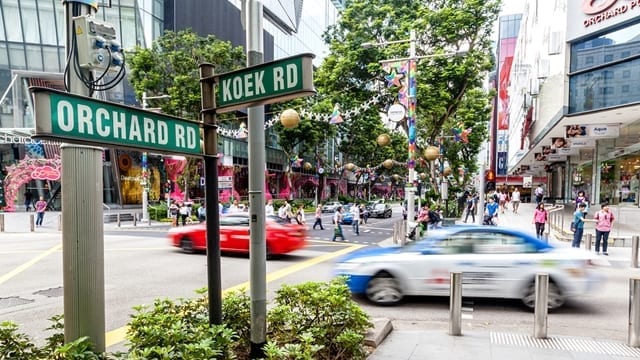
    In the company’s quarterly Real Estate Times research report, ETC said monthly rents of ground-floor space in the Orchard/Scotts Road precinct were the most resilient of the year, staying firm at $37.20 per sqft, compared to a decline of 2.2 per cent in 2016. Improving tourist numbers were a large contributor to the trend, along with a limited pipeline of new space coming on stream.

    And the arrival of overseas brands such as Apple, Pablo and Don Quijote into the area attracted more crowds and reinforced Orchard Road’s position as a retail destination, said ETC.

    Gross rents of prime first-storey retail space in the other city areas and suburban areas fell slightly by 0.6 per cent and 0.5 per cent last year to about $19.75 and $30.45 per sq ft per month respectively.

    Monthly gross rents of prime first-storey retail space island-wide remained unchanged for the second consecutive quarter in the final three months of last year, bringing about a slight decline of 0.3 per cent for the full 12 months. That compares well to a 4.3 per cent decrease in 2016.

    The authors of the report said the moderation in the decline in rents was due to the recovery in the city state’s retail sales, resulting in an increase in occupancy rates. Occupancy increased by 0.4 percentage points to 91 per cent in the third quarter of last year.

    Outlook for 2018

    Brick-and-mortar retailers face challenges as more consumers turn to e-commerce platforms in the coming year, said the report.

    “However, e-commerce will likely come under the local tax regime… This will mean having e-commerce players registering for GST in Singapore or customers having to pay tax on the goods and services purchased online. This may act as an additional factor for the online retailers to go for physical space, if the prices between the goods bought online and offline narrow,” said the authors.

    ETC suspects the upcoming new supply of retail space in suburban and other city areas may exert downward pressure on rents of retail spaces in both subzones.

    “From Q1 to Q3 2017, about 621,000 sqft of retail space was completed island-wide, with another 432,000 sqft expected to complete in Q4 2017. This will mainly emanate from Northpoint City (318,000 sqft). Subsequently, there will be around 1.1 million sqft of space completing this year and next year, respectively. The other city areas will be faced with the largest pressure, with the supply in both years exceeding the 10-year annual average absorption (2007 to 2016) of 239,000 sqft.

  • From clicks and bricks strategy for Courts Singapore

    From clicks and bricks strategy for Courts Singapore

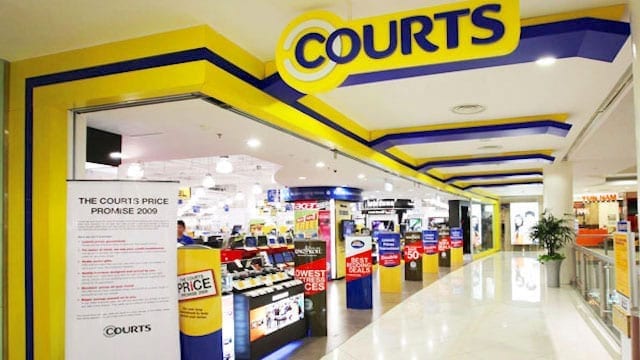
    Electronics, IT and furniture retailer Courts Singapore has relaunched its website and reopened its Tampines megastore after transforming it to offer customers an omni-channel experience.

    Built by e-commerce agency SmartOSC, the new Courts Online store has more than 17,000 SKUs and offers improved navigation and searching, plus faster checkout. New mobile-first and user-centric features connect the retailer’s digital and physical stores. Customers can research and buy online, and pick up purchases in-store or have them delivered.

    Combining omni-channel retailing, automated marketing and content management, the e-commerce system offers Courts a real-time view of inventory and customer profiles.

    Courts Asia chief strategy officer Stan Kim says the website was launched in time for last month’s Black Friday and Cyber Monday retail events, with sales for both almost doubling from the previous year.

    Meanwhile, the Courts Megastore in Tampines offers experiential retail spaces designed to offer memorable and informative experiences for customers.

    Courts has more than 80 stores across Singapore, Malaysia and Indonesia.

  • Gaw Capital keen on more S’pore properties

    Gaw Capital keen on more S’pore properties

    Hong Kong private equity property group Gaw Capital Partners (GCP) is keen to expand its presence here after investing around $500 million in Singapore in recent years.

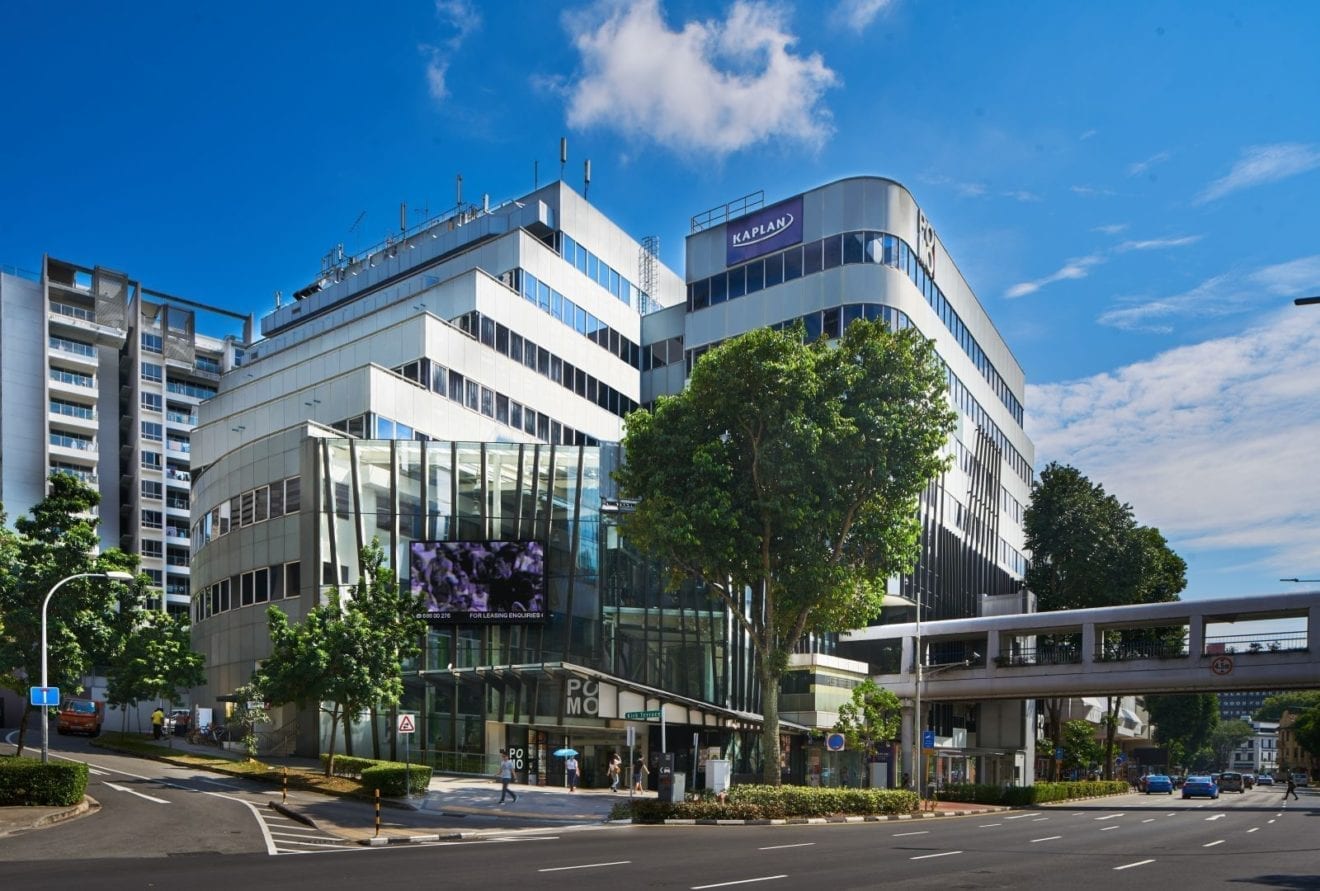
    It made its intentions clear last month when it completed the $342 million acquisition of PoMo, a nine-storey office and retail block in Selegie Road.

    It intends to revamp the block, particularly its retail component, to tap the student population from the many educational institutions in the area.

    President and co-founder Kenneth Gaw said: “Singapore’s property sector is one of the very few major markets in Asia which suffered a downturn in the past few years.

    “It is now on the cusp of recovery and we are confident about buying into a recovery.”

    The group also owns Hotel G in Middle Road. It is a revamp of the former Big Hotel that GCP picked up for $203 million in late 2015 before forking out a further $10 million to refurbish and rebrand the asset.

    Both properties are in the Bugis arts and cultural district.


    “Other than Hotel G and PoMo, we are interested in acquiring other assets in the commercial office and residential sectors in Singapore,” said Mr Gaw.

    He and his elder brother Goodwin set up GCP in 2005.

    Since its inception, the group has raised equity of US$8.7 billion (S$11.6 billion) and has US$13.4 billion in assets under management.

    It specialises in adding strategic value to underutilised real estate through redesign and repositioning.

    Mr Gaw noted that in Singapore, with the successful official launch of Hotel G last year, the group’s asset management team has become familiar with the neighbourhood and its traffic flow.

    “We’re confident that we can add value to PoMo,” he said.

    GCP senior investment director Imelda Tham noted PoMo’s strategic location in a vibrant arts and educational neighbourhood and its close proximity to several large educational institutions, which provide access to about 17,000 captive students and teaching staff in the area.

    The Singapore Management University, Nanyang Academy of Fine Arts, LaSalle College of the Arts (McNally Campus), School Of the Arts and Kaplan are among the educational institutions in the area.

    Ms Tham said: “PoMo itself is anchored by Kaplan, which has a substantial student enrolment.

    “We believe we can harness this potential by creating a more comprehensive retail tenant mix that engages the student population and draws higher foot traffic into the mall.

    “The mall has a mix of food and beverage (F&B), fitness, and health and beauty tenants, and we are looking to introduce more experiential aspects by introducing an entertainment zone.”

    PoMo’s net lettable area of about 180,000 sq ft comprises 110,000 sq ft of offices – levels four to nine – and 70,000 sq ft of retail space that goes from basement one to level three.

    Its offices are fully leased, with education service provider Kaplan the biggest tenant. Almost the whole of level five is designated for the Community/Sports Facilities Scheme, with The Little Arts Academy occupying it now.

    The retail space is 75 per cent leased, achieving an average rent of about $9 psf a month. Tenants include Evolve Mixed Martial Arts, Cosmoprof Academy, Mos Burger, Ya Kun Kaya Toast and other F&B outlets. Major tenancies will be expiring in about two years.

    PoMo, which has 143 carpark spaces, is on a site with 99-year leasehold tenure starting on March 17, 1983. The 43,027 sq ft plot is zoned for commercial use.

    The existing gross floor area of 234,996 sq ft has maximised the site’s development potential.

    Revamp work is likely to begin progressively this year, Ms Tham said. She could not estimate the cost of the project as it is still in the planning phase.

    It will be focused mainly on the retail area to improve the circulation and enhance visibility of the shops, with light touch-ups of the common areas and the facade.

    Mr Gaw said: “We will harness our numerous experiences in other parts of the world when we renovate PoMo.”

    The firm’s renovations include work at Pacific Century Place in Beijing, Plaza 353 in Shanghai, Metropolitan Plaza in Guangzhou and West 9 Zone retail podium in Hong Kong.

    GCP manages four opportunistic property funds targeting assets in the Greater China and Asia-Pacific regions, and a fund that specialises in hospitality assets in Asia-Pacific.

    It also manages two funds that invest in United States properties, as well as various separate account investments in Britain.

    Its activities include investing, value-adding renovations and development in residential, commercial offices, retail malls, serviced apartments, hotels and logistics.

  • CapitaLand marks 10th year in India with mall openings

    CapitaLand marks 10th year in India with mall openings

    CapitaLand India plans to divest six retail malls and its half-share in CapitaLand Retail Prestige Mall Management, which manages some of the properties.

    Singapore-headquartered CapitaLand has entered into definitive agreements to divest:

    * Its respective equity interests in six special-purpose vehicles (SPVs), which each hold a retail mall asset in the Indian cities of Bangalore, Mangalore, Hyderabad, Mysore, Cochin and Udaipur to Prestige Retail Ventures; and

    * Its 50 per cent equity interest in CapitaLand Retail Prestige Mall Management (CRPMM), which manages the properties in Bangalore, Mangalore and Hyderabad, to Prestige Estates Projects for an aggregate consideration of INR3.4 billion (about S$71.5 million or US$53 million), to be fully satisfied in cash and negotiated on a willing-buyer/willing-seller basis.

    When the transaction is completed, probably this quarter, the SPVs and CRPMM will no longer be subsidiaries or associates of CapitaLand.

    The SPVs and properties involved are:

    • Prestige Garden Constructions – The Forum Neighbourhood Mall and Oakwood Residences, Bangalore.
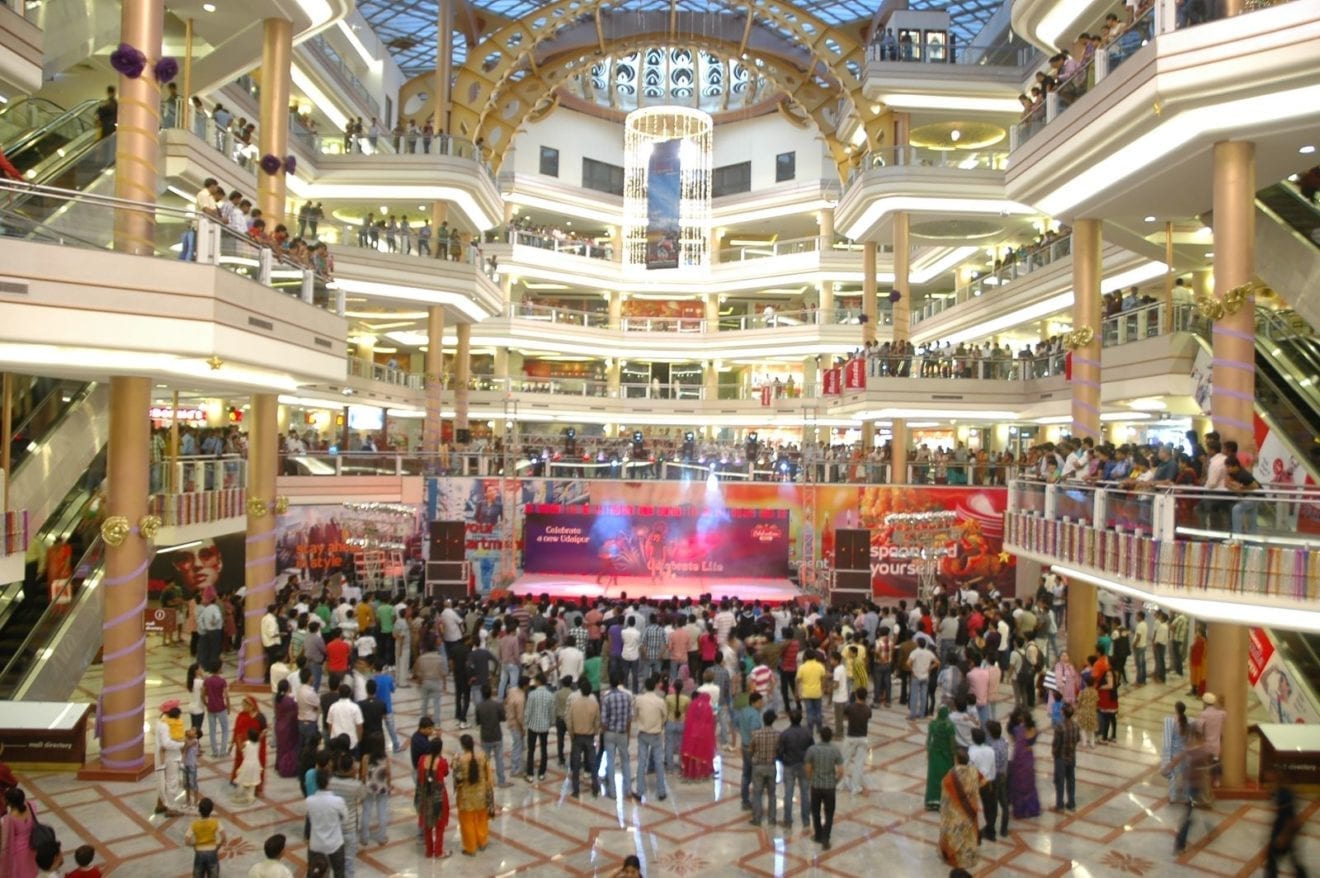
    • Prestige Mangalore Retail Ventures – The Forum Fiza Mall (pictured), Mangalore.
    • Babji Realtors – The Forum Sujana Mall, Hyderabad.
    • Prestige Mysore Retail Ventures – Forum Centre City (FKA Mall), Mysore.
    • Thomsun Realtors – Forum Cochin Mall, Cochin.
    • Flicker Projects – The Celebration Mall Udaipur, Udaipur.
  • Singapore’s electricity markets – trailblazer or flicker of light?

    Singapore’s electricity markets – trailblazer or flicker of light?

    In the industrialized zone of western Singapore some of the only night owls are electricity traders on 24-hour shifts, bidding prices for a commodity traded at half-hour intervals because it cannot be stored and shipped like oil or gold.

    Singapore has come a long way from a government-regulated power supply era. In 2018, it will have a fully liberalized power market where even household consumers can choose to buy the cheapest electricity from a laundry list of suppliers.

    In addition to competitive wholesale and retail electricity markets, Singapore also has a fledgling futures market in the works.

    The question is where does it go from here?

    Can power trading in Singapore rival mature markets in Europe? Or can Singapore become the template for deregulated power markets within Southeast Asia, possibly underpinning the ambitious ASEAN gas and power grids that have been elusive for over two decades?

    Domestically, will associated carbon and gas trading markets develop fast enough to support the power market? Does great power mean great liquidity — can the paper markets generate enough liquidity and trading interest in the longer term?

    HOW A TINY ISLAND PUNCHES ABOVE ITS WEIGHT

    Singapore has gone from a handful of power producers to 14 generators, 17 wholesale market traders and 16 retailers, totaling 47 market players including a small number of solar power producers as of December 2016. This year the number had crossed 50.

    Currently business accounts, which are consumers with an average monthly electricity consumption of at least 2,000 kWh, account for around 80% of Singapore’s total electricity demand, according to the Energy Market Authority. They can already choose their power supplier and by the second half of 2018 around 1.3 million families will also be able to do the same.

    This is estimated to result in savings of S$435 million ($323 million) over five years for consumers through free market competition, according to a 2016 report published by consultancy Sapere Research Group, for the Energy Market Authority.

    The wholesale trading market itself is fairly sophisticated with algorithms using 50,000 mathematical equations to calculate demand, supply and pricing levels, according to the Electricity Market Company. On the Singapore Exchange, independent retailers can buy and hedge their electricity positions using electricity futures.

    But being on a tropical island has its drawbacks.

    Power trading in mature markets like Nord Pool is possible because of variations in demand-supply caused by intraday peaks, summer and winter demand, storms, cross-border trade between countries and multiple fuels like coal, natural gas, renewables and nuclear.

    In Singapore, most of these variations are non-existent, severely limiting trading arbitrage.

    For instance, 95.2% of Singapore’s electricity comes from natural gas, whereas in Europe renewables have proliferated to the point of annoyance, as wind and solar do not provide stable supply.

    In October, Singapore’s deputy Prime Minister Teo Chee Hean said the city-state has an immediate solar power target of 6% by the end of this decade, and potentially as much as 20% in the long term if new technologies are implemented.

    Compared to electricity consumption of 48.6 TWh in 2016, and generation capacity of 13,348.4 MW as of end-March 2017, Singapore’s grid-connected installed solar capacity remains minuscule.

    Cross-border trading is also absent in Singapore.

    In Europe, countries have an interconnectivity target of 10% of installed capacity in the near term and as much as 15% by 2030 has been proposed.

    But in Singapore, regulators are still conducting feasibility studies with Laos, Thailand and Malaysia for cross-border electricity trading, and only a small amount of electricity is actually traded with Malaysia’s southern Johor state.

    Cross-border trading will remain a difficult proposition in Singapore because of energy security considerations that curb dependence on foreign power suppliers, who may also have access to cheaper fuels and lower capital costs.

    SPARKING TRADING INTEREST

    Singapore has also launched its own electricity futures market.

    As of October 1, 2017, total volume traded in the electricity futures market was 4,744 lots or 5,196 GWh since they were launched in early 2015, according to the Energy Market Authority. Comparatively, Singapore’s actual electricity generation rose by 2.6% to 51.6 TWh in 2016.

    This means traded volumes on the paper market are roughly 5% of actual demand. The ratio of paper versus physical trading volumes is a sign of how active the market is.

    For instance, in oil markets, derivatives volumes are 10-15 times of the physical, in the New Zealand electricity market derivatives trade at around 70% of physical, and in the Australian market derivatives volumes are two to three times that of actual consumption.

    There is clearly room for growth there.

    “The development of the Singapore electricity futures market is being modeled on the New Zealand market due to the similarities between the two markets,” William Prajogo, associate director of oil, power and gas derivatives at SGX said.

    He said the electricity futures market is vital for the success of the Full Retail Contestability of the Singapore power market in 2018 as it lowers the barriers to entry for new independent retailers to enter the market, which in turn will create more retail competition.

    “SGX will consider launching more electricity derivatives products in future depending on market demand and growing liquidity levels,” Prajogo said, adding that he expects more market participants such as trading companies, banks and financial institutions to add liquidity to the market.

     NATURAL GAS AND POWER

    There is also a strong correlation between the gas and power markets. It is also vital to have free markets for the primary fuel to facilitate and incentivize free trading of electricity.

    Products like spark spreads, which measures the profitability of a power plant depending on its primary fuel, are common in mature markets where both the fuel and electricity are actively traded and market participants can hedge the spread between electricity prices and fuel costs.

    In Singapore’s case however, primary natural gas supply is still tightly regulated.

    Most of the gas is piped in from Malaysia and Indonesia at prices pegged to high sulfur fuel oil. Less than 25% of the gas burnt is seaborne LNG, and even that is controlled by the two appointed aggregators at oil indexed prices.

    “None of us can predict the future but the common sense point to make would be that for a vigorous futures market in natural gas and electricity to work you need a market designed for a level playing field for everyone to participate in,” Tilak Doshi, managing consultant at Muse, Stancil & Co (Asia) said.

    “The answer lies in promoting contestability in power and gas markets,” he said.

    “Without further liberalizing market design changes, the outlook for full development of the futures market for electricity will be constrained,” Doshi said.
     

  • Singapore defers foreign law firms’ licensing decision to 2020

    Singapore defers foreign law firms’ licensing decision to 2020

    The Singapore Ministry of Law has announced it will defer to 2020 its decision on the renewal of the licences of the second batch of Qualifying Foreign Law Practice (QFLP) firms.

    The second batch includes firms such as Gibson Dunn & Crutcher, Jones Day, Linklaters and Sidley Austin. They secured licences in 2013 for a period of five years. The licences were originally due to expire in 2018, but such will be extended to 2020 until the ministry decides on the renewal.

    QFLP licences allow Foreign Law Practices (FLPs) to practise Singapore law, except in domestic areas of litigation and general practice, for example, criminal law, retail conveyancing, family law and administrative law. The QFLPs can practise the permitted areas of Singapore law through Singapore-qualified lawyers with practising certificates or foreign lawyers holding the foreign practitioner certificate.

    According to the ministry, the second batch of firms have contributed to the growth of Singapore’s economy, as they have increased their revenue from offshore work and doubled their headcount of their Singapore offices since obtaining the permits.

    “However, their respective performances have fallen short of the initial commitments they made in 2012, as they have all been impacted by Asian economies’ weaker than expected growth, drop in commodities prices and decrease in mergers and acquisitions which had resulted in weaker demand for legal services in the region in the last two years,” the ministry added.

    It said its decision will allow it to better assess each firm’s performance and contribution to Singapore and their respective proposals for the new licence period.

  • Inside Singapore’s ‘invite-only’ Johnnie Walker Home

    Inside Singapore’s ‘invite-only’ Johnnie Walker Home

    It‘s a whisky enthusiast‘s dream. Johnnie Walker House is an invitation-only suite located at Asia Pacific headquarters in Singapore. We took a tour of the space, which hosts guests to learn, taste and purchase a variety of high-end offerings.

    The space, which opened last year, is one of 26 private suites in the world and the only one in Southeast Asia. In total, the room boasts more than $700,000 worth of whisky by retail price. One way to gain entrance is by referral.

    We build up our own network of people who might be interested and we invite them to come in,” Sam Fischer, Diageo‘s Asia president told us during a tour of the space. “We build up to people of high net worth and people of influence.”

  • Changi’s crown Jewel scales new heights

    Changi’s crown Jewel scales new heights

    Work on Jewel Changi Airport is moving ahead at full-speed, with construction workers seen scaling its external facade on Tuesday. The complex is scheduled to open in early 2019, and will have five storeys above ground and five basement levels, with a total gross floor area of about 134,000 sq m.

    All terminals at Changi Airport and departure gates will be connected to the complex and be within walking distance. Jewel Changi Airport will have aviation and travel-related facilities, as well as some 300 retail and food and beverage outlets. It will also house one of Singapore’s largest indoor collections of plants, over about 22,000 sq m.

    The Forest Valley, a five-storey garden, will be one of Jewel’s centrepiece attractions. There will also be a 40m-high Rain Vortex at the central core of the complex, which will have a light-and-sound show every night. The Canopy Park, on the topmost level of Jewel, will have play attractions, gardens, walking trails and dining outlets.

  • Orchard Road must not lose its bloom

    Orchard Road must not lose its bloom

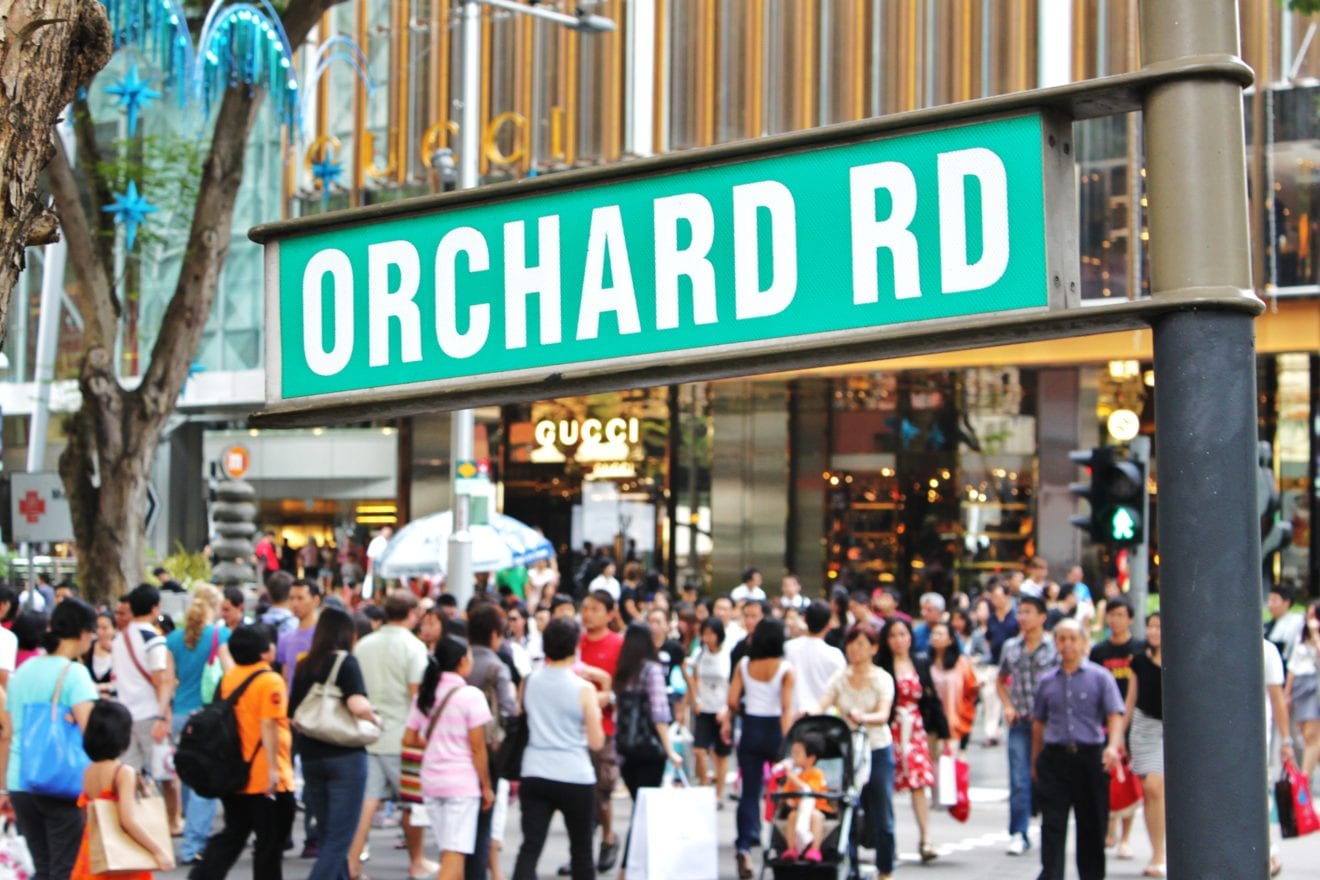
    Orchard Road has had many incarnations. It got its name from the many nutmeg and fruit orchards that existed in the last century. It has always been an important street, connecting the residential area of Tanglin to the business and commercial areas of Raffles Place and High Street. At one point, the road hosted car showrooms and even a sprawling cemetery. Its current incarnation as Singapore’s premier shopping belt began in the 1960s after the area was zoned for retail. The grand plan to shape Orchard Road’s future in the next 15 to 20 years should look back at these transformations – save the cemetery, of course – even as it looks ahead.

    Incremental efforts are important, no doubt. For example, a Shibuya-style scramble walk is on trial; it may be replicated if it is successful. Adding to the area’s ambience will be an initiative under which, from next July, smoking in public areas will be allowed only at designated areas within the smoke-free zone. However, if Orchard Road is to bloom again, these moves must become a part of a master plan that takes unpleasant realities into unsentimental account.

    Chief among those realities is that shopping may not continue to be the primary activity with which the road is associated. The proliferation of shopping malls around the country gives shoppers more choice than they once had. Also, online shopping is challenging brick-and-mortar stores around the world. In the United States, for example, several leading department store chains have lost value in recent years, and department stores have shed 500,000 jobs since the beginning of this century. Although shopping will continue to attract tourists to Orchard Road, its stores will have to ride on the global trajectory of marrying traditional and online retailing, for example by having smaller stores with limited inventories complement expanding online operations.

    The larger need is to look beyond shopping itself. One way for Orchard Road is to recreate the times when it was a “happening” place because of famous nightspots and roaring discos. The road must not die at night. During the day as well, parts of the belt could be redeveloped in the form of buildings which house civic facilities that attract crowds. Arts venues for concerts and performances, multi-purpose sports hubs, theme parks within malls, or a children’s centre that makes the area family-friendly are ways to rejuvenate the road.

    These should be considered seriously. The problem now is that Orchard Road’s iconic centrality as a shopping belt in the tourist imagination makes it difficult to refashion the purpose of the place. But it is not a zero-sum game. Local shoppers will have more reason to visit the place if they are attracted by other amenities as well. Orchard Road cannot remain frozen in time.

  • Singapore inflation rises 0.6% in November

    Singapore inflation rises 0.6% in November

    That is the fastest year-on-year increase since July, when headline CPI also rose 0.6 per cent from a year earlier.

    Core inflation, which excludes accommodation and private road transport costs, remained unchanged from the previous month at 1.5 per cent, the Monetary Authority of Singapore (MAS) and the Ministry of Trade and Industry (MTI) said in a joint press release on Tuesday (Dec 26).

    Private road transport costs rose 4.1 per cent in November from a year earlier, data from the Singapore Department of Statistics showed.

    Accommodation costs fell by 3.9 per cent in November, moderating from the 4.2 per cent drop in the previous month. The smaller decline reflected the dissipation of the dampening effect of the disbursement of Service & Conservancy Charges (S&CC) rebates on the year-ago change in accommodation costs in October, the joint release said.

    Services inflation edged up to 1.6 per cent in November from 1.5 per cent in October. This was on account of a rise in airfares, which was a reversal from the decline registered in the previous month, as well as a larger increase in telecommunications services fees and holiday expenses which more than offset the smaller increase in recreational & cultural services fees.

    Food inflation was unchanged from the previous month at 1.5 per cent, as the pace of increase in prices for non-cooked food and food services was similar in both months.

    The overall cost of retail items registered a smaller 0.5 per cent increase in November compared to the 0.9 per cent increase in October. This largely reflected a fall in the prices of personal care products, as well as a smaller rise in the prices of personal effects, the joint release said.

    FUTURE OUTLOOK

    Looking ahead, the MAS expects core inflation to be around 1.5 per cent in 2017 and average between 1 and 2 per cent in 2018. MAS said in a media release that the CPI is projected to come in at around 0.5 per cent this year and stay in the range of between 0 and 1 per cent next year.

    However, Francis Tan, economist at UOB, said he does not expect major risks of a higher inflationary trend, but noted that all eyes could be on MAS’ next policy meeting in April.

    “The market expectation, and our expectation, is that the MAS, in their next policy meeting in April 2018, will start to normalise. I think that goes to show that among all the central banks in the world, they are more or less looking at or already started the monetary policy normalisation and the MAS is likely to continue to likewise,” said Mr Tan.

    “Of course we are not looking at a very steep increase in the S$NEER slope even at the start. We are only looking at a 0.5 per cent per annum at the start, but with more data coming in, the central bank will definitely tweak its policy appreciation stance.”

  • Going cashless no small change

    Going cashless no small change

    After years of creeping at a snail’s pace, the e-payment scene has roared to life, setting 2018 up to be the year that cashless payments could finally become ubiquitous. Once Prime Minister Lee Hsien Loong made a call for a unified e-payment system at the National Day Rally in August, there were many developments, culminating in two significant moves in November.

    The first was an announcement from Education Minister (Higher Education and Skills) Ong Ye Kung, who is a board member of the Monetary Authority of Singapore, to expand the use of PayNow, an instant fund-transfer service, to businesses mid-next year.

    Launched on July 10, PayNow lets individuals transfer money by entering the recipient’s mobile phone or identity card number in any bank’s app. As at last month, more than 600,000 Singaporeans have linked either their mobile numbers or identity card numbers to their bank accounts via PayNow.

    By mid-next year when companies are allowed to link their business registration numbers to their bank accounts, PayNow’s use will be more pervasive, going beyond transfers between friends.

    With PayNow, merchants need not worry about complex system installation and related fees. As PayNow rides on Fast (Fast and Secure Transfers) – the country’s instant interbank funds transfer system – merchants also need not worry about cash-flow issues. Comparatively, credit card and ATM card direct debit transactions take up to two days to settle.

    While PayNow may be useful for owners of pop-up stores, its use at hawker centres may be limited. It is unthinkable that anyone would want to enter a business registration number and the amount owed into a bank app just to pay for a plate of chicken rice.

    Enter a national quick response code payment standard, dubbed SGQR. The release of its specification last month marks the second major breakthrough this year. Its aim is to allow merchants to display just one QR code for scanning by any e-wallet for fuss-free transfers.

    Singtel’s Dash is the first to embrace SGQR, with its QR code sticker displayed at a handful of merchants here.

    E-payment stalwart Nets also said it will change its QR code – rolled out to about 30,000 acceptance points in malls and taxis, and 600 hawker stalls – to one that incorporates the SGQR specification.

    • Since Prime Minister Lee Hsien Loong made a call for a unified e-payment system during his National Day Rally in August, there have been many developments – including two significant moves in November:

      1 Expanding the use of PayNow, an instant fund-transfer service, to businesses mid-next year . Launched on July 10, PayNow lets individuals transfer money by entering the recipient’s mobile phone or identity card number in any bank’s app.

      2 Release of a national quick response code payment standard – dubbed SGQR – specification, whose aim is to allow merchants to display just one QR code for scanning by any e-wallet for fuss-free fund transfers.

    Nets’ QR code system now works with the e-wallets of DBS Bank, OCBC Bank and United Overseas Bank. Next year, customers of Citibank, HSBC, Maybank and Standard Chartered Bank will also be able to scan the Nets QR code to make payments.

    Together, these seven major banks cover about 90 per cent of all retail transactions in Singapore.

    The nation’s effort to unify its e-payment systems may take more than a standardised QR code or enlisting businesses in the peer-to-peer PayNow scheme.

    Payment providers may also need to standardise the way they itemise and describe bills, and how fast they settle payments, to help merchants and hawkers with account reconciliation at the end of the business day.

  • Kushikatsu introduces new skewer options

    Kushikatsu introduces new skewer options

    A Japanese chain known for its fried food skewers, Kushikatsu Tanaka, has launched a Singapore outpost at Clarke Quay.

    It sprang from the Lehman Brothers collapse in 2008, when Hiroe Tanaka and her business partner Keiji Nuki decided to end their food business ventures in Tokyo. While packing to return to Osaka, Tanaka stumbled upon her late father’s kushikatsu recipe, and convinced Nuki they should open a kushikatsu outlet.

    Nine years later the business, which became a listed company last year, is valued at US$82 million (S$110.6 million). It has 167 outlets across Japan, with four more opening this month. It also has a branch in Hawaii.

    Tanaka and Nuki were both in Singapore for the opening of Kushikatsu Tanaka, a franchise outlet managed by Suntory Food & Beverage International, a subsidiary of the Suntory Group, which runs eateries such as Japanese restaurant Sun with Moon at Wheelock Place and the Pepper Lunch chain.

    Secret sauce

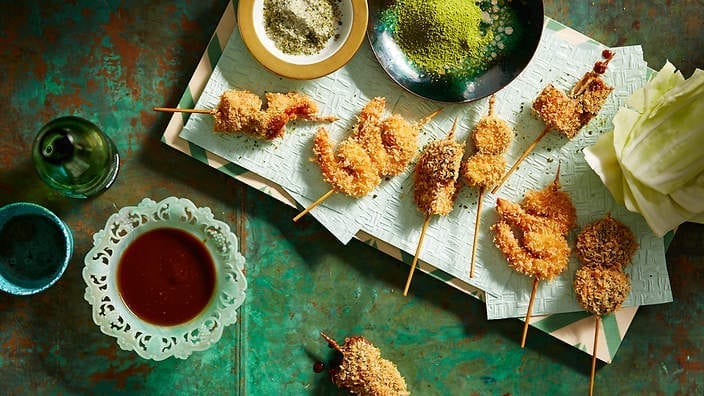
    A speciality street food from Osaka, kushikatsu features skewered items battered in fine panko crumbs and fried in a blend of oil and beef fat. Diners dip the skewers into a “secret recipe” sauce. There is even a dessert version.

    Other dishes on the menu include chiritori hotpan (beef or pork). To finish the broth, diners can cook curry cheese risotto on the pan. Other hands-on dishes include DIY (do-it-yourself) onigiri and DIY potato salad.

    While kushikatsu goes well with Jim Beam highballs, the alcohol menu also includes sake, shochu and wine. Diners can also play a variation of the Japanese drinking game Chinchirorin by throwing two dice into a bowl. If they roll doubles, they score a free highball; an even number earns a half-priced highball, while an odd number means they pay double the price (but for a double-sized highball).

    Meanwhile, other skewered foods have arrived in Singapore including Ginza Rokukakutei at Odeon Towers and Panko in Haji Lane.

  • Louis Vuitton Singapore makes splash in airport

    Louis Vuitton Singapore makes splash in airport

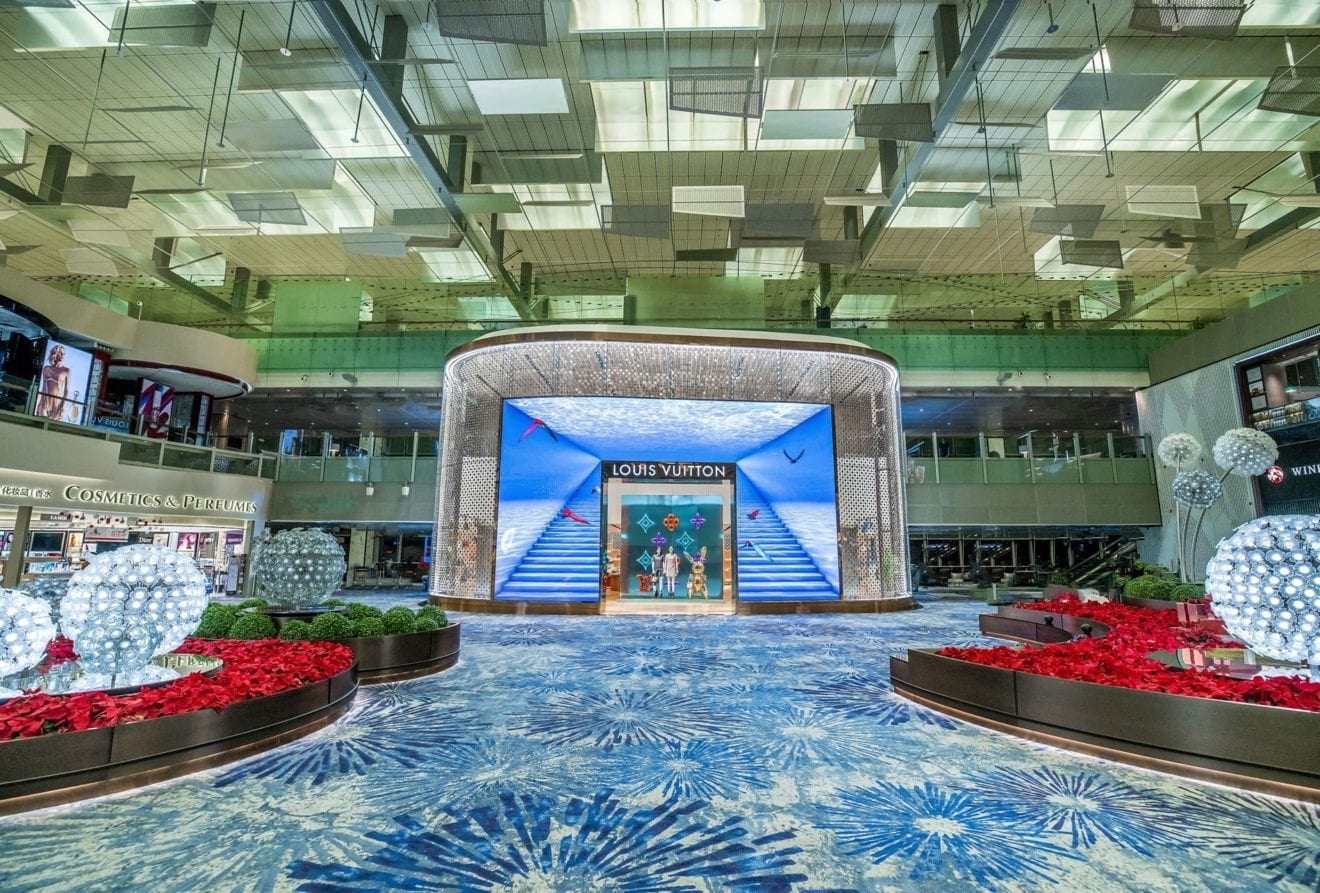
    Louis Vuitton Singapore has opened a spectacular duplex store taking centre stage in the new Crystal Garden in the Terminal 3 departure transit hall at Changi Airport.

    The first-ever airport store of its type in south Asia, the store has a theme of travel and features a full-size model of a 1930s French plane suspended from the ceiling, plus “flying machines” carrying the French luxury brand’s signature trunks and suitcases.

    A giant digital display surrounds the entrance, and the store has a translucent facade of glass and copper-diamond mesh. Inside, tiered garden beds feature a flowers and spheres containing glass sculptures.

    For the opening, an exhibition space on the second floor features antique objects from the Louis Vuitton archives displayed alongside more contemporary pieces.

    On the ground floor there is a range of travel-related offerings including men’s and women’s leather goods, ready-to-wear, accessories, shoes, watches and fragrances.

    Covering 530sqm, it is the first airport store in Asia Pacific to be directly managed by Louis Vuitton, which has had a 37-year presence in Singapore.

  • Singtel to develop IoT smart meter infrastructure

    Singtel to develop IoT smart meter infrastructure

    Singtel has entered an agreement with global smart metering vendor EDMI Limited to develop a smart electric metering infrastructure for Singapore.

    The partners have been testing the use of smart electric meters over Singtel’s nationwide LTE Cat-M1 cellular IoT network to enable the wireless transmission of real-time meter readings to the power grid.

    The companies plan to offer their IoT-powered smart metering solutions for residential, commercial and industrial areas as part of the Energy Market Authority’s plan to roll out smart meters in the city in the second half of 2018.

    Singtel is already providing M2M connectivity for EDMI’s digital electric meters in Singapore.

    “Giving electricity suppliers real-time data on electricity consumption allows them to optimize the distribution of electricity to certain areas and times of the day especially when demand is peaking,” commented Andrew Lim, business group managing director at Singtel’s Group Enterprise.

    “The pairing of smart meters with our IoT network will give consumers more accurate meter readings and ultimately bring cost savings.”

    Singtel launched its Cat-M1 IoT network in September and has been conducting trials with over 20 potential partners at its joint IoT innovation lab with Ericsson, which was established earlier in the year.

  • McDonald’s Singapore launches locally-inspired ‘nasi lemak’ burger

    McDonald’s Singapore launches locally-inspired ‘nasi lemak’ burger

    For Singaporeans and Malaysians, nasi lemak (rice cooked with pandan leaves and served with sambal) is a breakfast staple. Realizing the Singaporeans’ non-stop craving for the fragrant rice, McDonald’s Singapore introduced nasi lemakburger on Thursday.

    The unique dish, which consists of semolina buns, coconut-flavored chicken thigh patty, egg, caramelized onions, sliced cucumbers and sambal, was launched in conjunction with Singapore Food Festival 2017 and the upcoming Singapore National Day.

    In addition to the nasi lemak burger, the fast food chain also launched locally-inspired beverages and desserts, namely the Chendol McFlurry (ice cream with worm-like green rice flour jelly), chendol ice cream cones, the Bandung McFizz (condensed milk beverage flavored with rose cordial syrup), Pandan Coco Frappe (pandan flavor drink served with coconut and grass jelly), coconut pie and kueh salat (a pandan sponge cake with a glutinous rice layer).

    Sure enough, Singaporeans have flooded McDonald’s outlets to devour the high-carbs meal and sweet treats.

    On Twitter, they posted mixed reviews about the fusion burger. Though not all were fond of the East-meets-West dishes, some gave positive feedback, saying the burger was beyond their expectation, tasting exactly like nasi lemak.

    Seeing the positive response, maybe it is time for McDonald’s Indonesia to consider some locally-inspired menus for Independence Day — sate ayam (chicken skewers) or lontong sayur (rice cakes with vegetables) burgers, perhaps?