Tag: Singapore

  • Singapore’s UOB unveils digital advisory service

    Singapore’s UOB unveils digital advisory service

    UOBAM said in a statement that it has launched its own digital advisory service UOBAM Invest that bids to allow companies to manage their discretionary investments through the firm’s portfolio solutions and in some cases achieve results within a matter of minutes.

    According to UOBAM Singapore the new digital service is offered exclusively to UOB’s commercial banking clients, which are mainly medium-sized companies. The launch is the city state’s first digital advisory service for companies to manage their discretionary investments, UOB said.

    It will be offered to the bank’s other corporate clients, as well as to retail investors, and across UOBAM’s network in Asia, in subsequent phases.

    Through the service, clients will be able to submit their financial information, obtain their risk profile, and receive an investment portfolio proposal in minutes.

    The clients can choose to invest in the proposed portfolio or to adjust it.

    Thio Boon Kiat, group chief executive, UOBAM, said: “At UOBAM, we have observed our clients’ increasing preference to receive investment advisory and to manage their investments digitally. Using our proprietary screening methodology and asset allocation framework, we designed UOBAM Invest to meet the needs of these investors and to make our portfolio solutions easily accessible online.”

    Portfolio creation

    The portfolios will be created from a wide range of UOBAM-managed funds and global exchange-traded funds (ETFs) spanning various asset classes, such as equities, high-yield and investment-grade bonds, as well as money market and short-term fixed income.

    UOBAM Invest said that a conservative portfolio will typically comprise ETFs or unit trusts that are invested mainly in government bonds, money market and short-term fixed income. The most aggressive portfolio will largely consist of ETFs or unit trusts that are equities-based, and a small allocation to those that are focused on high-yield bonds.

    Eric Tham, head of UOB group commercial banking, said: “Our clients look to discretionary investments in various fund products to maximise their returns and to strengthen their balance sheets. However, as they focus on their day-to-day business operations, they may not be able to afford the time needed to choose and to track their investment portfolios closely. With UOBAM Invest, it is now more convenient for our clients to manage these investments with UOBAM.”

    Technology partner

    UOBAM’s technology partner on UOBAM Invest is FNZ Group, a global FinTech company specialising in providing multi-channel wealth management services to the financial services and wealth management sectors.

    UOB Asset Management Ltd (UOBAM) is a wholly-owned subsidiary of United Overseas Bank Limited. Established in 1986, UOBAM has been managing collective investment schemes and discretionary funds in Singapore for more than 30 years. As at 30 November 2017, UOBAM and its ubsidiaries manage about S$33.9bn (US$25.2bn) in clients’ assets. UOBAM has an extensive presence in Asia with regional business and investment offices in Malaysia, Thailand, Brunei, Taiwan and Japan.

  • Indian jeweller Malabar Gold & Diamonds to break a record

    Indian jeweller Malabar Gold & Diamonds to break a record

    Indian jewellery chain Malabar Gold & Diamonds today added 11 showrooms across six countries to its network.

    Taking its retail store count to 208, the showrooms include AMK Hub in Singapore, Ampang Mall in Malaysia and Warangal in Telangana, India. Other showrooms are in malls across the UAE. The brand has 90 showrooms in India, and last year opened 27 showrooms internationally.

    As well as another 50 showrooms in different formats internationally, the Malabar Group plans to add more manufacturing units this year, says chairman MP Ahammed. “This will fuel our vision to become the top jewellery retailer in the world.”

    The company will expand into new countries such as Brunei, Bangladesh, Sri Lanka and the US, says Malabar Gold international MD Shamlal Ahammed.

    The expansion will generate more employment and enhance such initiatives as the government’s Made In India, says Malabar Gold & Diamonds India MD O Asher. The group has earmarked 5 per cent of its annual profit for CSR activities in five key areas: housing, health, environment, women’s empowerment and education.

  • Sa Sa International looking good, thanks to tourists

    Sa Sa International looking good, thanks to tourists

    Stronger store traffic drove overall sales for cosmetics retailer Sa Sa International for its third quarter to the end of December.

    This was in line with expectations, says the company.

    Total transactions increased by 5 per cent year on year to 5.1 million, while the number of transactions with local and mainland tourists grew 6.6 and 4.1 per cent respectively. The average transaction value also rose, by 4.2 and 2.8 per cent (to reach $367) respectively.

    The group’s total turnover grew by 6.5 per cent to HK$2.2 billion (US$281 million), led by Hong Kong and Macau where the growth was 8.1 per cent to reach $1.8 billion, while same-store sales increased by 3.7 per cent.

    Overall retail sales and same-store sales had 9.5 and 5.6 per cent growth respectively during December.

    Turnover in Mainland China, Singapore and Malaysia grew 13, 3.6 and 3.9 per cent respectively, while the turnover for Taiwan and e-commerce dropped by 5.5 and 21.9 per cent.

    Total turnover for the nine months to the end of December was $5.9 billion, up 3.4 per cent. For Hong Kong and Macau the figure was $4.8 billion, up 4.5 per cent.

    Same-store sales were flat for the nine months, while the average sales per transaction rose 3.3 per cent for to $343. There were 14 million transactions, up 1 per cent.

    At the end of December the company had 290 stores, no change from a year previously. However, the number of stores increased in Hong Kong and Macau (from 115 to 119), while there was a drop in Singapore (from 21 to 19) and in Taiwan (from 25 to 21). China and Malaysia had no change with 56 and 73 stores respectively.

  • Say Chiizu stretchy cheese toast opening outlets across Singapore

    Say Chiizu stretchy cheese toast opening outlets across Singapore

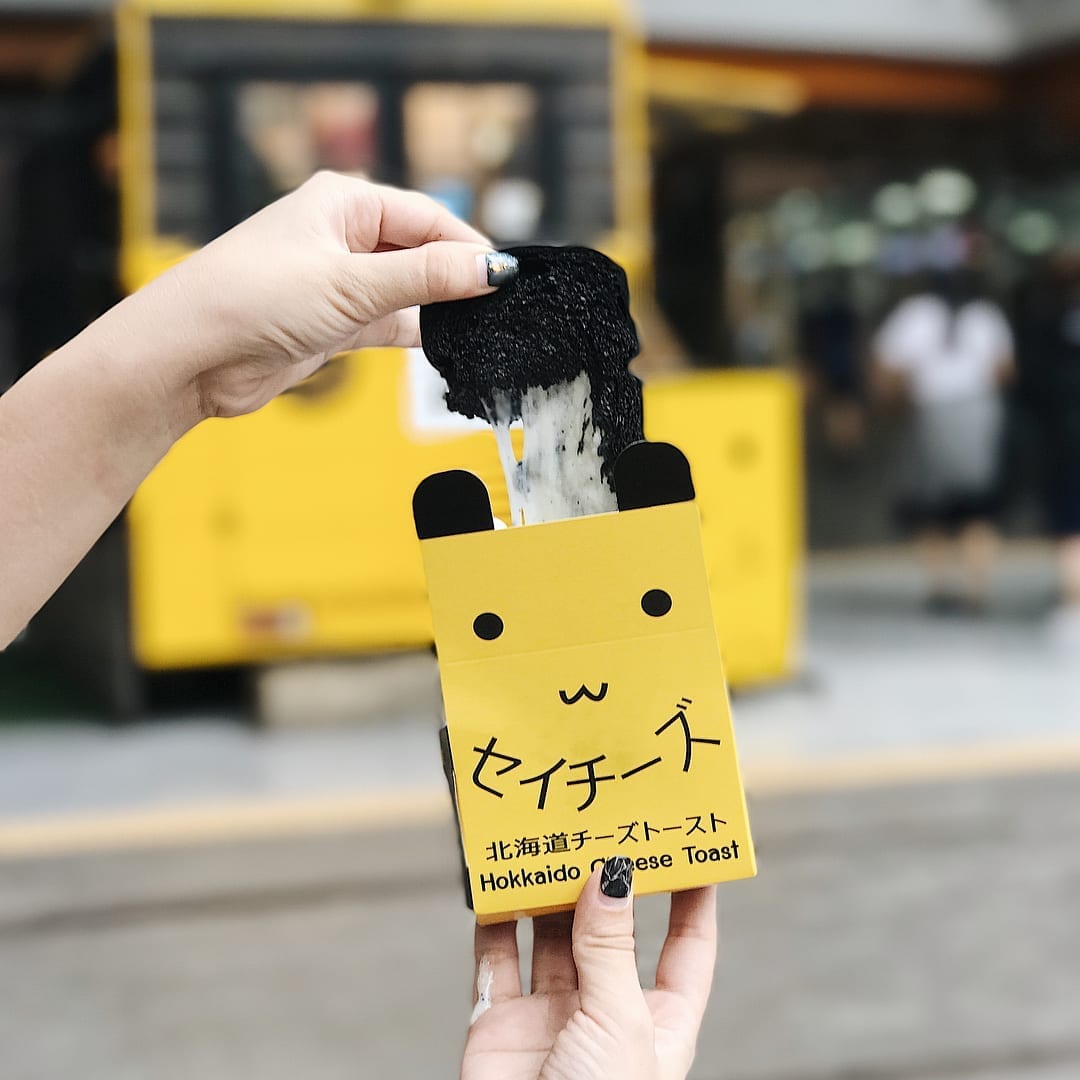
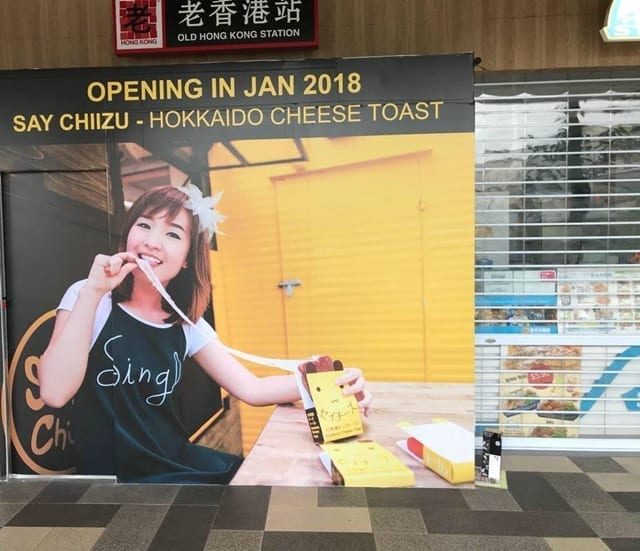
    Thailand’s Say Chiizu cheese toast is stretching all the way to Singapore, with takeaway kiosks being set up at four malls next week.

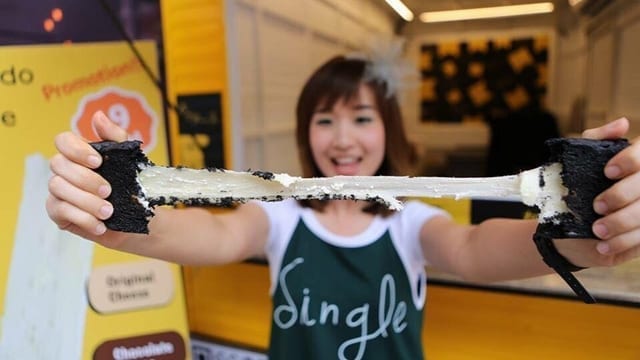
    Its cheese is made on the company’s own farm in Thailand which has cows and machinery imported from Japan, hence its main product being called Hokkaido cheese toast. Its special formula combines three types of cheese to produce its special taste and super-stretchable texture.

    Its Hokkaido milk toast comes in five flavours: charcoal, chocolate, strawberry, matcha and original.

    As well as its toast, Say Chiizu offers snacks such as Pizza Cheese Fries, BBQ Pull Chicken/Pork Cheese Fries, Cheese Fries and Classic Fries.

    Its drinks line-up includes yuzu, matcha, strawberry and peach cheese teas.

    Say Chiizu’s first outlet opens at VivoCity on Monday, followed by 313 @ Somerset on Tuesday, White Sands Shopping Centre on Wednesday and The Clementi Mall on Thursday.

    The brand is aiming to open 10 outlets in SIngapore by the end of the year, including a sit-down cafe at Bugis next month.

  • Café that Shuns Cash and Welcomes Bitcoin Opens in Singapore

    Café that Shuns Cash and Welcomes Bitcoin Opens in Singapore

    Cash is not accepted for coffee at Singapore’s Ducatus Cafe, which has officially opened at Oxley Tower on Robinson Road.

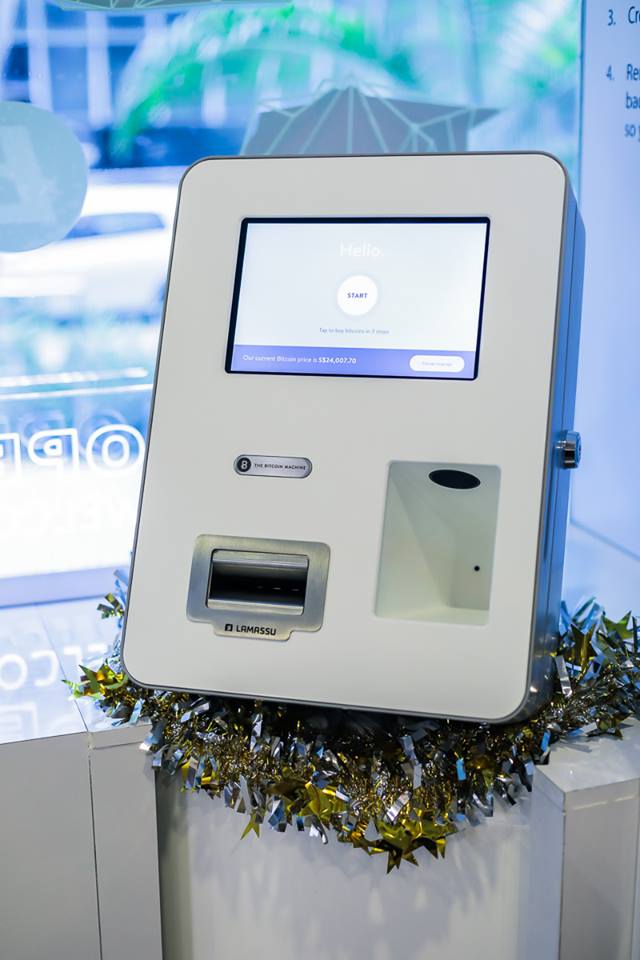
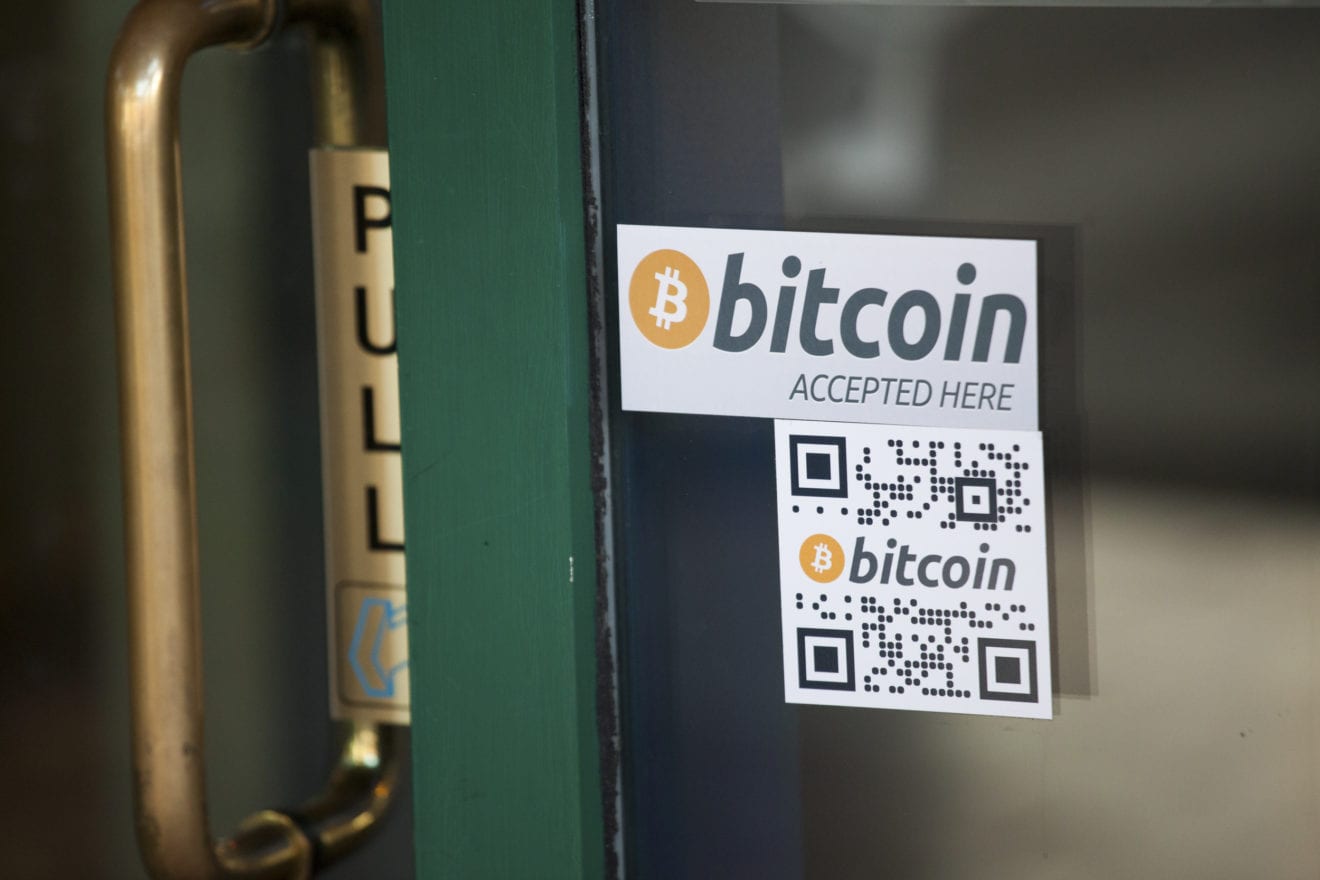
    Owned by cryptocurrency mining company Ducatus Global, the cafe does not take cash, depending on credit cards and, of course, cryptocurrencies – available through a special ATM in the store.

    However, in its latest Facebook posting, the cafe says its cryptocurrency ATM is temporarily out of service.
    Bitcoin is accepted as well as its own Ducatus coin, available via the Ducatus App which can be found in the Google Play Store. CEO Ronny Tome says there are plans to accept other cryptocurrencies soon.

    “The idea of developing the cafe was because we wanted to make sure people can use our Ducatus coins as well as bitcoins and other cryptocurrencies in day-to-day business.

    “Right now, cryptocurrencies are mostly used for speculation on markets…We want to make it part of our daily life,” he says.

    Also launched this month, the Ducatus coin is worth about 10 cents.

    The in-store cryptocurrency ATM is to enable customers to make cash-to-bitcoin deposits while waiting for their order. As well as coffee and snacks, the cafe sells branded gifts.

    Tome says he will open more cafes in Singapore. His initial cafe opened in Seminyak, Bali, on December 12, and he has plans to roll out the cafes in other countries as well as team up with hotels and travel agencies.

    Meanwhile, Tome is confident the virtual money industry will help national economies grow faster. He says governments should give cryptocurrency the chance to further grow.

    “Cryptocurrency and the underlying technology of blockchain will change the world. I’m 100 per cent sure of that – it’s here to stay.

    “I see only upsides, and it just requires all of us, all players, the government as well as businesses, to work together and find the best way of making use of this new amazing technology.”

  • SpherePay launches in-app credit function in Singapore

    SpherePay launches in-app credit function in Singapore

    Singaporean mobile payment app SpherePay has introduced a “micro-loan” concept for its users.

    It is the first mobile payment app to offer a buy-now-pay-later scheme, which it terms advanced credit. A QR code enables payments. Users must be at least 18 years old to sign up for the service, which allows users 30 to 45 days to repay.

    Processing and approval can be done within two hours. Applications can be made by clicking the Advanced Credit icon on the SpherePay mobile app. For first time users, the credit amount is set at $300. As the app monitors spending patterns and repayments, the credit amount can increase.

    “The advance credit will benefit people without credit cards, especially students,” says the company.

    Launched in November, SpherePay has more than 60,000 users in Singapore and 100-plus merchants. Meanwhile, the company plans to expand to Thailand, Indonesia and Malaysia this year.

  • Courts Invests in Growth by Reimagining Its Omni-Channel Retail Experience

    Courts Invests in Growth by Reimagining Its Omni-Channel Retail Experience

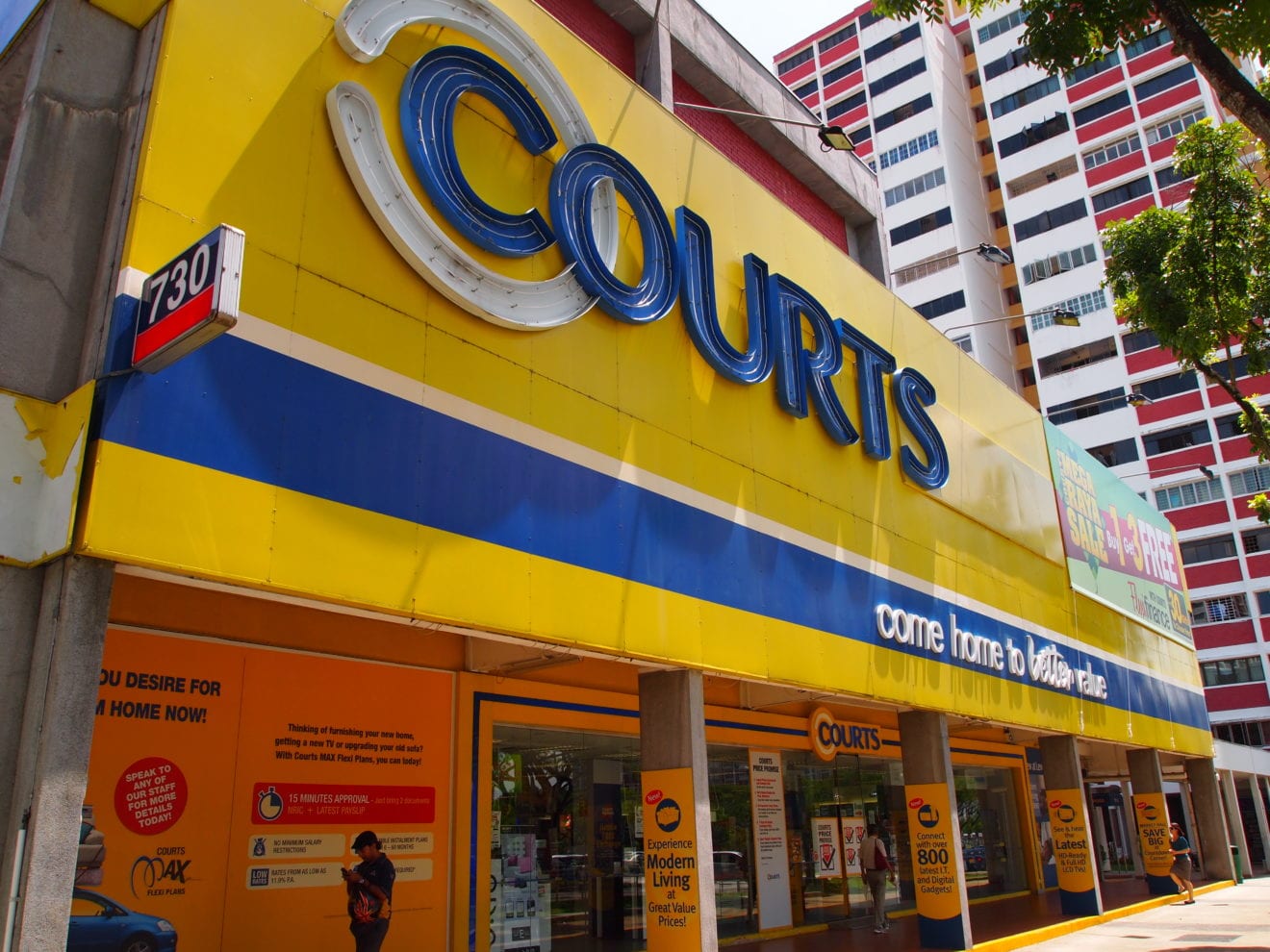
    Specialising in electronics, IT and furniture, COURTS Singapore has put more than a year into researching and redesigning its in-store experiences and omni-channel customer journey. The results are two recent announcements: the relaunch of its e-commerce website, built by e-commerce agency SmartOSC, together with the opening of its newly redesigned Megastore in Tampines, transforming the store experience to serve a wider range of customers seamlessly across touchpoints.

    There has been a significant change in the way customers shop around the world, and they now take a more sophisticated path by engaging with both online and offline channels to collect information and make purchasing decisions. With the new releases, COURTS seeks to catch multi-channel customer generations who, according to recent research published in HBR, spent an average of 4% more on every shopping occasion in the store and 10% more online than single-channel customers. Even more compelling, with every additional channel they used, the shoppers spent more money in the store.

    The new COURTS Online now boasts over 17,000 SKUs, making it their largest store across COURTS’ regional network. SmartOSC, COURTS’ e-commerce partner, has helped them to establish a new mobile first and user-centric experiences with features that connect their digital and physical stores. COURTS customers can research and purchase online to later pick up in-store or ship-from-store, all while accessing their personal accounts. The system also gives COURTS customer service and retail associate teams the information they require to meet customers’ end-to-end needs by connecting all of their touchpoints.

    Built upon Magento Enterprise 2, combined with innovative solutions for omni-channel retailing, marketing automation, and content management, COURTS’ new e-commerce system offers a real-time single view of inventory and customer profiles, activated through integrations with ERP and retail management systems. The website has also been built to be easily navigable, featuring a completely refreshed intuitive navigation, search and faster check-out experience.

    Mr. Stan Kim, Chief Strategy Officer at COURTS Asia shared, “The COURTS Online relaunch was timed strategically around key retail events of the year such as Black Friday and Cyber Monday. Powered by the new platform, online sales for both events grew almost 100% year-on-year. Engaging with the right partners has proved to be pivotal to our e-commerce growth this year. COURTS will continue strengthening its back-end infrastructure to offer customers the seamless online-to-offline experience they expect from best-in-class retailers. We will continue to drive online growth, and our ambition is to grow online sales to comprise 10-15% of the business in five years’ time.”

    The relaunched COURTS e-commerce site augments the transformed retail experience in the physical stores, delivering the ultimate in ‘bricks and clicks’ shopping. The newly redesigned COURTS Megastore in Tampines stands as an aspirational hub featuring the latest in-store experiences, with dedicated experiential retail spaces that have been redesigned to be more immersive, focusing on memorable and informative experiences that will bring customers into the store to encounter the products firsthand.

    COURTS features a 30-day lowest price guarantee and 30-day hassle-free returns both online and in all stores, and tourist tax free scheme to help customers feel secure and confident with their purchase decision. The retailer operates more than 80 stores across Singapore, Malaysia and Indonesia, spanning over 1.6 million square feet of retail space.

  • SPH REIT’s net property income up, thanks to higher rents

    SPH REIT’s net property income up, thanks to higher rents

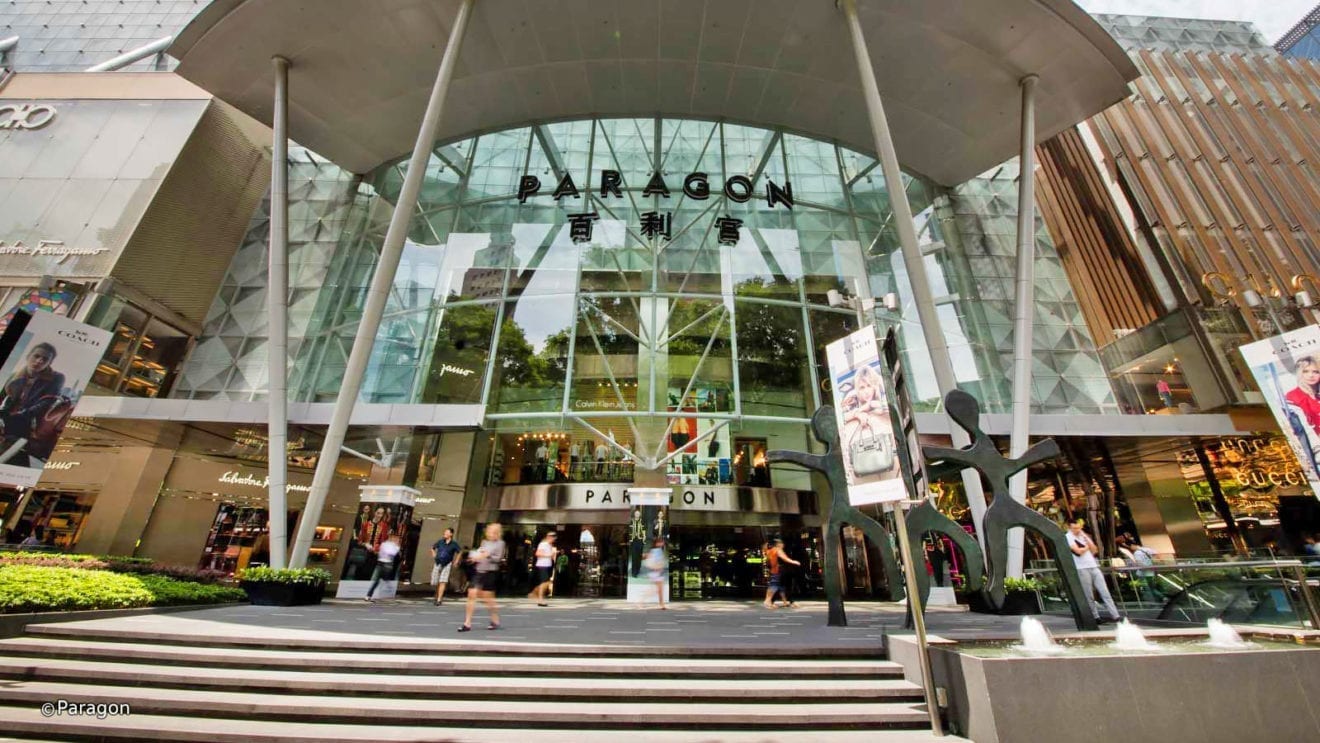
    Higher rental income has helped boost first-quarter turnover at SPH Reit, which owns two malls, Paragon in Orchard and The Clementi Mall in Clementi.

    Both properties continued their track record of full occupancy amid headwinds in the retail environment, says SPH Reit.

    Gross revenue for the quarter, to the end of November, grew 1.7 per cent to S$53.5 million (US$40.2 million), on the back of higher rental income, while net property income rose 1.9 per cent to $42.2 million.

    “In keeping with our long-standing philosophy of partnering tenants toward mutual success, the rental review for tenants takes into consideration occupancy cost,” says the group. “This will better position them to ride on the sales recovery since June.”

    However, there was a negative rental reversion of 10.6 per cent for Paragon’s new and renewed leases, which had mainly been committed 12 months earlier. This represented 4.4 per cent of the mall’s net lettable area.

    There was only one tenancy change at Clementi Mall, and the overall portfolio rental reversion – based on the weighted average of all expiring leases – was a negative 10.6 per cent for the quarter, compared with a positive 1.2 per cent for new and renewed leases last year.

    Meanwhile, SPH Reit Management CEO Susan Leng says the group has maintained its track record of 100 per cent committed occupancy and delivered steady performance. “The Singapore economic outlook has improved and retail sales have shown signs of recovery since June.

  • Asia Keeps Swiss Watch Recovery on Track

    Asia Keeps Swiss Watch Recovery on Track

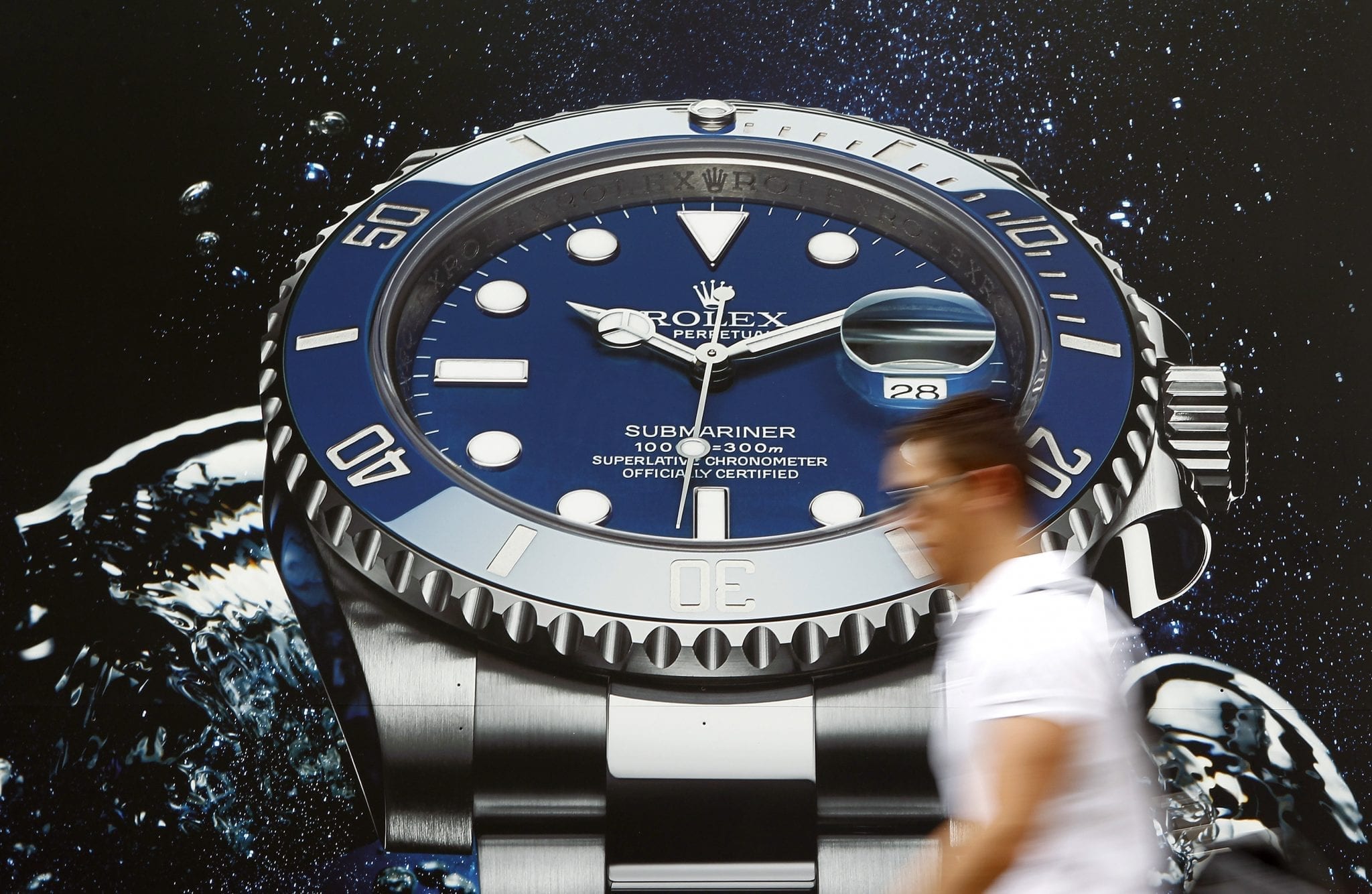
    China and Japan continue to grow as key markets for Swiss watches, reports the Federation of the Swiss Watch Industry.

    China had its strongest growth for 30 months at 39.8 per cent, while Japan, up 22.5 per cent, showed strong growth for the second month in succession.

    Hong Kong has confirmed its recovery with its eighth positive month, exports there rising 4.4 per cent, while exports to Singapore, Switzerland’s seventh-largest market, rose 10.6 per cent.

    Export growth has continued over the seven months to the end of November, says the federation. The total value of exports reached nearly FRF2 billion francs (US$1.9 million), equivalent to 6.3 per cent growth over the figure for the previous November.

    Electronic watch exports were down by more than 1 million units to 15.6 million, a drop of 6.3 per cent. By contrast, mechanical watch exports rose 4.6 per cent to 6.59 million pieces.

    All groups of materials shared in the value growth, in particular steel, up 7.9 per cent. While the other materials category grew 32.3 per cent, the number of pieces fell 1.1 per cent.

    Watches priced at less than FRF200 (export price) fell substantially in November, says the federation, while the other price segments advanced in terms of both value and volume. The FRF200-500 category had the best performance with growth, up 20 per cent.

  • Different approaches to bitcoin in Asia

    Different approaches to bitcoin in Asia

    In mid-September, China’s central bank, the People’s Bank of China (PBOC), told virtual currency trading platforms based in Beijing and Shanghai to cease market operations.

    Authorities also clamped down on ethereum and any other electronic units that are exchanged online without being regulated by any country.

    The PBOC said it wanted to fight “speculation” around the crypto-currencies, which “seriously disrupted the financial system”.

    This came after the National Internet Finance Association of China — an offshoot of the PBOC — drew up a damning report on virtual currencies, saying they were “increasingly used as a tool in criminal activities” such as drug trafficking.

    Experts say Chinese authorities are also concerned about possible capital flight which could harm the value of the yuan.

    However, the authorities in Beijing have not yet attacked bitcoin mining — the creation of the digital currency.

    Between 60 and 70 percent of new bitcoins are created in China.

    Korean concern

    Hyper-wired South Korea was also a hotbed for virtual currencies such as bitcoin, accounting for some 20 percent of global transactions, about 10 times its share of the world economy.

    But South Korean authorities late last year banned financial institutions from dealing in virtual currencies on fears of a bubble fuelled by retail speculators.

    About one million South Koreans, many of them small-time investors, are estimated to own bitcoins and demand is so high that prices are around 20 percent higher than in the US.

    Initial coin offerings (ICOs) — where companies sell newly mined cryptocurrencies to investors for real money — were also outlawed.

    The government has also pledged to strengthen investor protection rules, in an effort to curb speculation and potential fraud.

    Announcing the ban on ICOs in September, South Korea’s Financial Services Commission declared “cryptocurrencies are neither money nor currency nor financial products”.

    Youbit, a South Korean exchange trading bitcoin and other virtual currencies, declared itself bankrupt in December after being hacked for the second time this year.

    North Korea was accused of being behind the first attack.

    Singapore caution 

    Singapore’s central bank has issued a warning over cryptocurrencies, cautioning the public about the risk of jumping in on the “bitcoin bubble”.

    The Monetary Authority of Singapore noted they are not backed by any central bank and are unregulated, which means those who lose their investments have no grounds for redress under Singapore law.

    Yusho Liu, co-founder of Singapore-based cryptocurrency wallet Coinhako, says demand has been soaring, with transactions up around 10-fold over the past year.

    However, while regulators have been prepared to offer a cautious free rein to the digital units, “financial institutions and service providers have been rather resistant”, Liu told AFP.

    “In fact, I believe that only 30-40 percent of the market potential is fulfilled because of the friction generated by such matters. This is the key missing piece of Singapore being the fintech hub,” said Liu.

    Japanese jump in 

    The high-profile collapse of digital currency exchange platform MtGox failed to douse the enthusiasm for virtual currencies in Japan, which in April became the first country in the world to proclaim it as legal tender.

    As many as 10,000 businesses in Japan are thought to accept bitcoin and bitFlyer, the country’s main bitcoin exchange, saw its user base pass the one-million mark in November.

    Many Japanese, especially younger investors, have been seduced by the idea of strong profits in the context of ultra-low interest rates that offer little in the way of returns.

    However, the governor of the Bank of Japan, Haruhiko Kuroda, has recently issued a warning that the recent rise of the bitcoin price was “abnormal”.

  • New retail fuel prices announced

    New retail fuel prices announced

    The Independent Consumer and Competition Commission (ICCC) has announced the new retail fuel prices for this month, which will take effect on January 8, 2018.

    According to the ICCC’s calculations, retail fuel prices for petrol, diesel and kerosene will increase throughout PNG as of 8th January, 2018.

    “These price increases are attributed to the increases in the Import Parity Prices (IPP) for this month. Furthermore, the increases in the IPP are attributed to the increases in the Mean of Platts Singapore (MOPS) prices for petrol, diesel and kerosene during the month of December, 2017,” ICCC said in a statement.

    “Increases in the MOPS prices are attributed to the increases in crude oil prices during the month of December, 2017. The retail price increase particularly for diesel is attributed in the increase in its excise duty in 2018 from 10 toea to 23 toea per litre.”

    The domestic retail fuel prices are inclusive of the IPP, domestic sea and road freight rates for the first quarter of 2018, 2018 wholesale and retail margins for petrol, diesel and kerosene; including excise duty for petrol and diesel, and the Goods and Services Tax (GST).

    As a result of adding all the various cost components, the table below shows the maximum retail prices for fuel that are to be sold in Port Moresby.

    Port Moresby Retail Prices (toea per litre)

    Petrol (tpl)

    Diesel (tpl)

    Kerosene (tpl)

    Retail Prices as of 8th January, 2018

    346.92

    308.76

    280.47

    Retail Prices as of 8th December, 2017

    343.29

    286.12

    273.94

    Price Variance (+/-) toea per litre

    +3.63

         +22.64        +6.53

    As stated above, for this month the retail fuel prices in the National Capital District will change as follows:

    • Petrol prices will increase by 3.63 toea per litre;
    • Diesel prices will increase by 22.64 toea per litre; and
    • Kerosene prices will increase by 6.53 toea per litre.

    Retail prices in all other designated centres will change according to their approved in-country shipping and road freight rates (for the first quarter of 2018) that are charged by the fuel distributors.

    As part of the ICCC’s enforcement and compliance of fuel prices, its investigation officers will conduct inspections at all service stations on Monday, January 8, to ensure prices of petroleum products do not exceed the allowable maximum prices.

    The prices set by the ICCC are the indicative maximum retail prices, for which retailers may choose to sell below the maximum price.

    “Again, the ICCC would like to remind retailers who sell fuel using pumps to set fuel prices to one decimal place while the ICCC will continue to set the maximum price to 2 decimal places,” said Avi Hubert, acting chief executive officer.

    “No fuel pump operator should charge above the Indicative Retail Price for this month’s price regardless of the number of decimals. This is to ensure compliance with the Prices Regulation Act under which the maximum prices of refined petroleum products are set.

    “Retailers who are displaying prices to 1 decimal place are urged by the ICCC to round the prices down to ensure prices are within the allowable indicative retail prices. The ICCC inspectors will continue to conduct spot checks after 8th January to ensure ongoing compliance by fuel operators.”

    Consumers are advised to report any instances of overcharging by retailers through the ICCC’s Consumer Protection Division on 325 2144 or on toll free number 180 3333.

  • CapitaLand sharpens China focus by selling 20 malls to Vanke

    CapitaLand sharpens China focus by selling 20 malls to Vanke

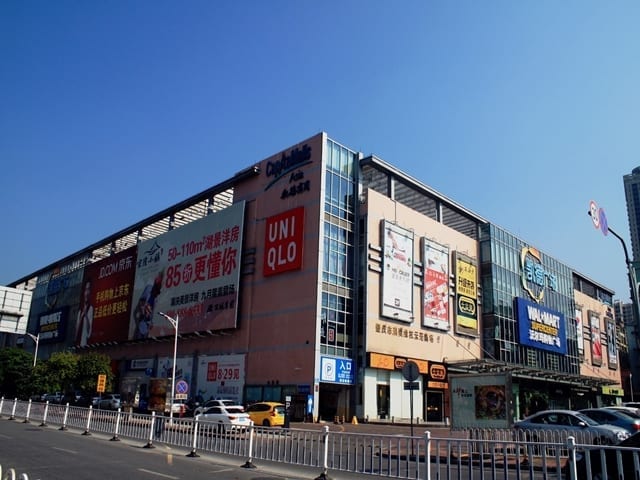
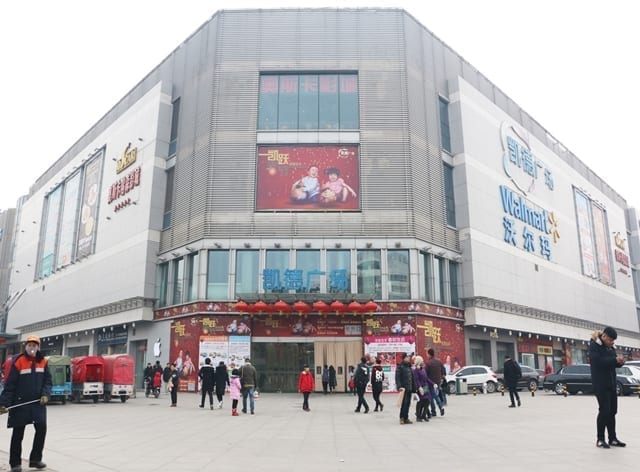
    CapitaLand China is about to sell 20 malls across China, following a year of record openings for the Singapore group.

    Through its wholly owned subsidiary CapitaLand Mall Asia, CapitaLand has signed agreements with unrelated parties to divest its share of interest in a group of companies that hold 20 retail assets with an agreed value of RMB8.3 billion (S$1.7 billion/US$1.2 billion).


    Each mall has an average gross floor area (GFA), excluding car park, of about 40,000sqm. They are spread across 19 cities, of which 14 are non-core cities in which CapitaLand has a single mall.

    Set for completion in the second quarter of this year, the transaction is expected to generate net proceeds of about S$660 million and a net gain of about $75 million for CapitaLand. The resultant loss of recurring income will be limited as the 20 malls account for about 4 and 7 per cent of CapitaLand’s respective total and China shopping mall portfolio valuation.

    The move follows CapitaLand’s divestment of CapitaMall Kunshan last month, and the formation of a JV between CapitaLand and CapitaLand Retail China Trust in November to acquire Rock Square, a 84,000sqm mall in Guangzhou.

    ‘Cusp of change’

    “China is sitting on the cusp of transformative changes to its retail industry, characterised by a burgeoning middle class and the rising popularity of omni-channel retailing,” says CapitaLand president/group CEO Lim Ming Yan. “CapitaLand is seizing this window of opportunity to reconstitute its mall portfolio with a sharper geographical focus.”

    He says that unlocking the value of mature assets for reinvestment into new growth opportunities is a hallmark of CapitaLand’s capital recycling strategy. “We will continue to invest in dominant assets in core Chinese city clusters, where we already enjoy a competitive advantage.”

    Lim sees China as an important core market for CapitaLand, with its competitive advantage in integrated developments acting as a key differentiator.

    CapitaLand last year opened a record 1 million square metres of retail space across eight developments in Singapore, China and Malaysia – its largest retail space offering in a single year. Of these, six are retail components of large-scale integrated developments in China, averaging about 130,000sqm. They are in fast-growing Chinese cities such as Hangzhou, Shanghai, Shenzhen, Suzhou and Wuhan.

    Post-divestment, CapitaLand’s mall network in China will be concentrated in 22 cities, compared to 36 before. It will comprise 491 malls, 45 of them in first- and second-tier cities. More than half are the retail component of integrated developments.

    CapitaLand’s largest retail presence is in Beijing and Shanghai, where it owns/manages eight malls each, followed by Chengdu with six and Wuhan with four. Following the acquisition of Rock Square, CapitaLand will have two malls in Guangzhou.

    The five core city clusters under CapitaLand’s China strategy are Beijing/Tianjin, Shanghai/Hangzhou/Ningbo/Suzhou, Guangzhou/Shenzhen, Chengdu/Chongqing/Xi’an, and Wuhan.

  • DBS and Chubb sign 15-year bancassurance partnership

    DBS and Chubb sign 15-year bancassurance partnership

    Singapore’s DBS Bank and insurer Chubb have signed a bancassurance agreement to distribute home, contents and selected personal accident and supplemental health (A&H) insurance products as well as general insurance products for SMEs.

    Effective 1 January 2018, the insurance distribution partnership will be valid for a period of 15 years and will cover Singapore, Hong Kong, China and Taiwan.

    The bancassurance partnership in Indonesia will be launched at a later date, subject to regulatory approval.

    Under the terms of the agreement, the lender will distribute Chubb insurance products to its six million retail, wealth and SME customers through a network of more than 200 branches as well as via its digital banking platforms.

    DBS Bank deputy group head of consumer banking and wealth management Pearlyn Phau said: “This partnership represents the coming together of two leading organisations, combining DBS’ superior Asian banking franchise with Chubb, the world’s largest publicly traded property and casualty (P&C) insurance company and a global leader in general insurance and reinsurance.

    “Chubb’s track record in delivering digital innovation, collaborating with partners and offering a suite of market leading products across multiple customer segments makes them an ideal partner for DBS.”

    Chubb country president in Singapore Adam Clifford said: “This strategic partnership provides significant growth opportunity in bancassurance for Chubb and DBS. With our extensive product and digital capabilities, as well as best-in-class service standards, we hope to deliver the Chubb brand promise of excellence to all of DBS’ customers in Singapore.”

  • M&S sells Hong Kong business to Dubai conglomerate Al-Futtaim

    M&S sells Hong Kong business to Dubai conglomerate Al-Futtaim

    Marks & Spencer has confirmed the sale and franchise of its retail business in Hong Kong and Macau to its long-established franchise partner Al-Futtaim.

    The two companies all but confirmed the sale in August  and settlement took place on December 30.

    Al-Futtaim is now the sole franchisee for Marks & Spencer Hong Kong and Macau, but the deal does not extend to the mainland where M&S has a presence on Tmall, having closed its department stores there.

    The two companies have a partnership dating back to 1998 when Al-Futtaim opened Dubai’s first M&S store in the UAE.

    The addition of 27 Marks & Spencer Hong Kong and Macau stores takes Al-Futtaim’s M&S network to 72 shops in 11 markets in Asia and the Middle East.

    “We have substantially reshaped our International business, which has improved profitability and positioned us for growth,” observed Paul Friston, Marks & Spencer’s international director in a statement confirming the sale.

    “As one of the world’s leading retail operators, with strong logistics capabilities and local expertise, Al-Futtaim is the ideal partner for us to develop and grow our business in Hong Kong and Macau.”

    Stephen Rayfield, VP of M&S and sports & lifestyle with Al-Futtaim said the company is looking forward to “enriching our customers’ lives and aspirations through the provision of quality products and services in Hong Kong and Macau”.

    Pascal Martin, partner with OC&C Strategy Consultants, said the decision to sell and franchise the Marks & Spencer Hong Kong business is consistent with the shift to an asset-light business model that the UK company has adopted for its international business.

    “It did not make sense to support only Hong-Kong and Macau as directly operated international businesses after having pulled out from all other direct markets, such as China and France. By selling its Hong Kong and Macau business to Al-Futtaim, M&S can also raise cash to continue to invest in its core, including product quality, the UK market and e-commerce.”

    At the same time, Al-Futtaim has a strong track record in operating M&S stores in many other markets and a solid investment capacity to continue to expand the M&S international store network, said Martin.

    “Another key factor is that Al-Futtaim’s M&S business is led by ex-M&S’ senior executive, Stephen Rayfield, who knows the business inside-out and can fully optimise daily operations between Al-Futtaim and M&S.”

    M&S now has a simple homogeneous international business: all wholesale to local partners, with the exception of a joint venture in India with Reliance.

    “The brand will be able to leverage Al-Futtaim’s strong investment capacity to accelerate the International expansion. Al-Futtaim can benefit from adding a strong profitable business (HK and Macau) to its already strong international M&S portfolio. They may be able to exert more control on M&S Asia logistics network to achieve better integration across Singapore, Malaysia, Hong Kong and Macau. Al-Futtaim will likely have increased negotiation power with M&S on product, store format, pricing and more,” said Martin.

  • Aigle opens Manila flagship store

    Aigle opens Manila flagship store

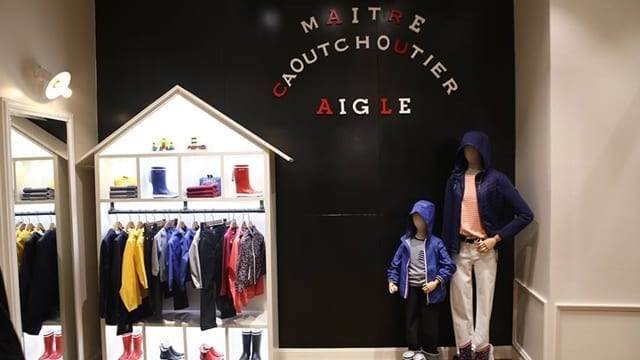
    French outdoor lifestyle brand Aigle has arrived in Southeast Asia – with a flagship store in Uptown Mall, Taguig City in Metro Manila, the Philippines.

    “Filipinos are very fashion-forward, and Aigle marries both style and reliability in outdoor wear,” says Andrew Naval of local representative Noble House Distribution Enterprise.

    Aigle’s latest collection was unveiled at the store launch, attended by TV host/model Mari Jasmine as well as representatives from Aigle Asia.

    Aigle PH

    Aigle PH 3

    Aigle PH 2

    Aigle PH 1

    While the store’s decor has a French accent, vintage Aigle posters and accordion music added to the atmosphere for the opening event. The occasion was used to introduce the brand ambassadors – actress/model Andi Eigenmann, organic produce farmers Gippy and Hindy Weber-Tantoco, and actor/TV host Victor Basa.

    An outdoor adventure photography online contest was held in conjunction with the store’s arrival, with six winners receiving their prizes at the launch event. They all won an Aigle shopping spree and an outdoor adventure at Aquascape Lake Caliraya.

    Sixty steps are involved in making Aigle’s rubber boots, with its craftsmen having up to two years of training before making their first official pair.