Tag: Singapore

  • SingX expands remittances to Malaysia and HK

    SingX expands remittances to Malaysia and HK

    Singapore FinTech startup now supports cross-border digital remittance to the markets. Singapore-based FinTech startup SingX has expanded its online remittance services to Malaysia and Hong Kong.

    SingX founder and CEO Atul Garg said the company SingX has introduced remittances to two new markets, from Singapore to Malaysia and from Singapore to Hong Kong, as these markets have a considerable amount of cross-border payments taking place because of their long ties with Singapore.

    Licensed by the Monetary Authority of Singapore, SingX targets individuals and SMEs. The expansion of its service to new geographies is expected to appeal to Malaysians in Singapore who transfer money back home to pay for expenses and Singapore residents who invest in stocks, property and trade in Hong Kong and China.

    The company launched its first product, cross-border fund transfer from Singapore to India, in January this year. Based on its current monthly run rate, after six months of operations, SingX’s online remittance platform would have achieved an annualized run rate of $100 million.

    SingX’s online platform claims to be cheaper, faster and more convenient as it charges consumers a fraction of what they typically pay for overseas money transfers. It does this by cutting out cable charges and bank commissions and offering transparent and live forex exchange rates. It also claims to be more convenient as it eliminates the need to fill out complex forms and for personal visits to a branch. The only fee payable is a small handling fee which is made known to the customer upfront.

    Compared to bank transfers, users of SingX are expected to save up to 90% in remittance charges when transferring funds to India, Malaysia and Hong Kong.

    SingX has implemented two-factor authentication and secure data transmission methods. As a regulated payment services provider, it has also ensured the customer’s money is kept in a segregated client account.

    SingX has further plans to roll out new services to a number of new countries around the globe soon.


  • Wirecard teams with Singtel for virtual Visa card

    Wirecard teams with Singtel for virtual Visa card

    Wirecard has teamed up with Singtel to support the recent deployment of Singapore’s first Visa virtual card for Singtel’s mobile wallet Dash.

    Singtel Dash is an all-in-one digital wallet that allows customers to shop, pay transport fares and remit money.

    Since the launch of the Visa virtual account last month, Singtel Dash’s 500,000 customers have been using their mobile phones to make payments in over 50,000 PayWave-enabled merchants across Singapore and use the payment platform to shop at Singapore-based e-commerce stores.

    “We are very proud to be a partner for Singapore’s leading digital wallet,” Wirecard EVP of global financial services Grigoriy Kuznetsov said.

    “Singtel can now process mobile virtual Visa payments with Wirecard as a Bank Identification Number (BIN) sponsor. This further reinforces our position as a leading global prepaid issuer and BIN sponsor. It also demonstrates our state-of-the-art card processing capabilities.”

    “Singtel Dash has gained more traction as a payment option of choice. With the adoption of Wirecard’s card processing solution, our customers can now make hassle-free mobile virtual Visa payments,” Singtel head of mCommerce consumer Singapore Gilbert Chuah said.

  • New Balance Singapore goes high tech

    New Balance Singapore goes high tech

    New Balance Singapore has introduced 3D foot-scanning technology in the latest of its eight brand stores (its shoes are also available from a range of authorised retailers).

    At New Balance at The Paragon, the US brand’s Stride ID technology scans a customer’s foot then recommends for the best shoe model and fit. The system also stores the customer’s data, which can be accessed online or on the brand’s app Stride ID.

    Meanwhile, the store has become the exclusive Singapore retailer for the new New Balance 574 Sport Tier 1 sneaker.

    New Balance began as a Boston-based arch-support company in the early 1900s, developed into a specialised shoe manufacturer in the 1970s and has grown to become an international athletic products company.

  • Singapore logistics startup Yojee raised another S$3mn

    Singapore logistics startup Yojee raised another S$3mn

    Yojee is a Singapore publicly listed technology company which introduced the new ways of communication and collaboration across the entire supply chain. Raised over 10 million up to date with the last funding round of 3 million came in on the 8th of August via share placement. The company will use the proceedings to further funding long term technology, sales and marketing plan leveraging existing customers and expanding further.

    The company offers everyone an opportunity to join the ‘world’s first’ collaborative cross border logistics network which connects shippers, carriers and freight forwarders in seconds, with already tens of thousands of kilograms of freight moving through the network. For shippers and carriers, the route optimisation algorithms with machine learning capabilities suggest the best asset for each delivery job using both current and historical data, based on more than 30 criteria.

    SmartAssign
    Revolutionary Yojee SmartAssign allows companies to make smart job assignment decisions without touching a button. Fully powered by Yojee Ai (Artificial Intelligence) this mode dynamically determines and passes the job to the most suitable driver for each job based on many different criteria including proximity, available vehicle capacity, driver capacity, road conditions, and many others.

    Yojee aims for a 70% reduction in the headcount required in operations and customer service to manage a logistics business, creating substantial operational savings alongside freight efficiencies by introducing more features promoting autonomous operations.

    In addition to Yojee SmartAssign, Yojee Broadcasts (uberfied mode) can be chosen, this adds a third option for companies’ operational modes, Yojee AI pushes jobs to a number of most suitable drivers and allows them to accept or reject the job, broadcast options are fully configurable including number of drivers per broadcast, time interval before re-broadcasting, which will give additional opportunities to optimise the operations.

    Big data analytics dashboard
    Big data and predictive analytics gives logistics companies the extra edge they need to optimise and manage their operations giving managers the aggregated bird’s eye view to the top data points. Analytics dashboard with customisable display allows real time visualisations of key operational and financial metrics which in addition to seamless dispatch work helps automated systems to function through intelligently routing many different data sets and data streams.

    Control tower enhancement
    Enhancement of Control Tower – users of the Yojee platform software now able to move jobs across companies. fully connected, seamless transfer, networked ecosystem

  • Singtel profit falls 6% in June quarter

    Singtel profit falls 6% in June quarter

    Singtel has reported a 6% decline in net profit for the June quarter as a result of lower contributions from the company’s minority-owned regional associates and workforce restructuring charges at wholly-owned Australian subsidiary Optus.

    Profit for Singtel’s fiscal first quarter fell 6% to S$892 million ($654 million), despite an 8% increase in operating revenue to S$4.23 billion.

    Singapore consumer revenue increased 2% due to growth in data usage, home services and equipment sales offsetting declines in voice and roaming services. Consumer revenue from Australia meanwhile increased 6% across mobile and fixed services.

    Group enterprise revenue meanwhile increased a slim 1% as growth in ICT services partially offset a decline in traditional carriage services. Digital services unit Group Digital Life’s revenue surged 91%, driven by digital advertising subsidiary Amobee’s strong performance across both social and media advertising.

    But Singtel’s share of pre-tax earnings from regional associates fell 3.8% – or 6.6% in constant currency – to S$673 million, as a result of the shrinking profit at India’s Bharti Airtel, which is facing intense competition due to the entry into the market of disruptive new entrant Reliance Jio Infocomm.

    Excluding the impact of Airtel’s 42% lower pre-tax profit contribution, Singtel’s underlying net profit would have increased 3%.

    By contrast, Indonesia’s Telkomsel increased its pre-tax profit contribution by 18% due to strong growth in data and digital services.

    “We’ve had a good start to the year with a more challenging business environment. This speaks to the resilience of our core consumer business and the investments we’ve made in the digital space in our efforts to grow new businesses,” Singtel group CEO Chua Sock Koong said.

    “We are encouraged by their performance as they scale up to capture the opportunities in the new economy.”

  • Magnum Pleasure Store Singapore introduces coffee

    Magnum Pleasure Store Singapore introduces coffee

    A flagship for Magnum Pleasure Store Singapore has opened in Ion Orchard, offering Magnum coffee for the first time in Asia.

    Its design features special art installations such as the Singapore skyline made out of Magnum ice-cream bars and the sticks.

    There is also a Magnum Pleasure Bar where visitors can customise their ice-cream treats. Eighteen toppings available, including chopped almonds, cocoa nibs, rose petals, goji berries and chili flakes.

    In five styles, the new coffee is made from Magnum chocolate-infused coffee beans.

    Merchandise can also be bought at the store including a Magnum tumbler, notebook and a leather pouch.

  • Singtel deploying Massive MIMO

    Singtel deploying Massive MIMO

    Singtel is deploying Massive MIMO (multiple-input multiple-output) technology commercially on its LTE-Advanced mobile network to improve the mobile data experience during special events.

    A precursor to 5G technology, Massive MIMO is an advanced solution used to boost network capacity in highly dense environments. The company plans to use the technology to improve mobile data speeds by up to 200% during busy periods.

    Singtel teamed up with Ericsson, Huawei and ZTE for the deployment of Massive MIMO technology at the Marina Bay area. Singtel rolled out the network boost at yesterday’s National Day celebrations, with other deployments planned for the Singapore F1 Night Race and the New Year countdown event.

    “On the joyous occasion of our National Day celebrations, Singtel is pleased to be pairing our newly-acquired 2.5-GHz spectrum with Massive MIMO technology to expand our network capacity and offer our customers an enhanced mobile experience at this and other special events,” Singtel group CTO Mark Chong said.

    Globally, large crowds gathered at events, such as concerts and festivals, use high volumes of data to share their experiences via real-time videos on social media.

    This extraordinary behaviour generates a dramatic spike in network traffic, presenting a challenge for operators to provide fast and consistent data speeds.

    Singtel has identified Massive MIMO as one of the solutions to the problem. Singtel will use Massive MIMO base stations featuring a large array of 64 antennas that improve spectral efficiency and cell capacity using innovations in radio technologies.

    The innovative antenna system channels signals to users’ specific locations instead of broadcasting across a geographical area. This multiplies the number of data paths from the cellular base stations, thus increasing network capacity and improving user experience.

  • Khun Thai Tea heading for Singapore

    Khun Thai Tea heading for Singapore

    Singapore’s Khun Thai Tea, the franchisor for the Thai iced black-tea brand that originated from a pushcart in Bangkok, is about to launch its first outlet in the city.

    This follows its establishment in the Philippines last year as its first step toward expansion in Asia.
    Elis Chai, who co-founded Khun Thai Tea along with fellow Bronze Media Singapore owner Jeremy Lee, says their company has retained global rights for the brand, based on a recipe created in 1955 by Auntie Marlee, the sole proprietor of a pushcart in Sukhumvit.

    “Her recipe for ‘cha-yen’ was restricted to her family members,” says Chai. “Her pushcart soon came to be Sukhumvit Soi 11’s best-held secret. Its popularity rose in tandem with the street’s fame, which was earning a well-deserved reputation as a dining and nightlife destination.”

    More recently, Auntie Marlee began searching for successors to continue and expand on her pushcart’s legacy, finally tying up with Filipino Nancy Padilla. This led to SM Mall of Asia in Manila becoming the first outlet outside of Bangkok to feature Auntie Marlee’s tea in June last year. Padilla owns and runs the Khun Thai Tea Shop (Philippines), including “khun” (Thai for “respect”) in the franchise name as tribute to Auntie Marlee.

    Two more Khun Thai Tea outlets followed: one at Star City Amusement Park in Manila, and another at MegaMall Manila in the Ortigas business district. Lee says more branches are set to open in Manila before the end of this year.
    With Khun Thai Tea established in Singapore as global franchisor, Lee says rapid expansion across Asia is planned. “We will strive to bring a Khun Thai Tea branch to every Asian shopping mall.”

    As well as the tea, the shops offer other Asian-influenced drinks as well as snacks. The drinks include the coffee and tea mix yuan yang, first brewed in Hong Kong, and ice bandung, inspired by a Malaysian recipe that combines rose syrup with milk. Taiwanese-style boba (small tapioca balls) are an optional extra.

    Snacks include Thai-influenced items such as crispy kangkong and tea toast.

  • M1 launches nationwide NB-IoT network

    M1 launches nationwide NB-IoT network

    Singapore’s M1 has announced the launch of Southeast Asia’s first commercial nationwide narrowband IoT network.

    M1 and its partners are using the network to make available IoT solutions in fields including smart energy management for buildings, environmental monitoring, asset tracking and fleet management.

    The operator is today hosting industry partners and businesse to showcase the possibilities of IoT technology, including smart metering, smart NB-IoT GPS trackers, smart GPS locks, smart waste management through bins with alters to cleaners when they are full and even smart toilets that can detect when they need cleaning.

    “The launch of Southeast Asia’s first commercial nationwide NB-IoT network will accelerate our journey into a digital society,” M1 CEO Karen Kooi said.

    “The Internet of Things will open up an incredible array of fresh opportunities and innovation. We look forward to working closely with government agencies, technology partners, and customers to enable smart solutions for everything and everyone.”

    Rival Singtel has meanwhile announced plans to roll out a nationwide cellular IoT network supporting both CAT-1 and NB-IoT by end September.

    Singtel will use its cybersecurity operations to support businesses in deploying secure IoT solutions, and plans to invite business and technology partners to develop and test IoT solutions at its joint IoT Innovation Lab operated with Ericsson.

    “The launch of our network provides an ideal platform for the proliferation of IoT devices and applications,” Singtel CEO Bill Chang said.

    “With more businesses embracing the digital future, it paves the way for IoT adoption as Singapore advances towards becoming a Smart Nation. We welcome businesses to be part of the growing IoT ecosystem by leveraging on our robust infrastructure and network.”

  • About 20,000 people get their caffeine fix at the Singapore Coffee Festival

    About 20,000 people get their caffeine fix at the Singapore Coffee Festival

    About 20,000 coffee fiends got their fix and more at the second edition of the Singapore Coffee Festival, which ended yesterday.

    The four-day event featured more than 90 exhibitors including coffee purveyors, equipment distributors and cafes, as well as workshops, talks and live entertainment at the Marina Bay Cruise Centre.

    Exhibitors and visitors who attended last year’s festival praised this year’s edition for its more spacious layout with 11,500 sqm spread over two floors, and greater variety of products on offer. Last year’s event was held at the F1 Pit Building.

    Many vendors reported brisk business at the weekend, with festival favourites such as The Coffee Academics’ Coffee In A Cone, cream muffins by bun-maker Hattendo and coffee-roasted pork chop buns by patisserie-restaurant chain Antoinette drawing long queues.

    Hattendo was left with just 100 cream muffins after yesterday’s brunch session, and had made about $3,000 in sales a day, said Hattendo Singapore chief executive Daisuke Ishioka.

    “We prepared more than 1,000 every day, and every day it has sold out. We are selling more than we expected to,” he said.

    Splitting each day into two sessions – brunch and sundown – helped with crowd control and gave vendors time to replenish stocks.

    Antoinette’s pork chop buns, created specially for the festival, proved so popular that they will be added as a weekend menu item at its restaurants soon, said its sales and marketing manager, Ms Wong.

    A repeat participant at the coffee festival, Antoinette has seen a doubling in sales this year, with up to 2,000 buns sold over the four days.

    A Barter Market, live music and fireworks displays at Sunrise Wharf on Friday and Saturday were among other highlights of the festival, which also hosted the 2017 Singapore AeroPress Championship by Common Man Coffee Roasters on Friday.

  • StarHub 1H17 profit falls 21%

    StarHub 1H17 profit falls 21%

    Singapore’s StarHub has reported a 21% slump in net profit for the first half of the year to S$85.7 million ($63.1 million), as  result of declining revenue and margins.

    Service revenue for the six-month period fell 2% year-on-year to S$1.08 billion due to lower mobile, broadband and pay TV service revenues.

    Total mobile revenue fell 1% to S$599 million despite an increase in postpaid and prepaid customers of 21,000 and 33,000 respectively.

    Broadband revenue fell 1% over the same period to S$107 million, but enterprise fixed revenue was up 2% to S$198 million, with enterprise data and internet services revenue up 5% to S$176 million.

    StartHub also reported a decline in ebitda margin to 31.6% from 34.2% a year earlier.

    “In the quarter, we announced our acquisition of Accel to enhance our enterprise-grade cyber security offerings. This acquisition dovetails perfectly with our strategy to grow our enterprise business and demonstrates our push for inorganic growth,” StarHub CEO Tan Tong Hai said.

    “In the consumer space, we are happy to see continual improvements in customer satisfaction levels… We remain focused on addressing our customers’ digital lifestyle needs by offering them relevant products and services to enjoy a better StarHub experience.”

    For the full year, StarHub is currently projecting flat service revenue and a group ebitda margin of between 26% to 28% of service revenue. The company expects capex payments to be around 13% of total revenue.

  • Singapore consumers need mobile data

    Singapore consumers need mobile data

    Half of Singapore consumers would only be able to only last one day without using mobile data, according to a survey commissioned by MVNO Circles.Life

    The survey of over 900 respondents also discovered that many Singapore consumers are data deprived, with 2 in 3 saying that they need at least 6GB of mobile data per month to not worry about busting their mobile data limits. The industry average is between 3.5GB to 4GB of mobile data usage a month.

    “Findings of the survey are consistent with our internal market research, where we have discovered that consumers in Singapore needed more data, but did not have affordable access to it,” commented Rameez Ansar, co-founder and director of Circles.Life.

    “After we launched our 20GB for S$20 data Data Plus option in March, we saw a huge spike in the data usage of our subscribers to the current average of 8GB per month, more than double of the current industry usage. Singapore consumers are hungry for more mobile data and we expect that demand to grow as a nation.”

    The Circles.Life Annual Mobile Data Usage Survey 2017 was conducted by survey research firm, Survey Sampling International (SSI) of Singaporeans between 16 to 54 years old.

    The survey also revealed that many users were frustrated with their current mobile data limits and 9 in 10 felt frustrated when they reached their month data limits.

    In addition, 1 in 2 Singapore consumers have exceeded their monthly mobile data limits at least once in the last six months and of these, 24% exceeded their mobile data limits by at least 3GB.

    Survey respondents indicated that their most frequently used mobile app used each day was Whatsapp, followed by Facebook and YouTube. Dating apps were the least frequently used mobile apps.

    In conjunction with National Day 2017, Circles.Life is offering a free upgrade to its no-contract mobile plan for new subscribers. New subscribers joining in August will enjoy the 20GB for S$20 Data Plus option for free for the month of August.

  • NEC opens first Advanced Centre for Experimentation (ACE) in Singapore

    NEC opens first Advanced Centre for Experimentation (ACE) in Singapore

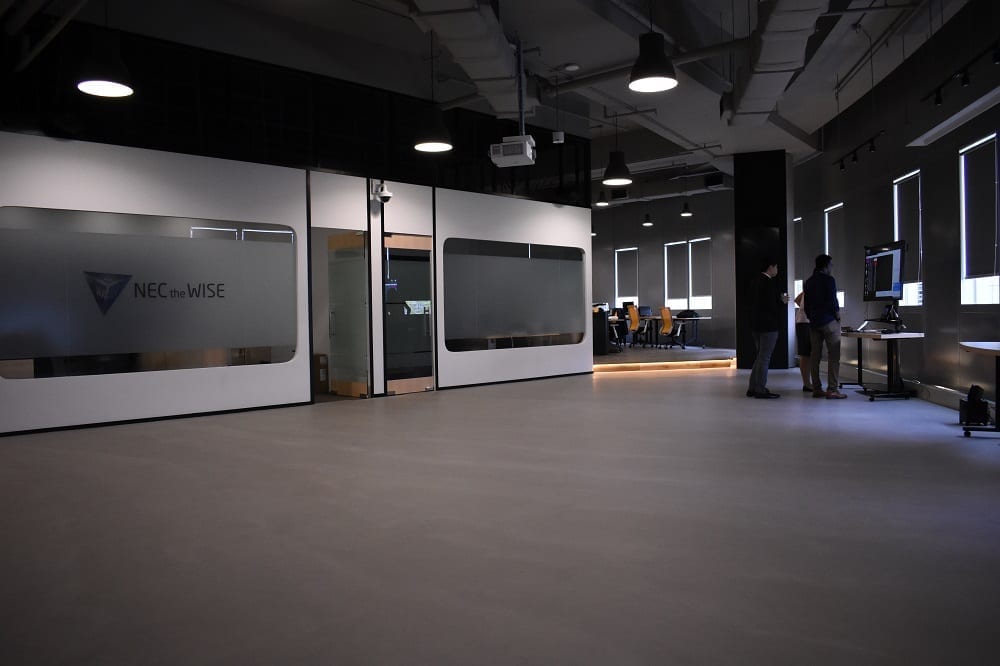
    NEC Corporation and NEC Asia Pacific today announced the opening of NEC’s first Advanced Centre for Experimentation (ACE), aiming to facilitate the company’s global Research & Development capabilities.

    The ACE is strategically located in Singapore, with its favorable research ecosystem and infrastructure, and forms a key component of NEC’s growth strategy in the Asia Pacific region. Operated by NEC Laboratories Singapore (NLS), the ACE leverages NEC’s core technologies and advanced solutions, such as artificial intelligence (AI) and ICT platforms, to create new value and contribute to a safer, smarter living environment for people and communities.

    The facility allows co-creation of solutions and provides a “living lab” for proof-of-concepts foradvanced solutions that help customers and partners, including governments and enterprises, in areas such as public safety, transportation and healthcare. This enables close collaboration with NEC researchers in a real world environment, and makes it possible to clearly understand thebenefits of new solutions before commercial deployment and operation.

    In conjunction with the opening of the ACE, NLS, which currently is staffed with 33 researchers/solution engineers, will hire an additional 50 researchers/solution engineers within the next three years, mainly specializing in AI, the Internet-of-Things, Cognition and cyber security, thereby contributing to the further development of Singapore’s R&D talent pool.

    “We are delighted that NEC has chosen to establish their ACE in Singapore. This investment by NEC is a strong testament of Singapore’s talent pool and innovation capabilities to drive the digital transformation of industries.  The ACE will enrich Singapore’s digital ecosystem, and will foster new partnerships for the co-creation and commercialization of new solutions from Singapore,” said Tung Meng Fai, Director, Infocomms and Media, Singapore Economic Development Board.

    “The establishment of the ACE is a significant milestone for us as it is the first of its kind for NEC globally. NEC is investing more than S$100 million in the Asia Pacific region over the next five years mainly for research and development, and the set-up of the ACE in Singapore is the heart of this investment. This experiment facility underscores NEC’s strong commitment to business in Asia Pacific,” said Tetsuro Akagi, Senior Vice President of NEC Corporation and Chief Executive Officer of NEC Asia Pacific. “Leveraging NEC’s technological innovation in AI and big data analytics, we hope to innovatively help governments and enterprises across the region in their digital transformation journey.”

    Established in September 2013, NLS aims to accelerate time-to-market of NEC’s solutions for society. NLS core expertise is in the study of social concerns jointly with government, enterprises, and research institutes, and proposing a combination of advanced information communication technologies to form new solutions to solve a broad range of business and social challenges.

    NLS has conducted joint research projects with partners and customers around the world. This includes SMRT Buses, a public bus transport operator in Singapore. SMRT Buses and NEC launched Singapore’s first telematics monitoring system consisting of eco-drive sensors that monitor and analyze bus captains’ driving behavior in 2014. This has led to another innovative project with SMRT Buses to develop the Professional Learning and Training Management System (PROLEARN). PROLEARN provides a comprehensive approach to constantly monitor, proactively manage, and provide customized training for drivers with relevant operational and industry-specific competencies using NEC’s big data analytics technology.

  • Alipay Southeast Asia partners with Fave in Singapore

    Alipay Southeast Asia partners with Fave in Singapore

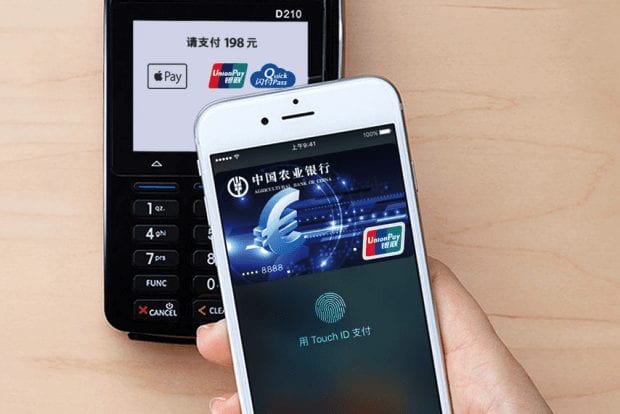
    Alipay Southeast Asia is partnering with Fave to roll out seamless cross-border payments via app, starting with Singapore.

    Fave, an online-to-offline (O2O) mobile platform and Alibaba Group’s financial affiliate Ant Financial will allow the Alipay app to be used for payments at restaurants and offline retailers that are part of the Fave ecosystem, with special offers and rewards for users.

    With 520 million users worldwide, Alipay is one of the world’s largest online and mobile payment platforms. As more than 3 million Chinese tourists are expected to visit Singapore this year, the ability to accept Alipay will greatly benefit local restaurants and retailers and Southeast Asia as a whole, according to Fave.

    “Restaurants and offline retailers are the backbone of the economy in Singapore, and we aim to help them succeed,” says Fave founder Joel Neoh. “While more than 90 per cent of retail spend is done offline, retailers are always looking for ways to reach out to mobile-savvy customers.”

    Regionally, Fave covers more than 10,000 restaurants and offline retailers, and has more than a million active users who can earn rewards in Indonesia, Malaysia and Singapore.

    “By partnering with innovators like Fave, we are giving Chinese travellers the safe, efficient and convenient payment services they are accustomed to at home,” says Alipay Southeast Asia head Dayong Zhang.

    According to Singapore Tourism Board (STB) preliminary estimates, more than 2.8 million Chinese travellers visited Singapore last year, proving the largest source of tourism receipts, spending more than S$3 billion (US$2.2 billion) to the end of September alone.

    Launched 12 months ago, Fave covers such segments as F&B, beauty and wellness, and lifestyle and activities, and has acquired Groupon Indonesia, Malaysia and Singapore. The company sprang from fitness sharing platform KFit.

  • Delayed launch for Pablo Singapore

    Delayed launch for Pablo Singapore

    After a delayed launch, cheese-tart chain Pablo Singapore is set to open in Wisma Atria in the next couple of weeks.

    The Japanese brand had originally been scheduled to open this month.

    On sale will be the chain’s signature 15cm-wide tarts, plus two other flavours – the matcha cheese tart with shiratama mochi and azuki or red beans, and the chocolate cheese tart.

    As in other overseas outlets of Pablo, the “medium” version of the tart will be offered (in Japan, diners can also order a “rare” version that oozes molten cheese filling when sliced).

    There will also be a crustless premium cheese tart with a caramel glaze topping, inspired by creme brulee. Later this year mini-tarts will be added to the menu.

    With 78 seats, the cafe will occupy a 1400 sqft (130 sqm) space on the first level of Wisma Atria, formerly occupied by Omakase Burger.

    Pablo is being brought in by Caerus Holdings, which runs New York confectionery chain Lady M in Orchard Central, Westgate mall and South Beach Avenue.