Tag: Singapore

  • Zalora Support Three Local Designers at Singapore Fashion Week

    Zalora Support Three Local Designers at Singapore Fashion Week

    ZALORA, Asia’s online fashion destination, today announced its partnership with Singapore Fashion Week as the Official E-Tail Partner. This is the second time the online fashion brand is taking part in one of the region’s biggest fashion events of the year. ZALORA will be presenting three Singapore designers and labels namely, Stolen, Aijek, and Max Tan in the Fashion Futures Showcase. Fashion fans in Singapore can purchase the collections on ZALORA from today onwards.

    As the Official E-Tail Partner, ZALORA will be hosting a shoppable Singapore Fashion Week microsite on ZALORA.com that will feature curated collections from Fashion Futures Showcase and Singapore Fashion Week Access, a dedicated show segment for Singapore designers. As part of ZALORA’s commitment to stay up-to-date with the latest trends within the industry, ZALORA is embracing the ‘see now, buy now’ model enabling fashion show goers to purchase their favourite looks immediately.

    Shop Max Tan Spring/Summer 2017, Stolen Spring/Summer 2017, and Aijek Fall/Winter 2016 collections at www.zalora.sg/fashion-week-singapore and on the ZALORA mobile app.

    “ZALORA is proud to be supporting local designer talent in one of the most anticipated fashion events of the year,” said Parker Gundersen, Chief Executive Officer of ZALORA Group. “We’re very passionate about supporting the local fashion industry across all of our markets in Asia, and Singapore Fashion Week provides a great opportunity for us to give the region’s top designers exposure to millions of new consumers on our online platform. It’s also an exciting way for our customers to discover new fashion and to buy product straight from the runway.”

    “Singapore Fashion Week is delighted to be working with ZALORA again this year, as we recognise the growing impact and importance of digital and social media, and connecting designers and labels

    with customers via e-commerce. With the growing trend of ‘See Now, Buy Now’ as well, I believe that online retailers like ZALORA will play an ever-growing role in partnerships with fashion weeks around the world,” commented Tjin Lee, Founder and Chairman of Singapore Fashion Week.

    ZALORA also strongly believes in making fashion more inclusive and accessible. To further engage fashion consumers, the Fashion Futures Showcase will be live-streamed on ZALORA where viewers at home can watch the shows and access exclusive content. Catch all the exciting happenings at Singapore Fashion Week Fashion Futures Showcase on social media at #ZALORAxSGFW.

  • Emmi milk plans Asian expansion through Amazon

    Emmi milk plans Asian expansion through Amazon

    Emmi, a Swiss milk processor and dairy products company headquartered in Lucerne, plans to expand its Asian sales through a strategic partnership with internet giant Amazon. Emmi has been relatively uninvolved in Asia, with only a turnover of around CHF 20 million. CEO Urs Riedener said he believes he could double total sales “over the next five years”. In Asia, Emmi is pursuing an export strategy and is not producing on the spot.

    In Hong Kong, Emmi is already the third strongest yoghurt brand. In Singapore, Riedener sells Emmi products in many four- and five-star hotels and Singapore Airlines in Business Class as well as in expat shops in China. ording to Riedener, the happenings in Asia are analyzed “repeatedly”. But one must remain realistic: “We are a relatively small company, our opponents are world giants.” Emmi is currently active in twelve countries, perhaps it could be 15. “Can we have 25?” I believe this would be self-assessment, “said the Emmi CEO.

    However Riedener considers the pricing model at Amazon “difficult”. In principle, the dealer determines the final selling price. “Amazon keeps its margin in any case. This is relatively ugly in the calculation for the manufacturer. “Such a clause would not enter Riedener for the manufacturer and supplier Emmi with Amazon.

  • Jurong Point put on market with over S$2b price tag

    Jurong Point put on market with over S$2b price tag

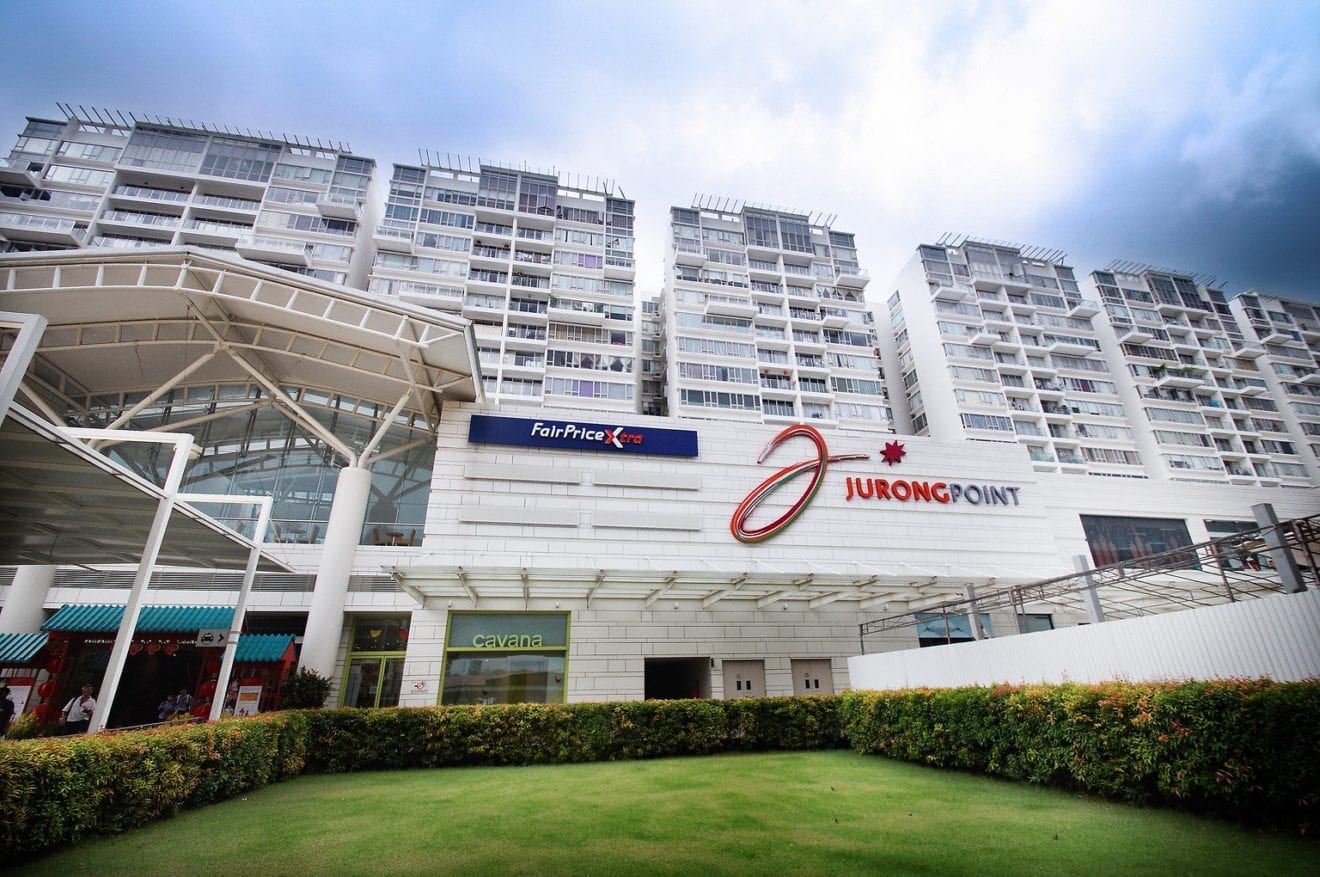
    biggest suburban shopping centre, Jurong Point, has been put up for sale with a price tag exceeding S$2 billion.

    This works out to more than S$3,000 per square foot based on the commercial net lettable area of about 658,000 sq ft that is being offered for sale by an equal joint venture between Guthrie GTS and Lee Kim Tah Holdings, both of which have been delisted.

    At over S$2 billion, the price tag translates to a sub-4 per cent net yield, Michael Leong, director of sole marketing agent Array Realty said.

    Array in turn is working exclusively with JLL to conduct an expressions of interest exercise that will close on Nov 18.

    Guthrie and Lee Kim Tah are divesting a total net lettable area of 702,000 sq ft – including 44,000 sq ft of space under the government’s Community/Sports Facilities Scheme (CSFS) which is currently being used by occupiers such as NTUC First Campus Co-operative’s My First Skool and voluntary welfare organisations.

    There is a further space of about 59,000 sq ft under three strata retail units divested by Lee Kim Tah and Guthrie about two decades ago to Golden Village, NTUC FairPrice and POSB – taking the total net lettable area in Jurong Point to 761,000 sq ft.

    Guthrie and Lee Kim Tah are offering their 702,000 sq ft in the mall through the sale of shares in companies that own this space. “The two partners have owned the property for many years and want to look at pursuing new interests and opportunities,” said Mr Leong. Lee Kim Tah was delisted in early 2015 and Guthrie in November 2013.

    Most stockmarket analysts would think that a net yield of 3-plus per cent based on Guthrie and Lee Kim Tah’s asking price is too low to make for a yield-accretive acquisition by Singapore mall Reits (real estate investment trusts).

    However, JLL regional director of Singapore capital markets Anthony Barr expects Jurong Point to appeal to a broad range of other institutional investors including sovereign wealth funds, pension funds and insurance groups.

    “Rarely do stabilised assets of this scale become available. There have been no comparable sales of a suburban retail property of this size on the open market for more than a decade in Singapore’s tightly held retail sector; other large sales have been either related party transactions involving listed Reits or sales of partial interests.”

    A high-performing mall, Jurong Point is regarded as “fortress retail”, he added. “This, combined with the dynamic growth planned for the Jurong district, will ensure a broad range of interest at the indicated pricing.”

    Jurong Point is seamlessly linked to the Boon Lay MRT Station and Bus Interchange. It currently draws an average monthly visitorship of six million and has a catchment of 150,000 households within a five-km radius, with potential for growth as the new town planned in Tengah is progressively developed.

    Major tenants for the space at Jurong Point owned by Guthrie and Lee Kim Tah include FairPrice Xtra, Courts, Harvey Norman, Uniqlo and Kiddy Palace in addition to three foodcourts. Joining their ranks soon will be BHG, which will open a nearly 50,000 sq ft department store on three levels in December; part of this space was previously occupied by John Little.

    The mall is nearly fully let.

    Jurong Point stands on two sites; one has a balance lease term of about 76 years and the other, 89 years. Their combined land area is 557,288 sq ft.

    The original Jurong Point was completed in 1995 and spans four levels of retail space (Basement 1 to Level three). The CSFS space is on Levels 4, 5 and 6.

    The extension, which was completed in 2008, has three retail floors – Basement 1 and Levels 1 and 3.

    About 1,000 carpark lots in Jurong Point are available for use by shoppers.

    The mall’s total gross floor area (GFA) is 1.07 million sq ft; there is no unutilised GFA.

  • These could be the world’s fanciest duty-free stores

    These could be the world’s fanciest duty-free stores

    Airport travelers shuffling between security checks and their boarding gate often grab duty-free perfume or a cut-price bottle of spirits before an international flight.

    But that’s far from the reality of some passengers at Singapore’s Changi Airport, who in some cases shell out more than $100,000 dollars for a bottle of their favorite tipple before hopping onto a flight.

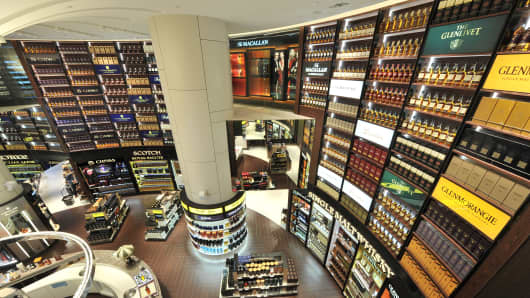
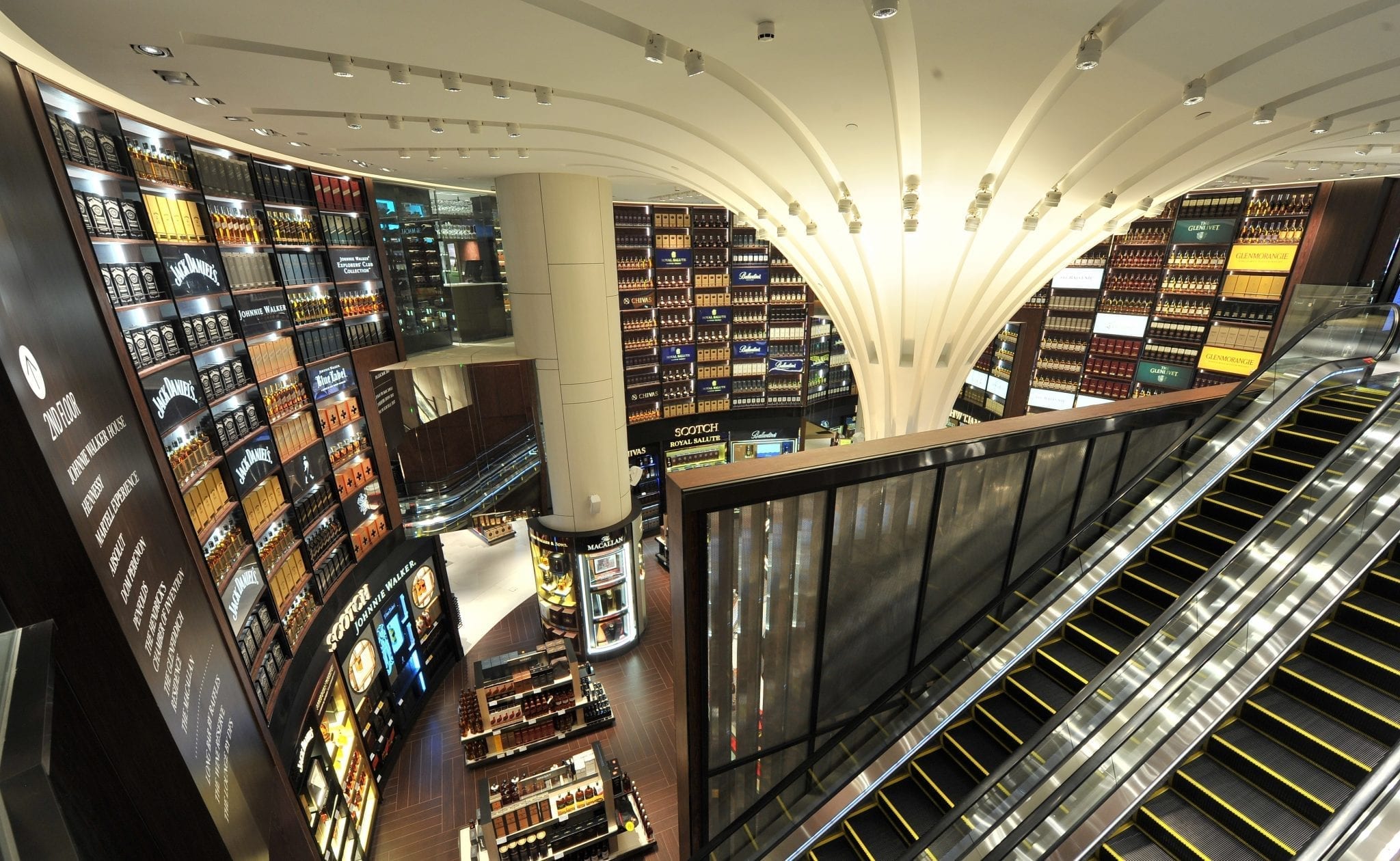
    High-end duty-free retailer DFS opened its new concept stores – complete with whiskey, wine, cigar and tobacco rooms, bartenders, complementary tastings and even virtual reality installations – in Changi’s Terminals 2 and 3 with precisely these customers in mind.

    “We drew inspiration from stylish restaurants and bars around the world when we created this space,” Wilcy Wong, DFS’s vice president of store operations in Singapore.

    He said there would be no hard sell when it came to the pricey products.

    “These days a lot of the customers are very knowledgeable themselves, so to be able to engage them and teach them something new is important,” Wong said.

    Not that the hard sell would be necessary; as well as knowledgeable, many customers are big spenders.

    DFS Wine & Spirits store at Singapore's Changi Airport
    DFS Wine & Spirits store at Singapore’s Changi Airport

    DFS staff recounted that one traveler recently bought a bottle of Glenfiddich 50-year-old single malt whisky priced at 43,910 Singapore dollars ($31,611) on a whim after passing the store. And that paled in comparison to the most expensive bottle ever sold at Changi, for S$250,000 ($180,000).

    Hong Kong-based DFS Group, which is majority owned by LVMH, has outlets at 17 major international airports, mostly in Asia, but has also staked flags in New York and San Francisco.

    The global travel retail market is estimated to grow to $85 billion by 2020, according to the Fung Business Intelligence Center, and Asia-Pacific is the largest single sector of the market, accounting for 39 percent, followed by Europe at 32 percent.

    This forecast growth is in contrast to the fall in retail mall traffic, particularly in the U.S., which has slumped as consumer spending lags and online shopping grows in popularity.

    Singapore’s Changi Airport, repeatedly ranked the best in the world by the influential Skytrax annual survey, hosts 55 million passengers a year, all of whom are classified as traveling internationally because Singapore is a city-state, and thus are free to buy duty-free items.

    DFS declined to provide any change in sales or foot traffic since opening of the new stores in Changi, but the concept has been praised by the retail and travel industry, winning “Best Shopping Experience” this year by Singapore’s Tourism Board, and Singapore’s Retailers Associations “Best Retail Concept of the Year”.

  • DDoS attacks caused StarHub broadband outages

    DDoS attacks caused StarHub broadband outages

    Singapore’s StarHub has blamed DDoS attacks originating from its customers’ own infected devices for two broadband outages over the past few days.

    At a press conference yesterday, StarHub announced the latest findings of an investigation into the outages on October 22 and 24.

    Both outages lasted for around two hours, leaving many home broadband customers unable to surf the web due to a spike in DNS traffic originating from infected machines.

    Because the traffic originated from StarHub’s own subscribers, it appeared legitimate. But when the attack was detected, StarHub manually filtered out the traffic from the infected devices to restore services for its other customers.

    StarHub announced it plans to send technicians to help customers clean up any infected devices at their homes.

    Singapore’s Cyber Security Agency and the Infocomm Media Development Authority have urged operators to strengthen their defense against DDoS attacks, and noted that this marks the first time Singapore has experienced such and attack on its network infrastructure.

    Darktrace managing director for APAC Sanjay Aurora said operators and ISPs are likely to find themselves increasing targets of attack.

    “The core infrastructure of telecommunications companies is a very desirable target for cybercriminals [but] gaining access is extremely difficult and requires deep expertise in specialist architecture,” he said.

    “What ISPs should be wary of, is the possibility of similar DNS amplification attacks on a more regular basis, given that they require relatively little skill and effort but can cause a large amount of damage. This makes them increasingly popular among hackers.”

    He said DNS-based DDoS attacks can impact networks by saturating bandwidth with malicious traffic, while also increasing volumes of support calls and negatively impacting  the customer experience and ultimately revenue.

    Aurora added that there is a possibility that the DDoS attack was caused by Mirai, the IoT botnet responsible for the recent DDoS attack against US-based DNS service provider Dyn. This attack used infected IoT devices.

  • Singapore retail sector’s weakness continues in 3Q

    Singapore retail sector’s weakness continues in 3Q

    Prime retail rents fell faster in Q3

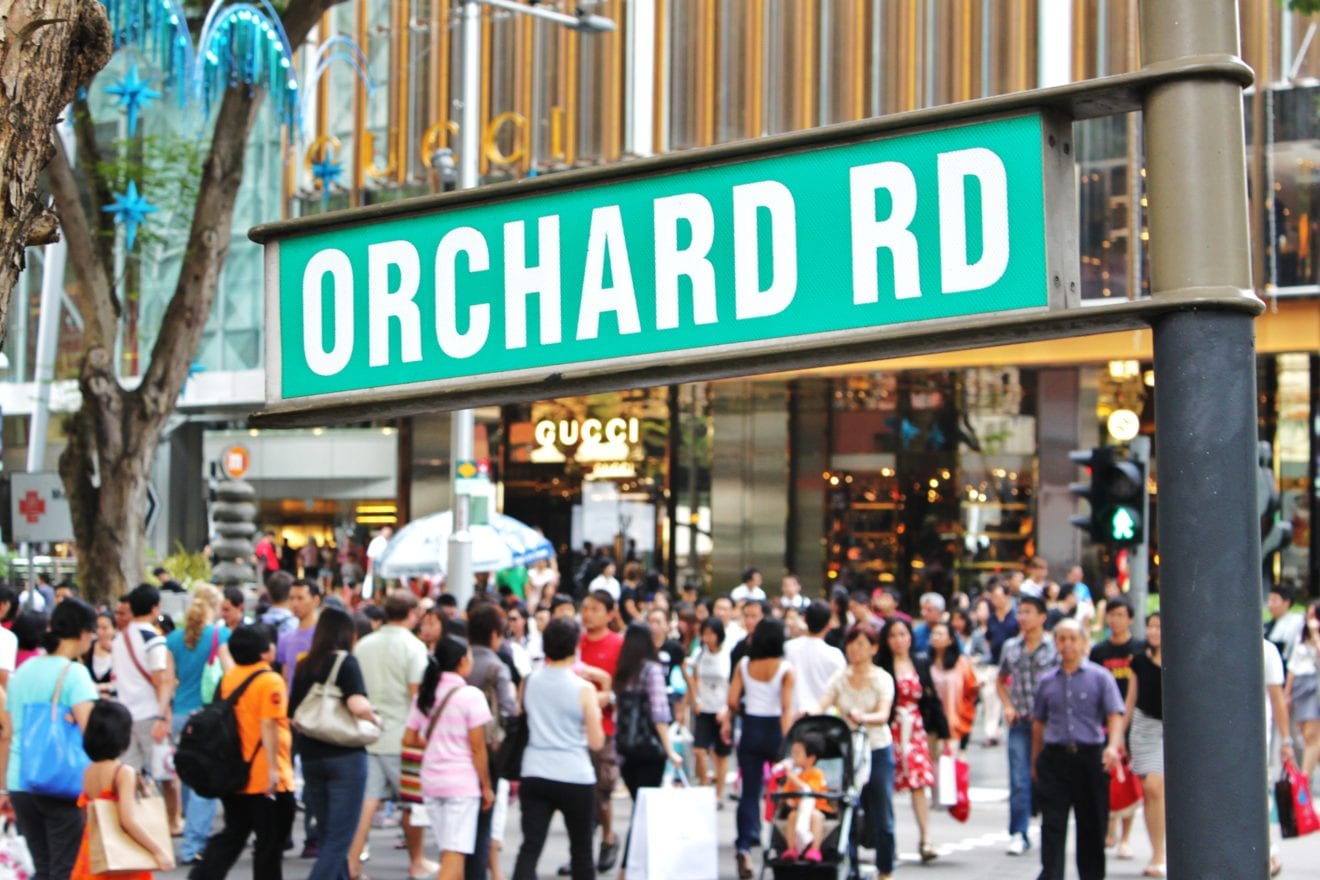
    Orchard rents fell 0.9% to $39.86 per sq ft.

    Leasing activity slowed and the rental decline quickened in Q3 2016 due to continued headwinds from poor overall retail sales and online competition.

    Based on rental records captured by the Urban Redevelopment Authority’s Real Estate Information System (URA REALIS) as at 18 October 2016, there were a total of 2,460 leasing deals in Q3 2016, down 12.5% quarter on quarter (QOQ) and 14.7% year on year (YOY). This was a sharp contrast to the 41.4% QOQ jump in leasing volume in Q2 2016.

    According to Colliers International, the fall in leasing transactions in Q3 2016 reflected the weak sentiment in the retail sector which continued to face numerous challenges including Singapore’s weak economy, cost concerns, manpower shortages and intensifying competition from online retailers.

    Moreover, although the latest available figures showed tourist arrivals stayed on the uptrend and rose 6.7% YOY in July, the retail sales index (excluding motor vehicles) contracted by 3.1% YOY and 6.5% YOY in July and August, respectively.

    In light of the above, the decline in prime retail rents accelerated in Q3 2016, after slowing down in the second quarter.

    In the Orchard Road sub-market, the average monthly gross rent for prime ground floor shopping mall space contracted by 0.9% QOQ from SGD40.21 per sq ft in Q2 2016 to SGD39.86 per sq ft in Q3 2016. This is faster than the 0.5% QOQ slide in Q2 2016.

    Likewise, the rate of rental decline picked up pace in the Regional Centres.

    The average monthly gross rent for prime ground floor shopping mall space reached SGD33.38 per sq ft, after falling by 0.8% QOQ in Q3 2016. In comparison, rents fell by 0.3% QOQ in Q2 2016.

  • Singapore commercial property faces a gloomy outlook. Here’s why

    Singapore commercial property faces a gloomy outlook. Here’s why

    The outlook for Singapore’s commercial property, including retail, office and industrial space, may have turned grim, according to forecasts from real-estate services provider Colliers.

    Singapore’s retail landlords and tenants face “challenging times,” Colliers said in a note dated Monday, forecasting demand for retail space to lag behind supply this year, with a rise in new space pushing up island-wide vacancy rates.

    Colliers said leasing activity slowed and rental declines accelerated in the third quarter amid poor retail sales and online competition.

    Singapore’s retail sales fell 1 percent in August on year overall and excluding the 30 percent jump in car sales, fell 6.5 percent, with drops in categories including jewellery, restaurants and recreational goods, according to official data.

    “In the near term, the uncertain economic outlook and heightened unemployment risk will probably be dampening factors on consumer spending,” Colliers said, although it expected the year-end holiday shopping season would mitigate the hit to retail sales.

    It forecast ground-level shopping-mall rents in 2016 would fall by 2.0-2.5 percent in regional centers and by 2.5-3.0 percent in the prime Orchard Road shopping belt.

    Singapore’s office segment may not fare much better.

    “Overall office rentals across Singapore continue to slide under pressure of oversupply and lacklustre demand as the market saw the fifth consecutive quarter-on-quarter rental decline in the third quarter,” Colliers said.

    “Underpinned by gloomier economic outlook from potential U.S. rate hikes, an uncertain Chinese economy and concerns on the repercussions of Brexit, business sentiments and overall office space expansion remain restrained,” it added.

    Colliers noted that Singapore’s preliminary gross domestic product estimate for the third quarter showed a 4.1 percent on-quarter contraction, with some economists saying a technical recession was a possibility.

    When it comes to office rents, grade-B office buildings were taking a bigger hit as tenants fled to better quality space, it said.

    “We expect competition among landlords to fill the backfill spaces, especially in older office buildings, to intensify over the next few quarters,” it said.

    Colliers forecast the office vacancy rate would surge, with premium and grade-A supply in the central business district (CBD) set to rise 5.6 percent this year and another 12.1 percent next year as more buildings were completed.

    It expected rents in that segment would decline by up to 3.0 percent in the fourth quarter, for a full-year decline of 7.0-12 percent.

    When it came to industrial property, Colliers advised it was an “opportune time” for tenants to evaluate their needs.

    “Given the tentative economic outlook, we expect industrial rents to remain soft over the next three to six months,” it said. “Coupled with the ample space options available, there will be opportunities for industrialists to secure choice business premises at competitive rents. ”

    It expected 20 million square feet of new industrial space to be added this year, pushing up vacancy rates island-wide.

    Colliers forecast that rents for prime multi-user conventional industrial space would fall 7.0-14.0 percent this year.

    Amid tough competition for tenants, it expected rents at independent high-specification industrial buildings located outside the science and business parks would fall further in the fourth quarter, for a full-year decline of 9.0 percent.

    But in business parks, it expected rents would rise a modest 1.0-2.0 percent for the year as higher rents were attainable at newer developments.

    Colliers noted, however, in the third quarter, landlords didn’t cut rents by much across industrial properties.

    Most landlords weren’t willing to cut rents by large margins in the period after sharp cuts in the first half of the year and were instead giving tenants more incentives, such as longer rent-free and fitting-out periods, covering alteration works and subsidizing repairs, it said.

    Leslie Shaffer

  • Sa Sa profit drop looms

    Sa Sa profit drop looms

    Sa Sa profit is expected to fall 35 to 45 per cent for the six months ended September 30.

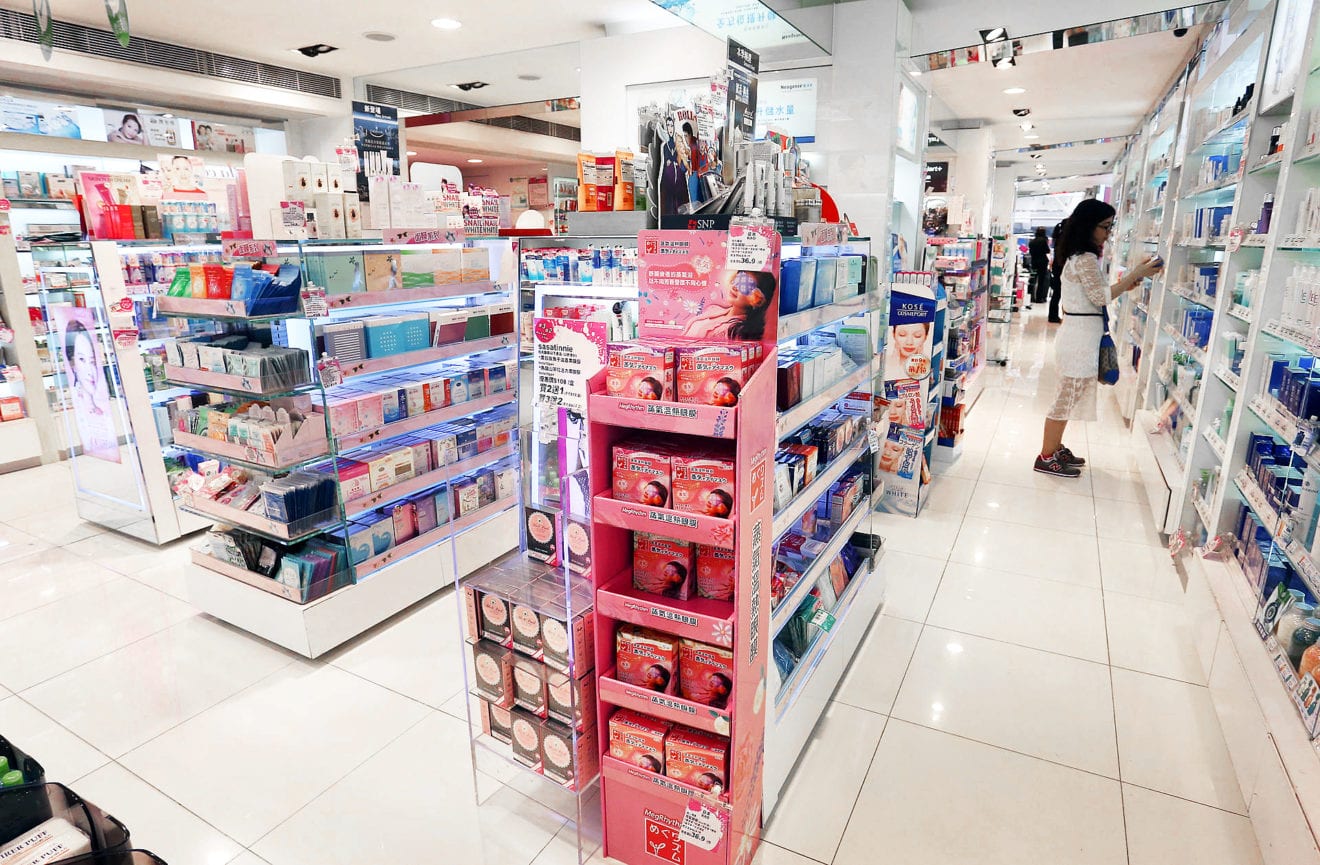
    The Hong Kong-based cosmetics retailer has issued a profit warning, citing a drop in both sales and gross profit margin of its Hong Kong and Macau business, weaknesses in some overseas stores and decline in online profits.

    Meanwhile, the group has recorded a 2.3 per cent decrease in retail and wholesale turnover to HK$1910.9 million (US$246.3 million) for its second quarter.

    In other markets, including China, Malaysia, Singapore, Taiwan and Sasa.com), the group’s turnover fell 2.9 per cent. For Hong Kong and Macau, turnover was down 2.2 per cent to HK$1552 million, total sales easing by 2 per cent while same-store sales were 2.5 per cent down on a year-on-year basis.

    However, there was a 3.9 per cent rise in the number of transactions because of increased traffic growth. The number of transactions of Hong Kong and mainland customers rose by increased by 1.8 and 5.9 per cent respectively, while the average sales per transaction fell by 5.5 and 6.9 per cent respectively.

    Improved sales performances, says the group, were a result of its efforts to adjust product offerings to meet market demand. The resulting change in product mix intensified downward pressure on gross profit margin for the quarter.

    For the National Day Golden Week holiday from October 1 to 7, the group’s retail sales in Hong Kong and Macau had positive growth of 13.8 per cent, with same-store sales growing by 12.4 per cent.

    As at September 30, the group had a total 283 stores/counters, down from 288 at June 30. Hong Kong and Macau has 113 outlets (up one), China 53 (down two), Malaysia 68 (down one), Taiwan 26 (down five). Singapore was steady at 23 outlets.

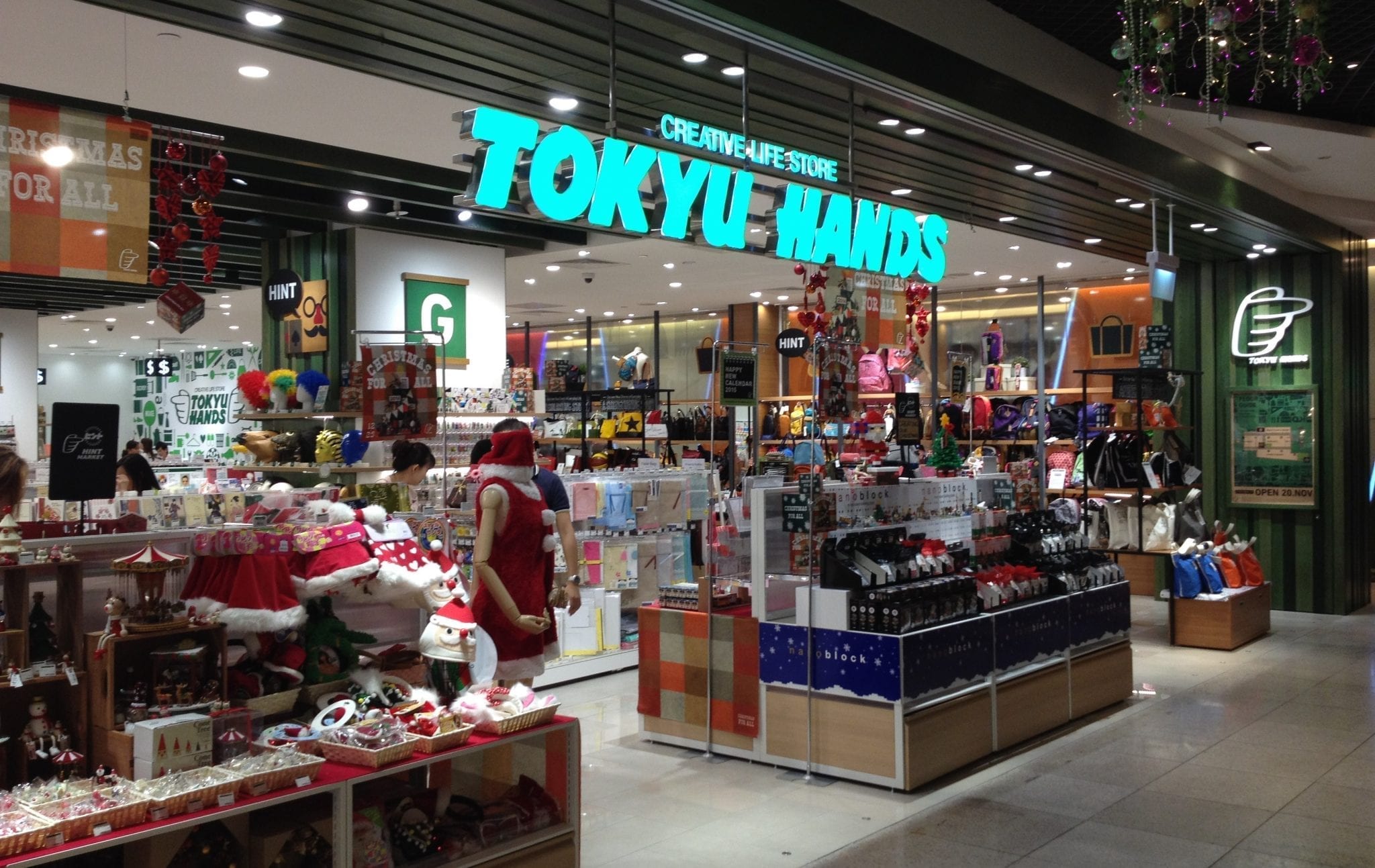
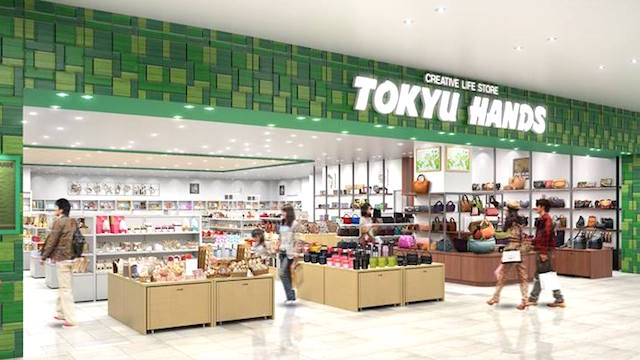
  • Tokyu Hands opening third Singapore store

    Tokyu Hands opening third Singapore store

    Japanese department store Tokyu Hands plans to boost its overseas sales, which now contribute 1 per cent of overall sales.

    Overseas income for its latest year totalled about 800 million yen (US$7.69 million).

    A third store is opening next month in Singapore, where Tokyo Hands has had managed stores for two years, and next year the group plans to start trading in Malaysia.

    tokyu-hands-artist

    Tokyu Hands opened its first overseas branch in Taiwan in 2000 and now has 15 franchised stores on the island.

    Takenori Tsuji, who heads Tokyu Hands’ international business, says the Taiwan stores are mainly in Taipei with management entrusted to the franchisees, “but we consult on the selection of merchandise and store layout”.

    He says trends in Japan, such as aging consumers, have made it hard for the store to grow domestically.

    Tokyu Hands’ first directly managed store overseas opened in China in 2012, but closed it in January this year. Tsuji says this was a result of management difficulties.

    “It took more time and effort than expected to clear customs when we brought in products from Japan, making it hard for us to sell new products quickly.

    “Some sales people quit soon after being hired, and it was hard to train Japanese employees in the local area.”
    Six months after launching, the store had a temporary sharp drop in sales when relations between China and Japan worsened over the disputed Senkaku Islands. However, full-year sales were “reasonably good”.

  • Hokkaido Baked Cheese Tart heads to Australia

    Hokkaido Baked Cheese Tart heads to Australia

    Food enterprise ST Group has launched Japanese-style Hokkaido Baked Cheese Tart outlets in Australia.

    Using a traditional recipe involving three cheeses from Japan’s dairy heartland of Hokkaido, the tarts have already been introduced in Brunei, Indonesia, Malaysia, Shanghai and Singapore. Six outlets are planned for Australia, three in Melbourne to be followed by three in Sydney next year.

    The first Hokkaido Baked Cheese Tart stores launched in Malaysia this year, selling up to 20,000 units a day.

    Designed by Eat Architects, Hokkaido Baked Cheese Tart kiosks are compact with a luxury aesthetic, featuring marble benchtop displays and low-slung designer lighting. The tarts are displayed like precious gems.

    ST Group MD Tatt Ghee Saw says Australia’s multicultural society is continually evolving, along with its palate and cuisine preferences. “At ST Group we are passionate about sharing the foods we love in Southeast Asia. ”

    Tatt Ghee Saw

    He established the group in 2011, recognising the need for comforting cultural eateries, much like the hawker’s markets and corner laksa stores of his native Kuala Lumpur.

    His first venture was PappaRich in Melbourne, which attracted long queues. It is now a major franchise enterprise with 26 stores throughout Australia and New Zealand. The group’s other brands are NeNe Chicken, Gong Cha (New Zealand only) and iDarts Australia.

  • Samsung to roll out Blue Coral Galaxy S7 edge 4G+ in Singapore, US

    Samsung to roll out Blue Coral Galaxy S7 edge 4G+ in Singapore, US

    We’re taking a break from the Note 7 fiasco. Samsung seems to be refocusing its energies in other products and services because really, the damage has been done already. We know the company is already doing a lot of security and extra measures like considering maybe tapping LG for the next flagship’s battery, offering cash discounts, and launching only one flagship annually.

    This time, Samsung has just announced that it’s releasing a Blue Coral version of the Galaxy S7 edge 4G+. The phone will be available soon in a new color variant, giving people another alternative to the problematic Note 7. You see, the S7 edge has always been another option within the premium flagship category even before the Note 7 was launched. The smartphone was introduced in four color options namely Pink Gold, Silver Titanium, Gold Platinum, and Black Onyx and now, it’s getting the stunning Blue Coral.

    The Blue Coral Samsung Galaxy S7 edge 4G+ will roll out starting November 5 with 32GB onboard storage. Don’t be surprised but the listed retail price is a staggering $1,098.

    Samsung announced this color option together with the 2016 version of the Galaxy Tab A 10.1 with S Pen 4G. The two should be available from most retailers and mobile carriers in Singapore initially and then in the United States very soon.

  • Can’t do without your mobile device? You’re not alone

    Can’t do without your mobile device? You’re not alone


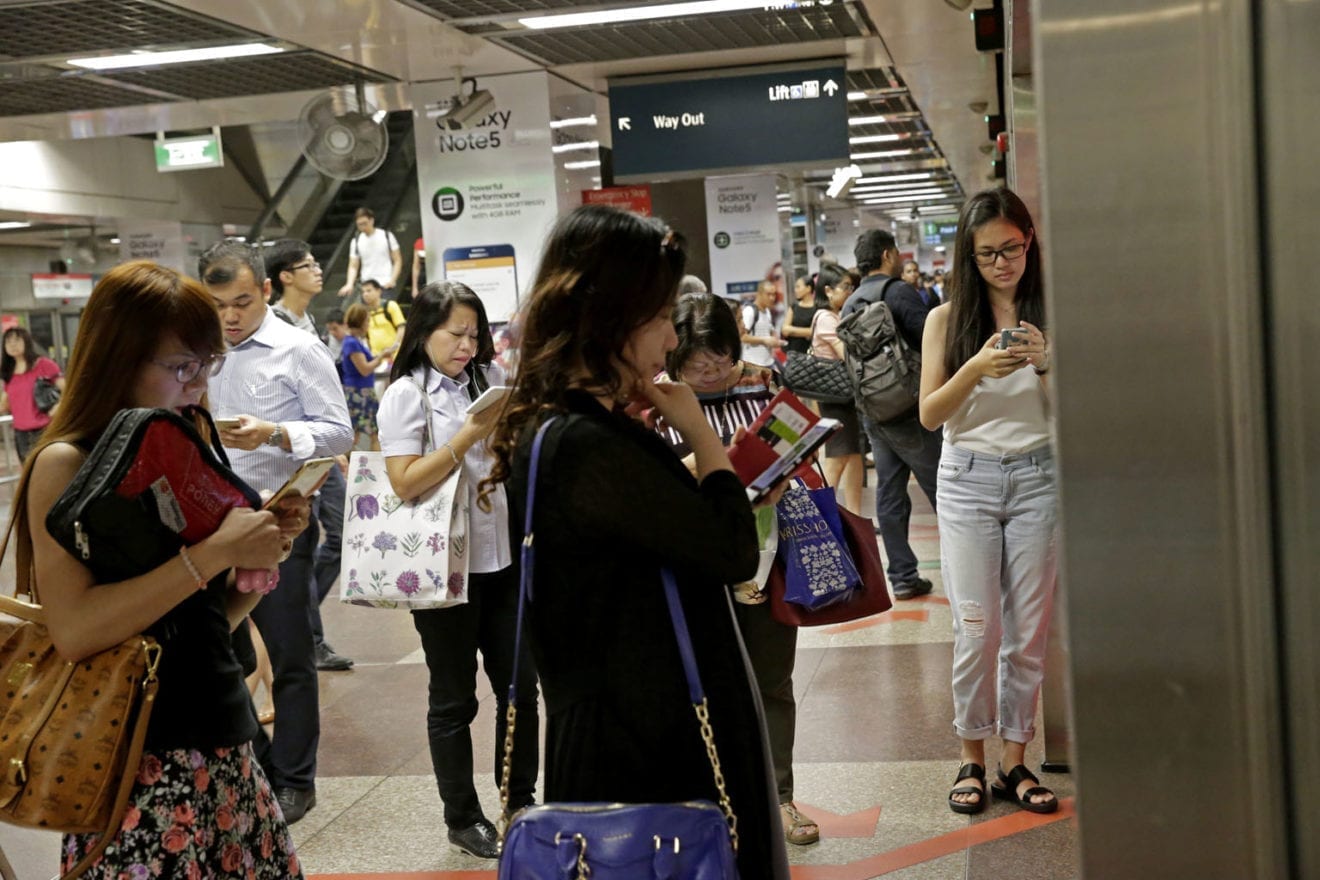
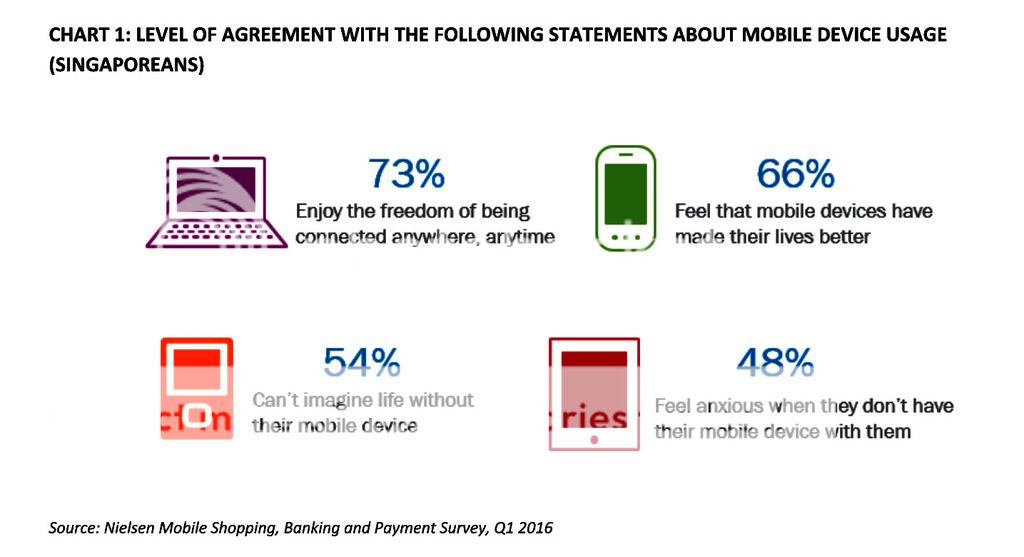
    Market research agency Nielsen on Monday says that some 54% of Singaporeans cannot imagine life without their mobile devices and 48% feel anxious without them.

    In addition, Nielsen found that 73% of Singaporeans enjoyed the freedom of being connected anywhere, anytime, while 66% strongly or somewhat agreed that their mobile device had bettered their lives.

    The findings were from a poll of more than 30,000 online respondents in 63 countries, in Nielsen’s latest Mobile Shopping, Banking and Payment Survey. This included 493 respondents from Singapore.

    Nielsen says the proliferation of technology and need for connectivity in their lives has revolutionised the world of retail, and changed the way consumers shop and buy online, as well as perform banking transactions.

    “Mobile devices… are shaping and defining the consumer’s approach to retail and banking, empowering them to demand a more custom tailored experience according to their taste and preferences,” says Joan Koh, managing director, Nielsen Singapore and Malaysia.

    “The need for connectivity and value of convenience has never been greater among Singaporeans,” she adds.

    Some 62% of Singaporeans have used their mobile devices to look up product information when shopping and 54% have used their mobile devices to compare prices.

    Close to half, or 49% of consumers, have used their mobile device to research on a product or service within the last six months.

    In addition, some 32% have used their mobile devices to purchase a product or service, and 31% have booked movie tickets, flight tickets or hotel stays through them.

    “The adoption of mobile devices has disrupted the path to purchase of traditional retail channels,” says Koh. “Businesses need to continue to leverage on digital and social media platforms to supplement traditional formats such as television and print media to drive consumer engagement.”

    Growth in access to cashless payments is estimated to lead to US$10 trillion in additional consumer spending over the next decade, according to estimates from The Demand Institute, which is jointly operated by Nielsen and The Conference Board.

    Nielsen says consumers are also adopting digital tools to monitor their spending and manage their finances.

    “We are seeing an uptrend in the adoption of mobile-banking activities,” says Anil Antony, executive director of consumer insights at Nielsen Singapore. “This is further girded by the fact that retail banks are increasingly going digital with their processes and driving automation.”

    Some 41% of Singaporeans say they had checked a bank account balance or a recent transaction in the past six months, while 37% have paid a bill using their mobile device.

    In addition, 36% of respondents have transferred money between bank accounts, and 26% have transferred money using their mobile device directly to another person.

  • Aruba rethinks network procurement with NaaS

    Aruba rethinks network procurement with NaaS

    At the Aruba APAC Atmosphere 2016 conference held late last month in Singapore, Aruba Networks President Dominic Orr announced the launch of network-as-a-service, which supports the delivery of the company’s new Mobile First Platform.

    Core applications for Gen-Mobile era

    The core applications on Aruba Networks’ new Mobile First Platform are supported by its existing network infrastructure, including Wi-Fi, Bluetooth low energy (BLE), wired and WAN. The platform comprises network controls, network management, policy management, cloud networking, network analytics and location services. These applications supports the delivery of third-party IT services and business applications that form a mobile apps ecosystem.

    Examples of the IT services that are available on Aruba’s Mobile First Platform include Citrix, MobileIron (MDM and enterprise mobility services), splunk (operational intelligence), ArcSight (an HP company that provides cyber security), Okta (identity management and single sign-on), Check Point, Intel Security, Juniper, and Palo Alto Networks.

    As for business applications, the Platform also supports Skype for Business, AT&T, Aislelabs (enterprise mobile wallet marketing platform), kasada (cryptographic data firewall and our password-less authentication), RetailNext (in-store analytics), Envoy (visitor registration) and eventboard (visitor and room management).

    “The Gen-mobile has given rise to rapid IT forces like the internet of things (IoT) and mobility. This is not just about the use of next-generation devices, like the Wi-Fi-connected TV boxes like the Apple TV, but the applications on top,” said Anthony Wai, sales engineering director of Asia Pacific, Aruba Networks (a HPE company), in an exclusive interview.

    In a typical workplace environment, an organization needs to refresh the network infrastructure once every three to seven years. For example, they would need new routers and new switches to conform to new standards of the wireless network. In the past, when IT procurement was largely driven by IT, addressing user experience tended to be an afterthought. The situation today is reversed, however. “Many of the IT procurement decisions today are now user-driven. For example, the line of businesses (LoB) would first provide to their banking customers a banking application. They would then instruct IT to handle the infrastructure matters,” Wai said.

    Utility-like network procurement models

    To catch up with the fast pace of new mobile apps development and delivery, and the increasingly shortened cycle of network infrastructure upgrades, IT and the other LoBs would benefit from a flexible network services procurement model, such as network-as-a-service (NaaS), said Wai.

    “NaaS enables the subscription of network infrastructure services using an opex model instead of a capex model. By subscribing instead of acquiring these network services, customers can benefit from the latest technologies, and need not budget a sum of capex to invest in the next round of network technology upgrades,” Wai said.

  • ZALORA Brings See Now, Buy Now Model to Singapore Fashion Week

    ZALORA Brings See Now, Buy Now Model to Singapore Fashion Week

    ZALORA, Asia’s online fashion destination, today announced its partnership with Singapore Fashion Week as the Official E-Tail Partner. This is the second time the online fashion brand is taking part in one of the region’s biggest fashion events of the year. ZALORA will be presenting three Singapore designers and labels namely, Stolen, Aijek, and Max Tan in the Fashion Futures Showcase. Fashion fans in Singapore can purchase the collections on ZALORA from today onwards.

    As the Official E-Tail Partner, ZALORA will be hosting a shoppable Singapore Fashion Week microsite on ZALORA.com that will feature curated collections from Fashion Futures Showcase and Singapore Fashion Week Access, a dedicated show segment for Singapore designers. As part of ZALORA’s commitment to stay up-to-date with the latest trends within the industry, ZALORA is embracing the ‘see now, buy now’ model enabling fashion show goers to purchase their favourite looks immediately.

    Shop Max Tan Spring/Summer 2017, Stolen Spring/Summer 2017, and Aijek Fall/Winter 2016 collections at www.zalora.sg/fashion-week-singapore and on the ZALORA mobile app.

    “ZALORA is proud to be supporting local designer talent in one of the most anticipated fashion events of the year,” said Parker Gundersen, Chief Executive Officer of ZALORA Group. “We’re very passionate about supporting the local fashion industry across all of our markets in Asia, and Singapore Fashion Week provides a great opportunity for us to give the region’s top designers exposure to millions of new consumers on our online platform. It’s also an exciting way for our customers to discover new fashion and to buy product straight from the runway.”

    “Singapore Fashion Week is delighted to be working with ZALORA again this year, as we recognise the growing impact and importance of digital and social media, and connecting designers and labels

    with customers via e-commerce. With the growing trend of ‘See Now, Buy Now’ as well, I believe that online retailers like ZALORA will play an ever-growing role in partnerships with fashion weeks around the world,” commented Tjin Lee, Founder and Chairman of Singapore Fashion Week.

    ZALORA also strongly believes in making fashion more inclusive and accessible. To further engage fashion consumers, the Fashion Futures Showcase will be live-streamed on ZALORA where viewers at home can watch the shows and access exclusive content. Catch all the exciting happenings at Singapore Fashion Week Fashion Futures Showcase on social media at #ZALORAxSGFW.
  • Laziz Pizza to fast-track growth with 100 new stores

    Laziz Pizza to fast-track growth with 100 new stores

    Overwhelmed by response to its first 50 stores across India, local brand Laziz Pizza plans to double its outlets in the short term.

    Owned by Laziz Food and Beverages, the chain is primarily targeting tier-one, -two and -three cities.

    Founder/CEO Keirron Patil says the company started franchising in 2013, and as well as India now has its expansion sights set on Malaysia (it already has one store in Johor Bahru), Singapore, Sri Lanka, Bangladesh and Nepal.

    Laziz allows its franchisees to team its outlets with other brands so they can offer customers multiple products under one roof, including a vegetarian outlet. An unusual aspect of the Laziz business is that franchisees are not charged a royalty fee nor have to share profits with the franchisor.