Tag: Singapore

  • Chicco Singapore opening concept store

    Chicco Singapore opening concept store

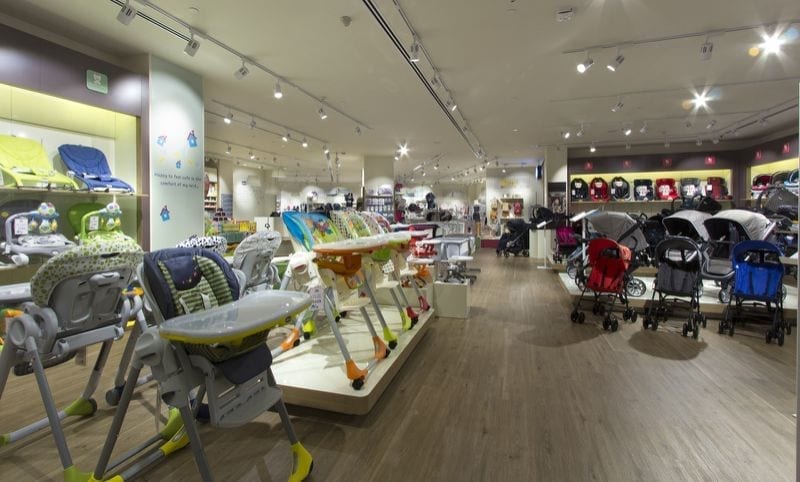
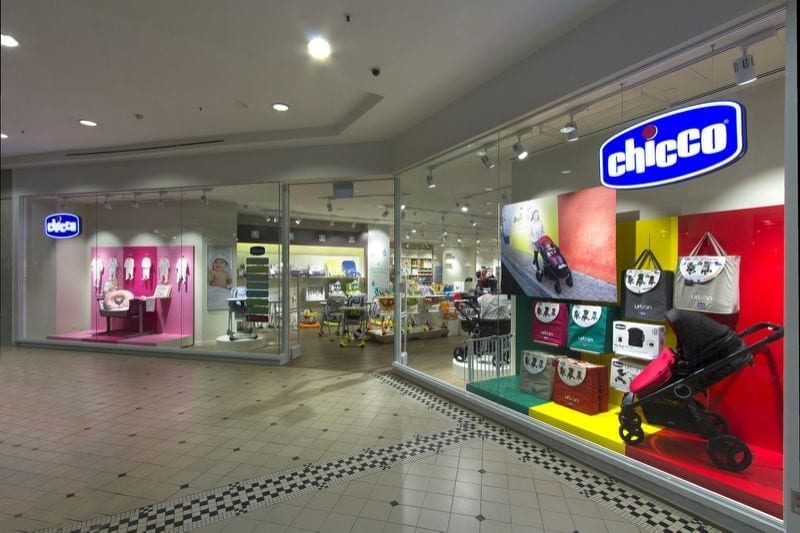
    Baby brand Chicco Singapore launches its first Southeast Asia concept store at Tanglin Mall this week.

    It is also the largest Chicco store in Asia, covering 4400 sqft (408 sqm), it offers products that cater to the varied needs of children for every stage of their development.

    In a bid to make the shopping experience easy, the Chicco concept store has a guided path with different product categories delineated by colour, icons and imagery.

    The 58-year-old brand offers tiered pricing to ensure products are accessible to all shoppers. Chicco also has a homogenous pricing model, so shoppers in Singapore have similar prices to its stores in Europe for the same products.

    chicco-store

    To understand more about the needs of children during their early stages of development, Chicco has its own R&D centre, known as Osservatorio Chicco. The brand also guarantees the safety of its products.

    Chicco was founded by Pietro Catelli in Como, Italy, in 1958 after the birth of his son Enrico, affectionately nicknamed Chicco. Twelve years earlier, Catelli had founded sales agency Artsana, which specialises in the production and distribution of products for venipuncture and medication.

    Chicco now has a presence in 120 countries.

  • Watsons places products on Lazada Singapore

    Watsons places products on Lazada Singapore

    Healthcare and beauty chain Watsons has formed a partnership with eCommerce company Lazada Singapore.

    As a result of the collaboration, more than 500 Watsons products have been made available on Lazada.

    Formed in 2012, Lazada Singapore offers a wide range of products, from electronics and household goods to fashion apparel and sports equipment. Watsons has more than 100 stores throughout Singapore.

    “The partnership with Lazada is a timely extension to our digital strategy in the region,” says Watsons Singapore GM Dominic Wong.

    The alliance not only ensures convenience, but Lazada has also just introduced a free delivery option with no minimum spend.

  • Asia dominates retail destination rankings

    Asia dominates retail destination rankings

    Asian cities dominate the latest retail destination rankings, with the Middle East taking most of the remaining spots.

    According to the latest edition of JLL’s Destination Retail report, which ranks markets for retailer expansion around the world, Asia is fuelling global growth, taking 12 of the top 20 spots. Six of those cities are in China – but Singapore, Hong Kong and Macau are not among them. Six months ago Hong Kong was second only to London – neither city makes the list now.

    This time around, the top two cities are Dubai and Shanghai, with Beijing ranking third. The other Asian cities in the top 20 are Bangkok, Chengdu, Kuala Lumpur, Jakarta, Manila, Tianjin, Shenyang, Shenzhen, Chongqing and Hangzhou. (The full list is below).

    Besides Dubai, Abu Dhabi, Kuwait, Jeddah and Riyadh make the list, meaning 85 per cent of the top 20 destinations are in just two regions.

    “The global retail landscape is expected to change significantly over the next 10 years, as a fast-growing middle class in emerging markets attracts retailers hungry for growth,” says David Zoba, chairman of JLL’s Global Retail Leasing Board.

    JLL says Shanghai has become a favourite of international brands looking to test the Chinese market and gain exposure. While established prime markets include West Nanjing Rd and Huaihai Rd, new submarkets targeting local residents are popping up along the many new metro lines leading out of the city, and the city’s retail network is growing and shifting.

    Beijing follows as the third-fastest-growing retail market with its swelling middle class and strong concentration of high-net-worth individuals. Properties such as China World Mall and the landmark project Taikoo Li continue to draw high-end shoppers, while malls like Beijing APM and Oriental Plaza dominate tourist-friendly shopping strip Wangfujing. The Chinese capital’s suburbs are also experiencing rapid growth as people choose to shop more locally rather than brave the traffic into the city centre.

    “Emerging markets can expose international retailers to greater levels of economic and geopolitical risks. One pertinent example is China’s anti-corruption campaign and the knock-on effects on the luxury market,” says James Hawkey, head of retail for China, JLL. “However, international retailers are increasingly comfortable dealing with these risks, and generally have their eyes on the long term prize of establishing a strong position in major world markets.”

    Added Zoba: “The search for growth is escalating the penetration of international brands across the world’s most attractive retail cities, especially in Asia. Retailers who succeed in acquiring the right space in the right place at the right time will benefit from successful, profitable growth, but they should be mindful that potential rewards go hand in hand with risk,” continues Mr Zoba.

    Retail rents in these emerging markets reflect legislation, market transparency, reputational risk, maturity, as well as growth potential, meaning that their levels are relatively low compared to more mature markets. Places like Ho Chi Minh City, Jakarta and Bangalore present an opportunity for retailers to establish their brands at rents of less than US$2000 per square metre per year with projected in-store sales increasing by 8 to10 per cent until 2019, based on Oxford Economics forecasts. However, as cities mature and the pace of new construction of retail centres slows, rents will gradually increase.

    JLL’s Destination Retail report 2016 examines the presence of 240 international retail brands across 140 retail cities, giving insights for international retail expansion. The 140 cities make up 36 percent of the world’s GDP, 13 per cent of the global population and 33 per cent of total consumer spending.

    Top 20 Global Growth Cities for Retail

    1              Dubai

    2              Shanghai

    3              Beijing

    4              Kuwait City

    5              Abu Dhabi

    6              Jeddah

    7              Riyadh

    8              Moscow

    9              Bangkok

    10           Chengdu

    11           Kuala Lumpur

    12           Jakarta

    13           Manila

    14           Istanbul

    15           Tianjin

    16           Shenyang

    17           Shenzhen

    18           Chongqing

    19           Mexico City

    20           Hangzhou

  • Testing times: Singapore’s retail scene shows four signs of weakness

    Testing times: Singapore’s retail scene shows four signs of weakness

    Rents in the Central region may fall 6-8% in Q4.

    The outlook for Singapore’s retail sector for the last three months of the year remains subdued, with weak retail rents made worse by retailers consolidating outlets to streamline cost.

    Average island-wide prime retail rents moderated in Q3 2016, with that of Orchard Road falling for the first time since Q2 2015 on the back of the tougher retail climate, reports Knight Frank (KF).

    The average gross rents for prime spaces was $31.20, which represents 2.2% decline YoY and 0.2% dip on a quarterly basis. Average Orchard Road prime rents, meanwhile, declined by 0.1% YoY and 0.5% QoQ.

    According to KF, average rents in the Central Region are envisaged to fall by 6.0% to 8.0% y-o-y by Q4 2016, while the more resilient prime rents to moderate downwards by up to 3.0% y-o-y in the same period.

    “The expected fall in rents takes into account not only the projected weakened demand from retailers, but also the likelihood of landlords readjusting the rental structures to help their tenants tide over down cycles of the market in order to maintain healthy occupancy status,” it said.

    An estimated 1,072,000 sq ft of net lettable major retail space is slated for completion in the whole of 2016. KF noted that out of this, 38.2% (409,000 sq ft) was ready in the first half of 2016, with the remaining 663,000 sq ft to be completed in H2 2016.

    “In addition to this is the cautious stance taken by retailers towards business expansion, and island-wide occupancy is likely to fall from 92.8% in Q4 2015 to between 90.0% and 92.0% in Q4 2016,” said KF.

    KF’s bearish outlook on Singapore’s retail sector is supported by the following indications of weak overall spending:

    1. Singapore’s consumer confidence entered the pessimistic range.

    According to the Mastercard Index of Consumer Confidence, Singapore saw a significant decline of 10.7 points in H1 2016 from H2 2015. The degree of decline lagged behind only Indonesia (-14.7 points) and Hong Kong (-12.4 points), of the 17 countries within the Asia Pacific region tracked by Mastercard.

    2. The overall Retail Sales Index (excluding motor vehicles)(seasonally adjusted, at constant prices) improved by 3.5% m-o-m in July 2016 compared to the preceding month. All retail trades saw improvement with the exception of Food & Beverages, which declined by 1.5% monthon-month (m-o-m) over the same period. However on a year-on-year (yo-y) basis, the overall retail sales (at constant prices) declined by 3.7% in July 2016, with Computer & Telecommunication Equipment (-18.7% y-oy), Watches & Jewellery (-16.6% y-o-y) and Food & Beverages (-9.7% yo-y) trades seeing the steepest falls.

    3. Employment in the wholesale and retail trade declined by 1.8% in H1 2016 compared to H2 2015. This could be attributed to the weaker retail sales and greater caution in manpower deployment by retailers.

    4. Total visitor arrivals for the period of January to July 2016 increased by 11.5%, compared to the same period last year, to reach 9.8 million. While visitors from China and Indonesia rose by 49.2% y-o-y and 6.8% y-o-y respectively in the first seven months of 2016 compared to the same period in 2015, visitors from Malaysia dropped by 1.6% y-o-y.

  • Guocoland secures temporary occupation permit for Guoco Tower

    Guocoland secures temporary occupation permit for Guoco Tower

    The property has already seen 80% commitment from tenants.

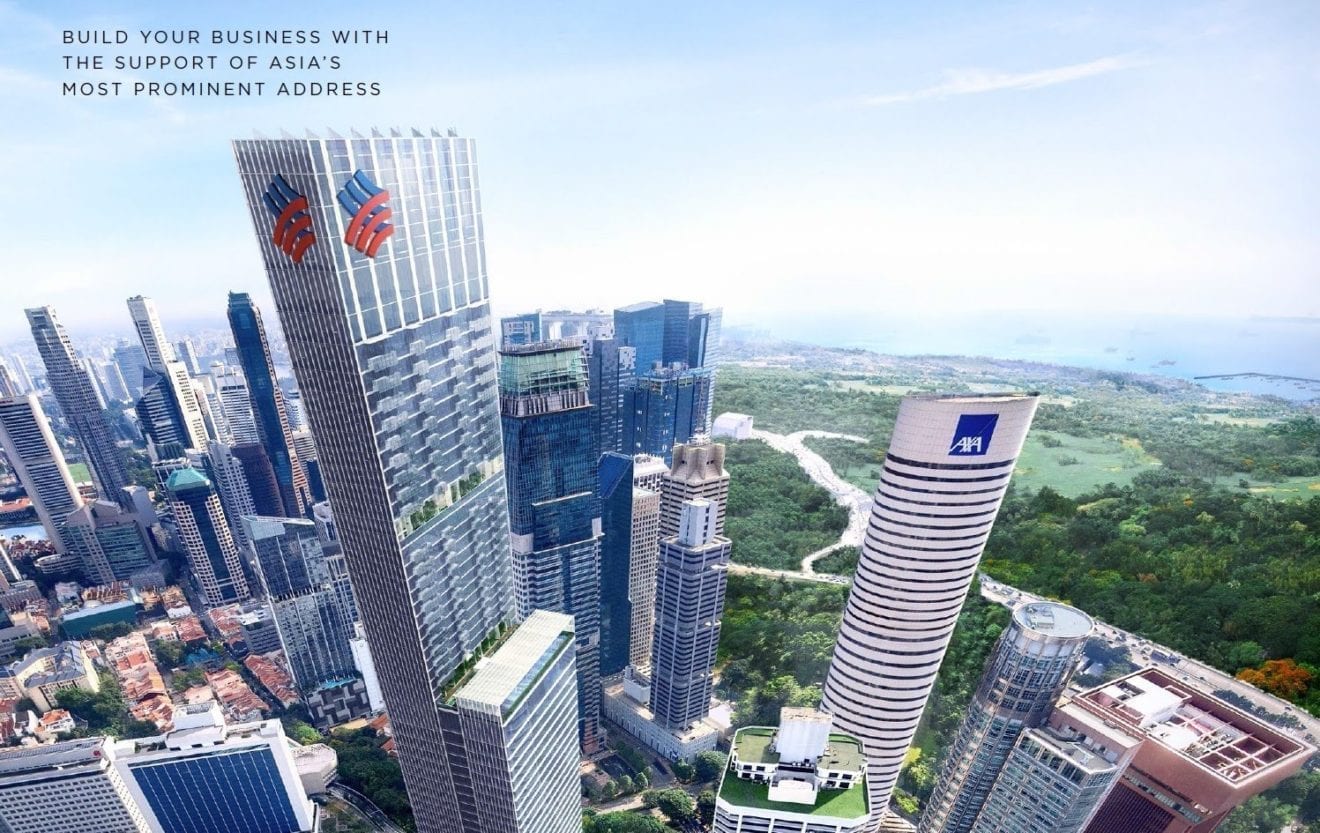
    Prospective tenants of Guoco Tower should be ready to move in anytime as Guocoland secures temporary occupation permit for the office and basement retail component of the building.

    In a statement, GuocoLand claimed the Grade A office tower has already seen a remarkable 80% commitment moving into October despite a highly competitive office leasing market. This has significantly spiked up from 10% at the beginning of the year.

    Guocoland Singapore Managing Director Cheng Hsing Yao said the 890,000 sq ft office tower has attracted demands from a broad range of industries. Some of the companies in the list of committed tenants include Agoda, Amadeus, ASICS, Danone, Straits Trading and Teva Pharmaceutical Industries.

    “Guoco Tower’s ‘liveable vertical city’ concept whereby workplace is integrated with lifestyle amenities makes it attractive to tenants who care for the welfare of their staff. In addition, the prime location, seamless access to the MRT station and its prestige as the tallest building in Singapore also appealed to tenants,” he said.

    Guoco Tower is inside the Tanjong Pagar Centre, an integrated commercial, retail, and lifestyle complex with 181 luxury apartments in Wallich Residence, the 222 room Sofitel Singapore City Centre hotel, and a 150,000 sq ft. Urban Park.

    The complex will commence its operations in phases from November this year.

  • Reits: An attractive alternative form of property investment

    Reits: An attractive alternative form of property investment

    In just 14 years, the real estate investment trust (Reit) industry in Singapore has drastically transformed the country’s investment property landscape, making it one of the most admired in the Asia Pacific.

    The Singapore Reit industry now ranks third in size in the region, behind Japan and Australia. S-Reits have been actively contributing to the improvement of properties in Singapore, practically in all sectors of the rental market: retail, office, and industrial.

    As landlords, Reits are committed to maintaining and improving their properties and have consistently demonstrated this commitment by investing in extensive asset enhancement initiatives to refurbish and upgrade older properties in their portfolios, including introducing eco- technology into their properties.

    Such improvements have led to improved offerings for tenants and raised the quality of real estate in Singapore as a whole.

    The motive for Reits to continually upgrade their investment assets is driven by commercial interest doubtlessly, to generate return on investment for unitholders.

    But the resultant benefit is not confined to Reits, or else the progress could not be sustained.

    The other three key players in the game are tenants, consumers, and the Singapore economy at large.

    Unfortunately, this aspect of the impact of Reits has tended to be overlooked; instead, fingers have been pointed at Reits as the culprit causing the plight of tenants, especially the smaller enterprises, who bow out of the business citing rising high rent as a key reason.

    This has in fact caused the resurgence of the classic landlord/ peasant conflict.

    There will continue to be murmurings, especially from the quarter that has been ousted from their comfortable rented nests of many years until rentals made it untenable for them to continue with their business.

    Their lamentation is that Reits which appear to have taken over “most” of the rental properties in the country, have been regularly raising rental rates to maximise their yields and keep up with their distribution per unit (DPU) growth.

    Look at the big picture

    To be objective, one needs to look at the big picture.

    Many rental buildings here (both office and retail) have remained in the same state for 20-30 years and maybe even longer.

    Fortunately, many of the tired-looking buildings have also been rejuvenated and given a new lease of life after they were acquired by Reits.

    Someone once told me Singapore needs Reits to transform the investment property market the way the Urban Redevelopment Authority (URA) did the Singapore landscape over the last few decades; the difference is that Reits will have to do it on a fully commercial basis.

    The benefits of developing the Reit industry to the economy is perhaps more obvious in that it enables developers to recycle their capital for other investments, creates specialist professional jobs, generates high-value supporting services, etc.

    The best evidence of this are the aggressive measures many of our neighbours are taking to develop their own Reit industry.

    S-Reits are here to stay. S-Reits are celebrating their 14th anniversary since the first Reit, CMT, was listed in Singapore in 2002. Today, Singapore has succeeded in having 38 Reits listed on our stock exchange, with a total market capitalisation of S$74 billion.

    What is interesting is that, according to estimates, about 25 per cent of the shares of Reits are in the hands of retail investors. (The sponsor groups and controlling shareholders are estimated to hold some 35 per cent, while institutional investors own 40 per cent.)

    Assuming most of these retail investors are Singaporeans, the 25 per cent translates to a whopping S$18 billion in investment money.

    The government has put in measures to regularly improve the operating and regulatory environment for Reits, so that they can continue to grow, and at the same time operate under good corporate governance, and embrace best industry practices.

    We are fortunate that the listed Reits here are under the prudent supervision of the regulatory authorities, which should instil confidence among investors, both here and overseas.

    A stable and transparent tax infrastructure to support S-Reits helps to advance the goal of establishing Singapore as a fund management and asset management hub, and continue to fuel demand for expertise in these high-value financial areas.

    Specifically, it will allow S-Reits to maintain their competitive advantage over other regional markets and allow the Republic to position itself as the pre-eminent global hub for the listing of S-Reits.

    It will also allow Singapore to attract foreign capital and investment in S-Reits.

    Many Singaporeans are eager to find investment alternatives that give higher returns than banks’ fixed deposits or their CPF ordinary accounts. Reits are perhaps one such alternative.

    Some investors may have discovered that it is possible to turn Reits into personal ATMs that they can “withdraw” money from regularly.

    This is what Reits are in a nutshell: giving the investors a stable income on a regular basis (every three or six months), with potential upside that their price will go up over time.

    The ability to enter and exit Reits easily is another big contrast to direct investment in physical assets. Another benefit is the affordability of Reits, with outlay as low as a few hundred dollars.

    Perhaps the next exciting phase in Reit development here is brewing.

    This is the rising use of CPF and Supplementary Retirement Scheme (SRS) money for Reit investments – something that may significantly affect the growth of the Reits industry over the next few years.

    Looking at CPF statistics, as at March 31, 2016, Singaporeans had about S$308 billion in their CPF.

    This is after deducting the S$190 billion drawn down for housing purchases.

    Of the S$308 billion, S$113 billion is in the Ordinary Account, S$78 billion in the Special Account, and the rest is in Medisave and Retirement accounts.

    If we focus just on the Ordinary Account which CPF rules currently allow to be used for investments after setting aside S$20,000, the investible amount is estimated to be about S$73 billion. Since the rules allow up to 35 per cent of the investible money for share investment, this means a potential pool of S$25 billion available for investing in shares, including Reits.

    This is an enormous sum of money which is looking for higher returns than the 2.5 per cent that CPF gives.

    Over time, as people become more aware of the relative attractiveness of Reits, more of such CPF monies will flow into Reits.

    And that will be interesting because it will mean that more Singaporeans will be owners of investment properties both here and overseas.

    Even investing abroad

    Singaporeans, like most Asians, traditionally prefer to invest in brick-and-mortar assets.

    Some even venture to buy overseas properties.

    Reits present a new form of investment tool to meet such aspirations of Singaporeans to own investment properties with regular rental income, without having to deal with all the problems associated with investing directly in a property, especially in unfamiliar overseas markets.

    It is interesting that, currently, CPF rules do not allow Singaporeans to use their CPF money to buy overseas properties directly.

    But with Reits, one can effectively do that.

    For example, one can invest in German office buildings by buying IReit Global shares.

    One can own a stake in shopping malls or hospitals in Indonesia through Lippo Mall Trust and First Reit respectively.

    For exposure to China and Hong Kong properties, there are Mapletree Greater China Commercial Trust, EC World Reit, CapitaLand Retail China Trust and BHG Retail Trust to choose from.

    One can also access the US, India and Japan markets through Reits listed here.

    Today, some 30 per cent of the Reits’ assets are outside Singapore.

    Effectively, this means that the Reits are bringing properties from all over the world to the doorstep of Singaporeans for them to pick and invest in, with the added comfort that these overseas assets are owned and managed by Reits which are under the regulatory oversight of our government authorities.

    We may therefore see a stronger trend of Singaporeans sinking more of their excess investment money (including CPF and SRS money) into Reits, instead of pursuing the traditional approach of buying a physical property asset for investment.

    Best of all, one gets to keep 100 per cent of the dividends received from Reits without having to worry about the taxman’s share.
     

  • Shopping patterns in Singapore shift amid slowdown

    Shopping patterns in Singapore shift amid slowdown

    And yet, amid this gloom, consumers continue to spend – though there is a shift in the pattern and quantum of their spending.

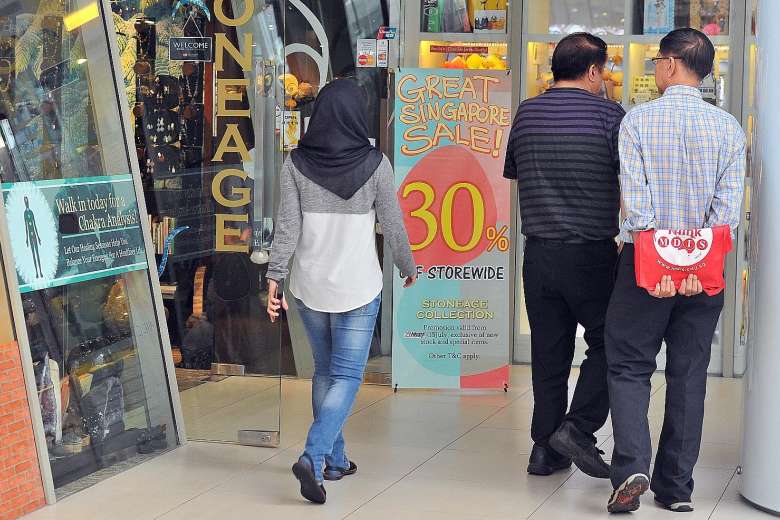
    In June, the first month of the Great Singapore Sale, retailer sales were down 3 per cent compared with the same month last year. It is not just tourists who are staying away, but local consumers are also looking more closely at price tags.

    The mood has not been helped by the fact that about 4,800 people were laid off in the second quarter, 48 per cent more than in the same period last year.

    Landlords are feeling the pinch as well. Average monthly gross rents for prime first-storey speciality retail shops dipped 1.2 per cent in the three months to September from the previous quarter, said property consultancy Edmund Tie & Company recently.

    Vacancies in the Orchard planning area rose again in the second quarter to 9.2 per cent, after reaching what was then a five-year high of 8.8 per cent in the first quarter.

    ANZ economist Ng Weiwen pointed out that home prices have fallen for 12 consecutive quarters, while bank lending has shrunk for 11 straight months. This has translated into weaker spending.

    However, the decline has been gentle across the board and there have been some bright spots. Those who find this surprising should look at the unemployment rate. While it rose from 1.9 per cent in March to 2.1 per cent in June, it remains quite low. Said OCBC economist Selena Ling: “When unemployment rate is anything below 3 per cent, it is effectively at full employment.”

    It could be one reason why consumers continue spending on mid-range goods and services, such as travel and at cafes, even as they cut back on luxury items and seek better deals for necessities.

    ANZ’s Mr Ng said: “For the different tiers of consumer spending, the high-end consumer segment will be more sensitive to changes in consumer income, so it’s not surprising.

    “The mid-range segment will still hold up in the near term as wages are still holding up.”

    In fact, more are paying their credit card bills on time. Only 32.25 per cent of card holders did not pay their bills in full for the second quarter, down from 33.91 per cent in the first quarter. Ms Ling said: “People have been turning slightly more cautious with spending.”

    They may spend less on fashion. And malls could take a hit if their offerings are the same as the ones available on Taobao and the like, she added.

    But cheaper options like house brands at supermarket chain FairPrice are seeing stronger demand.

    This is what a slowing economy looks like – in Singapore.


  • Singapore banks missing the boat in booming SE Asia

    Singapore banks missing the boat in booming SE Asia

    The three local banks are not having a good year, mostly due to forces beyond their control, but they seem to be also scoring own goals – missing opportunities right on their doorstep, our South-east Asian neighbours.

    The past two decades have been a waste in terms of what they should have done, formulating and working out a thoughtful strategy of expansion in ASEAN countries but efforts have been half-hearted and sometimes marred by ineptitude.

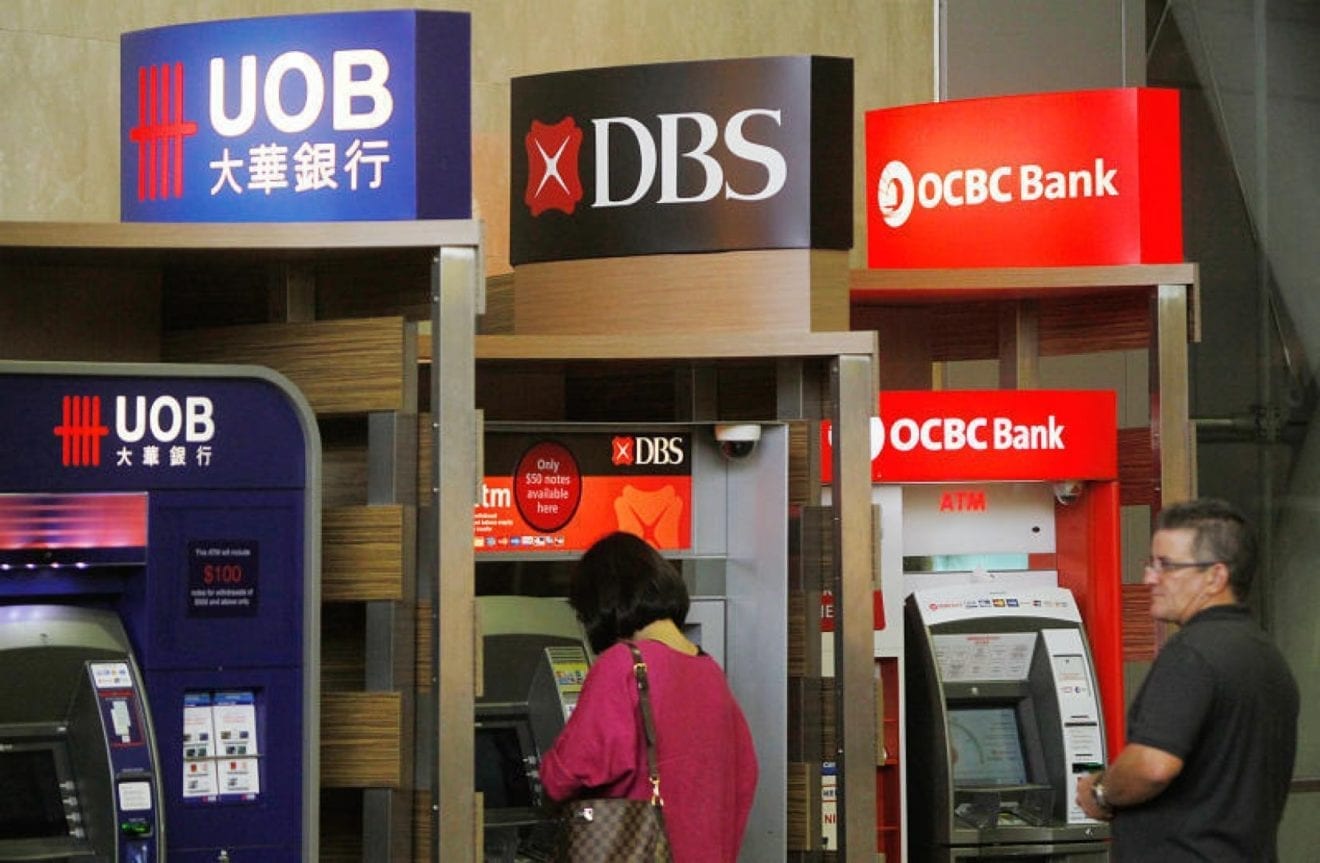
    Singapore contributes the bulk or the lion’s share of profits to DBS Group Holdings, OCBC Bank and United Overseas Bank (UOB) but domestic sluggish growth, a slump in the property market and a prolonged period of weak interest rates are translating to poorer earnings.

    What could have helped is if the banks have a larger presence in the region which is booming; some countries this year and the next are projected to grow more than 6 per cent against 1-2 per cent for Singapore.

    Year to date, the stockmarkets of Indonesia and Vietnam are posting double-digit gains while it’s in the high single digit for Thailand and the Philippines. Singapore equities by contrast is a minus 2 per cent.

    For various reasons, the banks have pretty much neglected the Philippines, Thailand and Vietnam, concentrating on expanding in Greater China.

    All three have Indonesian subsidiaries but progress in getting meaningful traction in ASEAN’s largest economy has been slow. And payback for their Greater China strategy is taking a very long time.

    In Q2, DBS said China recorded a net loss of S$15 million compared with a net profit of S$79 million a year ago and S$23 million in the previous quarter.

    Net profit for Hong Kong halved to S$161 million from S$320 million a year ago.

    OCBC’s Greater China pre-tax profit was unchanged at S$253 million in Q2; UOB posted a pre-tax profit of S$66 million for Greater China, down almost 30 per cent.

    From Malaysia, where OCBC and UOB are among the largest foreign banks, contributions there are somewhat underwhelming.

    In Q2, OCBC’s Malaysia pre-tax profit was up 11 per cent at S$214 million making up 19 per cent of total group earnings.

    UOB’s Q2 pre-tax profit from Malaysia fell almost 9 per cent to S$125 million, and contributed 13 per cent to group total.

    The banks had a golden opportunity to acquire banks in the debt-strapped ASEAN countries following the 1998 Asian financial crisis but they let that slip after some missteps.

    DBS tried with forays in Thailand and the Philippines but quit after huge losses.

    Today, it has some activities in Indonesia which are so small that the bank lumps it under South and South-east Asia. Still, Q2 net profit of South and South-east Asia of S$46 million from breakeven a year ago shows the potential.

    OCBC’s Indonesian business posted Q2 pre-tax profit of S$76 million, or 7 per cent of group total, and up from S$47 million a year ago.

    UOB, which has the most extensive operations in South-east Asia including 157 branches in Thailand and 190 in Indonesia, tried to buy a bank in the Philippines in 1999.

    But stymied by minorities, the bank pulled back in 2005, efforts which left its then chairman and chief executive “allergic” to the Philippines.

    UOB’s Q2 pre-tax profit from Thailand and Indonesia came to a combined S$78 million or 8 per cent of group earnings.

    For sure, it will never be smooth sailing to venture into these countries given that their sometimes chaotic domestic politics, frequent changes in policy, and weak adherence to rules, factors which deter all but the most stout-hearted foreign investors.

    Venturing out of Singapore will always be tough but our deep-pocket banks have the resources.

    The potential of South-east Asia is well documented: the 10 South-east Asian countries with a US$2.4 trillion (S$3.3 trillion) economy and population of 626 million forms one of the largest markets in the world which remains under-banked. It also has a burgeoning educated middle class that is receptive to financial services and products.

    What our banks need is staying power and agility to navigate these unwieldy markets, before they entirely miss the boat.

  • India and Singapore to collaborate on innovation

    India and Singapore to collaborate on innovation

    India and Singapore have signed an agreement to promote innovation, creativity and technological advancement in both markets.

    According to the official statement released, “The MoU will enhance bilateral cooperation activities in the arena of industrial property rights of patents, trademarks and industrial designs. It is intended to give a boost to innovation, creativity and technological advancement in both regions.”

    The agreement covers intellectual property cooperation between DIPP and the Intellectual Property Office of Singapore. The MoU was signed during the visit of Singapore’s Prime Minister to India last week.

    The key initiatives under the pact will be exchange of best practices, experiences and knowledge on intellectual property awareness among the public, businesses and educational institutions of both countries.

    Both the countries will also exchange experts in the field of intellectual property; dissemination of best practices, experiences and knowledge on IP with the industry and universities.

    The MoU will enable India to find out about best practices in the innovation and IP ecosystems that will substantially benefit entrepreneurs, investors and businesses on both sides.

    “The exchange of best practices between the two countries will lead to improved protection and awareness about India’s range of intellectual creations,” the release mentioned.

    It adds that the collaboration is a step forward in India’s journey towards becoming a major player in global innovation and will further the objectives of the National IPR Policy.

  • Korea and Singapore’s broadband lead narrows

    Korea and Singapore’s broadband lead narrows

    South Korea continued to have the highest average connection speed in the world at 27 Mbps while Singapore maintained its position as the country with the highest average peak connection speed at 157.3 Mbps.

    These were among the findings of the Akamai Technologies’ Second Quarter, 2016 State of the Internet Report.

    Both countries, however, registered declines in average connection speed and average peak connection speed, respectively, at 7.2% (South Korea) and 7.1% (Singapore) compared to the first quarter.

    Meanwhile, the global average connection speed decreased 2.3% quarter over quarter to 6.1 Mbps, while the global average peak connection speed increased 3.7% to 36 Mbps. The 10 Mbps broadband adoption rate grew 0.7% quarter over quarter, but 15 Mbps and 25 Mbps broadband adoption rates fell 0.8% and 2.1%, respectively.

    In Asia-Pacific, the report noted that 14 of the 15 surveyed countries had average connection speeds above the 4 Mbps broadband threshold. Indonesia registered a 148% gain in average connection speed in the second quarter and the only country to see its speed double compared to the previous year.

    In the mobile space, Akamai reported that average mobile connection speeds ranged from a high of 23.1 Mbps in the United Kingdom to a low of 2.2 Mbps in Venezuela. The report noted that in the upcoming quarters, it expects to see mobile speeds continue to climb as 4G LTE becomes deployed more broadly worldwide.

    In Asia-Pacific, South Korea (11.1 Mbps) also led the world in average mobile connection in the second quarter of 2016, followed by New Zealand (9.8 Mbps), Japan (9.5 Mbps), Taiwan (9.3 Mbps), Australia (8.9 Mbps), and the Philippines (8.5 Mbps).

  • Singapore Website Shutdown After Selling Fake Calvin Klein Products from Taobao

    Singapore Website Shutdown After Selling Fake Calvin Klein Products from Taobao

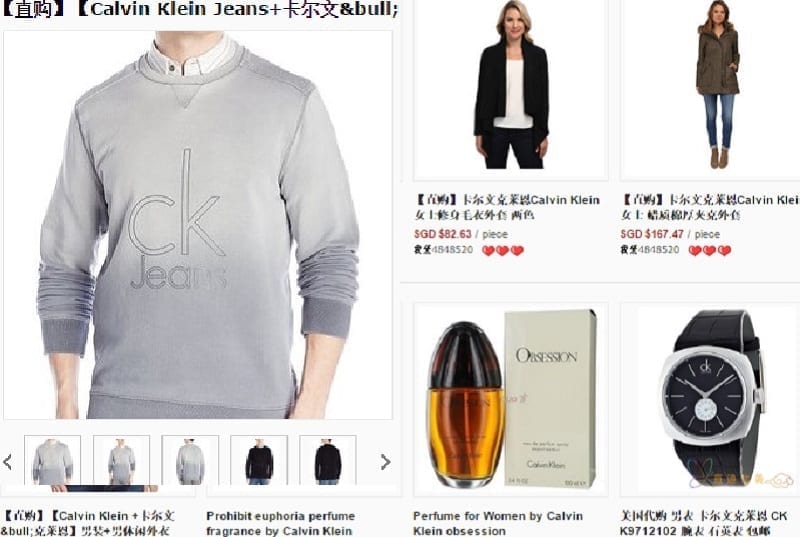
    Website SGbuy4u was found selling fake Calvin Klein goods after investigators successfully purchased imitation wallets and underwear from the website.

    Calvin Klein’s case against Singapore-based Global PSM marked the first reported suit that involved a summary judgment against a firm selling fake goods online in Singapore.

    Global PSM however, claimed that their business model was customer-to-customer service.

    2

    Users can search for and buy a variety of goods on the website and after a payment for an item has been made, Global PSM then passes on the order to Chinese shopping website Taobao. After the company has transferred payment, and the item has been delivered in China, it will then be shipped to the customer in Singapore.

    Calvin Klein filed cases and asked for summary judgment against Global PSM, freight forwarding company HS International and a Mr. Jeffrey Tan, the owner of the two firms, after two successful purchases.

    “The crux of the dispute lies in the proper characterization of the business and the involvement of each of the defendants in those business activities,” said Justice Chan Seng Onn was quoted as saying.

    Global PSM’s argument claimed that the company merely served as a courier, pointing the blame for the trademark breaches to original sellers on Taobao.

    Prosecution lawyers, however, countered that the SGbuy4u business does more than courier services as it collects payments, buys the fake goods on Taobao and has them delivered to their warehouse.

    While Justice Chan had expressed willingness to hold Global PSM accountable for trademark infringement, he ruled that some issues were needed to be clarified in relation to the involvement of the other defendants.

    “There is a pressing need for intellectual property law to keep up with technological advances in order to ensure that the law continues to protect intellectual property and rights owners in real and relevant ways,”the judge said.

  • Fortis Healthcare to take loan of Rs 77.6 cr from Singapore bank

    Fortis Healthcare to take loan of Rs 77.6 cr from Singapore bank

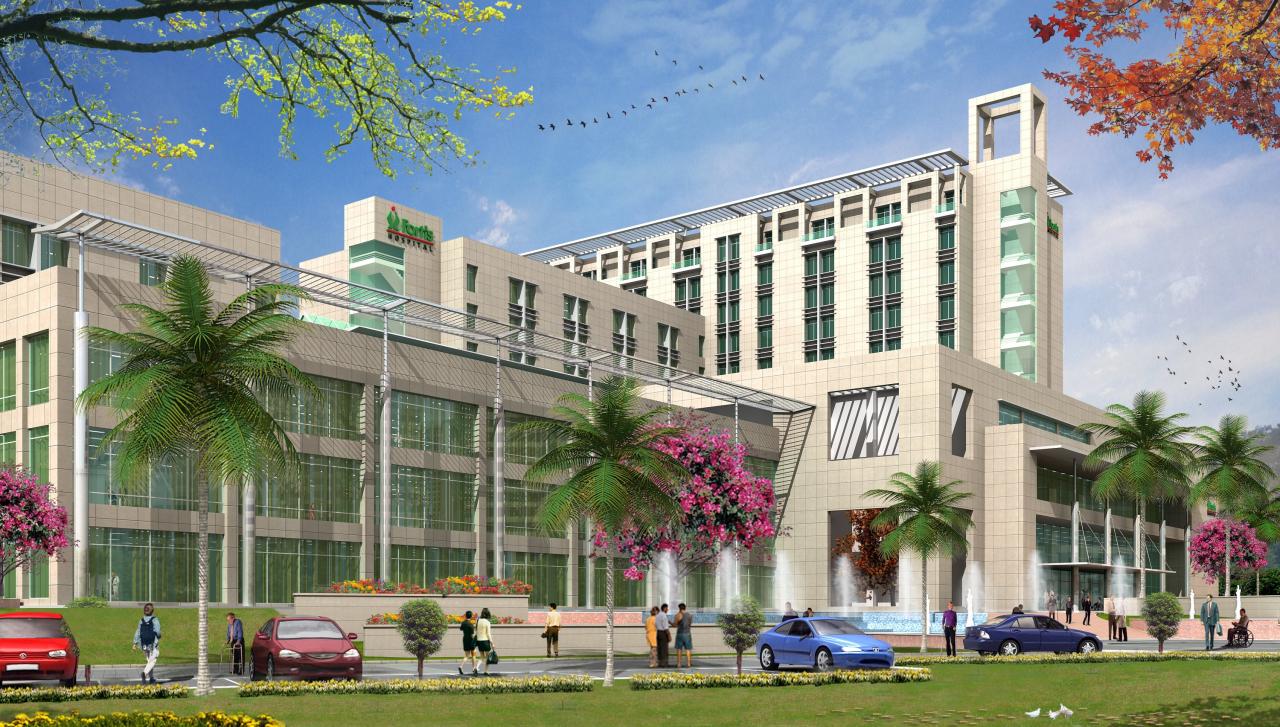
    Fortis Healthcare said it´s Mauritius subsidiary Fortis Healthcare international Ltd, has will take a loan of SGD 165 mln (Rs 77.6 crore) from Singapore-based Consortium of Bankers.

    “Fortis Healthcare Ltd has being holding the company, is giving guarantee on behalf of FHIL securing the payment of principle and interest thereon.,” said the Indian company.

    Fortis Healthcare Limited is a chain of super speciality hospitals in India.

    Currently, the company operates its healthcare delivery services in India, Dubai, Mauritius and Sri Lanka with 54 healthcare facilities (including projects under development), approximately 10,000 potential beds and 314 diagnostic centres.


  • Xiaomi opens its first store outside greater China

    Xiaomi opens its first store outside greater China

    Xiaomi phones are finally available offline in southeast Asia as the company has opened a shop outside greater China for the first time ever.

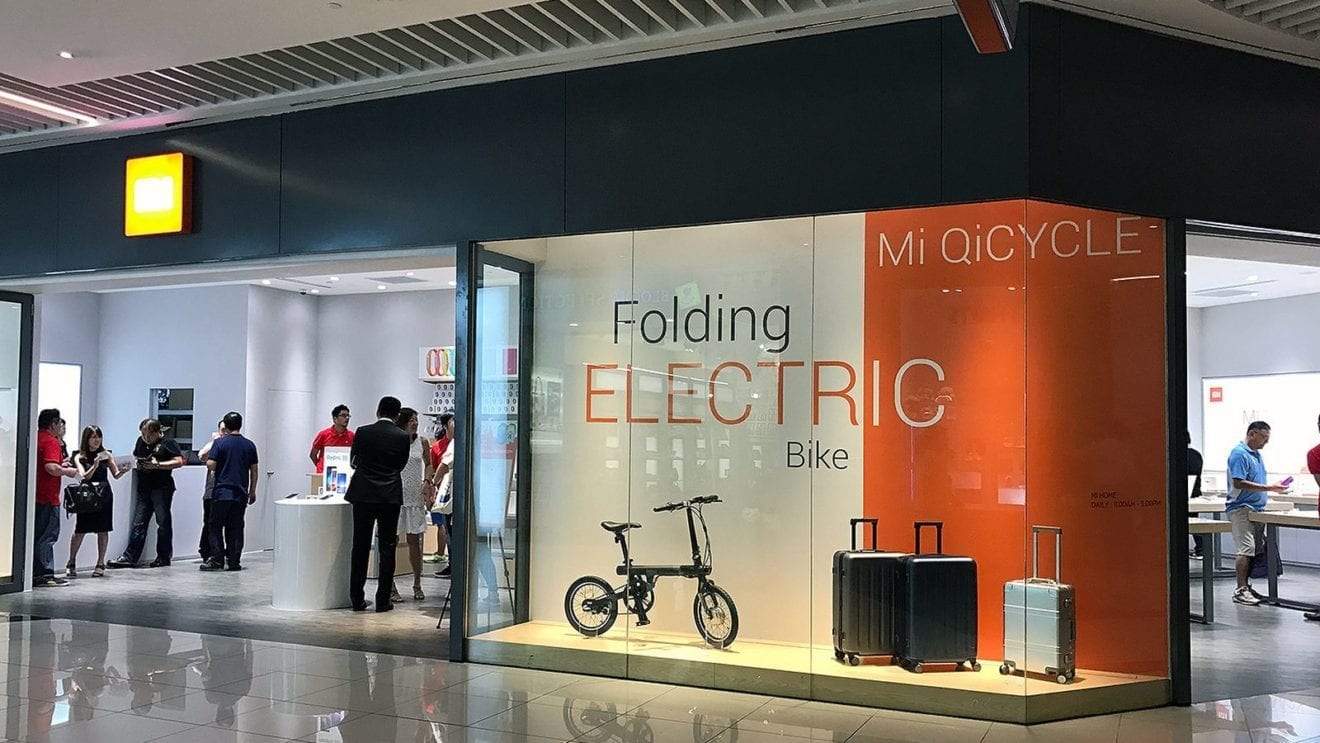
    The sunny island state of Singapore hosts the first Mi Home store to open outside of China, Hong Kong and Taiwan. The Singapore Mi Home store, located at popular shopping mall Suntec City, sells Xiaomi’s line of phones and accessories. But unlike other stores, it doesn’t stock the company’s other Mi ecosystem products such as the Mi TV or the Mi Rice Cooker.

    Xiaomi says that it plans to bring in more of its product lineup in time. But for now, customers will have to make do with the Mi Max, Mi 5, Redmi 3S, Redmi Note 3, Mi Band 2 and other accessories such as portable speakers and power banks.

    The Chinese manufacturer is using a local partner to run the store — unlike the ones in China, Hong Kong and Taiwan, which are run by Xiaomi itself.

    The company is also turning to regional online retailer Lazada to manage its online sales, an area it’s managed by itself in Singapore up to now.

    These moves to divest itself of retail responsibilities in Singapore could point towards a shift in Xiaomi’s current strategy. It’s possible the Chinese giant will focus on its home market to make up for ground lost to rivals Huawei, Oppo and Vivo.

    While the company continues to battle it out for India — the second largest smartphone market in the world after China — it’s likely Xiaomi will use the same retail strategy from Singapore across the Southeast Asian region as the company shifts its focus towards India, China and a possible US launch next year.

  • McDonald’s Malaysia, Singapore ‘buyer found’

    McDonald’s Malaysia, Singapore ‘buyer found’

    Twenty-year franchise rights for McDonald’s Malaysia and Singapore outlets have been conditionally sold to a Saudi Arabian group for up to US$400 million.

    Reza Food Services, which owns McDonald’s restaurants in Saudi Arabia, is seeking finance from Malaysian bank CIMB to finance the transaction, insiders say.

    McDonald’s is moving to bring in partners as it switches to a less capital-intensive franchise model in Asia, and has said it wants regional family-owned groups and local tycoons as long-term partners.

    Insiders say the basic terms of the agreement with Reza have been finalised, with the deal expected to be completed by the end of the year.

    McDonald’s, which has about 260 restaurants in Malaysia and about 120 in Singapore, is also selling its China and Hong Kong outlets, and has received final bids from at least three groups.

  • TravelersBox rolling out in Asia

    TravelersBox rolling out in Asia

    TravelersBox kiosks are being launched in Asian airports allowing travellers to deposit their leftover foreign coins into their preferred online accounts.

    More than 40 are expected to be service by the end of the year.

    TravelersBox is the first service allowing travellers to convert foreign currency into usable digital currency at airports. First rolled out at Manila airport in the Philippines, the latest kiosks have just come online in Narita International Airport in Japan.

    In parallel to the expansion, the company is also launching additional products and services in the kiosks tailored to the Asian market.

    Baidu wallet is the first offering, specifically aimed at the Chinese market, the largest travelling population in the world.

    “For the Asian market we’ve given specific attention to each traveller’s nationality,” says TravelersBox co-founder/CEO Tomer Zussman. “Services such as Nets FlashPlay Card for Singaporeans, Lazada for Southeast Asian travellers and more will soon be available in the TravelersBox around the world.”

    TravelersBox has more than 75 kiosks internationally where travellers can convert their leftover foreign change into digital money with options including iTunes, PayPal, Skype and gift cards such as Gap or Starbucks. There is also a donation button.