Tag: Singapore

  • Singapore’s MyRepublic denies reports of funding woes

    Singapore’s MyRepublic denies reports of funding woes

    MyRepublic’s CEO has rejected reports that the company is having difficulty raising funds required to make a bid to become Singapore’s fourth mobile operator, calling the claim “a bold-faced lie.”

    Malcolm Rodrigues told us that the company has already lined up $130 million worth of the $250 million in funding needed to roll out a network.

    Rodrigues was responding to a report stating that the company’s latest financial statement casts doubts onto whether the operator can afford to become a mobile operator.

    The report alleged that it had received a copy of the unlisted operator’s balance sheet that shows that MyRepublic lost S$9.36 million ($6.96 million) in Singapore last year, and has so far raised no funds required for the rollout.

    But Rodrigues denied this claim, asserting that the company has a loan facility for half the required amount, and expects DBS Group and Goldman Sachs to help the operator finish its fundraising for the mobile bid by the end of July.

    MyRepublic will be competing against Consistel, through subsidiary OMGTel, which has reportedly lined up at least S400 million worth of the S$1 billion in funding it plans to commit if it wins the mobile license.

  • Are These Retail REITs Trading For Less Than What They’re Worth?

    Are These Retail REITs Trading For Less Than What They’re Worth?

    The price-to-book (PB) ratio is a popular way to value a real estate investment trust (REIT).

    The P/B ratio is calculated by dividing the market capitalisation of a REIT with its book value, or net asset value. Theoretically, having a P/B ratio that is less than 1 means that a REIT is trading for less than what it’s worth – an investor who buys the REIT could liquidate all its assets, settle all its obligations, and still end up with a profit.

    A recent report indicated that the average P/B ratio for Singapore’s REIT universe (the local stock market has 27 REITs and six stapled trusts) was 0.9. The list of 33 trusts included eight Retail REITs, as defined by the Global Industry Classification Standard.

    Here’re five quick highlights from the report on the eight Retail REITs (figures as of 8 June 2016, unless otherwise stated):

    1. Lippo Malls Indonesia Retail Trust (SGX: D5IU) has a P/B ratio of 0.9. The REIT is home to 19 retail malls and seven retail spaces in Indonesia and offers a distribution yield of 9.9%. While the REIT’s yield looks high, it’s worth noting that its total returns over the past three years have been a negative 15%.
    2. CapitaLand Retail China Trust (SGX: AU8U) also has a P/B ratio of 0.9. The REIT offers a distribution yield of 6.7% and has recorded a total return of 19.1% over the past three years. It is focused on the ownership of retail malls in China and currently has stakes in 10 shopping malls across six Chinese cities.
    3. Meanwhile, Starhill Global Real Estate Investment Trust (SGX: P40U) is yet another REIT with a P/B ratio of 0.9. The REIT has stakes in Wisma Atria and Ngee Ann City in Singapore. In all, the REIT owns commercial as well as retail properties in four other countries, namely Australia, China, Japan, and Malaysia. Over the past three years, Starhill Global REIT has delivered total returns of 4.9%. The REIT offers a 6.5% distribution yield.
    4. Not all retail REITs are trading below their book values. SPH REIT (SGX: SK6U), whose portfolio only has two properties right now (the retail malls Paragon and Clementi Mall in Singapore), trades at its book value. The REIT offers a distribution yield of 6.0% and has recorded a negative total return of 5.8% over the past year.
    5. CapitaLand Mall Trust (SGX: C38U) is one REIT that has a P/B ratio of over 1 – more specifically, the REIT has a P/B ratio of 1.1. CapitaLand Mall Trust, which owns 16 retail malls here, is the Singapore stock market’s first and oldest REIT. It offers a 5.3% distribution yield and has total returns of 14% over the past three year.

    The P/B ratio represents a starting point for investors who are looking for REITs that may be undervalued. Valuation, though, has to be complemented by understanding a REIT’s asset quality, the performance of the REIT’s portfolio in the past, and its future prospects, among other important things.

  • Singapore’s SMI eyes expansion into retail, F&B in Myanmar

    Singapore’s SMI eyes expansion into retail, F&B in Myanmar

    SGX Mainboard-listed Singapore Myanmar Investco (SMI) – engaged in consumer products and services in Myanmar – will be looking at investing in the retail and food & beverage vertical in the next three years.

    Late last year, SMI inked an agreement with Royal Golden Sky Co Ltd to operate a retail space at the Yangon International Airport.

    “We will continue to look at retail opportunities in the domestic market (Myanmar). We are in discussions with the Junction City (Shwe Taung Group’s $300-million mixed-used development project) and I think there will be opportunities in both retail and F&B space,” said Mark Bedingham, president and chief executive officer, Singapore Myanmar Investco.

    About 10 international brands will be brought to the domestic market while the Yangon International Airport retail space will sport 30 brands by July 2016.

    SMI is primarily targeting the downtown business district around Kandawgyi lake area and Mandalay for retail opportunities.

    For the food and beverages sector, SMI has signed a franchise agreement with Crystal Jade group to bring in the Chinese restaurant concept and The Coffee Bean and Tea Leaf that will open soon at the new Yangon International Airport terminal.

    “We want to be seen as a progressive company in Myanmar, bringing new products and services that have not been available here before, both for consumers and businesses.”

  • Bigger Is Better for Singapore REITs Facing Consolidation

    Bigger Is Better for Singapore REITs Facing Consolidation

    Singapore’s real estate investment trust market is set to consolidate as smaller vehicles merge to cope with rising regulatory costs, according to Cambridge Industrial Trust.

    “The wave of consolidation for Singapore REITs is about to begin,” Philip Levinson, chief executive officer at Singapore-listed Cambridge Industrial, said. The trust has a market capitalization of S$730.5 million ($536 million) and focuses on industrial real estate assets.

    The city-state’s monetary regulator has tightened rules that could raise costs and lower revenues for REITs, making mergers between such trusts the most viable option for them to thrive, Levinson said. Morgan Stanley last year said consolidation in the Singapore REIT market was “unavoidable and necessary” to develop sufficient scale and stock liquidity for individual REITs to effectively compete on a global scale.

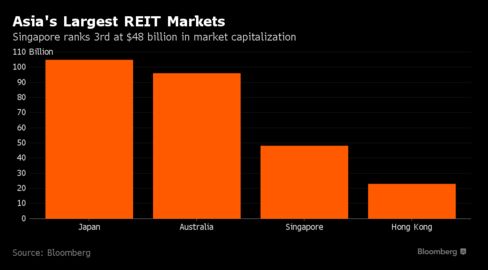
    Since 2002, when they were first started, Singapore REITs have grown into a $48 billion market, the sixth-largest globally by market capitalization, according to data compiled by Bloomberg. More than half of the 35 REITs listed in Singapore have a market capitalization of less than $1 billion, the data show. The city-state’s largest REIT, with assets of $5.6 billion, is the CapitaLand Mall Trust.

    New rules put in place last year by the Monetary Authority of Singapore, requiring higher levels of disclosures, especially on fees, entail higher compliance costs and lower revenue potential for REIT managers. The new rules are especially punitive for smaller-scale REITs and the gradual widening of the gap with larger REITs would make conditions even more conducive to consolidation, Morgan Stanley said.

    REITs that are not part of a broader index are significantly disadvantaged, Levinson said. Markets are bifurcating to such an extent where investors will only look at REITs that are included in indexes, he said.

    Shabby Sheds

    Cambridge Industrial will continue to focus on its Singapore assets and consider selling some to reinvest in other markets such as Australia and Japan, Levinson said.

    “We will look to buy ‘shabby sheds,’ B-grade assets in A-grade locations” in Australia, he said. Yields for its Singapore industrial assets range between 6.6 percent and 6.7 percent, while Australian assets may potentially yield about 7.5 percent to 8 percent, Levinson said.

    “Japan is a very deep market with enormous spreads, but that’s the next step after Australia because it is expensive at the moment,” he said.

    Industrial occupancy and rental rates in Singapore will remain under pressure in 2016 as new supply outpaces demand growth, according to Rachel Chua, a Moody’s analyst. Singapore REITs in the industrial space will continue their overseas acquisition spree in 2016 as they pursue asset growth, yield accretion and portfolio diversification amid challenging business conditions, Moody’s said in January.

    Unit prices of Cambridge Industrial, with 51 properties located across Singapore valued at S$1.4 billion, dropped 17 percent last year and the shares were trading at a roughly 17 percent discount to the net asset value, or NAV, as of Dec. 31. The FTSE Straits Times Real Estate Investment Trust Index slid 11 percent last year, its biggest decline since 2011.

    Levinson, who set up Blackstone Group LP’s Australia operations in 2009 before joining Cambridge Industrial, said he’s been meeting with investors who want to see the REIT work on lifting its unit price and the firm is exploring all options to help achieve that.

    “Our real focus is to bridge the divide, reduce the gap between our current unit price and NAV,” Levinson said.

  • SingTel to launch VoWiFi in August

    SingTel to launch VoWiFi in August

    SingTel has revealed plans to launch Singapore’s first commercial Voice over Wi-Fi service in August following the success of its recent HetNet trials.

    The trials, conducted in collaboration with IDA Singapore, confirmed that voice calls and texts can be sent over Wi-Fi in areas which are challenging for mobile signals.

    Service continuity can be maintained as smartphones transition between cellular and Wi-Fi networks, without the need of an installed mobile app. SingTel said this will allow its customers to make uninterrupted calls over Wi-Fi in locations including basements and the upper floors of skyscrapers.

    The trials also demonstrated the readiness of SingTel’s HetNet to support the IoT by providing reliable connections to sensors and other connected devices, the operator said.

    “In the near future, with millions of connected devices fuelling data demand, ensuring a consistent experience for multiple mobile customers across different locations is paramount,” SingTel CEO consumer Singapore Yuen Kuan Moon said.

    “With pervasive connectivity and higher data capacity set to become the norm, it was important for us to conduct a HetNet trial to gain further insights.  Given our positive trial results, we are ready to support the Internet of Things with our networks and provide SingTel mobile users with high-quality voice calls and SMS island-wide.”

    IDA co-managing director Gabriel Lim said 90% of HetNet trial users had an improved mobile experience, including superior connectivity, download and upload speeds and transitions between wireless and cellular networks.

    “We will use the lessons from the trial to work with our industry partners to further enhance the experience of Singapore mobile users,” he said.

  • Singapore Cruise Centre launches duty free tender

    Singapore Cruise Centre launches duty free tender

    Singapore Cruise Centre Pte (SCCPL) is inviting interested companies to tender for the development and operation of the duty free and general merchandise concession contract at the Harbourfront and Tanah Merah terminals for a period of five years (with an option to extend for another two years).

    The SCC confirmed that it is investing in the redesign and upgrade of its commercial offer at both terminals, with expansion and reconfiguration of the main retail space in the departures and arrivals areas.

    The new contract up for tender will govern 542sq m of retail space, serving over 6.3m ferry passengers and 560,000 cruise passenger annually.

    The SCC has also decided to consolidate several separate contracts for the existing duty free concessions (including liquor & tobacco, perfumes & cosmetics, fashion & travel accessories and confectionery), into a single contract, to run for five years with a two-year extension option, commencing 1st April 2017.

    The contract will govern 542sq m of retail space, serving over 6.3m ferry passengers and 560,000 cruise passenger annually.

    Singapore-Cruise-Centre-logo

    BULLISH PROSPECTS FOR CRUISE INDUSTRY

    Singapore Cruise Centre CEO Christina Siaw released this statement: “It is an exciting time for SCC as we launch our first public duty free retail tender, amid bullish prospects for the cruise and ferry industry in Asia Pacific.

    “We are committed to driving passenger growth in our terminals and retail is a key contributor to overall passenger satisfaction. We seek an experienced, world-class duty free retail operator to partner us in developing a unique, integrated shopping destination that optimises commercial revenues at our terminals.”

    The tender is open to companies with ‘relevant experience in duty free retailing’ until 30 June, when all RFQs must be submitted.

    One of the incumbents, DFS Singapore currently operates the departure-transit and arrivals transit shops alongside the SCC’s Ocean Duty Free outlets, which are operated by Gebr Heinemann.

    In March earlier this year, the Singapore Tourism Board (STB) reported that the country witnessed encouraged growth in the cruise and business segments as the Singapore Cruise Centre (SCC) was named the number one cruise port in Asia in 2015.

    As previously reported, the latter incumbent operator, Heinemann opened its third (157sq m) Ocean Duty Free store in Singapore’s HarbourFront Ferry Terminal in January 2015.

    This follows the earlier opening of its first two outlets at the Tanah Merah Ferry Terminal in March 2014.

    SCC-HarbourFront-exterior---Cruise

    Heinemann opened its third (157sq m) Ocean Duty Free store in Singapore’s HarbourFront Ferry Terminal in January 2015.

    The deadline for the RFQ submission is Thursday 30 June, 4pm (SGT), deposited into Tender Box A in the reception area at Singapore Cruise Centre Pte Ltd, 1 Maritime Square (Lobby D), #07-01, HarbourFront Centre, Singapore 099253.

    “SCCPL does not bind itself to accept any tender nor the highest bid,” the SCC states on its website.

    In March earlier this year, the Singapore Tourism Board (STB) reported that the country witnessed encouraged growth in the cruise and business segments as the Singapore Cruise Centre (SCC) was named the number one cruise port in Asia in 2015.

    Tanah-Merah-Ferry-Terminal-Singapore

    Heinemann opened two outlets at the Tanah Merah Ferry Terminal in March 2014.

    Interestingly, the cruise industry saw a 14% year-on-year increase in cruise passenger throughput last year to more than one million.

    In addition, the country welcomed a total of 385 cruise ships, including international cruise brands such as TUI cruises, and Royal Caribbean, as well as nine maiden calls – new to Singapore and Southeast Asia.

  • Alipay to offer cross-border Grab payment

    Alipay to offer cross-border Grab payment

    Ant Financial’s Alipay and ride-hailing company Grab have partnered to allow Chinese travelers to take advantage of cross-border payment when using Grab’s services in Singapore and Thailand.

    Starting today, Alipay users in Singapore and Thailand can pay for their taxi and private-hire car rides booked through the Grab mobile app with their Alipay accounts.

    Previously, Chinese travellers had to pay for their rides either by cash or their dual currency credit card. The Alipay option allows Chinese travelers to pay for their fares in Renminbi, without having to worry about exchange rate fluctuations.

    The deployment will soon be extended to other Southeast Asian markets that Grab currently operates in, such as Malaysia and Indonesia.

    “By collaborating with partners like Grab, we provide Chinese travelers the kind of convenience they are used to in China – no matter where they are in the world,” Ant Financial VP of international business Sabrina Peng said.

    Alipay last month partnered with Uber, Grab’s rival in Southeast Asia, in a similar deal which allows the latter’s passengers worldwide to pay for rides in Renminbi.

    Alipay has been working with local merchants in 69 overseas markets. As of May 2016, Alipay is accepted in more than 70,000 retail stores outside of China, and tax reimbursement via Alipay is supported in 24 countries and regions, including South Korea, Germany and France.

  • Singtel, Airtel to combine IP VPNs

    Singtel, Airtel to combine IP VPNs

    Singtel and India’s Bharti Airtel have announced a strategic alliance to provide high-speed connectivity to global enterprises through a single IP VPN.

    The operators have combined their infrastructure into one network providing coverage to 325 cities through 370 points of presence in APAC, MEA, Europe and the US. This will form one of the largest IP VPNs worldwide.

    The network will support MPLS and high-bandwidth business applications including unified communications, video conferencing and SDN.

    A single helpdesk and a single integrated operations and maintenance system have been jointly developed to support the combined networking operations.

    “We believe joining forces this way makes total sense. By tapping on one another’s infrastructure assets we enhance each other’s capabilities,” Singtel Group Enterprise managing director of global enterprise business Lim Seng Kong said.

    “With its wide coverage of cities in India, this network paves the way for our international customers to enter into one of the world’s most vibrant economies. Conversely, this partnership also opens the door for Indian companies to expand abroad, supported by Singtel’s high quality IP VPN network in major business cities in Asia, Europe and the US.”

    He said the agreement will allow Singtel to strengthen its lead as the largest IP VPN provider in APAC with domestic data networks in Australia, India and Singapore.

  • H&M collaborates with Caitlyn Jenner for its newest athleisure range

    H&M collaborates with Caitlyn Jenner for its newest athleisure range

    A new H&M athleisure wear range is to be launched in July, developed with input from the Swedish Olympic team and fronted by personalities including Caitlyn Jenner.

    The launch of For Every Victory makes H&M one of the first major multinational fashion brands to make a serious foray into the booming athleisure wear market, to date dominated by fast-growing specialist brands including Lululemon, UnderArmour and 2XU.

    H&M -For Every Victory

    H&M For Every Victory – described by the H&M as “high fashion performance sportswear made to inspire” has been developed with input from the Swedish Olympic team, and the campaign is fronted by inspirational personalities who have all achieved their own victories, whether in sport or life.

    H&M -For Every Victory 1

    The athletes advised on design, performance and wearability. H&M also designed outfits for the Swedish Olympic and Paralympic team for Rio 2016, including the opening ceremony uniform, selected competition pieces and the prize ceremony outfits.

    “This is a collection about performance with great style and the input of the Swedish Olympic team has been invaluable in the creation process,” said Pernilla Wohlfahrt, design and creative director at H&M. “The result is high fashion technical sports pieces for everyone to wear.”

    The For Every Victory collection has a similar visual expression and technical knowledge to the Swedish Olympic team collection, with its own colour palette in black, grey, dusty pink and gold. It is centered on performance T-shirts, running shorts and leggings, as well as sports bras for women.

    H&M -For Every Victory 3

    The quick-drying, breathable materials help to optimise performance and recycled polyesters prove that high-function sportswear can also be conscious and more sustainable − all showing that there’s no compromise on either fashion or performance.

    H&M -Olympic collection

    Among the personalities fronting the new range are Caitlyn Jenner with her Olympic gold medal in the decathlon; Chelsea Werner, a gymnast who has never let Down Syndrome halt her progress; surfer Mike Coots who still takes to his board even though he lost his leg in a shark attack and boxer Namibia Flores who has fought against prejudice to pursue her dreams.

    The new range and brand will be launched globally on July 21.

  • Retail sales surge in Singapore as demand for vehicles grows

    Retail sales surge in Singapore as demand for vehicles grows

    Singapore’s retail sales for the month of April surged 3.8 percent, taking cues from a boost in vehicle sales for the same period. However, the figures missed market expectations of a 6.1 percent rise in April.

    Singapore’s total retail sales rose 3.8 percent in April from a year earlier, helped by higher sales of motor vehicles, data released by the Department of Statistics showed Wednesday.

    The increase in retail sales moderated from a revised 5.2 percent year-on-year rise seen in March. On a month-on-month and seasonally adjusted basis, total retail sales rose 1.1 percent in April, an improvement from a revised 1.3 percent decline in March.

    Meanwhile, sales of motor vehicles jumped 43 percent on a year-on-year basis. Total retail sales value in April this year was estimated at SGD3.5 billion, higher than the SGD3.3 billion in April 2015. Motor vehicle sales experienced the largest increase, while mini-marts and convenience stores saw sales grow 3.9 per cent in April, year on year.

    Telecommunications apparatus and computers witnessed the sharpest decline, with sales falling 17.1 percent year on year. During the same period, sales of watches and jewellery also fell, declining by 11.3 percent. However, excluding motor vehicles, retail sales grew by a meager 0.1 percent compared to that in March 2016.

    However, sales of food and beverage services fell 1.7 percent from the previous year. The total sales value of food and beverage services in April was estimated at SGD658 million, higher than the SGD647 million the previous year.


  • Changi airport seeks T3 speciality retail partners

    Changi airport seeks T3 speciality retail partners

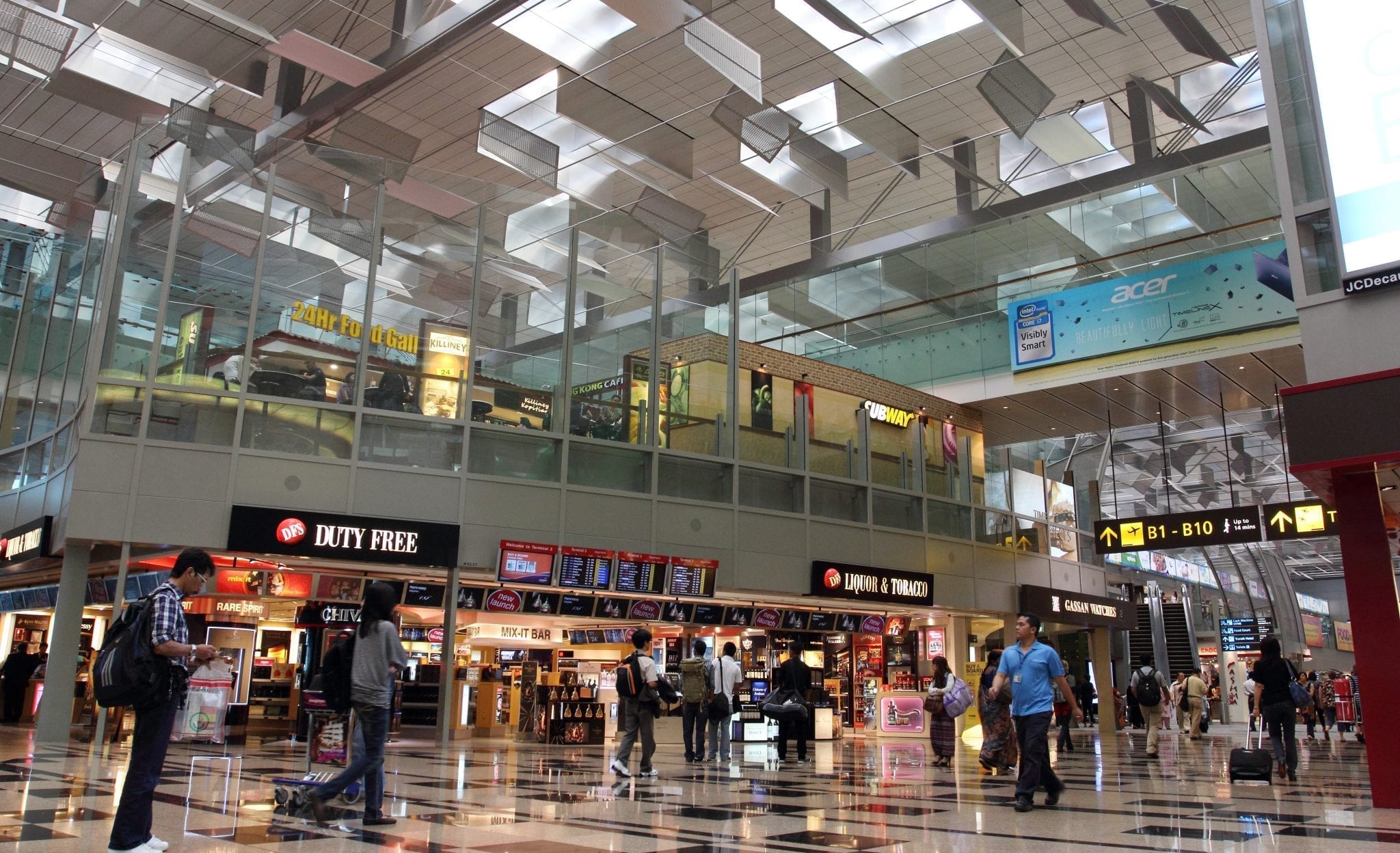
    Changi Airport Group (CAG) is seeking retail partners to operate speciality/brand name concessions at Singapore Changi airport terminal three departure/transit lounge north.

    Concession A spans around 78sq m, while Concession B covers 62sq m. The Concession A contract period is three years, beginning March 9 2017 and ending March 8 2020. For Concession B, the tenancy period is also three years, starting on May 9 2017 and ending on May 8 2020.

    According to CAG, all product categories may be considered, except liquor and tobacco and perfumes and cosmetics.

    CAG added: “We are looking for unique and exciting brands and concepts that are currently not represented at Singapore Changi airport terminal three and will inject buzz and differentiate the retail offerings.”

  • UnionPay Expansion Plan With Duty-Free Shopping Privileges

    UnionPay Expansion Plan With Duty-Free Shopping Privileges

    UnionPay International (UPI), an international payment network, has launched the 2016 Global Airport Campaign, its third edition since the inaugural annual campaign in 2014. This year’s Global Airport Campaign is the largest to date, featuring 120 participating duty-free shops at 80 airports, including 16 of the busiest airports across the world. Duty-free outlets located at the Heathrow Airport in London, United Kingdom, Haneda International Airport in Tokyo, Japan, and Chicago O’Hare International Airport in the United States of America are some of the notable inclusions in this year’s campaign.

    As part of the 2016 Global Airport Campaign, UnionPay Cardholders with card numbers starting with “62” can enjoy exclusive shopping discounts, complimentary gifts and more at airports located in 28 countries and regions in Asia Pacific, the Middle East, Africa, Europe and America. Top duty-free groups in the world, including Dufry, DFS, Lotte Duty Free, World Duty Free Group, The Shilla Duty Free Group, Everrich Duty Free, King Power, Blue Sky and China Duty Free are also on board the campaign to offer special shopping privileges to UnionPay Cardholders at participating outlets across the world.

    “We are delighted to launch our biggest ever Global Airport Campaign this year, with participation by over 120 duty-free shopping outlets globally. Over the years, the Global Airport Campaign has seen tremendous growth in size and in scale. This year, the number of participating outlets has doubled that of 2014, with new duty-free groups such as Blue Sky and Loop Duty Free coming on board for the first time. This is testament to the effectiveness of the campaign in boosting traveler spending, and we hope that shoppers will continue to benefit from this campaign and enjoy wonderful shopping experiences at all their favorite destinations across the world,” said Wenhui Yang, General Manager of UnionPay International Southeast Asia.

    In Singapore, the participating duty-free outlets are DFS and The Shilla Duty-Free. Starting this month, shoppers can enjoy up to 5 percent in discounts and vouchers, and participate in lucky dips to win additional shopping vouchers when they pay with their UnionPay cards at Shilla Duty-Free and DFS stores.

    UnionPay Cardholders in Singapore can also enjoy special discounts and privileges at their favourite Asia Pacific destinations such as Bangkok, Bali, Hong Kong, Tokyo, Seoul, Taipei, Kuala Lumpur and London, just to name a few.
    Other participating cities offering exclusive duty-free shopping privileges for UnionPay cardholders include Barcelona, Cape Town, Osaka, Los Angeles, Madrid, Moscow, New York, Paris, Rome, San Francisco and Toronto.
    For the full list of participating duty-free outlets and details of the privileges.

    UPI focuses on supporting the growth of UnionPay’s global business. With an acceptance footprint covering 157 countries and regions globally, UnionPay serves the world’s largest cardholder base by providing quality, cost-effective and secure payment services to over five billion cardholders worldwide.

    In Singapore, UnionPay enables efficient and cost-effective payment services that are tailored to the needs of local businesses and consumers. UnionPay cards are accepted at over 80 percent of retail, lifestyle and food and beverage establishments locally, as well as at almost all the automated teller machines (ATMs) across the island.

  • Bolloré Logistics the Only Visionary in Gartner’s Magic Quadrant for Third-Party Logistics Providers, Worldwide

    Bolloré Logistics the Only Visionary in Gartner’s Magic Quadrant for Third-Party Logistics Providers, Worldwide

    Bolloré Logistics* is the Only Visionary in the 2016 Gartner’s Magic Quadrant for Third-Party Logistics Providers, Worldwide, published on May 5th.
    Gartner’s Magic Quadrants are a tactical tool used by decision makers to evaluate the largest third-party logistics providers (3PL) and their abilities to be a global preferred provider.
    “To be positioned as the Only Visionary in this year’s Magic Quadrant is a very positive result for us,” said Thierry Ehrenbogen, Chief Executive Officer at Bolloré Logistics. “We believe this recognition reaffirms our constant search for improvement and our determination to deliver the highest quality of customer service through innovative approaches.”
    Bolloré Logistics was one of 16 third-party logistics companies that meet Gartner’s criteria based on completeness of vision and ability to execute. This year marks the third consecutive year Bolloré Logistics has made it into the quadrant. In April 2015, Bolloré Logistics was recognized as a Leader in the Magic Quadrant for 3PL, Europe.
    *Bolloré Logistics formally SDV

  • $14m boost for PMETs to start new careers

    $14m boost for PMETs to start new careers

    An extra $14 million per year has been set aside for two years to help professionals, managers, executives and technicians (PMETs) who want to start new careers in sectors such as retail, food services and events, Manpower Minister Lim Swee Say said yesterday.

    This means a total of $40 million per year, up from $26 million previously, will be available to fund course fees and salary support through Professional Conversion Programmes (PCPs) from now until mid-2018.

    Mr Lim said the PCP initiative will be “critical” in minimising the gap between job opportunities and workers’ existing skills, which will grow as economic restructuring picks up pace.

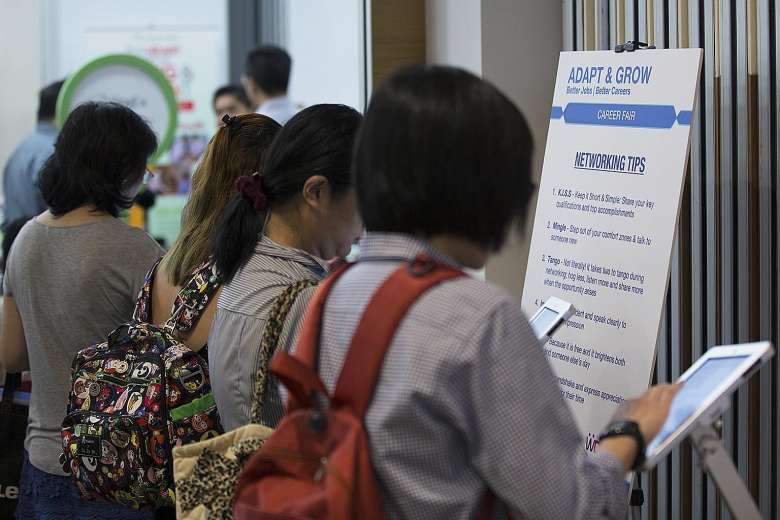
    “A growing number of PMETs will find that their job experience and their job expertise in some cases may no longer be directly relevant to the job opportunities of the future,” he said, speaking to media at a career fair at the Lifelong Learning Institute in Paya Lebar.

    “More and more of them will have to learn new skills and start a new career in areas they may not be familiar with.”

    PMETs tend to make up a higher share of laid-off workers than their share of the resident workforce, according to Manpower Ministry data. The average PMET also takes longer than the average resident to get back into a job after being laid off.

    Four new PCPs were launched yesterday by the Singapore Workforce Development Agency (WDA) to provide job placement and skills training support for up to 80 retail store managers, assistant chefs, restaurant managers, project executives and assistant project managers each year. Information about applying for the programmes can be found on the WDA website.

    The additions bring the total number of PCPs to 31 across 14 sectors. By 2018, there will be programmes in 20 sectors, as part of the Adapt and Grow initiative announced in this year’s Budget.

    The WDA said it aims to help a total of 10,000 Singaporeans and permanent resident PMETs by then, up from the 7,000 already placed through PCPs so far. More programmes in sectors such as aerospace and public transport will be rolled out over the next few months.

    Some 25 industries, which contribute around 80 per cent of Singapore’s gross domestic product, are being transformed, and both employers and employees must adapt, said Mr Lim.

    Yesterday’s career fair was part of the first Adapt and Grow Career Series of fairs and workshops running this month with 3,000 jobs for Singaporeans and PRs, 1,200 of which are for PMET positions. The series will be held quarterly.

    Several employers at the fair who are offering roles under the new PCPs said they would consider moving staff up to managerial positions if they performed well in the entry-level role they are initially hired for.

    “After three months, we will evaluate and if they are very interested in other aspects of the business such as outlet management, we will look at opportunities for them,” said Mr Wong Wei Teck, 59, managing director of Soup Restaurant Group, who was on the lookout for operations staff such as assistant chefs.

    www.straitstimes.com

  • Habitat Thailand thriving on return

    Habitat Thailand thriving on return

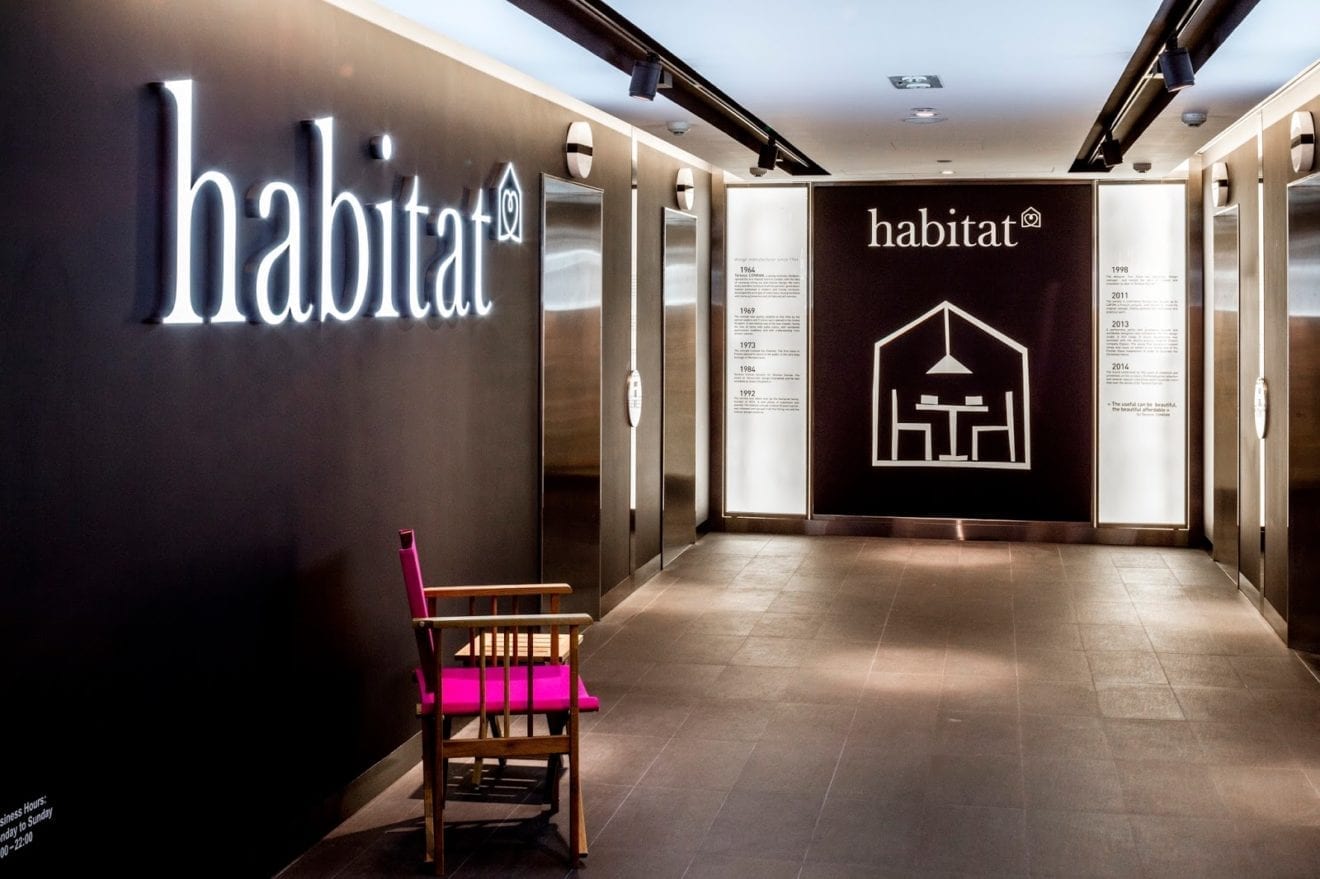
    A decade after its first aborted foray into Thailand, UK-founded furnishing and homewares retailer Habitat is thriving in Bangkok.

    Habitat Thailand has just opened what – for the time being – it is describing as its flagship store under the management of local brand partner SB Furniture. The new store, taking up 1400 sqm on the third floor of the revamped Siam Discovery shopping mall is the fourth in Bangkok, and the first stand-alone store. The others are stores-in-stores within larger SB stores: a 1400 sqm space at Crystal Design Center, a 1300 sqm site in Bangna and a smaller 840 sqm space at The Crystal SB Ratchapruek.

    Habitat @ Siam Discovery (6)

    “We wanted to stock exactly what a Thai person would see if they walked into a Habitat store in Paris,” said Suthida Vijitkulwongsa, executive director of Habitat Thailand.

    She says a fifth store is planned by the end of this year and the company is evaluating opportunities in larger cities outside Bangkok.

    Habitat Thailand is licensed by the French based company Cafom which bought Habitat Europe after the UK company was placed in administration in June 2011.

    Habitat @ Siam Discovery (5)

    Despite a 10 year absence from the Thai market, a number of loyal local customers have emerged since it made its return in June 2015. When the brand was reintroduced, some 80 per cent of shoppers were “Habitat lovers” familiar from the brand’s previous foray here, says Vijitkulwongsa.

    “They had known about Habitat in past years and were wondering what had happened to the brand and why it had disappeared. They think we have done well in terms of pricing.

    “Ten years ago our prices were equal to what they are now.

    Habitat @ Siam Discovery (16)

    Given the current stagnancy of Thailand’s retail sector – which has seen a number of shopping centre developments put on ice this year – is this really the time to reintroduce an overseas brand considered to be in the premium space?

    “When you have a very strong brand [the market] doesn’t really have much impact. People who are in the market now, who have influence and social status, they’re not really impacted. Instead of buying 10 pieces they end up with eight. But they still make the purchase, probably based on price and design.”

    Perhaps surprisingly, Habitat Thailand sources its stock from the French warehouse, rather than direct shipped from factories in Asia. About half the range is manufactured in Europe, mostly in the eastern nations. With a two month lead time for stock orders, Vijitkulwongsa maintains a large inventory in Bangkok to ensure the brand can meet customer demand without long waiting times.

    Habitat @ Siam Discovery (11)

    Cafom is bullish about its prospects in Asia, especially in China where a rapidly-rising middle class is aspiring to own European-designed products, even if almost 50 per cent of them are made in China. Besides Thailand and China it is now also present in Hong Kong and Singapore. In the Philippines, Habitat has partnered with the same company operating SB furniture stores under license.

    “The new French owners are very experienced in hypermarket operations and in French Polynesia. They have very strong sourcing skills and they have rejuvenated the design. The designers have done well. They have created products which are useful, beautiful and affordable.

    Habitat @ Siam Discovery (17)

    “France has been doing a great job taking over the brand, building it back up and adding value to its offer,” says Vijitkulwongsa.

    She believes her customers appreciate the simple yet functional design of the Habitat products.  “If the product is good enough in terms of function, if the price is right, then fashion is probably a plus.”

    For now, Habitat Thailand is not selling stock online, but it does maintain a website with its range and pricing information. If an eCommerce site is to come, it will most likely be developed by Cafom to serve all international markets.

    Meanwhile, SB Furniture has a dozen stores across Thailand and in partnership with local entities has stores in Vietnam, the Philippines and Indonesia. It also has a presence in Cambodia, Laos under different brand names and is carefully looking at the opportunities in Myanmar.