Tag: Singapore

  • Philip Morris: Singapore’s ban on tobacco display won’t curb smoking rate

    Philip Morris: Singapore’s ban on tobacco display won’t curb smoking rate

    Philip Morris Singapore said the forthcoming ban on the display of tobacco products at retail outlets will have no impact on the smoking rate in Singapore.

    The comment by the leading tobacco company in Singapore was in response to the announcement by the Ministry of Health (MOH) on Wednesday (9 December) that retailers selling tobacco products will no longer be allowed to display such items near the cashier counters of their outlets from 2017.

    The ban on point of sale display (POSD) will take place after the Tobacco (Control of Advertisement and Sale) Act has been amended, MOH said. The amendments will be tabled in parliament, whose opening session is in January 2016.

    “The POSD ban aims to protect the health of Singaporeans. By removing tobacco products from the public’s line of sight, we want to prevent our youth from picking up the smoking habit, and to help individuals who are trying to quit smoking,” said MOH in a press release.

    In an email statement to Yahoo Singapore, Philip Morris Singapore said based on its experience in working with countries that have similar regulations, there has been no clear evidence of a decrease in the smoking rate of these countries after such a ban took effect.

    “From the retail perspective, this will bring significant operation burdens to retailers. From our perspective, it will stiffen competition…when all products are hidden, how can you compete?” said a Philip Morris spokesperson, who declined to be named.

    “You can’t scientifically demonstrate with evidence that it (POSD ban) will reduce smoking rate,” he added.

    Iceland, Canada and Thailand are some of the countries in the world that have imposed a ban on POSD.

    PMI is one of the leading tobacco companies in Singapore, owning brands such as Marlboro and L&M, according to Euromonitor International.

    Retailers will be given a 12 months grace period after the ban has been gazetted, to give them “time to effect the changes and smoothen the transition process” so that they can comply with the rules, MOH said.

    “Support from the community and businesses is crucial in our fight against tobacco use. Retailers can help create the right environment for Singaporeans who are trying to stay away from cigarettes,” it added.

    On Wednesday morning, Senior Minister of State for Health and Environment and Water Resources, Amy Khor, attended a meeting with tobacco retailers to inform them of the implementation of the new guidelines.

    The Health Promotion Board (HPB) has also prepared a brochure to assist tobacco retailers in implementing the ban.

    Since 2013, MOH, HPB and Health Sciences Authority (HSA) have had a total of 14 dialogue sessions on the POSD ban.

  • Singtel taps third-party developers for new apps

    Singtel taps third-party developers for new apps

    A Singtel strategy to pick up ideas from independent developers across the region has resulted in affiliates of the telco adopting new revenue-boosting apps and technologies.

    The initiative seems to have helped boost revenue at some of these affiliates while also bolstering Singtel’s role as an incubator of new technology.

    Globe in the Philippines and Telkomsel in Indonesia have lifted turnover in their mobile segments, thanks, in part, to new apps devised by third-party software developers. This came about after Filippino customers downloaded an app called Epic Life, a mobile adventure game, while the photo app Jepret Story proved popular in Indonesia.

    Both apps were developed by outside software firms, which then worked with the telcos to fine-tune the final products.

    Mr Mark Chong, Singtel’s chief executive international, said the telco’s different business units share product ideas among themselves.

    “Our thinking was to shorten the product development cycle. So we decided to combine our own products with apps from external sources to present a more holistic suite of products and services.”

    Singtel’s challenge was to select new content that its customers would find useful, so it held app competitions in different countries for local software developers. This resulted in fresh apps customers in those countries could relate to.

    Take Jepret Story, which won the app challenge in Indonesia. It struck a chord with mobile customers because Indonesians are big social media users. An eMarketer report this year said 63 million people in Indonesia will access Facebook via mobile phones.

    A new round in the process is under way.

    Singtel affiliates will have a chance to work with the 14 apps featured in the Singtel-Samsung mobile app challenge held last Tuesday in Jakarta. The apps cover sectors such as lifestyle, on-demand economy, smart living and health .

    Chief judge Edgar Hardless from Singtel said the affiliates can check out the apps to see if they are suitable for their own markets.

    Among other things, the affiliates must ensure that the apps work seamlessly on their mobile networks and that they would be able to scale up so that millions of customers can use the service.

    Mr Hardless, who is also chief executive of Innov8, Singtel’s venture unit, said investing in start-ups has allowed the telco to innovate as well.

    Since it began in 2010, Innov8 has invested in nearly 40 start-ups here and around the world, giving it an insight into the latest emerging technologies and business solutions.

    “Through these activities, there’re start-ups that we can refer to our business units, leading to commercial arrangements,” he added.

    One of Innov8’s portfolio companies is Jasper Wireless, which has been used by Singtel here and by Optus, its Australian subsidiary.

    Jasper helps companies rapidly and cost-effectively manage and monetise Internet of Things services such as security and analytics.

  • Singapore’s FairPrice opens store designed for disabled customers

    Singapore’s FairPrice opens store designed for disabled customers

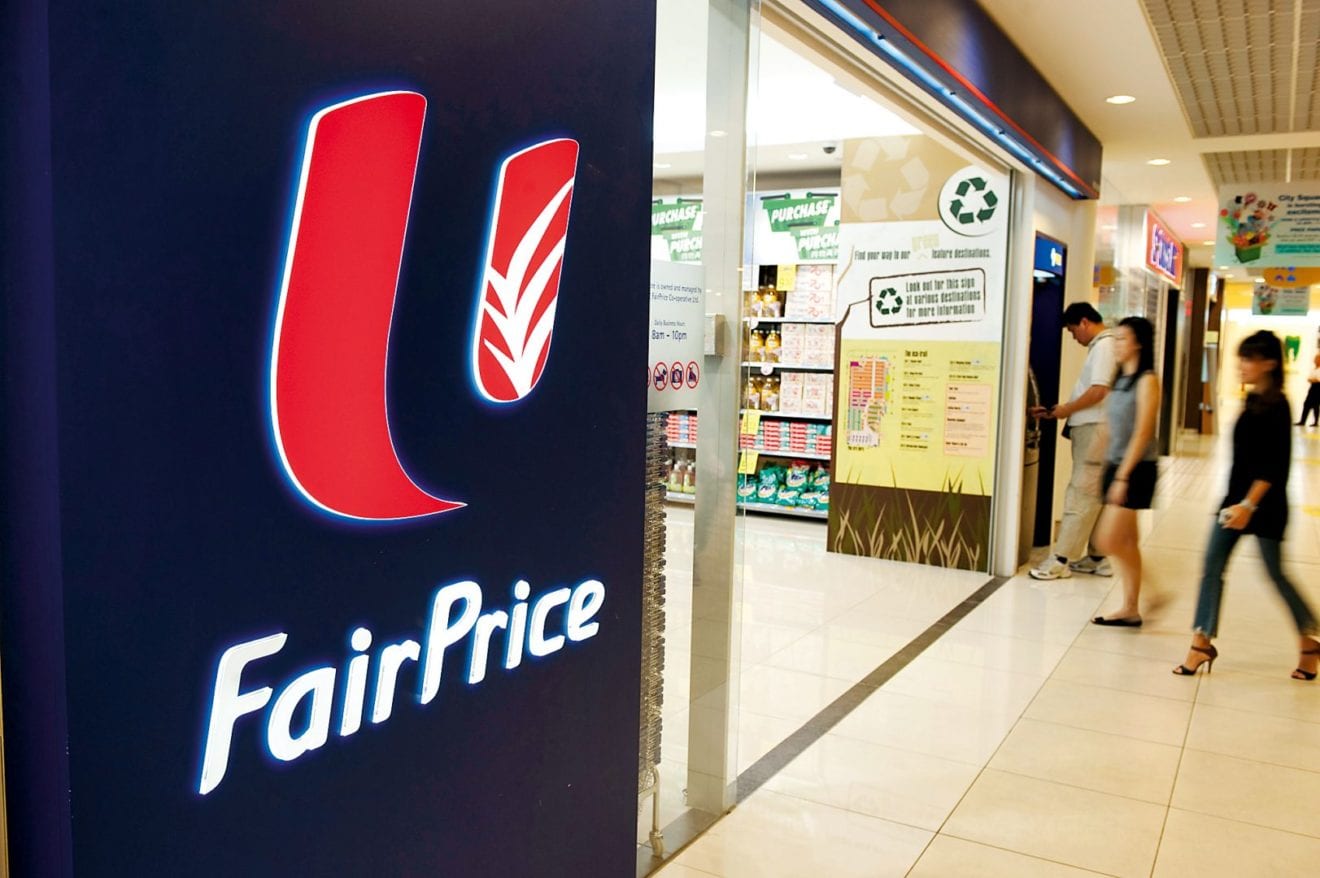
    Singapore’s largest supermarket chain NTUC FairPrice has opened a supermarket designed to make it easier for shoppers with disabilities or ageing.

    Dubbed an ‘Enabled Store’, its staff undergo special training to better serve customers.

    The Enabled Store is located within the new Enabling Village, an integrated community space for people with disabilities at 20 Lengkok Bahru, #01-13. Trading hours are daily from 8am to 9pm.

    Among other features, the store has lower checkout counters and shelves to make it easier for people shopping in wheelchairs.

    At Wednesday’s official opening ceremony of both the village and the supermarket, FairPrice CEO Seah Kian Peng, said the initiative was an example of the company constantly evolving to meet the changing needs of Singapore’s population.

    Enable store NTUC Fairprice ceremony

    “We support seniors and persons with disabilities in living high-quality and independent lives, and recognise their needs amidst a backdrop of a rapidly ageing population. This is part of our efforts in striving to be a retailer with a heart and staying true to our social mission of serving various segments of the community through innovative retail formats and offerings.”

    Enable-store-NTUC-Fairprice 5


    With the number of seniors in Singapore expected to grow to more than 900,000 in 2030, and with more than 77,200 with disabilities above the age of 18, the store seeks to make shopping more seamless for these segments of society. It incorporates the principles of universal design with special features and products to enhance in-store experience.

    Physical characteristics of the store include call buttons located at the entrance and along store aisles to offer assistance, magnifying glasses at every aisle to help customers read product labels, and merchandise shelves customised to ideal heights for easy reach. The store also offers a more extensive range of supplements, products with the Healthier Choice Symbol (HCS) and assistive products such as walking aids.

    Enable store NTUC Fairprice 3

    Staff at the store have undergone a specially developed training program, jointly developed by NTUC LearningHub, Centre for Seniors and the Dr Oon Chiew Seng Trust, to equip them with the necessary skills and knowledge to serve senior customers better. The training programme aims to help service staff understand and anticipate the needs of senior customers, recognise senior related ailments such as dementia, as well as empathise with the difficulties that seniors may encounter so they can communicate and respond better to their needs.

    FairPrice is the first organisation to send employees for the course, training 100 frontline staff to date. Over 500 FairPrice frontline staff will also undergo this training programme in the next two years.

    Existing initiatives to help FairPrice customers stretch their dollar will also be available at this store including the Big Value Bag program which offers a 10 per cent discount on over 1000 FairPrice housebrand products, which are already priced 10-15 per cent lower than other popular brands.

    Elsewhere in the $25 million government-funded Enabling Village, there are food outlets which hire people with disabilities, and a retail art gallery where people can buy artworks and merchandise such as mugs and notebooks designed by people with autism.

  • Moiselle flies in customers as sales slide

    Moiselle flies in customers as sales slide

    Hong Kong luxury fashion retailer Moiselle has revealed a raft of innovative strategies to restore flagging sales.

    Hit by a $31.9 million loss for the first half of the trading year due to declining spending by Mainland Chinese tourists, Moiselle is introducing new ranges and even flying in loyal customers for exclusive product displays.

    The company has reigned in its store openings and is putting the squeeze on landlords to reduce rents.

    Last week Moiselle revealed its sales had fallen by 21 per cent to $161.2 million mainly due to weak consumer sentiment and sluggish retail sales in its Hong Kong home market, which accounts for 55 per cent of its turnover. Gross margin fell from 82 per cent in the first half of last year to 76 per cent in the latest period.

    The group operated 92 retail stores and counters in Hong Kong; first- and second-tier cities of China; Macau, Taiwan and Singapore as at September 30 – three fewer than at the end of March. It closed five stores in hong Kong during the six month trading period.

    Moiselle – which sells under the Moiselle, Mademoiselle, Coccinelle and French-influenced Germain brands – has shifted focus to a more tailor-made sales model in Hong Kong, targeting members of its VIP customer club, and has formed partnerships with several Mainland Chinese online shopping websites.

    The organised shopping visits by customers from Mainland China, Taiwan and Singapore to its product showrooms in Hong Kong target its most loyal customers with high spending power. The tours began in May and started generating income in July.

    Meanwhile, Moiselle forged ahead with a strategy of diversifying its product offer to target different segments of the high-end and upper middle markets for women’s fashion apparel and accessories. It expanded its Moiselle and Germain ranges into menswear. It launched European accessories labels Sequoia and Coccinelle into the apparel market through exclusive distribution agreements to add impetus to its business development.

    In its stock exchange filing, Moiselle said it did not expect Hong Kong’s retail market to turn around “any time soon”.

    “China’s economy has shifted to a lower gear and the growing trend towards a higher proportion of the Mainland Chinese visitors with weaker spending power in Hong Kong seems irreversible. Moreover, the Hong Kong dollar, which is pegged to the greenback, is poised to enter a phase of appreciation against many other currencies as the US Federal Reserve Bureau looks set to raise the benchmark interest rate in the foreseeable future. These developments are likely to weigh on both the shopping tourism and average purchase value in Hong Kong, where the group derives most of its revenue.”

  • Modern Beauty Salon Holdings posts profit plunge

    Modern Beauty Salon Holdings posts profit plunge

    Modern Beauty Salon Holdings has reported an 87.4 per cent plunge in first half profits as consumers restrain their discretionary spending.

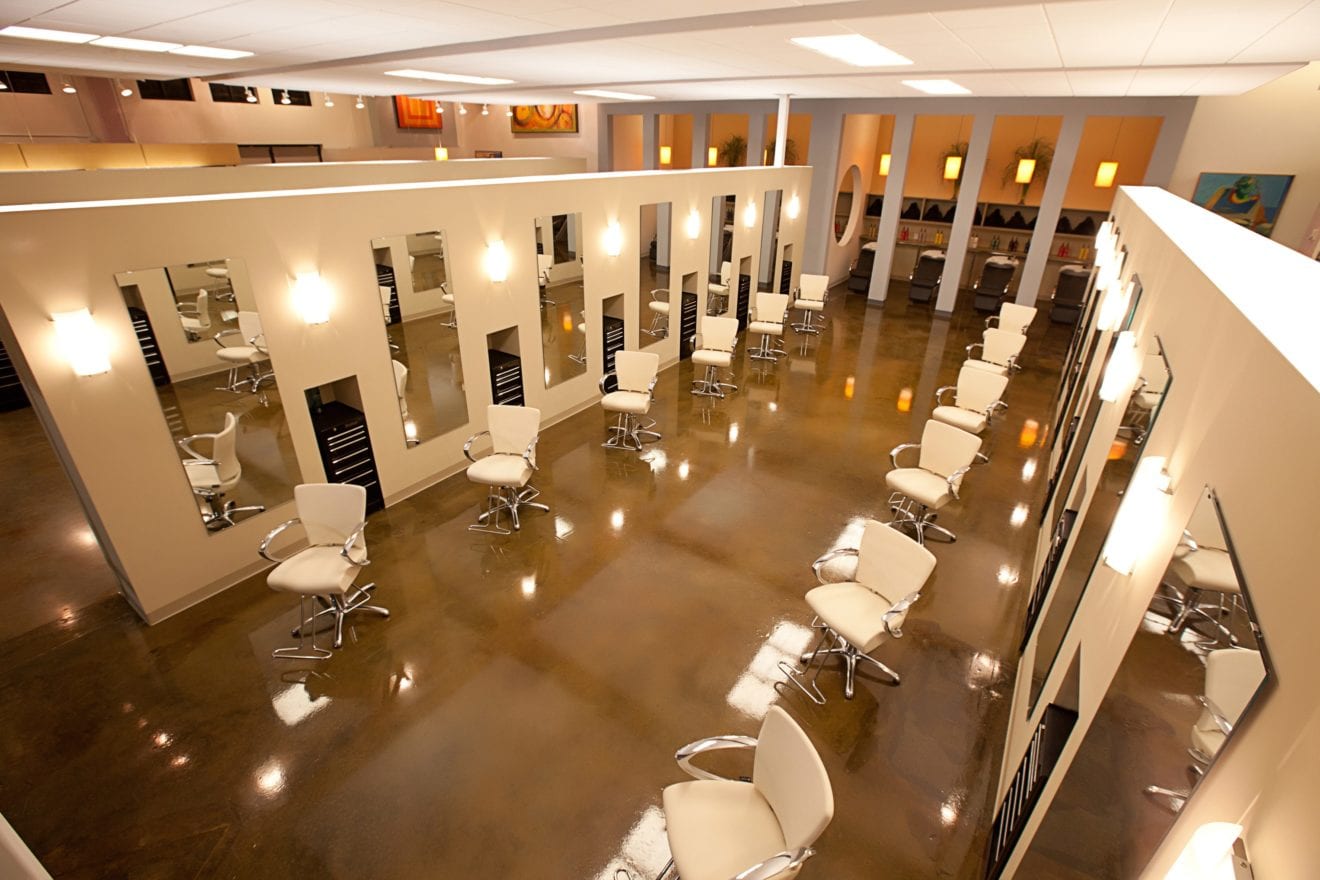
    Modern Beauty runs 42 service centres in Mainland China, Hong Kong and Taiwan, 16 in Singapore and three in Malaysia. The company’s 17 retail stores trade under the banners Pen and Be Beauty Shop across Hong Kong, Kowloon and the New Territories.

    Modern Beauty Salon

    Group revenue across the markets fell 12.2 per cent to HK$402.7 million year on year, while gross receipts from the sale of prepaid beauty packages decreased from $387.5 million to $350.4 million. That produced a profit attributable to shareholders of just $5.7 million, compared with $45.5 million for the same period last year.

    The company said a volatile financial market and weakened Hong Kong economy made people more conservative on their spending.

    “Our beauty, slimming and wellness service business in Hong Kong was inevitably affected. Nevertheless, leveraging on our excellent service management that facilitate greater quality assurance, our management is confident of the further prospects of our business.”

    The company says despite the retarded economic growth in Mainland China, it still believes the beauty, slimming and wellness market there will continue to prosper with a growing demand because “as a larger portion of the population moves up to the bourgeoisie”.

    “Our brand name has secured a presence in the Mainland China with a solid foundation that we have established for years in Beijing, Shanghai and Guangzhou. Plans to open more stores in the Mainland China are afoot.”

    In Singapore and Malaysia, receipts from sales of prepaid beauty packages amounted to $37,768,000, while revenue from services rendered amounted to $55,673,000, down 35 per cent and 36.6 per cent respectively.

    “The drops are mainly due to the new government policies in Singapore and Malaysia. For Singapore, from June 2015, if a local person’s aggregate interest-bearing outstanding balance on all credit cards and unsecured credit facilities exceeds 24 times his monthly income for three consecutive months, his credit lines will be suspended. This means that he will not be allowed to charge new amounts to his existing credit cards and/or unsecured credit facilities. For Malaysia, from April 2015, a GST of six per cent was imposed on local services providers, including beauty services. These policies have hurt the local consumption sentiments significantly.

    “The group will continue to carry out its local business development prudently and we believe that the local people will accustom to the new policies and the consumption sentiments will recover as time goes by.”

    Modern Beauty says it plans to launch an eCommerce website during the next six months.

  • Singapore banks warn of new malware targeting mobile banking users

    Singapore banks warn of new malware targeting mobile banking users

    The Association of Banks in Singapore on Tuesday (1 December) warned consumers of a new malware that has been targeting mobile banking customers using Android smartphones.

    In a press briefing, ABS director Ong-Ang Ai Boon said that since September “about 50” people have fallen victim to the malware, which poses as an Android software or WhatsApp application update and accesses users’ online banking accounts to make unauthorised purchases.

    In the latter, a pop-up ad encourages consumers to tap it and download a “new” version of the program or risk losing access to the service. After downloading the “update”, the app will prompt the customer to input confidential information such as credit card details.


     Phone screenshots of how consumers were prompted to perform application updates, which resulted in their smartphones being infected by malware. Photo: The Association of Banks in Singapore
    Phone screenshots of how consumers were prompted to perform application updates, which resulted in their smartphones …

    Current victims have lost up to a few thousand dollars from fraudulent online purchases made by cyber criminals, said Ong-Ang.

    She disclosed that many of the purchases were made to overseas websites. A fraudulent purchase of budget airline tickets was made in one case.

    Investigation into these scams is still ongoing by the banks affected and the police, she added.

    “The weakest link is the consumer, if they are not careful. You must be vigilant. Don’t download unauthorized apps, don’t go to illegitimate sites and don’t simply click on any URL which you are not aware of. Because once you do that, you compromise your handphone,” Ong-Ang noted.

    ABS advised consumers to take the following precautions: secure your smartphone with a password, install system updates to get the latest security features, install applications from trusted sources such as “Google Play”, only click on hyperllinks from messages and emails from a trusted source, and visit your bank’s website for more information.

    According to the banking association, major retail banks in Singapore have seen an increase of mobile banking customers from 1.5 million in 2013 to 2.4 million in 2015.

  • City Chain to close stores

    City Chain to close stores

    Hong Kong headquartered watch retailer City Chain plans to close more stores as sales slid 12.1 per cent and profits crashed by 86.4 per cent in the first half year to just HK$15.7 million.

    Parent Stelux says turnover was “sluggish” in Hong Kong, Macau and Southeast Asia, with a narrowed gross margin. But inventory reduced by 16 per cent compared with the end of March.

    The City Chain Group operates stores in Hong Kong, Macau, Mainland China, Singapore, Thailand and Malaysia together with online stores at City Chain Tmall and Titus Tmall. Turnover for the six months to September 30 was $957.9 million.

    “We are rationalising our store portfolio based on shop profitability when considering shop renewal or relocation to achieve lower rental to turnover ratios,” the company said, without providing any indication of how many stores are likely to be culled.

    Already stores have been closed in Singapore and Thailand.

    Sales in Hong Kong and Macau fell 14.2 per cent to $646.6 million due to reduced tourist spending, shop consolidation measures and a high comparable base last year, when the group achieved record breaking monthly sales. That triggered a 56.5 per cent drop in pre-tax earnings to $67.9 million.

    “A combination of factors, namely, a decrease in turnover, narrowed gross profit margin due to stock rationalisation and the time lag in containing operating costs such as shop rentals led to the decline. Operating costs other than shop rentals decreased by around eight per cent despite inflationary pressure. The group continues to tighten operating expenses to adapt to existing turnover levels to improve performance,” Stelux said in its earnings statement.

    It was a rosier picture in Mainland China, now considered “a key market” for the group, which is pursuing a long term growth strategy there.

    First half sales rose 11.2 per cent to $113.2 million despite the slowing economy, driven mostly by positive same store sales growth especially in the Eastern (around 27 per cent) and Southwest regions (around 40 per cent).

    “Due to aggressive price cuts by competitors and a change in stock management strategy, gross profit margins came under pressure. Stock clearance initiatives have proven successful and we are on track towards maintaining a healthier and more competitive inventory balance. Losses, standing at $28.6 million, remained similar to that of last year since most of the uplift in sales was offset by the drop in gross profit margin. Notably, the loss posted by existing operations in Northern China fell by around 57 per cent compared to the same period last year due to restructuring efforts taken in Quarter 2,” the company said.

    “We expect to accelerate network expansion, increasing penetration in regions where we have a presence, and also setting up in multiple second and third tier cities where we do not yet have a presence to achieve economies of scale.”

    Southeast Asian first half sales were adversely affected by weakening economic fundamentals, with poor consumer sentiment and weak local currencies. Turnover dropped by 15.7 per cent to $198.1 million. But in local currency terms, turnover dropped by just four per cent.

    The Southeast Asian operations recorded a loss of $23.6 million, but a large part of that was attributed to the sharp depreciation of the Malaysian ringgit. On an exchange neutral basis the loss would have been $13.2 million, compared with $12.5 million during the same period last year.

    “The retail sector in Malaysia was severely affected by the introduction of GST in April 2015 and the depreciation of Malaysian ringgit. Despite this, turnover in local currency terms remained stable due to successful restructuring and re-merchandising measures adopted.

    “In Singapore, store consolidation and productivity enhancement measures have been very successful and we have seen sales per shop month improving significantly by 22.5 per cent and at the same time operating costs have fallen by 19.6 per cent. This has helped to narrow the loss by 33.6 per cent to $8.3 million.

    “The unstable political situation in Thailand and high household debt ratio has resulted in very low consumer confidence which has continued to fall since January 2015. Due to this, our Thai operations, posted a 24.2 per cent (FX neutral: 18.8 per cent) decline in turnover. We have implemented aggressive store consolidation measures with over 10 non-performing stores closed, and these store consolidation efforts will continue in the second half. Cost control measures were also implemented reducing our operating costs by 22 per cent.”

  • F&B underpinning demand for Singapore retail space

    F&B underpinning demand for Singapore retail space

    Food and beverage has overtaken fashion as the primary driver of demand for retail real estate in Singapore.

    In its Third Quarter Retail Index covering Asia-Pacific, property company Jones Lang LaSalle says that despite declining retail sales and consumer spending, the prime retail sector remained in good shape during the third quarter.

    “Notwithstanding the overall challenging retail environment, Singapore’s most popular prime shopping destinations continued to demonstrate resilient performance, with malls such as Ngee Ann City, Paragon and Ion Orchard maintaining full occupancy,” the report concluded.

    “F&B has overtaken fashion retailers as the top demand driver.”

    Orchard Rd is ranked fifth most expensive in Asia for High Street net face rents with a figure of US$4106 per square metre per annum. That’s a fraction of the $19,476 of top placed Russell St in Hong Kong, and behind Shanghai’s West Nanjing Rd at $5473.

    But on a quarterly basis, the average shopping centre rent in Orchard Rd and District 9 fell by 0.4 per cent quarter on quarter, and by 0.7 per cent year on year. It was the only city of 18 measured by JLL to record a reduction, despite the highly publicised downturn in Hong Kong retail rents. (This is largely due to that comparison measuring shopping centre rental rates which have to date remained relatively unaffected in Hong Kong’s turmoil).

    JLL predicts “further rental correction” in Singapore amid subdued occupier demand “as labour market challenges and weak consumer sentiment prevail in the near term”.

    The report said that despite leasing support from new market entrants into the city, expansion of existing retailers has slowed and some have cut back their store networks.

  • Singapore to invest US$15 million on pharmacy industry

    Singapore to invest US$15 million on pharmacy industry

    Singapore has stated its interest to invest in the pharmacy industry worth US$15 million.

    “Singapore will use the three-hour service facility system in arranging the permit of its plan to make investment in the pharmacy sector,” Chief of Investment Coordinating Board Franky Sibarani stated on a press release received here on Sunday.

    Franky said the candidate investor company has a data centre operated in India with employment reached 12 thousand people in the world.

    The company employs 600 researchers and markets their products to 18 European countries and also more than 30 others in the world. The investor is the first company who utilize nano technology for pharmacy industry.

    “Its product is a medicine used to protect live cell from cancer and eliminate cancer,” Franky said.

    According to Franky, the company is interested to invest in Indonesia because the country has big market, added with other ASEAN countries.

    Indonesia, says Franky, need investment in pharmacy industry to boost technology transfer.

    The Board noted that the company also is a also a challenge to Indonesia, particularly the related ministries, to provide service for permit in a short length of time.

    “Thus, the coordinating board pushes the relevant agency to process permits in three hours as the investment will involved an amount of US$8 million,” Franky went on.

    The coordinating agency has met several Singaporean companies engaged in telecommunication, pharmacy, real estate and maritime sectors.

    During the meeting, the agency also signed a Memorandum of Understanding (MoU) with UOB Bank to promote investment potential.

    Singapore is one of the biggest foreign direct investment source to Indonesia.

    The country has noted Foreign Direct Investment up to the third quarter of 2015 at US$ 30 billion with 6,868 projects in the transportation, telecommunication, warehousing, plantation, mining, mineral and non-metal sectors as well as in the power generator sector.

  • Cafe concept a huge boost for Muji Singapore

    Cafe concept a huge boost for Muji Singapore

    The recently opened cafe inside the Muji Singapore store on Orchard Rd has had a huge impact on the store’s overall trading.

    In an extensive feature written by the Straits Times and published online by Asia One, which details the trend of merging dining with traditional retail offers, Muji Singapore GM Jasmine Sng has revealed the store’s sales have increased 40 per cent since the cafe began trading.

    “Customer traffic has increased. The cafe draws customers to the store and, after a meal, they usually shop at the retail section too.”

    The 122 sqm Muji cafe opened in early September as part of an expansion and renovation of the Japanese lifestyle department store in the Paragon shopping centre.

    The brand operates its Cafe&Meal dining concept in 23 stores in Japan as well as in Chengdu, Taiwan and Hong Kong.

    The Cafe&Meal concept is described as “minimalist chic” (much like a lot of Muji’ anti-brand product range) featuring simple natural wood furniture in a plain, modern backdrop fitout.

    The menu will feature Japanese deli-style foods using locally-sourced ingredients, with a broad range of desserts.

    Customer Diana Low, 35, who visits a Muji outlet at least once every two weeks, told the Straits Timesthat Cafe&Meal has created a better shopping experience at Muji.

    “It completes the lifestyle concept of Muji and makes me want to linger longer in the store and spend more,” she said.

    Muji is just one of a growing number of stores adding a food and beverage offer to their retail space to enhance dwell time, broaden their product offer and to provide an in-store experience which cannot be replicated online.

  • Foodpanda Singapore to deliver food in 30 minutes

    Foodpanda Singapore to deliver food in 30 minutes

    foodpanda is promising to drastically reduce delivery time in Singapore to 30 minutes. This, it said, will be achieved by its own fleet of over 500 couriers, along with advanced delivery technology.

    “foodpanda’s service is all about delivering the most popular dishes around Singapore from kitchen to doorstep as quickly as possible. Having our own foodpanda fleet of riders means our service is now more consistent and speedier than ever, ensuring food consistently arrives on time,” said Jakob Angele, CEO for foodpanda Singapore.

    Using proprietary technology with advanced algorithm, delivery routes of riders are intelligently optimized.

    Recently, it signed partnerships with new healthy and popular restaurants to offer an even wider choice of healthy options at home and in the office. New partner
    restaurants include Sushi Burrito, District 10, The Assembly Ground and Nandos.

    foodpanda also exclusively offers delivery of hearty soups, stews, salads and sandwiches from The Soup Spoon.

    Anna Lim, Executive Director of The Soup Spoon Pte Ltd, says foodpanda’s fleet has allowed them to focus on more pressing elements such as service and the quality of food.

    “With foodpanda, we don’t have to dispatch our own staff or hire a third party delivery company anymore, which saves us an incredible amount of time,” she said. “We are also very pleased that each driver now has a receipt printer allowing them to have a copy of the bill – a common customer request.”

  • Singapore sees mild deflation of -0.5% for 2015

    Singapore sees mild deflation of -0.5% for 2015

    Singapore is projected to experience a mild deflation of -0.5% for 2015, according to a forecast adjustment made by Maybank Kim Eng.

    The tweak in its estimate is still within its earlier forecast range of between -0.5% and 0%, the research house writes in a note on Tuesday.

    Maybank Kim Eng’s forecast comes on the back of several macroeconomic headwinds, following the latest inflation figures released on Monday.

    These include the prevailing subdued outlook on transport cost given low global crude oil prices, depressed housing and utilities costs and soft global commodity prices, which should offset the impact of the tight job market.

    Headline inflation eased to -0.8% in October from -0.6% in September, mainly due to the lower costs of oil-related and retail items, the Monetary Authority of Singapore and the Ministry of Trade and Industry said on Monday.

    Core inflation, which excludes accommodation and private road transport costs, eased to 0.3% in October from 0.6% in September.

    For 2016, Maybank Kim Eng expects inflation to nudge up to 0.5% on the receding effect of lower global oil prices.

    The will also be underpinned by budgetary measures such as the reduction in the concessionary foreign domestic worker levy, one year road tax rebates, abolition of national examination fees and the increase in medical subsidies, it says.

  • Sa Sa plans new store concepts

    Sa Sa plans new store concepts

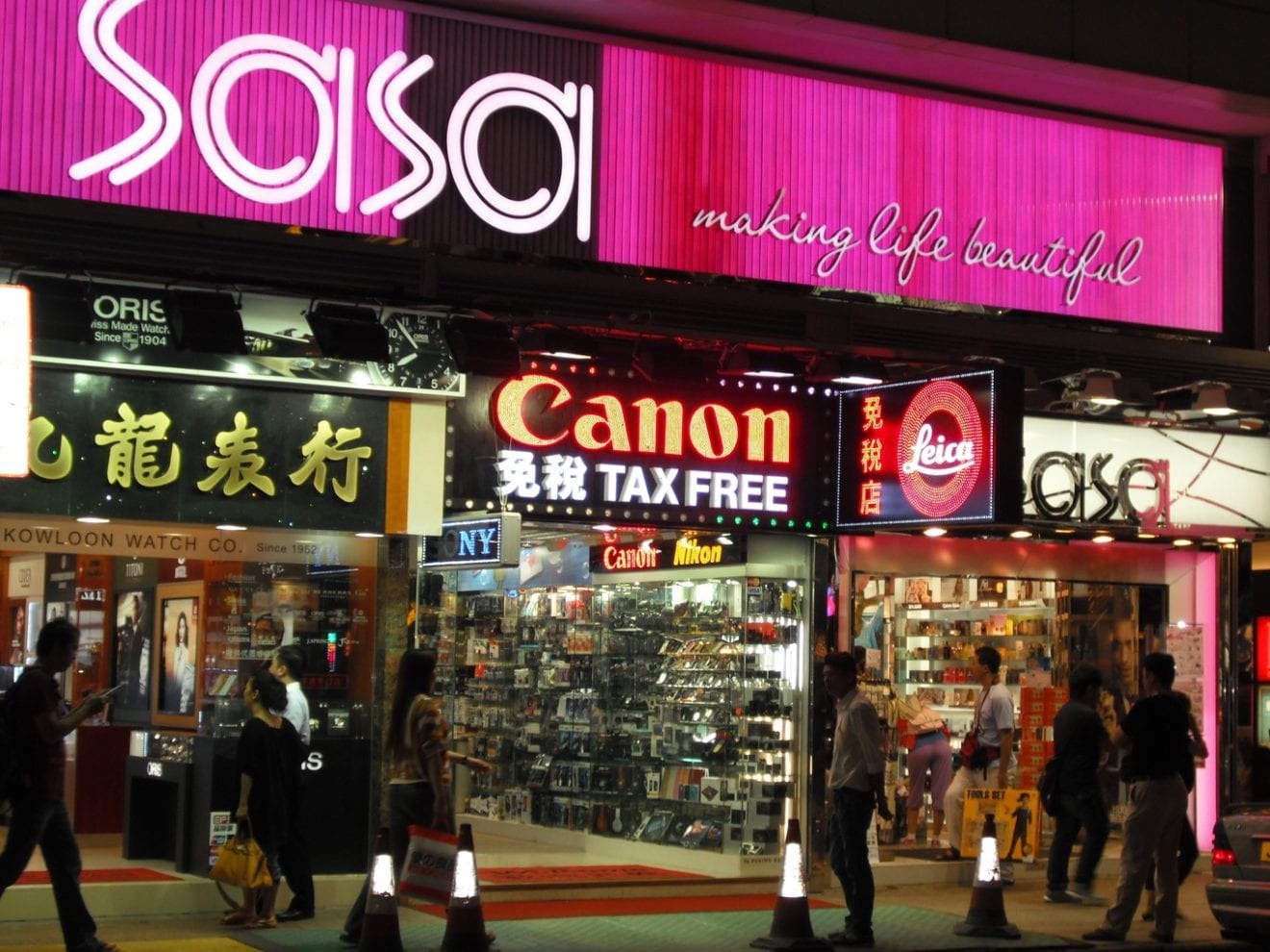
    Hit by falling sales in the tourist downturn, Hong Kong beauty retailer Sa Sa plans new store concepts and diversification to restore growth.

    Reporting a 10.6 per cent decline in sales to HK$3.778 billion in the first half of the current year, and a 55 per cent plunge in profit to $153 million, Sa Sa revealed a strategy to “develop other businesses beyond traditional operations”, including tapping the opportunities of O2O and cross-border eCommerce.

    “The group’s O2O initiatives will initially launch in Hong Kong and gradually extend to mainland China. For the China market, the O2O initiatives will significantly broaden product offerings in its physical stores through online sales and cross border fulfillment. The group aims to use different channels and to leverage a variety of online partners to increase online exposure, including operating physical stores to promote O2O in Free Trade Zones, and cooperating closely with major China online operators, all with their unique positioning and correspondingly different opportunities,” the company said in its interim report.

    New store concepts are also on the drawing board.

    “The group’s strategy for new store concepts includes introducing more trendy and lifestyle concepts to attract young and trend-setting customers, much improved product display, and more emphasis on enhancing the shopping experience.”

    Sa sa says it also aims to place more emphasis on the unique shopping experience with Sa Sa through improved product displays, while changing the mindset of its beauty consultants to one that is more receptive to consumer preferences.

    “In addition, the group will substantially strengthen its online marketing efforts, including the use of social media channels to improve interactivity.”

    Hong Kong & Macau

    Sa Sa says its first half year was marked by pressure from a series of negative factors in the retail market of Hong Kong during the first half of the year. Retail sales in Hong Kong and Macau decreased by 11.1 per cent to $3.010 billion.

    “The cosmetics market in Hong Kong continues to face strong headwinds due to the slowing of mainland China tourist arrivals, their reduced spending, and weak local consumption sentiment. The one-visit-one-week policy for mainland visitors is gradually taking its toll on the market, while the strength of the Hong Kong dollar and depreciating yuan will continue to make shopping overseas more attractive for both mainland China and local consumers. Intensifying competition within the cosmetic industry is a further challenge, with ongoing discount and promotion programmes having an ongoing impact on profitability,” the company reported.

    “Although rental pressure is expected to moderate in a slowing market, rental reductions still lag behind weak sales performance. In the face of these challenges, The group rationalised its retail network from 287 to 281, a net decrease of three stores each for both “Sasa” stores and single-brand counters.”

    Mainland China

    In Mainland China, the stores’ profitability continued to improve, but weak operational and product management led to a decline in turnover, as well as an increase in the inventory provision. Overall turnover for Mainland China operations decreased to HK$148.9 million, a decrease of 8.7 per cent in local currency terms, while same store sales growth in local currency decreased by 9.8 per cent for the period. Loss for the period amounted to HK$24.5 million. The group has recognised the need for more management resources to improved management, and is currently using external management resources on a contract basis to allow for more time to develop its own management structure and training. The group is also seconding experienced staff from Hong Kong to improve attractiveness of product offerings and inventory management.

    Taiwan

    Turnover in the group’s Taiwan business decreased to HK$130.2 million during the period, representing a drop of 2.2 per cent in local currency terms. Same store sales fell 8.7 per cent in local currency. The number of mainland China consumers in Taiwan is expected to increase in view of the country’s enhanced infrastructure and retail space, and the introduction of unlimited visa quotas for high-end Mainland Chinese tourists who have greater spending capacity. The group has already opened stores in tourist locations to tap the potential of increasing in mainland Chinese tourist arrivals.

    Singapore & Malaysia

    Flat sales across the Sa Sa Singapore network has prompted a rethink of the brand’s local network.

    In the first half year, Sa Sa reported turnover of HK$112.8 million (S$20.445 million) in Singapore, remaining flat in local currency terms over the same period last year.

    “The group will continue to build scalability and profit potential by closing inefficient stores and opening stores in new malls with good potential,” the company said in its interim trading statement.

    Meanwhile, turnover for Sa Sa Malaysia was HK$141.9 million, an increase of 2.5 per cent in local currency terms over the same period last year. However, same store sales decreased 8.5 per cent in local currency.

    “Sales and profit growth were restrained by the implementation of GST [on April 1], which adversely impacted store productivity during the transitional period. This effect is expected to be normalised in the second half.”

    Chairman’s view

    Chairman and CEO Dr Simon Kwok put on a brave face on the results:

    “Sa Sa has a long track record of delivering outstanding success in all economic climates and in the face of the most severe headwinds and difficulties. We firmly believe that in spite of the current difficult business environment we are now facing, we can still turn challenges into opportunities and further consolidate our competitive advantages. The flexibility of our business model, with an ability to rapidly adapt to new circumstances, markets and trends, will continue to support our position as a leading provider of beauty products in the Asia Pacific. We also believe that the resilience and adaptability of our loyal staff and the forward vision of our outstanding management team will ensure that we deliver sustained, satisfying growth for many years to come.”

  • RedMart offers 1-hour delivery of orders from food, retail partners

    RedMart offers 1-hour delivery of orders from food, retail partners

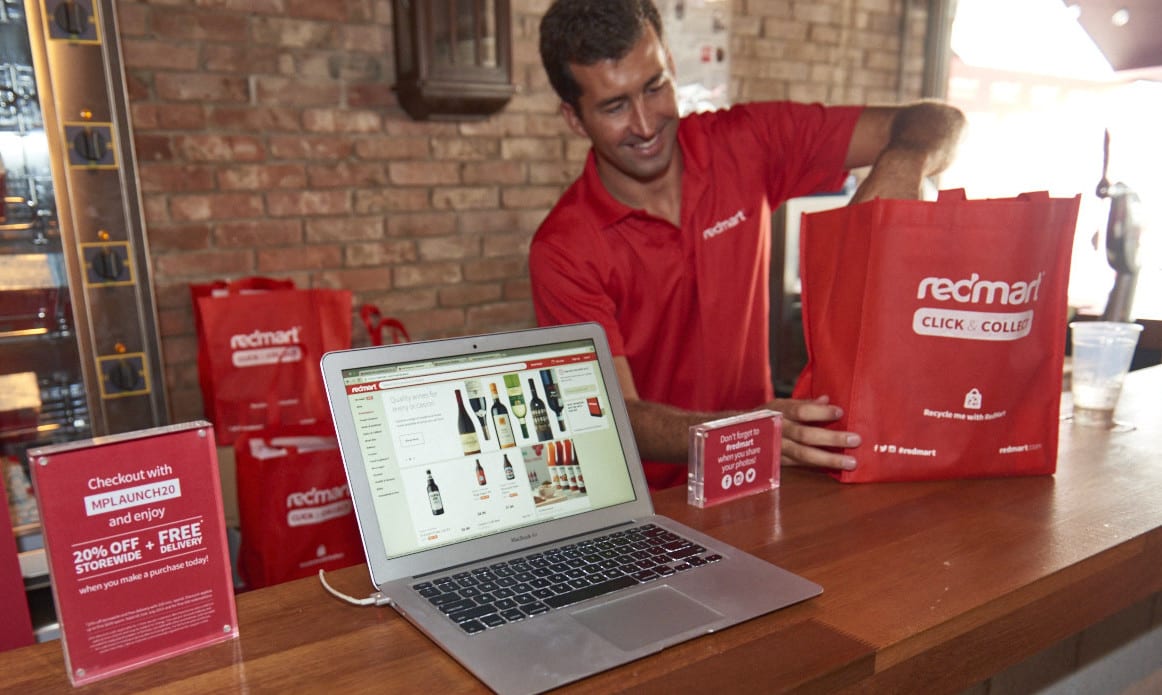
    Singapore based online grocery service provider RedMart has launched an on-demand marketplace, RedMart Relay, which will allow customers to order products from participating food and retail partners, in selected parts of Singapore.

    These products, including food, household items, apparel and electronic items will be delivered by “runners” – personal shoppers who go to the participating stores, purchase the products, and deliver directly to the customer, within one hour of ordering. The service will be accessible via a mobile App.

    RedMart’s co-founder and CEO, Roger Egan, told The Business Times that the launch of RedMart Relay was a natural next step for the company following the introduction of RedMart Marketplace, which is for groceries, earlier this year.

    “Whilst groceries will always be the foundation of what we do and remains a core part of our business, our new on-demand marketplace allows us to leverage our extensive delivery network and is all part of our long-term strategy to become an ‘everything store’, delivering a wide range of products to consumers across Singapore within the hour.”

    Mr Egan noted that when the company launched RedMart Marketplace, it partnered with Singapore’s best niche grocers, restaurants and speciality shops to “offer over 25,000 products, the largest product range of any grocer in Singapore”.

    Marketplace products are picked up from partners, consolidated, and delivered along with the regular RedMart grocery order, he said. Customers are clearly appreciating this “one stop shop” and “our marketplace has been growing at 30-40 per cent per month”, Mr Egan said.

    “With RedMart Relay we are now extending this marketplace model to be “on-demand”, where we collect from retail partners or restaurants and deliver directly to our customers within an hour,” he said.

    Mr Egan added that RedMart Relay has two main advantages over other e-commerce companies and marketplaces.

    “First, we have more engaged customers, with more frequent repeat purchases. Our customers buy from us around twice a month and that frequency is increasing. With RedMart Relay, we can now develop an even deeper relationship with our customers and deliver a much wider range of products to them, whenever they want.”

    The other advantage for RedMart Relay, according to him, is its extensive delivery network which is seamlessly integrated into the marketplace.

    “We can offer customers and marketplace partners faster, cheaper delivery than ‘software only’ marketplaces which typically partner with third party couriers. We encourage any retailer who is looking to leverage the e-commerce wave to contact us and see how RedMart Relay can help grow their business.”

    Vikram Rupani, the company president and another co-founder, added that the company was founded with the mission to “save people time for the important things in life”.

    “Our grocery service is delivering on this promise, and now we’re taking it one step further with RedMart Relay – effectively bringing RedMart’s promise of convenience to just about any product, from any store, anywhere in Singapore, he added.

    Initially the RedMart Relay service will be available to customers living in Tiong Bahru, Telok Blangah, Keppel, Sentosa, West Coast, Tanjong Pagar and Marina Bay neighbourhoods.

    The company plans to launch it nationwide by early 2016.

  • Mobile banking consumers in Singapore warned of malware threat.

    Mobile banking consumers in Singapore warned of malware threat.

    Bank customers in Singapore have been warned of a rise in malware infections on Android phones that seek to hijack online passwords and one-time security codes.

    The warning, from the Association of Banks in Singapore (ABS), says the infections appear as a software update for Android smartphones, or as a service for updating WhatsApp.In the latter, a pop-up advertisement encourages consumers to tap it and download a “new” version of the program or risk losing access to the service. After downloading the update, the application will prompt the customer to input confidential information, such as credit card details, which could then be used to commit fraud.

    Smartphones that have been jailbroken or rooted are particularly susceptible to infection, says the ABS.

    Ong-Ang Ai Boon, director of ABS, says that major retail banks in Singapore have seen an increase of mobile banking customers from 1.5 million in 2013 to 2.4 million in 2015.

    “ABS would like to remind mobile banking customers that smartphones are as susceptible to malware as desktop computers or laptops,” she says. “Consumers are reminded to download applications only from trusted sources.”